

Actress Kiera Allen was named by The Hollywood Reporter as one of their breakout stars of 2020, due in no small part to her performance opposite Sarah Paulson in Hulu's psychological thriller Run... Read More
From the show: The Theatre Podcast with Alan Seales
Guests
About
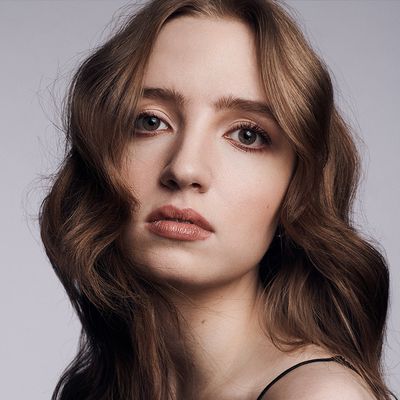
Actress Kiera Allen was named by The Hollywood Reporter as one of their breakout stars of 2020, due in no small part to her performance opposite Sarah Paulson in Hulu's psychological thriller Run. She is the first wheelchair user to star in a major thriller in over 70 years, which has advanced the conversation about disability representation in the industry. Kiera has a collection of regional theater credits, including the world premiere of Bekah Brunstetter’s Girl #2, and is currently studying Creative Writing at Columbia University. She can now be heard as Pansy Freehold in the Broadway Podcast Networks’s new original radio comedy TWITS, starring opposite Michael Urie and Christian Borle.
Kiera talks about being exposed to the world of theatre from a young age, and how as a result of growing up around creatives, she learned about the hard work and dedication required to succeed, as well as to have respect for the process. She speaks candidly about holding space on social media for important conversations pertaining to the disability community, and shares her thoughts on being called “an inspiration”. Keira also chats about working on TWITS, and why she is proud to be a part of the project.
In this episode, we talk about:
- Finding inspiration from the new Beatles documentary
- Mental health, and why she finds acting and writing therapeutic
- Being in a writer’s group with Tom Alan Robbins
- Booking her debut feature film role opposite Sarah Paulson
- Changes she hopes to see in the industry pertaining to disability and representation
Connect with Kiera:
- IG: @kierajallen
- Twitter: @kierajallen
- Listen to TWITS on Broadway Podcast Network
- Watch Run on Hulu
Connect with The Theatre Podcast:
- Support us on Patreon: Patreon.com/TheTheatrePodcast
- Twitter & Instagram: @theatre_podcast
- Facebook.com/OfficialTheatrePodcast
- TheTheatrePodcast.com
- Alan's personal Instagram: @alanseales
- Email me at feedback@thetheatrepodcast.com. I want to know what you think.
Thank you to our friends Jukebox The Ghost for our intro and outro music. You can find them on Instagram, Twitter, and Facebook @jukeboxtheghost or via the web via jukeboxtheghost.com.
Transcript
This transcript was automatically generated and might contain errors.
[0:01] Alan Seales: Welcome back to the Theatre Podcast, intimate, personal conversations with the industry's biggest names. This episode lives up to that. We've got Kiera Allen as our guest today, who is a rising talent and her recent performance opposite Sarah Paulson in Hulu's psychological thriller, Run, is still one of my favorite movies that I've seen recently. Just absolutely incredible. And she tells the story of how she got involved with this. They took a chance on this unknown actress and gave her the role of a lifetime. And she just lived up to every bit of expectation. She can now be heard on the Broadway Podcast Network original called TWITS, which you can find via bpn.fm slash twits or basically wherever you are listening to this episode.
Now just search for TWITS. Kiera exemplifies the phrase that we have heard several times throughout the episodes on this podcast, which is be the person that other people want to work with the next time. She is so pleasant and so wonderful and just takes everything so seriously. After we worked together on TWITS, I was the audio engineer for the recordings, and she sent me a thank you note. I've never had a thank you note from somebody in this setting before. And she just said that it was so much fun and thanked me and the others from the production crew for everything that we had done. And she just stuck out in my mind as being this wonderful person that, as I just mentioned, I want to work with again.
Everybody needs to listen and watch everything she is in. But before we get into the interview, of course, Instagram and Twitter, theater underscore podcast. Find me. Let me know you're listening. Leave a rating and a review. Show your support for the podcast at the theater podcast dot com slash Patreon P-A-T-R-E-O-N. That support goes to making transcriptions. And now, everybody, please enjoy this episode with Kiera Allen. One, two, three.
[2:08] Alan Seales: My guest today was named by The Hollywood Reporter as one of their breakout stars of 2020, due in no small part to her amazing performance opposite Sarah Paulson in Hulu's psychological thriller Run. She is the first wheelchair user to star in a major thriller in over 70 years, which has advanced the conversation about disability representation in the industry. She has an amazing collection of regional theater credits and is studying creative writing at Columbia University here in New York City. She can now be heard as Pansy Freehold in the new original radio comedy called TWITS, starring opposite Michael Urie and Christian Borle. Kiera Allen, welcome to the Theatre Podcast.
[2:48] Kiera Allen: Thank you. Thank you so much for the warm welcome.
[2:51] Alan Seales: We share a name spelled differently, so I can only give you the warmest of warm welcomes. Look, I feel a kinship with all Allens. I love Alan Rickman. I love Alan Seales. I love all the Allens. My mom and dad, my brothers.
[3:10] Alan Seales: Okay, let's talk about the Allens then, the family of the Allens. So your mom and dad and your brothers. And are they into performing too? Because you've got this career that, you know, of course, on TV and in film, right? We know you from these things, but then you're pursuing theater and creative writing as well. So you've got like the creative side of things. Where did all this come into your life?
[3:35] Kiera Allen: Good question. I'm lucky that I'm in a family that really, really appreciates the arts, especially my parents. My brothers are more into sports and I try to understand football for them, and they try to understand theater for me. But definitely more of an interest that I share with my mom and dad, and they took me to theater from a very young age. So I was very lucky that it was just kind of part of my environment, especially living in New York. And for me, acting and writing have always kind of come from the same roots for me. It's just a love of storytelling and being so drawn in by movies, by musicals, by plays, you know, any form of storytelling that was good, that was compelling to me. Just, you know, seeing the life-changing power of storytelling, I immediately wanted to write and I wanted to act. And to me, they still feel very much tied to each other. They feel like branches of the same tree to me.
[4:40] Alan Seales: Well, what age was that? Like, where did you start thinking about writing and performing? Or did you want to do both at once? Or was it always just like, I feel like everybody as a kid at some point was like, I want to be on TV. That looks like fun. But then they never really took it seriously.
[4:56] Kiera Allen: Um, yeah, I was around theater a lot as a kid. My mom writes, she writes for theater. She's also writing a podcast. She has her own podcast called The Chronicles of Wallace Sprague, Dog Psychiatrist. It's another serialized fiction podcast that I'm on as well. I play Tallulah Sprague. I'm the psychiatrist's daughter. And so we have great fun with that. But definitely, I was just, I was in the environment from very young and she would like, bring me into production meetings. I was in production meetings from the time I was two weeks old, I think, at my first production meeting. Two weeks after I was born, my mom brought me in in a baby dorm. And, you know, those were the people I grew up around.
I grew up around actors and directors and creatives. And I really learned to have respect for the process, learn, you know, the hard work that went into it and how things come together. And I was just fascinated by it. And it took me a long time to connect that with, like, movies and TV. Because movies and TV seems so distant to me. Because, like, you don't see the people. You're not in this space with the people. That's one of the things that's so, like, electrifying and magical about theater is you're in this space with the people. And it feels so real and it feels so close and so human. And film and TV is a very different kind of magic, where it just felt like something that was, like, being transmitted to me from the heavens as a young kid.
And one day, my dad asked me, like, would you ever want to do something like that? Because he saw how interested I was in theater. Would you ever want to, you know, try to do movies or TV? And I was like, I never, I never even thought of that, that those are, like, people who make those things. And, like, having that brought down to earth and kind of learning that, like, all of the things that seem so magical to me are made by people and that I could be one of those people. I could be part of creating those things and, you know, creating something that really means something to someone else. You know, that's something that was in me from a young age. And that just grew as I got older.
[7:04] Alan Seales: What you just said, something that struck with me was, was that, hold on a second. Yes.
[7:18] Kiera Allen: This is your toilet paper friend. Yeah. Hold it, hold it up.
[7:26] Alan Seales: Oh, okay. He made a friend out of toilet paper.
[7:30] Kiera Allen: Oh my goodness. That's a beautiful friend. Is it a boy or a girl or a non-binary? It's a nothing.
[7:37] Alan Seales: Okay. It's a nothing. Okay. Close the door, please. Thank you.
[7:47] Kiera Allen: We were leaving earlier and he was pooping and got really angry that we used his friend to wipe his butt. So he had to make a new friend.
[8:10] Alan Seales: Oh my God. Oh, to be a small child.
[8:14] Kiera Allen: The creativity, the imagination, that's amazing. It's just what we're talking about, isn't it? So something you just said reminded me of something that I was thinking recently because I've had several interviews lately going through December and November of friends that I've known for a long time, people that I've considered friends and people that I've just met through the industry recently, or specifically through interviews exactly like we're doing now that have been both here to talk about and promote Tick Tick Boom and West Side Story, right? So you've got two of the biggest movies in the theater industry and West Side Story, of course, a Spielberg film working with Sondheim, the late, amazing, great Sondheim. All of these are just people that are our peers that are making these things that are literally changing the world.
[9:01] Kiera Allen: Yeah. Yeah, absolutely. And Tick Tick Boom and West Side Story were both amazing. I was lucky enough to see both of them. And our late, great Sondheim, I believe, had a hand in both of them. So it's really quite a gift that we got to see some more of his work before we lost him. What an enormous loss. But I mean, it is strange to think of even someone like Sondheim, who seemed so much like a god to all of us, is just a guy or was just a guy, just a person. And it can be kind of inspiring to think of that, that this is what human beings are capable of, to take it to that kind of philosophical level. I recently watched Get Back, the three-part Beatles documentary by Peter Jackson, which is kind of a recutting of the footage of Let It Be, where he just covers the whole making of the album of Let It Be and what led up to the rooftop concert and everything.
And it really feels like being in recording sessions with the Beatles, because you're just watching them as they're writing songs, as they're making mistakes and correcting them, as they're experimenting and trying new things. And that really drove that home to me. These are some of the greatest minds of the 20th century, gave us some of the greatest art that we have today. And they're just like a bunch of guys, guys in a room making music when it really comes down to it. And young kids, really, they were all in their 20s. And it can be kind of strange to try to wrap your head around that. But at the same time, it really does inspire me to think of every great piece of art I've ever seen was made by someone who's only human.
[10:55] Kiera Allen: I want that tattooed on my arm.
[11:00] Alan Seales: That is the best quote ever.
[11:01] Kiera Allen: What did you say? Every great piece of art was inspired or created by someone who's only human. Is that what you said? That sounds pretty good. We'll go with that. Rewind the tape.
[11:12] Alan Seales: Yeah, no, it's beautiful. I totally agree with that. Because there's friends of mine, too, that get frustrated with their own creativity or their own level of output. And it's funny because I talk about this, this quote, particularly a lot on the podcast is Andre De Shields, when he won as Tony, he said, the top of this mountain is the bottom of the next or the top of one mountain is the bottom of the next. And, and so I feel like, taking back to what I just said, people are frustrated with their own output. But I'm like, you're, you're literally, like, you're, you're frustrated that this one show, this one song that you're writing for the Broadway show, is it working, whatever the case is, you're frustrated with your performance on this one night in Broadway, but you're on freaking Broadway, dude. Like, this is, this is, you know, you're, you're the Olympians of theater. And so not everyone's going to pull a muscle, everyone's going to trip every now and then. But you're
[12:11] Kiera Allen: Yeah, I love that. I love that. And sometimes I have to, I have to kind of remind myself of those things when I start feeling like, you know, why am I not at this point yet? Why have I not done this thing? Why is this thing not working out as quickly as I hoped it would? I have to kind of sit back and think like, I am living the dreams of myself from five years ago. Like, just imagine myself five years ago and being like, this is what you're going to be working on. This is what you're going to be worried about. Like, this is going to be what stresses you out in five years. It's something that is something that I couldn't have even imagined being part of my life. And even recording TWITS, that was something I felt where I was like, oh my god, am I like, am I doing well enough?
Am I like living up to the standards of this amazing podcast and doing justice to this writing? Am I like, up to the level of everyone around me? And I had to be like, dude, calm down. Like you're you are reading with Christian Borle and Michael Urie and Mary Testa and Dakin Matthews and just, you know, have to be like, that's enough. Is it possible to get stressed about anything or feel insecure about anything? But sometimes you have to take that step back and be like, wow, just look at how amazing this is that I get to do this.
[13:27] Alan Seales: It's spot on what you just said. There have been so many conversations where the most successful people in the industry or in, you know, people idolize them or people look up to them, right? We'll do these interviews and we stop recording. And the first thing they say is, was that good? Was that OK? And I'm like, what? That's just it blows my mind that somebody who has won multiple Tony Awards is just like, are you happy with what I just did? Like, of course I am. You gave me your time. That's it's it's brilliant. Right. And so all of this, I mean, it goes back to what you were just saying. And I want to I want to take this back a little bit, because do you are now living your dreams from five years ago?
And I want to get into the timeline of filming, auditioning for Run, filming for Run and all of that. But before you go back there, talk to me about your own maintenance, maintenance of your own mental health. Right. Because you are now of a generation that it's not so taboo to talk about mental health. And like I hope my kids grow up and know that it's that therapy is acceptable and that having sitting in your own sadness is what you should do. Acknowledge it and learn from it and move on. Right. Because what I was taught from my parents was ignored and it'll go away.
[14:47] Kiera Allen: Mm hmm. I love that you're using your platform for that. That's really powerful and really wonderful. Yeah, I mean, I find creating like acting and writing to be very therapeutic. I it's such it's such an important part of my like maintaining my own mental health, my own equilibrium, my sense of well-being that sometimes it's like hard for me to imagine how people who are not actors and writers can be happy. It's like which I understand in theory that everyone's got their own thing that that, you know, maintains that for them and that keeps them going. And for some people, maybe that's, you know, fishing. And for some people, that's like science. I know so little about science. I don't even know what to say specifically about science.
I work in science. I'm sure that's something that that people who are not artists say. Engineering. I work in electrical engineering. Maybe that's for some people the thing that really keeps them going. And it is, you know, for a lot of people. But for me, like that's how it's acting and writing. That's how I express myself. That's how I kind of get out things that feel stuck. Things that I haven't been able to verbalize in any other way. Like I journal all the time. I've been journaling pretty consistently for about four years now. And that's made a huge difference in my life and helped me gain a lot of insight about myself and my life and other people and just process a lot of things. And when I'm lucky enough to be working on a project as an actor that I really care about and that means a lot to me, that can truly be life changing.
If I really commit and I go into it and give it everything I've got and I use myself, you know, my own resources and my own experiences and feelings and use this as a place to process those, I come out of it as a different person. So I feel very, very lucky to be able to do this.
[17:06] Alan Seales: When you journal, do you write about yourself and your own experiences? Or do you write other stories? Because I know that you got connected with TWITS because you're in a writing class, or maybe you still are with Tom Alan Robbins, who's the writer of TWITS, and is Mushnik in, is an actor of his own right, he's Mushnik in Little Shop right now.
[17:23] Kiera Allen: Yeah, yeah. Tom Alan Robbins is a true legend. And I am in a writer's group with him. And I've gotten to read his work. He's gotten to read some of my work. It's been very rewarding and very fun for many years to be working together. And I'm just honored to be a part of TWITS and to have seen it from the very first reading in our writer's group. I got to see the first, very first iteration of it and read for it. And so this is, it's really so wonderful and full circle to be seeing it come out now and get the love it really deserves. But in terms of journaling, I really try to put no restrictions on it at all. I just go into it and say, okay, write a word, you know, write a few words, right? Not words, you don't even have to write words.
Sometimes I go in and I write gibberish just to get the feeling of the keys under my fingers or the pen in my hand just to get moving. Sometimes if I'm really self-conscious, what I've done before is I will type with my knuckles. And so it's like, I will be saying things and words will be flowing through my head, but it will come out as complete gibberish because I can't type clearly with my knuckles. So that just gets rid of the self-consciousness and gets the words flowing without me trying to observe and judge myself, which I find really helpful. It's just kind of a way of like getting the tap flowing for me. You know, you turn on the tap and it's like a tap that's like brown at first and you just keep running it and running it until it's clear and you're ready to really work on this stuff that's important to you. And that's kind of what journaling is about for me, both for my writing and just as a person to try to get to that crystal clear point of I understand something that's important to me.
[19:13] Alan Seales: Well, remind me not to drink the water coming out of your faucet. It sounds pretty nasty.
[19:19] Kiera Allen: Okay, to be clear, that's not my tap that I was describing. It was a metaphorical tap. I want to have clean New York tap water.
[19:28] Alan Seales: Yes, yes, yes. So going back to Run then. So that came out two years ago, right? The beginning of 2020? Or was that in 2019?
[19:36] Kiera Allen: Came out a year ago. Last year, November of 2020. It was supposed to come out earlier, but it was delayed because of the pandemic.
[19:43] Alan Seales: Well, so so talk me through that. Because when did you start? You said your dad came to you and was like, do you want do you want to do TV and film? So obviously, there was some point when you're like, yeah, I guess I'll audition for like one or two things. And then all of a sudden, you've got this, this groundbreaking history-making role opposite one of the greatest stars that we have on stage and screen right now.
[20:06] Kiera Allen: Truly, truly, Sarah Paulson is is a wonder. And I am so so lucky that my first film ever Run was the first film, first feature film I've ever done. But I got to act I mean, who gets to do that in their first film ever act opposite Sarah Paulson, one of our one of our greats. So I am very, very lucky. But to return to your point about you know, when when did it start? When did I get that spark and want to do that? I want to be fair to my dad and clarify that he was not and has never been a stage parent and never pushed me to do this. But really, I think in that moment was just curious because he saw how invested I was in theater and in acting and, you know, how much I loved movies and was just wondering, but really the push was always for me.
I always wanted to learn more about movies and theater. I wanted to find opportunities. And I was very lucky that my parents and my brothers have always been so so supportive of me and just wanted me to do it as long as I loved it and as long as I was getting something out of it. And so I'm very, very lucky to have my family behind me in that way. And growing up, I did a lot of local theater, summer camp, school shows. And as I got into like, I think sixth grade was when I started doing a lot of student films. I just started auditioning for student films, for locally shot indie movies. And that's really where I cut my teeth in film. I learned how to act on these NYU student films and Columbia student films that my amazing parents were kind enough to drive me into the city for so I could learn the craft and get better.
And I'm sure if I watched the films now that I made when I was 12 and 13, I would cringe out of my skin. But it was really, really a valuable experience. And then I started acting professionally after I graduated from high school. I started with a theater company called TVTB, or Theater Breaking Through Barriers, which is an off-Broadway theater company that I had a wonderful, wonderful experience with, and had my off-Broadway professional theater debut in 2017. And it feels like quite a long time between that and when I got the role in Run, because it really was a time of great transformation for me where I was doing all this professional theater. I was working at Cape Cod Theater Project, Keene Theater Company, the Royal Court.
I got all these amazing opportunities where I got to do lots of theater acting. But it was only 18 months between my professional acting debut in 2017 and when I got the role in Run in 2018. Somehow, I mean, in the meantime, I got a manager from the work that I was doing in New York. And this audition came around and he thought I might be right for it and submitted me for it. And as soon as I got the self-tape audition request, I was like, I'm not letting this slip by. I mean, I'd gotten auditions for small roles in big projects and big roles in small projects, but I'd never had an audition for something that was the lead in a studio movie. And so I really, I put everything I had into it. I prepared, I locked myself in my room for days, like doing my preparation work for the character of Chloe.
And then after my first self-tape audition, I got to read the script. And that's when I was really like, I will do anything to get this role. The script was so good, written by Anish Chaganty and Sev O'Hanian, who also together wrote the movie Searching, which Anish directed.
[24:10] Kiera Allen: And so getting to see *Searching*. *Searching* came out during my audition process. Actually, I saw it the day I had my first in-person audition for *Run*. So I was like, as I was auditioning for this movie, discovering what this creative team was capable of, and like had been a fan of Sarah Paulson for years and years, and like every step of the way made me want it more and more badly to the point where I was like, this is going to devastate me if I don't get to do this movie. But I was very lucky that it worked out. They thought I was right for the role. They believed in me enough to, you know, cast a complete unknown, just some college kid from New York as one of the leads in their movie.
And I dropped out of college for the semester and went up to Canada. And that was it. Wow. Wow. So it's been like this whirlwind of starting, I guess, starting professionally, getting the manager, doing the audition. And then all of a sudden, yeah, you get to drop out of college for temporarily. Yeah. And go up and film this amazing movie that got so much recognition. People still talk about it. There was something that I read. It's the most talked about studio film on Twitter. What was this? Let's see. The film broke record highs at Hulu on its opening weekend, becoming the streamer's most watched movie ever and the most talked about original film on Twitter to date. Yeah. Hulu original film.
Wow. Yeah. That was wild to be in the middle of. There was a lot of enthusiasm on social media. And I got to connect with a lot of really, really lovely, wonderful people who loved this film and got so much out of it. And as a kid who, growing up, had my life changed by so many movies and plays and performances to have people then coming to me and being like, this is what your movie meant to me. This is what your performance meant to me. This changed my life in this way. This spoke to me. This reflected my story in this or that way. That was incredibly powerful and very overwhelming at the time, because I never even had social media before *Run*. I made Twitter and Instagram accounts as professional accounts when the movie was coming out.
And so I certainly was not prepared. I was barely prepared to function on social media, much less being in the middle of that kind of noise. But it was really extraordinary. I got so, so lucky that my first experiences with social media were so positive and involved so many wonderful people who were really, really enthusiastic about the film.
[27:02] Alan Seales: That's strange to me, I guess, that all of it was completely positive. Or maybe, I don't know, maybe it was because it was the first time that you really got on social media. One of my oldest people that I know in New York is Ali Stroker. I've known her for, God, what, 14, 15 years, something like that, since I moved to New York a long time ago. And I interviewed her as one of my first interviews on this podcast. And something she had said at some point in the interview was, being in a wheelchair herself, she doesn't actually like it when people say that she's an inspiration, because she wants to be seen just like everybody else. She doesn't necessarily want to be put aside or treated special, while at the same time, is able to use her platform to really advocate for accessibility and advocate for education. So how has that translated for you, though, like getting onto social media and all of a sudden being thrust into the spotlight? How did that translate for you?
[27:54] Kiera Allen: Yeah, it's really interesting. And by the way, I totally agree with Ali about the issue of inspiration. It can be really complicated. There's a great TED Talk by a woman named Stella Young, where she talks about, the term she has coined is inspiration porn, which is about using disabled people for motivational, inspirational content for non-disabled people, which can be weird and exploitative. And one of the quotes from her that I really like is, I want to live in a world where we don't have such low expectations of disabled people that we're congratulated just for getting out of bed in the morning. And that's where I really feel the weirdness of inspiration. I've been called inspirational for wearing a yellow shirt, for showing up to class, for being in public.
These things are very basic things that can feel a bit weird and insulting when it's like, why is it inspiring that I'm just out living my life? But at the same time, it's complicated because inspiration is a beautiful thing. And I love to be inspired, and I love to inspire other people. And I love when people tell me that they're inspired by something I've done, that is something I'm proud of, and something that's meaningful. If my performance has inspired someone, or something that I've worked really hard on, or to be an artistic inspiration or influence is a really beautiful and moving thing. So it can be complicated, the word in general, but I try to take it on a case-by-case basis, and just believe in the best of intentions from people.
[30:03] Alan Seales: We're going to take a short break. Stay tuned for more of the episode.
[30:11] Kiera Allen: I was a little nervous on social media about just how people would approach disability, and if that was going to be something, I don't know, that would make my time on social media a little harder. I'm very lucky that I haven't had that experience so far, other than like, the odd comment here or there that kind of makes me, hmm. But what's really been so lovely is like, any comment that feels inappropriate or mean, I've had other people come in, like, in the kindest, most respectful way, and be like, this is inappropriate, please remove this comment. Or like, that question is personal, and, you know, it's not appropriate to be putting that question in comments. That's not kind. Like, it has not turned into fights as far as I can see, or any kind of internet ugliness.
It's just, it really feels like people have my back, and people who I don't even know, which is amazing, and people who maybe weren't so familiar with disability issues before, but have familiarized themselves and have learned by becoming familiar with my work and the things I've spoken about in public, and have now taken that into other spheres of their lives in the world, and are able to have those kind and compassionate and informed conversations with people where they can say, hey, it's not right to use that word, or it's not very nice to say that to someone. And that's something I'm very proud of and very grateful for, to be surrounded by people like that.
[31:44] Alan Seales: It's a teaching moment, I want to say, right? Because you've got somebody who may not realize that just the way that they've asked a question is somehow offensive, or a word that they've used. I mean, when you think of all the big town, small town, and everything in between, all the people that exist, especially on the internet, especially on social media, where if they're actively trying to find answers, and all they've heard about is something referred to in a certain way that the people around them are saying, that is based on some sort of offensive historical rhetoric, or whatnot, right? Like, that's all they know. And until they're called out in a positive way, in a constructive way, like the people who defend, you know, they're like, that's inappropriate.
Take that down. That's a personal question. Take that down. Like, somebody, if you're not talking about it, then maybe you don't want to talk about it. That's like, everybody has those things, right? Everybody, nobody wants to talk about certain things, especially in a public forum, especially on social media, where everything can be taken out of context, and often is and never forgotten.
[32:49] Kiera Allen: Yeah, yeah, it's very true. And I'm certainly I don't have a thick enough skin to be the one who goes into the comments and is like, hey, here's the reason why this word is kind of insulting, or why it's like, not nice to see questions like this in my comment section. Like, I'm not, I'm not gonna, I don't know, never say never. But it's never been part of my MO to be to be having those conversations with people I don't know. But it's really nice that other people have taken up taking it upon themselves to do it, again, in a kind and respectful and constructive way. And I, I try not to be too hard on people in terms of language, because, like, that's something that, like, has to be learned. And not a lot of people have a lot of exposure to the disability community and the rhetoric within and why certain terms are preferred.
Like, when I was, when I first became disabled, for the first couple of years or so, I referred to myself as wheelchair bound and confined to a wheelchair. Like, just because those were the terms I'd heard. And I was like, yeah, that's, that describes me. And found out only a couple of years later that the preferred term in the community is wheelchair user. Because the wheelchair is something, it's not something that binds or confines or constricts someone. It's something that gives a person freedom and liberation and allows them to move. And so, it frames the chair in a much more positive light. But, like, even I, as a wheelchair user, didn't know that for several years into my disability. And so, I try not to be too hard on people for not knowing, especially when people have the kindest of intentions.
But, you know, sometimes people get a bit trollish and are being intentionally insulting or, like, really, really are, like, are very upset that I'm not telling them how I became disabled. Because they, like, like, I need this story. This story is important for me understanding who you are. When I don't find that to be the case. That, you know, that's something I've been I've made a conscious choice on. Like, I don't owe that story to trolls on the internet who are, you know, who are insistent in my comment section every day. But I really appreciate that there are a lot of people who understand that and who stand up for me. And to the credit of a lot of people in my comment section who asked those questions, a lot of them have, you know, come to understand why that maybe isn't the kindest thing to be pushing those questions constantly and have apologized and have, you know, remedied the situation either by deleting the comment or by, you know, posting a nicer comment in response. You know, I really believe in people's ability to grow and change and learn. And I'm appreciative that I have a lot of people in my social media world who seem to believe the same.
[36:02] Alan Seales: Well, that to me, dare I say, sounds a bit inspiring. In that it's it's allowing a an open platform. I'm trying to formulate this as I'm spitting out words. It allows a safe space, I guess.
[36:15] Kiera Allen: You're the people who are your fans. You're not actively engaging in it. Like you said, you're not doing that yourself, but you're allowing for these conversations to happen, which I think is, okay, I'll take back the inspirational. I say respectable. It's respectable. No, I appreciate that. And you know, that's a situation where like, I really, I appreciate that word. And that it comes from a place of like, you seeing me as a person and respecting, you know, I guess, an environment that I've been part of creating or that I've tried to foster and that doesn't feel like it's like, wow, congratulations on making it out the door this morning. It's a very different tone. And like I said, well, the issue can be complicated.
It's honestly kind of refreshing sometimes when I get to hear that word in a very positive context and reframed and someone saying like, I find you to be inspiring because of who you are as a person, and nothing to do with disability, because that's just a, I mean, that's a lovely thing for anyone to hear. And something I've kind of been fighting to reclaim, fighting is maybe too strong a word, but working to reclaim for myself is the ways in which inspiration can also be beautiful and be part of my life in a positive way. Yeah, there's beauty, actually, was what I was thinking of right before you said it. It's a beauty in projecting a kindness and acceptance. And I guess, again, it goes back to being respectable, having the respect to allow these conversations to take place.
And like, you know, you're not inciting an uprising. You're not having, you're not promoting hate speech. You're literally providing this arena just by being in existence and by pursuing what you love. You're allowing these people, like sort of this trail of glitter follows behind you. People are following in the glitter trail trying to pick up on the happiness, right? And I guess that's the inspiration that I sort of picture in my head, like there are people who are sad. There are people who may be a wheelchair user or have a disability of their own. Or there are some people that I know struggle with extreme depression who do need that congratulations just for getting out of bed in the morning, right?
And by seeing somebody that they maybe assume, because they don't know you personally, that they assume struggles with the same sort of feelings that they do to do things that they can't do, which is sometimes getting out of bed or wearing a yellow shirt or showing up to class, that that gives them the inspiration to be better people, right?
[39:09] Alan Seales: That's interesting. I never thought of it that way. And yeah, it is. It's also complicated because what's difficult for people or what's impressive for people varies so much from individual to individual that it's hard to make that call. And I don't mean to disparage anyone for whom getting out of bed is no small feat. And it can be hard for people who really struggle with things like that to go through those things and to really have to work so hard to accomplish these things and get no credit for it, because everyone's like, that's what's to be expected. So, you know, that can be complicated in terms of like, what is hard? What is easy? What is a challenge? It depends completely on the person.
For me, I think sometimes people make some assumptions based on my disability on what would be hard for me and what they can do that I couldn't do. And it can be fun sometimes to just surprise people and be like, oh, no, I can do that. I'll do the cha-cha slide with you. I'm going to show up to dance class and I'm going to, you know, and all this stuff. And interestingly, sometimes the people, the things that people don't consider can be the most challenging. Going to a party where maybe there are stairs or the doorway is too narrow where people would say, oh, you should come to this party and not think much of it. And I will have to say, okay, are there stairs? Is the doorway too narrow? How tight are the corners?
If it's at a restaurant, I'm going to call ahead and make sure they have a ramp or something. Those are the kind of challenges that people don't often consider, the accessibility challenges. Another thing that Stella Young said in her TED talk about inspiration and disability is, you know, talking about the social model of disability, that disabled people are more limited by the world around us than we are by our bodies. And so the challenges that I come up against most frequently have to do with the way the world is built and the fact that it's not built to include disabled people. It's not built with disabled bodies in mind. And so, you know, when people say, oh, congratulations on, you know, making it out of bed in the morning, like, that I can do no problem.
The issue is, you know, trying to get on a subway or trying to get into a restaurant in New York City and all of these other things. So I guess also that just comes from, I guess, people having familiarity. And I think people who have been in my life for a while and have been around with me in public and have been part of kind of working through those kinds of obstacles with me have that understanding. And so I think, you know, there's a lot that comes from just exposure and experience. And that's one of the reasons representation is so important. To have authentically told stories about disabled people and to, you know, include people, other people in our lives, even if it's just through a story, even if it's just through fiction, I think that can be an incredibly powerful thing. And, you know, people can learn without even realizing they're learning.
[42:32] Kiera Allen: People can learn without even realizing they're learning. That that's the I'm gonna have that tattooed on my other arm.
[42:41] Alan Seales: You have two Kiera Allen originals on your arm.
[42:47] Kiera Allen: Sorry, you keep drinking out of that water bottle. This is funny because the way the way that you hold it is like at the top of a wine bottle, like you're chugging a wine bottle. So every time, every time you drink out of this water bottle, I'm like, oh, she's chugging her wine again. Yeah. Had to prep for this interview. That's why I'm laughing so much. I'm chugging wine the entire time.
[43:11] Alan Seales: So now that you've you've been on a professional, you know, big budget, big studio movie set, and you've done big roles and small roles and done theater all over the place. And I guess the biggest thing, if you were to just like be able to flip a switch and change something across the industries when it comes to disability and representation, I think I'm talking more about behind the scenes, behind the scenes sort of stuff, like making sure that there's ramps into trailers, like these sort of these sort of things, right? Like what what would you focus on to like wave a magic wand and fix overnight?
[43:51] Kiera Allen: Good question. If I could wave a magic wand, I think I would just get rid of the fear. I think the fear that people have of working with disabled people, that it's going to be more complicated, more expensive, more difficult, whatever it is, because, you know, I'm very accustomed to working through these obstacles and coming up with creative solutions. And you know what? So are film people. So are theater people. Because that's, that's their jobs is to come up with creative solutions. I mean, on set and run, every day, we had a new logistical challenge that had to be resolved, whether it had to do with the amount of daylight that we had, or, you know, a, you know, a camera not fitting into a space that it was supposed to fit into, or someone getting stuck on an elevator, someone got stuck on an elevator for like five hours one day on set.
And that, apart from poor Reed, who's one of my favorite people having a terrible afternoon, it also, you know, it threw off the whole schedule, and everyone had to find ways to accommodate that. And I think film and theater people are used to being creative and used to doing those kinds of things and finding solutions for those, those logistical challenges. And I really think it's no different for any kind of disability to, you know, every every film is different. Every film has different, different needs in terms of creativity. And I really don't think disability is all that different. I would love for people to just approach disabled actors like any other actor, and, you know, hire them for whatever role works for them as an actor. And then just trust that it will all get figured out because it always does.
[45:31] Kiera Allen: It was Brandon Uranowitz, who, when I was talking with Bran, he was in Burn This, of course, with Adam Driver and Kerry Russell.
[45:41] Alan Seales: I saw him in that. He was fantastic.
[45:43] Kiera Allen: Fantastic, right? And that was he was telling me in his career, that was the first time he's ever played an openly gay character as an openly gay man in real life, where being gay wasn't a plot point.
[45:56] Alan Seales: Wow. Wow, I never thought of that.
[46:00] Kiera Allen: Yeah, it was just it just was right. And so that's where that's what I hope we can see more of where it's not like being a person of color makes you the sidekick or being in a having a disability makes you not able to be the lead in some look at look at Ryan, Ryan O'Connell, that's his name and special on Netflix, right? He's awesome, right? Like, he's, he's, he's got palsy. And he's the he. I mean, he pulled a Lin Manuel, right? Like he wrote this thing.
[46:30] Alan Seales: Yeah.
[46:30] Kiera Allen: And created for himself. And all of a sudden, it's this great breakout thing where everyone's like, Oh, yeah, that makes total sense. So I would I would love to add on to your magic wand wavy and just say, the fact that it's people, people come in all shapes and sizes and abilities. And, and anyone can, anyone can play almost anything. You don't need perfect specimens to, to play all of your lead roles. That doesn't make it real.
[46:56] Alan Seales: Yeah, I would agree. And I would even, you know, challenge the notion of what is perfect?
[47:03] Kiera Allen: I was gonna say that. Yeah. As soon as it came out, I was like, oops.
[47:08] Alan Seales: No, no, I just I just mean that there are there are, like you said, all different types of people. And I think there's great beauty and seeing on our screen, our world reflected, you know, disabled people exist in our world. And, and gay people exist in our world, all different kinds of people, like you, like you said, exist in our world. And I think the most beautiful thing and the thing that really moves me about, about theater, about film about TV, etc, is is seeing something and saying, Oh, that's my world that on screen, that's my story on screen, in some way, I can connect with this person, with this group of people, whatever it is, and the more people you have represented, the more you're gonna have that magic.
That's what I really believe. And going back to Allie for a second, she did the Hallmark movie, right? Yeah, it's a love story. It's a Hallmark movie. All Hallmark movies are love stories, right? And so again, it's just it's normalizing the fact that everybody, all shapes and sizes, all abilities, everyone deserves love. Right? And also, like, disabled people do.
[48:50] Kiera Allen: You know, it's just people, just people like any other kind of people. And that's another wonderful thing about working on TWITS is that, you know, this was a character. You know, as wonderful as it is, you know, like Brandon Ureanuos's story to play, in my case, a disabled character and to represent the disability community and be part of new and groundbreaking stories that involve disability. It's for me equally exciting to play a role like Pansy on TWITS where, like, there's nothing to do with disability. You don't even see the disability because it's a podcast. She's just like a lady. She's a lady. She's a genius. She's like, she has this rich, wonderful character, so much stuff to play.
And disability just never even becomes part of it. And there are a lot of stories in my life that have to do with disability, that involve disability. There are also plenty of stories in my life that have nothing to do with disability. And it's really, it's really, really fun to be able to do both, like, you know, all facets of yourself and to bring everything you have to the work that you do.
[50:02] Alan Seales: I was going to ask if you knew German. Did you study German at all? Because you speak German in TWITS. And it came out, I don't know German, so I don't know if it's amazingly perfect or not.
[50:14] Kiera Allen: But it sounds to me very authentic. And if you were, if you were to tell me, yeah, I took like three years in high school or something, I would have told you.
[50:23] Kiera Allen: I do not speak a word of German. The closest I come to speaking German is that my dad took German in high school. That's the closest I've gotten. But I really, I really, really practiced hard on that line. I think I might still have that line memorized or close to it. Something like that. We have a small house on this street near the hospital. I can't do the German accent as well as I used to. But because I was practicing it, like, every day, leading up to it, I was using Google Translate and trying to, like, get the accent just right. There's like, there's a website that you can go on where you can look up individual words in a language and it will have, like, five different native speakers speaking that word so you can hear it.
That's like, Konkenhauses, Konkenhauses. I was just doing it over and over and over again. I even considered reaching out to a professor of mine who's from Germany and just being like, can I say one sentence for you and you tell me if it's all right? Because, you know, the point of that moment is that she, like, convinces everyone that she's from Germany. And so I was like, it can't be terrible. Maybe it doesn't have to be perfect, but it really can't be terrible. So yeah, that's why I practiced so hard for that moment. I'm very, very happy to hear it, that it was convincing for you.
[51:52] Alan Seales: Oh, it totally was. I mean, especially against Mary Testa, right? Who's like, she's like, I'm, her character is like, I speak perfect German, right? And then she's like, it's the worst German you've ever heard.
[52:06] Kiera Allen: Yeah. Oh, my God. It was so funny hearing her do that, too.
[52:10] Alan Seales: We're going to take a short break. Stay tuned for more of the episode.
[52:20] Kiera Allen: One of my favorite moments, and I know, like, we're totally off topic, but I don't care. One of my favorite, not moments, but the favorite things that I remember about the recording of Twits was how Christian Borle just had us in stitches. Everything, even over a radio, audio only podcast, right? Like, we can see each other, we saw each other over a squad cast, like we're recording now. But the amount, that's actually, I was going to bring this up a while ago when you were talking about everything that gets made, gets made by people. And it's a string of people, because Christian Borle, specifically, and Michael Urie, too, but this, you know, comedic geniuses, and Christian is doing take after take of just getting bigger and bigger and bigger and bigger.
And it's this massive thing where it's this exaggerated caricature of his character, of himself, that we're hearing coming through. And we're all trying to, you know, you and the other cast are trying to keep straight faces and stay quiet through the whole thing. And luckily, I'm production, so I can mute, I can laugh and mute the whole time. But there are so many different levels of, it goes from the, you know, the writers, to the actors, I guess, the writer, to the casting, to the actors, to the editors, to the directors, through the producers. And what we see at the end, it's not one person that creates all this stuff. It's the collection of so much talent. And I think Twits really exemplifies that.
And because there's so much talent with the writing and the production and the direction, and of course, you and the rest of the cast, just phenomenal performances. And it comes out, it comes out so, so well in the end.
[54:04] Kiera Allen: Yeah, it really, it's so, I thank you for saying that, first of all, I'm so, so proud to be part of this project and be working with all of these incredible people. And it's amazing how, you know, everything, every piece of art is made just by people. But sometimes when, like, when it's a group of people, when it's all of these people making something together, it's like something magical happens, where it's like, it doesn't come from any one person. It's like, it came, it's almost like a Ouija board, you know, everyone puts their finger on the thing, and no one, no one moves it, but somehow the thing moves. And it's just like the thing that happens when all of this energy comes together, and something that is created between you that no one person can, can fully claim credit for.
So Tom Allen Robbins would be probably first on the list to give anyone credit because he created the script and the story and the world and everything. But, you know, like you said, it just comes out of, like, the kind of the explosion that happens when so many people come together and commit their energies to something like this.
[55:03] Alan Seales: So Twits is then the combination of Blackmagic and the Big Bang rolled up into one little thing.
[55:08] Kiera Allen: There we go. Okay.
[55:10] Alan Seales: That's exactly what I was saying. Okay, the universe began with Twits.
[55:15] Kiera Allen: The alternate universe. Okay, so let's wrap up here with three questions I ask everybody to wrap up the episodes. The first one just very simply is what motivates you?
[55:25] Kiera Allen: What motivates me? Oh, that's a good question. Open-ended, what motivates me for anything?
[55:33] Alan Seales: What makes you put on yellow shirts in the morning?
[55:35] Kiera Allen: I actually just gave away that yellow shirt. The yellow shirt is no longer, but it's not a good one. What motivates me? I mean, this is gonna sound so cheesy and cliche, but it's gotta be love. It's really, there's almost no point in doing anything, no matter how hard I work on it, and how proud I am of it, if I can't share it with other people. If I can't share it with the people I love, and celebrate it with them, and celebrate their victories too. I mean, that's really what gives things meaning for me. When I think about, have you ever read the book Into the Wild by John Krakauer? There's a quote from that book, that's actually quoted from an earlier work, but I think about it all the time, which is, happiness is meaningless if not shared, and I think about that all the time.
I've had so many amazing things happen to me in my life, but almost always the happiest moment is when I get to tell someone I love, or if I'm lucky enough that someone I love is there, and I get to share that moment with them. That's really what motivates me.
[56:46] Alan Seales: Next question, what advice would you give to your younger self, and younger people listening now, starting out down a similar path?
[56:52] Kiera Allen: Mmm, you know, I'm thinking back to Andre De Shields' Tony speech that you referenced earlier, and another quote, aside from the one about the mountain, which is a great quote, another one that I think about a lot is, the fastest way to get there is slowly, which is something I have to remind myself a lot. I think I spent a lot of time in my life feeling like I was behind, I wasn't getting there quickly enough. I was always looking at child stars, and like, why am I not doing that? If there are kids who have successful careers by the time they're 12, or by the time Leonardo DiCaprio was my age, he was doing this, and this, and this, and those comparisons can be really detrimental, and I think just trusting in the slow and steady work, and kind of, I guess, accepting that a lot of it is going to be out of your control as well.
I would tell myself, just keep doing the work, as long as you're loving it, as long as you're enjoying it. Wherever that leads, it's got to be somewhere good, because anytime you get to do this, you're going to, you know, you're going to have that love, and you're going to be happy. So, I think I would just tell myself to trust in the process a little more.
[58:10] Alan Seales: Last question then, if you can only see one show for the rest of your life, but you can see it as many times as you want, what would you see?
[58:18] Kiera Allen: What? One show? Oh dear, that's really, really hard. That's really very hard. Okay, I can't, I can't choose just one, but I think one that's definitely up there is the 2016 cast of Falsettos, which is obviously starring Christian Borle. That's a show I'm a huge, huge fan of, and I've listened to many, many, many times over. I'm a huge fan of William Finn, and don't tell Christian this, but I have a Falsettos poster in my room, and when I told people I was doing this podcast, they'd get on Zoom with them, and tilt the screen up to the Falsettos poster, and be like, I'm going to work with that guy, and point his face on the poster, like this poster that my friends have seen a million times in my room, because that was really special. And that show, William Finn's writing in that show is so tight, and so dense, and there's so much new that you can get out of it every time. I feel like that's a show that I could spend a lot of time with and never get bored of.
[59:29] Alan Seales: That's a great answer. All right, where can we find you on social media?
[59:32] Kiera Allen: My Twitter and my Instagram are both at Kyra J. Allen.
[59:36] Alan Seales: What's the J for?
[59:38] Kiera Allen: My middle name.
[59:39] Alan Seales: Which is?
[59:39] Kiera Allen: Gene.
[59:40] Alan Seales: Gene, Kyra, Gene.
[59:41] Kiera Allen: Yeah, it's like, it's my grandmother's name, and my mom's middle name.
[59:46] Alan Seales: Gene, oh, that's cute.
[59:47] Kiera Allen: Three generations of Gene.
[59:53] Alan Seales: I love that dad joke. Love it.
[59:56] Alan Seales: You can get more of me at thetheaterpodcast.com. I'm on Instagram and Twitter at theater underscore podcast on Facebook slash official theater podcast. Leave a reading and review wherever you are listening. Thank you to Jukebox the Ghost for the intro and outro music, and Kiera Gene Allen, thank you so much for this conversation. You are such a pleasure to talk to.
[1:00:16] Kiera Allen: Oh my God, so are you. Thank you so much for having me.
© Broadway Podcast Network, All Rights Reserved