

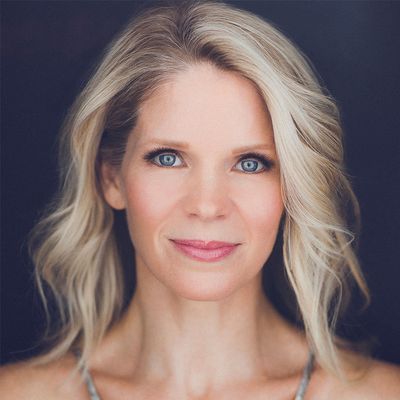
A seven-time Tony Award nominee, actress and singer Kelli O'Hara won the 2015 Tony Award for Best Actress in a Musical for her performance in the Lincoln Center Theater revival of The King and I... Read More
From the show: The Theatre Podcast with Alan Seales
Guests
Featured Shows
About
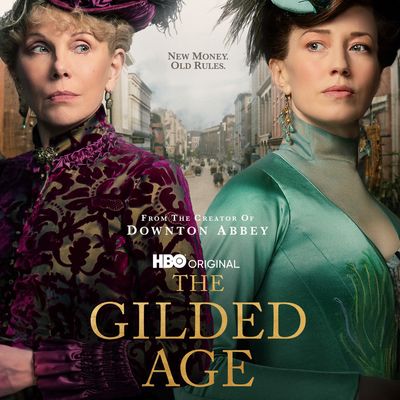
A seven-time Tony Award nominee, actress and singer Kelli O'Hara won the 2015 Tony Award for Best Actress in a Musical for her performance in the Lincoln Center Theater revival of The King and I. She has also received Tony nominations for her performances in The Light in the Piazza, The Pajama Game, South Pacific, Nice Work If You Can Get It, The Bridges of Madison County, and Kiss Me, Kate. Kelli made her opera debut at The Metropolitan Opera in Franz Lehár's The Merry Widow in 2014. She also has many TV and film credits including Masters of Sex, 13 Reasons Why, Blue Bloods, and All My Children, and can currently be seen on TV in The Accidental Wolf and the new HBO series The Gilded Age.
Kelli may have studied opera at Oklahoma City University, but she opens up about why her true love is and always was Broadway, and how she often set herself into an “unusual size box” on Broadway in order to sing the way she felt most comfortable. She notes how performers are starting to take better care of themselves through both action and words, and shares why the shift to sharing roles more often with understudies, swings, covers, and standby’s sounds “delicious”. Kelli also chats about all things The Gilded Age, from lessons in using cutlery appropriately for the period, to where they filmed, to why she feels the shooting schedule is supportive of a family.
In this episode, we talk about:
- Differences between Broadway and Opera performance schedules
- Having two babies while starring on Broadway
- Working on The Gilded Age with other seasoned Broadway performers
- Her children's artistic talents and interests
Connect with Kelli
- Twitter: @kelliohara
- IG: @kelliohara
- Watch The Gilded Age on HBO
Connect with The Theatre Podcast:
- Support us on Patreon: Patreon.com/TheTheatrePodcast
- Twitter & Instagram: @theatre_podcast
- Facebook.com/OfficialTheatrePodcast
- TheTheatrePodcast.com
- Alan's personal Instagram: @alanseales
- Email me at feedback@thetheatrepodcast.com. I want to know what you think.
Thank you to our friends Jukebox The Ghost for our intro and outro music. You can find them on Instagram, Twitter, and Facebook @jukeboxtheghost or via the web via jukeboxtheghost.com.
Transcript
This transcript was automatically generated and might contain errors.
[0:01] Alan Seales: Welcome back to The Theatre Podcast. I'm your host, Alan Seales, and this is a fun, special, little bonus episode with someone I want to consider modern-day royalty, Broadway royalty, Kelli O'Hara. Her latest project is HBO's The Gilded Age, and this has conveniently been released the year of the 100th anniversary of the Titanic sinking. You'll find out why I bring that up in the episode and, of course, how it ties to Downton Abbey. There's the connection with that. This show, if you haven't seen it already, please go watch it. You cannot throw a stone. I literally say this in the interview. You can't throw a stone without hitting a Tony winner. There are so many Broadway people, amazing Broadway people in this show, including Kelli, including Audra, including Michael Cerveris, and just, I mean, Celia Keenan-Bolger, the list goes on and on and on and on.
It's phenomenal. So, Kelli, of course, 7-Time Tony Award nominee. Cannot wait to share this interview with you. Please leave a rating and a review wherever you're listening now. Spotify, actually. If you're listening on Spotify, you can leave reviews on Spotify now. Please make use of that feature. Find me on Instagram and Twitter at theatre underscore podcast. You can find more episodes at bpn.fm slash ttp. And now, everybody, please enjoy this episode with Kelli O'Hara.
[1:32] Alan Seales: Our guest needs no introduction, but I'm going to give her a quick one anyway. She's a 7-Time Tony Award nominee who took home the coveted award in 2015 for her performance in The King and I and also has an amazing career, not only on Broadway, but also in opera and now on TV and film. She can currently be seen on TV in The Accidental Wolf. And now, of course, what I am so excited to talk about, the new HBO series The Gilded Age. Kelli O'Hara, welcome to The Theatre Podcast.
[1:58] Kelli O'Hara: Thank you, Alan. Nice to be here.
[2:04] Alan Seales: What got you into Broadway in the first place then?
[2:11] Kelli O'Hara: Well, I love Broadway, but I don't sing current Broadway. So I got an opera degree because that's where my voice fits during college. I mean, obviously now I've gone away from it for a long time. So when I try to go back there, it's because I want to sing the way I feel the most comfortable singing. I often fit myself into an unusual size boxes to be on Broadway or I do revivals or I do new shows that are written with a more classical score. I just am not a pop singer. And that is what the current Broadway atmosphere is. So I've just worked really hard to find my place, find special acceptance for me somewhere. I just look for it.
[2:53] Alan Seales: I don't know much about opera at all. Is the opera schedule as grueling as the eight show a week Broadway schedule?
[2:58] Kelli O'Hara: Oh, not at all. But I mean, it's on purpose. It's much more grueling. There's no microphones. You're using the absolute top of your physical form to make, to produce the sound. And, you know, doing two shows, two performances a week is about what you can ask from an opera singer to use their instrument that way. You know, you get a lot of flack on Broadway for using microphones, but the reason we use microphones is because we do eight shows, not two. And in order to do eight, we have to preserve and be protected.
[3:33] Alan Seales: I've never understood this. Like, I think Dear Evan Hansen was the first time I had seen where it was written into a contract where someone was only doing six shows a week because the performance was so demanding. And now I've seen maybe it's just like now that I know it's there that we notice that and we see more and more of that. But going back, coming out of covid and the whole focus on mental health, which is wonderful, people are finally starting to talk about this. I would hope that that we can start to make it a norm to have leads, especially in something like, you know, Moulin Rouge, of course, where it's it's like this, too, where Satine only does six shows a week. Evan Hansen only does six shows a week. We lead like this. I don't know how Miles Frost is going to do eight shows a week in MJ.
[4:15] Kelli O'Hara: No, I know. I you know, this is something that I never because it had never been discussed or even I couldn't even dream. I used to dream. That's not true. I used to dream all the time about a world, you know, Heidi Blick and Seth and Elizabeth Stanley sort of split the role a bit in Jagged Little Pill after a baby. That is something that I could have. I mean, I would have given anything for something like that. But it wasn't even a thought in my mind as a possibility because I would have been able to spend more time with my brand new baby. I mean, I had a brand new baby twice while on Broadway. So that is so refreshing to see. And they had done it in London a few years back. And I heard about it.
I thought, oh, my gosh, we've got to get this. And now it's starting to trickle in. People are starting to take better care of themselves and ask for what they need, because I'll be honest, looking back, whether I was down and out with the flu and always feeling pressure to get back to the show before I was ready, I was mentally and physically exhausted for a better part of 15 years plus, you know, tack on two kids. So this is this is a great thing, because ultimately we give the audience the performance, the show that they've come to see with these great partnerships and understudies and covers and standbys or whatever they are. So let's make teamwork out of it and let's share the roles. Boy, that sounds delicious to me.
And it's better for your mental health, too, because you miss your kids. You need to be with your kids chemically and emotionally, and it recharges you for your shows. It would have saved me a lot of money in therapy, my friend, just to have one night of good sleep.
[5:48] Alan Seales: All right. So I want to talk about The Gilded Age. It's an incredible cast. When did you get the full cast list? Because it seems like you can't throw a stone without hitting a Tony Award winner while you're on set.
[5:56] Kelli O'Hara: I mean, it trickled in. You know, when I first joined, it was already an embarrassment of riches to join them. And then as it went on, they would add someone, it seemed like, every day that was just blowing my mind. So, yeah, it's been happening and I think it'll continue to happen, to be honest.
[6:18] Alan Seales: And the filming of all of this took place during COVID, right?
[6:22] Kelli O'Hara: That's right. I mean, we were supposed to start, literally, we were starting about March 16th of 2020. Wow. We did a read-through and then we were all, we didn't come back.
[6:35] Alan Seales: I guess, I would say primarily, like the bulk of this cast are stage performers, and the performances, yours included, are so intimate and so nuanced to carry these characters and carry these stories across. How, I guess, was it hard for all of you having performed together on stage in these big, big scenes to bring it down and make these moments that are captured on camera like this?
[6:58] Kelli O'Hara: Well, I think, yeah. I mean, I love the fact that we all are sort of rooted in theater, but I think I can speak for most people. I've done enough of it, but not quite as much as most of these people started in theater but have had huge film and television experience. So, they're very good at what they do and I got to be there among it and watch it and learn from it. But it wasn't hard to do that. It felt very natural to pull down and be intimate in these spaces and sort of live in this period. I think the period work was definitely improved and enhanced by the fact that we're theatrical people. We love that part of it and going into this other era. But the intimacy and sort of the more filmic work was, I think, pretty natural to people. Most people had done enough of it.
[7:47] Alan Seales: The costumes, by the way, yeah, are absolutely incredible. The period of this all and the story of The Gilded Age starts in 1882. So, it's New York. I love how they're saying like, oh, the Upper West Side is on 61st Street, I believe, is where the bulk of the story takes place. And that's like so far uptown, right? There were no cars back then. This was all horse and buggy. So, I guess when you're filming all of this, are you filming inside real brownstones in New York or is the inside all a soundstage and then the exterior shots are matted with half real, half CGI?
[8:27] Kelli O'Hara: Yeah, the magic of this is that it's shot in all sorts of places. We were in some real locations in New York City. We were also in Newport inside some mansions. We were also in Tarrytown inside some old architecture. But we also have soundstages that are built and beautifully crafted to be exactly like the era. And they look, even when you're standing in them, they seem really real. So, the art department on this, Bob Shaw, the sets, it's just extraordinary.
[9:02] Alan Seales: Ladies and gentlemen, Kelli O'Hara!
[9:33] Alan Seales: How much did you talk, I guess as a cast and with Julian too, how much do you know and did you discuss about the whole history of, the historical accuracy of all of this? Because, before you answer that, I want to say that Downton Abbey starts with the, right after the Titanic sank, which happens April 15th, 1912, so we're coming up on the 100th anniversary. So I'm like, oh, Gilded Age, all these characters, the, you know, your family legacy and of course the Vanderbilts, the Astors, there's so many of these rich, you know, the old money, as they say in the show, that perished on the Titanic.
[10:11] Kelli O'Hara: Exactly.
[10:12] Alan Seales: So, I want to say like this is sort of an unofficial prequel.
[10:17] Kelli O'Hara: That's an interesting observation and I think, I wouldn't put it past him to have some sort of connected tissue there. I think he's been working on this idea and researching and knows the history probably better than most all Americans for 10 years, you know, and so, and immediately upon getting this job, I went and read as much as I could about the Gilded Age. We sat through lessons about, you know, cutlery and all sorts of ways to eat at a table, lots of different rules. We learned that the period inside and out, it's an extraordinary period and I do love that there's a historical connection. We tell the story of certain real life characters and then there's a lot of fictional ones as well.
And so, he's probably going to thread that needle at some point. I wouldn't be surprised. I think from a publicity standpoint, it works very perfectly because like I said, we're coming up on the 100th anniversary and now episode one of the Gilded Age dropped last week as we're recording this.
[11:17] Alan Seales: Yeah.
[11:18] Kelli O'Hara: So, I'm hoping that that gets all tied together and you got a little smirk on your face. So, I hope there's something you're not able to share yet.
[11:25] Alan Seales: No, I don't know. I just love that, you know, I think that very few things in this particular milieu are an accident. So, we'll see.
[11:34] Alan Seales: Well, so you personally then, you're getting into TV and you're doing TV and film so much of it. And I mentioned The Accidental Wolf 2, which is currently airing as well. And obviously, well known within the circles of most of my listeners as being this phenomenal powerhouse of Broadway. And I've heard from a lot of people that it's been this bittersweet thing that has happened to people during shutdown of you're constantly, constantly, constantly working. The shutdown for COVID, I mean. But you're constantly working. And then now with this time free, you can actually do things that you weren't able to do before, like really be with your family. You have two children that, you know, when you're in a show, you don't get to put them to bed. Right? And as a father myself, I think that's hard. So, talk me through when COVID hit. You're obviously gearing up for The Gilded Age. You have the table read right before shutdown or right after. You said March 16th?
[12:34] Kelli O'Hara: Yeah.
[12:35] Alan Seales: Right before the shutdown.
[12:36] Kelli O'Hara: Yeah, right before. And then all of a sudden, everything comes to a halt. What's happening for you?
[12:43] Kelli O'Hara: You know, obviously, professionally and creatively, I was so excited. I was so excited to start The Gilded Age. And honestly, that schedule of The Gilded Age is a little bit more supportive of a family. You know, you don't work every single day. You're not shooting on the weekends and on holidays. Some days you don't shoot at all if your part is not in every single scene. So, that is one of the reasons why I started to seek out a little bit more television in the interim. Of course, I'll always sing. I always do concerts. And I'm always looking to my next theater gig. But I did eight shows a week for, you know, almost 20 years. And when you do have kids, and mine are getting to be a little older where they really, they always needed me.
But I think they need me now more than ever. When that shutdown happened, I immediately saw the silver lining in the fact that I was home with them. They were home with me. There was no call to leave. But I was disappointed in the fact that I was gearing up for a job that would allow me to be home more but also do the job. So, when that all stopped, that was incredibly disappointing. But I was so encouraged and so lifted up by the fact that they were dedicated to seeing this through. And they held on to us. They told us that they were here to stay. And sure enough, by September, with all the protocol put in place, we got back to work when so many people didn't. And I felt really, really lucky for that. So, it's all been, it's all worked out pretty well.
[14:16] Alan Seales: Do your kids get to come to set or are they pretty locked down with everything going on at the moment?
[14:22] Kelli O'Hara: Yeah, at the moment, they haven't. You know, we'll see how the future, what the future looks like. But in the last, you know, shooting season one, it was so tight lockdown. It was so careful. Nobody was on that set unless you were, you know, tested and part of the process. But my kids always have come to the theater with me, always. And so, I hope to make them a part of whatever I do.
[14:43] Alan Seales: Have they shown any interest in following in mom's footsteps?
[14:47] Kelli O'Hara: You know, some kids, children of theater actors are like, I don't ever want that life at all. And some are like, I can't live without it. Well, my 12-year-old is a great musician. He's in school of rock. He plays the piano. He sings. He plays the guitar. He's really showing that sort of, but no interest in acting. However, my 8-year-old is going to be starring in Shrek Jr., the musical for the elementary school. So, one, she's got a good part in it. But she's showing signs that make my husband and I go, oh, my gosh, no. But she's loving it. And there's no fear of it yet. And we're just leaving them alone, letting them do their own thing.
[15:29] Alan Seales: That's interesting. I have a five-and-a-half and a seven-year-old. And the five-and-a-half-year-old right now has become so clingy. And we heard through a presentation from our school the other day that that's a side effect of quarantine and COVID and not developing these social skills. That they're clinging to us as the parents because they don't have the social structure to go through. And it's bittersweet to me because I love being home with the kids, of course. And we're recording them in my home office. And I haven't been to any office in two years, more or less. Knowing now the break and the respite that people like yourself have been able to get to actually go back and spend some time that you wouldn't have otherwise been able to get with your children, I think, is so unbelievably valuable. And they're not going to forget this.
[16:11] Kelli O'Hara: No, and I never will either. I mean, I've tried to look at that particular part of this as the greatest gift. I really have. Our family has learned each other in ways that we hadn't. And we would have never had the opportunity. I know that it is such a struggle for these kids. We won't know the long-term effects. What I do know is that it's okay to be here near your family. That's okay. And that will hopefully work out to be something good for them.
[16:39] Alan Seales: I love that. And in the few minutes we have left, I want to close with the three standard closing questions that I ask everybody on my podcast. The first one, just very simply, is what motivates you?
[16:50] Kelli O'Hara: Honest. Truth. Truth motivates me.
[16:52] Alan Seales: And what advice would you give to your younger self and younger people listening now starting out down a similar path?
[16:58] Kelli O'Hara: Authenticity. It is just a put-you-in-a-box type of business. And the only thing that breaks you out of it is just being your true self, staying true to who you are.
[17:09] Alan Seales: And then this is probably the hardest question then. If you could only see one show for the rest of your life, but you can see it as many times as you want, what would you see?
[17:18] Kelli O'Hara: My goodness, that is hard. Maybe Sunday in the Park with George. I don't know. Oh, gosh. I don't know. I can't decide. I'd say The Fifth.
[17:27] Alan Seales: Okay. So then I'll throw in a fourth one here. Opera or Broadway?
[17:33] Kelli O'Hara: Broadway.
[17:34] Alan Seales: But you got trained classically in opera, right?
[17:37] Kelli O'Hara: Yes, I did. But my love has always been Broadway. Even while I was training for opera, it was Broadway.
[17:44] Alan Seales: Thank you so much, Kelli. Everybody, please do not forget to watch The Gilded Age on HBO. Please find me on Instagram and Twitter at Theatre Underscore Podcast. Leave a rating and a review now, both on Apple Podcasts or Spotify. Take your pick. See you next time.
© Broadway Podcast Network, All Rights Reserved