

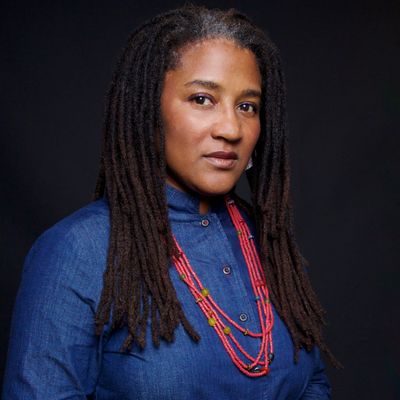
Lynn Nottage is a two time Pulitzer Prize winning playwright, and the first and only woman to win the category twice, for “Ruined” and “Sweat”. She's a screenwriter, a Tony nominee, a producer, the recipient of a MacArthur Genius Grant fellowship and was included in Time magazine's 2019 list of the 100 Most Influential People... Read More
From the show: The Theatre Podcast with Alan Seales
Guests
About
Lynn Nottage is a two time Pulitzer Prize winning playwright, and the first and only woman to win the category twice, for “Ruined” and “Sweat”. She's a screenwriter, a Tony nominee, a producer, the recipient of a MacArthur Genius Grant fellowship and was included in Time magazine's 2019 list of the 100 Most Influential People. Lynn’s work can currently be found on 2 different Broadway stages: “Intimate Apparel” the opera at Lincoln Center Theater (Libretto), and “MJ” a new Broadway musical at the Neil Simon Theater (Libretto). She's an activist working with the Art for Justice Fund, among others, and is an associate professor of playwriting at Columbia University.
Lynn opens up about one of her main reasons for going into teaching, noting the importance of nurturing and mentorships, and being invested in the success of her students, particularly her students of color. She talks about getting involved with the Art for Justice Fund specially through her play “Clyde’s”, a not for profit invested in how art can be used to help people who are incarcerated or formerly incarcerated tell their stories and “transcend their circumstances”. Lynn also chats about one of her newest projects, the new opera “Intimate Apparel”, and why it’s considered a brand new show rather than a revival.
In this episode, we talk about:
- Almost becoming a journalist instead of a playwright
- Researching and conducting interviews for her plays
- Creating Broadway industry internships through the Art for Justice Fund
- Reimagining her great grandmother's life to write Intimate Apparel
- Working on MJ the Musical
Connect with Lynn
- Twitter: @Lynnbrooklyn
- IG: @lynnnottage
- Web: http://www.lynnnottage.com
Connect with The Theatre Podcast:
- Support us on Patreon: Patreon.com/TheTheatrePodcast
- Twitter & Instagram: @theatre_podcast
- Facebook.com/OfficialTheatrePodcast
- TheTheatrePodcast.com
- Alan's personal Instagram: @alanseales
- Email me at feedback@thetheatrepodcast.com. I want to know what you think.
Thank you to our friends Jukebox The Ghost for our intro and outro music. You can find them on Instagram, Twitter, and Facebook @jukeboxtheghost or via the web via jukeboxtheghost.com.
Transcript
This transcript was automatically generated and might contain errors.
[0:00] Alan Seales: Welcome back to The Theatre Podcast. Intimate personal conversations with the industry's biggest names. Today's guest is no different. It is two-time Pulitzer Prize Winning Playwright Lynn Nottage. She is a lady who never stops. She is always out to learn something new, do something new. She just finished up Clyde's on Broadway, just opened Intimate Apparel, and also just opened MJ the Musical, back-to-back nights. Incredible how she just doesn't seem to sleep, but amazing story about how she got into the profession of writing, what made her want to do this and get into this creative endeavor. So, such an exciting story. Can't wait to share it with you. Find me online on Instagram and Twitter, Theatre Underscore Podcast.
Leave a rating and a review. Even on Spotify now you can leave a rating. Support the podcast via ttp.fm slash Patreon, P-A-T-R-E-O-N. Those proceeds go to helping keep transcriptions going. And everybody now please enjoy this episode with Lynn Nottage.
[1:16] Alan Seales: Today's guest is a two-time Pulitzer Prize Winning Playwright, and by the way, the first woman to win the category twice, and note, still the only woman to win it twice. She's a screenwriter, a Tony nominee, a producer, the recipient of a MacArthur Genius Grant Fellowship, and overall just one of the busiest people I know as of late with three shows running in one stage or another, Clyde's, Intimate Apparel, and most recently to open MJ the Musical. She's an activist working with the Art for Justice Fund, among others. She's also an Associate Professor at the Theatre Department at the Columbia School of the Arts. Holy crap, Lynn Nottage, welcome to The Theatre Podcast.
[1:55] Lynn Nottage: Thank you so much.
[1:57] Alan Seales: So you're standing, you're awake. I saw you literally days ago for your most recent opening, and then the week before Intimate Apparel opened on January 27th. How are you going right now?
[2:14] Lynn Nottage: Well, Intimate Apparel opened on the 31st, and MJ on the 1st, so the openings were back-to-back.
[2:19] Alan Seales: Oh, we got pushed. Oh, I read online it was the 27th, so yeah, back-to-back days.
[2:24] Lynn Nottage: No, it was the 31st, back-to-back openings. I was describing to someone it's the equivalent of running like the triathlon version of theatre. I've been training all of my life to have a play, a musical, an opera all at once.
[2:42] Alan Seales: And there's such different shows about such different content and such different styles, and I think that speaks to who you are as a person, right? You are such a well-rounded person and you don't stick to one thing, and I don't know if you're able to in a good way, right? Speaking personally for myself, if I do one thing over and over again, or I stick to one thing, I get super bored with that one thing, but I appreciate that one thing if I've got ten other things distracting me.
[3:12] Lynn Nottage: Yeah, well, I guess I've always had wanderlust, and so that continues and translates to my imagination. I describe myself as nomadic, that once I finish, I like to pick up and go someplace completely different. And I also think that having three shows that are distinctly different has been an advantage in this moment, because I can leave and then go into a completely different landscape and reinvigorate myself, and then when I get tired, pick up and go into another landscape. And so it's been fun to travel through these different theatrical spaces.
[3:51] Alan Seales: Well, so take me back to Little Lynn. When did you first start getting into performing and realizing that theater was for you? Because we're going to get into this. You not only graduated from Brown, you also graduated from the Yale School of Drama. So two of the hardest schools that you went to, but how did you even get there? Where was the beginning for you when you were like, you know what, I'm going to pick up a pen or a typewriter or a computer, whatever it was, and start putting your thoughts down?
[4:24] Lynn Nottage: I guess my very first encounters with drama were in the kitchen in my house. My mother always had a large circle of friends, and so at any given moment, if you came into our kitchen, there'd be this group of women sitting around this orange formica table that we had and drinking from a jug of Mondavi wine. My mother was like an early wine lover before it became trendy, a red wine, and the women, including my grandmother, who was a great raconteur, would just sit and tell stories. It was one of my favorite parts of the day. After I finished my homework, I could come and sit and just listen to that storytelling. But also as a young person, I began writing skits for my brother and myself that we would perform for my mother's friends because we wanted to get in on the action.
So I think that unbeknownst to me, I was a playwright very early on, and it didn't really become formalized until I got to high school when I wrote my first play. I don't even know why I wrote that play, but I did write it when I was in a drama class.
[5:34] Alan Seales: In high school, my peers were like, where are we going to go out tonight and get some beer? Like North Carolina, so that's where the accent comes from. But in high school, you were sitting down and writing plays, which is incredible to me because, again, the high school where I came from, there was just nobody like that around there. Did you see the need for this yourself to pursue it in higher education, to go to college for it? Or did somebody else at one point say like, yo, you've got some real talent. You need to go this way.
[6:12] Lynn Nottage: I grew up in New York City. I went to the High School of Music and Art, which is now known as LaGuardia. I was always around people who wanted to make their lives in the performing arts, so I wasn't an anomaly in that space. I was in school every day with people who were immensely talented and many who were much more talented than me, but when I went to college, I wasn't really thinking of theater as a livelihood. I was a black woman and there weren't a lot of role models for me out there, and so it was something that I did because I loved to do it. I loved to write plays and then see people perform it, but there was no sense that it was going to become a career. But when I got to Brown, I just continued it.
And it was really there that I discovered that I had a knack for playwriting when I was in playwriting courses, and I had the encouragement of a professor named George Bass, who ran something called the Rights and Reasons Theater, which was the black theater space in Providence, Rhode Island, and he just nurtured my voice and encouraged me, and he was the only one at the time doing that. And then my senior year, I had the good fortune to take a course with playwright Paula Vogel, who at the time was a young woman trying to, in her own right, negotiate the theatrical landscape, and she was literally the very first living female playwright that I encountered. Of course, I'd read the work of Lorraine Hansberry, I'd read Ntozake Shange, but Lorraine Hansberry was dead long before I think I was born, no, I think she died.
And Ntozake Shange was this sort of distant, remote figure that I admired, but I didn't know. And so Paula Vogel was like a living, breathing female playwright who I could talk to about the craft. And she said, I think you can do this. And she's the one who encouraged me to apply to the Yale School of Drama, which I had no intention of doing. And then I got in, and I was like, oh, okay, maybe I should go.
[8:25] Alan Seales: What did you think you were going to do if you hadn't gotten in? Or did you have another path?
[8:30] Lynn Nottage: Yeah, I mean, I did have another path. Like, throughout high school and college, I worked for two newspapers. One was the Phoenix that was in Brooklyn, New York, which was this little local newspaper that had this very scrappy editor who fashioned himself like an old newsroom guy. He smoked a cigar and wore suspenders, and he'd yell at us, and we'd type on typewriters. And he, for whatever reason, he liked me, and then he hired me to work at his other newspaper, which was The Villager, which was this little newspaper in East Village that covered local news. But what they did a lot was reviews of art galleries and plays. And so it was this interesting assortment of people who worked there. And so I always knew that I was going to write in some way.
And if I didn't become a playwright, I'd probably be a journalist. The same time that I'd gotten to Yale School of Drama, I'd also gotten into the Columbia School of Journalism. So I was really at that crossroads. Like, do I go take this path, or do I take that path?
[9:29] Alan Seales: Oh, that's so cool. So there's a multiverse version of you that is this highly successful journalist and has her own talk show, and obviously has won a bazillion daytime Emmys, because why would you not?
[9:44] Lynn Nottage: Yeah, there's definitely another version of Lynn, you know, in that alternate universe.
[9:50] Alan Seales: I think that's funny. And I actually don't put it past you to try that at some point either, because I don't think that you're one of those people. You were just saying that you love to do so many different things. And aside from the writing, aside from theater, you're teaching too. So you're giving back. And I think I want to call out how important that is, because of exactly what you said earlier, is that when you were coming up through your education, you didn't have any female, living female playwrights to interact with, let alone playwrights of color. And I think that's incredibly important, especially right now.
[10:28] Lynn Nottage: Well, I think that's one of the reasons I began teaching, is because I think mentorships are really important. Nurturing is really important. You know, while there are theater colleagues who certainly were there for me from the very beginning of my career, what I didn't have is someone who was absolutely 100% invested in my success. And that's what I try and do with my students, is I am there for them. I'll read drafts of their play. I'll write recommendations. I'll introduce them to people in this industry, because it's difficult. I mean, writing for theater is not for the fainthearted. And any help that you can get is absolutely appreciated. And I just, in particular for my students of color, because I know how difficult it's been, is that I'm there to help them.
And that, I think that takes us to the activism side of things as well, because working with Art for Justice, among a couple other foundations that you work with. So, Art for Justice is, well, tell us about that for those who...
[11:36] Lynn Nottage: The work with Art For Justice is very specifically through my play "Clyde's," which is about a group of formerly incarcerated people who work in this sandwich shop, which is kind of like limbo. And they, you know, they're under the thumb of this very tough woman named Clyde who runs it, who really is their major obstacle to success. Every time they feel good, she's there to remind them that they're formerly incarcerated and the world is not going to accept them. And so the play is about people who are in this liminal space who are trapped in limbo, just trying to use the tools in front of them to rebuild their lives and reach for redemption and find joy. You know, so it's an optimistic play.
And we teamed up with Art For Justice, which is a not-for-profit that's really invested in figuring out how art can be used to help people who are incarcerated and for people formerly incarcerated tell their stories and sort of transcend their circumstances. And so it felt like a really nice alignment between what the play is about and what the mission of that organization is. And we were able to, through their generosity, create opportunities for some formerly incarcerated to be interns at the theater. So we created three internships, one front of the house, one backstage, and another one, someone got to observe us actually rehearsing the show. And so we were really excited to bring on people who wouldn't necessarily think about theater as a possibility when they got out.
We also, through Art For Justice, were able to, with the support of Hadi Kamara, who's the executive director of Second Stage, create a job fair on Broadway, which hopefully will happen. So the opportunity will be for people who are formerly incarcerated to look at opportunities in the Broadway industry, which is very exciting.
[13:47] Alan Seales: So amazing.
[13:49] Lynn Nottage: Yes, I think it's very cool. And then the thing that we were also very, very excited about, because we are streaming, or we streamed because the show has already happened, is that we had the opportunity to stream the play in Rikers Island and then do a conversation and workshop with guys who were inside.
[14:11] Alan Seales: Wow. But, so, I, God, Rikers, right, there's so much controversy surrounding Rikers and just the incarceration system in general, but in New York specifically, that we don't have time to get into that. But, I mean, where can people who are listening now, let's do a quick plug for Art For Justice. So if we want to donate, if we want to get involved, where can we go?
[14:35] Lynn Nottage: You know, they have a website, so you can go to Art For Justice and spend some time engaging with what they do. And a lot of the programs are super cool. And, yeah, it's a wonderful foundation.
[14:49] Alan Seales: So when you were researching "Clyde's," did I read this right that you went specifically to Redding, Pennsylvania?
[14:56] Lynn Nottage: Yeah, well, "Clyde's" really comes out of the research that I did when I was working on another play called "Sweat."
[15:03] Alan Seales: "Sweat," that's what it was. Yes, yes.
[15:06] Lynn Nottage: "Sweat," where I got to Redding, Pennsylvania. I was really interested in how—
[15:09] Alan Seales: Which, of course, got you a Pulitzer and a Tony nom.
[15:13] Lynn Nottage: Yeah, I was really interested in how, sort of, the industrialization, the economic downturn was reshaping the American narrative. And when I was there, I interviewed as many people as possible and what I discovered in the town, because it had been this industrial powerhouse, was that people coming out of prison were attracted to the city because they could get off the bus and, like, in a second, find a well-paying job. And once the economic downturn occurred, people continued to come to Redding, but there was no work. And so it became a city that had a lot of social services for the formerly incarcerated. And as a result, many of the people who I interviewed were formerly incarcerated, who had these incredible stories.
And one person in particular was a guy named Dr. Will, who, while he was in prison, got his Ph.D. in psychology. And when he came back to Redding, Pennsylvania, because that's where he was, he decided that he really wanted to give back. And he started, like, the first green market in downtown Redding and created this economic empowerment zone for business people and entrepreneurs of color, and just was like this ray of sunshine. And, you know, whenever I went down there, I used the opportunity to talk with him. And my play, "Clyde's," really comes out of some of those conversations. There's a character in the play called Montrellis, who is like the sensei and the teacher, and who's really deeply invested in mindfulness. He's described as like the Buddha from the hood, who just wants to help these young people who are looking at the landscape and seeing no possibility find possibility. And Dr. Will was that person.
[17:00] Alan Seales: It sounds like the work you do and you put into putting together a play or putting together a show is almost like you're filming a documentary. You're figuring out the story you want to tell, you're interviewing the people, you're putting together all these characters and these narratives. So is that something that came inherently just because of who you are, and you want to tell an accurate representation instead of complete fantasy? Or did that come through the years of higher education?
[17:31] Lynn Nottage: I think that, yes, I'm really interested in some documentary techniques in terms of interviewing people, but everything that I create is fiction. And so it's definitely, it's not like verbatim theater. It's not what Anna Deavere Smith does or the Civilians do, in which they really are taking those interviews and putting them on the stage and keeping sort of the language and the impulses of those people very present in their performances. I mean, what I do is slightly different, and I wouldn't call it documentary theater, but certainly my approach when I'm interviewing people owes something to the documentary form. My husband, Tony Gerber, is a documentary filmmaker, and when we first were doing research for "Ruined," he was really instrumental in helping me figure out, well, how do I shape these questions? And how do I ask difficult questions? And how do I allow the person who's being interviewed to understand that I have empathy? And so I leaned on him for some of those techniques.
[18:39] Alan Seales: That, again, leads me to my next thought of how and why you choose to write about what you write about, because there's, you mentioned a couple of the people that are like putting interviews on stage directly. You're creating fiction, but it's still grounded in realism. And then you want to take an extreme, right? There's the sci-fi, there's time travel. Like George Lucas could not go to space and research intergalactic war by interviewing a Sith Lord, right? This stuff's completely made up, and he's not a dialogue writer. Let's call him what he is.
[19:14] Lynn Nottage: No, he's not a dialogue writer.
[19:20] Alan Seales: So then where do you decide to spend your time? Because like you said, you've got "Clyde's," or "Clyde's" just closed, but you had "Clyde's," "MJ," which is a complete beast in and of its own, and "Intimate Apparel," which is currently playing now at Lincoln Center. And "Intimate Apparel" is a revival, but now it's an opera.
[19:49] Lynn Nottage: Yeah, it's not a revival, because this is the first time the opera is being done. Well, it's like a completely different animal than the play.
[19:59] Alan Seales: So did you approach, okay, okay, before I get to the next question of how did you approach the opera, we'll go back to the original question then. Where do you decide where you're going to spend your time today, tomorrow, next week? I mean, that's a great question. They often get asked, you know, well, how do you find your way into a play? I mean, sometimes it's a nagging question that I have at some, you know, in the case of "Ruined," I was very interested in doing a modern adaptation of Bertolt Brecht's "Mother Courage" set in the Congo, because there was that protracted war that was happening in Central Africa. And when I began doing my research about what was happening to women, I found that there was no information.
I'm like, no one's doing, no one's asking the questions that I'm asking. And so I had to get on a plane with the director and my husband and go to East Africa and find women who were fleeing that conflict and ask them, well, what's happening in your lives and what's going on? And the play really is a response to the answers that they gave me. And the same was true for "Sweat" when I was looking at the landscape and trying to figure out, you know, why is the American narrative so corrupted and what is going on in this moment in American, you know, in the American timeline? And I found that some of the questions I had were not being answered by the periodicals that I looked to. And so I had to do that research.
And so I think for me, a lot of times, you know, the kind of immersive research that I did comes out of questions that I need on a very personal level to be answered. That it's led by my curiosity and my need to know.
[21:49] Alan Seales: Huh. Wow. Okay. So then that I want to make the parallel there to take this to "Intimate Apparel" because the core of "Intimate Apparel" came from a photograph of your grandmother that you found while cleaning out her place after she had passed, right?
[22:05] Lynn Nottage: No, she hadn't passed. She had developed senile dementia.
[22:10] Alan Seales: Oh, yeah. So tell that story so our listeners know. And then we can, and then we'll get into "Intimate Apparel" because I think I find the story amazingly fascinating.
[22:22] Lynn Nottage: Sure. I mean, the story came about my mother had Lou Gehrig's disease, which she developed at a rather young age. And, you know, it progressed very quickly. And she died before I had the opportunity really to ask a lot of questions that I had about the family. And just as she was dying, my grandmother was developing senile dementia. And they were really the last matriarchs in my family who I could go to, to find out about some of my ancestors and my relatives. And I was left with this enormous hole. And while I was cleaning out my grandmother's house when we're moving her into my brother's home, I found this Family Circle magazine because unbeknownst to me, she hid all of the family photographs and magazines, and I'd thrown out most of them before I discovered this, unfortunately. And I found this one photograph of my grandmother when she was very young.
[23:12] Lynn Nottage: Her sister and this other woman who was clearly their mother, and it was the first time I'd ever seen a picture of my great-grandmother. And in that moment, I realized that there was no one who I could ask about her. I knew that she was a seamstress, I knew that she'd come to New York City at the turn of the century, but beyond that, there was no information. So, Intimate Apparel, like many of my plays, came about because I had these questions that needed to be answered, and I went to the New York Public Library to try and figure out how a woman, you know, a black woman at 18 years old, who arrived in New York City at the beginning of the 20th century, would have negotiated that space. You know, where would she have lived, and how would she have made her living as a seamstress? And Intimate Apparel was my reimagining of my great-grandmother's life.
[24:04] Alan Seales: Wow. Yeah, so the play is set in 1905, and it tells the story. I didn't realize it was a reimagining of your great-grandmother's life. I want to go back and see it again now, knowing that specific fact. But, you know, I think it's wonderful how it's telling the story of this young woman. Again, this is like before any type of modern communication technology, right? So you're writing letters with this person and then agree to marry them without ever meeting them, and that was not uncommon.
[24:36] Lynn Nottage: Yeah, it was not uncommon. So it's telling these untold stories that are completely, I want to, I assume, are normal of a certain type, a certain group of people at a certain time in our culture that was essentially uninteresting to the people who were keeping the records. So that's why there's just nothing about them. There's nothing about them. I mean, it's one of the things that we have to engage in is this historic fabulations as Black women, because we were so thoroughly sort of expunged from the archive. Even when I was doing my research, it was fascinating how difficult it was to reconstruct the life of an ordinary, extraordinary woman like Esther. You know, there were not books being written about her, and even in the newspaper, there were very few articles that were being written about her, and so it almost was, you almost had to approach the archive like a forensic scientist and piece together the little tiny bits of clues to figure out, you know, who this person was.
[25:50] Lynn Nottage: And there was no help either, or very little help, I suspect, for not only women in that time period, but women of color in that time period, to support them through establishing, finding a job, and getting support, and if there are husband troubles, if there's alcohol abuse going on, like that all seemed very, very normal. But I would say that through the lens of the stories that I've been told, which I completely admit have mostly been written by white men.
[26:25] Alan Seales: Right, well, it's, I mean, Esther was living in a patriarchal racist culture in which she was completely devalued, and so there was no one invested in telling her story other than herself, and she didn't have the tools to do it. And she literally could not read or write.
[26:46] Lynn Nottage: She couldn't read or write, and so it was very difficult for her to tell her story. And I love the dichotomy between the two people, the two other, the secondary characters in Intimate Apparel through which Esther is interacting with, who do help her do the reading and the writing, but they're completely on opposite ends of the social spectrum. You have a prostitute on one end, and a super rich white lady on the other end. So you've got this person who is, like you said, just completely normal on the time, and uninteresting to the people doing the record keeping, who's just trying to find their way through life, and has this amazing skill set that can't get any support. It's phenomenal to me how you brought this to stage.
[27:44] Lynn Nottage: Oh, well, thank you. I mean, one of the things that fascinated me about the character of Esther is because of her relative invisibility, she acts access to many places that folks wouldn't, you know, whether it be sort of Fifth Avenue, home of a very wealthy white woman, or Modelo, where prostitutes are applying their trade. She could go into these worlds and have these relationships that one might think were impossible.
[28:17] Alan Seales: We're going to take a short break. Stay tuned for more of the episode.
[28:33] Lynn Nottage: So you wrote Intimate Apparel originally as a play, and then where did the impetus come to recreate it? We won't call it a revival. We've made that clear. Not a revival. It's not a revival. It's a brand new show. It's a brand new opera, original opera. So did you go back to, I guess, where did the idea come from to do this? And then did you start from the original script, or did you just like write out plot points and start over completely? Because obviously, we can't sing the entire script.
[29:06] Lynn Nottage: Sure. I mean, Intimate Apparel really came about via Ricky Ian Gordon, who's our fabulous composer. I had encountered his music, and he approached me and said, you know, I love your work. Would you be interested in writing opera? And I said, yes, of course. And for about two years, we spent time trying to figure out what story we wanted to tell, and we were engaging with different kinds of texts. And at some point, he said, you know, what I really want to do is make your play Intimate Apparel into opera. And my response is that that's really what I want to do. And we had sort of circled that for all this time and lost like two years engaged with other things. And we began working on it, and I was complete and absolute neophyte.
I love opera. I've gone to the opera for many, many years, but I've never written a libretto. And so I had to lean very, very heavily on Ricky to help me navigate through that space. And my first impulse was to rewrite the play. And my second impulse was to rewrite the play. And finally, Ricky said to me, and you know, he sat me down, and he's like, you're not trusting me as a collaborator, is that you want to maintain absolute control. And when you're writing opera, you really have to surrender some of that control to the composer, because they're the ones who are doing 60% of the work. In a play, if you want to say, I love you, you have to say it, you know, you have to speak those words. And Ricky's like, I can do that with music. And so like, allow me to do some of the storytelling. And that is what I did is I went back and like stripped away 50% of the play and let him be the collaborator and fill in those blank spaces.
[30:56] Alan Seales: That is incredible. Okay, so then you're going through, are you starting with the original dialogue that you wrote? Or is it just here are the points we need to hit, like an outline, and writing dialogue to fit in there and hoping that Ricky can turn it into music? You're nodding your head, yes, yes.
[31:17] Lynn Nottage: Well, the answer to your question is yes and no. When we sat down to work on the project, one of the things that we decided to do was to expand the world. And yeah, and it was to expand the world because the conceit of the play was very specific. Intimate Apparel is designed so that you have two characters who are always in conversation over a bed. And I was interested in the way in which that bed transforms the nature of those interactions. And what we decided to do is because we were putting it on a different stage is to scale it up, is that we can invite other people into the world. We could take folks to the Lower East Side. We could take people into the saloon in the bordello. We could have Mrs. Van Buren, who's a wealthy woman on Fifth Avenue, have her maids helping her get dressed. And so the opera is slightly more expansive than the play itself. It's populated by more people.
[32:30] Lynn Nottage: And you've got this opera. You've got Clyde's, which is a straight play. And then you've also got MJ, which is this big budget powerhouse, phenomenal musical telling the story of this cultural icon that has literally changed the world. And so shifting into that mode then for writing the book for MJ, did that involve sort of the same amount of research? I mean, there's tons and tons of data points on Michael Jackson, of course. It's not a story that did not get told. So how did you start with that one?
[33:08] Lynn Nottage: It's interesting you say it's not a story that has not been told, but there is a lot in this story that hasn't been told. I think that one of the things that we decided to hyper-focus on is his creativity, because I think that so much about Michael Jackson is his eccentricities and all of the noise around his music. And we decided that we were going to micro-focus on what does it mean to build one of the biggest concerts that the world had ever seen in 1992? And how does he select those songs that go in that concert? Because he had this enormous catalog. And so we micro-focused. And I just also want to point out that while all of these plays, musicals, and operas are really different, there is a thread that ties them together, is that they're fundamentally about creativity and self-actualization. You know, whether it be Clyde's or Intimate Apparel or MJ, it's all people who at their core are in some form an artist and who are trying to figure out how do I tell my story through what I make.
[34:36] Alan Seales: Interesting. So is that conscious on your end to pick out these characters and these stories that are of the similar ilk like this? You know, I don't think it was conscious, but I think the fact that I was developing.
[34:48] Lynn Nottage: Revisiting it when I was writing the other things and was deeply invested in telling the story of someone who is an artist, but is not necessarily viewed in that way. I love the story of MJ, how it's presented, how you guys did it, because like you said, it is very hyper-focused on this one point in time and uses opportunities of, I guess, the moments in the show to flash back and show a lot of history. Like you said, I guess it is something, a story about Michael Jackson that hasn't been told as much as other things, I guess, or focused on other things. Where did you go to find the knowledge? Did you do the interviews? Did you do traveling to find this information about his past, his personal past that obviously he didn't want to talk about?
[35:54] Alan Seales: Yeah, I mean, I was really fortunate to be able to have access to people who had toured with Michael Jackson, people who had written some of the songs that he sang, people who worked with him in other capacities. I had access to some of his own personal archival materials where he jotted down his thoughts and most of the language that you hear him speak in the musical actually are things that he said or things that he felt because I was trying to figure out, well, how do you find his voice and find the voice that people aren't often used to hearing? And so I took a lot of that from his own archive.
[36:43] Lynn Nottage: Wow. I'm imagining that moment where someone handed you this journal handwritten by Michael Jackson and you get to hold it in your hands for the first time and open it up and you're like, holy crap, this guy who has sold hundreds of millions of records and influenced the world and changed our music and changed our life and our culture, his thoughts are literally in my hands right now.
[37:10] Alan Seales: Yeah. I mean, it was incredible. It was like pulling back the curtain and seeing who's pulling the strings. One of the things that was really fascinating about engaging with that archive was just how intentional he was in everything that he did. We like to think that he wasn't in full control, but he very much was, which I find infinitely fascinating. People are going to come to see MJ with any number of different expectations or thoughts on how the story should be told or what should be talked about. So what's the big thing? Is there one thing that you hope people will walk away from after seeing the show and remember?
[38:03] Lynn Nottage: Yeah. I mean, I think that one of the theses of the musical is, you know, what is the cost of creativity? And want people really to sort of think about how the music was made and why the music was made, because I think it's so easy, you know, just to sort of bop to a song without listening to lyrics and without really considering that song in its totality. And so hopefully people will re-engage with the music on a deeper level. As you started to research Michael and look at his thoughts, literally handwritten thoughts, were you able to go back and re-listen to songs that you've listened to previously in your life completely with a new lens and see things and realize things you'd never seen before?
[39:46] Alan Seales: Yeah. I mean, it was fascinating because I listened to every single song that Michael Jackson has ever touched. And I think what's fascinating is like why he, you know, selected to put certain songs on an album and what he was feeling in moments and why he, you know, he leaned into certain kind of vocal techniques and all of those things that we don't consider. You know, what was he thinking when he was making Thriller versus Off the Wall? You know, Off the Wall was really an album of liberation when he was self-actualizing and trying to figure out who he was as an independent artist and separate from the Jackson Five and the Jacksons that had really defined his career up until that point. And then as he was beginning to find his voice and take more ownership and moving into Dangerous in which he produced and wrote much more of than his previous albums. And so just following his trajectory as a human being through the songs and the music he chose to make.
[40:50] Lynn Nottage: That's a lovely, a lovely story that is lying underneath this idea that everyone's got. And I mean, I think it just speaks to the fact that this was obviously long before social media. But what you see on the surface is pretty much most of the time never who a person really is or you don't understand the motivation. You know, in a tweet in 250 characters, I'm not going to tweet and then follow up with why I'm tweeting about it. That's just, that's not how...
[41:22] Alan Seales: Well, some people do.
[41:23] Lynn Nottage: I know. Well, some people do. You know, some people are like live out loud on Twitter. I guess. I guess. I don't know. That's not, not for me. And, oh, you know what? This is completely unrelated or unrelated to theater, but it drives me insane when people do those, those cryptic tweets where it's, they don't say why, they don't give any context. It's just like, send me, send me thoughts and prayers today. I'm like, well, so then...
[41:54] Alan Seales: I know, it's just really scary.
[41:55] Lynn Nottage: It's like, what? Did something happen? Are we supposed to care a little or a lot? Or do you, do you want, how much attention do you need right now? It's like, just, I'm all about being direct, but I understand, I understand that everybody's this way. You know, it's funny because I tweeted out one of those cryptic tweets once without really thinking. I mean, I can't even remember what I was doing, but I said something like, wish me luck. You know, this is going to be really difficult. And I got all these people like, we're praying for you. You know, we hope you're okay. And I'm like, what? Because whatever I was doing was very bad. It's like, I'm just going to the gym for the first time in a month. That's all. I think it was something as simple as that, which I can't remember. Wish me luck, my friend. And then I have three or four people that's like, I'm okay, I'm fine. It's not a big deal.
[44:02] Alan Seales: Alright, well, let's wrap up. That taught me a lesson about Twitter. Well, let's wrap up with three standard closing questions. And I ask everybody to wrap up the podcast. The first one, just very simply, is what motivates you?
[44:06] Lynn Nottage: I guess I'm motivated by curiosity. As I get older, I remain more interested in the world and figuring out the hows and the whys. And then when you hit 40, speaking from personal experience, the death of life starts hanging over me. And I'm like, okay, now I got to learn more. Because I feel like I'm running out of time already. And I want to learn as much as I can in as short amount of time as I can. And it's scary. And life accelerates when you hit 40. It just gets faster and faster. Those years are like... Take every moment as it comes, man. Every moment, all those questions, you got to get them answered immediately.
[44:49] Alan Seales: Okay, so next question then. What advice would you give to your younger self and younger people listening now starting out down a similar path?
[44:54] Lynn Nottage: Oh, I mean, that's a great question. I think that the thing that I would tell my younger self is to invest in my own voice. And don't let anyone sort of push you in directions that don't feel right for you. Is that what you would tell people who are also starting out trying to be writers or playwrights or screenwriters?
[45:38] Alan Seales: Yeah, absolutely. I think that it's... I wish when I was... The younger me had been more confident. And had not allowed so many voices to enter my creative process. And I feel that I would have arrived sooner at the destination I wanted to get to. But instead, I allowed people to place all of these obstacles which were unnecessary opinions in my way. And so it took me a lot longer to find out. I shouldn't say find out. To figure out how to shape my own story in ways that felt good to me.
[46:25] Lynn Nottage: Beautiful. Last question then. Hardest one. If you could only see one show for the rest of your life, but you can see it as many times as you want, what would you see?
© Broadway Podcast Network, All Rights Reserved