

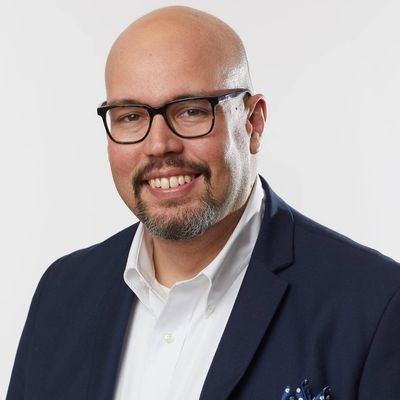
Robert Schneider is one of Feinstein's/54 Below original programming producers, a freelance director, and co-host of the popular podcast Behind the Curtain: Broadway's Living Legends, the official podcast of BroadwayWorld... Read More
From the show: The Theatre Podcast with Alan Seales
Guests
About
Robert Schneider is one of Feinstein's/54 Below original programming producers, a freelance director, and co-host of the popular podcast Behind the Curtain: Broadway's Living Legends, the official podcast of BroadwayWorld. Some of his favorite directing credits include Memphis (Regional Premiere), Rock of Ages (Millbrook Playhouse), The Last Five Years (Fuse Productions), Good People with Tony Award winner Johanna Day, and City of Angels (Young Artists Ensemble). Robert is also the Artistic Director for the J2 Spotlight Musical Theater Company, which just began its second season. Robert is currently on the faculty of both Penn State University and the New York Film Academy, and has a new book coming out on March 31st, called Fifty Key Stage Musicals, now available for pre-order.
Robert shares how the J2 Spotlight Musical Theater Company was born through connections fostered while working at 54 Below, and recalls memories of the day the pandemic shut them down. He talks about the wisdom accrued and lessons learned from his guests as one of the co-hosts of one of the industry’s favorite Broadway podcasts, one of the most noteworthy being the validation that there really is no security in this business for anyone. Robert also gives us an inside look to his new book, Fifty Key Stage Musicals, including how they decided which shows to include, and what kind of healthy debate he hopes it inspires.
In this episode, we talk about:
- How musical theater has always been in his DNA
- His dad, the private investigator
- A common consensus on Danny Kaye
- Why he hopes to see an end to open call auditions
- What types of show’s he thinks we’ll see more of in the future
Connect with Rob
- IG: @robwschneider
- IG: @j2spotlightnyc
- Listen to his podcast BEHIND THE CURTAIN
- Check out J2 Spotlight
Connect with The Theatre Podcast:
- Support us on Patreon: Patreon.com/TheTheatrePodcast
- Twitter & Instagram: @theatre_podcast
- Facebook.com/OfficialTheatrePodcast
- TheTheatrePodcast.com
- Alan's personal Instagram: @alanseales
- Email me at feedback@thetheatrepodcast.com. I want to know what you think.
Thank you to our friends Jukebox The Ghost for our intro and outro music. You can find them on Instagram, Twitter, and Facebook @jukeboxtheghost or via the web via jukeboxtheghost.com.
Transcript
This transcript was automatically generated and might contain errors.
[0:00] Alan Seales: Welcome to the Theatre Podcast. Intimate, personal conversations with the industry's biggest names. I'm your host, Alan Seales, and your guest is Rob Schneider. He is heavily involved in the New York scene. He was one of Feinstein 54 Below original programming directors. He has a very popular podcast, also on Broadway Podcast Network, called Behind the Curtain, Broadway's Living Legends, so make sure to check that out. He's one of the two co-founders of J2 Spotlight Musical Theatre Company. And we get into that story, of course, the other co-founder, Jim Jamiro, an incredible guy, invented the Disney Channel, so you want to hear his story. That episode with him, I interviewed Jim, just dropped on my other podcast, Was It Chance, which you can find wherever you're listening to this podcast now, so make sure you're subscribed and listening to that as well.
It's super fun. Rob is a super fun guy. I cannot wait to share this episode with you because we share the same amazing? Dry? Yeah, we'll go with amazing. Horrible? Sense of humor? So I apologize in advance for all of our really amazing, horrible jokes. Find me online on Instagram and Twitter at Theatre underscore podcast. Leave a rating and a review wherever you're listening. Even on Spotify, you can leave a review now. That's brand new. And now, everybody, please enjoy this episode with Rob Schneider.
[1:33] Alan Seales: Our guest today is one of Feinstein's 54 Below original programming producers, a freelance director, one of the hosts of the amazing podcast Behind the Curtain, Broadway's Living Legends. He's also the artistic director for the J2 Spotlight Musical Theatre Company, which just began its second season with the first show opening February 10th. Get your tickets now. Check the show notes for that. Having survived the Broadway shutdown of 2020-2021, they are back, and he even has a new book coming out on March 31st called 50 Key Stage Musicals, which I personally cannot wait to read. Again, check the show notes for the link to preorder that now. Rob Schneider, welcome to the Theatre Podcast.
[2:16] Robert W Schneider: Alan, thank you so much for having me. Do you want to be my agent?
[2:19] Alan Seales: I would love to. Do I get 10% of nothing?
[2:25] Robert W Schneider: If you find a penny in between your sofa, that's your annual salary, so I don't have to do anything.
[2:30] Alan Seales: Sweet. I think it's very cool that you're the artistic director for J2, and I would definitely want to get to the book. I'm envious of people who write books, and we're going to get to all of this stuff, because I want to write a book. I don't know exactly when I want to write it about, but... Pop-up scratch-and-sniff? What are we thinking?
[2:49] Robert W Schneider: I'm thinking, well, pop-up scratch-and-sniff, definitely, I think that's an underutilized genre, so...
[2:55] Alan Seales: I think so, too.
[2:57] Robert W Schneider: But it's going to be in partnership with Mike Rowe, so dirty jobs, pop-up scratch-and-sniff.
[3:06] Alan Seales: I can't wait. I'll buy the Kindle edition.
[3:08] Robert W Schneider: Well, spoiler alert, Amazon and I, we've been talking, so they're going to have a new Kindle with Smell-O-Vision.
[3:14] Alan Seales: That's actually a genius idea.
[3:19] Robert W Schneider: I'm not going to make no copyright, though.
[3:21] Alan Seales: What if you had a book, or a Kindle, that as you turned the page, it had a little poof of book smell?
[3:26] Robert W Schneider: I would love that, actually. I think that could be a lot of fun. Because there are a lot of people that... I'm a digital guy, obviously, very digital, tech-nerdy, and I don't like physical books because there's an impact in the environment, and I just... If I'm traveling, I want every... Literally, you can put an entire internet in your pocket. But there are people who are like, no, I've got to have a physical book, I want to turn the page, the smell of the book, right? And of course, there's the touch, we'll get there, but Smell-O-Vision in a Kindle?
[4:00] Alan Seales: That's lovely, but you should date more.
[4:03] Robert W Schneider: I think that's a brilliant transition to get away from dating. I don't know.
[4:12] Alan Seales: J2, you just started Season 2, or you're about to start, or have started, depending on when you start, but you're about to start Season 2, and you're about to start Season 3, and you're about to start Season 3, and you're about to start, or have started, depending on when you, the listener, are listening to this episode. So first show, February 10th, J2, the artistic director for this amazing, amazing theater, which you co-founded with Jim Jamiro.
[4:43] Robert W Schneider: Yes, I created the Disney channel.
[4:46] Alan Seales: Yeah, Jim, absolutely phenomenal, shameless plug. I interviewed Jim for my other podcast, Was It Chance? That'll come out around the same time this episode does, so amazing interview. But this guy just loves theater. How did you two get connected, and then where did the idea for starting a theater come from?
[5:05] Robert W Schneider: You know, we got connected actually through 54 Below. I had done the 50th anniversary concert of The Happy Time, which I'm still surprised is not a national holiday. And when I did that, Jim, who I did not know, came to see it, and apparently had a really good time, and he sought me out. And he was like, can we get lunch together? And so usually when someone asks me to lunch at Cena's show at 54, it's usually like two geeks just geeking out about musical theater, and we have a club sandwich, and we go home. But he said to me about halfway through the conversation, he said, how would you like to do what you're doing at 54 Below, but on a larger scale? Because at 54 Below, we only do the songs.
You know, there's no book, there's no choreography, there's none of that stuff. So Jim was asking what would happen if we could expand it and actually do the whole show? And I was like, well, if you've got the money for that, I am more than game. And we did a handshake, and that's how that all got started. We both had parallel ideas, because I had been thinking about doing a theater company for a while, specifically to showcase new and emerging talent in the city, because I really don't think there's a lot of places that do that. You know, like people that are just stepping out. And he wanted to bring back a lot of the old shows that he had seen, and he had loved growing up. So I was like, can we marry these two ideas together?
And that's how it came about. So okay, so then continue then, you said you were going to do this, and how long ago was this? Because you started season one right before the pandemic, or during the pandemic?
[6:38] Robert W Schneider: Oh my god, right as the pandemic started. I have to tell you, our first season, it was cursed, because like a week, a week before the first show was supposed to open, my mom died. So I had to go back home to California and take care of that. Then I got back, and we were about to open the third show, and we were literally walking to the theater on opening night when the theater called us and said, hey, the city's going to go into a lockdown, but it's only going to be for two weeks. We'll see you in two weeks. And two years later, we're doing that show.
[7:10] Alan Seales: Wow, so you never finished the first?
[7:10] Robert W Schneider: No, we never finished our first season. We got two shows up and running, and then the third show literally closed on opening night.
[7:14] Alan Seales: Wow. And it was so sad, because like a year later, they were like, hey, you have to come clean out the theater now. And we went in, and it was all still set for opening night, except there was dust on everything. It was like very surreal and very bizarre. So I'm happy that we're getting to do it again, because I think it's a really special show.
[7:34] Alan Seales: That's really weird. Oh man, that's super shitty. Would you like to hear more depressing stories on today's podcast?
[7:42] Robert W Schneider: Well, you obviously have a massive, massive, massive love for theater, because your podcast has been around for years. You've got like 500 something episodes. It's insane.
[7:59] Alan Seales: We started in 1968, and then we were just waiting for a place to launch it, and thank God, podcasts came around. You were just like, I'm going to record these. I'm going to call them a podcast, and then I'm going to wait for a company called Apple to invent the iPod, and then call it the podcast. Our first guest was silent screen stars Fetabara. It was a very awkward conversation, just dead silence on her end. I'm going to play a clip of that right now.
[8:26] Robert W Schneider: Doesn't she sound great? That was amazing. That was absolutely...
[8:31] Alan Seales: She just let it all hang out there. Good for her.
[8:33] Robert W Schneider: All right, so tell me then, take me back, little Rob, where did you get in... Tell me about your little Rob.
[8:39] Alan Seales: Never been little. You can talk to my doctors about that. Never been little.
[8:44] Robert W Schneider: Well, what got you into musical theater? What was like the touchstone moments to bring you into your love for performing?
[8:50] Robert W Schneider: I was born in Brooklyn, and from the time I was three years old on, my parents took me to a Broadway show every weekend. Then when I moved out to California, when I was also somewhat young, they then, to make up for it, just got me every single movie musical that was available. For me, it's always been a part of my DNA. It's always been a part of my life. I can't even think of a time where musical theater was not an essential part of who I am. That's how I got into it, and I loved it. I can't sing. Can't sing, we're shit. Can I say that on here?
[9:25] Alan Seales: Yeah, of course.
[9:25] Robert W Schneider: I cannot sing, we're shit, but I've directed over 100 musicals. When did you decide that you wanted to do it professionally, I guess? What did your parents do? They were like, from three years old, that's a lot of commitment to take you to those shows.
[9:42] Robert W Schneider: It really is. My mom was a psychotherapist, and then retired when me and my brother were born, so that way she could become a homemaker. My dad, he's had an interesting life. He was Chuck Schumer's chief of staff for a number of years when Chuck was an assemblyman, and then a congressman. Then my dad switched careers, and he's a private investigator.
[10:07] Alan Seales: Whoa. It was a bad...
[10:13] Robert W Schneider: They're ready not to make you upset, because you're gonna be digging up dirt on everybody, I'm sure. It was odd growing up, because if I did something wrong, my dad would find out before I could confess to it, and then my mom would explain why I did it. There was no sense of normalcy there. My mom really loved theater. She was the one who funneled me into that career path.
[10:37] Alan Seales: Why not go into private investigation? You see spy movies. That seems like such a fun thing to do.
[10:43] Robert W Schneider: My father literally sits outside in a Toyota Corolla on the floor for six hours with a camera, waiting for somebody to come out. I was like, this is not necessarily the life for me. He loved it. I'm just like, this is not for me. I cannot sit in the car that long.
[11:00] Alan Seales: It's a good time to listen to podcasts, I guess.
[11:03] Robert W Schneider: He does. Sometimes he'll text me. He's like, hey, great podcast. By the way, we arrested the guy.
[11:12] Alan Seales: He's like, well, the guy chased me with a bat, so I had to stop the episode, but I'll listen to it later. I'm curious. I'm like, okay, thanks, Dad.
[11:21] Robert W Schneider: Oh, my goodness. That sounds like so much fun. I love that you have parents with such non-Broadway theatrical backgrounds, who found such an enjoyment and such a value to bring you an...
[12:41] Robert W Schneider: The mandatory advice that I had to take was, you can do computer science with, sorry, you can act with a computer science degree, but you can't do computer science with an acting degree.
[12:54] Alan Seales: Oh.
[12:55] Robert W Schneider: So, because I originally was like, oh, I'm going to look at acting schools. Columbia, that sounds like a good one. That's, that's in New York. I'll go there. And she's like, no, too expensive. Stay local in North Carolina where I'm from. Lots of good universities there. So I ended up getting a computer science degree, which has now led me down this funky path of combining tech and Broadway and theater. And it's been, it's been an interesting journey as well.
[13:19] Alan Seales: What did your folks do?
[13:21] Robert W Schneider: My, my mom was a dance major and my dad was a neurologist. He's, they're both retired now. And, and so then my, my mother, my mother, I'm the oldest. So once I was born, I've got a younger brother and the two of us were home. She, again, she decided to be a stay at home mom too. And God, I have so much respect for her now, now that the pandemic, especially now that the pandemic is here and I'm having to do a job, a daytime job and be sometime, somewhat of a full-time parent because the kids have been home. I'm like, Jesus Christ, like full-time parents. I love you. You, you are so undervalued and Jesus, I'm a better dad when I don't see my kids all the time.
[14:06] Alan Seales: I hope you heard that kids. How many kids do you have?
[14:10] Robert W Schneider: Two, just the two.
[14:11] Alan Seales: Just the two, boy and a girl or two boys?
[14:13] Robert W Schneider: Two boys.
[14:14] Alan Seales: Oh.
[14:15] Robert W Schneider: How old are they?
[14:16] Robert W Schneider: Uh, seven, seven and a half, seven. Yes. Seven and five and a half. So they're both little shits and I love them and they're the, they bounce off the walls. They are the cutest annoying best things to ever happen to me.
[14:30] Alan Seales: I love that. I love that. How did they cope with like online school?
[14:35] Robert W Schneider: Well, they don't really know much difference, which is sad.
[14:42] Alan Seales: Yeah. I have a friend and her kids are the same ages as your kid. And she, and she said the same thing. She said, Oh, you know, they don't, they really don't know the difference because they didn't have that. Yeah. And that is sad. You're absolutely right. That's very sad.
[14:56] Robert W Schneider: As it in Brooklyn here, of course, where we live, right? It's the New York life is not the same. And even, even in suburbs now, it's not the same when we were kids where it's just like when I'm seven, like my older son, when I was seven, I would go out for hours and my parents wouldn't know where I was. Yeah. And you can't do that in New York anyway. You shouldn't. And, but then even in suburbs now, because of, I mean, what I heard was two years ago or something, it was right before the pandemic, there was like a mom who got arrested for letting her eight or eight year old or something, just walk home from school by himself. And so she got reported to child protective services for letting her, her eight year old walk through a park by himself or something.
And it was ridiculous. Years ago, all our parents would be in jail, right? That's the point. Yeah. Like, I mean, you rode in station wagons without seatbelts and we're jumping around or like hold mommy's cigarette while she makes a left-hand turn. Do you know what I mean?
[15:47] Alan Seales: Yeah. Yeah. Yeah. Like your poison test is bourbon for me. There you go, boy. Oh, you're still alive. All right. Makes you put hair in your chest. Oh, come on. You can live in a house with lead paint. What's the problem?
[16:11] Robert W Schneider: Oh goodness. Yeah. So that's what my parents did. They, uh, they listened to musical theater albums all the time. Listened to a lot of operas too, but my, my, my touchstones, my things were singing in the rain, music man and West side story on VHS. And we wore, we listened to those, wore them out, watch those all the time. Um, and the cats soundtrack cast album, the original cast album of that. And, uh, then there was the other thing. It was a, there was a Sesame street, big bird album I listened to. Those were like the five things as a kid that I remember.
[16:48] Alan Seales: I love it. Well, that's so cool that your parents gave you that.
[16:53] Robert W Schneider: Yeah. Yeah. But they were more practical. Like I think my mother definitely wanted to, um, uh, live vicariously through, through me a little bit. So she encouraged me to, I put an air quotes, follow the dream while still saying, don't follow it too hard because you really need to pay the bills.
[17:14] Alan Seales: Yeah. Well, I mean, it's, it seems like everything's worked out for you. You have a great job and you're still involved in the arts. It's, it's been an interesting transition. And now authors, I want to come to your book a little bit. Um, which I want to tie into the podcast because you seem to have such a, a deep, deep knowledge of theatrical fundamentals of, of the pivotal people, even behind the scenes, not just on stage actors. Right. But, um, let me read the, the little bit from your podcast. So your podcast behind the curtain collects the wit wisdom and anecdotes of musical theaters, greatest artists from the golden age to now from actors, directors, designers, playwrights, press agents to general managers.
So it's a podcast, it's a celebration of the giants who helped shape the theater. So this is a lot of deep knowledge and trivia that even your standard theater lover who is just going to know cast albums and leads and whatnot wouldn't even get into. So where did, where did this extra level of like of detail come from?
[18:15] Robert W Schneider: So growing up in California, um, we rarely went back to New York. So if I wanted to find out and there was no internet, if I wanted to find out something about musicals, which I loved, I would go to the library and I would take theater books off the shelf and I would, I would literally sit there for hours and hours and hours and you would read the same books over and over and over again. So you just sort of like started to memorize these names that popped up and you saw things like general manager and you were like, what is a general manager? And so for me, that's where like that minutiae detail comes from because we didn't, I could not go to a Broadway theater anymore. We were all the way on the West coast and like I said, there was no internet. So you would read the liner notes, you would read the magazines, you would read the New York times and you would just read it over and over and over again because that's all you had access to.
[19:03] Alan Seales: You say, you say you like, you say like you, like you and I would both do this, but I think this was, I picture you in a, in a dark library with like one, one spotlight right above you.
[19:13] Robert W Schneider: Yes. Thank you, Dr. Allen. I'm sorry. I think I'm realizing a lot of my issues now. No, I loved it. I just absolutely loved it. And then I got to a point where I was, I was like, I would love to talk to all these people now that I'm in the city whose names I've been memorizing for years and years and years. Um, and that's where the idea for the podcast came from. Purely selfish. I wanted to meet all these people that were my heroes.
[19:42] Alan Seales: Was it hard for you to get going because you're, you're one of the OG theater podcasts, right? Like you've been around for, for decades, you know, since the fifties or forties of the 1840s and our, our first episode broadcast live from the opening of showboat, very exciting.
[20:02] Robert W Schneider: We've been around a long time. Oscar Hammerstein. We're from a podcast. What's that? Be careful. That stock market's going to crash. Um, so what was the question? I have no clue. Oh, one of the OGs. Yeah. I think it was us and the amazing Patrick Hines who had the theater people podcast. Um, and I really didn't listen to podcasts before all of this. So I was like, what's so like you said, and you talk for a while, let's see what happens. And 500 plus episodes later, this is what happens.
[20:34] Alan Seales: What do you think you've learned? The like something, a through line that you figured out that you wouldn't have known if you hadn't been doing the podcast?
[20:40] Robert W Schneider: I think for me, like it validated that there is no security in this business and that you really are as only good as your last. Um, you know, we interviewed people that are 80, 85 that have, you know, multiple awards. And after the podcast is over, they'll say, do you know if blah, blah, blah is auditioning or do you know where I can get money to produce this? And you go, huh? So that never goes away. But to me, I'm also like, well, that's very comforting because I think in our mind, we always go, there's going to be a moment where we will hit like artistic success and we can just relax. And to hear like 80 and 90 year olds going, Oh no, that doesn't happen. That doesn't happen. That was a through line. And Danny K was an asshole. That was the other through line that we learned. Those were the only two things I can bring to the table.
[21:28] Alan Seales: Danny K is one of my mom's favorite actors. I'm going to tell her not to listen to that.
[21:34] Robert W Schneider: We have heard stories about him. Like every, anytime you bring Danny K up, he'll go, he's an asshole. And then like it becomes like group therapy and they just want to talk about it and get it off their chest. I don't think we've ever found anyone who said anything nice about Danny K.
[21:52] Alan Seales: What's interesting is my version of that, of that answer is that I'm glad I didn't make it on Broadway.
[21:59] Robert W Schneider: Oh yeah. Because of the exact same thing you just said, because when you're successfully in a show, you're still looking for your next job.
[22:10] Alan Seales: Oh yeah. Oh yeah. That doesn't go away. There's no sense of security.
[22:15] Robert W Schneider: No. And then you throw in all the other crap about global pandemics and everything that, there's TV and film and voiceovers and the internet has overcomplicated it because now anyone can be discovered on YouTube or on TikTok. And I mean, you've got the production and there's nothing against these people. This is good and bad because people who wouldn't have the opportunity are being found and it dilutes the pool and makes it harder for even those people who are still that successful. But yeah, to your point, God, that's my through line is that I love hearing everyone else's stories, but damn, there's a part of me that's like, I want to be the best and try to overcome it, but probably wouldn't happen. And I'm glad I don't have to have that struggle.
[23:04] Alan Seales: No, but you've also created your own path for yourself. And I think that's also something that's really important that I also think was a through line for us on our show, which was hearing people really creating their own journey and no one's journey is the same.
[23:22] Robert W Schneider: And I think that's something I wish a lot of college-age students knew about this before they went into the industry. Because I think they're being taught, you know, like you're a Corey Cott type. So that student then goes, okay, well, I'm going to learn all the songs Corey Cott learned, and I'm going to do what he did, and I'm going to work at the theaters he worked at. And it's like, you can't do that. Right now, I feel like it's an education. It's a lot of factory. It's a lot of like an assembly line of things. So I wish that students would embrace more of their uniqueness, because it's the uniqueness that becomes successful on Broadway. Look at somebody like Lynn. Look at somebody like Kristen Chenoweth. Do you know what I mean? Their unique voice is what makes them successful. They're not copies of anybody.
[24:04] Alan Seales: Well, right, right. So embracing what makes you unique, embracing what makes you specifically different is what's going to set you apart in a good way. And I think a lot of people don't realize that because a lot of the teachers, like you said, the teachers are pushing people through an assembly line. And what I have seen being in the technological space is that every day, the gap between what teachers are traditionally telling people, like you can be a good singer, you can be a good dancer, you can be such and such, but you are your own product, and you have to know marketing skills. You have to know the business of show business. And that's where a lot of I think conservatories are falling real flat right now.
[24:47] Robert W Schneider: I agree with you 110%. And I'm going to be honest with you. That was another reason why I created the podcast. Kevin and I, who's my co-host, we both taught. And he had a very interesting undergrad experience. And I taught at Penn State University. And I love Penn State, but at the time, there were some things I'm like, this feels wonky to me. But I don't think universities do a good job in the theater department of building a bridge from the academic world into the professional world. The last semester, they're like, oh, yeah, by the way, you're a product. And students have no idea what to do. And so for me, with the podcast, I was like, I hope young people are listening to this and hearing you have to do X, Y, and Z. You do have to be a business. You do have to hustle. And this is how you hustle. That was an important part for me, which is I wanted to be educational as well.
[25:36] Alan Seales: Where do you teach? Let's plug your teaching right now. Where can we take classes for you?
[25:40] Robert W Schneider: I teach at Penn State University. I've been teaching there since 2006, but I teach online now. The New York Film Academy, which has a musical theater department, and Mount Union, which is a school in Ohio. All three of those are online-based. So I guess, yeah, location ultimately doesn't matter anymore. And I think that's case in point, too, to what we were just talking about that you have to be able to navigate the technology. And I'm going to be honest with you. I think that's a fantastic thing. I think the fact that we will not have any more open calls where people are lining up at 3 a.m. in a blizzard to sing eight bars or not to sing at all, which to me is so horrendous and sadistic. I'm so happy that's gone because now we'll put you on self-tape because now everyone knows how to do a self-tape.
[26:30] Alan Seales: But you're right. Now everyone has to learn the skills of what makes a successful self-tape, audio, visual, lighting, and all that stuff. That's one of the silver linings I feel we can pull out of the pandemic shutdown is that everybody, without knowing it, had to learn how to be a lighting designer and a sound engineer. And everything that they previously didn't know about home recording setup, all of a sudden they had to be experts on so they could continue to work. And I think that's great. I really do. I think it's such an exciting time to be in this business because it is rapidly evolving.
[27:05] Robert W Schneider: How did you guys audition for J2 for the second season?
[27:13] Alan Seales: The initial audition was self-tape, which was great because then we could see people from all over the United States who wanted to submit, which was very exciting. And then we felt if we needed to have them in for a callback, we brought them into an in-person callback. I do not want to go back to in-person open auditions. I think it's unfair to the actor. I don't think it shows them to the best of their ability. And I know some actors don't like that because they want to be seen by a casting department. I understand that, but I think in the long run, this is better off for them.
[27:49] Robert W Schneider: I agree with you. Yeah, I agree. I agree. And it's a lot nicer. Like you said, you don't have to drive overnight, line up at 3, 4, 5 a.m., not even get seen. Because you might not even get seen at all. There's people trying to get into these equity open calls when they're not even casting because the union rules require you to have open calls.
[28:10] Alan Seales: Yeah. And then you go into the room and these people behind the table are just sitting there waiting for their day to be over. It's not helpful for anybody. So I'm excited. I do think that out of this pandemic, there have been positives that have come out of it, and I think that is one of them. We're going to take a short break. Stay tuned for more of the episode.
[28:43] Robert W Schneider: Your book. Yeah. 50 Key Stage. I don't get the title.
[28:50] Alan Seales: I don't know either. I used to call it 50 Key Musicals, and then they were like, no, it's called 50 Key Stage Musicals. 50 Key Stage Musicals. So the.
[29:00] Robert W Schneider: Like 50 Key Kabuki Musical. I don't know. 50 Key West End Australian Kabuki Musical. Koala, show number one.
[29:12] Alan Seales: I think you called that a show. This is a show.
[29:14] Robert W Schneider: Oh, that's good. That's really good. Pulls out a giant knife with the word show on it.
[29:21] Alan Seales: Um, Crocodile Dundee and My Fair Lady is what I'm always.
[29:25] Robert W Schneider: They're making a Karate Kid musical. They should make a Crocodile Dundee musical.
[29:30] Alan Seales: Absolutely. Get Hugh Jackman in there. We're ready.
[29:34] Robert W Schneider: They just call it crikey.
[29:36] Alan Seales: I would see that. I would absolutely see that. And if you want to sing Shapoopy in it too, awesome. Let him live his life. But let's just get this musical off the ground, please.
[29:46] Robert W Schneider: Well, I'm the brains. You can bring the money.
[29:48] Alan Seales: Or vice versa.
[29:49] Robert W Schneider: Correct. There we go. So, okay, 50 Key Stage Musicals.
[29:53] Alan Seales: What the book? It comes out March 31st. Let's fast track this because it's such a freaking awesome book. So give us a little hint of what is one of the biggest. I guess these are all transitional moments, right? The 50. How did you narrow it down to 50? And where were you like, I guess, is there a road map of well, vaudeville started and then there was cats.
[30:15] Robert W Schneider: Well, I mean, that's pretty much the book, Alan. I think you've read it. Literally one page. No, with our thing that we were guided by was if it wasn't for this show, there would not have been shows A, B, C and D. So you had to. So that was our criteria. And that's how we got it down to the 50 that we selected. There is some on there that I know we're going to I know there are shows that are missing that are going to piss people off. And I know there are shows that are in this list that people are going to be like, what the fuck? Like, how did they? Why? Why is Seussical in there? You'll see. Read the book.
[30:52] Alan Seales: What came first, Seussical or Shrek?
[30:54] Robert W Schneider: Seussical.
[30:55] Alan Seales: Yeah, you're right. Yeah. Then let's see. Let me take a guess at a couple. So Beauty and the Beast was ushered in the whole age of Disney theatrical fabulous. Rent brought in the rock opera. Great. Hamilton, you got to end with Hamilton. Probably. I don't know what you ended with.
[31:13] Robert W Schneider: No, I think we ended with Dear Evan Hansen.
[31:16] Alan Seales: Oh, we ended with Dear Evan Hansen. I'm going to be honest with you, and this is really controversial. We were not even going to have Hamilton in the book.
[31:24] Robert W Schneider: What?
[31:24] Alan Seales: Yeah, because we were like, well, what other musicals have sprung up because of Hamilton?
[31:32] Robert W Schneider: Huh.
[31:33] Alan Seales: And that was our first discussion, which was like, well, what exactly? Because we're so close to it just because we're so close to it. That's why we were like, what has it created a space for in terms of other shows being created?
[31:48] Robert W Schneider: So that was our first thing. And then as we dug in, we're like, oh, I think we have different angles on it. But originally, it's not going to be in there.
[31:56] Alan Seales: Oh, that would be very controversial.
[31:59] Robert W Schneider: But you're right, because I feel like in the theater space, it's created an opening that people haven't filled in yet because there hasn't been enough time.
[32:09] Alan Seales: Yes, and that's, yeah. But where it has gone, because there's more money, is into the TV and especially the movie space.
[32:18] Robert W Schneider: Yeah, yeah. And it brought up some really fantastic discussions about casting. It brought up some fantastic discussions of having a musical really embedded in a political movement. We hadn't had that previously. The fact that Hamilton was really emerging at the same time as the 2016 election, and so much of the themes in Hamilton were being picked up and being put into the news cycle, that to us was interesting. So we were like, we can't find any other shows yet because it's so close to it, but we have some other ways of getting in there.
[32:51] Alan Seales: So you've worked professionally and personally with Sondheim, too. How many of his shows made the book?
[32:57] Robert W Schneider: Oh, my God. West Side Story, Gypsy.
[33:01] Alan Seales: Of course.
[33:02] Robert W Schneider: Company, and Sweeney Todd. Those are the four that got in there.
[33:05] Alan Seales: I can, yeah, I can see all of that. Those were the four. And of course, you know, there was discussions about, you know, are we going to put Into the Woods in there? And then you have to go, well, what shows are there? Because Into the Woods was there. What did Into the Woods do that gave us A, B, C, and D? And it's like, we can't find, like, Music Man's not in there. I love the Music Man, but I'm like, I cannot tell you what the Music Man created a space for. So, oh, there is so much room for debate.
[34:10] Alan Seales: That's the point. 50 key honorable mention stage shows?
[34:14] Robert W Schneider: I mean, I feel like there should be an honorable mention, because there's so many shows in there that I know people are going to be like, how dare you? Was Titanic in there?
[34:25] Alan Seales: It wasn't. No, Titanic wasn't. Rebecca set the stage for a bunch of scandals.
[34:32] Robert W Schneider: Yes, it did. It did. That's actually, we should have done that. Carrie's not in there.
[34:40] Robert W Schneider: Gosh, this is going to be fun. Yeah, and that's the point of the, you know, the point of the book was, originally, it was, we want to have college students that are going to start musical theater, have just like a base understanding of like, hey, you should know these 50 shows. And as we were working on it, I was like, let's, let's create some debate. You know, and that's healthy. You know, that's healthy. I want people to say, you idiot. How could you not have the Music Man in there? Because it gave us bop, bop, bop, bop, bop, bop, bop. Fabulous. We'll do a second edition.
[34:40] Alan Seales: Yeah. There's a lot of shows that I know are not represented. I know people are going to be angry about. And that's, but that's awesome. Like write one, write your own book if you want to like include those, or reach out to us and tell us why you think this show should be included or why that show should be off the list. There's got to be a follow up to this because the history, the musical theater history, and I feel like.
[35:03] Alan Seales: Side note, you and Jen Tepper need to have like a musical theater trivia showdown.
[35:08] Robert W Schneider: She's gonna win. I bow to Jen right now. Jen will win this.
[35:16] Alan Seales: Yeah, oh my god, her knowledge is incredible and yours is too. I feel like there's so much to know and you as an educator too, as a teacher, you have to choose what you focus on because there's only so much in the day and so much time in the day and when like now even my kids, we talked about my kids a second ago, they're not learning cursive anymore. There's just not time enough in the day to teach them cursive. There's other things that are technologically necessary now to include like how to be a good online citizen not to like that's part of their curriculum is to learn not to cyber bully or be cyber bullied, right? I think that's great. I think that's fantastic. I had no idea because that was around when we were I think around the same age. I'm 41.
[36:02] Robert W Schneider: Oh, okay. I'm 38. I'm 38. So that wasn't around when we were growing up.
[36:08] Alan Seales: No, none of it. None of it because I in '98 when I went to college, I left my analog modem and had broadband in university.
[36:16] Robert W Schneider: Yeah. So we are of that special little cusp of knowing what modem use is like in AOL. You've got mail. That was the best sound and that dial-up sound. Oh my god.
[36:29] Alan Seales: So my point, my point was as an educator when you're thinking about the book, you're thinking about what goes in and you're trying to narrow down the 50 and figuring out what is important equally important is how are you determining what to leave out because there have to have been. I mean, I don't know how many Broadway shows there have been in the history of Broadway. I figure I picture like crime scene detective sort of room where you've got pins and strings going from one thing to the next thing to the next thing.
[37:03] Robert W Schneider: It actually was very similar to that, which was like it was like you would put in a show and then you would create like branches and go what stemmed from this show and there are some shows where like we were saying before, you know, people really love but we're like we can't I can't figure out what this show is doing or yeah that show did that but there was a show before it that did it before that one so maybe that one's the one that should go in but that's how we sort of we pieced it together.
[37:31] Alan Seales: Could you trace it back to specific people like Sondheim being one of them?
[37:34] Robert W Schneider: Sondheim is one, Hal Prince is one, Rogers and Hammerstein are two. Those were the names that I think were really coming up the most in terms of a really influential thing and that's you know but unfortunately that's also one of the things that we cover in the book which is as much as we would love to rewrite the history it is really for the longest time a bunch of white guys who were rich who were creating this art form and as much as we would love to say that wasn't the case it was the case and so I think when people read the book they might go wow there's a lot of diversity that's lacking in the book but that's also the history of the theater and now we're in a I think if we like rewrite it and try to make shows seem more important than they actually were I think that dissipates the current struggle that we're having right now and the discussions we're having right now about why theater needs to change.
[38:34] Alan Seales: So then looking forward, what do you think has been the most recent production that is going to influence modern American theater?
[38:39] Robert W Schneider: Besides Hamilton? Yeah. Okay, besides Hamilton I think you're going to see a lot more things like Come From Away which I think is really focused on human kindness. I think that's going to be something that you're going to see a lot of. I think A Strange Loop is going to be something that's really going to knock things out of the park because it's so brilliant and so funny and so truthful. It doesn't sugarcoat anything and I think that's an exciting time to be in that you can have something as fierce and ferocious as that and it's entertaining at the same exact time. So I'm hoping people will be inspired by Michael's work to create more things like that. So those are the shows that I'm picturing going forward.
[39:25] Alan Seales: I hope that too along the lines of inclusion, representation, and diversity. Hamilton changed the game in terms of casting and you touched on that among many other things. I think it was Brandon Uranowitz when I was talking with him for Burn This. He said that was the first time in his long career he has played a character who is openly gay as an openly gay man in real life where being gay wasn't a plot point.
[39:58] Robert W Schneider: Absolutely, absolutely. Because I mean how many years of gay plays have there been where that was, if you were a gay character, that was the main issue. That was the central issue and I'm hoping that we'll have more shows like that where a gay character, yeah, they're part of it. A trans character, they're part of it. It's not this big thing. It's just because it's part of our daily life and I'm hoping we'll see more shows like that. I'm really hoping that we will.
[40:27] Alan Seales: Yeah, I think we should. That's where Brandon's coming from, absolutely.
[40:33] Robert W Schneider: Yeah, I really, really hope so. So let's wrap up here with my three standard closing questions that I ask everybody. The first one, just very simply, is what motivates you?
[40:37] Alan Seales: What motivates me?
[40:45] Robert W Schneider: Love, the love of this, the love of storytelling. That's what motivates me. The fact that I get to wake up every morning. I realize that at any second this could all be taken away and so my feeling is you have to live every single day to the fullest because you just don't know when the clock is going to stop. That's what motivates me. I've started feeling that way 40. It was like a switch. When I hit 40, I was just like, oh, my parents are old and everybody, there's people younger than me dying and one of the big things that hit home was around our neighborhood. Our family of theater was Nick Cordero's death from COVID, right? Younger than me, younger than your age, younger than me, just perfectly healthy and then gone. That hit me in a way that nothing else had at that point. One of the healthiest, healthiest guys you've ever seen in your life and young and then just not here. Not here. In a million years, no one would have predicted that.
[41:53] Alan Seales: There's something about approaching 40 that really is. I don't want to say a slap in the face but it's just a nice reminder of how much time you have left. I was talking to my therapist about this the other day. I was like, in my 40s and now I'm 41 that now it's like I think about death a lot. She goes, welcome to being 40. That's what people do. Like, oh, great. You're asking now for the co-pays ahead of time.
[42:20] Robert W Schneider: Of course. Okay. Second question then, what advice would you give to your younger self and younger people listening now starting out down a similar path?
[42:24] Alan Seales: If opportunity isn't knocking, build a door. If people are not appreciating your talent, you don't have to wait for them to validate it. You create your own opportunities and don't listen to anybody. Don't listen to anybody. Especially teachers. Can I say that or is that wrong?
[42:52] Robert W Schneider: No, you're a teacher. Say whatever you'd like. You know what feels right in your gut. You know what your dreams are and it does not matter if a teacher or anyone looks at you and goes, oh, you're not cut out for this business. Fuck that. You want to be cut. You want this business. You want to be a part of it. Great. Find your way in.
[43:08] Alan Seales: I love that. I love that advice because when you look at some of the people who are the most iconic right now that you wouldn't traditionally think like they don't they don't fit the Corey Cott type, right? You look like a Josh Gad, you know, somebody like that who has found such a place for his type of voice and his body type and so many things. Josh Gad, Josh Lehman. I'm trying to think of some other people that fit that. Look at this right now.
[43:39] Robert W Schneider: Yeah. It's like this is fantastic. This is fantastic. It's your uniqueness is what sells you. And what drives me crazy is when I see musical theater programs, look at somebody that's unique and go, oh my God, they're never going to be in the chorus of Newsies. We have to cut them from the program because they're going to stand out. They should stand out. That's the point. That's the whole point of this. And that's what disheartens me because I've seen so many great students that because teachers did not know what to do with their uniqueness, the student left the business because they thought there was something wrong with them. There's nothing wrong with them. It's the teacher is wrong. And I'm a teacher.
[44:21] Alan Seales: And I'm a teacher. I think that's our poll quote for this episode.
[44:28] Robert W Schneider: Teachers are wrong. They're wrong. They're wrong. Okay. Last question then, if you can only see one show for the rest of your life, but you can see it as many times as you want, what would you see?
[44:35] Alan Seales: Oh, Gypsy. I'm going to see Gypsy. Why? Why Gypsy?
[44:39] Robert W Schneider: I love that score. I love that book. I think it's one of the first musicals to have fully three-dimensional characters in it. And the story to me is fascinating. Wow. Fascinating. That woman would allow her daughters to do what they do because in some way it means they're getting validation from strangers. And I'm like, this is fascinating. That's that one. I love that. All right. So where can we find you online?
[45:13] Robert W Schneider: You can find me on Facebook at Robert W. Schneider. You can find me on Instagram at Rob W. Schneider, Twitter, Rob W. Schneider, or listen to one of the 9000 podcasts that I have. We'd love to have you come listen to us. bpn.fm slash behind the curtain is the short link for your podcast. And of course, again, check the show notes of this episode for links to get tickets for J2, the J2 Spotlight Musical Theater Company season and preorder the book, which I cannot wait to read. It sounds like I'm just going to be going through earmarking so I can just text you and be like, yeah, fuck Rob, the fuck. Yes, that's what we want. That's what we want. Like, let's have a conversation. That's what we want.
[46:04] Alan Seales: I love it. I love it. You can get more of me at thetheaterpodcast.com. I'm on Instagram and Twitter at theater underscore podcast, facebook.com slash official theater podcast. Leave a rating and a review wherever you are listening now, including Spotify. Spotify allows you to do ratings now. This has been edited by Well-Rounded Hoodlum Productions. Thank you to Jukebox the Ghost for the intro and outro music and Robert W. Schneider. Thank you so much for this lovely conversation.
[46:31] Robert W Schneider: Alan, it was an absolute pleasure. I hope we get to do it again.
[46:39] Alan Seales: Anytime, man. I'm here for you. Yay. Take a deep breath, make the world a little colorful.
© Broadway Podcast Network, All Rights Reserved