

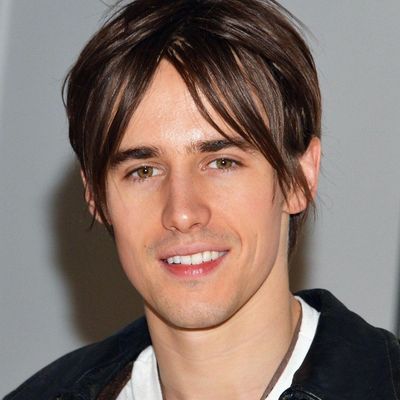
Reeve Carney is an actor, singer-songwriter, and musician, who may be best known for originating the role of Peter Parker/Spider-Man in Spider-Man: Turn Off the Dark on Broadway, and playing Orpheus in the original Broadway cast of the Tony Award-winning musical Hadestown... Read More
From the show: The Theatre Podcast with Alan Seales
Guests
Miniseries Inclusions
Featured Shows

About
Reeve Carney is an actor, singer-songwriter, and musician, who may be best known for originating the role of Peter Parker/Spider-Man in Spider-Man: Turn Off the Dark on Broadway, and playing Orpheus in the original Broadway cast of the Tony Award-winning musical Hadestown. Other notable roles include his portrayal of Dorian Gray in the Showtime series Penny Dreadful, and Riff Raff in the Fox musical television film The Rocky Horror Picture Show: Let's Do the Time Warp Again. Reeve is also the lead singer and songwriter of the band Carney, also consisting of his brother Zane, Aiden Moore, and Jon Epcar, who together have toured with The Veronicas, and opened for Arcade Fire and U2. He recently appeared as Tom Ford in the Oscar nominated film House of Gucci, and can currently be seen performing his original music in his residency at The Green Room 42, or captivating audiences eight times a week as Orpheus in Hadestown on Broadway.
Reeve chronicles his almost 27 year guitar playing journey, which began at age 12 and led to playing in nightclubs in LA a few years later, where fellow musicians convinced him if he ever wanted to lead a band, he needed to learn how to sing. He recalls meeting Julie Taymor for the first time at one of his band’s shows, and how that meeting set the course for working with Bono and The Edge, and originating the role of Peter Parker/Spider-Man on Broadway. Reeve also shares how he became involved with Hadestown, how the character of Orpheus changed significantly between their run at the National Theatre in London and the Broadway opening, and why he said “no” when asked to be a part of the first reading in 2012.
In this episode, we talk about:
- Growing up in a family of artists
- Being mistaken for Macaulay Culkin
- Getting signed to Interscope Records when he was 22
- His electronic effects pedal company called Quarantine Effects USA
- How Orepheus’s purity of voice is reflected in his character
Connect with Reeve:
- Check out his Effects Pedal company: https://quarantineeffectsusa.com/
- IG: @reevecarney
- Twitter: @reevecarney
Connect with The Theatre Podcast:
- Support us on Patreon: Patreon.com/TheTheatrePodcast
- Twitter & Instagram: @theatre_podcast
- Facebook.com/OfficialTheatrePodcast
- TheTheatrePodcast.com
- Alan's personal Instagram: @alanseales
- Email me at feedback@thetheatrepodcast.com. I want to know what you think.
Transcript
This transcript was automatically generated and might contain errors.
[0:00] Alan Seales: Welcome back to The Theatre Podcast. Intimate, personal conversations with the industry's biggest names. Today's guest is Reeve Carney, continuing our Hadestown takeover as, you know, he's Orpheus on Hadestown on Broadway. And he's actually kind of this perfect example of how saying yes to opportunities led him down a career path he never thought he'd have. Going through TV and film and trying to just pick up a guitar at age 12, which I'm gonna get to in a second, led him to start working in LA and Julie Taymor and Spider-Man and etc., etc. And all of a sudden, here he is. And of course, I'm glazing over a lot and paraphrasing. He picked up the guitar for the first time at age 12, was jamming with people three times his age at age 14, and then started to become professional, getting paid to perform at age 15.
So he won't say it. He is incredibly humble, but he's probably a bit of a guitar prodigy and just sort of a prodigy in general. He reverse-engineered effects pedals, guitar effects pedals, to try to figure out what makes two seemingly identical pedals sound slightly different. And now he just started making his own. So QuarantineFXUSA.com is his company. He's making his own effects pedals. Incredible. Shoot me a DM on Instagram or Twitter. Let me know you're listening. Share this podcast with a friend. Spread the word. And everybody, if you haven't already, go back in your feed. Check out the other amazing episodes all from the cast of Hadestown for this Hadestown Takeover. And everybody, please enjoy this episode now with Reeve Carney.
[1:42] Alan Seales: Today's guest may be best known for his portrayal of Dorian Gray in Showtime's Penny Dreadful, one of my favorite shows, by the way. Riffraff in Fox's Rocky Horror Picture Show reimagining, as well as originating the role of Peter Parker in Julie Taymor and U2's Spider-Man Turn Off the Dark. He can now be seen in his Green Room 42 residency performing his original music or swooning the crowd eight times a week as Orpheus in Hadestown on Broadway. Reeve Carney, welcome to The Theatre Podcast.
[2:17] Reeve Carney: Thanks, Alan. Thanks for having me on here. I love, I actually didn't know this about you. I've known, we've met a couple times and I just know you as this wonderful, wonderful artist and with this voice that transcends all normal senses of human decency. We'll get into that. But I know, I want to start at the beginning because it's very rare, I think, to have somebody who grew up in New York. You grew up in the West, or you're born in the West Village. Did you grow up there in Manhattan? You've been in Manhattan your whole life?
[2:50] Reeve Carney: Yeah, technically, yeah, I guess technically I was born in the Upper East Side only because I was born at Mount Sinai Hospital. The first place I ever lived was, you know, 10th Street in the West Village just off of 7th Avenue South and then moved to 17th Street when I was two years old. So, yeah, I grew up, yeah, in the village.
[3:14] Alan Seales: So, yeah, most people that I know that are, I guess, born and sort of have their young life in Manhattan when they get older, they're like, I need space. I want to grow up and be out of here. But it seems like with your family's history of performing and you, it's in the family, man, like you've got to, either you were here or LA were seemingly your only two places where feasibly you could go.
[3:40] Reeve Carney: Yeah, yeah, because you're saying people who are not born in the city wanting to get, yeah, you can't really, yeah, where else are you going to go? You're already, and people always ask me whether I prefer New York or LA because I did move to Los Angeles for high school and a little bit before then we were bi-coastal, my whole family, because my brother was on a TV show called Dave's World in the 90s. And so people ask me which I prefer, but it's kind of like, I don't know. I mean, both are such great cities. It's one of those things where I feel very grateful to have those options, I guess. And so I don't really choose because it's, you know, I've spent a lot of time in a lot of parts of America and actually I love so much of the country, but there's certainly places that are not quite as exciting in so many different ways as New York and Los Angeles.
[4:27] Alan Seales: Well, growing up, again, let's see, your family has this legacy of performing. So your father was a songwriter for commercials and your mother is a singer. And great uncle, of course, is Academy Award winner, Art Carney, right? Like it's in the family. And as a child, I guess, I was reading that you started playing guitar when you were 12, right?
[4:49] Reeve Carney: Yeah. But before that, though, did you see performing all around you? I mean, being in New York, you could either, I guess, gosh, you could be immersed in just about anything. But what was your childhood like up until that point when you decided to start performing and taking up guitar?
[5:07] Reeve Carney: Yeah, I mean, I definitely look at it, you see in the theater, a lot of the IATSE union, in some ways, there's a big family connection in terms of the history of theater workers. And I find that it was kind of a similar thing for me growing up. It's sort of the way that electricians or carpenters will be like, hey, this is like the family business, we're going to do this. I just always kind of assumed, because I was just drawn to art at a young age, I mean, I wanted to be a graphic art, like a painter is what I wanted, or a sculptor is what I wanted to do first at the age of like five, which sounds, I mean, I guess all kids love doing that. But I was pretty obsessive about it. So I would spend a lot of time, you know, free time doing that sort of thing. And that's what I actually thought I was going to do first. But then by the time I was eight, I sort of got the performing bug, I guess, and I wanted to be a performer.
[6:15] Alan Seales: Is that from watching your family or watching your great uncle or your uncle? Or like, where did you see that modeled?
[6:22] Reeve Carney: I think it's an interesting question, because I think this is where the term representation comes into play and is as important as it is. And I hadn't really thought of that until you just asked me that question, actually. But as a kid, people used to think that I was Macaulay Culkin on the street. And I wonder if that has something to do with it, because I kind of did resemble him. And so I never really thought of it. But it is so important to have people that you're like, oh, I can do that. You know, maybe I can. And I think, who knows, that might have had something to do with it. I don't really know if the Macaulay Culkin thing did. But people used to stop me in the street, especially foreign tourists, and they wouldn't use their words.
They would just like, go like, ah, like, and they'd hit their cheeks. And they'd make me do it. And so I would do that. But I don't know if that's the reason. But it just brought in a bigger conversation. You asked me that, because it made me think of that. But aside from that, I think it was just that I really loved doing it. And yeah, my family was in that business already. So they were very encouraging of it, as much as you can be, because also, they were afraid of it, because they really, kind of, on one hand, I think, secretly wanted me to be a doctor or a lawyer, which I would have actually loved to do. But just because it's a difficult business, the performing arts. But yeah, I guess that was it. It is just a family business thing, just thinking about how you see something. And yeah, it just seems like it's something that our family does. And I was interested in it. So yeah.
[8:00] Alan Seales: That's really interesting to me that, I guess, you grow up in whatever is normal for you, right? So every kid has their own version of normal, depending on what they're around and what their parents do or what their guardians and, I guess, yeah, what their environment says to them. So there's the nature versus nurture part of it. And you can't, I mean, I was going to say, you can't teach the kind of voice that you've got, because people go there.
[8:26] Reeve Carney: That's nice of you.
[8:29] Alan Seales: Oh, thank you. Yeah, you're welcome. Thank you. Thank you. Thank you for complimenting your compliments. The voice that you've got, though, you start performing at, or you start picking up the guitar, start playing at 12. And 12 is one of those years when the voice, especially for boys, is like, it's pretty bad at this point in time, at least for me. And so are you starting to take voice lessons? Are you picking it up because you just want to play? Or do you want to sing? Or is it like a forward-looking movement of saying, like, I want to be on the Broadway stage?
[9:03] Reeve Carney: Yeah, I was always a huge fan of theater, especially if it involved music, and just live performance in general. But I really did not envision myself being a musical theater performer at that age. And I think a lot of that had to do with the material being produced at that time, because that would have been even pre the debut of Rent on Broadway. So I think it was probably written, or at least partially written at that point, but it wasn't out there yet. And so there wasn't a whole lot of, well, also, at that age, you don't really know what type of voice you're going to have. Although at that age, I was very much a Steven Tyler fan. The people I was into at that age were like Freddie Mercury, Steven Tyler, and Aerosmith, obviously, and Queen, and Edgar Winter.
I was really into those sort of singers, although my voice hadn't changed at all yet. So I wasn't, I have a recording of me singing, actually, basically trying to emulate Steven Tyler on an Aerosmith song when I was 14. My voice was kind of, my voice changed a little later than most of those. And it was kind of gradual. I didn't have a whole lot of the squeaky thing. It was kind of like a four-year process of voice changing from probably, who knows, it might still be changing. I think it's basically what it is. But yeah, I don't know. But it certainly helped that my mom, she has a degree in musical theater from Cincinnati College Conservatory of Music. And so she knew to not have me in voice lessons during that time, because it's not generally a great thing for someone to train their voice prior to it changing.
Because you're not, I'm not exactly sure why it is, but I've always known you're not supposed to do that. And maybe because you can develop, the musculature changes, I guess. So if you're training it for something that is temporary, it's almost like putting braces on baby teeth. I don't know. Maybe that's kind of a thing. But so yeah, I did not train vocally, actually. I was in choirs, but I didn't take an official voice lesson until I was around 22.
[11:31] Alan Seales: Oh, wow. Yeah. So you took a while.
[11:35] Reeve Carney: Yeah, I wasn't thinking of it. That's the thing. So I really just wanted to be a guitar player. At that point, singing wasn't really on my radar. I only started singing publicly because I was playing these blues clubs when I was starting at the age of 14. And I was fortunate enough to be able to play with guys that were at that time, three times my age, which is crazy to think. But I mean, they were in their late 40s and early 50s. And they wisely told me, if you want to lead a band, you have to start singing. And I was like, okay, well, I guess I better start trying to do that. So I started seriously singing around the age of 16. And then that led me to writing songs. By the time I was 18, I started kind of seriously writing songs. I'd written a few songs before then. But so yeah, that was the process for me was guitar, to singing to songwriting, I guess.
[12:22] Alan Seales: Wait, so you picked up the guitar at 12. And we're playing with guys three times your age, two years later in bands in the city. That's unheard of.
[12:27] Reeve Carney: Well, in LA, but also it was probably about three years by the time I actually got paid for a gig. Before then, I was going to like jam nights playing with these guys. But then by the time I was 15, I was technically a professional guitar player, because I was being paid for it. But I guess you learn, I think you can really learn a lot in three years on that instrument, especially if you start young. And I had a great model for that as well. One of my best friends in the world is a guy named Johnny Lang, who you hopefully know, but not enough people know about him. But he's an amazing blues guitar player, soul guitar singing, soul singer, you know, so many things he does. But he had a similar trajectory, he picked up a guitar when he was, I think, 13, it was, or maybe it was it.
Maybe he was about 12, 13. But within like a year or two, he was leading a professional band in Minneapolis. It's so crazy. So he really had a fast track. I don't know. Yeah. I mean, I felt that's nice. Yeah, I mean, I guess it is a little bit fast, but I think a lot of people, I think people can do that. I don't know if it was particularly unusual, but maybe that was nice. It's nice for you to say that. I don't know.
[13:43] Alan Seales: I think it's pretty incredible. You know, speaking as somebody who's been around a lot of musicians that have taken years and years or, you know, a decade and still are not playing. And maybe it's one of those things. I was gonna say playing professionally, but maybe it's one of those things where at such a young age that you didn't realize how difficult it would be. And so you just went and did it because I've heard before from people that if they knew how hard things were going to be, they wouldn't have.
[14:38] Reeve Carney: So at that point is school not even like academic science and biology and the math and that stuff like is your brain is your brain is music. Your brain is yeah, I mean singing. I was I'm I'm very what's the word for it? I? Definitely was a very diligent student. So I think I graduated like over a 4.0 GPA because I took so many like extra AP classes or whatever the heck. Well, I was very academically oriented as well, but I went to a musical performing arts school where but mainly because my parents were like you can't do this other stuff unless you get good grades. So it was it was kind of like growing up that way like you can do you can play at nightclubs if you maintain like a straight-A average, I was like, oh, yeah.
Wow, but I also wanted to do that because I didn't I don't know yeah, I just I always want to try to do the best I can do and so and I saw the value in it because I also at that age I wanted to go to Yale. I didn't end up ever applying to Yale, but my dad went to Yale so I think that's why I wanted to do it. But um, I so I knew in order to get me yeah, you got really good grades. So I better I better keep trying, you know, but I think um, I was more referring to the summers because it during the school year I did not have time to play eight hours a day, but I still played a few hours a day and I I also went to a music Performing Arts Academy, so I had at least two hours of music in school a day.
[16:07] Alan Seales: Right. Well, you went to Academy of Music at Alexander Hamilton High School in LA.
[16:14] Reeve Carney: Yeah. Yeah with what is it? I'm reading pulling up for the internet here with your brother Zane and future bandmates Aiden Moore and Jon Epcar.
[16:20] Alan Seales: Yeah.
[16:20] Reeve Carney: Yeah, so that you and Aiden and Jon have been playing together for years, which I think actually leads into well, I guess it's Spider-Man right they played in the pit.
[16:34] Alan Seales: Right. Yeah.
[16:34] Reeve Carney: Yeah. Yeah, so like you you brought did would I guess how did that come about because a go working with Bono and the Edge is just incredible in and of itself which when you were talking about the people who you were idolizing as a younger kid I feel like U2 is right up there with them. So getting to work with these people and then oh, yeah, so I'll stop and let you answer but did your band bring you to the audition or did you bring the band to the pit?
[17:01] Reeve Carney: Well, so I had just I had just gotten signed to Interscope Records, I was 22 and a manager named David Sonnenberg had come to there was a lot going on at that time and a lot of different label people that were coming to the show. So it's a little bit of a confusing story so I probably it'll take too long to go into all the details but I ended up meeting a manager named David Sonnenberg who used to manage a huge Titan of the record industry named Jimmy Iovine who I'm sure you've heard of.
[17:36] Alan Seales: Mm-hmm.
[17:36] Reeve Carney: And so he brought Jimmy Iovine to one of our Molly Malone's residency shows in like February of 2006 and at that point Jimmy I guess basically like on the spot said yeah, let's let's do this and the next day I was in his office having a meeting saying hey, so we're gonna we're gonna do this deal and so I had just been signed there the reason I mentioned that is that at the same time Julie Taymor was making a film called Across the Universe and Bono obviously has a cameo in that film.
[18:11] Alan Seales: Right.
[18:11] Reeve Carney: I think I almost didn't use the word because that was that app cameo and I got a little bit confused for a second. I mean, I knew it was the right word, but who knows but um, yeah, he so he has a cameo in that film and one of my other best friends TV Carpio she I met her around that time and she had met my manager and Jimmy Iovine in that same year, so they brought her to our my concert at Molly Malone's and we struck up a friendship quickly she brought up and Rachel Wood who we also became close friends at that during that time and they had a connection to Bono and obviously Julie Taymor. So they told Julie about me and like a couple years later Julie ended up they ended up bringing or TV ended up bringing Julie Taymor to a concert of our band Carney's at the Mercury Lounge and so that's how I got my audition for her film The Tempest which I ended up getting and after working with her on The Tempest in 2008-9 I guess it was that's when she said hey, I have this musical.
Well, I already knew about it but at the time she didn't think I'd be right for cuz my hair was really long and I just didn't look like a Peter Parker type in her mind but ultimately she changed her mind Julie Taymor did and had me audition and that's yeah, that's how I got involved. I and at first it wasn't really an audition it was just she kind of dangled the carrot in front of me saying well, first of all, I wanted to help her she said the person who was originally gonna play the part had backed out last minute and I think this is out there. So yeah, I remember the story now that now that you're saying it. I remember reading about it. Well, I mean the original cast of Spider-Man Turn Off the Dark was gonna be Jim Sturgis as Peter Parker, Evan Rachel Wood as Mary Jane and Alan Cumming as the Green Goblin that was the original thing and then Jim backed out I he was having other things he was working on obviously and then Julie called me just to basically fill in for him at this event where they were gonna be presenting the musical portion of the show to a bunch of investors and she said if she just asked if I could help and I was like no problem and she's like and you get to meet Bono and the Edge if you come I was like done.
I'm in. So that's that's how I got involved. I flew to New York just to sing that thing didn't think I was auditioning for a musical I thought I was literally just there to kind of help and to have a fun week meeting these people and then they had me audition and it was about three months of auditions but I ended up ultimately getting the part and that that really changed things for me getting that part.
[21:08] Alan Seales: And so then I that's you the question is about the band.
[21:13] Reeve Carney: Yeah, sorry, this is so confusing but it makes sense in my head and hopefully this will make sense on the podcast but the reason I brought all that up is that in the connection with Interscope and everything was that Jimmy Iovine also at the time thought wow, this is gonna be a really helpful thing for us launching your music so there was this whole thing I ended up asking Julie if there was any thought maybe if they hadn't had a band yet if maybe they would consider having our band because obviously we went to musical everyone reads music they played her orchestra pits their whole lives. So I I brought the band in and it's been really amazing because a lot of us are still doing that work like our bass players in the Hamilton tour our drummer played for Mean Girls, he's doing another show that's coming to Broadway soon.
Wow. But so that now it's kind of changed the trajectory of our careers in a way we didn't expect this but I guess the point is there was a weird connection between Interscope Julie Taymor and myself and Bono and the Edge and it all kind of collided into this thing and it helped really yeah.
[22:16] Alan Seales: So the most important question I'm gonna ask this entire interview is yeah, what do you call the Edge in person? Do you call him Mr. Edge, or do you call him?
[22:24] Reeve Carney: Oh, I don't think I've never heard anyone call him Mr. Edge, but I think the Edge or Edge is like I think I always call them Edge.
[22:35] Alan Seales: Yeah, I think like hey.
[22:38] Reeve Carney: Yeah, I just say hey Edge, but I think you could do that that but it might be a little weird.
[22:42] Alan Seales: Yeah, I just call him hey Edge.
[22:45] Reeve Carney: Edge and Bono so working with the two of them though when you first when you first walk in you meet them and all right, do you get stage fright? Do you get starstruck anymore at that point in your and in that point in life to when you're going and meeting these major major pop star moguls?
[23:04] Reeve Carney: Yeah, I mean, it's I think I the first audition that I didn't really know was an audition I think I approached it in a way that I probably should approach every audition and it's easy. This is the thing like it's not always easy to do because the fact of the matter is this is why I'm such a huge fan of writers like including songwriters like Bono and Edge but but in terms of auditions like where there's no music involved it can be frustrating because you know, it's it's not every day that you have an incredible piece of work to work with and that was certainly the case when you're auditioning for Bono and the Edge, I mean so for me to get the chance to sing their song in front of them I approached the way I probably should approach every audition in the sense that I was just excited to show them what I could do with something that I was very excited about like I really loved their material and I was just like wow I'm getting to sing this for them.
This is cool so that I wasn't really approaching it from a nerve standpoint in that way whereas like a lot of times I think it's actually approaches like oh, I want to get this right and do this, you know especially on a self tape all of our stuff these days is self tapes.
[24:19] Alan Seales: Mm-hmm.
[24:19] Reeve Carney: And it's like almost impossible to get really excited about you're like, okay I'm doing this thing at my house where I'm the cameraman the casting director and you know it's it's kind of frustrating sometimes but in in that sense it was really exciting I felt that it was like a great opportunity obviously to be able to sing for these legends and I will say I did say to Bono a few years later after watching Rattle and Hum. I said, I'm really glad I didn't see this before meeting you guys because I think I would have been all even more nervous and I watched this film I could imagine.
[25:02] Alan Seales: Yeah, but now I guess through Spider-Man I mean celebrities love to come and have their picture taken with the cast of with Broadway cast they'll come and see the show and then you go up on stage and you know looking through your Instagram earlier there was like a picture like hey, it's it's me and Jon Hamm. We're hanging out Jon Hamm came back.
[25:10] Reeve Carney: Oh yeah, right.
[25:10] Alan Seales: So obviously that's a little bit different now in COVID times, but it is I guess the trajectory you're on now and I guess well my question through all of my random thinking here is you've got this great family legacy of being talented performers and actors and artists in one form or another and so you're I suspect as a child you were probably around quite a number of pretty well-known people, right? And so now you're in that position to give somebody else the butterflies and give somebody else the star the star-struck ability. But when when you're on stage now, I guess there's two questions here one when you're on stage now and you're on Broadway did you imagine that Broadway would be where you were headed because you originally wanted to just play guitar but then also yeah the star power that you now this ecosystem that you encompass is this part of of something that that you were always part of or is this brand new? You know since since the Spider-Man days and onward?
[26:20] Reeve Carney: Yeah, I mean I wasn't anticipating having my career be what it is in musical theater which I think is incredible, it's really mind-blowing and crazy and I absolutely love it because it's like I think I this is a part of me that really loves the routine especially the type of routine that Broadway this probably schedule brings it's quite a grind, but it's it's amazing I mean you you can live in one city in like arguably the greatest city in the world. Certainly. It's it's I mean I grew up here. I'm from and I love absolutely love New York and you get to go to work eight times a week and then enjoy this city you know, you don't have a lot of you have to be everything has to be based around that those eight performances per week at least that's the way I look at it because I don't like missing shows but like and I don't know if anyone does you know, but it's but it but then you in your downtime you have all of this beautiful city to enjoy so it's it's an amazing thing I mean because on tour, you know, I love that world as well, and I love playing music and playing guitar, but with that lifestyle you're in a different city every day, which is also exciting but you don't get to sleep in your own bed, you know, and there are trade-offs.
[27:36] Alan Seales: We're gonna take a short break stay tuned for more of the episode.
[28:16] Reeve Carney: So are you trying to be the rock artist, the pop artist, or the jazz artist, I mean, or the Broadway scene? Because it seems like it's two sort of orthogonal paths that don't quite intertwine, although you got really fortunate to be able to showcase the guitar skills in Hadestown. So you can have a little bit of that. I mean, I don't show much of what I do in that show, but that's nice. I mean, it's a pretty simple part in that show, thankfully, because actually it would be quite hard to really act and play and walk around the stage. I mean, it's like Garth Brooks-style stuff we got to do in that. I mean, I'm just kidding, but he's the first person I ever thought of who would walk around a huge stage with a guitar back in the day.
But yeah, I feel very fortunate to be living in a time where it's not only acceptable, but it seems to be celebrated and almost encouraged, or actually, yes, encouraged, to pursue career paths. Sort of, what's the word? I guess they use the word multi-hyphenate. Yeah. You know, sort of some integration of skills. Because part of the reason I avoided acting for so long, because I did tell my parents when I was eight years old that I wanted to be an actor, but once I picked up the guitar when I was 12, because this was 1995, at that time it was not cool to be a musician and an actor. You've got to pick one, or you're kind of lame at one or the other. That's how it always felt to me. You're going to not be taken seriously as a musician if you are also an actor, or vice versa.
And now it doesn't seem like that anymore, so I'm really grateful for that. And I really enjoy different aspects of a lot of all of these things, so I don't really have a desire to stay in one lane. And I also am very grateful for the work that I have, because it's a tough business. So when you have a great job, it's important to keep that in mind, I think. For me, that's how I feel about things. So yeah, I don't know. Whatever opportunities arise, if I'm doing work that I like, then I'm grateful to be doing it. But I think it's kind of important to diversify, sort of like you would with a financial portfolio or something. And right now, musical theater might be like the gold and the bonds or something.
But you might need to invest in some stocks or something. I don't know, whatever. I get what you're saying, because literally, let's make it a real example. Broadway shut down. So you've got a whole industry. Your bonds crash, your gold market crashes, and that's gone. So you still have to survive on something. And you can still play guitar, and you can still compose music. And now with technology, you're writing music, and you don't even have to be in the same room or studio with your bandmates anymore. Because the internet is so readily available, you can just record your stuff and send it to your bandmates, and they add on and send it back, or you're all doing multitracks online together. And there were so many people that I know from the Broadway space that have had whole albums written in quarantine because they had nothing else to do. It was finally their time to explore that.
[31:51] Reeve Carney: Yeah, that's why I started, I don't know if you've heard of this, but I started an electronic effects pedal company called Quarantine Effects USA, obviously because of the quarantines and everything. And that was great for me, because it was weird. I found it was so shocking to me, as I'm sure it was to everyone in the world, that obviously it was not by any means the most crucial or important thing to focus on as a result of the pandemic, or stemming from the pandemic. But the fact that you could shut down entire industries for that length of time, I just couldn't believe it. And for that reason, I wasn't particularly inspired at that moment to really write music for some reason, because I felt like, oh man, how easy is this for this to happen?
Because I have thought about writing something, whether it be a musical. I've thought about that a lot, actually, writing a musical, just because I'm so drawn to theater. Write Home Alone the musical. Home Alone, that could be either great or really terrible. Star is adult Macaulay Culkin. Wow, that would be so weird. Bring it all full circle. Anyway, go ahead. We should just get him. Maybe he'll do it. And I think I found real comfort in focusing on... Because the thing is, when you're designing circuits, you're kind of in control of everything, in air quotes, and I think we all felt so out of control during that time, that that was a really healthy thing for me. And it's been amazing, because it's created a new love for me that I didn't even know I had.
So that's really been one of the biggest silver linings for me, I think, out of the pandemic. The fact that I started that company, because it's just really something I enjoy, and I can do it by myself.
[34:02] Alan Seales: I'm glad you brought that up, because this is fascinating to me. And I was going to ask if you're actually working with the hardware yourself, and it sounds like you are.
[34:07] Reeve Carney: Yeah, I do everything. The drilling, the artwork, the soldering. So, effects pedals in general, I feel like maybe... Sort of like sticky notes that were invented by mistake. They were looking for a glue that was really strong, and they didn't get it right, so it kept coming off, but it remained sticky. So they're like, oh, we'll call it sticky notes, and now we have sticky notes, right? So there's many things that were invented out of a mistake. So my guess is that the very first effects pedal was like, oh, let's just make something that does this thing, and then it all... Oh, shit, it changes the way that sounds? Okay, let's make it an on-off switch. Okay, here we go. So when you're making effects pedals, what goes into this? Where are you like, oh, I'm going to add this transistor and five more resistors over here, and that's going to make it go from A to R. Where do you start with this?
[35:02] Reeve Carney: Yeah, I mean, I started actually because I was right before the Broadway shutdown in March of 2020. We'd been doing Hadestown for almost a year, and I thought it was a good time for me to get... Because I was doing a lot of Green Room 42 gigs as well, and I thought, you know, I should get a backup pedal board that's like a mirror of my main pedal board. So I decided I'm just going to buy everything I have on that board and get a duplicate set. And so I got everything in the mail. One of these pedals, one of my favorites, came from Germany. And I basically just... I started like... Without going into all the details, I guess, because this could become a very long story. But I basically, I just started like... I realized at that point that some of the pedals don't necessarily sound exactly like their other... They're the same model, but they don't sound exactly the same.
So if you buy two identical pedals off the production line, they may sound slightly different. They should, but especially some of the vintage ones, it can sometimes happen where they're quite different. Because of maybe the parts they're using. Even with early Fender amplifiers, they were using parts with such wide tolerances that they're... That's why it's like, oh man, I've got a really great 65 bassman, because it's like that one probably is a really great one. Not that they're not all great, but they are going to be a little different. And so I started... I just got really curious, because we were locked in our houses. And I had these things, and I just bought this iPad, which has been an invaluable investment.
Because I use that thing more than any device I think I've ever had. But I just got this app called GoodNotes that my brother told me about. And took photos of the insides of these pedals and basically did, I guess... What do they call it? I guess you call it reverse engineering the pedal. So I started saying, okay, why could this possibly sound different? And just tried to figure that out. And then I tried to build one of them. And in the process of building one, I realized, oh wow, if you change... It's kind of insane how different... Depending on where it is, if you change a 10k resistor to a 3k resistor, it's going to sound like a completely different pedal. It's kind of crazy how that is, but that's just the way these things work.
So changing different capacitors and resistors and transistors and op amps or whatever you're working with... Small changes make a huge difference. So I just started exploring that and researching, reading books on electronics. And mainly reading things online. And that's how it all started for me.
[38:11] Alan Seales: That is fascinating. As someone who loves to take things apart and understand how everything works... I just realized that everything you described is something... It's a whole world that I think myself and probably most people listening have never even thought about. Like the mechanics behind how an effects pedal works. And it really is. It's all about where the electrons go and where they're stored. And for how long and how much resistance they get. And what it sounds like on the other end. I'm fascinated by this. And you've taught yourself how to do this in, what, a year?
[38:49] Reeve Carney: Yeah, I mean... I guess... This sounds totally insane, but I guess within six months I was selling them. So I was like... Because... So I was probably six months... But I'm still learning. And I'm designing new circuits that are more complicated now. Now that I understand how it's... I'm understanding more of the basics. You can always be learning. That's the goal, I guess. To keep... Oh, how can I improve this? Or how can I come up with something that's a little bit more... Maybe crazy. But also I think it helps that I've spent... It's crazy to say, but I've been playing guitar for... I guess like 27 years. Which is nuts to think. So I've played these things for so many years. And I've been obsessed with buying pedals.
Routing my pedal boards and all these things. That gave me definitely a head start. And also I mix my own music. Because a lot of it is like signal routing. So it's like figuring out... If you know that this needs to go here and this needs to go here. And then I kind of approach building pedals. For me, at least this particular brand of pedals. It's kind of approaching it from a... I guess like a pro audio standpoint. In the sense that... I use my senses as like... A mixing engineer. I mean I've only mixed for myself and for my brother at this point. But yeah. I mix my album and my brother's jazz record. And so the stuff I learn from that. And the small changes that you want to make to sweeten things. That's kind of how I approach this with the pedals. Because there can be big changes in sound by making small adjustments.
[40:35] Alan Seales: It's interesting to me. I guess how you just said. When you're mixing and you're mastering. And you have all your different instruments coming in. Your different channels on your mixer board. And you're tweaking the different frequencies. And even people's voices. You can bring out a low end or a high end. Or whatever the case is. Because you want to sweeten and get some specific sound. So have you found that you're building for what you think other people are going to like? Or what you want to play with? Where do you start looking for your sound?
[41:02] Reeve Carney: It's really just for me. And it's funny. Because I got the chance to play. Not to be trying to bring all these other things in. But it reminded me. I got the chance to play Tom Ford this year in the House of Gucci film. And he talks about designing clothes in the same way. And so I related to him in that. Because you want to figure out ways to relate to the character you're going to play. But I relate to that very much. Because you hope that there's an audience for it. But ultimately you don't have to do it this way. But that's how I wanted to do this. I really just set out to make pedals for myself. And then I was like, you know what? I really love these. And I'm also very picky. So I'm like, if I love them, then I might as well see if other people like them too.
That's kind of what it was. And maybe at one point I'll design based on what I think people want. But it is more for me at this point. Just because I have a wide range of tastes musically and with pedals. So if I like it, then I think there's a good chance other people. That's kind of how I look at it, I guess. There's a good chance there's some sort of audience for it.
[42:01] Alan Seales: That's incredible. I love that. And I really love the entrepreneurial side of things too. Because like you said, diversification. Getting yourself out of there. The next Broadway shutdown hopefully never happens. Knock on wood.
[42:23] Reeve Carney: How did you get involved with the production? Because this has been around, like Anaïs has been writing and rewriting and performing and workshopping for 10 years, I think, before it came to Broadway. Yeah. Yeah, I actually got the first email. It's crazy. I checked back my email a couple of years ago when we first started, maybe during the pandemic. I can't remember, but the first email I received from my agent about Hadestown was in 2012. They offered me the reading of, I guess it was the first reading that they were doing, that Anaïs was doing for a potential Broadway run. And I won't say stupidly, because I think it was the right decision at the time. I actually said no to the reading, mainly because they played me the music and I got confused.
I just said, I don't think I'm the right guy for this, because they sent me the concept album. And obviously, Justin Vernon, the way I hear his singing in general, and particularly specifically on that soundtrack, you know, because he has like a four-part harmony. Mainly, he usually sings with like, you know, at least three layers of vocals above his own fundamental tone. I always heard the fundamental frequency as like the, on that particular recording, what key was it in then? I forget. I think it was like down here, but it was like, it's like this, like it was very low, but then they also, is all that, and all these, there's all these harmonies in the middle. I, it was not clear to me that they wanted, that they imagined that Orpheus would be singing the top harmony to the, so I thought, oh, well they need a bass or a baritone for this role.
That, that, so honestly, that's why I didn't get involved. I thought that it was a bass baritone role. I was very confused as to why they wanted me to. So it wasn't until Patrick Page got involved in 2016. I was doing Rocky Horror Picture Show at the time, so I couldn't get involved right then, but I eventually was able to get involved and I'm so happy I did. Yeah. So, and I think it's better that way because who knows if I would still be in it if I had gotten involved earlier, because maybe I wouldn't, it wouldn't have been as fully formed and they would have been like, oh, we tried you, but see you later. So who knows? So I'm really glad I got involved when I did, but I had a chance to get involved in 2012.
I think it's funny that Anaïs said once that when she was asked, why did you write Orpheus's part so high? And she goes, well, I just wrote it for me. I didn't realize that guys had trouble singing that high. Yeah, that's funny. I mean, I guess that's true. And I'm glad I, yeah, I just really didn't understand. It wasn't clear to me at that time what they were doing the show or how I would possibly fit in, but eventually it became clear and I'm really glad.
[45:22] Reeve Carney: Well, looking at the way that the story is retold and especially the way that Orpheus as a character interacts with Eurydice, because Eurydice, I was talking about this with Eva during our chat, is that Eurydice is portrayed as, she's not a damsel in distress. She's, she makes, she's very deliberate, makes this decision and she's like, I'm going to make this decision and I'm going to support Orpheus and here we go. And so Orpheus is kind of in, in this production, in this way that the show portrays Orpheus. Orpheus is a bit the damsel in distress. Right. Which I love. I mean, it wasn't that way. That's the, one of the biggest changes we had coming from the National Theater to Broadway. And understandably, because it's like such a, it's such a classic, what's the word?
Archetype might be the word, but it might not be the best word. A trope? Like a male, yeah, trope. Maybe it could be trope, but yeah, I have to look both of those words up to properly know what the perfect, but I guess like the, you know, it's something you see often in film and television and theater and, you know, the idea of like this macho guy and like you said, the damsel in distress, and I'm really glad they went against that. And I've had people compliment the show, tell me, compliment, not me, but compliment the show by giving me the information by saying, we're really glad that they've addressed the issue of toxic masculinity in the show in the way that they have. And I was like, yeah, that's interesting.
Yeah, I do. I like that too. I mean, I, because I don't, I grew up with a lot of people that are not that way, are not toxically masculine. And so there are a lot of guys that are not that way. But I think going from, in London, they kept driving more towards, so Orpheus, he used to be, I always described him since I've been involved since 2017, he was kind of like Patrick Swayze in Roadhouse in the sense that like he was, you know, kind of sensitive a little bit, but when push comes to shove, he's going to really beat someone down kind of. And he was kind of a tough, flirtatious guy in previous versions. And so when we got to our very first rehearsal in February of 2019 on Broadway, all of us, including myself and Patrick Page, because we had, you know, the creative team obviously in, well, not obviously, once you open a show, they usually go away for a while.
And so in London, it had been probably, we probably had a few months of our run without them there. During which point we were driving more and more towards that tough guy Orpheus. And it seemed to work, like with the old version of the show, the way that was written, it seemed to help. And so when we got to Broadway, we were all shocked to find out that Anaïs and Rachel had decided to completely flip it on its head and make Orpheus into this other type of person. But it made it so much richer. For me, it was like, oh, wow, I can really work with this now. And so I'm really glad they did it because it changed every dynamic in the show, changing that one character. And that's mainly what changed from London to Broadway in terms of the writing. That was the biggest change, I think. But it affected everything else and everyone else had to adjust to that.
[48:44] Alan Seales: I don't feel like the show would have the heart it has if Orpheus was.
[48:48] Reeve Carney: I agree. I don't think it did. Yeah. Yeah. Because you're rooting for Orpheus because you empathize with him and you know how much he cares and you know how much he's literally going to the ends of the earth to get Eurydice back, who has made a very conscious choice to do something to support Orpheus. And the fact that, yeah, if Orpheus was kind of a douche, then you'd be like, eh, all right, fine, let's go get somebody else. But he needs her. That's why.
[49:14] Alan Seales: Yeah. Oh, man, that gas. It's so smart they figured it out because none of us had thought of that. But thank goodness they thought of that right before we literally it was like two weeks before tech. They thought of that and we did it. It's kind of crazy, but I'm really glad that we did it.
[49:32] Reeve Carney: So was it was the vocal part changed, too, or was it just like, all right, all right, we're going to bring you to a room. All right. We got to we got to talk. Assume I'm fired.
[49:40] Reeve Carney: Well, it's great because Anaïs said to me, she said, and you know what, this is going to solve a lot of the questions you've had about the vocal part. And I was like, yeah, you're right. That does make sense because I've always had a thing where, to me, the character. There's sort of like a. I think actually one of our cast members of this one is like, oh, I hear you look at things like it's almost like the dramaturgy of the voice, and I guess I do think of things like that a bit like, you know, there's so much and there's so much information communicated through a voice that if it sounds a certain way, I don't know, like it to me, there was a disconnect in the prior versions between the way Orpheus is singing and his persona.
It was like, why is he singing like that? Why is he singing so high? It doesn't it's not really tough. Like I what I always try to lean towards in the prior versions was more of like a Jesus Christ Superstar sort of approach to Orpheus. It made more sense with the with that character that sort of, I guess, edge to the voice. But it no longer made sense when Orpheus character change. I was like, oh, now all of these epics actually make sense to me because whenever I would do that before they say, you know, maybe pull some of the edge off a little bit less edgy. Let's make it. I was like, I don't understand why, though, because he's this tough guy. And then he comes out singing in this pure voice.
It didn't really make any sense to me. So, yeah, so that that there was some and I that really it all connected to me at that point when it was like, oh, okay, yeah, his purity of voice is represented in his acting as well, you know, or his character.
[51:22] Alan Seales: Yeah, that makes total sense because he's if he's a tough guy, he needs to sing with the edge and with, you know, tough. Yeah, it's like pure voice and putting the edge on that makes that makes total sense. It's a great way to describe it, because, no, it's not if he's singing without the edge, if he's singing and Bono jokes. Yeah. Yeah. If he's singing without the edge, he's singing like not as a tough guy, but actually a tough guy. Yeah, you're not going to fully feel the character. So, yeah, props to the whole team for. Yeah, I think it's because you want to come out of nowhere. You want to be like, well, I don't like being distracted when I'm watching shows where it's like, oh, where did that voice come from?
Like if you're going from singing to speaking, I like it to be kind of especially in a sung through show. There are moments where we're kind of speaking, but we're mainly singing. I don't know. I just don't want it to come out of nowhere unless except for the la la's in our show. That makes sense. We always talk about that. And so and Rachel always said, yeah, those are kind of their own thing, like because they're kind of magical. So you can and that always made sense to me.
[52:16] Alan Seales: Right, right. Well, we're coming up on time. I appreciate everything you've shared. And I want to wrap up with three closing questions that I ask everybody to finish out the podcast. The first one is very simply is what motivates you?
[52:37] Reeve Carney: Learning. Yeah. And actually back to the diversification, I think Warren Buffett said the same thing. I think I heard some interview with him saying, I really learning something new every day. It's like really important, I think. And my grandma, unfortunately, passed away this past year at the age of almost ninety-four. But I think one reason she lived such a long, happy life, she was always learning, always learning something. And we would always ask her questions like if you ask her questions, I don't know. I don't know. Look it up. But it's a it's a good advice. It's really helpful to have some. Thing on your list of you to do this, I guess, every day, like it keeps you moving.
[53:21] Reeve Carney: Yeah. Having something to be motivated, motivated by keeps you motivated, I guess.
[53:25] Alan Seales: Yep. Yep. I get that. I understand what you're saying. Okay. So what advice would you give to your younger self and younger people listening now starting out down a similar path?
[53:34] Reeve Carney: That's tough because it's interesting. You want to trust the you have to find a balance, I think, between trusting your instincts and using the wisdom of others to guide you. Yeah. Because there are times when I think you might. You might be tempted to listen to the advice of someone who has experienced something similar to you, but might not have. They're not you. So there's a chance that their advice won't necessarily be valuable and might actually lead you down the wrong path. So I don't really know. It's hard to give advice, I think, sometimes because I do think it's a balance between trusting your instincts and trusting those who have walked the path before. It's a balance.
[54:26] Alan Seales: All right. So final question. Last one. Hardest one. If you could only see one show for the rest of your life, but you can see it as many times as you want, what would you see?
[54:35] Reeve Carney: This is a musical?
[54:36] Alan Seales: Anything. Any show.
[54:38] Reeve Carney: Oh, man. Because I was going to say currently, I might say MJ. I'm obsessed with that show. But I don't know. It's hard to pick just one thing. I don't know. Windy City Heat is also a great film.
[54:53] Alan Seales: All right. Well, we can go with that. Where can we find you on social media?
[54:59] Reeve Carney: I'm definitely on Instagram. I have a Twitter page that I don't use as much as I maybe should. But I've got all those things. But Instagram is probably what I use the most. And I've been debating TikTok, but someone took my name. So I'm like...
[55:14] Alan Seales: What?
[55:15] Reeve Carney: I'm not sure. Yeah, I don't know. I wasn't aware of what TikTok was by the time this happened.
[55:20] Alan Seales: Can't you just go in and file like someone is impersonating me and then...
[55:24] Reeve Carney: Maybe I could.
[55:26] Reeve Carney: Because I hate... I shouldn't say I hate, but it's always a little bit funny to me when people are like, the real blah, blah, blah. Because it's like, especially if their name is something like John Smith, it's like, the real John Smith. It's like, all right, so what about the other John Smith? Aren't they not real too? You're like Reeve Carney Official. You just add the official on the end. Okay, cool, cool. Where can we get your effects pedals?
[55:51] Reeve Carney: Oh, you can get those at QuarantinedFXUSA.com. I've got an Instagram page for that too. And it's on my Reeve Carney Instagram page, the link. But yeah, thank you. That's nice. QuarantinedFXUSA.com.
[56:03] Reeve Carney: Yeah. QuarantinedFXUSA.com. All right. And I'm on Instagram and Twitter. I'm not on TikTok. Leave a rating and review wherever you're listening. This has been edited by Well-Read at Hoodlum Productions. Thank you to Jukebox the Ghost for the intro and outro music. Reeve, thank you so much for this chat. It's been such a pleasure.
© Broadway Podcast Network, All Rights Reserved