

This week we speak with 2018 Tony nominee Ariana DeDose. She discusses how her early childhood as a competitive dancer led her to So You Think You Can Dance. She eventually moved to New York to land her first job on her first day in the city... Read More
From the show: The Theatre Podcast with Alan Seales
Guests
About
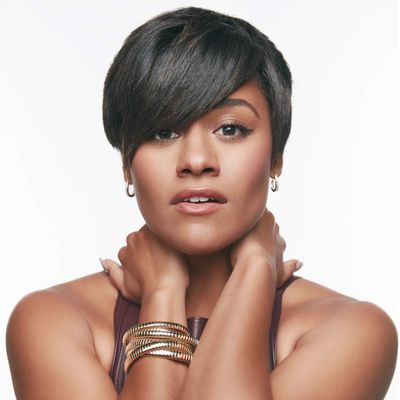
This week we speak with 2018 Tony nominee Ariana DeDose. She discusses how her early childhood as a competitive dancer led her to So You Think You Can Dance. She eventually moved to New York to land her first job on her first day in the city. Ariana tells us about the importance of legacy, what it was like to be part of the Hamilton theatrical revolution, how she feels staring in Summer: The Donna Summer Musical, her thoughts on pride and sexuality, and the need to keep moving forward without getting too comfortable.
UPDATE Jan 14, 2019: Ariana will also star as Anita in the upcoming remake of “West Side Story,” being recreated by Steven Spielberg.
UPDATE Jan 14, 2021: Holy crap, her career has exploded! Congrats, Ari!
Connect with Ariana on social:
- Twitter: @ArianaDeBose
- Instagram: @arianadebose
- Facebook.com/ArianaNDeBose
Connect with The Theatre Podcast:
- Support us on Patreon: Patreon.com/TheTheatrePodcast
- TikTok: @thetheatrepodcast
- Twitter & Instagram: @theatre_podcast
- Facebook.com/OfficialTheatrePodcast
- TheTheatrePodcast.com
- Alan's personal Instagram: @alanseales
- Jillian's personal Instagram: @jillianhochman
- Email me at feedback@thetheatrepodcast.com. I want to know what you think.
Thank you to our friends Jukebox The Ghost for our intro and outro music. You can find them on Instagram, Twitter, and Facebook @jukeboxtheghost or via the web via jukeboxtheghost.com.
A very special thanks to our patrons who help make this podcast possible!
If you would like to see your name in this show notes or get a shout out on the pod itself, visit ttp.fm/patreon to become a member and show your support!
Transcript
This transcript was automatically generated and might contain errors.
[0:08] Alan Seales: Welcome to The Theatre Podcast. Intimate personal conversations with theater's biggest talents. I am your host, Alan Seales. And that is New York background noise. I'm currently sitting in the dressing room with the smart, funny, amazing triple threat. Got her start on So You Think You Can Dance Season Six. You may know her from Broadway shows such as Bring It On, Hamilton, A Bronx Tale, currently starring as Disco Donna in Summer: The Donna Summer Musical. Ariana DeBose.
[0:42] Ariana DeBose: That's my name! How are you doing?
[0:44] Alan Seales: I'm good. We're sitting here. This is like a living room inside your dressing room.
[0:48] Ariana DeBose: It is.
[0:49] Alan Seales: I call it my sitting room. And it's where I receive my guests after the show. It's nice. I always wanted one of these. You know what I mean? When you first get your Broadway show and whoever's starring in said show, you go into that dressing room, it's very chic, and you realize, oh wow, when you're a star, you have a place to sit down. Like a couch with nice things around it. So this is very fun. This is beautiful. Did you decorate it? Does it come decorated like this?
[1:21] Ariana DeBose: No. Good, so Mike Harrison, the interior designer, designed this for me. He has, if you check him out on his Instagram, he basically does this as a passion project.
[1:36] Alan Seales: You're serious. There's somebody here. There's somebody who does this Broadway star dressing.
[1:38] Ariana DeBose: He specializes in it. He worked with Laura Osmus. He'll also, you know, design your home as well. But pretty much any star on Broadway in the last three years or so, he's done their dressing room. It's pretty great. He's got a good thing going.
[1:57] Alan Seales: I had no idea, that's incredible.
[1:58] Ariana DeBose: Yeah. This orchid needs some attention over here though.
[2:01] Alan Seales: Oh, it's dead.
[2:01] Ariana DeBose: It's fine. Get into the reason people are listening. Of course, I'm from North Carolina. I want to get into your childhood, who you are, where did you come from? What kind of kid were you?
[2:12] Ariana DeBose: In what part of Raleigh, um, not Raleigh. Are you from Raleigh?
[2:16] Alan Seales: Well, I was born in Wilmington, North Carolina. And I lived with my grandmother and my mom at the time. My mom was in college or finishing up her degree when I came along. So my grandmother was very involved in raising me in my formative years. And then my mom graduated and got her first job teaching. She's a public school teacher in New Bern, North Carolina.
[2:38] Ariana DeBose: New Bern. Yeah, you know, they need some love right about now. A lot of hurricane devastation going on down there. But I went to elementary school in New Bern, and then my mom got a better job in Raleigh, and that's when I moved to Raleigh.
[2:54] Alan Seales: Right. And then what kind of child were you? How did you get into performing?
[2:58] Ariana DeBose: I mean, I was very outgoing. Apparently, I was, you know, came out the womb kicking and moving and wiggling. So they're like, she's either a soccer player or a dancer. And I think it was my grandmother's idea to put me in dance. So I started with ballet and jazz. I was very curious and clearly very competitive, kind of from the jump. I liked being good at things. I do remember that very strategically. But I loved being social. I liked spending time with people I didn't know. I loved going to playgrounds. I was that kid playing with sticks or swinging on the jungle gym or whatnot. I was very athletic. Along with being outgoing and very cute, I was the Ivory Baby, actually.
[3:49] Alan Seales: Like Ivory Soap?
[3:50] Ariana DeBose: They used to like the actual Ivory Baby. I think if I'm correct, I think I was the last Ivory Baby that they ever crowned, quote unquote. Which was kind of cool. That was back in '92 or '93, and I was a biracial baby that was the poster child for this soap company. And that was before brown was in, you know what I'm saying? So that was kind of cool. But I was an outgoing, sunny disposition type of child.
[4:21] Alan Seales: And then I noticed at one point you said you were an award-winning competitive dancer by 13.
[4:27] Ariana DeBose: Yeah, I was. I trained at a competitive dance studio, CC and Comedy Dance Complex, and I was really lucky and quite fortunate that they brought in guest choreographers each season to work with us. It wasn't just like a summer intensive; we had the benefit of working with them all year round whenever they were available. So a lot of those names that you see on So You Think You Can Dance or within the first seven seasons or so, those names I had already worked with because they were in my hometown.
[4:56] Alan Seales: No kidding.
[4:56] Ariana DeBose: Yeah, it was awesome. It was awesome training. So, I took ballet three times a week, you know, from age like 11 till I graduated high school. So I had very sound technique, but I was trained to be versatile in a lot of different genres. You know, I could do hip hop, I could do lyrical hip hop, I could just give you straight jazz, I could turn around and give you contemporary, or you know, distinguish between contemporary and lyrical. Like, what is the difference? Does anyone know? Or theater dance. So that's how that went. I ran the circuits: Dark West International Dance Competition, Star Power, West Coast Dance Explosion, New York City Dance Alliance. I ran the gamut in that way.
[5:46] Alan Seales: Then where did the singing come in?
[5:48] Ariana DeBose: That's funny. I participated in high school theater. That's when I discovered I couldn't hold a tune. They cast me in Fame.
[6:01] Alan Seales: No kidding.
[6:01] Ariana DeBose: Yeah, that was my first musical. I was Carmen, and I was flat as a pancake for most of it. But I really liked it because it was hard; it didn't come easy to me. I like, as I said, I'm competitive, but I like a challenge. I don't like it to be too easy. So I stuck with it, and then the next thing I did was that summer I was cast as Aida in Aida, and it was an all-county production of the show. So I wasn't just working with kids from my school; I was working with kids from all over my county, which was awesome. Because we also had several different public schools, but we had an arts magnet school, so we were all thrown in together, and there was no distinguishment of like, well, you're better because you go to the art school, and I'm less because I'm just in regular school. So that was awesome to play a lead role, and I was going into my sophomore year at the time, and I didn't know what I was doing.
[6:52] Alan Seales: So it was me, Heather Headley, and what's his name?
[6:57] Ariana DeBose: Oh no, this is bad. Who played Rodolfo originally? Oh, come on. See, you're bad theater people too. You don't know either.
[7:06] Alan Seales: Anyways, but really, it was me, Heather Headley, and the cast recording, and I was trying to learn how to sing quick.
[7:13] Ariana DeBose: So thank you. Someone Google it. Someone Google it, get back to me. We'll have to do like a fact check at the end of this.
[7:19] Alan Seales: Oh my god.
[7:19] Ariana DeBose: I will please do a fact check. Make sure my facts about myself are ready. Good luck with that.
[7:25] Alan Seales: And then so after high school, what was that?
[7:29] Ariana DeBose: I had, well, I auditioned for So You Think You Can Dance while I was still in high school. I was getting ready to take my finals of senior year. And I asked my mom if me and my friend could go down to Georgia so I could audition. And she was like, that's a terrible idea. You have finals next week. What happens when you get the show? I was like, well, I don't know. We don't know if I'm gonna get it. I just want to try. So I went and I ended up making it to the Vegas week round. And by that fall, I had accepted a spot at Western Carolina University in their BFA musical theater program, and I chose to take a semester off and compete in the show.
[8:15] Alan Seales: So I did that and went back to school in the spring semester, which was very short-lived. Because at that point, I was like, well, that was a basically professional experience. In my mind, it was. I ended up getting paid by the end of it to do it. So I was like, well, I can work. See? Fox told me I could work, I could work. So I stayed in school for three months, and I wasn't happy, like gone through a bit of depression. I was terribly skinny. God. And I was like, you know what? This is for the birds. I'm not doing well. I know I can dance, I believe in myself, go try. And the day I got here, I booked a job.
[8:57] Alan Seales: Which one?
[8:58] Ariana DeBose: I was going, I got a job dancing on One Life to Live in their Star Cross Lovers series. Oh, that's you know, Glee was at its height and everybody wanted a Glee version of something. So I was a dancing high schooler. It was great.
[9:13] Alan Seales: But did you take your high school finals?
[9:14] Ariana DeBose: I did. And I passed them.
[9:16] Alan Seales: Good.
[9:17] Ariana DeBose: I had like a 4.2 GPA. I was smart. I'm still smart.
[9:23] Alan Seales: It's funny. I think there's a big, just quickly, I think there's kind of a stigma on folks who don't go to college for what it is that they do.
[9:33] Ariana DeBose: And I totally don't agree with that because I don't think college is for everybody. Granted, I do think that college and higher education is very important and a lot of people need that, especially if you're coming into the arts. Like don't come here if you don't have a very strong sense of self and a buttload of cash because it's hard and the rejection on top of feeling like you're struggling or whatnot, it will only get harder after that. Work to what is it if you work to live you're not gonna work to work or whatever that's something like that.
[10:06] Alan Seales: And then the Bring It On Broadway debut in 2012.
[10:09] Ariana DeBose: Yeah, that was very quick. And I guess you were still young at this point. Did you understand, did you realize the gravitas of what you had just stepped into?
[10:17] Ariana DeBose: I think I knew. I knew the show was going to be special. I had booked three job offers on the table at one time, including Bring It On. And I chose to do that show because it meant I was creating something new that had never been done with someone I deeply respected, Angie Blankenbuehler. And you know, and Lynn Manuel and Tom Kitt. I knew this team, and I knew that they were the upcoming stars and leaders of the industry I wanted to work in. So when we were doing the developmental workshop, did I understand the gravitas? No. But when I got here, and I'll be honest, Judith Light showed up to a preview of our show and then tweeted about Lynn and mentioned me as a great talent in this show.
[11:10] Ariana DeBose: I was like, wait a second. Oh, anybody can come see you at any time. You know, like you're standing on a Broadway stage at the St. James Theater, like the history of the St. James Theater, like you're a part of that legacy now. It was the first time I'd really had the opportunity to understand and believe that I was a part of a legacy, and it was the first time you begin to understand what that word means. It's a very special moment. And then next year is Motown.
[11:43] Alan Seales: Yeah. Wonderful show.
[11:45] Ariana DeBose: Yeah. And was that, I mean, the music and playing Diana Ross? You actually got to go in as Diana Ross. Was that role something that meant something special to you compared to the other ones?
[12:01] Ariana DeBose: You know, at the time, to be perfectly honest, when I booked that show, I knew we had an end date for Bring It On, and I wanted to keep working. I was definitely in that age-old headspace as an actor of like, I'm never gonna work again. And then I was lucky enough to find another team that very quickly said, "No, we would like you to come work with us." And I started that show five days after Bring It On closed. And to be perfectly honest, I grew up on their music. My grandmother and I would drive down, you know, 421. I live off 421. Used to, yeah, so you know it's a long stretch of road. Yeah, that's right. Um, so we'd drive down a highway listening to the Shirelles and the Supremes and the music of the 60s and the Beatles, and so I knew the music, and part of me wanted to do it for her because it gave me a little bit of home.
And then all of the other experiences and the knowledge that I gained from doing the show and really getting into the psyche of what it felt like for these women to be ahead of their time and to make a space for people where there hadn't been a space before, that was really valuable to me. Not just specifically playing Diana Ross. I mean, those are very large robes to wear, and they're heavy and pretty, but heavy. I was 21. I was still 21 when I started that job. Well, I was the youngest member of the company at the time, save the little boys. Right. But of the adult company. So I did feel some pressure, and I will say I was not always taken seriously in that building by my castmates.
[13:45] Alan Seales: Really?
[13:46] Ariana DeBose: Yes, I was beautifully underestimated, but I think that's the best place to be. I'd rather you underestimate me because I will always prove you wrong. Outshine the expectations. Um, because they're false, you know, and most people underestimating you is really about them. But if you remember, it was like, I'm not there for you. I'm here for the job. I'm here for the work. I'm here for the story. I'm here to do my job and to grow. So I think that's where I really learned that that's what I was made of. That I did have the ability to go, wow, I can work with these people, many of whom I love and adore and respect immensely. And we're not always gonna see eye to eye, and they are not always gonna like me because my job is to keep that curtain up and the show must go on.
And I'm sorry if you don't happen to like it that I'm the person who has to do it, but it is my job and it's why I make my paycheck. So it's fascinating. But, you know, be young, scrappy, and hungry. Namaste.
[14:51] Alan Seales: Speaking of young, scrappy, and hungry, of course, Pippin 2014. I'm skipping over so many notes here because there's so much to talk about. Um, this little thing called Hamilton.
[15:01] Ariana DeBose: A couple of people have heard of it.
[15:04] Alan Seales: Um, and you were the bullet.
[15:07] Ariana DeBose: Yeah.
[15:08] Alan Seales: Which was amazing. And for, I was gonna say for some reason, but I don't, I guess it was such a unique role. You got so much attention just for being a bullet.
[15:19] Ariana DeBose: It was cool. I mean, I think the idea that an inanimate object can be personified by a woman, by a woman of color, I think that was just another element of what made Hamilton great. You know, the storytelling was outside of the box, the way they used the text and the lyric and, you know, bringing rap to Broadway and making that genre even more relevant than it already was. I think the idea of the bullet was kind of that little extra cherry on top. You know, you got women's empowerment with the Schuyler sisters, and that was just another like, "Yeah, and that girl too, wait a second." You know, and I totally give credit to Andy for that idea and, you know, for giving me the opportunity to do that. But a little known fact, I actually came up with that hashtag.
[15:59] Alan Seales: Really? That was me.
[15:59] Ariana DeBose: Yeah, wow. Um, things you learn, the things you learn. And it was fun because it just helped. I like connecting with the fans, and it was one way that I could connect with them as an individual within the group. And we had so many amazing, wonderful, crazy talented people in that group.
[15:59] Alan Seales: That is amazing. I mean, the cast now, I saw with the original cast and of course went in with no expectations, blew me away, of course.
[16:46] Ariana DeBose: Yeah, I saw you twice years and years and years ago. Um, well, not years and years, it's only been a few, but time flies though when you're having fun. I mean, what was it like being part of that? That changed theater in a way that I guess we'll never recover from in a good way.
[16:56] Ariana DeBose: In a good way, yes, in a good way. I, uh, being on the inside of it was fascinating. And you know, I recently ran into Leslie and Renee. We were all in a meeting, um, and you know, people ask that question all the time no matter where we are, and it's hard to find an answer because when you're in it and it's happening to you, you're just doing your best to take it all in and value it for what it's worth. It was a whirlwind, it was a tornado, it was a hurricane, there was an eye, there were gusts of wind. There was like, you know, no, a house didn't fall on anybody's head by any stretch of the mind, but you know, it was a lot. Um, and it's something that I don't think we'll find any other words besides extraordinary for until like a decade down the line.
Yeah. It's changed everything for all of us. I think the show opened doors for each and every single one of us that might not have been opened had we not done the show. I certainly believe that it has provided me with a great opportunity to continue to grow, you know.
[18:21] Alan Seales: And it's certainly a very good talking point.
[18:24] Ariana DeBose: Well, I've got so many more. Um, wonderful. Um, Bronx Tale. So Hamilton was 2015, Bronx Tale 2016, um, with my buddy Michael Berra.
[18:36] Alan Seales: Yeah.
[18:37] Ariana DeBose: Yeah. I love that guy. He's a special one. Cannolis.
[18:41] Ariana DeBose: Yeah. Um, and now, of course, Summer. One of the Donna Summer, and Tony nomination for this role. Congratulations. And how has your life changed since that point? That's been recent.
[18:57] Ariana DeBose: Yeah. Uh, I think I'm just now coming down off of the cloud and trying to, you know, adult and normalize again, you know, find your routine. Um, and just get back to the bones of being an actor. You know, that's all I really ever wanted. It's like, yes, I came into the industry as a dancer, but I just really wanted to be an actor, and I wanted to be taken seriously as an actor. So that nomination was important to me because I was nominated as best featured actress, not best featured dancer in a musical. The word actor was really important to me. I think there's a whole different set of challenges and blessings when you continue to move up in your industry. I love my show. I love this job. I do.
Oh man. I don't know if I'll ever really get another one that is tailored like this. I certainly hope to. I hope to continue to create and originate work, but this one really was tailored around me. And that's not, you know, that's not too far away in for me in my brain. But I also know that once you enter this echelon, you know, you have to face the realities like when you're doing principal work, you might not work as often, especially when you're a woman of color. You know, I think there are a lot of shows that are being produced now that provide bigger roles and featured like wonderfully arced featured parts and leading roles for women of color in particular. They're still few and far between, however.
And everybody wants a job. So I'm lucky to have my name included in what I consider to be a short list because I wish there were more names on the list, to be perfectly honest, even though it means a little more competitive. Like, I'd love to see more names on that list. Um, but I'm certainly glad to be there. Uh, and it just makes me have to up my game. It's like, this is actually not the time to coast. I don't get to just sit down and be like, I did it! Yay! That was about a month ago, the yay part.
[21:18] Ariana DeBose: Yeah. Um, now I'm back into, okay, you gotta keep training. Not only do you have to be excellent at the job that you currently have and that you, the role that you were nominated for, but you have to go out there and continue to build new skills.
[21:31] Alan Seales: What do you do to train?
[21:33] Ariana DeBose: Oh, well, I take acting classes. I do. I'm typically like a roll through monthly, you know what I mean? If I can't, I try to go twice a week or twice, twice a month at least. Um, just to, you know, stay on your feet. I like classes that they're like, "Hey, here's your side for the day. You have a four-hour session, and at some point during the day, after you've watched and taken, you know, little things from everybody, you go, you perform your ditty, la la la la la."
[22:04] Ariana DeBose: Or perhaps I just go and I observe said class, and I'm like, oh, I see what that person did. Maybe I'll try that. Maybe there's a space for it in my show. You just never know. Um, and I'll take dance class from time to time, but most importantly, it's important that I continue to train my voice. I take voice lessons once a week.
[22:21] Alan Seales: That's great.
[22:22] Ariana DeBose: Yeah. Uh, I really like the kind of the theme of the stories that you've been coming back with here, especially starting with Diana Ross, is being a part of something uh, is kind of ahead of its time, and you're leaving legacy behind and changing, changing as you go, I guess. So like I get yeah, being Diana Ross, you're playing this person who embodied that and then part of Hamilton, which is that, like in every aspect of what the show is. And now, you know, of course, with Donna Summer, um, this is a cast uh almost entirely of women.
[22:57] Alan Seales: Yeah, it's huge, it's important.
[22:59] Ariana DeBose: It's like your dance partners are women.
[23:02] Alan Seales: My dance and they are fantastic partners. In fact, I think Jenny La Roche might be the best dance partner I've ever had. There, I said it. Yeah, she twirls me around that stage like nobody else. Um, it's awesome because it's you know, gender today, it's fluid, it doesn't matter. But I think this show and the statement it makes by you know, the display you see on stage with so many women who are embodying feminine and masculine energy, but still very much being women, that's important because those are the women of today. Those are the women you see walking down the street, those are the women who are buying tickets, those are the women running companies, you know, or babysitting your children.
Like those are the women of today. And you know, while there are moments where I become a little disappointed that that's not what I think is the largest selling point of our show, it's an important point of our show. And if you don't walk in expecting to see that, it is what you leave talking about. And that is important, especially 2019.
[24:10] Woo!
[24:11] Alan Seales: Yes, which we are coming up on very soon at the time of recording. The magic of podcast time travel, right? And speaking of like all the stuff that you do, I guess, to further your craft and to stay involved, you constantly are doing cabarets.
[24:27] Ariana DeBose: Yeah.
[24:28] Alan Seales: Or uh benefit concerts.
[24:29] Ariana DeBose: You know, I um, I'm about to do one, a cabaret of my own, um, which I haven't really done in I think the last one I did of my own was typed out, and I was I just left Motown. I think that's the last time I had done it. Maybe I was in Pippin. I can't remember. Time flies when you're having fun. Um, but I only do my own cabarets when I feel like I have something to say. So I'm very much looking forward to it, and we'll see if any of it's coherent. November 5th. La la la. Uh, Birdland. Birdland at 30 p.m. in the theater space. It'll be dashing. Uh, but I do a lot of benefit concerts and I participate in a lot of, I guess you could call it group cabaret. Um, because it's it's fun. I enjoy it. It's a different level of intimacy with an audience in a cabaret venue.
And I I'm yes, I'm playing a character, I'm playing a version of myself. And it's probably my cabaret work is probably the closest I let an audience get to the real human that I am. You know what I mean? I use my humanity in my work, but you do have to find a safe space between Ariana DeBose, the actor and who Ariana DeBose the human is.
[25:48] Alan Seales: Right. So going actually it's a great segue going to the human part of yourself. Um talk about uh pride for a second. I want to quote you here. I read you said, pride by definition is the feeling of deep pleasure and satisfaction derived from one's own accomplishments. It's also one of the seven deadly sins. The duality of the word is ironic. It's ongoing yet fleeting, overwhelming, and wonderful, or a means of defeat. Pride is tricky.
[26:14] Ariana DeBose: It is. How do you navigate your own sexuality and your own pride in today's world?
[26:22] Ariana DeBose: You know, it's day-to-day. Pride is fluid. Um, I think the importance of understanding myself, my understanding of my behavior, my tendencies, you know, why things come up, what my reactions are, why they exist, where did they come from, all of that good stuff. That has to do with understanding pride. Um, because you have to be proud of your flaws and and the humanity and the beauty of all that that encompasses my understanding of my sexuality is that I genuinely like humans. Genuinely. It's like it's an energy thing for me. I walk down the street and I'm that sensitive to energy. Where if there's someone with rank energy within 20 feet of me, I will cross the street. I I'm sensitive to it. But I'm also sensitive to feelings of wow, I've never met anybody like that.
Wait a second. I I'm gonna ask you another question. I'd I want to keep talking to you. Can we have a drink? Wait, I'm not done. Go oh, well, can I can I can I have your number? Do you do you like email? Then you know, I I sexuality to me is more about um, or at least where I currently am in this moment, is about how familiar I feel like your soul is to mine and what that conversation is. That's where my sexuality then comes in. Cause there's there's charm, there's lusts, there's there's intimacy, and how you cultivate that. That's what it has the makings of a relationship and la la la la la. Um, I think that uh I think that that's the most important part of pride is that you can be proud in how you relate to another person, not proud that that person is a man or that person is a woman, or a trans woman, or a non-binary identifying man, blah blah blah blah blah, nothing, nothing. Maybe they just want to be them. You don't have to be proud of those labels. You can just be proud of being human, you know. Claim what you want. It's it's absolutely your right. I claim humanity.
[28:59] Alan Seales: I love that. So we're running short on time because your show, you have to go get ready for your show soon. Um keep going.
[29:07] Ariana DeBose: Yes, we've got a few, we got three three questions. Should be quick answers for you.
[29:12] Alan Seales: I'll try.
[29:15] Ariana DeBose: I am like long-winded, so very simply. What motivates you?
[29:23] Alan Seales: Is it bad that my first reaction was proving people wrong?
[29:28] Ariana DeBose: There is no wrong answer. Um, that's part of it, and then part of it is um, I I just want to be of service. I really just want to try to help people, and this is the only way I know how. I'm not a rich person. Um, but I I give through my art, I give you compassion and empathy, sympathy. I give you everything I possibly can. Humor through my heart.
[29:49] Alan Seales: Yeah. What advice would you give to your younger self and younger people listening now starting out down a similar path?
[29:59] Ariana DeBose: You know, go big or go home. You know, be ambitious, but be kind about it. You know, your goals are your own. They have nothing to do with anybody else. So try and remember that and have compassion for those who don't quite understand it.
[30:15] Alan Seales: If you can only see one show for the rest of your life, you can see it as many times as you want. What show would you see?
[30:21] Ariana DeBose: Oh wow. That's really hard. There were two that came to my mind. They are sort of like person-specific.
[30:34] Alan Seales: Great comment.
[30:37] Ariana DeBose: I would see that show over and over and over again anytime. It's bummer it closed. Which was not my fault, by the way.
[30:47] Alan Seales: We will not talk about this on that podcast, but for the record, I had nothing to do with that.
[30:53] Ariana DeBose: And Chicago. Because it's timeless. That musical is timeless. And I also just want to be Roxy Hart.
[31:00] Alan Seales: So with anybody in it particularly?
[31:03] Ariana DeBose: Opposite me or me in it. Oh no, you're going to see it. So you're watching. Although I can't be in it. Um, you know, I I wish I had been around when Annie Riking was playing Roxy. Just there's something special about a first cast. You know, there's there's an energy. You see it with Hamilton, and you see it with, you know, the Dear Evan Hansen Company. It's like they're first companies in general. There's just some magic that is really hard to duplicate. Um, but you know, Charlotte Dumboise will always be my favorite Roxy.
[31:39] Alan Seales: No to my own. Wonderful.
[31:41] Ariana DeBose: Yeah. Well, thank you so much for doing this.
[31:44] Alan Seales: My pleasure. People can connect with you on Instagram and Twitter at Ariana DeBose. Are you on YouTube, Facebook?
[31:52] Ariana DeBose: Uh, I do have a Facebook page. I feel like it's Facebook.com backslash Ariana N DeBose. And N is a Nancy.
[32:00] Alan Seales: Is that your middle name?
[32:02] Ariana DeBose: Well, no, not Nancy. Certainly not. I do not presume. Could you imagine Ariana? Ariana Nancy, get back here. Um, oof, that's gross. Um, and uh I know I don't have a YouTube channel. I do not. I do not I like the YouTube's, but I don't really like being on it.
[32:22] Alan Seales: Well, I appreciate it. You you can get more of me, get more of the theater podcast at theater underscore podcast on Instagram and Twitter, also on Facebook at slash official theater podcast. And then the music you're hearing right now playing underneath you is jukebox the ghost. Big thanks to those guys for lending their support to the podcast here again, Ariana. Thank you. This has been wonderful.
[32:44] Ariana DeBose: Thank you, Alan. Thank you for having me.
[32:52] Alan Seales: Take a deep breath, make the world a little colorful.
© Broadway Podcast Network, All Rights Reserved