

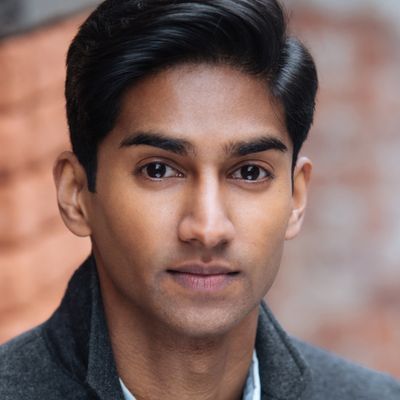
Michael Maliakel recently made his Broadway debut, following Broadway’s reopening, starring in the title role of Aladdin at the New Amsterdam Theatre... Read More
From the show: The Theatre Podcast with Alan Seales
Guests
Featured Shows

About
Michael Maliakel recently made his Broadway debut, following Broadway’s reopening, starring in the title role of Aladdin at the New Amsterdam Theatre. Additional credits include the National Tour of The Phantom of the Opera (Raoul u/s), Anything Can Happen: The Songs of Maury Yeston, Mira Nair’s Monsoon Wedding (Berkeley Rep), and She Loves Me (PlayMakers Rep). You may have also seen Michael on TV in Bull, and FBI.
As a first generation Indian American, Michael reflects on what he calls his “unexpected journey” to a career in the performing arts, including how his love for music brought him to the Peabody Conservatory to earn a degree in opera. He speaks candidly about representation in the industry, noting that as a child he had no real role models or examples for what his performing arts career could be, but trusted his gut and the way music made him feel alive in order to create space for himself and others like him. Michael also opens up about making his Broadway debut as the title character in a hit Disney musical, including the whirlwind audition process which began in the midst of the COVID shutdown, and the “full goosebumps” moment of his first curtain call as Aladdin.
In this episode, we talk about:
- Attending the American Boychoir School in Princeton
- Using his facebook profile picture as his headshot at an open call
- The interactive and collaborative experience of choral singing, and theater
- Touring with Phantom of the Opera as the Raoul understudy
- His love for Broadway’s Spring Awakening, and Bridges of Madison County
Connect with Michael:
Connect with The Theatre Podcast:
- Support us on Patreon: Patreon.com/TheTheatrePodcast
- Twitter & Instagram: @theatre_podcast
- TikTok: @thetheatrepodcast
- Facebook.com/OfficialTheatrePodcast
- TheTheatrePodcast.com
- Alan's personal Instagram: @alanseales
- Email me at feedback@thetheatrepodcast.com. I want to know what you think.
Transcript
This transcript was automatically generated and might contain errors.
[0:00] Alan Seales: Welcome to The Theatre Podcast. Intimate, personal conversations with the industry's biggest names. I say that every single time, but it never gets old. I'm your host, Alan Seales, and this episode is with Michael Maliakel, who is Aladdin in, well, you guessed it, Aladdin, here on Broadway. He made his Broadway debut in this show coming out of COVID, a return to Broadway. It's just one thing after another of him having this incredible, incredible journey to realize this dream that he didn't realize until later in life that he actually had. So good for him. Just an incredibly nice guy. Can't wait to share this interview with you. Find me on Instagram and Twitter. Leave a rating and a review. You know the drill. And now, after a quick break, please enjoy this episode with Michael Maliakel.
[1:01] Alan Seales: Today's guest recently made his Broadway debut as Broadway reopened after COVID, starring in the title role of Aladdin at the New Amsterdam Theatre. Additional credits on stage include the national tour of Phantom of the Opera and on TV in CBS's Bull. Michael Maliakel, welcome to The Theatre Podcast.
[1:19] Michael Maliakel: Alan, how are you doing? Thanks for having me.
[1:23] Alan Seales: Oh, I am good, man. Did I get your name right?
[1:29] Michael Maliakel: Yes, you nailed it. It was beautiful.
[1:32] Alan Seales: Heck yeah. I've been practicing in the mirror. It was like my audition for today.
[1:37] Michael Maliakel: It's not an easy one. I get it. I get it. But you totally nailed it. You booked the part.
[1:44] Alan Seales: Yes. So you grew up in Hamilton, New Jersey.
[1:48] Michael Maliakel: I sure did. Yeah. No relation to the Broadway play.
[1:53] Alan Seales: You grew up in Hamilton. And so I guess, talk to me about you as a child, because I was reading and researching for today, and it seems like your background did not lend itself to performing or even singing for that matter. But all of a sudden, this just sort of fell in your lap. So as a kid, what were you doing in Hamilton?
[2:08] Michael Maliakel: It's been an unexpected journey. So I'll see if I can put this across in a way that feels linear, even though it wasn't so much when I was living through it. I am a first generation Indian American, proud son of Indian immigrants who moved here in the late 80s. And I have three brothers. We're all born in New Jersey. And I was really lucky to have parents that were very supportive of all the things. We were, from an early age, put into soccer, rec soccer, rec basketball, all the sports and music lessons. And of all the things that I started to do outside of school, the one thing that sort of captured my attention in a way that nothing else did was music. I had a dinky little keyboard that I would just spend hours in front of.
And my family is Christian, is Catholic. And we grew up going to church every Sunday. And for any Catholics out there, they might know the whole altar server routine. And my parents put me in for all of that. And then the church choir sort of came up after that. And it was the one thing that kind of stuck that I didn't feel that my parents didn't really have to make much of an effort to get me to sit down and focus and prioritize my time. So I really took to that and was lucky to have a couple of directors and piano teachers early on that sort of helped fuel that little seed of loving music early on. So I was sort of a music nut, fell in love with classical music, went to a very interesting middle school called the American Boy Choir School in Princeton, New Jersey, which is an all-boys, boarding, professional singing choir school, which is kind of a difficult thing to explain.
It's sort of based on this old European model. A lot of the cathedrals in Europe had these long-established boys' choirs, maybe for the Vienna Boys' Choir. But sort of along that same line, we did our schoolwork during the days. And then we had intensive music rehearsals through the rest of the afternoon, ear training, sight reading, voice work, and then, of course, rehearsals. And we toured the country and performed with a lot of the biggest orchestras around the world, singing mostly classical music. And yeah, that was sort of my foundational introduction to music. And at age 14, when I graduated school, I thought like, oh, it's totally normal that you sing with the New York Philharmonic and Carnegie Hall and whatnot.
These things felt so routine and normal by the end of that. And then I went to just a regular high school back in my hometown and realized very quickly that that was a very unique middle school experience.
[5:03] Michael Maliakel: Oh, wait, that was middle school. I thought it was high school. No, I was in grades five through eight. Yeah, so that was wild. And so I had this huge bank of experience. I was a strong sight reader and loved choral music and sort of had this strange background coming into high school. And then obviously did all the choirs and things as I went through high school, started taking private voice lessons my sophomore year. And then I sort of realized that all of my friends who were all the music nerds were also doing this thing on the side, the theater program. And I was like, well, what the hell is that? My parents didn't really know much about music. Again, they supported everything that I showed an interest in, but I didn't know really what Broadway was.
I think at that point, I had maybe seen the Into the Woods VHS with like Bernadette Peters, that kind of iconic production. And that was sort of all I really knew about Broadway. And I didn't see my first Broadway show until I was a junior in high school. And so when all my friends were doing theater in school, I was like, OK, I guess I'll just do that and wandered in and did. I think my first show was Songs for a New World, that really solid, iconic Jason Robert Brown review. And I was hooked after that. And sort of, you know, every waking moment that I wasn't in class, I was either in choir practice or taking a voice lesson or in rehearsal for the shows. And, you know, that sort of set me down this path.
It was a really academic forward high school. So a lot of the focus was, you know, getting into solid colleges and the thought of a career in the performing arts was not one that I don't know any of the alumni from the school pursued, at least not that I was aware of. So I sort of assumed, you know, this is a great, fun hobby, a great way to spend my time to, you know, spend as much time as possible with my friend group. And then, and then, you know, I'd go to college and become an accountant or an engineer or something along the lines of, you know, that most of my family had become. And I was perfectly, perfectly content to make that happen. And by the time I got to senior year of high school, I was, you know, coming down to the wire, deciding what I wanted to do.
And I had applied and gotten into a few vocal performance programs. I sat down with my college counselor and with my parents and was just like, I don't really know that I want to do this forever. I mean, like, there's no one who looks like me doing it. I don't really have any role models. Like, I don't really know where I would fit in or what a career like this would look like. And to my parents who, you know, immigrated from India with and really sort of built their lives from scratch, the thought of jumping into a career that had very little, you know, in terms of job security and certainly in terms of examples of success that looked like me, they were like, well, maybe we don't need to put all our eggs in that one basket.
Why don't you go to school, get yourself a liberal arts degree or something along those lines and then see where it takes you from there and keep your options open. So I did. And I ended up going to Georgetown University in D.C. I joined as sort of an undeclared liberal arts major and I did two years there. Had a great time. D.C.'s a phenomenal city, a great place to be a young person. And this is sort of the same thing that happened in high school, happened at Georgetown, which is that I was in class taking, you know, government and philosophy and English and math and biology. And then every waking hour that I wasn't in class, I was in the a cappella groups. I was doing the shows. I was doing the choirs.
I was going off campus. I was singing at the National Cathedral. I was just like anything I could do to keep myself performing and singing. And at one point, my friends just turned to me. They're like, you're great. We're so happy you're here. But what the hell are you doing? Clearly your heart is somewhere else. And then, you know, after a long journey of sort of figuring that out, I finally gave myself permission to entertain the idea of transferring and pursuing performing full time. And so it was an interesting choice. I mean, not a whole lot of people leave Georgetown. It's a great school. And I just sort of knew that, you know, you really only get one shot at this whole thing. And this thing called life to get to philosophical.
But, you know, I owed it to myself to give it a shot. And so I ended up applying to a handful of music conservatories at that point. Again, theater was sort of just a fun hobby for me on the side. But my real love was was singing and classical music and the voice as an instrument and being a musician, you know, a student of the voice. And so I ended up at the Peabody Conservatory in Johns Hopkins in Baltimore. And so my degree is in opera from Peabody. I had a great teacher there who taught me so much about my instrument, who wanted nothing to do with musical theater. So I would. Yeah, it seems to be two different worlds. You know, less so these days from what I understand. But at that point, it was very old school, very much like the Italian bel canto, you know, following the old European traditions and preparing you for a career as an opera singer.
That was sort of that one track. And I was happy to do that and build my voice from the ground up, have a solid technique and a foundation that, you know, has served me well down the line. But on the side, I was, you know, I couldn't stop with all the theater soundtracks and I would go see shows in the city as much as I could and had one ear to the ground that whole time. And anyway, yeah, so I graduated from school and then moved to New York. My folks are from New Jersey. And so New York was always close by. And I always sort of dreamed that I would live there one day. It always sort of felt like the next logical step. And I, you know, hit the pavement just trying to pay the bills as a classical singer, which meant a lot of professional choral work in the city, a lot of contract work and teaching voice lessons and, you know, some recitaling here and there, concert work. And in the meantime, you know, I had I had just started in college, actually, when I was still at Georgetown had first went to my first.
[12:45] Michael Maliakel: I like that you said it is sort of like a calling, right? Because it draws in not so much in sort of a spiritual sense, but more of a friend of mine. Well, my co-host on my other podcast was a chance. She says that she feels things she should be doing in her solar plexus where things she shouldn't be doing. She feels in her back of her neck like pulling her backwards. And so as you're describing how you feel about singing, it sort of relates to me in that same sort of way is that when I'm performing, when I'm singing, it's this projection of energy and projection of connection. Like that's emanating out of my body and connecting with the people watching. And we're all traveling on this emotional journey together.
And I've said this so many times in this podcast is that that's what I miss so much about the pandemic is not sitting in a room, not being able to sit in a room of strangers and cry and laugh together. There's just something utterly cathartic about that.
[25:32] Michael Maliakel: Whether we realize it or not, and I still don't know how to quantify or describe that.
[25:37] Alan Seales: Yeah, it's a tough thing to put into words for sure, but I think at the same time,
[25:43] Michael Maliakel: it's something that most people, probably all people that perform instinctively just know. If I were to say to someone, you know, that feeling that you get, and you're right. I think the interactive and more than that, the collaborative part of it is like, you cannot understate how crucial that is. I think that's what it was that really attracted me to choral singing and then theatre beyond that is like the thought of having a scene partner or that literally the sound of your voice vibrating and those sound waves sort of meshing with the 20 other people that you're on stage with or whatever, or even if it's just the pianist that you're collaborating with like that aspect of interacting together and then connecting with an audience. I mean, it was just like, oh man, something just like lit up in me when that first experience happened.
[26:35] Alan Seales: Yeah.
[26:36] Michael Maliakel: There was an experiment. It wasn't an experiment. It was just something really cool, a demonstration that a teacher of mine did once. I went to an all boys, like summer choir thing when I was in high school. And, you know, what's that saying? That any civilization significantly advanced beyond our own, their technology seems like magic. You know, so magicians back in the day were just great scientists, more or less, right? Totally. So, I'll illustrate this. I bring this up because I think physics is magic. Because in the male voice, if you're looking at the waveform of you're singing a note, you can see on the waveform, I don't know if you know this, please stop me if you have, but, you know, you can see very easily the fifth and the third on either end of it, right?
So, and in female voices too, it's the same, but it's more pronounced in male voices. We just have more natural overtones. And when you get a room, so we were in this big room, it was like 100 male voices all singing in unison. As clear as day, we could hear the fifth show up, and then we heard the third show up because the physics of all of our voices. See, this music nerd physics stuff, I'm all about it. Like that hyper tuning where the overtones just sort of buzz out of nowhere. Yeah, I'm obsessed. I'm obsessed. You're speaking my language.
[28:05] Alan Seales: Oh, I love it. I love that stuff so much.
[28:12] Michael Maliakel: And that to me is, there's a fundamental knowledge, I think, that there's just not enough time. Okay, there's not enough time in the world to learn everything. And I had this conversation with my son the other day, he's like, dad, why do I need to go to school? I know everything. And I said, he's seven, right? Amazing. I said, you don't know everything. There's no way anyone in the world will ever know anything. He's like, but how is that? How can someone not know everything? Wise kid, wow. Right? I think everyone should know multiple languages. It just makes you more open to everything. And I think everyone should learn to read music, two things that I cannot do. I can only speak English, and I can't read music.
I can sight read rhythmically in no intervals, but I don't know the actual music. So those are two things that I wish everybody could get an education on while still learning the physics and still learning how light rays work and what a prism does to refract. All of this stuff is so frustrating. I understand where my son gets it because I want to know everything. And I can tell he wants to know everything. But it's just not possible. It's just not possible.
[29:25] Alan Seales: I know. Sad reality, right? So, Aladdin. Let's talk about Aladdin.
[29:31] Michael Maliakel: Okay. Damn, that's a demanding show. Okay. So, I guess they obviously did not hurt that you came with the abs, right? So they're like, okay, put on this vest. And they're like, oh, you got the role. Good. Good for you. Oh, and you can sing too. Great.
[29:45] Michael Maliakel: That's exactly how it worked, actually. I was actually joking with my dresser the other day. I was like, you know, along all of these, whatever, it was like eight callbacks, nine callbacks, I don't know. But never once did they ask me to take my shirt off. I was like, what if I had this enormous dragon tattoo across my entire chest or just like Ben Affleck style, like that big thing he's got on his back? You would never know that. They never asked, which I guess maybe there are certain things that you just can't ask someone to do in an audition room. They were like, please don't wear anything costumey. Don't try to wear a vest without a shirt. Wear a fitted t-shirt. I think that's what they'd asked for, just so we could see your physique or whatever. But the reality is they didn't know. Nobody knew what my actual, I don't know. Anyway, it's just a funny thing about this job where you're half naked on stage in front of 2,000 people every night. It's wild.
[30:46] Alan Seales: Talk me through the auditions then. You were saying a second ago that more and more casting directors started to know your name as you were doing things around the city. I was going to ask about the COVID aspect of all of this because it seems like the trajectory was coming. Hamilton has changed the game. It's allowed people who are not primarily Caucasian white men or Caucasians, full stop, to be in leads and not be the sidekick or the secondary character, whatever the case is. Things are going great. Representation matters. It's all over everything that we're doing. Full stop. Representation matters. I'll say it again. Then COVID hits. And so are you like, whoa, what am I doing? And then your parents are like, told you so. This industry was shit. All of these things were very real.
[31:41] Michael Maliakel: I think for the early days, we all thought that this was just going to be temporary. And honestly, I had just gotten off of a tour, which was a year after I got married. And so I had barely spent that much time with my new wife. And I was just like, oh, this is kind of nice. I get to actually be home and see what that's like for a while. And then as the months dragged on, and it was clear that this was here to stay, the thought of pivoting and maybe taking an online coding class or getting certified in XYZ was all on the table, for sure. But I was able to get some work doing TV things once TV production started opening up again. And it was just little morsels here and there, some remote concerts and some Zoom readings of new plays and new works coming down the pipeline. And it was enough to just maintain and sustain my fire for this that had been building up over the last five or so years to keep at it.
[32:46] Michael Maliakel: Yeah. And then all of a sudden, this audition for Aladdin comes through my inbox. And I'm like, what? So full disclosure, I had never seen the Broadway production. I'd never seen the stage show before. And I just sort of known Adam Jacobs and I knew Telly, who I'm not personally, but I knew the fellows that had played the role before. And I was like, well, I don't look like any of those guys.
[33:13] Alan Seales: Yeah, no, of course.
[33:14] Michael Maliakel: And so I never really saw myself as an option for Aladdin. And so it sort of threw me for a loop. I was like, oh, my God, like the movie was everything to me as a child, like 100 percent. I mean, Aladdin was it for brown kids in terms of cool representation for the guy that gets the girl that wins the day at the end of the play. And it's just like, he was everything. He was funny. He didn't take himself too seriously. He was charming. He had a heart of gold. It was just like all of the things. I mean, when I tell you, I have two brothers, an older brother and younger brother, and we wore the hell out of VHS. Oh, my God. I mean, like all of it, like building pillow forts and pretending like we were doing the whole one jump scene.
And then, you know, the lunch boxes, the tighty whities, the bedsheets, like all of it. It was just the obsession was pretty unhealthy, honestly. And so to finally be invited to audition even for this role was like kind of a surreal moment.
[34:27] Michael Maliakel: And, you know, I had sung a whole new world drunkenly at karaoke, probably a thousand times. And finally, they were like, let's sing it in an audition in front of freaking Casey Nicholaw and, you know, Disney theatrical. So it's just like surreal, totally surreal. And I'd sort of figured, you know, I'm six foot four. And most of the other boys that had played the role before were all, you know, not six foot four, I guess. And, you know, this is a very image driven business. That's no secret. So I just sort of, for all of those reasons, never really thought that Aladdin was in the cards for me. But ended up submitting this initial tape because it was, you know, one of 30 other tapes that I was submitting at that time, all these freaking self tapes. My God, the recording these things in your bedroom, like what a horrible thing, honestly. But so I sang Proud of Your Boy and recorded a couple of scenes with my wife as Jasmine, which is great.
[35:39] Alan Seales: When was this in terms of reopening fall of 2021, right? So when when were you doing all these auditions?
[35:44] Michael Maliakel: These were I got my first appointment, I want to say in like, June, maybe.
[35:50] Alan Seales: Oh, wow. So not that far away. Okay, go on.
[35:52] Michael Maliakel: No, it all happened, I guess, relatively quickly in the scheme of the pandemic. But yeah, so submitted that first tape. And then and then I think they asked for another tape with some other things. And and then my first musical Zoom audition, which, whoo, that's, that's a whole can of worms. But, you know, all these things sort of just like, I was like, okay, you know, once they finally get me in a room, they're gonna tell me I'm too tall. Like, I know that's gonna happen. And it's it's one thing on Zoom where you're just in a box, right? And it's like, chest up and you're like, Oh, yeah, I can play this. Great. And then finally, I think ours, Aladdin's final callbacks were probably one of the first in person auditions, you know, we all had to like prove vaccination and all of that.
It was sometime in Oh, man, July, maybe or like late June. And, and yeah, it was surreal to be able to get back in a room. And honestly, I think like, just the excitement of being able to, to do it in a room in front of a table full of people sort of distracted me from any kind of nerves I had. So it was, it was, it was interesting. And I, again, I just kept waiting for them to be like, Oh, he's too tall. But it's just like, you know, the Casey was, was really encouraging and supportive. And there were things he liked, there were things he didn't like, and, and we worked back and forth. And I worked my butt off on that material on the dancing, holy cow, I'm not a dancer. But there's a fair amount in this show, at least more than I've ever been asked to do.
And, you know, it's just sort of the chips fell into place. And all the whole time, I was just like, waiting for them to just say, like, you know, you're great, but it's just it's not gonna work out. And your head on all the all the drops, sorry, you're not gonna fit on the carpet, you know, whatever, all that stuff. And, and when I finally got the call that it was happening, I just sort of like, I remember I was at home with my wife and our dog, and I sort of just like crumpled on the floor in a pile. And my wife was like, did you what and then she crumpled on a floor and then our dog was like, Oh my god, the humans are freaking out what's going on. And yeah, I mean, it the whole thing was completely surreal. And especially because it sort of just came out of nowhere. You know, people ask me if
[38:47] Michael Maliakel: I was able to kind of wrap my head around the fact that I would be taking the last bow on one of the biggest stages in New York in one of like you know this smash hit musical that whose story had sort of like been a huge part of my childhood. Like it was all of it was just waves on waves of like intense emotion which was honestly pretty great because the rehearsal process was really grueling coming back to performing after all this hiatus and learning a big show like Aladdin. I mean he's on stage the whole time basically say for I don't know 15 minutes or so and so it was a long process and I learned a lot about myself and I'm so grateful to that whole team and that whole company for sort of carrying me through it to opening which you know on top of all the COVID stuff it was just like I'm like proud of myself for having survived all of it honestly.
It was just such a whirlwind, such a roller coaster and you know now that we've got some distance from all that and it looks like the pandemic is you know at least not quite as threatening as it once was I am completely overwhelmed with gratitude to be where I am. It's like it's outrageous. I mean to they're like billboards on 95, there's like a bus like Disney is like pulling out all the stops on advertising just to you know make sure that the industry is back where it needs to be as we reopen and get back to normal and it's like I never in my wildest dreams did I think that I would be on banners going through the theater district. Like it's all crazy, completely crazy and I don't take it for granted at all.
[40:39] Alan Seales: So you talked about you're taking the last bow. So opening night of one of the first shows back after Broadway shut down for almost two years, Broadway debut in a role that you never thought you would be in. Like what was that first curtain call like of opening night?
[41:04] Michael Maliakel: You know, I was talking to a few friends the week before opening and they're just like how are you feeling? You know folks that had been on Broadway for years and had several Broadway credits under their belts and they were like you know just sort of asking them for advice and my one friend was like here this is going to be really hard for you because there's going to be a million things on your mind and you're just going to you know try to make sure that you don't fall off buildings in that role and you know be overwhelmed with emotions but be as present as you can for that for your curtain call for your Broadway debut. Like you only get one and give yourself the gift of being present in that moment.
And you know I will say honestly that the majority of that first show was a total blur, just sort of riding the wave and trusting my body to do what we had rehearsed to do for those four weeks before. But right before I came out for that bow, you know genie and Aladdin have a little moment in the wings basically across the stage from each other and that's where I sort of immediately remembered what my friend had said and I was like okay, took a couple of breaths and was like this shit is actually happening. You just did that, nobody got hurt, your parents are in the crowd here, you're singing proud of your boy to your mom. Like this is all of it is just bonkers bananas, a sold-out crowd at the New Amsterdam Theater.
I ran out there with the biggest grin on my face and just sort of like full-body goosebumps took in the moment and it was something I will never ever forget. There's a really great photo of that first curtain call and I have it printed and framed and it sort of just reminds me of the journey that it's been to get to this point and to make sure you know in the moments where the eight show week starts to feel hard or you know I think we're coming up to performance number 200 and you know it's a tiring role for sure and all the stresses of making theater in a pandemic is you know it's all it can be a lot. But holding on to that moment and what it means for me, for my family, for people that look like me, it feels like a great responsibility and also just like an incredible gift to be able to do this. So that first bow man, that's been fuel for these last six months for sure.
[43:38] Alan Seales: Wow. When you when I asked earlier why you love singing and performing, all you needed to actually say was you're a middle child. That's that answer is everything.
[43:51] Michael Maliakel: There it is, yeah there we go. Where can I get the attention I so gravely desire?
[43:58] Alan Seales: So all right, let's wrap up with the three standard closing questions that I ask everybody at the end of the episodes. The first one just very simply is what motivates you?
[44:11] Michael Maliakel: What motivates me is the thought that one day a South Asian person leading a Broadway show will not be a big news story. You know I've been so grateful to be able to represent my community in this position and to you know to get to speak to a lot of people that are sort of coming up in the business and looking to Shoba Narayan who plays Jasmine and I as sort of role models and inspirations and that's surreal to me to think that people actually look to me as an example. And I know that you know when I was their age and at their stage it would have meant so much to see someone succeeding and to have an example sort of light the way. But what motivates me is that someday it's just going to feel totally normal.
Like why shouldn't the stages and the stories that we tell look like the world that we live in? I think that that's sort of the ultimate goal and you know I'm honored to be the first South Asian to play Aladdin on Broadway. I certainly hope I'm not the last and I hope that you know that diversity in all its forms in terms of you know body diversity and ability, disability, gender diversity, all of that is represented more fully and beautifully on stage because that's what's beautiful about this world is like you know who needs to see another revival of X with X and X in the lead roles? You know it's just I think that we owe it to ourselves and to our audiences to sort of push the whole thing forward and I'm excited that just starting to see the seeds of that happening now. There's a long way to go but I think if we sort of commit to where we're headed I think it's a really exciting thing.
[46:07] Alan Seales: Wonderful. Okay, so what advice would you give to your younger self and younger people listening now starting out down a similar path?
[46:16] Michael Maliakel: Oh man, I would say don't wait for an invitation, don't wait to be given permission. I think for so long I sort of wouldn't allow myself to entertain these big dreams because it seemed like they weren't spaces that I was welcome in. They certainly weren't spaces that were designed with people like me in mind and I think I sort of put off for a long time committing to this art form for so long because I just didn't know. I didn't want to put all my eggs in one basket without any you know example of what it might look like. But I think if I could tell myself, give myself some advice it'd be just like trust that if you put in the hard work and you hone your skill set as dedicated as you possibly can, trust that there is a space for you, that your voice deserves to be heard, that you deserve to take up these spaces and don't wait for people to give you permission because you know this industry very rarely for people does that happen and even more rarely for people of color. And I think that I would have really benefited from hearing that.
[47:42] Alan Seales: Awesome. Okay, last question, hard one. If you can only see one show for the rest of your life, you can see it as many times as you want, what would you see?
[47:54] Michael Maliakel: Oh wow, that is a great question. I'm gonna cheat and say two shows if that's okay. The first one would be Spring Awakening. I was enraptured with that score, with the representation in the cast, with how just like how accessible it felt, how relatable it was, how damn catchy all those songs were. I still like never get sick of listening to that soundtrack and it was sort of the first newer show as like an opera nerd that I really sort of just like got hooked on. Inspired by the second would be The Bridges of Madison County, which I think still is the only show that I've paid a full ticket price to go see more than once. I think I saw it three times. I was fully obsessed with the singing in that show as you know it sort of just like ignited whatever spark of the little like a singing nerd in me to hear these two phenomenally tight, like talented titans in our business just sing their faces off for two hours.
You know I could always skip through the sort of honky-tonk country stuff in the soundtrack but Kelly and Steven, holy moly, every single note was so virtuosic and committed and like just like technique driven but also so emotionally connected. I could listen to that score every damn day and not get sick of it and the experience of like we just to bring it back to what we started with, the experience of sitting in the seats and letting my body vibrate sympathetically with their voices was outrageous. It was crazy, it was so I think that would be the other one.
[50:06] Alan Seales: I love that. All right, where can we find you on social media?
[50:13] Michael Maliakel: Social media, fickle friend. I am on Instagram primarily. My handle is just my first and last name, Michael Maliakel. I've yet to venture into the land of TikTok but Instagram is probably where you'll find me most.
[50:27] Alan Seales: Awesome. You can get more of me at thetheaterpodcast.com. I'm on Instagram and Twitter, not TikTok. Well, I am on TikTok, I just haven't posted anything, but I'm on Instagram and Twitter, theater underscore podcast. Leave a rating and a review wherever you're listening now. This has been edited by Well-Rounded Hoodlum Productions. Thank you to Jukebox the Ghost for the intro and outro music and Michael, thank you so much for the chat. This has been really, really, you're the best. This was so fun, thanks for having me.
[50:59] Michael Maliakel: Take a deep breath, make the world a little colorful.
© Broadway Podcast Network, All Rights Reserved