

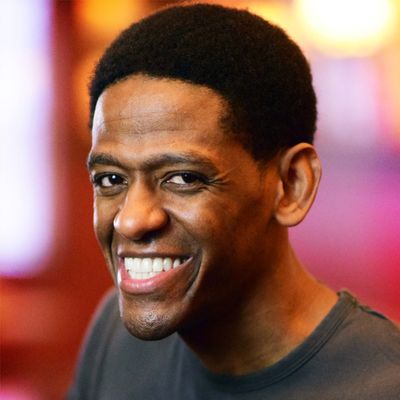
With credits in singing, dancing, acting and choreographing, and now a 2022 Tony Nominee for his role in Broadway's first-ever revival of Funny Girl, Jared Grimes deserves the title “quadruple threat”... Read More
From the show: The Theatre Podcast with Alan Seales
Guests
Featured Shows

About
With credits in singing, dancing, acting and choreographing, and now a 2022 Tony Nominee for his role in Broadway's first-ever revival of Funny Girl, Jared Grimes deserves the title “quadruple threat”. The Broadway Star recalls his early days when he would tap dance and perform in the New York City subway and other spots in the city. Jared shares the story of how he landed a gig as Mariah Carey's backup dancer, and how he pulled off filming Manifest and rehearsing for Funny Girl at the same time. He talks about his inspiring outlook regarding rejection and why he considers it as "just a different path to another opportunity", resilience as one of his superpowers, and the importance of finding your purpose.
Jared is a dancer, singer, actor, and choreographer whose long list of credits includes touring with iconic singer, Mariah Carey, and dancing for popular artists like Salt-n-Pepa and Busta Rhymes. His theatre performance credits include "A Soldiers Play on Broadway", "The Radio City Spring Spectacular", "After Midnight on Broadway", "Twist", "Babes in Arms", and "Gentlemen Prefer Blondes". His TV credits include NBC's Manifest, Fox's "Fringe" and HBO's "Boardwalk Empire". His choreography credits include “Banana Shpeel” off-broadway, “After Midnight” on Broadway, and “Holler If You Hear Me”, “Jelly’s Last Jam”, “The Scottsboro Boys”, "Ain't Misbehaving", “42nd Street” where he won a Jeff Award for Best Choreography and “Lights Out: Nat King Cole” where he won a Barrymore Award for Best Choreography. Jared has also choreographed his first film, "Breaking Brooklyn". His film credits include "The Marc Pease Experience", "Little Manhattan" and "First Born.
In this episode, we talk about:
- The history of tap dancing
- Dancing for Mariah Carey, Busta Rhymes, Salt-n-Pepa, and more
- Bailing school to audition as one of Mariah Carey's backup dancers
- Trying out for his middle school basketball team and getting cut twice
- Getting the role of Eddie Ryan in Funny Girl
Connect with Jared:
- Twitter: @JaredMGrimes
- Instagram: @grimeystepz
- Website: jaredmgrimes.com
Connect with The Theatre Podcast:
- Support us on Patreon: Patreon.com/TheTheatrePodcast
- Twitter & Instagram: @theatre_podcast
- TikTok: @thetheatrepodcast
- Facebook.com/OfficialTheatrePodcast
- TheTheatrePodcast.com
- Alan's personal Instagram: @alanseales
- Email me at feedback@thetheatrepodcast.com. I want to know what you think.
Transcript
This transcript was automatically generated and might contain errors.
[0:00] Alan Seales: Hello, listener! This is Alan Seales, and you're listening to The Theatre Podcast. Today's guest is Jared Grimes, who has a phenomenal story of being born in New York, going to North Carolina around the age of six, then coming back up to New York City, off and on, to start performing, because that's the passion that was burning in his heart at 16, was tap dancing all over the New York City subway system. And fast forward a couple years, he's working for Mariah Carey as a backup dancer. Fast forward a couple more years, and now he's on Broadway, and he's a Tony nominee for his role in Funny Girl. So, you know, just like everybody's story, he does this for the love of performing. The way he talks about performing, they talk about dancing, he just goes to this internal place.
The need for dancing, the need for performing just burns inside him, and he does it for him. He does it because he has to, not because of any other reason. It's such a beautiful thing to listen to him talk about it. And one of the other things that stuck out to me about the interview was at the end, one of the three closing questions was, you know, what advice would you give to your younger self? He was like, find your purpose. Find your purpose. And the way he went into it, the reason behind it, was just beautiful. I'll let him tell it. I hope you all enjoyed it as much as I do. Find me online, Instagram, Twitter, TikTok, and leave a rating, leave a review, you know, all the normal stuff that I say before every episode. And everybody, now please enjoy this episode with Jared Grimes.
[1:47] Alan Seales: His guest is a world-renowned quadruple threat, a tap dancer, actor, singer, and choreographer. He started out dancing in the New York City subway when he was just 16, before he landed a gig as a backup dancer for Mariah Carey, and then when he was just 24, became the youngest solo choreographer in Cirque du Soleil history for his theatrical show, Banana Spiel. He is currently starring in the much-anticipated Broadway revival of Funny Girl, but in addition to Funny Girl, in which he plays the character of Eddie, he is also a well-known cult leader, Adrian Shannon, on the Netflix hit Manifest, which is currently filming its fourth season, and is seemingly bouncing effortlessly between the Broadway, television, and dance worlds. And to top it all off, he just received a 2022 Tony nomination. Holy crap, Jared Grimes, welcome to The Theatre Podcast.
[2:41] Jared Grimes: Thank you so much, man. I'm super glad to be here.
[2:44] Alan Seales: Dude, Manifest, God, that show just does it for me. I don't know what it is. It's the sci-fi, it's the time travel. You put anything like, maybe it's the time travel and airplanes, two things that I love, and then all of a sudden, I just love it. But anyway, we're gonna get into that, because holy shit. But tell me about where you grew up, because I assume you're a New York kid, being that you were dancing in the subway when you were 16, yeah?
[3:12] Jared Grimes: Yeah, I grew up in Jamaica, Queens, New York, but I was born in Jamaica, Queens, New York, and I moved to North Carolina when I was six.
[3:20] Alan Seales: What part?
[3:21] Jared Grimes: So I got the best of both worlds, Southern hospitality and that aggressive New York nature. So I'm a country boy at heart with the weaponry of a city boy. And when I mean weaponry, I mean just attack mode when it comes to the gifts that I've been given. I don't shy away from that at all, with the humble nature of a Southern boy. So like I said, it's a perfect mix. And yeah, I came back to New York in 2000, or actually before I came back to New York in 2001, my mom would bring me up to New York for different classes and auditions and stuff like that, workshops, just to see family and whatnot. And around the time where we knew I was either going to go to LA or New York for college, she started bringing me up and then leaving me with family, friends, or just friends of hers or friends of mine, I would stay with them.
They might be in college already, so I might crash at the dorm or something like that. And that's around like 16, that's when I was like, all right, cool. What are we doing on this trip? And they're like, we're going to perform. Okay, what theater? They're like, oh, the subway. So I was like, hey, let's get it. Yeah, I was like, let's get it. They were only a couple of years older than me. We're talking about, they were freshmen and sophomores in college too. So we were all around the same age. They were just on their own more so. And so just kind of going down there with friends and just kind of laying a board down and they got the drumsticks out, they're drumming on the buckets and we're just having the time of our lives.
That was kind of like my first on my own New York experience in terms of like performing without my mom being by my side or my dad being in the audience. We were just running around the city and we would just make any corner of the stage, any subway platform the stage. We particularly love to perform in front of the ESPN zone restaurant when it was on 42nd street. So I would always be able to like, man, I can perform and I can look in the window and watch the game at the same time. Like it's the best of both worlds.
[5:33] Alan Seales: That's really interesting. And actually this conversation with someone the other day that it was Elizabeth Teeter actually, because she came up on her own, she's in Beetlejuice now as Lydia came up on her own. And when she was 14 and was set out loose on the city and I'm from North Carolina too. So that's why I was asking what part you moved to. So yeah.
[5:50] Jared Grimes: Yeah. So for North Carolina and when you come up here, especially in a place with North, like North Carolina, where there's no public transportation, it's all country. It's, I mean, for the most part is you need a car pretty much everywhere else. You come up here at 14, 16, and all of a sudden you can go anywhere. Anyone of any age can go. Then your world just opens up in a way that is so unique to New York city. And I absolutely love that about this city. And I love that about your story too, because I assume down in North Carolina, you were a big fish in a small pond. And then you come up here and you're like, okay, here we go. I am going to, what theater are we performing in? Oh, the subway. Cool. Okay. So what do you, why is everybody ignoring me? Like what's going on at this point?
[6:40] Jared Grimes: I mean, just, you know, it's funny is that, uh, trying to earn the respect of a New Yorker who has no time for anything. And they're usually always late anywhere. And even if they're on time, they move like they're late. The game quickly became, how can I get you to give me a little bit of your time? You know, by just performing tap dancing, um, you know, enjoying what I'm passionate about. How can that get me to give, like, how can that get me to get you to give me the time of day when you have no time? And, you know, we would go down there or we would go to the, um, you know, our favorite spots and, you know, I'd close my eyes and I would just go. And, you know, sometimes you would look up and there's 15 people.
Sometimes you would look up, there's two people. Sometimes you would look up and there's a hundred, you know, crowded around the sidewalk. So it just, it just became about how much can I like share? How much can I get you to, you know, to, to evolve with me, love with me, be passionate about something, you know, with me, uh, in that moment. Um, and, uh, yeah, it was crazy. It was crazy. Um, being a young kid, I think that's what really, you know, solidified that I wanted to come to New York and pursue all of this. Cause I was like, all right, well, you know, at the end of the day, I'm going to be able to perform no matter what, whether, you know, I pursue and achieve a lot of my goals or, you know, if I don't quite get that, I'll always be able to share, um, what I'm passionate about.
Um, cause you know, dancing in the subway or, you know, just dancing around New York city. I mean, that's the rawest form of being able to, you know, to entertain people. And, uh, I still get that itch. It's funny. Cause I like, I'll be walking around and I'll pass a subway and there's, there's not a, there hasn't been a day since I started doing that, that I haven't been like, man, I could just, I got 15 minutes, man. I could just lace them up right now and just go at it real quick. But, um, you know, I haven't, I haven't performed, you know, in the subway probably since like 2003. Um, they started to do the whole, like you had to have a permit to perform down there and everything. So, um, I kind of, once they started to stiffen the rules a little bit on artistic creativity in the subway, I was like, it kind of killed it for me a little bit.
So I took all of that stuff. And around that time I started to work a little bit more anyway. You know, I took all those, uh, you know, those experiences and I just kind of translated them to the stage or to the camera. And, um, you know, I felt, I felt like it gave me advantages that I wouldn't have had otherwise. Um, so, um, yeah, I have a lot, a lot of that raw and that like unbridled aggression and that just like craving and yearning and just, you know, I just, ah, when you go down on the subway, man, it's like, whoo, it's like gladiator. It feels like that, man. It's like, it's just, it's just a different type of, you know, I'm gonna go down there with a tank top on too. Like I don't have to wear a tux and tails or I don't have to, you know, wear a particular costume.
I can go down there in a tank top and basketball shorts and Nike high socks and rock for like five hours. And just me and that, you know, in my true essence, that's, that's enough, you know, in the subway to where in other situations, you might have to think about it a little bit more, um, you know, or I could just stop dancing and go talk to a, a, a young, a young boy or a young girl who, you know, are shaking their feet and dancing because they're excited about what I'm doing. I could just stop and just have a conversation and hopefully change that, you know, young child's life. Um, you know, hopefully change everybody's lives, you know, especially if they're just onlookers are just walking by in some way, shape or form.
If they see me freely, uh, and with all the love in the world, just doing something that I'm, I'm super passionate about, then in some way, shape or form that gives them a little bit more fuel in the tank to, you know, achieve whatever goal, you know, they have in mind or whatever hurdle they're trying to get over, you know, hopefully in some way they would see me down there that would help them, you know, strive for greatness in their own way.
[10:43] Alan Seales: You said something a second ago that, that stuck with me that you would, you'd start dancing, you'd close your eyes and sometimes it'd be two people. Sometimes it'd be 10, sometimes it'd be 100. So you're, you're out there, you're dancing for you, you're doing this. And you said that right at the end of when you were just talking that, that it's, it's about your passion and your passion for dancing and performing and you're out there and you just close your eyes and you just start going. And then if anybody else is watching, that's a benefit. And then they throw you a couple of bucks and it helps pay your bills. Right. But what, do you remember what, I guess what came first when you were a kid? Like, it sounds like, have you been dancing the longest and what, okay, I'll stop there. Have you been dancing the longest out of all the four quadruple things that you are now a threat in?
[11:23] Jared Grimes: Yeah, that was like my introduction into, you know, entertainment was I saw my mom dancing with her friends in the living room. You know, when I was a little kid, I used to come downstairs early and they would be down there practicing their routines, doing like Paul Abdul stuff, Janet Jackson stuff. And I was like, ah, I want to do that. And my mom, you know, actually was horrible at tap dance. So she tried to give me like a couple of steps and I took those steps and I went, you know, I ran away with it. I was like, I was like, okay, here's a basketball. I was doing windmills the second day. Like that's, that's how, you know, that's how, you know, it kind of shows me. And so dance was my first introduction into, into the arts and, um, through dance, through tap in particular, which is my first love is when I started to realize that other tap dancers did other things.
And I began to gravitate towards those things like comedy, choreography, and singing, um, just storytelling on, on just a crazy historical level when you're watching, you know, Bilbo Daniels Robinson and the Nicholas Brothers and, and John Bubbles and, you know, performers like that. Like I began to see the rich history of, you know, what it meant to American history, being that jazz and tap dance kind of birds beside each other and became one of the rare American first art forms, um, in American history, starting down in Five Points, New York. You know what I mean? That's pretty much where the, the tap dance, uh, genre began was a collection of different cultures coming over here for opportunity and they were bringing their, you know, their, their, their cultural dances and tap was kind of formulated through a bunch of different, you know, ideals and ways of living, um, and customs.
And William Henry Lane was the first person to put all of those together in a manner in which we call it tap dance. So, you know, at an early age, you know, I was like, Oh man, tap is, is the thing that was the, were the keys to the car. And then once I started to learn about all those guys and all the history, I was just like, all right, cool. You know, I want to be like them. And what they did was everything under the sun, especially being, you know, black, um, in the early 1900s, you had to do everything under the sun. You just had to, you had to be, you know, extraordinary in order to get, you know, in the door. And it's not that people were doing that just to get in the door. It's just something they were passionate, you know, about.
And, um, you know, so tap was my first introduction into that, which, you know, once I got in the door, you know, the floodgates open and I was just like, Oh, well tap can help me do choreography. Tap can help me, you know, be on a TV show. Tap can help me be in a Broadway show. It can help me be in a movie. It can help me write a script. It can help me do everything. It's the life source. You know, it's the infinity stone, you know, that's how I feel about it. It's rhythm, rhythm, vibrations, dancing. I still think I've said this a couple of times on the podcast already, that dancing is, is one of the most primitive forms of communication, right? Because you get, it transcends language. It transcends race and gender and everything. It's just, you get together and you feel something with the people you're in the room with and you're going on a journey. And that's, that's my version of spirituality, right? That's what I love.
[14:38] Jared Grimes: I love, especially with strangers going on journeys with people in learning stories, seeing stories, and moving. Movement is just the best. And that's why, like, little kids, you throw some music on and they're just, they're boogieing, they're dancing. They got it. And then, yeah, the embarrassment, the shame, that is taught. But I think, no, I'm serious. Like, a shame, that stuff is taught. And then, if you could have a kid that was just like, all right, everywhere you go, you're boogieing and moving around. And that's why I love what you said a second ago about, like, stopping in the subway and changing people's lives, talking to people, these little kids who are coming by, who may have never seen a tap dancer up close, or even at all, then all of a sudden, they're like, oh, yeah, that, that's what I like, because I feel it.
I can feel it in my whole body. I love that. That's what it's all about, man. That's what it's all about. So then, going into, let's see, you're dancing, you're in New York. And then, so how did the whole Mariah Carey situation come around?
[15:35] Jared Grimes: Oh, well, you know, just in the early 2000s, late 90s, that was the big burst of the boy band thing and the pop star. So, of course, you know, I'm watching MTV, I'm looking at all these shows, VH1, making it a band, making a pop star. I'm like, well, man, shoot, that'd be cool to be a pop star, too. And I can tap dance. I was like, man, I was like, maybe I'll be the first, like, you know, tap dancing usher or Justin Timberlake or something crazy like that out there. Or maybe I could be in a boy band, you know, maybe it could be like the rap hacker with that. So I was just like, all right, cool. Well, I definitely wanted to, you know, check on backup dancing on my list of things to do, because I grew up watching, like I said, you know, the pop movement and, you know, the backup dancers and the young choreographers.
That was just so appealing to me. And so I came to New York and I was taking hip hop classes, too. I was, you know, I was like, all right, cool. Like, let me get into these classes. So maybe one day I can be on MTV or, you know, backup dance for four major artists, because that's what I was, you know, consuming so much on TV. And I was in math class at Marymount Manhattan College. And I had like two math classes back to back. I don't know how I had that going on that semester, but I got a call during the first one. And my agents were like, hey, there's an audition for Mariah Carey, you know, in an hour. And I was like, I have math class. Like, I was like, math is my worst subject. I kind of got to be here.
Because when it comes to math, like, I'm like a musician. Once we get beyond eight, I'm like, oh, my goodness, I started to struggle a little bit. So I was like, all right, cool. Well, I'll try to make it. I told my teacher, I was like, if you, you know, give me the assignment, you know, I'll have it done by tomorrow. And then I didn't even get a chance to tell my next teacher that I was gonna, you know, bail and go to this audition. And, you know, it's like Mariah Carey. So I'm like, it's one of those like, it's a shot in the dark, you know, it's gonna be like 300 dancers there. In this particular case, there were about, you know, 300 dancers there, they were only looking for one person, because I guess the other dancers from LA had already flown out.
So they already had the job. And I was like, is this really gonna be worth it? The choreographer was a choreographer that I really wanted to actually learn from and perform with, more so than, you know, Mariah Carey at that point in time. I can remember my very first theater job, Justin Timberlake did his first like solo performance on the MTV VMAs. And I was like, well, who's the choreographer? Who's the choreographer? And it was Marty Koudelka, who was the choreographer for Mariah Carey at this time. So I was just like, well, you know, if anything, let me go get a free class. You know, like, I'll go get a free class. Like, if I get cut, at least I got a free class from the, you know, the choreographer that I really wanted to, you know, rock with.
And so I get to the audition, I make it past the first round. Okay, cool. Cool. Make it past the second round. All right. All right. So we in here. So I, you know, and each time I make it, you know, past a cut or around, you know, we were learning more of the combination. And I was just like, you know, the song was so fly, it was a shake it off. One of my favorite songs that she's, you know, ever put out, even though she has a laundry list of songs, but that's one of my favorite ones. Just the pocket was crazy. It was just, I was just like, oh, I'm having a time in my life. I don't even care if I get this or not. I'm just like, I'm just rocking and I'm feeling good and I'm not in math class.
And I messed around and got it. I was like, wait a minute. Like, you know, I've got it. And then we started rehearsing that day. And then all the dancers from LA there that had gotten the job, these are all these guys and gals that I have seen on social media and on YouTube performing. They were like, you know, celebrity backup dancers. And I was just like, what? I've been seeing this person on TV for the past five years, seeing this person dancing, Janet Jackson, Britney Spears, Justin Timberlake. Like, I'm just like, and I'm in a room with like all of those heavyweights and I'm like, you know, the puppy. And I was just like, it had nothing to do with tap dance. Although tap dance in some ways they performed, you know, got me to that position.
And, you know, I was just like, now I'm in the sneakers. Now I'm dancing with Mariah Carey, with the choreographer that I always wanted to work with, Marty Koudelka, who's now a good friend of mine. And I was just like, on the promo tour for Emancipation of Mimi for like a couple months, dancing with Mariah Carey. And I was just like, I mean, I would fly, we flew out to do Ellen one day, early in the morning, and I flew back in and then I went to class. And the way that Ellen is taped, yeah, I went to class, the way Ellen is taped, after we filmed, it came on like a couple hours later. So I went back to class, and it was on while I was in class. And they were like, when did you do that? I was like, this morning.
I was like, I was in LA this morning. You know, we did is like that. And so that was, I mean, and then after Mariah Carey, that's when I started to backup dance for more people, you know, Busta Rhymes, Salt-N-Pepa, Common, like all that crazy stuff. So I had a good, good backup dancing phase. And then after that, like, I kind of got my fix. I was like, you know, there's really only one choreographer I wanted to work with. And you know, Mariah Carey is up there on the food chain when it comes to, you know, artists. So I was just like, all right, well, I checked all those boxes off. So let's, let's get something else in there. But yeah, man, that's my Mariah Carey story. Crazy, right?
[20:55] Alan Seales: That's fascinating. That's fascinating. And I, I think I attribute a lot of the, of the success there to what you said. You're like, well, I'm not going to get it. I'm just going to, I'm going to go get a free class from one of my favorite choreographers. Right. And that's some of the advice that I've heard over years and years and years is like, don't go in there thinking the job is yours. Don't walk away from it thinking you lost the job. The job was never yours. Just go in there and embrace what makes you different, have fun. And this goes right back to what you were saying a second ago was you do it because you dance because you love it. You're passionate about it. And so you're just there to meet these people. You're not there to get the job. And lo and behold, you got the job out one out of 300, right?
[21:36] Jared Grimes: Oh man. I tell you, it's still like baffling to me. Like, I'm like, yeah, I did. Like, yeah, I did that. Like that's, that's one of those crazy things that you're just like, all right, well, I didn't wake up that morning thinking I wanted to go back up dance for Mariah Carey. It just, the opportunity presented itself. And you know, like you said, you know, I just kind of step into any situation in my entire life with a sponge like mentality. I always want to learn from the situation, even when I have self tapes for film and TV and stuff like that. Like I'm obsessed with the craft. I'm so obsessed with the craft that the outcome means nothing to me. Like it's, it's just my, I set the bar so high for myself and how much I devote and surrender myself to the craft that that's what means the most to me.
And like, you know, if there's a benefit at the end of the tunnel, you know, after I dive in and immerse myself in that's cool. If not, if I feel good about, you know, the work that I've done and that's good enough for me, you know.
[22:30] Alan Seales: But especially in, in New York, when you're heading, you're at point A and you think you're going to point C or D, when you get to B, it's nothing like what you anticipated just because of possibly who you even ran into or past dancing on the subway, right? Like there's all these opportunities to change your course. And then I love, love, love that you just embrace the, the opportunities when they present themselves, because all of a sudden you're finding yourself at the other end of the tunnel, like you were saying, and you've got all this, this trail of success behind you because you just said yes, when the opportunities presented themselves and you're like, all right. So that is fascinating to me. And I think a great lesson for, for everybody to take away too. And a side note though, you said you were in college for math. What were you in college for originally for performing?
[23:14] Jared Grimes: I went to college for communication arts. All right. So not, so I was mad. I was one of those electives that I had to, I had to get out of the way. And then one semester I had like two classes because I think I just forgot to, you know, get one in. So I was like, I'll do a double class one semester. And it was, it was great. I got a good grade, but I'm telling you, like, I actually like had to like history. I love history, science, you know what I mean? All that crazy stuff. That's my stuff. When it comes to math, man, I start, I start sweating. I start sweating a little bit. I can't feel math. Like I can feel music math, music math. I can feel that all day. But like book math, like I just, I can't feel it.
Like, it's not like, ah, I can't musically connect to it because there's nothing musically, you know, jumping off the page at you. It's just like, you have to know it. I get it. That's one of my still recurring stress dreams of, of being at the end of my, of some curriculum, like a college curriculum and realizing that I missed a class that I should have taken years ago and had not being able to graduate. That's legit. One of the dreams I have right now.
[24:35] Jared Grimes: Me, me in a nutshell. We're going to take a short break. Stay tuned for more of the episode.
[24:39] Alan Seales: I was going to ask a question about like the, being in the business of Broadway, lots of rejection and in, in New York, I mean, especially like it kind of prepares you for, for, I mean, you're on the subway and people were walking by you and not even acknowledging your presence a lot of time. But I think the answer to that question, my, my question originally was like, did you get prepared? Was that experience blah, blah, blah. But the way that you were just talking, I don't think, I mean, correct me if I'm wrong, but it doesn't seem to me like rejection is rejection in your mind. It's just a different path to another opportunity.
[25:08] Jared Grimes: Yeah. I mean, 110,000 percent, which you just said early on, I was auditioning, not auditioning. I was trying out for my middle school basketball team. And I got cut two years in a row. So the first year I got cut, I was like, all right, cool. Like, you know, I'm one of the shorter guys on the team. I mean, I'm, but I'm nice though. Like I'm nice. You know what I mean? It's not like I was trash. Like I'm like, and I'm still nice. But I was, I didn't get it. So I worked real hard. Like me and my pops, we were in the driveway, like we, I was in the morning, like almost every night after I got cut the first time for like a whole year, because I was just like, I know I'm good enough to make the team, you know, just the way the chips fell.
You know, I didn't make the team that particular first, in that first year. And then the second year when I got cut, I was like, man, it took it out of me because I knew I was one of the best ones trying out. I just didn't make the team for whatever, you know, for whatever reasons. And I think that was the first time in my entire life that I had actually been told that I wasn't good enough. I mean, like, cause when it comes in anything in life up until, you know, that, that point middle school, like I was, I was the only guy in dance class. A lot of times I was the only guy in theater class, only guy in acting class, only guy at the dance competition. And so since you're the only guy, and in a lot of cases, the only, you know, black male guy in certain instances, oftentimes you, you kind of, they, they want you to go through because they know that you're a rare bird.
And so I think that was the first time, like being in a gym full of, you know, people of all races, all heights, all weights, all talent levels where I didn't have the advantages that I had in the arts of being like the only guy. So the first year when I got cut, I was like, all right, so I gotta like, I gotta work hard, hard, hard. I gotta work super hard. Then the second year when I got cut, I was just like, all right. So one thing I'll never do is I'll ever, I'll never let somebody be in charge of my happiness. Um, because I, and I know everybody's been through this, but I had never, I had seen it in movies so many times, but I had never felt, and I still to this day, don't think I've ever felt that.
I've never felt what it felt like to walk up to a piece of paper and not see your name on it. And I was just like, it killed me. The second year, like it didn't hurt as bad the second year because like, you know, once you get stung, you know, you build up a little bit of armor, but it's still the second year when I, when I didn't see my name up there, I was just kind of like, I made that, that, that change in my mind in terms of what my mission statement was and how I would control, you know, the outcome of, of any situation that I was in, in terms of, you know, situations where I, you know, I, I wasn't the gatekeeper. And from that point on my mindset changed. And then it's funny because my freshman year of high school, I made the basketball team.
I didn't stop working. I worked even harder than I did after I got cut the second time I made the basketball team, uh, my freshman year in high school. And then I got bumped up to varsity midway through the year. That's how hard I work. And so I was just like, I was the only freshmen, one of the only freshmen on varsity. I think it was like maybe two of us that got bumped up. Um, and I was out for blood, man. I was out for blood. I didn't care how old you were. I didn't care how tall you were. Like, I almost had a chip on my shoulder because I knew I was in, I was in the arts and I, like, I took it, like I took it personal. I was like, all right, well, look, this is, this isn't even my first love.
I was like, I just love to play basketball. So I'm about to wreck everybody in this gym. I don't care if you're 15 years old, four years old, I'm about to wreck all y'all because I'm a tap dance. I was like, that's what, that should hurt even more if I, if I destroy you and you know that I'm going to theater class next, like, you know what I'm saying? Like that should destroy you. You know what I mean? So I just, I, after, after that, I just turned into like this, this, this machine. And I just was.
[29:16] Jared Grimes: Alright, cool. Like now I understand what my superpower is. I went through getting cut twice, because you know, I had to find out that one of my superpowers was resilience, you know, relentlessness. I hadn't really, you know, tapped into those things at that point in my life. And that's when I was just like I needed that. Like I needed that to break me up so that way I could kind of, you know, build the coat of armor that I have now. I take it all the way back to that. There's nothing in my life, no audition, getting cut from anything in the arts, nothing ever made me feel as crazy as getting cut from the basketball team. So that's kind of like, I mean, that's kind of been my journey. That's how I, you know, that's how I have the mindset that I have now.
And, you know, like I said, no audition, no, for anything, even no matter how bad I want it, you know, nothing phases me. It doesn't shake me. And I try to tell other people about this too. You know, go into it for the work, go into it for the love, go into it for the craft, and you'll always be satisfied. If you let yourself down, then, you know, that's the biggest detriment that you can possibly, you know, have going on if you really want something. Don't worry about, you know, things outside of you that you can't control. And so, yeah, man, that's why I'm here today. All the things that I've done in my entire life, you know, they're blessings. They're not, you know, because, you know, they were supposed to happen.
It was always going to happen like that. It's, you know, I can't, you know, I can't tell you to give me something that is not destined for me to have. And I just, you know, I wasn't in the cards. I wasn't supposed to be on the middle school basketball team because, you know, the universe was like, if he's not on that, then he's going to be on varsity. You know, we're going to, we're going to balance it out, you know, and if he still stays in the fight, if he works even harder, then we'll give him double, you know, on the other side of things. And, you know, have a very much, you know, yin-yang type of thing, you know, up, down, gravity, all that kind of stuff. If you stay the course, if you really believe in yourself, if you have that resilience, if you have that relentless, you know, attitude, inertia towards everything you want, all your dreams. And like I said, something as silly as, you know, your name not being on a piece of paper means nothing. You know what I mean?
[31:35] Alan Seales: Oh, I absolutely, absolutely know what you mean. And I agree with you too, because the resilience, the armor that you built when your name wasn't on that piece of paper, who knows where that, how many times that came into play and that you use that exact resilience to get where you are now, a Tony nominee alongside some of the best people on Broadway, right? Like Ramin Karimloo and Beanie Feldstein and Jane Lynch, like this cast, yourself included, some of the best people I've ever seen put together. And the reviews, I mean, the people talking about your performance is just phenomenal, obviously, well, well-deserved and well-needed. I mean, going out then eight shows a week alongside this cast is, the audition for this, for Funny Girl, is that one of those things where you were like, maybe I'm gonna let this hurt my feelings if I don't get it? Or like, is it one of those, like, is there anything now where you're like, you know what, I really, really want this, and it's gonna sting if I don't get it?
[32:29] Jared Grimes: You know what, Funny Girl, we were preparing for season four of Manifest, and the schedule was like bonkers. So I think, and we were also, we were also rehearsing for the Tonys, because me and my cuz, who's also from North Carolina, Dee Watts, we were doing a special performance on the Tonys last year. And so, you know, I was trying to figure out Manifest schedule, wardrobe, all that crazy stuff. And then we were rehearsals for that. And so, you know, there was a couple auditions that I had, sub tapes that I had, you know, and they threw out that whole process. Funny Girl was one of them. And so, you know, my agents will send me something, and I'll look over it. And I'll, you know, I never want to take on any contract or give anything the time of day if I can't create some kind of change, you know, with the character with the project, or, you know, bring something that I feel like, you know, hasn't really been done, you know, on a certain platform.
And a lot of that is from a historical standpoint, too. Like, I like to bring history to a lot of projects, not to beat you over the head and be like, ah, history, history, history. But in some way shape or form, if I can give you a piece of something that I'm passionate about historically, to preserve something and to keep something alive, such as tap dance, or what it is to be an African American tap dancer, you know, in the egos of entertainment, then, you know, I usually take on projects like that. And like I said, I don't have to be like an Eddie Ryan character who is a choreographer to do that. I could be, you know, Adrian Shannon, you know, over at Manifest, too, and still be able to kind of give a historical perspective.
When it came to Funny Girl and that role, I was like, oh, boom, it's Eddie. Like, I feel like an Eddie already. Like, I was like, if somebody called me Eddie, like, it makes, like, I feel like somebody named Eddie, you know what I mean? Eddie Ryan's a super cool name. And I was like, oh, and he's a choreographer, too. I was familiar with the story Funny Girl, but I hadn't really, you know, dove into many of the characters outside of, you know, Fanny Bryce, you know what I mean? That's what the show was all about when I was a kid. And I never really watched the movie. I just kind of saw it in bits and pieces, maybe in a hotel room or in the background or something like that. Like, I had never seen the movie in its entirety.
But I was just like, yeah, this is an opportunity, you know, especially since the character, you know, previously was Caucasian, you know, and now, you know, with the character being Black, there's possibly a good chance to really give audiences a different perspective of what the relationship between Eddie and the world of Fanny Bryce would have been back then. Like I said, without beating people over the head, you know, seamlessly and effortlessly giving you the history in a way that, you know, is really filled with integrity. And it's just rich, culturally, too, as well. So I was like, all right, cool. Yeah, I'll audition. Like, yeah, this feels right. This feels cool. And it's musical comedy, too.
The last show that I did was definitely not a musical comedy, because it was a soldier's story at Roundabout just before the pandemic. And yeah, there was the exact opposite of a musical comedy. But, you know, nonetheless, I love telling stories like that. Diving into Black history in theater is one of my favorite things. And I was like, alright, it'd be cool to kind of do something that's completely different than a soldier's play. And boom, Fanny girl, going there. Actually, I auditioned, you know, self-tape first. You know what I mean? Got the call back maybe a couple weeks later. Went in, read with Beanie and Michael Mayer, the director, and didn't hear anything again for a while. Actually saw Beanie backstage when we were performing at the Tonys.
She gave me this big hug. She didn't know if I got the part. She didn't know who got the part. But when she gave me the big hug, I was just like, oh, man, maybe she knows something. Maybe I got the part. But she ended up not even knowing anything. And the next day after the Tonys, I found out that there was some rumblings that, you know, I was, you know, I was close to getting the part. And then maybe a couple of days after that, I heard that I got the part. And I was like, oh, man, this is like super cool. Like, I would have never thought that, you know, I would be, you know, Eddie Ryan in Fanny girl. And I immediately was like, all right, cool. Well, you know, what else are we working with other than the scenes that I auditioned with?
And then how am I going to pull this off between filming Manifest and rehearsing at the same time? And like the entire, you know, industry kind of caught on that I was about to take on this role. And so did, you know, my producers over at Manifest. So everybody was on the phone trying to figure out schedule and everything like that, trying to see if I could even do it, make it work. The contracts were lined up, all this crazy stuff because, you know, I'm just like all those early performers that I was discussing before. Like, I want to do everything. Like, I never want to, you know, be limited to one thing. Like, if I can pull off doing eight projects at the same time, like, I would rather do that than sacrifice, you know, seven of them just to do one.
I'm built like that. I'm built for it, man. I've been prepared for this stuff my entire life. So I want it all. And I don't want it all for me. Like, I want it all for, you know, the performers, the African American performers that paved the way for me. A lot of them didn't get opportunities like this. So, you know, who am I to turn anything down? Or who am I to not make something work or try to make something work? You know, every time I step on a project, step into a character, I'm breathing their voices into those situations. And as much as I can do that, you know, the better off it will be for the next person that will do the same thing. We have to keep their voices alive. We have to keep their contributions to theater, music, sports, arts, acting. We have to keep their voices alive because sadly, you know, a lot of those guys in the early 1900s, the history books didn't write about them.
[39:12] Alan Seales: Right. You know, we knew about everybody else. We knew about everybody else. But those guys are getting cut out of films, weren't getting top billing, you know, because of the color of their skin. And they really suffered, you know, as a result of where society was with race. They suffered because of that back then. Yet, they were some of the greatest entertainers of all time. Greatest entertainers in the world. We're talking about people, you know, who took, it was tap dance was the hip hop of the early 1900s. You know what I mean? It was the hip hop of the early 1900s. Everybody was tap dancing. And then when Lindy Hop was exploding, too, it was fusing. And then Lindy Hop, like it was just without tap dancers, a lot of this stuff would look completely different.
So I'm just like, I have to pay homage to them every chance I get. And, you know, Funny Girl was that project for me. I was like, all right, well, you know, I can really breathe life into, you know, in particular, Baby Lawrence and John Bubbles, you know, with the character of Eddie Ryan. So, yeah, man, it's been a joyride. I got the part. And I was like, let's get it. Let me get in there and figure out who Eddie is. Because, you know, I wanted to really, you know, give him some layers that, you know, may have not been there before. I wanted to figure out how to implement the history. You know, like I said before, without, you know, making it a story about, you know, Black history. And I wanted to have a good time and just bring smiles to people's faces, especially after the two years that we've all gone through with COVID.
So, yeah, man, it was one of those things. If I got it, you know, I was going to do a lot with it. If I didn't get it, you know, I would have kept my foot on the gas in hopes of other opportunities that I could, you know, kind of bring the history through with as well. So, yeah, man, I'm super grateful, I'm super thankful, super blessed. And yeah, I get to show up with Jane Lynch and Ramin and Beanie and the ensemble. And man, it's a party on stage every night, man. Sometimes I forget, but it's, well, actually, it would be a travesty to call it work. It's not really work, man.
[41:14] Alan Seales: When you and D. Watts write your, you become a pentuple threat? Is that what it is when you're a pentuple threat and you and D. Watts have written your show about the history of dance in America, then I will be in front row producing the shit out of that for you.
[41:29] Jared Grimes: So, there you go. Hey, let's get it. Alright. So, I'm going to wrap up with three standard closing questions that I ask everybody to end the episodes. The first, very simply, is just what motivates you?
[41:37] Jared Grimes: Kind of like what I was just talking about before, all those great and phenomenal performers who paved the way for me, I wake up every day and my responsibility is to make sure they're not forgotten and make sure they're celebrated.
[41:55] Alan Seales: I love that. Okay. So, then what advice would you give to your younger self and younger people listening now starting out down a similar path?
[42:03] Jared Grimes: The advice that I would give to my younger self is to establish purpose. Well, that was one of the things that I was looking for for a long time. Like, what is my purpose? Because my younger self, you know, I thought my purpose was what my idol's purpose was for all the people that I looked up to. And I didn't really understand that. No, I had to find my own purpose, my own meaning, you know, in this, this crazy game, you know, we call it life. I had to figure out what that was myself. Once I figured that out, then, as I said before, the floodgates open. That's the advice I would give to my younger self. And that's the advice I would give to, you know, young folks, you know, around me, who are looking for, you know, a way to break through.
[42:48] Alan Seales: Alright. So, the last question is the hardest one. If you could only see one show for the rest of your life, but you can see it as many times as you want, what would you see?
[42:57] Jared Grimes: Kelly's Last Jam.
[42:59] Alan Seales: With Tonya Pinkins?
[43:01] Jared Grimes: Gregory Hines.
[43:03] Alan Seales: That's right. That's right.
[43:04] Jared Grimes: Tonya Pinkins, George C. Wolfe. That show was, yeah, that's the one. That's the one.
[43:08] Alan Seales: I hear you. I hear you. Well, thank you so much. Make sure to visit me online at thetheaterpodcast.com. Show your support at thetheaterpodcast.com slash Patreon. P-A-T-R-E-O-N. I'm on Instagram and Twitter at theater underscore podcast at facebook.com slash official theater podcast. TikTok at the theater podcast. Leave a rating. Leave a review. Share with your friends. This has been edited by Well-Rounded Hoodlum Productions. And thank you to Jukebox the Ghost for the intro and outro music, who just dropped a new album. By the way, thank you so much.
[43:37] Jared Grimes: Thank you so much. This has been such a fun conversation. I really, really appreciate it.
[43:41] Jared Grimes: Thank you. North Carolina, stand up!
[43:44] Alan Seales: North Carolina!
© Broadway Podcast Network, All Rights Reserved