

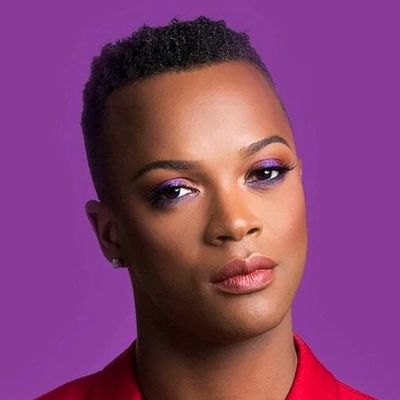
J. Harrison Ghee made their Broadway debut as Lola in the Tony-winning musical “Kinky Boots” where they received recognition for their performance. J. briefly talks about their humble beginnings, from coming out to their parents and leaving their hometown in North Carolina to pursuing their dreams and sharing their talent with the world... Read More
From the show: The Theatre Podcast with Alan Seales
Guests
Featured Shows

About
J. Harrison Ghee made their Broadway debut as Lola in the Tony-winning musical “Kinky Boots” where they received recognition for their performance. J. briefly talks about their humble beginnings, from coming out to their parents and leaving their hometown in North Carolina to pursuing their dreams and sharing their talent with the world. They share some of their stage credits, including their role as Velma Kelly in The Muny's “Chicago”, which was played by Catherine Zeta-Jones in the movie. They have been breaking gender barriers when it comes to casting and how we imagine traditional roles. J. also talks about drag as one of their passions, the importance of thinking outside of the box as an artist, and why “you have to free yourself to see yourself”.
J. Harrison Ghee is a Broadway actor and drag artist born and raised in North Carolina and is currently based in New York City. They have performed all over the world, and made their Broadway debut as Lola in “Kinky Boots” the musical and has received recognition for their performance. They originated the role of Andre Mayem in “Mrs. Doubtfire”, and will appear as Jerry/Daphne in the 2022 stage musical “Some Like It Hot”. Their TV credits include HBO's "High Maintenance" and the Netflix series, "Raising Dion".
In this episode, we talk about:
- How J. got the role of Velma in "Chicago".
- Gender pronouns and gender fluidity
- Growing up in North Carolina
- Doing drag and entertaining as part of J.'s ministry
Connect with J.:
- Twitter: @jharrisonghee
- Instagram: @jharrisonghee
Connect with The Theatre Podcast:
- Support us on Patreon: Patreon.com/TheTheatrePodcast
- Twitter & Instagram: @theatre_podcast
- TikTok: @thetheatrepodcast
- Facebook.com/OfficialTheatrePodcast
- TheTheatrePodcast.com
- Alan's personal Instagram: @alanseales
- Email me at feedback@thetheatrepodcast.com. I want to know what you think.
Transcript
This transcript was automatically generated and might contain errors.
[0:00] Alan Seales: Hey, everyone. Welcome to The Theatre Podcast. I'm your host, Alan Seales, and our guest today is J. Harrison Ghee, who just recently came out of Mrs. Doubtfire on Broadway. Unfortunately, Mrs. Doubtfire closed, but fortunately, the cast album for Mrs. Doubtfire just dropped. So, go wherever you find your music, you know, your streaming services, or your virgin records if you're in a time machine and travel back to Times Square, and get that album because it is great. So, J. is a really cool dude. They are helping break gender barriers when it comes to casting and how we imagine traditional roles. They just came out of a production of Chicago at the Muny where they were playing Velma Kelly, actually, which if you don't remember that role, that was played by Catherine Zeta-Jones back in the movie.
So, anyway, we get into their humble beginnings from North Carolina and dealing with coming out to parents, and J. has been doing drag for 10 years and now is going into Something Like It Hot this winter. I cannot wait to see them in that show. So, without further ado, I'll shut my trap and let you get into the episode. Find me online on Instagram and Twitter, and now on TikTok, and everybody, please enjoy this episode with J. Harrison G.
[1:38] Alan Seales: Today's guest is a fellow North Carolina native who has performed all over the world. In 2017, they made their Broadway debut as Lola in Kinky Boots after having traveled the world on the international tour in the same role. You can see them on an HBO episode of High Maintenance and recurring on the Netflix series Raising Dion. They most recently were seen on Broadway alongside Rob McClure and Brad Oscar, two of my favorite people in Mrs. Doubtfire the Musical, which just dropped their cast album, Go Stream It, right now. And they just finished a run of Chicago at the Muny and will be in the much-anticipated production of Some Like It Hot coming this winter. J. Harrison G., welcome to The Theatre Podcast.
[2:19] J. Harrison Ghee: Thank you. Thank you for having me, Alan.
[2:22] Alan Seales: You're welcome. And I want to actually dive straight into something that probably is going to get a little personal, because we were just talking before we were recording about pronouns, because as we're seeing each other in the recording, this virtual recording medium, we get to put in our pronouns. And then the bio that I was pulling off of the internet and everything says he, but now you put they, them for your pronouns here in the system. And I just want to touch on that, because what you were saying about it off air was just beautiful. So now you're at this moment where you're embracing... Is this a whole new side of you, or are you just getting over a fear of anything, or what is it?
[3:03] J. Harrison Ghee: It's not necessarily a new side. On my Instagram, my pronouns are he, they. And even that confuses people sometimes. They're like, how are you non-binary, but still identifying with the he side? And that's one thing I feel like we as a culture and a world need to embrace more is the understanding that everybody's experience is uniquely their own thing. It doesn't have to make sense to other people. And so we're conditioned to see things a certain way. It's funny, the minute I put makeup on, people automatically will give me feminine pronouns. And it's like, why can't I just be a human being and enjoy a cosmetic and a skirt? It doesn't have to be that way. And so in sitting here deciding, putting in my name and pronouns, it's just like, no, I'm very much a they, them.
I've always felt that way of like, I watch people process me all the time. Even long before I was bold enough to make the fashion choices and the presentation I make of myself as a human, people have always kind of double took at me and I get the power I hold in my fluidity and how I present. And so it's like, no, that makes all the sense to be a they, them, but also all things with respect. I do have my feminine side. I do have my more masculine side. And I'm not precious about my pronouns in that way of like, only call me they, them or only here. I think there's a lot of room to educate people and a lot of room to expand on, I guess, well, I was going to say expand on what pronoun, the definition of what pronouns mean to people, right?
Because in the before times, we'll say like before the last decade, when all of a sudden, the kids of yesterday became the teens of today. And there were labels, there were men, there were women, there was non-binary starting to come in, there was transvestite, there's different ways to label people. And I don't know why as a society, we find the need to have to categorize everything or label everything. And one of the first times I really started digging into this and being like, you know what, we don't need labels is when I met Rain Dove. Do you know who they are?
[5:36] Alan Seales: A model. Yeah, yeah, yeah. I follow Rain. Yeah.
[5:40] J. Harrison Ghee: Yeah, yeah. So Rain models, supermodels as both masculine and feminine. Notice I didn't say man or woman, like masculine and feminine, because they just want to exist. And like you, you have, we'll use traditional Western style, right? You've got a traditional masculine haircut, and a little bit of stubble. And what I can see is probably a beautiful camisole, right?
[6:12] Alan Seales: It's a dress, right? You're wearing a dress, yeah.
[6:13] J. Harrison Ghee: A dress, yes. You got a dress on right now and your nails are beautiful. So you're just, and you got earrings in, and you are a beautiful person, a beautiful human that wants to express art. And this takes me into what I was going to get in, what I originally planned on getting into was your run of Chicago at the Muny that just ended, because you were Velma, which for those who don't know, was played by Catherine Zeta-Jones in the movie.
[6:43] Alan Seales: Yeah.
[6:44] J. Harrison Ghee: Right? So talk to me about this process, because I love how not only are we starting to get into colorblind or not starting, we've been in colorblind casting sort of for a while, we're getting there, still got a long way to go. But now post COVID, I don't know why it's just right now, maybe you can answer this, is all of a sudden there's this like gender agnostic casting going on and recasting. And was this company, the gender swapped company, was this something else? How did this even happen where you came in to audition and they were like, make them Velma. Of course, they're going to be Velma.
[7:24] J. Harrison Ghee: I have to give all the credit to Mike Isaacson, the executive producer and artistic director of the Muny. It was an idea he had based on seeing me play Lola at the Muny. The audience there responded beautifully to the show as they have around the world. Kinky Boots is a very special show and it's a life changing thing, not only for audiences, but also for the people doing it. And he had this feeling and this idea of, he saw that he never saw Muny audiences respond to a show in such a way. And he knew Chicago was coming up in a future season and he wanted me to be Velma Kelly. But I had Doubtfire at the time, so timing-wise wasn't going to work out, but he still told me he had this idea. And I was like, oh, that's fierce.
That's cute. Whatever. It's not happening. Then we hit the pandemic and I want to say, yeah, May of last year, I was on a vacation in Vegas and he texted me. It was like, hey, that idea I had, are you still interested? I was like, sure. And timing-wise, it just worked out. And it was something he was very adamant about, about seeing the possibility of something new and especially in St. Louis at the Muny. He was very intentional about wanting to shake things up. And that's what I love about him and the work he's doing there across the board. Just thinking outside of the box and really pushing the boundaries of, if we are artists, if we are creative beings, why can we not just trust that a human being is capable of playing a role?
And it's something that I am, again, breaking myself up every day of these ways I have been conditioned to see life and experience it and even communicate that thing. I'm very intentional about when working with people of like, these are my favorite humans to work with. I don't necessarily need to gender the people I love and why, that's not why I love them. I love them for the human being they are. People like Rob McClure and Brad Oscar, who I adore. And that special time we spent together doing Doubtfire, those humans, I truly say it all the time, are my favorite humans. I love them. So yeah, it's just, and that's how Velma came along. And then being able to be that representation for so many different people and getting to experience that around the city and after the show at the stage door, it meant the world.
[9:56] Alan Seales: Well, that was my next question, was what kind of feedback, what did you hear after the productions? Because St. Louis is not a place I would think of being like, oh, this is the most progressive city in the world. But I've also heard stories similarly of my colleagues who were in The Prom, both on Broadway and on the tour of like, people who come to it because they don't know it's about two teenage lesbians trying to just have a relationship. And they're like, well, if I knew what it was, I wouldn't have come. But now that I came, oh my God, I want to be, you know, I'm going to be an ally all over. Do you hear these stories of people like, now that I've seen it, now that I've experienced it, duh, of course it makes sense, or I don't need to care about it, or it's not a big deal. What was your experience with all of that?
[10:44] J. Harrison Ghee: I mean, funny enough, I never got those experiences of people like, oh, if I knew, because of course, then again, at the Muny, the closest people are 10 yards away. They're probably just like, that's a suspiciously large woman on stage. Like, I have to pat myself on the back. I have good makeup skills. So like, the illusion is there. So is the delusion as well. But it goes to show, again, the possibility of a human being playing a role. And while most people experienced it, there of course were the faces of like, hmm, what's happening here? But by the end of the show, they're with us because we are telling the story and we're being intentional about it. And then also having moments like I got to, one of my favorite things is to be able to be working on my birthday.
And so my birthday happened while we were doing the run. And we had a pool party that day. And as I was entering the pool area, one of the attendants was this Black gay guy who approached me and was like, hey, are you the person playing Velma Kelly? And I was like, yeah.
[11:50] J. Harrison Ghee: He's like, I haven't seen the show, but I've seen all the promotional things about it. He was like, being a gay black man here, born and raised in St. Louis, and seeing you do this is everything. He's like, I've always connected to more of the feminine songs and people like Velma. And he was like, this gives me so much hope that anything is possible. And he's like, he started questioning me. He's like, how do you feel? This is iconic. What does this mean to you? Just his joy and his connection to the idea of it happening was so meaningful to me and so affirming in that moment. And so to have those moments like that were, it reminded me why I do what I do, to be able to make a difference and to be that representation in the world. We're going to take a short break. Stay tuned for more of the episode.
[12:58] Alan Seales: Why do you do what you do? Because I said, fellow North Carolina native. I come from North Carolina too, up in the foothills in Wilkesboro, North Wilkesboro. I don't know where that is. But I know you're from North Carolina and that is not a very welcoming place for black or gay men.
[13:15] J. Harrison Ghee: Exactly. And reasons I got out at 18. I refused to get stuck there because I probably would be a different human being had I stayed in North Carolina. But I knew that there was more for me in the world. And so I found my way out at 18, moved to New York to study musical theater and didn't know what I was getting myself into. I grew up singing in church. My dad's a pastor. So again, it was like I had been conditioned a certain way and learned so much growing up, but I was like, there's more in me. And my mother also raised me to understand that my gifts and my talents weren't about me, that my life experience was in service of someone else, to be able to help someone else, whether it made sense to other people or not.
And so I just knew that there was more for me beyond the borders of North Carolina and specifically Fayetteville. So I was like, yeah, it's beyond me. And I'm just being obedient to the call on my life and the gifts and the things I've been given. And I'm like, okay, this is, as I say, this is my ministry. It is entertaining and affecting people. And I learned that at an early age that I had that power. And so I don't take it lightly. And it's something that I feel charged to do. And it grows and it keeps teaching me and expanding me in my journey of life. Even the decision of being like, okay, yeah, we're going to type they them today. And that's what that, but at the same token tomorrow, I could go back to saying, no, I'm he, they, or she, they, or like all the things, because there's also power in the fluidity of it all. And I aim to challenge that and encourage that in other people.
[15:13] J. Harrison Ghee: A mantra I live by these days is you have to free yourself to see yourself. People always say, oh, I can never wear that. Oh, I can never do that. No, because you haven't freed yourself to see yourself in that place.
[15:27] Alan Seales: I love that. You have to free yourself to be yourself, which is also the motto of my nudist colony, but you know, that's, that's another story. Just kidding. No, it's, it's beautiful. And I love that you use the word power, used it multiple times in a couple different contexts. And what, what you were, what you were touching on in the moment was, you know, it's in service of a higher, of a higher, what do you say? You're in service of others. It gives you, when you realize you had that power, that's what you said. And, and I've said this so many times on this podcast that, that my version of spirituality is art, it's theater, it's performing, it's singing, it's, it's going on this emotional journey with a room of thousands, sometimes thousands, or even dozens, depending on what it is, both are equally powerful strangers that you as the performer get to control and take them to places they didn't know they could go to.
[16:32] J. Harrison Ghee: Yeah. And that, when you said that, I don't know if anyone's ever used the word power before like that, because when you said that all of a sudden clicked for me, why so many people do this, because with so much crap going wrong in the world all the time and feeling helpless and feeling overwhelmed and underwater, whatever the case is, to feel powerful, to feel strength and uniqueness and to feel wanted and needed to stand on stage and be able to command an audience like that, it all just, what you just said there fell all into place for me.
[17:07] J. Harrison Ghee: Yeah, it's, it's the thing I, I, I have, I found, I believe in a Q&A with students and I continue to say it, it's just like to affirm in them that there is power in being an artist. It, we affect people. It's what we do without really trying like that art should be effective. It should, it should reach the core of a human being and make you think even that much differently. It should make you feel different than when you came in. And that's powerful. You can change a person's life or even just a moment in their life by sharing art with them. It's sharing art. I don't take it lightly.
[17:48] J. Harrison Ghee: Yeah, it's sharing art. It's sharing your, your personal stories because you have writers, lyricists, composers who are, who are expressing themselves. They need the catharsis to be able to express themselves. And then, uh, I think about even recently, um, how I learned to drive, which is all about, uh, did you see that play by the way? Oh my God. It was so good with Mary Louise Parker and Alyssa May, David Morris. Like the whole, the cast is amazing. Um, it's about, uh, sexual molestation of a teen girl. Like it was Paula Vogel's personal story growing up that she put in one Pulitzer prize for and put it on paper. And now it's this great play that, and I've talked with David Morris and with Alyssa May Gold and, and the feedback they get in the catharsis that people can find by watching their story being told on stage so publicly.
Uh, and, and there's, there's also too, a little bit of sympathy that you want to give to the bad guy, to the, to the uncle. Right. And cause it's like, uh, it's, I mean, that's a whole different story. We're not here to talk about that, but like my point being that, that by performing, it serves so many purposes for the performers, for the creatives or the audience, cause the audience needs to get, whether they know it or not, they're going on a journey. They need to go on to discover more about themselves. And I mean, you can get literal like slave play where you sit in the audience and you're staring at yourself. You're looking in the mirror, literal like that, or you can get metaphorical. I mean, even take doubt fire, right? Cause how many kids go through that exact same scenario where by no fault of their own, their family's just all of a sudden torn apart.
[19:30] J. Harrison Ghee: Yeah. And not even, not even just kids. We got, um, it's funny at the end of the show, Rob leads, reads a letter to Katie and he got a letter from a fan who saw the show, whose name was Katie, who was a grown adult and her parents had just divorced. And she had feelings and she was like, you were speaking to me. I am the Katie in the show, but like, it's so crazy that it would line up that way. And it's, I have, I feel so blessed to have experienced similar things of like kinky boots was very parallel to my real life. Doubt fire is also parallel. My parents separated in 2019. So to get that show and then start doing this, I was like, okay, great. This, add that to the tab of ministry and like how I connect to this thing and can be effective in this world.
Um, and even looking ahead to some, I get hot and the journey that I have in that show. And what I'm excited to share with people is, is where I am in life. And so I'm excited to be able to share this power and this expansion of understanding with people.
[20:41] Alan Seales: That's beautiful. I, uh, kinky boots. It's funny you mentioned that, um, because it paralleled your life. Did, did that have any impetus to start, uh, performing in drag? Cause I was reading that you recently celebrated your 10 years as a drag artist.
[20:55] J. Harrison Ghee: Yeah, I was doing drag before kinky boots. Uh, Oh, really? Oh, long before I started playing, I was working at Tokyo Disney. Uh, I would go home and play and make up and I created this drag persona and I used to do drag shows all over New York. And, um, so it was a part of my life, but it was secret. My parents didn't know. My family didn't know. My mom was the only one who knew for a long time, but she called me a prostitute for doing it. It was a whole thing. And my mother is one of my biggest supporters, but that at the time was devastating. Um, and when I got kinky boots, my dad made a joke one time, it's like, Oh, you get paid to imitate drag queens. That's fun. Just don't bring any wigs home. And I was like, Ooh, we need to talk, sir.
[21:43] J. Harrison Ghee: And so I had to sit him down before seeing the show and show him pictures and be like, no, actually this is a part of my ministry. And, and so in the, in those words helped him understand a little bit better. And then seeing the show and seeing the mirror that was us having a scene, not my father's son and hold me in your heart. And it was that show. The whole experience was therapy for me. Wow. Like I had four moments of like breakdown on stage. Really? Like I vividly specific cities, specific moments. I can like fall back into that moment. Like, Oh no, like four conductor is holding like, uh, you know, can we,
[22:28] Alan Seales: Gosh, I, it's, it's, I can relate coming from North Carolina. Um, I cannot relate. I cannot relate to, you know, I am a white straight CIS male. There are so many things I cannot relate to what I was saying. I can relate to was just being in the environment of North Carolina. Cause I, I, I don't know. I experienced my own form of bigotry as well that I'm not even trying to compare to, to anything else because it's completely different. But, um, I, I imagine like when you're around people, I'm talking about your parents, when you're around your, your peers, your church, your, uh, your, your whole support system believes a certain way. And then all of a sudden someone so close to you that you love your own flesh and blood, your kids, right.
All of a sudden do something that originally you thought was completely wrong and immoral because you had nothing else to tell you otherwise. And you just went with it. I, I, I guess from a, a purely a scientifically high, high level, uh, psychological view, I want to say like, it makes sense.
[23:40] J. Harrison Ghee: I think the role of Velma Kelly in "Chicago" was a pivotal moment for me. It was a chance to showcase not just my talent but also my interpretation of a character that has been portrayed in so many ways.
[24:00] J. Harrison Ghee: Growing up in North Carolina, I never really saw people like me on stage, so stepping into that role felt like breaking a barrier. It was about more than just performing; it was about representation.
[24:28] J. Harrison Ghee: When I got the call that I was cast, I was over the moon. I remember thinking about all the times I watched the show and how much it meant to me.
[24:48] J. Harrison Ghee: The rehearsal process was intense, but it was also incredibly rewarding. I had the opportunity to work with some amazing people who pushed me to dig deeper into the character.
[25:16] J. Harrison Ghee: I think what makes Velma so compelling is her complexity. She's fierce, she's vulnerable, and she has this incredible journey throughout the show.
[25:44] J. Harrison Ghee: I wanted to bring my own flair to the role, to show that Velma can be interpreted in different ways, especially through the lens of gender fluidity.
[26:12] J. Harrison Ghee: The audience's reaction was overwhelming. I could feel their energy, and it was a reminder of why I do what I do.
[26:40] J. Harrison Ghee: Drag has always been a part of my life, and it plays a significant role in my artistry. It's a way for me to express myself and connect with others.
[27:08] J. Harrison Ghee: I believe that as artists, we have a responsibility to challenge norms and push boundaries.
[27:36] J. Harrison Ghee: My journey has taught me that you have to free yourself to see yourself. It's about embracing who you are and sharing that with the world.
[28:04] J. Harrison Ghee: The support from my family, especially after coming out, was crucial. It gave me the strength to pursue my dreams without fear.
[28:32] J. Harrison Ghee: I think about my hometown often. It shaped me, but I knew I had to leave to truly find myself and my voice.
[28:44] J. Harrison Ghee: Every role I take on is a step towards breaking down barriers. I want to inspire others to do the same.
[29:12] J. Harrison Ghee: The importance of gender pronouns and fluidity in the industry cannot be overstated. It's about respect and recognition.
[29:40] J. Harrison Ghee: I hope to see more roles that reflect the diversity of our society. It's time for change, and I want to be part of that movement.
[30:06] J. Harrison Ghee: My experiences have taught me that authenticity resonates with audiences. They can feel when you're being true to yourself.
[30:22] J. Harrison Ghee: I want to continue to explore roles that challenge traditional casting and showcase the richness of our stories.
[30:50] J. Harrison Ghee: The journey of an artist is never easy, but it's incredibly fulfilling. Each challenge is an opportunity for growth.
[31:18] J. Harrison Ghee: I believe that art has the power to change perceptions and open minds. That's what drives me every day.
[31:44] J. Harrison Ghee: I want to encourage others to embrace their uniqueness and to find strength in their differences.
[32:10] J. Harrison Ghee: The world of theatre is evolving, and I'm excited to be part of that evolution.
[32:36] J. Harrison Ghee: I think we all have a role to play in shaping the future of the arts, and I’m committed to doing my part.
[33:04] J. Harrison Ghee: As I look ahead, I’m eager to take on new challenges and continue to push the envelope in my performances.
[33:22] J. Harrison Ghee: I want to leave a legacy that inspires future generations of artists to be bold and unapologetic.
[33:50] J. Harrison Ghee: Ultimately, it’s about creating a space where everyone feels seen and valued, and that’s what I strive for in my work.
[34:16] J. Harrison Ghee: I’m grateful for every opportunity that comes my way, and I look forward to what the future holds.
[34:44] J. Harrison Ghee: Thank you for allowing me to share my story and my passion for the arts. It means the world to me.
[34:56] J. Harrison Ghee: Let’s continue to break the norm together and create a more inclusive and vibrant theatre community.
[35:24] J. Harrison Ghee: I appreciate the platform to discuss these important topics, and I hope it resonates with others.
[35:30] Alan Seales: And loving, and like you were talking about the energy, the journey, the connection you have with people and trust, I guess that's what it is, right? Because you're talking about Kinky Boots when you are breaking down to the point where the conductor is vamping because you can't stop crying for a second. That is a level of intimacy and exposure that you are trusting your entire cast with night after night after night, and that bonds people together in a way that you cannot get in most other ways.
[36:03] J. Harrison Ghee: Oh yeah, and then like you said, for all that Doubtfire has been through, pre-pandemic, then shutting down, opening, shut, like all the back and forth of it all, we are forever bonded in such a way because we've lived through trauma together.
[36:22] Alan Seales: Yeah.
[36:23] J. Harrison Ghee: And we really have that through line that we're like, these humans understand me in a way for so many reasons. And even when we came back in the fall of last year and how we got back to work, not just jumping back into the world and being like, okay, we're just going to do what we did before. And we came back, and I thank Kevin McCullum, our producer, for how we got back to work. The first couple of days of work were just equity, diversion, and inclusion training and honoring what we had experienced. Our first thing we did was sit down with therapists on a Zoom screen of being like, okay, you all have—we have lost a cast member, somebody died during the pandemic. We have sat through 18 months of not doing this thing, and like you've said in your feelings, let's put things out on the floor and let's talk.
Let's address you all as human beings before artists, before dance or sing, whatever. Let's just talk about what you have experienced and make sure that you are seen and understood for what you've gone through before coming back to reading a script, singing that note. Let's do that.
[37:35] Alan Seales: As you were saying that, I felt a swell of emotion coming up, and I immediately squashed it down because I needed to continue this interview in normal, composed fashion. But it just occurred to me, so what that means to me is that I got some unprocessed COVID feelings I need to deal with. And I actually love that you guys got to talk about that as a collective unit and dealing with everything. I mean, obviously in like two to three days, you can't deal with everything that you're going through as much as everyone should, but to not just be like, all right, flip the switch, we're back. My question though is for you, is like now, you know, we're recording this in June 2022, and a lot of stuff's just happened in June 2022.
So the world is kind of flipping upside down, especially this country. But then there's also those people on the other hand who are like, well, just get back to normal, go back to the office, do what you're going to do, mask mandate optional now, whatever. Let's just go back and do what we're doing. How are you feeling? Are you feeling conflicted? Do you see both sides of this where you're like, you're able to process this? You've got a little bit of the tooling and the training and the discussion and the support group, or at the same time, you're like, but where's my next job coming from? I gotta pay my rent.
[39:04] J. Harrison Ghee: I mean, of course, but at the same token, anybody who's operating in the old software, it's very evident. And moving forward, I'm just very conscious, and I already was in a way of—and this was something, again, I was grateful for June of 2020. You know, top of the pandemic, Kevin McCullum sat down with all of the Black cast members to have conversations with us to get our perspective of working in the center. And this was long before we thought we knew we were getting back to work, but he wanted to get our perspective of our experience in this world and what we were going through to have a better understanding of how to make the world in which we worked safe and comfortable for us. And in that conversation, my input to that was we have to live in a world of conscious sensitivity, the awareness that every human being has their own existence that they bring to every moment and that their response to any given circumstance could have nothing at all to do with you as a human or what that is, but a trauma or something connected beyond our understanding.
So we have to be conscious and sensitive to that human being's existence. And so I think that helped us move forward. And even our training coming back to work of just being like, right, we're humans. We don't have to do the show must go on because that's how it's always worked. No, people need a mental health day. People need to like, I'm not coming in today because I'm just not coming in today. And that is how we began coming back to work. That was very much the energy of like, we're not operating as we did before. The old normal is not how we carry forward.
[41:03] Alan Seales: I love that, and I think a lot of people need to take a cue from that because there's a lot of people in this industry that are just like, well, let's just take the mask mandate back, no vaccinations required, let's just get back and not care about the long-term effects of anything. And we can't go back to what it was. It wasn't working before. It wasn't in so many ways. And so again, it's very evident when people have not done the work for themselves to be better.
[41:26] J. Harrison Ghee: Yeah, and then it's on us as individuals to assess, am I willing to sign up for this and continue forward, or do I bow out gracefully and say thank you for your time, but this is not going to work?
[41:38] Alan Seales: But this is not going to work.
[41:39] J. Harrison Ghee: And that takes happen. That takes a lot of strength because when, especially in this business, when there's 10,000 people right behind you who want to step into right where you are, for you to walk away from something out of principle is huge.
[41:57] Alan Seales: Yeah.
[41:58] J. Harrison Ghee: And that's—if everyone started doing that, we would get a lot more change a lot faster.
[42:02] Alan Seales: Oh, for sure.
[42:03] J. Harrison Ghee: And then also the understanding of being authentically yourself, it sounds so cliché, but being authentically yourself at any given moment can also make a difference in the world. I said for the longest time I wasn't a political person. I didn't vote. I stayed far away from it. As a teenager, I had done a youth legislative assembly in North Carolina where we were the Senate and wrote bills, and like some of those bills went on to actual Senate. But I think experiencing that as a teenager and watching the nepotism and the energy and a lot of the things happening, I was like, oh, I want no part of this. And top of the pandemic, I had this revelation, and it was confirmed even more so by a lot of things that Toni Morrison, an African-American writer, has said about as artists, our existence is innately political.
As an artist, you can't say you're not political because what we do is a reflection of the times. We are the mirror to show people how to be better, show them what's wrong. And so in that moment, I realized as a Black queer human being on this planet, if I leave the confines of my apartment, I'm making a political statement. So that's why I choose to walk in authenticity at all times. I don't put on a dress for the sake of being like, look at me. It's like, no, I do this because it brings me joy. But also, I was about to curse, but I'll go for it. I was like, fuck what you know and fuck what you've learned. This six-four Black human being can be beyond what you think it can be, and so can you. And so that's why it's like I choose to walk in the fullness of who I am at all times to hopefully encourage that in somebody else.
[44:01] Alan Seales: Well, obviously it's working. If you got, you know, what the one person who did come up to you, there's probably dozens more who didn't have the courage but still felt something. I mean, that's what I'm always trying to tell myself and others, right? For the one person who does have the courage to come up and say something, they're representing so many people who feel something, but you know, again, they're afraid to say something positive. It's kind of crappy.
[44:27] J. Harrison Ghee: It's kind of crappy that the people that you hear from more often are the ones who are jerks who want to try to bring you down.
[44:32] Alan Seales: Yeah, it stinks.
[44:33] J. Harrison Ghee: For in this world, it's like if I reach one person, my job is done.
[44:40] Alan Seales: Yep.
[44:41] J. Harrison Ghee: Yep. It's like one person, then the next person, then the next person, and then eventually you got an army of love that's alongside with you.
[44:45] Alan Seales: Oh, for sure. So three questions I ask everybody to wrap up every episode. The first one, just very simply, is what motivates you?
[44:59] J. Harrison Ghee: Love. I literally, like one of my taglines I say at the end of all my lives on Instagram is do everything in life with intention and purpose, but most importantly, with love. Leading with love is what drives me in all that I am and all that I do.
[45:11] Alan Seales: All right, next question then. What advice would you give to your younger self and younger people listening now starting out down a similar path?
[45:22] J. Harrison Ghee: You can do everything you put your mind to. You just have to find a place to start.
[45:29] Alan Seales: Oh, beautiful.
[45:30] J. Harrison Ghee: Because what I've learned is successful people have their hands in everything. And so don't limit yourself to being one thing. Be multi-hyphenate. Like, you can do all the things. The hyphens will come, but just find a place to start. Like, I have so many ideas and things in my mind that I've always wanted to be and do, and I just found a place to start with entertaining and being an artist.
[45:45] Alan Seales: And you know, I'm just grinning from ear to ear. That's beautiful.
[45:48] J. Harrison Ghee: All right, so last question. If you can only see one show for the rest of your life, but you can see it as many times as you want, what would you see?
[46:09] J. Harrison Ghee: The Wiz. I'd be like, oh, that's so hard, but like that show. And I would love to see like a live production of it. I've never seen like a staged version of it. I've been in one that was, I think, what started me actually deciding to be in theater. In 10th grade, we did a production of The Wiz, and I was the Tin Man. And it's always been like my favorite movie musical. Like, I love it. So if I could watch that for the rest of my life.
[46:38] Alan Seales: Yeah, I love it.
[46:39] J. Harrison Ghee: All right, where can we find you on social media?
[46:44] J. Harrison Ghee: Everywhere at jharrisonghee, J-H-A-R-R-I-S-O-N-G-H-E-E. Yeah, pronounced Ghee, that's right. You can get more of me at thetheatrepodcast.com. I'm on Instagram, Twitter at theatre_podcast. Where else am I on TikTok? I just started on TikTok. Me, I don't know what I'm doing.
[47:02] Alan Seales: That's fun.
[47:03] J. Harrison Ghee: At the Theatre Podcast. This has been edited by Well Random Hoodlum Productions. Jukebox the Ghost gave us our intro and outro music. J, thank you so much for this conversation. I really had a good time.
[47:10] J. Harrison Ghee: Such a pleasure. Thank you for having me.
© Broadway Podcast Network, All Rights Reserved