

With a career spanning decades, Marylouise still finds joy in acting and is now starring in Brian Watkins' new play "Epiphany" as Morkin at Lincoln Center Theater... Read More
From the show: The Theatre Podcast with Alan Seales
Guests
About
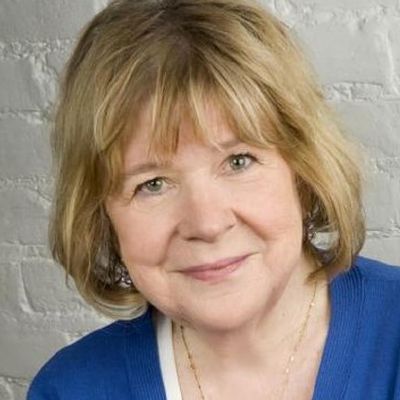
With a career spanning decades, Marylouise still finds joy in acting and is now starring in Brian Watkins' new play "Epiphany" as Morkin at Lincoln Center Theater. She chronicles her journey of pursuing her dream of becoming an actress, from switching majors and going to grad school to getting a day job and attending an acting school, and eventually moving to New York during the 70s. She recalls what it was like doing free theatre in New York in the 70s and then gradually taking acting seriously. She talks about doing TV and movies, getting the role of Morkin for “Epiphany” and how she connected with her character immediately, and the theatrical experience she hopes the audience will get from the play.
Marylouise Burke is an actress who has appeared in numerous Off-Broadway plays, including "Ripcord", "The Broken Pitcher", "Kimberly Akimbo", "Fuddy Meers" where she won Drama Desk Award for Outstanding Featured Actress in a Musical for her role as Gertie, and the latest one, Brian Watkins’ “Epiphany”. She has also appeared in various films and television shows including "Sideways" where she played Phyllis, the lead character's mother, "Ozark", "30 Rock" "The Blacklist", "Fringe", “Hung”, and "New Amsterdam". Her Broadway credits include "Into the Woods", "Is He Dead", "Inherit the Wind", "True West", and "Fish in the Dark".
Connect with The Theatre Podcast:
- Support us on Patreon: Patreon.com/TheTheatrePodcast
- Twitter & Instagram: @theatre_podcast
- TikTok: @thetheatrepodcast
- Facebook.com/OfficialTheatrePodcast
- TheTheatrePodcast.com
- Alan's personal Instagram: @alanseales
- Email me at feedback@thetheatrepodcast.com. I want to know what you think.
Transcript
This transcript was automatically generated and might contain errors.
[0:01] Alan Seales: Welcome back to The Theatre Podcast, intimate, personal conversations with the industry's biggest names. Our guest today is Marylouise Burke, who you may recognize as Sue Shelby from the recent and latest final season of Ozark. She's got a ton of roles on TV and film and across Broadway and off-Broadway. I absolutely love the story we got into when she was telling about when she came to New York in the 70s, right? And you think about it now, we're so used to social media and YouTube and self-tapes and all the ways that you could be seen. And imagine, I mean, remember if you're of a certain age or imagine if you're not, what it was like in the 70s, 80s, and even in the 90s when you moved to New York and you wanted to be seen.
There was no social media. There really was no internet. There were no smartphones. There was nothing that you could do to create a social presence other than just actually going out in the world and creating a social presence. So she has a lot of fun stories about that. And she didn't actually move though to New York until she was 32. After still being unsure, she wanted to pursue a career in acting. We are obviously so glad she did. Before we get started, scroll down wherever you're listening now and leave a rating and a review in the app. And now everybody, please enjoy this episode with Marylouise Burke. Today's guest is truly one of my favorite actors I've had the pleasure of watching lately.
This Drama Desk and Obie Award winner has a career spanning decades. And I most recently saw her as the lovely couples therapist, Sue Shelby on the fourth and final season of Ozark. She has additional TV and film credits, including 30 Rock, The Blacklist, Instinct, Fringe, and dozens more, and was most recently seen on Broadway in True West alongside Paul Dano and Ethan Hawke. She's currently starring as Morkin in the Lincoln Center Theater production of Epiphany, which just blew me away when I saw it a few days ago. Marylouise Burke, welcome to The Theatre Podcast.
[2:10] Marylouise Burke: Well, thank you very much. It's so lovely to have you here. I have to talk about Ozark first, because as one of my all-time favorite shows in general, I was so happy when I realized that you were going to be back in the city doing a performance, because Sue Shelby, I love that character.
[2:28] Alan Seales: Oh, wasn't she wonderful?
[2:30] Marylouise Burke: Right? I just loved all her little quirks and twists and turns. She was a great deal of fun.
[2:46] Alan Seales: And Laura Linney, of course, has a very strong Broadway theatrical career as well.
[2:52] Marylouise Burke: Oh, yes, yes.
[2:53] Alan Seales: I'm actually very curious to know what it was like, because I listen to Smart List, and I hear Jason Bateman talking about working with Laura Linney, but for you to be in the same scenes with them for multiple weeks, to be able to have someone with this intense film career and this intense theater career, was it different working with the two of them? Did they approach things differently? Or was it just like they brought their all, and you show up, and it's magic?
[3:21] Marylouise Burke: I'm trying to think how to answer that. Because I knew so much of Laura's stage work, I felt like I knew her already, and we share acquaintances and colleagues and stuff like that. But it was easy to work with both of them. It just was. Sometimes you could see that Jason was directing at the same time, that he was using two parts of his brain at once.
[3:55] Alan Seales: Right.
[3:55] Marylouise Burke: He was wonderful. I mean, he just never flagged.
[4:00] Alan Seales: I love it. And I'm not going to give away anything for anybody who hasn't seen how Sue Shelby ends up, but I did not see that coming.
[4:10] Marylouise Burke: I didn't either.
[4:15] Alan Seales: You love Sue. I love Sue so much. So, backing up a couple of years then, Little Marylouise, you were born in Pennsylvania, or did you just go to school there?
[4:28] Marylouise Burke: No, that's my hometown.
[4:31] Alan Seales: Which part of Pennsylvania?
[4:33] Marylouise Burke: Right outside Harrisburg, sort of South Central, a little town called Steelton, which was a steel mill town, Bethlehem Steel. Not thriving as much now. Things have changed a lot.
[4:51] Alan Seales: Well, when did you decide to really start getting into performing? When was the moment where you said, this is what I'm going to do?
[5:02] Marylouise Burke: Well, that's sort of complicated, because I think that I knew that I wanted to do it from the time I was probably 14. It was not a usual thing for someone in that environment to want to do. And so, everybody just kind of assumed, including myself, that I would be a teacher. And then I got to college and I suddenly dropped my education major and switched to a major in English and a minor in philosophy, which really prepared me for life.
[5:56] Alan Seales: Two of the most useful degrees.
[5:58] Marylouise Burke: Exactly, exactly. And then I went to grad school in English at the University of Wisconsin, and I had a teaching assistantship there. And I just hated teaching. I really didn't like to get up and talk in front of people without a script. I was miserable the whole time.
[6:28] Alan Seales: For the whole semester.
[6:30] Marylouise Burke: And I thought, well, I wanted to go through and get the degree, and I did. But I sort of was then a kind of over-educated woman without a plan. And fortunately, I had an aunt who had been kind of a semi-black sheep of the next older generation in my family. She was my father's sister. And she had rebelled and resisted teaching and had kind of taken artsy classes and everything like that. And then eventually, she just became a really gifted Montessori teacher and expert, you know, maybe by her 40s. But she saw me act in college and thought I had something going for me. So, when I came back from Wisconsin with my MFA in English Lit, she said, well, you know, if you just want to get a day job or something while you sort things out, why don't you come to the Philadelphia area where she lived with her husband and two kids and stay with us?
And there's an acting school over in Media, Pennsylvania, Hedgerow. And she said, and you could stay with us and go over there. So, that's what I did. I got a job in Philadelphia, and I commuted into the city. And then two nights a week, I drove over into this little town and in a theater that happened in an old mill. And it was a lovely little place. But I was sort of, you know, two nights a week and, you know, studying the seagull on the commuter train into the city where I was working a day job, you know. And I did a couple of plays over there at that theater, the first of which was Taste of Honey. What a beautiful place to start getting serious about acting. I mean, that, you know, that role, sort of like a young character actor's role, right, you know.
And then eventually, after all sorts of false starts here and there, their little dead ends, including a marriage, eventually, I just, I got up the guts to move to New York. This sounds like a joke, but it's the truth. I came here to have more opportunities to act for free, you know, because I wanted it so much, but I just didn't, I couldn't put it together in my psyche yet about honoring, truly respecting the calling to be an actress. And so, I knocked around downtown for a long time. And I didn't move to New York till I was 32. But it was 1973, which was a great time to come to New York. Because there were all these little theaters where you could act for free. And, you know, exciting things going on.
[10:17] Marylouise Burke: That turned out to be my taste. I mean, most of my work has been with contemporary playwrights. I find that exciting. When I got to New York, the first person I took a class with was Kevin O'Connor, who had originated a lot of the Shepard plays and was very active, you know, in that circle of new playwrights. And I think that was very influential. It suited me.
[11:04] Alan Seales: Do you remember the kind of the turning point? Because you were saying like, you didn't take it seriously. I'm paraphrasing a little bit. So you were, you know, you want to do it, but you were afraid to commit to it. And so you finally moved to New York, still aren't sure what to do, to do more, you were doing more free theater. But do you remember the turning point when you were like, Oh, wait, this is this is a paycheck. And I'm a professional actor. Now I need to take this seriously. Did that happen? Like, is there a turning point when that happened? Or was it just kind of gradual?
[11:36] Marylouise Burke: I think it was gradual. Actually, I don't think there was an aha moment or I don't know what it's like now. But to really get a start for a career in it, you really kind of needed to be seen by casting directors or casting people. And I was doing a lot of stuff downtown and a lot of regional theater, which was just wonderful. I loved that. But then finally, my agent at the time said, I think we need to keep you in town. And that's when I did Fuddy Mears by David Lincebear, Manhattan Theater Club. And so that was like a break for me because a lot of people saw it. It was, you know, it was in the official Off-Broadway.
[12:30] Alan Seales: Yeah. I mean, this is before the ability to self-tape, long before. Long before social media. Now, now I know like during the pandemic, I was talking to people and they were getting cast and casting through social media, through YouTube, through the Internet. And I forget about this sometimes because, you know, obviously we're we live in the present and there's recency bias, but there are people who who long existed before any of the most recent bullshit from all of everything, everything that social media introduces. Right. And I can imagine how much hard. Well, I was going to say, do you think it's made it harder or easier because now? Well, I guess. What am I trying to say here? Like before you had to work your ass off and be seen, like you were saying, and do lots of free stuff so you could finally get that one thing that, you know, a lot of people can see. Right. So was that harder or do you think easier than it would be for kids starting out now or even adults starting out now trying to do the same path?
[13:41] Marylouise Burke: I, I don't know. I really don't know. However, people do things like TikTok or whatever and suddenly have a career or they they do. They're more creative, I think, about getting themselves out there and discovering themselves as artists. And they'll just do that. I wouldn't know how to advise anybody today. In fact, a couple of young men stopped outside the theater last week and they said, you know, how can I get to go on stage here in this theater? And who? I don't know. I didn't know what to do. You know, I think, you know, I also I didn't go to a training program as such. So, you know, if you go to one of the major training programs, you kind of have an entree.
[14:40] Alan Seales: Right. The showcases and whatnot.
[14:47] Marylouise Burke: Yeah, they're showcased. And and I think you you have more of a network, a professional network that you're going into the world with.
[14:54] Alan Seales: So when did the when the TV and film start to to pile on to your life? Because that's that's a whole completely different avenue that I think in New York, New York in the 70s and 80s, there was very little TV and film in in the city.
[15:07] Marylouise Burke: Right. And my first movie was a movie called Angie starring Gina Davis that shot in L.A. And I can't remember who cast it, but I think this was that was in 1993. Sideways, of course, was my big intro. As far as film goes, I played Paul Giamatti's mom.
[15:28] Alan Seales: Do you like one medium over the other? I mean, people people keep coming back to this to theater because, well, I won't answer for you, but I was going to say that people, even though they're on TV and film, Laura Linney is a perfect example again, no matter how much success you have, if you have a foundation, if you started in theater, you can't quit it.
[15:51] Marylouise Burke: Right. Right. Yeah. Yeah. And and I like them. I like them all, you know, but they are really different. One cool thing that has happened lately, as far as TV goes with me is I've gotten some recurring work in a series that are often kind of kooky or the role is kind of kooky. You know, Longmire. Have you ever seen Longmire? I think I really think I started to put it together. And I think that a writer whom I hadn't worked with, but some of my friends had and who had worked at Rattlestick was one of the writers was in the writer's room in that show. And I think that's how I got to audition for. Oh, my God, it was really a wildly wonderful role. It was really playing Mary Wiseman's mother. And I think that as more writers do split their focus or decide they want to earn some bigger money for a while, you know, they value what some of us kooky theater people can bring to the table, you know, there's nothing like it. And there there are inherent qualities that a seasoned theater actor can bring to to a character when when they're forced to be small.
[17:25] Alan Seales: Right. Yeah. You got to be big and then you can do the exact same mannerisms on stage or in front of a camera. And in front of a camera, it's going to be a completely different visualization. And plus, it depends on the lighting and the directing and the editing and and all the other things that, you know, you don't have the final control over what or how you are seen on TV, ultimately.
[17:56] Marylouise Burke: Right. I really enjoy watching watching these big theater actors like try to contain themselves on camera because there's so much there's so much energy that they're, you know, they're having to force it down into this tiny little pinpoint of a moment. Right. And put it on cameras. You're like, hit your mark. You can't move three inches forward because you're then out of focus. And like, I don't know the way that that actors can interpret that and the way they, I guess, materialize that is always just so fascinating to watch. I really, really love it when, of course, Broadway actors in general go bigger for the big money, of course, on TV and film.
[18:37] Marylouise Burke: Yes, yes. I had a recurring role on Blacklist, and that was wonderful working with James Spader, you know, and she was off the wall. And I was actually working on New Amsterdam when the pandemic began. I actually had my call time for the next day. And they called and said they were closing down the set because of COVID. Temporarily, of course.
[19:06] Alan Seales: Yeah. But for a couple of days, because COVID is going to be around for a couple of days.
[19:12] Marylouise Burke: Oh, right. Yeah. Two years later. Yeah. Two years later, here we are. And that was really funny because I was playing a lady who was in hospice. And I had to learn one of those, to get myself around it, one of those electric, you know, scooter things. And I was really a menace to society. I don't know. You know, when I see people, like, out on the streets or in stores who use them, I just have so much respect. I mean, it's like, I mean, like, I was a good driver of a car. I could not master that thing. I mean, I'd crash into walls. And, you know, they would learn to run behind some furniture if I was comfortable. They stopped for, I don't know, maybe a year, year. And they came back again. And I got a lovely letter, email from them saying, we made the choice not to deal with the pandemic in the show because people have all been living through it and everything. And so the new season is going to start a year later. And since you were in hospice.
[20:34] Alan Seales: Let's talk about Epiphany! Because this production, God, I don't even know where to start with this. It is, I walked out of there thinking about my own mortality, my own choices. The person that I saw it with, we had this great conversation about family and tradition and death after this, but I say all this, but it's funny. Like the whole thing, you are funny and it is a wonderful production. So when you first auditioned for it, did you have sort of the full grasp of what the production would become? Or were you just like, here's a couple sides going and just be a kooky lady?
[21:04] Marylouise Burke: I actually didn't audition as such. I did a reading of it, an unrehearsed reading of it, but they ended up asking me to do it. And I was very happy because it was one of those things that it's just a role that I just connected with right away. And with the way he wrote her, you know, the way she looks at things, the way she processes things and everything, it's just getting the character was not hard for me. You know, I felt simpatico with that writing and the style that he wrote her in and yeah. And so I'm just feeling really fortunate to be able to do it now. It's a workout. It is because I was just two days over COVID, but we started rehearsals. So I was dragging, you know, it's very, cause you know, I'm not, I graduated from high school in 1958.
So do the math, you know, I mean, it's an adventure, isn't it? And the comedy in it, the way this dinner party works and the way people connect on the way they don't and everything, I think just is so involving and to play it is so rewarding. I mean, this company is remarkable. The company is phenomenal.
[22:31] Alan Seales: Oh, it's phenomenal. Yeah. And then you get that set and that lighting, you know, and you get to have snowfall.
[22:39] Marylouise Burke: That's what I was going to say. I mean, I love when there's weather inside in a production and the whole production, it's snow falling and it is beautiful. Did you and the cast ever have the opportunity to sit in the house and like watch a Q2Q or something and see everything in its full glory? Have you been able to sit back and see the big picture of the set yet?
[23:02] Marylouise Burke: I haven't because she's too busy. She's a part of so much of it, you know, but when I'm waiting up there, you know, cause I, when I entered the first time, it's a multi-level set. And when I'm waiting up there and looking out and, you know, there's that, you know, that kind of edgy rumble and everything and then the darkness and then that step, you know, the snow starts coming down. I just get chills every night. I just get so thrilled.
[23:29] Alan Seales: Well, as an audience member, I gotta tell you, it is beautiful. Like the craftsmanship on the staircase and then accentuated by the lighting and the snow falling. And I didn't know, like when you start, like you were saying, the sound design is incredible in and of itself, because I didn't know, like, what am I in for? Is this going to be a supernatural play? Is this going to be a special play? Is it like, I didn't know what it was and it kind of wrapped it all together. But like the character, the set is a character in and of itself and it's just absolutely beautiful.
[24:27] Marylouise Burke: It's really beautiful. Yeah. Yeah. It's funny because I had a fall two years ago and I broke, I fell, I tripped over a pothole on my street and I fell forward and shattered both wrists and my left kneecap. And so they did both surgeries at the same time to avoid keeping you under anesthetic for too long. I was so fortunate. I mean, I've recovered so well. But when we were talking about doing that, the play, when that agent called about it, saying he had been called, he said, now, do you think you're going to be able to do this? You know, because there are these stairs and everything. I said, that's the only thing I need to know. Are the stairs going to be normal stairs? My experience in downtown, as you know, you never know when a designer is going to say, well, because there's this absurd twist, we're going to make the stairs absurd too.
So, you know, I mean, I've had to navigate some dangerous surfaces in my time and I just knew it wouldn't be possible if it was going to be some wacky staircase, you know, and I said, oh, she doesn't have to worry about that. And I tell you that that thing feels better than the subway stairs. I mean, it just, I just love John D. Beatty. I just love it. You know, I feel so comfortable on them and very humane.
[27:15] Alan Seales: Well, what do you hope people either reflect on or take away after they see Epiphany?
[27:20] Marylouise Burke: I don't think I can put that into words. I hope that they have had an experience with it that matters to them. You know, like you said, when you went away and you were thinking about this, you're talking about this with friends and sometimes when that final moment comes and the lights go out at the very end of the play, you can hear people in the audience, you can hear someone go, oh, or wow, you know, people that are sitting nearby. And that's because they have gone on that journey. You know, they have had the laughs. They've had some serious chat. They've had some, I don't know, they've been through a very interesting theatrical journey. That's what is exciting to me, you know, because I wasn't looking for a single message, but you answered it.
You answered it perfectly, because it's left intentionally vague, I believe, to let people interpret it exactly as you were saying. It's just to reflect, is to have a discussion and think about what it means to them to have tradition, to stick with family, to have a friend circle, to evaluate death or lack thereof, right? Everybody's going to have a different experience with it.
[28:59] Alan Seales: Yes.
[29:01] Alan Seales: So, let me wrap up the interview with three closing questions that I ask everyone.
[29:06] Marylouise Burke: Uh-oh.
[29:07] Alan Seales: The first one, oh, they're easy. Well, the last one's super hard, but we'll get there. Okay, the first one, just very easily, is what motivates you?
[29:15] Marylouise Burke: The joy of doing it. Just, you know, the joy of doing it to find, you know, when you find a simpatico script and it's the joy.
[29:28] Alan Seales: All right. Then the next question is, what advice would you give to your younger self and younger people starting out now on a similar path?
[29:36] Marylouise Burke: Do it.
[29:36] Alan Seales: Do it. Okay, get to New York. So, it takes another 15, 20 years after that. You know?
[29:49] Alan Seales: Okay. So, here's the final question. This is the hard one. If you could only see one show for the rest of your life, but you can see it as many times as you want, what would you see?
[29:58] Marylouise Burke: Oh, my gosh. I don't know what to say. I just don't. I'm sorry.
[30:05] Alan Seales: Well, then you should say Epiphany with Marylouise Burke, because...
[30:11] Marylouise Burke: Yes. Okay. Yeah. Yes. Yes.
[30:16] Alan Seales: Yeah, we'll end with that. Epiphany is playing at Lincoln Center Theater through July 24th. So, get your tickets now and go down and see this amazing, amazing play. Marylouise, thank you so, so much for doing this. I really appreciate it.
[30:29] Marylouise Burke: Thank you. Thank you.
[30:33] Alan Seales: Thanks for listening to this episode. Make sure to leave a rating and a review wherever you're listening now. Find me on Instagram and Twitter. Slip into my DMs. Let me know you're listening. Thanks to Jukebox the Ghost for the intro and outro music. Bye.
© Broadway Podcast Network, All Rights Reserved