

Analise Scarpaci is a powerhouse performer who landed her first principal role as Lydia Hillard in "Mrs. Doubtfire". She talks about how she coped when the pandemic hit, including playing the guitar and recording her first EP, "Pathetic Little Dreamer", finishing her Bachelor's Degree in Musical Theatre, and why it was a blessing in disguise for her when "Mrs... Read More
From the show: The Theatre Podcast with Alan Seales
Guests

Featured Shows
About
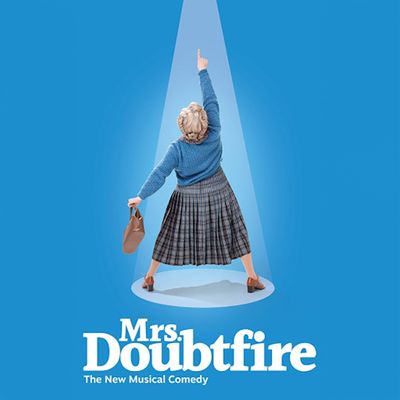
Analise Scarpaci is a powerhouse performer who landed her first principal role as Lydia Hillard in "Mrs. Doubtfire". She talks about how she coped when the pandemic hit, including playing the guitar and recording her first EP, "Pathetic Little Dreamer", finishing her Bachelor's Degree in Musical Theatre, and why it was a blessing in disguise for her when "Mrs. Doubtfire" got postponed. She shares why she got into performing, which started with her parents' love for Phantom of the Opera, listening to Shirley Temple, and seeing “Billy Elliot”. Analise also talks about what it was like to perform as a child and do eight shows a week, swing into multiple tracks, get notes for mistakes, and why despite the pressure, she appreciated being treated like they were adults—which framed the artist that she is today. She talks about how she got the role in “Mrs. Doubtfire”, recording the cast album and why she found it difficult. Analise opens up about getting diagnosed with Crohn's disease, and what pushed her to pursue her dreams, despite the odds.
Analise Scarpaci is a New York-based performer who made her Broadway debut in the ensemble of 2012's “A Christmas Story, The Musical” as Esther Jane. Her other stage credits include "Matilda the Musical", "Lolita, My Love", and "Mrs. Doubtfire" which was her first principal role as Lydia Hillard. Analise has also appeared in short films, including "Thespians" and "We're Gonna Come Back". She recently released her debut EP, "Pathetic Little Dreamer" which received positive reviews. Analise has also done activist work and has raised money with her walking group, Broadway for Bellies, and is currently giving private coaching and lessons to teens and kids as one of her passions.
Connect with Analise:
- Twitter: @analise_2999
- Instagram: @analise.scarpaci
- Website: analisescarpaci.com
- TikTok: @analisescarpaci
- Facebook: @analise.scarpaci
Connect with The Theatre Podcast:
- Support us on Patreon: Patreon.com/TheTheatrePodcast
- Twitter & Instagram: @theatre_podcast
- TikTok: @thetheatrepodcast
- Facebook.com/OfficialTheatrePodcast
- TheTheatrePodcast.com
- Alan's personal Instagram: @alanseales
- Email me at feedback@thetheatrepodcast.com. I want to know what you think.
Transcript
This transcript was automatically generated and might contain errors.
[0:00] Alan Seales: Hey, everyone. Welcome back to The Theatre Podcast. I'm your host, Alan Seales, and our guest today is Analise Scarpaci, who just came out of Mrs. Doubtfire on Broadway. She is such an incredibly talented, super nice person that I noticed this kind of trend with people in their early 20s, mid-20s, who have started their work on Broadway in their teens come with a level of maturity that I don't often find with people of that age, and that I didn't have at that age. And I wonder, actually, if people who are naturally predisposed to being a little bit more mature at that age are the ones who find success in this business at a little bit younger age because they take themselves more seriously, or if they, because they get cast because they're part of professional productions with lots of professional adults, that they're forced to grow up a little bit more, and therefore, it creates that level of maturity.
I don't know. What do you think? Let me know. Hit me up on DMs or wherever you want to reach out. Let me know what you think. You have to listen to Analise's new EP, Pathetic Little Dreamer. It's so amazing. It's so good. And obviously, get the Mrs. Doubtfire cast album, which just dropped because that is something everybody needs to hear. Find me online on Instagram and Twitter at theatre underscore podcast, on TikTok at the theatre podcast. You can visit me on the web at thetheatrepodcast.com and whoever many other places that you can Google and find me and more information. I don't know. Okay. Anyway, we're gonna take a quick break and then come right back with Analise Scarpaci.
[1:50] Alan Seales: Today's guest is a powerhouse of a performer having made her Broadway debut in 2012 at the age of 13 in A Christmas Story, The Musical, followed almost immediately by Matilda the Musical and most recently on Broadway in Mrs. Doubtfire the Musical starring as the eldest daughter Lydia Hillard. She has a new EP called Pathetic Little Dreamer. I was listening to it last night as I was putting these notes together. It is so good. She also gives private lessons to teens and kids and is now a proud college graduate. Congratulations, Analise Scarpaci. Welcome to The Theatre Podcast.
[2:22] Analise Scarpaci: Hi, thanks so much for having me.
[2:28] Alan Seales: No problem at all. Yeah, congratulations. You made it through college.
[2:36] Analise Scarpaci: Oh, I did. Yes, I did. I'm shocked that I did, but I did it. I can't believe it. So you were doing like full undergrad and Doubtfire and COVID and the EP mastering, mixing, recording, writing like what the hell, man?
[2:53] Analise Scarpaci: Yeah, I mean, no pun intended. What the hell is right? But yeah, it was kind of the pandemic kind of came as like a blessing in disguise in a way because I had taken the year off of school to do Doubtfire and then COVID happened and that fall I was like, all right, I guess I'm going back to school. I always planned on getting the BFA no matter what, but the pandemic kind of came in handy in a way so I could graduate. Not exactly on time because it was a year later than I was supposed to, but it was definitely faster than what I would have gone if the show was running at the same time.
[3:41] Alan Seales: So did you take the time then to work on the EP or where was the actual EP recording through all of this?
[3:48] Analise Scarpaci: That was all during COVID. I started writing. I wrote all the songs and did everything for the album pretty much starting with like around April 2020.
[4:04] Alan Seales: Wow. Yeah.
[4:05] Analise Scarpaci: Yeah. So everything shut down.
[4:07] Alan Seales: Yeah, everything shut down in March and then April you started that. I think that speaks to a lot of who you are, which I hope to get into because literally a month into the pandemic when everyone's livelihood gets ripped out from under them, you're like, well, I guess I'll do this instead. So what is that about you that made you, I guess, dive into that versus what some other people did, sort of myself included, was sort of want to crawl under a rock and wait for the war zone to be over, right?
[4:35] Analise Scarpaci: Oh, there was plenty of that. There was plenty of that. But I mean, I didn't go into the pandemic thinking like, oh, I'm going to come out of this with an album. I just started writing songs. And because that was the only thing I really had was my guitar. And there's only so much television you could watch. I watched every show. And I was like, I'm just, it was the same routine every day, which I'm sure it was like the same for everybody. It was just like you get up in the morning. I did my workout and I would go do what I have to do, put on my clothes for the day and then eat my lunch. And it was the same thing every day, which feels like so long ago now, but it really, it feels like a world away. But it really was kind of recent. But thinking back on it, writing songs was all I had. And I would just sit on my couch and write songs. And that's just how I passed the time. And then eventually it just turned into, hmm, I think I may want to release this.
[5:39] Alan Seales: Is that the first time you started writing? Or have you just kind of like thrown things around for a while or done covers or performed publicly doing covers?
[5:47] Analise Scarpaci: Not really. I mean, I started writing. Well, okay. So way back when I was in Matilda, they had just opened the Guitar Center on 44th Street and they were offering lessons. So I decided to not take guitar lessons because I thought that playing bass was going to make me more of a badass. So I decided to play bass and I was quite good at it. I will say I was quite good at playing bass. But then when I was a junior, so that was when I was like a sophomore in high school. But then when I was a junior, my parents got me an acoustic guitar for Christmas. And once I started playing guitar, I started writing cute little campy songs when I was a senior that should never surface the earth. But hey, they were great for your first songs.
They were great first songs. But then I kind of stopped once I went to college because living with roommates, I felt very insecure and I'm an only child. And not that I was insecure, but I was more insecure of the fact that I hate when people are... The thought of if anybody walked in while I was writing, I hate that feeling. I need my alone time. I need my space. When I'm writing, I need nobody to bother me. So it was definitely... I took a break for a long time. And then when the pandemic happened, it was the first time I realized I had nothing to do. And then I just started playing. And then eventually, songs came out.
[7:28] Alan Seales: I was going to ask about college, but you had said that you had already had taken the year off 2020, right? Because Doubtfire was supposed to open.
[7:35] Analise Scarpaci: Yeah. So I had finished my first two years of college and I lived at school for the first two years. And then the summer before my junior year was when I booked Doubtfire.
[7:47] Alan Seales: Oh, okay. So then, yeah, I remember March 2020 was supposed to be like, yeah, we're going to be gone for a month or two max. Maybe three and everything will come back. And so that's really cool though. And I love the style because it sounds like music that comes out of contemporary musicals. And I don't know if that's intentional, but...
[8:11] Analise Scarpaci: No, I mean, that's kind of just like... I've always wanted to be a storyteller. I hate songs that are just like... I mean, every song tells a story. I shouldn't say that some songs don't. But some songs are more story-based rather than just like a catchy chorus, if that makes sense. And for me specifically, my musical inspirations, the number one being Sara Bareilles, who every song has a story and every song has a meaning. I just was just so inspired by her lyrics, specifically all of her albums, but specifically her soundtrack for the TV show Little Voice that she did. And I loved that show because of the journey that the main character had. But yeah, specifically that album inspired me to kind of like, hey, I could write story songs and people will still listen.
[9:26] Alan Seales: So why the name Pathetic Little Dreamer? Why Pathetic?
[9:28] Analise Scarpaci: Well, a lot of people ask me this. It kind of just came to be. There wasn't really a meaning behind it, to be quite honest. I mean, everybody kind of searches for me to have this profound answer. But it's kind of the point where I was just looking at myself in the mirror and I'm like, wow, you're kind of pathetic living at home with your parents because your job got shut down because of a virus. This is kind of pathetic right now. And I was at a beach house that we rent over the summer and I was looking at myself in the mirror and I thought of the melody. The song, the title song, Pathetic Little Dreamer, had a completely different melody. It was originally a ballad at first, but the notes, the da-da-da-da-da-da-da-da-da-da-da, that was all the same.
And it was just much slower. But I was looking at him like, what is a word that will represent? I loved the fact that it was Little Dreamer. And I was like, oh, pathetic, because that's what this situation kind of is for everybody. We're all kind of pathetic. If we thought about it, if we looked back at our lives, if we knew what was coming in the future, we're like, look at us. We're a little pathetic right now.
[10:48] Alan Seales: Well, everything kind of seems that way when you look in hindsight, right? In the moment, it's the biggest deal. And you're like, man, that was really pathetic. Now you have more problems to deal with.
[10:59] Analise Scarpaci: Right. True. Hate to break it to you. That's called life.
[11:05] Alan Seales: Yeah. But when did you start, I guess, getting into performing? Because obviously, auditioning for Broadway and getting on Broadway doesn't just happen overnight for the majority of people.
[11:12] Analise Scarpaci: Yeah, it was kind of a thing that I was born with. My parents were, are definitely to blame. Their wedding song was All I Ask of You from Phantom of the Opera. Which is, you know, they just love Phantom and they've seen it like a trillion times. Which is funny, because when I saw it, I did not have the same, I guess, revelation that they had when they saw it. But they also saw Michael Crawford. So I totally, you know, it's like when in the 80s, it was like this huge thing. But it was for me, that aha moment was Billy Elliot, which I'll get to. My origin story pretty much starts with Shirley Temple and listening to Shirley Temple all the time. I was a dancer first. I was in ballet class.
[12:35] Analise Scarpaci: I had no words. I was just kind of blankly staring at those kids dancing and I couldn't believe it. And I also couldn't believe that like besides Annie, you could have a bunch of kids in a musical. It was kind of like the first in my generation of performers that really had a ton of kids post Annie, post Annie Get Your Gun.
[12:59] Alan Seales: Mm hmm. And Chitty Bang Bang too. Right?
[13:01] Analise Scarpaci: Yeah, that I didn't think about it along those lines, right? Yeah, it seems to be like a generational gap. And then there was then there was a string because it was Matilda. And then there was then there was the actual generation where I was able to be a part of School of Rock. And, you know, of course, like you see kids in productions a lot and you have to have you always have to cast double for every role because like children.
[13:29] Alan Seales: I don't actually know the Children's Union laws. So you can only do out of eight shows. You can only do six, five. What's the there's no rule for that. Really?
[13:36] Analise Scarpaci: No, there's no. I mean, to my knowledge, there isn't. Um, we for A Christmas Story, we performed every single day.
[13:51] Alan Seales: Huh? So what about like little kids?
[13:53] Analise Scarpaci: You know what, for little kids, I'm not sure I was 13. When we did A Christmas Story. Our youngest was eight, and she performed eight shows a week. Wow. Yeah. But that also was, you know, 10 years ago. So I'm not sure if the laws have changed since then. But it's unheard of. No one does that anymore.
[14:21] Alan Seales: Yeah, we were in Matilda. We every child I was a swing in Matilda. So we performed. I was performing twice a week once for each track. To give whoever I was covering the day off. So every day there was a swing on. It was never like full. We used to call it the giraffes. They were giraffes. The main cast was the giraffes. And then the swings were the monkeys.
[14:47] Analise Scarpaci: Oh, because they're swinging. I get it. That's so cute. Oh yeah. Kids.
[14:51] Alan Seales: Was that hard for you? Looking back on it? Was it hard for you at that age to swing into multiple tracks?
[15:00] Analise Scarpaci: I mean, because even as an adult, you're shaking your head. No, even as an adult, like some people are like, Yeah, I got to know nine tracks. But I feel like I think learning anything as a child, your brain is more malleable, right? So as you get older, your brain calcifies, and it's harder to learn new things about it all.
[15:26] Alan Seales: And as you've gotten older, though, like with your non-performing sort of endeavors with the academic work has swinging performing just the act of needing to memorize has that have you found that that has made its way into your normal life?
[15:38] Analise Scarpaci: Oh, 1000%. I mean, I always say that my work on Matilda, we I talked about this a lot, because a few, some of my best friends who were in Matilda also went to Pace with me. One of them is in the acting program for film and television. The other one is in the musical theater program like I was. And we talked about this a lot of how our training on Matilda, specifically the way that it worked, because the way that they kind of framed their entire production was how they did it in the West End. And a lot of times productions in the West End are not done the same way as they are here. Specifically, Peter Darling, they're very, very specific in what they want. Everything had to be 100 135 billion percent every single night you were on. We were noted every single night. So everything had to be exact.
[16:24] Alan Seales: A lot of times when a show opens, you don't get noted every night. So you got to remember that you have to be 100 trillion percent, you know, so for us, we knew that we were being watched the entire time.
[16:38] Analise Scarpaci: And if we were doing something wrong, the next day we'd get a note and being like, Analise went on a single slice, be a little bit sharper with your left hand. Okay, great. Write it down. And if the next night you were on and it wasn't sharp, you would get another note being like, why didn't you correct it from the last time? You know, so it was like it was kind of a way of training yourself into being like 100 and always giving every single time, always at an 11, which helps you. I mean, listen, at first people are like, I see your face. I see your face right now. People agree.
[17:12] Alan Seales: That sounds like so much pressure.
[17:13] Analise Scarpaci: It is. But honestly, like, you know, that's kind of the business they treat. They treated us like we were adults. And I appreciated it because it was it taught me, especially as Lydia. It kind of framed the artist that I am today to always be, you know, you can't just, you know, just because you're in a show for a long time doesn't mean you could slack off. You know, it's like you have to be on. You got to tell the story. Because even though it's not your first time telling the story, it's the first time that people in the audience are seeing it. You can't just be doing everything.
[17:52] Alan Seales: Yeah, there's always somebody there who's going to come out of that show saying that show saved or that show changed my life.
[18:00] Analise Scarpaci: Yeah, because it feels like the first time for them. Yeah, I totally agree with that. I completely agree with that. I understand that way of thinking. I just I feel like the getting notes every night. Oh, yeah. God, as a kid, as an adult, you're like, I don't want to mess up.
[18:16] Analise Scarpaci: No, I mean, for us, it was more like I we didn't mind the notes. We just didn't want to show up there two hours before the show started. We didn't care about the note section. We really just did not. You know, we would have to show up about two hours before the show to get notes for dance notes for voice. We'd have to do safety training. So we'd have to do like every night we'd have to test and we'd do the swings and then we do the gym sequence. And then we would do the you know, we'd have physical warm ups and do a dance warm up and then we'd have a vocal warm up and then we'd have breathing exercises. Like it was an entire process before half hour where the adults didn't have to be there two hours before they'd have to be there like maybe an hour and a half before to do the safeties. But yeah, it's it's run very, very differently than most shows.
[19:09] Alan Seales: We like to call it the British way.
[19:12] Analise Scarpaci: You were 13, 13, 14 in Matilda, right?
[19:17] Alan Seales: 13, 14. I was cast when I was 13. And then I turned that that October, I turned 14. And then the following year, I turned 15. And then on tour, I was 16 when they called me to do the tour.
[19:31] Alan Seales: So I saw you on the Broadway production then unless you were swinging out for whatever reason. Yeah, I saw that. Let's see. Yeah, but but the reason I was asking is, is because I was talking, I was talking to somebody the other day who moved from another state to New York by themselves to stay with a friend at 14 to start auditioning and taking.
[19:52] Analise Scarpaci: Oh, wow.
[19:53] Alan Seales: And all this stuff. And it occurred to me, too, because, you know, outside of New York City, you get your license at 16. And that's when teenagers start to, like, become more independent, because before that, you have to have your parents or a sibling or somebody drive you around everywhere. And so for you having to show up two hours early at 13, 14 and 15, were you taking yourself on the subway or your parents?
[20:16] Analise Scarpaci: My mom is the best. Both my parents are the best. It was also convenient that I live, you know, I live in Staten Island. That's where I'm from. So I would get picked up from high school and my mom would drive, we would drive straight into the city. We had an apartment here so I could do some homework. I would do homework and then I'd go to the theater. And then if I wasn't on, I would sit backstage in the schoolroom and do more homework. If I was on, I would go on stage and then leave.
[20:49] Alan Seales: Wow.
[20:50] Analise Scarpaci: And that was it. Yeah. Most majority of my time at Matilda was spent doing safeties and doing homework.
[20:57] Alan Seales: I guess that's actually a pretty good place to compartmentalize.
[21:03] Analise Scarpaci: Oh, it was great.
[21:04] Alan Seales: You know, you've got your time to do it.
[21:06] Analise Scarpaci: Yeah. And you know what? It really helped out with college and with doing Doubtfire. I mean, I never realized how much my training, how much I used my training with Matilda and in ballet as well.
[21:18] Alan Seales: We're going to take a short break. Stay tuned for more of the episode.
[21:23] Alan Seales: Well, I'm going to bring up Doubtfire 2 because now you're still playing relatively the same age, but I was surprised to learn that you're in your early 20s now.
[21:39] Analise Scarpaci: Yeah.
[21:40] Alan Seales: And so you play much younger, which is wonderful. It's something that will work to your advantage, I suspect, for many years.
[21:47] Analise Scarpaci: Thank you.
[21:48] Alan Seales: And you get to be alongside these two wonderful actual children and then the literal, I guess, metaphorical child of Rob McClure, because that dude just does a great job.
[22:05] Alan Seales: So, yeah, taking, moving this forward, taking this into Doubtfire and, you know, your work ethic seems strong. You're taking time off from school so you don't have to compete with that sort of thing. And now you get to originate all of this. So, what was that like for you coming in and creating this role of Lydia Hillard with, I guess, first off, did you know anything about the story? Did you know anything about the story?
[22:30] Analise Scarpaci: Well, it's my favorite movie.
[22:39] Alan Seales: So, which was amazing to me as I developed this CinemaCon character.
[22:47] Analise Scarpaci: I guess first off, did you know anything about the story beforehand? Did you guys, were you told to or not to watch the movie? How did that process work when you were creating the character?
[22:57] Analise Scarpaci: It's my favorite movie. So I, you know, which was amazing and I say this all the time, but so my dad and I used to watch this movie all the time. So it was kind of like a full circle moment that my character, her entire story revolves around the relationship between herself and her dad. So it was nice for me to have that moment with my dad as well as Rob, who is just like one of my closest friends and it's kind of weird to say because he's Rob McClure and that's really awesome.
[23:28] Analise Scarpaci: Yeah, I mean, I was petrified at first. I thought they had made a mistake because I had only gone in once for the show and they called the next day and said that I got the role. I thought that they were crazy. I was like, did they need to see me one more time? Are they sure? And they were like, no, they're, they're very sure. They're sure. But yeah, I mean, cause that like never happens, you know, like throughout my whole life I had never heard of that happening, let alone for it to happen to myself. I was kind of freaked out. So starting I was really nervous because I just wanted people to like me. I wanted people to, you know, I was young.
[24:39] Analise Scarpaci: So, um, it was really, really special and I'm so happy that I had Rob and Jen kind of bringing me along on this journey and kind of they, Rob and Jen and Jerry, Zach's, which is nuts that I, you know, could call them, you know, my mentors throughout this process. They basically made me into this adult actor that I am today, which is insane and that the process, the amount of that I have grown as a performer and as a person from the summer of 2019 until spring of 2022, and that's a long time. And even though we had that time off, they were still, you know, there for me and still helping me. I mean, Jerry, you know, I called up Jerry for a favor during the pandemic and asked him if I could get a recommendation letter for school for a portfolio and Rob as well. Like if I called Rob or Jen for anything, they'd be right here. They're amazing and they really helped me with this role for sure.
[25:48] Alan Seales: That's super cool to hear that about them. And I mean, it's not surprising, but it's nice to be reassured that that's there because, yeah, it seems like, I mean, the crux of the character anyway of Rob's character is founded in love, love for his children that he will go to any length to be with his children that he's not supposed to be with. And I think that that carries over when you're good at that role and on stage, you know, that carries over personally into your relationships. And then I was talking with J Harrison G earlier and he was saying too that all of you as a cast literally like went through trauma together and shared that experience, you know, 'cause you're saying it's summer 2019 you got cast and then March 2020 shuts down in the middle of previews.
[26:45] Analise Scarpaci: Yeah, the third preview. Didn't even get a week.
[26:49] Alan Seales: Yeah, you didn't even get to open.
[26:51] Analise Scarpaci: No, and then come back and then go out on hiatus and then come back again.
[26:58] Alan Seales: Yeah, we've been through a lot.
[27:02] Analise Scarpaci: And yeah, you know, it was a lot for the entire community as a whole, but specifically for our show, what we have endured throughout these past almost three years is something that I never would have imagined.
[27:14] Alan Seales: Yeah, none of us would have imagined it. And you know, our show and our cast specifically, we have been very, very fortunate to have each other.
[27:27] Analise Scarpaci: The album just dropped, the cast album.
[27:30] Alan Seales: It did. And I've always wondered, I've never had the privilege of originating a role and also being on a cast album. But for you now, this was your first time doing this, right? So how is it that you're able to translate, like how did I tell you to translate the emotion, the realness of performing on stage into the studio? Because you're not moving around, you're not doing the dancing.
[28:01] Analise Scarpaci: Yeah, you know what? It was really hard. I will say it was something that I never expected would be that difficult to be quite honest because I thought that I had done, you know, voiceover work and I know what it's like to record in a studio obviously from doing my album, but this is like a totally different thing. And also, we had, you know, we had, we're on hiatus, so we hadn't been doing the role for, you know, you know, they're living in us, but it was the first time that we had sung the songs in like literal weeks. We had recorded it right before we went back this time around.
[28:45] Alan Seales: Was that was the plan always to record it during this time and in the hiatus just happened to have happen anyway at that time or were they like while we're break?
[28:51] Analise Scarpaci: Yeah, we had been planning on recording it earlier, but then we had to go on a hiatus. So then they made it until we went after.
[29:02] Alan Seales: Gotcha. It was like we start, so I had gone to rehearsal with the new kids on Monday, on Tuesday we recorded the album and we opened like a week later.
[29:16] Analise Scarpaci: Kids, yeah, I was gonna bring that up too because during the latest, the kids got replaced because the kids, kids grow up.
[29:24] Alan Seales: It happens.
[29:31] Analise Scarpaci: Gosh, I mean, it was so cool that they both were able to come back after and reopen the show, actually open this show, not even reopen it, just actually open it.
[29:41] Alan Seales: Open it.
[29:44] Analise Scarpaci: Open it. And one of them got to come back and close it. You know, it was kind of like the most perfect Doubtfire craziness that could have happened to be honest, but I'm so fortunate to that the six of actually, the eight of them honestly, eight kids because we had to and then we had understudies for the first time around. They're just, I had the great pleasure of being their big sister.
[30:12] Alan Seales: That's really cool. I love that you just use the word sister because you mentioned you were you're an only child. So have you always wanted like a big family or just a couple siblings? I feel like a lot of only child children that I talked to are like just in my life in general been like I always wanted a brother. I wish I had an older sister to play with.
[30:27] Analise Scarpaci: No, because well, I'm an only child, but I also love my space, but I have a huge family. I have a huge extended family. So, you know, I'm kind of used to go, I love being with my family and I love being with a ton of people, but when I come home, I like my space. But that's, you know, if I had grown up with siblings, I definitely wouldn't have complained, but I love being an only child. I think it's kind of cool because cast, cast is sort of, I mean, even though you don't more or less have influence over who you're cast with for the most, yeah, they are sort of, they do become like a chosen family.
[31:14] Alan Seales: So I, and then now as we're saying it earlier that with the opening and or the pausing, the shutdown, the hiatus and everything that you guys have been through so much together that you've got these shared experiences that hopefully there's never a global pandemic that shuts down Broadway again, but now you've gone through things that are probably once-in-a-lifetime really important bonding moments for everybody.
[31:36] Analise Scarpaci: For sure. And I mean, I watched it was so beautiful to watch both of them not grow physically. I mean physically, yes, but also mentally. I mean we started and Avery was just, you know, a baby, and now she's gonna be a teenager in August. Like that's weird. She's gonna be a teenager. I know it's so weird. It's crazy and Jake is gonna be 16 in September, which is so weird. You know, they were babies and now they're, you know, young adults. Jake is a young adult, but yeah, Avery's gonna be a teenager when you're 13. You think you're a young adult.
[32:26] Analise Scarpaci: Every average got it all figured out. But um, yeah, and like our new kids were so, you know, they're the girls are 9 and the boys were 12 and 11 and we, you know, they're, I'm excited to watch them grow as well. I mean now they're just all of them are just the sweetest.
[32:44] Alan Seales: That's really, really cool. I love that you have that and that you've got, you know, more mentors and friends in Rob and Jen and I'm sure Brad Oscar and Jay and everybody else, everybody, the whole cast is so, so phenomenal and I love, I just love to watch the love that you could feel on stage between everybody. And the cast album just dropped. It's again, it counters all of this in such a wonderful, wonderful way. But I wanted to actually get back to something slightly personal of yours, I guess is the original misdiagnosis and now correct diagnosis of Crohn's disease. I actually just had a friend of mine last year as first close friend. I've had it was diagnosed with it and she was for years complaining of abdominal pain and didn't know why and then immediately like finally got diagnosed and they're like we have to remove part of your intestine like now.
[33:47] Analise Scarpaci: Oh, wow.
[33:49] Alan Seales: Yeah, so I guess talk about that sort of thing because I was reading an article I think by your doctor that was posted about the whole situation and I'll let you tell the story, but it seems like that has shaped so much of who you are now because you talked very beginning, you talked about your exercise routine and you're very regimented now. So you tell the story.
[34:15] Analise Scarpaci: Yeah, so basically long story short, I was 10 years old and I had just seen Billy Elliot on Broadway and I, you know, loved it so much and decided to submit my picture and resume to through snail mail to a manager that I found in the Billy Elliot Playbill. I was in summer camp for ballet, ballet camp for the entire month of that following July and I got a call saying that the manager wanted to meet with me. So I met with the manager and the next day I had my audition for Billy Elliot, my very first Broadway audition ever and I ran out of the room in hysterics crying because I was so scared because I was not a tap dancer and I didn't realize that, you know, in Billy Elliot it wasn't just a ballet show.
You also needed to tap dance and I was quite frightened and my stomach was killing me and eventually we had discovered that I was, you know, doing there was some nasty things that were escaping from my body. We'll put it, there were some nasty things. And you know, it, you know, after research and doctors later, I was officially diagnosed with ulcerative colitis and then a year later it had morphed into Crohn's disease. I had ulcers all throughout my esophagus, through my stomach in my intestines. They were just everywhere. I was quite sick, but luckily, I'm in remission for about I guess five, six years. Yeah, five or six years, but throughout that time I was still auditioning and I love to tell this story specifically, so I'm on medication, an IV drip biologic eight times a week, not eight times a week. I'm every eight weeks.
[36:14] Analise Scarpaci: I love to tell this story because at first, you know, my parents were kind of against it. They didn't know, you know, side effects. They didn't know what was going to happen, whatever. It just started to be given to children. Oh, right. Because it was adults only. During that time, it was adults only. And it had just been started to be, you know, distributed to children. And I would have been like one of like the first, you know, thousands of kids, I guess, who were put on this medication. So they were not entirely sure. And when I got home one day, I decided to go for the treatment. And when I got home from the treatment, there was a newsletter in my mailbox that was from Mount Sinai Hospital, which was not my hospital at the time.
But we had gotten this IBD kids newsletter. And I opened it. On the front page, there was Chelsea Stock, who was Ariel in The Little Mermaid on Broadway, and who had also done Something Rotten and just done like a bunch of shows on Broadway. And on the front page, there she was on her IV drip, the same medication that I was talking about her story about how she was diagnosed with Crohn's disease at 16 and was playing Ariel on Broadway in The Little Mermaid. And I said, well, if she can do it, why can't I? And that basically, that story was the one that kind of kept me going. And what was crazy was that when I was in A Christmas Story, I was able to meet Chelsea and she came to see the show.
[37:49] Alan Seales: Did you tell her?
[37:53] Analise Scarpaci: I did. And you know, it was funny because she was like, I didn't even think that anybody read that. She was like, I didn't even think that people actually read that article. And you did. And now like you use that as your inspiration. You know, it's like, and that's why I love to do all kinds of things, because you never know who's listening. And you never know who's going to hear your story. And you never know, you know, who's going to be inspired by your story. Like, I hope that there are some kids with Crohn's out there that are listening or, you know, some kids who don't even have Crohn's, like, don't even think that they're good enough to be on Broadway or good enough to do theater in general, even on like, at their school. I hope that this, I hope that things like this help them.
[38:46] Alan Seales: We're going to take a short break. Stay tuned for more of the episode.
[39:00] Analise Scarpaci: Wow. Wow. Okay. So, I want to get into the teaching and coaching that you do because you were saying that you hope to inspire things. So, I'm going to put a pin and come back to that. But the ulcers all up and down your digestive tract sounds like some of the worst pain I can imagine. And all at the same time, you're freaking auditioning for Broadway and on Broadway.
[39:23] Analise Scarpaci: Yes. And no one knew. I told no one. I didn't tell a single soul.
[39:28] Alan Seales: So, again, what the hell?
[39:32] Analise Scarpaci: What the hell? What the hell? So, you're singing. Are you feeling the pain on stage during this point? Or is it just like you're channeling it out?
[39:42] Analise Scarpaci: I had no pain.
[39:45] Alan Seales: Really?
[39:45] Analise Scarpaci: Yeah, I was just making a lot of trips to the banyo.
[39:50] Alan Seales: Oh.
[39:50] Analise Scarpaci: Yeah, it was a lot. Honestly, my cousin also has Crohn's and she had immense pain. She had surgery as well. Um, I did not have surgery. I did not have pain. I just was going. I lost. I was very, very fat. I lost so much weight.
[40:12] Alan Seales: Right. Well, that's why I brought that up when you're talking about the kids because you play young because in some of the most important growth years of your life, you weren't able to properly absorb the nutrients your body needed to grow.
[40:26] Analise Scarpaci: No. And that's why the medicine was so helpful. And by the time I was in Matilda and A Christmas Story, I was regulated. I was very settled and I was very set. So it was, you know, I was very fortunate to have been okay throughout that time that I was in the show is because the medicine really, really turned everything around.
[40:51] Alan Seales: Yeah. Wow. Well, good for you. I mean, for not for not giving up.
[40:58] Analise Scarpaci: Oh, no. Yeah. There's so many things that I mean, you read stories. Yeah, never. You know what? To this day, like when I have my treatments and my treatments knock me out sometimes. And it was like right when Dow fired open, we were still in previews. I had my treatment in the morning. I went straight to reversal because we were still in previews and we had to rehearse. And then I did the show that night and I was I didn't get any sleep. Usually I at least just like to like I never sleep, but I like to at least relax and not move. And I had no choice but to move that day. And I was I had never felt like that in a long time, like just like what just I was just exhausted and so drained. And it was a Friday and I was like, I can't move. But I did it because I wasn't going to let it stop me. I wasn't you know, I'm not I'm not going to let my crowns have that much power over stopping me from performing. It's just it doesn't have the right to do that.
[41:58] Alan Seales: That's such a wonderful way of thinking about it. Did the production team, were they cooperative, too? I mean, it sounds like.
[42:04] Analise Scarpaci: Oh, yeah, they knew they were great. They were great. And they knew. And, you know, I had people backstage being like, did you drink water today? Like, did you drink?
[42:12] Alan Seales: Oh, really?
[42:12] Analise Scarpaci: Do you have an app? Are you hydrated? Are you okay? Like, are you good? I had about 50 people in the cast, like following me around my dresser be like, drink here, have your water. Charity Dawson, who was my dressing room and being like, here, you're not drinking your water, drink your water right now. Which was great. I had everybody around me. And they knew when I would have my treatments and I would like tell them like being like, hey, am I treatment today? And they'd be like, all right, you're good. We got you.
[42:40] Alan Seales: Wow. So you would have to go on you to get your treatment and like go do full shows sometimes.
[42:45] Analise Scarpaci: Yeah.
[42:47] Alan Seales: That sounds brutal.
[42:49] Analise Scarpaci: And then just one day was the first time I had ever experienced that. When I was in Matilda, it was kind of easier because I would schedule the treatments for days that I wasn't on. So that was easy. I could just go sit upstairs and put my head down. But yeah, I mean, for Christmas Story, it was the same thing. I went for my treatments and then I performed at night.
[43:10] Alan Seales: Well, you were saying that coming out of the Matilda, the British way, you always have to be at 11. So did that play into any sort of psyche of like, oh, god, I got to do this treatment and I got to be on and I got to be at 11? Like, I'm not going to be good enough? Or were you just like, you know what? This is my fam. They got me. We're cool.
[43:30] Analise Scarpaci: Yeah. I mean, you know, for Lydia, I could sort of take out my frustration and use that in the work. So if I was feeling tired, I used it. And it's different with Matilda because Matilda, you always just had to be. It was like this choice or the highway. So with Lydia, because she's kind of mine, she's me at that point. It's not like I was replacing somebody. It was me. And they were my choices and with the guidance of everyone around me and Jerry. And obviously, I wouldn't just go rogue because that's not right. But I would use that in my emotions. If I was feeling upset that day, I would, of course, use that because my story specifically was very upsetting. I was very angry. It wasn't hard for me to take out frustration. I could use that in my work.
[44:30] Alan Seales: That's a really good way to channel that through. I think it's probably more of the catharsis and whatnot. That's great. So you're involved. Was I reading right that you do like activist work, like promotional work?
[44:45] Analise Scarpaci: Yeah, for the foundation.
[44:47] Alan Seales: Yeah. So plug that real quick. Let's talk about that.
[44:49] Analise Scarpaci: Yes, I do. This year, I wasn't able to because there was just so much going on with Doubtfire. But I usually participate and take steps for Crohn's and Colitis Walk every single year. I was an honoree back when I was a senior in high school. So it was a bit ago, like 2017. And they honored me for being the pediatric patient honoree. And that was really cool. My team is called Broadway for Bellies. And we have raised over $25,000 in total.
[45:22] Alan Seales: Wow.
[45:23] Analise Scarpaci: Which has been amazing. Yeah.
[45:25] Alan Seales: Wow. Well, hit me up. I want to be on the Bellies team.
[45:28] Analise Scarpaci: Yeah, I'm hoping to bring it back. I'm hoping to bring it back next year.
[45:32] Alan Seales: Definitely bring it back.
[45:33] Analise Scarpaci: Please. I like to walk and Broadway for Bellies sounds great. And then we'll go back to the teaching and the coaching.
[45:40] Alan Seales: Yeah.
[45:40] Analise Scarpaci: And you teach and coach specifically teens and kids on what?
[45:46] Alan Seales: They're like funneling their anger through...
[45:49] Analise Scarpaci: Anything.
[45:51] Alan Seales: Imagine. No, I'm going to teach anger issues today. No, I...
[45:55] Analise Scarpaci: Listen, for teens, come on.
[45:58] Alan Seales: Yeah, I mean, true. Everything now is about an angsty teen. But honestly, I'm open to teaching. I teach everything. I mean, if you want to take dance lessons, if you want to do acting coachings, and it doesn't have to be like, oh, I'm auditioning for, I don't know, Mary Poppins at the Muny off the top of my head, or it doesn't have to be I'm auditioning for Matilda on Broadway. It could be like, oh, I'm working on Seussical at my school. And I want to work on the role. Can you help me? I don't care. Of course. I've done Seussical three times. I know everything about Seussical. Seussical is one of my favorite shows. I love working on any type of performing in any type of capacity. Even like if you need like repertoire, it doesn't have to be anything.
We could just work on technique. I love... My favorite thing when I was growing up and still do, I love to learn. I love learning. I love... You're never done. No matter how old you are, no matter what you're doing, you're never done learning in your field.
[46:56] Alan Seales: Hold on to that. Hold on to that, please.
[46:59] Analise Scarpaci: Specifically for me, I have really developed a love for teaching because I love to show... I love to give insight on growing up in an industry that is constantly changing. This industry is constantly changing and moving and shaping different ways. And they're... You know, back when I was a young teenager, I mean, it was kind of unprecedented for a 13-year-old to be in a Broadway show. But also that 13-year-old was four foot six when she was starting high school because she had Crohn's disease. So that was... It was kind of unprecedented for somebody in high school to be doing... Be surrounded by a bunch of nine-year-olds. But now, I mean, it's kind of this really cool thing that all these different kids... Back then, the industry was kind of just like cookie cutter.
And now it's kind of not. And it's really cool. And I love watching kids discover things. Specifically, I'm going to bring up Ava Gale Prince, who played my sister Natalie, and Austin Fisher and Avery Sell.
[48:19] Analise Scarpaci: All of our Natalies, when they were nine years old, and the two girls who are currently nine right now, I loved getting to watch the show through their eyes. Because I used to, and I'm sure that like a lot of adults feel this way too, but watching young children experience things for the first time, and specifically those girls who played Natalie, Addison Teichman, who was this understudy, and Lily Tamburo, who was also the understudy for Natalie when we first opened. Just watching them experience the show through their eyes, and to watch them experience the audience and the energy and the lights every single night just gave me so much joy, and it makes me want to teach. And that's why I love teaching, because I get to see how theater affects kids at such a young age, and even teenagers. And sometimes when you're my age, you forget. And I know that when I'm older, I'm going to forget too. But they always used to remind me how much I really love it.
[49:24] Alan Seales: Well, you have to love it to stick with it, because it's a hard-ass business.
[49:31] Analise Scarpaci: Yes, it is. Yes, it is. How, if people want to reach out and have you coach them, how can they reach out?
[49:35] Analise Scarpaci: My website, which is just my name, AnnaliesScarpacci.com. That is Annalies with one N, and Scarpacci with one C in the beginning and one C in the end. A lot of people love to spell my name in various ways. I would love to be a Barbie princess, but unfortunately I'm not. My name is much shorter than what the Barbie princess spells. You can click the tab in the corner that says teaching and coaching. I'm also on every social media platform you can think of. I'm on the Facebook, the Twitter, the TikTok, the whatever, the Instagram.
[50:11] Alan Seales: Well, I'll put the link to the website in the show notes. So you can check the show notes here, so you don't have to worry about spelling Annaliese's name.
[50:19] Analise Scarpaci: Right.
[50:22] Alan Seales: Because Alan Seales can be spelled in a plethora of different ways as well. So I feel you. I feel you. What gets me though, and this is just a pet peeve of mine, is when replying to me in an email, when my name is literally typed out in front of you, and they still typo it.
[50:36] Analise Scarpaci: No, it's so annoying. My pet peeve is when people spell my name with two Ns, and I'm like, people. I get it. I understand. I understand the pain here, but it's quite literally in my... When I reply to an email, it's automatically there, Annaliese Scarpacci.
[51:01] Alan Seales: Yep.
[51:02] Analise Scarpaci: It's not that hard. You have eyes.
[51:04] Alan Seales: Yep. Just pay attention.
[51:07] Analise Scarpaci: It's basic reading comprehension.
[51:12] Alan Seales: You are a kid after my own heart. Oh, God.
[51:16] Analise Scarpaci: Grammar Nazi, too, I bet.
[51:18] Alan Seales: Oh, the biggest.
[51:20] Analise Scarpaci: Okay. So three questions I ask everyone to wrap up the episodes. The first one, just easily, simply, what motivates you?
[51:24] Analise Scarpaci: Oh my goodness. Everything. It depends on my mood. Right now, what's motivating me is this is a terrible motivation, but...
[51:42] Alan Seales: Ice cream.
[51:42] Analise Scarpaci: Independence.
[51:44] Alan Seales: Oh, independence. That's what I was going to say. I was totally going to say independence.
[51:47] Analise Scarpaci: Right. Ice cream and independence.
[51:49] Alan Seales: Yes. All right.
[51:51] Analise Scarpaci: And adulthood.
[51:52] Alan Seales: This is a really good point. God, I remember my early 20s. It was the freaking best. Yeah, it was the best. You're in a good place. All right. What advice would you give to your younger self and younger people listening now starting out down a similar path?
[52:02] Analise Scarpaci: Advice for myself would be it's okay to feel stressed out. I was always stressed, and I always thought that it was the worst thing in the world. I also would give myself the advice not to be perfect, and I would tell young people who want to do theater, and I would also extend that advice to parents that being in this industry is a huge sacrifice, and you have to want it, and it has to be your decision, not anybody else's, not your mom's, not your grandma's, not your dad's, not your cousin's, not your sister's. It has to be yours. You have to be the one who wants to do it, and I give my advice to parents and guardians of children who want to be in this industry. It is not only a sacrifice for your child.
It is a sacrifice for the entire family, so if you as a family are not ready for that sacrifice, I suggest that maybe stick and stay local for the time being until you're ready as a family. I was very fortunate in my life to live 20 minutes out of the city where I can easily commute here. I also am an only child, so my parents didn't have other children to take care of. One of my best friends, Marcus D'Angelo, he started a Matilda with me. He's the youngest of six kids, and his family is from Boston, so they had relocating just the youngest child in your family. When you have five other kids at home, some of them were in college at the time. It's crazy, and their parents also, his mom was a doctor and his dad was a judge.
They had jobs where they had to be there all the time, so arranging a babysitter, arranging a nanny, arranging to pay for an apartment, it's a lot of work, and it's a huge sacrifice. If you're willing to take that risk to pursue your child's dreams, I really respect you and commend you, and if you don't, I still respect you and commend you because you have to do what's right for your family.
[54:10] Alan Seales: Wiser words have never been spoken. All right, final question. If you could only see one show for the rest of your life, but you could see it as many times as you want, what would you see?
[54:16] Analise Scarpaci: Oh my gosh. Specifically, either Gypsy with Patti LuPone, the 2008 revival. So good. Evita with Patti LuPone, but it's always going to revolve around Patti LuPone. Anything with Patti LuPone.
[54:42] Alan Seales: Have you met her?
[54:45] Analise Scarpaci: I have not.
[54:45] Alan Seales: You really? You haven't met Patti? I know. Can you believe it? Because I can't.
[54:51] Analise Scarpaci: I need to help. I'm on a quest now. Literally, everybody who knows Patti and knows me are like, oh my gosh, she's going to love you, and I hope she does because I also love her, and I'm currently reading her book for the third time. But yeah, I love her. I think she's just so herself at all times and doesn't care what people think about her. Not that I care what people think about me, I do. But I just want to get to the point where I'm so sure of myself, and she's so sure of herself.
[55:29] Alan Seales: She was my 200th episode on the podcast, and such a newfound love and respect for her after talking with her one-on-one for an hour. Like you said, she cares. What was really cool was she cares so much about the audience, and she gets such a bad rep for going after the audience all the time. But we were talking like, why did you get into theater? What made you want to perform? She's like, when she was a kid, it was the audience. She got into performing for the audience because of the way you can...
[56:04] Analise Scarpaci: Yeah, she says that in her book.
[56:04] Alan Seales: Right, right. Everything just clicked into place for me once you started talking about that. It's kind of like the point that growing up, I wasn't... In theater, you know the big names. You know Liza Minnelli, you know Judy Garland, you know Patti LuPone, you know Bernadette Peters, et cetera, Audra McDonald. You don't necessarily... Growing up in community theater, I never really researched as much as I should have. And it wasn't until I was in high school and was looking for repertoire to audition for college that I discovered her entire career as a whole. And then I... And same way with Bernadette Peters, two really awesome women from New York who just became an entire Broadway persona. They're just like... They are Broadway to me.
They are Broadway. They are Broadway... Women, empowering women, strong women on Broadway. And that's always who I wanted to be. And I always... Not saying that I have to be... When you say Patti, everybody knows who you're talking about. I don't have to be Annalise to know who you're talking about. But I at least would like to be along the lines of... To know that for women behind me and women coming forward, that I've made a difference.
[57:33] Alan Seales: Yeah. God, plus one million on that. It's... She said that too, that part of who she is, where she is, because women in general, if you stand up for yourself, you get labeled as difficult or you get labeled as one word or another. And she's always just spoken her mind and stood up for what she believed in. And so therefore, she's always advocated for herself and always been this nice, positive person. But everyone wants to talk about the crap. And it's just not... It's not fair. It's not fair because as a woman in the 70s, she was the first class at Juilliard for...
[58:10] Analise Scarpaci: I know. Isn't that crazy?
[58:12] Alan Seales: Come on.
[58:13] Analise Scarpaci: She's an icon. She's an iconic human. And for school, I did an assignment, which if you'd like to watch, it's on my Instagram. The assignment was to pretty much embody an iconic performance. And I embodied her entire Rose's Turn. I did include the part where she yells at the audience. But the whole point of the assignment was the fact that she went back and started from the beginning and just completely did it effortlessly. She did what she had to do. She spoke her piece and then just went right back to the beginning and did the entire thing and got a standing ovation at the end. What an icon.
[58:52] Alan Seales: Will you email that to me?
[58:54] Analise Scarpaci: I will.
[58:55] Alan Seales: I want to include that in the show notes, and I want to make sure that we get that out there. And I want that... I'm going to send it to Patti's publicist if she sees it too.
[59:02] Analise Scarpaci: No, you can't. I literally will... No, I can't.
[59:06] Alan Seales: I mean, honestly, if she ever knew who I was, I would probably vomit.
[59:11] Analise Scarpaci: Well, she's about to now. So I will make sure she knows who you are because she deserves... You deserve to be known. She needs to know who you are because you are both amazing women who are going to go places. Her career is just starting. Keep an eye on Patti LuPone. You're good for a while.
[59:25] Analise Scarpaci: Yeah, yeah. So thank you so much. So quick, you're on social media. You said you're on all the socials. So I'll have the links to all that in the show notes. Of course, you're teaching. There's a contact form there. If you want Annalise to teach for you, help you with coaching, please go listen to Pathetic Little Dreamer. The EP is out everywhere you find your music. It's so freaking good. And I'm not just saying that because she's standing in front of me. It's just really that good. I'm on Twitter and Instagram, theater underscore podcast. I'm on the TikToks. You know, find me, the theater podcast. This has been edited by well-rounded Hoodland Productions. Jukebox the Ghost gave us our intro and outro music. And Annalise, thank you again. This was so much fun.
[1:00:18] Analise Scarpaci: Thank you. Take a deep breath, make the world a little colorful.
© Broadway Podcast Network, All Rights Reserved