

As a young kid, he originally wanted to be a novelist. A audition for a high school production of Bye Bye Birdie landed him the lead role of Conrad, which blasted open the doors for him in the acting world... Read More
From the show: The Theatre Podcast with Alan Seales
Guests
About
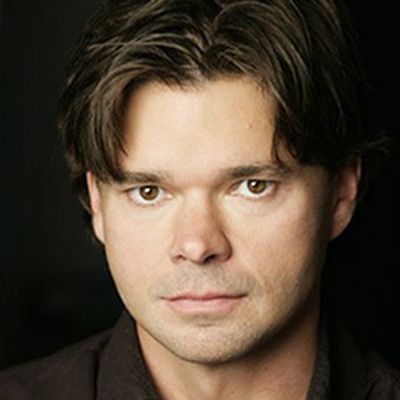
As a young kid, he originally wanted to be a novelist. A audition for a high school production of Bye Bye Birdie landed him the lead role of Conrad, which blasted open the doors for him in the acting world. He ended up going to University of Michigan when they were first beginning to make a name for themselves as one of the best places to learn the craft, and then found his way easily onto the Broadway stage. He ended up shifting focus about 8 years ago to directing, where he found what he describes as his new passion for the stage. A quick call from an old friend led him to step in and perform as Clark Griswold in The Griswolds' Broadway Vacation brought him back to the stage, originating the role in the world premiere at the 5th Avenue Theatre in Seattle, Washington, alongside Kate Rockwell.
Hunter is an actor, director, writer and librettist with Broadway acting credits including Little Shop of Horrors (which earned him a Tony Award nomination), Urinetown, The Producers, Footloose, Les Miserables and Grease. He was named 2018’s director of the year by the Wall Street Journal for his productions of 42nd Street at the Bucks County Playhouse, and The Drowsy Chaperone at the Goodspeed Opera House, recently directed the critically acclaimed The Other Josh Cohen off Broadway here in NYC, is the Artistic Director for the Redhouse Arts Center in Syracuse, NY, and as we speak is originating the role of Clark Griswold in the Griswolds' Broadway Vacation.
Connect with Hunter:
- Twitter: @Hunter_Foster
- IG: @hunter__foster
- Web: hunterfosterofficial.com
Connect with The Theatre Podcast:
- Support us on Patreon: Patreon.com/TheTheatrePodcast
- Twitter & Instagram: @theatre_podcast
- TikTok: @thetheatrepodcast
- Facebook.com/OfficialTheatrePodcast
- TheTheatrePodcast.com
- Alan's personal Instagram: @alanseales
- Email me at feedback@thetheatrepodcast.com. I want to know what you think.
Transcript
This transcript was automatically generated and might contain errors.
[0:01] Alan Seales: Hey, everybody. Welcome back to The Theatre Podcast. I'm your host, Alan Seales, and our guest today is Hunter Foster, who obviously comes from an incredibly talented family. He is an amazing performer in his own right, and of course, his sister Sutton has done many things as well. He's been off the stage as an actor for the last six years since he's become an in-demand director and has now decided to come back to the stage to originate an amazing role in the world premiere of the Griswold's Broadway Vacation that looks just incredible. So, without further ado, find me online on Instagram and Twitter at Theatre underscore podcast. I'm on TikTok at The Theatre Podcast. Don't know what I'm doing, but I'm there. I'm still on Facebook, and please leave a rating and a review, and everybody, please enjoy this episode with Hunter Foster.
[1:04] Alan Seales: Today's guest is an actor, director, writer, and librettist with Broadway acting credits, including Little Shop of Horrors, which earned him a Tony Award nomination, Urinetown, The Producers, Footloose, Les Mis, and Grease. He was named 2018's Director of the Year by Wall Street Journal for his productions of 42nd Street at the Bucks County Playhouse and The Drowsy Chaperone at the Goodspeed Opera House, and he recently directed the critically acclaimed The Other Josh Cohen off-Broadway here in New York. And, if that wasn't enough, he is the artistic director for the Red House Arts Center in Syracuse, New York, and, as we speak, is originating the role of Clark Griswold in the Griswold's Broadway Vacation at the Fifth Avenue Theater in Seattle. Hunter Foster, welcome to The Theatre Podcast.
[1:56] Hunter Foster: Thank you very much. Good to be here.
[1:58] Alan Seales: Man, you keep yourself busy between acting and directing. I guess we'll get into the childhood, how you got into it in the first place, but I want to start sort of in the middle, where I guess asking, did you originally set out down this path to be a director or an actor, or did you just kind of fall into one or the other by accident?
[2:20] Hunter Foster: No, I originally wanted to be a writer. That was like, when I was younger, that was sort of my dream, was to be sort of a novelist, and then I sort of stumbled into acting when I was in high school, and I sort of loved it as an actor. And so that kind of went on for a while, and I was able to work a lot, which I'm very thankful for. And then I started getting back into writing and started writing shows. And then there was a show that I wrote called Summer 42, which was an off-Broadway musical that was done back in 2001. And Jed Bernstein, who runs the Bucks County Playhouse, is like, I want to produce Summer 42. And Lonnie Price was supposed to direct it. And then Lonnie dropped out because he was doing the Merrily We Roll Along documentary, which is a fantastic documentary, by the way.
And so then Lonnie's like, you should direct it. I'm like, I've never directed anything in my life. But then I was like, oh, I'll give it a shot. And so that was my first, I sort of stumbled into it. And that's sort of how it happened. And then I just started doing more and more as people keep asking me to direct stuff. And I was like, oh. And then before I knew it, I became a full-time director. And the acting stuff sort of, I didn't have time to do the acting stuff because I was having so many projects in the future. So I sort of took a hiatus from performing for probably about, I don't know, I started directing in 2014. And I did a few things here and there acting-wise. But I've been mostly a director for the past eight years.
And again, I stumbled onto it. I never thought of myself as doing it. And then I realized, you know, I had learned so much from working from like, you know, Jerry Sachs and Susan Stroman and, you know, Kathleen Marshall and James O'Pien, all these greats that I'd all worked with. And you kind of like, oh, yeah, I know how this works. I've seen these greats people do this for years. So, yeah.
[4:36] Alan Seales: Wow. So doing Clark Griswold now, is this the first time you've been back on stage as an actor in how many years?
[4:46] Hunter Foster: Six years.
[4:47] Alan Seales: Wow. Wow. Wow. So was it, I mean, are you approaching the role as an actor much differently, like the creation of the role? Are you approaching it differently now that you've got now six years plus of directing under your belt, like you understand sort of what a director is looking for in somebody originating a role?
[5:00] Hunter Foster: Absolutely. I, you know, I tell people, I even said this to Kate Rockwell, who plays Ellen in the show, or she's on maternity leave right now. But she, I said, she asked me the same question. I said, yes, absolutely. I said, if you ever have a chance to do it, I said, you see it from a whole different perspective. So like you've changed the camera lens to out front. And you and then so now when it went up, now that I'm in it, I'm like, oh, this is I just have an idea of what people are seeing out front, if that makes any sense. I'm like, I should do this here, I should be on this spot, or I should. So I kind of like, and I don't want to say self-direct, but just I know where I should be in space, or I know how I should deliver lines or no, no things because I've seen it happen.
You know, I've directed probably 80 productions by this point. And, you know, I just I just have a now stuff that I never knew before. I know now, like I know how I just have a lot more of my much better instinct, distinct, much, much better instincts on stage than I ever did before.
[6:07] Alan Seales: That's super cool. So do you think that this is sort of a foray, a foray back into performing more? Or is this just a little blip in the in the director, like you had time to do this, this out of town run here, and you didn't come back and continue to just direct like crazy? Or do you want to like sort of start splitting your time?
[6:27] Hunter Foster: You know, I never saw myself sort of like retiring from acting for good. My first love, I think now has become directing. I just love I love the creative process. And I love, you know, working with actors. And I love teaching and I love in colleges. And I just that part of me is, I think, what will always now be the first thing that I want to do. But this was a perfect project that I when it came along. You know, I was a big fan of those movies when I was a kid. And my mother was a big fan of that of the family. And it reminds me so much of my own family growing up. And so I just felt like it was something I really wanted to do. And, but and we'll see how, you know, I mean, this is just the beginning of the journey for us.
So we'll see how far it goes. But I mean, I have like three or four directing projects that are lined up after this. So I'm definitely going back into directing. But, you know, we'll see. We'll see. We'll see. I don't. It's good to know that, you know, there's two avenues here, because, like I said, I love being a part of the theater and any way I can be a part of the theater is, you know, I'm thankful to be a part of theater in any capacity. But I think my first love is directing. And I definitely want to get back into that once this journey is concluded or who I mean, like I said, we don't know what this journey where this journey is going to lead us right now.
[8:00] Alan Seales: That's really cool, because I want to back up now a little bit, because you said you originally wanted to be a novelist, like not not a Broadway writer, but like a book writer. And so we'll get into that in a second. But I think it's very cool. I want to comment on the fact that you wanted to be a writer, then found theater and acting and through that have now found what you're just calling your true love, right, which is directing and teaching. So I want to call out for those listening that you never know where accepting opportunities and these chance encounters are going to take you because you've gone from wanting to be a book author to being a well in demand director. And I think that says a lot to who you are as a person and just accepting chances and accepting opportunities when they come your way.
But backing up to the novelist stuff. So as as a kid, right, like, where did you what did you want to write? Were you like horror, sci fi? Like what? Why writing as a kid? I know so few kids who were like, I love to write because they're like, I just want to play video games.
[9:05] Hunter Foster: I've always and I think I've always been interested in storytelling and stories, writing stories, telling stories. I think that's part of, you know, even I mean, theater is telling stories. So even as a director, I tell the cast, I mean, we're telling the story, we have to tell the same story, we have to tell the story together, we have to tell the story in the same way. That's basically what we're doing, you know. So I think my love of storytelling, I think, is where it all sort of begins and where where we sort of are right now. And even as an actor, you know, when we have discussions about the Griswolds, I'm like, okay, what story or what is the story we're trying to tell as as this musical, even as an actor, like, what story am I telling?
But yeah, I was, I'm a big, I love, I'm a big fiction reader. And I always, I was like that when I was a kid. I was definitely more into sort of sci fi and horror and things like that. But, you know, I, I was just really inspired by, you know, just, I mean, I think when I was younger, it was more sort of coming of age stories. But I was definitely into sort of, I mean, post apocalyptic, you know, all that sort of like, but kids when you're a kid, you think of like, the world is collapsed. And how do you, you know, Walking Dead type stuff, or, you know, but it's, it Yeah, I really wanted to. And I hope that, you know, I know, I write stuff. I started writing musicals, the books, musicals, because that's what I knew, knew.
And, you know, I've written five or six of them. And those are so much harder, because you're collaborating with a composer. And there's so many things that go into that. And as a book writer, as a novelist, you, you're the scenic set designer, you're the costume designer, you're the sound designer, you're the director, the choreographer, the actors, like you are everything, which I think is, I don't know, that's something kind of neat about creating the world, it all comes from your head. And you can also, there are no, I think the limits to what you write in a book, like there are certain limits to certain things you can do on stage, in a musical, and as a novelist, there's no limits, you can, you can create whatever you want. And it's not going to blow the budget, you know? You know, I mean, you just, you just, it's limitless. And imagination, as the book, the scope of a book can be as big as your imagination.
[11:35] Alan Seales: Would you ever want to go back and start writing? I mean, I guess maybe, did this happen in COVID? Did you have any downtime where you were just like, you know what, I'm going to try to write my end-of-the-world apocalyptic take on, you know, coming out of my brain, right? So, have you put forth any books or have any drafts or ideas?
[11:55] Hunter Foster: Yeah, yeah, yeah. I started writing something and then, you know, I didn't really have the pandemic off, like most people. I used to mention that I'm no longer the artistic director for the theatre in Syracuse, but I was an artistic director during the pandemic. And so, that ate up just about all of my time. So, even though we were kind of, I was in Syracuse and we were sort of like, my wife and I were like huddled in our apartment. I was on Zoom meetings, like constantly trying to figure out because we didn't know if the theatre was going to survive and we didn't know what we were doing. So, my whole pandemic time was just, was really, really busy trying to figure out what, how to save the theatre.
So, I didn't have time to do that. But yes, but I did start, I do, I have an idea that I, and I've been, it's been kind of, you know, in the works for a while. So, I'm hoping to finish it once, but then The Griswolds came up and that's basically taken almost all of my time right now. So, but yes, I will, you know, before I die, I'm going to finish, I'm going to do it.
[13:05] Alan Seales: Well, that's a good goal. That's a good goal. I feel like one thing is going to lead to another and you'll end up being commissioned to write something anyway, just given the circles that you're in now and how well you do accept new opportunities. But I think it's very cool. And I wonder if this was intentional in your involvement with Griswold's Broadway vacation, book music and lyrics written by David Rossmer and Steve Rosen, who you directed them. They also wrote books, lyric and music for The Other Josh Cohen. So, I guess The Other Josh Cohen was phenomenal, by the way, I saw it. It was amazing. And it got, it deserved all the awards that it got. Very critically acclaimed. So, first off, how did you get connected with the two of them for Josh Cohen? And then, was it just a star's alignment to where you're working with them now again in this show?
[14:03] Hunter Foster: Well, I've known David and Steve for a long time. You know, I've directed Steve, I think in five shows, I think total. And so, we've known each other for a long time. Steve knows my wife and has worked together with her. And so, I know David through them. And I had, we were doing, we did Josh Cohen at Jiva in Rochester, the Jiva Theater Center. And that's how I sort of got connected, because my wife and I have a connection with Jiva, because my wife's from Rochester. And Mark Cuddy, who's the artistic director, I think, was like, I think Hunter should direct Josh Cohen. And so, you know, I met with the guys. And so, we did it. And we did it up at Jiva. And then, they asked me to do it off-Broadway.
And then we did it off-Broadway. And, you know, I think it was, you kind of want to work with people that you know, and are friends with, you know, I think that there's something that's really, I mean, I do, I like to work with people that I know and get along with. And then, you know, they, when they were sort of funny, I was, I was out in Aspen, I was directing a show in Aspen. And I don't, they kind of called me last minute. And they said, you know, we're looking, we need someone to play Clark in this upcoming workshop. And I don't know if maybe they'd had someone else who was involved. I have no idea. And didn't couldn't do it, or they couldn't find someone. And, and they called me, say, would you come in and just sort of do Clark?
And I thought, I'll just do this because they need someone. So I just said, I didn't think, oh, this is going to lead to something else or whatever. I was just like, oh, yeah, yeah, if you guys, I'll just, and so I did their workshop. And then they start talking about maybe me doing it for real. And I was like, Oh, do I really want to do this for real? I mean, because I had, I had directing projects lined up all through the summer. And then it started getting more and more real. I was like, Oh, is this something that I want to do? Okay. And then, then it sort of happened. Then I had to sort of work around all the stuff I had planned. But yeah, it went from being like, oh, we need someone fast, because for whatever reason, and I thought it was just like, I thought it was gonna be just a stopgap.
And they ended up being like me and being in the show. So crazy. That's what you do. You call your friends up, you say like, hey, we need to, I need someone to come in and do this. And that's what I thought it was. I'm like, sure, I'll come and fill in. And then lo and behold, like a month later, you are Clark Griswold.
[16:39] Alan Seales: We're going to take a short break. Stay tuned for more of the episode.
[16:50] Hunter Foster: So you said you have experience like watching the movies and this is family that, you know, the character of Clark and the family is this archetype that's existed in our culture for a really long time. So I'm trying to figure out in my own mind if that would make being in your shoes easier or harder, because is there already preconceived notions that you're coming in with? Or are you starting fresh like any other unknown character, but then with the added complexity that you've got all this director experience now, like you said, I just don't know which lens you're approaching this under. It seems really complicated.
[17:27] Hunter Foster: Yeah, I mean, you know, it's what's really different about our version is that, you know, other sort of movies that are turned into musicals are basically you're taking the movie and you're and it's the same story, you know, so like Beetlejuice is was the base is the movie, but it's musicalized. Right. Even though they are, you know, Beetlejuice was great and how it was put together and constructed and made it theatrical. But this is a completely different story. Like this is just taking the family that we know and giving them a completely new thing. So people are coming in. We're not seeing Christmas Vacation, not seeing Vegas, you're not seeing European, you're seeing a brand new, which I think is really interesting and very different from how other musicals sort of movie term musicals that you see.
And, you know, I think there is a the most popular one is Christmas, obviously, because Christmas comes around every year. So everyone watches it. So when I ask young people, they're like, they don't know the original one, but they know the Christmas one. So they know the family from that. Right. And, you know, there is a definitely a Chevy Chase. It's Chevy Chase isms that are sort of baked into Clark Griswold. And you have to pay homage to that. And so, you know, I've been watching those movies for such a long time. They're just certain things that are and I'm of course, I would never say that I'm Chevy Chase, but because he's it wasn't he's an amazing comedian. But there are certain things that are just kind of that Chevy Chase and Clark Griswold sort of like are to get, you know, there's his his mannerisms are in Clark Griswold.
So that is also trying to so I pay homage to that. But then I also have to bring my own like my wife tells me all the time, she goes, you are clicker Clark Griswold in life. And I'm like, so then there's my I bring a little bit of my own sort of. And I don't want to just, you know, my own self to it as well. So it's been kind of trying to trying to pay homage to what the original source material finding something in myself that is Clark Griswold and sort of creating its own new kind of thing, as opposed to trying to, you know, recreate, you know, Chevy Chase or what those characters are. I think we're trying to sort of make it its own its own thing, especially in this new brand new story. And yeah, and I think like I said before, about being a director, all those things are in how I think and plan.
And, you know, I think when I was younger as an actor, I just sort of like went off instincts, you know, and now I really sort of think in the same way that I plan directing, I really sort of think about how to do this part and where I am on stage and the and plan sort of the bits and things that I do because and it's just made me better. It's just it's made me much better knowing that I was director.
[20:21] Alan Seales: That sounds like a lot of fun, especially originating a comedy with somebody like Kate, who has incredible comedy chops of her own and the rest of the cast. Right. Is it is it just an incredible playtime? I guess I mean, what was it? I think Patti LuPone was saying that like her whole philosophy is you learn your lines, you do you learn all the basics before you ever start rehearsal so that when you come to rehearsal, it's nothing but experimenting and playing. Right. So is that is that the same for you? And are you working with Kate Rockwell and the others into saying, like, how about we try this and what wouldn't it be funny or like, let's adjust the timing here? You know, when it comes to comedy, comedy is so specific to make it good to make it seem like it's off the cuff, you know. So what's that whole process like for you guys, for you in general?
[21:15] Hunter Foster: Well, you know, comedy is hard to. Yes, I have certain rhythms and beats in my head because I think comedy is also music. You know, it has to be there. Just it's timing, but it's also there's a musicality to how to comedy and how you say your lines. And you really don't know how comedy works until you get it from an audience, because there's a rehearsal room thing, rehearsal room laughs. You've heard that that sort of for years, I don't can't go on rehearsal and laughs because in rehearsal, we're laughing at the actor and you're not laughing at the character because we've been we've been rehearsing together. So you just you know, you really only know the you're looking at the actor. And if the actor does something funny, then you're like, oh, Hunter did something funny.
But we have to know that the audience doesn't know me personally. They're only looking at the character. So you have to. So you really don't know what's funny until you get in front of an audience. So the first I would say as a director, the first couple of days of doing for an audience are like as a fact finding mission. It's like going out and finding how that where the audience is reacting, because you have to have a relationship with the audience. And so you have to go off their their of their timing and what they're going to give you. And as Nancy Opal always says, it's like sort of like surfing, it's like going with the waves and going with them. And once you can find that sort of balance with the audience, then that's when things really, really can, especially with a comedy, becomes magic.
And I learned that when I was in producers and you're in town. And, you know, it's just it's just really sort of riding the wave of of an audience. So it takes a while. You know, Bart Sherry says it takes 90 days for an for an actor to really lock into a character. So we won't we will only do like a total of like 20 some performances here. So it's not it's not a lot to really lock in. But we, you know, we're changing every single day. So like, like I learned even when, you know, opening night last night. So you learn how that crowd, you know, reacted.
[23:11] Hunter Foster: And then you also have to your timing in your head. So if the audience is not quite going to give you what you want, I mean, you got to go quicker, you know, or and if they're going to give you a lot, then you got to hold back a little bit. So you just you have to be in the role, but you have to sort of be intellectually thinking the whole time because you have to. It's if you can time it right, then you can get bigger reactions. We got a double laugh last night. That's something we've been working on. There's a bit in the show and I just said I told I said, if we just hold for a second, I think we'll get another wave. So the thing happened, got a big laugh and we just held. And the audience laughed again and started applauding.
So there's things like that that you, you know, and you learn those things over the years, right? You do it so many times. You're like, OK, this is how we can hold an audience. And but you got to be careful because once you sort of take that leap, sometimes it doesn't always work. But we took that leap last night and it definitely worked. So, yeah, it's a and that's the fun part about it, because you can like drama is easy because you can just tap in your emotions and whatever. But comedy has got to be, you know, if drama is cooking and comedy is baking. You know, baking has to be precise or comes out wrong. Cooking, you can sort of like literally. Yeah, yeah, yeah. If you do not do baking, if you watch, you know, Great British Baking Show, you know, I mean, like if you don't measure and do everything correctly, but if in cooking you can like throw in some, you can just keep doing to taste. That's drama. And then comedy is baking. It's got to be precise or it doesn't work.
[24:47] Alan Seales: I totally agree with that, because you can bake. Two people can make the same thing and it could be really good for somebody. And the other person makes it fall flat and tastes horrible. And you just don't like it. It's all about all about the delivery and trial and error. I love to hear from these professional comedians or even go to their small off the wall shows that aren't publicized, because when they're trying out new material, it's even, you know, people that, you know, to be like always I put in air quotes funny that they have to still do trial and error and trial and error to find their own timing and find jokes that work and don't different. And then you've got like different cultures and different, you know, types and ages of people that you're performing to, depending on where you are.
Like it's so it's such a matrix of complication that I think just speaks to like the people who we do know as the best, how talented you actually are, because you're able to pull together all these little things and put it together in this perfect little rehearsed package that makes it seem not rehearsed at all. It's brilliant. Right.
[25:55] Hunter Foster: Yeah. Well, that's a great podcast. I just I think it's this American life. And as a reporter who traveled with George Burns and right towards when he was in his 80s and he was doing still doing comedy. And she talked about that. She said that he would. He's George Burns, like one of the great comedians, you know, best old school comedians. And she said they would try stuff. They would her in his in his partner, who was like his producer, sort of comic and they would write stuff and they'd go do it at night. And then they'd come. Then as soon as they get off stage, they would just talk about what went wrong, blah, blah, blah. And then they would change it for the next. He said they would even in his 80s, even a man who had who had accomplished all these things and he was still working.
He was still working. And she said that what was amazing about him is that even his 80s, he would come out and it felt like he was saying the jokes for the first time. And she goes, even though they he rehearsed and rehearsed and rehearsed and rehearsed and rehearsed and tried to make it. And it was all planned. He said it sounded like it was that it had never been said before. So.
[26:53] Alan Seales: Well, yeah, it's hard. It is really hard. And that was sort of going to be, I guess, leading to my next question was like when you're doing comedy, everyone has a personal life. You have good days and bad days and some are worse and better than others. And when you've had just like the crappiest day, is it easy or hard for you to to separate that and turn it into the comedy? Because from in my mind, sometimes when I've done the roles like this in the past, it's I get a little cynicism, like there's a little more edge to the delivery of the comedic lines, which, depending on the role, either kills it or amplifies it. And of course, you can learn from that. But are you are you able to kind of compartmentalize like that?
[27:42] Hunter Foster: You know, the drama doing stuff that are non-comedic is much easier because I feel like, you know, emotions, whether it's you can tap into strong emotions. If you had, you know, emotions from the day, frustrations or anger, even euphoria, like there's there's stuff you can funnel that into drama. I think that with comedy, I'd sort of just sort of, you know, because there was even this past week, we had so many rewrites and we were changing so many things. So, you know, my mind was just like mush trying to come into a hurt. And and you'd come into the during the show. I mean, like, how can I be funny? I've got so much going on in my brain, you know. But, you know, you just have to. You just have to relax and sort of just go with it and just kind of give over.
I don't know if that makes any sense. You just kind of like can't. I don't want to hold on to anything that's like bringing me down or frustrating or whatever, you know, you just kind of like the show starts and you just kind of like you got to do it. And, you know, I kept I said it's some one of the young people in our show because they're like you could ask me some questions and how do you if you get, you know, you were frustrated in the afternoon. How do you break not? And I said, I said, you just got to break on. You got to break through it. I said, you got to get to the other side of it. I can dwell in it and sit in the first. I'm frustrated right now because I've been handed new lyrics and new lines.
And I said, or I can just push through and say, I'm going to get to the other side of it and just and just do this and enjoy it and not let it get to me or like. And again, there could be things that are non-related to the show. It could be things in your personal life or whatever. And you just got to push through it. You just got it. It's your job. I always remind myself that this is your job. This is not a this is what I'm being paid to do. So just like any job, you got to come in and do it. And you can't allow your personal feelings to get in the way of that. You have to come and and do your job. So that's always a good reminder for me. It's like, this is your job.
[30:00] Alan Seales: Well, fortunately, well, I guess podcasting aside, but most people's jobs don't have their performance reviews aren't public in The New York Times or other other newspaper outlets. Yeah, it seems it seems like that adds an added level of stress and public scrutiny that a lot of people don't realize is is kind of a big deal. But I want to I want to touch on the family life for a minute, too, because you were you were a writer, found acting. Obviously, your sister Sutton, like the two of you found found acting. Right. So like were your parents when you were a young kid, were your parents encouraging you to to to pursue writing or how did how did the actual finding the discovery of acting happen?
[30:47] Hunter Foster: You know, it's it's weird. My parents were not theatrical at all. They knew anything about theater. People have always said, oh, you must have had show tunes playing in the house growing up. Sutton, I knew nothing about theater. We did nothing about musicals. I mean, I wrote a play when I was in the third grade and that I directed and starred in and had rehearsals for it. So there was I don't know where that came from. And it was for it was I was in third grade. I was four pages long. It's about Dracula. And but I had like I wrote it. I had a rehearsal. I directed it and I started it. And so I sit there like that to me. I always go back to third grade. So that's where all that started. But I don't know where it came from.
And then, like I said, there was my sister was not interested in at all in theater. We were not theater kids. I think my mother was like I was trying to find things for me to do for the summer. And I think she signed me up for some acting classes at the rec center. And I was like, OK, I'll go. And so I remember I was like the only boy. It was like me. I was 13 or 12. It's me and like 12 girls. And yeah, and I was first of all, I was like, oh, my God, I'm so I'm the only boy in here. And I just had so much fun. Like there was, you know, back then you're doing like, you know, be a giraffe and be an elephant and, you know, sort of it was all games and stuff. So I just I loved it. And then one of the teachers like you should try out for this play.
And so I tried out for the play and and I had so much fun. It was all just sort of like fun. It was like like either playing sports or, you know, just like a kid does it. I never thought that was going to be anything like that. And then, you know, same thing, my sister, she wasn't interested in doing it until I started doing it. And then she's like, oh, this sounds fun. And then she started to do Christmas carol every year, like she was a cratchit kid every Christmas. And then someone heard her sing and said, oh, you should audition for Annie at the community theater. And so she auditioned for Annie and got Annie. And then that's when she heard she was like, oh, I really, really like this. And same thing for me.
And then I started auditioning. I was like, well, maybe audition for the high school musical. And again, it was for Bobby Birdie. And I was I didn't know. I never didn't know what Bobby Birdie was. And I didn't know what the characters, I knew nothing. And I got Conrad Birdie when I was like in high school and I was like, oh, and and so it's sort of like I just I had so much fun doing it. And it was so different from, you know, playing sports, which I loved. I love playing baseball. I loved all those things. But there was something about the theater that was just, I know, I just I really and same thing for Sutton. And again, we sort of get that it it sort of just happened like I can't. And then I was like, well, I want to do more.
I want to do more and more. And then everyone kept saying, well, you know, you'll grow out of it. No, no. And then I went to school. You know, there was a there was an up and coming musical theater program that just started at the University of Michigan. It was I'm being dead serious. And they were I remember there was a friend of mine and she said, you should audition for Michigan at Michigan. And I was like, OK. And so I auditioned. They were like begging men to come just so they couldn't find enough people to come to that school at that time. And when I tell people that story, they're like, what do you know how hard it is to get in that school now? Yeah, it's impossible now. Yeah. Gavin Creel and I both believe neither one of us would have been taken.
We both wouldn't have gotten in anyway. But I don't know about me early on. It was literally just anyone. We need anyone. So and so I got into that school. I went to Michigan and then, you know, it it I decided after my parents were like, oh, you're not going to do this. And I packed up my car and I drove to New York and just started auditioning. So, you know, I just never there was never any other choice to it. So, you know, wow.
[34:46] Hunter Foster: So, yeah, this goes back to what we were talking about earlier. You just put one opportunity in front of the next and didn't look back. It sounds like there was never second-guessing or anything. Did you have any of that or was it in the moment you're just like, all right, here I am, where's my next step? I was so naive. I mean, I came to New York with $2,000 and my car. And I worked to attempt and scraped by at McDonald's every day because that's all I could afford and stood in line at the Equity Building, the old ways of auditioning. Now, the Michigan kids come out and they got their Equity cards, they got agents, they got Broadway shows. Back then, there was nothing. You graduate from Michigan and you're like, good luck.
I came to New York. I remember coming to New York and there were eight Broadway shows running at that time. There were two plays and six musicals and that was it. There were 30 some theaters and there were only eight shows running. So, it was very bleak back then as opposed to now with so many shows and the works and coming in, blah, blah, blah. But I was just naive. I was like, oh, of course I'm going to be in a Broadway show. I never had any... And even when I would tell people that, they're like, you know how hard this is, right? I was just naive. I think that's why I had confidence because I was just completely naive about the whole thing.
[36:18] Alan Seales: Yeah. If you knew how hard it was...
[36:20] Hunter Foster: Yes, I wouldn't have done it.
[36:22] Alan Seales: Yeah, so many people have said that. And it's the same thing, I think. Yeah, if you find joy in something, if you find happiness and for that moment you're passionate about it, just keep following it. Keep following that passion because then how many decades later you're looking back and you're like, yeah, I never thought about doing anything else because you chase the passion. You follow it and that was...
[36:44] Hunter Foster: It also can lead you somewhere else. I have a lot of friends from college that... One of my good friends from Michigan, we graduated the same year. He was a performer. He's now a big Broadway producer and he does all the merchandising. He's doing all the merchandising for Griswold's Family Vacation and Broadway Vacation. So his path led him to the theatre, but now he's a producer. Or Rachel Hoffman, who is a musical theatre student at Michigan now, she's a casting director. We had a big Zoom meeting of our class during the pandemic and it was amazing. I think me and one other person, the only people left who were still performing. And everyone though was a success in something. One's a dean of a college and one is a doctor and this and that.
And they all said, we wouldn't be where we are if we hadn't been in theatre and gone through the program. It led us to all these other different things. And I'm like, oh wow, that's what theatre... Theatre can maybe not lead you to be a performer, but it led them to be successes in other things because maybe it opened up their mind creatively. It allowed them to be a bit more fearless. I don't know, but it definitely helped propel them to where they are now. We're going to take a short break. Stay tuned for more of the episode.
[38:05] Alan Seales: I think that's beautiful. I think there's scientific biology behind this. And I've had this theory since talking with Anthony Veneziale from Freestyle Love Supreme. And he worked with a doctor to get an fMRI machine while freestyling and while reading, just reading something that's already pre-written. And I'm trying to remember the name of the body part, the duolateral prefrontal cortex, I believe is what it's called. But there is a center in your brain that is responsible for inhibiting anxiety. And so that's why improv helps corporate events because you're removing your inhibition. You're helping yourself become more comfortable. And I think if we were to do studies on theatre people who have gone on to other things, we'll find that they've got a predisposition because of theatre training to be more open, more receptive to things happening wrong in the moment.
So you've got all of these little characteristics that make somebody a good performer that you can apply to so many other professions, especially being a doctor. How many things don't go according to plan being a doctor and you get a role with it and the show must go on, metaphorically speaking, in doctor words. So yeah, I think there's a lot of truth behind that, a lot of biological truth. Anyway, so let's wrap up now that I've gone on that tangent with three closing questions I ask everybody on the podcast. The first one just very simply is what motivates you?
[40:01] Hunter Foster: What motivates me is telling good stories, you know, and it's not just the stories we tell with how we tell them. And because, you know, there's a lot of stories that are told over and over and over again. But it's, you know, I always say people talk about Hamilton. I go, sort of the bare bones of Hamilton is a story we've heard thousands of times. Yeah. And but it's how Lynn told it is what makes it special. And I think that's, that's what motivates me. I get excited when there's a new story to tell. And there's a new way to tell it. You know, that's what I don't know if that's the correct answer to that question. But that, that, that mode getting up every morning and saying, Okay, what story?
What are we gonna? What do I want to? What story do I want to tell today? You know? Yeah, because that's what we pass on. That's what we that's what lives on. You know, you think about the stories that whether it's Shakespeare, or Camelot, or King Arthur, all those things, Star Wars, Harry Potter, those things that will last forever. You know, that will, that they go, they go on forever. And so that's when stories never die, and characters that live out there never die. So that's what I'm getting up and telling new stories.
[41:11] Alan Seales: All right, what advice would you give to your younger self and younger people listening now starting out down a similar path?
[41:15] Hunter Foster: Um, you know, I, I think the most important thing is just to be nice to one another and kind. It's a very tough business. And we're constantly met with rejection and constantly being criticized and constantly being held under the microscope, reviewed. And, you know, kindness to me is the most important thing because even as a director, when I work with people who I know are kind to each other, kind of themselves, that this kind of people I want to have in the room kind of people I want to work with are we have an incredibly our cast right now Griswold's Broadification is an incredible bunch of people, some of the most loving, respectful, kind individuals I've ever been around. And, you know, it's and that includes being kind to yourself.
I think we, we beat ourselves up way too much. You know, we kick ourselves, I didn't do this in this audition, or I didn't get this part. And now I'm worthless, whatever. And someone told me one time, he said, you know, don't be afraid of your own greatness. And I always think I always think about that quote, and it's not being arrogant or being it's just saying, saying, like, you have things about you that are that are great, and embrace those things and know that and know and as opposed to shying away from that, because a lot of times we're like, I don't know, imposter syndrome, whatever. No, don't be afraid of your own greatness. And we all have greatness in us. We all do. And I love that the imposter syndrome is real. And if you're in the room, embrace it, because everybody else feels the same way. You know?
[43:00] Alan Seales: All right. So the final question is the hardest one. If you could only see one show for the rest of your life, but you can see it as many times as you want, what would you see?
[43:04] Hunter Foster: Once.
[43:07] Alan Seales: Why?
[43:10] Hunter Foster: Once to me is the perfect story. I, it's just it's, first of all, it's, you know, one of the, one of the best scores I've ever heard. And it's just the story, the simplicity of the storytelling and the simplicity of the relationship between the two of them. That is so raw, and, you know, simple, and pure. And it's just, it's just a beautifully told story. And it gets me, you know, I had a chance to direct it. I've seen it, saw it on Broadway. And it's just a, it's a wonderful story that I could watch and listen to over and over and over again. I love those two characters. I love their relationship. I love the love between them, that, you know, they never come together. I love the, the sense of family, like there's something about those musicians playing together, there's a sense of community and a sense of family, which I love. And there's a real love of their culture, the Irish culture. And I just, it's a, it's a, just a beautiful story. And I can watch it over and over and over again.
[44:24] Alan Seales: Beautiful. No, not beautiful. What? Different show. So where can we find you online?
[44:33] Hunter Foster: Online? Oh, yeah, on the socials.
[44:36] Alan Seales: Oh my God, I'm so bad at this. Instagram hunter underscore foster is my Instagram.
[44:43] Hunter Foster: Is that what you're asking? Yeah, yeah. Yeah. Let me make sure that's what it is. TikTok, Bebo. Oh, I am on TikTok, but I don't know.
[44:51] Alan Seales: Are you? I'm so I'm just I'm so I don't sound like old man foster here.
[44:56] Hunter Foster: But no, I did Instagram hunter underscore foster hunter line down foster. And what am I on Twitter? I don't know. I don't know this. Probably the thing.
[45:12] Alan Seales: No, it's no hunter underscore foster. So at hunter underscore foster on Twitter and at hunter underscore foster on Instagram and TikTok, which we have some really funny videos, Jen and I, because we drove cross country when we came out here. What am I on here, too? I think I'm oh, oh, it's easy. I'm at hunter foster eight, six, six, five. News. I don't know why that says so. Hunter underscore foster at Instagram, hunter underscore foster on Twitter and. Hunter foster eight, six, six, five.
[45:47] Alan Seales: All right. Coughing fit. I still have a little bit of covid in me that I'm getting out.
[45:52] Hunter Foster: Oh, that's not fun. I am at the theater podcast dot com. I'm on Instagram and Twitter at theater underscore podcast. We got the underscore brothers. I'm on Tick-Tock at the theater podcast labor. We live leave a rating and a review wherever you're listening now to Fox. The ghost gave us the intro and outro music. And Hunter Foster gave us the lovely conversation. Thank you, Hunter.
[46:17] Hunter Foster: Thank you so much. Take a deep breath, make the world a little colorful.
© Broadway Podcast Network, All Rights Reserved