

Longtime friends and creative partners, David Rossmer and Steve Rosen are currently working together as lyricists and songwriters for the "The Griswolds’ Broadway Vacation" musical, which just opened for its world premiere at The 5th Avenue Theatre in Seattle... Read More
From the show: The Theatre Podcast with Alan Seales
Guests
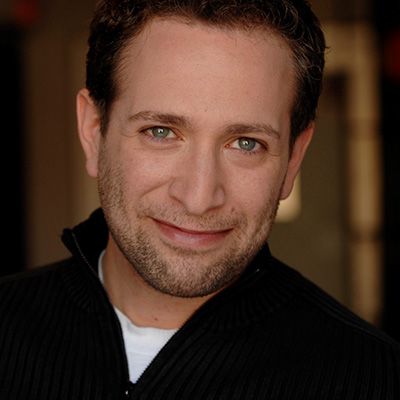

About
Longtime friends and creative partners, David Rossmer and Steve Rosen are currently working together as lyricists and songwriters for the "The Griswolds’ Broadway Vacation" musical, which just opened for its world premiere at The 5th Avenue Theatre in Seattle. The two share their first meeting at a performing arts camp, and the rest, as they say, is history. Growing up in a musical household and a family that has an appreciation for art, it's no surprise that both David and Steve ended up having a career in the creative industry. The two talk about stage adaptation, what makes it exciting, and how their current project is a love letter not just to the Griswolds but also to theatre. They also deep-dive into their creative processes, including writing together, creating something and acting on it at the same time, etc. With all the successful projects both David and Steve have done together and individually, they're proud to say that they still make each other laugh. The two speak about their love for collaboration and their goal to keep making stuff, not only to fulfill their passion but also to get inspiration from other people and create an artistic community.
David Rossmer and Steve Rosen are a talented duo with numerous Broadway acting credits under their name. Their recent Broadway production of “The Other Josh Cohen” received rave reviews. They created the successful variety show benefit, “Don’t Quit Your Night Job”. They have also worked together for Rated P, developed for television by Kelly Ripa’s Milojo Productions and bought by ABC Studios, and made comedy material for Zachary Levi, Sting, etc. Individually, both have created several podcasts, radio plays, and radio comedies. Currently, they are working together as lyricists and songwriters for the "The Griswolds’ Broadway Vacation" musical. David's stage credits include “Les Miserables”, “Peter and the Starcatcher”, “Children and Art”, “Fiddler on the Roof”, and “Titanic”. His TV credits include "Elementary", "The Marvelous Mrs. Maisel", "Law & Order: Special Victims Unit", and "It Could Be Worse". Meanwhile, Steve's stage credits include "The Little Mermaid", "A Confederacy of Dunces", "Disney's Beauty and the Beast", "Peter and the Starcatcher", "Guys and Dolls", "The Farnsworth Invention", "Monty Python's Spamalot". His TV credits include "Kings", "The Resident", "Law & Order: Special Victims Unit", "Blue Bloods", "The Marvelous Mrs. Maisel", and "Elementary".
Connect with David and Steve:
- Instagram: @stevierosen, @davidrossmer, @rossmerrosen
Connect with The Theatre Podcast:
- Support us on Patreon: Patreon.com/TheTheatrePodcast
- Twitter & Instagram: @theatre_podcast
- TikTok: @thetheatrepodcast
- Facebook.com/OfficialTheatrePodcast
- TheTheatrePodcast.com
- Alan's personal Instagram: @alanseales
- Email me at feedback@thetheatrepodcast.com. I want to know what you think.
Transcript
This transcript was automatically generated and might contain errors.
[0:00] Alan Seales: Welcome to the Theatre Podcast, everybody. If you're brand new, welcome. It's good to meet you. If you're a returning listener, nice to hear you again. I'm your host, Alan Seales, and our guests today, plural, are Steve Rosen and David Rossmer, a super fun duo that I originally saw on stage a couple of years ago in the critically acclaimed The Other Josh Cohen, and actually didn't realize it at the time and know it now, but they wrote the book, the lyrics, and the songs for that show, which they have now done again for the world premiere that just opened in Seattle of the Griswold's Broadway Vacation. So this is an extremely fun episode because we're getting them at a time when they are at the end of their fatigue of just opening the show and the excitement of the opening and the two of them just together, they've been best comedy friends and real friends anyway, forever, and hearing them together is just such a treat. So let's kick this off now. Everybody, please enjoy this episode with Steve and David.
[1:18] Alan Seales: I am super excited to get into our interview today. We have both halves of an incredibly talented duo of creation. Both of these gentlemen have many Broadway acting credits to their name, recently earning critical acclaim for their off-Broadway production of The Other Josh Cohen. They created the hit show Don't Quit Your Night Job, and in between the two of them, in between, between the two of them, have created original works, I guess it's between the two of you, I don't know, original works for amazing peeps like Kelly Ripa, Kelly O'Hara, Sting, Zachary Levi, Ariana Grande. Individually, individually, my COVID brain is great. Individually, they are creators of several podcasts, radio plays, and radio comedies, and have now decided to join themselves once again in holy career matrimony as the book, lyrics, and songwriters for the Griswold Broadway Vacation. David Rossmer and Steve Rosen, welcome to the theater podcast.
[2:19] Steve Rosen: There we go, I got it all out. Yay. Wow. That's like the greatest introduction ever.
[2:24] David Rossmer: And that's all the time we've got. I appreciate you being here.
[2:29] Steve Rosen: Thanks for having us. Bye.
[2:31] Alan Seales: All right. I want to jump into Griswold's Broadway Vacation because the Griswold is a family that we know. They are a very loving group of individuals that like to travel around and get themselves into trouble. And we're going to get into the history of how the two of you work together, and how you met, and how you decided to love each other in holy career matrimony. But first, about Griswold, Griswold's, I want to have you explain how this process even started, because this is something like a story of people traveling. The Vacation series, it's a storytelling motif that's always changing and driving from place to place. So how do you adapt that to a stage adaptation? Why do you adapt that into stage?
[3:21] David Rossmer: Well, I think actually the most exciting part was when they first approached us, what tickled us was the idea that this was not an adaptation of any of the Vacation movies. This was an opportunity to take these iconic characters that you're talking about, that everyone knows, and my family, at least, we were always called the Griswolds by our neighbors for all the antics we got into left and right, and putting them in a wholly original adventure. And when it was their next, it's really the next chapter of their story, and they come to New York City to see a musical, and it's a musical. And that felt really like a great idea to put on stage. And especially, we were sort of, the timing of it all, a show right now, a sort of big old Broadway comedy about people leaving the house after a long time and going back on vacation with their family felt very appropriate to the times and why it's probably been so much fun and so refreshing to work on.
And I think that the fact that they come to New York, which already sings, and the fact that musicals and Broadway is a big part of it. In fact, I would say in some ways, it's a love letter just as much to Broadway as it is to the Griswolds, and why we love theater and why we think theater is actually important. For those reasons, it felt like it had to be on stage. And I think that's what excited us, to bring some originality. And of course, it's much harder to create a totally original story, especially for a musical. But I think we were inspired by these characters, these archetype characters who everyone knows and loves and feels akin to.
[5:27] Steve Rosen: No, I was going to say, I totally agree with everything that David said, plus the fact that of all places to celebrate on stage is New York. New York has been such a classic location for so many of our favorite, my favorite Broadway shows that I've seen over the years. It is such a fertile environment for adventures and hijinks. And the opportunity to create, like On the Town does of that generation, basically to create a New York that is of the world we live in today, that is recognizable to a modern audience. And as people who are New Yorkers and love New York, but also recognize the tourism industry, we work in Times Square a lot. We see what happens when people come to town and what they are confronted with, the New York that they are presented with.
It just seems like a really fun opportunity to really explore that family that brings chaos wherever they go to a completely unpredictable city, seemed just like a very interesting and fun chemical combination that opened a lot of opportunities for both comedy and also just to try and present some of the magic that it is to be in New York City.
[6:51] Alan Seales: You've got these archetypal family characters that you're talking about, but then what New York fame, like, I guess, stereotypical New York characters did you decide to bring in? And is there anything that got cut that you were sad about? Like the I'm walking here guy and the nuts for nuts guy and all these other people that as New Yorkers, you know, we know I'm getting to my accent already, you know. So like, okay, I'll stop right there. What characters did you bring in that are fun to talk about?
[7:18] David Rossmer: It's funny you said this because literally both of those characters are in the show. You won't be disappointed. If you want nuts, they both made it. The nuts for nuts, the naked cowboy, naked cowgirl.
[7:28] Steve Rosen: Yeah. You got naked people in the show? Mostly naked people? Yep. Yep. We've now covered all the bases.
[7:38] David Rossmer: Yeah. Keep naming them. We'll tell you if they're in. Even down to the people that sell you the umbrellas on the street where the prices go up $20 as soon as a raindrop falls. They're here too.
[7:56] Steve Rosen: And Elmo and Mickey with their heads off. Well, you know, in the Griswold, in the vacation movies, they have a sort of parallel for Disney, which is Wally World. And so that's actually something we honed in on very early on in the process was, wow, you know, Disney has such a presence in Times Square and Manhattan. So it gave us an opportunity to play with that. And they actually end up going to the official Wally World restaurant of Times Square.
[8:25] David Rossmer: Marty moves his nuts and pancakes in the show.
[8:32] Steve Rosen: Wait, is Bubba Gump still open in real life, right? Bubba Gump Shrimp?
[8:36] David Rossmer: It is.
[8:41] Steve Rosen: God, I avoid all of that so hard. Yeah, that and Olive Garden. I don't know. But I figure they have to go to one of those things. Those are real New York City restaurants. Those are some of the finest cuisine of Times Square.
[8:48] Alan Seales: I remember, God, when I was in high school and I visited New York for the first time. Middle school? High school. I think in ninth grade. Yeah, we went to Olive Garden and I was like, this is the quintessential New York experience. We are in Times Square at the Olive Garden and it was the best experience I had in that particular week.
[9:07] David Rossmer: You know, you asked about things that got cut. Something that did get cut was actually a Bubba Gump Shrimp bit, where there used to be this scene where a poor pedestrian tourist got hit by a carriage horse and a doctor comes out, a tourist doctor comes out to help him. And, you know, this man needs help, whatever. And then you hear, zzz, zzz. And he checks his pager. He says, oh, I'm sorry, I have to go. My table's ready at Bubba Gump Shrimp. And he ran off. And that one didn't make it. But we love you, Bubba Gump Shrimp. There's too much going on with carriage horses right now. It's a good call to cut that bit.
[9:38] Steve Rosen: I agree. Totally.
[9:43] Alan Seales: Yeah. Is there some carriage horses?
[9:49] David Rossmer: Yeah, there's been some. Some horses have been mistreated, I think, is sort of what's in the news right now.
[9:56] Steve Rosen: Yes. That's terrible.
[10:03] Alan Seales: Yeah. So on that fun note. We are in solidarity with carriage horses, just so you know. We stand in solidarity with the New York carriage horses.
[10:09] Steve Rosen: The horses, not the drivers of the horses.
[10:16] Alan Seales: Yeah. Right, right, right. So are you yay or nay for abolishing horses?
[10:20] David Rossmer: I think we should. My daughter loves the carousel horses in Central Park. That's true. So I think we should just ride carousel horses around Central Park.
[10:25] Alan Seales: All right. That's the takeaway from this episode is Central Park horses, not real horses in New York.
[10:33] Steve Rosen: The two of you have a history of working together, doing everything, soup to nuts, in creating these things. To quote Kung Pao into the fist, that's a lot of nuts. Tell me you guys know that movie. I'm literally giddy with excitement talking to both of you. I love both of you so much.
[10:47] Alan Seales: Okay. So tell me about how you met, where did you start working together, and why, of all the things that you can divvy up and hire other people to do and whatnot, why did you decide to do all the nuts?
[11:06] Steve Rosen: Well, we met, I mean, really, I think because our parents didn't want us hanging around at home over the summer. And so, yeah, they wanted us out so they could do adult things. And they both sent us to a performing arts summer camp in upstate New York called French Woods. And David and I actually met before we had even exchanged pleasantries, said hello, found out each other's names, we were auditioning for like an improv group that they had at camp, like an improv troupe. And we were actually improvising together in a scene where there were two people narrating the scene, and he and I were silently acting out the scene.
[11:42] Steve Rosen: And very long story short, we were cracking each other up and the room up with this stuff where we couldn't even talk. And from that point on, we have been extremely close friends. And we've been making stuff together ever since, making each other laugh and then trying to use that to influence other people's senses of humor as well. And I think the reason we wrote everything is because it's just sort of how things evolved when we did The Other Josh Cohen and when we did Don't Quit Your Night Job, even though we had Dan Lipton and Sarah Salzberg as well. But we always sort of just chipped in and did everything. I think that we both write music and we both write lyrics and we both write book and plays.
So it felt like a nice match. And actually, we were doing less on this than we did on Josh Cohen because we're not in this, not on board. So this was like, we were like, all we have to do is write book, music, and lyrics. This is a breeze. The actual process of sitting down for those three different things, right? So where do you sit down? We never sit down. We always write standing up.
[12:57] David Rossmer: Oh, good. This is actually, this is the first time we've sat down in probably about three and a half months.
[13:02] Steve Rosen: Yeah.
[13:03] David Rossmer: Actually, you're hanging upside down with the camera rotated. So it looks like, yeah, I get it. I get it. Where do you start with the process? I guess for, let's take it back to Josh Cohen, right? Where did that idea come from? And do you start with the book? Do you start with the lyrics or songs? Like I've talked with so many different people who do one or two of the things, and sometimes they start with just a refrain. Sometimes they start with a melody and put words to that. And it's all over the place. I'm always curious to what your process is. Is it different when you're by yourself than when you're together?
[13:37] Steve Rosen: It's much quieter when we're by ourselves. The truth is that it really depends even within the project on song to song. I mean, Josh Cohen, we had had the idea for a story. And so that was born out of a story. Meets us being in Los Angeles before a TV meeting, and we were nervous, and we pulled the guitar off Steve's sublet wall and just started to write fake Neil Diamond type songs for our amusement. And somehow it felt like, wait a minute, we can put this story idea together with these song ideas and kind of make something interesting. And that's how that one developed. This was very much like, would you like to be considered in a group of writers we're approaching for a project? You know, they had the rights. They were going to do this, and it was just a matter of who was going to write it. And so they had an idea, but no story or any of those things. They really wanted to hear every part of every part of how it would work.
[14:47] David Rossmer: Sorry, David.
[14:47] Steve Rosen: No, no, no. I was just going to say, yeah, that we came up with sort of a bud of a story and said, this would be the general idea. And then we were tasked with writing two songs. So we wrote an opening number, which is similar to the opening number now, but not the same. And then we wrote actually an act two 11 o'clock ballad number for Ellen, because we knew that we wanted to make this a very Ellen centric story. For those who don't know, she's the matriarch of the family. And we thought that we kind of liked the idea that she plays a prominent role in this, where often Clark was kind of spearheading the movies. And so we took those ideas and kind of put them in a blender. And we wrote these two songs, one kind of fun uptempo opening number and one kind of a more heartfelt ballad and said, you know, hey, how much heart can we sneak into this thing?
And they seem to be on board with it. And from there, you know, we just kind of wrote a draft. And I think to get there, we first started by writing everything we remembered about the movie without watching them. Because we thought, wouldn't it be nice if people who had never seen any of these movies could come and you could have called this the tourists and it would be a okay. And so we tried to kind of create something that would be between, you know, for people who have never seen any of these movies and for people who love the movies. And that's a balance we're still trying to find because people have very strong feelings either way. And so, you know, how zany can it be, how much heart can you have before people are not getting what they kind of expect from the Griswolds.
So that and we love the puzzle. So I think in that regard, writing everything together is, is more of a facile approach for us. There is something organic, it is tricky to write everything. And it is a lot of hats, no question, and it is probably more stressful. But also, sometimes things come out more organic when it's just two people who can affect everything. And so, you know, the songs can attach themselves better to the scenes. And, you know, you don't have to wait for permission for five people to make changes. And we love to change. I think the cast probably hates us because we, we put in brand new lyrics to a song yesterday and we opened today. I think it's the love of the puzzle and, and because no one told us to stop doing it that way.
[17:24] David Rossmer: That's so, that's very cool. And, and I guess the more you do as well, the more opportunities you have to win awards. So and that's why we do it, right? It's all about the awards.
[17:34] Steve Rosen: Well, the reason I feel the reason that anyone really gets into the arts is to compete against other people making different things for trophies.
[17:44] David Rossmer: As appropriate, yes. Like you need the validation. So you might as well do the most because then you have the most opportunity to, to do that. So Steve, I want to start with you then let's back up to, to we Steve, tiny Steve, when did you get into performing music, playing instruments? What got you into the theater?
[18:00] Steve Rosen: Well, I'll start with I was never actually a we Steve, I was born a full adult. Oh, good. Hell, hell on my mother. And I had a piano with me. No, I started, you know, I grew up in a very musical household. My, my older brother played the violins, the Suzuki method, and my mother was a played piano. My father always wanted to be a musician. He actually wrote a song and went to the Brill building when he was a kid. We recently found this like record he made of himself writing the song. He is a dentist. So he never actually went into it. But music has always been a huge part of our lives. All of us had little my dad wrote theme songs for all of us. When we were kids, we all had like our own songs.
So just making up songs and singing has always been a big part of just the family dynamic. And I took piano lessons and Suzuki, which is the one where you know, your parent has to sit there taking notes while you play. And it became clear every week that I was not practicing. And then when the teacher would turn around to school, my mother, my mother would just be asleep in the chair. So it was we were so yeah, so it always there was a very ramshackle approach. But I also played the drums and went to that camp since I was really little. So I was always very interested in musicals and the theater and that sort of thing. And it was a big part of my family growing up. And we would have jam sessions.
My brother played guitar and we had a drum set and piano. So we would, you know, mess around even from a young age with Broadway fake books, and we'd make up new lyrics to things. And yeah, I mean, I went to school and really, music has always been a huge part of my life. And yeah, I went to college at NYU. And I'm just really there was there. I can't think of a time in my life where music wasn't playing a big part of it.
[20:04] Alan Seales: So do you remember your theme song as a child?
[20:09] Steve Rosen: Um, yeah, well, I can. Yes, I can. Of course I can. But it will make it will make no sense to anybody. But my scene, but for instance, used to call my, my brother, Corey's theme song was basically a song he wrote that went, I guess it was when Corey was very little, it went teeny, tiny toes and the teeny, tiny nose, teeny, tiny lips that go flip, flop, flip, flop, flip, teeny, tiny thighs, but great big, great big eyes, teeny, tiny toes and a teeny, tiny nose. And he called him tiny. So that was, that was his theme song. Mine had a lot more Yiddish in it. So I at this point, I don't know if it would be so exciting.
[20:55] Alan Seales: All right. Well, speaking of Yiddish, David, what's your what's your upbringing?
[21:00] David Rossmer: Ah, that's funny. Um, well, uh, my mom, my mom was, uh, she worked in the South Bronx and she taught and she taught teachers, but she was also she was musical. She played the guitar and the piano and she used to play Beatles songs. And she had this huge collection of records. And that is really where I first fell in love with music. And, uh, I remember, um, just sitting there, um, for hours and hours, I was obsessed and, and would read them cover to cover. And as I listened to them and, and, uh, and honestly, a lot of them were not, I didn't get involved in musical theater through musicals. I got involved because she had kind of like, from more of a rock perspective, because she had, um, a lot of like concept albums.
She had like the who's Tommy and she had, I guess, Jesus Christ Superstar. And she had Sergeant Peppers and all these kinds of albums. I was like, oh my God, like, it's this, it was like music that told the story in a way. Um, but it was more of an album. It was somewhere between album and story, I guess, concept album. And those were the things that I really fell in love with the wall, Pink Floyd's The Wall. And she had, and I was like, wow, I couldn't believe that this kind of music could tell a story. And that was very appealing to me. And then came cats. And I just, we would like dress up as the cats and we would like, I had like a, I would put on a bathrobe and sing Bustopher Jones and, and, and people have unfriended me for my love of cats, but really, I just couldn't get enough of it.
Really, I have lost friends, but I just loved it so much. I just loved it. It's T.S. Eliot poems and beautiful music. And I just thought it was great. And my brother and I, as kids, we would dress up, we knew the whole album, that was our theater album. And then finally, we went to see it and a cat put, you know, a shoe on my foot and I was I was hooked. But mostly played in bands and stuff. You know, the theater thing came a little later for me, but I always love the idea of songs telling a story. Now, my father was not musical at all. He, he, he, he also made up songs, but, but they were one line long and out of tune. And, and, and I'm, and I, I'm not sure they were an
[24:53] Steve Rosen: I'm picturing the squirrel just, like, smoking for 12 months, just, like, hanging off the front of your house. Like, all the other squirrels are over there across the street, like, listen, the rumor about the nuts on that squirrel, that squirrel kept all the nuts, but look what happened to him. People would come over, oh, what a charming house. What the hell is that? Well, they still do that at Steve's house, but that's a separate story. Yeah, it's just a laundry line of animals in the backyard, possums and chipmunks, birds. I saw on Reddit yesterday, I saw a post that someone, I follow NYC on Reddit, like the subreddit, and someone posted a picture of a squirrel, not a squirrel, a snake, and they were like, what's a snake doing in New York?
What is this? Is there something wrong with the city now? And it was weird. It was the weirdest thing to see, like, a snake in the middle of Manhattan. But I saw, I used to live in Inwood, near Inwood in Washington Heights, and I saw a raccoon once, and it was the greatest thing. It was my little, my little connection to nature.
[26:01] David Rossmer: Wow, well, snakes eat rats, so it's not, may not be such a bad thing to have a couple of them around, especially underneath all of the new restaurant, outdoor restaurant things that they've built that are all just sort of, like, now fronts for rat nests. Well, I know that the show, Griswold, opened yesterday, but there's still time to put that scene in, if you want to add the snake coming out to eat the rats from the street food that is being stalked by homeless people. We actually had a, we once had, like, a little rat that scurried across the stage. Our idea was that, like, there would be a piece of pizza center stage, and it would just scurry on and grab the pizza and run off the other stage, but we'll have to save that. It's technically challenging.
[26:49] Steve Rosen: Yeah, the pizza rat in the subway, you've got to have pizza. Yeah, we need to get Bill Berloni to teach a rat how to eat a piece of pizza. I mean, we have, there's a lot of work we've got to train. You've got to get a rat wrangler. You've got to get a, you know, a backup rat. You know, they can only, they have to be in school at certain hours. It's very tricky.
[27:09] David Rossmer: Yeah. Very tricky to hire rats. Not impossible, but tricky. I get that. Yeah, the animals in a show or something, I've never actually been in a show with animals. Don't ever think I want to, but. So, for this, for Griswold, you're not acting in it. For Josh Cohen and other things you've done, you have been in it. Was that out of necessity or preference, or why decide to create from the ground up and then star in something when you want to have like any sort of semblance of a social life?
[27:37] Steve Rosen: It's funny you say that. It's, I mean, as you well know, like making anything, getting anything from like a page or an idea onto a stage and in front of people, there's so many things have to get done in order for that to happen. And that means dealing with so many different people's schedules and availabilities and getting all of the right, all of the, so many things have to happen right in order for anything to happen. And I think just by necessity, we have sort of just done everything because in order to streamline the process as much as possible, it's like, well, it will just be easier for us to just write for ourselves, especially for the Josh Cohen thing. It was like, we tried to, at that one, we were trying to write something that required very little set that we could sort of do most of the work on ourselves and where we can sort of surround ourselves with the material that we felt comfortable performing and that we can do it in the timeframe that we have.
A lot of the times, these things are out of necessity because we have a show to do. Sometimes you get the date, like Don't Quit Your Night Job, we got the date of the first show before we actually really knew what we wanted to do. So a lot of the times it's like, yeah, we, that was, yeah, it was crazy. It was all through really Sarah Salzberg and Jesse Ferguson at Joe's Pub, and they wanted to start late night programming. And they were like, so we'll give you these three dates, you guys will do something fun, right? And we're like, great. And then we literally were like, okay, we've got three and a half weeks to come up with a concept, a cast, a show, what are we going to do with this time?
How do we advertise it, all that stuff. And there's nothing quite like a deadline to make you work. So I think really it was just born out of that. It's when you know that people are going to be sitting down in seats and watching what you're doing, you got to do whatever isn't being done.
[29:40] David Rossmer: Do you have a repository or a Rolodex of ideas that you'll pull out and that you bring out in cases like that? You're like, all right, I got three weeks to put something together. Let me pull something out of the hat of shitty ideas that we can make less shitty.
[30:00] Steve Rosen: You should, that's a great idea. The Texas Idea Repository?
[30:05] David Rossmer: Exactly. The Ross Morosan Repository. It's by prescription only.
[30:13] Steve Rosen: Exactly. I've never taken a repository. I hear it's tricky, yeah. Sometimes when we're faced with where we have a challenge of something that we have to figure out, sometimes an idea that we've had that hasn't been in something will come up again. That reminds me of this or that. But a lot of the times, we just try to approach things with baby eyes and baby ears and take every situation new and see how we respond in real time. Because that is probably going to be the thing that if it's the first thing that comes into our heads, then it's probably going to be reflective of what other people are thinking in that moment, too.
[31:51] David Rossmer: I'm curious, too, as to how you decide when to work together and when not to work together, because you each have your own individual credits that are equally impressive as the stuff you've created together. I touched on some of this in the intro, but David, you've been working with Kelly Ripa's production company and you sold something to ABC and wrote for Kelly O'Hara's album and blah, blah, blah, yada, yada, yada, et cetera, et cetera. And then Steve, you've created comedy material, like I said, for Sting, Zachary Levi, Ariana Grande. Where do these opportunities come from individually? And you can tell each other to put on earmuffs and cover each other's ears if you need to, but when do you decide to work together and not?
[32:36] Steve Rosen: Until he pisses me off and then I'm like, forget this. I'm out. I'm out. I can't speak for David. First of all, those things that you mentioned, the Zachary Levi and the Sting and stuff, those things were actually we did do together because those were through Don't Quit Your Night Job. But I think it really is about, it is opportunity. It's like I think when certain things come across our plate, when things are brought to us, and the timing sort of works out. And I think that we're both lucky enough that we've been working together and independently as artists throughout our careers that we have other relationships that sort of come up and spring up opportunities. And we often try to, in the other things that we do, bring each other into those things too.
It's really about creating an artistic community in New York. There are not a ton of people that do the kind of stuff that we do, and so our paths do tend to cross. So I feel like try to work together as much as humanly possible, and then when other opportunities come up, we try to fit them into our schedule around the other things that we're doing. The goal is to just keep making stuff, I think.
[32:49] David Rossmer: Agreed. Agreed. We still love it after all these years. We still make each other laugh. It's the best.
[32:56] Steve Rosen: And yeah, we look for every opportunity to get in a room. I think that the reason that we do sort of sprinkle our projects amongst different people sometimes is we just love collaboration. At least I'll speak for myself. I love working with other people. I love throwing ideas around with other people. I love the writing process not being so lonely. I have enjoyed also that as well sometimes, but I find the most fun is when you're in a room with someone or people who you enjoy spending time with, who you feel are of your world, and you're making something together, and any idea is on the table. You can shoot down any idea, and it's just a goal of kind of – it's like sitting down at a board game except everyone's playing together to win.
I like solitaire. It's fun, but I think there's something about working with other people, whether it's the two of us or many other people. The truth is, though, even when it's just the two of us working, we are still often incorporating plenty of other personalities and talents from the other pieces of the creative team to working with other writers, depending on what is needed for the moment. I think that even on Josh Cohen, we were working with Dan Lipton, and we work with Sarah too on things sometimes. We'll bring her in and beg her to play a role because she's so funny. I think we just love collaboration, and that's where it stems from. Whoever has an idea and wants to make something, we're like, and if we like it, we'll just say, great. We can't think of a more amazing way to spend our days. Alan, if you have any ideas, we're open to it.
[35:03] Alan Seales: I have a wonderful idea for you.
[35:35] David Rossmer: A lot of the same things David said, it's my family, it's my friends, it's community, it's creating things with people who are as passionate and inspired or as passionate as I think that we are to create and entertain and make people think and feel, which is why this process has been so amazing working with this incredible cast. I mean, the people that we get to work with on this project are so incredible and that is sort of I think that's what motivates me is the idea that we can keep making things and telling stories and getting things in front of people. And I think more than anything else, the opportunity to make people feel better after they've seen something than they did when they came in because I always try to think of like when someone comes to see something that we've done, maybe, and I never would wish this on anyone, but maybe they're having just a really, really bad day, like one of those landmark bad days where something terrible happens and everything is shaken in their world.
And if they can come in and they can watch something and smile and laugh genuinely and forget about everything for a second, that to me, that's what motivates me is making people, changing the way people feel from having a bad day.
[38:02] Alan Seales: All right, so Steve, you're going first on this next one then. What advice would you give to your younger self and younger people listening now starting out down a similar path?
[38:11] Steve Rosen: That's a great question. I would say try mustard earlier. I waited until college and honestly, it's a delicious condiment. I did not give it a shot because I didn't like the color and the smell, but it tastes better than it looks. I would honestly tell myself to don't be afraid of what people, of people's judgment, of people telling you that they don't like something and don't take criticism to heart in ways where you take it personally. I think that when people offer up opinions to you, sometimes it comes from their own feelings about themselves, but also there's sometimes there's stuff in there that is actionable and usable as feedback because I don't think that I've always had such a great idea of who I am.
It's the whole thing of like you look in the mirror and you make a face in the mirror that you never actually make in real life when you think that's how you look best. Sometimes it's helpful to know how the world views you so that you can be a little more realistic about how you interpret the world and put energy back out into it. Also, I would tell myself to keep making, hang out even more with my friends and that the time that we're spending laughing and joking is not wasted time ever because something is amazing and fruitful. It's just proof that you can work with like your best friends in the world and make it part of your job. If I hadn't sort of realized that earlier in my life, I think that I would have dived even earlier into making stuff like this.
[39:46] Alan Seales: All right. David?
[39:48] David Rossmer: I always give the same advice but I really firmly believe in it. Read books. I don't know why that's the advice that comes to me. Just read books. It doesn't matter what it is. It doesn't have to be about the business theater, just anything that interests you. But I have found that that has been the most inspiring and creative outlet for me to just probably pull ideas from consciously and subconsciously for writing, for performing, for life. So whenever someone asks me what I'd say, because I don't think I have the answer and because I think that everyone's path should be different, that's the one thing I think of. Just do as much and as many things as you can.
[40:28] Steve Rosen: I agree with that. I think it fosters maybe a subconscious effort to stay open-minded. You're just learning. You're always learning and more open.
[40:39] Alan Seales: So all right. Agreed. So David, back to you then. Last question. If you can only see one show for the rest of your life but you can see it as many times as you want, what would you see?
[40:47] David Rossmer: Blood Brothers.
[40:48] Alan Seales: All right. Easy. Steve?
[40:51] Steve Rosen: I don't know why. I loved Blood Brothers. I saw it like four times. Brian Darcy James signed my playbill. I don't know why that music hit. I just loved it. It was something about it, again, like a contemporary story with music that sounded like Pink Floyd or something and just a very interesting story and no one is going to just turn me off when they hear that.
[41:15] Alan Seales: Steve?
[41:16] Steve Rosen: Yes.
[41:17] Alan Seales: That would be it. I'm surprised you didn't say Cats.
[41:19] Steve Rosen: I'll be very honest. I guess you've seen it probably enough times.
[41:21] Alan Seales: I don't know what to do with the cats. We talked about squirrels and raccoons and rats and cats. I just felt like name something that isn't an animal.
[41:30] Steve Rosen: I guess if I had to see one thing, part of me wants to name something that I've never actually seen so that it's not just comfort food, that I'm seeing something new, but then I'm sort of stuck with it. If I don't like it, then it's a problem. I think I always have to go back to Fiddler on the Roof. To me, it's the perfect musical. It's just ... and it's long, so there's enough parts of it that I'm not going to just get bored of seeing it over and over again. I can just be like, you know what? I'm just going to go straight to Huddle. Or like, you know, I'm going to spend a little more time with Perchick today. Really get into Now I Have Everything. But I also, yeah, so I think that's what I would pick, Fiddler.
[42:07] Alan Seales: Have you ever done Fiddler? What would be your character of choice?
[42:12] Steve Rosen: I have done Fiddler. I did it at French Roids. I played Tevye in a production that David was in where something hilariously terrible happened. But that's for another day. And then I did it in high school where like True West, me and another guy were double cast where some nights I was Tevye and some nights I was Laser Wolf. So things got very confusing and to life, to life, l'chaim. I'll just say it was a rollercoaster.
[42:46] Alan Seales: How many nights did you do it?
[42:47] Steve Rosen: Oh, that's funny. No, I know. It sounds like that. We did four performances and I was Tevye all day Saturday and he had Thursday, Friday.
[43:01] Alan Seales: But I can grow my own beard.
[43:05] Steve Rosen: If it makes you feel any better, I was in a production of Jesus Christ Superstar. They also double cast it. And I was Jesus on one night and Pilot on the other night.
[43:15] David Rossmer: Wow. That's those are two very different vocal.
[43:21] Steve Rosen: But that's also Dave. I mean, David, if you listen to the other Josh Cohen album, and I highly suggest doing so because it's very enjoyable. David can sing anything. He has that kind of voice. If David can do anything, let's play Jesus and Pilot in the same production. And he's Jewish. That's the craziest part.
[43:38] David Rossmer: I guess they both. I guess Jesus was too.
[43:41] Steve Rosen: Exactly. Like the same character. Half your face is Jesus. The other half is Pilot.
[43:46] David Rossmer: That's right. Oh, yeah. You just turn one eye or the other and you can play in the same scene.
[43:49] Steve Rosen: Cuccioli. Like the Jekyll and Hyde.
[43:51] David Rossmer: Oh, yeah. Every woman shines a view.
[43:55] Alan Seales: So where can we find you both online and connect with Fifth Avenue Theater, Griswold's Broadway Vacation?
[44:01] David Rossmer: We're at the Fifth Avenue Theater now until October 2nd. And if you go on Instagram to Rosmer Rosen, R-O-S-S-M-E-R-R-O-S-E-N, you can see some very undercurated things that we put up because we are not the greatest social media people. But we try. We're learning. And, you know, we're in all the regular spots. If you look for us on Facebook or wherever you can find our Twitter or Instagram, you can find those kinds of things. But you can find the other Josh Cohen album on any streaming place, any place where you listen to music. And yeah, really do come to Seattle and see us. It's a lot of fun.
[44:45] Steve Rosen: Yeah. And I'm going to plug to that. What is it? Who are you? Hunter Foster and is your is your Clark.
[44:57] David Rossmer: And then who do you have now as your Ellen?
[45:01] Steve Rosen: Megan Reinking is her name.
[45:03] David Rossmer: Megan Reinking, who you've probably seen on Broadway. She was in Hair. She was in Dracula. And she is just wonderful. Kate Rockwell, who was playing the role of Ellen, is having a baby. She is. She left our family show to go have her own family. And so Megan Reinking has stepped into the role beautifully. It just it's another testament to this wonderful company that everyone is just with open arms. There are so many moving parts to this and everyone is just being so adaptive and wonderful. And we're so lucky.
[45:38] Alan Seales: That's beautiful. All right. Thank you. Thank you both. You can get more of me at that theater podcast dot com. I'm on Instagram, Twitter and Facebook and I'm on Tick Tock. I don't know what I'm doing there. That's also under curated. Thank you to Jukebox the Ghost for the intro and outro music. And Steve and David, thank you both so much. This is my cheeks hurt from smiling.
[46:01] Steve Rosen: Well, you know, and we just thank you for coming in with such a post covid sexy voice. It really was fun.
[46:06] David Rossmer: Thank you.
[46:07] Steve Rosen: In a world where covid takes over my body.
[46:14] David Rossmer: It's weird.
[46:15] Steve Rosen: It's actually voicing a very unsexy thing.
[46:17] Alan Seales: Wait, wait, wait. What is sexy? Give me something sexy to say.
[46:22] Steve Rosen: Say what is considered Griswold's Broadway vacation is the hottest show in Seattle.
[46:30] Alan Seales: Oh, my God. Thousands of tickets just went. It's amazing. Cha-ching.
[46:34] Steve Rosen: Thank you. Take a deep breath.
© Broadway Podcast Network, All Rights Reserved