

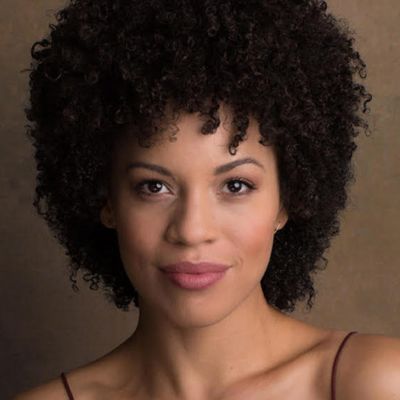
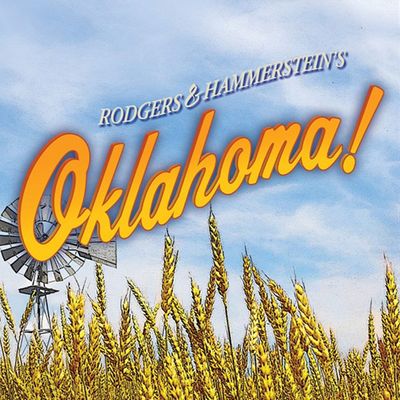
Currently leading the North American tour of the hit show, “Oklahoma!” as Laurey Williams, Sasha Hutchings proves to be a performing powerhouse. Sasha's love for dancing has brought her to where she is today... Read More
From the show: The Theatre Podcast with Alan Seales
Guests
Featured Shows
About
Currently leading the North American tour of the hit show, “Oklahoma!” as Laurey Williams, Sasha Hutchings proves to be a performing powerhouse. Sasha's love for dancing has brought her to where she is today. Dancing as a career was a slow burn for her, but her parents and teachers' support helped her take it more seriously and pursue the craft. She attended Oklahoma City University, where she discovered musical theatre and fell in love with it. And while Sasha says she only does things she's good at, she admits that dancing was hard but that she kept going and trained so she was continually learning and improving her skills. She reflects on how theatre people deal with a certain amount of uncertainty, and the things she did during the shutdown, including taking voice lessons and auditioning for TV shows. With the new take on the classic story of “Oklahoma!” as well as its diverse casts, Sasha gets real about both the positive and negative responses to the show as they tour different cities all over the country. To her core, what matters is to perform with an intention that comes from a place of love and compassion. After all, Sasha considers theatre as a sanctuary where we people, despite our differences, go to watch, feel, and ponder collectively.
Sasha Hutchings is an actress, dancer, and singer with several Broadway credits including "Oklahoma!", "Memphis", "My Fair Lady", "Motown: the Musical", "Rocky", and "Hamilton" where she was an understudy and ensemble member in the original Broadway cast. She plays the character of Hope on the Starz comedy series, "Run the World". Her other TV credits include "Smash", "Master of None", "Jessica Jones", "Fosse/Verdon", and "Blue Bloods". Sasha has been recently cast in a recurring role in AMC’s upcoming sci-fi comedy, "Damascus", and is currently playing Laurey Williams in the North American tour of the “Oklahoma!”
Connect with Sasha:
- Twitter: @sashahutchings
- Instagram: @sashahutchings
Connect with The Theatre Podcast:
- Support us on Patreon: Patreon.com/TheTheatrePodcast
- Twitter & Instagram: @theatre_podcast
- TikTok: @thetheatrepodcast
- Facebook.com/OfficialTheatrePodcast
- TheTheatrePodcast.com
- Alan's personal Instagram: @alanseales
- Email me at feedback@thetheatrepodcast.com. I want to know what you think.
Transcript
This transcript was automatically generated and might contain errors.
[0:00] Alan Seales: Welcome to The Theatre Podcast. I'm Alan Seales. If this is your first time listening, welcome. If this is not your first time listening, welcome back. It's nice to see you again, or it's nice to meet you, whichever is the case here. Our guest today is Sasha Hutchings, who is leading the national tour of Oklahoma and just, as always, a great person to share a conversation with. She turned lemons into lemonade, as cliché as it sounds, and found a footing in the TV world while Broadway was shut down. So she's part of the cast of Damascus on A&E, which is going to start airing this spring. Can't wait for that. But she actually knew that she was going to be leading the tour of Oklahoma, and then the pandemic hit, and she just had to wait.
Can you imagine this massive breakout opportunity, and then a pandemic? My gosh, I can't imagine. So as always, social media, TikTok, Twitter, Instagram, Facebook, I don't know, wherever all those things are. Leave your rating, leave a review, send me an email, let me know you're listening. And now everybody, please enjoy this episode with Sasha Hutchings.
[1:30] Alan Seales: Our guest today is a performing powerhouse with Broadway credits, including Memphis, Motown, Rocky, and Hamilton, the original Broadway cast, I might add. She plays Hope on the Starz series Run the World, and has additional TV credits, including Smash, Master of None, Jessica Jones, and Fosse/Verdon. She has an online talk show with fellow Hamilton cast member Nick Walker, and now currently is finishing her time in the lead role of Laurey Williams in the touring company of Oklahoma, the same role she covered on Broadway. Sasha Hutchings, welcome to The Theatre Podcast.
[2:03] Sasha Hutchings: Hi, Alan. Thanks for having me. It's good to be here.
[2:07] Alan Seales: Of course. Where are you calling in from today?
[2:10] Sasha Hutchings: I'm in La La Land, Los Angeles.
[2:13] Alan Seales: Los Angeles. Yeah. So there's two more stops on the Oklahoma tour, right?
[2:19] Sasha Hutchings: Yeah. Well, including Los Angeles. What do they call it? The penultimate? Like the next to last penultimate stop?
[2:25] Alan Seales: Oh, is that? I don't know. There's the fancy words.
[2:30] Sasha Hutchings: I think it's penultimate. It might not be. Ron, don't put me in the podcast.
[2:38] Alan Seales: Does that mean the final one is the ultimate?
[2:41] Sasha Hutchings: Yeah, right. The final one's the ultimate, and then the one before that is the penultimate.
[2:47] Alan Seales: So what's the third one? We should rename the awards at the Olympics, right? So gold is ultimate, silver is penultimate, bronze is what?
[2:56] Sasha Hutchings: This is sounding like the process of deciding awards at a dance competition, which I'm very familiar with.
[3:02] Alan Seales: Everyone gets a trophy.
[3:03] Sasha Hutchings: High silver, and then platinum, high platinum, ultra platinum. And then it just like keeps going up. So everyone gets a trophy.
[3:14] Alan Seales: Wait, wait, wait, wait. This is all, this is news to me. So at a dance competition, how many, how many, what, there's like the top 10 get to go home with some shade of metal?
[3:26] Sasha Hutchings: Listen, I don't know how it's going these days with the kids, but when I was a wee lass in the dance competition, yeah, you get scores. So you get like, you know, they're judges and you perform your numbers, like your pieces, like you perform your tap dance to like Britney Spears' Toxic. And then they rate you or they like give you a score and they add them all up and the scores themselves all add up to some sort of like level of recognition. So it's going to be like, you got gold or you got high gold or you got platinum, high platinum, titanium, platinum. I don't know. And so then like, it's just like you get an award or you get a ribbon. Sometimes you get a little medal or trophy or something. And then at the very end, you get like high score or something where it's like, they actually take the people who got the highest scores in each category and then they get like the ultra dynamite, like diamond something or other award.
[4:27] Alan Seales: That sounds way too complicated for a three-year-old.
[4:31] Sasha Hutchings: Yeah, it's complicated for, you know, three to 18. Like it's complicated now. I've complicated feelings around it now.
[4:38] Alan Seales: Three to three to 48. Right. Yeah, let's go with that. So you got to be 50 to understand dance work.
[4:45] Sasha Hutchings: It's complicated and you got to learn that somewhere.
[4:49] Alan Seales: That's like your taxes and dance awards. Those are the two things that people have no clue that need to learn. When did you start dancing, though? You started dancing at a really young age, right?
[4:58] Sasha Hutchings: When I was three, when I was three years old, I started, you know, it was not anything deep. My mom was like, we need to give her something to do. She won't stop running around. I think I just want me to put my kids into I guess they don't stop running. So soccer and dance. That's when my sister chose soccer.
[5:16] Alan Seales: So then you started it. You started at three to Britney Spears' Toxic, obviously.
[5:27] Sasha Hutchings: And then I think the song was too racy and they changed it to something else.
[5:33] Alan Seales: Like semi toxic or high toxic, like platinum toxic, something like that.
[5:39] Sasha Hutchings: Yeah, like low silver toxic.
[5:41] Alan Seales: And then they took the best of the toxics and made it like ultra radioactive.
[5:47] Sasha Hutchings: And then that was the, oh shoot, not Radiohead. Who's the radioactive? Imagine Dragons. That's the Imagine Dragons Award.
[5:54] Alan Seales: I see where we're going with this. This is taking a downward turn a long time ago.
[5:59] Sasha Hutchings: So as a wee lass, you were dancing and you start, I guess at what point did you realize like, hey, I'm going to do this for like more than just fun or was it just fun for a long time? Or was there like a penultimate show that you saw that was like, this is what I want to do?
[6:20] Sasha Hutchings: Yeah, it was a slow burn. I'll say dance was a dance as a career was a slow burn for me. I went to a lot of dance competitions thinking, you know, this is fun, but like complicated. And I don't know if I want this for the rest of my life. So I, you know, I danced from three and it was just sort of this. It existed in my life. I never wanted to stop dancing. I never questioned it. It was just, yeah, next year we'll sign up for dance lessons again. Like, of course, like this is part of my life. I go to school. I eat lunch. I trade, you know, juice boxes. And then afterwards I go to dance. So it really became like a part of my life and something that I never wanted to like eliminate. And then when I got, you know, it comes time to like your junior, senior year and people are like, well, what are you going to do?
And I'm like, whoa, I'm 16. Like, I don't know. I'm just living. Like I'm trying to learn how to parallel park, but also what to do with the rest of my life. And so I, I came to the conclusion that I didn't want to stop dancing, but I want to dance to continue to be a part of my life. So I started looking at programs and schools that had strong dance programs, but maybe had a minor that I could, you know, sort of like fall back on my, my fall back plan. I always love to talk about a fall back plan.
[7:35] Alan Seales: Yeah. What's your, what's your fall back? What's your backup? What's your fall back?
[7:38] Sasha Hutchings: Um, no, my parents are actually very supportive. Um, they, you know, when I said I want to dance, we started looking at schools, we started looking at programs, we looked at things, you know, okay, well, my mom was like, well, what about the Harvard dance program? And I was like, I don't think that's why people go to Harvard. And so looking at other schools and my teacher, my studio director, Pam Malarczyk, um, she pulled out a flyer for Oklahoma City University and was like, you're going here. And she was also one who like when we would take classes and things that in like in New York and they'd say, well, who wants to do this for like, you know, for real. And I would just like sit there and kind of be like, I don't know.
She would like raise my hand for me. Um, and so I, finally I caught on that this is something I should probably pursue and that I wanted to pursue. And I started auditioning. Um, and I just, it was all about dance. And then I got, when I got to Oklahoma City University, I discovered like musical theater. I had no idea what it was before that they were doing. Um, what's the, the musical with the plant, um, Little Shop of Horrors. They were doing that in our high school and they were like, are you going to audition for us? Do you like do theater and dance? And I was like, I'm a dance competition dancer. Like I don't do theater. And then I realized like, Oh wait, theater is like really cool. And I can like have a real like profession in this.
Um, so I started studying theater and, and, uh, acting and music, um, and voice in college, but it wasn't until then, all of it was really like three to 18 was mostly me just like sort of being like, yeah, let's keep doing that dance thing. And then can we go to subway? Like, it was really just like a sort of thing that existed in my life. And I maybe even took for granted that it could become more, um, and it wasn't until I was faced with the idea that I could just stop and go, you know, study to be like a biologist or something and not dance anymore. But I was like, wait a minute, like this is incredibly important to me. Um, I can't live my life without a high platinum, you know, the potential of a high platinum.
[9:45] Alan Seales: Is that what you, yes. High platinum. Is that what you would have done if we got into biology or like being a, being a professional juice box trader? Cause you, you glossed over that part in elementary school.
[9:56] Sasha Hutchings: Juice boxes, really capri suns, more like juice bags. Um, I would have gone into, what would I have done? I think I was looking at like literature. I liked reading and writing, um, but I think also it's kind of akin to theater. Like I was like, I like stories.
[10:12] Alan Seales: I was going to say that that's an equally useful degree in most cases.
[10:16] Sasha Hutchings: Right. Like I wasn't thinking of anything that was like the only, I was like, I could go study law, but like, I have no idea like what lawyers really did. My dad was a doctor and I knew I didn't want to do that because gross, like people are gross.
[10:33] Alan Seales: Like we're gross.
[10:34] Sasha Hutchings: The only thing a doctor is doing is severely wrong and you have a rash that you can't figure out or like something that's not healing properly. And I would work in his office in the summers and he would be like, you know, I'd answer the phone and then people would start telling me like what was wrong with them. And I was like, no, no, no, no, no, no, no. I'm just going to schedule an appointment. I don't want to know anything about what's going on. Would you like to come in Tuesday or Wednesday? That's all I can give you. Please don't tell me what's leaking.
[11:03] Alan Seales: I don't, I don't want to know.
[11:05] Sasha Hutchings: So I knew I didn't want to be a doctor. But I liked, law was really cool. My mom, but that came, my mom was like, you like to argue, like you should be a lawyer. And I think that was kind of like a sassy way of being like, you're being a smart mouth. Shut up. So I, yeah, I really liked, none of those were firm. None of those were firm. The only thing I knew is I didn't want to stop dancing. And then that became, oh, like you really want to dance, like sort of turning it into the positive. And then, well, what does that kind of education look like?
[11:37] Alan Seales: That's interesting because you went through a 3 to 18 dancing because you didn't, it sounds like you're like, okay, I'll just do more dancing, but you got into college for it and continue to do it. Obviously you were good, right?
[11:50] Sasha Hutchings: I was good.
[11:51] Alan Seales: You were doing this.
[11:52] Sasha Hutchings: I don't do anything I'm not good at. I only do things that I'm good at. Like you'll rarely, you'll never see me playing basketball.
[12:02] Alan Seales: No.
[12:03] Sasha Hutchings: I can't play. I tried. I went to camp. I went to basketball camp for a week. I tried other things when I was younger. I was like, you know, let's try basketball or let's try.
[12:14] Alan Seales: I was terrible.
[12:15] Sasha Hutchings: I was terrible. It was really always dance. I was very smart in school. I graduated valedictorian of my class in high school. I'm very proud of that because it was like one of the last academic achievements that really played into my life. I remember like accepting, like, you know, doing the speech and then I was like, I'm the valedictorian of my high school and I'm not like the last valedictorian went to Harvard. The one before that went to Stanford and I'm going to major in dance. Like just who is this kid?
[12:48] Alan Seales: But I really, you know, I love school and I had other options. My sister kind of talked about that. She's like, I wasn't really worried about you. Like our family wasn't worried. We were like, if dance doesn't work, like she's smart. Like she'll figure it out. Like she'll figure something out. But I really, it became, yeah, I was really passionate about it. So it stuck in a way that nothing else did.
[13:09] Alan Seales: Nothing else really resonated like that. Did you go into, I mean, you talked about the teacher who like pushed you into Oklahoma in Oklahoma State and I guess did you ever have any doubt that that's what you were going to do or it's just that's what you went into college to do, that you were going to continue to do it and did the smarts, did the dancing, did that come easy for you? And what I'm getting at was, was it a lot of pressure to continue to work hard and be the best or were you like just day after day? This is where I am. And you continued because you didn't realize how hard it was in general.
[13:37] Sasha Hutchings: It wasn't easy. I needed to go to school. I needed dedicated dance training because I wasn't at, I don't think I was at a professional level that I would have been proud of coming into the city with. Education is also always very important to me. I love school. I still love learning. Give me an online course and I'll do it. Like let's go. Like I love learning. I love school. Education was always very important to me. My parents were very supportive of me going to becoming a dancer, but I had to go to college. Like it had to be some kind of degree. You're going to get somebody's degree from somewhere. And if it's Oklahoma City University, great. So I, I, you know, dancing was hard. Like I trained really hard. I didn't come in at the highest level in my dance.
[14:42] Sasha Hutchings: You know, college classes, and I worked busting my ass to get there. I'm kind of scrappy, like, and then, you know, the same thing has happened with me as an actress and a dancer, and as a singer, in professionally, and I see something, I see people operating at a certain level, and I figured out how to get there. I've been taking, you know, voice lessons forever to get to playing something like Laurie Williams on the national tour. I've been taking acting lessons forever to be able to show up on TV and things like Run the World and Damascus and have things, you know, working for me, because I love the craft. So it wasn't easy. I did have, what I like to say is, like, okay, I didn't do basketball because I only threw bricks.
They only hit the rim, and they only never went in. But with dance, I had enough, you know, juice to get, I had enough, like, high goals. You know, maybe it wasn't all the way at the platinum, but I was getting a high goal. They liked me. But I was like, this isn't worthy enough to keep going. So I did, you know, like, I kept going because I had enough encouragement from teachers, and from performances, and from family to know, like, I wasn't bad. I was good. Like, I had promise in it. There was something about me. But that doesn't mean that you don't need to, the idea that people just have natural talent, and that's how everyone is existing in this artistic world is not true. And it's really hard for people who are trying to come up, and, you know, facing a challenge in their voice or a challenge in their skill set, and trying to figure out how do I overcome this?
And there's no magic answer. You go to class, you train, like, you figure it out, you find a good teacher, and you stick with them. And if you don't, if you're not learning in one place, you find another place to learn. So that's also a part of my history. It's just really a lot of training, a lot of grit, and a lot of like, damn it, I'm going to figure this out. I'm going to be good at it.
[16:43] Alan Seales: We're going to take a short break. Stay tuned for more of the episode.
[16:47] Sasha Hutchings: Well, you touched on something that a lot of people have talked about, too, in that to be the best or to move up and be part of the best, it's about continually learning and about continually improving and practicing. So once you get those 10 Tony Awards, you got to keep taking voice lessons. Because if you don't, then somebody else who is going to just right on past you. It's a muscle where athletes, like, you have to train, you have to rest, and you have to train, and you have to be able to perform, and you have to keep doing it. Throughout the pandemic, like, I took voice lessons every three weeks. It didn't matter that we didn't know when we were coming back or what was going on. And it's the only way that I was able to come back and jump into a show and sustain myself, traveling across the country, singing a full score.
It took a lot, but I have the training and the technique and the stamina to be able to do that. But you have to train, which is why the thing that really drives what we do is not the awards, and it's not those things. It has to be the love of the craft. Otherwise, I would have gone to law school, and I would be making a lot of money somewhere else, like, in a stable environment, and not the craziness that can be theater. Like, I would have gone and done, you know, I always say that I'm like, if I wasn't going to do theater, I was going to go guarantee my income for the rest of my life, some way. Theater is, like, crazy and wild, and acting and TV and film, all of it is just sort of like the wild, wild west of, like, existence and sustaining yourself as a person. But I do love it, and I love the craft, and I love growing, and what it offers to people, and what it always gives back to me.
[18:39] Sasha Hutchings: Well, it's what makes people feel. That's what's so important, I think, about art, and that's what I missed about COVID, with not being able to sit in an audience or stand on stage and go on a journey with a room full of strangers. Like, that's my version of spirituality, just being able to cry next to a complete stranger and know that we're feeling the same thing about the same scenario that we're watching, right? Like, that whole environment to me is what makes art, and especially singing and dancing, the movement, the vibration of instruments, just so incredibly unique and special. Yeah, I always think about theaters as a church. Theater is definitely a sanctuary. It's a place where people come to feel and collectively ponder, you know, a subject.
And that can be about human existence, it can be about God, it can be about each other. But theater is definitely a form of church, and I love, like, when you get those feelings of, like, yeah, everybody's here, and we may not all agree on everything about everything, but we're all here having this experience right now, and that's really important. Like, we need that catharsis together.
[19:53] Alan Seales: Yeah, yeah, especially with COVID. And you mentioned, too, that, I guess, well, I'll back up a second. So, when did the tour, the Oklahoma tour begin? Because the revival on Broadway, they won Best Revival in 2019, the Tony Award for that. So, when did the tour kick in after that?
[20:11] Sasha Hutchings: So, we won Best Revival in 2019. And we opened, I think it was early March of 2019 through January 2020. And we closed January 2020. I knew the tour was launching in August, and we were in talks about what that would be in the schedule and my, you know, everything, my involvement in it. And then COVID hit in March, and everything went, like, everything.
[20:46] Alan Seales: So, the tour never launched?
[20:50] Sasha Hutchings: No.
[20:50] Alan Seales: Pre-COVID. Oh, no. So, you've got, like, this role, you're leading this company, it's all set to go, and then everything shuts down. And did you start calling up law schools?
[21:04] Sasha Hutchings: I thought about it. I thought about it. I was taking online classes. I looked at some online classes, what they had to offer on the online. It was hard. Like, it was hard, and it wasn't. I think, like, when you talk about specifically theater people, and actors in general, we deal with a certain amount of uncertainty, right? We deal with, like, I don't know what's happening in six months, or I don't know where I'll be in eight months or a year. Like, you totally can get to a certain level where, like, you're, like, oh, yeah, the next three years are blocked out. And God bless Brad Pitt, right? Like, what a great guy. But, like, that's not me. Like, I don't always know what's coming next. So, when we shut down, there was this, like, whoa, that's crazy.
And then there was also, like, it's always crazy. Like, I can deal with this for a couple of weeks, or what we thought might be six weeks, and then, you know, a couple of months. And then, as it dragged on, I do believe there was this feeling of, like, across the industry of reevaluating, like, how we approach it, what your involvement is with it. I have lots of friends who left the industry, and not in a way that's, like, I can't do this anymore, but just in a way that's, like, I think I'm transitioning, and I think the way that I want to interact with my craft and art is different, which is beautiful. And then there are those of us who have the ability and the privilege and the will to, like, re-approach.
And knowing that I had Oklahoma, like, we would get updates every couple of months, and I'd be like, all right, you know, just call me when we're going into rehearsal. Like, we'll figure it out. And I was still auditioning. I did some TV in between. I shot Run the World, like, during the pandemic. TV and film started up a little bit, well, a lot before theater was able to, just because they're able to operate differently. You don't have to get, like, you know, thousands of people into one place for TV and film. So I started to do that, and there were a lot of, like, artistic things were introduced into my life. Chaos Twins came about. Like, I just started doing different things, which kept my time occupied and me growing artistically while waiting for this big machine of theater to, like, kind of restart.
So it wasn't an empty time. And I, as much as I joke about, like, leaving, like, I never strayed very far away from theater crafts. But I'm glad to see it back, for sure. And it was lovely, like, to finally get, you know, the email and the call and the calendar that's like, this is it. We're ready to go. We're starting rehearsals this day. And then my agent's being like, you know what? We really got to nail this down because it's actually happening now. So that was a relief. But it really was, like, over a year of just kind of being, like, think shrug. Like, I don't know. We'll see when it happens, if it happens.
[24:00] Alan Seales: So where did Damascus come into play in the timeline, too? Because you're, let's see, Damascus is going to air on AMC. It's an upcoming sci-fi comedy on AMC. So sci-fi and comedy, two things that I love, and AMC in general. So I can't wait to watch this. But when, I guess, was that like a self-tape? So many people have gotten these big roles off of just sitting in their apartment with some good lighting and a self-tape.
[24:21] Sasha Hutchings: Listen, a ring light can take you a long way these days, okay? And yeah, I've been auditioning while I've been on the tour. Because of the pandemic, our schedule has been a bit sort of broken up. So we've had like four weeks here, two weeks off here. We've had a couple of layoffs that wouldn't really exist without the chaos of trying to put a tour back together after a pandemic. But silver linings, always. I have been auditioning while I've been out on the road, especially for things that fell during my layoff, and Damascus was one of them. So we had a long summer layoff. I think we were off for like seven weeks. And for about four of those weeks, it was a lot. It was a lot. It was a big hole.
And I think we were trying to go to Canada. I think we were trying to get into Toronto. And their regulations and our regulations, it's like, you got to have enough time to set the date, sell the tickets, present all the thing. And it didn't happen, which I'm sad. I really would have loved to have gone to Toronto. But instead, I ended up filming Damascus in Atlanta for a couple of weeks. And I'm so excited about this show. It is a sci-fi comedy. I was laughing out loud when I read the script for the audition. It was actually on Zoom. I thought it was going to be a self-tape, but I actually ended up on Zoom, which is a whole other thing, because you can't put your laptop into a ring light. So you have to figure out how to get your laptop at a height that makes sense for your Zoom.
And I don't trust the camera. I'm like, I need to see everything. I need to see them too. I need to know what's going on. But I auditioned with my computer and my ring light behind it for the proper lighting, of course. And I did a couple of calls with that and ended up booking it. And I'm super excited about it. It's the coolest thing. I got to reunite with Oak, a dear friend from Hamilton. We're playing opposite each other. And it's just, I've never seen anything like it. It's a show about a 33-year-old Black man going through this alternate reality therapy. And so you start to really, you're following him through these different pathways that his life could have taken. And had something been slightly different, or had he made a different choice, or were he some other character in a religious monastery somewhere else?
You don't know where he's going to end up, but it's all related to this therapy that he's going through. And it just gets wilder and wilder, and you get a little lost in this world that he's in. And I play his girlfriend of three years who's like, what the hell is going on? Where are you? What is happening? And I had just an awesome time.
[27:03] Alan Seales: Do you get to be different variations of the same character? So you get to hit different extremes?
[27:10] Sasha Hutchings: I won't give too much away in that regard, but I will say there's a lot of character, a lot of people showing up in ways you didn't expect, for sure.
[27:17] Alan Seales: Yeah, that's a lot of fun. I love watching the range of actors when you get to do the same scene over and over again, but in slightly different ways, or different scenery, or different props, so yeah, this is something that will definitely be on my watch list, because I love sci-fi, multiverse is great, comedy, this sounds right up my alley, so I'm going to be there. I will be there virtually watching. And Oklahoma too, talking about being there, you've been all over the country. So I saw Oklahoma, I saw it off-Broadway, I saw it on Broadway. So the production is completely reimagined for those who didn't have the privilege of seeing it. There's no overture, no chorus, the entire cast is 12, and it's such a diverse new take on the classic story of Oklahoma, right?
So you've got a woman of color playing the lead who's one of your love interests, is another woman, and it's so modern and well-needed and well-deserved in this time. And I bring all of this up because it's cool, but also because you're traveling, you're touring through states, through cities that are notoriously not so, especially in current times, open with these sort of decisions. How has that experience been on your side?
[28:42] Sasha Hutchings: It's been eye-opening. It's been hard, and it also has stirred a lot of compassion, I think, within myself, or just maybe understanding of how deep some of the divides are that we're dealing with. But also that some of those divides stem from exactly what our show is sort of handling. Our show, Oklahoma, is about a community, and that community has a certain set of roles and identities and beliefs about the proper way to be.
[31:25] Sasha Hutchings: Sometimes that effect looks like somebody booing you at the end of the show. And sometimes that effect looks like somebody sitting in shock or crying or laughing at the end. Like there are a lot of different emotions that come up for people. And what I am trying to do is just take a step back and say like, this is, you're entitled to your experience. And I hope my intention and our intention is to start to break this open, to start to maybe crack something that you took for granted about this story or maybe even your own life so that you can maybe see people in a different light. Maybe crack you open just a little bit and try not to take personally some of the, I mean, insults on message boards and critiques of the show.
Some people have been, they're very nice. They'll be like, the actors were great, but this production is horrible. But we're like, this is our production. But it's tough, but I've tried to kind of approach it with a level of compassion and inclusion of everyone and just say, yeah, there's a lot of different ideas in the room. And that's why we do theater. We're going to take a short break. Stay tuned for more of the episode.
[34:55] Alan Seales: That's a wonderful way of looking at it, approaching it with compassion, because I mean, like you said, if you match hate with hate, which is historically what we've done, you defend with defensiveness, then you're just going to end up with bloodshed and fighting and conflict. And for everybody that, I mean, for every one person that boos or is unhappy, there's got to be dozens more that are silent, stunned silence in a positive way that are going on like, oh yeah, yeah, yeah. Or the young child or even like an adult rather that, like you were saying, they feel like they have to assimilate, so they don't say anything, but that seed is taken with them, right? They leave. And they're like, you know what? I don't think I need to be like this totally anymore. And then it just starts to grow and grow and grow.
[35:47] Sasha Hutchings: Absolutely. And it's really important. And it's important that I realize that, and I do think it's very important that while I'm performing, that my intention does come from a place of love and compassion for that exact purpose, because I don't want to sow a seed of someone saying, well, I don't have to be like this. And it'd be a seed of hate or anger, but that it'd be a seed of understanding yourself and compassion for yourself and compassion for the people that are in your community that maybe don't understand you, that you are still taking a message of love out with you into the theater, into the world, from the theater into the world, because we definitely need more of that. And we definitely don't need more just stark conflict and my way or no way or this is wrong.
There needs to be some fluidity to it. So it's important. And I'm not saying it's always been like that. There are times when I get angry on stage. But I'll tell you one of the one things I realized, I'm like, I can't get angry and sing really loud. I'm going to blow my voice out for somebody who's angry at me. Why would I do that? This is my tool. So you start to realize you're like, I have to take care of myself. I have to keep my integrity and my intention and just trust that whatever process is happening within this audience member or this audience member, that all of those things are coming from, at least from me and my performance, coming from a place of love and honesty.
[37:19] Alan Seales: In your production, do you still serve the chili and cornbread at intermission?
[37:25] Sasha Hutchings: We don't. COVID took the chili and cornbread. That was one of my favorite parts. I went down and got that cornbread from Mary Testa. Yeah. When I was a standby on Broadway, we would eat it. If I was off stage and I needed a little snack, I'd just go down at intermission and be like, can I get a little chili? I guess probably with COVID rules, you don't want to be serving food to thousands of people. But yeah, I get it.
[37:54] Sasha Hutchings: I think there was one. I think when we were in Huntsville, they had their own chili reception for the audience. So it wasn't us. We were like, no, we're doing the chili. So there was a whole room adjacent to the theater that smelled of chili because they had done their own chili reception.
[38:11] Alan Seales: Oh, that's smart. That's what they need to do everywhere. Yeah. We should have a touring truck, a food truck that drives along with the tour. So outside the house, people just come out and just get chili and cornbread. That's all they need.
[38:26] Sasha Hutchings: I'm done with that. All right. So let's wrap up the episode, Hyaw, with three closing questions I ask everybody. The first one just simply is what motivates you?
[38:38] Sasha Hutchings: What motivates me is the story of my family and the fact that I get to do theater and acting for a living is kind of a miracle. In a lot of my ancestry, to come up from slavery into this is an absolute miracle. And so I take a lot of the intention set by my grandparents, my great, great grandparents, and my family. And I just try to live that out and trust that this wild ride that I'm on is for a purpose and means is significant. And I approach it with a lot of gratitude.
[39:24] Alan Seales: Beautiful. What advice would you give to your younger self and younger people listening now starting out down a similar path?
[39:34] Sasha Hutchings: Set goals, set small goals and big goals, and then forget all of it and then come back to it and know that the path is very windy. It's not linear at all. A lot of things about your path may not be reflective of your actual gifting or talent, but there's a large component of hard work that goes into it and being prepared for your opportunities. And the more that you can, this is the real advice. This is the real thing. Don't, or sorry, I don't want, I want to put it in a positive. I want to phrase it in a positive. Set goals without fear of not reaching them. Sometimes I feel as though I may have limited, I could have limited myself, or I may have allowed limiting beliefs to not let me set the radical goals that I wanted.
And maybe at 22, like thinking that's crazy. But what I also know is that even in that I reached a lot of goals that I had no idea I could. And so as I've progressed in my career, my rules, my, my goals have gotten more radical. And that's really important to not let fear limit the goals that you set for yourself, but also to not judge yourself too harshly when those things don't come about the way that you, or in the timing or the way that you think that they should. So it's a weird cosmic balance that you have to, but set the goals, forget about them, set them again, set small ones for the day, set large ones for the rest of your life, and don't let fear interrupt that. Go with the flow, dude. That's all you got to do.
[41:16] Sasha Hutchings: You literally must. There is actually no other choice but to go with the flow.
[41:21] Alan Seales: All right. So the final question is the hardest one. If you can only see one show for the rest of your life, but you can see it as many times as you want, what would you see?
[41:30] Sasha Hutchings: Well, in my waking life, it's Frasier. I watch it incessantly. I think it's a brilliant show. These are all TV shows. Also The West Wing, if anyone knows of Nick and I and Chaos Twins, we are big fans of The West Wing. So I could definitely watch that over and over. And if it was a Broadway show, like a theater show, I mean, Oklahoma is up there. And I can only say because I watched it a lot. I watched it on Broadway and learning it. And it's really a gem. There's lots of gems in there.
[42:12] Alan Seales: Well, you need to do like a Broadway show with Kelsey Grammer and Bradley Whitford or something, like just combine all of your worlds there.
[42:18] Sasha Hutchings: Yeah, if we combine. And another one of my shows and one of my all-time favorites is Living Single, old sitcom. I was watching this probably when I shouldn't have been allowed to watch this show, but I fell in love with it. I think it's a brilliant sitcom. And if there is a reboot of Frasier in the works, but if they had ever won a cross pollinate that thing, with Living Single, like that's what I'm watching forever and ever and ever.
[42:47] Alan Seales: Yeah. All great shows and good choices. All right. So where can we find you online? How can we connect you on social media?
[42:53] Sasha Hutchings: You can connect with me at Sasha Hutchings on Twitter and Instagram. I think I have a TikTok, but you can try to find me on there. I'm not really on there a lot, but it's there. You may find something. I don't know. Maybe somebody's hacked into it by now. It's a whole profile that I have no control over. You can catch me on season two of Run the World. It's coming out next year and season one of Damascus next year. Yeah, I got a lot. I'm around. I'm around.
[43:25] Alan Seales: I can't wait for Damascus. That sounds so, so cool. You can get more of me at thetheaterpodcast.com. I'm not on any TV coming out anytime soon that I know of. So just find me on Instagram, Twitter, and Facebook. Leave a rating and a review wherever you're listening now. This has been edited by Well Rounded Hoodlum Productions. Thank you to Jukebox the Ghost for the intro and outro music. Thank you to my recent COVID infection for my great radio voice. And thank you, Sasha, for such a wonderful and enlightening conversation. I had such a good time.
[43:55] Sasha Hutchings: Me too. Thanks for having me. It's good to be here.
© Broadway Podcast Network, All Rights Reserved