

From creating a one-woman show, "Beth Malone: So Far" to originating the role of "Fun Home's" Alison Bechdel, Tony and Grammy award nominee Beth Malone has set a name for herself on the Broadway stage... Read More
From the show: The Theatre Podcast with Alan Seales
Guests
Featured Shows

About
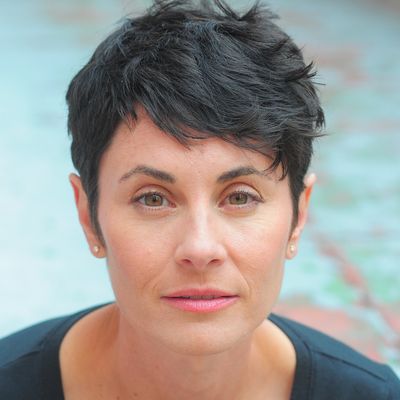
From creating a one-woman show, "Beth Malone: So Far" to originating the role of "Fun Home's" Alison Bechdel, Tony and Grammy award nominee Beth Malone has set a name for herself on the Broadway stage. Beth takes us through her journey to getting into performing and becoming an actress, sharing her younger years which included watching “Singing in the Rain on TV” and working at a dinner theatre growing up Colorado. Growing up queer, she opens up about her relationship with her parents, getting disowned in her 20s and focusing on art as a way to cope, meeting her wife and getting her master's degree and finally reconnecting with her parents. Beth's experiences have inspired her to take her art into activism, and she continues to stay active in the space and raise awareness through her solo shows. She recalls how "Fun Home" has become a form of therapy for people, some of which would talk to actors and share their stories at the stage door. In fact, they would say that the stage door was act two of the show. Apart from raising awareness, she talks about her work, including recording the cast album of "The Unsinkable Molly Brown" during the pandemic, and her current and upcoming shows like "City On Fire". Despite not being on stage as much as she used to, Beth shares her love for rehearsals which is also what she misses the most, writing a musical, and being motivated by hope in whatever she does.
Beth Malone is a singer and actress known for her work in Broadway, off-Broadway and regional theatre. She originated the role of Alison Bechdel in the musical "Fun Home", for which she received a nomination for the Tony Award for Best Actress in a Musical for her performance. Her other stage credits include "The Unsinkable Molly Brown" where she played multiple roles and now has an official cast album, "Pride Plays", "Nassim", "Angels in America", and "Ring of Fire" among others. She has also created a cabaret show, "Beth Malone: So Far" which tells her life story. Beth has also appeared in numerous films like "Tick, Tick...Boom!", "The God Committee", "Brittany Runs a Marathon", "The Comedian", "Hick", and TV shows such as "BrainDead", "Rono 911!", "Judging Amy", "Bull", "The Baker and the Beauty", and "All Rise". She released her first solo album, "Lunch Shift" in 2008. Beth stars as Linda Schafer in "Five Days at Memorial" and will be in Apple TV’s "City on Fire" in 2023.
Connect with Beth:
- Twitter: @heebyfluff
- Instagram: @thebethmalone
Connect with The Theatre Podcast:
- Support us on Patreon: Patreon.com/TheTheatrePodcast
- Twitter & Instagram: @theatre_podcast
- TikTok: @thetheatrepodcast
- Facebook.com/OfficialTheatrePodcast
- TheTheatrePodcast.com
- Alan's personal Instagram: @alanseales
- Email me at feedback@thetheatrepodcast.com. I want to know what you think.
Transcript
This transcript was automatically generated and might contain errors.
[0:00] Alan Seales: Hey, everyone. Welcome back to the Theatre Podcast. I'm your host, Alan Seales, and our guest today is Beth Malone, a Tony and Grammy Award-nominated actress who made her Broadway debut in Ring of Fire. And, of course, I love her, love her, love her from her role in Fun Home, which she was saying led her to a bunch of activism down this incredibly interesting path because the show was 90 minutes, one act, and then she said going out on the stage door was like act two. That's what they would call it because so many people would get just share their personal stories, get very intimate, and sometimes would even come out to Beth and to the cast. It's just this incredible experience that shows you how much theatre can really affect people and touch people's lives.
So, I cannot wait to share this with you. Before we get going, as always, find me online. Leave a rating, leave a review if you haven't done that in a while. I love reading the reviews, especially in Apple Podcasts, Spotify, wherever you are listening. Find me online on Instagram and Twitter at Theatre underscore podcast on the tiki toks at Theatre, well, The Theatre Podcast. I gotta get my own handle, right? And now, everybody, please enjoy this episode with Beth Malone.
[1:28] Alan Seales: Today's guest is a Tony and Grammy Award-nominated actress who made her Broadway debut in Ring of Fire but may be best known in the Broadway scene for originating the role of Alison in Fun Home and also her roles, a role, yeah, multiple roles in the production of Angels in America. Past TV and film credits include Reno 911, Judging Amy, The Good Wife, Brittany Runs a Marathon, and Tick Tick Boom. She has way more, but those are just my favorites. She played the title role in the unsinkable Molly Brown in multiple occurrences, which now has an official cast album that could be found everywhere you stream your music. You can catch her now on Five Days at Memorial on Apple TV. It could also see her in the series City on Fire, which is also on Apple TV coming next year in 2023. Holy crap, Beth Malone, welcome to the theater podcast.
[2:15] Beth Malone: Thank you. Thank you. Hello. Thank you for having me.
[2:18] Alan Seales: No problem. So, goodness, you've got quite a bunch of projects going on, and we're gonna dive into all of this. And Unsinkable Molly Brown is such an unusual thing for me to have a cast album for something that didn't come to Broadway yet that was recorded during a pandemic, and I promise we're gonna get to that. But let's go back to Colorado, because I wanna know about Baby Beth. What did Baby Beth do to get into theater?
[2:42] Beth Malone: Well, I was raised in this kind of like ranch south of Castle Rock, which was a teeny town south of Denver, and we didn't have, you know, access to that kind of thing. So, I actually like saw Singin' in the Rain on TV and ran out to the kitchen and was like, Mom, you gotta see this thing. It's this music show. And she was like, that's musical. Oh, well, this is where I have to go to there soon. So, then I just started kind of like getting my hands on cast albums and things like that. I had a record player in my room, and I would just like look at the, you know. But there was a dinner theater. This was back in the days of like dinner theater. And the place, it was about, you know, like a half hour from our house, called the Country Dinner Playhouse.
It was a red barn, like a red, it was like super 70s cheese, but it was near and dear to my heart. And everybody in the Denver area who came up, like Amy Adams worked there, Emily Ashford worked there. Like, there's a bunch of people who like went on to have careers. Lee Horsley started there, and Jerry Joe Catlett. You know, there was a bunch of Denver people who ended up going off and having, you know, careers outside of the Denver area that started at this little tiny dinner theater where you would like go through the buffet, and you would get your little like fish in a, there was like a brick of fish that you would slice yourself a square of, and that was the fish. And, you know, it was not known for the culinary experience at all.
But then, you know, I got to see all kinds of shows there. And then when I started, when I got my driver's license at 16, I became a hostess there, like filling the salt and pepper shakers and like filling the waters so I could just be in the building and watch rehearsals and kind of sneak around and see the shows 18 times. And, you know, they did a Vita. And I remember just like, I was just like, if you're looking for me, I was watching a Vita 100 times, you know. And that's how I got into it because, you know, there was no Broadway close to Castle Rock. So that's what I did.
[5:06] Beth Malone: There's a Denver Center out there now. But I guess it didn't exist back then. They weren't a, they weren't a house that would like, they were producing, they were not a producing house. They would house, like my mom took me to see Annie the tour when it came through there. And I wanted to hitchhike to New York afterwards. I was like, insane afterwards, my poor mother. And she, I saw like, Arsenic and Old Lace with Maureen Stapleton in Denver. And I just, I loved it. I just would be like in a trance afterwards. Like, I, you know, just was, it was enormously powerful experiences when I would get to go see the big shows at the Denver Center. And my mom would take me, you know, whenever she could or would, you know, take me to see, make sure I saw things. And then in high school, I saw Cats, like the tour of Cats came in. And I met Rum Tum Tugger, who flirted with me. And then that was disconcerting. But then, like, yeah, all those things.
[6:13] Alan Seales: Well, yeah, everyone who's in Cats, that's a separate conversation, because that that show is just creepy and weird in and of itself.
[6:20] Beth Malone: Yes. And if you're on tour as Rum Tum Tugger, and you're in Denver, and some high school girl comes to the stage door, you're gonna see like, how far you can take it probably. I mean, I can't really blame him, whoever he is.
[6:32] Beth Malone: I did Arsenic and Old Lace, God, a decade ago at a summer stock. It was in, up in Michigan.
[6:41] Alan Seales: So I have fond memories of that show, too. Yeah.
[6:45] Beth Malone: What town in Michigan?
[6:47] Alan Seales: Coldwater, Michigan, the Tibbetts Theater.
[6:49] Beth Malone: Oh, my gosh, you did Arsenic and Old Lace in summer Michigan. That sounds like heaven.
[6:56] Beth Malone: It was fun. It was fun, because we had, there was no cast housing. So local people from the town would offer up extra bedrooms. And we ended up staying, somebody else in the cast was staying with somebody who had a boat. So we were just like, whenever we didn't have shows or during the day or on our day off, we literally would just like drive out on the Finger Lakes and hang out in Michigan. That was great.
[7:18] Alan Seales: Awesome. I have a friend who has a cabin up there. And we've been invited a few times. And I love it. It's beautiful up there.
[7:26] Alan Seales: So then, I know that you had mentioned in stuff that I was reading, and I don't know how up to date or accurate Wikipedia is in general, because it's Wikipedia. But we'll talk about your one woman shows, too, that you talk about, so your relationship with your parents and your dad specifically. And like, your one woman show, too, is not a typical cliche coming out story. It's a coming of age story. And you identify as a queer individual. And like, growing up, though, did you feel sort of out of place at this time? And I don't actually know what the relationship with your parents was. I was just reading that there is something there.
[7:58] Beth Malone: Yeah. So I grew up, you know, a queer kid in the middle of a rural situation, which is why, like, as an adult who has sort of taken my art into activism, that community is where I sort of try to put my focus a lot of time. But when I came out as an adult, my parents disowned me for quite a few years. So I was on my own for a good part of my 20s. And I did a lot of things in those years, in those years where I was out of communication with my parents, where like, most millennials now are still like, living at home with their parents at the age where I was just like, orphaned, basically. But I, you know, I met Rochelle during that time. That's my wife. We bought a house. I got my master's degree.
Like, all these huge, like, life things happened. We got married, you know, during that time. And it was just, it was really sad. Like, it was sad at first, and then it got increasingly sad. It was really, really, as it went on and on and on and on, I just thought, it just got worse and worse instead of better. You know, I thought, maybe I'll just get used to it and it won't be such a heartbreak. But the heartbreak sort of intensified the longer it went. And then once, one Christmas, my brother's wife, Cindy Malone, stepped up and she said, I'm having Christmas at our house. Beth and Shelley are coming. You can come or not come. And they came. And so that was the time. And it was really, my mom would still meet me and things like that.
Like, she would still meet me at the mall and, you know, we would exchange a Christmas present in the parking lot. You know, it was just really grim. Not to overstate it, but it was grim. And then my dad showed up at this place at my brother's house and my sister-in-law's house. And, you know, he had to drink like a fifth of whiskey in order to talk to me. But that by the end of the night, he said, you know, slurred short, like, there ain't but one of you. That's what he said. And then the next day, it was like, it never happened. Like, the seven years that he didn't speak to me, it was like, we went to breakfast and with Shelley, and it was an awkward breakfast. And then after that, we just started seeing each other, you know, randomly.
And at that point, I think we were living in LA. So it wasn't every day we saw them. But, you know, we were, I could call the house and they would pick up and it was like a slow reintroduction of me as an adult, because I had done so many different things since the last time, you know, we had known each other. It was just really an odd little wrinkle in time with my parents.
[10:51] Alan Seales: Was it a religious reason or just a lack of awareness reason?
[10:59] Beth Malone: My parents are full on like Trumpers. They're Fox News watching Trumpers. And I was raised in a rural situation. My dad is from Boston. So he's like a fake cowboy. He decided to move to Colorado and become a cowboy. You know, he had horses in Massachusetts, but I'm like, what kind of cowboy lives in Massachusetts? And so he decided to move to Colorado and like pursue the whole thing and then like created this whole persona. So I was raised my dad was a cowboy, but he's really like a kid from Boston. But, you know, they come with a whole bunch of bigotry. You know, Irish guys of a certain age just have a whole litany of I mean, they're just sitting ducks for this.
[12:46] Beth Malone: Yeah, scary. It's confirmation bias. It's really scary how mob mentality. Actually, I was up late last night. I couldn't sleep. And I was watching. I watched all three episodes back to back to back of Trainwreck about the Woodstock '99 festival. Yeah, I want to watch that. Oh my god, just when they're treated like animals, you start defending yourself like animals and it's like it around you.
[13:14] Anyway, I could digress on all of this. It was just that documentary is a fascinating case study on sociology. It's incredible. That was incredible. You should watch that. We are these advanced creatures. We are animals. The line between the show I'm on, Five Days at Memorial. It's an eight-episode limited series on Apple TV right now, Five Days at Memorial. And it takes place over five days.
[13:43] Well, yeah, it's like when you don't have the basic things that you take for granted like clean drinking water and a place to take a poo without that integrating into your drinking water. Yeah, there was some lady who was like, I had to go home because I had like sores and blisters all over my mouth because she got, what is it? Giardia dysentery trench mouth.
[14:11] Who even knows what trench mouth is? Oh my god. We're going to take a short break. Stay tuned for more of the episode. So back to theater. Oh, you think I wish I was at Woodstock and then you hear trench mouth.
[14:42] Well, Woodstock '99 was the problem.
[14:47] Oh, okay. Wow. Yeah. No, yeah. Woodstock '60 whatever it was '63. Don't quote me on that. That was all like calm, peace and love and hippie everyone going out there and like no violence. People got babies out there. It was great. And then '99 was literally just to make a buttload of money and they cut corners everywhere and everyone was treated like shit that they ended up drinking literally.
[15:10] Anyway, back to queer activism. That's way more fun. Fun Home. And that show, you were on a long journey with that show and got Tony and Grammy nominated. I can't speak today. Tony and Grammy nominated for that show. But then you were saying, and I've read this from so many other people too, that it became therapy for a lot of people to go and see the show and like they would come up to you and tell you stories at the stage door.
[15:41] Yeah, it was really intense. We would say like the stage door was act two of that show because act one was the show. It didn't have an intermission. It was 90 minutes. So you do that. Then you go to the stage door and you just listen. You just listen and support and see them. You know, that's important. It's like I see you. Yes, I do.
[16:04] And you are legitimate. You're valid. You're a valid human being. Your story is, I hear you. And the New York Times at the time was trying to get me to do a comment on a story of gayness is yesterday's news. And we're in a post-gay society where it's not even a big deal to be gay anymore.
[16:36] Wait, how long ago was this?
[16:37] This was in 2015. It was the New York Times. And there was a particular reporter whose idea for a story was like how it was not an issue anymore and it was completely safe and it wasn't even taboo or anything or dangerous. And anyway, she wanted me to weigh in on this. And I just said, I can't. I won't. Because you should come. A, you should leave New York sometime. And B, you should come to the stage door and just listen to the people who came from Kansas.
[17:17] Although Kansas, yeah, Kansas. But, you know, who came from Texas, who came from Louisiana, who came from, you know, Utah, all the way here to see this show because these pilgrimages to the source, someone feeding you something that validates your existence. That's what they came for. So that, you know, it's dangerous to be gay in a lot of places still. It's not.
[17:48] What you were just saying about your parents and that whole literal almost half of the nation that still believes that today as we're recording this, that being gay or being black or being a not straight white person is just wrong. And there's no foundation for that other than that's what my parents taught me. So it's got to be true.
[18:10] No, I know. There's a lot of fear. But there was that moment when we were up, when Fun Home was happening, it was like gay marriage passed. You know, universal health care passed while we were up. President Obama was in the White House. It was a different world. And we were riding this wave of love and acceptance and progressive ideology and all of this, you know, taking the culture forward and expanding and finally embracing diversity and all of this stuff that just has had this massive impact.
[18:49] Horrific backlash afterwards. But at the time, we were sort of, we were just like in euphoria going, this is finally here. The day we've fought for and our predecessors, you know, we're standing on the shoulders of these people who at the Stonewall riots stood up and said, no, no. You know, we are the lineage of this. And now it's like we are just suffering the pendulum swinging the other way and just like knocking the shit out of us. And, you know, it will swing back again.
[19:24] And you have to believe that during the time when we were enjoying all of that safety and acceptance, it seems so crazy to say like that was some kind of anomaly. But it's true. Those people were seething with anger and raging and gathering their forces and gathering their strength. And they're coming after us. They are not done.
[19:51] The abortion ban is the first thing. The next thing is my marriage. It's coming. They're coming after me. And not you, but like us, the queers. They're not done. So, you know, it's just like that Fun Home era was a beautiful time in history. We really lulled into a sense of complacency, I think.
[20:18] I felt like safe.
[20:21] So what do you do now to stay active in the space of raising awareness and pushing the envelope forward?
[20:30] Well, I do it a lot of the time just through my shows. Like I do these solo shows out and about. And I make a point just to talk about my family to as many houses full of people as I can. Because it's important for them to see an individual that they've come to care about and like and then say, you know, I want to talk to you about my family, because that's important. My wife and my life and how we live in Lauren Boebert land. She's my representative. Lauren Boebert is my representative.
[21:07] Because I live on the Western Slope. She's in her district. So I was out of town shooting this show a lot this year. And seeing Colorado from a distance is always different than being in it. It's like when you travel to Europe and you see America from someone else's perspective. It's like, wow, we look like a bunch of fat idiots.
[21:32] Idiots. We look like a bunch of idiots. They do like to say, you know, you start telling people you're Canadian, because you just don't want to take a shit in the bars anymore. You're like, I'm from Canada. Yeah, good old Canada.
[21:47] No, I ran into that, like, when I was traveling a couple years ago before the pandemic. Yeah, it was just what I was afraid. I was afraid to travel once Trump got elected. I really was because they assumed that, again, all Americans have to feel that way. I'm like, no, no, no, not at all. Like, that's not how the other half of us thinks. Right. And it's speaks to the pendulum that you said, you know, keeps going back and forth. And we are going to we are going to swing back and forth.
[22:17] And that's just the nature of our culture, I guess, for now, unfortunately. So it's going to take a couple generations of I think everybody growing up with the Internet to realize how connected we all are and how not different we all are fundamentally.
[22:32] I hope that that's a good thing.
[22:33] Yeah, that's the one good thing about growing up with the Internet. I just the other there's some other bad things like trying to talk to somebody who's grown up with the Internet. But other than that, like, their beliefs, hopefully will be more global. There will be a globalization of people's like, core beliefs.
[22:54] Yeah, well, it's just finding people, I guess, finding your tribe a lot more easily. And I talked to people who are basically like my age. I'm about to be 42. So like my age, a little bit older. So I was one of the very few years that grew up analog and became digital in college. So I know what it's like to have a modem. And then I didn't broadband till my freshman year of college.
[23:17] And so I know both worlds. I remember what it's like. I have only a cell phone in the case of emergencies in high school because it was so expensive to make a call. I just think like there's so much that we.
[23:30] Beth Malone: can teach that generation about awareness. Like, look up at an elevator, see who's around you, look up and make eye contact. I want to say one thing about millennials, if you can.
[23:42] Alan Seales: Oh, go ahead, go ahead. I don't want people saying certain and important anymore. There, I'm done. That's all I got.
[23:52] Beth Malone: Well, that is a very important thing to talk about. It's important. When you're on an airplane and your flight attendant says, I'm going to give you an important announcement. I'm like, oh, God, oh, God, we're done. We're down. We're so screwed. We're so screwed.
[24:12] Alan Seales: Yeah, there's those little things. Spell check. Oh, who was I talking to the other day? That it was a mom of four kids, two of which are in high school, who was saying that spelling is not emphasized much anymore in the curriculum because it doesn't need to be. Everyone's got spell check in their pocket. Okay. Anyway, I mean, you know, I'm the last generation that learned cursive. Did you learn cursive?
[24:39] Beth Malone: Yes. Yes. I knew cursive. Nobody even teaches it anymore. It's like oldie tiny. It's like learning Roman numerals or whatever. You know what I mean? It's like learning Latin. They stopped teaching Latin. I'm like, I don't know how to use it. Cursive. That was written in cursive by someone. Remember those letters you'd get from your aunt as a child and you're like, oh, look at this. Well, now that's why calligraphy, calligraphists, calligraphographers are so important and expensive for wedding invites, right?
[25:14] Alan Seales: Yeah, because no one knows how to calligraphy anymore. I'm just making up all sorts of words. Calligraphy. It's important. It's important. It's important to learn how to calligraphy. It's important. It's important. Unspeakable Monty Brown.
[25:29] Beth Malone: Let's just start leaving out consonants. Oh, my.
[25:34] Alan Seales: Oh, my. It reminds me of a South Park episode where they visited the planetarium. Do you remember that? Do you ever watch South Park?
[25:45] Beth Malone: Yes, because it takes place in Colorado. I didn't see the planetarium. Yeah. Why? He just couldn't say T's. He was like, all right, everyone come visit the planetarium. I don't remember why, but now whenever I see the word planetarium, my friends and I are always like planetarium. Unspeakable Monty Brown.
[26:05] Alan Seales: Tell me the journey of this story, of this show, because it's been around in multiple incarnations in a while, and then it was going to come to Broadway, and then it wasn't. And then now, in the middle of a pandemic, this cast recording that just was released pretty recently before we were recording this, was recorded, I believe, what, December, what was it, December 21st, 2021. It was recorded. So it was like right as we were getting.
[26:36] Beth Malone: Yeah, we just did it. It seems like it's recent. Yeah. Within the last six months, we came in and we sang it, which is weird, because we hadn't done the show in so long. We had to relearn it. There were rehearsals involved in this cast album, which was bizarre, and masks and social distancing, and we hadn't seen each other for a long time. By the time we went in, we had it scheduled, and then canceled, and then we had it scheduled, and then canceled, and then we had it scheduled, and we were like, and it was right in the middle of another surge. So we were like, oh God, it's going to go down the crapper again. And then we were like, let's just do it. Let's just throw caution to the wind, and we'll all sing in our little booths with our little, you know, it was so demoralizing, but still, we did it.
And, you know, the result is we had this nice documentation of the production that wasn't. You know, we got up, we ran for like two, three weeks, and then one day, instead of going to work, we cleaned out our dressing rooms, and that was it. Never to be seen again, until, you know, rehearsal for this cast album, which was, it was necessary, actually, to have a little bit of closure with each other. So we got to at least have, like, that moment of closure, finally, because it was really abrupt, as everyone's was. But some people got to come back and have, like, a redux, but we did not. We had abrupt interruptus, and it was never to be picked up again. So that.
[28:06] Alan Seales: Nice callback to the Latin there. Abruptus interruptus.
[28:11] Beth Malone: Yeah, interruptus, skidus interruptus. And we, you know, it was really just such a, it was a beautiful production. Oh my God, the design was gorgeous, and the cast was awesome, and we were in this lovely little theater, and it was an off-Broadway production. It was not a Broadway production. We were hoping it would transfer. All those things have evaporated. I just think there's just so many shows queued up now, because there were things that were supposed to go in last season, and now they have been bumped, and those things have been bumped, bumped, bumped. It's like this horrible domino effect of things that could have almost gotten in, that are just never going to get in now. And I think that's where Molly Brown sits. Unless someone miraculously comes in, and it's like, you know, this is what we need right now, but I don't know. I don't think that's going to happen.
[29:07] Alan Seales: Is there any sort of personal attention? I mean, you're the lead, right? You're the title role. You're Molly Brown in the show Molly Brown. And reviews of your performances were positive, and everything is going great, and then the show itself just gets put on halt. Is that a personal, do you take that personally, or is that just like, well, that show is, kid, and just move on to the next Apple TV series?
[29:32] Beth Malone: Me, personally, I took it personally that we had to go off-Broadway and not on-Broadway. Personally, I took that personally, because, you know, if I was a bigger name on Broadway, I would have been able to carry a show in. But as Beanie Feldeshow just found out, you know, sometimes that's not the best thing for everybody. But I don't know. I just think it did what it was supposed to do, you know? Sometimes I just have to think, like, it did what it was supposed to do. It was nice. It did what it was supposed to do. I'm not sure there's an audience for this particular script in today's climate. I'm not positive that it was, like, relevant enough to have a Broadway revival. It might have been, because she is a really powerful political activist, you know, a female political activist in a time where women couldn't even vote, and she got a ton of stuff done in her life.
She died at 60 in New York City studying acting. There's so many crazy facts about Molly Brown. She was at the Barbizon Hotel studying acting in New York City at the age of 60. She had a stroke and died. She started the ASPCA. You know, she started this thing in Denver called the Dumb Friends League, which is still in existence today. It rescues dogs and cats. From that, it was the first of its kind in the country. There were no, like, you know, there was dog catchers. But this is an organization that helps homeless vets, Molly Brown started that. She separated the juvenile court system from the adult court system. If you were 14 and you robbed something, you would go to prison back in her time.
And she was like, this is not a good place for young people. Because they just end up being more criminalized in incarceration and then come out way, way worse than when they went in. And so she petitioned and had to go through a bunch of things to get her voice heard to get that legislation passed. Actually, she ran for Congress twice. You know, she couldn't even vote. There's a ton of things. She's a huge, hugely active person. And she was Catholic. That's the other thing. She was really Catholic. So she had all of that Catholic church money, but she got this giant cathedral built in Denver. She donated a ton of money to get this giant cathedral built in Denver, which I find that kind of interesting that she was a religious person who was also like a socialist and a compassionate, authentically compassionate for the less thans, the people who had less.
You know, I just don't find that to be the case with highly Christian folks in today's climate. I don't find the compassion thing to be connected to their belief systems anymore, which is why you can vote for a person like Trump and call it religion. You know, because otherwise, there's a giant disconnect here for the teachings of the person that the religion is based on.
[32:41] Alan Seales: We're going to take a short break. Stay tuned for more of the episode.
[32:54] Beth Malone: Let's do as I say, not as I do. And yeah, I grew up in North Carolina, in a very Southern Baptist, every corner sort of town. And it was immediate. And that turned me off so much to organized religion at the time, just because I felt judged. And I was like, wait, this is supposed to be the place where I'm accepted the most, yet I feel the most ostracized. And then I think there's probably parallel to your love for the theater. And I gravitated towards musical theater and show choir, because those are where the misfits went. Those are where the people who didn't fit in anywhere else all came together.
[33:39] Alan Seales: Oh, and thank God for theater in high school. If it wasn't for theater in high school, I don't know what people do now. They have bad mental health. Kids are struggling with mental health issues because they don't have that catch all for us. Imagine what the state of your brain would have been if you didn't have that to go to.
[34:03] Beth Malone: Well, yeah, that's like, do I rob a store? Do I start smoking something to try to fit in with that group of friends? You could have gone any direction, right? There's a point in your life where you could easily go kind of any direction. And that's the point where theater steps in and says, come here, children. Come over here. Let's think about what this writer was trying to say. How would you play this part? Let's see. Let's see how you can walk and talk on stage and be in front of other human beings. That's a huge, huge thing when you're that age. Theater is the serotonin drug dealer. You want a hit of the happy juice? All right, go step in the spotlight. Applause.
[34:46] Alan Seales: That's what applause does to your brain. Messes you up pretty good too.
[34:52] Beth Malone: I know. I know. I love it. And yeah, it's especially for people who don't have a happy childhood or a happy home or they're not good in school. There are so many reasons why you can turn to theater, whether it is the writing or costume design. There's so much to do where you're not on stage, right? Like stage management. If you like...
[35:46] Beth Malone: And so, it's really hard to be a lone wolf. And I guess I keep that up consistently, because look at what happened to everybody during the pandemic. People who are living by themselves started to legit go nuts. A lot of people just died. They gave up. It was really an interesting, bad social experiment. But it brings the truth out, too. It's like, we need each other. We need each other. And that group of people, when you're sweeping the stage, and someone's in the light booth, and someone is on headset right, that group of people, then you get to be, it doesn't matter who you are in it. It really doesn't matter if you're the one in the spotlight or running the spotlight. It just, oh, God, it was the best. The best theater in the school.
[36:43] Alan Seales: Yeah. Do you miss that? Do you miss the, I mean, I guess, that's a stupid question, because of course, you're going to go back to theater if you have a chance. But like, you're doing so much TV and film now. But do you, like, what do you miss? I guess, what do you miss the most? The most about being on stage?
[36:58] Beth Malone: I love rehearsals. I love rehearsals. I love playing. I'm directing something right now. So, I get to go into rehearsals next week with a group of people. I'm directing Hurricane Diane, written by Lisa Krohn's wife, Madeline George, who is like, I think, one of the main script supervisors, something like that, on Only Murders in the Building right now. I keep seeing her name go by. And that's a TV show you should watch if you haven't watched it.
[37:22] Alan Seales: Oh, I love it.
[37:24] Beth Malone: On Hulu. Madeline George, she wrote this killer play called Hurricane Diane, and it's an environmental comedy horror show. It's all of these things. It's about Diane Isis coming back to Earth and having to, like, get some acolytes so that she can get her power back, because she's afraid we're going to screw up the Earth so much that there will be no one to worship her. So, she has returned to get, you know, so she moves into this cul-de-sac, and she becomes like a permaculture landscape architect who seduces all the women in this cul-de-sac, and it is hilarious, and then also terrifying. It's so oddly specific.
[38:03] Alan Seales: It's so oddly specific, and yet, it's everyone's story.
[38:06] Beth Malone: So, I can't wait. I just cast it with people, local people here. I'm in Colorado. I just finished shooting in New York. I came home, and I started, you know, holding auditions at this little theater in Carbondale, Colorado at the Thunder River Theater Company, where I'm going to do Hurricane Diane in a very small town in Colorado, which I am so excited about. I mean, that's part of the activism. It's like, I'm just going to bring this, like, queer-esque environmental piece right into the middle of, like, downtown Carbondale, Colorado. You know, on a small scale, we do what we can.
[38:40] Alan Seales: It's important. I think you touched on something that's really important to point out, is that in order to move forward with everybody, like, with it not being a big deal to have any sexual preference anymore, part of what we need to see represented in mainstream media is our same-sex couples and interracial couples, for that matter, that aren't a plot point. It just is.
[39:04] Beth Malone: Right. Hello. That is it. I love what you just said, because that is, like, that is the drum I have been beating for years. It's like, can we just have, like, a gay person instead of, like, that big straight white guy? Can't you just hire a smoking hot dyke, please? And just, like, don't change a fucking line, sorry, but just put somebody more interesting in that part, please? Suddenly, you're really mediocre show. It's really interesting. Like, for me, I like, I watch Stranger Things, and I see, like, the big, like, sheriff guy. What's his name? Like, I always imagine him. Willie? Sheriff Willie? No, I'm thinking Winona Ryder.
[39:43] Alan Seales: No, the main guy. Winona Ryder's love interest. Hopper, Hopper, Hopper.
[39:52] Beth Malone: I just think, what if Hopper was just, like, a big smoking hot dyke? What if, what if Hopper was played by Becca Blackwell? I'd watch that. And Winona Ryder's still the love interest, yes. 100%. Like, and you just don't address it. You just be like, and, and.
[40:10] Alan Seales: Yeah, yeah. Next, next. Moving on.
[40:13] Beth Malone: The first time I noticed that was, I forget the name of the movie, it was with Nick Offerman. It was a little indie movie about four or five years ago with Nick Offerman, and his daughter, like, the wife's dead, he's widowed. His daughter is, like, it's a coming of age little story subplot for his daughter, who just happens to have a girlfriend. And it's never mentioned of, like, oh, you're not dating a boy or whatever the case is. And I was always waiting for that, like, twist of, like, oh, that's because you're gay. But that's because that's what we've been trained to watch. It never happened.
[40:50] Alan Seales: And it never happened. And at the end, I was like, that was the coolest thing I've ever watched. That was so nice. That was so nice.
[40:56] Beth Malone: That's part of, like, you know, the old, the old movie, Bound.
[41:01] Alan Seales: Yeah.
[41:01] Beth Malone: Bound is a great film. It's like a, it's a, it's a heist movie. 100%. It's by the same people who did The Matrix.
[41:10] Alan Seales: The Wachowskis.
[41:13] Beth Malone: Yeah. The Wachowskis made this film right before The Matrix. I think making this is what got them that deal, to direct that. But it's a beautiful love story. And, you know, the fact that it's two women is sort of just not that plot point, which is great. I'm writing a musical.
[41:39] Alan Seales: The Wachowskis, ooh, I'm gonna come back to that.
[41:42] Beth Malone: The Wachowskis are two people who have both had, independently had sex changes. I don't know if they actually transitioned.
[41:45] Alan Seales: Yeah, they both transitioned.
[41:51] Beth Malone: Yeah, they did. I think, I think they both medically transitioned. I'm not sure about the medical side of it, but they both, you know, are trans women.
[41:55] Alan Seales: Both of them are.
[41:55] Beth Malone: Yeah, they both identify as female now.
[41:59] Alan Seales: Yeah. So, you're writing a musical. What can you tell us about it?
[42:00] Beth Malone: I am writing a musical.
[42:03] Alan Seales: Starr's a podcaster.
[42:07] Beth Malone: Oh, my God. There is a podcaster in it. That's so funny.
[42:13] Alan Seales: Well, she's a female identifying human.
[42:16] Beth Malone: Sorry. Otherwise, you'd be great at it. You'd be great in it for a couple parts. But, yeah, it's called Starstruck. And Emily Sayers of the Indigo Girls is writing the music. And I am co-writing the book with my friend Marianne Stratton. And it is a Cyrano adaptation, a love story that takes place in Idaho in a dark sky reserve. So it's an environmentalist love story with Indigo Girls music. And it is beautiful. So, look for that. Because it's going to jump off of the page any minute now into like a place where people are standing up and singing.
[42:55] Alan Seales: I want to come see that reading. So, let's connect.
[43:00] Beth Malone: All right. So, three closing questions. I ask everyone to wrap up the episodes. The first one, very simply, is just what motivates you?
[43:05] Beth Malone: What motivates me is hope. I'm motivated by hope. I feel like it's contagious. And if you lose hope, there's no after. You have to keep assuming that what you do is going to make a difference and proceed. That's what motivates me.
[43:32] Alan Seales: What advice would you give to your younger self and younger people listening now starting out down a similar path?
[43:36] Beth Malone: I would say, get to the point where you're comfortable being yourself sooner. I know it's a hard thing to figure out who yourself is. But I feel like for me, there was a lot of years I'd spent trying to look outside and trying to be the thing that was castable. And instead of being as soon as I started telling my own truth and being my own authentic self, the floodgates opened and my career just went whoosh. And I was like, well, there you go. Because I was warned away from being myself from a lot of people who thought they were helping me. So, I felt like I had a lot of external fears stuck on top of me where I'm not generally a fearful person. But I felt like I was extraordinarily cautious early in my career when I maybe didn't need to be. So, it's a different world also. But I would say, figure out who you are and then lean into that.
[44:34] Alan Seales: Embrace what makes you different.
[44:36] Beth Malone: Yes.
[44:37] Alan Seales: They all say that. But it is true.
[44:40] Alan Seales: So, final question. This is the hardest one. If you could only see one show for the rest of your life, but you could see it as many times as you want, what would you see?
[44:44] Beth Malone: Oh, my gosh. Oh, my gosh. That's a horrible question.
[44:54] Beth Malone: Oh, Sunday in the Park with George, probably.
[44:57] Alan Seales: With Anna Lee?
[44:58] Beth Malone: Yeah. Yes, with Anna Lee Ashford. I love the original cast so much, too. I loved Mandy Patinkin in that. I love any version of Sunday in the Park with George I can get. Yeah, that writing, it's sort of like a peony. Those flowers that just keep opening and opening and opening and opening. You think it's done opening and it's like, I'm just getting started. That's what sometimes writing does. You could just sort of listen to it over and over and over again and hear something new every time because you're different. So, you bring some different way of listening to it. I don't know how he did what he did.
[45:38] Alan Seales: He's a genius.
[45:40] Beth Malone: I wanted to work with him before he died so bad and I didn't. I couldn't. I was in the same room with him like three times and I couldn't even go up and talk to him.
[45:48] Alan Seales: Really? Oh.
[45:51] Beth Malone: Oh, I was just like, I know I'm going to say something stupid. So, I'd rather just not have that happen.
[45:55] Alan Seales: Well, that's your advice to your younger self. Go talk to Sondheim, dammit.
[45:59] Beth Malone: Yeah, I know. Like, just a little bit younger, like three years ago. Three years ago.
[46:05] Alan Seales: All right. Where can we find you online?
[46:07] Beth Malone: Oh, at vbethmalone on Instagram, at hebefluff on Twitter.
[46:12] Alan Seales: What?
[46:13] Beth Malone: And that's about it.
[46:14] Alan Seales: Hebefluff?
[46:14] Beth Malone: Hebefluff. H-E-E-B-Y-F-L-U-F-F at hebefluff. I know. I just thought it would be like covertly on Twitter at first when I first joined. It was stupid. I should have just been myself.
[46:29] Alan Seales: All right. Well, thank you. Thank you so much.
[46:33] Alan Seales: You can get more of me and other great episodes like this at thetheaterpodcast.com on the web. I'm on Instagram and Twitter at theater underscore podcast on TikTok at the theater podcast. This has been edited by Well-Rounded Hoodlum Productions, music by Jukebox the Ghost, and of course, Beth, thank you so much for being here.
© Broadway Podcast Network, All Rights Reserved