

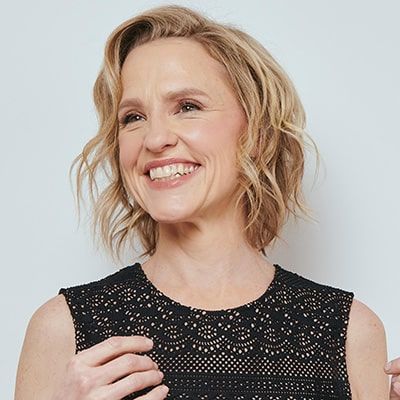
Anika Larsen is having a great time as she takes the challenge of both playing the mom on Broadway's "Almost Famous" and being the mom of two boys offstage... Read More
From the show: The Theatre Podcast with Alan Seales
Guests
Featured Shows
About
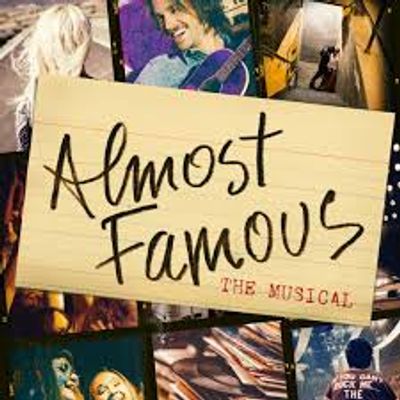
Anika Larsen is having a great time as she takes the challenge of both playing the mom on Broadway's "Almost Famous" and being the mom of two boys offstage. Anika's passion for saving the planet is contagious, and as a member of the Broadway Green Alliance and ambassador for Global Goals for Sustainability, she's making sure she can show and tell her children that she really tried to do what she can to pass on a healthy planet. Growing up with 9 brothers and sisters became a defining characteristic of her life and how it made her the compulsive team player that she is today. Juggling working and being a mom in real life, Anika reflects on the good and the bad things that come along with it, and how she languished during the height of the pandemic as a stay-at-home mom. She opens up about being a better mom because she's working, and the beautiful, symbiotic relationship between her home life and stage life now that she’s playing a mom in “Almost Famous”. There was a point early in Anika's career when she didn't work for two years, which she considers an invaluable lesson. All the hardships that have happened to her made her smart not just about money but her future as well, and while for her the worst part of being in the industry is the unpredictability of it, she wouldn't trade it for anything.
Anika Larsen is an actress who has performed on the Broadway stage in well-received shows like “Beautiful: The Carole King Musical” wherein she won Drama Desk Award's Outstanding Feature Actress in a Musical and received a Tony nomination. She also originated the role of Roberta in the cult Off-Broadway musical, "Zanna, Don't!", for which she received a Lucille Lortel Award nomination for Best Featured Actress in a Musical. Her other stage credits include "Xanadu", "All Shook Up", "Avenue Q", "Chess", and “Rent” where she made her Broadway debut in 2000. She’s a member of the Broadway Green Alliance, a passionate ambassador for the Global Goals for Sustainability, a member of Actor’s Equity, and serves on the board at the New York City Children's Theater. Anika has an album of lullabies, “Sing You to Sleep” which you can listen to on different streaming platforms, including Spotify. She could now be seen on stage as rock Elaine Miller in Broadway’s “Almost Famous”.
Connect with Anika:
- Website: anikalarsen.biz
- Facebook: @anika.larsen.nyc
Connect with The Theatre Podcast:
- Support us on Patreon: Patreon.com/TheTheatrePodcast
- Twitter & Instagram: @theatre_podcast
- TikTok: @thetheatrepodcast
- Facebook.com/OfficialTheatrePodcast
- TheTheatrePodcast.com
- Alan's personal Instagram: @alanseales
- Email me at feedback@thetheatrepodcast.com. I want to know what you think.
Transcript
This transcript was automatically generated and might contain errors.
[0:00] Alan Seales: Hey, everyone. Welcome back to the Theatre Podcast. Intimate, personal conversations with the industry's biggest names. I'm your host, Alan Seales, and our guest today is Anika Larsen, who is going in as the mom Elaine Miller in Almost Famous, about to open on Broadway, or maybe already open by the time you listen to this episode. She is more proof of why I truly, truly enjoy doing this podcast. We learn so much about someone beyond the 80-word limit that people are often given to provide their bios and their playbills, and some, depending on your role, you may have a little more, a little less, but gosh, there's so much depth to her, and we just get into all sorts of things outside of theatre.
So I'm really excited to share this conversation with you. Make sure that you follow me online on Instagram and Twitter, on TikTok, the Theatre Podcast on TikTok. I don't know what I'm doing. Actually, if someone wants to help me out on TikTok, just like slip into my DMs on Instagram, because I check that more often. And I would love to like grow TikTok a little bit, because why not? Sure, there you go. Now with that shameless request out of the way, everybody, please enjoy this episode with Anika Larsen. Here you go. One, two, three.
[1:26] Alan Seales: Our guest today has performed on the Broadway stage in Beautiful: The Carole King Musical for which she received a Tony nomination. She's also performed in Avenue Q, Xanadu, All Shook Up, and Rent, which gave her her Broadway debut back in 2000. She's a member of the Broadway Green Alliance and has become a passionate ambassador for the Global Goals for Sustainability. She has an album of lullabies for all ages called Sing You to Sleep and serves on the board at the New York City Children's Theatre. She could now be seen on stage as rock mom Elaine Miller in Almost Famous. Anika Larsen, welcome to the Theatre Podcast.
[2:04] Anika Larsen: That was just about my favorite introduction of me ever. That was like the full totality of me. Thank you.
[2:11] Alan Seales: That is what these episodes are.
[2:13] Anika Larsen: Yes, because the Broadway Green Alliance stuff, I mean, saving the planet matters more than anything I'm actually doing on a stage. And the New York City Children's Theatre stuff and what they do for the city kids and yeah, thank you. Wow, that was awesome.
[2:27] Alan Seales: You're welcome. Well, let's dive in there then because this is, it's unusual actually for, I guess, in the theatre space, the Broadway space for people to list out a few of the things that you've listed like in your bio and you're about and whatnot. And some people are into this and some people are, I guess, do it. But like you've seen, obviously from that reaction, you're very passionate about this.
[2:48] Anika Larsen: Yeah, you know, we get, I think I got 70 words for my bio and playbill and then the ensemble only get 50 words. And it's just like, how do you, how do you, and so I always, first of all, this is now we're getting to the nitty gritty, but I always want mine to feel like a story. So I always put it in complete sentences. So it's never just like a list. And that's just because I'm a little OCD. But yeah, I want it to be about all of the sides of me. So I include the fact that my husband plays the trumpet and that I have two boys who I think I call them delightful slash relentless, which I think you understand because you have kids about the same age. And so I feel like that's the most interesting, I'm not going to be able to tell them about all of me in 70 words, but how can I give them a sort of general sense of the fullness and the totality of me beyond theater.
So I list just my Broadway credits because that does seem to be what people want to hear about most. And they're my biggest credits. I don't really do TV and film. So, but yeah, but yeah, talking about all that other stuff, I think it's important. And I really do think, honestly, I think we're at such a place of crisis in terms of our planet that I think we all have to be talking about what we can be doing every day and what we are doing every day in terms of being green and responsible and ethical and controlling what we can control.
[4:05] Anika Larsen: You know what's kind of weird and scary, you do know this, is I think there's two event horizons that we're going to see in our lifetime. One is with the planet and the other one is with AI. And so 2040, 2040 is the year. I know this, I've talked with many AI experts. There are, 2040 is the year at which we can no longer predict how smart AI will be and what they're going to do for us or against us. Because already we, the programmers who made the algorithms that are feeding us all the ad sales algorithms that are the retargeting things, they don't know how they operate anymore. So the reason I bring this up is I think there's a lot of, there's a story in there, right? There's a story that you can tell, but there's also the opportunity for AI to do good and to help us with the planet and maybe be smarter than us.
[5:02] Alan Seales: Yeah. Wouldn't it be nice if they, if they are as smart as they should be, they should know that we need a planet for AI to even be on.
[5:11] Anika Larsen: Yeah. I don't know, somehow funnily enough talking about the AI of it all feels like it brings me back full circle to the importance of in-person theater and how much we missed it and live people and live human connection and how much, I don't know what 2040 is going to be like, but how much we as humans will never be able to rely only on technology, AI. It is, if COVID taught us anything, it's that being isolated with screens is never enough. It's that we need to be in space with other humans communing. There's no, it's not a coincidence that theaters are shaped just like churches. It's where we go to know we're not alone, to offer up our gratitude, to tell our stories, to be heard, be seen, feel each other.
And so the, I don't know, it's the amount of joy of being in this show, particularly after a few years of not being in a show. It's just, it's so unbelievably heightened. We have a song in the show called everybody's coming together and it's just the anthem for our time. I think we all need to be coming back together in these rooms and the show, one of the sort of biggest themes is isolation and needing your tribe and friends and family. And I think we're just so thirsty for that and AI will never replace that. So I don't know. I don't know about 2040. That's not my area of expertise, but I do know that we can all, if we are all acting locally and if we are all doing what we can, I do know having finally sort of fallen down the rabbit hole of, you know, it was maybe six months ago that I saw yet another article in the New York Times about yet another dire study that makes it feel hopeless.
And I thought, and I did what I usually do, which is I panicked and I thought, but I recycle, I drive a Prius, I take short showers. I vote for people who care about these things. I don't know what else I can do. And then I turned away and it just didn't sit right with me for a couple of days. And I thought, no, actually I have to be able to look my kids in the face and tell them I really tried. And I have a friend who's a professor of sustainability up at SUNY New Paltz. And I called her and I said, what can I do? And she said, everybody has to do the, you know, find the way in for them and the thing that they're most passionate about and, and act locally. She said, but your local is Broadway and Broadway gets attention.
So that's when I joined the Broadway Green Alliance. And, you know, one of the big coups that they had early on was that they a lot of people don't know this, but all of the marquees on Broadway are LED lights. And that's got to save a considerable amount of electricity a year. So I have big plans, none of which I can share today, but keep your ears open, keep your ears to the ground. And there's going to be lots of stuff that we're going to be doing this year. I'm really going to be trying to use the attention I get this year to focus on the pragmatic stuff that we can all be doing. And then what Broadway as an industry can be doing to help save the planet. It's, and here's the good thing is that in falling down this rabbit hole, the more research I've done and the more I've learned about it, the more hopeful I feel there are, it is a groundswell.
There are so many people on, in all arenas and all industries, so many incredibly smart people who are doing incredibly innovative stuff and stuff that will make money, which we all know it has to be profitable for it to actually work. And I really think that there is absolute reason for optimism that we can do this, but we all have to start acting now. And my friend who's the professor of sustainability got me fired up about the UN global goals for sustainability, which if you don't know them, check them out on the internet. But the beauty of them is there are 17 of them. And it's the idea, it's the to-do list for the world created by people all over the world. Everybody had input in all the UN nations, all 193 of them have signed off on it.
And it's basically this agreement that these are the 17 most important things we need to do. But the idea being that we can't have a greener world without a fairer world and vice versa. So the first, number one is no poverty. Number two is no hunger. It's the idea that everybody needs access to education. We need gender equity. We need social justice, that we can't have just, we can't just focus on the climate and animals and the oceans that in saving and solving any of our problems, we're actually solving all of our problems. And it's really heartening and really exciting when you see just how smart people have really actually sort of diagnosed what we need to do and created targets for it and let's go. And it's just like, here's what you could do on any one of the fronts, find the one that matters most to you and get after it.
[9:57] Alan Seales: That's so cool. And something you said a while ago, that I thought you were going to stop, but then you kept talking was COVID taught us that we'd...
[10:03] Anika Larsen: I do that.
[10:04] Alan Seales: No, COVID, no. So you said COVID taught us we need to all be in space together. I was like, oh, we're going to outer space. Cool, cool. That's kind of the opposite of collecting. So the focus, I think, on the LED lights and the marquees and stuff, I've noticed that actually somebody pointed that out today. They sent me a picture of the Bad Cinderella marquee because we were talking about it. And they walked by and I was like, oh, that's quick. And they were like, well...
[10:30] Anika Larsen: It's literally, there's... Wait, do you see this pink, the pink light through my window? That's the Bad Cinderella marquee. That's so funny. It shines this pink light inside my window. That's 45th Street. Well, this is interesting that you bring this up in terms of relating to Broadway because I feel like there was a missed opportunity and maybe it's still in the works and it's just slow and because all the producers in the houses and the theaters and the shows are all sort of against each other because they're all in the same business, but they're in competition because they want you to buy their tickets and not the, you know, not the tickets across the way. So like at this point, I'm actually disheartened to see that there wasn't more, maybe I just didn't know about it, more change in like literally filtration systems and the electrical systems of the house and, you know, of all these things.
And then as New York, as a whole city, we're so far behind now in terms of infrastructure because now everything is just starting to fall apart. So, I mean, is the Green Alliance, Broadway Green Alliance, like, are you focusing on that? Are these, you know, I'm trying to pull out some tidbits of things.
[11:36] Anika Larsen: Yes, yes, I don't actually know enough. It is, it is so complicated and it is, you know, there are different entities that are all at work and are powerful and come together to make these things happen. And so you have the producers of each individual show and then you have the landlords that own the different theaters and, you know, there's the main three that own most of them and then there's the unions. And so everything is complicated, everything involves, you know, everything with humans is complicated. Anytime a bunch of humans get together, it's complicated. So, I don't honestly feel like I know enough about that, that I could speak to it intelligently today. And I only like to speak about things intelligently. So, I don't know, but I feel like people are listening and they're like, when are you going to talk about Almost Famous?
[12:26] Alan Seales: Well, let's talk, I'll talk about Mom's Stuff first because, which will lead to Almost Famous, right? Because you're intelligent about being almost famous as a mom. The eye-opening scenario that I had of working with Kara Cooper and Jessica Rush specifically on their podcast, Mom is Talking Loud, right?
[12:44] Anika Larsen: Yeah, of course.
[12:45] Alan Seales: As a male who has not had to, A, been on Broadway or birth a child of my own body, didn't realize how difficult that it is in general, A, to be an Olympian of theater, which is called a Broadway performer, but then also to be a mother and to miss your children's bedtime and to have to take their well-being into account and balance it with your own, which is, you know, what every parent does, but it's especially hard with what you're doing. So, how have you, I guess COVID was sort of a blessing in disguise in that respect because it gave us all like a solid two-ish years with our family again, but along those lines, was it easy for you to decide to become a mother in this particular case or like how does that, how does that go through?
[13:41] Anika Larsen: Oh, that's interesting. I always wanted to be a mother. I'm one of 10 kids and I just always, always knew, I mean, when I was a kid, I wanted to have 10 kids and then I grew up and I was like, that's crazy. I couldn't do that. I don't, I asked my parents, how did you do it? And they say, I don't remember. I think they blacked out for like 25 years and woke up. They say you don't remember the bad stuff and they just blacked all that out. You just don't, they don't, they don't have any, I'm like, but I am, I'm struggling to manage my two. Can you just, how did you do it? They don't have, they don't remember.
[14:12] Alan Seales: We're going to take a short break. Stay tuned for more of the episode.
[15:11] Anika Larsen: Because I felt so heard in a way that I had never actually had somebody express it. But yeah, for auditions, the idea of you sometimes get a day's notice, like less than sometimes, and just like, even if you have a couple days notice, when am I going to find time to get familiar enough with this material to feel at all like I have a mastery of it that I'm not going to make a fool of myself? Never mind on the day, getting the child care to get into the audition, to show up feeling like, you know, trying to put on your makeup while your kids are there, wanting their makeup put on too, and like, you know, just how you're going to show up looking good and feeling like just, you didn't realize how much easier auditioning was when you didn't have these appendages.
And it was so true. It's funny, I haven't actually gone to an audition over three years because of COVID. So those, those, maybe I never will have to again. But, but yeah, it is really, really hard. And, you know, everybody tells you parenting is hard. It is it is hard. And you can't know it until you're doing it. But in particular, yes, it is. It is hard. As a theater person who yes, like now, I mean, this is my first time. It's my first time being on a show schedule with two boys who are now like, humans who can walk around their ambulatory and they have, you know, personalities and opinions about things. They're five and seven can't remember if I said that. But, but yeah, I'm you know, we're in previews now and I get up at 6:45 I go to bed maybe by 12:30 if I'm lucky enough, I can get my body to wind down by then.
And I get up at 6:45 and I get them breakfast and pack their lunches and walk them to school. Not because I'm a glutton for punishment, but because if I don't, that's the only time I can see them in the day. And otherwise I'm gone for the rest of the day. That will change once very soon in a couple of weeks when we're on just a regular show schedule, then I will also get to pick them up from school and see them for a little bit until I go. And then I do also see them, you know, Saturday and Sunday mornings and stuff. Days off, you know, but, but, but yeah, it's it sometimes feels crazy. There have been a couple mornings I've opted out because I was just like, I have to sleep. Because you can't be in good vocal health if you don't sleep and you can't do the show, you know, well, if you can't, you can't remember your lines if you don't sleep.
So it has been hard. I am, I think I mentioned I'm OCD. And so I'm a compulsive planner. And so that is very helpful in terms of childcare and sort of managing being the COO of my family and managing from, you know, just today here, we had rehearsal this afternoon, and I was texting back and forth with my husband and my dad, who's here to help a lot, just about stuff that was, you know, coming up about, you know, it's constant, the stuff that comes up. Sorry, that is our, I think their sound department is testing the speakers, testing the sound. So they always pick a random song, but I think that it's here and it's gone. But yeah, it's wicked hard, as they say in Boston, where I'm from. I wouldn't change a thing.
You said, you know, you were talking about COVID being a sort of like a respite, but COVID actually, I languished. It was hard. I never, ever thought I was meant to be a stay-at-home mom. And if we needed scientific evidence, we got it over those couple years. I did not fare well. I was disappointed in my parenting every day, because it was too much time, one on one, not one on one on two with two boys who are unreasonable often. And, you know, developmentally appropriately, they are narcissists, and they are fighting with each other. And they are, you know, I mean, adorable and delightful, turn on a dime and do something so charming, your heart hurts. And you think, okay, I won't abandon you at the mall this week.
I was considering it, but not this week. But, but, yeah, no. So because that was so hard, and, and so began to take its toll by, by the time two years had passed. You just won't hear a complaint out of me about the balance about doing this. This is hard, but it's so much better for me, and then for my family, because they're getting a me who is, I mean, fully realized, you know, there's, there's, it's all the sides of me that are getting to be exercised now. And, and so I am a better mom, because I am working. And, and this brings us to Almost Famous. It is an unbelievably beautiful symbiotic relationship between the show and my home life, because on stage, I am playing the mom. And there's no way I would be able to do this as well, if I wasn't a mom at home.
So to have my home life be supporting me doing what I'm doing on stage, and then also this show, this particular role, and also this particular team, the creative team, stage management, the producers have, so from 2018, when I did the first reading of it, have been so supportive of me being a mother. And the role itself, the size of it is, is, is all that I can handle the bandwidth of it. I'm beautifully featured, but I am not carrying the show on my back. I mean, almost none of the group numbers that you know, it's I'm just my, my plot line is just sort of parallel to the to the rest of the show. And so I'm not in any of the stuff, it takes time to rehearse. So there's just often been days I haven't even been called.
So just the the amount that I meant to carry in this show is so manageable, whilst also being a mother at home. So it's food delivery for Anthony at stage door in case anyone was curious. Anthony, if you're watching, go get your food. Yeah, pre show backstage, that's what it is. So yeah, it's, I really, I yeah, no, I can't complain. I am happy as a clam. I'm happy with being tired. I am grateful for the support I'm getting from all fronts. And I am better at asking for help than I've ever been because I know I can't get through. I'm often one who's like, I don't want to ask being one of 10 kids, I'm uncomfortable with asking for more than my fair share of anything. And I am I am willing to ask for help these days when I when I need to.
So it's going pretty well so far. And we're really almost through the thick of it right now. The show is frozen and next week we open. And so really after that, we should just be in show schedule mode for the most part. And then I think life will feel I don't know, the holidays are coming and then it'll get crazy again. But, but I think, I think we will, I think me and my family will settle into a nice little groove.
[22:09] Alan Seales: That's amazing. And it hopefully, you know, wishful thinking the show is going to run forever in years and years. And like, you started your career, Broadway career with Rent, which is obviously something that lasts for a long time. And, and I read to the side note there, side note there, my robe that you can see hanging on the back of my door, that white robe right there. It's a robe says rent on the back. I got it when actually in '97 with the LA Company of Rent. I did Rent on tour before I did it on Broadway. And I did it in LA. And that was the like opening night gift in LA. That robe is older than Casey likes. That's a fun fact I like to share with people.
[22:48] Anika Larsen: Oh, I love it. Oh, yeah. So, so you've been in that. And then on your website, I was reading that you were like, and then I didn't work for two years. And that was an invaluable lesson, right? So like, you came out, you're like, I'm, I'm a star now, hire me, and then didn't work. And so I guess walk, that's a different two years than the COVID two years. So yeah, touch on that real quick, because I think that's, that's something for my listeners. So I think, I think skew a little younger, because they come to New York, here now, Broadway, take me, and then they don't work for years. That's such an interesting point. I had never thought to compare those two years to the COVID two years. I think the sort of critical difference being with the COVID two years, I always knew I had Almost Famous to look forward to.
I also always knew I was established in my career. And I knew I would work again, even if it wasn't Almost Famous. But I did have that beautiful carrot dangling in front of me, even though it kept getting further and further away from me. But, but back then, I had only done Rent. Rent was also sort of famously like a pop rock musical. And so and that was, that's the way I've that's sort of been my career is pop rock musical. So it was it did feel like, well, but maybe I'll never get to do legit musical theater. Maybe, maybe I'm not really a Broadway actor, maybe this I only got got into the sort of side door to Broadway, because I sing the way that I sing. And maybe I will never work again, maybe I will never be on Broadway again, maybe, I mean, when I say for two years, I didn't work, of course, I like, temp and did my day jobs and nannied and stuff.
But I didn't get paid to do theater again, I didn't have a theater contract again for two years. And yeah, I mean, I didn't know starting it just like with COVID. I didn't know it was going to be two years, you hope it changes tomorrow, right. But, but I am very glad that that happened to me, because it, it humbled me in a way that has served me throughout my life, and sticks with me still. And it made me smart about saving my money when I was making it and putting my into my 401k anytime I was on a contract, because it's hard to get the contracts that you can have a 401k. And but just being real smart about planning for my future, because it is feast or famine. And, you know, I wish that was the only drought in my career.
But there I had another one right before I did Beautiful. And yeah, it's, it's, I mean, it's, that's actually, for me, the worst part of the business is the unpredictability of it for someone who's a planner. People often say, you know, sort of assume that like the rejection is the hardest part. And I don't, I don't actually think so for anybody who manages to survive doing this for a year or two, you very quickly get hardened to that. And, you know, you also quickly learn that it's just it has so little to do with you or you personally, or it's just like, such a very many number of factors that are the reason why you didn't get cast. And only one of them is, it's very rarely that you're not good enough.
First, you know, for the people who are out there working, you know, it's just that you weren't right, they weren't right, you didn't match like, also, you don't know, there's so many people who get a vote, especially with a musical, just the number of people who get to speak into who gets cast, that sometimes it's just about the negotiations between people that have, you know, like, it just, you just can't know. So you can't take a personal and if you do take a personal, you don't last. So, so yeah, no, that it was it is, it is the unpredictability. I remember I had, maybe I'd been in the city for a couple of years, and I had just gone to an audition that had gone poorly. And I was sitting on the subway.
And I looked across from me and there was a guy in scrubs, must have been a nurse. And I thought, oh, I burst into tears. Again, me bursting into tears, it happens a lot. But I just thought, you know, what you're going to do tomorrow, next week, next year, 10 years from now. And I am so envious of that, because I don't know any of those things. And there are some people who sort of love that. And there is definitely the like rapturous moments when your agent calls you and says, Hey, you want to go on Avenue Q tour starting in two weeks? And you're like, absolutely, I do. That's fun. But, but, but to not be able to predict to not be able to plan sometimes to not even be able to plan tomorrow, because at 6:30, you thought you knew your day and at 6:30, you get a call about an audition that you can't say no to. And it's just it's, it's a really hard you got to get super zen to be able to live that way.
[27:21] Anika Larsen: It's, it's different to even for alternate standbys, understudies, all of that, because you could literally show up, you could be halfway through napping act through act. Oh, yeah. And you're like, all right, Anika, you got to put your costume on. You're going on for act two. Oh, I've done that on Rent Tour. I was a swing. I was a swing on Rent Tour and on Broadway. And yeah, the number of times we used to call it getting an eighth for a 16th, because when you go on for a lead, you get double your pay that show. And since you do eight shows a week, it's an eighth of your salary that you get on top of your weekly salary. So it's called getting an eighth. But to get an eighth for a 16th is super fun. You know, theater people love math. I love math and I couldn't follow that.
[28:01] Alan Seales: We're going to take a short break. Stay tuned for more of the episode.
[28:17] Anika Larsen: I mean, we talked about this, I've talked about so many people too, that even when you're working, when you're doing what you do know, and the show is going well, and you're seeing that those houses are full, you're still during the day auditioning for your next role or TV or film, whatever the case is. So you're always looking to that next thing. It's a constant hustle.
[28:36] Alan Seales: Yeah. And I don't know, like, there's something so frighteningly attractive about that lifestyle. And I can't figure out what it is. I still can't figure out what that is.
[28:42] Anika Larsen: I don't agree. I agree about that. You lost me at attractive. Yeah, no, it's, it's sometimes feels masochistic. And I definitely and I think, not I think I am certain every performer out there no matter how long they've been doing it, has thought about quitting, has tried to figure out how to quit. And then if they're like me just couldn't figure out an exit strategy. I just couldn't figure out what I would otherwise do.
[29:21] Anika Larsen: And then something comes along to keep you in it. Yeah, no, it's a tricky, tricky thing. But it's worth it, right? Like, there's the fire in you or else you wouldn't keep going. The reward is so high. I mean, I get to do what I dreamed of doing when I was a little girl. How many people get to say that? At the end of my workday, people clap for me. How many people get to say that, you know? Imagine, like, at the end of your accountants or CPAs, you're like, all right, all right, Steve, I'm going home. Yes. Well done, Steve. Yes, those derivatives. You found tax write-offs nobody else has done before. You get an accountant award.
[30:07] Alan Seales: Yeah, I love that. I actually want to dive back, touch on the childhood because I know that I've got it in my notes that I skipped over it because we started talking about the environmental stuff. There's a lot. We're covering a lot today. One of 10 children. I had one sibling and that was almost one too many for me. So, talk to me about little Anita.
[30:31] Anika Larsen: It's for sure the defining characteristic of my life. We're talking a lot about my compulsions today, but I am a compulsive team player and it's because of being one of 10 kids. And that serves me well in such a collaborative art form, right? So, I am grateful for it. But yeah, no, I have nine brothers and sisters. I grew up in Cambridge, Massachusetts. Six of my brothers and sisters are adopted from different races and countries. And so, we were unusual. I mean, it's unusual now, but it was even more unusual in the 70s. And so, we were a little bit like famous in our town. Everybody knew who we were. We were the Larsons and the Larsons because it was Boston. So, we were the Larson family and everywhere I went, people were like, you're a Larson, right?
You're one of the Larsons, aren't you? And I just was desperate for people to know that I was Anika. And when I figured out that I got attention by singing, I just kept doing it louder and louder. And my parents would have a Christmas party every year and my mom thought we were the multicultural Von Trapp family and she made us sing at it. And I loved it. Most of my siblings were less thrilled about it. But I was more excited about that performance, singing my solo than presents. I would start talking to my mom in October about what was my big number going to be for this year's Christmas performance. And that's where I caught the bug. And yeah, I've been chasing that feeling ever since.
[32:02] Alan Seales: Do you have a favorite performance from the years you can remember, a year that stands out above others?
[32:08] Anika Larsen: Oh, well, it's actually on my website, sad but true. It's not my favorite. It's my family's favorite to make fun of me about. And I try to be good humored about it. But I was a bratty. I don't know. That's the thing we should say. We say that girls shouldn't be called bossy anymore. But I definitely have strong opinions about what should be happening on stage. And I was singing with my sister, Kari, and then my sweet sister, Siri, who's coming to the show tonight. So she's forgiven me. She's coming tonight with my nephew. She started singing along, too. And apparently, I had decided it was just a duet. And so I turned to her and I said, you be quiet. You're not singing this. And then her sweet little face crumples and she bursts into tears. And it's awful. And then I shove my brother back into place. And if you want to see it, it's on my website. AnikaLarson.biz. The video is there. The proof is there. It really happened.
[33:05] Alan Seales: I love that. My kids are all just into Pokemon and video games, although they do like the Six Cast album and the Greatest Showman soundtrack. They're into that. Of course, your standard Disney stuff. But outside the Disney world, like my older one being almost eight now, I'm going to start bringing him with me to some of the shows I see. So I'm going to see if he's interested in that because it'll help him break out a little bit. You know, my boys got to see this. This is the first play they've ever seen.
[33:29] Anika Larsen: Really? Because of COVID. Before COVID, they were so young that I wasn't in anything that was appropriate for them. It was unbelievably moving to have them out there. In fact, to the degree that our director, Jeremy Herron, gave me a note the next day, beware of being overly emotional in this moment. And I was like, my kids were right there. You said hi to them before the show. Cut me some slack. But it was amazing to have them out there watching me be a mom. I actually told my oldest, his name is Key, and his younger brother is Asha. And as I left them out in front of the building, I said, OK, so I'm going to be thinking about you the whole time, even though I can't look at you or talk to you, and you can't look at me or talk to me. Just a little reminder of the rules of this.
[34:14] Alan Seales: Fourth wall.
[34:15] Anika Larsen: Yes. And Key said, OK, mama, when you're talking, pretend you're talking to me. And when you're yelling, pretend you're yelling.
[34:26] Alan Seales: What a smart little boy.
[34:27] Anika Larsen: Yeah, that's my clever Key. Yeah, absolutely.
[34:32] Alan Seales: Is it different for them? Or do they get it? Do they get that there's pretending there? Or do they just think it's just...
[34:38] Anika Larsen: Oh, yeah. No, they do. I mean, they have... Well, you know, there have been sweet, funny questions that have come up over time. At one point, Key turned to me at breakfast, just entirely out of the blue, and he was smiling like he was joking. But there was a little uncertainty and insecurity in his eyes. He said, mama, your son in Almost Famous, is he your real son? I said, no, honey, don't worry. He's not my real son. And I love you more, which I think was really the question that he was asking. Just wanted to make sure where he stood in the hierarchy of it all. No, they do know that I'm pretending. They have also asked, before they saw it, they were like, how mad do you get, mama? Do you yell?
Do you yell like you yell at home? And I said, no, I do not yell. I yell, but not like I yell at home. Not proud of it. Not proud of it, working on it. But yeah, no. But what they don't get when I first responded, no, is what they don't get is like what Broadway is. They don't. They're just too young to understand how tantamount it all is. They have parents who are performers. My husband's a trumpet player. We did all through COVID, we did porch concerts for our neighbors just so that we could, you know, so like they've been, and they joined us on that, you know, on our porch to do them. So like, they're used to parents who perform and the understanding of why Broadway might be exceptional and different than the other ways that they've seen me sing. I don't think they quite get it.
[36:05] Alan Seales: Yeah, that's a really good point. Because you have no sense of scale at that age, right? It's all about perspective and scale. And if that's all you know, right? Like if you grow up, I mean, that's like the stereotype of why like child actors kind of go a little bit nutty in their adulthood because they grow up and all of a sudden have to take care of themselves and don't understand why, right? And they need, they're chasing that high that they get inherently as what you get being on stage or the celebrity status or whatever the case is. That's really interesting. I hadn't thought about that.
[36:37] Anika Larsen: Yeah. Well, and as parents, we create our children's world, right? We tell them the rules of the world. And yeah, so I guess I could go home and clarify for my boys, you know, it's a $2 billion a year industry boys, people come from all over the world to see Mama Show. But yeah, it is interesting how the sort of the filter and the control and you know, that's one of the things with my character Elaine is, you know, she's got her daughter who's rebelling against her controlling nature. And I get it because, you know, there's a part in the song, it's like first it was butter and sugar, white flour, bacon, eggs, and bologna, but listing all the things that are now forbidden, including rock and motorcycles.
And I get it because I was the mom who wouldn't let my kids have refined sugar, like sweets and treats until they were three. Why would you give a baby candy? If they don't know about it, they can't ask for it. Why? It doesn't serve them. They think raisins are amazing. So why would I but even my own family would look at me like I was like, crazy slash annoying when I was like, No, I don't. They don't use to he doesn't need a birthday cake. He doesn't get what cake is. He was happy with his birthday. Pictures are lovely. But yeah, no, it's, um, I get Elaine, I get, I get the I get the wanting to control your child's world. And I get the unbelievable amount of fear that you can't understand until you're a parent when you have to let your child, give them up to the world and trust the world with them, which is terrifying.
[38:20] Alan Seales: Yeah, it's so easy. This show is so beautifully written. And Elaine is so beautifully written. I mean, it's Cameron Crowe's actual mom. And, and if she is it, she is so rich and complicated and beautiful. And Tom Kitt, what he's done with the songs are so it's so it just really feels like I all I have to do is be the mother a mother and say the words or sing the words and get out of the way. And it all just happens like it's all the emotion is all there. And you know, I don't I like to think that eight years ago, I would have done a good job in this role. But it wouldn't have couldn't have been nearly as easy as it is now to get to feel just to relate. It's that it's that life experience. I mean, there's pretending there's Yeah, there's acting and there's being and now you get to say you are being a mother on stage. That's that's really important. It's very important to say.
[39:14] Alan Seales: So let's wrap up here with three closing questions. I ask everybody to end the episodes. The first one just very simply is what motivates you?
[39:20] Anika Larsen: Oh, well, now, of course, my kids, my family, coming home to them at the end of the day. And also, you know, as we started this, this podcast with now more than really anything, making sure that I leave behind me a world that is as lush and verdant and beautiful as the one I grew up in because they deserve it.
[39:47] Alan Seales: Beautiful. Okay, what advice would you give to your younger self and younger people listening now, starting out down a similar path?
[39:51] Anika Larsen: You know, a lot of people say if there's anything else in the world you should you could love to do do it because this is too hard. And I think that's bull. I think that if you're smart, you should live till triple digits. If you don't make dumb choices, like smoking or vaping or drugs or, you know, just like poor life choices, if you with modern medicine being what it is today, there's you know, just there's no reason that the life expectancy of young people today isn't triple digits. And that's a lot of decades for switching careers if you need to. And so try follow your dreams. Absolutely try. There's nothing worse than what if there's nothing worse than regret and wondering what if I had tried the thing I love to do.
And you may end up doing it or you may end up starting to do it and getting funneled into some whole other life career you never knew about. But, you know, in medieval times, people were a blacksmith because their father was a blacksmith and they all died at 40. And that was it. But now so many decades, you could do three different careers for 20 years and still have time to retire.
[41:05] Alan Seales: I 100% agree with that. I'm on my second, if not fifth career. I don't know. They're all woven together. All right. Last question, then, if you could only see one show for the rest of your life, but you can see it as many times as you want, what would you see?
[41:14] Anika Larsen: Sound of music.
[41:15] Alan Seales: Sound of music.
[41:16] Anika Larsen: The movie. The movie. Julie Andrews. Sound of music. No question.
[41:20] Alan Seales: Have you ever met Julie?
[41:21] Anika Larsen: Hands down. No, I'm not sure I could keep myself together if I did.
[41:28] Alan Seales: Yeah, no, I'm not sure there's anyone who I've not met that I love more than Julie Andrews. She's an amazing person. So amazing.
[41:34] Anika Larsen: I don't know if we have time for this, but I'll edit it out if you need to. But between the San Francisco out of town run of Beautiful and the rehearsal starting for Broadway for Beautiful, we had one week off. And it's so rare in an actor's life where you know that there's going to be this point of time where there's no work that's going to come. So you can make a plan. You could buy a plane ticket. So me and my sister, Britta, who is also obsessed with Sound of Music, we bought tickets and we went to Salzburg. And we saw like literally every place you can visit that's in the movie. We saw it all. We did it all. It was it was two OCD people nailing it. We nailed it. But we went to the church where she gets married and we sat in a pew and we held hands and we prayed to Julie Andrews that we would be pregnant together in the next year.
And for a variety of reasons I'm not going to get into right now. For both of us, it was highly improbable this would happen. First of all, there was no man in my life at the time. And my sister had fertility issues like so many reasons why there was no reason to think that we could get pregnant in the fight. And cut to a year later, we were both pregnant. We both have seven year olds now. And if you want something in this life, pray to Julie Andrews because I'm telling you it works.
[42:50] Alan Seales: WWJD. What would Julie Andrews? WWJAD. There you go. Where can we find you on social media?
[43:00] Anika Larsen: Oh, I'm not. I have a Facebook fan page. But other than that, I'm 96 years old.
[43:04] Alan Seales: Do you have your website?
[43:05] Anika Larsen: But that is where I have my website and then that link to the Facebook. So if people want to follow like that's where I will post about career stuff. But I can't do it. It's fine.
[43:16] Alan Seales: I'm allergic.
[43:16] Anika Larsen: I know and and and you do lawn parties, but you don't let people on your lawn because you say get off my lawn.
[43:21] Alan Seales: You get more of me at the theater podcast.com I am on Instagram and Twitter at theater underscore podcast. I'm trying my hand at Tick Tock don't know what I'm doing. I'm at the theater podcast there. This has been edited by well run and hoodlum productions music by jukebox the ghost and incredible conversation by Anika Larsen. Thank you so much. Break so many tonight you're coming to us from your dressing room. I love these conversations where you're in the moment. It's just it's so bright. Thank you. Thank you. Thank you.
[43:51] Anika Larsen: Have a great one.
© Broadway Podcast Network, All Rights Reserved