

Nothing brings people together more than music and performing; Michael Mott got the best of both worlds as he prepares for his second annual holiday show, "Michael Mott & Friends,” happening in December, along with the release of a brand new single performed by the incomparable Jessica Vosk... Read More
From the show: The Theatre Podcast with Alan Seales
Guests
Featured Shows

About
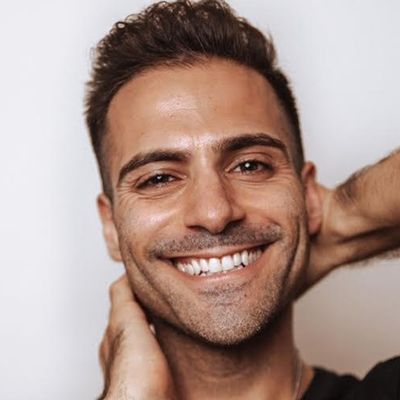
Nothing brings people together more than music and performing; Michael Mott got the best of both worlds as he prepares for his second annual holiday show, "Michael Mott & Friends,” happening in December, along with the release of a brand new single performed by the incomparable Jessica Vosk. Michael was also a professional actor for seven years and while he was grateful for all the work, he realized he was never fully happy. This led him to apply to the prestigious BMI Lehman Engel Musical Theatre Workshop, which subsequently changed his life.. Aside from acting, he's also a successful composer and has always been passionate about music. He talks about finding his own style, writing for another person, his issues with the current things on Broadway, the craft that goes into making a musical theatre song, and the indescribable feeling and comfort music brings him that he wants to give back to listeners. A decade later, amongst all his writing and composing success, he even finds himself accepting roles again.
Michael Mott is an award-winning composer, lyricist, songwriter and vocal producer who's also recognized internationally for his talent. He graduated from Ithaca College with a Bachelor of Fine Arts Degree in Musical Theatre Performance and is currently living and working in New York. Michael had a successful acting career in the late 2000s, performing in many Off-Broadway, regional and national touring shows, including "Milk and Honey", "I'd Rather Be Right", "Kiss Me, Kate", "Do Black Patent Leather Shoes Really Reflect Up?", "9 to 5", "A Closer Walk With Patsy Cline", and "Miracle on 34th Street". In 2012, he decided to pursue writing and was accepted into the prestigious BMI Lehman Engel Musical Theatre Writer’s Workshop. Since then, Michael has written numerous original musicals, including "In The Light", "A Faustian Tale" (book by Nathan Wright and Justin Silvestri), "The Fairy's Tale" (book by Gretchen Suárez-Peña), "Mob Wife", "A Mafia Comedy" (book by Corey Skaggs) and "Riding Out The Storm" (book & lyrics by Christine Toy Johnson). He was also commissioned to write the music and lyrics to "Lucifer". Apart from writing music, Michael is also known for his recording studio works which include the LPs "Where The Sky Ends", "In The Light, A Faustian Tale", which debuted at #8 on the Billboard Musical Theatre charts, and "Abandoned Heart". His EPs include "The Only One", "Where The Sky Ends: The Dance Remixes" and "Gone: The Remixes" while his singles include "Christmas, Will You Stay?" (feat. Laura Osnes), "The Impossible" (feat. Matt Bloyd), "Fly High" (feat. Emma Howard). He has written original award-winning material for NYC's The Boy Band Project, including "Get Behind My Love" and "Jingle My Bells" which won Best Original Song at the 2020 Broadway World Cabaret World Award. He will be releasing a new song with Jessica Vosk on December 2nd, 2022, and having his second annual holiday show, "Michael Mott & Friends" at The Green Room 42 in NYC on December 3rd, 2022.
Connect with Michael:
- Website: www.michaelmott.net
- Instagram: @Michael_Mott
- TikTok: @Michael_Mott
Connect with The Theatre Podcast:
- Support us on Patreon: Patreon.com/TheTheatrePodcast
- Twitter & Instagram: @theatre_podcast
- TikTok: @thetheatrepodcast
- Facebook.com/OfficialTheatrePodcast
- TheTheatrePodcast.com
- Alan's personal Instagram: @alanseales
- Email me at feedback@thetheatrepodcast.com. I want to know what you think.
Transcript
This transcript was automatically generated and might contain errors.
[0:00] Alan Seales: Welcome to the Theatre Podcast, intimate, personal conversations with the industry's biggest names. I'm your host, Alan Seales, and our guest today is somebody I've known for quite a little bit now, Michael Mott, who is a composer, a lyricist, a vocal producer, an actor. That's how I know him. I know him back from our old acting days. This dude has gone on to do so much amazing work that, of course, had to have him on the show. He's got a concert coming up at Green Room 42 and a new single coming out that is breaking news here on this podcast with Jessica Vosk. So yay there, we're breaking that news. I find it's always cool to talk to composers and creatives and people that we don't normally hear from, but especially Michael has the benefit of being a performer on stage, so he gets all the sides of the equation and he's writing for a profession that he did and still does.
We had a lovely conversation about the current state of Broadway and, you know, the abundance of jukebox musicals, which may or may not be a controversial topic, depending on who you are and what you believe. But before we get into it, as always, leave a rating, leave a review, find me on social media, and everybody please enjoy this episode with Michael Mott. Our guest today is an internationally critically acclaimed award-winning actor, composer, lyricist, songwriter, coach, and vocal producer. He's been named one of Playbill's contemporary musical theater songwriters you should know and has won the Broadway World 2020 Cabaret Award for Best Original Song for his piece Jingle My Bells, written for the Boy Band Project.
Concert work includes sold-out performances of his original material at numerous venues in the U.S. and around the world, and all of this came after he decided to take a hiatus from acting, something that found its way back to him just very recently. Michael Mott, welcome to the Theatre Podcast.
[2:04] Michael Mott: Hello, great to see you.
[2:05] Alan Seales: So you and I have known each other since '05, I want to say, when... I've talked about this several times on the podcast, but, you know, I used to perform at Busch Gardens, '05, '06, '07, Busch Gardens Williamsburg, and you were there in the Holiday in Roma show, the Italy show. And so that's where we met.
[2:25] Michael Mott: The Italian show.
[2:26] Alan Seales: Yeah, the Italian show, which we were talking about before we started recording. We don't even know if the show exists anymore. My show, Secrets of Castle O'Sullivan, got replaced with like some lunch dinner with Emo thing, I think, like a Sesame Street thing. So I don't know what's going on down there in Williamsburg, Virginia, but how the hell have you been?
[2:46] Michael Mott: I'm good. I'm good. I still remember the choreography. I was there summer of '06, and then the summer and fall of '07, right after I graduated college. That was such a fun time, I think, in sort of everyone's career.
[3:00] Alan Seales: It was amazing.
[3:02] Michael Mott: It's like the non-equity work. Remember, I was getting, what, my third year there, I was getting like $13.50 an hour or something like that.
[3:08] Alan Seales: Wow.
[3:10] Michael Mott: Yeah, you could get paid just enough to live because, you know, when you're in your 20s and doing non-equ work, you just go out and you drink and you blow it all on alcohol and, you know, your rent.
[3:22] Alan Seales: It was great training, though, because you got to do, you know, six shows a day in 105 degree weather outside, and it builds your endurance and your stamina so much as a performer.
[3:35] Michael Mott: Remember, my show was one of the two or three in the park, one of the few that was air conditioned. So while I was still doing 10 shows a day in the height of the summer, I had that air conditioning.
[3:47] Alan Seales: That's nice, yeah.
[3:49] Michael Mott: It was always nice to have the other casts come in and watch because they would want to come in and get out of the heat. So we had little support, but oh, God.
[3:55] Alan Seales: I remember that. I remember that.
[3:57] Michael Mott: The cruise ships and theme park world, though, is such a different atmosphere.
[4:03] Alan Seales: It's a whole different track, I want to say, from what we'll call traditional musical theater and acting, singing, dancing, right? So, I mean, I got the job. I don't know how actually you got hired at Bush, but I got hired out of SETC, which I don't even know if SETC is still around, but those unified auditions where you have 90 seconds and then hopefully you get a year's worth of work out of it. How did you audition?
[4:26] Michael Mott: Um, actually, Brent Frederick came to Ithaca College, and at the time it was myself, Jeremy Jordan, Shauna Goodgold. We all got hired at the same time to work at Busch Gardens.
[4:38] Alan Seales: Wait, Jeremy Jordan was at Bush with us?
[4:40] Michael Mott: Yeah, I lived with him. I was in Holiday in Roma the first year, and then he did Jukebox and Kinetics. And then the second year I did Viva Italia after Holiday in Roma left.
[4:52] Alan Seales: Right, right. And all of us have gone on to such different careers and different ways of finding success. And so now, I've been seeing your name. You've got a full length concept album with these major stars all over the place. And then you've got a concert coming up in December, a couple of days at Green Room 42, and we're going to cover all of that because it's fascinating. I absolutely love how all of us have just found our little place in this world and moved on together. But I want to back up to talk about Little Michael, Little Mahdi. When did you start getting into performing, singing, acting? What was that moment when you were a kid when you started getting into the scene?
[5:32] Michael Mott: I used to be obsessed with The Elephant Show. Have you heard it with Sharon Lois and Bram? That's where Skidamarinky-dinky-dink, Skidamarinky-doo comes from. Yeah, I was obsessed with that. In fact, when I first started doing concerts, my show would open with a background singer singing that. It would be like me sitting in front of the TV, and then it would open with my background singers, and it would take you through a journey of how I grew up, the music I grew up listening to, and showed you how I got to then to now. And that was from my show. That was then. This is how. So yeah, no, I just grew up loving music. But then it wasn't until high school when I decided, oh, I'm going to be a cast member on Saturday Night Live.
That was my very attainable goal. And I had a teacher in high school who was like, you have to audition for the musical. And he pushed me to audition, and I did Sound of Music, and I got cast in the ensemble, and I was in love. I knew this is what I had to do. So then just two years later, I went and I auditioned for Ithaca College Musical Theater, and it just kind of spiraled, and it took off from there.
[6:43] Alan Seales: Did your parents at any point, because mine did, they were like, all right, Michael, listen, you need a real job while you have fun over here. Were they always supportive?
[6:53] Michael Mott: They were always supportive. I think at first that was maybe the concern. But then I started getting these like, I started, I was a big fish in a small pond in my high school, and I was getting all the lead roles. I was getting all the awards. And after I was doing all of those shows, and getting such recognition, and like on the front page of the paper of like, local talent does this, and I won these awards. There was this thing called the New York State Summer School of the Arts, and I attended that, and I got such like big recognition from like Alec Baldwin. It was a lot of that stuff. And then my family was like, well, this seems to be going really well in high school, so we're just going to support whatever you want. And they've been very, very, very supportive. I'm very lucky.
[7:32] Alan Seales: And are you an only child, or do you have siblings?
[7:34] Michael Mott: To my mother, I'm an only child. My father, I'm one of three.
[7:37] Alan Seales: Did any of them follow in the same artistic footsteps?
[7:41] Michael Mott: Absolutely not. My brother is 31, and he used to help me memorize lines when I was younger. In fact, I used to be obsessed with Saturday Night Live, with Jekyll and Hyde, the musical. And he would, I would, he would listen to it so much by proxy of myself that he knew all, like he would sing Confrontation in the car. He'd be like, never, you know, when we were younger. And he still, to this day, he like quotes Les Mis. And my favorite year, I was Benji Stone in my favorite year, and he quotes Larger Than Life. And I'm like, what? Like, we couldn't be more opposite. But he knows all the musicals because of me.
[8:19] Alan Seales: So after we both separated and left the theme park world, did you immediately move to New York and start composing? Like, you're writing and you're composing and you're creating versus going down the traditional performer path that a lot of other people have taken.
[8:36] Michael Mott: Right, yeah. No, I, so I actually, I graduated college May 18th. And then May 19th, I was, I started Busch Gardens. So I drove the next morning. And then I remember Busch Gardens, I was supposed to only be there for the summer, and then they offered me the fall show. So I did, I was the Prince Frog or something, Rolf the Frog or something in some Halloween show. And then after I did that, that ended November 1. And I moved to New York November 2. And I lived with Jeremy Jordan in an apartment here. He only did the summer at Busch. Then he went back, found an apartment for us. He did all the legwork. And then I got there November 2. I moved into the apartment. And I was a professional actor for seven years.
That's, my degree is, I have a BFA in musical theater performance from Ithaca. So I was, I was acting, doing, you know, new musicals, regional, off-Broadway, national tours. I did one cruise ship. It was like a, like a one-week thing. I did that for a minute. And I was just never, I was grateful for the work. But I was just never fully happy in that I didn't feel like I was using all of my creative potential. And so I applied to the BMI Lehman Engel Musical Theater Writers Workshop. Got accepted into that. Then I said, if I get into this, I'm going to only focus on writing. Because I'd always written, but I'd never, I didn't, I didn't really have the training. I didn't have composition training.
I just knew that I loved creating and writing music and lyrics. And so I got into the BMI program. I was so thankful for that. That was in 2012. And then I put acting on a shelf. And I said, I'm going to just do this. And then I ended up meeting my mentor, Kim Scharnberg. And I got a record deal at Broadway Records. And everything just aligned and took off. So I followed that. And now of all, it's so funny how life comes back around after, it's now 2022, a decade later. And I'm accepting acting roles again. I got offered a role to act as an Italian in a new Cole Porter musical as an Italian, a native Italian, like straight off the boat. And my friend Jeff Whiting is directing it and helping create this new musical. And so he said, can you play this role? And I looked at it. And I was like, oh, this is exactly what I do. It's like perfect typecasting. So now I'm dabbing my foot back into the acting world.
[10:56] Alan Seales: Wait, Cole Porter died in 1964. How is there a new Cole Porter musical?
[11:01] Michael Mott: So these two great guys, Robbie and Bradley, have taken a bunch of his deep cuts and a bunch of his songs. I mean, he's written hundreds and hundreds of songs, right? And they took these songs and they put together a new musical loosely based on the movie, 1934 movie, The Gay Divorcee. And they updated it a little bit, I guess. But it takes place actually in 1928. And it's using all of these unique Cole Porter songs that are deep cuts. So I'm singing. My big song is How's Your Romance. But I sing a lot. And it's like high dramatic tenor, like very operatic, like very over the top. But I'm like, oh, I can totally do this. Named Giuseppe. Come on. So I'm excited. I'm excited. I'm working with some like legend. I'm working with Seth Rudetsky. I'm like very nervous. I start tomorrow. I start rehearsals tomorrow.
[12:27] Alan Seales: Has this been announced? Are we breaking news here?
[12:31] Michael Mott: No, I wouldn't do that. If it was my own thing, yeah, sure. But no, this has been announced on Playbill and Broadway World and Theater Mania and everything. I was tagged in all the posts last week. So it's brand new. Brand new announced.
[12:41] Alan Seales: OK, OK, cool.
[12:42] Michael Mott: Yeah, Max Clayton and Vincent Rodriguez from Crazy Ex-Girlfriend. I think I said the name correctly. Yeah, I'm really excited. It's a great group. And I'm just terrified to act again. But I'm excited.
[12:33] Michael Mott: Love when people embrace opportunity, right? You say yes to something that makes you uncomfortable and end up getting to take you to a brand new realm. Yeah, I'm scared. I'm scared. When Jeff first approached me about it, I was like, oh, I can do that. And then I was like, why am I saying yes to this? I was like, no, I'm terrified. And I read the script and I was like, do I have to do this? I'm not really comfortable with that. And he was just like, no, it's a reading. You don't have to do any of that. There's some stuff where it's like, you know, some stuff that I was like, oh, I don't know if I want to take off all my clothes. You know, it's a comedy. It's a farce. And my character is just ridiculous.
And so I'm excited. I'm scared, but I'm excited. Then in the last decade, though, before this fell in your lap, you've been a successful composer and you've got all of this music that you've been writing. So did it take you a while to find, I guess, your voice, for lack of a better term, what you wanted to write about or the style you wanted to write in? Because there's an infinite number of possibilities. That's a really great question. On my first album that came out in 2014, Where the Sky Ends, I go back and I listen to it now. And it was just me trying to prove to myself that I was a, quote unquote, composer. And every song is in a completely different genre and style. And I think that I was just trying to flex every creative muscle I had and just show the world I can do anything.
And I think it was really just trying to prove that to myself. And then my second album was all top 40 pop. So it's completely kind of all over the map. And you're like, well, what is it like? I don't think I knew what I was doing. I was trying to prove to myself that I could do this coming from the acting world, I think. Because then I wrote a musical called In the Light, which I think you were referring to with the concept recording. And that is very sweeping and epic. And I was working on that for like 10, 12 years, you know. And I have new musicals now that are all very different styles. And for me, now I feel mature and secure in myself that I can look at what the material is and figure out what is the best style to authentically tell this and be the best writer I can be to tell that story.
But I also know my limitations. And right now, I'm currently writing a story based on a woman's real life story, I had to buy her life rights. And her sound, she's a Puerto Rican woman from the Bronx. And her sound is different than the French Italian boy living in Europe, who is a little bit more classical and folk, actually, in my interpretation. And she's more Latin than pop. And it's very different styles that merge together. And I know my limitations. I'll know like, okay, well, I'm Italian. I'm like 2% Spanish. I'm 3% Greek, but I'm Italian. Like, I don't fully understand Latin music to the degree that, you know, someone else who I'm not gonna name names, but would understand better. And maybe they can help arrange this to bring it to have it be more authentic. You know, I know my limitations.
[15:41] Alan Seales: We're gonna take a short break. Stay tuned for more of the episode.
[15:51] Michael Mott: It's interesting to me, because over time, right, the more we study this, and I'm sure that there are people who are expert scholars in all of this, so they could hear three notes and know who wrote it. But you know, there's like, there's a style to of course, the one of the most famous composers now of our generation is Lin-Manuel, right? So there's a style when I hear Vivo, when I hear In the Heights, when I hear Hamilton, when I hear other things he's written for Disney now, like I can tell like, oh, this has got that touch of Lin in it. And even like lyrics wise as well. And one of the most interesting things, though, is similar to, I guess, what you just said is, the woman you bought the life rights for is that she's got a different sound.
And then other people have a different sound. And that made me think of something I heard, I forget where I heard it. It was like, I think I was watching a YouTube video about the creation of Encanto. And they were talking about like, each of the different songs that the sisters sing is like, everything has to have a style, right? So even in, I guess, the opening number, when you're talking about them, when it's I forget their names, but the sister who can hear very well, right, she can hear everything. So because she everything's so loud to her, when she sings, she's real quiet. And then like Louisa, the big strong one has got that, you know, the beefier instrumental behind her. So it sounds like it just comes from practice, from experience of trying to instead of writing a song for yourself.
Well, I guess, okay, to back this up, when you're writing an album for you, the Michael Mott songs, that's a different process than writing a musical for other characters to sing, because the reason that the characters are singing has to be apparent in the song, they're not just going to break out into song and dance, just because like, there's a reason that they can't speak anymore, they have to sing. That's how they can express themselves in that moment. So it has to sound like it's coming from them.
[18:16] Michael Mott: Yeah, there's, there's a lot of things in there that you said, that we can unpack, it definitely has to, obviously, like, make sense that it's, it sounds like, like, your music would be different music than my music, if I was writing as characters, but then the circumstance has to play into it. Like, what is the tension of the moment? Or what is the, I don't know, what is the what is the emotion that's connected to that? So it's like, that your character's emotion is different than my character's emotion, and your sound would be different. And that's something that the BMI workshop did really well. I remember, we were all paired off into composer lyricist teams in the first year, and we had to write a character establishment song for the lead character in the movie, as good as it gets.
So the Jack Nicholson character had to have, and if you know that character, he's got a ton of idiosyncrasies, and he won't walk on cracks on sidewalks, and like, what does his music sound like? And I'll tell you, we had, like, I think it was 14 composer lyricist pairs, and every single person's style for how they musicalized him was completely different, you know? And that's what makes it interesting, and that's what makes it unique. But here's the thing, is that no matter what I write, people always say to me, oh, like, I knew that was you. Like, it has the Michael Mott sound, and I'm always like, I don't even know what that means. But when you say that about Lin, I'm like, oh, I know exactly what that means, because I can hear a Lin song, I can hear a Stephen Flaherty-Lin Aaron song, I can hear a Mark Shaman song, I can hear a Jason Robert Brown song, I know exactly who wrote it.
But if you ask me, or I'm sure if you ask them, they're just like, I'm just writing, you know? I'm just sitting down to write, and maybe our hands go to the same place, maybe we like the interval. I don't know. I don't know what that is. But you can hear the writer in it.
[20:50] Alan Seales: I completely agree with that. Yeah, you can hear a Lin song, hear a Sondheim song, hear a J.R.B. song. It is them inside their music. And what I was going to say the last thing about this was, you said some of your second album was like pop songs and stuff. And when you're writing something like that, like a pop song versus an entire beginning and end musical, right? That's the difference, is that the songs themselves are meant to be standalone if they're pop, more or less. Whereas there's something, there's action that happens before the beginning of every song and after a song in a musical that carries that story through, that carries that emotion through. As a musical theater songwriter, I spend so much time with my collaborators crafting the perfect moment of how to finesse that moment in song that goes from point A to point Z, that moves the story forward, that sounds like the idiosyncrasies of the character, that helps us get on a journey that steps inside that character's psyche and pulls it out.
There's so much craft that goes into trying to make a musical theater song do its job and function as a musical theater storytelling song. So when I'm writing a pop song, I'm not actually thinking about any of those things of how it would work on stage. I'm thinking of what's the best oral sound and how do I make this vocalist shine? That's what I'm thinking of.
[23:54] Michael Mott: I guess there's two versions of the Jukebox musical, right? So you have something like Jagged Little Pill. So specifics of the story aside in both of my examples, but technically speaking, you have something like Jagged Little Pill where it's a Jukebox musical with Alanis Morissette music, but the story has nothing to do with Alanis or has nothing to do about her journey. It's just the songs are placed in a way throughout the story to move the story along to the best of its ability. And then on the other end, there's a show like MJ where it's MJ songs, Michael Jackson songs, that are written by him and sung by the character playing him and still move the story along. Is there, I guess, in your mind, is it all sort of the same thing that's wrapped up or would you prefer like the MJ where if you're going to use the music by the person that the story is about the person?
That's an interesting question. I don't even think of it that way. And I'm not saying it's bad. I'm not saying it's good. I'm just saying it's different. And those are the times we're living in. And I think, you know, the old adage, adapt or die. I, as a musical theater songwriter, need to do my best to adapt to that. And while I don't naturally go in that direction, I think for me to be relevant and to work on things and to have my work produced, I need to think more about that. Whereas I'm like, no, Alan's sound would be this, and I'm going to write that. And but how do I bring that into a contemporary way of telling stories? And you have to think, I mean, it is show business, right? Like, you look at the shows that are on Broadway and the sounds that they're using, and it's a lot of currently recognizable IP.
Kinky Boots, I mean, Cindy Lauper, I mean, there's someone like even Waitress, Sara Bareilles. I mean, that was an original score, but it had that recognizable name. And this is not anything new. I mean, we all know, like, what is it, Paul Simon had the Cape Man, like way back then, like Elton John wrote Lion King, you know, there's always recognizable names writing these shows and or recognizable songs. And so I guess for me, I'm trying to do my best to hustle to make my songs as recognizable as big as they can be so that I can get a show produced on a grand scale on a Broadway stage. I have four original musicals. It's hard. You know, people were like, well, what was your hit? You know, what's your number one song in the Billboard chart that'll help you get your show to Broadway?
And it's just like, it's such a catch 22. And so I don't know, I'm inspired. I want to keep going. I'm gonna keep doing my best. But I guess writing a pop song and I say all that's to say writing a pop song and writing a musical theater song to me, I have different approaches to them. And I think that in today's day and age, I kind of maybe have to think about them being more similar than not.
[24:59] Alan Seales: Yeah, I was gonna say that that the generation now and we're gonna sound like old men saying get off my lawn. But you know, the generation is I am an old man. Yeah, we're the same age. Pretty sure. Yeah, like, the the the kids these days, you've got, of course, TikTok creating their own musicals on TikTok. And there was something else that was just announced. I forget what it was. But it was something like we're gonna model it after the TikTok style of very short snippets. And I'm like, how's that gonna make a cohesive story when, like, if ever, I don't know what that meant interpretively. But I'm really excited to see it in a like, ooh, eyebrow raisy sort of way. Right?
[25:00] Michael Mott: Yeah, like, I'm always I'm all for pushing the art form forward and using new platforms to tell stories like that's exciting and interesting to me. Absolutely. I also probably be like, well, how's that gonna work? But then, okay, well, let's figure it out. You know, because I think as creators, it is our job to do.
[25:36] Michael Mott: Everybody's got the ability to change the course of the story. And so the actors are trained to go through different paths and, you know, somewhat overlap. But like, the show could be different every time. When you see other shows that you like, when there is a hit, the new thing, are you looking at it, like, trying to dissect it? Do you take it home and sort of try to reverse engineer? Like, what made this good? Or do you just say, Oh, that's great. I'm gonna go back to my style.
[26:04] Alan Seales: No, I mean, I think, as creators, I'm always looking to be inspired. And I'm inspired by any and everything I see, whether I love it, I hate it, I just, you know, I always find something creatively to latch on to. When I watch shows, whether it's a movie, a film, theater, a concert, I'm always looking at it from the business side, and how it was constructed. And I'd be like, Oh, okay, this song is an ABA form, or this is verse chorus. So interesting. I wonder why this moment comes here. Oh, we know, oh, the inciting actions happening now. Huh, interesting. Oh, this plot point, this character's function is to get us to here. Interesting how they did this. Oh, yo, the sound design, like, I'm always thinking about those things.
I'm never just sitting and letting a story unfold. I'm thinking about, oh, okay, so this, their operating costs must be this, this is happening here. These wigs are expensive. I can tell like, when I had a meeting with the producer, they said they wouldn't produce the show because there's too many wigs for the females. So cut your female characters. And I'm thinking that, like, that's how my mind is going. Yeah, that's sort of how I watch TV and film. Because I'm like, and my wife, who is a complete not AV person at all, or a movie buff at all. She's like, was that a drone shot? Are they shooting day for night right now? Are they? Oh, interesting. Yeah. So like, I've started talking about, you know, like, oh, that's got to be a dolly shot.
They got to be on a crane. I wonder how they got that shot. Exactly, exactly. And it's, it's really, it's really fun to me to try to dissect that. But there also is a way that now I can't turn that off. I, I, so I sort of feel like I'm losing some of the enjoyment now.
[27:55] Michael Mott: Yeah, yeah, I'm losing some of the, I'm spoiling it for myself. We're going to take a short break. Stay tuned for more of the episode.
[28:08] Alan Seales: When I watch my new thing has been when I watch films, I'm always watching characters' hair. And I'm like, oh, oh, yeah, I can tell this person got a haircut before they filmed this scene. And it's supposed to be like later that night. And I'm like, why am I so I'm like, all about haircut consistency now. Now I cannot unsee this now, Michael.
[28:29] Michael Mott: Exactly. Yeah. I know. I'm like, oh, he got a haircut before he filmed this scene, even though it's supposed to be three hours later. You know, and it's, I'm very aware of that and facial hair. Interesting. Yeah, I would always when I would do TV and film it was my facial hair is I suspected like yours is thick and dark. So I had to like have a razor on set, like an electric razor just like constantly be shaving all day.
[28:51] Alan Seales: Exactly. Got got to be quite annoying and moisturizer. Anywho. So coming up in December, you've got a couple things happening. You've got a new single dropping on the second with this up and comer called Jessica Vosk. You're the first one to it to announce that to the world. It's not been announced yet. So we're dropping.
[29:10] Michael Mott: Oh, hell yeah. All right. Breaking news, Jessica Vosk. Friday, December 2nd single coming out called To All A Good Night. Since we're breaking the news, let's actually play some of the song now. So here is everyone's exclusive sneak peek.
[29:50] ♪ Musical number: "To All A Good Night" — performed by Jessica Vosk ♪
[30:20] Alan Seales: I know that this might sound a little trite, but when you're gone, the change here will be drastic. Merry Christmas and to all a good night. But you're not leaving, so I guess I gotta say.
[30:36] Michael Mott: Oh, man. So good. OK. And you've got a concert at Green Room 42 at 7 p.m. on the 3rd. So are they related? Is it all together? Tell us more about what's going on for you that first weekend in December.
[30:51] Michael Mott: Yes. So last year I did a holiday concert. I do all these Michael Mott and friends probably like two, three times a year. But last year I did a holiday concert and it went over so well and it was the first one since the pandemic. And the buzz was really nice. The energy in the room was great. And the Green Room 42 has been asking me to come back. So I decided to what if we did an annual holiday show? I have a bunch of original holiday songs and I decided this year that I would bring in some friends and I have an eight piece band and I'm doing my original music as well as my own arrangements of traditional holiday classics. So I have Jeremy Jordan, Teal Wicks, Hannah Ellis and Matt Bloyd as well as my eight piece band.
And the concert is available to live stream if any of your listeners would like to watch. It's like 20 bucks. You can get a live stream ticket. That's on Saturday, December 3rd at 7 p.m. Eastern Standard Time from here on air. Shoot without a script. And so the single the single coming out on the second as well with Jessica Vosk. Is it just a single just to have a single or a song?
[32:03] Michael Mott: It's actually a song that my friend Cleo and I wrote back in the BMI workshop years ago. And during the pandemic, we revisited it and we had, you know, a new perspective and we decided to elongate it and make it a little bit more nuanced. And we went in, rewrote it. And we actually I planned to record it last year, but then some stuff happened and I was working on a bunch of other music. So we pushed it to this year and I reached out to Jessica Vosk. She was my dream vocalist on this and she said yes. She listened to it and thought it was funny. And the idea is it's a woman kicking out her in-laws after the holidays. And it's just a it's just a funny comedy song to all a good night and it'll drop everywhere December 2nd at midnight on all streaming platforms.
[32:58] Alan Seales: Amazing. I can't wait to hear that because it's very quirky and funny. I love Vosk. I love your music. So together, match made in heaven.
[33:03] Michael Mott: There we go. And Cleo's lyrics are very, very funny. So we have an 11-piece orchestra. It's all live band. Some great players. I'm very, very, very fortunate and blessed to work with all these wonderful people and orchestrated by my mentor Kim Scharnberg. Legend. So you know it's going to be good.
[33:21] Alan Seales: Yeah. Yeah. I can't wait to hear it. Absolutely. I'll send it to you. You can hear it beforehand.
[33:26] Michael Mott: Yay. OK. So let's wrap up the episode with three questions. I ask everyone to end the episodes here. The first one just very simply is what motivates you?
[33:37] Michael Mott: Wow. Music. Music motivates me. The feeling and the comfort that I get from music is indescribable. And when you're lost inside a melody, when you're lost inside a symphonic orchestra, when you're lost inside that sound, I feel unstoppable. And so I want to be able to give that to listeners and to inspire people, to heal people, to help people. That is so exciting to me that I want to do that for the rest of my life.
[34:10] Alan Seales: All right. Next question then. What advice would you give to your younger self and younger people listening now starting out down a similar path?
[34:14] Michael Mott: Slow down, you crazy child. Billy Joel's Vienna speaks to me. I feel like I started as a writer very late in the game. My first album came out when I was like, what, 27, maybe 26, 27. And by then my contemporaries already had shows on Broadway. And I was like, well, I was an actor for seven years. I've lost so much time. I have to go full out. And so I threw everything at the wall and was like, I'm a songwriter. I can write in every style. I can do anything. And I just kept going. And my partner now always tells me, you got to take a break, babe. And I'm like, I don't like sitting on the couch. It feels like I could be more productive doing something. So I would tell myself to slow down. You will get there when you're meant to. And your journey is your journey.
[35:05] Alan Seales: All right. Last question then. If you could only see one show for the rest of your life, but you can see it as many times as you want, what would you see?
[35:10] Michael Mott: Ragtime.
[35:16] Alan Seales: With Norm Lewis?
[35:18] Michael Mott: The original cast. I love Norm Lewis. There's no shade to him. I saw Norm Lewis backstage at a Carnegie Hall concert. And he was like, I love your music. And I nearly shat my pants. I was like, you know who I am? Like, what? So now I gotta get Norm Lewis on some song at some point in time. I've offered him many things in the past. So maybe that's how he knew. Because I've offered him like, different albums, and I've offered him concerts, and it's just never worked out. But he came up to me at this thing and said that to me. So I have to work with him. But no, I would love to see Ragtime with the original cast.
[35:51] Alan Seales: Me too, actually, for that matter. I got to see—
[35:53] Michael Mott: Tahereh Maramazi sing Back to Before. Come on.
[35:56] Alan Seales: Yes. Yes. I got to see Norm perform from Phantom for a fundraiser a couple months ago. And I was it was for Afghan refugees, and we were sitting on the floor, and I was literally 10 feet away from him. I have no words for how his soul was able to just grow into the audience, wrap a big hug around all of us and hold us so tightly when he was performing. It is an experience I haven't had in a long time. I just love that guy.
[36:30] Michael Mott: His voice is silk.
[36:32] Alan Seales: It's true. It's true. Every word he sings, when he is singing it, is true. That just makes it so much more real for all of us when we're watching it. So where can we find you online, social media connecting with you? Of course, Green Room 42 to get concert tickets. December 2nd, of course, for the new single with Jessica Vosk. Where else can we connect?
[36:51] Michael Mott: Instagram and TikTok and Twitter are all Michael underscore Mott, M-O-T-T, and my website is michaelmott.net. You can get tickets to the concert, live stream tickets, in-person tickets there.
[37:05] Alan Seales: And of course, you can get more of me at thetheaterpodcast.com. Show your support for the podcast by visiting Patreon and look me up at The Theater Podcast. Theater Podcast on Instagram and Twitter. I'm on TikTok at The Theater Podcast. Please leave a rating, leave a review, especially in Apple Podcast if you're listening there. Thank you to Jukebox the Ghost for the intro and outro music you're hearing right now. Michael, thank you so much. I really enjoyed talking to you and catching up.
[37:31] Michael Mott: Me too. Thank you, Alan.
© Broadway Podcast Network, All Rights Reserved