

Jefferson Mays is currently on Broadway in his original interpretation of "A Christmas Carol" doing perhaps what he does best: playing multiple roles in a single show... Read More
From the show: The Theatre Podcast with Alan Seales
Guests
Featured Shows
About
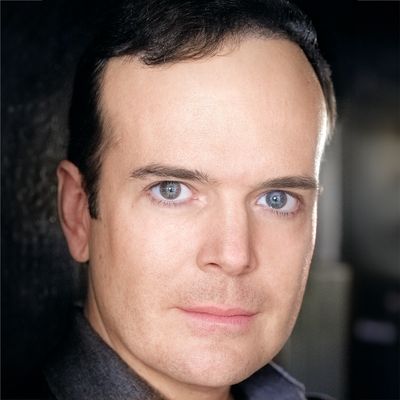
Jefferson Mays is currently on Broadway in his original interpretation of "A Christmas Carol" doing perhaps what he does best: playing multiple roles in a single show. Jefferson recalls the strange beginning of how it all started, which was when he and his wife ran smack into Matt Schackman, the Artistic Director of Geffen Playhouse, as they were walking their dogs. He was eventually inspired to base their version on Dickens’ original, one-man version. Jefferson also has his parents to thank for reading "A Christmas Carol" to him and his siblings when they were young, which sparked his love for performing and storytelling, thinking it was theatre in its purest form. Decades of experience later, he reflects on how this year has been the year of the understudy and swing, and how their talent and heroism changed his whole idea of what a company means. While performing on stage brings him joy, it's those moments off stage that makes him appreciate the magic of theatre even more. Jefferson admits to gravitating towards storytelling, sharing that this allows him to explore characters and their complexity endlessly. And while he doesn't have a list of roles to play before he reaches a certain age, he enjoys getting "mugged or ambushed by a production" for different kinds of roles. He shares what it's like to grow up with older siblings and the privileges that come with it, hearing the voices of his parents when he's performing on stage, and how his sense of curiosity and wonder motivates him to keep performing.
Jefferson Mays is an actor and a three-time Tony Award nominee for his performances in "Oslo", "A Gentleman's Guide to Love and Murder", and "I Am My Own Wife" a Pulitzer Prize-winning play by Doug Wright, where he played over 40 different roles and won for Best Performance by a Leading Actor in a Play. His other stage credits include "The Front Page", "The Best Man", "Pygmalion", and "Journey's End". His TV credits include "The Americans", "Westworld", "Nurse Jackie", "Law and Order: SVU", "The Closer", "Julia", "Perry Mason", "Hacks" and a guest role on "Unbreakable Kimmy Schmidt". He was most currently seen on Broadway's "The Music Man", and recently completed his one-man rendition of "A Christmas Carol" and is now bringing the same show to Broadway. He has also appeared in numerous films, including "Inherent Vice", "Ned Rifle", "Showing Up", "The Ballad of Buster Scruggs", "Kinsey" "Rebel in the Rye", and "The Giver" among others.
Connect with The Theatre Podcast:
- Support us on Patreon: Patreon.com/TheTheatrePodcast
- Twitter & Instagram: @theatre_podcast
- TikTok: @thetheatrepodcast
- Facebook.com/OfficialTheatrePodcast
- TheTheatrePodcast.com
- Alan's personal Instagram: @alanseales
- Email me at feedback@thetheatrepodcast.com. I want to know what you think.
Transcript
This transcript was automatically generated and might contain errors.
[0:00] Alan Seales: Hey, everyone. Welcome to the Theatre Podcast. I'm your host, Alan Seales, and this is the Theatre Podcast. Intimate, personal conversations with the industry's biggest names. Our guest is Jefferson Mays, who maybe you saw on Broadway recently as Mayor Shin in The Music Man next to Sutton Foster and Hugh Jackman, two up-and-comers. You know, you should check him out. But Jefferson has a long career of amazing, amazing storytelling and performing in his own right. Of course, he has a passion for telling an actual story, beginning, middle, and end. Just the art and the passion behind him wanting to tell this whole story is amazing. And he's got actually a history of taking on multiple roles in multiple productions.
Sorry, I should say he has a history of taking on roles in multiple productions that allow him to play multiple characters in the same show. And coming up right now, this winter in 2022 is no different. His unique adaptation of A Christmas Carol is him on stage alone playing all of the characters. It sounds phenomenal. It looks phenomenal. If you go to the website for the show, there's actually a video trailer there from, I believe it was our out-of-town production. But gosh, it just looks amazing. I can't wait to see it. So you know the drill. Find me online, Instagram, Twitter, Facebook, et cetera, et cetera, TikTok even. And now, everybody, please enjoy this episode with Jefferson Mays.
[1:46] Alan Seales: I am so excited to start this episode because this guest is someone I found fascinating for so long. And I'm finally able to get into digging into what makes him tick. Today's guest is a three-time Tony Award nominee for his performances in Oslo, his multi-character performance in A Gentleman's Guide to Love and Murder, as well as his Tony Award winning performance in I Am My Own Wife, where he played over 40 different roles. His television credits include recurring arcs on FX's The Americans, Westworld, Nurse Jackie, The Closer, Law & Order SVU, as well as a guest role on Netflix's hit series Unbreakable Kimmy Schmidt, who just ran in the New York Marathon the other day. He was most recently seen on Broadway as Mayor Shin in The Music Man alongside Hugh Jackman and Sutton Foster, and also recently completed his one-man rendition of A Christmas Carol at the Geffen Playhouse, for which he received rave reviews and is now bringing the same show to Broadway. Jefferson Mays, welcome to the Theatre Podcast.
[2:50] Jefferson Mays: What a pleasure it is to be with you, Alan. I love A Christmas Carol. It's one of those shows, one of those stories, right, that has been adapted and adapted and performed in so many different ways, and there's like, there's serious versions, and there's comedic versions, and then this is the first time I've ever heard of a one-man version. So, obviously, you've got experience playing multiple roles in a single show, you know, as part of the writing of the show. It's not like a swing or whatnot, but where did this idea even come from? Because you're part of the adaptation team that created this, and then now you're performing in it, and it is phenomenal.
[3:35] Jefferson Mays: Well, it was a strange beginning, as so many beginnings are. My wife Susan Lyons and I were walking our dog through the La Brea Tar Pits in Los Angeles.
[3:43] Alan Seales: Like one does.
[3:44] Jefferson Mays: Exactly, and we ran smack into Matt Sheckman, who's the artistic director of the Geffen Theatre, and we were talking about his season, and he said, is there anything you'd like to do? And what popped into my head that November day in 2017, next to the, you know, the corpse of Mastodon, was A Christmas Carol. It just sort of came, you know, upwelled into my mind like a methane bubble from one of the tar pits, and it's a project that I think I've always wanted to do ever since I was a child, and first heard my parents read, nay, perform this story for me. And so he said, fine, let's go with that. Make something and show it to me. So my wife and I sat down and got our hands on Charles Dickens' own rather brutal cut of his manuscript that he performed himself.
So in actuality, A Christmas Carol started out as a one-man show. He wrote it, yeah, he wrote it in, I think, 1843. It was published at Christmastime and very quickly became popular, and there were a number of stage adaptations in London, I think, in the following year. But Dickens, who was an actor himself, decided to do it as a public reading, and I think he subjected about a bunch of coal miners in Birmingham to the three-hour unexpurgated version, which they loved. But he said, you know, I can whittle this down to 90 lean minutes of A Christmas Carol. So we based our version on Dickens' own one-man version. We took some stuff away and added some things that we loved from the original and came up with what you'll see at the Nederlander.
[5:52] Alan Seales: That's insane. I didn't realize that Dickens was a performer. I thought he was a writer. We hear about the great Charles Dickens and A Christmas Carol and the writings, and I didn't know he performed it.
[6:03] Jefferson Mays: He was. We almost lost a great novelist, actually. He had an audition for one of the leading actor managers of the day and got a horrible cold. So he missed his audition appointment. He'd spent six months learning all the major roles in Shakespeare that he could wow them with. But he was a no-show because of this cold. So I think he probably would have gone on and been an actor and maybe gotten into novels. But I think we have that cold to thank for Dickens channeling all of his energies into his writing. And in the 1840s, getting a cold was no joke.
[6:45] Alan Seales: No joke. No. Yeah. And I guess a cold is an early form of COVID.
[6:55] Jefferson Mays: Yeah, there you go. I just love that one of the reviews I read from the Geffen production was like, you star as everyone, including a potato. So I think this is going to be phenomenal. The set, I mean, looking at the videos, there's some YouTube, there's a trailer, there's actually a video trailer for this that just makes it look phenomenal. But going back and skip, we'll come back to this, but you went to Yale College, which is a feat in and of itself. But going back as a child, where did this love for performing and storytelling come into play? Because knowing you and knowing the work that you take on, it's more than just getting up and singing and dancing and spitting out lines. You are a true lover of telling a full story. And that's something I've always admired about you.
[7:46] Jefferson Mays: I am indeed. Thank you so much for observing that. And I think it comes from hearing full stories as a child. Again, I think Christmas Carol, my exposure to it through my wonderful parents, who are sadly no longer with us, was a seminal moment for me. I remember distinctly a night, I think it was during the Vietnam War, because I remember the nightly news having black and white images of GIs being taken in helicopters from rice paddies in Vietnam. And that night, we were going to watch Wild Kingdom. I think it was a Sunday night in December. And the Basset Hound and the cat ran under the TV table, which was a rickety table with a black and white portable TV on it. And it came crashing to the ground and broke.
And so with the night's entertainment lost, my father, in a moment of inspiration, reached up and brought down this sort of yellowing volume of Charles Dickens' Christmas stories and opened it to A Christmas Carol. And he began reading it. And when he'd get tired, he'd pass it off to my mother, and she would carry on reading it. And I and my three siblings were transfixed. And I think they read through the entire thing that evening. And I remember hearing my dad's beautiful, detached narrator's voice. And I remember watching my mother, this woman I thought I knew so well, transforming before my eyes into Marley's ghost, into a little fan, into Ebenezer Scrooge, into the ghost of Christmas past.
And it was kind of scary to see this transmogrification happen. And I think it's in that moment that I fell in love with performance, because it was theater in its purest form, wasn't it? It was a cracking good story performed by two able performers, in this case, and then a riveted audience sitting in a line along the sofa. And I think it was that night that I fell in love with theater in many ways, and certainly with the tale of A Christmas Carol.
[10:01] Alan Seales: Wow. And that was in Clinton, Connecticut?
[10:04] Jefferson Mays: Yes, it was. Yeah.
[10:05] Alan Seales: Yeah. So you grew up in Connecticut. And did your family start, I guess your parents, did they embrace the sort of love that you had and start taking you into the city to see shows? Or were you doing classes?
[10:18] Jefferson Mays: Yeah.
[10:18] Alan Seales: Or seeing things live?
[10:19] Jefferson Mays: No, I didn't. They were wonderful in that they never discouraged me, and they never encouraged me. They sort of made it available to me. They were avid theater goers themselves, subscribers at Long Wharf Theater in New Haven since 1969, up into the present millennium. And they also subscribed to a Yale rep. And then I would get student rush tickets. If I'd finished my homework on a Wednesday night, they would take me in, and I'd get a seat and get to see Rosmersholm, or Journey's End, or Quartermain's Terms, or whatever play was on in the 70s. And I became an audience member. I fell in love with the theater. Never dreaming that I would actually be in the theater, but I thought it was a magical place to be.
[11:13] Alan Seales: Well, you said you never dreamt you would be on the performing side of it. So was there a show or a moment that you can think back on where it just clicked, and you were like, this is what I have to do. This is where I belong, up there, instead of down here in the seats?
[11:34] Jefferson Mays: Yes, maybe so. I remember. Actually, come to think of it, I did have a strange sort of mystical moment, if I may inflict that on you. When I was five or six years old, my mother's friend had called her up on the phone and said, come down Waterside Lane in Clinton to see my tree. It was in the autumn. It was a beautiful blue sky. And we went down to see this tree, and it was covered with migrating monarch butterflies. It was the most beautiful surreal vision of instead of leaves, all of these little gently batting wings against the beautiful, pure blue autumnal sky. And I had this sort of moment where I said, if all else fails, a little voice said in my head, if all else fails, you can become an actor. Don't worry.
[12:32] Jefferson Mays: Exactly. But then I sort of forgot about that, and then fell into it much later. I was never, I was in high school musicals. We never did plays, and I never was cast very well. I was always sort of a singing waiter in Hello Dolly. And so I was sort of content to be in the chorus. But I think it's when I did my first play, again, with my parents' friends. They had this little funny society called the Clinton Amateur Theatrical Society, or CATS, in which they would designate a play, like The Importance of Being Earnest, and do it in their living room. Everybody would come dressed up, and with script in hand, they'd sort of stumble around the front parlor eating crumpets and drinking tea and spouting Oscar Wilde. And the guy that was supposed to play Algernon Moncrieff was sick, couldn't come. So at the age of 15, I stepped in and played Algie in this living room production, and I just loved it.
[13:35] Jefferson Mays: Probably for plays, there was no going back after that moment.
[13:37] Alan Seales: We're going to take a short break. Stay tuned for more of the episode.
[13:54] Jefferson Mays: So you realize that your entire career, you can thank to two people having cold.
[13:59] Alan Seales: Yes.
[14:00] Jefferson Mays: What? Who? I'm sorry, what?
[14:02] Alan Seales: Two people having a cold.
[14:04] Jefferson Mays: Yes. Oh, my God. That's right. I wonder how many other careers have been built on sickness.
[14:10] Alan Seales: And I look at like understudies or swings or something.
[14:16] Jefferson Mays: And all of a sudden, that's right. My God. Can we just talk about understudies and swings for just a brief moment, please? This has been the year of the understudy and swing.
[14:26] Jefferson Mays: The apotheosis of the understudy and swing, which has completely transformed my whole idea of company and what that means. Doing the Music Man, which we started in December of last year and then were quickly just laid low by a vicious visitation of COVID. You know, sometimes we'd be absent almost like 10 to 15 members of the cast, you know, and the swings would come out and just do this extraordinary job, you know, with sometimes with an hour's notice.
[14:54] Alan Seales: Kathy Boydko, who went on for Sutton Foster for preview number two or three.
[15:08] Jefferson Mays: I remember that in the news. Yeah, it was just I just remember I didn't leave the stage. I had to do some costume changes, but I was just in the wings watching this extraordinary woman, this extraordinary artist step into this role and do it beautifully. They usually in that early in her production, like I don't even remember if she had a costume made at that point. So using somebody else's costume hasn't had it hasn't even been rehearsed in. And then all of a sudden you're going on in front of a thousand people.
[15:40] Alan Seales: And I gosh, I one of my favorite instances to that point, too, was when T. Oliver Reed got to go on as a fate in Hadestown, which that's right. Because that's that's a traditionally a role traditionally played by a woman. And now he's going in and just crushed it, absolutely crushed it.
[16:00] Jefferson Mays: Yeah. So like necessity breeds innovation. And I absolutely love the amount of change and new art. And I guess the ability or the forcing function to try things that we've never had the guts to try before that had to come out of COVID because we had no other choice.
[16:21] Alan Seales: Yeah, absolutely. We had like Sam Gold went on in the Scottish play, you know, one night, I think, book in hand.
[16:28] Jefferson Mays: But that's that's theater. I mean, that's just that's what we all do. And we all do it at this, especially in musical. Is it this this surprisingly this extraordinarily high level of ability? And so there is no such thing as hierarchy in the company of a show. There just isn't. Everyone is an equal. Everyone is able and gifted and deserves this chance to perform.
[17:01] Alan Seales: And it was just thrilling to watch. And it was it was thrilling as an audience member to hear about these things, too. And like, I guess, you know, from the producerial, the creative side, obviously, you don't want to lose ticket sales and you don't want your cast getting sick. But from a growth perspective and pushing the industry forward, I really like I said, I just really loved how we got to see people shine in a way that they probably wouldn't have been able to otherwise.
[17:32] Jefferson Mays: And it's made so many people's careers, you know, just shot them into startup. I think this is our leading lady, Sutton Foster herself.
[17:43] Alan Seales: Yeah. Was in Thoroughly Modern Millie out of town, La Jolla Playhouse. And the lead became indisposed or something happened. And Sutton, who is her understudy, just went right on. And the rest is history.
[17:59] Jefferson Mays: Yeah. A lot of Alphabuzz that way, too.
[18:02] Alan Seales: You get.
[18:03] Jefferson Mays: Yeah. A lot of your big Alphabuzz now were understudies and swings. So, I mean, yeah, the I was a swing once. And I don't think I could ever do that again. The pressure, the mental anguish I went through every day of like, wait, can I sing that part? Do I remember that part? I have to cover I had to cover four tracks in Forever Plaid. I was the swing for all four of them. And I was insane with anxiety that entire run just because the harmonies are so tight. And I was singing in the wings and I was doing the choreography in the wings every single night to keep it fresh. And I still don't think I I don't know if I could have done it if I had, you know, gone on for you didn't get the opportunity to go. I never it was a short ride and I never had the opportunity to go on. But I yeah, it was it was really, really frightening.
[18:49] Alan Seales: It was incredible.
[18:49] Jefferson Mays: I bet you would have risen to the occasion. It's we had one of our cast members, Branch Woodman. I think this is like fourth or fifth production of Music Man. He's sort of a resident scholar of Music Man. And I think very early on, he went up into the in the string court, the I'm not the the barbershop quartet and and just blended in beautifully. And it was just just a sublime moment again to behold.
[19:15] Alan Seales: It's it do you experience do you experience that in in or have you experienced that where you get, I guess, the actor's equivalent of of in the zone that sports athletes get where all of a sudden you've just won the game and you don't you don't realize half of what you did or like a runner's high where you're just in the zone and you don't remember the last half marathon you just ran, but you're in the lead now. Right. So do you get from the beginning of a show to the end of a show? Sometimes you're like, what did I just do? And then you're standing there in front of a standing ovation saying, I guess I did OK.
[19:48] Jefferson Mays: Yes. No, that's that's a common feeling, I think. I mean, I think it also depends upon the actual time you are on stage. I mean, like recently playing Mershin, I was sort of on stage in pockets and off stage. And it's funny because it's only in those moments off stage I found that you really appreciate the magic of theater. I mean, my some of my happiest, most transcendent moments have been in the wings, in the wash, the spill of light from the stage, watching what's going on on that stage and marveling at it and what's going on backstage, too. And those, for me, are the truly magical moments of theater because the magical moments that you're a part of, as you beautifully put it, you sort of don't experience.
It's a weird state of ecstasis. And you're not aware until it's all over, particularly doing a one person show like Christmas Carol with no intermission, because literally my sensation is I leave my dressing room door, I enter the stage, something happens and I come off the stage and it's over and it's time suspends, you know, for me.
[21:01] Alan Seales: I can imagine.
[21:03] Jefferson Mays: Yeah, you look back at the end of it and forget how you got there.
[21:07] Alan Seales: And yes, well, along the lines of playing multiple characters, though, you do this quite frequently. You're choosing roles where you get to embody different roles in the same production. Like, you know, like I said, scripted, right? So you're you're telling a story and you're acting it out like your dad did that one night when you were a kid, which I think is just beautiful. And I guess maybe that just answered the question I'm about to ask. But are you gravitated towards these instances, these opportunities to tell a story amongst multiple characters in a single production? Or do you prefer deep diving into one character and doing it for months and peeling back the layers of that one character?
[21:50] Jefferson Mays: Yes. Oh, gosh, that's a that's a fascinating question. I am gravitated. I do gravitate, I think, towards storytelling in general and in storytelling. I do a lot of recorded books, as does my wife. And that's a very different experience, but it's a singular pleasure in that you get this whole narrative to yourself and you get to populate it with all the characters in the book and tell the story itself from beginning to the middle in the end. And and that's a lovely feeling. And there's something about it that feels extremely elemental. Um. Theater in its most basic form, as I said, a story and a performer and an audience, um, so that that does thrill me, maybe it means I'm a superficial person because I like to sort of skip around and touch upon actors and maybe the deep dive into character is something that that may frighten me somewhat, although I have enjoyed playing, you know, single characters.
But within every interesting character, every character worth playing, there's sort of a multiplicity of characters. You know, they're all there are many facets to explore. And and they're and they're endless. That exploration is endless.
[23:15] Jefferson Mays: I can't remember who's who told me this. And I I'm going to quote this. And if anybody listening remembers tweet at me or something, let me know. They they were they normally play back. Oh, it's Patrick Page. Normally play bad guys. Right. It's somebody who it gets cast for that dark, deep, like his gorgeous, gorgeous voice and their gorgeous voice. And he plays the character as if the character is is a good guy because nobody wakes up and says, I want to do bad things today. They wake up and they believe what they're doing is right. So when you have a good script, a Pulitzer Prize winning script, such as the ones that you have had the pleasure of performing and the wonderful words, you let the words do the talking.
You let the story really unfold and do the talking. And and I haven't had the opportunity yet to play a bad guy since hearing this. But it really opens something up for me where I can say instead of going in and doing the stereotypical like, Muhahaha, I'm a bad guy, you know, like the cartoony thing. Just play it like a genuine person who thinks they're doing good and they're going to come across loved and hated all at the same time.
[24:29] Alan Seales: Yes. No, I think that's a beautiful perception.
[24:32] Jefferson Mays: Yeah, absolutely. I don't think there's any other way to approach that.
[24:38] Alan Seales: Yeah, no, he's he's so smart, Patrick. Do you have a favorite type of of care, I guess, of show? Like you've done musicals, you've done plays, you've done comedies, you've done serious ones. Do you looking back, do you have a favorite that you've done or something that you haven't done yet that you want to do?
[24:55] Jefferson Mays: Um, I don't know. I've never been one of those actors with a laundry list of a shopping list of roles that I must needs do, you know, before I reach the age of 60 or something. I always maybe it's laziness on my part, but I always like being sort of mugged or ambushed by a production in which someone comes to me and is more excited about it than I am and says, listen, you really should do this. And and I think those are to be confronted by those sorts of opportunities is always more exciting, because generally it's nothing that you would have thought of yourself. I mean, when I did I Am My Own Wife, I literally got a phone call out of the blue from my friend Doug Wright, the playwright, who said, would you like to be in a play that hasn't been written yet?
And and I said, oh, sure. What is what's it about? It's about it's about a gay East German, a 65 year old transvestite. And I thought, yes, that that makes no sense. That's that's just the last really, really the last thing I would have thought.
[26:02] Alan Seales: We're going to take a short break. Stay tuned for more of the episode.
[26:16] Jefferson Mays: So, yes, you know, so in answer to your question, no, I don't have a list of things to do and ask your other question about what my favorite thing is, is generally whatever I'm working on at the time, whatever absorbs and consumes me. But again, I'll say that Christmas Carol is special because I do think it's been something that's been simmering on a back burner in my mind and imagination since I first heard it. I mean, I remember as a child at Christmas playing at Ebenezer Scrooge on every Christmas, I would sort of count my money, look at my meager account in my local savings bank and and and light a candle in my room and sort of say, blah, humbug. And and I another thing, maybe maybe this adds. This is brought it brought about my.
[27:41] Jefferson Mays: That's, wow, that's nuts. I mean, I'm three and a half years apart from my brother. And we, we were just far enough apart to not be in high school together. So we were four grades apart, but three and a half years. And we got along fine. And then my kids are 20 months apart. And I, I don't know, I, I rely so much on, as an, as the oldest child, I rely on, on validation, like what acting and performing does for me, it gives me that validation that the oldest child needs, right? So then I don't, I still, like, I feel like I understand what the youngest child or what only children need, but I will never experience that. And so for me, I feel like there's a little bit of, gosh, something that I've, that I've missed out on that, that only children and youngest children or whatnot, they have the pleasure, the fortunate ability to escape completely into their minds in a way, in a creative way.
[28:51] Jefferson Mays: Yes, I think that's right. I think I enjoyed that very privilege because I think my parents were so exhausted, you know, by raising the other two and, and, and sort of threw up their hands at some point, as long as he doesn't kill himself, just, you know, go out and be whatever you want to be. So, you know, again, they never encouraged me in this profession and they never discouraged me and they always sort of left me alone and, and, and delighted in me in a way that I'm eternally grateful to them for.
[29:23] Alan Seales: That's amazing. Did they, did they get to see you, like, perform on Broadway and, and reach that pinnacle?
[29:30] Jefferson Mays: They did. They, um, they saw my, my Broadway debut in, I guess it was 2000 and autumn of 2003, almost 20 years ago. Good Lord. At the Lyceum theater, but they came in for opening night, uh, for that and saw, uh, I am my own life, uh, the one person show that I did then. And then they came, come to things. And then my, my mother died in 2008 and my father in 2015. So they've missed the recent stuff, but they're the extraordinary thing about Christmas Carol. Uh, for me personally, is that, um, I hear their voices on stage. It's kind of like being on stage with my parents because I've stolen line readings from them. And because we used to read it every Christmas and, uh, our gorgeous sound designer, Joshua Reed.
Um, I told them about this recording I have of them reading it on cassette, uh, that was made in the last century. And, uh, and I was, and I haven't had the guts to listen to it. I still haven't listened to it, but he says, well, it's kind of, you know, those things are going to demagnetize or whatever. So he sent me this gizmo that you put them in and transfers them to memories. Yeah. I got digitized it. Yes. Yes. And, um, so I, I do that. So I have them, but I still haven't listened to them yet, but their voices are, are there preserved, uh, reading the entire thing. And someday, uh, I'm going to, I'm going to listen to it. I'll, I'll, I'll work up my courage and listen to it.
[31:06] Alan Seales: That's beautiful. I, I think that, uh, there, there's a lot, there's a lot of who you are influenced now in a, in a way that, I mean, maybe you're, you're aware of, or maybe not because like the TV got knocked over, you started reading a story. Um, some, you know, your career took shape because a family friend couldn't come over cause they had a cold and like all of this is just weirdly little, these little chances, these little tweaks that, uh, that happened and, and made you who you are and your parents too. They seem like, they seem like they were such great people where they were just like the art, art is great. Just go out. And as long as you're happy, as long as you're not hurting anybody, like you said, as long as you're not hurting yourself or hurting others, just be happy. And, and I think that I sort of feel like that's, that's pulled a little bit of, um, uh, pressure blanket off of you.
[32:06] Jefferson Mays: Yes. I think that's a really skewed observation. I think it did. I, I, I, yeah, I didn't feel that sort of that pressure. It's amazing how you describe it, that, uh, that life is just such a random and accidental thing, you know, and as long as we sort of. Grope towards things that made us make us happy and people that we love, then that's all you can do. And then the rest of it is just a chance.
[32:36] Alan Seales: That's what I, that's what I started doing in my late thirties and I just turned 42 recently. Right. And I wish, you know, they always say youth is wasted on the young. I wish I could go back to 20 something me and just be like, dude, relax. You don't need to worry about all these other things and it's all going to work out. Right. And for, for, for me, it's, it's trusting, um, this feeling I get kind of the upper part of my chest of like pulling me towards something and I'm like, oh, okay. And, and I, it's similar in what you had said a little while ago about you take the roles that you're, that are unexpected. They just, they come to you and you're like, yeah, yeah, I'll do it. Like, there's no reason not to, I'm going to do it.
And like Christmas Carol now is phenomenal. It's, it's this amazing thing that showcases everything that about you and who you are and, and it's without knowing that the audience gets such a glimpse into your childhood and who you are as a person. Right. Even though you're not playing Jefferson on stage, you're playing yourself. I mean, you're playing all these other characters. And I think it just speaks so much. It speaks absolutely so much to the fact that you just have to follow what you are, what makes you happy. And, and I guess pay it forward. Is that what I'm looking for? Because if you're doing that and other people are doing that, then all of a sudden you're going to be on a team of people that are all doing that. And then you have lightning in a bottle.
[34:04] Jefferson Mays: Yeah, no, that's, that's a lovely way of putting it. Yeah. Ideally. So it's, I always, I always am confounded by the inevitable question that you receive from people starting out in the business of what must I do? What should I do? What course should I take? And it's ultimately an impossible question to answer. And I always give the most unsatisfactory responses, I'm sure, because there is no way or there is many ways as there are artists pursuing it. I think a lot of people get themselves into trouble by saying, look, I went and hired an acting coach. I hired a vocal coach for this song. These things should all have added up to a stunningly successful audition and I should have been cast. And it just does not work that way at all.
However frustrating that may be, you can only please yourself. You can only explore in an audition that which interests you and be true to yourself and never try to second guess them or give them what they want. It's ultimately a very selfish act, I suppose. And yet you can do no less.
[35:20] Alan Seales: Well, that's all you can do, I think, to showcase who you are. And you hear this all the time. Embrace what makes you different. And it was Michael Urie that gave the advice on this podcast a long time ago. You can't go into an audition thinking the part is yours. Don't leave the audition saying, oh, man, I lost that audition. Because the point is you never had it to begin with. You were there to see if you were right for the role. And if you didn't get it, you weren't right for the role. And then eventually you will be. But if you go in getting down on yourself every single time you hear a no or mess up, you're never going to get anywhere. I don't know. I just look at the quote unquote weirdos, the people who are different, the misfits, the outcasts who have a home on stage and in theater and performing because all of a sudden that's where they're accepted. And I think that's beautiful. Absolutely a beautiful thing about theater and performing in general.
[36:25] Jefferson Mays: Yeah. Oh, God, yes.
[36:27] Alan Seales: Yeah. So let's wrap up here with three closing questions that I ask everybody to end the episodes. The first one is very simply is what motivates you.
[36:37] Jefferson Mays: What motivates me? Gosh, I am maybe one of the most non-reflective people you would ever meet. I suppose it's curiosity. It's wonder about the world. Sometimes I feel as an actor, I'm an actor because I'm not a terribly successful human being. You know, I'm like, I'm so interested in being other people and trying out what it means to be what it feels like to be other people because of some sort of inadequacy in myself. You know, I'm not complete without extending myself with curiosity towards others. You know, that's sort of the bad part of it, maybe. And the good part of it is just it's lovely to feel this sense of curiosity and wonder every day. So I think that's what motivates me, just interest, interest in the world, interest in other human beings and how they think and why they act and how they feel.
Why I didn't become a psychiatrist? I don't know. You know, a psychiatrist, a philosopher explores those things, but it feels right for me to explore them as an actor, literally putting on their shoes and their hats.
[37:55] Jefferson Mays: In the multiverse, you are a psychologist, but in this universe, in this one, you're an actor because that guy got a cold. That's all there is. That's the answer.
[38:04] Alan Seales: That's right. That's all there is. Could have been different.
[38:07] Jefferson Mays: So similar to what we were talking about earlier, the next question is, what advice would you give to your younger self and younger people listening now starting out down a similar path?
[38:14] Jefferson Mays: I think I would say I would just give my younger self a little clap on the back and squeeze the shoulder and a sideways hug and say, carry on. Just do what you're doing. It'll all work out. Don't get too upset about anything. Just carry on exploring and be good to yourself and to those around you.
[38:38] Alan Seales: I love that. All right. Last question. Hardest one. If you could only see one show for the rest of your life, but you can see it as many times as you want, what would you see?
[38:46] Jefferson Mays: Oh, boy. This is from the catalog of shows that I have seen from my memory.
[38:54] Alan Seales: Sure.
[38:55] Jefferson Mays: Well, that or any show. What pops to mind?
[38:56] Jefferson Mays: Again and again. This is so odd. But what pops into my mind is is Beck Borne playing Quentin Crisp in Resident Alien. I saw it at New York Theatre Workshop and it's a one person show. It takes place in Quentin Crisp's Third Street apartment in the East Village. And it was just the most riveting thing. I saw it in Edinburgh as well. I saw I would see it wherever I could. And I just I loved dwelling with that actor and that character, Quentin Crisp, on that in that wonderful squalid set. And I just felt very happy and very comfortable and endlessly engaged.
[39:47] Alan Seales: Hmm. Well, now I need to go see the show. I've never seen it. All right. Are you on social media anywhere? Do you do the social?
[39:54] Jefferson Mays: No, I don't. I live in a cloud of oblivion, which I kind of enjoy. I don't. I don't have any of those things. I'll write you a letter.
[40:08] Alan Seales: And send me a carrier pigeon.
[40:11] Jefferson Mays: Yes, tied to the leg of an owl.
[40:15] Alan Seales: You can get more of me at the theater podcast dot com. I'm on Instagram, Twitter and Facebook and Tick Tock. Leave a rating and a review. This has been edited by Well Rounded Hoodlum Productions. Jukebox the Ghost gave us our intro and outro music and Jefferson Mays. Thank you so much. I really enjoy getting to talk to you.
[40:33] Jefferson Mays: This has been just heaven. Thank you.
© Broadway Podcast Network, All Rights Reserved