

For a person who claims she can’t really sing or dance, Julie Halston sure has done a lot of Broadway musicals (and rightfully so!). Even during the pandemic, she remained booked and busy despite the circumstances... Read More
From the show: The Theatre Podcast with Alan Seales
Guests
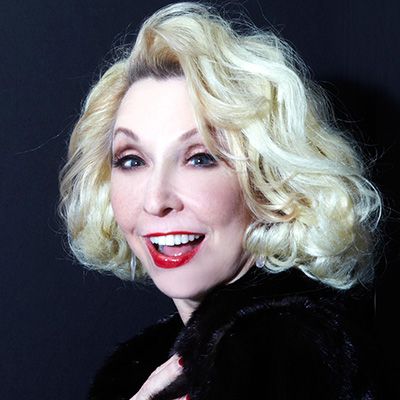
About
For a person who claims she can’t really sing or dance, Julie Halston sure has done a lot of Broadway musicals (and rightfully so!). Even during the pandemic, she remained booked and busy despite the circumstances. She even took to the internet to keep the fans entertained (after some persuasion and help from her friend, Jim) with over 40 episodes of her hit web series called “Virtual Halston”. Julie tells the story of starting a theatre company with Charles Busch, and starring in a little play he wrote entitled, "Vampire Lesbians of Sodom" which ended up playing Off-Broadway for six years and opened up countless more opportunities for her. Her love for theatre and acting can be traced all the way back from when she was nine years old and that one afternoon her mom took her and her sisters to watch "West Side Story". She shares how she trained by doing, her three Cs of comedy: confidence, clarity, and commitment, the difference between a one-person show and a straight standup comedy routine, and her late husband's tip when you land that one punchline which is to take a look at the audience. With the cultural change happening today, Julie reflects on its relationship with comedy and how it makes it very tricky, especially when it comes to controversial topics. Apart from cultural change, Julie discusses current New York theatre problems, a possible resurgence in Off-Broadway, the need for public officials to value the arts, and how connecting with other people motivates her to keep doing what she’s doing.
Julie Halston is a comedian and actress who recently received the Isabelle Stevenson Tony Award for raising awareness and funds for The Pulmonary Fibrosis Foundation. She first achieved recognition as an actress through her co-starring performances in the comedy plays of writer-performer, Charles Busch. "Julie Halston's Lifetime of Comedy", a series of one-woman comedy shows that she wrote had a successful Off-Broadway production and earned her an Outer Critics Circle nomination for Best Play and a CBS network development deal. Julie was recently seen on Broadway playing Rita Marshall in “Tootsie”. Her other Broadway credits include “On The Town”, “You Can’t Take It With You”, “Anything Goes”, “Hairspray”, “Twentieth Century”, “Gypsy”, “The Women”, and “The Man Who Came To Dinner”. She's a founding member of Charles Bush's theatre company and has collaborated with Charles on numerous productions, including “Vampire Lesbians of Sodom” and “The Divine Sister”. Her tv credits include “Gossip Girl”, “The Good Fight”, “Almost Family”, “Divorce”, and “Law & Order” among others. She is also reprising her role as Bitsy Von Muffling in the “Sex and the City” reboot, “And Just Like That…” During the pandemic, she launched a web series, “Virtual Halston”, and garnered popular acclaim with over 40 episodes on YouTube. Today, Julie plays an asshole talent agent owner in Broadway Podcast Network’s new series, "Rolling Calls."
Connect with Julie:
- Instagram: @actressjuliehalston
- Twitter: @juliehalston
- Facebook: @juliehalston
Connect with The Theatre Podcast:
- Support us on Patreon: Patreon.com/TheTheatrePodcast
- Twitter & Instagram: @theatre_podcast
- TikTok: @thetheatrepodcast
- Facebook.com/OfficialTheatrePodcast
- TheTheatrePodcast.com
- Alan's personal Instagram: @alanseales
- Email me at feedback@thetheatrepodcast.com. I want to know what you think.
Transcript
This transcript was automatically generated and might contain errors.
[0:00] Alan Seales: Welcome back, everyone, to The Theatre Podcast. Intimate, personal conversations with the industry's biggest names. I'm your host, Alan Seales, and our guest today is none other than comedy gold, Julie Halston. If you don't know who she is, oh my gosh, you're missing out because she is a phenomenal performer, a phenomenal person who everybody just needs to know. I actually met her a little while ago because I was part of the production team that put Rolling Calls together, a new audio comedy from Broadway Podcast Network, and she is one of the leads and just floored me with not only how funny she is, but just how nice she is. And side note, this interview was the first in-person interview, the full-length in-person interview I have done since before COVID, which, by the way, was episode 79.
That is about 250 episodes ago. So I don't know what that says about things coming back to normal because they sure don't feel like they are. But gosh, I'm glad to have an in-person interview again, and I'm so glad it was Julie. It was so much fun to work with her, so much fun to meet her. Can't wait to share this with you because gosh, she just had me in stitches for the whole interview. So, you know the drill, Instagram, Twitter, TikTok, find me online. And now everybody, please enjoy this episode with Julie Halston.
[1:38] Alan Seales: Our guest today was most recently seen on Broadway, co-starring in Tootsie, and was recently awarded the Isabelle Stevenson Tony Award for her advocacy on behalf of the Pulmonary Fibrosis Foundation. Additional Broadway credits include On the Town, Hairspray, Gypsy, Anything Goes, and The Twentieth Century. She's a founding member of Charles Bush's theater company, and her television credits include Gossip Girl, The Good Fight, Almost Family, and Divorce, among many, many others. She is also reprising her role as Bitsy Von Muffling in the Sex and the City reboot, and just like that, for HBO Max. Ms. Halston's web series, Virtual Halston, Ms. Halston, I just gave it away. That's our guest. Virtual Halston became a pandemic hit with over 40 episodes on YouTube. She's now the asshole talent agent owner, Dinah Levine, on the newest Broadway Podcast Network scripted original podcast called Rolling Calls. Julie Halston, welcome to The Theatre Podcast.
[2:36] Julie Halston: Hello, hello, hello, hello. That was really, my goodness, I guess I've worked. Once or twice? I guess. I think it just means I'm older, but no, it's really, it's so weird to like hear your resume. And you know, it's so weird, really weird for me, because as a person who doesn't really sing or dance, I've done a lot of Broadway musicals. I just find that I think it's either a very sad state of affairs for Broadway, or I've just been incredibly lucky. But you know, in Broadway musicals, usually, they always need to have a funny lady.
[3:17] Alan Seales: Right, there's always the funny lady.
[3:19] Julie Halston: There's always that wacky character who sings in like a Rex Harrison way, and that's Julie Halston. So wait, let me turn this off. So yeah, I'm really excited. I do remember when the pandemic started. I was like, well, I guess I'll just go to bed for like three weeks. It was supposed to only last like three weeks, and then it was two months. Maybe like a month, and you go like, okay, you know what, maybe it's a good idea. And, you know, I need to kind of like stay in, feed the cats, you know, that kind of thing. And then it just went on and on. And that's when everyone just, you know, got crazy, just basically lost their minds. And Jim Caruso, who does Jim Caruso's cast party at Birdland, said, you need to do a podcast-y thing or something. And I was like, I'm going to bed. And he said, no, no, no, really, Julie, you should do this. I'm like, I'm going to bed. He asked me three times. Finally, he said, I'll help produce it.
[4:44] Julie Halston: Well, it really became a hit. I mean, we had 41 episodes. And all I did, which was great, I mean, Jim and I really worked it out. We had this fantastic tech person, Ruby Lochner, who's very talented in her own way, and should, by the way, I'm going to say it publicly, should be in Wicked, playing Elphaba. She's fan-freaking-tastic. I'm just putting it out there. You know, she's 20 years old. She was 20 years old. She knew, like, how to do everything. You know, I can barely turn on the phone. And we were like, well, we'd like to do, like, you know, video clips and, you know, fly things in and everything. She was like, yeah, yeah, okay. Mm-hmm. So, we got this show, and what we would do is the first, like, 20 minutes were us, like, fooling around, doing videos, you know, talking about Xanadu, whatever, whatever we wanted to talk about.
And then I'd have, like, a special guest. You would not believe the guests I got. Nathan Lane, Bill Irwin, Lou Black, Mary Lou Henner, Santino Fontana. I mean, it was crazy. But you realize they're sitting around. Nobody's doing anything.
[6:08] Julie Halston: Nobody's doing anything. So, I would just say to them, like, you're not doing anything. Can you talk to me for a half hour? You know, and it became so popular, and we would always have an adult beverage. Mercedes Ruhl, Michael Urie. I mean, I can't tell you. It was fantastic. In the midst of this, I ended up doing a number of indie films, one with Charles Bush called The Sixth Reel. Again, very COVID conscious, you know, we were all separated and whatnot. And yet, we had to be on a set. No one got sick. I was stunned. Did some indie films. Then I did Gossip Girl and just like that. In the midst of all this, I ended up getting a boyfriend. Wait a minute. Okay, so wait a minute. And then got a Tony Award.
So, one day I was sort of saying something to my manager, like, wait, what's going on? Like, is anything happening? And he was like, wait, Julie, you've done like three independent films, two TV series. You have a hit web series, a boyfriend and a Tony Award. I think you crushed the pandemic. And I was like, you're right. Okay, thank you. But it has been really hard because, you know, the backdrop, of course, is that there are people who didn't make it. People who died. I think I can speak for every actor in New York City by saying we are still in shock over Mark Blum's death. I mean, he was one of the first people that we had heard about. It's just been a time of really tough losses. And also just, you know, people left the city.
Every weekend on 55th Street between 8th and 9th, I would see another moving truck. And it was just so sad to me, you know, and they were young people who didn't want to pay high rents anymore. And older people who were like, we're out. We're retired. You know, that's it. And so that was very difficult because, you know, the theater is not only the lifeblood of so many of us, but it's also a New York situation. It's an institution in New York. It produces billions of dollars. And so to see this, you know, kind of crash was very depressing. So, yeah, but we're kind of coming back, right? I mean...
[9:02] Alan Seales: I would like to think so. Yeah. I mean... Cautiously. Cautiously. And most houses, I don't think, I don't know if there's any now that still have mask mandates.
[9:17] Julie Halston: Okay. I think Kite Runner did, but they just closed. And also, I'm going to go see Linda Lavin and my friend Daniel Isaac in You Will Get Sick at the Laura Pels, and that is a mask mandate. The title is You Will Get Sick.
[9:32] Alan Seales: You Will Get Sick. You'll wear a mask. Yeah, yeah. So title is You Wear a Mask, Damn It. Yeah. So, and I must say, I am still wearing a mask in the theater, and I'm not...
[9:46] Julie Halston: Yeah, I'm still wearing a mask because I do know people who are still getting sick. Yeah. And the thing about a performer is, like, when I have to be on a set, I can't zoom it. I can't be like, Hey, Sarah, Jessica, I'm here and you're there, but let's do a scene. No, you can't. And then you miss lots of money. I can't do that. It's your career. Yeah. I mean, so many people take that for granted. And it's been kind of normalized, too, in a good and a bad way. And the bad part, I think, is just because people are not caring as much as they used to, to try to prevent the spread and prevent whatever the case is, right? And so now it's like, Oh, so-and-so's got COVID, blah, blah, blah. But there are certain people that when you can't get out of bed, you have no income. You have, yeah, like, all across the spectrum of jobs. Yeah. And the internet has made things possible in a way that never before have we been able to do things, but you still can't. I'm just imagining.
[10:52] Alan Seales: Yeah, I was gonna say, you still can't go see a theater show where everybody's zooming in. But I was thinking, have you seen those little remote robots with, like, it's a monitor on a stick that somebody's controlling remotely? And so, like, their face is there and they're controlling it. And so, they're just, like, zooming around.
[11:07] Julie Halston: Okay, no, I haven't seen this yet.
[11:12] Alan Seales: I'm just imagining, like, a cast full of these monitors on sticks just going through singing and trying to sing and dance.
[11:18] Julie Halston: Oh, that might be next. That might be next. We have drone light shows and firework shows.
[11:27] Alan Seales: Oh, yeah. No, I know.
[11:29] Julie Halston: So, yeah, this is next. I know.
[11:34] Alan Seales: And now the big question for a lot of performers right now is, are we staying on Twitter?
[11:38] Julie Halston: Yeah, I know.
[11:39] Alan Seales: It's been two days.
[11:40] Julie Halston: I know.
[11:41] Alan Seales: Give us some time. Give us some time.
[11:42] Julie Halston: That's what I'm gonna give it time.
[11:43] Alan Seales: It's gonna crash on its own.
[11:46] Julie Halston: I hope so.
[11:48] Alan Seales: Elon Musk. I have a hard time looking at him, let alone listening to him.
[11:54] Julie Halston: Well, and him and Kanye. That's a whole separate conversation. My friend the other day with, like, a teenage boy was like, Mom, there's a bunch of Yeezys for sale on the internet right now. I don't know, like, what's going on? I was like, oh, there's a reason.
[12:09] Julie Halston: There's a reason.
[13:32] Julie Halston: I have been very, very lucky in my career, and I was really lucky. After I came out of college, I went to Hofstra University, which was like, if you didn't get into NYU, you went to either Bard or Hofstra. I didn't apply to NYU, but anyway, I went to Hofstra, and a lot of my friends that I went to college with are still my close, close, close friends today, which is great. But I didn't know what I was doing. I was like, yeah, I want to be an actress. It was like, do you have any skills? Are there any skills here? Not really. Couldn't barely put together a resume, but I was really smart in one way. I recognized other people's talent, and I went to see Charles Busch in a one-man show that he was doing called Alone with a Cast of Thousands.
And before anyone was doing anything like this, Charles was sort of doing a gender-bender kind of show where he would play a woman, a man with just one little prop, and he would do these fascinating monologues. I thought it was just fantastic. Even though I might have not had a good skill set, I had a lot of friends, and I was constantly bringing my friends to his show. He was, I think, very amazed that I had all these friends because he couldn't get an audience. And I provided him with an audience. Anyway, I said to myself, this guy's onto something. And we ended up, along with other people, starting a theater company, and he wrote Vampire Lesbians of Sodom, which is the greatest title ever, really.
Come on, let's just say it. It's really the greatest title. And it ran Off-Broadway for six years, and it gave us careers. And that really was the start of something. And then he wrote so many other plays, and we really became a very, very big presence in the Off-Broadway world. And ultimately, I wanted to go uptown, as it were, to make more money and be on Broadway. And I remember Charles saying to me, well, how are you going to do that? You can't sing or dance. But the Roundabout Theater was doing a lot of revivals. They did a lot of Kaufman and Hart. Still do. Yeah, they still do. Were then, but they still do. Yeah, yeah. But I was someone who really knew how to do that kind of talk real fast kind of thing.
Like, here's Gal Friday. Hey, say you, you just got out of the clink. Is that what I hear? That kind of rapid fire delivery. And they always had a need for that fast talking, tough sounding lady, who kind of like tough with a heart of gold, that kind of person. So, I started getting those parts. And it really did bring me uptown. So, I was very grateful.
[17:12] Alan Seales: Where did the love for theater come from in the first place, when you were like little Julie, growing up in Flushing, right? That's where you grew up?
[17:18] Julie Halston: Well, no, I was born in Flushing, but I ended up, basically, from four years old on, I was in Comac, Long Island.
[17:29] Alan Seales: Okay, so, Flushing to Long Island.
[17:32] Julie Halston: Yeah, big, big leap there. Big leap and so different. Yeah. So, then, but were you always just drawn to the theater? Or did you just like, randomly, like, I don't know what else I'm going to do. Let me go try to just, because with someone without the singing and the dancing training, it's, this is unusual. I feel like for someone just to be like, I have to do that.
[17:57] Julie Halston: Absolutely, a great and fair question. Because usually, when people are dancers or singers, they're like, Mom, I have to be enrolled in this school or whatever. It was really in a way through my mom, who loved all things showbiz. And my mom, literally, one afternoon, I'll never forget it, and my sisters and I still talk about it. You know, my dad was going to work late. She was bored, I think. The house was clean. She took her three little girls and brought us to the Huntington, like, mini cinema. And we saw West Side Story. Now, you can imagine, I was like nine years old. I think my sister, Mary, was like seven. It was not even really for kids. No, no, it's not. It's not a kid show. It's not a kid show.
There's violence. There's some language kind of stuff, you know. And my older sister, she was like 14, maybe or 13. We were enraptured. That was it. That was it. We bought the album. We went crazy. And I was just like, I don't know how I'm going to do this, but I'm going to be an actress. Again, now, at another point, somebody might have said, take her to a psychiatrist. Take her to a shrink. She's got some, you know, that she has to get out, but don't encourage it. Don't encourage it. But I think my mom saw that I was the kind of kid, you know, I was a middle child. I was actually kind of a daydreamer. And I think she needed, she wanted me to get involved in something. I wasn't sports oriented. My older sister was an artist. My younger sister was sports oriented. I needed something. Yikes, here we go. And shockingly, other sane adults have allowed me a career.
[20:22] Julie Halston: We're going to take a short break. Stay tuned for more of the episode.
[20:37] Julie Halston: But it's been wonderful. And I learned so much. And, you know, people say, well, you didn't go to a conservatory. You didn't train really, you know, that kind of thing. You know, I trained by doing. That's how you, and that really is the best training in the world. Get out there. I agree. I absolutely agree. And for comedy, come on. Comedy, comedy's, I think, the hardest thing to do. It is. And you have to be so intelligent and so on top of it and aware and perceptive to be good at comedy. Because people, I've met so many class clowns that are just like, I'm going to go out there and be funny. And then when they get there with a scripted material, they can't do it. It's hard and it's work. It's so much work.
And I just recently did my show at Birdland. And I have to say it was a massive sellout. And it was really, it turned out amazingly. So I was really thrilled. And it looks like it's going to have another life. I wrote it over a number of months, actually. And I do not like to go off script too much. You know, I talked to, dare I say, because I'm a name dropper, I talked to Bill Irwin about this one time, and Bill and I were talking. And he, you know, he's such an artist, and he is so physically present. And he will rehearse, and rehearse, and rehearse, and practice, and rehearse. And he'll do it. And if he doesn't like one thing, he'll go back again and do it. And quite frankly, I don't like to be improv-y in my act.
However, things come up. You know, somebody says something. Somebody says something. At one point, a cell phone went off. And I was like, do I have to be Patti LuPone? You know, you can say something. You can go off script. But you got to get back quick. And it takes that kind of like what you were saying, quickness, got to be smart, got to be fast. Because comedy is so much a relationship with the audience. And if they sense that you're not, if they sense that you're scared, it will scare them. You have to be so confident. To me, the three C's of comedy, confidence, clarity, and commitment. If you're going to do something, we also have to hear it. So that's the clarity. You got to walk on confident.
Because if you come on, unless your persona is the, you know, unconfident person, that's something else. But even if your persona is the unconfident person, you have to be very confident in pursuing that persona. It's a very interesting dynamic. I think one of the things that was so alluring the other night doing this at Birdland was, it was the first time I'd been on that stage in three years. It was the first time a lot of us had been together in a long time. That was very magical as well. But on the other hand, I did not, I don't deviate. I really practice, practice, practice. I feel sorry for my neighbors, because they got to hear it. Although they're getting a free show. They're getting a free show and a best seat.
But I don't, I really like a level of professionalism that requires real memorization, you know, real presence, a certain amount of acting skills and whatnot. So I yeah, I think it's very precise. You know, comedy is very difficult.
[24:51] Julie Halston: What's the difference then in your mind between like the one person shows that you're doing, the one woman shows and just a straight stand up comedy routine?
[25:04] Julie Halston: Incredible artistry. Incredible. I think what I tend to get a little, I guess, discouraged about is sometimes when I see stand-ups that are unprepared, they just carry notes with them, or like they ramble a lot, and they might do like two or three really fantastic jokes, then they kind of ramble for a while, then they kind of get back on track, then, do you know what I mean? It's not, it doesn't have the rigor that I think could be really brilliant, because a brilliant stand-up is mind-blowing. It's just mind-blowing. I remember one time seeing Mario Cantone for the first time doing, my first time seeing him and witnessing him doing a one-hour show at Caroline's. I was, I almost had to go to the hospital, I was laughing so hard.
But you know, someone like Jerry Seinfeld, for example, seeing some of his specials, where he, and he's talked about it in articles, he is a practice nut. He will not do anything until he feels it is perfect. Uh, name-dropping again, Nora Ephron. I knew her, I knew Nora. Nora Ephron once told me that she will literally sometimes spend an entire afternoon crafting the perfect sentence. Really? Oh yeah. She'll write, you know, glibly, she would write sort of, but she would go back and change, change a word, change this, change a phrase, change, and she said, it sometimes, it can be driving you crazy, but if I knew that there was something better, I would just keep at it. And, you know, that's something.
That's not nothing. There's the audience too, which I think, I mean, an audience is a character in a comedy show. Absolutely. Because you have to, you have to wait for them. And I was talking to Hunter Foster the other day, name-dropped my own stuff. Yes, yes. And he was telling me about the Griswold, you know, doing the workshop of Griswold in Seattle. And like they would, the first night you get an audience, right? It's all of a sudden, places you thought, like you can't rehearse, hold for laughter. No, no, no. Right. And so the stuff that the crew consistently laughs at or the creative team while you're rehearsing or whatever, like you get on stage and then it drops flat and stuff that you would never think would get a laugh is just like bringing the house down.
And then he was saying too, that there's things that's like, it takes experience, but if you just hold something for just like one more second or two more seconds, then that second wave of laughter starts coming around. And it's, the whole thing to me is fascinating how great comedians can literally like control the audience like that. It is so malleable. My late husband, Ralph Howard was so helpful to me. He was the one who used to, not that he would really watch my act, but I would ask him questions sometimes. And he was the one who would say to me, once you land that one punchline, Julie, take a look at the audience. Because some of the stuff I like, the wedding announcements in the New York Times, which are so absurd sometimes, he would say, take that extra moment and look at the audience with that look on your face of, are you believing this?
And I never realized that's the second wave. There could even be a third wave. And he was the one who really encouraged me to take a look at that. And he said, it can be silent. You just got to look at them like, are we believing this? And he was so right. And it is one of my favorite things to do now.
[29:24] Alan Seales: And you wrote, gosh, I was reading that you wrote a series of one-woman comedy shows. Gosh, it was back in the late 80s, early 90s.
[29:33] Julie Halston: Yes, yes, yes. Eventually led to successful off-Broadway production entitled Julie Halston's Lifetime of Comedy, which was in '92. And then that awards, awards, awards. And then you got a CBS network deal out of that. Co-starring Harvey Fierstein.
[29:46] Alan Seales: Yes. And we did this pilot. Eileen Heckert was in it. Oh, the guy, what's his name? David, I'm a pepper, you're a pepper. It was like, oh, God.
[30:04] Julie Halston: I don't know what you're talking about.
[30:06] Alan Seales: David Naughton, I believe. Yeah, David Naughton. We had a great cast. Anyway, it was the precursor to Will and Grace, but it was like nine years ahead of its time. It's about a divorced girl who moves in with her gay friend. And actually Harvey's memoir, because Harvey has a memoir, because it's a fantastic memoir called I Was Better Last Night. He talks about this experience in the book and she moves in with her gay friend and they have wild adventures. Well, it didn't go. However, it did give me money and I was able, but of course, the thing that's a riot about Hollywood, and it really is true, like when they want you, they fly you first class. I got maybe the largest fruit basket I've ever seen in the history of fruit baskets. They don't even like fruit.
[31:13] Julie Halston: And exactly. It was like, wait, are there chocolates on the bottom of this? And then they were like floral tributes and whatever, blah, blah, blah. And then if it doesn't go, you're literally flown home in steerage. And it's-
[31:32] Alan Seales: Shove you in the cargo hold.
[31:33] Julie Halston: They kind of do like with the pets. It's really sad. It's like, oh, you're a loser.
[31:41] Alan Seales: So I did feel like a loser for a little while. But the thing is, I had also sort of just gotten married to my husband and I really wanted to be in New York because a few people said, well, why don't you move out to LA? Well, he was the anchorman for 1010 Winds in New York. That was not going to move to LA. Anyway, I got over it. But the good news is I developed a lifelong friendship with Harvey Fierstein. And that was really the best thing that came out of it.
[32:13] Julie Halston: Did the pilot get picked up?
[32:16] Alan Seales: No, it never got picked up. It was like, bye-bye.
[32:21] Julie Halston: So no one's ever seen it?
[32:22] Alan Seales: No, no, you've not seen it. It must be in a vault somewhere.
[32:28] Julie Halston: Where does that go? There are so many unlit, un-greenlit, not greenlit pilots that have to live somewhere. They've got to be living in these old vaults somewhere.
[32:38] Alan Seales: I don't know because I don't know. That's a very good question. It really is. It's a good question. Network executives, all of you who listen to this podcast, we want this pilot because I need to see it. I want to see it and I want-
[32:53] Julie Halston: It was called Those Two.
[32:55] Alan Seales: Those Two.
[32:56] Julie Halston: Those Two. CBS. Those Two. And I think we even did a picture back-to-back.
[33:02] Alan Seales: With your arms crossed.
[33:03] Julie Halston: Yeah, it was kind of scary.
[33:06] Alan Seales: That's amazing. And so, the one-woman shows and everything that you continually still do, you're still doing the one at Birdland. Are you doing those because you just want to keep going or you can't sit still? I find myself sometimes, I'm like, what can I do tonight? I guess I'm going to go try to invent something because I'm bored right now. Some people are like that and some people are like, I just want to take a nap. And I vacillate between the two wildly.
[33:36] Julie Halston: That is exactly me. That is exactly me. It's either do not bother me or, oh, I've just written a new show and I'm going to do it. And that's it. However, this is the other thing. And the world, of course, the world right now is beyond exploding, crazy. I don't know if there is going to be a world. I'm like, that's a whole nother thing. However, I am always looking at the absurdity of life. And I love sharing that sort of incredulity with other people.
[34:23] Julie Halston: So, that's why I love to read things. When I remember Brooks H. Mankis, another, I'm not dropping names. I love Brooks. Everyone loves Brooks. He always says to me, Julie Halston, she makes a living. She just reads things. Is that really, that's what she does? She reads things? I'm like, yes, but I read them the way other people don't read them. But anyway, I love to point out the absurdity of things. One of the readings I did at Birdland was Kate Moss, the supermodel Kate Moss. Well, apparently in Vogue, this was in the same issue that the wedding announcement was in. Kate Moss, I don't know if you know this, Alan, but Kate Moss is contemplating her life now. She's meditating a lot. I'm still behind on Pete Davidson.
[35:29] Alan Seales: Oh, okay. I understand. Well, she'll be dating him soon.
[35:32] Julie Halston: Yeah, that's tomorrow's news. We're breaking early. You heard it here first. Yes. She started her own wellness brand called Cosmos.
[35:42] Alan Seales: I'm sorry. That's so funny. Okay. Thank you. See, this is what I'm saying. And I read this and the woman who wrote the article was a very good friend of Kate's. A woman named Rosemary Ferguson. She's a certified functional practitioner. What the hell is that? And apparently she's helping Kate Moss fix her adrenal glands because Kate apparently is trying to fix herself up because her adrenal glands were effed up. They were effed up. I think from a lot of drinking and partying, whatever. Okay. Here's my thing of absurdity. She has a wellness brand, Cosmos. She uses only vegan greens, plant-based, sustainably sourced. She's into being green and nothing inauthentic. She wants everything to be pure and green, environmentally conscious. But she also wants us to know that she's also the new creative director for Diet Coke.
[37:06] Julie Halston: I kid you not. She's the new creative director for Diet Coke. Diet Coke. Because she wants to fix her adrenals. I don't think that's going to do it. No. I think that might eff them up again. Yeah. I'm just saying. Just saying.
[37:14] Alan Seales: I think that's the wrong way to go, Ms. Moss.
[37:16] Julie Halston: Yeah, yeah. Cosmos.
[37:19] Alan Seales: Talk to Pete. Pete will really put you straight.
[37:22] Julie Halston: Yeah, there you go. Yeah. Because he's now pushing Taco Bell.
[37:30] Alan Seales: There's your next idea for your next show. It's the dating life of Pete Davidson.
[37:35] Julie Halston: You know what? It's a good...
[37:37] Julie Halston: Idea, darling. It's a good idea. Let's just go through all the ladies. Go through all the ladies. So, anyway, so that's what I do. And I think I am like you in that I either go like, I have to just nap, or I'm going to do a show. I'm going to, you know, help a friend write, like, maybe a pilot or do you know what I mean? Yeah, I got to keep busy. And I have no intention of ever retiring, ever, ever. I don't think actresses do retire. I think the business retires you, perhaps. But, you know, I also think I love learning new things. You know, why would I? I like to do, I like to always try to do something else. Well, speaking of new things. Yes. What about Rolling Calls? Oh, my goodness. The new scripted audio comedy.
You play Dinah Levine. Dinah Levine. You know, Gordon had been talking to me, Gordon Greenberg. Gordon Greenberg. Gordon Greenberg. I had been talking to me about this. And, and Steve Rosen, Steve Rosen and I, by the way, Steve Rosen makes me laugh like, like nobody does. Steve Rosen and I did a confederacy of dunces in Boston at the Huntington Theatre with Nick Offerman, Arnie Burton, Talene Monaghan. We, it is still one of the most fun things I've ever done in my entire life. Stephen Gordon wrote this, you know, series, Rolling Calls. Gordon kept saying to me, there's only one person I want to play Dinah. It's you. You got to do it. You got to do it. I didn't know what to expect. I didn't know, you know, and I didn't know we would all be doing this.
And, and of course, it's a great idea. You know, but until you do it, you don't know if it's really going to work. Gordon's a terrific director. You were part of our, of the team. The production team. Production team. It really came out well. I love it. It's really good. And now I'm, I'm two for two. Every time I've been with Richard Kind, he's fallen asleep with me. Oh, oh, okay. Well, Richard is his own creation, darling. I love Richard. I love Richard. Yeah, no, we all love Richard, but he's his own creation. We're going to take a short break. Stay tuned for more of the episode.
[40:31] Julie Halston: Yeah, Richard Kind plays my husband. It's hilarious. I really would urge everyone to listen to it. It's so fun and so funny. It's about, yes, it's about show business, but it could be about any business, because the archetypes are there for, you know, so you don't have to be involved in show business necessarily. That might add to it, but anyone could enjoy it. I loved, I just loved watching the creative process with you, because we recorded you and Richard in person, which was actually the first thing that we had done in, yeah, in person since COVID, right? Because it was like the mandates, equity was lifting these, all these rules at that point, and it was the first time that we got together in person, and just watching, again, you're talking about the comedy, going in the comedy of it, the way that, like, Gordon's a serious dude, but he knows how to direct comedy.
And it's, I don't know what I'm trying to say. In my head, I'm picturing, like, that meme of Zach Galifianakis, where he, you know, where he's like, all the equations are floating around his head. I'm picturing, like, that's putting together the perfect comedy, and to watch it in real time and sit in the same room as you're doing this was an experience that I won't ever forget. It's just been, it's been so much fun, and I still think about it.
[42:02] Julie Halston: Yes, and Gordon, what was so great, too, is, and I do think when you're a writer, you do have an idea in your head about how you want to hear it, you know, certain lines, or a scene. But the thing that I thought was great with Gordon is, he would allow us, he'd say, okay, emphasize this word now. Okay, now, emphasize this word. And it would sort of change the comedy rhythm a little bit. And then he would be like, oh, okay, one more time. And do you know what I mean? Where, you know, do it the way you want, for example, or something like that. We actually had what I think is great, both guidance and freedom to do what we wanted, but with guidance. And Gordon's ear is good. And he knew the right take.
And also, look, Richard Kind, myself, a lot of people involved with this production, they're seasoned. They know how to do it. Do you know what I mean? They know how to make it funny. Dinah is a funny, outrageous character. And what was so great is, we had the freedom to be able to, you know, if she was gonna scream, she's gonna scream, you know, and, you know, you can make it funny. And then there were also, which I loved, when Gordon said, you know, this is something that's real for her. She needs to be actually truly upset about that. And that was lovely, too, to have a moment where you could just be a human being, she doesn't have to be an outrageous character. So, I'm really impressed. I hope we can do Rolling Calls some more, because I think it's worthy. I really do, I think it's worthy. Was this the first project you'd done, where you weren't in the same room with everybody in the same scene that you were talking with?
[44:15] Julie Halston: No. Because we recorded mostly individuals, just their lines reading against Gordon or reading against others. But there's a lot of people who are like, wow, this is really weird, because I can't read against my actual scene partner. Right. Yeah, no, I did do a few things like that with some readings, that because some of the people weren't able to even be there. That was a little odd. I think we're all very happy that we're not just Zooming now. And I actually read today on Broadway Briefing that they're actually going to do dance auditions now in person, and they're going to start doing in-person auditions again, still socially distanced. But I thought to myself, well, that's always been the case.
It's like, you know, Nick Heitner is over there, and he will not be coming over to you, whatever. Bernie tells he doesn't get more than six feet. Exactly. They're going to be over there. But I think it's great that we, that's kind of wonderful that people can actually relate, you know, see people in a room. No, it's very odd. The thing that is great, and of course, you're a tech whiz, you made us sound great, and you have great equipment, is that you can do these things. So that if you can all be in the room, this can happen. You can still create this great show. And we did. On the other hand, ultimately, people like being in a room.
[46:12] Alan Seales: Absolutely.
[46:16] Julie Halston: Strong preference is to get the same equipment, everybody in a room, and we're all reading together. The timing is there, and you get to take it over and over again. But out of necessity, you find these solutions. Because when Broadway shut down...
[46:32] Alan Seales: How about that? How about that Broadway shut down?
[46:34] Julie Halston: How about them apples? How about walking? I'll never forget this. Remember, in the beginning, it really was like the movie, like the pod people or something, or like the day the earth stood still or whatever. I walked in the middle of Fifth Avenue, not a car, not a person, boarded up, you know, Fifth Avenue. It was so awful. And yet, like, and it was silent. All the marquees were off. That was so sad. And I just remember thinking, I wonder if it will ever come back. And, you know, it's coming back slowly but surely. But there's still people getting sick. And they have to be real careful. And the tourists...
[47:26] Julie Halston: The culture, I think the culture's changed.
[47:29] Alan Seales: I do too.
[47:30] Julie Halston: Because, I mean, what's surviving right now, aside from almost nothing?
[47:36] Alan Seales: Funny Girl.
[47:38] Julie Halston: Funny Girl, because of one person.
[47:39] Alan Seales: Because of one person.
[47:41] Julie Halston: And, like, you have the revival of Company that wins the Tony and closes a month later. A Strange Loop.
[47:48] Alan Seales: A Strange Loop. Yes. Wins the Tony, and now they're closing in January. And it's, I don't know. It's like, if you're not...
[47:59] Julie Halston: People are going to take this the wrong way, whatever, right? Slip into my DMs. If you're not recycled garbage, then you can't survive on Broadway right now with, I guess, is it a generational thing? Is it an attention span thing? And nothing against Six. Actually, one of my absolute favorite shows.
[48:18] Alan Seales: Okay.
[48:18] Julie Halston: It's an 80 minutes, no intermission pop concert.
[48:22] Alan Seales: Right, right.
[48:23] Julie Halston: Geared towards...
[48:24] Alan Seales: Fun costumes.
[48:25] Julie Halston: Fun costumes, right?
[48:26] Alan Seales: Right.
[48:26] Julie Halston: And there's a lot of deep meaning behind it when you peel back the layers, but it's not like a Company, right? The fact that even Into the Woods right now is going as long as it is, I think, is partially because of the casting they keep cycling through.
[48:41] Alan Seales: Right, right.
[48:42] Julie Halston: Which is still unusual. So...
[48:44] Alan Seales: It's also a brilliant take on it.
[48:46] Julie Halston: It is. It's brilliant. It's beautifully done. However, I think you're right. I think the culture has changed. Listen, Billy Crystal could not get those Long Island Jews to see him. He couldn't.
[49:03] Alan Seales: Mm-hmm. They wouldn't come out.
[49:04] Julie Halston: They didn't come out. They're like, I was sick with COVID. No, I'm not going...
[49:10] Alan Seales: Catch you on the television.
[49:11] Julie Halston: Yes, I can't. And you know what? I can't blame them. Cannot blame them. And then there are others, I think, who are like, I don't really want to wear a mask, or maybe I'll wear a mask, but I don't want to spend $250. Right? There's that. Now, what I'm seeing is a lot of shows are offering tremendous discounts. Tremendous. And that's great. I don't know how they're going to stay open.
[49:41] Alan Seales: They can't. Not with the theater. Not with the cost of real estate.
[49:45] Julie Halston: Exactly. So it's like, okay, but that might give you a month. So I think we've got a lot to unpack here. Economics, culture, tourists, New York. Not that people... I mean, look, you and I are New Yorkers. People are here.
[50:39] Julie Halston: The last thing they're going to want to do is like, I don't know, see a brand new musical! You know what I mean? It's like, no, I'm barely getting into my bed at night, you know? So, we have to really, I think, this is a big discussion, because the other problem is the theater affects the nightlife of this city and the pulse of this city. Billions of dollars can be lost. People won't go out, they won't go to hotels, they won't go to the restaurant, the bar, you know? So, this is a big discussion, and I'm not exactly sure what's going to happen next, but to not be cognizant of that would just be foolhardy. And we also have a cultural change in the way things are going to be presented. We now have diversity issues, inclusion issues, gender issues, the way things are going to be addressed.
And that also makes it very tricky for comedy, by the way. Judy Gold and I were talking about this, you know? People talk about being triggered. And, of course, as artists, there's a part of us that want to trigger situations, because it involves discussion and enlightenment or controversy, and so that's another issue. I actually got censured today by Facebook, because a friend of mine is opening tonight for the first preview of Some Like It Hot. So, I wrote, hey, girl, kill the people. Oh, oh. I got censured by Facebook, so I had to take it down. And I was like, okay, they don't know theater parlance, so I'm not going to say, like, break a leg anymore, kill the people, crush it. Do you know what I mean? And I was like, oh, man, okay. I get it. I get it. I definitely get it, particularly in light of what's going on. I shouldn't have done that, but, oh, but... Joker.
[53:20] Alan Seales: What happened to Joker?
[53:22] Julie Halston: Oh, gosh. Yeah, no, it's tough. Who was I hearing talk about that today? It was another comedian. It was something on TV, and something I don't know personally, that was like, you have to, I guess the line that you have to walk between being offensive and being funny is so narrow now, because you can fall into the offensive side so easily. And also, somebody can pull out a phone right on you, right away. So, it's like, already we're in a different situation. Yeah, yeah, yeah, yeah, yeah, yeah, yeah.
[54:04] Alan Seales: How would you solve the world's slash New York's theater problems, then? Wave a magic wand.
[54:11] Julie Halston: Oh, man. This is something I am actually deeply concerned about, and deeply trying to think about. Well, we have one big issue that really has to be dealt with, which is we're still dealing with COVID. And one of the things, nobody wants to really sort of deal with this, but actors are still getting sick. I went to, for example, I went to the revival of Take Me Out the other day. It was so glorious. It was fantastic. I wore a mask. Most people were not masked. A friend of mine sat in front of me. She was not masked. We heard the next day, she is tested for COVID. So, I thought, okay, now, we all tested negative. That's all great. However, now I'm hearing more and more people unmasked are coming down with COVID.
So, first of all, there are still super spreader events, and this is really wild. The theater, you are still close to people. You're right packed in. So, I know they want to lift the masks, but I'm beginning to think, guys, there's another variant. We got to be really cognizant here. I do think we have to, number one, be a little more cognizant. People are flying around New York right now, no masks in stores, bars. Do you know what I mean? Theater. So, it's a discussion no one wants to have, but I think maybe we might have to have it.
[56:18] Julie Halston: I'm wondering if there could be a real resurgence in off-Broadway.
[56:28] Alan Seales: Ooh, interesting. Smaller houses.
[56:33] Julie Halston: Yeah, yeah. Less expensive to put up.
[56:37] Alan Seales: Yeah, and maybe we could do some interesting plays and musicals, whatever, but maybe this could be the time because off-Broadway has been just like the ugly stepsister of Broadway for so long, and maybe this is a time where a real emergence of off-Broadway could happen. So, that's something I'm kind of hoping for. I'm going to see this play, You Will Get Sick, at the Laura Pels on November 6th, and I'm very interested to see how this goes.
[57:11] Julie Halston: It's also much less expensive for an audience member.
[57:14] Alan Seales: Mm-hmm. I wonder if, along those lines, if the city could subsidize marketing budgets for off-Broadway because that's where you can't compete with your big Broadway budgets.
[57:27] Julie Halston: No, no, you can't. I've seen the Stranger Things parody on trash cans and maybe on taxicabs. It's like, there are so few off-Broadway shows.
[57:44] Alan Seales: And outlets.
[57:45] Julie Halston: And outlets, right. And even Titanic right now off-Broadway at the Asylum is actually, it's November now, so I think they just transferred to Daryl Roth.
[57:55] Alan Seales: They did. They were at the Daryl Roth.
[57:56] Julie Halston: Yeah, yeah. And one of the funniest things I've seen in years, and I don't see a damn bit of advertisement for it. And it's all relying on word of mouth.
[58:05] Alan Seales: This is on word of mouth.
[58:06] Julie Halston: Yeah. And here's the other thing. You need to have public officials that are into the theater.
[58:14] Alan Seales: Yes.
[58:15] Julie Halston: That's the thing. And you know, Mayor de Blasio didn't go to the theater. He had his own agenda. Do you know what I mean?
[58:25] Alan Seales: Mm-hmm.
[58:25] Julie Halston: It would be helpful if we had public officials who were really interested in the arts. Who are they? Where are they? Step up. Where are they? Come on.
[58:39] Alan Seales: Yeah.
[58:39] Julie Halston: I mean, there's a lot of lip service that's played. But they talk about, oh, we have to have the arts for inner-city children. Oh, we have to have the arts for the children of COVID, and we need to get them back. But they won't give a dime. We need public officials to really value the arts. And we also need for them to understand that the arts brings in tons of money to this city.
[59:16] Alan Seales: So much.
[59:18] Julie Halston: You know, I remember reading years ago that people think like, well, it must be sports. Believe it or not, I think it's actually the arts even more than sports in New York City. I don't know what the latest statistics of that are. But come on. But we need public officials to step it up and really value it.
[59:43] Alan Seales: We're going to take a short break. Stay tuned for more of the episode.
[59:54] Julie Halston: I agree. That was one of the big campaigns, I think. Not campaigns, just a theater Twitter. You know, the social medias for a while in the middle of COVID were just like, hey, government, all of your actors in New York who are responsible for your $2 billion a year profit are sitting on their ass starving because nothing's being done right now. So, yeah, I totally get that. I understand. And yeah, there needs to be something. And I don't think, I don't see how big houses can continue to have shows that last at all with their real estate prices like they are and then the cost of execution of these shows and whatnot. I mean, look at Phantom. Gosh, Phantom now. Chicago, I wouldn't be surprised if that's...
[1:00:47] Julie Halston: Right. But remember, too, that, you know, and again, I speak with some reverence, you know, but theater owners are the landlords. You know, they own it and they can rent it. And they might love theater, but at a certain point, they might put an ice skating rink in there. You know, I mean, it's their property and you never know, you know, and you just go, oh my God, wait a minute. Didn't I see Tennessee Williams there? And now, wait, it's two parodies of like the Captain and Tennille are in there. I don't know, whatever. And I love the Captain and Tennille, but like a parody of that, I don't know. Again, the commitment, it's got to be the commitment. But nobody wants to lose money. No one can afford to lose money.
[1:01:50] Julie Halston: Some people can't afford to lose money. Elon Musk can afford to give me money.
[1:01:56] Alan Seales: Elon Musk should bail out New York theater.
[1:02:00] Julie Halston: Thank you. He can afford to do it. He can.
[1:02:04] Alan Seales: And Yeezy.
[1:02:05] Julie Halston: And Yeezy.
[1:02:06] Alan Seales: Or Kanye.
[1:02:08] Julie Halston: Kanye.
[1:02:10] Alan Seales: Yeezy, I don't know what the hell he's going on about.
[1:02:12] Julie Halston: Exactly. He can afford to do it.
[1:02:14] Alan Seales: Right. Right.
[1:02:15] Julie Halston: Give me the money, I'll know what to do with it. Or give us the money, we'll know what to do with it. But that's the thing. We're dealing with a kind of a strange business model as well. This is not like other businesses.
[1:02:30] Julie Halston: It's so unpredictable. And that's part of the excitement, but also part of the detriment. Because you're going to have people who are like,
[1:02:42] Julie Halston: I don't know how to calculate my risk, and therefore, I'm not going to take a chance. And you're going to lose, I mean, you know, dealing with the producorial side of things, do you run into that all the time? It's like, people are like, I want a formula. If I put in this much, then this amount of time later at this much interest rate, it's going to come back.
[1:03:00] Alan Seales: Oh, the return of the investment?
[1:03:01] Julie Halston: Yeah. And that doesn't work that way.
[1:03:03] Alan Seales: No, no, no, no. Uh-uh. Theatre is just like, you better freaking hope that people like it. Otherwise, you're going to lose everything. That's theatre.
[1:03:10] Julie Halston: Most people, I think, who, you know, if you're going to invest in theatre, write it off. Write it off, you know. But I also think what's, I think, distressing for me is that there's this kind of patronization of artists in this country. It's like, I remember when I worked on Wall Street one time, one of the stockbrokers.
[1:03:40] Alan Seales: Wait, you worked on Wall Street?
[1:03:45] Julie Halston: I did. I worked on Wall Street for seven years.
[1:03:47] Alan Seales: That wasn't in your bio.
[1:03:48] Julie Halston: No, it wasn't in the bio. For seven years, I worked as a librarian for Brundage Store and Rose Investment Council. I didn't have a library degree, but I was motivated. I was going through a divorce. It was a terrible time in my life. But my boss, Douglas Lane, is now my financial advisor. And he's really one of my heroes. He really saved me. And he was the only guy in the firm who thought it was a riot that I was doing Vampire Lesbians of Sodom at the same time that I was doing my Wall Street gig. Everyone else was horrified. But I remember one time, one of the, it wasn't a stockbroker, it was one of the partners. We were talking about the arts and, you know, I was like, well, the thing about the arts is, you know, you can't really make a lot of steady income and you kind of have to make a killing in order to make a living.
And he goes, well, yeah, but, you know, artists, they have to understand they're not going to get paid a lot, but you love what you do. And I said, you make millions and you love what you do, too. That's not the right argument.
[1:05:08] Alan Seales: And he was like, oh, well, because that's very patronizing.
[1:05:12] Julie Halston: It's condescending. It's incredible. Oh, but you love what you do, so you should be poor. No, you love what you do and you're rich. No, don't buy it. Anyway, that was a long time ago. But, yeah, that was a tough time in my life. But I did work on Wall Street and but I learned a lot. And I learned, you know, how the world really works. And I was like, oh, I get it. You play golf with that guy. And now you're a junior partner. Really? Oh, I get it. Your mother knew his mother. And she got you guys into the right prep school. And now you're all part of the firm. Okay, now I get it. So I was like, networking, networking, networking. I get it. Because it was very powerful for me to really understand, you know, and they a lot of the right middle school, the right prep school, the right college, the right, you know, graduate program.
Oh, my God. And I do remember one time, this one guy, kind of dumb as a box of hair. I'll say it. A box of hair. Dumb as a box of hair was rising through the ranks. Because of his dad. Yeah. And that wasn't even the former president. It was another person. But like, I learned then it was like, oh, okay, I see how this works. It was it was a very good education.
[1:07:15] Alan Seales: It's like that a lot, unfortunately.
[1:07:15] Julie Halston: Oh, yes. In in that it's power play, right? It's it's you don't want to piss off the son of the person who could take away your big account.
[1:07:21] Alan Seales: No, no, no, yeah, no, it's really something. But you know, and here's the other thing, we come into the business that we're in, with a sense of passion, love, insecurity, let's say it, you know, a lot of us are, you know, look at me, look at me. And so, you know, as I said to people, one time, I got into show business, maybe for the look at me thing. But it's not what maintained my career. I stayed with it for something else. Because I love the work and the community. It's very fulfilling. If it was just look at me, look at me, look at me. That would know doesn't sustain itself.
[1:08:13] Alan Seales: Well, you have to be happy where you are. Otherwise, you're going to keep searching and you're never going to find you're never going to find what you want. If you're if you can't stop and reflect on what you've done, you've already done. No, yeah, no, that's just that's just craziness. That's just called crazy. So, you know, I also and I'm not in this field, but I'll be curious to know and I am going to take a look around this, the educational programs that are being presented in in our public schools and private schools and whatnot, regarding the arts. Because I fear that budgets are going to be just slashed. And what does that kid do? You know, so where do you find that community?
[1:09:11] Julie Halston: You're talking about the like, the community theater is one of the most accepting and yes, open minded while at the same time being strangely prejudiced and judgmental. Yes, one of the most accepting and open minded group of people that you can find yourself falling into. That's that was why part of why I found it at first because it was like I was this straight athletic kid who didn't want to hang out with jocks.
[1:09:34] Alan Seales: Now, see, I did not know this, but I'm looking on the wall to see yes, yes, you're you're you're a sport. Yes. Yeah, me in high school up there behind me. Yes. Yeah. But so how did you get involved?
[1:09:45] Julie Halston: I've always been like singing and and doing I was doing boys choir. I don't know why I the me too when I was a young lad. Yes. Singing in the Rain, Music Man and West Side Story. The three movies you mentioned West Side Story earlier, those are the movies that for whatever reason my parents had that I watched incessantly on repeat and they I never thought to ask and they never thought to do this, but I didn't go into like voice lessons or dance lessons or whatever. And then when I was a kid, we my dad get bought a computer. The first thing I did was like take it apart. I want to know how it worked on the inside.
[1:10:36] Alan Seales: Oh boy. Oh boy. You really oh my yeah. Yeah. So that was kind of like the beginning of this conflicting path in my head that I've always been down this path of technology and internet and you know growth along the binary bits, zeros and ones while at the same time pulling in as much of the creative life as I can because I can't leave that. I love it. It's like, yes, I'm going to work on this, but I'm also going to be like 76 Trump. Okay, that's hilarious. That's hilarious. I love it. Yeah. So I'm sitting there in the middle of like my meetings just singing show tunes in my head talking about design schemas and database mergers.
[1:11:13] Julie Halston: Oh, that's fantastic. But yeah, so that's that's my struggle. Anyway, anyway, anyway, three, three standard closing questions. Yes. That I ask everyone to wrap up the episodes. The first one simply is just what motivates you.
[1:11:27] Alan Seales: What motivates me?
[1:11:35] Julie Halston: Connection. I love connection. I love dare I sound so stupid and sort of naive, but I really love people. I love connecting. And that's what keeps me going. Enthusiasm, connection, you know, that wonderful E.M. Foster quote, only connect. That's that's what keeps me going. Connection.
[1:12:04] Alan Seales: What advice would you give to your younger self and younger people listening now starting out down a similar path?
[1:12:13] Julie Halston: Maybe take a dance lesson, take a dance lesson, a little voice lesson here or there. Maybe do that. Yeah. All right. Last question, then super hard. If you could only see one show for the rest of your life, you can see it as many times as you want. What would you say?
[1:12:24] Alan Seales: Oh, there's so many things I love. There's so many things I love.
[1:12:41] Julie Halston: It might be gypsy. The Patty version. Well, I was in the Bernadette version. To be honest, though, it might be anyone's version. It's about.
[1:12:59] Alan Seales: It's about show business. It's about a woman who had a dream and couldn't do it. It's about. The drive to get out of small mindedness. It's about loss and love and losing love. I it's got a lot there and it might be it. It might be gypsy. There's so many plays, too, though, but but it might be gypsy. I mean, literally, I could probably see a grammar school production of gypsy and I would still cry in the end.
[1:13:46] Alan Seales: I still would cry. I'd like to see a third grade production of gypsy. I think that would be that'd be interesting.
[1:13:51] Julie Halston: That would be. Are you on social media? Where can we find you?
[1:13:55] Alan Seales: I am actress Julie Halston on Insta Julie Halston Facebook. I'm on Twitter, although we're discussing Twitter. Maybe not for long. Yeah. But follow me on actress Julie Halston I'm verified verified Facebook Julie Halston at Julie Halston. Yeah, it's all good. I read that Twitter is like our Twitter. Elon is like, I think we're going to have to start charging people 20 a month to stay verified. I don't like that. But now it's down to eight.
[1:14:27] Julie Halston: Oh, is it down to eight now? Eight because of Stephen King. Stephen King is like, nobody's going to do this. What are you nuts? Forget that. So now it's down to eight. But who knows? I follow me on Instagram. Well, that is a great way to and I you can follow me at the theater podcast.com or on Instagram and Twitter at theater underscore podcast, leave a rating, leave a review wherever you're listening. This has been edited by well rounded hoodlum productions jukebox the ghost gave us the music and Julie, thank you so much. This has been so much fun.
[1:15:01] Julie Halston: Thank you. I had a blast.
[1:15:09] Alan Seales: Take a deep breath, make the world a little colorful.
© Broadway Podcast Network, All Rights Reserved