

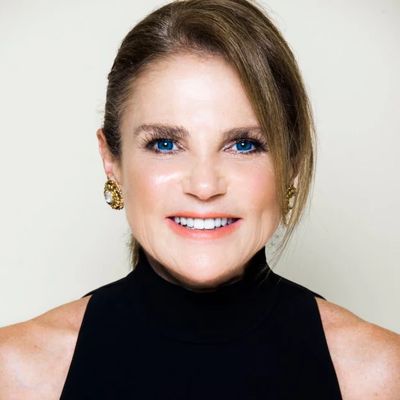
With a Broadway career spanning over 50 years, Tovah Feldshuh takes us through her journey as she shares her life as an actress, wife, and mother. While she loves politics, it's her love of people that motivates her to fight for what she believes in and help in every way that she can... Read More
From the show: The Theatre Podcast with Alan Seales
Guests
Featured Shows
About
With a Broadway career spanning over 50 years, Tovah Feldshuh takes us through her journey as she shares her life as an actress, wife, and mother. While she loves politics, it's her love of people that motivates her to fight for what she believes in and help in every way that she can. Initially determined to go to Harvard Law School to stay close to her father, her brother encouraged her to apply for the McKnight Fellowship in acting and was eventually chosen as one of the four to attend the fellowship. This trajectory change was the beginning of Tovah's pursuit of becoming an actor, which to her is "so much cheaper than therapy". Tovah talks about her role as Mrs. Brice in "Funny Girl" and bringing a level of humanity and relatability to her character, and her memoir, “Lilyville: Mother, Daughter, and Other Roles I've Played” which explores mother-daughter relationships, and her complex relationship with her mother. Married for 46 years, she shares what makes their marriage work. Tovah intends to keep acting for as long as she can, mainly motivated by her love of people and making connections.
Tovah Feldshuh is an actress, singer, and playwright who's been a Broadway star for more than four decades now, which earned her Tony Award nominations and two Emmy Award nominations. She made her Broadway debut in the 1973 musical "Cyrrano". Her other stage credits include "Saravá", "Lend Me a Tenor", "Golda's Balcony", “Dreyfus in Rehearsal”, “Lend Me a Tenor”, “Golda’s Balcony”, "Irena's Vow", "Pippin", and "Yentl". She made her cabaret debut with her act, "Tovah: Crossovah! From Broadway to Cabaret", followed by "Tovah: Out of Her Mind!" and was selected as Best Cabaret Artist of 2000 by the Boston Globe. Tovah has also appeared in numerous tv shows, including "Ryan's Hope", "Holocaust", "Mariah", "As the World Turns", "Law & Order", "Flesh and Bone", "The Walking Dead", "Crazy Ex-Girlfriend", and "Star Wars Resistance". Her film credits include "Kissing Jessica Stein", "Just My Luck", "She's Funny That Way", and "Armageddon Time". Tovah is currently playing Mrs. Brice in the Broadway revival of "Funny Girl", and is the author of the memoir, “Lilyville: Mother, Daughter, and Other Roles I've Played”.
Connect with Tovah:
- Instagram: @tovahfeld
- Website: www.tovahfeldshuh.com
Connect with The Theatre Podcast:
- Support us on Patreon: Patreon.com/TheTheatrePodcast
- Twitter & Instagram: @theatre_podcast
- TikTok: @thetheatrepodcast
- Facebook.com/OfficialTheatrePodcast
- TheTheatrePodcast.com
- Alan's personal Instagram: @alanseales
- Email me at feedback@thetheatrepodcast.com. I want to know what you think.
Transcript
This transcript was automatically generated and might contain errors.
[0:00] Alan Seales: Hey, everybody. Welcome to The Theatre Podcast. Intimate personal conversations with the industry's biggest names. I'm your host, Alan Seales, and our guest is Tovah Feldshuh, who is a star of stage and screen, and she's now on Broadway in Funny Girl, playing the character of Rosie Bryce, of course, the iconic Fanny Bryce's mother. She just loves the audience. She loves the craft of performing, and telling her story, her childhood story of how she got into it is just truly inspiring. She brings this new life to the character of Rosie Bryce, who, as she puts it, is pretty bland on paper, and she just has this whole worldly attitude about her that I've never seen portrayed like this before. But family just seems to be everything for her, and she talks about her own family so much during this interview, and I think that translates into her portrayal of this character of Rosie Bryce on stage, and of course, being Lea Michele's mom on some nights and Julie Benko's mom on other nights and whoever's in the role.
And she even mentioned, she said, people ask her all the time, does she play it differently depending on who's on? She's like, of course, because it's different children, so she has to, which I find highly respectable. So, find me online on Instagram, Twitter, TikTok, Facebook, if that's still a thing these days. I guess it is. So, shoot me a note, let me know you're listening. Everybody, please leave a rating and a review wherever you're listening to this podcast now, and enjoy this episode with Tovah Feldshuh.
[1:44] Alan Seales: Today's guest is a six-time Emmy and Tony Award nominee and has been awarded three Honorary Doctorate of Humane Letters. She has a Broadway career that has spanned 51 years and includes credits such as Cyrano, Pippin, Rodgers and Hart, Dreyfuss in Rehearsal, Yentl, Lend Me a Tenor, Golda's Balcony, and Irina's Vow. TV credits include The Walking Dead, Law & Order, Salvation, and Crazy Ex-Girlfriend. She has a massive film resume, of course, which includes the recently released Armageddon Time, starring opposite Sir Anthony Hopkins and Anne Hathaway, and she is also an author, having published an amazing memoir called Lilyville. She can now be seen on Broadway again as the hilarious, very hilarious, I might add, Mrs. Brice in Funny Girl. Tovah Feldshuh, welcome to The Theatre Podcast.
[2:35] Tovah Feldshuh: Thank you so much. Wonderful to be here, Alan.
[2:38] Alan Seales: I could have gone on for like another three and a half pages with the amount of bio that I had to cut out just to get to the interview here. You have got quite a career.
[2:49] Tovah Feldshuh: Well, 2023 will be my 50th year on Broadway. I've got a career because I'm old. I've been doing it for a while.
[2:55] Alan Seales: Yeah. No, I totally, I understand that. I guess, well, I was originally going to talk, okay, we'll go with my original question here, which is the Doctorate of Humane Letters. You've got three of those. So for those who have no clue what it is, I had to look this up, but it's phenomenal. Explain to the listeners what that means.
[3:20] Tovah Feldshuh: You may know better than I do, but it's basically an acknowledgement that a human being has a certain expertise in a certain area, and therefore, though I did not go to school for a doctorate and write a thesis for a doctorate, though I did go for a master's, that they deserve an honorary doctorate of humane letters for the knowledge they have and the knowledge they can impart to others. But it does more, I think it talks more about just the positivity, because it's talking about humanity and uplifting humanity, right? So it's not just like you're super cool at doing backflips. You don't get a doctorate in backflips because you're a gymnast, but you're doing amazing things with your life and affecting people positively, right?
[4:07] Alan Seales: Yes, I hope so. I mean, I'm a member of Seeds of Peace. I plan to take a vacation and go on a mission to Saudi Arabia and Turkey to help the peace process between them and Israel, and I'm also involved in trying to keep our democracy active, beautiful, extraordinary democracy going.
[4:30] Tovah Feldshuh: Yeah, that's a challenge in and of itself these days. Wow. Unless you're, you know, unless you have narcolepsy, unless you are absolutely falling asleep at the wheel, you have to know that the country is in crisis and that we need a big tent that is inclusive, and we need one man, one vote. That is the basis. One person, one vote to honor the women who screamed for suffrage for so long and finally got it.
[5:07] Alan Seales: I've heard this analogy being used for the country for a little bit now. Obviously, like we're a young country in terms of the age of countries as far as that goes, right? And I've sort of heard this analogy that America is like we're in our late teenage years, right? Where we're rebelling. We don't know who we are. We don't know what we want to be when we grow up, and eventually we're going to get through this, but living through these years is really frustrating for everybody else. Of course, the parents of the world who are watching us implode, but as somebody who is, as you were saying, has had a career as long as you have, and I'll touch on this too when it comes to your memoir, but you've had several relationships as a mother and a daughter and as an actress of all sorts of roles, and so equating your life experience with your love. It sounds like you do have a love of politics. Am I right in assuming that or is it just in protecting democracy?
[6:02] Tovah Feldshuh: I have a love of people. I have a love of people. I would never run for public office, but I love people starting with the 1,200 people who come per show to Funny Girl, to the August Wilson Theater, to see this stadium event called Revival of Funny Girl, or I should say The Recreation of Funny Girl, directed by Michael Mayer and starring Lea Michele, and thankfully, I mean, Carol Malou, Jared Grimes, and myself. I feel extremely blessed, so I love people, so deriving from that basic feeling from the heart, it goes out to people from the Arab countries. It goes out to Asians. It goes out to people of different cultures, different sizes, different shapes. I'm also an adventure traveler, and I speak five languages because my parents felt it was important to be able to enter the other cultures besides ourselves, and particularly if, God forbid, it ever became necessary to be able to enter the fabric of France or Italy or any of the Spanish countries or Hebrew. My Hebrew is pretty lousy, but my prayer book Hebrew is good.
[7:17] Alan Seales: So as a kid then, I guess, what got you into theater? Because if your parents are imparting the wisdom of culture and traveling and five languages and all of that, where did the need, was it a need for performing, or did you fall into it? Where did that all begin?
[7:36] Tovah Feldshuh: Well, Lilyville talks about that a little bit. I was the beloved child of Lily and Sidney Feldshuh, who had dreams of their own and built their dream house in Scarsdale, starting probably close to the minute I was born, and by the time I was three, I was hanging upside down on my swing set, which had a little trapeze. In the winter, I'd wear my green winter snowsuit. In the summer, I'd wear my brother David's hand-me-down brown shorts and his brown T-shirt, some of which I would sometimes take off. I don't think I wore a top until I was about nine years old, but in all events, they had their vision. I was extremely attached to my father. He came home from the war. I was born after the war. I was his only infant.
David was born during the war and didn't know his daddy for two years. I had the great fortune of being held in my father's arms when I was 24 hours old, and I don't think he ever stopped holding me. He was a litigator, a Harvard graduate. I wanted to be with my father. I wanted to be a litigator and a Harvard graduate. I applied to Harvard Law School, made the wait list, and it was my brother David who said, "Why are you doing that? Why don't you apply for the McKnight Fellowship in Acting for the Guthrie Theater? They'll pay for your master's, and you can become a journeyman in the company, in the Guthrie company, and hold spears, understudy the leading ladies who were size seven." At that time, you could only understudy your own size because the understudies didn't have their own costumes.
You wore the leading lady's costume should they be out, and they were never out for two years, never. Ask me how many understudy jobs I've done since then. Zero. I turned them down even for the standby for Bernadette Peters in Mac and Mabel given to me by David Merrick. I said, "No, thank you, sir. You're crazy. You'll go on." I said, "I will never understudy for the rest of my life." So really what the underlying principle is is that our vision creates our creation. Our vision creates our creation. So when I got waitlisted at Harvard, I said, "Well, where can I make up my own plays?" My father was a playwright, if you will, in the courtroom. He would make up his defense, and he would give his monologue to the jury and defend people and try to every man is entitled to a fair trial.
I said, "Well, an actor does that. We become other human beings, and it is so much cheaper than therapy." So I entered. I won the McKnight Fellowship. There are only four given out a year. It was a free ride to the Guthrie supporting my graduate work at the University of Minnesota, which was lovely.
[10:16] Tovah Feldshuh: And the last play I did at the Guthrie, I had 21 roles in 11 plays. My roles were so small. I in Cyrano would enter as an actress, exit, enter as a boy poet, exit, I would enter as a nun. Those are the three of them in that show. And the last show they did was a musical of Cyrano starring Chris Plummer, and I could sing and dance. And they offered me 14 lines in the red dress to play the food seller. And that thing would start at the Guthrie, go to the Royal Alex in Toronto, onto the Colonial Theater in Boston, and open at the Palace Theater in the spring of 1973. And Chris Plummer, may he rest in peace, won the Tony for Best Actor in a Musical. And Broadway was in such tough shape during that particular recession. I think there were eight to 10 shows on Broadway. That was it. You could get any theater you needed. Yeah, it was rough. And then we began to enter the whole Vietnam War era.
[11:13] Alan Seales: You glossed over the whole, I could sing and I could dance. Did that come from seemingly nowhere? Did you just decide one day you want to do it? Or were there lessons?
[11:25] Tovah Feldshuh: Let me put it this way. My mother was a classical pianist. My mother-in-law happens to have been a phenomenal classical pianist. I was a pianist. I was a pianist. And I loved to sing, and I wanted to take dance lessons. And I was a cultured kid who had entered the upper middle class in the United States. Grandparents were all immigrants. Some were wealthy. The Felchers did very well, had silk mills, and came from Austria and Germany. And the Captains were Romadas from Russia and from the UK, from England. My grandmother was British. And my mother went from a bronze apartment to a vast house in Scarsdale, New York. And David and I were both educated in public schools. But being cultured, singing and dancing and speaking languages and playing the piano, this was part of Kinderstube.
This is part of what a cultured, educated child did from the European tradition. And my parents were born in New York and New Jersey. Their first language was English. And I never questioned it. Scarsdale was very upward mobile. A lot of kids went to Rita Chastain to learn modern dance. And then when I went to Sarah Lawrence instead of Vassar, where I really wanted to go, but my mother said, "Who's going to teach acting at Vassar, going up all the way to Poughkeepsie? You go to Sarah Lawrence and you can commute into New York and study with some of...
[13:46] Tovah Feldshuh: The highest mortality rate in the state of New York at the time was on the Taconic Parkway. American Jew was crucial. Education is a survival skill. It's not an option. My parents regarded, my mother particularly, not my dad, my mother regarded acting as a trade. I think she would have preferred me to be a doctor, a lawyer, or a professor. My brother became a doctor and a professor. So her firstborn gave her what she needed. I became an actor and came to New York on Broadway. That was a stroke. I didn't even know how lucky I was. Then I realized that imbibing the virtues and the flaws of other human beings and becoming them in a seamless relationship between your neshama, between your soul and their soul, was a lot cheaper than therapy, a lot.
I didn't do much of that either. I was just busy running around avoiding the existential abyss, which I still do to this day. I'm a very busy person. Whether I'm buying secret gifts for a very special young man who's going to get some great gifts for his Christmas, or whether I'm throwing a Hanukkah party, which is my tradition, where the various children that I have will come, and not just my beloved Amanda, Brandon, Joel, and Jamie, who are their partners, but also Oscar Isaac, Lea Michele, people. I've been Oscar Isaac, Anne Hathaway, Rachel Blooms, and Lea Michele's mother within the last 12 months. Now that is a privilege. I am like the luckiest mommy, not to mention my little boy who went to Harvard, Brandon, and my little girl who majored in physics at MIT, Amanda Claire Levy.
I'm very proud of my children. They're very diligent and very highly educated. How can I still sustain my career if I didn't sustain my body and my mind? What about Rosie Bryce is like everybody else? What makes her the most like the human mother, the gorilla mother, the tiger mother, the lion mother? What makes her distinctly Jewish? Those are the two things. That was my great advantage. I'm the first Jewish actress or the first actress of the Jewish religion. I consider myself a classically trained actress who played Juliet for Jack O'Brien, Isabella for Jack O'Brien in Measure for Measure, Celia opposite Eileen Atkins. I have a slew of very important classical credits and would love... I'd love to play Lear.
Now a woman can do whatever they want. It's great. I'd love to do some of the great Shakespearean roles when we finish this run. In all events, how do you keep your mind and your body facile? Being in a Broadway musical that's such a bop-o hit is a very easy way to do it. You have to be clever. You have to be fast. I tap dance. I sing. I weigh what I weighed in seventh grade. I didn't. I got married at 118 pounds. I'm now 112, which was my weight when I was bought Mitzvahed, and I was 112 for the Weisslers and for Diane Paulus when I did Pippin. Same thing. I was ripped. I would take off my t-shirt, but we're on video, so it's not so private, and I would show you my delts. They're very, very pronounced. I ride my bike to the theater. We're going to take a short break. Stay tuned for more of the episode.
[17:57] Alan Seales: I love all that, and something that you just said, I want to carry that lesson forward to my children and quote you on this. Education is a survival skill, and for my boys, I have two young boys who are six and a half and almost eight, and all they want to do, of course, is just run around and not read and not go to school and hang out at home with us all the time, but especially my older one is so anti. He doesn't understand the necessity. I mean, kids at that age really don't anyway, but they don't understand the necessity of education, and I'm just trying to instill in their minds in a way that they understand that you can do anything you want, and you can do what you want as long as you get educated, and because you get educated, you're going to create those paths for you.
But children don't do what you say. They do what you do, so you need to have dear time. Drop everything and read. They need to see the parent read it. You need to read to them at night, and if you can't, have the babysitter read to them at night. You need to proffer them books and to excite a love of books that is connected to you. Oh, Daddy, I love my Daddy, and my Daddy loves books. That's how this whole Harvard Law thing started. My father was a great orator. Oh, I love Daddy. He's a great orator. I'll be a great orator. My father loved being Jewish. He loved who he was. He used to say, remember who you are because the world will remind you anyway, and if we were questioning that, all we have to do is tune into good old Kanye and what he's doing to this planet.
Shame on you. Shame on you. I say it publicly, and if I met you, I would say it to your face, and yeah, it's a survival skill. I wish that I created time for me to read more. What I do do is I listen to audiobooks, and when I say that, I mean the Iliad and the Odyssey and the great books. I was a runner for 40 years, so that was great. I had a half hour every day, but I still bike to the theater, and I put one AirPod in and one AirPod I don't so that I stay alive, and I listen to books. I'm listening to Trevor Noah's book right now, Born to Climb. Very, very interesting. Yeah, really, really good, and why is it good? It's good because he can get to the universal. It's the same thing. Of course, Rosie Bryce, I had to carve that role.
I mean, that role is beige wallpaper, and you have to know about comedy and how to tilt a line and also ethnicize a line to amuse the audience but also to vivify the story, and I have worked that part to the bone, and it's a privilege to do it. It's just a privilege to be on stage with Lea Michele, for God's sakes. Have you ever? That kind of fame and that coupled with that kind of talent, so it's deserved fame. It's quite something to be there with her. And Julie Benko as well. Julie Benko is a privilege. She's one of the great privileges of my life. I love Thursday nights. I get to go on with Julie Benko. It's a different show. I had another interview. They said, do you change your performance?
I said, of course I change my performance. I'm a different daughter. I have different feeds, so the music will be different, and she is hysterically funny. She's a really skilled actor, and then she's flanked by the incredible Ramin Karimloo with the voice of a god, and Jared Grimes, need I say more about Jared Grimes, this genius performer and full-hearted human being, this loving, phenomenal tapper, but he combines tapping with a true and profound love of humanity. I hope I project that same kind of heart when I'm on the stage, and at least in the curtain call. I just love, love people. Sometimes I go up to people in the cast and I say, I love you, and I want to tell you while I'm still mentally competent, while I can still talk and dance and perform right, I'm not going to wait until I'm some, you know, decrepit person on a walker and can't do Broadway musicals anymore.
Oh, you'll still do it. I'm sure you will, even with the walker, but I was going to tell you a while ago, you mentioned like what makes your character so relatable and so likable because she is this, really on the surface, like you said, beige wallpaper, right? I love that phrase, and it's just like this kind of jaded mom who's like, whatever daughter, get out of here and do your thing, but you bring such a level of humanity and comedy too, which it needs, of course, but the level of, I guess, just relatability that you're bringing to it because you're actually accessing parts of this character that obviously, this makes a great performer, you're accessing part of this character that aren't written down and bringing bits of the culture and bits of your generation and things that other performers don't necessarily have, and it's a completely new performance in a way that I've never seen it performed before. So, you know, snaps, claps, whatever you want to say. I enjoyed it so, so much watching you on stage.
[23:15] Tovah Feldshuh: Thank you. Thank you deeply. It's my honor to be there and my pleasure to make this woman highly and specifically Jewish and highly and specifically universal, and I had to work from two ends of that spectrum. I had a great advantage. I happened to be the religion and the ethnic background that the character was written. I'm not Sam Adford. I'm not an Irish Catholic to begin with, and I love them. Marty Moran, one of the great Tom Keeneys in our show and one of the great souls of this universe, also an author, you know, a very, very good writer. So, they're great human beings, but putting Jared as Eddie Ryan and actually somebody saying, maybe we should get a Jewish person to play Rosie Bryce was kind of an insight that the production may have needed despite prior performances from extraordinary and wonderful people and wonderful artists, and I love doing it, and I found the verb.
A Jewish mother is tethered to their child, and I am tethered to Fanny Brice. So, what is Leah's eye coloring? How does Leah move? What is her rhythm? How does her rhythm derive from me? Certainly her choice of husband derived from me, a poor choice of husband, right? I'm abandoned by my husband. My husband leaves me because I treated him the same way. Fanny treats Nicky. You want 68,000, here's 68,000, you know? So, I kept up the saloon, which kept him, and then I channeled part of Lily, part of my beloved mother, who was born in the Bronx, and her speech pattern, and that tough, yes, and also the tough love, that thing about have your guest jet, who's the best jet. If you wait, I'll tell you one more time, you bet your last time, in all of the shtetl, in all of the town, in all of the city, in all of the state, in all of the country, no. In all of the world, you're the greatest star. All of the world. So, those lyrics have to have a reason to exist. So, this mother is definitely in the part.
[25:32] Tovah Feldshuh: I love that and you can see it coming through and I feel like there's a chemistry, a gel of the cast now that didn't exist previously or in other productions. It seems to be presented in a way that "Funny Girl" makes sense, and obviously that's being reflected in the business of show business in that ticket sales are way up, the show is doing very well, the audience, the house is full again, and there's a lot going on, I guess, on stage that reflects the love and the respect and the talent that now exists on stage altogether.
[27:00] Tovah Feldshuh: It is Lea Michele's birthday! Happy birthday, Lea! That was it, and we sang happy birthday. I don't even know if she had a cake, but everybody's even there are cakes for everybody's birthday, and every chorus member, every person in the company is treated with great importance and respect. One man, one vote, and basically the value system that has been laid down by the big heart of Michael Mayer and his statement. That's Lisa, Howie, Janet, and Colt. Also, Chris is coming back; it's team first, team first. So certain things, everything's equal, equal. But if Lea needs more PT than the rest of us, you give her your PT session. She's the cheese man; she's "Funny Girl." She's the hub; we are her spokes, beloved spokes, and we each get a piece of the pie.
We're each, you know, certainly Nicky Ornstein has this moment; it was written into this production, and Rameen so deserves his huge number in act two, and Jared has his starring moment, and I have my duet with Jared that I treasure. Do I wish I had a solo? Of course I do, but so what? It ain't in, and the show is two hours and 50 minutes long, and I have enough material to make it all work well so that people say, "I didn't realize that Rosie Brice's role was that big." It probably isn't, but we do the best we can to enhance the story, vivify the story, and deliver it to the audience. It's Neiman Marcus, Alan; the audience is always right. They say the customer is always right. If the audience is rattling their programs, something on stage is not being truthful, and I teach it when I taught at Yale. It's the first thing I said: if somebody is fiddling, you haven't reached them; you haven't engaged them.
[28:57] Alan Seales: The full title of your memoir is "Lilyville: Mother, Daughter, and Other Roles I've Played," and it explores mother-daughter relationships. Is it the book I've heard described like this, or is it you describing your mother that challenges socio-cultural expectations of women that helped shape your career?
[29:21] Tovah Feldshuh: The book covers 110 years of women's history, and inside it are these two major characters: Tova and Lily. Actually, Lily first, born April the 18th, 1911, on a dining room table in 1534 Charlotte Street in the Bronx. Lily, who lived in a rural area at the time, behind her were wildflowers and uninhabited lots. On her 12th birthday, Yankee Stadium was completed, and Babe Ruth hit a grand slam home run, defeating the Boston Red Sox, and we've been Yankee fans, of course, ever since. But my mother was born in 1911, and before women's suffrage, her mother was in corsets. She lived through World War I, the Spanish flu, the roaring 20s, the crash of the stock market, the Great Depression, and World War II before she was 30.
Before she was 30, and your fate was tied into your match. Your fate was your match. When I married Andrew Harris Levy at the Plaza Hotel on March 20th, 1977, having already won five awards for "Yentl" on my way to Hollywood, my mother said, "Tell me you can do whatever you want now." I thought she was saying movies, television; she said, "You can do whatever you want because you're marrying a Harvard lawyer." So that was her value system. Did I love my father unconditionally? He was my hero, and I did marry a Harvard lawyer, and then I played a lawyer, defense attorney, on "Law and Order." It started out as a man's role, Daniel Melnick, just like "Walking Dead." It was a man's role, but they gave it to me.
So these two are very important, and when I did Daniel Melnick on "Law and Order," one of the showrunners said, "Gee, she seems awfully good at that." That's because my father was a litigator, and I was like in the Suzuki method of litigation. I saw him in the court since I was a little girl; he took me to the Supreme Court when he had a big trial to come see it. He always invested in me. Talk about respecting a person; he taught me how to ride a horse when I was a kid, and it was a fancy horse. I learned English saddle, and he said, "Terry Sue," which is my birth name, "how often can a little girl tell a big animal what to do?" So he empowered me a lot. I fell off my horse when I was about nine or ten.
It was June, and I had a white hacking jacket on, and I slipped off my horse into a pile of horse manure. My father screamed to me, "Are you alright? Are you alright?" I said, "Yes, Daddy, but I'm covered in horse shit." He said, "Everybody is; get back on your horse."
[32:14] Alan Seales: We're going to take a short break. Stay tuned for more of the episode.
[32:44] Tovah Feldshuh: So was there any, I guess, sort of conflicting messaging coming from your mom of traditional values of that time, like women have to marry into a man to have an identity, and then your father, who was like, "Everyone's covered in horse shit. Get up and do it again?" It seems sort of, I mean, good on your father for being like, "I don't care what my children's gender is; they're both going to be successful."
[33:24] Tovah Feldshuh: Right, right. It reminds me of Kenny Felds, whose father ran events, and then he ran Barnum & Bailey Circus, and he had three daughters, and he invested them with the ability to run his massive business. In all events, back to this, Andrew Harris Levy combined those values. I don't, as Andy has said to me, "Tove, if you weren't so bourgeois," which was considered so boring in my 20s, now that's those values. Parents are married 63 years; my grandparents are married 63 years; the Levy family, whom I married into, married 63 years. We didn't even know from divorce. You marry like a Jew, and you divorce like a Catholic. When she had children, there's no divorce; it doesn't exist. So those middle-class values sustained a very rich personal life, and God forbid, toy, toy, toy, if anything happened to Andrew, anything, I would stop my work, and I would make sure that he's okay.
He has to come first, and the great thing about Andrew is he never stood in the way of my career. That's why I said yes. I knew what other men would want me to give up my work, and I told Andrew, "I will never, ever, ever give up my work." And it's not just because I love it; it's because a woman needs a back door. You need a place to go. It's like a room of your own by Virginia Woolf. You need a place to go that's all your own. You need your own money; you need to earn your own money for freedom. So if I want to collect Chanel, I can collect Chanel and not aggravate my husband. We were splitting everything 50-50 when we got married because we made the same amount of income, and my mother said, "Come here, little girl," and she said, "You're not going to split everything."
I said, "Mom, it's not fair." She said, "Be quiet, just be quiet. Listen to me. You're going to get pregnant, and you're not going to earn what you're earning. You're going to earn close to nothing, and you're going to need him." So Andrew establishes your standard of living: the rent, the water, the basic phone bill, the basics. Can you afford this house or that house or this apartment? You want a crib made of brass that's $800 in 1983, which was a fortune? You buy that crib. You want a special vacation somewhere, and things are tight? You save the money, and you support the vacation you take him. It was brilliant, brilliant advice, and that's what we did.
[35:54] Tovah Feldshuh: I can only tell you I'm a practical woman, so that's all from my mom, and that's it, and I love my work. Who doesn't love being other people? I just love it. You just become these other people; you take on their problems, their expectations, their failures. You get a vacation from yourself, as I said; it's so much cheaper than therapy in this age. I'm married 46 years; there are certain repetitive things that must drive Andy crazy, except after 46 years, it doesn't drive you crazy. You decide it's not going to drive you crazy at all; you just bend, isn't it? I thought it was Saroyan that said, "A branch, in order to bear fruit, must learn to bend." And so we do, and we're in act three of our marriage.
It is so sweet and so romantic. It's very romantic because we've buried all our parents; we know death, and we know life, and we're in that wonderful sustained moment, which I told Amanda and Brandon where their parents are. Well, we have never been; that is Rosie Brice that I didn't do, you know, five months ago before I played this part. We have never been, God forbid, in a hospital for a health issue, so they've got healthy parents who are clearly senior citizens and healthy children who are making their way from six months to four years. I've got four of them, and they are the greatest distraction from the third act. You want to escape from the aging process? Just get around a young kid, a very young kid who's rediscovering the world.
And the other thing I can recommend is I haven't had any plastic surgery, so it's very hard to look at my face, but I'm getting a lot of work because I think I'm the only person my age you can move their face.
[38:06] Alan Seales: For those who are listening only, she just gave me the best facial expressions I've ever seen on this podcast. No, I think that's so cool, and it speaks to the emotional health that you and Andrew, your husband, seem to be comfortable with and living through because there's a lot of people who are much, much younger who are less healthy, who are less mobile, who are less excited because I think there's so much to your physical health.
[38:19] Tovah Feldshuh: Your mental health ties to your physical health. And so when you're doing something you love, like you go on stage eight times a week, and you get to be with the audience, with the people that at the very beginning of the interview, this episode, you were saying like, this is your people. This is why you do this for the people, right? And you get to do this eight times a week, and it brings you probably a level of youth that, I mean, maybe you are aware of this, but I think it helps keep you emotionally healthy, which is then reflected physically.
[38:50] Lea Michele: I think that's very perceptive, and I never thought of it that way, and I totally agree with you. You really, it's not only approbation, it's also like, for instance, Thursday nights is Julie's night in Funny Girl. Lea very wisely does one Tuesday, two Wednesday rests. One Friday, two Saturdays, one Sunday rests. Otherwise, how the heck is she going to do the 22 changes, all the songs, et cetera? Julie goes on every Thursday night, and God forbid, Lea has to call out, and sometimes things happen. She goes on. But I see Julie Benko win over that audience every Thursday night. By the time she sings, I'm the greatest star, there for her corner, and that is something to behold. That's an American story inside an American story.
We root for the, let us say, the underdog. We root for the person trying to make their way in this world and make their way well, and Julie Benko is a genius at that, and she's given the right material, and she's also a great sport. She's a great sport. It's just a nice person as well. Yeah, very nice. Very, very nice.
[40:08] Tovah Feldshuh: Lea is a doll, too, an angel. She's very respectful of everybody. She's out of her dressing room like a bat out of hell. That kid is out of her dressing room in 60 seconds. I barely have my corset off, and she yells goodnight to goodnight. She gets in that car, and she takes care of herself. Wow. Good for her. Well, I'm really happy that the show's doing well, that you're doing well, your family's doing well, and what do I need to do? Right. Yeah, these are the golden years. I have to look up what tututu means. You know, knock on wood means knock on the cross of Jesus, so Jewish people who are aware of that, we don't do that, even though it's already an American expression, but of course, bagels is already part of the American, you know, lox and bagels.
In New York, I think everybody's Jewish. It doesn't matter what religion you are. You come into New York, and by the time we're finished with you, you're a Jew. I'm joking, but you have those values of heavy education, excellence, the excellence-driven machine. It's a neurosis all in and of itself, but it's a neurosis I understand. I understand the drive to the A. You know, nobody, there wasn't a paper that went out of this apartment for my children without the third edit, and a collegiate where Brandon went to school. If you handed in the paper early, the teacher would correct it and give it back to you to give you another chance to better the paper. It was a reward for being early, and that kid usually never missed an opportunity to hand the paper in.
Maybe it was only one or two days early. Maybe it was two at best. Maybe it was one, but he had a second shot, and Amanda, too, the fact that she said, well, I got into MIT, and I think I'll major in physics. What? Major in physics? I mean, it was like we have no legacy there. We have no connection with that school, and that little girl got herself from Spence to MIT, God bless her, and graduated with a 94.5. She did very well, that little girl. She did very well, and she's a wonderful mother. People love their children, but if your children abide by your values, they're very, very easy to love. That's it. I mean, they're very easy to love. It's not a different cultural adjustment.
[42:19] Alan Seales: If your kids had wanted to follow in your footsteps and learn the trade of acting, would you have been supportive or been like, get the hell out? Do not follow my stupid—
[42:27] Tovah Feldshuh: No, no. I would have been supportive. Amanda was very interested. She also danced with the New York City Ballet for four or five seasons in the children's corps. I was doing DeLuna Bank, and I was playing, and I was in a very small theater, and it was Kaufman or John Hausman, and Amanda was playing the State Theater, which is now the Koch Theater, you know, for 2,000 people a night in all over the Christmas holidays with the Nutcracker, and then she did a piece of the Metropolitan Opera with the American Ballet Theater, and she said, I'd like to be an actress, but I'd rather not audition. So, I said, you'd like to be an actress, but you'd rather not audition. This is a problem. This is a big, big problem.
Not going to happen. Because that's part of the thing. I said, you know, if mommy had a lead in a TV series, and I could give you a leg up the way Lucille Ball gave Lucy Arnaz, I said, but I don't know that that method would benefit your talents. There are very few Vanessa Redgraves who survive and better their parents, and there are very few Liza Minnellis who survive their mother and have a big career. You know, for every Liza Minnelli, there's another brilliant talent called Lauren Luft and another little boy who has no career in the theater or in film and TV. So, I didn't discourage it, but I did educate her about it, and Brandon had a few auditions as a young kid. He was interested. He would always get to the finals.
Even with Les Mis, he was called back. He had a beautiful voice, and he had a very gentle face. He could have been a film star, both of them, because he was not driven toward the theater. He was driven toward mathematics and things of other precision, academic pursuits. So, I wouldn't have discouraged them, but I did inform them, and also, I'm a middle-class kid. In the end, I was brought up with values that have served me fantastically as I've aged. That which was considered, oh, well, she's boring. She doesn't drink. She doesn't do a lot of marijuana. Not a lot, just a little, just enough. It was given to us on our wedding night, now that it's legal in New York, and now that it's served as a course in Aspinall, it was at a dinner party.
Holy wick, it was a course after the main course before the dessert. Hello. So, it was really, really wild stuff. I had a friend who died, and the doctor said to me, his heart was failing, but his liver was no good. It was so serotid, we couldn't save him, and I got that sentence from that death, that unnecessary death, that you're only as healthy as your liver and your pancreas, whatever's single in your system, not necessarily your kidneys and your lungs. You got a few shots with those, your heart, your pancreas, your liver. You're only as healthy as those things are healthy. When they're not healthy, you have no backup. My mother lived to 103. She was a medical experiment at 95, and they replaced her aorta and aortic valve with that of a young pony, and the reason she survived at 95 is because that was the one thing that was wrong with her.
She had a healthy liver, a healthy kidney, everything else was healthy. So, they did this experiment, and she finally woke up from, she was dying of aortic stenosis. She woke up with the heart, with the valve and part of the aorta of a young pony, and she said, wow, I guess I'm strong as a horse. She had 103, so it's another eight and a half years. What a gift that was. I plan to be 104, Alan, and just think Betty White. I'm going to act well into my 90s. As long as I have my marbles, I'm going to act into my 90s.
[46:20] Alan Seales: Oh, she's so great, and put in all the random animal parts into your body as we need to keep it going.
[46:26] Tovah Feldshuh: I will, if ever I need it. I was a runner, so I could be a candidate for a knee replacement. The only trouble with the knee replacement, my knees are good enough. I can dance up a storm on a level ground. The only thing with the knee replacement is you can't make a mistake. So, I can ski, but I really can't fall. So, I'm going to go with my knees and put a little rubber brace on it, and keep going on the blue slopes, and I don't go on any more black slopes anymore. Anyway, I'm not skiing this year, because I'm in Funny Girl. Well, almost until the summer.
[47:08] Alan Seales: Wow. Well, I cannot wait to see you again, and everybody needs to go see you. Everybody needs to read your book, which again is called Lilyville, Mother, Daughter, and Other Roles I've Played, and I want to wrap up with three closing questions that I ask everybody to end the episodes. The first one, just very simply, is what motivates you?
[47:30] Tovah Feldshuh: Wow. What really motivates me at my age is to live each day fully with meaning and connectivity with other human beings, or plants, or animals, in order to avoid the black hole of the existential abyss, of that which waits at the end of the road. Hmm. Let that sink in for a minute.
[47:55] Alan Seales: Wow. What advice would you give to your younger self and younger people listening now starting out down a similar path?
[47:58] Tovah Feldshuh: Your creation depends on the strength of your vision, and if things are not working out, strengthen your vision, or listen to the universe. Maybe you're supposed to take a left or a right hand turn. I thought I was going to litigate, and I only wanted to go to Harvard Law School, which shows that you didn't really want to litigate. You just wanted to be with your dad and go to your dad's school, and instead of doing that, I married into my dad's school, and he says to this day that he thinks that the fact that he went to Harvard College and Harvard Law School influenced my yes. I didn't even say yes when he asked me to marry him. I said, of course, and I think it did, so shoot me. What can I tell you?
Freud is alive and well in this marriage, and it's a very, very wonderful marriage, and I married a very fulfilled man who loved his work, so I watched my mother, like patients on a monument, wait for dad to come home. I said, I'm never doing that. I am never doing that, and I don't do it. What I would say to young people is what Ruth Gordon said to me. Never give up. Never give up. Don't give up on your dreams, and if you can't find a direct path that's a major thoroughfare for you that ends up as you starring in a TV series, find it in theater. Find it in your rep company. Find it in your community theater. Find your joy. Joseph Campbell, follow your bliss. Follow your bliss. You're inside this body for one shot. There's one rainbow shot inside this body at this time.
[49:38] Alan Seales: All right, so the final question here. This is super hard. If you can only see one show for the rest of your life, but you can see it as many times as you want, what would you see?
[49:46] Tovah Feldshuh: Easy, Funny Girl. On Broadway, August Wilson Theater. What show I'd love to see over and over again? That's such a hard one to think about, but my first show that I was allowed to stay up late for to watch on television and then would see it live was Mary Martin as Peter Pan, and that has never landed. I know a place where dreams are born and time is never planted. It talks about fulfilling your vision to create your life.
[50:24] Alan Seales: Do you do social media at all? Are you online in that capacity?
[50:27] Tovah Feldshuh: I have Instagram because I did The Walking Dead. I was Deanna Monroe. I had many thousands of followers.
[50:35] Alan Seales: All right. Well, we'll connect with you online. You can get more of me at thetheaterpodcast.com. I'm on Instagram, Theater, TikTok, Facebook. Leave a rating and review wherever you're listening now. This has been edited by Well-Rounded Hoodlum Productions. Jukebox the Ghost gave us our intro and outro music. And Tovah, thank you so much. I've really enjoyed talking with you.
[50:52] Tovah Feldshuh: Thank you very, very much.
© Broadway Podcast Network, All Rights Reserved