

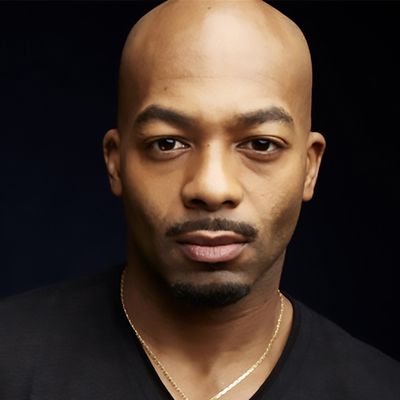
Driven to inspire other people with art, Brandon Victor Dixon has been sharing his talent with the world for decades now. And this month, the actor slash theatrical producer is part of the much-anticipated world premiere of the award-winning "MacGyver: The Musical’s" album which will be released on January 27th... Read More
From the show: The Theatre Podcast with Alan Seales
Guests
Featured Shows

About
Driven to inspire other people with art, Brandon Victor Dixon has been sharing his talent with the world for decades now. And this month, the actor slash theatrical producer is part of the much-anticipated world premiere of the award-winning "MacGyver: The Musical’s" album which will be released on January 27th. Apart from theatre, Brandon is also doing advocacy work. He talks about the We Are Foundation which he created, and how he uses it to bridge gaps between art and us as communities. He brings up a good point on human behavior, what makes it for some people to be kind, and how art can be a gateway to understanding and helping them. In choosing a role or a piece, he considers the tools that can make his role and the exchange between him and the audience the most effective. He adds that the pieces choose him and come into his life at a time when he needs them the most. When he was just starting, Brandon had to pause his graduation to go on a national tour, come back, finish school, and then originate a role on Broadway for which he got a Tony nomination. He recalls his audition process for the role of Simba, why he thinks he shouldn't have been cast, and how he overcame his doubts and the challenges he encountered as it was happening. As one of the stars in the world premiere album of “MacGyver: The Musical”, Brandon talks about his character, doing comedy, and how his process usually adapts to the show his doing. Brandon reflects on his role as Haywood Patterson in “The Scottsboro Boys”, why he considers it his favorite role, and how it ultimately goes back to his advocacy: to change and help people with the power of art.
Brandon Victor Dixon is an actor, singer, advocate, and theatrical producer known for his Tony Award-nominated Broadway performances as Harpo in the 2005 musical "The Color Purple" and Eubie Blake in "Shuffle Along, or, the Making of the Musical Sensation of 1921 and All That Followed". Apart from originating both roles, he also originated the leading role of Berry Gordy Jr. in Broadway's "Motown: The Musical", which earned a nomination for a Grammy Award for Best Musical Theater Album. In 2016, Brandon assumed the role of Aaron Burr in the Broadway company of "Hamilton". He also played the role of Hayward Patterson in "The Scottsboro Boys" both Off-Broadway and in London's West End, and was nominated for a 2014 Laurence Olivier Award for Best Actor in a Leading Role in a Musical. As a producer, his credits include Broadway revivals of "Hedwig and the Angry Inch which won the 2014 Tony Award and the Drama Desk Award for best revival of a musical, and "Of Mice and Men". In 2018, he played Judas in NBC's live concert version of Andrew Lloyd Weber and Tim Rice's rock opera, "Jesus Christ Superstar" where he received a Primetime Emmy nomination for Primetime Emmy Award for Outstanding Actor in a Supporting Role in a Limited or Anthology Series or Movie. His other stage credits include "Chicago", "The Lion King", "The Color Purple", "Rent", and "Shuffle Along" among others. His tv credits include "Power", "She's Gotta Have It", "Modern Love", and "The Best Man: The Final Chapters". Brandon is part of the much-anticipated album of the award-winning "MacGyver: The Musical’" which will be released on January 27th, 2023.
Connect with Brandon:
- Instagram: @brandonvdixon
- Twitter: @brandonvdixon
- Website: www.brandonvictordixon.com
Connect with The Theatre Podcast:
- Support us on Patreon: Patreon.com/TheTheatrePodcast
- Twitter & Instagram: @theatre_podcast
- TikTok: @thetheatrepodcast
- Facebook.com/OfficialTheatrePodcast
- TheTheatrePodcast.com
- Alan's personal Instagram: @alanseales
- Email me at feedback@thetheatrepodcast.com. I want to know what you think.
Transcript
This transcript was automatically generated and might contain errors.
[0:00] Alan Seales: Hey, everyone. Welcome back to The Theatre Podcast. Intimate, personal conversations with the industry's biggest names. I'm your host, Alan Seales, and our guest today is Brandon Victor Dixon, who is just this incredibly passionate individual, if you don't know him from any of the major roles that he's done. And I won't get into them now, because obviously you can read show notes, or I get into the intro with him in a second. But just the love and the passion for arts in general, and the way that arts can heal, and the way that art can change people, he is the embodiment of this. And that's what got him into the theatre and into performing in the first place. So, obviously, we talk about originating lots of roles, including a brand new role inside a brand new musical, MacGyver the Musical.
The cast album itself drops on January 27th, so you got a little bit until it comes out if you're listening as this episode drops, but it's just fun. It's so tongue-in-cheek and the dad jokes galore in the lyrics, which, of course, if you know me at all, I love them. So find me online, Instagram, Twitter, TikTok, Facebook, drop me a line, hit me up with your stories, let me know you're listening. And now everybody, please enjoy this episode with Brandon Victor Dixon. Here you go. One, two, three.
[1:24] Alan Seales: Today's guest is an actor, singer, advocate, and theatrical producer known for Tony Award-nominated Broadway performances, such as Harpo in the 2005 musical The Color Purple, and Eubie Blake in Shuffle Along, and, you know, Berry Gordy Jr. in Motown the Musical back in 2013. And Motown actually earned a nomination for Grammy Award for Best Musical Theater Album. Then in 2016, our guest assumed the role of Aaron Burr in the Broadway company of Hamilton. As a producer, his credits include Broadway revivals of Hedwig and the Angry Inch and Of Mice and Men. The former won the 2014 Tony Award and the Drama Desk Award for Best Revival of a Musical. In 2018, he portrayed Judas in NBC's live concert version of Andrew Lloyd Webber and Tim Rice's rock opera Jesus Christ Superstar, for which, of course, he received a Primetime Emmy Award nomination. Brandon Victor Dixon, welcome to The Theatre Podcast.
[2:31] Brandon Victor Dixon: Thank you. I'm happy to be here. Happy to be here.
[2:34] Alan Seales: Dude, you've been busy. And obviously, like, you don't stop. Last time you and I talked, I think, actually, we were doing something for Vote Writers, you know, We Are the Vote, right? In 2020 and whatnot. So it's been a hot minute since you and I had talked. But I guess that's a really good place to start because, like, you're known for theater and whatnot. But I think outside of that, many people listening may not know about, like, the advocacy work that you do. So, like, this is all part of the We Are Foundation, which you created, right?
[3:03] Brandon Victor Dixon: Yes, yes. The advocacy work is, I mean, the We Are Foundation is an extension of the advocacy work that I have, you know, tried to involve myself in, both directly through the kinds of projects that I choose and then, I mean, both indirectly the kinds of projects I choose and then directly through initiatives that surround them. And really, it's just about taking the philosophy of, you know, for me, it's my belief that art is the most exponentially transformative element in our culture, you know, a song, a play, a book can change a moment, can change a generation. And we have so many examples of that throughout history. And so, you know, the goal in what I do and in the works we try to engage in and partner with people through the We Are Foundation is to use art to bridge the gaps between us as communities, because, you know, art is the thing that can transcend culture, can transcend difference, can transcend language, can transcend everything. It synthesizes, it's a synthesis of the humanities.
[4:20] Alan Seales: Where did this, I guess, the need of the realization come from to do something about this? Because it's something that I have said throughout all the interviews that took place during COVID while Broadway was shut down, was basically like, we need to get Broadway back, because art can heal, art can help, art can allow people to connect in a way that they are not comfortable with, or they're not familiar with. But to actually sit down and start an organization and partner with people, and you've gone all the way up to like talking to the vice president, like, it worked, right? So, where did all this come from? And I guess, why do you make time for this in the middle of all the other TV and film and producing that you've got going on? And of course, theater work.
[5:06] Brandon Victor Dixon: Oh, I think all of this is just about basic social and human empathy and human decency. And I think I look, I come from both a family and an educational environment that made community service an important part of our education and of our development. My mother is a very empathetic individual and has always been a very giving person. And I think I've always tried to carry that forward. And for me, I have personally been very privileged in many ways that have developed me to be able to navigate spaces and navigate certain prejudices and conditions in certain ways that others have been less fortunate in dealing with, right? And so, for me, when I see that it increases my desire to advocate for others who may not have been able to navigate certain spaces the way I have been, because I've had certain supports or may not have been able to avoid certain spaces and move into others in the way that I have. And so, that's where all that comes from.
[6:33] Alan Seales: That's actually really, really brilliant and really self-aware in a way that I think a lot of people, no matter where you come from, just kind of don't have. So, I think it's respectable. And obviously, I think this is sort of a taught, it's a learned behavior that sounds like it came from, you said your family structure, right? So, you made community service part of the whole family vibe, right?
[6:56] Brandon Victor Dixon: Yes, it's definitely, sure. Part of it is learned, but I also think part of it is innate. And this is something that we talk about in our work. There are a lot of times when I think about social challenges, I try to, if I can get past my initial anger or et cetera, I try to think about what are the conditions that are making it difficult for people to be kind? Because at our core, the majority of us are kind and want to help each other and want to live in harmony with one another. In the occurrence of crisis, natural disasters, somebody slips from the ledge or they fall into the water, you reach for the person, you're not thinking about who do they believe in or what color are they or what, 90% of the time you're reaching, your instinct is to save.
And so, I try to think what are the conditions that we put each other under that make it so hard for us to make that kind choice, to choose to save in the little moments day to day. I think that's how I think about it. So, some of it is learned because yes, we find ourselves in environments that breathe that out of us, breathe that instinct out of us, teach us not to see the place for that instinct in certain people. But I do think at our core, it is innate within us. And so, the goal then becomes to unlock that in people who have lost it.
[8:40] Alan Seales: That's really interesting. And I thank you for the explanation. Does that translate into the type of projects that you personally get involved with professionally, like in terms of roles that you're taking or the shows that you want to give your time to?
[8:55] Brandon Victor Dixon: Absolutely. Absolutely. Both in terms of the messages that the shows communicate, but also in terms of the lens, hopefully, that the shows can create. Because one of the things we have to remember about art, it's not only supposed to be a vessel in which we can see ourselves. It's actually primarily supposed to be a vessel in which we can see each other. And so, I think that that is something that we have to remember. So, I like to do projects that can create the window for different people to see themselves in different cultures, in different individuals. Somebody who looks different than me, but having the same experience. I want to choose roles and choose projects that can make people feel differently about what they think they know.
[10:02] Alan Seales: So, back up then to Little Brandon, when you're maybe singing and dancing as a kid, right? What happened? Was there something that happened? Was there a moment? Was there a show that turned everything on its head for you when you were like, this is what I want to do, and now I know how to do it? Or was it just kind of following an unknown sort of calling, for lack of a better word?
[10:27] Brandon Victor Dixon: I knew it's the thing. It's the one thing I've known, I think, most centrally about myself since I was a very young kid, that this is how I wanted to be living my life. I did know that. But fortunately, I was in an environment, my elementary school, you know, we had a music class every day. We performed three musicals a year. And I had a wonderful music teacher, Mrs. Worth, who actually passed in November of this past year. And, you know, she taught me piano. And she, you know, she just really took an interest in me. And so she would choose plays and choose things. She'd be like, I'm thinking about doing this. Do you think you can memorize all of this? Do you think, you know, and she really, really supported me and educated me, you know, gave me tools. So I think that that's, that's really a large part of where it developed for me. And a lot of my education is experiential. So, you know, I performed a lot, like I said, we did.
[12:05] Brandon Victor Dixon: And in trying to really, when I was younger, trying to learn how to memorize the lines, but also you're working with both interested and disinterested peers in elementary and junior high school, right? So, you know, you are, right, so you are kind of, how do you keep the show aloft? And when people make mistakes, how do you keep it going? Yet early on, I was doing that sort of stuff and paying attention to the audience. And so as I got older, and I've always been very philosophical, you know, for me, it started to become about, okay, there's an exchange happening between myself and the audience. There's an exchange happening between us and the audience. Then we're using these tools, these words, these sounds, these music to create this level of energy exchange.
So what is that about? And what are the tools that can make that most effective? And how can we use this exchange to, at the end of this experience, to have come out better than we were before, right? So as I've gotten older, then that stuff, those kinds of thoughts have expanded. And so that's how I think about choosing a role and choosing a piece. And also, you know, the pieces choose me. They come to me in my life at certain periods of time that I have to learn a lesson and I have something to experience in real time in that show that gives the show something and gives me something. And then I leave when I'm done with that, so somebody else can come in and do the same thing, and I can see it at my next stage. So it's been a gradual thing that has happened.
[13:49] Alan Seales: You went to Columbia University, and then immediately after Columbia, right, am I reading this right, that you joined the national tour of Lion King as Simba? That was right after, yeah?
[13:58] Brandon Victor Dixon: It was just before. So it was, I left school after my first semester senior year. Left school.
[14:03] Alan Seales: So did you finish, you didn't finish school because you went on tour?
[14:08] Brandon Victor Dixon: No, I did. So I did tour for a year, and then I came back to the city, and I finished school while I was doing the color program.
[14:13] Alan Seales: We're going to take a short break. Stay tuned for more of the episode. So you're going to this, like one of the best universities, arguably, for this in the world or the country, and then you have to pause your graduation, pause your senior year to go on a national tour, come back, finish school, and then originate a role on Broadway for which you get a Tony, right? Nomination. Are you coming out?
[14:45] Brandon Victor Dixon: I didn't win. Tony nomination. Sorry, yes, yes, sorry. Tony nomination. So you come out, and you're going on the stuff, and you're like, this is my life, this is my career, I'm getting shot out, and at what point are you like, wait a second, this isn't normal? I mean, because like some people will go decades after school and not get the opportunities you got before even graduating.
[15:09] Brandon Victor Dixon: Well, I don't know when I thought, if I ever thought this is not normal, because it is always what I've thought about doing. It's how I've always, it's what I've always wanted to be doing. And I, it's why I went to school in New York. It's why I started auditioning my sophomore year is because I didn't want to graduate and then have to be figuring out how to live and have time to audition. And like, you know, I didn't want to be, I was aware of that challenge. So, you know, so this is all fairly purposeful. Mind you, I was very aware of how fortunate I was. But you know, I got on the tour, and I wasn't even the youngest person in the cast. So, you know, so it's also like, okay, well, there are people who do, who are doing this, you know. So, but I mean, look, it was such a challenge, my audition process. I should not have been cast.
[16:03] Alan Seales: Hold on, I got to hear that story afterward.
[16:09] Brandon Victor Dixon: And then even doing this show was just very, a challenging process. I was very lucky, the supportive creative team and cast that I had. It's both to date the most challenging and most triumphant professional experience of my career.
[16:24] Alan Seales: So hold on, back up. Why do you think you shouldn't have been cast?
[16:27] Brandon Victor Dixon: Because my audition process, I mean, look, my first audition for Mark Brandon, I went in, because I was 50-50 on singing Endless Night, getting through it without cracking, 50-50. And so I had auditioned, I sang it the first time, and it came out, and he was like, great, gave me some notes, did it again, I cracked. And he was like, it's okay, you know, most people can't even get through it. So he gave me some notes, he's like, you know, go keep working on it, we'll see in a few months. And then I came in at the end, it was a 10am audition, which is cool for Simba, it's a cool time to make anybody audition for Simba. And I remember I woke up, I woke up at six in the morning, I ran four miles, I warmed my voice up, it was raining, and I went down to that audition, and it was the musical supervisor, Colin, and Jeff Lee, and Aubrey Lynch, and everybody, and I was singing first, I was getting to the last portion of the song, crack, couldn't get through it.
He was like, oh, it's okay, just start over, try it again. Crack, couldn't get through it. Musical supervisor gets up, moves the accompanist out of the way, he's just like, just come over to the piano, just sing it with me. Couldn't get through the song, couldn't get through the song. They were like, don't worry about it, let's just do the scenes, did the scenes. They were like, okay, you know, don't worry about, you know, and we're going to see you tomorrow. I got a call that night from one of the producers, who I had known from before, and he was like, hey, when things go wrong, don't freak out, just, you stay calm, it's just an opportunity to try again, everybody wants you to succeed, remember.
The next day I came in, and I sang wonderfully, and they were like, what happened? And I was like, you know, I just told myself to just shut up and calm down and sing, and they're like, okay, great. You know, we, and then they're like, okay, well, you know, we're going to see you in a couple of months when Julie comes to town, and we'll have the, and so, and they were like, you know, we want you to continue to work on, we want you in dance classes so that you can, you know, just get better at your dancing, and we want you getting more flexible, we want you to keep working on the scenes and the song. So then for the next four or five months, I was running four miles a day, I was in yoga twice a week, I was doing Bikram yoga twice a week, I was, I was just doing everything, I was on a different diet plan, and then I went and I had the audition, and I sounded good, I wasn't great, but I sounded good, and I did the whole thing, and then I didn't hear from them for a week, but then I got cast.
But, you know, but the thing that that did to me is that when I went into it, I knew I could do it, but I didn't know that I could count on it. Sometimes I did it, and sometimes I didn't. So I was, I had anxiety, and I was nervous. So then when I was in the audition, the rehearsal process and stuff, because now I'm in front of everybody, and everybody's like, okay, well, who's Simba? And this is the first time I'd always performed for fun, and I, it had always been come easy to me. This is the first time I'd ever had any challenges, and now I had to do it. And I'm the leader of a multi-million dollar production, and I left school, and I'm in Chicago, and I'm alone, and, and, and I'm, and I can't, I'm not in a room by myself.
I'm in a big-ass room with 50 people, and I've got to, and I'm cracking, and I've never cried so much in my life, man. Those months, oh, it was hard. It was hard. At one point, they got me a voice teacher, so I was working with him. At one point, they, they were like, look, we, we're gonna take Endless Night down a half a step. Don't feel bad that we're doing a half a step down on Broadway. It's not a big deal. And I was like, I didn't know that was possible. But, yeah, I was like, I didn't know they changed keys. I didn't know any of that stuff. I thought they were rehearsing Simba's in secret, like, because I was like, there's no way they're gonna let me go on. Like, I was like, it was just, it was a very torturous time for me.
[20:20] Alan Seales: Oh my goodness, yeah. So, what did you do to deal with that? Because I feel like it's a circular sort of, of cycle, where because you're feeling anxious and scared, it makes you more tight and allows you less flexibility to loosen up and hit those notes.
[20:32] Brandon Victor Dixon: That is exactly what happened, which is why, as we got into previews, they were like, we're gonna take the song down a half a step, because you're worrying about it. And you're worrying about it, it's starting to affect all the other stuff that you're doing, and we don't want you to do that. So, they did that, and then we opened previews down a half a step, and like, Julie and Lebo and all the, the writers came to town, and they were like, we had a big, I saw it on the schedule, there was like a meeting, Brandon and everybody, 30 names. And so, I was like, I'm in a room with all the execs, and they were like, you know, we loved it yesterday, but like, we really, you sound great, you're singing the notes on other songs, so why don't we try it up again, and we just want you to relax and enjoy it.
And so, I sang it with Lebo, and I sounded great, and he was like, you sound great, like, let's just, let's try it tonight. And I was like, okay. So, they moved it back up, they moved the key back up, I sounded great that night. The next night, I sounded good. The night after that, I sounded okay. The night after that, I started, I started shaking, and we were going to open in two days. And so, like, I had, they had another meeting with me, I cracked one night. And so, they had a meeting with me the next day, and he was just like, it was just with the director, and he was like, it's up to you, what do you want to do? We just want to do what makes you comfortable, but we need to change it tonight, because they need to have the charts consistent.
So, and I was like, look, move it down a half a step, because clearly, I know I can do it, but I'm, I don't trust. And, and he was like, let's do that. So, they moved it down, we opened. And then a month later, they came back into town. And I had been working with the, the voice teacher. But the key was that sometimes when I work with him, he'd forget to transpose the song. And I would sing it, I would sound fine. Just forget, air quote, forget. Maybe it's that, you know, but he was like, I forgot to, and I was like, oh, and he's like, because it's mental. He's like, it's mental for you. When you know it, you, you get tight. And when you don't, and so they came back into town. They were like, you sound great.
We think we want to try it back up again. And I said, okay, look, but don't tell me when you do it. Just you switch the key, but don't tell me this. Okay. And then they changed it. Obviously, every show that night, I was like, it feels high. It feels high. But they changed it. They changed it on a Thursday night. It feels high tonight. They changed it on a Thursday night. And I sang it, I sounded great. And the whole cast gave this huge cheer backstage for me. They were so supportive. And I never had a problem with it ever again.
[22:55] Alan Seales: Wow. Well,
[22:57] Brandon Victor Dixon: Long, long, long story.
[22:59] Alan Seales: I love, no, I love that. I absolutely love that. And I hope everybody listening takes that, walk away with that lesson. And it was, it's kind of the first time I've ever heard.
[23:09] Brandon Victor Dixon: Like, I have a recurring theme of people that you think, you know, they're doing it at the highest level, right? I say this all the time, Broadway is the Olympics of theatre. This is theatre performing at its highest level, biggest budget, biggest audience, and the people who are there, they're doing it eight times a week and they're making it seem fresh every single time. Like, there's a level of skill and a level of talent that obviously, not everyone is an Olympian and can't be. And to understand that everybody also has anxiety and aches and pains. And Patti Murin, of course, like talked famously about having panic attacks in the middle of shows. And Desi Oakley, I talked to her about the exact same thing.
She's in the middle of doing Carole King, right? And just having panic attacks, because all of a sudden, it's just her and the audience. And if she messes up, there's millions of dollars riding on this. So, it's all mental. So, for that mental game, do you do meditation? What kind of work do you do on yourself to keep your head in that level?
[24:15] Brandon Victor Dixon: Yeah, meditation has long been a big part of my practical theatre practice. And in fact, you know, my sophomore year of college, my mother is a very spiritual person. She meditates and she got me into meditation. And she went to an ashram upstate and I went with her. She was doing a meditation intensive and I just went to kind of observe. But Phylicia Rashad was there. And so, I spoke to Phylicia Rashad. She just happened to be there. She just happened to be there. And she was sitting on like a lounge chair in the courtyard. And so, I went up to her and I introduced myself and I said, you know, I'm just wondering, does the meditation help you in performance? And she said, have you done the intensive?
And I said, no, I'm just here to observe. And she said, do the intensive and then come talk to me. And the intensive is you wake up and you start meditating from six in the morning until noon. And then it's meditation and chanting. And then you have lunch till three. And then you meditate and chant from three until 9pm. Again, in this dark room with a couple, like hundreds of people. And so, I went and I did it that day. And very interesting experience for me. And the next day, we were leaving, but I went to go find her. And she was with a bunch of like people getting us her off to some interviews. And I grabbed her and I just said, you know, Mr. Rashad, I did the, Mr. Rashad, you know, and she said, oh, did you do the intensive?
And I said, yes. And she said, okay, did your mind get quiet? And I said, yes. And she said, that is where you create from. That is the space. Get it? And I said, wow, got it. And she said, good. And then she was gone. I don't know that I really understood what she said, but I had an idea.
[26:06] Brandon Victor Dixon: And I carried that idea forward. And so for me, what I would do is for my roles with the Lion King was very much about my center. And like, I would sit down in my room in the morning before my run and I would light the candle and I would set the sheet music out in front of me. And I would meditate on being calm and visualize myself singing it successfully. Because when I first learned meditation, it was when I was, I was in elementary school and junior high playing soccer. And I would get anxiety playing soccer and I would fall and trip and like, and I, it was like, and so in the mornings before games, I would visualize myself performing well, doing well. And I found it, it helped. I would do better.
So I just kept doing one of those things I stumbled upon because my fear, I had to calm myself down before a game. And so I would just try and do something. So that's how it happened. So I kept doing that with performance. It was like, that's how Lion King happened. I would do that. And then carrying it forward, it became about meditating and focusing on the material, the research that I did. And so then I would meditate on the characters before rehearsal or before performance, trying to commune with Ray Charles before I performed as Ray Charles, trying to commune with the spirits that Alice Walker channeled when she wrote The Color Purple, trying to, you know, that is, that's how that stuff kind of developed for me.
And so I continued to, my practice, my meditation practice became more refined and then became more about me personally, as well as professionally. But it really began about meditating on the characters and the research I had done and the spirit of the characters to try and synthesize something within myself.
[27:49] Alan Seales: We're going to take a short break. Stay tuned for more of the episode.
[28:01] Alan Seales: Well, this all sounds very, very serious, very focused. And I'm trying to make an appropriate segue into MacGyver the musical here, because MacGyver is so tongue in cheek. And I mean, it's funny, because you're working with Lee Wilkins, who is the original creator of MacGyver the series from the late 80s, right? And so, like, you're a tool, I am a tool for change, right? Like the lyrics here are little tongue in cheek. It's making fun of itself, like, who needs a MacGyver the musical? Oh, wait a second, this is why they're doing it. So, I want to shift into that real quick, because it sounds like you've got a very serious process for these very serious shows and this material that needs to pull from these strange places.
And then, like, on the flip side, you don't want to take comedy not seriously. Comedy still has to be serious, but when you're doing something like MacGyver, like, where do you start with that process? And actually, tell us about the character in there, because you've got a fun song where you've got, I think it's a German accent, right?
[29:11] Brandon Victor Dixon: Yeah, if we're being generous, let's just call it just an Eastern European accent. Let's give me a catch-all. And yes, you know, the song that I'm singing is an ode to the wonders of beer that MacGyver and his allies, because at this point, his allies are a punk rock band. You know, we offer to the soldiers who haven't been told of this invasion plan that we've concocted, so that the soldiers will be too drunk to counter the attack that's coming. I mean, the thing is, yes, there is a process that I developed earlier on and that I've honed over time. But, you know, my process adapts to the shows that I'm doing, right? Each show starts to require different sets of skills. And it's also, like, it's that old, like, Will Smith thing, like, after he did Ali, and he was going back to do Men in Black 2, and, like, you know, he was talking to the director. So, what's my motivation? And the guy was like, just be funny. Do your, he's like, that's not, we're not, this isn't Ali. Do what this is. And so, I think, you know.
[30:37] Brandon Victor Dixon: Be Will Smith. And so, like, when you, so there are, because there are some shows that I do, they're about the technical performance, or some of them are about channeling, and some of them are about, some of them are about performance. You know, it's a blend of the character and a blend of me that is required for the show, right? So, everything requires its own mechanism for performance and adaptation. And so, MacGyver, MacGyver is, it's, part of the thing is, I have a love not just of, you know, kind of acting and performance in theater, but of theater as a device for community and for entertainment in general, you know? And so, MacGyver very much fits in there as an immersive piece of theater.
And I love MacGyver and the MacGyver ethos. I grew up watching MacGyver with my father as a kid, you know? And, you know, the, MacGyver is also so universal, you know? The show is, obviously, it's been across the globe in syndication for years, but, you know, just one of those things, like, I remember as a kid, like, just across, and I'm the kind of person who was in different circles of people. I, you know, different groups of friends, girls, guys, different races, and like, everybody knew what it meant to MacGyver something, you know? Like, yes, you can use it as a verb. You can use it as a verb or a noun. We all know. So, a love of that, a love of that philosophy that Lee and Richard Dean kind of propagated.
You know, he doesn't have guns. He uses his mind and his engineering and his capabilities to find a way to help people. He's always out there helping people. And so, to take the concept like MacGyver and to find a way to take something that we love culturally, that has all that positive value, and find a way to make it a successful storytelling vehicle in theater, that's the thing. Like, we're going to come to theater, so how can it be positive and successful here? Doing it immersively and coming up with, you know, the clever hook that anyone can be MacGyver, you know, because that's the hook of the show that, you know, you kind of, like, before the show starts, you find out that the actor playing MacGyver, you know, something's happened and they can't make it to the show, but the show must go on. So, you know, and three or four volunteers from the audience, we're going to have somebody's got to play MacGyver. And there's like a 10-minute-
[33:05] Alan Seales: That's what I was going to, yeah, that's what I was going to ask about next, because the MacGyver role is always chosen from the audience. How does that even work? Because, number one, that's awesome. Number two, I need to be first in line.
[33:15] Brandon Victor Dixon: Well, you know, that's the thing. And when they first told me about the idea for the show, I thought it was very clever, you know, I thought it was a great idea. And you just have to be very clever in how you structure the show so that you can make that work. And what ends up happening is yes, you know, you get three or four, the cast will choose three or four volunteers right before the show. And you'll act a line, sing a line and dance something. And the audience, by applause, will choose who gets to be MacGyver that night. And so there have been MacGyvers of all genders and ages, ranging from like 18 to 85. Like, it's great. And it's cool.
[34:05] Alan Seales: That is so much fun. And how much is it? Is it all improvisation? Or are you dragging around with something in your ear? You structure the show in a way that the acting ensemble can create the scenarios that lead the actor to lead the volunteer actor to each piece of it. So that's how you do it. I need to be in this somehow. This is like my life goal, because I love MacGyver and theater. I know, when we were kids growing up, it's always like, quick, get your gum and your paperclip and your duct tape. We're going to defuse this bomb.
[34:32] Brandon Victor Dixon: Exactly.
[34:44] Alan Seales: It knows what it's doing. Okay, so going back then, you've got MacGyver, you've originated many roles, and then you've also gone into these machines, right, like Hamilton and Moulin Rouge. So, especially if you're something like Hamilton that has such a presence on television now and internationally with all the tours and all the permanent residencies in all these cities and whatnot, right? Like, people go in and they're like, I have an expectation of what Aaron Burr needs to sound like. So, is that a different type of pressure? How do you approach falling into the machine of a show like that versus originating something?
[35:23] Brandon Victor Dixon: Um, I don't worry about that so much, actually. And I did, though. You know, when I was first going into Hamilton, I did. And I've never, generally speaking, I don't like to replace in shows. I like to try and originate roles. And I don't like to go back to things I've already done, generally speaking. I've done it. But, you know, I was already finding that when I initially started to listen to Hamilton, when I was considering doing it, that I was already making different choices. But I'm also, there's no shame in my game. If the right choice has been made, I'm taking it. So, I'm jacking all of Leslie's stuff. I've jacked all of Leslie's stuff. But then I have natural performance impulses of my own.
Because Leslie and I are different artists, you know. So, we express ourselves a little differently. So, I was naturally doing different things with it. But also, you know, on the album, there's one version of how Leslie did it. And I'm sure he did it any number of ways over the course of the 365 days that he did the show. And I found that for me, the richness of the material, it was so fertile that I could be so many different Burrs and still go through the show and manifest the narrative. I could be an arrogant Burr. I could be a damaged and broken Burr. I could be sad Burr. I could be boisterous Burr. You know, I could be Burr who loves and just trying to be friends with Hamilton. And this guy just won't act right.
Or I could be the Burr who hates him from the beginning, you know. So, I was able to kind of experience all of that. And so, find all of those different colors because the work was that rich. I love that approach. And some of the advice that I've heard over the years that still comes back is you can only be the best you, right? If you're trying to be somebody else, you're never going to be them. Don't try to be them. Be the best you you can be, right? Embracement makes you different. And I love that advice for swings, understudies, standbys, alternates, and even now, we'll add replacements to that list too, right? Because everybody makes strong choices. Everybody needs to make the choices that make you good and make you unique.
And at the end of the day, right, you wouldn't be standing there in that role if you didn't deserve it. That's my takeaway. I want to pound in everyone's head. Understand the show and understand how your character operates within the context of the show. And then do you. Bring the skills and bring the qualities that you have to operate those mechanisms, you know?
[38:14] Alan Seales: Yeah, absolutely. Do you still go on or do you do things to stay off of autopilot? Or is there any point when you're like, man, life is just, life is hard. I got to think about doing my taxes now.
[38:28] Brandon Victor Dixon: No, look, there's a reason why I've never done a show longer than a year and three months. You know, it's like when I'm done, I leave because I don't want to go on autopilot. That won't serve the show and that won't serve me. So, you know, I usually don't have to do anything to prevent myself from going on autopilot. It's a vacation. You take a vacation and that'll buy you another couple of months. And then it's like, all right, let's make room for somebody else to come in and have the experience they're supposed to have here.
[39:04] Alan Seales: That's nice. And do you have a favorite role that you've originated over the years? Because you've got such a wide range of shows that you've touched right now. Is there something that you look back on that has, I'll put some context around this, a favorite role in the context of it taught you more about yourself and made you a better person personally?
[39:24] Brandon Victor Dixon: You know, I think the role that has probably had that impact, that kind of impact on me the most is probably Haywood Patterson in The Scottsboro Boys. I think the nature of the show, its story, what it's about, and also how it's structured really impacted me in my development as an actor. You know, it's a very, the show for anybody who doesn't know, it's written by Kander and Ebb. It was directed by Susan Stroman and written by Tommy Thompson. And it is about a real court case about these nine black boys who were falsely accused of raping two white prostitutes in Scottsboro, Alabama in 1909. And, you know, they were falsely imprisoned and, you know, all ended up having very bad fates. And they were ages 13 to 19.
But Kander and Ebb wrote this really ingenious musical that told the story of The Scottsboro Boys as a minstrel show, which is kind of a very subversive way to tell a story, and you can tell a story like this. But, you know, the unique construction of the show, the ensemble nature of the show and how it's written, and the camaraderie of the boys and the end men and the interlocutor telling this story about, which it's not a story about race, it's a story about the power of the truth and the power of a lie. That's what the story is about. But this is the vehicle they use to tell this story. Both the experience of manifesting that kind of theater was special for me. Reflecting on it in light of the conversations we have now about how we make theater and who makes theater, the nature of it being that group of individuals as a creative team who decided they wanted to tell their story based on these characters and this story that had happened in history, and they're managing to do it with such integrity and excellence, despite it not being, you could say, people would argue it's not their primary culture or something necessarily.
It's proved that we, in different places, can still tell stories about ourselves and each other if we do it right and we have the ability. But also as a performer, having to manifest such raw emotions eight times a week in an intimate theater, the Vineyard Theater is 99 seats. And what do you do after your initial month of just the harsh drama of the material you're in is what pulls the emotion out of you? So then when that well is going dry, where does that come from? And then if it's not coming in the same way, what do you do about that? Do you judge yourself over that? Or what does that mean? So it's that process as an actor and working through what that is and realizing it's not about reenacting the same thing you did every night, it's about just existing honestly in the space you're in in that time.
And it's not about showing them something, it's about letting them see you. And that is where the honest responses and the emotional exchange will actually come from. And then not being able to do the show when it went to Broadway, because I had another show that I was offered and I chose that show instead, and then that show fell through. And so then that show went forward, and I didn't get to do it on Broadway and have any deal with what that meant. And the down period of not having any shows and not knowing what was going to happen next. But then after Motown, getting asked to go do it in London, and being older, and having to return to this younger role, and finding a way to manifest what was such an impactful performance before, how do you find your way back to that again? Can you be as good and impactful as you were before? And what does that mean? So it's probably been the role that has had the kind of impact that you're focused on.
[43:51] Alan Seales: Oh, that's really interesting. That's very cool. All right. So the three standard questions I normally ask to wrap up the episodes start with the very first one of just what motivates you.
[44:01] Brandon Victor Dixon: What motivates me is the capacity to change people with the power of art. So if I can get involved in the right project with the right collaborators, there is so much we can do.
[44:17] Alan Seales: What advice would you give to your younger self and younger people listening now starting out down a similar path?
[44:23] Brandon Victor Dixon: Lean into failure. Lean into fear. Lean into chaos. There is time enough to fail and try again. There's time enough to succeed and invest and then decide that that's not what you want to be doing anymore and make a pivot. Don't let the fear of making the wrong choice prevent you from trying the path and keep going.
[44:51] Alan Seales: All right. Last question. The hardest one. If you could only see one show for the rest of your life, but you can see it as many times as you want, what would you see?
[44:58] Brandon Victor Dixon: Uh, uh, uh, uh, uh, uh, uh, uh, uh, look down. Name is Robin. Lame is.
[45:21] Alan Seales: I love that. All right. Make sure to stream the world premiere album of MacGyver, the musical. It comes out, uh, on Friday, January 27th. So you got a little bit of time to prepare after this episode drops on the 17th. So get ready. My gosh, it's, it's so much fun. Where can we find you online?
[45:39] Brandon Victor Dixon: Uh, at Brandon V. Dixon on all platforms.
[45:45] Alan Seales: Thank you. You can get more of me at thetheaterpodcast.com. I'm on Instagram, theater, theater. I'm on Instagram, Facebook, Twitter, TikTok. I don't know what I'm doing on any of them because I suck at the socials, but hey, it's out there. Leave a rating, leave a review wherever you are listening. Thank you to Jukebox the Ghost for the intro and outro music. And Brandon, thank you so much. This has been a really, really interesting conversation. I'm glad. Hope it serves.
© Broadway Podcast Network, All Rights Reserved