

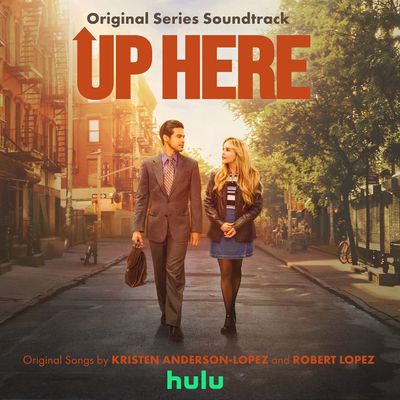
This is the second episode of a special 4-part takeover with cast & creatives from Hulu's new musical series UP HERE. Make sure to stream the entire 21 song UP HERE soundtrack everywhere you find your music... Read More
From the show: The Theatre Podcast with Alan Seales
Guests
Miniseries Inclusions
Featured Shows
About
This is the second episode of a special 4-part takeover with cast & creatives from Hulu's new musical series UP HERE. Make sure to stream the entire 21 song UP HERE soundtrack everywhere you find your music.
Tony-award-winning playwright and screenwriter Steven Levenson is back to let us in on his current project with Hulu, “Up Here”. He recalls how it all started and why it was a terrifying moment for him at the time to turn it into a TV show, why they decided to find an additional executive producer for the show and their deliberate choice to set the show in 1999. Coming from theatre and having written for both movie musicals and TV musicals, Steven discusses the misconceptions and challenging aspects of TV and musicals, and why it is rarely undertaken. He also shares some of his learnings such as finding locations and having a solid plan during production to keep the ground running—a challenging but fun puzzle he likes to solve. While he can’t share the projects he’s currently working on, Steven is excited to get back to stage writing and continue to create something joyful and also have fun while doing so.
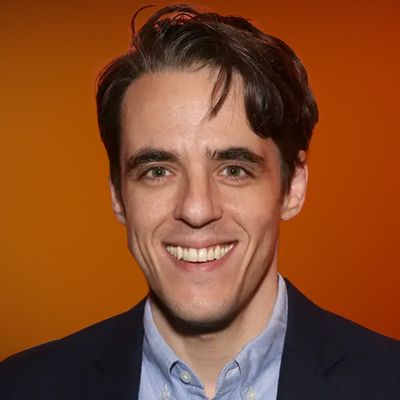
Steven Levenson is a playwright and screenwriter who won a Tony Award for Best Book of a Musical for “Dear Evan Hansen”. He has written for “Masters of Sex”, “Fosse/Verdon”, “Dear Evan Hansen”, the movie and the musical, ”Tick, Tick... Boom!”. He has recently adapted Kristen Anderson-Lopez and Bobby Lopez’ stage musical “Up Here” for the screen which is currently streaming on Hulu.
Songs used in this episode:
- Can I Ever Know You
- Please Like Me
- Can I Ever Know You (Finale)
Connect with Steven:
Connect with The Theatre Podcast:
- Support us on Patreon: Patreon.com/TheTheatrePodcast
- Twitter & Instagram: @theatre_podcast
- TikTok: @thetheatrepodcast
- Facebook.com/OfficialTheatrePodcast
- TheTheatrePodcast.com
- Alan's personal Instagram: @alanseales
- Email me at feedback@thetheatrepodcast.com. I want to know what you think.
Transcript
This transcript was automatically generated and might contain errors.
[0:00] Alan Seales: Welcome back to The Theatre Podcast, intimate personal conversations with the industry's biggest names. I'm your host, as always, Alan Seales, and the music you just heard to open the episode is called "Can I Ever Know You," from Hulu's new original music series called "Up Here," which means that this episode continues the "Up Here" podcast takeover. This episode is with Steven Levenson, who, in addition to being the screenwriter for the recent "Tick Tick Boom" movie and the "Dear Evan Hansen" movie, also wrote for "Fosse Verdon" and a slew of other things before serving as the screenwriter and one of the executive producers of "Up Here." And as with the previous episode, once you're done listening to this one, make sure to go stream the entire "Up Here" soundtrack, which is out now, everywhere you stream your music. So, again, instead of the normal transition music, here is the song called "Please Like Me." Here we go.
[1:02] ♪ Musical number: "Please Like Me" — performed by Unknown performer ♪
[1:35] Alan Seales: Today, we have a returning podcast guest. He is a Tony Award-winning playwright, TV, and screenwriter who famously won his Tony Award for the book of "Dear Evan Hansen." He has written for "Masters of Sex," "Fosse Verdon," "Dear Evan Hansen," the movie and the musical, "Tick, Tick, Boom!," and has now adapted Kristen Anderson-Lopez and Bobby Lopez's stage musical "Up Here" for the screen, which is now streaming on Hulu. We will call this episode Part Two because Part One was Episode 175. Make sure to go back and check it out. Steven Levenson, welcome back to The Theatre Podcast.
[2:08] Steven Levenson: Oh, thank you. I love a sequel.
[2:11] Alan Seales: So, happy to be here. It's really interesting. We were just talking about this off air. So, to prep for Part Two here, I was going back and listening to Part One, Episode 175. Go back and check it out, everybody. And you had mentioned the timeline in there. When we were talking about "Tick, Tick, Boom!," I was like, so when did you get involved with it? And you were like, oh, I first heard about it in 2017, and then like 2018, we were doing all that stuff. But that means that without being able to tell me at the time, you must have already been working on "Up Here" at that point in time, right? So, you were working on "Dear Evan Hansen" and "Tick, Tick, Boom!" and "Up Here"?
[2:49] Steven Levenson: Yeah, there was a crazy confluence of screen musicals, particularly over the wonderful year of 2020, as people remember, which was, I guess, yeah, in 2020, "Tick, Tick, Boom!" was on hiatus. We'd started filming and then had to shut down because of the pandemic. The "Dear Evan Hansen" movie was not yet, I guess we were, it was still being written and like, trying to figure out if it was going to film or not in the fall. And then that summer, I started talking to Kristen and Bobby and Tommy Kail, the director, about "Up Here." Tommy Kail, the director, like, we don't know who Tommy Kail is. That guy, that guy who did that thing. That Tommy. And it all kind of came around that same time, which was a weird, I mean, now that I think about it, it made a lot of sense. A lot of the impetus for this project was, you know, Kristen and Bobby had written this show "Up Here." They began writing it a long time ago, many, many years ago.
[4:00] Alan Seales: Because it was a stage musical.
[4:01] Steven Levenson: I'm sorry?
[4:02] Alan Seales: Because it was a stage musical that they put on in 2015.
[4:05] Steven Levenson: Yes. No, and they, I think we've been developing that stage musical since like 2004, 2003, even, like a long time. And when 2023 rolled around, or this, the summer, spring, summer of 2020, rather, they, Tommy had called them and asked if there was anything that they had been thinking about developing for TV. And this was a moment where we sort of didn't know when theater would come back, if theater would come back. It was such a terrifying moment. And "Up Here" was this project they'd always loved, and they'd spent many years on. And they were interested to see, again, in this moment where it seemed like, when are we ever going to get back on stage? Is this a medium where we could continue to explore this story?
[4:50] Alan Seales: So, actually, I talked to Bobby and Kristen already, who, I guess we'll call them a little birdie. A little birdie told me you were acting as showrunner for "Up Here." So, which, you know, is no small feat in and of itself. But it's interesting that they turned it into a TV thing because you didn't know if theater was going to come back.
[5:16] Steven Levenson: Well, I mean, that was part of the, you know, I think they had been excited for a long time about the possibility of, especially streaming, which still feels weirdly like a sort of a new medium, and one that we're still figuring out. Like, what is the difference between that and television? And it feels like there actually is a difference. And they were excited. Obviously, they've done everything else there is to do in the world pretty successfully. So I guess they figured, like, well, why not try, you know, a streaming musical for television?
[5:47] Alan Seales: Well, so what is it? There's four executive producers on this project, you being one of them, them being two of the others. And then who's the fourth one?
[5:59] Steven Levenson: Then well, so then when they reached out, and we started talking about this, we quickly decided we should find a writer who actually knew how to make a 30-minute television show, which none of us had done. I'd written like hour-long dramas and felt really comfortable in that space. But this felt like it wanted to be a 30-minute comedy. And I just really did not know how to do that. And so we brought on Danielle Sanchez-Witzel, who's an incredible writer and producer in her own right. She did "The Carmichael Show." And she's somebody who, you know, we just really admired her work in television. And then we started talking to her, and she's a huge musical theater fan. Well, that's the truth. But so she was super excited to get to be part of telling this kind of story.
It was kind of like a dream come true for her. And for us, it was just so incredible to get her, her knowledge and her expertise and her voice and vision. And so really, like throughout much of the story of the pandemic for me was was Zoom calls with Danielle, and Bobby and Kristen, and occasionally Tommy, like hashing this thing out, and trying to figure out, it sounded easy at first, you know, it was like, we'll just turn this into an eight-episode musical series. And then it was like, Oh, wait, what does that mean? Exactly. So it took a little while.
[7:24] Alan Seales: Why did you decide to not do a full-length movie again to do like a "Dear Evan Hansen" movie-esque thing or a "Tick Tick Boom" movie-esque thing? Because you had those two. So it seems like, yeah, this is in my wheelhouse.
[7:37] Steven Levenson: Absolutely. I mean, I think there was something really exciting about this concept and this premise, you know, voices in people's heads. And imagining two characters dealing with those voices over time, which is something you can really only do in the longer form of TV, you know, and it felt like this was a story that could benefit from that longer form storytelling, and felt like a challenge that none of us had really done. You know, I think we all had some sense of how to turn a two-act musical into a three-act film. I mean, I make it sound like that would have been easy, that would have been impossible too. But there was something really fun about the challenge of, well, what would it mean instead of doing what I think a lot of incredible musicals on TV have done, which is sort of have had TV shows with music we wanted to see like, well, what happens if we approach this as if it were a musical that we were dividing into eight parts, and that each of those eight parts, we then discovered would kind of serve as its own musical that all felt like, oh, that's interesting and exciting and feels like a fun challenge.
[9:54] Alan Seales: It lends itself so well. I mean, it may be just because you work so hard. And all four of you are very deliberate about what the finished product is. But I've watched the screeners, I've seen the series and it just works so well. Everything's got in a little button at the end to like to carry you in the next. And, and it's, it's so interesting to me, I think the concept too of setting it in 1999, which is the time before everyone had cell phones and portable electronics that they carried around with them that were communication devices.
[10:29] Steven Levenson: Yeah. Because it allows, I think it allows you to I was, I guess, hold on, I'll back up again. Was it deliberate to set it in 99? Or I guess why was it deliberate to decide on 99? But did it help you in being able to create more scenes where like, Mae Whitman, her character has to, you know, stalk, stalk in person outside of work, because you can't just text someone or pick up a phone to call them all the time?
[10:50] Steven Levenson: Absolutely. I mean, you know, the original concept of the stage musical was that it was set in 1999. So that was something that we kind of borrowed from the show, but quickly decided we had many, many conversations about this. And why you have to be deliberate about these things. And we talked about why 1999 felt right to us. And we did keep coming back to how different the world was in 1999 compared to now in terms of communication and in terms of the fact that we were telling a love story. And love stories just don't work that way anymore. You can't just kind of go to a bar and meet a stranger. It's not as easy. It's not as common. I mean, dating is much more deliberate now. You know, it's a whole thing.
You have your apps and you have by the time you actually meet someone, you know a lot about them usually. And if you're going to meet them, you can look them up online. You can figure out if you have mutual friends, you can stalk them that way. This is like, how do you meet a stranger? You know, like a total stranger, which is what, you know, for those too young to remember, that's what you used to do. You know, you would meet someone and not know who they were, not know where they were from, not know how you were connected or not. And then have to find out. And, you know, we also liked there are certain things of that time period that just you can't replicate now. Like, for instance, in the second episode, we have this long phone call between the two of them. That's like this long overnight phone call on a landline.
[11:34] Alan Seales: That's a beautiful scene.
[11:35] Steven Levenson: Oh, thank you. I love that. I love the way it was done.
[11:38] Alan Seales: But it's like, for some reason, cell phones don't lend themselves to that.
[11:42] Steven Levenson: Maybe it's because we have so many other gadgets and devices and screens, but like the kind of attention span it takes to be on the phone with someone all night long feels weirdly like a throwback.
[11:54] Alan Seales: It took me back to high school when I would study. I would have study dates with this girl I had a crush on and we would just quiz each other on biology terms for hours where we really were just using as an excuse to hang out together.
[12:07] Steven Levenson: Absolutely. And you had to, you know, pull the cord under your door. And there's something so tactile about that. It felt like if we were going to do a love story about that was set today, it would have to be a love story that was really took into account what a changed world it is and a world, again, that is so much based around apps and screens. And, you know, like I think a series like "Fleishman is in Trouble," which I really loved, did a great job of capturing that world and the specificity of that world. And that just wasn't the world we wanted to explore.
[12:44] Alan Seales: Do you have a preference now of, I was going to say, I guess different shows lend themselves to different things. Maybe I'm answering my own question. But do you have a preference now because you've done you've done movie musicals, you've done like now the TV musical, right? This eight-episode TV musical. There are also pro shots, which is just, you know, recorded over multiple performances in the theater of a show. So do you have a preference of now taking a story and is it easier for you? Did you find to do the the movie musical version like a "Tick, Tick Boom"? Or was this harder was "Up Here" harder because it was something new and different? Or, you know, something that I've already talked with the Lopez is amazing people, by the way. And they were saying that something that they really loved about the TV format is that you can just like, snap your finger. And all of a sudden, like the sets change the costume.
[13:46] Steven Levenson: And then snap your finger, and then we're back to reality. Absolutely. Yeah, I think, you know, I think, yeah, like you said, I think you answered your question in that different projects lend themselves to different media. There's definitely something uniquely challenging, I think, about TV and musicals, which is why they're rarely undertaken. I think it's, you know, musicals, as we discovered in the writing of this, Bobby and Kristen are such smart, intuitive, deep writers. They can't write fake songs. They can't write things that aren't true emotionally, which is incredible. And what that means is that the story and the characters that you're writing have to be, have to always kind of reach a certain depth and achieve a certain authenticity before the songs can really take off.
And I think what that means in TV is like, you can't really have an episode of this show where like, Miguel's buying a pair of shoes, you know, as your main storyline, or, or somebody is having a problem with a co-worker at the office, like, like everything kind of has to get to a really deep, grounded level for the music to feel real and true and authentic, which I think that that was kind of the challenge of this was like, how do we come up with stories every week, as it were, that rise to the level of song, you know, like, like in a movie or in a musical, you've pared down the story so much that you are only getting the essentials. So like, it makes sense that you only, that you're only getting the part of the story where the characters would sing. And this was trying to figure out, like, how do we week after week, get to those moments. We're going to take a short break. Stay tuned for more of the episode.
[15:38] Alan Seales: Is there a difference? I guess, what is the difference for you in going to something like Dear Evan Hansen, where you've, you've written the book for the stage, and you've written the screenplay, and obviously two very different things, because screenplays give you a different kind of shot list. And obviously, like you just said, why I brought this up is because what you just said is about the stage production is, is just brought down to the bare minimum, right? And allowing, I guess, giving yourself the freedom in a screenplay to, to expand on things and to add additional things, you are able to direct the audience and tell the audience exactly where to look at exactly what moment. That's, that's the part of the beauty of TV and film.
And why, also why I love theater so much, because you have to have so many other things to look at, you can decide. And that's why, like, I love watching ensemble, right, ensemble members in, in theater productions, because, you know, they're always in the back doing whatever they're doing. But I guess, I'm trying to figure out what my question is here. I'm saying, like, when you're, when you're writing the differences, right, so you're taking Up Here, which is already a stage production, which was, in theory, already down to the bare minimum, and you're trying to improve it, you're trying to make it better, you're adapting it. Are you, aside from the fact that, like, the stage production of Up Here originally, when it was produced on stage, followed the, just the male character, the lead, now we're following the female character, and we're seeing the voices inside both of their heads, which is a big difference.
Like, was, was it an easier process? Is it an easier process to add elements back for movie and TV? And because you're allowed to force the audience where to look? Or is it easier for you just to, to do like a book for a stage?
[17:37] Steven Levenson: It's so interesting. You know, I think one of the big misconceptions that I certainly had before doing film and TV, you come from theatre where you never have any money for anything. And you're kind of like, I can't wait to get to film and TV when we'll be able to spend all the money and have everything we want. And what you soon discover is, obviously, the budgets are higher, obviously, you have more resources. But in a way, it's a double edged sword, because on stage, you can actually do anything. You can show anything, you can accomplish anything in a very abstract way. And in film and TV, you have to, things have to be a bit more literal. And so you actually have more limitations in some ways, because you have to figure out what are you actually filming?
What are you actually building? What is the set that you're going to look at? Versus on stage, you can have a blank stage, like Shakespeare and have the whole world on the stage. So in a way, it kind of forces you to refine your vision even more, which is a big letdown and a bummer. And also, you know, there's just something a bit relentlessly literal about the camera, you know, that it does force you to make those decisions. Specifically with Up Here, Bobby and Kristen from the beginning were very much of the mind that the stage show existed. It was its own piece, and that what we were going to make was going to be something totally different. So we actually didn't end up keeping much of anything from the original show, aside from the concept.
And then we tried to find as many spots as possible to put some of the original songs, which are incredible, in the show. But, you know, even the characters, as they developed, became very different people. So really, there's not a huge amount of overlap between the show and the show, which is, you know, in a way, it became like creating an original piece, which is, I think, yes, again, there are challenges and there are also things that are easier. You know, you're not beholden to anything. You don't feel the weight of anything. But you have a huge amount of freedom. And I'm very grateful to Bobby and Kristen for giving us that freedom and for giving themselves that freedom.
[20:01] Steven Levenson: I think a lot of what can make or break a TV or film presentation, I think whatever can make or break a TV or film musical is also your DP, your director of photography. Because again, one of the advantages of the stage is you have the full picture. You don't have to look away. No one's making you cut away. And one of my biggest frustrations in some movies recently that, you know, something like ends with kuh, starts with kuh and ends with ats, is that you never get a full picture for a long period of time of the full dance number, this beautiful choreography, which Sonia Tai's choreography in this thing, of course, is just incredible as well. As unofficial showrunner or official but unofficially uncredited, we'll call you the showrunner. The buck stopped with you.
[20:48] Alan Seales: Yes.
[20:49] Steven Levenson: And so are you telling the DP where to go, how to shoot, and then taking all of that footage into the editing room and saying like, don't cut here, don't cut here, we have to see this end to end sequence, this eight count, the 16 count, because this is musical theater?
[21:08] Steven Levenson: It's a really interesting question. You know, our DP was Ashley Connor, who's amazing. And so I'm so glad that you that you're recognizing her work, which is really superb. So much of the visual language of the show was established by Tommy, who directed the first two episodes. And as the person who directs the first episode, at least of a TV show, you have a huge role in setting what the visual vocabulary of that show is going to be. And so Tommy and Ashley had a huge number of conversations. Then the three of us had a lot of conversations. Then with Bobby and Kristen, we all talked a lot before any film was shot of how we wanted this to look, what we wanted this to feel like. And Ashley is someone who comes from the world of music videos.
So she's someone who has an inherent musicality and an inherent sense of rhythm and how the cut is going to work. And Sonya is somebody who has choreographed for a lot of screen stuff. So she also has a sense of what's going to work for the camera. And then I think so much of it is the director who comes in for each episode, then has their take. But I think in general, those first two episodes set a tone for what we wanted to accomplish. And then so much of it is like, based on as with all creative pursuits, it's based on the constraints that you have. And essentially on this show, each musical number, we had a day to shoot, basic most. We had one full day, which is short.
[22:36] Alan Seales: Yeah. Wow. It's short. Yeah.
[22:42] Steven Levenson: And it was a huge challenge.
[22:45] Alan Seales: It's like music videos that can take days.
[22:47] Steven Levenson: Absolutely.
[22:49] Steven Levenson: For one song. Yeah. That was hard. But it forced us to be really selective in what we were doing and really precise. And by we, I include everyone on the creative team, including Ashley and what she was shooting. But yeah, I think you want. It's really interesting because Fosse Verdon, like the research for that show, taught me so much about the evolution of the movie musical or the screen musical in general. And before Bob Fosse, it really was, you know, the convention was that in screen musicals, you would show the entire number top to tails in one shot, usually like a wide shot, because the thought was that you wanted to see, you know, Fred Astaire or Ginger Rogers or both doing the actual number in real time, like almost like a magic trick.
Like you don't want the audience to feel like they're being cheated. You want to see the whole thing. You want to see their whole bodies. And then Bob Fosse came along and sort of chopped it all up in a way that had never been done, where he was showing a hand or a foot or a snap. And then I think since then we've kind of, you know, music videos then took that, I think, to a total huge extreme where like there's so much cutting. And I'm kind of just geeking out on the history of cinematography and these things. But I like in our show, I think we tried to find a medium always where you're getting to see the virtuosity of these performances, but you're also getting the intimacy that you're able to get on screen where you can really be up close to the performer and sort of living between those two worlds, because the performances were really incredible on this series all around.
And the dancers we got, you know, we had the best dancers in New York working on this show day in and day out. So we wanted to show as much of their work, obviously, as we could. And Sonia, like you said, is just incredible. And it was really fun to figure out. I think something I've learned in my experience of doing these, these screen musicals is that each number has to be attacked individually. And each number has to be given a huge amount of consideration and a lot of dialogue. I mean, we would talk about, you know, in TV, you do this in general, but we had so many meetings about every single number with every department, you know, from, from, you know, the DP to art direction, props, like you have to be incredibly precise, because first of all, you never have enough time, even if you have five days, it's not going to be enough time.
And you can't, you can't improvise these things. You can't like show up on the day and hope that magic strikes, like, it's there's too many moving parts, you have to really have a solid plan. And then you just hit the ground running. And it's like, you shoot for 12 hours, 14 hours, and it's just, it's a sprint, you know, and by the time you're done, you still have more than you wish you could get. And the dancers are exhausted, everybody's exhausted. And like, hopefully, you've gotten something. But it's really, it's a huge, fun and challenging puzzle.
[26:08] Alan Seales: I didn't think about the way that music videos change things.
[26:13] Steven Levenson: Yeah.
[26:14] Alan Seales: And, and when, when they brought that up, I it totally just clicked for me that Yeah, you're absolutely right. And now now the long shot that the the non, you know, the one shot is so rare to see.
[26:26] Steven Levenson: Absolutely.
[26:26] Alan Seales: Because it's just easier to do. You know, you get your coverage, and you cut from from thing to thing. And, but I love, I love a good one shot. I love a good wide shot. But yeah, the evolution of cinematography, you're right. I could geek out with it to something else. Something else that I geeked out on, actually, I think it was the third or fourth episode, I forget which one, but the scene where the May throws Miguel's backpack over the fence, and they're sitting outside that rock, right? And I was like, where's their giant rock in New York City? And then I started, so I was googling this, trying to figure this out. And there are all of these amazing rocks like there are. So, so did, where did you find the locations for this? Who was your location scout? Because, because I was, there's amazing, it's like, it would cost more money to remove this rock than it, than the land value is of that unused space.
[27:31] Steven Levenson: Recurring references to a rock in Central Park. Basically, you know, so much of that show and our show are sort of about, like, what it is to be a person and to have a brain and to have thoughts and feelings. And in that original show, they kept contrasting that in a really fun way with this rock. And what does it mean to be a rock? Like, to exist as a rock? And so that idea of a rock was, like, kind of always in my head. And as we were developing this character of Miguel, we kept circling around his obsession with minutiae, you know, and with the world around him and with New York City. And that rock kind of came back to my head and I started to do some research into rocks in New York. And I just discovered these weird rocks that existed.
Essentially, yeah, they're left over from the last ice age. They're, you know, tens of thousands of years old and they're just, they used to be covering Manhattan and they're mostly gone, but a few of them remain and they're just kind of huge eyesores. Like, they're really not attractive. And I loved that a character would see them and see the beauty in these things that have so stubbornly resisted the passage of time and resisted, like, sort of modernity and the fact that, like, every square inch of this city is so valuable and yet these rocks sit on this very valuable land doing nothing, earning nobody any money. And I loved that. The original rock that we had circled was, there's one by Columbia in Morningside Heights, but we couldn't get permission to film there.
So we found this other rock, but I think we had two other candidates. So there were a couple of rocks and this was the one we thought was most photogenic. But yeah, it was a lot of fun to see that rock. And like, it was a weird thing that we talked about in the writer's room. And like, you know, we saw pictures online and talked a lot about it. And then like actually scouting that rock and seeing it for the first time was really cool because you were like, oh yeah, that works.
[29:44] Alan Seales: Was this your first project that you executive produced?
[29:49] Steven Levenson: No, Fosse Verdon, I was like kind of the co-showrunner of that. So this was the first one that I was the sole showrunner.
[29:57] Alan Seales: Okay, so the sole showrunner. I guess what I was getting at was, aside from just writing the screenplay or just lending pen to paper, the additional responsibility of basically being the boss of a production. Is that something that you welcome or is it added stress? I meant to say, I'm sorry earlier that you're now making TV and film money because we were talking about the difference in budgets. So sorry, you have that burden now too. Do you like it more to have that kind of creative control or is it just like sometimes you're like, oh man, I just want to sit down and write?
[30:35] Steven Levenson: Well, I love it, but it is a huge amount of responsibility. As I always say to people, being a screenwriter in film is weirder to me coming out of playwriting than being a producer in TV. As a playwright, you are there for the entire process and you have a voice in the entire process and people ask you for your opinion about design and about casting. And so the idea of not being involved the way that you often are in a film is foreign. That's the foreign thing. You write the script, turn it in and goodbye. But definitely there's a level of responsibility in TV that is, it's compounded. It's much bigger than it is as a playwright. And I love producing. I love that part of the job, especially what was really a luxury in this process is we were able to write all of the scripts.
And so by the time we were producing the show, that part, I was still rewriting every day and refining and making changes, but the bulk of it was done. And so that allowed me to really focus on the production versus usually in TV, you're doing both at the same time and editing. And that is exhausting and very difficult.
[31:56] Alan Seales: We're going to take a short break. Stay tuned for more of the episode.
[32:06] Steven Levenson: But getting to be on set every day and getting to, you know, getting to lead those conversations was really exciting and really fun and really energizing. And the team, you know, Tommy was part of all those conversations and Bobby and Kristen were part of the conversations that they wanted to be a part of. Like we didn't, we tried to leave them out of the really mind numbing stuff. But because I guess, you know, as a playwright, you're never, nobody ever brings a budget to you as a playwright. And in TV, they do. And that's a big difference. That's weirdly also something I enjoy is the puzzle of it. No matter what show you are, no matter what budget you have, you're always over budget and you're always have too much to shoot and you have to figure out how you're going to make it work within the schedule.
And I kind of like the crossword puzzle of like, how are we going to make this work? And then I love the other part of the process that's really amazing is editing, which is something that is, I think any writer would love because it feels like writing, you know, you're, you're just kind of continuing to tell the story.
[33:24] Steven Levenson: And also in editing for TV and film too, you have the chance to say like, Oh, we need more space here. Let's go back and add a line. Let's get some ADR. Let's throw in a vamp here so we can add more. We can, yeah, that I guess in stage you can't, can't, well, I guess you can do that, but it's like going back to, uh, apparently, you know, Bob Fosse was sort of ruined by the experience of doing, um, Cabaret and he found like from the, from then on found it very difficult to go back to theater where you couldn't edit. And the idea that you, you know, in editing, you make it perfect. You make it, or at least you, you make it final, you know, you finish it. And, and the cut that I sign off on is the same cut that you saw.
It's the same cut that my neighbor saw. Like it's always the same. And theater there's that wonderful, terrifying alchemy that every night is a little different. And, and for Bob Fosse was such a controlling figure. That was when he saw that it could be otherwise, it was hard to go back.
[34:25] Alan Seales: Are you going to go back to stage? Do you think stage writing?
[34:32] Steven Levenson: Yeah, for sure. I mean, I miss it a lot. Um, I, so I'm, I'm very excited to get back to it. What are you working on now that you can't tell us about other things I can't tell you about? Hold on, let me turn off the microphone. Yes, there are things, there are things in the works that I'm, uh, you know, that are still very early, but I'm, I'm really excited to get back to, to the stage. I mean, there's nothing, there's really nothing like it, you know, as, as much as I, I love film and TV and I really do, there's still, there's still something about being in a rehearsal room, putting on a play, you know, the same as I did when I was 13 years old that like, I'll never, I'll never get over that. I'll never be able to get away from that.
[35:16] Alan Seales: Oh, that was another thing. Um, that when we were talking about Tick, Tick, Boom in the previous episode, part one, um, that you did tons of rehearsal for Tick, Tick, Boom. That's all Lynn knew. Lynn was directing. And so did you do, did you have the same luxury with like, did Tommy Kail want that for this? Did you have the same luxury in terms of timeline and budget for up here?
[35:38] Steven Levenson: Sort of. Um, we had some, we, we, we were able to get some rehearsal time. Um, not a huge amount. Uh, and basically we were able to borrow our two leads, May and Carlos, for a couple of weeks, like on and off, we were able to run through scenes together and like sort of hear things out loud. The real like kind of secret rehearsals that we were able to have, um, as I'm sure Bobby and Kristen talked about is we actually recorded the entire score before we filmed anything just because of the schedule. That's, that's how it made the most sense. So those became our kind of clandestine rehearsals for the entire series because we had the actors coming into the studio and we were able to talk through the song moments and then the larger arcs, um, and kind of really like refined character with them that way.
And then, and then there was just rehearsal throughout the process. The dancers were rehearsing just about every day. And then, you know, our poor actors were going from, you know, filming to into those rehearsals where they would sort of quickly be shown like where things had landed and incorporated and taught the moves and then back to the stage to keep filming. And so for them it was a really, it was a difficult process. You know, it was, it was an all, uh, all encompassing process.
[37:01] Alan Seales: That's fun. That's so fun. All right. Well, everybody go to hulu.com. Check the show notes for up here. We will have, I'll have the link in there so you can check it out cause you definitely need to. And, uh, I'm going to ask you the same three questions that I asked last time that I asked everybody in the episodes. And I always love to see for returning guests, if your answers have changed. Um, the first question just simply is what motivates you?
[37:20] Steven Levenson: Oh, what motivates me? Um, you know, the thing that motivated me on this and I think is still continuing to motivate me again, coming out of the pandemic, it was June, 2020, when we started talking about the show and we wanted to, we wanted to do something joyful. You know, we wanted to do something that we found joyful that hopefully other people would find joyful. And we wanted to have fun. Like we wanted to get on, we were getting on zoom every day for six hours to talk. And it was like, let's make sure that we're always having fun doing this. Otherwise sort of what's the point. And so I guess what motivated me on this and I think is a good motivation is like, what, what, what makes me excited? What makes me, um, stir and like want to get up and keep working on this. So that's, what's motivating me right now.
[38:13] Alan Seales: I love it. What advice would you give to your younger self and younger people listening now starting out down a similar path?
[38:17] Steven Levenson: I bet I said this already. Cause I always say this. It was just like to immerse yourself in the thing that you want to do. Um, whether that's playwriting, TV writing, screenwriting, read as much as you can see as much as you can take every free ticket you can find, uh, borrow your friend's passwords to, uh, various streaming services, but not Hulu. Um, but like, you know, become an expert in what you want to do. Um, because I think that's how you find by absorbing all that you can absorb. You, you figure out where you, where you want to be in that world. You figure out your voice, I think by, by, by listening to others' voices and finding where you belong.
[39:09] Alan Seales: Love it. If you could only see one show for the rest of your life, but you can see it as many times as you want, what would you see?
[39:14] Steven Levenson: It's, it sounds pretentious. I wonder if I said this the last time too, but Hamlet, I think. Cause like, it's all, it's all in there. You know, it's, I mean, what's better than that? To be or not to be. It's so, I mean, it's just like, uh, it's so rich. Um, so, you know, I'm thinking I could get something out of it every night, that I got to see it.
[39:40] Alan Seales: Cool. All right. Uh, and then you said before you're not on social media, is that still there? Are you like on social media?
[39:48] Steven Levenson: No. Okay. God bless to those who are.
[39:53] Alan Seales: Find more of me at the theater podcast.com. Other episodes like this, including more episodes all about up here with other creatives and cast. Uh, you can find me on TikTok, Twitter, Facebook, um, Instagram. Yeah, it's all there. And Steven, thank you again. It's so nice to see you again.
[40:05] Steven Levenson: Nice to see you. Thanks for having me.
[40:08] Alan Seales: And now to finish off the episode again, is the finale of Can I Ever Know You. Make sure to go listen to the soundtrack everywhere you stream your music.
[40:30] ♪ Musical number: "Can I Ever Know You (Finale)" — performed by the cast of UP HERE ♪
© Broadway Podcast Network, All Rights Reserved