

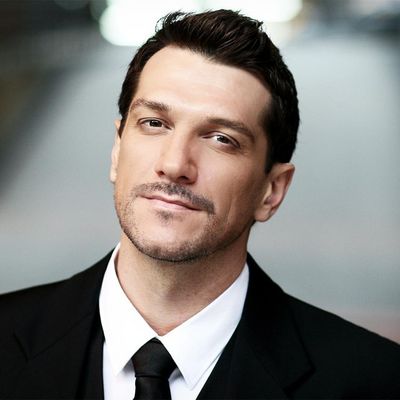
Currently playing the role of Lance Du Bois in the hit Broadway show, "& Juliet", Paulo Szot is a Brazilian actor slash operatic baritone singer who opens up about his immigrant parents’ huge influence on his love of theatre and performing... Read More
From the show: The Theatre Podcast with Alan Seales
Guests
Miniseries Inclusions

Featured Shows

About
Currently playing the role of Lance Du Bois in the hit Broadway show, "& Juliet", Paulo Szot is a Brazilian actor slash operatic baritone singer who opens up about his immigrant parents’ huge influence on his love of theatre and performing. Thanks to Paulo’s love for soccer, his lack of skills for the sport eventually led him to pursue performing instead. He recalls watching “A Chorus Line” which was also the moment he fell in love with the craft. This newfound calling led to Paulo’s (literal) journey to study in Poland and connect to his roots. He shares his 23-day travel by cargo ship, and his academic and professional life in Poland, including joining a song and dance company. While the pop music style of “& Juliet” isn’t exactly Paulo’s strong suit, his supportive colleagues and love for trying out and throwing himself into new experiences prevail. He reflects on why he honors his job by respecting everyone and learning from people, highlighting that perfection is wrong and that as humans, we always have to leave space for the unexpected.
Paulo Szot is a Brazilian operatic baritone singer and actor who is known for his powerful and versatile voice, which has allowed him to excel in various genres, including opera, musical theater, and popular music. He’s performed everywhere, including with the Metropolitan Opera, the New York Philharmonic, the Chicago Philharmonic, and more. He won critical acclaim for his portrayal of Emile de Becque in the Broadway revival of "South Pacific," earning him a Tony Drama Desk Award, Outer Critics Circle Award, Theatre World Award, and Tony Award for Best Actor in a Musical. He was also nominated for the Laurence Olivier Award for the same role in his West End debut. Apart from “South Pacific”, he’s also appeared in the Broadway production of “Chicago”. Szot continues to impress audiences worldwide with his remarkable talent and charismatic stage presence in the hit Broadway show “& Juliet”.
Connect with Paulo:
- Website: www.pauloszot.com
- Instagram: @pauloszot
- Facebook: @pauloszot
Connect with The Theatre Podcast:
- Support us on Patreon: Patreon.com/TheTheatrePodcast
- Twitter & Instagram: @theatre_podcast
- TikTok: @thetheatrepodcast
- Facebook.com/OfficialTheatrePodcast
- TheTheatrePodcast.com
- Alan's personal Instagram: @alanseales
- Email me at feedback@thetheatrepodcast.com. I want to know what you think.
Transcript
This transcript was automatically generated and might contain errors.
[0:00] Alan Seales: Welcome to The Theatre Podcast. Intimate, personal conversations with the industry's biggest names. I'm your host, Alan Seales, and our guest is...
[0:35] Alan Seales: Episode 4 of 5 of the Anne-Juliette Broadway Takeover, with none other than Paulo Szot. He plays Lance, the father in Anne-Juliette, and is just this incredible performer. He has this amazing opera background and has brought it to a show with nothing but pop music. So, he is unique in this show in such an amazing and colorful way. If you haven't seen it, you gotta see it. He originally had a very sporty background when he was a kid, and as he says, soccer didn't love him as much as he loves soccer. And his amazing parents, and it tells the story of his parents, his amazing parents helped him find something new, this new love for performing, and he just ran with it, and is where he is now, and has this amazing singing career.
And especially for someone who was told his voice was best for opera, I think it's so cool how he now finds a wonderful home in this show with nothing but pop songs, like I said, just phenomenal. So, Instagram, TikTok, Facebook, Twitter, all the places that I am, connect with me on there, let me know you're listening, leave a rating, leave a review, and everybody, go see Ann Juliet and enjoy this episode with Paulo Szot.
[1:52] Alan Seales: Today's guest won the Tony Drama Desk Outer Critics Circle and Theatre World Award for his Broadway debut as Emile Debac in LCT's production of South Pacific, and was nominated for the Laurence Olivier Award for the same role in his West End debut, also a seasoned opera star. He's performed all over the world and here in the U.S. with the Met Opera, the New York Philharmonic, the Chicago Philharmonic, the New York Pops, and gosh, countless others. In addition to the Broadway credit of South Pacific, he has also appeared in the Broadway production of Chicago and can now be seen on stage again as Lance Dubois in Ann Juliet. Paulo Szot, welcome to The Theatre Podcast.
[2:56] Paulo Szot: It's a great pleasure to be here and I really love your pronunciation of my French character, Lance Dubois, I really loved it, thank you.
[3:05] Alan Seales: Well, I love the joke of the last name and I kick myself. I am still kicking myself. I did not see that incredibly obvious dad joke coming miles away when Juliet started mispronouncing Dubois as the boy, right? And then you were talking about the band you have and then all of a sudden you start up your boy band again. I was like, oh, yeah, yeah, I love it, I love it. How did I not see that coming?
[3:41] Paulo Szot: It's one of those things in this incredibly smart and bright script, you know, that all these beautiful surprises that hit us at certain points and you're like, oh, that's why. And it's very Shakespearean, too, in a way.
[4:00] Alan Seales: Well, that's what I love about it. We're definitely going to get into the production of Ann Juliet and your involvement with it, but I want to back up because I think you have such a unique experience and a unique journey that brought you to this pop show. It's a pop music show, which is what you are. Your career is not pop music, as far as I know, right?
[4:24] Paulo Szot: Right.
[4:26] Alan Seales: Backing up, you're Brazilian, right?
[4:29] Paulo Szot: I was born in Sao Paulo, yes, in Brazil, from Polish parents that have immigrated to Brazil after the Second World War. And, yeah, but I'm Brazilian, yes.
[4:45] Alan Seales: That is so cool. And I didn't know until the last couple of years, but Broadway is huge down in Brazil. Like, Brazilians love Broadway.
[4:54] Paulo Szot: It's very big, absolutely. We always had a tradition of Brazilian musicals in Brazil, very good musicals and very musicals that would tell the story of Brazilian music. But I think in the last 20 years, I think the biggest thing that happened, that changed, that started to bring new audiences to the theater was the production of the international production of Phantom of the Opera when it came to Brazil, I think it was 2001. Since then, people fell in love with the international tradition of musicals, and it's really, really a big thing. I think right now, in the main cities of Brazil, like Sao Paulo and Rio, there are always five or six titles going at the same time. And I was just there last year doing a production of Chicago, and the audience loves it, so it's great.
[5:56] Alan Seales: When you were a kid, growing up, where did you start getting into the performance aspect? Were you always sort of attracted to performing, or was it specifically singing or dancing? At what point did you sort of find yourself attracted to this world?
[6:10] Paulo Szot: It's because of my parents, really. As I said, they were immigrants that just arrived to Brazil very young, and the place that they met was actually the Polish church in Sao Paulo. So they cultivated their music, Polish music in Brazil, in Sao Paulo, at their church, and I was inseared. I don't really remember when was the first time that I was on stage because they always had performances of Polish music and Polish dances. And I am the fifth of a family. I have four more siblings, so I'm the youngest. So it was a tradition in my family to always perform during the weekends, during the church time, and that was very natural for me. And I was growing up in this environment. Of course, as a Brazilian, I always wanted to play soccer. I wanted to play ball, and I remember I really loved it in school, but I was always the last kid on the bench.
[7:19] Paulo Szot: The last one picked? I remember one time my mom went to see the game in school, and fortunately the coach said to me, "Paulo, you're going in because you're out of other players, but you don't touch the ball." And of course I didn't listen to him, and I did touch the ball, and in my head I made the beautiful, the most beautiful goal of all, but it wasn't. So after the game, I came to my mom and said, "You know, Mrs. Szot, Paulo loves football," because that's how we call it, football, "but football does not love Paulo back." So my mom, realizing, I believe, at this time that I would never have a career as a sportsman, she signed me up to our little art school to learn music and to learn dance, and I remember being really mad because I loved football. But, you know, after a few weeks, I realized that I also loved music, and in some way music loved me back. So I stick to it.
[8:34] Alan Seales: I love that. Paulo loves football. Football does not love Paulo back.
[8:40] Paulo Szot: You know, it's one of the things that only was possible back in the day, because nowadays I don't see how people would be using that kind of honesty, and it was cruel in a certain way, but in my case, it was a way of trying something else and something else that I could be good at, you know, and I think that's what parents want for their children, for them to be good at something and to find themselves doing something good. So although it was cruel at that time because it was one of my passions to play ball, but I think it was very good for me at the end.
[9:19] Alan Seales: That's so cool, and I actually appreciate, too, that I thought the way that you originally described your parents, I thought that they met and then immigrated together, but it sounds like after the war they immigrated separately and then met at the church in Brazil, so they both found each other in Brazil.
[9:37] Paulo Szot: Right. It's a very similar story because they were both children during the Second World War, and my dad and my mom lived very close to each other, but they didn't know. It was a region where now is Ukraine. The city, it was called in Polish Lviv, and now it's Lviv. We all are getting very familiar with all these cities, unfortunately, because of the war that's going on right now, but in their times, they were Polish, and when the Nazis invaded Poland, they took a lot of Polish families to work to a forced labor camp in Germany, and both families of my mom and my dad, they had the same path. They were taken from their homes immediately to a train and then had to work throughout the whole war in a German labor camp.
After the war finished, their parents, my grandparents, they didn't want to go back to their city or anything like that because it wasn't Poland anymore. That territory became Ukraine, so they had opportunities to immigrate to Argentina, to America, of course, to Brazil, and they chose Brazil, and that's where they met. They didn't know each other before. They met in the Polish church in Sao Paulo, so it's a very, you know, story of the world, very sad. Of course, I grew up knowing the tragic stories of my families, both from my mom's side and my dad's side, but never, you know, that's very amazing because that's what I admire.
[11:27] Paulo Szot: I admire my parents so much. They never put that kind of suffering or any kind of hate into us because of what happened to them, you know, it was very dignifying, I believe, you know, from people that suffered so much and then they have kids and they don't, don't, don't, they know that violence is something that you cannot bring into your children. And I believe they had the reasons for that. And I believe they were right. You know, of course you learn history. You have to learn the facts, but it's a difference when you want to keep into that frustration of your life into your family going on.
[12:14] Alan Seales: Oh, I mean, you have to, it's a conscious decision as a parent.
[12:17] Paulo Szot: Yeah. You, you, there's a lot of things that you don't realize you're teaching and you're teaching. You can teach a form, you know, there's some of it's inherited and just who you are genetically, but like, I think you can teach a form of confidence or teach a form of fear or embarrassment or being proud or whatever the case is. So, you know, you can, you can start to give your kids the fuel and then they run with it. But the fuel you feed them is very important. So I agree with that. But, um, at some point somebody said, well, performing and singing loves Paulo back. So where was the, do you remember the moment when, when you or your parents or somebody was like, you know what, he's actually really good at this, like really push him to do this, send him to school, let him go this way.
[13:05] Paulo Szot: I think they realized, I don't think they realized that I was good at it. They realized that I liked it and they realized that I was happy and I could do certain things, you know, and I was happy doing that. But I remember that I really felt because I grew up in a very small city in close to Sao Paolo, but it wasn't a big city. And, uh, rarely we went to see professional theater shows and we went, but not, it wasn't a common thing. It wasn't a tradition. My family was really focused in the Polish folklore and Polish traditions, which were beautiful. But I think the first time that I watched "A Chorus Line" that came into VHS tapes at that time, I absolutely fell in love. And that, but really, you know, it was like, why not?
Said I can do that. I can do that. And that's, that stayed in the back of my head for so many years, you know? And then at some point I didn't know what to do after I finished high school. So, uh, the consulate, the Polish consulate in Sao Paolo were offering scholarships for Polish children of immigrants to go to Poland and to study the language and to get into a university. And, uh, and I applied and I got accepted. So, um, so when I turned, uh, 18, I took a cargo ship because I didn't have money to fly on my airplane. So it took me 23 days to get there from Brazil to go through the Atlantic and the Baltic Sea and ride in the north of Poland and then take a train to Krakow, which was where the university was.
But, you know, when you're 18 cargo ship, you're like, yeah, Hey. And it was actually, it was beautiful. You know, it was the first time that I went into an ocean and I got to see all these beautiful fishes and dolphins and everything. So, uh, I was fascinated. I was absolutely fascinated to go back to the country of my parents, you know, and that's really was something of my interest at that time. And, uh, when I arrived there, uh, the reality was of the people because they were still living in the communist regime. So it was very difficult, you know, because they didn't have certain basic things that we are used to, like silly things like chocolate, like meat, like toilet paper, like deodorant, like toothpaste, you know, basic things they had to ration.
They have to really count how they use all of these things. And I was just shocked at the beginning. It took me like two or three weeks to get used to that, but culturally it was a paradise, you know, it was the place that I found, uh, other young people like me at that time that were in love with music and dance. So, uh, I kind of, all these difficulties were not important anymore to me at that time. I found my gang. I found the people that love what I loved. And I studied in Poland for several years, and then I got into my first professional job while I was studying in Poland to a professional song and dance company there. That was my first job when I was, uh, 21. So, um, and from that moment on, I never stopped singing.
You know, I got singing teachers and people who were always guiding me. And most of them started to guide me towards opera. They said, you had a good voice material. You should start singing opera. And I said, I'll take it. And that's, I think how it started.
[17:11] Alan Seales: How it started. After these messages, we'll be right back.
[17:17] Alan Seales: All right. Welcome back. Wow. That you say it like, oh, that's how it started, but dude, that's an incredible journey, literally a journey across the cargo ship, you know, to the other side of the world, to connect to your roots where your parents were forced out during a while, I mean, good God. Like, can, do you look back now and you're on, you're, you're on Broadway. So you're, I I've said this a bajillion times on this podcast. Broadway is the Olympics of theater. It's the best of the best in the theater world. So you're, you're an Olympian in arguably the best city on earth with some of the best, most talented people with you eight times a week on stage. And I mean, do you, do you ever like have one of these moments of like, holy cow, man, you know, I owe it all to my parents.
I owe, I owe everything to the love and the choices that they gave me, the freedom they pushed me towards. I mean, cause you've got such a wonderful perspective on what some people have and what some people do not have.
[18:29] Paulo Szot: I, yeah, I absolutely. And I, and I, and I think that of course, uh, most of that it's because I had a very supportive family that loved arts that never thought that singing and dancing were something less important than being a doctor or being an engineer. So they really supported me and they really wanted to be for me to be happy. And, uh, and I, and I thank them every day, you know, because I think that's really something that was built when I was a child and, um, yeah, so they were a big, big, of course that, that soccer teacher too, but, uh, but, uh, you know, it's insane when you, when you see, you know, especially for me that, uh, I have crossed, uh, my fifties. So, um, it's, it's really interesting to see how much you go through your life and, uh, how important every second is.
And, uh, and, um, and I think it's something personal too, I think because I really love what I do, I honor what I do. I honor every opportunity. I honor, you said about Broadway and it's absolutely right. Uh, it's a dream to be here. It's a dream to be at the Metropolitan Opera, but not because other theaters are not Broadway or the Metropolitan, it's, it's, it's something that I would give a less important performance. I don't know. I don't know if you understand what I mean. Every stage and every audience for me is important because from the moment that you step on that stage, you don't, you don't know where you are anymore. And it's this magical thing that happens to a performer. And, uh, you really forget about everything around you.
It's just there in this empty space with this huge house in the dark that you don't really see the faces of people that are there, but you feel their energy back. So it doesn't really matter once you are on that stage, you know, it's undeniable. That is a dream. And once you, you got to leave that dream, it's something that you have to pinch yourself every day. You know, I still do. And, uh, I try to honor my job by, you know, being respectful to everyone that's around me and to learn with my gold stars and to learn with everyone on stage every day. I think that's something that an actor has to have, you know, you, there's never a point where you reach, uh, I hate this word, but people say perfection because it doesn't mean anything to me.
I think perfection is a very wrong way of thinking in arts. And because you, just like a human being, you have to leave space for the unexpected. You have to leave the space for what's coming next. You never reach something and that's, and then you die, you know what I mean? So, uh, so perfection for me on stage is something that I never tried to reach, but, uh, I try to be truthful and, uh, and to do the best I can. Every time I'm on stage, I know it's hard. Eight shows a week is really, really hard. And sometimes you're really tired, but if you love it, you know, there's a, it's a great, it's not my saying, you know, but there's a great, uh, actress in Brazil, a veteran, uh, a goddess and, uh, Fernanda Montenegro is her name.
And she always said to young students that come to her for masterclasses or to when she teaches, and she said, you want to do theater, don't go and do something else if you cannot live without theater, then come back because it's a life of sacrifices, you know, it's a life that, uh, if you really want to do it, you know, because it's a work that never ends, I, there's so many times that I come home and like, Oh my God, I just want to forget about that scene. I just want to forget, but it can't, you know, it's, it's, I know actors have different ways of building their characters and different ways of approaching their profession.
[22:54] Paulo Szot: But for me, it's part of my life, a part of who I am. So when I come home, I'm still that person that loves the theatre and loves to think about every new scene that can improve. I can try new things. And that's what makes it interesting for me. Because, you know, in my perception, if you don't do that, how are you going to do eight shows a week?
[23:21] Alan Seales: Yeah, I agree. It becomes a job if you don't like it. And I mean, everything is a job to an extent, literally, when you're getting paid for it. But yeah, if you cannot let it roll off your back, or take it for what it's worth, then yeah, you're gonna get burnt out real fast. And I guess taking it now to "& Juliet." This is a show I don't think you could ever get tired of. It seems like one of the most fun experiences to watch, but gosh, to be part of the energy, and part of this magic that is the show, you know, it knows what it is, which is just a party. It's a pop concert. And, and I was talking with Luke and Jen, the director and the choreographer about like, the journey of bringing it to the stage.
And it was interesting, because they were like, you know, first, we start with some singing, and then we layer in some dancing, and then we turn it into a party. The whole thing is just this giant pop concert at the end of the day, with a really amazing book, a comedic book and a love story. It's still Romeo and Juliet on the inside, which is a classic Shakespearean tale. And I guess so what is it now as we are recording, it's 2023. The show opened a few months ago. And when did you first, like, when did you first hear about this? And were you like, what the hell is going on? Or did you just jump all in? You're like, all right, a pop show about Shakespeare. Cool. Let's do this.
[24:54] Paulo Szot: No, I had no idea about the songs. First of all, when they approached me, and they sent me the script, I only read the script. And I found it brilliant. I found that this story that they wanted to tell was so important, you know, and it was so wise to bring something that everybody knew, like Romeo and Juliet, and to question, you know, what if she didn't kill herself because Romeo was dead? What if she decides to live and to find out who she is? And that alone, the argument was so powerful in my head. And I thought that there are so many young people that need to listen to that statement, you know, especially these days. And it was very brave. So I started to read the script, and I started to laugh, I started to cry, I started to fall in love with the characters.
And then I saw the character that they wanted me to play, which is Lance DuBois, as you said so beautifully. And his relationship with his son, and his relationship with an old love of his. So, first of all, the relationship with the son is, I was going through something very personal at that time in my very close circle of friends, where a boy like Francois was struggling with the same issues that he has in the play. And I thought, if we are in 2021 at that time, if we still have to tell the story of young people that need to be understood, I want to be that one person that will help to tell that story. And that will contribute for sure for hundreds of people that will come to see the show with this pop approach with this, of course, fun.
But I really wanted to reach out for the perception of how important it is to talk about these things and things that I don't think there will ever be fully resolved, depending on, again, from where you're born and the family that you have. But in a way, that was what really touched me, you know, it wasn't the first moment to just to have the fun that the show obviously is, but it was to tell that story.
[27:55] Paulo Szot: Bum, bum, bum, bum, commercial break. And now we're back. When I read the script for the second time, I added the soundtrack of Max Martin and I was like, Oh my God, this is that song. This is that song. And I know this one. I don't know this one. I didn't know a bunch of other songs, but I knew a few of them. And I had no idea that one brilliant man wrote all of them for this wonderful pop opera artists. So that added, you know, to the brilliant script in a way that it was just brilliant to imagine that these songs existed already. And David West Reed was able to collect them and select them and to write a story around them for them to be telling a story too, not just to be musical numbers.
[28:45] Alan Seales: Yeah.
[28:45] Paulo Szot: There is no song in the show that doesn't tell the story, doesn't continue the plot. So it's one of the brilliant things that happens when you have a wonderful writer in a musical.
[28:59] Alan Seales: Yeah, I completely agree. That was one of the things I'm so impressed with, with the show is that you have all these seemingly on paper, disjointed, unrelated pop songs that underlying all of it are connected by Max Martin, who wrote, you know, the greatest number of number one hits ever second, I believe only to Paul McCartney. So I mean, come on, this guy has written so many hits that everybody knows and don't know that they know that he wrote and string them all together with a show, a storyline, the Romeo and Juliet storyline, but retold in a way now, again, it's the what if, and it's the representation that we just, we didn't get to see in Shakespearean times because of some of the things that actually are hinted at in the show, right?
That like, that Will Shakespeare himself may have been gay and, you know, etc. Like there are all these little things that are kind of sprinkled in and it's such a beautiful, beautiful thing put together. Man, okay, so you say yes, you're like, all right, I'm going to do this. I'm going to help create this character and be part of this show. At what point, that was 2021, you said you're reading the script. So you're coming out of 2020, the pandemic. So 2021, Broadway's still sort of on the fringe of maybe coming back or hasn't come back yet, depending on what time of the year. And so you were part of the West End production of "& Juliet," were you out there or did you come here for Broadway?
[30:27] Paulo Szot: No, I just came for the Broadway production and we did the Toronto run right before it, but I wasn't part of the West End, no.
[30:35] Alan Seales: Right. So did you know, I guess, you said you read the script, added the music, but then like at what point did the magic really start to click? Because I feel like, you know, there's always that one rehearsal, that one run through or a time you run a scene where you're like, oh, now it's starting to gel. It's really starting to go there. And I feel like there's that moment and there's also the first time with the orchestra, the Zitzprobe, right, where you're all of a sudden you're in the house and you're hearing it all for the first time. And that's when like the emotions really start coming out. Right. So do you remember that time when you in your production, when you just sat down and you're like, oh my God, here we go. The train's about to leave the station.
[31:25] Paulo Szot: Yeah, absolutely. Yes. And a very funny thing happened to me because I was doing Chicago in Brazil, as I mentioned before, and the company was already rehearsing in New York without me. So I had to learn my scenes and they were supposed to fly me to New York for a weekend so I could meet the company for two days, three days, and rehearse all my scenes and go back to my commitment in Chicago. So they flew me here. I arrived in the morning, went to the room, I met everyone and we started to work on the scenes and I met my co-star, Nella Barry. She's so amazing. Amazing, amazing. We started to work together in "Teenage Dream" and then in the scenes with Francois. But everything was like in a very super express written because I only had three days.
It was so impressively concentrated and so good to have that amount of time because everyone was so focused. Everyone was so intense. And we were able to do all my scenes and all my dialogues and everything in three days. And then I went back to Chicago and I only joined the company ready three or four days before we flew to Toronto for the whole run. And so I didn't really have a rehearsal process. I only got to have a stage process with the actors, with costumes, with the music and everything else. But of course, when you mentioned the Zitzprobe with the band, with the orchestra, it was the moment that I realized, oh my God, I am inside a pop concert. And that is fantastic. I always love challenges and I always love doing something new to my career.
As I said, I started as an opera and then "South Pacific" came into my life. And then after that, I started to do cabaret shows. I was very already very happy to be able to break those little boxes that people love to put you in. And you are only allowed to do this kind of roles and you're only allowed to sing this kind of music. And I always question why I'm an artist and I want to sing what I like. I don't want to sing what you determine for me to be good for me. And actually only after "South Pacific," you know, that experience that was the one that gave me the possibilities of exploring all the kinds of music that I wanted to sing and to throw myself into new things. So.
[34:21] Paulo Szot: Close to my heart she came, only to fly away, only to fly as day flies from moonlight. This, what happened with Angel, it was one of those experiences where I said I have no idea how to sing these songs, I have no idea what's going to happen, but I like it. So, and of course nobody achieves anything alone, so I had a lot of help from everyone, from the director, from the music director and from my colleagues to find the right amount of the sonority of my voice, how I would go for things, how dramatic and how funny. So I think it was a recipe that we had to find out how to bake together, adding a little bit of this, a little bit of that. And we finally got into a formula that works, you know, for me it works.
And so I think the magic missing ingredient, if I had to guess, was the codpiece. I arrive on stage after the codpiece arrives, so the codpiece arrives on stage first and then comes Lance. So it's a very important thing and the reaction is every night, it's amazing. And I think it's a very part of who he is, who Lance is, you know. And it's undeniable to think that Lance is a passionate man, but we see him in the first time as a very angry man with his son, not understanding what's going on. And he only starts his first change in this whole arc of his when he meets again Angelique. He remembers what it feels like to have love again in his life. So he starts to change and he starts to want, he wants to become a better man because of love and because Angelique, and he wants to become a better father only because of that change, meaning that love is everything. Much like the codpiece, it's rough exterior, soft on the inside.
[37:21] Alan Seales: Wow. You're saying.
[37:28] Paulo Szot: Yeah. Gosh, the relationship with Angelique and played by Malibari, God, the two of you together are so hilarious. The comic timing you have, knowing, I think, well, you had the Toronto Out of Town run, but I guess knowing how little time you had together with the actual development process and the rehearsal process, it just speaks to how talented you both are because it's so.
[37:51] Paulo Szot: But listen, I was so lucky to have someone like Mal who really knew the nurse who did the West End and she was not only doing the play, she was familiar with the whole process of the readings of the writing. She was there from the beginning. So it was for me, it was a blessing to have someone like Mal to be there and to guide me because, you know, she's such a wonderful actress, a very open and a very generous person on stage and off stage. So it was really a blessing. I was, I am very lucky to be with her and to try to fit into her story because Angelique is someone that everybody falls in love with. And as I said, it's just a blessing to you. It was a blessing during the whole period of rehearsals.
At the same time, she was so great because only the great ones do that. You know, the great actors, they don't impose for you to do things that they are used to. They give you the liberty of developing. And she's totally open to finding new things because there's a new actor. So it's very obvious that a new actor will bring new things. And she was so open and she was so brilliant in all that process. And we still work on it. You know, we still work on these scenes and it's alive. And the fun that you mentioned is real. We love to do that, those scenes together. We love to have fun together and we love to dance together and we love to be silly together. So it's something that you wake up in the morning, you know, and like, I want to do that scene again, you know, and it motivates you to go to work. Absolutely. Yes.
[39:54] Alan Seales: That's beautiful. All right. So there are three questions that I ask everyone to wrap up every episode and I'll start with the first one for you, which is just very simply, what motivates you?
[40:05] Paulo Szot: Love. Love to what I do.
[40:13] Alan Seales: What advice would you give to your younger self and younger people listening now starting out down a similar path?
[40:20] Paulo Szot: Don't be afraid of certain things. Don't be afraid of taking chances and always work hard and hard and hard and hard. And harder. Yes.
[40:29] Alan Seales: All right. This is the hardest question then. If you can only see one show for the rest of your life, but you can see it as many times as you want, what would you see?
[40:33] Paulo Szot: And Juliet.
[40:41] Alan Seales: Have you been able to like swing out and watch it yet? Have you watched any of it?
[40:47] Paulo Szot: Yes. You know, during our little break from Toronto to Broadway, I was on a trip to Paris and I was on a business trip to Paris, to the Paris Opera. One day they canceled the meeting there and I said, I'm going to take a flight. I'm going to see the production at the West End. And it was the best thing I did because it was a Saturday. I could see two shows and I could see from the outside how brilliant this show is, which gave me so much more excitement if that's possible about going to Broadway and doing this for the whole year.
[41:22] Alan Seales: Is it? That's really cool, because I was going to say, is it different? Was it different? Because of course, it's different being on stage and being in the audience. But knowing that you were going to get to bring that and be part of the stage, the creation of the stage production here on Broadway, being able to sit in the audience and feel the energy, feel and listen to the laughter literally of the people all around you laughing and being into it and crying. And what was that experience for you like sitting in the middle of the people that you were about to perform to?
[41:50] Paulo Szot: It was very comforting, because I know people that are like me. We are on stage sometimes and we like to sabotage ourselves sometimes and think, oh, my God, they hate me. Oh, my God, they're not having fun. And that experience watching the show from the other side, from the audience side, gave me the assurance that I was only wrong, because people enjoy every minute of it, because the show is really good. No matter what your interpretation, no matter how brilliant you think you have to be on stage, it'll work because the script is fantastic. And the whole concept, it's very intelligent. And most of the people that I've seen that are seeing it for the first time. But it gave me the importance to remember that not to assume that people, not because you've done it a million times on stage, but people are going to know.
You have to be very clear about everything. So it was incredible. I felt so lucky to be able to see the show. But at the same time, as I knew I was doing that show, and I knew the show, the moment that you sit in the audience, you kind of forget that you were on that stage doing those roles. You don't even remember the lines that the actor that is doing your part is saying. At least I am like that. I kind of try to really enjoy every second of what I'm seeing, as it was the first time. I don't try to think, Oh my God, I know what's coming next. No, I want to be surprised. And I think once you set your brain to be surprised, you are. And yeah, it was great. It was great to see the show.
[43:58] Alan Seales: That's amazing. Yeah, very few people get that opportunity. I'm so happy for you that you got to experience that because it probably shaped a lot of what you're bringing to stage now. So where can we find you online on social media?
[44:11] Paulo Szot: Well, I am on Facebook and Instagram and on my website. I'm not a generation of social media, but I had to adapt so people could find about my jobs and my schedules. But I'm out there. Just click my name and you'll find it.
[44:34] Alan Seales: Yeah. All right. You can get me. We're similar age, similar generation, but I'm still on the web at the theaterpodcast.com, at TikTok, Twitter, Facebook and Instagram. Of course, leave a rating, leave a review wherever you're listening now. And Paulo, thank you. Thank you. Thank you so much. I mean, gosh, you guys are gearing up for award season as we're recording this and you've got eight shows a week in this incredibly high energy show that, I mean, taking the time out to talk with us. Just thank you. It's been so much fun.
[45:05] Paulo Szot: Thank you. It was a pleasure talking to you.
[45:20] ♪ Musical number: "I Want It That Way" — performed by Paulo Szot ♪
© Broadway Podcast Network, All Rights Reserved