

If grit, talent, and perseverance were a person, it would be in the form of Gordon Greenberg. The multifaceted artist looks back at his younger years, sharing his first creative moment, and anecdotes about his journey which includes secretly taking a bus and walking into a producer’s office in the hopes of getting offered a role... Read More
From the show: The Theatre Podcast with Alan Seales
Guests

Featured Shows
About
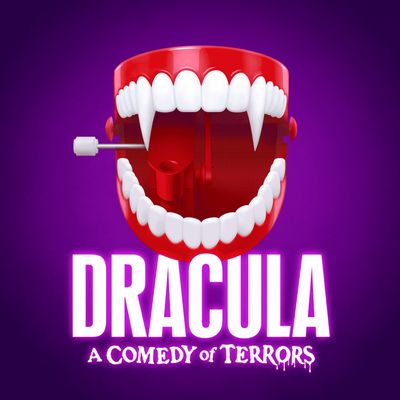
If grit, talent, and perseverance were a person, it would be in the form of Gordon Greenberg. The multifaceted artist looks back at his younger years, sharing his first creative moment, and anecdotes about his journey which includes secretly taking a bus and walking into a producer’s office in the hopes of getting offered a role. Gordon also shares his experiences in writing and directing, including his latest off-Broadway work, "Dracula: A Comedy of Terrors," a comedic adaptation of the classic vampire tale, which originally found a home in 2020 as a radio play comedy. He talks about the creative process, casting choices, and the unique and campy style of the show. He reflects on the evolution of his career, juggling multiple creative roles, and how he ensures that his outputs remain authentic and engaging. Driven with passion and purpose in whatever he does, Gordon shares a powerful piece of advice to aspiring artists: “All the things you think are your greatest liabilities are going to become your greatest virtues.”
Gordon Greenberg is an accomplished writer, director, producer, and teacher, and has collaborated with people like Zachary Quinto, Calista Flockhart, Antonio Banderas, Steven Schwartz, Steve Rosen, Neil Patrick Harris, Jerry Seinfeld, and Gary Marshall among others. He's created multi-award-winning shows all over the world, including places like the Geffen Playhouse and the Old Globe Theater. Gordon has created musical adaptations for Nickelodeon, the Disney Channel, and Universal Pictures, as well as TV commercials for J. Walter Thompson, one of the largest creative agencies in the world. His latest project, “Dracula, a Comedy of Terrors”, recently opened off-Broadway at New World Stages.
Connect with Gordon Greenberg:
- Website: www.gordongreenberg.com
- Instagram: @gordongreenberg
- Listen to the original Dracula: A Comedy of Terrors radio comedy: http://bpn.fm/dracula
- Listen to the Dracula off-Broadway companion podcast, Dracula the Podcastula: http://bpn.fm/podcastula
Connect with The Theatre Podcast:
- Support us on Patreon: Patreon.com/TheTheatrePodcast
- YouTube: YouTube.com/TheTheatrePodcast
- Threads, Twitter & Instagram: @theatre_podcast
- TikTok: @thetheatrepodcast
- Facebook.com/OfficialTheatrePodcast
- TheTheatrePodcast.com
- Alan's personal Instagram: @alanseales
Transcript
This transcript was automatically generated and might contain errors.
[0:00] Alan Seales: Well, hi-de-ho, fellow podcaster. This is the Theatre Podcast with Alan Seales, and I'm your host, Alan Seales. Our guest for this episode is Gordon Greenberg. The story of his career, the things that he talks about as we're going through this episode, it's just name drop after name drop, not in a bad way. It's just he's mentioning all of these Broadway legends who, just like him, were just starting out at the time, and now he has become this successful Broadway director and writer and producer and teacher, along with all the other people that he started out with, who are now just massive, massive stars in their own way in the space here. It's incredible. He took lots of chances to fail early and pivot and to find out what he really wanted to do.
I love people who have the chutzpah, as he says, to take chances and fail early, fail fast. I love to try that. I love to do that, and it's something that is a lot easier said than done, but you'll hear his story. He did it. Five Man Line and all the normal places on social media, especially threads and TikTok and Instagram and YouTube, that's basically all of them. Leave a five-star review wherever you're listening. Please. They help the podcast grow. Join me on Patreon. Keep the lights on here. And now, everybody, please enjoy this episode with Gordon Greenberg. Here you go. One, two, three.
[1:35] Alan Seales: I am so excited to introduce our guest for today's episode, this man I've known for several years now through the podcast space, but turns out he's more than just a fun voice on a Zoom screen. He's actually quite an accomplished writer, director, producer, and teacher, in addition to being just an overall amazing guy. He's collaborated with people like Zachary Quinto, Calista Flockhart, Antonio Banderas, Stephen Schwartz, Steve Rosen, Neil Patrick Harris, Jerry Seinfeld, and Gary Marshall. He's created multi-award-winning shows all over the world at places like the Geffen Playhouse and the Old Globe Theater, created musical adaptations for Nickelodeon, the Disney Channel, and Universal Pictures, created TV commercials for J. Walter Thompson, one of the largest creative agencies in the world, and now his latest project, Dracula, a comedy of terrors, just opened Off-Broadway at New World Stages to amazing reviews. Gordon Greenberg, welcome to the theater podcast.
[2:30] Gordon Greenberg: Thank you. I feel so old listening to that. That's like, this is your life. It's just like going back over the last 20 years. So much stuff.
[2:38] Alan Seales: I should just rename this podcast to The Ghost of Christmas Past. We will review your life. This is the world without you.
[2:48] Gordon Greenberg: I'll take it.
[2:49] Alan Seales: Where would it be? Okay, well let's start then with little Gordo. You could also say don't ever call me Gordo again.
[2:54] Gordon Greenberg: You may. Actually, everyone, you know where they all call me Gordo is in England.
[3:01] Alan Seales: Really?
[3:02] Gordon Greenberg: Where I work a fair bit, but people love saying Gordo there. They must have seen like Stand By Me or some movie that like somehow implanted that in their brains because almost universally people there go in for the nickname. And I'm fine with it.
[3:19] Alan Seales: I just saw Shucked the other day again, so I almost said Gordy, but I went with Gordo.
[3:25] Gordon Greenberg: Oh, right. I respond to all of it.
[3:29] Alan Seales: G-town. Okay, G-town. Let's see. So little G, little G, little double G. Just keep coming up with new ones.
[3:35] Gordon Greenberg: Little Gordy Greens, little Gordy Greens as a baby boy. I mean, what were you like and where were you like as a child that got you into this wonderful space of the performance in the theater?
[3:51] Gordon Greenberg: You know, it's funny. I always ask when I'm working with students for people to think back to their first creative moment. What was the moment you knew you wanted to be on stage or that you wanted to tell stories or that, you know, you just had too much childhood trauma to not process it? So you had to go on stage. It is a moment and I remember it so clearly when I was in second grade, just being on stage with a pillowcase over my head and getting applause and thinking, I want to go through life with a pillowcase over my head basically and be rewarded for it. But that that second grade teacher who I still remember named Mrs. Fenton and she had us dress up and she celebrated individuality in a way that I guess in kindergarten and first grade they didn't. So I was excited by that and I jumped in and I knew I wanted to be in theater right away really.
My parents for my seventh birthday took me to see Grease, the original production on Broadway. And at that point, I only knew there was Grease. I did not know there were other Broadway shows. So my plan was, all right, when I get older, I will be in Grease and then when I'm too old to be in Grease, I'll direct Grease and then I'll maybe produce Grease when I get rich. Grease was the entire genre. At that point, I hadn't seen Shenandoah, which is probably playing next door. But it was all I knew and I would run up and down my suburban New York block telling everyone, I'm going back to Grease to go see it again. And they thought I was going naturally to like Athens or more appropriately Mykonos.
I wasn't. I knew almost nothing of the country Grease. And then flash forward a few years, I'm reading the New York Times or my parents' copy of it. And in the back of the magazine section, there are ads for summer camps. And the one for Stage Door Manor stood out to every young, aspiring, sparkly, thespian type. So I saw Stage Door and all I wanted was to go there. And my parents kept saying, you cannot go there. You're too young. We'll send you after your bar mitzvah. So when I was 13, it would definitely make me gay. And it turns out it did make me gay. Surprise. But it happened after my bar mitzvah. And that was my reward. And I finally got to go on that first year when I was 13. A manager called Shirley Grant, who represented everyone in the sort of northern suburbs of New York, she lived in New Jersey actually, came and auditioned the entire camp.
And she chose, I don't know, eight to 10 of us that she would represent. Because I could sing loud, I guess and do a bad British accent, which I still do. I was cast in a Broadway show called The Little Prince and the Aviator. I'm skipping some of the tears and hardship in between. But it ran, it ended up running about four weeks on Broadway at what is now the Neil Simon Theater. It was then the Alvin Theater. And in the cast with me was my pal Anthony Rapp. And it was both of our first Broadway shows. We were, I think he's a year or two younger than me. He was probably 12 and I was 13. I played young Michael York, who was the aviator, the kind of San Exubery figure. And I did this crazy British accent.
I'm sure it was horrific. But it was the closest that a Jew from Jersey could do. And I remember the head of stage door came, our artistic head, a guy named Jack Romano, who was very dear to me, very important and whose opinion I respected deeply. And in one of the scenes, this is how long ago it was, I think I was playing like a shoeshine boy in Morocco. Because I had to play different roles. I was multifaceted. I said, Jack, how did you like my performance? And he said, you shine those shoes like they were the most important shoes on the planet. And I thought, that's good, right? And he said, no, they're just a pair of shoes. Calm down. And that was lesson number one. Effort doesn't necessarily equal artistic greatness.
The other thing that was sort of audacious and bizarre was that when I was 12, before I even went to stage door, I was in my first equity show, almost unbeknownst to my parents. They were not involved in any of this. And I think I somehow knew they, well, it didn't take a genius to know that in the 80s, if you were a suburban Jewish kid, your parents wanted you to go to medical school or law school. And so that's what I heard. And so I took a bus secretly to the next town, a few towns over actually, called Nanuet, where there was a giant mall. And I got off at the mall and walked through half a mile of woods to get to what was then called the Coach Light Dinner Theater. And this was like a thousand seat in the round dinner theater.
And I knew that they were scheduled to be doing The King and I, and I knew that there was a young kid in it, like a 12 year old, which would be Miss Anna's son. And so I stupidly, like something out of House of Blue Leaves, just walked to the producer's office, knocked on the door and desperately started singing and doing my British accent, of which I was very pleased and proud. And wouldn't you know it, she actually offered me the role weirdly. And I said, would you please write a note to my parents? And I folded up, put it in my pocket, took the bus home. And that night at dinner, I opened up the note and showed it to them. They thought I was crazy. But that was my very first encounter with professional theater. And I still treasure the memories. Karen Ziemba was in that cast.
[10:09] Alan Seales: Can I ask if there's anybody in there? Yeah. Okay. So then in terms of education, you also attended Stanford and NYU Tisch and Lincoln Center Theater Director's Lab and Royal Academy of Dramatic Art, and of course, went to Stage Door Manor. You mentioned Stage Door Manor in that story, but at what point are you saying, all right, this is what I want to do professionally? And out of all that education list I just rattled off, where did you start?
[10:41] Gordon Greenberg: All right. Well, there was no question that this was what I wanted to do professionally. I mean, since I was seven, from the moment I saw Grease, I was like, this is my life. I just didn't understand what the profession was. And I learned and as it evolved, I was at Stage Door for five years. And the last two years, I split my summers. So I went for half a summer to Royal Academy of Dramatic Art when I was 15. I was way too young. Everyone else was in college. And I'm taking a Shakespeare course. I was barely past puberty. They thought I was a girl when I got there and assigned me Portia, the quality of mercy is not great, from Merchant of Venice. And I said, I am a boy. Can I do a boy thing?
I loved it. And that was the beginning of my love affair with England and all things British. And then the next summer, I split my summer between Carnegie Mellon Summer School and Stage Door. And I did there. They had a six-week pre-college program, which I did with my oldest friend in the world, or longest friend in the world, Jonathan Mark Sherman. And he had been in my bunk at Stage Door. And we went together to the summer program and were taught by a whole roster of insanely talented people who were all inspiring. But what I learned that summer was I don't want to go to Carnegie Mellon. And they touted it as this. They said, this is going to be so intense. It's like medical school for musical theater.
And having already been steeped in musical theater since I was seven, I just thought, I don't think I need this. I just knew. You know when your body sometimes is like, you need a salad. Stop eating cheeseburgers. I felt at that moment like, I think I just need to learn a bit about the world. So then, being the striver that I am, I think Lisa Birnbaum had written this college handbook, the woman who wrote the Preppy handbook. And the first page talked all about Stanford University. And being from New York, a picture of Stanford with red tile Mediterranean roofs and palm trees made it look like you're going to Club Med. And I thought it was the most kind of exotic, beautiful place I'd ever seen.
And then she said, it's also the most competitive, even more than the Ivies. And so that became my goal. So I flew out to Stanford by myself. And I knocked on the door of the person who was running the theater department at the time, Anna Deavere Smith was about to come in. This is 86, 87. And I said, I want to be in your theater department. I know you don't do official recommendations here or interviews, but can I sit and just chat to you and tell you what I've done? And at that point, I said, I've been in a Broadway show. I have I took over the directing of the shows at my high school as well. Because I sort of left this out. But our high school theater director was a lovely guy named Mr. Swift, who bragged about not having seen a professional show in 30 years.
And we lived all of 19 miles from New York City. And he said, Oh, I don't I haven't been in the city in forever. And he kind of sat in the back with a paperback book and a bag containing something alcoholic and said, You do it, it's fine. So I started directing already. And I told them this, and I knew that they had aspirations to beef up their theater department. And I think that was helpful because I was a good student. I was definitely a very, very good student, but not I didn't get like a 1600 on my SATs. I think it was really moxie or chutzpah, as they say, that got me in. Because I touted my own achievements and how I was going to help them.
[14:43] Gordon Greenberg: Let me make this easier for you. This is not for me, but this is an opportunity for you. I quickly realized it wasn't the place for me at the time, and I ended up for the next year transferring to NYU Film School, where I made a lot of movies, loved it, and then kept adding majors. So I ended up triple majoring there in film, economics, just because I wanted to challenge myself and learn about macroeconomics, not really finance or doing budgets, but I imagined that with that credibility, I could be a big-time Hollywood producer. I had no idea what that really meant, but it sounded good. And then I added art history because we were in New York and there was so much delicious art everywhere, and there was a class taught by I think it was Matthew Broderick's mother, Professor Broderick, called Art and Sculpture in New York, and every class was on site at a different museum.
I mean, imagine, and this was for a cop. So we were in all the boroughs. So it was just an amazing experience, and then that opened me up to understanding what was so moving and important and contextual about fine art, which hadn't been on my radar really, and I added that as another major. I just wanted to do a deep dive. It was a really wonderful experience.
[16:13] Alan Seales: That is so interesting. I really respect that you just went out and you're like, this is the path I'm going to make for myself, and then had the chutzpah to get in, but then also I guess the confidence or naivete, I don't know, to be able to then say, well, this isn't for me. I'm going to do something else, and just continue to pivot, because a lot of people are afraid of that. They're afraid to fail fast. I think it's really interesting. This is something I always say to actors when we're starting in a room. You have to first understand that you're never going to be perfect before you can be good, right? So it's like they say, don't let perfect be the enemy of good, and it is essential to being an artist.
I mean, to being a human, but to being an artist, I think when I started writing, I was always so scared to not immediately write the exact correct thing, and then one of my very dear friends is Jessica Queller, who I was in my first play with after college called Peacetime, which is a play directed by Pam Berlin. When I started to write, she said, you have to start with a spew. You have to start with something that you tell yourself is not going to be good. Write that. Put it in a drawer overnight and then go back the next day. If there's one idea that's new and fresh and different, that's a score. That's a win. Cross the rest out and keep that one thing. That was the very beginning of me finally having the courage to write, which included being wrong.
[18:07] Gordon Greenberg: You've seen sometimes this happen subconsciously with actors in a room. They'll get up to do a run-through or a moment where everyone's feeling a bit of pressure and make what seems like a really obvious mistake to me, but I think subconsciously it's the need to just tear something, mess something up so that the rest of the performance feels less pressurized. Better by comparison.
[18:13] Alan Seales: Yeah. We've already broken a glass, so let's have fun now. All right. You've got all this education. It sounds so far like you're doing everything pursuing acting. Are you still trying to write and produce at the same time or still be an actor? Where did the path become clear that you wanted to be more on the creative side?
[18:33] Gordon Greenberg: I think by the time I was at college, I started to understand that I wanted to look on the other side of the table, that I wanted to produce, create, tell stories. Interestingly, my first job out of school was at J. Walter Thompson. That's where I went. Everyone sort of called me Dookie Houser because I was 21, but I literally looked like 13. I looked so young. You'll get facial hair one day. Don't worry. All I wanted was for one of the... I wanted to have an assistant, like I saw in the movies and on TV, and for someone to answer the phone and say, Mr. Greenberg's office. We're in a 1950s movie. We shared them there, I guess. I was a junior producer, and I had to share an assistant with one or two other people.
For those people, I remember she would answer the phone and say, Mr. Seales's office, Ms. Berenstein's office, whatever it is. Then for me, she'd say, production. I was like, I'm curious. Why don't you say my name when you answer my phone? She was like, because I don't want to. It became my goal. I finally won her over. It took a year to win enough respect for her to say Mr. Greenberg's office. She'd been there a while, and she had standards. That was one of my proudest achievements there.
[20:05] Gordon Greenberg: After about two years, I directed spec commercials, and I helped them with existing clients. We did things that were great adventures. For Rolex, I had to set up this shoot where we went all over the world interviewing all the people in those ads, in those Rolex ads. I'm a Rolex achiever. I sell the Northwest Passage or Chris Everett. Let's go meet her at her tennis court in Boca Raton. Because I was 21 and basically lived on Taco Bell, I had these budgets. I'm like, we could do this for one-tenth. We'll stay at the Marriott Courtyard. We'll eat at Taco Bell. It'll be great. I remember one of the account executives who was like, I have given up my life for this. We're staying at the Four Seasons, and we're eating at these expensive places.
That was a real eye-opener about how that particular business worked. I don't think it's the same at this point, but it was like we're going to make you miserable, but then we'll pay you and buy you with luxury items. Hang on, everybody. We're just going to take a quick break.
[21:16] Alan Seales: All right, now we're back. As I started to understand that, I just thought, well, why don't I just do something where we actually enjoy ourselves, and I don't have to sleep at a $1,000 a night hotel to somehow feel justified in my existence. At that point, I made the unwise decision to go back to acting. I left J. Walter Thompson. I remember I had denied myself seeing any shows, any theater for almost two years. I think because like a smoker who had quit, I thought once I go, I'm going to be sucked back in, and I will not be able to stay away. It happened with a show I had always loved, Falsettos. A show called Romance in Hard Times was playing. Billy Porter was in it. It was his first show at The Public. Lillias White, Alex Corey, I think David Warren directed it. Anyway, the music was just glorious. I went back three times in one week. I couldn't stop. Then I just said, I love this too much. This feels so right. I'm going to leave.
[22:27] Gordon Greenberg: From there, I did leave, and I did an internship with Chris Bono, Public Relations. I love Chris. I learned a lot about the business from that perspective there as I was auditioning. Then I went on to be in some commercials. I did this acting class with Bill Esper, who taught me not to shine shoes like they were the most important shoes in the world and to just be and that you are enough, and a lot about the craft of acting, which I truly appreciated. Also, I think it made me a better human being, just the idea of tuning into other people and being connected. I went on tour for a little bit in Grease, Dusk Musical. That was a Jeff Calhoun-directed version. It was a lot of pink, and it was certainly a lot of fun to be in.
Although what they didn't tell me when they cast me, I was playing the very deep and complex, nuanced role of Eugene, the nerd. That was when I wore fake glasses to auditions before I needed actual glasses. In that version, they had created an acapella singing group that included Eugene and his other nerdy friends. We were supposed to be forever plaid, but I can't sing that well. I mean, I sing for fun, but I mean part singing. It was a nightmare. All I remember from the months that I was on that tour was stuffing wax in my ears so I couldn't hear the people singing next to me and not ruin the show. Basically, that's all I wanted to do, was not embarrass myself and everyone and the Weisslers who were producing the show.
That was a great time. Then I continued to act. I came out to L.A. for a bit. I did some TV shows. I was on Shaky Ground and Knot's Landing and Step by Step. I was a fine actor. I was good enough to work, but I never felt like that was the defining thing that I did, nor did I feel like it was the best that I could do. I just kept striving. I thought, I want to create stuff. I went back again. I went to that Lincoln Center Director's Lab and just learned to direct, basically by cobbling together skills, the best of what I had seen from the other side and reading everything I could get my hands on.
[25:01] Gordon Greenberg: I then started directing for free. I just sort of said, what can I do for you? I had a dear friend from high school, Pam Parisot, who at the time was running the Helen Hayes Theater in Nyack, which was a regional theater not far from where we both grew up. I said, I want to direct. She said, that's swell, but we're hiring experienced directors. This is a professional endeavor. I said, well, can I do something for free? I'll put together a concert called In the Works. It'll all be basically songs from shows by people that I know now that are sort of bubbling up. At the time, that was Jason Robert Brown. I just made the show and got people to do it with talent. I think based on that, they said, if you want to do a show here, an actual show, then pitch it.
The first thing, I think they wanted to do Joseph and the Amazing Technicolor Dreamcoat, which I knew and loved. I said, okay, I'm going to have my friend at the time, Andrew Lippa, is going to redo all the arrangements. Kim Grigsby, who is someone I had known through Steve Marzullo, was a new conductor back then. She's going to conduct it. I somehow got to Andrea McArdle, probably through Seth Rudensky or something. She wanted to be the narrator. With that, I put together a little package, entrepreneurial type. They said, all right, we'll do it. Then that went very well. They said, do you want to do Jesus Christ Superstar next? I was like, what's it about? They said, get the cliff notes. I did.
I knew and loved Billy Porter. I thought he was being used as the comic relief in every show back then. He had been in Grease, the same production I was in. I knew he was a phenomenal actor with a great soulfulness and depth of feeling. He agreed to play Jesus. The show went very well. Rosie O'Donnell came to see it. I remember she talked about it on her show. We got to be on NBC. Lots of interesting things happened. The next day, the review came out in the New York Times when they still reviewed things outside of New York. It was a rave. Then all of a sudden, I just thought, wow, business got a lot of ups and downs, as they say in Dreamgirls. A lot of opportunities started happening after that.
I just remember the feeling of great, unrestrained creativity at the time and ballsy-ness that I had nothing to lose. Tim Rice called me and said, I'm very curious about this version. Obviously, I'm impressed with what I'm hearing. I was going over to London to direct my first play there at a small pub theater called The King's Head. I said, I'm going to be there in a couple of weeks. I would love to meet you. He said, great. Can you bring an archival video of the show? At the time, there weren't really archival videos. There was no internet. We couldn't just share things. Maybe there was, but I didn't know about it. I literally took my parents' video camera, gigantic, on my shoulder. I thought I was being cheeky and hiding in the back.
At this point, I'm sure Equity could arrest me for it, but I filmed it from the back. I brought the videos to London and gave it to him. He said, great. I've got to show Gail Edwards this, who was scheduled to direct the next version on Broadway. My heart sank because I thought he was going to offer me to direct it immediately on Broadway. That was that. That show was really what became the beginning of this whole career. Once I decided to direct, initially, I was still doing a few plays as an actor. Acting was my day job. As you know, there are between one and 70 actors in a play, but there's always one director. There's a lot less jobs. People want directors with experience. I think it does take about 10 years to cultivate a career where you can make any kind of living.
For those 10 years, I knew I had to do something. I didn't want to keep acting. It wasn't enough. My other best friend, a very close friend, Jeffrey Seller, had a show called De La Guardia downtown at the time. He was like, well, you need.
[29:26] Gordon Greenberg: Do you want to do marketing? And I was like, I don't know how to do marketing. He was like, figure it out. You're smart, figure it out. So I took a job doing marketing for De La Guarda and spent several months just creating outlets at different universities, ticketing outlets, frequent flyer programs because De La Guarda had a lot of flying in it. And I just figured out how to sell tickets, and it went pretty well. And then they said, do you want to keep doing it? And I was like, well, I guess, and it was a part of what would become Broadway.com. Wow, and at that place called Theater Direct, I said something to one of the people working there at the time, Bob Hoffman, who's now at Shubert Ticket Sales.
I said, I feel like all of the groups that are coming to see this are affiliated with schools, and there should be some kind of program where you can add value to a school trip by including a workshop, you know, kind of like I had done as an actor at, you know, Dallas Theatre Center, Indiana Rep, wherever you were acting. There would always be a school group, and I was always the one who volunteered to go teach the class because I enjoyed that. So we started something called Broadway Classroom. And Pam, my friend at the time, had left the theater at NIAC and was the creative director for the Weisslers, and she, I think, was dealing with Chicago. I think Annie Get Your Gun was maybe playing, and she wanted a new job.
She wanted to try something new, and I convinced her to come over, and Henry Macintosh owned Theater Direct at the time, and he agreed to fund this venture called Broadway Classroom, which then grew and grew and grew over many, many years. And it grew too big as my career grew and Pam's career as a producer grew, and so we left and started our own spin-off education program that really is all centered on an event called the Broadway Teachers Workshop. And this was our creation. We had created it for initially as part of Broadway Classroom, but when we left, they stopped doing it, and we just sort of made it our own baby, and it's something that has now been going for 23 years, and we have over a thousand theater teachers come to New York every summer and in different groupings do workshops with Broadway people.
I mean, the finest artists and cast members. We've had everyone from Stephen Sondheim, Lin-Manuel, everyone, Bobby Lopez, just anytime someone is sort of high achieving on Broadway and generous of spirit, sort of come and share their stuff with their teachers because this is all a reflection of all the people that have fueled and inspired us. And it has become, for me, a wonderful touchstone, a time for gratitude, a time for connection, and selfishly a time to call in other people to teach who I'm curious about because being a director, you're alone in the room all the time, and I'm not watching anyone else. So I can call, you know, Alex Timbers and say, would you teach a class? And he's done a bunch, or anyone like that that I think is wonderful.
It's just a real nourishing experience. And for these teachers that come in, it's a three-day program where they're in New York, and they do probably ten workshops over three days, and they see four Broadway shows, and they meet with the casts, and they meet with each other. And these are people that, like I was when I was in junior high, their islands in their towns, and then they come together the way I went to stage door and found my people. They get to be with each other and figure out how do we deal with the challenges facing us as arts educators today and also feel the value and the love from the Broadway community because we are all peers, and we're all doing the same thing, and we're all feeding into the same sort of brain trust of theater and creators.
This is a group of people who really, obviously, those of us who make our living doing this do it not obviously for money, but because we believe it matters that what you put into the world makes a difference and that you can help enlarge people's minds and hearts based on what you write and inspire in other people to do the same and to think maybe a little bit outside of what they know.
[34:11] Alan Seales: Wow, well, your toes must hurt from all those names you dropped. That's quite a story where like everybody, your whole story, your whole backstory is just this list of rising talent that all came up together. It's so fascinating, and I love all of that. I want to shift over to the writing side of things, and of course, it's gonna take us to Dracula. But before I get there, I just want to touch on the fact that you did either working or worked on Tangled, a musical adaptation for Disney. People keep telling me I look like a young Flynn Rider. I just want to put that out there.
[34:43] Gordon Greenberg: Oh, you'd be perfect casting.
[34:48] Alan Seales: There you go. At least let me audition for it.
[34:50] Gordon Greenberg: If you don't mind leaving your family and getting on one of the two cruise ships now, the Disney line that are currently featuring the production.
[35:01] Alan Seales: I’ll bet you'd have a pretty good shot at it.
[35:05] Gordon Greenberg: Wait, I just got off the Wonder.
[35:05] Alan Seales: What ships is it being performed on? I don't even know if it's the Dream, the Magic, the Exclamation Points.
[35:13] Gordon Greenberg: I've done a few, and I love The Wish is the new one, and I think The Triton is the one it hasn't set sail yet, the one they're finishing, I believe.
[35:23] Alan Seales: Yeah, I don't think the Dream was the one we started it on.
[35:27] Gordon Greenberg: Yeah, the Dream and the Wonder, the two originals.
[35:31] Alan Seales: Oh, no, then the Dream was that was a show called Disney's Believe that I put together with Kirsten Childs, and that is, I just watched that.
[35:42] Gordon Greenberg: Yeah, it's like a jukebox musical of Disney stuff, but it's, um, I have no idea where it is right now because the way they work, Disney, unlike a Broadway contract where you remain connected to your work and come in and look at it, and all of the people working on it are on your team. At Disney, you create it and leave, and they own it. Yeah, sort of the way Disney does with all their IP, you know? I mean, all of the, is it Mary Blair who did all that gorgeous artwork in the 50s and 60s? Like if you look at It's a Small World, you know, that just that stop very distinctive. But most people don't know that it was Mary Blair. They just know it's Disney. It's part of, you know, kind of the joy and part of the gig working for them. So I haven't seen that show in years, but yet I see people all the time with my name on their resume.
[36:33] Alan Seales: That's funny, yeah, it was three, four weeks ago now, yeah, the first end of August, we did an Alaska cruise out of Vancouver on the Wonder, so I literally just watched your show.
[36:45] Gordon Greenberg: Okay, Dracula, like working with Steve Rosen has got to be a treat in general anyway, just because little Stevie here is such a guy. He was on my radar after The Other Josh Cohen, and like the two of you guys hanging out, like you're funny together individually. You're also funny like coming together though. When did you start working with Steve, and then the two of you co-wrote Dracula, which came into my life in 2020 when we originally made it as a radio comedy here on Broadway Podcast Network, which still exists, and then now in 2023, it's opening off-Broadway. Like the story behind how all this stuff just like meshes together is fascinating.
[37:29] Gordon Greenberg: It is amazing. I, you know, I first met Steve. I was programming a series at Ars Nova called Broadway Spotlight, and Ars Nova is also very close to me because I was one of the original sort of founders of it. Jenny Steingart is a dear friend from camp from when we were kids, and her, as people know if they look at the etched glass when you walk in on the right, the entire theater was founded as an homage to her brother Gabe, who died very young, who was this lovely talented creature. And we were programming what I thought was interesting people from shows who had not yet found their stardom, but they were all doing interesting things in shows. And so I think at the time we had, I mean, Idina Menzel was in The Wild Party, and she came in and did a thing about her time as a wedding band singer in Long Island, which was hilarious.
Steve I called because I saw him in Spamalot, and I thought he was really funny, and I knew his girlfriend at the time, Mona, who was working at Tara Rubin's office with one of my best friends, Eric Woodall, who you also know. And he came in, Steve, and he did this crazy hilarious show, and afterwards, I just thought, I want to know you. I want to work with you. And then years ago, I was hired to direct a small national tour of Guys and Dolls that was kind of using the set and costumes, physical production from the Des McAnuff one that he had been in. We did, you know, we sort of took it and did our own version, but I asked him to play Nathan Detroit, and he was great, and we became really good buddies then and learned how similar our backgrounds are, just bizarrely.
We both have parents who grew up in the same neighborhood in New York, and our fathers are both pediatric dentists. So specific, just knew, had a great shorthand. We both grew up with parents who listened to the same comedy albums, the, you know, the Nichols and May and the 2,000-Year-Old Man, but my father's stuff and his father's stuff was all born in the Catskills. So it was Brooke, Sid Caesar, old school, old school laughter on the 23rd floor kind of stuff, and we both have a deep respect and affection for it, which is where, you know, later my relationship with Gary Marshall on Happy Days became so formative for me. But with Steve, we just would make each other laugh, and at one point, I had been directing some Christmas shows for the Bucks County Playhouse, and Robin Goodman, who's a good pal, said, do you want to do another one this year?
And I said yes, but might I just write one for you instead of doing another, you know, existing Christmas show? And I went to, and she said, okay, but here are your parameters, and I, you know, whatever it was, five people, no set, cheap, and I went to Steve and proposed that we do it, and we had a grand time, and we created Ebeneezer Scrooge's Big Your Town Here Christmas Show, which was written almost like in Mad Libs so that you can fill in the blanks, and it's now published by one of those companies, Broadway Licensing, I think. But it ran for four years there, and now it's been running for five years at the Old Globe, where it's Ebeneezer Scrooge's Big San Diego Christmas Show, and Chris Sieber, our pal, is gonna star this year as Scrooge in it.
[41:21] Alan Seales: Oh fun, excited.
[41:24] Gordon Greenberg: And I love, love, love doing it out there, and it was a ton of fun doing it at Bucks County too. Hang on, everybody, we're just gonna take a quick break.
[41:31] Alan Seales: All right, now we're back after that. Andrew Cato, who runs the Malt's Jupiter, said, I love what you guys did with that. Could you do something similar with Dracula? And I said yes, 'cause I'm just a yes-and person, and I went to Steve, and he said, sure, let's give it a shot. And we wrote this wacky version of Dracula that, I mean, when he, when Andrew saw the first draft, he said, I'll produce it. So the fact that he was with us, you know, even as the show was very nascent, can't be underestimated. It was a huge part of our development, and we did it down there just before the pandemic and learned a lot, and then we went to Chicago Shakes where Rick Boynton, this brilliant dramaturg and friend, gave us amazing notes, and then the world stopped.
And then I was lucky enough to meet you and Dory, and we created this great radio play, which, you know, was inspired by the fact that my father, having seen a reading of Dracula before it was fully produced in Florida because he lives in Florida, naturally had never seen a reading of a play, and he kept calling it my radio play because he thought it was like Woody Allen, like in the olden days, drop their pages, and he would say, how's your radio play doing? And I'd say, well, it's a play, but yes, it's doing good. And so I thought of that, and we did it. We made this wonderful radio play with an insanely talented cast, and it kept us sane really during the pandemic. So coming back to Dracula, that so the radio play that we did, Chris Sieber was Dracula.
You had Laura Benanti, Alex Brightman, James with her, I go hard, Ashley Park, Annalee Ashford, John Stamos had a cameo in there, Rob McClure, Jeff Creedy, or Mendoza, Richard Kind, one of my favorite people in the whole world. Every time we work together, he falls asleep. I don't, I take it.
[43:36] Alan Seales: But then our next podcast was all Richard Kind.
[43:41] Gordon Greenberg: I know, and I know. And so what I was in the room with Julie and Richard recording, I'm doing the recording with Julie, and I turn around, and Richard's like in the back of the room asleep. I've got some wonderful...
[43:53] Alan Seales: He's a very busy man.
[43:59] Gordon Greenberg: He's a busy man, I get it. I love Richard. He and I, interestingly, Steve connected us when we were doing the first recast in London of Guys and Dolls. So I had directed Guys and Dolls that opened at the...
[44:39] Gordon Greenberg: We needed Nathan, and I called Richard and he was like, what the heck? I'll come over. And seeing this cast that had rehearsed what to them was, I mean, Guys and Dolls is revered in England. It's almost Shakespearian to them. And there's a lot of intellectualizing of, like, what is the New York Jewish point of view on this moment? What would Nathan do? What would he think? And then cut to Richard, who was like, all right, I'm going to fall on the ground here. You're going to see my ass crack for a second. Then I'm going to get a laugh. You count to three, turn your head to the left, cough, and then say your line. We're a little astonished, to say the least. Where am I? Can I get some good food over here?
He was brilliant. He is so awesome. I love working with Richard. But the cast now off-Broadway, I mean, Jordan Boatman, Arnie Burton, Arnie, freaking Arnie Burton, has me in stitches playing the female characters. James Daly, I love, who's Dracula? How did you find James, by the way? So James came with the show from Canada, and this is his off-Broadway debut, right?
[45:53] Alan Seales: Yeah, it's his New York debut.
[45:53] Gordon Greenberg: I had heard about James through Louise Petra, who was starring as Edith Piaf in Piaf-Dietrich, which we were doing in Toronto, and we had done in Montreal as well at the Segal Center, kept talking about this wonderful, talented young guy who was doing this cabaret that was going to tour Canada. And he needs an APEC.
[46:21] Alan Seales: Yes.
[46:21] Gordon Greenberg: But he had also been at the Shaw Festival for six, seven seasons, doing everything from Stoppard to Shaw to Master Harold and the Boys. And I remember she kept saying, everyone said, you need to meet him. You need to audition him. You're going to love him. He's hilarious. He has your sense of humor. And when we were casting it for Montreal, Lisa Rubin, who's the artistic director at the Segal Center, again said the same thing. You need to meet this guy. And so we went to Toronto for auditions, and he couldn't come in because he had a bike accident and had broken his arm that morning. And he was also at the Shaw Festival, which is like a two-hour drive back to Toronto.
[47:08] Alan Seales: Where's the problem?
[47:10] Gordon Greenberg: He was biking when he should have been driving.
[47:10] Alan Seales: However, exactly. I don't think he was biking to Toronto. But he got on a Zoom with his arm freshly in a cast in the sling and was like, hey, guys, how are you doing? And I said, you're just going to do an audition today. I knew that this was an extraordinarily generous of spirit and low drama and can-do personality and was hilarious and lovely. And immediately I said, yes, let's do this. And he was phenomenal in the role. He came even for rehearsal. He had to come a week and a half late into that process in Canada because he was still under contract to Shaw. And I had gone up there. I saw him in a bunch of shows. And then we worked together a couple of days just to get him ready. And then I went and rehearsed with everybody else.
And then he came and joined. But literally his first words in rehearsal are, happy to be here, easy to work with. I never heard anyone say that. I'm sure it was half joking, but it's very real, just a joy to work with him. So I knew that I wanted him to come to New York and do this. And Steve came up and saw the show in Montreal and was immediately of the same opinion. And then Drew and Dane, our producers, came up to see the show and were on board quickly as well. And we showed him to Dory in the actual legal archival. And she said, he's wonderful. I think this is worth it. Because there's an expense and there is more work involved and legal paperwork and visa stuff involved in bringing someone internationally. But yes, I love him. I'm so glad he's there. And he's hilarious and fearless. And he can take his shirt off and please a lot of people. So that's a bonus too.
[48:58] Alan Seales: Well, so speaking of taking your shirt off, pleasing people and being hard to work with, Andrew Keenan-Bolger also rounds up.
[49:04] Gordon Greenberg: Another one. Andrew is just one of the most positive and kindhearted and silly and inventive and open actors I've met. And it's interesting because he hadn't been the first person in my head when I was thinking about this. But the minute he, I think we had called him in for crime and punishment and initially for a similar role in that. And he wrote a note to me and Steve said, I can't do this, but I love it. I love what you're writing. I get your humor. I want to be in one of your shows. So then when we were starting to cast this, we both said, Andrew, let's go to Andrew. And he gave amazing auditions and was also just generous, ego-free. And so such a fountain as opposed to, I guess, a drain. He came and just had so much to give.
[50:02] Alan Seales: That's why I'm going to title this episode, Be a Fountain, Not a Drain.
[50:06] Gordon Greenberg: That is one of my, you know, that is one of my mantras.
[50:10] Alan Seales: I love it actually. And I remember one of my fondest roles I've ever seen Arnie in was when he was with Christian Borle in Peter and the Starcatcher.
[50:20] Gordon Greenberg: And with Steve. Steve Rosen was in that as well.
[50:24] Alan Seales: What? I got to go back and refresh. Oh my God. You're right. You're right.
[50:29] Gordon Greenberg: Yeah. But Arnie was, Arnie is the first person to play Mina and Van Helsing. So in our first, first, first reading in New York City, it was Michael Urie as Dracula and Creedie was in it and lots of great people. But Arnie was in it from the beginning and showed us what it could be. And he kind of shined a light. He was a beacon and then he couldn't do it for the next couple of productions. But we of course had in the back of our minds, we'd love for when it comes back to New York for Arnie to come back to the role. And I'm so glad and grateful that he did and that we found Jordan Boatman who's insanely lovely. And like me has a fondness for gratuitously lapsing into British accents. And she and I just share a sense of humor and a sensibility.
And she's, I can't speak highly enough of how open-hearted and talented she is and game. And then Ellen Harvey, who I'd admired for years in numerous shows, not the least of which was the tour of high school musical. I saw the Kodak in LA and I remember she played the gym teacher or the drama teacher. And I just thought, I love that woman. I love her. And I'm so glad and grateful to be working with her now because she's hilarious in the show and so precise about everything she does. She is a craftsperson of the highest degree and very clear and everything she does is thought through beautifully.
[52:09] Alan Seales: The show itself is amazing. And there's a lot more characters than those five principles. And we, I'm not going to get into the specifics of multiple people playing multiple people, because I go over that in detail with Andrew in our episode, episode 286. I interviewed Andrew Keenan-Bolger as well. But goodness, the show, it's doing so well. The reviews are great. And I am so happy to see it continue to evolve because as somebody who does straddle the line between the creative and the, I guess, or behind the camera, in front of the camera, behind the curtain, in front of the curtain, it's so cool to see how it's working in multiple mediums all at the same time.
[52:46] Gordon Greenberg: Thank you. I mean, I think they're all connected and one feeds the other and helps keep you sharp in different ways. Balance in all things. I love it. And I'm very grateful to be able to do more than one thing. And, you know, writing and directing are related in many ways, but sometimes you have to kind of take one hat off and put the other on. And when Steve and I write together, there's a little piece of me that's thinking in broad strokes like a director, you know, oh, there's going to be a lot of opportunities for puppets here. There's going to be a lot of opportunities for silliness here. We'll put physical bits in here. But I don't actually think on a granular level about what it's going to be.
I just know that this is a field of opportunity. And then once we get into rehearsals or pre-production, I take off the writer hat and give it to Steve. And then I'm just the director. And we kind of work when we work together. It's almost like being on a TV show, you know, because when you're a writer on a TV show, they're creating everything. The writers are the producers. The writers are setting the tone and making all the calls that a director normally does. So a director on a TV show is almost more like a choreographer, stage manager. And the writers on a TV show are writers and directors, basically.
[54:04] Alan Seales: That's really cool. Okay. Well, everybody needs to go to the New World Stages, see the show currently limited run through January.
[54:24] Gordon Greenberg: Yeah, through the holidays. It's so much fun. It's so I mean, the audiences have been insane. It's like a party there every night. And it is genuinely ridiculous, silly, campy, strangely sexy. What it's not really is scary.
[54:40] Alan Seales: No, not at all. It's everything else. It's something I heard it described as once was like a combination of Mel Brooks meets Monty Python to tell the story of Dracula.
[54:53] Gordon Greenberg: Like, yes, that's perfect. Probably meets a little bit of Charles Ludlam.
[55:00] Alan Seales: All right. You got to throw that in. Yeah. Okay. So three questions I ask everyone that wrap up the episodes. The first one just simply is what motivates you?
[55:08] Gordon Greenberg: What motivates me is, well, my partner, my dog, my family, my friends, and the knowledge that there is always more to tell and that we can keep evolving and keep getting better. And I think the notion of just putting good things into the world really does motivate me. It sounds a little sappy, but it is true. And that with every project, it's like a new beginning. It's like having a new child. And the sky's the limit. And I love that feeling of possibility.
[55:43] Alan Seales: What advice would you give to your younger self and younger people listening now starting out down a similar path?
[55:47] Gordon Greenberg: All the things that you think are your greatest liabilities are going to become your greatest virtues. So all the quirks, the weird sense of humor, the weird way you dress, the weird way you think, all those crevices of your mind that you think are dark or unappealing or different are the things that make you of value and that make you a unique artist with something to share. And that's what people want is for you to share the emotional intelligence of shining a little light on those dark corners that we don't talk about every day. And if you're just talking about what everyone else is talking about, then it's a trope. Then it's a cliché. So train yourself to listen to that.
[56:32] Alan Seales: Makes people not feel alone when they can hear that.
[56:32] Gordon Greenberg: Exactly. Yeah, I hear that. Okay, last question, then. Hardest one. If you could only see one show for the rest of your life, but you can see it as many times as you want, what would you see?
[56:36] Gordon Greenberg: It's so easy. Dreamgirls. I already saw it 21 times when I was a kid with my bar mitzvah money. I used to go every Saturday, usually with Jonathan Mark Sherman. But yes, and we had a close friend, Judy Gilbert, Usher at Imperial Theater. She knew us. And sometimes we paid. Sometimes we were just sneaking in intermission, and she'd show us to seats. But we were so young or young looking that nobody suspected.
[57:03] Alan Seales: You went and second acted it all the time.
[57:08] Gordon Greenberg: I've never done that. I feel like I need to do that one time in my life.
[57:13] Alan Seales: I know. I wonder if they're stricter now. We only got caught once when we were second acting nine, and William Ivey Long was there in the back, and he saved us. Like, oh, these kids are with me. Literally, he said that. Because I think we just figured, who's going to doubt it? We'll just say, we're looking for our parents. We're lost. We're from the suburbs. But I think the ushers were on to us. We're looking for Times Square. Anyone seen it? Basically. Where's Howard Johnson's? I ordered a grilled cheese with bacon. Why am I a teenager talking like an old lady?
[58:04] Alan Seales: Okay, where can we find you online on the social medias?
[58:04] Gordon Greenberg: You can find me online at my name, gordongreenberg.com, and I don't know what my social medias are. I think they're my name. Just type in my name. Probably. Nobody type in my name.
[58:15] Alan Seales: I'm at theater underscore podcast on threads, Instagram, TikTok, and official theater podcast on the Fosse book. Facebook, for those who don't speak me. Leave a rating and a review wherever you're listening. Help spread the word. Tell your friends. Thank the Jukebox the Ghost for the intro and outro music. And Gordon Greenberg, thank you so much for this incredible story. Like, I feel like this whole podcast was just me listening to a story. It was so much fun.
[58:32] Gordon Greenberg: You're so easy to talk to. It helps that we were at a Kenny Loggins concert together, not seven days ago.
[58:37] Alan Seales: Was it last week? Yeah, probably seven. I think so.
[58:42] Gordon Greenberg: Yeah. Danger zone, baby.
© Broadway Podcast Network, All Rights Reserved