

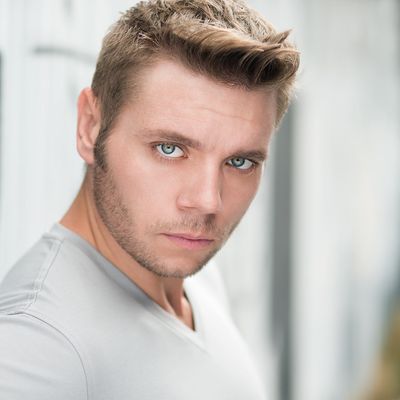
From playing Jean Valjean in “Les Misérables” to working with some of the best orchestras in the world, Nathaniel Hackmann has etched his mark as a versatile artist. Nate grew up in Scottsdale, Arizona, doing community theater at a very young age which eventually led to his love for theatre and performing arts... Read More
From the show: The Theatre Podcast with Alan Seales
Guests
Miniseries Inclusions
Featured Shows
About
From playing Jean Valjean in “Les Misérables” to working with some of the best orchestras in the world, Nathaniel Hackmann has etched his mark as a versatile artist. Nate grew up in Scottsdale, Arizona, doing community theater at a very young age which eventually led to his love for theatre and performing arts. He talks about his initial goal of becoming the youngest baritone to make his debut at the Metropolitan Opera and life lessons along the way that made him realize the music theater community and the people who work in music theater are his tribe. Nate looks back on his turning point which came when he auditioned for the NETwork’s Beauty and the Beast National Tour in 2010. Currently playing as Biff Tannen in the production of Broadway's “Back to the Future”, he reveals his in-depth knowledge of the film, its production history and the challenges it faced, and his starstruck moment with Huey Lewis. Nate reflects on his motivations as an artist, emphasizing service, community, and spreading joy, and why young artists should find their voice and what motivates them.
Nathaniel Hackmann is an incredibly versatile actor who has held many roles alongside many of the world's greatest orchestras. He's played both Jean Valjean and Javert in “Les Misérables” on Broadway in addition to iconic roles like Jekyll and Hyde and Hunchback of Notre Dame for the internationally televised BBC Proms at Royal Albert Hall. He was Curly with the John Wilson Orchestra in the acclaimed production of “Oklahoma!”. He’s also an opera singer, and an alumnus of the prestigious Merola Opera Program in the San Francisco Opera and has performed with the Virginia Opera, Michigan Opera, Opera Theatre of Saint Louis, San Francisco, Lyric Opera, and many others. On the concert stage, he appeared with the John Wilson Orchestra, Sinfonia of London, Hong Kong Symphony, San Francisco Opera Orchestra, and Springfield Symphony. He can now be seen as Biff Tannen in the current production of Broadway's “Back to the Future”.
Connect with Nathaniel:
- Instagram: @n8hackmann
- TikTok: @nathanielhackmann
Connect with The Theatre Podcast:
- Support us on Patreon: Patreon.com/TheTheatrePodcast
- YouTube: YouTube.com/TheTheatrePodcast
- Threads, Twitter & Instagram: @theatre_podcast
- TikTok: @thetheatrepodcast
- Facebook.com/OfficialTheatrePodcast
- TheTheatrePodcast.com
- Alan's personal Instagram: @alanseales
Transcript
This transcript was automatically generated and might contain errors.
[0:00] Nate Hackmann: Heya, buttheads of the past, present, and future. This is Nate Hackmann currently playing Biff on Back to the Future on Broadway, and this is the Theatre Podcast with Alan Seales.
[0:20] Alan Seales: Hey, everyone. Welcome back to an all-new episode of the Theatre Podcast. I'm your host, Alan Seales, and this is the first of four episodes that are going to make a wonderful Theatre Podcast takeover with the stars of Back to the Future, the musical now on Broadway. This first episode here is with Nate Hackmann, who plays Biff Tannen. Next up, we have Merritt Davis Jones and Jelani Raimi, followed by Liana Hunt, and then rounding it out with Casey Likes. So, make sure you follow the podcast for the next couple of weeks to get all of those amazing episodes. So, at the end of every one of these Back to the Future takeover episodes, I asked them some Back to the Future movie trivia, so it's interesting to see how much of the obscure trivia they knew about the movie itself before coming into the show. But, anyway, without further ado, I'm just going to kick this right off. Everybody, please enjoy this episode with Nathaniel Hackmann.
[1:08] Alan Seales: Today's guest is an incredibly versatile actor who has held many roles alongside many of the world's greatest orchestras. He's played both Jean Valjean and Javert in Les Mis on Broadway, in addition to, of course, iconic roles like Jekyll and Hyde and Hunchback of Notre Dame for the internationally televised BBC Proms at London's Royal Albert Hall. He was currently with the John Wilson Orchestra in the acclaimed production of Oklahoma. Also an opera singer, he's an alumnus of the prestigious Merola Opera Program in the San Francisco Opera and has performed with the Virginia Opera, Michigan Opera, Opera Theatre of Saint Louis, San Francisco Lyric Opera, and many others. On the concert stage, he's appeared with the John Wilson Orchestra, Sinfonia of London, Hong Kong Symphony, San Francisco Opera Orchestra, and Springfield Symphony.
Oh my god, I got to cut half of this because we'll be here all day. He's now in an incredible non-operatic turn of events. He can be seen as bad guy Biff Tannen in the current production of Broadway's Back to the Future. Nate Hackmann, oh my god, man. Welcome to the Theatre Podcast.
[2:33] Nate Hackmann: Thank you so much for having me.
[2:39] Alan Seales: Dude, so you played both Jean Valjean and Javert at the same time on Broadway. That's insane. How did you, you just like went back and forth, you know, one side one side of the other?
[2:45] Nate Hackmann: Yeah, you know, they never, the only way I knew was which costume was set up for me because they never let me wear both costumes at the same time. Well, they only showed you, it was top half and bottom half. So they lifted the scrim one way or the other.
[3:06] Alan Seales: So, oh my god, dude, I assumed, I'm so excited to get into this because I perhaps falsely assumed with the opera background and the international background that you were British. But no, you grew, you were born in Scottsdale, Arizona.
[3:17] Nate Hackmann: Correct. Is that what you grew up to?
[3:24] Nate Hackmann: Yeah, yeah. So people who are familiar with the greater Phoenix area, Scottsdale is often thought of as sort of the bougie area. It's like where most of the Cardinals or the, you know, the Diamondbacks players have houses. It's all in Scottsdale because that's fancy and there's lots of great golfing to be had there. It's one of the nicest towns for resorts in the sort of southwest. I was born in the one square mile of crappy Scottsdale. I am firmly middle class, perhaps lower middle class, even the way I grew up. My dad was a software engineer for Motorola, originally is what brought him out there. And my mom has worked in education most of her career, but has done many odd jobs. But for the last 24 years has been an arts coordinator for a middle school system called Kyrene Middle School out there. And they both have done community theater, as long as I can remember. So I sort of came by the music bug, honestly. But yeah, definitely not British. Definitely not good.
[4:30] Alan Seales: I was going to ask where the connection came from. And it sounds like your parents sort of pulled it in because, you know, NFL and golfing, of course, leads to musical theater. It's the next natural progression. But your parents, a software engineer and an educational administrator, where did their love for theater come in?
[4:47] Nate Hackmann: Right. So they actually met in middle school in Iowa, where they grew up, doing a production of, I'm pretty sure, Once Upon a Mattress. And they grew up doing theater in a small town in Iowa called West Union. And so inevitably, when they got married, they wanted to get the heck out of there. And like I said, my dad was educated in computers and software engineering. And there was a job at Motorola at the big plant down there in the Phoenix area. And so they moved when my mom was pregnant with me. And I was born in, like I said, in sort of crummy Scottsdale when they had first gotten there. And then they've all kind of lived in the all in the suburbs of Phoenix. I grew up mostly around the Mesa Chandler area more than anywhere else.
For those folks in the southwest who know that area, including Casey Likes, because oddly enough, my mom and his mom were both in music education in the valley of Arizona. But there's 20 years between us. So we never worked together. I moved away before he was even born to go to school. But yeah, I grew up in Arizona, and they have done community theater. Both my dad and my mom have done community theater in the area, you know, sort of my whole life and as long as I can remember. And of course, that meant that growing up, I wanted nothing to do with it. I thought it was cheesy. I thought it was hokey. I was not in theater at all. I was mostly interested in music. I played the trumpet from fifth grade and wanted to be a serious musician.
I really liked jazz, especially in symphonic music. I grew up worshipping John Williams and Alan Silvestri and James Horner and these guys who wrote these incredible, you know, musical symphonic scores, all the way back to Eric Wolfgang Korngold and, you know, all the way forward to now Zimmer and these guys who still write these. I mean, Silvestri is still writing all the Avengers scores and putting out this amazing music. But that was where my heart was. I hadn't really taken a voice lesson or done any sort of major performing before I went to college. And then I started my undergrad at Northern Arizona University, basically because I stumbled into a vocal scholarship when I was in choir and auditioned for it.
And I was like, well, I guess I have to be a music major. So I'll be a music education major and follow in my mom's footsteps and have my high school choir and then sing my jazz music on the side and play my jazz music on the side. And then I got with a voice teacher for the first time my freshman year who was sort of like, hey, you know, if you really wanted to do this, you probably can. You just have to decide that you want to, you know. And he was the first person to put an operatic recording in my hands, which was actually La Boheme, which is the poster right behind me that you can see. And I loved it. I fell in love with the music of Puccini and with that operatic world. In so many ways, it sort of scratched the same itches that jazz does as far as needing to have an Olympian level knowledge of the voice and of the music and of the output to be able to hold your own is like top, top, top level of skill, which is kind of what appealed to me about jazz.
And so I, you know, I was into that and I started consuming operatic music and scores and recorded soundtracks and things like that at a voracious level and took voice lessons and switched my major to be vocal performance.
[8:35] Alan Seales: So you always you always you were focusing on opera pretty exclusively early on.
[8:41] Nate Hackmann: Yeah, I mean, I so my education was certainly focused in order to pay for school. I, as a freshman, also kind of stumbled into working at a at a house that was at the time called Canyon Theater. No, it was called Oak Creek Canyon Theater, which was down in Sedona. And then it switched to Canyon Theater. And I did a great night for singing there, which is Roger Hammerstein Review and did all of, you know, all the big tunes of Roger Hammerstein in that thing. And then consequently, they brought me back, I think, for eight or nine more shows. I did You're a Good Man, Charlie Brown there. I did a 60s jukebox musical called Suds there. I did Side by Side by Sondheim, so sang a whole bunch of Sondheim music.
I just got to do a whole bunch of really fun, amazing music theater shows professionally at a small black box theater, sort of by night as I was learning to sing operatically. And at the time, I, I was like, Oh, yeah, this is fine for earning bread. But it wasn't necessarily what I was aiming at. What I have since realized is that the music theater community and the people that work in music theater are actually my tribe. After many, you know, I suppose half a dozen years after I got my degrees and went out and was doing both things doing both opera and music theater, both professionally kind of bouncing back and forth. I realized that the music theater world was sort of more my happy place and where I wanted to be. So that's kind of when I shifted in that direction.
[10:27] Alan Seales: But were you so I guess, then are you aware? Where did all the opera credits come in? Because if you're shifting back, you find your tribe there with theater then but like legitimately, I only read maybe half of your opera credits.
[10:37] Nate Hackmann: Yeah. So early on, I did my undergrad and graduated in 2003 with my undergrad, no 2004 with my undergrad, and then went straight through and got my master's in 2006. And at the summer in the summer times was when I was doing professional opera stuff with that. So, um, but right after I finished my undergrad is when I went to San Francisco and did the Merola Young Artist Program for the San Francisco Opera. And I was working in the greater Chicagoland area doing a bunch of little things there as well. And then kind of filling in the gaps with music theater gigs, because the way that the opera company business works is oftentimes a year or two or even three ahead of time, you're scheduled out for things. And so then I knew what my windows were, where I could shoehorn in a music theater gig to keep paying the bills.
[11:35] Alan Seales: Wait, so that's interesting. So I, I would have, I know very little about opera world that I would have assumed that given, I guess the additional vocal demands, okay, maybe I'm making so many assumptions here that opera is more vocally demanding than musical theater, who knows. But I would have assumed that it would have been as lucrative, if not more so, especially if you're getting asked to travel all over the world and do these great, these great performances, but it doesn't sound like that was the case.
[12:02] Nate Hackmann: Well, I think, you know, there's a lot to unpack in that question. And, um, as you say, it's, um, it's one of those things that, that takes a little bit of knowledge of both things. And, um, in music theater and in opera, both at the entry level, bill, you know, paying your bills, doing the entry level of opera or doing the entry level of music theater is a challenge. Um, and so working like a dog is the answer. It means never stopping. Right. Um, at the top levels, you know, hopefully we're at a place where we can support a family and do those things, uh, in both the opera and the music theater world, but everybody's crying poor and has been for decades. Um, you know, as far as like our audience is drying up and, and various things. And I've been very lucky to, to get a few lucrative gigs in both worlds, but, um,
[12:55] Nathaniel Hackmann: You know, the grand scheme of things, or the true picture is that the working opera singer and the working music theatre singer often have to take jobs that are perhaps slightly less lucrative than we would wish, just in order to be able to get through to the next thing. And I, you know, I'm, like I said, I'm very lucky. I have gotten to pretty much pay my bills being a professional singer for over 20 years, whether it's in opera or music theatre, with the exception of COVID, because we all lost gigs on that one. But, you know, I had a building career in the opera world. And I was, like I said, sort of filling in the gaps with music theatre. And then the sort of main turning point came when I auditioned for the Network's Beauty and the Beast tour that went out in 2010.
Yeah, I booked that. And in order to take that, I had to lose a Guglielmo, a Don Giovanni, a couple of big leads that were moving in their, again, increasing in visibility in the operatic world. But even all those gigs combined paid me less than a third of what I was going to earn being on that tour in music theatre. And so it was one of those moments where I was like, okay, do I turn down the tour in order to be able to take these gigs that are more spread out, and less money and have to fill in those gaps again? Or do I really switch my focus and decide to make a career and go in the music theatre world? And ultimately opted, like I said, because my tribe, my people are kind of in the music theatre world, opted to go out on that Beauty and the Beast tour. And some of my absolute closest friends are still from that experience. I wouldn't trade it for the world.
[14:56] Alan Seales: That's so cool. I love that you were presented with this opportunity. I talk about the multiverse of decisions within this all the time. And people, like if they turn down gigs, or they take one gig over another, that it always leads you to where you are now, right? And just in this multiverse somewhere, you're this big opera star that's still starving. But hey, it's a whole different world.
[15:21] Nathaniel Hackmann: Yeah, I mean, if the multiverse includes every possibility, then yes, I'm absolutely an opera star in one version of it.
[15:27] Alan Seales: Absolutely. I guess by that logic, I am too.
[15:34] Nathaniel Hackmann: Correct. Correct. Yeah, yeah. Oh, gosh. I mean, you're actually a bit of, I mean, it's too late for me to like, and never too late. But I was saying, like, I've always had trouble, bringing this to me for a second. As a baritone, I've always found it hard to find things to really sink my teeth into because I don't, you know, the bass parts are okay, but there's not a lot of it. And the tenor parts, they hurt. You can't maintain that eight shows a week. So like, finding a really good baritone role, it's really tough.
[16:06] Nathaniel Hackmann: It's tricky, man. It's tricky. And I feel for you. I have, you know, I studied as a quote, unquote, cavalier, or a young cavalier baritone, doing the Barber of Seville and doing, you know, singing Toreador for every out, jump out from Carmen, you know what I mean, doing the big tunes, just like you sing Some Enchanted Evening or, you know, Oh, What a Beautiful Morning, or those big baritone R&H shows. Right. And so I was with you, man. I was feeling solidly in the baritone world when I was doing that networks tour, that Beating the Beast, and singing Gaston eight times a week was interesting because it does go down into the basement after being up in the rafters. And because I am also a bit of a jerk and a bit of a show off, I would like to throw in some high notes for fun, you know, because I love those guys that would do it in the operatic world.
And I always found that exciting. And so when Seth Wenig, who was the head of networks at the time, and I think still is an executive producer over there, came to our opening party for Beating the Beast, that was when he was, he pulled me aside kind of and was like, you know, we're doing this Les Mis thing that's coming out. He's like, you really should take a look at it. I was like, man, I would love to sing in Angéros. I would love to be in the show in any way, shape or form if you if you want to involve me. And he was like, no, no, no, no, Valjean, look at Valjean. And I went, wow, nope. Okay, I'll try. All right. Yeah, exactly. So the next day after having, you know, been up until all odd hours, having...
[18:15] Alan Seales: Which is great for your voice.
[18:15] Nathaniel Hackmann: Right, exactly. A grand time with everyone. You bet your bottom dollar I had that Les Mis score pulled up on my iPad trying to figuring out how I could get that next whole step, step and a half that I would have to have to be able to do that.
[18:35] Nathaniel Hackmann: I came out of school with a very solid A-flat and an A-natural most days, a few times. And in order to do Valjean, you know, you got to have a B-flat all day long and three or four big B-naturals a day to be able to really figure that out. So then we're talking, stepping into the heroic tenor rep, right? I mean, from an operatic standpoint, you're kind of shifting and you're figuring out, okay, what do I have to do to make that work? And, you know, I could really go down the rabbit hole of technique and, you know, conserving and being, you know, being careful in the ways that you have to be able to do things eight shows a week or be able to sell these parts. But, you know, I would say that 40, 50 years ago, it would be a very different beast for me to try and move into the tenor repertoire.
You know, when these things came out in the 80s, personal body miking was in its infancy. And a lot of a lot of shows didn't have miking at all. And of course, the operatic world thought it was a joke. So having you had to be able to sing loud, people were screaming in shows, right? Especially in Les Mis and Phantom. But the whole landscape of that has shifted because of sound design and the way that the whole theater scene has shifted as far as like the way speakers work and the way personal amplification works. And so I think vocal technique has had to shift as well. And the truth is, in order to be able to make those things happen, you have to change how how loud you sing at the very, you know, at the very most basic.
Like, this is my color palette to draw from as far as this is the softest note I can sing sustainably, and this is the loudest note I can sing sustainably. In the operatic world, you're using like this range of your volume, right? It's the top 30, 40 percent of that. In music theater now, you're using mostly the bottom 30 to 40, even 50 percent. Like, maybe you get a couple of big rambunctious high notes, but you're going to piss off your sound designer if you do that too many times. You know what I mean? And you can't use the lowest stuff either, because again, you know, it's right here and they're going to be unhappy having to jack you up to sing that stuff. So unless it's Bring Him Home, in which case you're singing a long high, you know, and most of it you're hardly singing any louder than your pianissimo version of that.
And that's what it takes when it actually comes down to it to be able to sing those roles where you have to have a low F, you'll wear a different chain for Javert, and then also high B natural. You can't do that with full voice and full freaking range. You know what I mean?
[21:17] Nathaniel Hackmann: Yeah, you have to. You have to be singing at 60 percent of your volume and no louder, otherwise you're going to blow it out like exactly what you were talking about with finding a good baritone stuff, man. If you're singing soliloquy, you've got a top G and that's it, then yeah, you can really, you know, go in there and use some muscle. But it's just not available the same way if you're doing this. I wish I was trained enough to maintain a conversation with you technically when it comes to this kind of thing, because I'd love diving into this world. And that's one of my only regrets in life is not continuing with really any instrument and learning to read music fluently and whatnot.
[22:03] Nathaniel Hackmann: Well, I'm not trying to proselytize for a studio. I'm not building a studio here, but I'm always happy to get behind the piano with somebody and just chug through some stuff and tell you what I think about what you're doing and maybe give you a couple of little things that can help you out. So anytime, brother, let's get together. Doesn't have to be on the podcast, but it can be if you want to.
[22:30] Alan Seales: I just need to get some good solid high baritone karaoke songs.
[22:30] Nathaniel Hackmann: Yeah, correct.
[22:37] Alan Seales: So let's shift over to Back to the Future, of course. I've seen it several times because I just love the show.
[22:44] Nathaniel Hackmann: I'm so glad to hear that.
[22:44] Alan Seales: Yeah, it's so good. And when I first saw you, and I was like, oh man, that guy, I can see why he was cast. He looks just like Biff Tannen. And then you opened your mouth and I'm like, oh, that's why he was cast, because he could really sing. And I mean, do you get that a lot? Because I feel like you do have a similar sort of body structure and hair color and whatnot to the original Biff. So I mean, do you hear that a lot?
[23:05] Nathaniel Hackmann: Oh, yeah. Yeah. I in the most flattering of ways, especially at the stage door, I hear all the time that that that I'm making Tom Wilson proud, which I really hope is true. I have the utmost respect for his work in the film and for the things that he and Bob Zemeckis and Bob Gale created when they did that, did this whole thing originally and created this universe. I grew up on those movies. I told you a little bit, hinted at my age. So I am the right age for the person who wore out the videotape on the original one. I mean, literally do every word. In fact, I remember recording it on TV and I watched it so many times that I had the freaking commercial breaks memorized, you know, like all of that.
And I have visceral memories of the second and third one specifically coming out in theaters. And like, I'm not sure what age you are, but I remember going to Pizza Hut and buying the glasses from the from twenty fifteen. There was like four or five different ones you could collect and you had to, you know what I mean, spend nine ninety nine and you get the sunglasses and I had the whole set and I had the poster on my wall of cars of the future from twenty fifteen. And I wanted a hoverboard more than I can express.
[24:25] Alan Seales: I know.
[24:25] Nathaniel Hackmann: Yeah, I'll be I'll be forty three next month. So I'm right here. So we're right there with you. And I for a long time, legitimately, after I saw Back to the Future two, I was like, I'm going to invent a real hoverboard. I gave this serious thought.
[24:37] Alan Seales: Correct. Correct.
[24:37] Nathaniel Hackmann: Yeah. I'm like, I'm like, I got to do is electromagnets. Did we do like that was just my stupid whatever, you know, 10 year old brain or whatever it was at the time. I was like, you know what, I think I'm just going to ignore the laws of physics. I'm going to do this.
[24:54] Nathaniel Hackmann: Yeah. Yeah. I have been a devotee of this franchise and this intellect intellectual property for as long as I can remember. I mean, honest to God, my first big boy car purchase that I had to pay a car payment on was a nineteen ninety nine black Toyota Tacoma four by four because of Marty McFly's truck. I mean, I love these movies. And so I knew going into the process of this, even from the very second from the very first callback, I went in and said, hey, thank you all so much for for seeing me again. Thank you for the opportunity to get to do this in front of you again. I need you all to know that I have the utmost respect for what Aiden is doing on the West End because I'd seen it at that point. But my intention is to come in here with a much more Tom Wilson version of Biff because that's what I would want to see as.
[25:49] Nathaniel Hackmann: And of this franchise as a fan of this original film and the follow-up properties, I mean, the ride from Universal Studios that I went on dozens of times, yes, and I mean that Biff is who I would want to see if I was going to see the show. I was very much clear, very clear with them. I said, "Look, I'm always happy to take a note. I'm interested in hearing y'all's input, but I want you to know what I'm aiming at, which is trying to do justice to what Tom Wilson did."
[26:23] Alan Seales: Wow. Did they say like, "Oh, okay, let's see it," or was it a convincing conversation, or were they like, "Okay"?
[26:28] Nathaniel Hackmann: Well, I will say we never, in my hearing, ever got any notes from John Rando or from Bob Gale or from anybody who was in the space to try and make it more like the film. There were moments when Bob Gale would say, "You know, Bob Zemeckis told Michael Fox this thing," you know, he would reflect some notes that were given to try and give us some context of what the world was, but it was never like, "Hey, Hugh, remember Crispin does this thing, so make sure you're doing more Crispin," and it was never that. I never got any direction to make it more like Tom. But I do think that everybody who's in the room understands how important it is to the fandom and to the people who are devoted to this in a nearly religious fashion, how important it is to them that we do honor to the original versions of these characters.
And I mean, like I said, it was what I wanted to see as a person who came to this musical, so it's about having those touchstones and those memories that bring you right back to that nostalgia and that moment and that feeling that you had when you first saw the film. Right? It's like, "Oh, that's the world. That's where we are. I remember that thing." And that's, that's more than anything else, I think.
[28:02] Alan Seales: Oh, I think it works really well. And I mean, you mentioned like, you know, Tom Wilson, Thomas F. Wilson was the original Biff, and didn't he and Chris Lloyd and Michael J. Fox and even Lea Thompson too, they came to opening, right? Weren't the four of them there?
[28:18] Nathaniel Hackmann: A whole bunch of folks were at opening. I didn't meet Tom, so I don't know whether he was there or not. I think, you know, there is no doubt that the people who have been associated with this franchise for a long time feel a very close connection to it. One of the things that Bob Gale said to us on our first rehearsal was, you know, this has been a thing that he has cherished and honored and sort of been a steward of from its inception. And he said, "You all are now a part of the Back to the Future family." And that, yeah, that's how it feels. And when we have met anybody who's been associated all the way through, I mean, I got to spend half an hour chatting with Huey Lewis, which just blew my mind.
I literally cried all over him. Alan Silvestri and these people who have been potentially peripheral to what was a film are part of this family in a way that very much feels connected. So it was, you know, it was lovely to get to hold Lea Thompson's hands and just say, "Oh my gosh, you know, I owe you so much as an actor and as a performer," and now getting to make my Broadway principal debut in a thing that you created, it's just, you know, it's amazing. And you can feel the camaraderie and the companionship that comes from all those people.
[29:49] Alan Seales: It's nice to know that Bob Gale was so involved. For those who don't know Bob Gale, Bob Gale and Robert Zemeckis, you know, created the original Back to the Future. So it's, I think Bob Gale doesn't get enough recognition for his work on the film because it was originally his concept.
[30:07] Nathaniel Hackmann: Yeah, that's correct. I mean, Bob sort of created it together, but it was definitely Bob Gale's baby. Yeah, certainly something that he based on a very specific experience in his life of, I mean, he'll tell you, he's a storyteller, so he'll tell you the whole story. You can look it up online too, but it's essentially like finding an old yearbook with his dad in it, that his dad was the class president, and he had no idea that his father was the high school class president. And that made him extrapolate, like if I met my father because he went to the same high school that his father had gone to, if I'd met my, he was like, "I hated my class president. If I'd met my father who was the class president, would I have hated my dad?"
And that sort of spun out into this, "What if he goes back in time and met his father?" So it was definitely Bob Gale's baby from the beginning. It is Bob Gale's universe in many, many ways, and Bob Zemeckis, you know, shaped the whole thing that we saw in the film for sure and has given all of us such amazing feedback and blessings every time we've met him. He's been really, really great. But Bob Gale has been in the rehearsal process every day, and he's credited as the book writer, so the words are his, and he is, you know, he's very, very much interwoven into every moment that we have on stage.
[31:37] Alan Seales: You know what's really cool about the musical too is that the book, pretty much other than, you know, changing the source of death from where the plutonium came from, it pretty much holds up.
[31:44] Nathaniel Hackmann: Yeah, like it was just a wholesome family movie, which I was reading too is why Spielberg really, really, really loved it because it was still, at the sci-fi aside, it's still a coming-of-age story. It's a wholesome family movie where like you really care about all of the characters and you want them to win.
[32:09] Nathaniel Hackmann: Yeah, I think there are some very universal themes. One of the things that's so brilliant about what Bob Gale does is he is a voracious film historian. He knows better than just about anybody of his generation the films of his time and before and films that are coming out as well. And he's, you know, he's actually very well regarded within the sort of copyright and infringement film world for being a consultation person on film history. And like if somebody comes forward and says, "Oh, that person has copied my idea," Bob Gale is always one of the first people who is a material witness in those situations to say, "Ah, now that happened way back in this film in 1942," and then in 1922 there was that film which that film was copying it.
You know what I mean? Like that wasn't your idea and it wasn't his idea. It's all, you know what I mean? Like it's all, it all harkens back. So he's got this incredible built-in knowledge of the way film works and storytelling in general. And I think there are some universal themes of the David and Goliath story of man versus God in the universality of time and having to play against the clock. As you say, the coming-of-age story is also a universal thing. And then also bringing about the specificity of America in the 1980s and America in the 1950s and the way that reflects on where we are and who we are today. And, you know, it is like you said, it's something that I think is pretty universal within our culture and has become ubiquitous as well.
There's homage to Back to the Future in so many modern films and TV, and you know, I feel like you can hardly find a comedy or an adventure tale that doesn't in some way reference something that happened in that film. And that film referenced things before it in the same way, and it's part of the fabric of our storytelling.
[34:16] Nathaniel Hackmann: I think it normalized time travel too in a very wholesome way, right? It made sci-fi a little more cool.
[34:22] Nathaniel Hackmann: 100%. Yeah, one of the reasons I think that they had such a hard time selling this film to any studio at the time was that before Back to the Future, in some ways, or when they were trying to sell it, sci-fi was either space opera in Star Wars or it was a joke. Like trying to find the mixture of comedy and science fiction taken in a serious-ish way, you don't see that very much before Back to the Future. It, like you said, it normalized it, but it also made it feel truthful instead of Flash Gordon cheesy and, you know what I mean, that kind of thing.
[35:05] Alan Seales: Yeah, absolutely. And I guess talking about sci-fi and illusions and magic, but let's spill all the secrets of the car because, oh my God, yeah, that's so cool.
[35:19] Nathaniel Hackmann: That the car is the true star. I mean, forgive me, Casey and Roger, I love you guys, and you know I have the utmost respect for your work. But when I went and saw it in the West End, I saw it with Roger, and I saw it with the original, I saw it with you. I saw it with the original guys two or three years ago, three summers ago. I went there and I went, "Oh, I've got a better chance at booking this than I have ever had at anything because people are going to come to see the car because it's a car. It's the time machine and it flies and it moves." And I mean, like, so Chris Fisher did the illusions for the show for Back to the Future, and he also did the illusions for Harry Potter and the Cursed Child, just to give everyone a little comparison of how good this is, right?
He's a member of the Magic Circle, and I mean, Jesus, like everything, and they show it just so well done. It fits because when I first heard, "Oh, Back to the Future, the musical," I went, "All right, question mark." I said, "How are they gonna do that?" And I am so glad they did because it's phenomenal. Obviously, you can't make a car actually go 88 miles per hour on a Broadway stage, but I'm not going to spoil how it's done because you got to go see it. But do you know how everything works? Are you allowed to do, and like, are you contractually not allowed to say anything?
[37:05] Nathaniel Hackmann: Well, so it's not like I've signed an NDA, but for the sake of my interest in having people come and have an experience in live theater, which is, I mean, that's my livelihood and that's what I try to do, you know, I will say you have to come and see it to experience it. As you say, it's an extraordinary thing, and Chris Fisher is an incredible, incredible talent and a genius of a man and has done some things that when you actually know how they go, you're like, "Oh, of course that's what it is." But it's all about, you know, and any really brilliant piece of magic in its simplest form is actually pretty simple misdirection, right? And Chris is the kind of person who's such a nerd about it that on his days off, he would literally go find the closest close magic specialist and go watch their show on his day.
You know, he loves magic. And so being involved with somebody who is that spectacular about it, it's about planning, right? It's about knowing exactly where to direct someone's attention and at what moment you can do the switch so that the thing that you're supposed to be looking at, you're not looking at, and the thing that you're not supposed to be looking at can be, you know, managed. And it really is mechanics. It's about going through it over and over and over and over again. The few, I didn't get to work with him on all of the magic tricks, but I do have a couple of things that I'm very heavily involved in, and we got multiple.
[39:22] Nathaniel Hackmann: Skyler, who's also a resident over at Harry Potter, was also incredibly integral in helping me with just some of the most basic, like, this is the angle, these are the audience, this is the way you have to hold your hand to make sure that you're getting exactly what we're looking for and really practicing it and making it work. And I'm no magician by any stretch of the imagination. I have no experience with card tricks other than what my grandpa showed me. You know what I mean? I'm not a master of sleight of hand in any way, shape, or form. But the stuff that these guys helped me with made me feel confident in those ways. And I think that's the other part of it, right, is like, you have to not be able to see in our eyes, okay, here comes the magic, you know what I mean?
It just has to be part of what we do. Right, exactly, like giving away, like, whatever you do, don't look over there, you know what I mean? But so much of it is right up through the old vaudevillian tradition of look over here, look over here, you know, it all comes back to three card Monty in its own way. No, it is, it is brilliant. And I just love everything about it. And so as we come to a close here, I want to do five quick Back to the Future movie trivia questions, see how much you know. All right, see how much you know, Mr. wore out the VHS tape. Let's see. I mean, I'm pretty confident right now. But now I'm second guessing myself. I'm starting to sweat. Okay, okay, really easy one should be easy.
What year number one? What year was the movie released? No, I know. It's 1985. I was like, No. Right, ding, ding. Number one. Like, no way. No way he doesn't know that. Okay. What was Marty McFly's original last name before the script was finalized? Oh, Martin, Marty. I don't know the answer to this. I've never read I've never read an earlier version of the script. McDermott. Marty McDermott. McDermott. Yes, McDermott. MCDORMOTT McDermott McDermott. Good change. Yeah, good change. Good change. Also, Back to the Future. Okay, number three, Back to the Future was almost not the name of the movie. What did the producers want it to be called? Oh, the producers wanted it to be called like, Dr. Brown's time machine or something like that.
There was some there was some well, the original version in that Bob wanted to be was like, Dr. Brown and his time machine or something like that. And then the producers were wanting to call it something crazy. Spaceman from Pluto. Yes, yes, yes. It was a reference to the to the spaceman from Pluto or whatever it was. Yeah. Yeah, there's this memo that's out there on the internet. That's like, the producer was like, you need to call it Spaceman from Pluto. And on this page, this page, and this page change this dialogue. So Marty says this, and it would have justified the whole thing. But it would have been the worst choice ever. Because that just doesn't that doesn't hit. And it's not the thing.
It's not the thing that it is. No. You mentioned that the script had a hard time getting picked up by studios getting greenlit. Do you know how many times the script was rejected? This is question four. Oh, gosh. Um, I know that they shopped it around to everyone. I know that Disney didn't like it because it wasn't family friendly enough. I know Universal originally said no. And then they shopped it over to some somebody else who the producer liked it. And then the producer left and went to Universal and took the script back to Universal with them. But it was, I have to say, it was at least six, right? There were a lot. 44. So it was years and years, years, years of being rejected. 44 times it got rejected.
Wow. And then it got made. Yeah. And that's with Stevie Spielberg, giving his stamp of approval at the time. Right. He was a young Spielberg, though, like he didn't have a reputation he has now. Yeah, but still a hot commodity at the time. Yeah. Yeah. Okay. Last question. 44, man. Insane. Okay. And the first first act scene where Marty's band, the Pinheads, are auditioning for the high school battle of the bands contest. Do you know who plays the school teacher who cut the band short announcing? Hold it, fellas. I'm afraid you're just too darn loud. Yes, of course. I know who that was. I had to I talked to him for half an hour. It's Huey Lewis. And I there you go. I love that moment. And I love that that's referenced.
Incidentally, one of Bob Gale's first gifts to me was the I don't know if you've seen there's a whole series of books that have been written by a fellow over in England that are the Shakespearean versions of like Shakespearean Star Wars and Shakespearean Back to the Future. It's like as it's all written in iambic pentameter as though the script were a Shakespeare thing. Have you seen these things kidding about? You got to check it. I think it's called Get the Back to the Future. Okay. Yeah, you have to look at it. One of my favorite things in that is that the teacher who is the Huey Lewis, who is played by Huey Lewis, who is the character in that scene. So it's a scene by scene reflection of the movie.
And all of the things that that teacher says are all references to Huey Lewis's songs. So like every third line is a title of one of Huey Lewis's songs. It's it's freaking brilliant. It's I mean, I'm such a huge fan of Huey Lewis's work. And I I also wore out sports and picture this and and for as a kid, they were audio tapes at the time tapes as one tapes. Correct. Yeah. And so getting to getting to talk to him was just just amazing. But but yeah, listening to Huey Lewis say, I'm afraid you're just too darn loud. I mean, that's like iconic, because he's a rock rock singer from one of the loudest rock bands at the time. I know. I love that. All right. So now my standard closing questions. I have I normally have three that I use to wrap up every episode.
I just want to add or I guess it's not standard. But I wanted to wrap up real quick in your bio on the website. You mentioned thanks to A&PP. Do you want to talk about who they are? Yeah, he's Alexander. That's my son. He's 11. And he is my puzzle piece, which is Nicole. That's my wife. Oh, I love it. All right. So now the questions I ask everyone to wrap up number one, what motivates you? Uh, you know, I, I am a spiritual person. I grew up in the Christian faith. And so there's a lot of there's a lot of desire to be of service and desire to be of good to humanity. In theater, there's a sense of communion and community that happens between the actors and between the actors and the audience that I find to be unique in in that particular art form.
I don't I don't know any other art form that does it in that way. Other than live theater. That motivates me hugely. I also like to choose joy and, and spread light and find ways to make people around me and myself happy and, and find, find ways to aspire to be inspired. That's a huge motivator. I think that and and a good nap. My other biggest motivator.
[47:02] Alan Seales: Motivating to get to that nap.
[47:04] Nathaniel Hackmann: Yes, exactly.
[47:05] Alan Seales: Yeah. At our age. Yeah, that's that's about all I can ask for.
[47:10] Nathaniel Hackmann: Yeah. All right. So next question, then what advice would you give to your younger self and younger people listening now starting out down a similar path?
[47:18] Nathaniel Hackmann: Sure. I would say the biggest piece of advice that I would give is to find your voice and, and understand your brand and your motivation and the things that you want to do. Meaning like, what is the kind of work that you want to do? What is the kind of person that you want to be? Who, you know, so many young people, and myself included, were probably more interested in perhaps celebrity and fame and, and getting to do the thing that we find so glamorous. And once you're in the thick of it, you realize that that's a whole lot different than you might have thought it was. And so you have to decide. You have to decide why you're actually doing this, if you want to continue with it. And for me, the best thing to do is to chase the art and to be able to make something that is greater than the sum of its parts.
I bring a lot of things to the table as far as experience and tools with regards to singing and with regards to experience and acting and those kinds of things. But I'm hopeful that every project that I get to do is better than what I could do on my own because of the people that are around me and because of what the audience brings and because of being in that communal experience that I was talking about earlier. Oh, that's great. So that's what it is. It's finding that thing for yourself.
[48:49] Nathaniel Hackmann: Last question, then, if you can only see one show for the rest of your life, you can see it as many times as you want. What would you say?
[48:59] Nathaniel Hackmann: That's a toughie. I mean, so I've been very lucky to get to do Sweeney Todd a couple of times. And I've always played Anthony. But that was one of those that I was like, I could be in this show forever. I think the music is some of the best music that has ever been written. I think the book is fabulously tight. I think it's robust enough to hold many different choices and many different viewpoints and still be an incredible, incredible piece of theater that ticks all the boxes for me. So I think if there was one that I had to choose at the expense of all others, it would probably be that one. Great.
[49:41] Alan Seales: Where can we find you online on the social medias?
[49:44] Nathaniel Hackmann: Well, I'm on Instagram more than any other place, but I've just started a TikTok channel as well. You can follow me at N and then the number eight, Hackman with two N's. That's my real account, Nate Hackman. Anybody else is just an impersonator and follow them too, if you like, but don't expect. You don't get the same quality. One of the things I really like, I was watching one of your reels last night to prep for this, and you did a duet with an acapella group singing Beauty and the Beast. So you were singing as Gaston with the acapella. I was like, as an acapella nerd, I really appreciated that.
[50:25] Nathaniel Hackmann: Oh, I grew up on that stuff too. I told you I'm a jazz guy. I love all that acapella stuff. And Jake Odemark has a whole bunch of stuff that he does really great. And T3, those guys are good friends of mine, and their stuff is awesome. I'm a big, big fan of the vocal instrument in general. And so I'm always interested in collaborating and supporting those people. Yeah. Yes, great. I am. I'm doing awesome. It's been awesome, man. I think you just shut down.
[51:05] Nathaniel Hackmann: It hit the top of the hour and I ran out of battery.
[51:07] Alan Seales: No, you can find me online as well. I'm on Threads, Instagram, and Facebook, and TikTok.
[51:17] Nathaniel Hackmann: Oh, I got to update this thing. Yeah. Threads, Instagram, TikTok, Facebook. I threw X out because why not? And Nate Hackman, thanks so much. I really enjoyed this chat.
[51:29] Nathaniel Hackmann: It's been a pleasure, my friend. Me too.
© Broadway Podcast Network, All Rights Reserved