

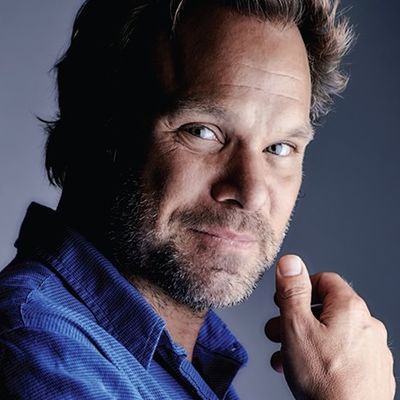
A two-time Tony Award-winning actor and singer, Norbert Leo Butz opens up about his childhood, the challenges he faced pursuing a career in acting, and the remarkable twists of fate that brought him to Broadway... Read More
From the show: The Theatre Podcast with Alan Seales
Guests
Featured Shows
About
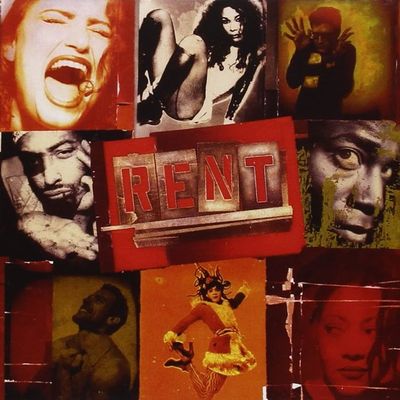
A two-time Tony Award-winning actor and singer, Norbert Leo Butz opens up about his childhood, the challenges he faced pursuing a career in acting, and the remarkable twists of fate that brought him to Broadway. Hailing from a large family of 11 siblings, he shares how the importance of education was instilled to them by his parents. Despite his family's support for school plays, his strict upbringing and limited resources led Norbert to sneakily pursue his love for acting. Norbert eventually had to confess to his father about attending a different college and studying to become an actor, a moment that ultimately led to his parents becoming his biggest supporters. He recounts his serendipitous entry into Broadway with "Rent," joining the cast as a cover for the roles of Roger and Mark–a right place, right time moment for him. He also talks about how he dealt with the pandemic through music, which eventually resulted in releasing his 4th solo album “King of Hearts” co-written with her daughter, Clara Davis. Growing up, Norbert developed a sense of self-reliance and resilience that shaped his approach to hard work and dedication. He encourages aspiring actors to avoid seeking validation through advice and instead cultivate self-awareness and a love for their craft.
Norbert Leo Butz is a four-time Tony Award nominee having won two of those four nominations for his performances in “Dirty Rotten Scoundrels”, and “Catch Me If You Can”. He made his Broadway debut in “Rent” in 1996 before moving on to a slew of additional Broadway credits, including “Wicked”, “The Last Five Years”, and “Big Fish”, among many others. He’s also an accomplished TV and film actor with credits such as “Justified: City Primeval”, “The Good Wife”, “Blue Bloods”, Fosse/Verdon”, Dan in Real Life”, “Better Nate Than Ever” and the most recent, “The Exorcist: The Believer”. His fourth and latest solo album, King of Hearts was co-written with his eldest daughter, Clara Butz.
Connect with Norbert:
- Instagram: @norbert_leo_butz
- Listen “King of Hearts” on YouTube
- Stream “King of Hearts” everywhere you listen to music
Connect with The Theatre Podcast:
- Support us on Patreon: Patreon.com/TheTheatrePodcast
- YouTube: YouTube.com/TheTheatrePodcast
- Threads, Twitter & Instagram: @theatre_podcast
- TikTok: @thetheatrepodcast
- Facebook.com/OfficialTheatrePodcast
- TheTheatrePodcast.com
- Alan's personal Instagram: @alanseales
Transcript
This transcript was automatically generated and might contain errors.
[0:00] Norbert Leo Butz: Hi, everybody. I'm Norbert Leo Butz, and welcome to The Theatre Podcast with Alan Seales.
[0:11] Alan Seales: Hey, everybody. Welcome back to The Theatre Podcast. Intimate personal conversations with the industry's biggest names. Our guest today, Norbert Leo Butz, is the seventh of eleven children. His dad was an ex-Marine, so that was pretty cool. And as he tells it, there were so many siblings that his parents couldn't really keep track of all of them, so they all kind of had to grow up fending for themselves and making their own way in life. And then against his parents' better judgment, he actually ended up having to, like, sort of lie his way into taking theatre and acting classes and even going to college for theatre. His parents didn't know he was going to college for theatre because he was doing this all on his own.
Just the amount of drive and desire and the passion that Norbert has that put him on stage is absolutely incredible. Of course, I want to call attention to his brand new album that he just co-wrote with his daughter. It's streaming everywhere now, You Get Your Music, called King of Hearts. So, everybody, please check that out. And find me online in all the normal places. Leave a rating and a review, all the standard stuff I say. And now, everybody, please enjoy this episode with Norbert Leo Butz. Here you go. One, two, three.
[1:23] Alan Seales: Our guest today is a four-time Tony Award nominee, having won two of those four nominations for his performances in Dirty Rotten Scoundrels and Catch Me If You Can. He made his Broadway debut in Rent in '96 before moving on to a whole slew of additional Broadway credits, including Wicked, The Last Five Years, Big Fish, and many others. An accomplished TV and film actor as well, his credits include The Good Wife, Blue Bloods, Fosse-Verdon, Dan in Real Life, Better Nate Than Ever, and even the most recent, 2023, The Exorcist movie. He was the scary one. His fourth and latest solo album, King of Hearts, was co-written with his eldest daughter, Clara Davis. Norbert Leo Butz, welcome to The Theatre Podcast. I saw you a couple weeks ago at 54 Below when you were promoting the album and singing with some friends and whatnot, and it was the first time I had realized that you were one of 11 kids that your parents have.
[2:03] Norbert Leo Butz: I know, I'm the seventh. Seventh, yep.
[2:21] Alan Seales: So, in being smack in the middle, was that hard for you or easy because you kind of got lost in, like, you weren't the oldest, you weren't the youngest, and you just kind of existed? Or did you enjoy that looking back?
[2:36] Norbert Leo Butz: It's funny. I was talking to my therapist not long ago, and there's that sibling order module that some psychologists use, you know, oldest and then the little kid and the youngest, and I'm like, well, that's never applied to me if you're one of 11. But he said, it's the same if you take it in groups. So, the four oldest in my family kind of operate as the oldest kid, the middle five of us are kind of the classic middle kid, and then the bottom two are sort of the baby. So, I was a classic middle kid, I guess. My house was real chaotic. I had a dad with a humongous personality. He was an ex-Marine, and he was sort of a badass. I was real quiet as a kid. I think that's how I... My mom says she doesn't remember me talking until I was 13 years old.
It was a bit of a volatile household. And so, I think I just learned to kind of keep my head down. And then, I only say this because I think that really contributed to how I became interested in the arts or became a performer. Through singing and music and acting, I think it was how I got to express myself. There were just too many kids to get noticed or to get any attention or get my needs met, I suppose. So, I've often thought that because of the largeness of my family, I tripped into this performing thing.
[3:59] Alan Seales: That's interesting. I forgot that your dad is an ex-Marine, right? And when I think of Marines, I don't think of 11 children. And you mentioned this in your show, too, that your parents were, I think, evangelist Christians, right?
[4:16] Norbert Leo Butz: Yes.
[4:17] Alan Seales: Yeah. So, I don't associate evangelism and the Marines together.
[4:23] Norbert Leo Butz: Well, my dad... We could do a whole podcast about my dad. He had just such a fascinating life. My parents are both gone now, but he was raised in extreme poverty. It was not all a calm, really, really, really tough upbringing. He always said that the Marines were what kind of saved him. He joined the Marines when he was, you know, 19. And it was there. And he was kind of growing up to kind of... He was falling in with some... Not gangs, but he was street fighting. And Marines is what really straightened him out. He met a minister in the Marine and really changed his life. But yeah, my parents were really, really, really devoutly religious. Yeah.
[5:03] Alan Seales: Wow. And did that carry on into you and the rest of the children, too? Because like, I feel like the kids can either go one way or the other with that.
[5:12] Norbert Leo Butz: Yeah. I wouldn't say the black sheep of the family is too strong a word because I'm still really close to my family. I kind of fell much further from the tree. I'm here in New York, and most of my siblings and my family are still in Missouri. I was when I was a kid. I was, you know, I wanted to be really holy. We all went to Catholic school, too. So I think I wanted to be a priest for a while when I was a kid there. Most Catholic kids do. I just thought it was so cool. You know, all the props at mass and the whole performance aspect of mass. But I would say, like most people, by the time I got to high school, I was like, hmm, I don't know about some of this stuff. So I've become a spiritual seeker rather than a religious person, I would say.
[6:01] Alan Seales: Yeah, that's interesting that you found spirituality in performing. Because I'm not a spiritual person at all, really myself either, or a religious person, sorry. And I would say that I am spiritual, though, because my version, I've said this so many times, when my version of spirituality is going on this shared emotional journey with a room full of strangers. And that's what theater, that's what especially musicals can really do for you. And just to be able to feel someone and be connected with other people that you've never spoken to and will never speak to again, that to me, elevates all of us to a level of spirituality that I don't think we pay enough attention to.
[6:43] Norbert Leo Butz: Yeah, I would agree with that. And music alone is such a, there's no other art form for me that cuts right to the spirit of things. It's a great unifier. I mean, it sounds almost cliché to say that we all know this about music, but, and in a lot of ways, it really has become how I express myself spiritually, for sure.
[7:01] Alan Seales: Well, do you, do you, well, actually, okay, I was going to ask, do you need to create to feel that expression? But I think the creation of King of Hearts, your fourth album here that just was released, sort of speaks to that. And I know the story because I was there, as you told it at 54 Below a few weeks ago. But like, for, I want to hear it again here for the, for this episode, right? Let me talk, talk the story about, you know, why you decided to create this album, because you were feeling that isolation and that loneliness while you were shooting in Vancouver.
[7:35] Norbert Leo Butz: Yeah, 100%. I, yeah, this is a good segue. We were talking about, you know, spirituality and music. I, and that's what, like I said, that's what music has always done for me. You know, I'm an actor, I guess, first and foremost, but I guess music is what I've always done to write my own ship to kind of keep me on the spiritual beam. I was in Vancouver, this was now 2020, the year that, the year from hell, the year that we all are trying to forget. Yeah, I was shooting a sci-fi series up there. It was pre-vaccination, so I couldn't get across the border. I was shooting 13 episodes. So I was up there for about seven, eight, my eight months, and then it got extended. So I was up there for 10 months total.
I couldn't cross the border because, you know, every time you'd cross the border to go see my family, you'd have to quarantine again for two weeks in isolation. You know, the CDC in Canada was no joke. They were no joke. Yeah, man, I was really, really isolated up there. Couldn't see, didn't see my family for 10 months, didn't see any friends, lived completely alone. And I would only be shooting maybe two days a week. So I'd have like, you know, five days of just open road ahead of me. Really, really, really difficult. And my daughter had kept, she'd been a songwriter since she's a teenager. She's 26 now, and her writing just keeps getting better and better and better. And she'd be sending me demos and clips of songs.
And I'm like, honey, these are so good. Can I record a couple of these? And she's like, sure. And the content of them was so beautiful. I sort of wrote a couple songs, almost like in response to her songs. And in my downtime up there, which there was a lot of, and a ton of rain, I rented a little studio time and I went in and I found some musicians. We put down the basic tracks for this five-song EP. Once the border opened up and the show was actually canceled, I came home and I finished the record here in New Jersey. But you know, this is probably from other guests, getting a CD released is like, it's Herculean. I came home and then I had another job and then you put it aside for six months and then you mix for a couple of weeks and then you shelve it for four months while you do whatever.
So yeah, the record had been finished for a year before I was finally able to release it. But yeah, that's really the genesis of it was that it was a conversation between me and my daughter. I should say, before I went to Canada, all three of my girls were home with me for that when we were really in lockdown here in New York and New Jersey. COVID was hideous. It was awful. The one shining light of it, though, was that I had all my kids at home under my roof for, I guess it was four months. And I actually miss it because they're kind of spread out. We played music together. And again, it was the thing that really saved us. We'd all have dinner and then we'd sit around and play and sing. I think that the genesis of the record was really born right there.
My daughter and I would kind of co-write some things. So I'm super proud of it because I'm a dad, first and foremost, and I'm so proud of my kid. She's a wonderful lyricist. And there's more songs we're working on right now together.
[11:08] Alan Seales: That's so cool. I love that she's found something that she finds really passionate and exciting that she can share with her dad. And I've got two little boys, a second and third grade right now. And like, yeah, anything we can do together that they enjoy doing that I can enjoy, like really, it brings you together in a way that you can't fake. And when my girls were growing up, I tried to teach them piano or guitar. And you might know, they wouldn't listen to me at all. I couldn't teach my kids anything. Like, no, no. I had to hire other people. And I'm like, well, I can do this. I can do this. So it's kind of wonderful that as they grow older, they kind of come back to you. But yeah.
[11:58] Norbert Leo Butz: No, that is brilliant. And I know that you play piano. And did you learn that as a kid, or was that something older? And like all of your other 10 siblings, right? Did everybody have piano lessons?
[12:11] Norbert Leo Butz: I talk about this in the show that I did at 54 Below. I did. I grew up playing piano when I was, I guess, about 10. We got this old used Wurlitzer piano, and several of us just kind of took to it. My grandfather was really musical. My mom's dad, he could play anything. He could play guitar, mandolin, banjo, accordion, all just from his ear. So I think that rubbed off on a few of us. Yeah, my oldest brother is a really excellent guitar player. A couple of others are really, really good piano and accordion players. And I'm the seventh, so I'm just trying to keep up with my older brothers. I started tinkering on that piano and then took lessons like, I guess, through elementary school and even in high school.
And then I stopped studying in college when I started really getting serious into acting. And piano's a hard instrument. A guitar, you can tote with you anywhere, right? Throw it on your back, sit around a campfire. But a piano, you can't lug that thing around, you know?
[13:12] Alan Seales: I'm picturing showing up at the campfire in Boy Scouts. You're like, I got my keyboard, guys!
[13:23] Norbert Leo Butz: Proficient because you're not around one. And I didn't have one for years. But again, it was the pandemic that all this time, all this empty space, I took to my piano again and started really, really practicing again. That's really stayed with me. That's been a real joy is rediscovering my love of it and my love of playing it. And I'm actually studying it now. So here I am at 56 years old taking piano lessons again, but I love it. It was the first instrument I played. I started playing guitar when I was in high school. And I do write a little bit. And it's so interesting to try writing on the different instruments. They wildly change what comes out of you. I'm not really quite sure about that.
Guitar is much more of a percussive instrument. Piano is more melodic to me. I don't know. I'm not particularly good at either one. But sure, I still sit down with them all the time to kind of figure stuff out, I guess, in my own head. Well, so you've got the love for theater, obviously. And we haven't even talked about what really got you solidified in theater. So I don't want to forget that story. But you've got theater and then you've got the instruments and TV and film. And so acting, pursuing a love of acting seems to be a different path just in general in life. It's a different set of skills almost than teaching yourself piano or sitting down at the guitar every day or whatever the case is.
So what are you doing? Well, I'm trying to decide if I want to go back to the beginning of acting yet. No, I won't do that yet. We'll save that later. All right. So right now, when you're deciding what to do for the day, when you're looking for something to do for that creative fulfillment, do you look to acting the same way you look to music? How do you kind of differentiate? If I have a day with nothing to do in front of me, let's say I'm not working on a play or a film or a TV show, I've just got the day. I can't do acting by myself. I can't, oh, I'm going to indulge in some acting right now. The muse is calling me to do some acting. It sounds ridiculous as it is. It's a collaborative is baked into the whole idea of acting.
It's communication with other actors, with a writer, with a director. You cannot do it in a bubble. It needs an audience. It needs a partner. So it's not something that you can quote unquote work on. Listen, I have an MFA in acting. You should be in class. I'm not saying that you can't study acting, but acting is living life on stage in a truthful way. The only way you can work on your acting is to get out and live your life and stay in the moment, moment by moment by moment, and increase your awareness of things around you. Music is a language. It's a language that you can actually study. It's like Spanish, Italian or French. There's no language for acting really. There is technique to it. But so music can be, you can practice your language all by yourself anytime. You can do it with your voice. You can do it, which I do. I still study singing. You can do it on an instrument. You can do it in any number of ways.
[16:53] Alan Seales: Hang on, everybody. We're just going to take a quick break.
[16:57] Norbert Leo Butz: All right, now we're back. I really love what you said that acting is collaborative. Acting needs an audience. And you're right. And I know, and I think maybe this will be a good segue into what got you into acting and performing. But I know a lot of people who are hardcore introverts, who are just really uncomfortable in social situations. And even the people that are very well known for being a wonderful performer still don't know how to... They're awkward in normal conversations just because that's who they are. They're introverts. And they've fallen into this means of expression because they're uncomfortable otherwise being themselves. And they are comfortable taking a script and being somebody else. So with that in mind, what got you into acting?
[17:49] Norbert Leo Butz: It's such a mystery, Alan. It really is a mystery. I've been doing this so long. And the more I do it, the less I kind of understand it or why I do it. There's that kind of anecdotal, reductive answer. Oh, you know, my mommy and daddy didn't love me enough. You know, people say that all actors are just looking for... There may be a part of that. That's true. I was also just a kid who... I was an introvert. As a kid, I still have those qualities. I live in my imagination a ton. I was drawn to movies as a really young kid. Really, really lived inside them, was obsessed with them, still am. And then to add to all that, I'm really curious about why people do the things they do. There's a left brain side of it that's just really almost scientific.
Why in the world would this character, this person behave this way? What does this behavior mean? As a really... I can remember as a really young kid, falling in love with movies. I remember seeing Jimmy Cagney, Yankee Doodle Dandy. It was on a Saturday morning or something. I don't know, maybe eight, nine, ten years old. And I was just riveted by this guy and this story of Yankee Doodle Dandy. And, you know, I don't know if other people do this, but actors do this. They watch a movie and then they go into the bathroom and they go into their bedroom and they try to reenact scenes from the movie. They try to actually... I remember doing that. I remember trying to, like, yeah, imitate Jimmy Cagney.
I have to imitate some of the movie, you know, I don't have time to talk like him, you know, whatever. That was a terrible Jimmy Cagney impression by them. But I would do that. I would just be so captured, I think, by movies. And then I didn't grow up seeing much theater, but the first play that I really saw, like it affected me so deeply. And again, I don't think this just... I think this happens to actors, you know, or people who eventually become, go into the arts. There was a local production of A Christmas Carol at the Repertory Theater of St. Louis. I live just outside St. Louis, Missouri, and my dad and mom took all of us to see this Christmas Carol production of this regional theater.
And the director had made the choice, I was a little, maybe seven, and the director made this choice to have Scrooge come out on stage in the pre-show. So while the audience was being sat, and he just sat at his table counting money, and the audience would be, you know, talking, opening their programs, and there's this actor on stage. And I was in a panic, because I thought the play had started, and I turned to my mom, and I'm like, everybody's talking, everybody's talking. This guy's trying to do something on stage, this guy's, and I kept, you know, and I couldn't take my eyes off this actor playing Scrooge. You know, things like that, when I got into my first play in high school, I remember taking it way more serious than the other kids.
Like, if kids were goofing around, or, you know, laughing, or not knowing their parts, I remember I'd get really, really upset. I'd be like, this is important. I think I always was an actor. I don't even remember not thinking like one. That's what I guess I'm trying to say. Think an actor is, it's less an identity than it's just how you think.
[21:10] Alan Seales: Yeah. No, that makes a lot of sense. And I can relate to that very much. As a kid, I wore out my VHS copies of Music Man Singing in the Rain and West Side Story. And so, I understand the need to go back and recreate it. And I also, I had the unfortunate, also left brain strength of trying to engineer the hoverboard from Back to the Future. So, I was also trying to create the tech that went into the sci-fi movies. So, sci-fi for me was the best combination of both worlds. So, yeah, because I could get the futuristic fantasy while still being in a fantasy universe in general by acting.
[21:51] Norbert Leo Butz: Then you get it.
[21:52] Alan Seales: Oh, yeah. Totally, totally, totally. But then, were your parents at any point, or even your siblings for that matter, were they like, oh, don't do this. That's a career that nobody survives in. Blah, blah, blah. Go do something successful.
[22:04] Norbert Leo Butz: You know, a lot of my siblings, we did the school plays and the church plays and all those kinds of things. My dad, again, was very, very strict. And so, he barely had a high school education. So, education was just so hugely important to my parents. And I will say, out of all 11 kids, we're all 11 of us are college graduates, you know. Six of us have a master's degree. It was just, you know, because my parents were so, had such limited resources when they were young. Education became hugely important. So, we were allowed to do like one play a year. And the rest, you know, the rest of the time had to be school focused. I started lying to my parents and to my family because I would, I just caught the bug by the time I was 15, 16.
So, I'd do the play at my high school. But then I would go to, I had a couple of brothers who found this little trick. They would go and audition for roles at the all girls Catholic high schools. St. Louis is a very Catholic city, right? So, because there would be like 80 girls in the play and like five guys. And so, you know, you had a date and it was a scam they were running to try to get girlfriends. I followed suit. I was like, oh, that's brilliant. That's brilliant. So, I would do the show at my high school and then I would do these roles, good roles, you know. That's those were the first parts and first place I did. But I couldn't let my mom and dad know because, you know, we were only allowed to do the one play a year.
So, I would be like stepping out at night like, oh, I'm going to swim practice or I'm going to soccer practice and I wouldn't even be on the team. But there were so many of us, my parents just couldn't keep track of all of us. And so, I would secretly do these plays. And then I secretly auditioned for Webster University's Conservatory of Theater Arts when I was in high school, too, because you have to understand my dad was raised in such poverty that the idea that you would go into an unstable career was just unacceptable to him. So, I had to lie. I got accepted to college and he thought I was going to the University of Missouri to be like a music education major. But on the slide, I auditioned for the acting program and I was in college.
He thought I was going to one college and I was actually going to the other college. And I finally had to fess up to him and it all worked up. I'm like, Dad, no, I'm not at that college. I'm at this college and I'm studying to be an actor. My parents eventually got on board and became huge fans and were huge supports to me. And both my parents are first generation, too. So, it was their fear that we would not be able to raise in our station through something like acting. No, it was unheard of that somebody would be an actor. What is that? It's not a legit profession. And to their credit, once my parents kind of saw me in a couple of things in college, and I guess I had distinguished myself a little bit, then they were like, OK, we see that you have something here.
[25:04] Alan Seales: That's so cool. I mean, I'm conflicted as a parent myself because I would be thinking, I mean, my kids are still so young, but if my kids know something is important to me. And Kids Revelling is not new. That's been happening since Cave Kids. That's your new musical right there, Cave Kids, the musical. There might be something in that idea. I like this idea of Cave Kids, the musical. But Kids have been revealing, right? And I think if someone were to go to the lengths that you went to, to not only, I mean, it wasn't just sneaking out to get a girlfriend. It was sneaking out because this is something you loved performing. You were performing. You loved it. You enjoyed it. And then you went so far as to go to a whole different college that your parents didn't even know about that I would be like, all right, I think he really wants to do this.
Let's give it a shot. Even when I was younger, dude, even when I was a kid, I was 14 years old and my choir teacher said, you got to start studying voice privately. I went to my parents and said, they want me to study private voice. And my dad was like, no way. We're not paying for that. There was just no money. You have to understand, too. I grew up with very limited resources. We always had enough, but there was just nothing extra.
[26:18] Norbert Leo Butz: Hang on, everybody. We're just going to take a quick break.
[26:23] Alan Seales: All right, now we're back.
[26:24] Norbert Leo Butz: I had to lie, secretly take voice lessons and pay for them myself when I was like a kid, 13, 14, 15 years old. Same thing with my piano lessons. That's something about coming from such a large family with limited resources is that I'm so grateful for it. I had to put my own sweat equity and...
[27:17] Norbert Leo Butz: I've always had that philosophy where it's like it's about the work or the effort that I do, and period. I'm really grateful for that. I mean, at some point they had to have received a bill for tuition, or were you paying for college yourself too? My dad definitely contributed what he could. I had scholarship. I had work-study. I had some loans. We did it any way you can get your way through college. Worked my butt off during the summers. So yeah, Dad would pay a portion of the tuition. Webster is a private college, not cheap. He would say, I'll pay what I would have paid for a state college, and you've got to figure out the rest. And I was just really, really blessed. My teachers and administrators knew that money was an issue, so I was able to, like I said, get loans every time there was a scholarship for a couple thousand dollars.
The actress Marsha Mason was a Webster grad, and she had a scholarship fund in her name, which I was lucky enough to receive my sophomore, junior and senior year. And it was just things like that. And then for graduate school, I was limited in where I could audition for. I could only audition for graduate schools that had a full tuition waiver. So I went to a program that's no longer there anymore, but I went to the University of Alabama at the Alabama Shakespeare Festival. They used to have an MFA program down there, and that was a full tuition waiver. So that was basically a free master's, and they actually paid us a few hundred dollars a month. We did some adjunct teaching. And yeah, so I was able to do graduate school without any debt or loans.
[28:57] Alan Seales: Wow. Wow. That is so fortunate. Yeah, that's insane. And so working this hard and coming from, I guess, you know, you are taught money is precious, and you're taught not to take anything for granted, and you learn that through your own experience, and you're working your ass off, it sounds like. And then finally, you make your Broadway debut. Do you remember that moment?
[29:21] Norbert Leo Butz: Gosh, yes. I'm like the luckiest person in the world, dude. I didn't move to New York until I was 28 years old. You know, I was already Equity. I'd already been doing a lot of regional theater. I was teaching full-time at Auburn University. And actually, that's what I thought I was going to end up doing. I was doing professional plays regionally, especially at the Alabama Shakespeare Festival. But I had a full-time teaching schedule, you know, acting for non-majors and acting as basically an elective down at Auburn. And then, I don't know, about 27, 28, I got married when I was 26. And I thought, well, before I'm 30, I got to try New York. I got to try one of these bigger markets. Moved to New York the month after Rent had opened on Broadway.
This would be July of 96. I stood in line at the Nederlander and saw the show. And it was a very rare experience for me. I've only had this a couple of times in my career. I was, again, I was a guitar player, and I've been playing in bands and stuff my whole life. And I saw that show, and it blew me away. And I thought, I can do this. I can do this. I think I can do this show. It just had all my skill sets. The next week, I was playing guitar and singing for a friend's, for a benefit, for a friend's Off-Broadway, Off-Off-Broadway production. And the publicist for Rent happened to be in this audience of like 40 people. And he kind of fast-tracked me into Bernie. At the time, there were Adam and Anthony, Adam Pascal and Anthony Rapp, were both had the same understudy, and that understudy was not working out.
They were in dire need for a Roger and a Mark cover. That's exactly when I landed in New York and did five auditions in about two weeks, got hired on a Sunday, and did my first performance three days later after I was hired. I met Daphne Rubin-Vega 15 minutes before the first time I went on stage with her. 100%. Yeah, that cast was, they had this huge explosion. Obviously, it was this cultural phenomenon. They had done Off-Broadway. They had done the record. They'd opened. Their voices were really going through it. So that's when I landed. I could sing it. I had the acting background. I had the guitar. So right place at the right time. So that's where I got my start. I covered Anthony and Adam for the first four months.
I played Roger every Sunday night. After four months, then I joined the cast full-time as Squeegee Man and still did Roger every Sunday night, and then took over full-time for Roger the second year of the run. So I was at Rent for almost two years. And yeah, that's how it all started for me. Got my agent through that. But I booked that job without even an agent. Right place, right time. But like 15 years of work and preparation and hard work to be in that right place in that right time. Do you know what I mean? So just lucky enough that when the opportunity presented itself, I had the skills. And then, yeah, everything just kind of flowed from there. After a year and a half, Rob Marshall, Sam Mendes saw me.
I was given the role of the emcee in the first national tour of Cabaret. And then everything was musicals for me, which was odd because Rent was my first professional musical. I'd always been a singer, obviously, and a musician, but all through my 20s was plays, you know, and a lot of classical plays. So it was odd then to be this musical theater person because my knowledge of musicals was severely lacking. I knew Renaissance theater like crazy, and I knew every Sam Shepard play. And I really continued to be on a learning curve for musicals even after all this time.
[33:05] Alan Seales: I wonder if that worked to your advantage, especially for Rent, because you went in not trying to imitate anybody, not trying to be anybody else or a style that you had grown up emulating in your shower or whatnot.
[33:18] Norbert Leo Butz: And I think that has always been true of my career, is that I never kind of had a musical theater shine on any type of slickness or something that you see in a lot of musical theater performers because I didn't study it. I just went the acting route, and I happened to be a singer as well. Do you know what I mean?
[33:42] Alan Seales: Yeah. And then you get all these nominations for all these musicals, right? The irony of all that is not lost on me.
[33:50] Norbert Leo Butz: But it makes sense. I love it, and I love to dance. My dad was a dancer when he was a kid. I love to dance. What I love about musicals is kind of like what I love about Shakespeare. It asks for everything. It asks for every single part of your body, your mind, your heart, your soul. You got to leave it all on the floor there. You're exhausted after a musical, and I love that feeling. I love that holistic. I just used every single skill that I have, every single bit of me. So yeah, that's how the career kind of happened.
[34:25] Alan Seales: I love it. Well, that's brilliant. Okay, so we'll wrap up here, and I normally have three standard closing questions that I ask everybody, but I got a fan question. This is a silly one just to start off. So this is from Margaret. Let's see. She wants to know, did you feel the goatee that you had on Justified really dropped you into your character?
[34:44] Norbert Leo Butz: You know what? It kind of did. I was really conflicted about growing that goatee. I kind of played this badass cop, and you think of a badass cop with a goatee, and I'm like, is this a little too on the nose? But I said, screw it. I went for it. Thanks, Margaret. The goatee did help a lot, and I love your name. That's my middle daughter's name, Margaret, and so thanks for your question. Now, my three questions. The first one, just very simply, is what motivates you?
[35:13] Norbert Leo Butz: What motivates me? Sounds so cheesy maybe, but I guess love motivates me. The love of what I get to do. The love of connecting with other people. The love and respect that I have for this art form. Yeah, man. I think it's love. I have this idea that you cannot do good acting or good singing or anything unless you love the material. You can't just like it. You can't be ambivalent about the material. You have to love it. God, I love this part. I love this play. Anything less than that, I'm not really doing very good work, you know?
[36:00] Alan Seales: I love that answer. Okay. What advice would you give to your younger self and younger people listening now starting out down a similar path?
[36:04] Norbert Leo Butz: I get asked this question a lot, and this used to be a jokey answer, but now it's not a jokey answer. And I mean it. My advice to younger actors is do not take anyone's advice. And I mean that because I was such and remain at times, if I'm not careful, a real people pleaser. Somebody who wants to find out what people want and then try to give it to them. And that is a mortal sin for an actor or for a performer. You're never going to do it in the way. You're going to make yourself crazy trying to figure out how to follow advice. I'm not saying don't ask for good counsel. Don't surround yourself with smart people. Don't have a good therapist. But what I'm saying is if there's something unsure, what should I do?
Should I do this? Should I wear that? Most of the time, what that means is the person is saying, tell me who I am. Tell me what I should want. And if you're asking that question, you're off to the wrong start. So try not to follow advice. Follow good counsel. Follow good, practical direction, good, orderly direction. But advice is basically asking for people to tell you who you are. And that's got to be an inside job.
[37:32] Alan Seales: An inside job. That's the best way to describe how to live your life. It's got to be an inside job. You got to do it yourself. I love that answer. That's so good. All right. So the final question here, this is hard. If you could only see one show for the rest of your life, but you could see it as many times as you want, what would you see?
[37:46] Norbert Leo Butz: Oh my gosh. But that's a depressing idea. Just watching one thing on a loop over and over. But if I had to see one thing, are we talking like a musical, like a play, a film, anything like.
[38:03] Alan Seales: Interpret it however you want.
[38:05] Norbert Leo Butz: Gosh, darn you, Alan. This is so incredibly hard. All right. Oh, I know what I would do. I would, I'm just going to throw this out there. I saw a production of Hamlet with the brilliant British actor, Simon Russell Beale. And it was the most astonishing piece of acting. And I don't know how he did it. Good acting is like magic. You don't know how it's happening in front of you. I would get that on a DVD and watch it forever to try to figure out if I could figure out why Simon Russell Beale's Hamlet was so frigging incredible and left me sobbing. I'd want to try to figure that out.
[38:43] Alan Seales: Okay. We'll go with that. And so, you know, the answer, my answer to that question was Rent, because it got me into theater.
[38:49] Norbert Leo Butz: Oh my gosh. Yeah, I could see, I could see just the songs alone. Just seeing, hearing those songs alone. Yeah, I'd always been a rock guy, and I liked the acting. And then the first time I saw Rent, I was like, wait, you can be on stage and do rock? Like, this is my jam. Literally, this, that was it for me. You and me both.
[39:11] Alan Seales: I love it. All right. So where can we find you on social media? Do you play that game?
[39:15] Norbert Leo Butz: I do. I do when I need to. Norbert Leo Butz on Instagram. That's basically all I do. Yeah, I release music there. And I tell the folks what's going on with me. I have a couple of concerts coming up in San Francisco on December 8th and 9th. I'm playing the Nokia Theater there. West Coast people, come on out. And let's see. Yeah. And everybody go stream King of Hearts wherever you get your music. It is such a good album, co-written with his daughter Clara Davis.
[39:48] Alan Seales: Of course, I'm on Instagram and threads and TikTok and Facebook. Find me there. Leave a rating and review wherever you're listening. Thanks to Jukebox the Ghost for the intro and outro music. And Norbert, thank you so much. It has been such a fun time chatting with you.
© Broadway Podcast Network, All Rights Reserved