

A multifaceted artist, Melissa Errico talks about her career, including her album "Sondheim In The City," her latest project which pays tribute to the legendary Stephen Sondheim... Read More
From the show: The Theatre Podcast with Alan Seales
Guests
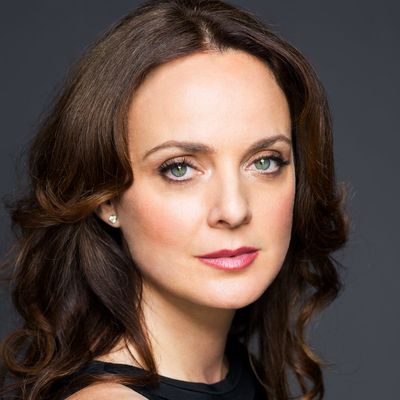
About
A multifaceted artist, Melissa Errico talks about her career, including her album "Sondheim In The City," her latest project which pays tribute to the legendary Stephen Sondheim. Melissa also reveals the reason behind her Instagram username, what it’s like raising kids in a “tough city”, and how theatre became her place to organize her emotions. Living in New York, she’s developed a deep connection with the city, which also reflects on her exploration of Sondheim's profound relationship with Manhattan–emphasizing the importance of preserving its vibrant and pluralistic spirit. With an upcoming residency at Birdland, Melissa shares her plans to combine Sondheim, jazz, and film noir elements, creating a unique and immersive experience for the audience.
Melissa Errico is a Tony Award nominated actress who made her Broadway debut in the 1992 production of “Anna Karenina”. She's since added a bazillion more credits to her resume, including “My Fair Lady”, “Amour”, “High Society”, and “Dracula, The Musical”. Her TV and film credits include the 1995 TV series, “C.P.W.”, “Law & Order”, “Blue Bloods”, “The Good Wife”, “The Jim Gaffigan Show”, “The Knick”, and “Billions” among many others. She's also a writer and a recording artist and was a frequent collaborator with the late great Stephen Sondheim for decades. Her 2018 album, “Sondheim Sublime”, was called “The best all-Sondheim album ever recorded” by the New York Times. She now has a new album dropping on February 16th called “Sondheim in the City”.
Connect with Melissa:
- Website: melissaerrico.com
- Instagram: @melissa_errico_fairymom
- TikTok: @melissa_errico_fairymom
- Melissa Errico and Billy Stritch: "BABY ITS WOKE OUTSIDE" by Adam Gopnik
- Listen to Sondheim in the City: found.ee/SondheimInTheCity
Connect with The Theatre Podcast:
- Support the podcast on Patreon: Patreon.com/TheTheatrePodcast
- YouTube: YouTube.com/TheTheatrePodcast
- Threads, Twitter & Instagram: @theatre_podcast
- TikTok: @thetheatrepodcast
- Facebook.com/OfficialTheatrePodcast
- TheTheatrePodcast.com
- My personal Instagram: @alanseales
Transcript
This transcript was automatically generated and might contain errors.
[0:01] Alan Seales: Hey, everyone. Welcome back to The Theatre Podcast. Intimate personal conversations with the industry's biggest names. I'm your host, Alan Seales, and our guest, Melissa Errico, is one of the most emotionally insightful people I've talked to in a very long time. It was just incredible to talk with her about her career and how she's approached her characters over the years. And like any good actress, she thinks about the emotional motivation behind her characters and why they're doing what they're doing. But I think she takes one step further and also maybe incorporates the reason why the creators created those characters, like the writers, especially Stephen Sondheim, somebody who she's had the pleasure of working with in many shows.
And speaking of Sondheim, she's got a brand new album coming out on February 16th called Sondheim in the City, which is all songs written by that wonderful man. And then she's got a little mini residency at Birdland Jazz here in New York City from February 14th to 18th. And in the middle of that is the album release party. So that will be awesome to kind of combine everything and have a big old celebration with Melissa. Get your tickets now. Check the show notes for that. And as always, before we kick off the episode, my standard stuff that I remind you to do, leave a rating, leave a review, connect with me on social media, find me on threads, Facebook, TikTok, all the places that are way too many to keep track of now. Okay, everybody, please enjoy this episode with Melissa Errico.
[1:44] Alan Seales: Today's guest is a Tony Award nominated actress who made her Broadway debut in the 1992 production of Anna Karenina. She's since added exactly a bazillion more credits to her resume, including '93's My Fair Lady, Amour, High Society, and Dracula, the musical. I just like saying Dracula. She has a quadrillion TV and film credits, including the '95 TV series CPW, which is very cool, Law and Order, Blue Bloods, The Good Wife, The Jim Gaffigan Show, The Knick, and one of my favorites, Billions. She's also a writer and a recording artist and was a frequent collaborator with the late great Stephen Sondheim for decades. And her 2018 album, Sondheim Sublime, was called the best all-Sondheim album ever recorded by the New York Times. She now has a new album dropping on February 16th called Sondheim in the City. Melissa Errico, fairy mom, welcome to The Theatre Podcast.
[2:42] Melissa Errico: Hello. If I had any commercial instincts, we would call it Melissa-co.
[2:46] Alan Seales: Melissa-co.
[2:48] Melissa Errico: My teenage daughter told me, she said, Mom, you're never going to be popular because you don't sing Taylor Swift. I said, oh, my teenagers, yeah. And then she saw that they're at that age where they know more about life than the parents. And she could see she was possibly being helpful. And she sat down. It was late. It was almost midnight. She's 17. And she said, Mom, nobody knows who Stephen Sondheim is. That's not true, of course. No one listening to this podcast likes her now. No, you must love her. But she's a teenager. She's just trying to help mom. But it is. Melissa-co is committed to Mr. Sondheim and things like.
[3:30] Alan Seales: Well, I think you have an opportunity for a really good crossover there. You just need to slide into Taylor Swift's DMs and be like, listen, T-Swift, you and me, we've got to popularize Sondheim. It would be like when modern artists sample The Beatles, and the kids are now like, hey, listen to this brand new song called Hey Jude.
[3:50] Melissa Errico: Exactly. Exactly. I'm not going to give up. It's okay. So I listened to my girls and now we're getting me on TikTok. TikiToks. Oh, I still don't know what I'm doing there. I need their help.
[4:02] Alan Seales: Oh, really? You don't know? Well, apparently we're getting it. This is the week. I'm on TikTok. I got on TikTok.
[4:07] Melissa Errico: All right.
[4:08] Melissa Errico: I had done it before with Jon Lovitz. Jon Lovitz put me on TikTok. And we did a funny Christmas special thingy, like just a clip that he put on TikTok and showed me how to make a TikTok. And it was appropriate, because it's winter now. It was a redo, a parody of Baby, It's Cold Outside. And the words were by Adam Gopnik from the New Yorker magazine. But Jon Lovitz, the comedian, loved it. And we did a version where I'm the sexual aggressor. You know, the song has been canceled because the man is the sexual aggressor getting drunk and locking the door and saying, it's cold outside, stay here, baby. And she's like, I don't think I should. But now we did it that I'm the sexual aggressor, and I'm really hot for him. And he said, I just can't. Baby, it's woke outside. And then she's like, come on, this evening could be PC and nice. And he's like, no, no, don't. He gets afraid because he might end up accused later of something.
[5:01] Alan Seales: I want to insert that at this point in this episode. Is it available online?
[5:04] Melissa Errico: Yes, I think it's on YouTube. And it's all over the place.
[5:07] Alan Seales: I'm going to find a little clip of it.
[5:08] Melissa Errico: It's super funny. Yeah.
[5:15] Alan Seales: Baby, it's woke outside.
[5:18] Melissa Errico: This evening could be.
[5:20] Alan Seales: Somebody listening.
[5:23] Melissa Errico: Don't touch my hand. I must think twice.
[5:27] Alan Seales: The original icebreaker I had was Melissa Errico Fairy Mom. Where did the fairy mom part of your social handles come from?
[5:34] Melissa Errico: Oh, my children are disgusted with it. They think that it was too spontaneous. It was my own decision. I had no counsel. I have three children who are female. There was a moment where I had a two-year-old and newborn twins. I was not somebody who saw herself as a fairy mom, as Marmee in Little Women. But immediately the universe gave me three daughters and a Broadway career that I was struggling to keep moving. And I suddenly had literally a kid on each boob and a little one on my ankle in many pictures. And I was walking around with two kids and this other one on my ankle, you know, and it was a whole new Melissa. And I realized that when I was growing up, I was never introduced to what fairies were like actual fairies, you know, like Peter Pan and even going back to the 19th-century fairies, you know, the great artwork of these beautiful female mostly flowers, you know, a rose, amaryllis, whatever.
And there was a little fairy and those were beautiful works of art. And so, I in some way felt that I was in a garden. We lived in Soho near Chinatown. So, the kids were not fairies in a bucolic beautiful countryside in England or in the Cotswolds or something. They were in Soho in Chinatown climbing on brick walls and scaffolding and looking at chickens and things in the deli, you know, in Chinatown deli with actual chickens, you know, that was like the farm. And I saw myself as raising these downtown fairies, like beautiful, soft, emerging, playful girls in a tough city in an urban environment. So, I had this self, you know, realized sort of idea that I was a mother to these beautiful, soft, emerging creatures and growing as it were like plants between the pavement, you know, between each square of cement, this beautiful child.
[7:34] Alan Seales: I think Raising Downtown Fairies is the name of your memoir.
[7:39] Melissa Errico: Yeah, Downtown Fairies. I've written about the girls, you know, I've written about, I think it was called, it was a Little Women article for a wellness magazine I work with a lot. And it was a long article about the pandemic and how I felt like Marmee. So, my relationship to the girls just felt like fairy mom. And I also felt like I'm entering that age where I reparented myself by having kids and I'm a showgirl all the way through. But I do feel like a lot of artists out there could use a fairy mom. I had a few fairy moms. Marian Seldes, so-called, well, a lot of the great actresses cross my path and kind of, you know, tapped me and sort of said, you're there.
[8:22] Alan Seales: At what point, like when you were a little kid, do you remember that moment when you were, when you first started to get interested? And was it singing? Was it dancing? Was it acting? Like what got you interested in this crazy ass business?
[8:36] Melissa Errico: Well, it's a mosaic of an answer, really. My father is a concert pianist, but also a doctor. And he's an intense guy, sort of forbidding even being a surgeon. But he would come home and play the piano. So, music from the first minutes I can remember were an antidote to the pressures of medicine and health and death and things like that. And intensity and money. My parents were not wealthy at first. And so, there was a drive to survive. They lived in Harlem with kids. My brother's bed was a drawer. So, and they really built, they built themselves up. My dad went to Vietnam. So, music itself was a escape and was European. My parents are both Italian. So, he was drawn to French music. He played Michel Legrand, actually, a lot because it was popular music in the 60s. It was sort of the pop music.
So, when he would stop practicing Chopin and other things, he'd play Michel Legrand. And I saw this transformation in my mother, sexual and erotic and attached and warm and, you know, less stressed. So, music right away is one answer. I was a very energetic kid. Not like Audra McDonald, but I know how she sort of reminisces and says she was hyperactive. And so, my mother had the good sense to give her theater lessons. Differently, I was athletic, and I did gymnastics, gymnastics, gymnastics. And then by 12, I had this really shapely body and curly hair. And I was just falling off the balance beams, plainly. Just too much of a kind of Jessica Rabbit, really, to do, you know. Gymnastics, and my mother had the good sense to put me in a theater camp.
And I immediately got the leading role of Hedy LaRue, not the leading role, the soubrette. I played every Adelaide in creation, by the way, until I landed Cosette, and then turned into this more serious soprano. But I actually became, I was a sort of, I mean this kindly, a sort of a bimbo superstar as a kid, because I had this shapely body, and I could do flips, and I could do cartwheels in every show. Sondheim, everybody's put cartwheels in the show. I've always had a great cartwheel. So, that was a thing. We'll see if one day, if anybody remembers me, if I do like Hello, Dolly or something, and I do a cartwheel at the bottom of the stairs. I just have a great cartwheel. So, theater camp was an immediate fit, because the things that were seeming weaknesses were immediately assets.
And that's what I love about the theater, where our weaknesses, and our frailties, and our imperfections immediately find a home. And that's what I love about every theater actor, and that's why I like being a part of it. And I always identify with my colleagues, because they've all found some frailty in themselves. That's been their key. You know what Cocteau always says, like, you find, what did he say? Cultivate the thing people least like about you or most criticize, and you cultivate it.
[11:41] Alan Seales: Yeah, lean into what makes you different.
[11:43] Melissa Errico: Yeah, lean into what makes you different, or even controversial. So, theater camp. And then I think I was completely finished when I saw On Your Toes that same year on Broadway at the Virginia Theater. It was a jazz musical. It was Rogers and Hart. It starred Christine Andreas, Lara Teter, and Natalia Makarova, the great old ballerina. And I loved seeing Lara Teter turn this middle-aged woman, probably my age, but he flipped her over upside down, and she was kicking. It's so sexy. And it was a jazz-influenced musical theater with so much physical dancing. There was so much dancing and humor. And just everyone seemed mad, absolutely mad. And I turned to my mother, I had tears, and I said, who are these people? How did they get up there? I think I thought camp was theater, but then I saw Broadway. I had seen maybe a musical or two, but I'm not like an Annie person. I loved the circus arts of On Your Toes, the jazz, the tap, the funny.
[12:48] Melissa Errico: And I liked the sex. I liked watching that ballerina become a sexual force, you know? So, I think between the jazz of the score, I found my thing. And I've always tried to find that again. You know, that's why I kind of do jazz now. I'm more Rodgers and Hart, shall we say, than Rodgers and Hammerstein.
[13:11] Alan Seales: That's really interesting. For me, I've said this so many times in other episodes. My story is that I liked performing. I liked singing. And what really cemented it for me, that I belonged to this kind of club of misfits, was when Rent came out. Because Rent, to me, was the crossover. It's what Hamilton just did for the newest generation, of bringing in their pop music into a form that actually speaks to them.
[13:40] Melissa Errico: And it's interesting, because the way the human brain works, and the stuff we glob onto, I wonder if it has anything, if it's been influenced at all by the classical stuff that your father played, possibly.
[13:55] Melissa Errico: Well, he also played Bill Evans in the house. The other thing I should say is that we had a very limited soundtrack of Donald Fagan, Pat Metheny, and Bill Evans. So, now I love Brad Meldau, and other kinds of unbelievably evocative jazz players, George Shearing. But I was completely raised on a fascination with the piano, and the chords, difficult chords. French, there's Debussy, Chopin, when my father was an expert at Poulenc as well. And then there's the jazz. So, you're right. There was a landscape of jazz already in my ears. I have a very good sense of a chord. I like to sing pure, I'm not a jazz singer, but I do not want to be in a dull environment. I want an unbelievable chord around every note I sing. So, in a weird way, I am a jazz singer, because I require the environment.
[14:44] Alan Seales: And you said that you're attracted to the physicality. And I feel sort of the same way, and I think I can relate. And you mentioned just the sexual energy. And all of this, as you're describing it, it's a full body experience. It's not just park and bark.
[15:02] Melissa Errico: Yeah, musical theater. And that's what all this stuff is. And so, do you still find your home with all the TV, all the film, all the straight plays that you've done, the non-musical plays? Musical theater, does that still come back to you as the epitome of what makes your whole body happy?
[15:23] Alan Seales: Yeah, I mean, no doubt. I mean, when you say all this and all that, I did spend a good deal of my Hollywood life in a trailer wondering why nobody knew that this isn't what I do. I would sit next to Angelina Jolie and stuff and be like, God, I could really sing. I wish I could sing for her.
[15:39] Alan Seales: Yeah. Hang on, everybody. We're just going to take a quick break.
[15:44] Alan Seales: All right, now we're back. A couple of other people have said very specifically about it's a full body expression. It's a need. I think you get to theater, the proverbial you gets into theater because you need a channel to get all this energy out or you feel isolated, you feel alone. You are a misfit who doesn't feel like you belong and then all of a sudden you do, right? Because what makes you different in most crowds now makes you unique and special in theater. So, is that-
[16:15] Melissa Errico: Yeah, I think theater was kind of a place to organize my emotions. And I also grew up in a house where my mother used to whisper to me, you know, we have a Ziegfeld girl in the family. My grandmother and her sister were showgirls and came over from Italy in the late 1800s, moved to the Bronx. There was a shipwreck actually. So, they were in Boston for about a few hours and they had the good sense to figure out how to get on bus. Can you imagine what kind of bus that would have been with all their luggage from Italy and didn't speak English? They got to the Bronx and they had five brothers and sisters. They got to the Bronx and the dad died and they had to get out and work. They were 15 and they were beautiful.
And my grandmother by 22 was singing on the radio and her sister got discovered actually by Florence Ziegfeld. And she became a Ziegfeld Follies girl. So, we had a Follies girl in the family and I used to talk with her and I knew her. She smoked a lot. I remember the smoke and the feather boas and the kind of- she never, you know, ceased to wear bright red lipstick. So, I also had this feeling that there was this genetics as well, you know. So, I wasn't just a misfit wanting to join the circus, but I was a sort of circus artist born to the circus in a sense because a prior generation was inviting me and I resembled her a little bit. You know, I look a little like Aunt Rose. So, I think really it was just inevitable.
But I think you're right. I'm always interested in how other people feel. I do think that it was a physical thing. I was drawn to it physically. I think I just enjoy the music. I love the stories, the characters. I like making people laugh. I mean, the first thing was that, you know, it was funny. You know, it was always funny. It was quirky. And I would come out and I was smart so that there was no question that I understood what I was saying. It wasn't trying to get a reaction. I just understood the script, you know. Well, he didn't say that, you know, I would have some line, you know, I don't know, I don't know what the lines would be anymore, like of Hedy LaRue, but she would just sort of say, I don't know what happened to the chick.
I don't know. He took the chick. He said it was his chick, you know, and I just said the line real clear. So, I had good sense of a character's requirement in the script. So, that came in handy too. I just had good sense. And I was funny, you know, because I had big hair and I'm a shapely figure. And so, that was funny too that you don't have to do anything. People are already going, oh my God, look at her, high heels and ass, you know. So, yeah.
[18:49] Alan Seales: Well, then the, I mean, the Sondheim of it all, right? Like, you were frequently collaborating with Steven for years. And I guess-
[19:00] Melissa Errico: Some people would roll their eyes right now. It's not that I'm not like Bernadette Peters, where he was writing musicals and obsessed with me. I don't want to have a false sense of intimacy, but I did work in three musicals and I did have the crazy sense to show up at Sunday in the Park with George, which was the first revival of its kind where I wore her clothes. That's where I met him. I met him in rehearsal. So, what were you going to ask?
[19:24] Alan Seales: Oh, just getting into how that relationship began, which you just asked that.
[19:28] Melissa Errico: Oh, I'm happy to answer. You know, I could tell you, because he came to the first rehearsal he came to, we had already begun by just a few days. And my background at Yale was in art history and philosophy. And I love art. So, right away, the idea that I was a painter's model seemed to me pretty much what I think, if you believe in past life or anything, you know, like I easily could have been a Viennese model to some guy, you know, some genius, like that just works for me. You know, this idea of this being in his atelier, just undressed in the 18th century or 1900s. Yeah. Yeah, the sort of fantasy act look kind of thing. Like, just to me, that just so fun and just sounded stupidly, I probably should be more of a feminist and think of myself as this pioneer painter.
But that didn't, I wasn't brought up with women of the 60s. So, I guess I had limited self view. But anyway, I digress. So, I imagine myself very easily a dot. And I showed up at rehearsal at the Kennedy Center with an idea that Raul, being a Cuban too, had such intensity, I said, Oh, he's so intense. And so, if I'm getting ready, doing the color and light sequence, and we're in our home, I knew a lot about art history and a bathtub is so appropriate for the impressionist visuals. It's so archetypal to be in a bathtub. So, I suggested to Derek McLean, before we started rehearsals, that he build a bathtub and I do the whole thing undressed. Because a nude in a bathtub is, bathers are one of the, you know, it's an essential category of art history in the impressionist era.
The bather, the woman bent over a basin or seen from the back, like a cello, sort of leaning against her own bathtub. So, I said, let's recreate the nudity of impressionism. And then when he says, I have to finish the hat, there she'll be naked, just she can't break through to this guy. The propulsion to create is so great that he can't even follow the greatest invitation where he promised he'd take her to the Follies that night. It's not like I just decided, Oh, it's a work day, I'm going to try to seduce him. This is a night we put aside to go to the Follies. And that's what that's about. And it's a special night. And I still fail to even get that one night with him because of the urgency to finish the hat, which, for me, really is just a big magnifying glass on Stephen's point in that musical and maybe his point in life.
So, my first rehearsal with him was my going, Oh, hi, Mr. Sondheim, I have this idea that we should change all the lyrics to color and light. And I'll be naked in a bathtub. And all you just have to do is change the stuff about the rouge and the lipstick and the stuff because I won't be doing my face, I'll be in a tub. And then he just silent. And he said he could do like more scent, more soap. And so, I would be dabbling myself with scent and oils under the chin and putting a little soap. And that's always a small little change because everything else will work. If my legs were longer, if my bust were fuller, right, she's looking at her body. So, the lines of that were inviting self-analysis, what you do in a tub.
So, anyhow, so he had this crazy first two seconds, Hello, could you change all the words? I was so young, you know, and so that was fun. And he did it. And he went with it. So, that was, you know, that was kind of cool. And there's some YouTube stuff, you know, where he spoke appreciatively and Barbara Cook did too. So, of that production. So, that was a real nice start and a real creative, bold way to meet him. So, that's-
[23:14] Alan Seales: Right.
[23:15] Melissa Errico: Yeah, really cool, right? I mean, it's crazy. I realize a little crazy, but-
[23:19] Alan Seales: That is very bold.
[23:22] Melissa Errico: It was so bold. You see, I'm older now, I would never do that. But I was a kid and I was, I think I had a good idea. And if you read some of James Lapine's reminiscences about Sunday in the Park with George, you see he wanted to do bathing. You'll see that there's some experts out there. Yeah, I have his book behind me, I could probably find the section, but they wanted it and Bernadette didn't want to do it. I don't know if you could do that now, even with like everybody in a camera in their pocket and I mean, all this-
[24:03] Alan Seales: Right, right, right.
[24:03] Melissa Errico: At the moment. I see what you're saying, but I'd do it again. I have another idea for nudity that I think would be beautiful, the Kurt Weill thing. I think, I guess you're right though, everybody's so abusive now of coming to a show, they now turn it into content on their own TikTok.
[24:21] Alan Seales: Yeah, yeah. I mean-
[24:23] Melissa Errico: I'll worry about that if I ever get a part.
[24:25] Alan Seales: Well, if you're going to do it, yeah, post it yourself first and then beat everybody else to it.
[24:29] Melissa Errico: Yeah, or get a great lighting designer or something. But anyhow, so that's how it began. It began because I wanted to make something impressionistic that was vulnerable. It was really just to make her vulnerable so that she really was all out intimate with him and no chance.
[24:48] Melissa Errico: Oh, well, there's pictures of my back all over the place. And it's on YouTube. Luckily, whoever put it on YouTube put a little fuzzy bit on my upper body. So, it's tastefully out there.
[25:11] Alan Seales: Do you like that? Do you like going to these really vulnerable places in a public way on stage? Because it's safe. I would venture to say it's safe because on stage it's controlled. There's lights, there's angles, there's whatever, right? So, it allows you to, I think, I'm speculating, explore sides of yourself that you wouldn't get to do in normal situations.
[25:19] Melissa Errico: Well, normal situations are still better than the stage. But, I mean, come on. We must all remember. I remember Nancy Marsh and the great actress. I shared a dressing room with her doing The Importance of Being Earnest and I played Gwendolyn. Eric Stoltz was Earnest. It was an amazing production. I was setting up my dressing room and she was right next to me and I had all my pictures and I-
[25:36] Melissa Errico: I had a little plant, and I had a little cloth, and I was really setting up my dressing room, and she had nothing. She just had like, you know, like lipstick or nothing, really just the minimal. And she turned to me, she said, not in a rude way, but she said, this is not your home. This is not your home. And I was like, hmm. She was trying to say something, obviously, about life and art. So, to separate the two, which is something that I think I now have completely done. Yes, when I was younger, maybe I did like all the attachments and the intimacy of falling in love with whatever, Steven Buntbach and Finian's Rainbow or Marius when I was in Les Mis. It all felt like I was growing up. I mean, I was a young person.
So, the characters were having more life than I was, right? They were falling in love. I was getting married, and it was every play. I was probably married hundreds of times before I was married in real life. Sometimes I feel the characters were more mature than I was. Maybe High Society is a role that I wasn't even mature enough to play. She was, Katharine Hepburn, you know, basically forced Philip Barry to write that play because she was living a love triangle in her own life. And she forced him to write that play to reflect her own love of one director and her other relationships. So, she was living a complex life when she performed that. I myself was not. I'd never been married, certainly not in the love triangle.
So, it's hard to say. So, yes, there probably was a side of me that enjoyed living through the characters and learning about love and sex through the characters. Now, there's been a reversal where I'm more mature and I've been married 25 years and been through a lot of different things. You know, people I know have died, you know, things that are– So, now when I would come to– I think I have more to bring in a different way. We all have things to bring, you know, when you're young, the adventure, and the, yeah, the sexual energy and the curiosity. But then as you get older, you have the benefits of time, perspective. So, your characters will be the older characters who will have that. So, we're all welcome to have our different reasons.
And as long as we are still alive, coming, you know, with life inside us, but the information changes that you bring. Right. You know, it does change. Passion is probably the best way to answer that. Passion was the most intense and intimate character I ever played in a Sondheim character. I played Clara, and Judy Kuhn was Fosca.
[28:03] Alan Seales: Oh, I love her.
[28:07] Melissa Errico: And I was a mother to two three-year-olds and a five-year-old at the time. And the character has a child, and she also wants to be with Giorgio. And he eventually says that her commitment to him is not enough. And she can't give up her child. So, for her, it's a lot, which she's already doing, meeting him in that room. So, that was a very intimate show. And I didn't do it nude, you know, which Marin Mazzie did. John Doyle had a different idea. He had an amazing idea that we all wear the same costume, even though it covers many, many years. We all wear the same one thing. And so, it was an avant-garde idea. And I had this voluptuous, gorgeous gold dress that was so rich and had these heavy, heavy petticoats.
So, instead of undressed, I was just burying Giorgio under all this fabric, and I was lying on top of him when the show starts. So, it had a sort of, I looked like an ocean that had just come crashing over him. You know, I looked a fabric, like an ocean of fabric. So, there was an orgiastic sort of look to it. And I'm not going to lie, it was fun. It was fun. It's such a good show. It's such a good show. Sondheim told me at one point in my dressing room, he said, take a good look. It begins with an orgasm, and it ends with an orgasm. So, I guess you have Fosca's death, the orgasm to death, but my orgasm begins the show. So, it's a really incredible, intimate show. So, if anybody looking for a good time, try to get cast in that show. It's also an awful time. Jeremy Sams, the great famous British director said, no one can survive a production of passion.
[29:50] Alan Seales: In what way? What do you mean? What did he mean?
[29:52] Melissa Errico: It just wrecks you.
[29:54] Alan Seales: Oh, emotionally?
[29:55] Melissa Errico: It just wrecks you. Yeah, it wrecks you. It wrecked me. It wrecks you.
[29:59] Alan Seales: Did it really?
[30:00] Melissa Errico: It kind of wrecked me for a bit. I just heard a term recently called the exit practice. It's like, you know, what do you do to leave your character on stage and go back to being yourself, right?
[30:09] Alan Seales: What's it called? Exit practice?
[30:10] Melissa Errico: An exit practice.
[30:12] Alan Seales: Oh, my God. All you people have this mental health stuff we didn't have, you see. There's no exit practice in the characters of women of the 90s. They didn't exit practice. That's so interesting. So, it's a known thing now to protect oneself, to come out of your character and back into yourself?
[30:27] Melissa Errico: Yeah. It was actually Al Silber that just told me that in an interview the other day.
[30:32] Alan Seales: Well, she's a thoughtful young person. How cool.
[30:34] Melissa Errico: She's 43. She's my age.
[30:36] Alan Seales: Okay. Well, it's still, you know-
[30:39] Melissa Errico: Not that 43 is it, young people. We're all young.
[30:41] Alan Seales: It's not that far behind me, but it is. It's one generation. Yeah. Interesting.
[30:46] Melissa Errico: Yeah. Yeah. Because we were talking about Fiddler and now in our class, she's a Polish student who's just going through, again, the Holocaust time of history. And it's so heavy that we're talking, again, it's how do you leave that stress, that anxiety that eight times a week, your body doesn't know that you're not actually stressed, but your brain does. So, you can't tell your body, oh, this is just fake stress right now. Don't worry about it. But don't forget the Pinot Noir grape is the sweetest of all, and it's the most stressed grape. The environment is the most stressed. So, don't be afraid of stress. I think everybody's too worried about the role of stress. Stress could be good for you.
[31:30] Alan Seales: Oh, yeah. No, good things come out of stress. I work best. If I have nothing to do, if I'm not stressed, I can't get anything done. But when I'm stressed, I am knocking out my to-do list so hard. It's good for you.
[31:41] Melissa Errico: Yeah, it's good. It's good. Everybody has a different view. I heard beautiful Aaron Lazar's thoughts about his having ALS right now, and he felt that maybe he needed more rest for his nervous system. Some reflections that he's had are so profound. What a beautiful man.
[32:00] Alan Seales: Oh, reflection. Reflection doesn't mean you have to slow down. But yes, I agree.
[32:04] Melissa Errico: Yeah, we should all reflect, especially when we leave the theater. I don't always have the benefit of that. I come home right to the kids. So, it's an immediate shift. I don't have to work hard now because I have such a rich life at home. I just come home.
[32:21] Alan Seales: Mom, no one knows where Sondheim is.
[32:23] Melissa Errico: Oh.
[32:26] Alan Seales: Yeah, exactly. And I get great advice from my teenagers.
[32:31] Melissa Errico: Yeah. Hang on, everybody. We're just going to take a quick break.
[32:36] Alan Seales: All right, now we're back. Well, so, Sondheim in the City, your new album, it's just beautiful. And it's these arrangements of songs that you think you know. Again, the proverbial you. You think you know it. But then something you said earlier, I think, explains why you did what you did with this album, was you said that everything you do, you want a full chord behind it. I'm probably just butchering what you said earlier in this episode.
[32:58] Melissa Errico: No, no, no. You probably are picking up on Rob Mathis's contribution. The producer is a Stings musical director and works with Elvis Costello and works with a lot of very evocative pop musicians. So, we do a lot of cool chords and open tune guitars and world class, really world class, the most world class swing musicians, 14 piece horn swing section, 17 members of the Philharmonic are on it. So, it's got an orchestra. It's really amazing. So, there's a lot of texture. Yeah, musical texture. That's not all, you know, birthed from my imagination. That's also Rob Mathis's icon. So, I'm so glad you like it. You know, it came really out of an instinct coming out of the pandemic, thinking that we're all in it, we were, hopefully were, in something of a freeze.
And as we come out of that freeze of a pandemic, I was thinking about Manhattan, and the possibilities of Manhattan, the promises, the aspirations, the importance to defy certain resistances, songs like Everybody Says Don't.
[34:06] Alan Seales: Mm hmm.
[34:06] Melissa Errico: Also, the naive pleasures of, you know, an inch of sky or a fly or two, what more do I need? You know, what more do I need? How we all just enjoy the half a tree that we can see from our West Village apartment, but we feel so appreciative to be a part of this great city. I was thinking about Manhattan, especially after the pandemic. And I did a show called Melissa Sings Her New York, which was all the themes of my album. After three encores, when the encores were really exciting and really pleasurable, because a lot of iconic people came that were being celebrated, like Donna McKechnie. It wasn't an all Sondheim, it was a lot of Sondheim in it. And it had the follies in it, except my own memories of Manhattan and my own Broadway baby aspirations are in it.
And then Long Marriage, I was married in Central Park, I had a lot of starring roles, hard times, relationships that were destroyed, or something, you know, impossible. So, many of us have half realized love affairs in Manhattan, or, you know, dreams of love. So, that beautiful concert happened, I did it three times, and then Sondheim passed. And I thought, wow, and so much of the show was Sondheim already, another 100 people, I'm a girl from Long Island wanted to get on that train to New York. So, I thought for another year about Sondheim and these ideas I have about Manhattan. So, then I made this record, changed it, you know, in my mind from New York, Melissa Sings New York to Sondheim in the City.
And I thought more about Sondheim's love of New York, and the fact that he says he lived his entire life in a 20 block radius. So, I thought about his feelings about Manhattan, which I think are sarcastic, ecstatic, romantic, ecstatic. They're not really cynical. And they're not hard. He loved Manhattan. So, it's a little bit of a, I'm sort of the Carrie Bradshaw of my own album, walking through his New York. And I do think that if we look closely at the history of people who wrote about Manhattan, people like John O'Hara, or E.B. White, the great New York writers, Adam Gopnik, right now, people who love and really embody the energy and passion for the pluralistic sort of world that we live in in New York, really important to remember, we're living in a time where a lot of people are asking to be a part of that pluralistic fabric.
I thought Sondheim is a poet laureate, you know, one of the enduring poets of what it is to be a Manhattan person. And I think Manhattan's in a little trouble. You can hardly tell uptown from downtown now, all CVS. And, you know, it used to be so clear, you know, the downtown in the 1800s was like Gramercy Park. And then as I got to enter New York, it was Soho. And for you is probably Tribeca.
[37:03] Alan Seales: Yeah.
[37:03] Melissa Errico: Right? And now it's Brooklyn. But the idea of Manhattan is this amazingly mutable thing. But Sondheim has a great song called Uptown Downtown. And so, we have to remember that the city that had so much color. And so, we got to keep, I think, just caring about the city. So, it's a tribute to Manhattan, as well as a tribute to Sondheim, as well as a kind of, this is a big word, people are going to hate me for this word, a palimpsest. Do you know what that means? A palimpsest is a written document where the original writing has been written over, but you still see traces of what's underneath.
[37:42] Alan Seales: Something reused or altered, but still bearing visible traces of its earlier form.
[37:55] Melissa Errico: Right. So, my character in the Sondheim is a palimpsest. I see and know the traces of myself underneath the album.
[38:02] Alan Seales: I'm going to name my next kid Palimpsest.
[38:04] Melissa Errico: Yes. So, the album has all this for me. It's a city, Sondheim, and it's a kind of double layer of a woman that I've created, but I see myself and the traces of myself through the whole thing. The Sondheim, the Follies girl, the married girl, you know, I do little things you do together. And then all those amazing songs we have to remember.
[38:24] Melissa Errico: Anyone Can Whistle is a song about people who can do extraordinary things, like read Greek, but they can't do the simplest things. So many of us know creative New Yorkers like that, that are amazing, but also deeply, deeply helpless on another level. Vulnerable and helpless. It's interesting. It's interesting, yeah. Smart, creative people who can't do basic things like ride a bike, swim, or drive a car, you know? Yeah, or be touched, you know? Yeah. Oh, that's true. Yeah. So, I think that Anyone Can Whistle is, you know, in a town. So, sometimes I don't have a literal Manhattan song, but it's very clearly an urban song. I had a lot of curators for this, so the songs I chose were deeply curated by some real heavy Sondheim nerds. So, I feel pretty good about what we chose. Do you know the song It Wasn't Meant to Happen?
[39:20] Alan Seales: Mm-mm.
[39:20] Melissa Errico: It was cut from Follies, and I'm convinced that Sondheim has a drawer in his mind from which sprang Send in the Clowns, but It Wasn't Meant to Happen is the same song as Send in the Clowns, but it's just super hard to sing. It's like the harder to sing Send in the Clowns. Maybe it got cut because it was too hard.
[39:42] Alan Seales: It's too hard to sing. It's super hard to sing. And so, that's on the record. And it's really about the sound or the spirit of New York regret. Some of us have this idea that we all come together. We almost made everything work. We almost did it. We almost made it fit, whether it's success or a company or a love or a community. We almost did it, but not quite, not quite. Still, no regrets. No regrets. Here come another hundred people, you know what I mean?
[40:13] Melissa Errico: Yeah, yeah.
[40:14] Alan Seales: New York.
[40:14] Melissa Errico: I love it. I love that. And then you've also got, let's see, I just want to plug real quick, your Birdland jazz concert.
[40:21] Alan Seales: Oh, well, Birdland is hopefully, please, folks, come, because we are going to play with this layered thing. Sondheim, jazz, the film noir sides of this record, which are kind of in the Follies pastiche songs, the 20s and 30s sound of Follies. And we're doing a residency, like we did last year, 10 shows in a row, where I live in Birdland. And I just, by the second or third night, I have no idea who I am, because we're just there all the time. Me, the band, guests, great people are going to come in. Famous trumpet players are going to come from, you know, Catherine Russell is playing upstairs. Some of her band are going to come down and do numbers and go back up. It's like, we're going to create, like, we're just going to be drunk for days on music. So check it out. It starts Valentine's Day. I want everyone to think, Valentine's Day, Melissa, and come for five days. You can come for five days. It's cheap.
[41:21] Alan Seales: Yeah, so it starts on February 14th.
[41:23] Melissa Errico: 14th, and then come every day, two nights, two shows a day. Come back, you know, at some point. So, that's this, it's the album release party. And it's also a kind of New York Valentine week.
[41:36] Alan Seales: I love that. Yeah, something, yeah, love in the city. It's so unique and special. And what's the word?
[41:44] Melissa Errico: It's not just love. It's like love, sex, and survival.
[41:47] Alan Seales: There you go. All right.
[41:49] Melissa Errico: It's like, that would be the sub story of all of this, you know, Melissa on love, sex, and survival. Sondheim's incredible. He never gets boring. Just doesn't. And his stuff doesn't write for genders. It doesn't write for times. It's timeless and genderless. It's just about relationships. And that's part of why I really like Sondheim stuff is why even the recent revival of company, I think, worked as a gender swapped sort of production. Because it's just all about finding love, finding acceptance, finding relationships.
[42:20] Alan Seales: Connection.
[42:21] Melissa Errico: And connection. Yeah, yeah, yeah. Connection. And he may not be as famous as Taylor Swift, but come on. He's taught me how to live, you know, in a lot of ways, how to raise my kids, even. Look at Into the Woods, he sort of taught me how to parent. And he didn't parent. He parented so many of us though. So, he's so much wisdom in his underneath, you know, so much wisdom.
[42:42] Alan Seales: Yeah. Oh, that's really interesting. I appreciate that. All right. So, three questions I asked to wrap up every episode. Just the very first one is-
[42:51] Melissa Errico: By the way, let me tell you, you're just the most charming person on earth.
[42:55] Alan Seales: Oh, stop.
[42:56] Melissa Errico: No, you are. You're so charming. And I see why you're so successful. You love what you do. And you're a real ruminator, aren't you?
[43:03] Alan Seales: I like to come in and connect. I like to connect.
[43:05] Melissa Errico: Yeah. I'm so bananas for you. Okay. So, all right. So, we're wrapping up three questions.
[43:10] Alan Seales: Okay. Three questions. First one, just very simply, is what motivates you?
[43:16] Melissa Errico: Hmm. What motivates me? I can't answer the question. It's like impossible not to do it. It's just creativity is- I just wake up every day with hope. I wake up every day with an idea to make something beautiful happen and bring people together. Every day, I wake up with hope. I've had so many knocks. I can't tell you. And I don't know why I don't wake up knocked. I wake up ready to go. That's just me. I just wake up natural and ready to try again.
[43:52] Alan Seales: I love that. Okay. What advice would you give to your younger self and younger people listening now starting out down a similar path?
[44:01] Melissa Errico: Oh, if I could, it's like this is like a past life therapy or inner child or whatever. Go back to your child. What would you have said? Is that what you mean? I just wish someone had just said, it's all going to be okay. Did you have a lot of stress?
[44:17] Alan Seales: No. I just was thinking it was so far away. And it might have just been better if I just had this feeling that I didn't have to reach so much. Is that what you mean? What someone could have said to me? Yeah, I guess it would have been nice to say you're limitless and it's all there for you. It just seemed so far. It's like the Wizard of Oz or something. It's the whole thing. There's no place like home, right? It's click your heels. We don't have to try that hard. But instead, I was on the brick road and I went all these different places. And I like our new world in some ways. I feel like people are very forgiving and very shake it off and keep going. So, I guess I wish I had been told that, but maybe I wouldn't have had the adventure that I had because I was so adventurous and I would have been more complacent.
[45:17] Alan Seales: You have so much adventure left that you're going to have.
[45:19] Melissa Errico: I have so much adventure left. Marilyn May, the great Marilyn May is 96 and I wrote her profile in the New York Times. This time last year, I spent a month with her and she makes me feel like I have more time left than I've even spent in the arts. So, if we follow Marilyn May, we all, you have like 100 years left. Most people out there feel rushed. Don't feel rushed.
[45:48] Alan Seales: Don't feel rushed. Yeah. I'm with you. I mean, I still have to tell myself that because I've done a lot. I can do a lot. I still want to do a lot. But then I always feel like I'm running out of time. Not like chasing down or death chasing me, but just in terms of the day, there's only so many things you can do during the day. So, how do you prioritize what's important?
[46:11] Melissa Errico: For sure. Well, we're giving a labyrinthine answer, but I guess there is this idea that we should not live in the future. You're doing a creative thing today and really live it. You're doing a great job with this podcast, for example. Really warm, engaging conversations, really creative. So, let this be enough today.
[46:30] Alan Seales: All right. All right. So, last question. This is the hardest one. If you could only see one show for the rest of your life, but you can see it as many times as you want, what would you see? A musical.
[46:46] Melissa Errico: Any show. Like a television show?
[46:49] Alan Seales: Any show. That's why this is hard. You can do-
[46:51] Melissa Errico: Okay. Why is it hard? One show for the rest of your life. I almost think if it has to be for the rest of my life, it would probably have to be like Shakespeare or something, because the rest of your life is a really long time. I might get a little bored of Sunday in the Park with George at that point, because I already know it so well. I might think, oh, gosh. You know what? I'm going to say a chorus line. I'm going to say a chorus line. I guess if the rest of my life, each person, I love the songs. I'd sing and dance. You know, if I was super old, I'd be playing all the characters. And the idea of making it in New York, you know, is so formative. I guess if I really had to just get it down to one singular sensation, you know, if I was on an island like Tom Hanks, and I just had a little screen, and I had to just make a top hat out of a coconut, I guess I would, I'm just trying to imagine this crisis of having only one thing to look at.
This is a sort of apocalyptic question. So I guess it would be chorus line, because I came to New York from Manhasset, and I made it kind of on a line. But I also love all the crazy multiplicity, you know, of people who are here. And the ballet, that beautiful song. You know, and what I did for love. I think I could hold on, you know, to that show.
[48:14] Alan Seales: I love that. All right. Well, then we said at the beginning, Melissica. I said it again.
[48:20] Melissa Errico: Melissica. I love this. I was Melissico, and now I'm Melissica. It's some kind of wonderful, like musical, like with a K, like Melissica.
[48:30] Alan Seales: Melissa Errico Fairy Mom on Instagram and threads, right?
[48:36] Melissa Errico: Oh, yeah. I'm on all these things. Come and chat with me. Say hello. Get to know me. I want to get to know you. It's good. Fun. Fun. And then you're getting on TikTok eventually. So by the time this comes out, you'll probably be-
[48:46] Melissa Errico: No, I'm on TikTok. No, no. I put a whole bunch on TikTok. I did some crazy stuff in my Uber car the other day, telling people about my day. And then I did something really weird at breakfast, and my children put it on private. They stopped it. They're like, you cannot do that. I looked so crazy with my cuckoo, like wild morning hair and my eye mask up on the top of my head. And my children said that I was going to become a meme immediately. So I have to learn not to be too willing to share the realities of an actress's life. Anyway.
[49:17] Alan Seales: I mean, if you can be the butt of your own joke, then go for it. No press is bad press.
[49:23] Melissa Errico: Yeah. Well, my kids put it on private. They thought I was going too far. So everybody, you can help me to figure out how far to go.
[49:29] Alan Seales: Was it embarrassing them or afraid you would embarrass yourself? Because that's a difference.
[49:34] Melissa Errico: I just think my hair looks so bad. And I think you're supposed to be on TikTok looking so-called bad, but you should have makeup on and look great.
[49:45] Alan Seales: Yeah. You see, I said, well, why shouldn't I? I looked amazing a couple of days ago at Town Hall doing a Charles Aznavour tribute. And then now this is what I look like in the morning. I think that's good for people to see. No, no. They said no. So we'll see.
[50:01] Melissa Errico: I can't wait for these conversations with my kids. That's going to be interesting.
[50:04] Alan Seales: Dad, you're embarrassing me again.
[50:07] Melissa Errico: You're going to be an embarrassing dad. That's for sure.
[50:10] Alan Seales: We literally read, my older one is nine. We read a dad jokes book to go to bed.
[50:18] Melissa Errico: Exactly.
[50:18] Alan Seales: He loves dad jokes. So he's my kid.
[50:21] Melissa Errico: Yeah. I bet you're a great dad.
[50:23] Alan Seales: So anyway, I'll see everybody out there, but I don't have a plan to be phony. So I just may not show my eye mask on my head and what I actually look like when I get up for a little longer.
[50:35] Melissa Errico: Fair. Fair, fair, fair. All right. You can get more of me at Theatre Podcast on Instagram, Twitter, Threads, TikTok, Facebook. God help me if I know what I'm doing on any of them. Leave a rating and a review wherever you are listening. Thanks to Jukebox The Ghost for the intro and outro music and Melissa Ko. Thank you so much.
[51:02] Melissa Errico: See you at Birdland, Valentine's Day. Thank you. It's a pleasure to spend time with you.
[51:03] Alan Seales: You're amazing.
[51:03] Melissa Errico: You too. Thank you. It's so lovely to talk to you.
© Broadway Podcast Network, All Rights Reserved