

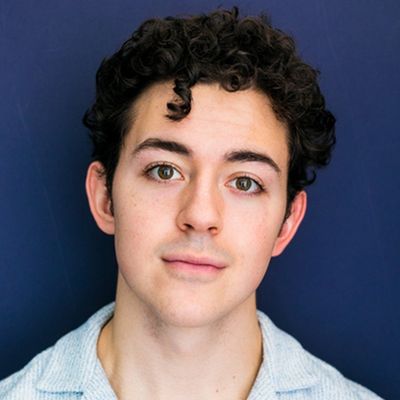
Ali became enamored by the idea of performing since he was a kid as a way to study the human condition. He looks back on his multicultural upbringing that blends American and Moroccan influences, and his journey into acting and performing, revealing his passion for storytelling... Read More
From the show: The Theatre Podcast with Alan Seales
Guests
Featured Shows

About
Ali became enamored by the idea of performing since he was a kid as a way to study the human condition. He looks back on his multicultural upbringing that blends American and Moroccan influences, and his journey into acting and performing, revealing his passion for storytelling. Despite growing up surrounded by artists, he opens up feeling alone at one point when his dad wasn’t fully on board with his dream of pursuing an acting career yet. Playing the lead role in the production of “The Who’s Tommy”, Ali shares his involvement in the show, highlighting his deep dive into the music and ethos of The Who for his role. He also talks about the cathartic nature of performing and the immersive experience of being on stage, as well as its unique format, which eliminates applause during the show to maintain uninterrupted storytelling and for the audience to fully immerse themselves into the story.
Ali Louis Bourzgui is one of the industry's newest rising stars who truly embraces what makes him unique. He recently just finished the first national tour of “Company 1st”. He was previously in the national tour of “The Band’s Visit” and originated the role of young amazing Yosef in The Goodman’s World Premiere play, “Layalina”. Apart from that, he’s also an accomplished voiceover artist. You can hear him in the popular podcast, “Quiet Part Loud”, produced by Jordan Peele. He is also a jazz artist, a guitar player, and a songwriter, and you can soon catch him making his Broadway debut in the lead role of Tommy in the upcoming production of “The Who's Tommy”.
Connect with Ali:
- Website: www.alilouisbourzgui.com
- Instagram: @ali.louis
Connect with The Theatre Podcast:
- Support the podcast on Patreon: Patreon.com/TheTheatrePodcast
- YouTube: YouTube.com/TheTheatrePodcast
- Threads, Twitter & Instagram: @theatre_podcast
- TikTok: @thetheatrepodcast
- Facebook.com/OfficialTheatrePodcast
- TheTheatrePodcast.com
- My personal Instagram: @alanseales
Transcript
This transcript was automatically generated and might contain errors.
[0:00] Ali Louis Bourzgui: Hey, I'm Ali Louis Bourzgui, and welcome to The Theatre Podcast with Alan Seales.
[0:11] Alan Seales: Hey, everyone. Welcome to an all-new episode of The Theatre Podcast. Intimate personal conversations with the industry's biggest names. I'm your host, Alan Seales, and our guest today is Ali Louis Bourzgui, who just made his Broadway debut in The Who's Tommy. It began previews back on March 8th, and I feel like this dude is a bit of an enigma, because personally, he's a composer and a writer of music, and he does a lot of jazz and more I want to call slower music, slower tempo, and then on the other end of the scale, pun intended, he can turn up the dial, and especially on stage now, singing The Who eight times a week, he can rock out, and it just seems like he can hit both ends of the spectrum really well.
I think it's super, super cool, and I also love the conversation we had about his upbringing, his identity, and frankly, working through struggles with his father, who originally wanted him to get a more stable job, but Ali followed his passion for singing and performing, and gosh, look where he is now. So yeah, find me on all the socials, Instagram, threads, TikTok, you know, and please share this podcast. Send it to a friend. That's the best way the podcast can grow, and we can keep getting the kind of amazing guests we've got, and so now, everybody, please enjoy this episode with Ali Louis Bourzgui.
[1:39] Alan Seales: Today's guest is one of our industry's newest rising stars, who truly embraces something that all of us in the industry should be doing, which is leaning into what makes them unique, in order to help propel them into the spotlight. Recently, he just finished the first national tour of Company, Ding Dong. He was previously in the national tour of The Band's Visit, and originated the role of young Mazin Yosef in the Goodman Theater's world premiere of Leilena. Also an accomplished voiceover artist, you can hear him in the popular podcast Quiet Part Loud, produced by Jordan Peele. He is also a jazz artist, a guitar player, and a songwriter, and you can soon catch him making his Broadway debut in the lead role of Tommy in the upcoming production of The Who's Tommy. Ali Louis Bourzgui, welcome to The Theatre Podcast.
[2:27] Ali Louis Bourzgui: Thank you. I've never been called a jazz artist, but I love it. I know that I have written that I, you know, write in the jazz style, but I've never been coined with the term jazz artist. I feel all cool now.
[2:40] Alan Seales: Embrace it, man. Embrace it, because that is, yeah, there you go. But I want to kick off with an incredibly hard and deep probing question, which basically is just, on a scale of one to ten, how much do you like peanut butter?
[2:56] Ali Louis Bourzgui: Oh, 11. I've eaten it my entire life.
[3:04] Alan Seales: You're a huge PB fan.
[3:06] Ali Louis Bourzgui: Yeah. When I was a kid, it was like all I would eat. So in order to give me differentiation between meals, my mom would give me like a peanut butter on toast for breakfast, peanut butter on crackers for lunch, and then I'd have a peanut butter sandwich, you know, with two pieces of bread instead of just a toast, a peanut butter sandwich for dinner. So, you know, it was different. And then as I grew up, like, that just kind of, obviously now I eat everything. I eat all kinds of foods, but that stuck around, and I still pretty much to this day have peanut butter for breakfast every morning.
[3:41] Alan Seales: I mean, there's nothing wrong with that. I enjoy a good peanut butter.
[3:45] Ali Louis Bourzgui: No.
[3:45] Alan Seales: Peanut butter and jelly. The Uncrustables, have you had those?
[3:48] Ali Louis Bourzgui: Those are incredible.
[3:49] Alan Seales: Yeah.
[3:50] Ali Louis Bourzgui: They are God's gift to snacking on the go. Just the best. So you talked about your mama. Your mom helped you with the sandwiches. So you originally grew up in the Berkshires area, Pittsfield, Mass?
[4:05] Ali Louis Bourzgui: Yep. Pittsfield.
[4:07] Alan Seales: And then what was your childhood like? Because actually getting serious for a moment, I know that something's important to you is talking about your heritage and being the child of an immigrant and that sort of thing. So I want to get into the childhood and growing up.
[4:22] Ali Louis Bourzgui: Sure. Yeah. I grew up in the Berkshires, which was, I mean, it's literally created most of what I am because it's such a hub for the arts. I was just surrounded by theater growing up and music at Tanglewood and dance at Jacob's Pillow. And I was able to see shows at Barrington Stage and Berkshire Theatre Group and then eventually be part of those shows, part of their community shows, and then eventually join a couple of the actual companies in high school. And, you know, also just surrounded by other people my age who were similarly living in this artist mecca and kind of thriving in it. And so, you know, I had all these friends where we would just, we created this group even in high school, and we would put on shows.
It was kind of like different generations of people that went through the Berkshires art cycle. So we had this slight generation above us directing the shows, also being part of it, but they were kind of more like the administrative side. And then the younger people kind of got to like be the actors and then also have like a little hand in creating it. That was with my good friend, Harrison Lang and Caitlin Teeley, they created this wonderful thing. So I just had so many opportunities to thrive in the arts there, and it was amazing. And then family-wise, my mom's side of the family is originally from that area. So I have a lot of artists on that side. I have an aunt who paints, and I have an aunt who's a tap dancer.
And my mom also, you know, she had her hand in acting when she was young and has always been a huge fan of music, you know, all kinds of arts. And my grandmother was a huge part of the community theater when she was younger. And so that has all kind of been in that side of the family for sure. And my dad's side of the family, just like he immigrated from Morocco. I mean, I didn't know this until recently, but Morocco, you know, of course, does have beautiful, beautiful center that centers around arts and music, and Moroccan music is gorgeous. It's beautiful. Theater isn't necessarily a big thing there. You know, I think my dad grew up with movies. So that was something that was more tangible. But growing up, me wanting to go into theater was not necessarily accepted to begin with. So my dad might have definitely—
[6:49] Alan Seales: You mean you and your dad were at odds about that?
[6:53] Ali Louis Bourzgui: You know, he just really wanted me to go into something that he considered to be a reputable job, which isn't just a thing that happens in immigrant families, that happens in all families. You know, a lot of times, you know, it's just a hard thing to maybe originally wrap your head around your kid going into theater. But I definitely have experienced, at least with other friends, that it's more common, for sure, if you live in an immigrant household, that it's just harder for people from different cultures that don't necessarily always have such a grasp of what theater is in their culture. So I really had to, like, prove it to my dad, and I had to show him, like, what I do, what it is. I had to show him that I could be successful in it.
It actually ended up being a really wonderful driving source for me to kind of prove myself within it and work really hard. It wasn't the only reason I was doing it, but it definitely gave me an extra bit of fire. Eventually, I was able to, you know, show my dad that it was a reputable job, and now he's fully on board, fully supportive. He has the Tommy logo as his lock screen. But it's just something I like to talk about, because when I was going through it at the time in high school, I felt so alone in the fact that, like, I didn't know how to be like, this is, I want to do this. This is, like, I know, I'm, like, destined for this. It's the only thing that, like, I really love. It's the only thing I could see me doing, the only thing I could see doing with my life, and he was just so against letting that happen.
And I remember just not having any podcast or, like, thing or interview or anything to listen to where someone was going through a similar thing, and I just felt very alone in that. So I think if anyone's listening to this and has a parent who's not necessarily on board, or if a parent's listening that is trying to understand it, you know, it's scary, but like, so are so many other jobs, and it's worth a try. It is absolutely possible to make a career in this field, and if, you know, if it works out, it's beautiful, and it's so wonderful. And, you know, I think, again, if you're somebody dealing with a parent who's against it, just try to find ways to see, to be in their shoes and see how to maybe translate it to them and see how you can explain it to them rather than getting just directly angry at them, like, sitting down and being like, this is what this is. This is why I like it. This is my game plan to make it be a career and make it successful. And, you know, it's not always going to work, but it's worth a try.
[9:23] Alan Seales: So when you said that you felt alone, but that's sort of contradictory in my mind to what you'd said originally of growing up in this artist mecca. So what was about, you weren't alone in being around people who were pursuing the arts.
[9:36] Ali Louis Bourzgui: No.
[9:40] Alan Seales: What was isolating about your situation?
[9:42] Ali Louis Bourzgui: Well, and also my mom was, and that side of the family is very, very supportive. And my mom is such a huge reason that I've been able to, you know, really get here. And she has just, she drove me to all my college auditions. And she's the one that, like, I almost turned around for my very first audition when I was a kid. I was like, I don't want to do this. And she's like, no, we came here, you're going in. And she's just the person I always call if I have any issues. And she's just always been my biggest, biggest supporter. And my dad is now too, just not at that time. But I just felt alone in the fact that I had a place to practice what I loved. I had friends that were supportive. I had a mom that was supportive. But I just felt alone in, like, how to navigate having a parent that didn't, at the time, comprehend or want me to go into this profession. I didn't know how to navigate it or deal with it.
[10:36] Alan Seales: It's like everybody else around you may have been going through something similar.
[10:42] Ali Louis Bourzgui: I guess it's what, recency bias, right? Once you start, if you go out, I use this sometimes, this analogy, if you go out and buy a Subaru, then you notice every other Subaru on the road, whereas previously you didn't. So, maybe because it wasn't being talked about publicly, you didn't know that everyone around you who seemingly had their life together was also going through similar things.
[11:05] Ali Louis Bourzgui: It was definitely that, for sure. But also, I just had a lot of friends who, their parents were all on board. I think that's what I meant. I was going to these other college auditions, and I was seeing their parents, both their parents with them, and their whole family just being on board, being like, yeah, you're going to do this. And also, I understand what this is, and I'm going with you. It was just, yeah, that's, I think, what made me feel different.
[11:31] Alan Seales: Yeah, that makes sense. That makes sense. I originally thought that it was more about being an Arab American in the Berkshires, too, where I don't know how much of a Muslim population there is.
[11:47] Ali Louis Bourzgui: Yeah, we had a very small community growing up, enough so that we didn't end up really going to the mosque even that much, because our mosque ended up being just a very small community, and it was in this pretty much like a little storefront place. We didn't really know the people there that much, and my community pretty much of other Arab Americans ended up being just, I have a couple of cousins and aunts and uncles on my dad's side that also moved to the area. So, it was pretty much just family for me, and yeah, I never really had this community of other people. And also, growing up in the post-9/11 world, to be Muslim or to be Arab around my friends, around my white friends in elementary through middle school, if I told them that, it wasn't necessarily a straight-on direct bullying thing that they were trying to do, but there was just such a lack of education that if I told my friends I was Muslim, their immediate reaction, and again, this wasn't them directly trying to be mean, they just genuinely were like, oh, so that means you're a terrorist.
It just was those words just meant the same thing. If you're a Muslim, you're a terrorist. So, I remember saying at one time, because we were studying the religion in history, and I was like, oh, I'm Muslim, and everyone was like, wait, so you're a terrorist? It was that kind of thing, and they were being dead serious. It was just crazy. So, I just very quickly learned, I was like, oh, maybe I should keep this part of myself a secret. So, I did for pretty much most of my time, even through high school, and it wasn't until college when I started to meet a few more peers, when there started to be more representation in media, we got shows like The Band's Visit, and...
[13:35] Ali Louis Bourzgui: When I left school, when I left college, I joined The Band's Visit, and then I did Layalina, and I started to enter these hubs, these realms, where all of a sudden I was working with other Arab actors. And it was, I mean, it was like a renaissance for me. I realized that I'd been hiding this part of myself, even for myself, for so long that when I all of a sudden entered these realms, and this is after college, I mean, this is just over the past couple years, this has been like a reawakening of me of being proud of my culture and realizing that it's actually a really wonderful, unique, beautiful thing rather than something to hide. I mean, for a while, I even felt like I was like, maybe I'm pushing this too much.
Like, just in terms of like, all of a sudden, you know, I was really, I was listening to all the music I could get from Morocco and all over the, you know, that region. And I was like, wearing things and like getting new necklaces with my name in Arabic and learning Arabic. And I was like, maybe I'm just saying, maybe I'm going too hard on all this. And like, maybe I'm going to seem like a try hard or something. But then I was like, no, it's just that I missed out on this for years. I missed out on this for my entire upbringing. And so now, like, it's something I can celebrate. And that was really exciting. And I'm still going through that sort of period of reclaiming it and really, you know, rediscovering that part of myself. It's been really lovely.
[15:00] Alan Seales: Hang on, everybody. We're just going to take a quick break.
[15:05] Alan Seales: All right, now we're back. So I grew up, I grew up in a, in, with one parent, I mean, non, in a non-religious household. My mom identifies as Jewish. My dad, I think identifies as, I think he was Southern Baptist when, you know, when he was a kid, but he didn't practice anything as an adult. And so we didn't really have religious education and, nothing, like, I tried synagogue once and it was a horrible experience.
[15:31] Ali Louis Bourzgui: Yeah, I mean, it was similar.
[15:33] Alan Seales: So I guess it, what was your, was your dad though? I mean, so I'm trying to, I'm trying to shape, pull out your dad's personality qualities. So hardworking guy, something you hadn't touched on that I think I knew about it, like he's an IT guy, came over to, he immigrated when he was about the age that you are now, right? Mid-twenties. So came over, hard worker, ended up being a successful IT specialist, right? And was he though, was he, I feel like when people immigrate, they either want to bring their culture with them and teach their kids very directly, or they're like, nope, I'm leaving that all behind. We're American now, we're going to do it this way. And it was that, was the latter kind of what your parents did?
[16:20] Ali Louis Bourzgui: Yeah, it was, I think it was a sort of middle ground, right? Because, just because I also grew up in a combined household, we celebrated things like Christmas, but then we also celebrated Ramadan. So it was a real like celebration of like a combo of being American and being Moroccan. But I think my dad, yeah, I kind of found a middle ground of that of, he definitely taught us a lot about the culture and constantly told us stories about Morocco. And we went, I mean, I went like, I think I've been like five times. So there wasn't a hiding of it, but there was an assimilation factor for sure. Like, you know, him wanting to also find out like what his identity was as an American. Yeah, we didn't, we weren't raised like learning how to speak Arabic, Darija, which is the Moroccan Arabic.
We like definitely speak like little things with each other. Like we've always said good night and good morning and hi, how are you in Arabic? So little things like that, just to kind of keep like anchors. Yeah, and you know, again, we just found that middle ground of like, because I think, you know, he and my mom talked also just like finding a balance of like what it is to be here in America and also to try to keep some kind of route there. But, you know, I think as I look back, I wish that I had a little bit more, which is nobody's fault really, but there's still time. And I, you know, I've been learning Arabic. My dad's been great. We've been like, whenever I like learn something, I ask him questions about it and he gets really excited about it because he's talking about how he really wishes he had talked more Arabic or spoke more Arabic with us when we were younger.
But he just, he just didn't know if it was going to like make our English learning slower. And there was a lot of factors, you know, and the assimilation thing. Yeah. So we, but yeah, now I'll call him up and I'll be like, is this right? Is this how I pronounce it? And it's really lovely.
[18:22] Alan Seales: That's cool. That's really cool. And I'm glad that he's getting excited about it as well. I mean, it probably gives him a little bit of sense of pride too. I would think coming up as a father myself, right, I want the best for my boys and I want them to be happy and I want them to have staple careers. And so how do you balance that? Right. So I'm thinking about the conversations the two of you may have had growing up and then him being like, oh, wait a second. I'm okay with him taking a risk, with Ali taking a risk because he's going to be super happy. And if he's happy, I'm happy.
[18:57] Ali Louis Bourzgui: Yeah. That's exactly what it was. Yeah. He landed on that. That's really cool. Actually, what you just said is exactly kind of where we landed before I headed off to college was I think one of the last things I said was like, look, I need to take this risk because it's the only thing that's going to make me happy. And I'm going to regret this for the rest of my life if I don't at least try. And he was like, yep, I get that. He's like, just bring your math books. All right. I was like, that's a compromise we can.
[19:25] Alan Seales: Well, you need to know how to count to 12 at least so you can find your stage direction.
[19:30] Ali Louis Bourzgui: Exactly. And I went to, and my compromise was, and I actually, I loved this decision was that I went to a liberal arts college. And so I took classes outside of theater. So I still was going to a college where I was going to be taking other gen ed classes and learning more than just that, which was great for him. And honestly, in the long run was, honestly, most of my favorite classes when I look back were some of the gen ed classes, to be honest.
[19:55] Alan Seales: Well, yeah. Yeah. I think when you're kind of outside your comfort zone, we talk about this, the theme of this podcast, I should change the name to get outside your comfort zone. But when you do things that you're not used to doing, it gives you perspective on what you already have been doing for however long you've been doing it, and you learn new things, and you might find stuff that you didn't know you liked, and, and, and. The list goes on. So I totally, totally agree with all of that.
[20:20] Ali Louis Bourzgui: Yeah. I took a karate class as an elective in college. And I was like, and I still look back as one of my favorite classes on that. Yeah. It was so different because I'd never done martial arts before. I thought, I was like, oh, this is great. But you had said, you just said that you had to take the risk, because it's the only thing you can see yourself doing. You'll regret it if you don't. What is it about performing? Is it performing, acting, singing? Have you thought about what it is about the act of acting, of performing, of theater, or musical theater specifically, that calls you in and won't let you go? Why do you have to have it in your life?
[21:04] Ali Louis Bourzgui: It's the story. It's the storytelling. When I first started doing any performance, I was four years old. And the first thing I did was magic shows. I would just bring my whole family in, and it was about the performance and the storytelling of making this bear disappear. And then that became very quickly re-enacting VHS tapes. So all the movies we had that my brother and I would re-watch, I would then have my mom take out a camera and film me doing scenes from those movies. And then eventually, that kept moving and moving. But when I'm not doing theater, I love to write music. And when I'm writing music, I like all my songs to kind of be like story songs. And I think I've asked myself this, the same question, but when I'm doing plays, or if I'm doing musicals, or if I'm doing a short film or something, my favorite part of it is the fact that I'm telling a story, and it's my own way to study the human condition, what it is to be human, and studying people's imperfections, and getting to play a different character, getting in that person's psyche, and just seeing all the corners of what humanity can be, and using it as a study in empathy.
Acting in general has given me such an amazing perspective on the world, and I feel like has given me forgiveness in the real world too. It's given me such an ability to understand where people might be coming from, and not always emotionally being affected by what... If someone is in an aggressive state or something, or extremely defensive, it's just kind of given me pause to kind of suss out why they might be that way, and what is making them specifically defensive. And I don't know, just because of acting, it's given me a view of how different people can think. I just love that about it.
[23:17] Alan Seales: That's brilliant. That's a really gorgeous answer. It's just the need for storytelling. And again, I love... I think this is anthropology. I had to look up the definition of anthropology again, I forget. But the way that as a culture, we've evolved because we tell stories, right? It was passed down verbally, and how to survive was a story. And then it became recreational, and we invented language. I mean, we invented writing, and so then it could be written down, and cave paintings, and hieroglyphs, and everything. And it just goes on and on, because we have to remember, we have to learn, we have to build, we have to tell stories. And you're right. You're right. I love it. I love it all. So, brilliant.
[24:00] Alan Seales: And it does the same thing. All those do the same thing for audience members. I mean, maybe, at least for me, when I go see a show, it usually makes me... You don't just have to be the actor or the storyteller to gain that understanding of empathy. It helps you understand other people watching too, what it means to be human, and how different people's brains work, and just gets you outside of your own ways of thinking.
[24:29] Ali Louis Bourzgui: Yeah, that's what I missed during COVID when, especially for many, many reasons, what I disliked about COVID. And when Broadway shut down, it's just sitting in an empty theater, or not empty, sorry, sitting in a full theater full of complete strangers, and going on this journey, this emotional journey with people that you haven't met before, and won't meet afterwards. But you're sharing for this one moment, you're sharing this experience, and following, learning empathy, and following these people's stories. I think it's such a brilliant medium. So yeah, right there with you. So the story of The Who, The Who's Tommy. So let's dive into that, because you got involved with it a little while ago at the Goodman...
[25:12] Ali Louis Bourzgui: Goodman?
[25:20] Alan Seales: Yep. Yeah, the Goodman... Yeah, so you got a Jeff Award for performing a leading role at the Goodman theater. So, because if I'm doing math right, you probably graduated college somewhat recently, and it takes several years to get a show to Broadway. So were you still in college when you were doing the role originally?
[25:38] Ali Louis Bourzgui: No, so I graduated in 2021. Then I did the band's visit tour for about a year, took a couple months off, and then did Leilena at the Goodman. I auditioned for both of those projects, and it kind of ended up coming in like a bit of a lump offer. But I did Leilena at the Goodman, but I did Leilena, and then I did Tommy. It was only a few months ago, it was about half a year ago. It was a pretty quick transfer, which was great. We did that last spring, and through the summer.
[26:17] Alan Seales: Hang on everybody, we're just going to take a quick break.
[26:17] Alan Seales: All right, now we're back. So this is a rock and roll musical, but from everything you've said, you're either eating peanut butter or listening to jazz.
[26:24] Ali Louis Bourzgui: Well, yeah, I know, right? I had to find some grit. I'm not going to lie, I had to find some grit. I love music above everything else, even above peanut butter, to be honest. I think if I had to give up acting or listening to music, I'd still choose listening to music. It's my favorite. I have these things on all the time, nonstop. I've always been that way, but over the past five years, I've kind of gone on this journey of wanting to listen to every single genre I can, and really collecting this eclectic...
[27:41] Ali Louis Bourzgui: I remember it was really weird, because I was like, what is happening? And what are they talking about? What is this plot? It kind of gave me this abstract realm, and the music is super... Unlike their other albums, the Tommy record almost has these Beach Boy kind of Brian Wilson sounds at certain points, where they really panned all of the voices in an ethereal way around your head. And it struck me as so unique. But those are the kind of things I love, things that choose really specific, weird choices and go full throttle with it. But anyway, I didn't really listen to it much past then. And then when this project came up, it gave me the chance to dive deep into the hoop. And that's just been, in its own right, that excuse to study and dive into that has been so fun.
I've listened to all of their albums over and over and over and over again. And I can't tell if this is now a biased thing, but I think they're truly my favorite rock band. I listen to a lot of Faces too, which is Rod Stewart's first rock band. I listened to them a lot before the show. But The Who just had, and watching their videos, this crazy energy that was just teetering on the edge of danger the entire time. And that's rock and roll, right? You couldn't tell if they were going to burst out laughing or if they were going to smash all their instruments. Or Keith Moon one time put a piece of dynamite in his bass drum and just blew it up and didn't tell anyone else he was going to do that. Yeah, it's that kind of just insane energy.
And it reads in the music. And there's just this rawness in all their live records. It was intoxicating to dive into this and be like, oh, I get to be part of this world, a part of this story. And Roger and Pete are still alive, and Pete's been with us a lot in person. And to actually get to tap into this iconic moment of music history has been my favorite part of this whole thing. Are they giving creative suggestions, like you need a piece of dynamite on stage left? I don't know if this is true, so don't quote me on it. But I read an article that that dynamite thing, actually, Pete was playing right next to the drum when that blew up. And it said that it literally blew up his... It basically made his right ear half deaf.
I haven't asked him about it, but I... I would not discount that. I mean, dynamite's loud. I think he's good on the dynamite. He's not the one that wants that. But he has given some creative tips. And I've had the great pleasure of sitting down with him and talking to him and getting ideas from him and asking him some detailed questions about the story. And he's a very generous, generous guy.
[31:01] Alan Seales: Are they trying to help craft the story or shape things in a way that pulls back to a standard that they have set? Or are they just there basically as consults so that you and the rest of the creative team can create your own versions of everything? And they're just like, nope, that's too far. Come back a little bit.
[31:19] Ali Louis Bourzgui: Yeah, the latter. Pete will come in now and then, but he's very much like what you just said. He's like, you guys do your version of this. And he's letting Des and Lauren really take the reins. And he'll just come in and be like, that song's a little too fast right now. Or it's just things like little things.
[31:39] Alan Seales: Oh, that's so cool. So then, I mean, when you're putting it all together, when you're putting it on its feet, I guess, did you study The Who? Did you study their music before the audition? Or was it just like, all right, here's an audition. I'm going to go sing a rock song. And then I got it. Oh, crap. Now I got to really dive into it.
[31:51] Ali Louis Bourzgui: So I watched the movie before the audition, which I don't know if you've seen the movie, but that was a wild decision. Again, it's one of the wackiest movies ever. But then I listened to the album again. And then as the week went by, it was a full week of callbacks. I started to dive in and be like, oh, okay. All right. I was talking about this recently. There's a frequency that you can see them tap into, and it's the same frequency that every other... If you think of any famous rock performance, if you think of Prince when he was playing at the Super Bowl and it started raining while he was playing Purple Rain, or pretty much any video of Tina Turner ever, or Jimi Hendrix getting in the zone during a guitar solo.
Just all these iconic moments. There's this frequency. It's the same thing that a runner's high is. It's biblical. You tap into this and the rest of the world disappears. It's just a direct connection to whatever the realm of creativity is and just going full into it. The Who were able to tap into that so much. That was something I picked up on really early on. I was like, I want to get that in this performance. That's what made them special. That's what makes all of these rock performances special. If I can find a way to get into that, that's the key to this thing. I wasn't able to find that for the callbacks, of course, or our distance or anything, but I think they saw at least my leaning towards that kind of idea.
Then once we do the show, it's nonstop. It's a marathon show. It's kind of impossible not to fall into that frequency. I get about 15 minutes of being completely in a meditative state when I'm playing Tommy when he's in his traumatized state and completely internalized. I'm meditative and still and quiet and frozen for about 15 minutes, which lets me meditate. Then I go full throttle singing for 40 minutes and running and spinning and jumping. Truly, the rest of the world falls away. It's the most addicting part of the show.
[34:12] Alan Seales: Is that cathartic for you? Personally, if you come to rehearsals or come to a performance with baggage from the day, are you a different person afterwards? Do you slide back into what happened before?
[34:24] Ali Louis Bourzgui: I guess it depends, but for the most part, yeah, it's a detox of sorts.
[34:31] Alan Seales: Oh, I love that. I love that. That, I think, goes back to the storytelling that you were talking about earlier, why you need it. It's a means of expression, right? Musical theater is one of the ultimate forms of expression and storytelling because you get to use literally every tool in your arsenal, your entire body and your entire mind to present this character and tell this story and lead this room of strangers on a journey. Oh, man, I'm getting goosebumps thinking about this experience because I know exactly what it's like, right? Once you have that, that's the it. That's the bug. When you say you get bit by the acting bug, people use it flippantly, that phrase, but that's what it is at a deeper level.
[35:17] Ali Louis Bourzgui: Totally.
[35:17] Ali Louis Bourzgui: And what's cool about this show, too, is that because it's a rock opera and also because of Des's desire for this, there's no space for applause throughout the entire show, except for end of act one and end of act two. You can't clap until really like intermission and the end of the show. That kind of allows you to really capture the audience and you can kind of feel like you have them in your hand, but you're not sure and you go through the entire act just focusing. Everything can kind of disappear and you can really just focus on the story. And then at the end, if we have them, they erupt and it's just like, oh, right, people are here and we've had them this whole time and they haven't been able to clap for the whole half of these parts of the show. And so when they finally do, it's just like, it's so energetic for all of us. It's really fun.
[36:17] Alan Seales: That's a really interesting idea that I'm just thinking about this as you're saying it, that when you take away the pressure, not pressure, maybe pressure is the wrong word, but the obligation to acknowledge, yay, yay, okay, this is what I'm supposed to do here now as an audience member. When that's removed and the audience is allowed to just watch and to just experience and be in the moment, that's a really smart decision.
[36:46] Ali Louis Bourzgui: Yeah, you never have to break.
[36:47] Alan Seales: I value that.
[36:49] Ali Louis Bourzgui: As an audience member, you never have to break.
[36:49] Alan Seales: Yeah, like you just said, that idea or you just keep watching continuously and you don't have to take the time to do this or like all of a sudden, there's something about applause I feel like that sometimes can make you suddenly aware of yourself instead of like you're sucking the story and then you're like, okay, I'm clapping now. I'm here, which is nice for some shows. It's great for certain shows, but for this one, it's really nice to just kind of completely lose yourself and just fully dive into the story and then it ends, you're like, oh my God, oh my God, wait, we're here.
[37:21] Ali Louis Bourzgui: Oh yeah, yeah, we're still watching a show, yeah, yeah.
[37:26] Alan Seales: Oh, that's great. I cannot wait to see this show. Absolutely, it sounds so unique and different, so I'm very, very excited. All right, so let's wrap up the episode here with the three questions I ask everyone. To end the episodes, just very simply, is what motivates you?
[37:37] Ali Louis Bourzgui: Currently, it's humanizing people. It's just reminding everyone that kind of what I said, that it's always best to start with forgiveness and start with recognizing where people might be coming from. And I feel like theater and storytelling, just telling the story of all kinds of different people will always remind you that everyone comes at the world from a different place. So that motivates me in terms of continuing to do theater, I guess.
[38:17] Alan Seales: I love it. All right, what advice would you give to your younger self and younger people listening now starting out down a similar path?
[38:23] Ali Louis Bourzgui: God, I need to practice this still as well, but I would tell my younger self this is be patient. It's the hardest thing in the entire world to do, is to be patient. But my entire childhood and through high school, I was just always forward and all I wanted to do was get to college. I wanted to just get to college my entire middle school, high school, all that experience. And now looking back, I'm like, damn, I wish I was a little bit more present for that time, because it was all about getting there. And that's fine. It kept me really working hard, but it would have been nice to just appreciate the time that I was there. So, yeah.
[39:06] Alan Seales: I 100% relate to that.
[39:08] Ali Louis Bourzgui: It's so hard to do.
[39:09] Alan Seales: Yeah, I know. It's impossible. Even my kids too, they're like, I want to be an adult so I can do whatever I want. I'm like, it's actually the opposite.
[39:19] Ali Louis Bourzgui: You're on a lot more restrictions when you're an adult.
[39:23] Alan Seales: Okay, last question. If you can only see one show for the rest of your life, but you can see it as many times as you want, what would you see?
[39:30] Ali Louis Bourzgui: Okay, this is so niche and specific, but Oh, Hello, the John Mulaney and Nick Kroll show.
[39:36] Alan Seales: Oh, hello.
[39:38] Ali Louis Bourzgui: I can watch that. And I think I've watched that about 25 times. And I could probably just keep watching that over and over again. So, that.
[39:47] Alan Seales: Too much tuna.
[39:48] Ali Louis Bourzgui: Yeah. Oh, I love that show. Oh, that is funny. Funny, funny. That is the first anyone said that and I can see. I love that show too. All right. So, where can we connect with you? Online, on social media?
[40:01] Ali Louis Bourzgui: Yeah, my Instagram is at Ali, A-L-I dot Lewis, L-O-U-I-S. That's it. I pretty much only use that.
[40:11] Alan Seales: Fair enough. All right, I am on Threads, Instagram, TikTok, Facebook, I think. Yeah, I'm still there if it hasn't gone down today. Find me online at the theaterpodcast.com. Leave a rating and a review wherever you're listening. Our music is by Jukebox the Ghost and our conversation is by Ali. Thank you so much for this amazing conversation. I enjoyed talking with you.
[40:37] Ali Louis Bourzgui: It was great. Thank you.
[40:40] Alan Seales: Take a deep breath, make the world a little colorful.
© Broadway Podcast Network, All Rights Reserved