

Jayne Atkinson believes she has this kind of magic superpower of getting what she wants if she puts her attention to it, and she’s got a long list of credits to prove just that. She looks back on her childhood and having an English sensibility (and sense of humor) even though she grew up in America... Read More
From the show: The Theatre Podcast with Alan Seales
Guests
About
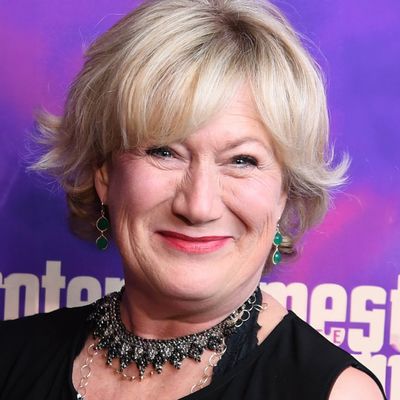
Jayne Atkinson believes she has this kind of magic superpower of getting what she wants if she puts her attention to it, and she’s got a long list of credits to prove just that. She looks back on her childhood and having an English sensibility (and sense of humor) even though she grew up in America. She credits her high school drama teacher as the one who gave her the foundation of her work, and thinks fellow classmate Michael Greif is her “theatre angel”. Jayne talks about her latest play, "Still," which she stars in alongside her old friend Tim Daly. She shares the story of what made her say yes to the play after receiving the script from Will Rucker, and the show’s themes of love, connection, and the importance of listening to each other. Jayne gets real as she reflects on the impact of technology on human connection, why she thinks “the SAG strike didn’t hit some of the issues it needed to hit”, and the significance of live theater, especially today. With a successful acting career and so many credits under her name, she shares her personal motivations, advising aspirants to prioritize self-care and enjoyment in auditions.
Jayne Atkinson is a British American actress who's graced everything from Broadway's grand stages to popular television shows. You might recognize her from her Emmy-nominated role as Karen Hayes on “24” or her powerful performances in “House of Cards” and “Criminal Minds”. Her accolades extend far beyond the screen, including Tony Award nominations for her captivating theater work in the 2000 production of “The Rainmaker” and the 2003 production of “Enchanted April”. Her other TV and film credits include “Parenthood”, “A Year in the Life”, “Gossip Girl”, “Madam Secretary”, and “Death and Other Details”. Jayne is also a three-time Drama Desk Award nominee. She was last seen on stage starring alongside Angela Lansbury in “Blithe Spirit”, and can now be seen in the off-Broadway production of “Still” at the DR2 Theater.
Connect with Jayne:
- Instagram: @jayneatkinsonofficial
Connect with The Theatre Podcast:
- Support the podcast on Patreon: Patreon.com/TheTheatrePodcast
- YouTube: YouTube.com/TheTheatrePodcast
- Threads, Twitter & Instagram: @theatre_podcast
- TikTok: @thetheatrepodcast
- Facebook.com/OfficialTheatrePodcast
- TheTheatrePodcast.com
- My personal Instagram: @alanseales
Transcript
This transcript was automatically generated and might contain errors.
[0:00] Alan Seales: Hey, everyone. Welcome to The Theatre Podcast. I'm your host, Alan Seales, and man am I tired. This Tony season is so unbelievably crowded, and all of the delays caused when Broadway shut down in 2020 have started to finish here at nearly the same time, which is leading to this sort of, uh, uh, Thunderdome, as Izzy McCalla called it. Thunderdome of competition to get everything opened before eligibility cuts off, I think, today as I'm recording this intro? So anyway, in case you haven't noticed, along with all these shows opening right now, there are so many amazing individuals inside these shows, and that has translated to being fortunate enough here on the podcast to bring us two all-new episodes a week for a while, which I suspect is going to continue through the actual Tony Awards on June 16th this year.
Our guest for this episode, Jayne Atkinson, is someone who has been performing both on stage and screens, both big and small, for decades. Her love for the craft and for connecting with people is apparent, and as someone who is now fortunate enough to be picky about the shows she accepts, I can definitely see why she chose to accept her current off-Broadway show called STILL, which is playing right now at the DR2 Theatre through May 23rd. So now I'll stop my yapping and let us get to the episode. Everyone, please enjoy this amazing conversation with Jayne Atkinson.
[1:34] Alan Seales: Today's guest is a true force of stage and screen. She's a British-American actress who's graced everything from Broadway's grand stages to our favorite television shows. You might recognize her from her Emmy-nominated role as Karen Hayes on 24, or her powerful performances in House of Cards and Criminal Minds. But her accolades extend far beyond the screen, including Tony Award nominations for her captivating theater work in the 2000 production of The Rainmaker and the 2003 production of Enchanted April. Other TV and film credits include Parenthood, A Year in the Life, Gossip Girl, Madam Secretary, and Death and Other Details. Also a three-time Drama Desk Award nominee, she was last seen on stage starring alongside Angela Lansbury in Blythe Spirit, and can now be seen in the off-Broadway production of Still at the DR2 Theatre. Jayne Atkinson, welcome to The Theatre Podcast.
[2:27] Jayne Atkinson: Oh, that was such a lovely introduction. I sort of want to carry that around when I'm not working.
[2:32] Alan Seales: Well, thank you. I mean, your body of work is absolutely incredible. And of course, everything that I highlighted, of course, are my favorites. I remember when 24 came out, I mean, it was game changing to the idea of telling a story in real time. Although the problem with that being that there's no way that Kiefer Sutherland can get from one side of Manhattan to the other in like 10 minutes.
[3:01] Jayne Atkinson: Unless he knew of the secret underground tunnels that were maybe available to people and operatives like him. Nudge, nudge, wink, wink, you know what I mean?
[3:12] Alan Seales: It also started my friends and I saying, all right, hold on, hold on. Let me go hack the spy satellites. Okay. I'm done. I'm good. All right. Hold on. Wait, wait. Got to bypass the encryption. Enter. All right. There we go. Bypassed. The whole thing. I mean, you got to love fiction, but I love it. I love your performance on it. But then the most important thing that we want to dive into here is obviously working with an orca whale on Free Willy. That's got to be something.
[3:39] Jayne Atkinson: That was, you know, the truth is that I never met Keiko, sadly, because when they shot that down in Mexico, I was not on board yet. I mean, I was hired, but they didn't fly me down for that. They made a fake stage. I wasn't able to actually meet Keiko, but when we were shooting it in the San Juan Islands, I was taken out by the people who were our consultants to see the orca whales, and we actually did the prayer, Salanau Naesis, that is in the movie, and all of a sudden, the orcas started to breach, and it made us all cry. So, I do feel I met the orcas, just not Keiko. It was one of those things where in my career I've had a couple of these moments, and STILL is actually one of them, where I got the movie script, and, you know, I wasn't, I hadn't, I'd done some television, and I literally looked up, but I was crying.
I sobbed at the end of the film, and I looked up, and I said, bring me this movie. I have to do this movie, and Mary Steenburgen was actually offered my role. She doesn't remember this at all. Maybe they didn't even tell her about it, but I was, you know, very, very, very pushed for the role by my agents, by the casting director, and when I got it, I just, I jumped for joy, and I, at this point in my life, the people, the young kids who saw this movie are now in their 30s, and that's my most popular fan base, because they loved, they played, they loved Free Willy, and they, you know, they saw it over, and over, and over, and over again, so it's a very proud moment for me that I landed Annie in Free Willy.
[5:36] Alan Seales: Oh, okay, so then going back to your childhood, though, you have had such an amazing career so far, but going to your childhood, I said you were, you know, a British-American actress, which is what I read online, but like, what part of you is British, and what part of you is American, and did you actually grow up in Britain at all?
[5:52] Jayne Atkinson: I did not grow up in England. I grew up here, but my heart and soul is definitely influenced by the British sense of humor, by the accent. My parents grew up in Brighton, in Sussex, and very much influenced me. My mother and father did community theater. My mother is an amazing actress. I always say, if I ever got one of these awards, I would say, if you think I'm good, you should see my mother, and my father is an amazing singer, so, you know, they brought me up, and so I have an English sensibility, for sure.
[6:30] Alan Seales: I was going to ask if you could just switch the accent on, but of course.
[6:33] Jayne Atkinson: It depends, you know, I have to be able to leap into a role, so to speak. I can't just do it, because I need a little bit of a runway, you know, but I think, you know, Janet McTeer, when she saw me in Blythe Spirit, thought I was British. She said, you're American? She couldn't believe that I wasn't English, so I think that's a very good review.
[7:00] Alan Seales: I would agree. I definitely agree with that, and so then where did you grow up, though? Here in the States?
[7:05] Jayne Atkinson: I grew up in, we came over, and we were in Connecticut, and then we went to Miami, and then we went to North Miami. I mostly was raised in Florida, Southern Florida, and then I made my way north as fast as my little feet could carry me, because I went to school at Northwestern, and then I went to Yale Drama School, so I grew up there, but I will tell you that Ron Crickak, who was my high school drama teacher, really gave me the foundation of my work. He was an amazing teacher. My first really big role was Anne Frank, and he had us live a day in the life of the Franks, and at the end of the show, when they come and take us, is the end. He didn't have us come out and take a curtain call.
[8:10] Alan Seales: Wow.
[8:12] Jayne Atkinson: And so, I learned, I know, it was profound, and I learned at his feet the importance of knowing your lines, being heard, subtext, and the profound impact that a play can have on an audience, and it had a profound effect on me. So, I started there, and my mother and father were also very influential, but he was an amazing, and then he ended up being at Northwestern. So, I went to Northwestern, and I was a sophomore, and there was a play called Ashes. Michael Greif was in it. I don't know if the director, you might know Michael.
[8:33] Alan Seales: Of course, yeah.
[8:36] Jayne Atkinson: Michael Greif was in it. That was two things on Broadway right now.
[8:36] Alan Seales: That's right, and I was a sophomore, and I said, I can't audition. I don't know what it's like to be a woman who loses her baby, and he happened to be there, and he said, that's why you have to audition. You have to do this, because you have to stretch yourself, and being scared is part of what you have to do, and I ended up getting the part.
[9:00] Alan Seales: Wow.
[9:01] Jayne Atkinson: So, that man was, I think, my theater angel. So, I went to Northwestern, and then I took a year off, and then I went, I worked with Kathy Borowitz, who is also an actress. She's married to John Turturro, and she and I were working in a coffee shop on 72nd and, I think, Amsterdam. It's a French bakery, and she all day pretended that she was French, and I just thought that was fabulous, you know, and so at the end of it, I said, you know, I was thinking of going to Yale, and she had just graduated from Yale, and the only person that I knew that went to Yale was Meryl Streep, me, Meryl Streep. You can't even see my hand, and when I saw that she, who this layperson had gone to Yale, I thought, well, why don't I audition for Yale, and I did, and I got it, so.
[9:50] Alan Seales: Wow.
[9:50] Jayne Atkinson: Okay, so I was going to ask you if, like, you were pursuing originally the stage or the theater, the stage or film path first, and obviously, very much, you were New York City, you were stage, and your first IMDB credit is in 1986. It doesn't mean you weren't doing things before that. First, your Broadway debut is 1987, so then, obviously, doing both of these things at once, but at that time in the 80s, I mean, again, this is pre-internet, pre-social media, like, you're pounding the pavement, sliding, like, this is the time when you slid headshots under doors of casting directors and hoped they liked you.
[10:31] Jayne Atkinson: Yeah, they have no idea. I mean, I feel a little bit for this generation of young actors, because I feel there's something that happens in a room with people that is really important. You know, it can be terrible, but it also can get you a job, because you actually engage them in a way. I mean, the first time I got a job on television was with Farrah Fawcett and Colleen Dewhurst, something of two women or something like that, and I was told to tell a joke. So, I sat down, and the gentleman looks at my resume. I graduated from Yale, whatever, and he says, so tell me about yourself. I said, well, can I tell you a joke? And he said, he looked at me, like, okay, and I said, how does this airline stewardess handle her dinner party? And he said, what? And so, basically, she says, could everyone come and take their seats? And she does the whole hand signals, right? And he said, I got the job.
[11:29] Jayne Atkinson: You just don't know what's going to happen in a room. So I do feel, but yes, this is pounding the pavement, it's going to get the sides, then going home, learning them, getting them back, and then there's the fax machine that came along. But I was doing both. I was doing both and I just always, I just had the best agents and the best support and I guess I have some talent because I got work.
[11:54] Alan Seales: Oh yeah, you have so much talent. All right, but the most important question though, what's faster, hot or cold?
[11:59] Jayne Atkinson: What?
[12:01] Alan Seales: Hot, because you can always catch a cold. You can use that in your next audition.
[12:10] Jayne Atkinson: Okay, well I was, okay, I have one more for you. I was addicted to the hokey pokey, but I turned myself around.
[12:15] Alan Seales: That's way better.
[12:16] Jayne Atkinson: That's worse. No, it's worse. That's terrible.
[12:25] Alan Seales: Oh God, okay, okay.
[12:28] Jayne Atkinson: I know.
[12:29] Alan Seales: Oh geez. So were you finding at this point then in the 80s, mid to late 80s then, when you're starting to get professional gigs, that you have to decide between the stage or the screen or are you in New York? Are you still able to do both at this time?
[12:47] Jayne Atkinson: I was and I think that because, honestly, because I was doing stage, Hollywood was much more interested in me. You know, they always want what they can't have. Let's just say it like it is, people. And you know, they wanted me and I was doing a play and they wanted me and I said, well, you can have me when the play is over. You know, there was a certain kind of, I don't know what it was, but I had a little star over my head and I was able to do both. And I was able to do both in part because I was doing theater. I got attention. I got good reviews. I had fans that were New Yorkers who knew people in Hollywood and they were, you know. And I think graduating from Yale did give me a little, you know, leg up.
It's not guaranteed to get you work, but it helps get you in the door. And when I was done with Yale, I didn't want to live in New York. I went to LA and I got a couple of TV gigs and then I came back and did theater. And, you know, I don't even remember the order, but I think I was able to do both at a time where they were letting you do both. You know, when people were first starting younger than me, I mean older than me, there was echelon. So if you were a movie actor, you didn't do theater and you didn't do soap operas, television. And if you were, you know, if you were a theater actor, you didn't do television or soap opera. If you were soap opera TV, you didn't do any of it, but it all mashed in when I came on board.
So I did everything, but the industry is changing so, so much. And, you know, I've only gotten one or two jobs from tape, honestly. And most of, you know, recently it's offers, but, you know, I'm going to just posit that I think the strike didn't really hit some of the issues it needed to hit. And I do feel that there's a little bit of, I know this is going to sound odd, but I've talked to some other people about it and they agree. I think there's a little punishment going on for having said, we want what we deserve. The industry is shrinking, shrinking, shrinking. You know, I was told, you know, location scout, usually in a year we'll find, we have to scout 200 locations. And so far since the strike ended, 15. And then I was told that this producer was told, do not hire, do not hire actors in the industry. Go to TikTok, go to Instagram, get your people there.
[15:17] Alan Seales: No kidding.
[15:19] Jayne Atkinson: Yep. And what can we do about that? And we just went on strike.
[15:25] Alan Seales: Yeah. What's the point of the schools and training and putting in your due?
[15:30] Jayne Atkinson: Well, that's where, I just have to have, I just have to have a vision that people like my son, who is 25 years old, Jeremy Gill, who went to school and went to grad, didn't go to grad school, but studied at Interlochen and UNCSA, which is a gorgeous school. These people and other people who are coming out of school or in training, do not give up hope because you will do what the independent film world did to the industry when it came out and won awards and the producers and the big movie had nothing to do with it. You will make your own content. You will produce your own film. You will create and you will, you will create the next highway because the only reason this is happening is because people are greedy and the respect that Hollywood has for actors has never been great.
It has never been great. When you work with people who really do value you, it's rare and I have. But if they could do it, and I said this for years and years and years, if they could do it without us, they would. Hence AI. If they could do it so that they never had to deal with a human being with a heart and a soul and who cares about things and wants certain things and wants to be treated a certain way, they would. Yeah, this generation has to, has to hear that and go, uh-uh, not on my watch. It's not going to happen on my watch either. I'm done.
[17:04] Alan Seales: Time for a quick commercial break. Hang on a second. Welcome back to the episode. I was having this conversation with my brother the other day. So I'm 43. My brother is going to be 40 in a few weeks, actually. And I was pointing out to him, uh, cause he's got two boys and I've got two boys and all four are around, you know, eight to 10 years old. And I was like, our kids, you know, they don't know what it's like to have to wait for things to have to, to, to schedule something. Right. And because I said, he and I are the generation that grew up analog and flipped to digital as young adults. So we still have that perspective of coming home and rushing to the TV by three o'clock so that we can watch gummy bears and ducktails and tailspin and all the things that are on right after school gets out.
You know, we didn't have any of this, this, uh, uh, kind of just in your pocket, internet in your pocket stuff. You hear that, this famous phrase all the time. Like there's literally the iPhones in our pocket right now have more computing power than the spaceship that landed astronauts on the moon. That's insane to me, right?
[18:11] Jayne Atkinson: It is insane. And when you sit right on the subway, everybody's on their phones. If I were, and I did this with our son, but if I were a parent right now, one of the first things that I would do is to get that phone and that computer away, take your kids, take them to camping, get them and no phones, no connect and disconnect them from something that is actually able in my view to influence and get into their heads. Literally, I would just say, take it down, turn it off, put it in a basket and say, we're going to play board games. And, and you will be able to have it. It's not like you can't ever have it, but these phones don't make you smart. They actually make you dumb, right? So they're not dumb. Yeah, they absolutely, they've lowered my attention span. When I think about reading a book, I just think, oh, okay, okay. And I, I want to like flip the pages, you know? So, and I grew up knowing everybody's phone number. Did you, do you?
[19:21] Alan Seales: No, there's no way. You know, I have hundreds, how many phone numbers in my phone now?
[19:26] Jayne Atkinson: Yeah. And what happened when AT&T went down?
[19:32] Alan Seales: I was so relieved. I got to tell you, my whole system went, because I was driving in a car. And of course, in a car, you're looking at shit. And I was sitting there going, this is now, I know for other people, it might have been terrifying and difficult or whatever. And I've talked to him, you know, to my kids, and to my husband about what happens if we lost connectivity. But I was relieved, honestly. So, that's grandmother advice to you about what to do with these phones and these computers, is you just got to give yourself and your kids something else that informs them, which is obviously, it's nature. It's the stars. It's the woods. It's a stream. It's a beautiful view. It's human connection, which is...
[20:25] Alan Seales: Yes. Human connection and theater. And that's my biggest gripe. And this is fatherly advice. Get off my lawn. The advice I give is just like, put your phone down and look around you for a second and see where you are. Know your surroundings. Say hi to somebody. There have been so many times when I've been walking around with people much more famous than I will ever be. And I'm literally in a crowded shoulder to shoulder elevator with somebody like Bob Saget. I remember this very specifically when I was with Bob Saget, the late great. And everyone in the elevator, I was there with Bob. I was talking with Bob. And everyone in the elevator was looking down on their phone. And if one person had just looked up for a second and been like, holy shit, I'm standing next to the Bob Saget. You can't not recognize this guy. And you just miss out on so much of life by staring at what the AI bots are serving to you. But anyway, so we've got our soapbox.
[21:28] Jayne Atkinson: I have to talk about Still.
[21:31] Alan Seales: Yes, I have to talk about Still. That's what I was going to bring up. Still, speaking of live performance, the DR2 Theater is this tiny off-Broadway theater that is just beautiful. It is the perfect space for this show. And I love that it is reuniting you with Tim Daly, who you were on with Madam Secretary, starred in Madam Secretary with him. And I mean, there's so much to unpack with this because there's female empowerment, there is relationship and love at any age. There's the unconscious bias of what we associate with certain political terms. There's happy endings. Are happy endings real? There's all of this that you can dive into with this wonderful one-act show. And I guess, yeah, we'll start back at the beginning then. How did you come to this show? And what made you really latch onto it?
[22:32] Jayne Atkinson: Well, it started a year before where I said, I really want to go back to New York and do a play. And I have this kind of magic superpower. And when I focus my attention on something that I want, I will very often get it. And I said, but I don't want to do a big show on Broadway.
[22:56] Jayne Atkinson: I want to do something that's small, and I don't want to do eight shows a week. That's fakakta. I don't want to do that. And I want it to mean something. I want it to be from the heart of my heart. Will Rucker from Dorset Theatre wrote me and said, you know, I worked with you when you came here and did Anne, about the wonderful Governor Anne Richards. And I want to send you this play, see what you think, because I'd love you to do it. So he sent it to me. And I read this play. When it was over, I jumped out of my chair, I swear to God, and my mouth dropped open. And I thought, oh, it's over? It's over? What happened? It's over? I couldn't believe it was over. I turned the page like there has to be more.
I called my husband into the room. I said, you have to read this play. I think I have to do this play. Tell me what you think of this play. So he read it. And he came back and he said a couple of things. I said, well, I don't know if I agree with you. And for two hours, we talked about it, which is the great hope when you see this play is that it actually engages. And I have proof of this from friends and people who I've met after the show. It really sparks amazing conversations. And so he and I had a very deep, wonderful conversation. And at the end of it, he said, I really think you have to do this play, which I had already felt. So I called up Will. And I said, I have to do this play. And Tim was already on board.
And I just love, I'd seen him in downstairs with his sister. And just as a stage actor, I just thought he's just wonderful. And Michael approved. My husband, Michael Gill, who was also an actor, said, I think he's perfect. So off we went to Dorset. And we were memorized by the time we got there, because it was only a couple of weeks rehearsal. And Leah and Adrian, we worked on the play together. And there are some parts of the play that came to life there. And the audience, I mean, it's just, it's heaven. It's really heaven to do this play. I'm a little tired. The theater, as you said, is perfect for this play. The audiences have been really wonderful. You know, you're going to laugh, you cry, you think, you wonder.
Yes, they do. No, they don't. And I'm not going to say any more. And I said this, and I mean it. I really believe I waited my whole life for a play like this. This gem of a play that Leah wrote. Yeah, it's a perfect, this is perfect little bundle that makes you, in a very short amount of time, question it. And trying to remember the conversation I was having when I walked out of, like, wait a second, did they? Or do they? Are they going to? Or, you know, is that what you're hearing from other audience members? Or are they like, I don't know if I can trust?
[25:49] Jayne Atkinson: Well, one of the, there's a very important moment where Tim's character talks about having gone through something that my character says, you don't get to have feelings about it. And he says, but I do, but I do have feelings. And at the end of the play, he sort of circles round to that. And he expresses something in this beautiful way, that later we found out, had somebody have compassion for someone who didn't agree with him about this issue, which I don't want to really mention, because it's a surprise. And that's the beauty of this play. It is also the beauty of theater, and the energy in that theater. You know, when people ask me, what's my favorite medium, it is the theater, because the synergistic energy of people coming in and you standing there with your, all your stuff going at them, and their stuff coming back at you and, and just creating this vortex of feeling and laughing and crying and thinking, there's just nothing like it, there's nothing like it.
And so, I do feel people leave the theater, and they're just talking and talking and talking and talking, and they're coming back, and they're bringing their friends, and then they're talking. And it really is one of the biggest themes for me in this is that we have to find a way to listen to each other. We have to, you know, Tim says it very eloquently, we have to be able to hear people's feelings, we don't have to agree with their opinion. But their feelings are their feelings. And when someone feels heard, I don't know that it, I don't know what it does, because I know what it does in my marriage, when I feel like my husband's really listening. There's a softness, this happens, there's a compassion that happens. And we need this so badly right now. We really do. So, and the other thing for me is love, which is also one of my favorite themes.
[28:01] Alan Seales: No, it's wonderful. It is absolutely wonderful to see two people later in life, who are finding each other again, finding love, and like, because everybody wants to be loved. Everybody wants to have connection. Everybody needs to feel like they belong. And it's really cool to see, like at the beginning, where we've established that these two characters haven't seen each other in 30 years, right? And, but they were the love of each other's lives. And we're like, what happened? What happened with this? And I sort of feel like there's a little bit of that twinge of like, what if that some people could think about through so many different people, if not one specific person in their whole lives, right?
Like, if one thing had gone differently, or something didn't happen, obviously, we wouldn't be where we are now, which could be good or bad. But then looking back, I was reflecting on my own self, right? And the person I was with was asking, like, do you have that? Do you have that one? Did you have like, that thing that-
[29:49] Jayne Atkinson: The one that got away?
[29:51] Alan Seales: Yeah, actually. Yeah, the kind of the one that got away. And it's not, I mean, it's circumstance. They got away because they were supposed to. And then you could have been a horrible person, if you actually got with them. You never know. Because it didn't happen.
[29:57] Alan Seales: All right. Welcome back to the episode. Wrap up with three questions I ask everyone to end the episodes. The first one just very simply is what motivates you?
[30:05] Jayne Atkinson: Yes. Right. It's true. And I think that's what people also leave with, something that people leave and they connect with someone they haven't talked to in a long time.
[30:09] Jayne Atkinson: Love and wanting to leave the world a better place.
[30:15] Jayne Atkinson: Even if it's just me that's, even if it's just that I'm better, you know, even if it's just me who's more loving and more kind and more compassionate. I just got to say it like that.
[30:17] Alan Seales: Oh, wow. Yeah.
[30:19] Jayne Atkinson: Yeah. I love that this is a play that explores the heart of a 65-year-old woman, which is my own heart. You know, when people say, do you relate to it? Well, yeah, I'm 65. And I've been through 65 years of a lot of life. And I bring all that to bear in this moment in her life with Mark. And Tim does the same. He's just such a great acting partner. He's amazing.
[30:27] Alan Seales: You have to start with yourself.
[30:29] Jayne Atkinson: All right. What advice would you give to your younger self and younger people listening now starting out down a similar path? My younger self, I would say, if somebody is really hurting you, they're really hurting you. So, you need to step away. You need to step away if somebody is consistently hurting you because that's not necessary. You know, you can take it for a while, but just step away and have fun. Have fun in your auditions. Just, you know, that's your three minutes of time, babe. I mean, I learned that later. That belongs to you. You worked for it. They get to watch you and you get to be watched. So, just enjoy and just it's your time.
[30:46] Alan Seales: Yeah. Well, the two of you together are amazing. So yes, everybody, go see Still at the DR2 Theater here in Manhattan. Time for a quick commercial break. Hang on a second.
[31:17] Alan Seales: Yeah. Enjoy your time in the audition. Like, it's your role and in that moment, you've got the role. It belongs to you and you've worked for it. So, they have to listen and you have to claim your time.
[31:30] Jayne Atkinson: I love that. All right. Last question then. If you could only see one show for the rest of your life, but you can see it as many times as you want, what would you see?
[31:34] Jayne Atkinson: Friends. The series, Friends.
[31:40] Alan Seales: The series, Friends.
[31:43] Jayne Atkinson: Yeah, yeah, yeah, yeah.
[31:46] Jayne Atkinson: I mean, I don't know about a play, but this one I could see. Actually, it's a little too much. I couldn't keep seeing this play, but I think of a show, I think of a TV show and it's Friends and that show just makes me happy. Although I started watching Will & Grace and I'm really liking that, but Friends just, I don't know, it's just this tonic for my soul.
[32:15] Alan Seales: Yeah, it touched a lot of people in that way.
[32:17] Jayne Atkinson: It really did. It really, really did. And they had it in that strange movie with Julia Roberts and the world is crashing around them because there's no more internet and satellites and planes are crashing. Did you see that movie? Yeah, yeah, yeah, yeah.
[32:34] Alan Seales: And all they want to do, the young girl wants to watch the final episode of Friends.
[32:38] Jayne Atkinson: Yeah, she's like, what's the finale of Friends? How does it end?
[32:42] Alan Seales: I know, I know. And then she gets into this secret room and she gets to watch Friends. I was very happy for her.
[32:47] Jayne Atkinson: I know. I love how that was the ending of the movie, which is like, well, this is life now. That's what it is.
[32:55] Alan Seales: All right. Are you on social media? Do you get on and play that game anywhere?
[33:00] Jayne Atkinson: I do have an Instagram Jane Atkinson official. And I do have a Facebook page. I'm not on TikTok. And I honestly don't do it that much because I don't know what to put on there. But I put a lot of stuff about still, if you want to put that in here, you can. I did do the series death and other details. It did get canceled, sadly, but I was dead anyway. So I wasn't going back. And just, you know, once in a while, just come and look. Were you the death or the details?
[33:33] Jayne Atkinson: I was both. I was the detail. And then I was dead.
[33:40] Jayne Atkinson: Well, I love working with those people. Those people were just great. The producers, the showrunners, Heidi and Mike, they were all great. And the actors were fantastic. And Mandy was lovely, but I had a great time with them. So just once in a while, just check me out and see if I'm doing anything and tell me what you're doing.
[33:59] Alan Seales: You can find more of me at thetheaterpodcast.com. I am on Instagram, threads and TikTok at theater underscore podcast. I'm on Facebook at official theater podcast. Please leave a rating and a review wherever you are listening. Thanks to Jukebox the Ghost for the intro and outro music. And Jane, thank you so much.
© Broadway Podcast Network, All Rights Reserved