

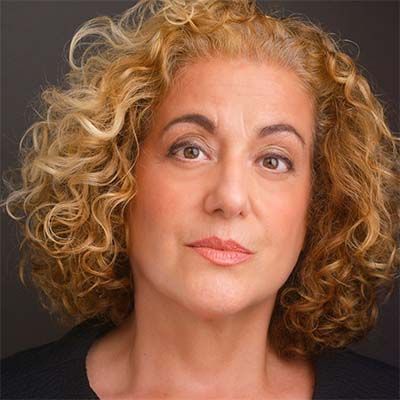
From loving TikTok to enjoying cold readings playing “delightfully stupid” characters, Mary Testa is a talented actress who’s “not on a stardom path and never will be”. She starts off where her acting journey began: choosing between law school and performing... Read More
From the show: The Theatre Podcast with Alan Seales
Guests
Featured Shows
About
From loving TikTok to enjoying cold readings playing “delightfully stupid” characters, Mary Testa is a talented actress who’s “not on a stardom path and never will be”. She starts off where her acting journey began: choosing between law school and performing. Ultimately, she pursued the latter and eventually moved to New York in 1976, explaining why she just likes working on interesting things with people she loves. She discusses self-taping auditions during the pandemic, and that while she believes it's better to be in the room for auditions, she understands the preliminary role of self-tapes. Known for playing strong-willed characters, Mary reflects on her career as a character actress. She recalls asking Michael John LaChiusa to write a role for her as “a very stupid character”, challenging the usual type casting she gets. She also admits to loving cold readings, the spontaneity, and the challenges that come with them. Reflecting on her journey, she gets real as she talks about perfectionism, how insecurities can lead to tyrannical behavior, and why self-awareness and being comfortable in your own skin is important to keep you grounded.
Mary Testa is an actress with a phenomenal career spanning almost 50 years, which includes 12 Broadway shows such as “Oklahoma!”, “42nd Street”, and “On the Town”, resulting in her three Tony Award nominations. Her TV and film credits beginning in 1979 include “Cagney & Lacey”, “Sex and the City”, “Whoopi”, “The Battery's Down”, “Eat, Pray, Love”, and “The Good Fight”, “The Blacklist”, and many, many more. She's been a part of the “Ratatouille”, the TikTok musical, and is an experienced voiceover artist. She can be heard in the podcast comedy TWITS: A Streampunk Distraction available everywhere you find your podcasts.
Connect with Mary:
- Instagram: @marytesta.actress
- Listen to TWITS: http://bpn.fm/twits
Connect with The Theatre Podcast:
- Support the podcast on Patreon: Patreon.com/TheTheatrePodcast
- YouTube: YouTube.com/TheTheatrePodcast
- Threads, Twitter & Instagram: @theatre_podcast
- TikTok: @thetheatrepodcast
- Facebook.com/OfficialTheatrePodcast
- TheTheatrePodcast.com
- My personal Instagram: @alanseales
Transcript
This transcript was automatically generated and might contain errors.
[0:00] Mary Testa: Hello, I'm Mary Testa. Welcome to The Theatre Podcast with Alan Seales.
[0:11] Alan Seales: Hello, everyone, and welcome to an all-new episode of The Theatre Podcast. Happy July! Can you believe 2024 is half over? Time for the next Tony season to kick in, am I right? Anyway, I'm Alan Seales, and this episode's guest is another Broadway legend, multiple Tony Award nominee Mary Testa. With an almost 50-year career spanning TV, film, voiceover work, and of course the stage, something I love most about her is that, in a good way, she just doesn't seem to care what other people think. She goes into a project bringing her own unique self to the role, something that obviously continues to serve her well. And she is also a continued part of Twits, a radio play produced here on Broadway Podcast Network, of which season two was just recently released.
So make sure to check out the show notes for more information on that or find it wherever you're listening to this podcast now. You'll thank me later. So find me online on the socials. Leave a rating, please. It helps the podcast grow. And everyone, please enjoy this episode now with Mary Testa. Our guest today is in the middle of her phenomenal career spanning a few decades that includes 12 Broadway shows such as Oklahoma, 42nd Street, and On the Town, resulting in her three Tony Award nominations. TV and film credits beginning in 1979 include Cagney and Lacey, Sex and the City, the original one, folks, Whoopie, The Battery's Down, Eat, Pray, Love, The Good Fight, The Blacklist, and literally 56 more.
No joke. She's been a part of the Ratatouille TikTok musical, is an experienced voiceover artist, can be heard in the upcoming podcast comedy Twits, and all around just one of my favorite people to watch on stage, Mary Testa. Welcome to the theater podcast.
[1:52] Mary Testa: Thank you. That's quite an intro. Thank you.
[1:56] Alan Seales: Of course. And I just want to say, too, that we are sitting in your apartment.
[2:01] Mary Testa: Yeah. Yeah. We're sitting in my bedroom.
[2:06] Alan Seales: Yeah.
[2:06] Mary Testa: Because I have two birds who tweet all the time. So we're in the bedroom because they're in the living room.
[2:10] Alan Seales: Not social media tweets. Actual birds.
[2:10] Mary Testa: Actual tweeting. Actual birds. I love the physical connection that being in person with somebody and being able to look at them and look them in the eye for real. I mean, you're looking in the eye over the camera anyway. But to be able to really look somebody in the eye and make that connection, I think, is part of why people love theater in general.
[2:26] Alan Seales: Sure. Yeah. Right? So I think that's probably a wonderful place to move back to, to get started on your history, right? Because tell us about where you grew up. What got you into theater?
[2:40] Mary Testa: I grew up in Rhode Island. I was born in Philadelphia, but we moved back to Philadelphia. My parents were both from Rhode Island. And we moved back to Rhode Island when I was four. So I grew up there. And while I was a teenager, I really decided that I wanted to be an actor. I decided between law and acting. I decided to do acting. So I went to college at the University of Rhode Island and majored in theater. I took all my theater credits by the time I finished my first semester junior year and worked three jobs for a summer to save up and move to New York in 1976. I have been here ever since hit the ground running. I worked a regular job for three years, as well as I, as soon as I moved to New York, started working with Bill Finn, who I had worked with when I was in college, and in trousers, which was my first show, which was Bill's first show here in New York.
Wow. So that sort of started that whole thing. But I had to work a job to pay rent. And for three years, I worked as a cashier, and then a waitress at a place called US Steakhouse, which was in the ground floor of the Time Life building. And it was a great job. And then I got this six week workshop, which was a Stuart Ostro funded workshop where we did a new musical theater review every week. There was a cast of actors, a group of writers, a director. And I went to my bosses, my waitress job was a union job. And I went to my bosses who hated me, and said, can I have a leave of absence? And they were like, no. So I went back to all my waiter friends, and they said to me, you didn't come here to be a waiter, you came here to be an actor. So I quit. I said, then I quit. And I never, ever, knock on wood, had to have another job again. I just was an actor. Yeah, it was pretty great.
[4:36] Alan Seales: Move back to the choice between law school and performing.
[4:40] Mary Testa: Yeah.
[4:40] Alan Seales: Because why law? Those are very different career paths.
[4:44] Mary Testa: Yes. Well, not really. Because when you're a lawyer, you have to be a good actor. I have always been the type of, I was always this way, even when I was young, that when I see something that I think is not fair, or unjust, I speak up about it. So I think that's where law came into my head. That if I was able to represent people, that I would be a good representation of the truth and moral right. But then, you know, I always sang, because my mother and I used to sing together when I was little. So I decided, you know, if I become a lawyer, I've got to go to school for quite a long time. And if I'm an actor, I don't just go to school that long. And that's really where the decision came.
[5:32] Alan Seales: When were you, how young were you when you started singing?
[5:35] Mary Testa: I mean... Very young, very young.
[5:36] Alan Seales: Was it all just for fun?
[5:38] Mary Testa: Like... Yeah, my mother was a singer, not professionally. My mother, I have told this story a million times. My mother, my aunt, my aunt Tony, and a friend of theirs had a singing group called the Gay Sisters. And they did this talent competition at the Biltmore Hotel in Providence, Rhode Island, which was a big deal. And they won a contract to tour with the big band for a year. And they went home and asked my grandfather, and he was like, no, no. So that ended that, that was it. So my mother always sang with me from when I was very young. And she'd say, okay, now you do the harmony. And I would just do the harmony. So we sang together all the time. And that's kind of how it happened.
[6:20] Alan Seales: Do you remember the first musical theater show you got to take part in?
[6:27] Mary Testa: When I was in high school, there wasn't a drama department. We started it. Now that high school calls the drama... I'm probably the most famous person that's come out of that high school, and they don't even use my name. But you know, it's all good. We're not bitter. We made our own musical, we made our own show up. But in college, I did a bunch of stuff. And that's where I met Bill Finn. And his show was called Scrambled Eggs. So that's where I met him. But I did a show here while I was still in college called The Resurrection of Jackie Kramer, that was at New Dramatists. And I was still a college student. Came up, did the show. I played a 55-year-old woman. And this agent was waiting for me afterwards.
[7:12] Alan Seales: Wait, you were in your 20s playing 55?
[7:14] Mary Testa: I was younger than that. I was probably 18, 19.
[7:17] Alan Seales: Wow, okay.
[7:19] Mary Testa: Yeah, because I'm a character actor, and I've always been. He wanted to talk to me. And you know, I was only up here to do that show. And then I was going back to school. I ended up not working with him. But yeah, that was the first sort of show I did here in New York. You know, I think it was, I don't even remember. I mean, it was probably like a showcase or something. And then went back to college, quit, and then came here, and then In Trousers happened. So that was the first sort of professional thing was In Trousers, I think.
[7:54] Alan Seales: That's insane. So you hit the ground running. And has your experience always been sort of that the previous project leads you to the next? Like you're always, you know, work lined up back to back?
[8:06] Mary Testa: Sometimes I do, but not always. Like right now, I don't have. I have some readings coming up, but that's it. Last year, I had a year where I sort of knew what I was doing. You know, I had Oliver at City Center, and then I did A New Brain up at Barrington Stage, and then came and did Gardens of Annunzia. So I kind of had my year sort of set, but it's not always that way. But I don't ever stress because, you know, whatever comes my way, if it's interesting to me, I'll do. And I've also decided, after all these years, I'm good with just working on things I really love. Like I'm not on that stardom path, and I never will be. I just like working on interesting things with people that I love. So that's what I do.
[8:52] Alan Seales: That's interesting. I mean, I wonder why so many people get into performing, get fall in love with entertainment and the limelight at a young age. And I wonder, speaking for myself, too, I wanted the stardom path because I wanted to feel validated.
[9:07] Mary Testa: Yeah, and I don't, that's, that path is a very different path to take. And from, it involves some luck, it involves some, it involves a lot of things. I obviously know at this age, that that's probably not for, that's probably not going to happen for me. But I'm good. I'm good. I just worked on a television show the other day, Blue Bloods. And this guy came up to me who was I think one of the writers or something. He was like, you are so familiar. And I went and looked up your IMBD or IMDB, whatever it's called. He said, we've worked together six times. Starting with the first movie I ever did was Going in Style, which was like in the 70s. And he's like, I was a 16 year old kid on that. Well, my dad was a grip. And it was like, oh my God. So, my longevity is what I am proud of and what I will continue to do.
[10:09] Alan Seales: That's awesome. And I think it was actually Michael Urie that gave me the advice once, be the person that people want to work with the next time.
[10:16] Mary Testa: Exactly. And he's divine, but he's on the, he's like a star. I consider him more of a star. But yeah, he's divine. He's just a cheerful, lovely, hilarious, very talented, wonderful craftsman. And it was a ball working with him because we did Government Inspector together. Right, right. And then we recorded Twits together, which we'll get into. But I wanted to touch on the voice career that you've got already.
[10:46] Mary Testa: Yeah, it's not that big. It's not that big, my voiceover career. Not at all.
[10:49] Alan Seales: I mean, Courage the Cowardly Dog.
[10:50] Mary Testa: Well, that's something, yeah. But I always, and I say this about television and film too, I always visit, but no one asks me to live there. So my voiceover career was very haphazard. And then I just kind of, because I don't think I have the voice that people, like I have a lot of friends who've made a lot of money in voiceovers and their voices tend to be a little bit crackly, a little bit more forward in their faces. And I don't think I have that kind of voice. Plus, you know, over the years, I would maybe book one a year, maybe two. So it just wasn't for, it wasn't for, and then I was like, this is a waste of my time. I keep going to these auditions, nothing. So I was good. And then the people that I was working with agent wise, they sort of stopped. And I'm like, I'm fine. I don't need to go to these appointments anymore. It's all good.
[11:44] Alan Seales: That voice right there, that's your crackly forward voice.
[11:47] Mary Testa: Yeah, I don't need to.
[11:49] Alan Seales: Yeah, that vocal fry. Yeah. No, it's good. I don't, I'm not a big voiceover person, but I've done some.
[11:55] Alan Seales: I've always wanted to. I've wanted to have, like, that's my dream career is to do some sort of-
[12:00] Mary Testa: But it's very different now.
[12:02] Alan Seales: Is it?
[12:03] Mary Testa: It's changed now because there's a lot of non-union stuff.
[12:06] Alan Seales: Interesting.
[12:07] Mary Testa: Yeah, a lot of non-union stuff happening.
[12:09] Alan Seales: It was, it's been sort of, I guess, serendipitous or weird, whatever. I moved to New York to be an actor in 2007 during that writer's strike. And because I got my degree in computer science, I fell back on computers and I've never auditioned a single day in New York.
[12:27] Mary Testa: Really?
[12:27] Alan Seales: Yeah.
[12:28] Mary Testa: I've been here 17 years now.
[12:31] Alan Seales: And have you worked as an actor?
[12:31] Mary Testa: No, not where I wasn't doing a friend a favor as a small role for free.
[12:39] Alan Seales: Are you happy with that? Or are you good with what you're doing?
[12:42] Mary Testa: I feel like there's a piece of me that still isn't fulfilled.
[12:45] Alan Seales: Well, let me tell you something. The thing about acting is there's no time limit. Like if you really wanted to go back into it, then you would go back into it. There's no like, oh, you're this age now, you can't do it anymore. There's a million possibilities. It's just about being tenacious.
[13:05] Mary Testa: It's hard to be tenacious and not giving up. And I actually just came from talking to Mark Summers, who was like, he never gave up no after no after no, because he's talked publicly about his OCD. He was so obsessive compulsive that his completion was to become a talk show host.
[13:22] Alan Seales: Oh, yeah.
[13:24] Mary Testa: That's what he wanted to do. That's what he had to do.
[13:26] Alan Seales: There you go.
[13:27] Mary Testa: And for me, it's sort of the opposite is like, it's one of the things I can see myself doing. So I'm not putting all my eggs into that basket, which probably means that I'm not going to get very far because the people who are putting all their eggs in that basket are going to continue to do that.
[13:44] Alan Seales: Sometimes that the focus, you know, gets you where you need to go. But also, sometimes if you do a bunch of things that you like doing, then you should do a bunch of things that you like doing.
[13:54] Mary Testa: Fair. Because this is a hard business and not everybody's really cut out for it, you know, mentally. And, you know, it just takes a lot of, you have to have a really thick skin, but you also have to be completely vulnerable and open. And so that's like to do that double, you know, it's, it's not the easiest thing.
[14:19] Alan Seales: We had when I was doing Gardens of Annunzio, we had a couple, we had some student matinees that were, may I say, torturous. But, and we had kids ask us, you know, like, I want to do this, like, this looks like it's fun. I want to do it. And, you know, I said to this kid, well, then you need to study and you need to go and take classes and see what you're interested in.
[14:39] Mary Testa: But also, it's not easy, right? It's not easy. It looks easy, but it's not easy.
[14:45] Alan Seales: So, you know, who knows? I mean, who knows?
[14:48] Mary Testa: That's the hard part that I think a lot of people don't get is that to be good, even when you already are good, the people who are good are continually taking classes, and they're always learning and trying to get that much better. So people, I mean, you hear about every now and then an overnight success story, but that's one in how many millions?
[15:07] Alan Seales: Oh, yeah. It usually takes a really long time to get a foot in. And it's also different with television and film, because it also depends on what you look like. So if you're a classic, I mean, I was looking at all the people that were, you know, regulars on Blue Bloods that I worked with the other day, you know, they're all really skinny, and they're all really pretty. And, you know, it's like, okay, that's not me. That's not what I am. But I get that, you know, I understand that that's kind of part of the visual of television, the visual of film, it's changing a little bit.
[15:42] Mary Testa: And there are some people who are more characters who work steadily in television and film, but it's not always, there's not always that door doesn't always open.
[15:51] Alan Seales: So don't go anywhere. We'll be right back after this break.
[15:56] Mary Testa: Welcome back to the episode.
[15:59] Alan Seales: Is it is it easier? Or I guess do you enjoy it more now that everything is is shifted to online, like a lot of self tapes? Like I see, you know, you've got your I know, I hate it.
[16:10] Mary Testa: Well, you know, when the whole pandemic happened, I said to my agent, look, when we had to start doing self tapes for auditions, I am not this is not my job. Okay. So if you want me to go out and audition for all these projects, you've got to figure out how this happens. Because I'm live alone. I don't have anybody to read with me. And I'm really technologically challenged.
[16:40] Alan Seales: So my wonderful agent, Chris Foster, one of them, said, Okay, I will send you a zoom link. I will read with you and film you. And then I will send it in. So that's what we do.
[16:45] Mary Testa: There you go. So I don't have to edit. I don't, I'm so bad. I couldn't even upload some documents the other day for somebody who needed it like a job I need to do that. I can't I'm so bad. So that works for us. Yeah. And I got a ring light and an iPad stand. And that's how it and that's how I do my auditions. And that works. So go figure.
[17:09] Alan Seales: Well, okay, so everything's moving online. A lot of things are getting cast a lot of people now are getting cast from their social media.
[17:17] Mary Testa: I know. I know.
[17:18] Alan Seales: So I'm just gonna turn the recorder off. Okay, just you and me. What do you really feel? How do you I mean, how do you feel about the the shift in that because starting in you know, you said your first credit you moved to New York in 76.
[17:28] Mary Testa: Yeah. Right. And 76 your first Broadway Broadway show was I think it's 79 8080. So then you've seen just this these massive shifts. And last time I really had a good conversation about this. I mean, I enjoy like Nancy Opel was one of my first guests.
[17:47] Alan Seales: Yeah, go and that she was that was 2018. Right. And even then that was before Tick Tock.
[17:54] Mary Testa: Yeah. So I love Tick Tock.
[18:01] Alan Seales: Do you?
[18:01] Mary Testa: I love Tick Tock. And I'll tell you why. Is a little side street here. I don't even watch television anymore, because I am so entertained by Tick Tock. And I'm also informed by Tick Tock. And I've learned an incredible amount of things. And there are really smart people like virologists and medical people and political people who are on Tick Tock, who I get all my news from I know everything that's going on. I am very well aware of COVID-19 and when it's peaking and when it isn't. I am very entertained by some people that are on there. And I'm also there's life hacks, there's recipes. I am I love Tick Tock. People make fun of me, but I don't care. I love it. I don't I will never make a Tick Tock. I will never do a No, never. I no one needs to hear my opinion on I will never make it but I love watching it. Love it.
[18:52] Alan Seales: My advice and I need to take my own advice is just do reaction videos. So you're duetting with somebody else and all you do is just sit there and nod and smile.
[19:02] Mary Testa: I don't need to do that. I don't need to have that presence that I don't need that at all. As a matter of fact, like my I do have an Instagram and I don't do it. I hired somebody to do it. Yeah, because I wouldn't do it if I did. And I never take like I'm also the kind of person who never takes pictures with everybody that I'm working with. I mean, I do occasionally, but like I know, almost everybody on on Instagram, like when they're doing a television show, they'll take a picture with the star. I never do that. Never. The guy who does my Tick Tock. I mean, my Instagram is like, can you get a picture with you know, blah, blah, blah. I'll try. I always say and most of the time I don't.
[19:40] Alan Seales: So it's funny.
[19:40] Mary Testa: Yeah, it's funny.
[19:41] Alan Seales: Yeah, this stuff. I've tried being a brand account. I've tried like just posting with the podcast here, right? And the stuff that always gets the most likes is a face. It's a my face or the guest's face or talking heads. People don't want to be advertised to anymore.
[20:04] Mary Testa: But I get occasionally, occasionally, not a lot. I'll get like, well, we've been looking at your Instagram and we think you'd be the perfect person. The ambassador for my jewelry.
[20:10] Alan Seales: I'm like, I'm not selling anything. I don't want to sell anything. That's not why I'm interested in that. I'm not interested in doing, you know, hey, I love this sweater and you can get 20%. I'm not interested in any of that. So that's not going to happen for me.
[20:24] Mary Testa: No, no, no, no. I don't like that at all.
[20:28] Alan Seales: But I mean, I guess back to the original question, though, I mean, do you think it's a good thing for the theater industry, the Broadway industry to be casting and discovering off of social media?
[20:35] Mary Testa: I think it's better to be in the room. I think it's better to be in person. But I understand, like, for preliminary, I think it's okay to do self tapes, you know, I mean, I think it's good for them to do a self tape and then say, this person interests me, let's bring them in the room and see how they are in the room live.
[20:56] Alan Seales: That's happened to me.
[21:01] Mary Testa: I mean, when I was up in Barrington, I had an audition for a cabaret that was, you know, a self tape, well, with my agent. And then they were like, we'd love to do a callback with you. And I had to come in and be in, I didn't get it, which is fine. But I, you know, but I was in the room, you know what I mean, with them.
[21:14] Alan Seales: With Eddie Redmayne, yeah.
[21:15] Mary Testa: Yeah, I think that's not with Eddie Redmayne, but with, yeah. But that's fine. I mean, I'm good with that. I guess we have to kind of roll with it because it is what it is now. But, you know, and I'm very fortunate in that the people who know me, most of my jobs are offers. I still have to obviously have to audition, but you know, I get a fair amount of offers of things, and that's fine with me.
[21:41] Alan Seales: Yeah, that's real good.
[21:44] Mary Testa: That's what I was gonna ask next was how you go after your next project, or how you choose which projects to do.
[21:48] Alan Seales: I am not that, I don't have that much of a plan. I've said this many times before in interviews, like I'm like a pinball, whatever I hit up against, I deal with. So, whatever comes my way, um, if it's something I'm interested in, I will work on it. If it's something I'm really not interested, I'll say no.
[22:08] Mary Testa: But, you know, for the most part, I like doing readings and those kind of things, because that's kind of interesting and fun. And then if the project goes a certain way, then I'm like, I don't need to do this. And I also don't need to do everything, like everything I'm offered, because I used to do that when I was younger.
[22:30] Alan Seales: Anything anybody offered me, I said yes to. I was sometimes doing three things at once. Now I'm like, I don't need that. Thank you. I'm helping you. You're not helping me, kind of thing, you know. And that's all good, too. You know, that's good, too.
[22:43] Mary Testa: So, is it, I mean, you said you like readings.
[22:46] Alan Seales: I do.
[22:46] Mary Testa: Is it the, I guess, the freedom of that, of not being bound into a character?
[22:51] Alan Seales: I like readings where I do cold, where I read it cold.
[22:54] Mary Testa: Really?
[22:55] Alan Seales: I love that. That's like my favorite thing in the world.
[23:00] Mary Testa: I once did a very, I'm not even going to tell you the playwright or anything. It was a really, it was from New York Theatre Workshop. And it was a take on Fiddle Around the Roof, but it was a different take on it. And I didn't even realize, because I didn't read the script, how much I had to do. And I read it cold. And I was, excuse me, fucking brilliant.
[23:26] Alan Seales: And the playwright sent me a message after, because it was just a one-day reading, and he was like, I can't thank you enough for bringing to life this character that I've had in my head. And I was like, okay, thank you. I mean, that was so much fun. But I did, I read it cold. In the rehearsal. And then once I, that the first time, and then we did it, you know, performed it. So, I had read it once. So, I knew what the lay of the land was. But it was an intense and really crazy character.
[23:58] Alan Seales: I think it's important at this point to call out, though, that people can't go in, not having prepared to do a cold read. Cold reading, you still have to train, and you take classes, and you develop your craft. You don't just show up.
[24:10] Mary Testa: But that's me, because I enjoy that. And I'm good at reading off the page, like my head's not in the script. I've been doing this for 48 years. So, I'm good at it. But no, I wouldn't say don't ever read anything and go in cold. But that just is what my preference is. But I'm always very prepared for whatever the next steps are. I'm always prepared.
[24:44] Alan Seales: What about something like Wicked? When you went into Wicked, did you read the lines? I mean, that is such a well-known IP. It's a well-known property, well-known story. How little do you...
[25:26] Mary Testa: Yeah, because I was talking with maybe it maybe it's a week. I don't I don't remember. I guess it was Lily Thomas. I was talking to you about when she went going into Chicago to be Mama Morton and she said she met some of her cast mates for the first time during her first show. Oh, that makes sense because you don't rehearse with the company. You might have one you have a put in. Yeah, where you have you where you work with the company, but your rehearsal process is not with the company now. So you're going on a stage, possibly meeting your Elphaba and your Glinda for the first time in the scenes. Yeah, usually. However, when I went in, everyone was going in like they tend to. Oh, you know what I mean?
I don't remember the pride one week, two weeks. I don't remember actually. But you do get in that instance, because it's a huge stage, you do get a put in so that you are able to like a dress rehearsal put in without a huge rehearsal. So you don't get hit in the head with a set piece. And that's usually with the whole company. So because there's a lot of a lot of moving pieces that are a lot of moving pieces. Yeah. So not a lot of moving pieces, radio plays, twits. Yeah, yeah. So that was the last time I was here on the floor of your bedroom. Yeah, because we had to cram I had to go out of town or something. And we had to cram all those episodes into one day. I know. I know. That was fun, though.
Oh, my God, I had a little COVID. So Tom, Tom Allen Robbins, writer, co director. Brilliant, man. How do you know Tom? We had done a reading together many, many years ago, he made me laugh so hard. And I just have known him from the business. I don't think we've ever Well, we did Government Inspector. We were all in Government Inspector together, Michael Urie, bless his soul and rest in peace, Michael McGraw, who was just genius and and passed this past year, which is a huge loss because he was just a brilliant, brilliant guy. Arnie Burton, I mean, Mary Lou Rosado, Talene Monaghan, I mean, it was an incredible company, and we had a ball. So Tom asked me to do twits after that. You know, he asked me to.
And that's had several incarnations, too. I know there was like a live performance. And then there's been before we actually recorded it in podcast form. Were you involved with it beforehand? Uh, I did like readings. We did readings for Tom's writing group. Yeah, that's what it was. It was the writing group. Yeah, yeah. And just, you know, it's such a wonderful. And the cast, I mean, it was so much fun to record because everybody's so funny. It was, you know, like Michael Urie, and Christian Borle, and Dakin, who was just so wonderful. And it's the only character that knows what's going on. Everybody else is, this is why it's called twits. Everybody else is just kind of clueless. But it was just so much fun to do, to record.
And you know, when you're doing like a Zoom thing, and you see other people's faces and stuff. It was just great fun. I enjoy, I really enjoy the, I guess, the camaraderie that comes with putting a bunch of people together. And it felt like a workshop to me, that we just happened to record because it was in, you know, audio form. It was low key. You know, there's no stage, there's no costumes. No. We're just all having fun.
[29:02] Alan Seales: Totally. And then that wonderful guy who did the sound effects.
[29:06] Mary Testa: Yeah.
[29:06] Alan Seales: And put the sound in there. I mean, you know, come on. It's just, it was great fun.
[29:11] Mary Testa: Yeah. And thinking back to the character actress-ness of all of this, like, so you called yourself a character actress, you know, from the beginning. And you're always, you always play these very strong willed individuals.
[29:20] Mary Testa: Well, I think that's me. And so like, that comes through in every, you know, I don't know. I always said to Michael John, you know, Michael John LaChiusa, who wrote Gardens of Annunzia, who I adore, and think he's a genius. And I have worked with him. Gardens was my fifth show with him. And then we have two that are in the pipe, you know. And I said to him once, I really need you to write me a really incredibly stupid character. And he's like, no, you can't, no, you can't do that. And I said, no, I really can't. I made him come to see Government Inspector because I played an incredibly stupid woman in Government Inspector. And I'm dying to do that. But I have a tendency to be cast in characters that are strong and strong willed.
[29:50] Alan Seales: Well, Aunt Herpacia is kind of stupid. I mean, from twists.
[29:54] Mary Testa: She is. She's, yeah, totally. But she's like bossy. And you know what I mean? She has opinions. And yeah, they're all stupid. They really are all stupid, which is delightful. Delightfully stupid, which is, again, why it's called twists. But yeah, I tend to have those.
[30:13] Alan Seales: Don't go anywhere. We'll be right back after this break.
[30:17] Mary Testa: Welcome back to the episode. Do you, I mean, I know the answer to this. It's kind of a silly question, but I want to hear your answer. Approaching every role, playing the truth of that character, playing the role, because I've actually gotten into like sort of analyzing bad guys lately, bad people who think they are, everybody thinks they're doing right. Everybody wakes up in the morning and they're like, I'm going to do what I think is right today. And some of those people happen to be evil, you know, for lack of a better term, right?
[30:46] Alan Seales: Exactly.
[30:47] Mary Testa: And so when you're playing somebody, a stupid character, somebody who is just less intelligent than one might hope they would be, they're still doing everything they believe is right.
[30:57] Alan Seales: Absolutely.
[30:58] Mary Testa: So that's what you do as a human being, you know. I mean, everybody has different levels of psychosis. And, you know, I once said to a playwright who thought I was crazy, I said, the biggest problem in the world is low self-esteem. And she said to me, oh, Mary, that is really not true at all. And I said, I beg to differ with you, because so many people doubt themselves, talk badly to themselves, so many people, that's why there are tyrants. And that is why, because inside, a tyrant is probably not so sure of themselves. And so they feel they have to strong arm in order to make their place in the world. I mean, there's all kinds of psychological levels, but I really believe that. I really believe that. And then as soon as you find peace and joy, and know who you are, and are able to go forward in the world with that, the path becomes a different path. Did you have to work through that yourself at all?
[32:02] Mary Testa: Yeah, I mean, I still have moments where, you know, I'm like, I don't know, but I'm very clear about who I am and what I am. And I'm comfortable in my own skin. So that makes for a better... So I don't take, I try not to anyway, take a lot of things personally. I mean, I take a lot of things personally, what am I talking about? But you know, I don't take rejection personally, because I'm like, okay, that wasn't your thing. All good.
[32:31] Alan Seales: Was it always like that? Or did you have to develop that?
[32:33] Mary Testa: I was pretty good about that. I was pretty good about it, which is why I don't stress. And also, I'm at a certain stage of life where, you know, I don't need to stress as much financially, you know. But yeah, I think that's a big thing, to be comfortable in your own skin and know who you are. I think that's a big thing.
[32:56] Alan Seales: Well, it's embracing what makes you unique and what makes you different. And I think when people can get uncomfortable leaning into what makes them different from everybody else, instead of trying to be Christian Chenoweth, or be Idina Menzel.
[33:08] Mary Testa: Exactly. They're brilliant and wonderful, and they are their own things. But everyone is interesting, and everyone is an individual. And I've said this to young kids, don't try, don't walk into an audition room and do it for the people behind the desk. Walk into an audition room and do it for yourself. And just try to be the best you can be in that moment for yourself. Because if you try and second guess what any of those people want, you're not being authentic in any way, shape or form.
[33:38] Alan Seales: That's what, that's something I wish I could remember who said this and give them credit, but I can't remember. Something else that I heard through one of these podcast episodes, interviews was somebody had said that when you go into do an audition, you're doing it, you're doing it, pretending you've already got the job. You're doing it to have fun.
[34:00] Mary Testa: And it's for you.
[34:01] Alan Seales: And it's for you. And you're showing everybody else that it's already your job.
[34:05] Mary Testa: Yeah, that's exactly right. Because a lot of the times they don't know what they want. They want somebody to walk in the room and convince them. They may think they want something and then they see your version of it. Or they may have a clear picture in their head of what it looks like to them. You walk in and you're not that picture, but you're great. You're still not going to get the job how great you are, because they have a picture in their head of what they want. You never know. So you can't second guess that stuff. And then they call you back for the next project.
[34:27] Mary Testa: Maybe. They remember you for the next. Be the person that they want to work with the next time. They may remember you the next time.
[34:31] Alan Seales: Yeah.
[34:33] Mary Testa: Yeah. I see. I've heard of that so many times of like, you weren't right for this role, but we remembered you because you made such a great choice.
[34:39] Alan Seales: Exactly. Exactly.
[34:41] Mary Testa: Now we're going to call you back in for the next one.
[34:43] Alan Seales: Yeah, totally. I love that. Okay. So three questions I ask to wrap up every episode.
[34:49] Mary Testa: Okay.
[34:49] Alan Seales: Just the very first one is what motivates you?
[34:52] Mary Testa: Um, just, you know, that life is interesting, and people are interesting, and I enjoy the creative experience. So that's what motivates me. I enjoy expressing.
[35:05] Alan Seales: I like that. What advice would you give to your younger self and younger people listening now starting out down a similar path? I think you answered this a little bit already.
[35:12] Mary Testa: For my younger self, I'd say like, just don't be so hard on yourself and don't try to make everything perfect. Just be. Just be and relax and appreciate the gifts you've been given.
[35:24] Alan Seales: I like that. All right. Last question. This is the hardest one. If you could only see one show for the rest of your life, but you could see it as many times as you want, what would you see?
[35:33] Mary Testa: A theater show?
[35:34] Alan Seales: Any show you want.
[35:35] Mary Testa: I don't know. That's a hard one to answer because I don't know that I can answer that question right now. Oh, I can. You know what? No, there's just too many that I love.
[35:46] Alan Seales: But what came to mind for a second?
[35:48] Mary Testa: Well, you know, I've always loved, and I've watched it a hundred million times, Men in Black. I love that movie.
[35:55] Alan Seales: Really?
[35:55] Mary Testa: I've always loved that movie, the first one. And then there's The Discreet Charm of the Bourgeoisie. There is the film version of The Ruling Class. There's a bunch of weird stuff that I like. But I can't answer that with one thing. I just can't.
[36:14] Alan Seales: Played the fifth. All right. Fair enough. So then where can we find you? What can we find your guy posting on your social media accounts?
[36:18] Mary Testa: On Instagram. Instagram. Yeah.
[36:23] Alan Seales: What's your username?
[36:24] Mary Testa: I don't even know. I don't know what it is. I don't.
[36:28] Alan Seales: All right. Well, I'll find it. I'll put it in the show notes.
[36:29] Mary Testa: Yeah, you'll find it. I'll put it up. Yeah. I don't know what it is because I don't post.
[36:32] Alan Seales: I rarely post.
[36:34] Mary Testa: Is your TikTok profile? You've never posted on TikTok?
[36:36] Mary Testa: I don't do a TikTok. I just watch. I don't have a TikTok profile. I have an Instagram profile, which you can look up. And I'm on Facebook.
[36:46] Alan Seales: Oh, I love it.
[36:46] Mary Testa: But that's like grandma land. You know, Facebook apparently is for old people.
[36:50] Alan Seales: Listen, I mean, this episode will get posted there.
[36:53] Mary Testa: I don't post. You know, I rarely post. I rarely post.
[36:56] Alan Seales: I think I will. Anyway.
[36:57] Mary Testa: Okay.
[36:58] Alan Seales: Well, I'm on Instagram, TikTok, Threads, Facebook.
[37:02] Mary Testa: Oh, see, that's too much.
[37:04] Alan Seales: You're telling me.
[37:05] Mary Testa: That's too much to keep track of.
[37:07] Alan Seales: Leave a rating and a review wherever you're listening. Thanks to Jukebox, the ghost for the intro and outro music. And Mary, thank you most of all.
[37:12] Mary Testa: My pleasure.
[37:12] Alan Seales: For inviting me into your lovely home again.
[37:15] Mary Testa: Thank you so much. I appreciate it. Thank you.
© Broadway Podcast Network, All Rights Reserved