

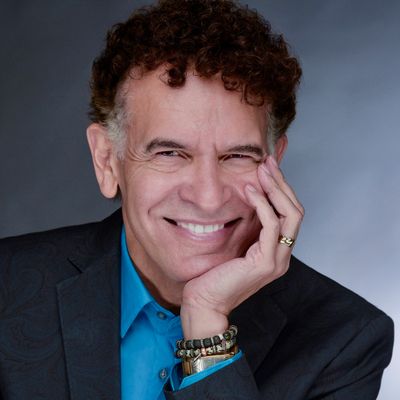
Brian Stokes Mitchell is a two-time Tony Award-winning actor who has always thought the universe chose him. Born on Halloween when “people dress up in costumes and pretend to be other people”, the stars have indeed decided... Read More
From the show: The Theatre Podcast with Alan Seales
Guests
Featured Shows

Videos
About
Brian Stokes Mitchell is a two-time Tony Award-winning actor who has always thought the universe chose him. Born on Halloween when “people dress up in costumes and pretend to be other people”, the stars have indeed decided. Aside from performing, he also writes, dances, produces his own music, and orchestrates, but out of all the things he can do, his best quality is being a really good student. He details his latest project, “HOPE”, realizing that sometimes creative works have their own timing - this video dropping exactly when we need to hear it the most. He presents a profound metaphor about life as a "long sentence" full of commas rather than periods, and what his “dead questions” are. With an upcoming role in “3 Summers of Lincoln” at the La Jolla Playhouse, he recounts how the project deeply resonated with him upon reading the script. Aside from all his projects, he always makes sure to give back to the community–from being chairman of the board for the Entertainment Community Fund for 19 years to providing entertainment from his balcony during the pandemic. Stokes shares how curiosity continues to motivate him, and why we should follow our heart in all our endeavors.
Brian Stokes Mitchell is a two-time Tony Award-winning, Drama Desk Award-winning, and Outer Critics Award winning actor. He is renowned for his powerful baritone voice and dynamic stage presence with standout performances in Broadway productions like “Ragtime”, “Kiss Me, Kate”, “Man of La Mancha”, and “Shuffle Along”. He's become a celebrated figure in musical theater, but beyond Broadway, he has showcased his talent on television, including shows like “Vampirina”, “Wolverine”, “Billions”, “Mr. Robot”, and of course, “Trapper John, M. D.” He's also recognized for his philanthropic work, particularly for his 19 years of serving as chairman of the board for the Entertainment Community Fund, and is a member of the Theater Hall of Fame since 2016.
Connect with Brian:
- Website: www.brianstokes.com
- Facebook: @bstokesmitchell
- Instagram: @brianstokesm
- Youtube: @brianstokesmitchell7280
- X: @bstokesmitchell
- Listen: Brian Stokes Mitchell - HOPE (feat. Jason Robert Brown)
- “3 Summers of Lincoln” at La Jolla Playhouse
- What’s Possible When the Arts Belong to Everybody | Lear deBessonet with Brian Stokes Mitchell | TED
Connect with The Theatre Podcast:
- Support the podcast on Patreon: Patreon.com/TheTheatrePodcast
- YouTube: YouTube.com/TheTheatrePodcast
- Threads, Twitter & Instagram: @theatre_podcast
- TikTok: @thetheatrepodcast
- Facebook.com/OfficialTheatrePodcast
- TheTheatrePodcast.com
- My personal Instagram: @alanseales
Transcript
This transcript was automatically generated and might contain errors.
[0:00] Brian Stokes Mitchell: Hi, I'm Brian Stokes Mitchell, and you're listening to The Theatre Podcast with Alan Seales.
[0:13] Alan Seales: Hey, everyone. Happy hot, hot August, if you're anywhere near me here in New York City, and welcome to another all-new episode of The Theatre Podcast. I'm your host, Alan Seales, and I am so thrilled to present this episode to you with the one and only Brian Stokes Mitchell, one of the most genuinely nice and caring individuals I've had the pleasure of working with. Again, another one of these people that embodies one of my most favorite pieces of advice that I've ever heard, which is, be the person they want to work with the next time. So, at one point in his younger life, he was thinking that he was going to be a marine biologist. But luckily, for us and for him, as he puts it, the universe chose him to give back through performing and through the arts, and he just continues to take it one step further by diving into one philanthropic cause after another, all while getting honorary doctorate degrees and winning Tony Awards.
You know, just a day in the life of Stokes. So, make sure to check out the show notes for links to watch his new music video called Hope, written by Jason Robert Brown. Find the link for his recent TED Talk, and also check out Three Summers of Lincoln, a new play he's starring in at the La Jolla Playhouse that was just announced. Find me online on the socials. Tag me and Stokes in your stories and let us know that you're listening, and now, everyone, please enjoy this episode with the one and only Brian Stokes Mitchell. Today's guest is someone I have respected in the industry for as long as I've ever known. You could perform on stage professionally. A two-time Tony Award-winning, Drama Desk Award-winning, and Outer Critics Award-winning actor, he is renowned for his powerful baritone voice and dynamic stage presence with standout performances in Broadway productions like Ragtime, Kiss Me, Kate, Man of La Mancha, and Shuffle Along.
He's become a celebrated figure in musical theater, but beyond Broadway, he has showcased his talent on television in shows like Vampirina, Wolverine, Billions, Mr. Robot, and, of course, Trapper John, M.D. He's also recognized for his philanthropic work, particularly for his 19 years of serving as chairman of the board for the Entertainment Community Fund. A member of the Theater Hall of Fame since 2016, I am honored to be sitting with this man right now, Brian Stokes Mitchell. Welcome to The Theatre Podcast.
[2:26] Brian Stokes Mitchell: Thank you for that beautiful and quick introduction. Now you're making me feel like I have to talk fast. That was really well done. Thank you. Sorry. I'm not good at monologues. I just run through it. I'm like, I want to talk to the speaker. You know what? There was one comment that someone made on a podcast episode years ago, and they were like, you wait too long to get to the guest. Get to the guest faster. And for whatever reason, that's been percolating in my subconscious, so I try to get through the intros fast.
[2:54] Brian Stokes Mitchell: Well, it's good, because when people intro me, by the way, I say, please don't say a whole lot. Just get through it quick, because half the audience or more already knows that information anyway. So I appreciate your speed and your elocution.
[3:09] Alan Seales: Well, listen, it's the stuff like the Hall of Fame and the chairman of the board of the Entertainment Community Fund. That's the stuff that's really impressive to me, because on top of this giant resume of credits and all of these awards, you've got a legacy that is impactful in a way that is philanthropic. It's not just on stage and winning awards for amazing performances. That is one pedestal that you are first place on. And then you've got first place on all these other pedestals, which actually, it's funny, because in my notes here, the icebreaker... I wrote it as a joke, but now it kind of makes sense. The icebreaker question, I was going to say, okay, coming out of the gate with the hard-hitting questions, how many doctorates do you actually have?
[3:53] Brian Stokes Mitchell: That's it. Well, now two. I have two doctorates, which is kind of amazing, I think, for somebody who never went to college.
[3:59] Alan Seales: Right. So you've honorary doctorates. Where are they from again?
[4:04] Brian Stokes Mitchell: So one is from Boston Conservatory, and the other is one I just received from Manhattan School of Music. I have to say, I was really, really, really honored and pleased to receive them because these are both schools that I really respect and that really understand, I think, what being an artist is and what it takes to be a musician and all of that. It's funny because I'm the youngest of four kids. My family, I think, always thought that I was nearly a straight-A student. So I was a fast track to college, and I'm the only one that didn't actually go to college. I went back later to UCLA to study film scoring and orchestration and conducting and arranging and all of that, but that was just through their extension courses.
I'm always studying. I'm always in class still, but I kind of get to pick my own teachers. I'm always studying with an acting coach, a singing coach. I still take whatever lessons that I need. People often ask me, what do you do best? You seem to do so many things. You write, you produce your own music, you orchestrate, you act, you sing, you dance. What do you think is your best quality? My best quality is I think I'm a really good student.
[5:18] Alan Seales: Oh, I love that. I love that. That is the best thing. Through all the years of talking with people and doing this podcast, that's one of the things that I truly have learned is that the best people in the business, the most talented, they don't ever stop learning. They're always in classes. They're always trying to better themselves. I think it's funny, and we'll get into this later, but the reason you and I connected in the first place was over technology, which I think is completely cool in and of itself because you and I have this side love, this side obsession over technology. We'll tell the listeners we were nerding out before this discussion.
[5:59] Brian Stokes Mitchell: Oh, it was so nerding out. One of my favorite conversations I had with somebody was talking string theory, but that's a separate thing.
[6:05] Alan Seales: Hey, we'll talk about that too because I love that as well. We're going off already on so many tangents. People have asked me, what would you do if you weren't an actor? And you know what my answer always has been? I would be a theoretical physicist. I love string theory, M-theory, astrophysics and all of that. I'm totally into that.
[6:28] Brian Stokes Mitchell: Oh, we could totally nerd out. We're going to have to have definitely like a private lunch where we can just go into all these crazy details. Oh, my God. Calculating the edge of the universe is – I love this. Okay. But we digress.
[6:37] Alan Seales: But we digress. So you were born in Seattle. You said you were youngest of four then, right? So you were born on Halloween, right? Did I read that right?
[6:49] Brian Stokes Mitchell: Yes, Halloween. Yeah, a day when people dress up in costumes and pretend to be other people. What else could I have done with my life? Born in Seattle. So then like if you were when you were a kid, you were doing – you said you were a straight-A student or almost straight-A student, really good at academics. But where did the performing, the singing come into your life when you were a kid?
[7:11] Brian Stokes Mitchell: Well, my parents tell me, my family tells me I was singing almost before I was talking. My brother John who was the second youngest, I replaced him unfortunately when I was born. He passed away a number of years ago unfortunately but he and I were like twins and he kind of raised me and he was one of the most brilliant people I've ever known. He was a brilliant wit. He was incredibly funny. He was an electronics engineer. He built theremins and synthesizers. He could sing. He could sculpt. He's one of these rare people that his brain seemed to be wired for sound and for visuals as well. He could paint. He could write poetry. I mean he was just really, really amazing. So he was the one that I remember.
We would sing together. We had a duet that we called the Charlton Brothers. I don't know why but that was what we called ourselves. But we would sing songs and we would sing songs in harmony. I remember singing harmony and it wasn't until relatively recently that I realized, wait, I was singing like harmony when I was three or four years old. What was most amazing about that to me was that my brother John who was six at the time taught me how to do that. I thought, how did he know that? So I consider him my god of many things because he taught me so many things and gave me a lot of misinformation about the world as well like older brothers tend to do. So I started singing and then when I was six years old, I asked my parents who were living overseas for an organ, they said.
I don't remember asking them for an organ. It must be because I heard it in church and I liked the sound of it and they got me a fan organ. I don't know where they found this in Guam or how they had this shipped out. The moment I sat down at it, I was transfixed. I sat down at it every day and other versions of pianos and other keyboard instruments probably every single day unless I was deathly ill up until I was probably 18, 19, 20 years old. I just played it. I was obsessed with it and what I first was obsessed with I found was I really have a great ear and that's how I still prefer to play by ear. I learned to read music and everything as well. But what I realized I loved about it, I would sit down for hours with this instrument and just put different combinations of keys together and I was entranced and fascinated by the way they made me feel.
Different note sounds, you know, like now I know what a major chord is feels solid, you know, just, you know, a regular like C major. It feels very solid and just, you know, it's sure it's arrived. And then there are other chords, you know, a C major seven, for instance, it's got a little sadness to it, but it's not so sad that it makes you sad. It's kind of a beautiful sadness. You know, every chord has its own thing. A minor chord then makes you feel sad when you make it a minor. And I was, I discovered these things for myself. It wasn't until about four or five years later that I discovered that there was something called chords that had already been invented. And I went, Oh my God, why didn't anybody teach me that?
Because I was learning piano by note, like you always learn it. And I thought, why didn't anybody ever teach me that before? This I know this, this is so instinctive. And you see the music and the lead line, and then you get to make up your own accompaniment. That was so much fun. So, um, so that's how I got involved in, in, in music. And then my, uh, acting started when we moved back to the United States to San Diego. And, um, uh, that's when I started studying acting, my brothers were involved in that. And my place was always music. I was playing the piano or the trombone in the pit orchestras usually. And, um, and when we got back to the States, I no longer had that fraternal competition in the schools anymore.
I was in a junior high school. My brother, John was to not senior high school. My old older brother, George had already graduated and he was the real thespian of the family and the actor. He ended up becoming a costume designer, a really brilliant one. And, uh, but I didn't have that fraternal competition anymore. So they asked me, what do you want to take for your elective? Do you want to take a chorus or band or drama? And by that point I was tired of chorus and band. And I thought, well, let me talk, try drama. That'll be something new. And my first scene in Kathleen Lund's acting class in the ninth grade that I reflected on many years later, and I'll tell that story later on, but I don't want to go off on too many tangents because I've already gone off on 50.
My first scene in Kathleen Lund's ninth grade acting class was good morrow, Kate, for that's your name I hear from the taming of the shrew. And I realized that when I was watching a bunch of kids perform on the stage where I was doing Kiss Me, Kate, and I just won the Tony Award for doing that. I went, I watched a kid literally come on stage and do that was for a competition that the city had. And he started that speech and I went, Oh my God, that's the first speech that I ever learned in acting class. And here I am sitting in my own Broadway theater where I'm doing that speech every single night after having won a Tony Award, isn't the universe strange and wonderful.
[12:20] Alan Seales: Oh my gosh, that's a lovely full circle moment. That is so cool. I love how people make whole careers out of just seemingly insignificant decisions like that. You're like, I already did that for a little bit. All right, I'm going to go try drama. And then you fell into it in a way that obviously it spoke to you inside. And I think there's something larger to this. I want to kind of pull back the layers and figure out what this is, because when you're a kid making chords, thinking about how this music makes you feel, you're already in this empathetic mode. You're already in this emotional state of receiving, I guess, what the fundamental purpose of storytelling is, right? It's to make you feel something, to make you go horny.
And then you add the drama, you add the spoken word on top of it. And it's kind of like icing on the cake. Have you ever looked back to figure out what it is about you, about Stokes, that really needs to have this in your life? What is it about your fiber, your being?
[13:23] Brian Stokes Mitchell: Well, it's funny, because all through high school, even when I was doing it, I was doing it at San Diego Junior Theater down there. And my first role in a musical was Conrad Birdie in Bye Bye Birdie. It was the first time that I heard an audience and felt an audience respond in a kind of mighty way. And it was like, I could literally feel the energy going through me. And I remember thinking, oh, maybe I have something here. Because I wasn't considering being an actor. I thought my dad worked for Scripps Institute of Oceanography. So I thought, I'll be a marine biologist. I love science. I'm a big science nerd. And I love the ocean. I was raised around the ocean. I learned to swim in the ocean.
And hearing my dad's tales, you know, scripts and everything as well, I thought that would be a fun thing to do. Or I had other ideas, you know. Or maybe I'd be a musician. Maybe I would be a jazz session player. Or maybe I would, you know, be a session singer for commercials or something like that. But I really wasn't thinking that I would be on Broadway as a career. And then it just chose me. I was working at the Globe professionally before I graduated from high school. And then I literally went out. I never had to do anything else. I graduated. And somebody called me and said, hey, I'm starting a children's repertory company. You know, I'm artistic director of it. Do you want to join it? I said, yes. That's where I got my equity card. I moved up to Los Angeles. I never had to wait tables. I never had to do anything. I've always made my money acting.
[14:46] Brian Stokes Mitchell: My parents, I feel like kind of an answer to your question. I almost feel like the universe chose me to do it. It kept saying, here's something like offering it on a plate to me. Here, take this, eat. And then I would eat, and take this and eat, and I would eat. And just one thing led to another. And it just has seemed like I didn't make it happen. I always worked really hard. And I think maybe that's why the universe said, oh, let's keep an eye on him. He's really working hard at this, and he keeps learning more, and he keeps trying to do better. I don't know. That's one of those mysteries of life that we'll find out when we die. I have something I call dead questions. I've been working on a one-man show, and it's part of what the one-man show that I'm working on, too, is dead questions.
And what dead questions are, my conceit, and here I go off on another tangent, my conceit is that they say when you die and you go through this tunnel of light, and then you meet somebody, and your life is reviewed, and then you go off or whatever, and there's all these different theories of that. The ancient pharaohs said your heart is weighed against a feather and all these things like that. So my conceit is that you die and you get to this place, and yeah, you get to review your life and everything with this other very advanced being. But as you're reviewing your life, you also get to say, wait, hold on. I have a question about that. So when you see something like, okay, I was watching something about Sasquatch.
Hey, stop. Hey, okay, so is there a Sasquatch? That's a dead question. Are there really UFOs? That's a dead question. Why did so-and-so not like me in high school? That's a dead question. You can literally stop your life anytime and ask this higher being. It's the director's commentary of the replay of your own life. Exactly. Yes, exactly. And you can ask infinite questions because there's infinite time. There's no time. So I call them dead questions. Pretty much every day I get a dead question. Oh, yeah. So because my thought is, as I'm reviewing my life, I'll get to this moment where I went, oh yeah, what about this? And then I'll go, oh, okay, stop, stop. Okay, I wanted to ask that question when I was alive.
That's my dead question. So yeah, so that's one of my dead questions would be also, so why did I get so lucky? Why was that my life? Why, with so many other people trying it, what was it? I must've done something good. I don't know what it was, but that'll definitely be a dead question for me.
[17:17] Alan Seales: Don't go anywhere. We'll be right back after this break. Welcome back to the episode. What I was going to say was that black hole's not the right connotation. You are a power source of knowledge. You're always sucking in knowledge. And I think what that turns into, your input is knowledge, your output is philanthropy and trying to leave a positive trail of energy behind you. And that's what I want to quickly shift over to Entertainment Community Fund, like serving on the board of something that is made to literally help actors when they need help the most or help the Entertainment Community Fund, as is the name now. Yeah, thank you. 19 years, you were a chairman of the board for this thing and led it through multiple writer strikes, which the 07-08 writer strike, by the way, was what got me to New York and got me into tech because there was nothing to audition for at that time. And then that led me to Google. So that was my choice through all of that. So it's funny how those little things work, right?
[18:27] Brian Stokes Mitchell: Yeah. Like we're saying, that'll be one of your dead questions.
[18:30] Alan Seales: Yeah, one of my dead questions of like, why did I get into tech and not Broadway? I don't know. Well, here I am doing both.
[18:34] Brian Stokes Mitchell: Yeah, tech Broadway, exactly. So for me on the outside, it depends on what I'm tuned into. Am I tuned into awards? Am I tuned into performances? Or am I tuned into the business? And like me personally, literally, Alan, I'm tuned into both. So I know you from kind of both sides. I know of you from both sides. But for you, for Stokes, with all the work, you've got tons of TV, tons of Broadway, all these awards, all this stuff, but you're always trying to learn. You're an orchestrator. You're an author. And we can get into children's book stuff too. You're learning to fly, I think, if you don't already have your pilots.
[19:16] Brian Stokes Mitchell: No, I've learned to fly in my 20s. Yeah.
[19:18] Alan Seales: Oh, all right. So you've always got this stuff going on. You're always wanting to learn and bring it all together. But then why make the time? Why is it important to you to give back to the community and try to lead positively like this? Because it's a lot of work. It's its own full-time job on top of the other full-time jobs you've got.
[19:35] Brian Stokes Mitchell: Well, that's a great question, by the way. And I mean, the short answer to it is, I've been so blessed in my life. And I call it the universe, just this kind of a generic name. Anybody can apply whatever name for God that they worship or would like to say.
[19:57] Alan Seales: Death question recipient.
[19:59] Brian Stokes Mitchell: Yes. But I call it the universe. When the universe is so good to you and asks you, hey, can you help out with this? You say yes. And that's what I feel. I feel I've been so blessed and have had so many wonderful just happenings and things. And, you know, you were talking about that full circle moment with Kiss Me, Kate. I have dozens of those in my life. It's like so bizarre and wonderful. And I'm very aware that there it almost feels like there's something special that's watching over me. And so that same voice that is responsible for those things, I also feel is the one that's talking to me saying, hey, how about doing this? And Joe Benincasa approached me, who's the president and CEO of it, a number of years ago.
I was already on the board for six years before that. And they asked me if I would consider. I said, no, I'm about to have a kid. I can't possibly do it. And, you know, I'm working. I'm already doing it. I'm starting another show. And I said, Joe, I want to make sure I would be good for the fund. I said, how long is the term? He said, the term's three years. I said, three years. I can't do three years. Let's do this. Let's after one year, I'll say yes. And let's have a meeting with each other because I want to make sure I don't just want to be it by name. I want to really be useful and really do the work. And let's have a meeting and have a sit down. And you and I talk is like, am I giving you what you need, you know, and is this, you know, what I was hoping it would be as well.
And then 19 years later, I stepped down. So, you know, you know, the answer to that question. And Joe Benincasa, by the way, and that staff there, it's a remarkable organization. And they're the reason that I stayed so long. I was actually going to leave three years ago. And that's when there was word of this strange disease that seemed to be going around the world. And that was right before COVID. And I thought this would be the worst time ever to leave. I'm glad I didn't leave. And I said, I'll see this one through at least. And I said that I felt like the last at that point, about 140 years that the Actors Fund, then, you know, as it was first started, it felt like it was a dress rehearsal for when we hit the pandemic, because so many people were in need.
So many people are in dire straits, and the fund was ready for them. And that's Joe Benincasa and that incredible staff, Barbara Davis and Tom Exton, everybody over there, and Jordan Stroll at the Actors Fund home, and the people at the health clinic, the Friedman Health Clinic, everybody was on top of it and ready to change and help immediately. And that's the hook that got set into my cheek early on, because I saw this was one of those kinds of organizations, the money is used very well. It's like 87 cents, I think, of every dollar, always rated five stars on, I think, Fiverr, or whatever the highest stars are in Charity Navigator. And we always get the highest ratings for everything. And that's just because of Joe Benincasa, that incredible staff, and an incredible board as well.
So the longer answer than this long answer already is, I was also born in a family of service. My dad and my mother were both always giving. My mother was a teacher, always in different organizations. She volunteered. She was actually the first Black policewoman in Seattle, Washington, because the NAACP asked her if she would do that, because there were no Black policewomen. And they said, this will break the ceiling for other people to join. That was in 1955 or 56, I think. The next Black policewoman, unfortunately, wasn't until like 1975. So yeah, I think she would have been very disappointed to hear that. But she did that. And my mother was the exact opposite of what you would ever think of as a policewoman, or somebody being in that service.
And back then, they carried the guns in the purses, and they didn't wear uniforms. And it was a very different kind of look than it is now. But she always dedicated herself to service. She was in a number of women's groups, the links, and a lot of other groups that were service groups. And my father was actually one of the Tuskegee Airmen. Originally, he taught radio code and blinker code. He didn't fly, but he flew with the pilots. And this was when it just started. And the Tuskegee Airmen became a corporation that also gave out scholarships. And he was always incredibly active throughout all of his, up to his death at the age of 92, with that organization and with other organizations. So service was always a part of my family.
It's just what we did. And it wasn't talked about, or they didn't say, you have to do service. It's just, I saw it. I saw what they were doing, and I saw how they were affecting people. And that kind of thing rubs off on you. So that's where, that's the organic place that came from.
[24:35] Alan Seales: You have to be like, some sort of eternal optimist, I think, to be okay with that sort of thing. Because everyone, there's so much complaint, there's so much people take advantage of others who are giving like that. But then through it all, there's always the people who genuinely need the help and genuinely appreciate it. And going back to during COVID, you very famously were giving concerts out of your window, because you wanted to help. And then I think you had to stop, because also to help, you had to stop, because you were causing too much crowd outside or something.
[25:10] Brian Stokes Mitchell: Oh my God, it got to be crazy. Yes, that idea. We can get into that story now or later or not at all. But yes, it was, I realized during, I was just going to do it as a one-off. This was during COVID. I literally had just recovered from COVID when this started. And I was sitting, laying in my bed, recovering. And one night I heard all this noise coming from the front of our living room. And then my wife kind of stuck her head in with her mask on, the door just cracked just a little bit. And I said, what's going on out there? She said, oh, it's this great thing New York started, seven o'clock every evening, everybody just stops what they're doing. They're banging the pots.
[25:49] Brian Stokes Mitchell: If you're in your windows and you clap and you scream and you yell, or you stop your car and you honk your horn, if you're on the street, you just stop and cheer. And I thought, oh, I can't wait to do that. I finally was getting better and better. And I could feel this disease moving all around my body. The last place it started moving was in my lungs, but I think I had enough antibodies built up. So it didn't really take hold there. It hit every place else in my body. It's the worst thing I'd ever had in my life.
[26:12] Alan Seales: Were you pre-vaccine?
[26:14] Brian Stokes Mitchell: That was before vaccine. I was one of the first people, this is March of 2020. I was one of the first people I knew that had it. The only other person I knew that had it was Terrence McNally, who had just died of it. And all I was hearing on the news was all these people are dying and they're setting up all these refrigerated trucks in Manhattan and they're getting ready for this surge to come in because it hadn't really started. It was like, well, lucky me. How did I get to be one of the first ones? And Danny Burstyn around that time also had it and a few other friends of mine. I think Gavin Creel, maybe it was, also had it. But I started finding a few other people that had it. So I would come into the room that I'm actually in right now.
This is my recording studio as well. And I would just vocalize to kind of check my lungs out to see how everything was every day. And I started singing along a lot. And then at one point we went to the windows because our apartment overlooks Broadway, you know, and I was able to join my son and my wife and we took each separate windows and I was yelling and screaming and clapping. And then one day I just felt, I think I can sing. And after the applause died down for the crowd, I just started singing spontaneously, The Impossible Dream. And people like stopped on the street. I could see them looking around like, who's singing? What's going on? And then he looked up and they saw me and I could see a smile on their face and they started clapping, you know, and I thought, oh, great.
Fantastic. That was my way of saying thank you to Dr. Jason Kent, you know, at the Actors Fund at that time who helped me through on the phone and all the other essential workers as well. Next day comes, I'm not going to sing. You know, it was a one-off, I'm thinking. I'm at the window and I'm clapping for everybody. I look down and there's a whole lot more people on the street.
[27:52] Brian Stokes Mitchell: Even day two, there were already more people. Yes. Yes. And I'm seeing them clapping for everybody, but they're also kind of glancing up at my window as they're doing it. And I'm thinking, no, that was a one-off. I'm not going to do it again. And so I thought, great. All the applause started dying down for everybody. And I reached up to start closing my window and I heard from the street, sing the song, as only a New Yorker can say. So I sang it again. And then it just became a nightly thing. And it got to the point where literally on the weekends, probably close to a thousand people would come. It was got crazy because it went viral and all the news started covering it. It was really crazy.
Seven days into it, I was going to stop singing because I thought now I feel like people are coming to hear me sing and they're not coming to clap for the essential workers. This doesn't feel right anymore. So I thought I'm going to stop singing. And that the day I decided that I went into a market that's about a half a block away from me. And before I got in the door, I felt this tap on my shoulder. I hear Mr. Mitchell, Mr. Mitchell. And I turned around and there's this guy standing there that I never saw. He said, excuse me, I'm sorry to bother you. You don't know me. I'm a neighbor. I live across the street from you. And he started getting emotional as he's talking. He said, I just wanted to stop you and say thank you.
I come out every night with my wife and my two sons and we come out and we clap for the essential workers. But we also come out to hear you sing. It's the one time in my day I feel joy. Oh, and I went, oh, and I forgot, you know, I think as performers, we sometimes forget what we do.
[29:32] Brian Stokes Mitchell: An effect on people, an emotional effect on people. It's kind of what you're talking about, that storytelling, that feeling thing that you're talking about. And I wasn't thinking about that. I wasn't thinking, oh, people were gathering on the street because they were able to feel something. They were able to hear a live performer. Broadway was closed. There was no live performance. Everything was closed. And this was one opportunity for them to hear a live performance, doing this bespoke performance for them, just in that one time and space, just like the theatre does, and give them something, and then they could leave. And I realized, oh, that's why people are doing this. And that became actually an extra added goal in my life, in my mind.
I realized, oh, I can kind of reconnect people, help reconnect people to their center space, to their joy space, to their happy space, to their hope space, to the positive space, even with all this crap going on around them in the world. It was an opportunity to do that. So for the next two and a half months, I did it. But then it got crazy. The cops would actually come up and stop traffic right before I started singing. It started getting crazy. And because we're overlooking Broadway, I'm watching when I start singing, I'm watching people run across the street while they're looking at me, and I'm watching people in cars driving and looking up at me, and I'm thinking, oh, this is not going to be good.
I'm going to see somebody get hit by a car while I'm singing this song. This is not good. And one day, there was a cop parked on the street before the seven o'clock hour, and I knocked on his window, and this window goes down, and it says, young cop. And he says, yeah, yeah, what do you want? And I say, hey, how are you? I'm the guy that sings out the window every night. He says, oh, you're a guy. And I say, you're a guy. It was literally like that. It was just classic Staten Island kind of cop. It was just great. And I said, yeah, I'm the guy. And I was getting concerned because of all the traffic. He said, oh, yeah, yeah. Well, actually, I came down here to break this up. My boss told me to break this up.
I said, oh, why is that? Well, we can't keep you from singing from the window. We love you singing from out the window. We can't stop you from doing that. But nobody's social distancing. Everybody was, like I said, it was close to probably 1,000 people, and nobody's thinking six feet apart at that point. And so that night, he actually came to tell the crowd not to be there. So that was the last night that I sang. And I announced from the window that, you know, and thanks for the cops. I said, yeah, I said to him, I'm doing this for you, too. You're one of those essential workers. You know, I'm not trying to make your life hard. I'm trying to make it more easy. I said, what would help you? What would help that happen?
He said, don't sing out the window. And that's when I decided, OK, I'll stop tonight. And then I went to hospitals and sang at some of the hospitals. You know, a lot of people were doing that as well, which was really fun. And thank God, because I was thinking, how am I going to stop singing out my window? I mean, these crowds keep getting bigger and bigger. Am I going to be doing this for the rest of my life? But it was just ironic that I felt I was singing on Broadway every single night, and nobody else was singing on Broadway. You know, all of my other friends working in the crew, working the backstage, you know, front of house, in the orchestras, everybody was at home, you know, waiting to wonder when this thing was going to be over.
[32:46] Alan Seales: Don't go anywhere. We'll be right back after this break.
[32:53] Alan Seales: Welcome back to the episode. And I don't know if you remember all the signs. Hey, we'll see you in two weeks.
[32:56] Brian Stokes Mitchell: Yeah, it was a two-week shutdown. I remember when Moulin Rouge was the first to get hit, that spread through the company. And then everyone was like, oh, yeah, we're going to shut down for two weeks and everything's going to be fine.
[33:09] Alan Seales: Yeah. No, no, no. Three weeks. Yeah, that was interesting.
[33:14] Brian Stokes Mitchell: That was something. Yeah. So well, I don't remember where your question was, but I hope I answered it in that long.
[33:17] Alan Seales: I don't remember my question was either. I've already got my next transition queued up, too, because I started tearing up when you were telling the story and which reminded me of my comment I left on your video. I'm not crying.
[33:33] Brian Stokes Mitchell: Thank you for leaving. I want to talk about hope for a second.
[33:36] ♪ Musical number: "Hope" — performed by Brian Stokes Mitchell ♪
[34:22] Alan Seales: Did you write the song?
[34:24] Brian Stokes Mitchell: No, this song was written by Jason Robert Brown.
[34:26] Alan Seales: Yeah, he's playing in the video.
[34:28] Brian Stokes Mitchell: Yes. And that's why I asked him to play as well. And when I first heard this song, I mean, the world has been like crazy. And, you know, it's like I feel like every day my head was going to explode from some new crazy, crazy ass shit that was going on in the world that was making me think what is happening here. And I could just feel my spirit getting darker and, you know, and feeling more and more hopeless. And then I just happened to come across him doing this song on a video from the where was it, the Library of Congress. And I went, oh, that's the song that I need right now. And so I started performing the song. I figured I need the song. Other people might need the song. And I started performing the song in concert and I could feel other people also responding the same way.
Oh, that's the song I need right now, because there was no matter what when you turn on the television, something was happening in the government, in local, in politics, in the world, in somewhere. Everything was falling apart, it seemed like. And so I decided, actually, this was actually after the Israel Palestine whole thing started, the kidnappings started, and then the Palestine, you know, the bombings there started. And I thought, oh, this is awful. One more thing. It's like making me go, whoa, what's happening? You know, it's just a terrible situation that that people are just in, you know, and like, I think of the everyday people that are just trying to live their lives and live in peace with their families and all of that.
And then there were other things going on there. Of course, there's, you know, mass shootings and all of this that happen are happening now multiple times a day. They don't even make the news anymore. They're, you know, they're so common, so common. Yeah. And all this dysfunction in politics and all nobody's talking to each other and all this divisiveness going on. So and also I have friends, you know, I have friends that are dealing with illnesses or, you know, suicidal tendencies or they have family members or people that committed suicide because they're feeling so down. And I thought, what what's a song I could record that's going to be good for everybody? I didn't want it to be, you know, partisan.
I didn't want anybody to feel like this was not about them. This is we all need this. You know, I may even disagree with your point of view, you know, or what you believe or what you think. And but, you know, what we all need, we're just human beings living on the planet, trying to get along, trying to survive, trying to raise our families if we have them, trying to live in peace, you know, trying to get to the next day. And that's one of the things we have in common. And I really do think we have much more in common than we have not in common with each other. And I love to sit down with people in places that I would think, oh, I don't I would never talk to these people at all and always have the most amazing conversations with them.
And you realize, oh, everybody's pretty much the same. And that's why I wanted to make a song for everybody. And I wanted to put it on the Internet so people could share it with their friends who are also going through these terrible things or going through illness or going through, you know, these feelings of depression or, you know, or helplessness and whatever it might be. So that's why I recorded it. And I asked Jason, I said, hey, Jason, have this crazy idea. I want to do this this song since you wrote it. Hey, would you like to play piano? And I said, I just want to kind of have it so it's available for people to share with everybody. And YouTube technology is one of those amazing things that allows us to do it now.
And he said, yeah, I love that idea. I'll come and do it. And then my friend Dorie Bernstein, who you know as well, I told her the idea and I said, Dorie, because she had done an amazing documentary of the concert version of Ragtime we did. And that concert version will be released sometime soon. We're still working on that for everybody to see. And the fund is still working on that. And then Dorie did this follow up documentary of it. And she had a great crew. And I thought, I want to hire some of her crew for this. And I told her the idea that I had, you know, and I just want to give it away. It's a song about hope. She said, I love that idea. I want to be a part of it. Now get the crew. And I want to do that for you.
I said, oh, OK. And then I needed a place. And Jason is a Yamaha piano artist. We were going to use the Yamaha to have a place on Fifth Avenue. But it was the day before Thanksgiving. Fifth Avenue was closed because of the parade. So we can't shoot it there now. And I was thinking, oh, what am I going to do? And I called my friend, Phil Bursch, who owns Playbill. He's an old, old friend of mine. And I actually didn't call him. We meet for lunch every like once a week, practically. And I was just telling him, you know, hey, so I'm doing this crazy. I had this idea of this video. But all the studios seem to be booked. And, you know, I don't know where to find any like a house, you know, just a nice room with a piano.
He said, I have a nice room with a piano. I thought I totally forgot about that. I wasn't even thinking about Phil in his house. And so he said, hey, I'll give you, you know, come come up and do it here. And it was the day before Thanksgiving. They're trying to get ready for Thanksgiving. It became this wonderful grassroots thing. Isaiah Abilene, who is a wonderful mixing engineer, he mixed my album, plays with music and mixes most everything on Broadway now. He's just a brilliant, brilliant engineer. And I took it to him. And then he he said he didn't want to charge me for it. I said, I say I want to pay. He said, no, no, I want I want to be a part of this, too. It's become this incredible thing that people just want to they want they want to be a part of it.
And that's why I feel so blessed that I've had all of these incredible human beings that just also want to give hope to people in the world and do the same thing. And that's what I love about show business and what we do. It's like, you know, the actors and the singers and the performers get all the credit. Man, we're supported by the crew, the orchestra, the backstage, you know, stage management and company management and and the theater owners, everybody, people that you don't see. What I love about the theaters is collaboration, incredible collaboration of all of these people from disparate parties, from disparate parts of the world and from speaking sometimes different languages, the different religions, all of these differences.
And we all come together for a common goal to put on a show, this impossibly hard thing to do. And we all work together. And by some miracle, it happens. And I think it's just one of the great examples of what can be accomplished by human beings when we just sit down and talk to each other and decide, let's cooperate, let's collaborate. We can do amazing things together, you know, whether it's change anything, you know, curing diseases, helping the government. I mean, all of these things. I mean, if we just sit down and talk to each other. So that's become part of that goal in my life as I want to connect people, because that's the other thing I realized singing out the window. I was watching all of these connections happening, people just feeling, oh, my God, I'm not alone in the world.
I'm feeling that, too. And just being around other people that feel that. And that's what happened in the theater. When you're in a live theater performance, I remember seeing Come From Away. And this was shortly after 9-11. And I remember thinking, oh, this is exactly the show that I need right now. And I was sitting in the audience and looking around and I could see the audience was also thinking, oh, this is exactly the show that I need right now. And it's a connection. There's an empathy that happens. You're kind of with your tribe and with people and you don't know where they're from or what they believe or, you know, who they like or don't like or, you know, what their experiences have.
But you're all sitting experiencing something that is profound and beautiful. And that's the joy. That's what art can do. And what I love about art particularly is it has the ability to change people in one epiphanal moment. You can leave a theater a different person than you were when you walked in. You can leave a museum after seeing one painting perhaps and go, I thought I was the only person that thought that, that felt that. And you're changed. You can hear a beautiful piece of music or something that somebody wrote on the radio that you hear and your life is never the same again. And art is one of the few things that can do that, change people in a positive way. It's almost always, almost always, I'll just say always because I can't think of examples when it's not, for the positive, you know, war, pestilence, famine, you know, there are other things that can also change people's lives in one epiphanal moment.
And, you know, they're never the same way again, but it's in a negative way. And art has this incredible positive ability to lift people, to make people more hopeful, to make people more connected. And that's what I feel, you know, that's what I kind of dedicated my life to. And I've said to the universe, hey, use me for that in whatever way I can do it. You know, I'm happy to help out because you've been so good to me. So, and to get together on this video with other people, like-minded people who feel the same way, it's just been really, really beautiful.
[43:06] Alan Seales: That's gorgeous. One of the things I enjoy, going back to technology, is YouTube makes automatic transcriptions for English and in a couple other languages. So, I turned on the transcriptions, the auto-English transcription, so I could see the lyrics while you were singing. And that was so cool because it allowed me to connect. I was literally reading what you were saying as you were singing it. And it got me to a place where I was like, oh, God, this is exactly what I need. Because, I mean, as we're recording this, this is the week that Kamala is probably going to get the Democratic nomination, right? So, stuff is happening in politics, and we need a lot of hope, and stuff is going really wrong in the world right now. And so, that song hit me last night in a way that I needed.
[43:57] Brian Stokes Mitchell: Oh, thank you, Alan. Literally last week, I chose a date, I said, because I had a TED Talk that also was released on Monday the 22nd with Lear de Bessonnet, which was also about hope and, you know, the same kind of thing. And I thought I should have my video come out around the same time. And so, that's why I released it, not knowing that the day before that President Joe
[44:50] Brian Stokes Mitchell: It was supposed to be. That's another dead question. Why did... Yes. Why did... Well, I guess we have the answer why did it take so long, but this is... Yeah. Yeah. Yeah. Yeah. Well, maybe, you know, or maybe not, because we still have much to find out. You know, I like to think of life as one long sentence, but not like a prison sentence, like a word sentence, you know. And I like to think that it's full of commas. And with every comma, your life can make a total left turn. You can go in a totally new direction. And then I did so and so and such and such, comma, and then this happened, you know, comma, comma. And then I moved from Google and became a podcaster. And then, you know, whatever it is, everybody has all of these commas in your life.
And there's no period until you're dead. That's when the period is. And then you can look at a whole life sentence, somebody's life sentence. Then you can say, oh, that's what this person's life was about. But until then, it's all commas. It's all possibility. There's all these other different directions. Each one of us can go. Nobody. It's not mapped out. It's for each individual person who's the only person living in their skin in this one long take. It's for each of us to decide and how you want to what you want to do with those commas and where you want to place those commas, you know, because where the period comes, we don't know. But where the commas come, that's going to be up to you.
So so I that's that's what I do with the way that I look at look at look at life. And, you know, I all of these comments have been so interesting in my life. And I'm sure as listeners and you, you know, we're thinking about it's like, oh, yeah, because everybody's life takes these turns that you just don't expect and take you to sometimes incredibly wonderful places to.
[46:29] Alan Seales: Oh, I love that metaphor. That is. That's very beautiful. OK. Tell me real quick about Three Summers of Lincoln.
[46:33] Brian Stokes Mitchell: Three Summers of Lincoln. This OK, Three Summers of Lincoln is a show that I'm about to start at La Jolla Playhouse. Every so often people ask me, hey, when are you doing your next show? And you know, I get lots of scripts and people asking me to do shows pretty much every year. But doing eight shows a week is really hard. And I've been spoiled doing concerts now and doing television and film. And I really love doing those as well. And it's like, well, I really want to do eight shows a week, really, right now. So my stock answer has been, well, when the right show comes along. And so I got a call from Daniel J. Watts and he said, hey, can I talk to you about something? I said, yeah. He said, come out to dinner.
Let's go to dinner. And I might have somebody else with me. I want to tell you about a show I'm working on. OK, here we go again. Somebody tell me about a show they're working on. So I said, yeah, because I love Daniel J. Watts and he's a friend. And so I go out and it's him and Chris Ashley is there, also a friend and director that I've worked with. I did a show with Todd with him down in D.C. and he directed Come From Away, by the way. So they proceed to tell me the show that they're doing, three shows of Lincoln is a book by Joe DiPietro. And they're explaining it's about, you know, the three summers Lincoln spent at the the army home. And this was during the Civil War. He was trying to figure out what was going on.
They thought the Civil War would be like 90 days and long. And it was already more than a year at this point. And it just kept getting worse and worse. And the country was incredibly divided and nobody was talking to each other. And there were all of these problems that are kind of parallel to the same thing that we're going through now. And so he explained that. I thought, OK, this sounds kind of interesting. And it's about also Abraham Lincoln and Frederick Douglass together and their relationship, because they had three meetings and they were very affected by each other, the writings of each other and everything as well. And then at the end, he said, oh, yeah, by the way, we want you to play Lincoln.
And I thought, oh, OK, this is really getting fascinating now. I said, send me the script. Crystal Monet Hall did the music. And so she had done some demos of it. I said, send me the demo so I can listen to the demos as well. And so I got the script, you know, a few days later and I sat down. I'm reading the script, listening to her demos, reading the script, listening to demos, reading script, listening to demos, get to the last page, close the book. And I said, crap, shit, ah, damn it. This is the one. This is. Damn it. And I just knew that little thing that goes off in me all the time and I've learned to trust. It went off during ragtime. It's gone off. I mean, from when I was doing Bye Bye Birdie, when I was a little kid, I could feel that thing.
That's what I felt going off in me. And that went off again and said, this is I'm supposed to do this. And it's a really great story. Incredible music. Great lyrics. The team is fantastic. We've done three workshops. It keeps getting better and better. It started great and keeps getting better and better. I am so excited about it because also it speaks to exactly what we're going through now. And also Abraham Lincoln, what an amazing human being he was. Joe DiPietro first didn't want to write it when he was approached to do this project. And he called Doris Kearns Goodwin, who wrote that amazing Team of Rivals book. And it's a great authority on Lincoln. And he said, Doris, you know, somebody asked me to do the show about Lincoln.
Everybody knows everything about Lincoln. What can I write about Lincoln? I believe, by the way, this is me talking now, next to the Bible, there are more words written about Lincoln than anything else. It's like everybody's written about it. It's kind of incredible. And he said, everybody's read about him. Everybody's done everything, you know. And Doris Kearns Goodwin said, and I might be paraphrasing a bit. She said, you know what? Let me tell you something. You should do it. Why should I do it? He says, whenever you have a chance to work with Lincoln, anybody who does that comes away a better person. I thought, oh, wow, that's beautiful. And that hit him. And he wrote this incredible script with some new information that I never knew before, and a new way of looking at it.
And it's positive, and it's uplifting, and it's hopeful. And it's all the things that I want to be as well. It's like, here's my tribe again. And we get to do this something together. We get to do this wonderful collaboration and put some good food, some good energy into the world. So that's January at the La Jolla Playhouse. I think the performances start February 18th. And you can get tickets now, I think, if you're a subscriber. And they'll go on sale later on in the year for those that aren't. But it's me and Quentin Darrington, who was Cole House in the last revival of Ragtime, by the way. And he's just amazing. And Carmen Cusack is-
[51:18] Alan Seales: I love Q.
[51:19] Brian Stokes Mitchell: Oh, me too. He's one of my new favorite people in the world. And Eric Anderson is George McClellan. He's doing Great Gatsby right now. It's an incredible cast. It's just, I can't tell you how excited. I haven't been this excited about a musical since Ragtime, honestly.
[51:36] Alan Seales: That's going to be good. Well, in the show notes, we'll put links to Hope. We'll put links to Three Summers of Lincoln. We'll put links to TED Talk.
[51:48] Brian Stokes Mitchell: Yeah, we'll get everything in there. As we wrap up here, real quick, I want to play a little game called Plot in 60 Seconds. So give me a number, 1 through 13, and then that's going to correspond to a show. And you have to give me the plot in 60 seconds.
[52:00] Brian Stokes Mitchell: Six.
[52:01] Alan Seales: One, two, three, four, five, six. That is Hamilton. Go.
[52:06] Brian Stokes Mitchell: 60 seconds remaining. It's about Alexander Hamilton and his beginning all the way to his demise and all of the adventures he had in the middle. We learn how Hamilton was such a huge founder of this country and kind of formed our financial backbone. And all of the drama that he went through, all of the challenges he faced, and he got through it as well. Incredible score. Lin-Manuel Miranda. Incredible cast that continues to be there on Broadway. And everybody should go see it, although I'm sure everybody that's listening to this has. And pretty much, probably, it seems like everybody in the world has as well. That's why I'm using most of this time now to talk about this, because that's pretty much the plot of Lincoln I could have done, Lincoln, of Hamilton. Similar people because, you know, these founding fathers as well. But that's a similar plot.
[53:01] Alan Seales: All right. All right. Did I cover it? I don't know. What did I miss?
[53:06] Brian Stokes Mitchell: The sisters.
[53:07] Alan Seales: I don't know. Well, no, I was thinking about them, too. That's why I was kind of just using it from his point of view, you know. But yeah, the sisters are amazing, you know. And it's about also what we're talking about. It's kind of the legacy you leave behind and who lives, who dies, who tells your story. You know, that's a really important thing. Who puts the period on your life? You know, at the end of your life, it's kind of what this conversation is about. And that would probably be in a much more eloquent way for me to explain the plot. Just say that line and leave it at that. But you know, you know, hindsight is 20 20. Don't go anywhere. We'll be right back after this break.
[53:43] Alan Seales: Welcome back to the episode. All right. So the three standard closing questions I always wrap up with a very first one is simply what motivates you?
[53:51] Brian Stokes Mitchell: What motivates me? Curiosity. I'm just curious about the world, about people, about everything. And I have a great love of life. And I it's easy for me to see the good in people and the good in things. And also, I'm fascinated. There's also bad. There is evil in the world. And also trying to understand how that all works together. Honestly, I think it's all all the same thing. You know, if we when we die, I think ultimately that's what we go to. We go to this thing, whatever you call it. And it says, you know, OK, I was all of that. I was all of those things. And and it's OK. You know, when you're there here on Earth, it's hard because, you know, we have points of view and we have black and white and we understand opposites. That's a Daoist kind of thing, you know, but but that's that's it's just exploring and living life and trying to share hope and and and optimism and good things with with people through art.
[54:49] Alan Seales: What advice would you give to your younger self and younger younger people listening now starting out down a similar path?
[54:55] Brian Stokes Mitchell: Learn to listen to your heart and then follow it. There's all kinds all kinds of body parts that are talking throughout your life and saying, listen to me, I want to do this, you know, your head, your you can think of any body parts, you know. But what I have learned is is my heart has never, ever led me wrong. And that little thing that I feel vibrating when I realize I always do that, you can see me doing this. It's a little thing I do with my hand over my heart. And it's interesting because in Eastern philosophy that also kind of near your heart chakra is, you know, they talk about an Eastern philosophy that's called your soul seat, which holds your purpose of why you were on the planet. And I just found that out relatively recently.
And I went, oh, all my life I've been doing this when I feel this and all of those things. When I feel that it always feels like that's the that's the reason I'm here. I feel like at least that's one of the reasons I'm here. It's feeding that that part of me.
[55:48] Alan Seales: I love that. All right. If you could only see one show for the rest of your life, you can see it as many times as you want. What would you see?
[55:55] Brian Stokes Mitchell: One Broadway show? Any show? This is the hardest question. Oh, man, that is an incredibly hard question. And I could get tired of anything if I had to see it for the rest of my life, no matter how brilliant the show was. But what would it be? I'm trying to think of something, you know, it would probably I don't know what it would be. It might be waiting for Godot or Godot, as they like to say, you know, or something that I don't understand, because then I would be able to chew on it, you know, or, you know, The Coast of Utopia or some of these other, you know, Alan Ackbarn play or something that is like, oh, I got to chew on the language and I got to understand, you know, I don't know that that might be my cheat just because it's not one of those things that you can see the more you see it, the more you get out of it.
So what show would that be? I don't I don't really know, because there's shows that fill me up and make me so happy as well. But the great thing is when you see a show, it lives on in your mind and in your heart and your imagination. And you can do that on your own anytime. You can relive that show just by thinking of it. And you remember the feeling that you felt when you sat in the seat in a Broadway theater and heard, you know, Hamilton or heard the sound of music or watched Chita Rivera dance in West Side Story. I mean, these are experiences like playing on that organ, honestly. It's like what if it's I think it's a Maya Angelou quote, you know, you may not remember what people said, but you always remember how they made you feel. And that's what theater does and good theater, especially it makes you feel a certain way. You know, I'm going to cheat and say it could be anything.
[57:28] Alan Seales: All right. All right. I'll allow it, Your Honor.
[57:30] Brian Stokes Mitchell: Thank you.
[57:31] Alan Seales: So where can we connect with you on social media?
[57:35] Brian Stokes Mitchell: Where do you play that game? You know, I'm trying to get deeper into that. No, I'm not very interested in social media, but I realize I should start getting on that. I'm on Facebook and I don't ask me what my handles are. I think it's at Brian Stokes Mitchell for for YouTube. And then I have Brian Stokes dot com is my my website. So that's the easiest thing to do, because if I have new things going up, it'll post on that. It'll show you the new videos, how all the links to to everything. And and I'll probably start getting more active in it now because I see the the advantage and all these things that are happening now. It's you want to share them. That's the good part of technology. We like to criticize it, but, you know, we can share it with lots and lots of people and like we're doing now.
Thank you for having me on your on your podcast, Alan. I really, really appreciate it. And all the good words you spread to that, to all of all the amazing things you are involved with and constantly busy and learning. Thank you for making the time to be here with me. It truly is an honor to have you. I've wanted to talk to you like this for such a long time, and I truly appreciate it.
[58:38] Brian Stokes Mitchell: Thank you. Thank you. Thank you.
[58:41] Alan Seales: You're welcome. And I'm sorry, this is going to be a five hour podcast now. So good luck. We'll do part two and three and four whenever, you know, when when Three Summers of Lincoln comes to Broadway, we'll do part two.
[58:53] Brian Stokes Mitchell: That sounds great. I would love to do that. Thank you. Take care.
© Broadway Podcast Network, All Rights Reserved