

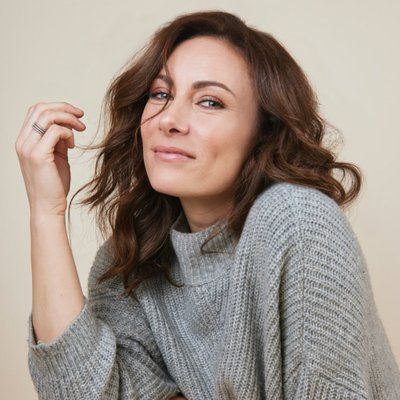
This heartfelt episode features the multi-talented Laura Benanti, a Tony Award-winning actress known for her unforgettable performances on Broadway and TV. From her powerful roles in Gypsy and My Fair Lady to her hilarious portrayal of Melania Trump on The Late Show with Stephen Colbert, Laura shares the ups and downs of her diverse career... Read More
From the show: The Theatre Podcast with Alan Seales
Guests
Featured Shows

About
This heartfelt episode features the multi-talented Laura Benanti, a Tony Award-winning actress known for her unforgettable performances on Broadway and TV. From her powerful roles in Gypsy and My Fair Lady to her hilarious portrayal of Melania Trump on The Late Show with Stephen Colbert, Laura shares the ups and downs of her diverse career. This conversation goes deep as Laura opens up about the challenges of balancing motherhood and a thriving career, her struggles with postpartum depression, and how becoming a parent has shaped her approach to acting.
Beyond the stage and screen, Laura is a dedicated activist, working with theater maker Miranda Ferris Jones to present benefit concerts in support of political and social causes. A mother of two, Laura speaks openly about the struggles and joys of balancing parenthood with her career, and how these experiences have made her a more empathetic and dynamic performer.
Laura Benanti is a Tony Award-winning actress with an illustrious career that spans Broadway, TV, and film. Known for her roles in Gypsy, She Loves Me, and My Fair Lady, Laura has captivated audiences with her stunning vocal range and emotional depth. On TV, she's appeared in series such as Younger, Supergirl, and The Good Fight, while her portrayal of Melania Trump on The Late Show with Stephen Colbert has brought her comedic talents to a whole new audience.
Connect with Laura:
- On the web: laurabenanti.com
- IG & TikTok: @laurabenanti
- Voices for Victory Benefit Concert (September 25, 2024) at City Winery, NYC
- Spiral Bound Benefit Concert (September 30, 2024) at Racket, NYC
- Laura’s one-woman show on Audible: Nobody Cares
Connect with The Theatre Podcast:
- Support the podcast on Patreon: Patreon.com/TheTheatrePodcast
- YouTube: YouTube.com/TheTheatrePodcast
- Threads, Twitter & Instagram: @theatre_podcast
- TikTok: @thetheatrepodcast
- Facebook.com/OfficialTheatrePodcast
- TheTheatrePodcast.com
- My personal Instagram: @alanseales
Transcript
This transcript was automatically generated and might contain errors.
[0:00] Laura Benanti: Hi, I'm Laura Benanti, and you're listening to The Theatre Podcast with Alan Seales.
[0:12] Alan Seales: Welcome back to an all-new episode of The Theatre Podcast. I'm Alan Seales, the host of this thing, and our guest is the amazingly talented Laura Benanti. The conversation we had took many turns I didn't expect, and Laura got very honest about a lot from her mental health, being a parent, and deciding how she makes her career choices now. So, Laura, if you're listening, thank you again for allowing yourself to be so vulnerable. This is something, a lot of things, that I think a lot of people don't realize that it's okay to talk about. So something else that we dive directly into for a bit is politics. Everyone's favorite subject right now is recording this a little more than a month from the presidential election here in the United States.
Along those lines, we discuss some topics that some listeners may find disturbing, such as sexual assault and reproductive rights, and along with that comes a bit of profanity. So please use your discretion while listening. Lastly, if you haven't already, please connect with me on socials. Check the show notes for links to everything Laura and I talk about, including her one-woman show on Audible. And now, everyone, please enjoy this episode with Laura Benanti. Here you go. One, two, three.
[1:22] Alan Seales: Today's guest is a Tony Award-winning actress with a career that spans Broadway, TV, and film, known for her stunning performances in shows like Gypsy, My Fair Lady, and She Loves Me. She has captivated audiences with her powerful voice, impeccable comic timing, and deep emotional range. Beyond the stage, she's also graced TV screens in series like Younger, Supergirl, Nashville, and you may also recognize her from her brilliant portrayal of Melania Trump on The Late Show with Stephen Colbert, and has now teamed up with theater maker Miranda Ferris-Jones to present two exclusive concert fundraisers in support of Vice President Kamala Harris's presidential campaign. Laura Benanti, welcome to The Theatre Podcast.
[2:03] Laura Benanti: Alan, thank you so much. What an intro. I'm going to throw something else in there.
[2:08] Alan Seales: What else?
[2:09] Laura Benanti: I wrote and starred in my own comedy show called Laura Benanti Nobody Cares at the Minetta Lane Theater that you can now listen to on Audible, which is the thing I'm most excited about.
[2:21] Alan Seales: Yes. Someone actually just sent that to me from Audible when I said, hey, I'm—
[2:26] Laura Benanti: And you didn't listen to it, Alan?
[2:28] Alan Seales: It was literally like last night and—
[2:31] Laura Benanti: Wow. Okay.
[2:31] Alan Seales: Listen, I have two kids. This is starting out great.
[2:34] Laura Benanti: Never mind. Never mind. Never mind. I have two kids too. Forget it. Never listen.
[2:41] Laura Benanti: You can do it in three-minute increments on the toilet when you have free time for yourself.
[2:46] Laura Benanti: You know what I do? What I find when I'm listening to the podcast the most, when I'm not editing my own, is when I'm putting the kids to bed. I still love to sleep with them, even though they're a little bit older. They still like—
[2:58] Alan Seales: We do too.
[2:59] Laura Benanti: We sleep with them until they fall asleep, and then I'll take one earbud, and the earbud that's not facing them, I'll listen to something while I just lay and listen to them sleep with the other ear.
[3:09] Alan Seales: Sweet. Well, this is not a podcast, Alan. This is a solo comedy show.
[3:18] Laura Benanti: I'm just teasing you. I'm teasing you. I fall asleep with my daughter too, and I feel like I get judged for that.
[3:24] Alan Seales: Well, let me back that up.
[3:26] Laura Benanti: I see you, Alan. I see you.
[3:28] Alan Seales: Let me back that up. Whenever I listen to audio that does not involve children or—
[3:31] Laura Benanti: There you go.
[3:32] Alan Seales: Music in the car, it's—
[3:33] Laura Benanti: There you go. Yes, exactly.
[3:35] Alan Seales: Okay. All right. So, Nobody Cares, your one-woman show. Actually, because I was going to talk about that too. It's a great place to start because you're known for TV, you're known for film, and then I was looking on your website to prep for this interview, and you've got concerts galore. Are they concerts, or is it this one-woman show?
[3:50] Laura Benanti: So, a lot of them are concerts, where I sing traditional musical theater fare, and I still am my own silly self in the banter. Some of them now are Nobody Cares, but I'm taking it out to reworks and stuff. The first sort of 10, 15 minutes of the show was essentially an explanation of what Audible is and what—you know what I mean? And how do you take a live visual performance and turn it into audio? Sort of like in the old radio play days. And so, I had a song called Give It To Me, and it was like, give me your attention. And I was going through all of the things that people were likely doing in their house when they were listening to me. And like, please stop doing those things. Please sit down and listen to me.
[4:41] Laura Benanti: You know what's interesting? Well, I'll tell you what's interesting. Do you know—I actually hate those rhetorical questions, but here we go. You know, it goes without saying, so don't fucking say it. That kind of stuff. I forgot what I was going to say.
[4:56] Laura Benanti: Oh, Alan, I see you so well. Thank you for that.
[4:58] Alan Seales: What are we talking about? What are we talking about? Literally, what are we talking about? Because I feel so much better about myself. Because I do this to the point where my kids are like, are you okay? Are we the same person in that you always have 10 other things going on in your sub-processing? You're looking at something in the front and the sub-processing in the back is like, I got to make sure I got lunches and soccer practice.
[5:22] Laura Benanti: Yes, of course. The parent math where you're like, we have to be out of the house by 2:30. So that means I have to be getting the kids ready by 1:30. It's just, it's never ending.
[5:33] Alan Seales: So I get it. We could just sit here and take a nap. Do you want to do that instead?
[5:38] Laura Benanti: Let's actually do that. Let's take this hour. This would be the best meditation to put you to sleep podcast episode ever. We're just like, nobody wake us up.
[5:49] Alan Seales: If you ever want to hear Laura Benanti sleep.
[5:54] Alan Seales: When did you get into performing in general? Because you seem like, and this is going to come off weird, you seem like a completely normal person. And completely normal people don't often get truly successful in theater because they find other jobs that they can do instead. And the saying goes, if you can do something else, you should do that.
[6:13] Laura Benanti: Do it. Yeah. I have no other skills. That's number one.
[6:18] Alan Seales: You're a good parent.
[6:20] Laura Benanti: You know what it is? I actually think my craving for normalcy is one of the reasons why I'm not more successful than I am. I feel like I'm successful despite myself. You know what I mean? It's hard if you try, you still get offered roles.
[6:40] Laura Benanti: No, I try really hard. I auditioned for TV shows and movies and I put my heart and soul into it because I have to feed my family. And also, I really love doing it. But I do think my aversion to networking, and I do think it's harmed me in some ways because I just can't do it. It makes me feel really uncomfortable. Even opening night parties where I'm like, can I go home now? I'm a cancer in my whole body.
[7:14] Alan Seales: Are you an introvert? Do you consider yourself introvert or extrovert?
[7:17] Laura Benanti: I'm an extroverted introvert.
[7:19] Alan Seales: Extroverted, yes. A lot of people are, yeah.
[7:22] Laura Benanti: If someone is like, you need to leave your home, then I'm always like, oh, I've really enjoyed this. I will dread a party. And then I'm like, I'm going to go to this party. And then depending on the people at the party, I'm like, I had a great time. Or even my friends, my friends will joke they call me Bilbo Baggins because I never want to leave the shire. And then when they drag me out to a game night or a dinner, I'm like, oh my god, I missed them so much. This was so wonderful. But in the 45 minutes before that, I'm like, what can I say to not do this?
[8:00] Laura Benanti: So yeah, so I'm an extroverted introvert. When did I start? I've always wanted to be an actor. I always enjoyed being other people. I always enjoyed the community of other people like me because I didn't have that growing up. I grew up in a tiny town in Kinnelon, New Jersey, a tiny town called Kinnelon, New Jersey, which is like I had 89 kids in my graduating class for high school. It's very rural. And people don't think that that exists in New Jersey, but it does. And it was an amazing place to grow up, but it was not an artistic hub by any means.
[8:39] Alan Seales: When I think of New Jersey, I don't think art.
[8:41] Laura Benanti: I get it. I get it.
[8:42] Laura Benanti: Skinky Newark.
[8:44] Alan Seales: Right. But it's not that. And I kind of want people to think that about New Jersey because I'm like, great, stay out. Don't come here. I live in New Jersey now, and I love my town so much. And it is an artistic hub. But I grew up like the part of New Jersey that borders New York State. So that's where I'm from. And again, I loved it. It was such a small, supportive town. And they were like, that weird girl is so talented. It's not like I got bullied. My friends were proud of me. They were just like, who is Bernadette Peters? And why do you care so much? Why do you need me to listen to you singing, you know, Little Lamb? Why? I don't want to. I'm listening to Dave Matthews fans.
[9:30] Laura Benanti: So I felt lonely in that way. Not because people were pushing me away, but because I a little bit was pushing them away. I was like, I don't want to get drunk in the woods. I don't want to smoke pot in a pathmark, like outside of a pathmark. I have a voice to protect. I think that for me, I always knew, it was always inside of me. And I treated every single performance, like my Christmas pageant at my church, when I was 14 years old, the Gilbert and Sullivan Society in Paquanock, the Barnes Theater in Montville, New Jersey, where I did community theater, my high school show, I treated it like Broadway, which is why I think when I got to Broadway, when I was 18 years old, I was like, no, Mrs. Old hadn't been doing this for years.
Because I was just like in my high school auditorium. Yeah, I've never wanted to do anything else. And you know, when I say I don't have any other skills, I do kind of, but I don't have any other desire. Like I can't imagine myself doing anything else. I really love it. And having kids has actually illuminated that for me more.
[10:46] Laura Benanti: Really? Yeah, I think I thought I would have kids and I would just be like, goodbye, everyone. Now I like push a pram in the country. And while I love my children so, so, so, so, so much, and I have a lot of guilt about leaving them, like I cried yesterday, leaving my kids for this weekend to work. I was like, I actually really love what I do. You know, and I am allowed to love what I do and still love my children. Like, I'm allowed to do that. That's tough. And there are a lot of moms, a lot of successful award-winning, multi-award-winning Broadway performers who have become moms recently through the pandemic, because it gave them the time to kind of spread their wings, if you will, and be pregnant.
Yes. But it's so difficult. I remember talking to people before and then after the pandemic is a little different, but there are a lot of people now who just take this opportunity to have children during the pandemic when you'd be pregnant and you're not working regularly because you get to stay home and put your kids to bed. And then the mom guilt or the dad guilt, I'm not excluding all parents, right? The dad guilt of missing your child. Like, I love to come home after a stressful evening and just like we were talking about the very beginning, just lay with your kids.
[11:57] Laura Benanti: Yeah. Yeah. You know, for me, that's one of the reasons why I haven't been on Broadway since 2019. You know, I really focused sort of exclusively on television and film or very short runs of things like my show, because by the time my daughter was coming home from school, I was leaving. I lived in the city during My Fair Lady.
[12:24] Laura Benanti: My husband would bring Ella to the theatre in between shows, which was exhausting. I was doing a three-hour show, a dream role, and then my two-year-old would come in between, and we would play pretend. Then I would do another show at night, and I was like, I'm a psychopath, and exhausted. Then I got Epstein-Barr. But anyway, so living in New Jersey, it adds two hours to my day, commuting there and commuting back. And I don't want to be leaving while my child is coming home from school, and then they're asleep by the time I get home. And then weekends, I'm missing everything. And that is not a judgment on anyone who is able to do that at all. I have so many incredible Broadway performers who have wonderful relationships with their children. And that is not, again, it's just not a judgment. It's just for me, it created a sadness and an anxiety in me that was not sustainable for my life.
[13:26] Alan Seales: You don't seem like a person that has anxiety, though. You seem very chill.
[13:33] Laura Benanti: My husband is listening to this going, no, no, no. No, I do have anxiety. I've always had anxiety. Yeah, because I spin about the future. I ruminate on the past, and then I spin about the future. So I'm like, regret. I'm like, regret is in the back, anxiety in the front.
[13:52] Alan Seales: You're the emotional mullet of Broadway.
[13:54] Laura Benanti: Yeah, I am. Worry in the front, anxiety in the back. Regret in the back. I got to refine. I got to refine that joke, but I will.
[14:03] Alan Seales: You can take that. I'll give that to you.
[14:04] Laura Benanti: I'm going to workshop. We workshopped it together.
[14:05] Alan Seales: Okay, good, good.
[14:06] Laura Benanti: I'm an anxious person in that I want to do it right. I want to do it right. I don't want to let anybody down. I don't want to hurt anybody's feelings. I don't want to say I'm going to do something and then not do it. I get depressed. I have depression and anxiety in the way that I feel like we're allowed to say now. When I get overly exhausted, I can't manage that in a way that feels like I can also be a good parent.
[14:37] Alan Seales: And it's emotional exhaustion. It's not physical exhaustion.
[14:39] Laura Benanti: Correct. Well, it's actually both. My older daughter is not a good sleeper.
[14:45] Alan Seales: Really?
[14:45] Laura Benanti: And never, ever, ever has been. And I wasn't as a kid either. I was like, what is that in the corner? And thank God my husband's finally realized that my mental health is absolutely tied to me sleeping. And so he gets up with our daughter in the morning and lets me sleep till 7:30, which is amazing. But if you're not getting home until midnight, and you're still like tired from the adrenaline of theater, and so you're asleep at 1, 7:30 is a really early wake-up call. But I miss it so much. It does create a deep sadness in me because live theater is my favorite thing to do. So sometimes when my daughter is mad at me, I'm like, you have no idea what I've given up for you. You know what I mean? You knew what I could be doing right now.
[15:34] Alan Seales: Well, is she old enough now to be able to see that passion? To see you following what you truly love to do?
[15:41] Laura Benanti: Yes. But I do think it's fraught because it is the thing that takes me from her.
[15:46] Alan Seales: Yeah.
[15:46] Laura Benanti: And she said to me one time, because she asked me not to sing. And I was like, can you help me understand why? She said, because when you sing, it sounds like you're crying. And what I realized is it makes her feel emotional. It makes her feel something inside of her that is hard to experience. And I remember that because both my parents, my dad, Marty, is an actor. My mom, Linda, was an actor. And my stepdad, it's weird to call him stepdad to me because he raised me. But technically, he's my stepdad. He's a psychotherapist and a holistic health counselor. So my mom figured that one out. Yeah. But when my parents would sing, it made me too emotional. I would have to be like, I don't want to hear this.
I don't want to hear your heart. It's too hard for me. I think there are ways in which she admires it and she comes to see my concerts. But there are also ways in which she's like, when I watch people watching you or if somebody comes up to you on the street, it makes me feel like you're not my mommy. Weird. Yeah. Like you belong to somebody else because you've shared yourself with them. Yes. And then I think if it's somebody on the street who, you know, it's always the kindest people who are so lovely. She's like, I think it is odd to her that I'm talking to someone that I don't know and that they're sharing with me that something I did made them feel really made them feel something. I think it almost freaks her out. Wow. And then I'm and then, you know, my attention, my attention is always on her, but my attention then becomes on someone else as well. And it's a stranger.
[17:29] Alan Seales: Don't go anywhere. We'll be right back after this break.
[17:33] Laura Benanti: Welcome back to the episode. Yeah, it's like really parenthood is really fraught, but it also is the thing that I think has made me a better actor, a better performer, appreciate it more and frankly, like, be less selfish about it. Like I used to, if I had a concert from 10 a.m. when I woke up to that concert was all around that concert. I'm going to meditate. I'm going to vocalize. I'm going to take a bath. I'm going to exercise. Now I'm like 20 minutes before the show. I'm like curling my hair and like throwing a lash up. And there's a freedom to that because it's not as narcissistic. And it seems like it's it doesn't play into the anxiety either. You found a way to like just throw that away and be present in the moment until you get to the other moment that you have to be present in.
[18:21] Alan Seales: Yeah. So, yeah, it goes back to like, yeah, you're ruminating about the future and you're thinking about everything that needs to go wrong.
[18:30] Laura Benanti: Yeah, I think, oh, it just occurred to me. I just had an epiphany. My epiphany is I think I, too, don't like to rehearse in so much as that I like to find authentic moments during cold reads and stick with those. And because I don't want to have to dig into something ahead of time and plan for it. And then the reader or the partner that I'm with in the scene, whatever the case is, just doesn't do it. And then I get like it's all about active listening and probably means that, you know, need to be a better actor, et cetera. But you're right. It just occurred to me that, yeah, it's that's right. I will think about how to react ahead of time. And then that's that's a death sentence there.
[19:12] Alan Seales: Yes. Yeah. Because you get stuck in it and then you're not really listening. And I think for me, that was also parenthood becoming a parent. I had a huge expectation of what I would be like as a parent, what early days would look like, what my child would be, who my child would be. Right. Or my children at this point. And I was like, oh, shit, I don't have any control over.
[19:35] Laura Benanti: Correct. Yeah. I thought I was going to be breastfeeding in a field. And, you know, I and then I was like had severe postpartum depression, like to the point where my therapist was like, this is one of the worst cases I've ever seen. Really? Which didn't feel great. Yeah. But I was like, I always rest at the top edge. So like that, I did not see that coming. And there's no way that you can. And then learning to adapt to that has been the hardest thing of my life. But it has taught me to be more adaptable everywhere in every part of my life.
[20:07] Alan Seales: Hmm. So what when did you have the postpartum depression? And were you doing a show at the time? Or were you not like because I want to I'm trying to get around like, do you not feel like yourself unless you're in a show or used to?
[20:29] Laura Benanti: I so I wasn't I got I went into a show, Meteor Shower on Broadway with Amy Schumer and Jeremy Shamos and Keegan-Michael Key. I went into that when Ella was probably five, maybe six months old. That's tough. And yeah, and she was also having like some, we were having to test her for some things, like medical things that was very, she's okay, but like very scary and hard. And so for a person with anxiety, like a person with postpartum anxiety, it was atrocious. But you know, I, it was a very traumatic birth. And then she had really bad reflux. And then we couldn't breastfeed. And I felt really guilty about that. And she couldn't sleep because she had colic. And so I didn't sleep and I wouldn't let anybody else hold her. And you know, it was like, I, you know, I gained 65 pounds with my pregnancy. And I lost 75 pounds by the time she was two months old.
[21:27] Alan Seales: Wow.
[21:28] Laura Benanti: So it I was like, people were like, you look amazing. And I was like, I'm slowly crumbling to dust. Yeah.
[21:35] Alan Seales: Body's eating itself.
[21:36] Laura Benanti: Correct. Yeah. So, you know, and it, it took a while and frankly, medication for me to feel like a person. But you know, and I still to this day will be like, if Ella is struggling with something, I'm like, well, that's because I had postpartum depression. And she watched me try to smile through crying for the first three months of her life. I must have looked like a full sociopath where I was like, I didn't want her to know I was upset. So I just like had tears streaming down my face, but then smiling like a sad clown. So yeah, and then I went into the show. And it was, I felt so guilty, but it was exactly what I needed to do.
[22:19] Alan Seales: Yeah.
[22:20] Laura Benanti: And again, my husband would bring her in between shows, I would see her, you know, all day. And then go to the theater at night. But that reprieve of being at the theater and remembering myself, remembering who I was and what my skills are, because I just felt like, I'm so bad at this. Why am I so bad at this when other parents are so good at this? And it reminded me of what I was good at, which is being on stage.
[22:48] Alan Seales: Being a parent is one of the few jobs where you're thrown into the crux of everything with no instructions and no direction. And anyone can do it. You don't need any qualifications.
[23:01] Laura Benanti: Yes.
[23:02] Alan Seales: And so I think, I mean, I hope you've realized now and I'm dealing with this myself still, is that I got to stop comparing myself to other parents. Because what looks totally fine on the outside, you just said other parents could do it. I'm a horrible person. I'm paraphrasing. But the, they could be even worse off than you are. And they just aren't as in touch with it or aren't showing it. And so, oh, go ahead. Go ahead.
[23:28] Laura Benanti: No, no, you go. I interrupted you.
[23:30] Alan Seales: I was just going to say thank you for talking about it. Because I don't think people even realize that it's a thing. And it's like when my wife and I got pregnant, all of a sudden, you just start paying attention to the people are like talking about miscarriages or talking about birth issues or, you know, like you said, difficult births. There's friends of mine who are like, I almost died during birth. I was like, why don't more people talk about this? That's legitimately a problem, right? But anyway, so I interrupted you, but thank you for talking about it in the first place.
[23:55] Laura Benanti: I actually interrupted you. But yeah, I think, and I don't think social media helps. You know, I think it makes it really like significantly harder, which is why I've always tried to be really honest on my social media. And then also there are times where I'm like, oh shit, I hope I'm not scaring some young woman who is like, I want to be a mom, but that sounds terrible. You know what I mean? I guess I guess I wanted to be like the juxtaposition to the like mom influencers who are like, slowly turning butter.
[24:28] Alan Seales: Yeah, the trad ways. But I envy them. Can I tell you, I don't follow them, but I'll occasionally go to their page because it feels so peaceful. You know, even though maybe it's real, maybe it's not. Who's to say that's none of my business. But the fact that that is enough for the...
[25:48] Laura Benanti: I have a two-year-old and a seven-year-old, and neither of them are parallel play. It's real interactive when we're together, which I am better at when I have breaks to go do something for myself, whether it be a walk or writing in my makeshift garage or whatever it is.
[26:15] Alan Seales: Okay, so let's talk about politics. Let's talk about politics because it's important. Let's talk about motherhood, parenthood, and politics. This is a great off-the-wall interview, and I love it. So we'll get into the Stephen Colbert and Melania Trump of it all at the end of this, because everybody, I think, wants to know. But I want to dive into the two concerts coming up, which the first of the two is September 25th, 7:30 p.m. at City Winery here in New York, called Voices for Victory. And then the second one is September 30th at 7 p.m. at Racket NYC, called Spiral Bound, and they're different. You're involved with both, so give us the lowdown on both of these.
[27:03] Laura Benanti: Okay, so I met Miranda Ferris-Jones where we both live in New Jersey, and we met as mom friends. And then she was like, I'm actually a composer. Do you want to hear one of my songs? And I was like, oh, God, sure, because what if it was bad? And then within 45 seconds, I was like, wow. And she played me some other songs from other shows, and then she played me one song from this musical called The Precipice, which she had done in San Francisco. Bob Weir from The Grateful Dead was an angel producer on it, and she worked with, I'm not going to remember his name, but the guy who plays piano in The Grateful Dead. They co-wrote some of the music together. And then she moved to New Jersey and had two children and put it in a drawer.
And I was like, this is very special, and you need to do this. So we started working on that together, because she didn't know anybody. She was from a tiny town in Vermont, then she went to Yale, but she didn't study music at Yale. And then she moved to New York City, wanted to be an actress, was like, this is horrible, after like three months. And then, like I said, moved to New Jersey and had kids and is an amazing voice teacher, but doesn't know anyone. And I have the benefit of having been in this industry for 26 years, so I've been over that wall for a long time. And I just felt like, let me get you over the wall, or let me help you get over the wall, because her music speaks for itself.
So we started working on that together, and then she started writing this song cycle called Spiral Bound, where she sort of found this journal of a sculptor named Richard Edelman. He's an artist and a sculptor, and he lived in San Francisco in the Bay Area in the 60s and 70s. And he had compiled this sort of book of poetry that he had written about women he knew, women he loved. And Miranda was so taken by it, and she chose lines and reworked some of them to create this beautiful song cycle called Spiral Bound, that sort of re-centers. It takes out the masculine view and re-centers it around women and playing with the idea of the muse, as typically someone that a man imbues with whatever they want to see reflected back to them, versus the muse within us, how we experience other women.
[29:45] Laura Benanti: So we started working on that together, and then we did a benefit for Maestra and Open Stage, which Maestra is the organization that helps collate female and female-identifying musicians, because that is a space that is really, really challenging to sort of break into that musical space. And Open Stage is the backstage version of that, where again, it's very heavily weighted male. So we did a benefit at Joe's Pub of Spiral Bound. It was sold out. We raised a bunch of money for these two organizations. We had an incredible cast of people, Eva Noblezada, and Ellery Ward, and Mickey Abrams, and just so many women. And oh, Lorna Courtney. And they kept talking about how this was such a different experience for them than anything they'd been a part of, and how much it meant to them.
And we continued to work on that. And one of the ways Miranda and I actually met was we, with two other women from our town, put together a female-identifying-only dance party for reproductive rights. And it was so freeing and so beautiful and whatever. So that's really how we sort of came together. And then we were given this opportunity of Black Women's Blueprint to do The Precipice. And then through a friend of Miranda's from Yale, we were put in touch with this organization called Women Execs for Kamala. And it's all these super powerful businesswomen. And then us. And they were able to get both City Winery and Racket. They were just sort of gifted that space. And they said to us, would you be willing to essentially make these two benefits?
Which is tricky because they're within, what, five days of each other or something like that, which in a way cannibalizes both shows. But we're doing our best to raise money for Kamala. And so far, the City Winery benefit has already raised $40,000, which is pretty amazing. And now we're opening it up to comp tickets and very inexpensive $25 tickets to anyone who wants to attend. So you have CEOs donating $10,000. And then you have anyone who wants to be there to support donating either nothing, which is fine, or whatever they can afford. So the 25th at City Winery is mostly sort of, they're all songs Miranda wrote, except for one that Miranda and I wrote together that I will sing as Melania.
Yeah, and I'm hosting it. And then it's mostly political songs that Miranda has written over the past eight years. And we have a remarkable cast. I can send you the list of people if you don't already have it.
[33:06] Alan Seales: I've got a few headliners. But yeah, send it over. I can throw it all in the show notes.
[33:10] Laura Benanti: Oh, great. Yeah, that'd be great. And we've called ourselves Voices for Victory. And then on the 30th at Racket, we're doing Spiral Bound again, the song cycle we did at Joe's Pub. And then afterwards, there's a dance party. And similarly to City Winery, it is a benefit. And so we've had some very generous, rich people donate money. And then we're also like, hey, young people or people who are in a different economic position. We also want you there. We need everybody.
[33:45] Alan Seales: So serious question, though, am I not super rich because I don't roll my Rs? Is that what's holding me back?
[33:51] Laura Benanti: Yes, it is.
[33:55] Alan Seales: Okay. Damn it. I knew there was something.
[33:59] Laura Benanti: Just work on it. Just work on it. It's not that hard.
[34:03] Alan Seales: Don't go anywhere. We'll be right back after this break.
[34:10] Alan Seales: Welcome back to the episode. So what got you into the, I mean, this is activism, right? You're fundraising, you're bringing people together. And with all the things you were telling me about, ruminating about the future and having anxiety and taking time away from your kids. Why is this? I mean, this is an easy answer, I think. But why for you? I want to hear it from you. Are you choosing to take your time, which is everyone's most valuable resource, and give it towards helping this cause?
[34:24] Laura Benanti: I've always been like that. I was the president of my class from eighth grade through senior year. I ran on a platform of banning styrofoam, you know, which I did in high school, in middle school.
[34:47] Alan Seales: Wow.
[34:47] Laura Benanti: Yeah, we banned styrofoam. I encouraged our school to participate in World AIDS Day and made ribbons for everybody. And not everybody wore one, but it really created a controversy, but also conversation.
[35:01] Alan Seales: Yeah.
[35:01] Laura Benanti: I've always had a very intense relationship with justice, in some ways that has gotten me in trouble. You know, because I spoke up really young about things that people were like, she, she, she, she, she, she, and sort of have continued to do that throughout my life. I have a very strong idea of what is fair, which sometimes gets sometimes isn't great, like in my personal life. But so for me, I was pregnant when Trump won, and I didn't get out of bed for two weeks. I really didn't. And so many women, frankly, were like, this is it. This is the end. And a lot of the response was like, okay, this sucks, but you guys are overreacting. And we weren't everywhere. And for me, this election, there's look, there's so many facets, there's, you know, I do think, like where we are right now is a disenfranchised blue collar white people. And they feel abandoned. And they have been. They have been middle classes disappearing.
[36:21] Alan Seales: Yeah.
[36:21] Laura Benanti: Right. But we as liberals have not done a good job of letting them know what we are fighting for. You know, so many of the programs that they benefit from, the Republicans want to take away. But we do not do a good job of saying, hey, that's what we're doing. And we're doing it for you. We say, you're racist, you're stupid. You're different. The liberal elitism that I think has overtaken our part, our party is not a great calling card for our message or what we're trying to accomplish. And a lot of my family, my extended family are Trump supporters.
[37:05] Alan Seales: Yeah.
[37:05] Laura Benanti: And when I talk to them, I hear what they're saying.
[37:14] Laura Benanti: Not the racist rhetoric, they're not racist at all. But you know, and then frankly, they're pro-choice, which I think the Republican Party is sort of realizing, whoops, not, they are pro, you know, this, this sort of extreme pro-life anti-choice faction is not the majority. You have an ectopic pregnancy, that's, that's life-threatening. That's ridiculous. I would have died. I've had four miscarriages. I would have died. Wow. I would have died in Alabama. I would have bled out in a car like the woman just did in Georgia. And literally just got goosebumps. Oh, yeah. You know, the 13-year-old girl who was raped by a family member and is being forced to give birth to that child. Fuck you. Fuck you.
That makes me so angry. How dare you? You know, if you want to talk about term limits, or fine, let's have that conversation. But the sheer cruelty of these policies, it enrages me in a way that I cannot express. And if that were even the only thing I cared about, which it's not, there are many other policies that are important to me. But honestly, if I were a one-issue voter, to me, this level of activism would be worth it. Like I'm about to get on a bus and go to Pennsylvania. Like, this is, we are in danger. This is dangerous. Yeah. And, you know, you always hear, you know, these male politicians be like, well, as the father of daughters, I'm like, no, you don't get to do that. But as the mother of daughters, who will be deeply affected by this going forward, I cannot not do something.
And, you know, look, being like, I'm singing. I know that feels like it's maybe performative, literally, or foolish, or not helping, but we just raised $40,000, you know, and are engaging young people. We have so many young people who are coming out to help us, to support us, to be part of it. It's why we have opened it up to free tickets and cheap, less expensive tickets. It's so young people will come out because we need them. We need them.
[39:00] Laura Benanti: Mm-hmm. And, you know, when I think of how Gen Z males are being so drawn into this conservative, extreme conservative movement, I also do see some culpability for us, where I do think there's an otherism that happens. Yeah. Like, you know, the future is female. Yes. But we also do need allies. And I actually talk about this in my show. I think it's hard to be the kind of man that I assume you are, the kind of man that my husband is, in a world that constantly uplifts and celebrates the other kind, the loud, shitty, selfish ones. They have the loudest voice. Mm-hmm. But we need and have allies. And I don't want young men, just like I don't want disenfranchised white voters who live in rural communities to think we are not there for them. Right. That we are not a party for them. You know, so, yes, we are a group of women singing on behalf of Kamala Harris, but we want men there too. We want young men there. I want them to know that this is a party for them also.
[41:09] Alan Seales: Yeah. No, I agree. And I'm curious about your thoughts. You said that, and I didn't think about this, that the young men are growing up and falling, sometimes falling into these very conservative ways of thinking. And I wonder how much social media is playing a part of that because there's all this, all these studies now that are like, the kids now don't know how to have conversations. They don't know how to date. And everyone's starting to watch porn at such a young age that their sexual relationships are all over the place. And 20-year-olds are having erectile dysfunction already because that's what they think these, like, there's all this stuff. So then it occurs to me that then the men expect women to act a certain way or that they deserve something because that's what social media is showing them.
[42:05] Laura Benanti: Yes. I know children who have seen things online that is not meant for a child's brain. You know, children's brains are still forming until they're 27 years old, you know. So I read this book called Digital Minimalism. And in an effort to sort of detox myself from what I think is an epidemic, a mental health epidemic created by social media. And, you know, he talks a lot about how the creators of these platforms do not use them. They do not allow their children to have them. They make their nannies sign agreements that they will not use these devices in front of their children. You know, and what's so interesting to me is it's all under the auspices of we're connecting, we're connecting. No, we're not.
We are not. Our fight or flight is so high right now because we are not meant to get that many notifications all day long. We are not meant to interface with that many people all day long. We are not meant to see thousands of videos and photographs all day long, compare ourselves to them. Our attention spans. I mean, I watched an old movie. I watched Nashville with my husband the other night, which is like almost a three-hour film. Yeah. And I was like, I can't keep watching this. I like this is too long. And I think we're seeing it in theater. We're seeing it in television and film. It scares me because when the more our attention spans decrease, the more we are unable to do our own research and make our own decisions about what is right for us and our community.
[43:48] Laura Benanti: Yes. And the proliferation of false information, the fact that you can call something news, call it entertainment news. You know, how can it be called news? And I think another dividing thing, we don't all watch that. We don't have a Walter Cronkite. We don't have one news station that everybody watches. And then we make we base our decisions on the same facts because everyone is like, why are we so divided? I think that's one of the reasons why when my grandma was sick, I went down to Florida and she was in a facility and I stayed with her for a couple of days and all they watched was Fox News. And by the time I left, I was like, am I a Republican? Like the points they make, how they say it, all fucking lies and bullshit.
It is so convincing. It is so terrifying. The fear tactics that they no one's fact-checking. Facts don't matter anymore. You cannot bring facts to a Trump fight. You know, it is about humiliation and degradation and fear. And this person is why you don't have this. And we got to get rid of them so that you can get yours back. Meanwhile, all they are doing is giving tax breaks to their fucking friends. Yeah. Yeah. Trickle-down economics. When has that ever worked? Never. So, you know, oh, God, sorry. I get so angry. And but there are but I also think there's extremism on both sides. And that's what I kind of mean. Like we can't keep throwing people away. We've forgotten how to have conversations with people who disagree with us.
And frankly, I'm going to move over because I'm getting slumbered. But I mean, I'm in a lot of like transpo vans with people who take me to work. Who feel very differently than I do. And for the most part, we are able to have very respectful conversations. And we leave those hour-long car rides, understanding each other more. Maybe we don't agree. Maybe we still don't agree. But we understand each other more. And that is a loss.
[46:05] Alan Seales: Yeah, that's someone says a lot that someone's able to, to just stop talking and listen for a few minutes to understand what's important to somebody else. Yeah. And that's, that's, that's the lost art. And it goes back to, again, being unable to have a conversation is literally listening. And I think it could be a lot of why theater people are attracted to theater people. Because we're, we have to be trained to listen and have a real conversation and take something in the moment instead of assuming that someone's going to respond a certain way. What's important to you? What's your driving motivation? And how do we work with that? And empathy, empathy, if you're playing a bad guy, you can't go I'm playing a bad guy. You have to find what is in them that is driving them to do this, you have to empathize with them. And that is a lost art on frankly, both ends of the spectrum.
[47:53] Laura Benanti: Yeah, I think I think well, well, so like, like, I mean, I am not defending Trump, but to take this to the extreme, it's and very clearly, I will state I'm voting for Kamala is that he had he was taught as a child how to be an asshole. And that's all he knows. And so now it's turning into what it is now it's turned into what it is now. But there's so much more psychological depth besides just like he wants to be a dictator. But why? Like, you don't wake up in the morning playing a bad guy. Or if you are a bad guy, you don't wake up in the morning and say, what's the worst I can do to everyone today? You're just like, what do I do that I feel that is right. And where you get that sense of right and wrong.
That's a separate conversation. Yeah. And I think you know, he hurt people hurt people, you know, so I think he taps he taps into again, people who feel like they've been left behind. You know, and he mobilizes them, and makes them feel like he's seeing them. Meanwhile, all he's doing is talking about himself. I'm not really sure how that works. But they feel seen. And he, you know, it's the like pitchforks mentality of like, let's go get them. If you rile people up enough, look how riled I am. You know, if that was riled for the other side, which it is, like, we're going to battle. Yeah, it feels like we're going to war. And that is a terrifying place to be as a country.
[48:27] Alan Seales: Oh, so many people are like, yeah, we're heading towards another civil war. And it could it feels that way. It does feel that way. Don't go anywhere. We'll be right back after this break.
[48:31] Alan Seales: Welcome back to the episode. So I know we are running short on time. And I just want to quickly come back to what what I had originally promised we'll get to is just the quick how you became Melania Trump on Colbert. And is it cool or not cool that Melania most likely knows who you are now? Like, I was on his show promoting she loves me. And he he put up a photo, like a side by side of like me on a red he was like, Has anyone ever told you you look like Melania Trump? And I was like, Yes, because my friend Kevin Daly was on like, he like tweeted me about it. And I guess maybe that's why they where they saw it. But I was like, Yeah, I have been told that by like one person, but how dare you? And then he put a side by side of me on a red carpet like smizing and her and I was like, Oh, shit. And then I very briefly, like just did her face.
[49:37] Laura Benanti: And, you know, we thought, okay, that's that.
[50:07] Laura Benanti: When I first saw her, she was like, before she's like, yeah. So my favorite thing she does is occasionally when he's talking, she'll be behind him and she will look directly into the camera like. And I feel like she's sending me a message or something where I'm like, blink once if you're fine. I blink twice if you're like, get me out of here. Blank. Blank. Three times to show us you can blank. She's very fine. She's fine. Yeah, she's got better. She's All. Oh. No, but I'm going to say she's all right. Great. She's my meal ticket. So let's do this.
[50:37] Laura Benanti: Trump. You know, the day after the Republican National Convention, when with her famously plagiarized Michelle Obama speech, I woke up to like a thousand emails from them being like, do you think you can put together an impression? I am not an impressionist. I have never done it in my entire life. And I was like, yes. But I was actually at my grandma's, my mama's six hours away driving distance. I was six hours away. So my mom and my sister drove me to the nearest train station, which was three hours away. And then I took a train back to New York. But you know, I watched it was very hard to find video of her speaking. The only thing I could find was the speech. And so, you know, it was a very kind of train.
I was sitting next to a guy on the train and I was like zooming in, like watching her mouth. He must have been terrified. He was like, this woman is going to wear her skin like a suit. Like I looked like a sociopath. And the moment he could, he changed. I was like, I feel you. And so I just tried to do her dialect over and over again on the train. I watched the speech. I read the sides that I was sent four hours before we filmed it. And then it just sort of, you know, it was like this viral sensation. I mean, like millions of people watched it within like hours and, you know, it garnered all this traction and press. And then, you know, we continued. I was secretly pregnant with Ella and I had hyperemesis, which is, you know, when you have morning sickness all day long, every day for the entirety of your pregnancy.
[52:13] Alan Seales: Oh, that's amazing.
[52:14] Laura Benanti: It was a delight. So you can see in the first sort of year of it, me like the camera just gets closer and closer and closer to my face because I was like gigantically pregnant. And then, you know, it just sort of took off from there. And then when he lost, we did like a big farewell to her in like Times Square was a song. It was it felt great. And then we had to revise her this year, which, look, I love. It's so fun. It was some of the most fun I've ever had because it's ridiculous. I get to do the most ridiculous things. It is full clown. It is full of like commedia dell'arte clown. And Steven is one of the most amazing people I know that show. They've become a family to me. You know, I was pregnant when we started and now I have two children. So they have seen my life shift immeasurably.
[53:15] Alan Seales: Oh, yeah.
[53:16] Laura Benanti: And that's eight years ago now. Yeah. And so, you know, we just did the one at the DNC at the at the convention in Chicago, this gorgeous forty five hundred seat theater. It felt like playing Radio City. It was unreal. And that was maybe my favorite one I've ever done. It is bonkers. It is off the wall.
[53:39] Laura Benanti: Here to tell us where is Melania, former first lady Melania Trump, everybody.
[53:49] Laura Benanti: Hello. Hello. Hello. Hello, Madam. First lady. Hello, Steven. And hello, Chicago, the greatest city in the world. Because this week there is no chance my husband will be here.
[54:10] Alan Seales: Hang on. Is that is that the Democratic Convention behind you?
[54:14] Laura Benanti: No.
[54:16] Alan Seales: What?
[54:17] Laura Benanti: No.
[54:18] Alan Seales: Yes.
[54:19] Laura Benanti: Yes.
[54:20] Alan Seales: It is.
[54:21] Laura Benanti: Why are you there?
[54:24] Laura Benanti: Oh, Steven, I am trying to uncover the secrets behind the Kamala nominant, like like her plot to attract voters by making them. What is this word? Happy. And what is this thing she does where she opens her face and that goes ha ha ha ha ha ha ha ha ha ha ha ha ha ha ha ha ha ha ha ha ha ha ha ha ha ha ha ha ha ha ha.
[54:46] Alan Seales: Mrs. Trump.
[54:47] Laura Benanti: No, we. So, you know, but I would gladly give it up for our democracy. You know what I mean? And frankly, I think there will still be opportunity, unfortunately, to play her even when he loses. Although we cannot be complacent, it is such a short and tight excuse me, such a tight race. But yeah, it's it's it's so fun. I don't know if she's ever seen it. I think she tries to stay out of that stuff. I'm sure someone's shown somebody inside the administration, but that's that's.
[55:17] Alan Seales: Well, I'm sure he's seen it.
[55:19] Laura Benanti: I'm sure he's seen it. And what makes me laugh is he's never said a single thing about it. He had all these tantrums about Alec Baldwin. But I feel like he just watched that and was like, well, she looks pretty. So it's fine. You know what I mean?
[55:31] Alan Seales: Yeah.
[55:32] Laura Benanti: And it's not about me. It's not about me. It's about her.
[55:35] Alan Seales: Fine.
[55:36] Laura Benanti: Yeah, I get that. All right. Well, that's that's interesting. Keep it up. I think. I think King loves it, especially in my in my sphere.
[55:43] Alan Seales: So to wrap up here, there's a couple of things we'll do, a couple of standard questions we'll ask at the end. But to get going, I like to play a little game called a plot in 60 seconds.
[55:53] Laura Benanti: Great.
[55:54] Alan Seales: So I am going to put 60 seconds up on the screen.
[55:59] Laura Benanti: Okay.
[56:00] Alan Seales: The entire screen. But how about there we go? 60 seconds. And so now I have 16 popular shows in front of me. Give me a number.
[56:08] Laura Benanti: 16.
[56:09] Alan Seales: And then you give me the show and then you give me the actual plot in 60 seconds or less.
[56:12] Laura Benanti: Okay.
[56:13] Alan Seales: These are popular shows. You should know these.
[56:15] Laura Benanti: Eight.
[56:16] Alan Seales: Yeah.
[56:17] Laura Benanti: You'd think.
[56:18] Alan Seales: Okay.
[56:20] Laura Benanti: This is good. Eight is rent. Go.
[56:23] Laura Benanti: Oh, rent is about people who don't want to pay their rent. And they're they live downtown and like a lot a lot of sad things happen to them.
[56:35] Alan Seales: 45 seconds remaining.
[56:36] Laura Benanti: Idina Menzel is a lesbian. Anthony Rapp wears a scarf. Right? Important plot points.
[56:42] Alan Seales: Yeah.
[56:43] Laura Benanti: Yeah. Really good plot points. Who's the other guy? He plays a guitar and he wears a leather jacket.
[56:48] Alan Seales: Mark.
[56:49] Laura Benanti: 30 seconds remaining. And eventually I feel like something really sad happens at the end. And then they learn how to count really well in a way that I never would have imagined.
[57:05] Alan Seales: 15 seconds remaining.
[57:08] Laura Benanti: And when the movie was made, Rosaria Dawson played one of the parts and that for some reason infuriated me.
[57:17] Alan Seales: Five.
[57:18] Laura Benanti: Even though I never saw it.
[57:19] Alan Seales: Three.
[57:20] Laura Benanti: Two.
[57:21] Alan Seales: One.
[57:22] Laura Benanti: Okay.
[57:23] Alan Seales: Okay. Thanks.
[57:25] Laura Benanti: You're welcome.
[57:26] Alan Seales: Thanks.
[57:28] Laura Benanti: Okay. Three standard closing questions.
[57:30] Alan Seales: Okay.
[57:31] Laura Benanti: I ask everyone just to wrap up. First one simply is what motivates you?
[57:34] Laura Benanti: Ooh. What motivates me? Justice.
[57:39] Alan Seales: That reminds me. Is there a fun dad joke?
[57:45] Laura Benanti: What does Batman put in his soda?
[57:47] Alan Seales: What?
[57:48] Laura Benanti: Just ice.
[57:49] Alan Seales: I love that.
[57:53] Laura Benanti: That's a good one.
[57:54] Alan Seales: Okay.
[57:56] Alan Seales: What advice would you give to your younger self and younger people listening now starting out down a similar path?
[58:02] Laura Benanti: I would say people are on your side more than you realize. So don't walk into a situation assuming that people don't want you to do well.
[58:14] Alan Seales: And if you could only see one show for the rest of your life, but you can see it as many times as you want, what would you see?
[58:20] Laura Benanti: Oh, boy. Oh, that's such a good question. This is very, very, very, very hard. This is a bizarre answer, but I think into the woods.
[58:34] Alan Seales: Really?
[58:35] Laura Benanti: Yeah, I love it a lot. Even though I broke my neck doing it, I really love it.
[58:39] Alan Seales: Did you?
[58:40] Laura Benanti: You broke your neck going into the woods?
[58:41] Laura Benanti: Really?
[58:42] Alan Seales: Yeah.
[58:43] Laura Benanti: When I had to fall down the flight of stairs as Cinderella, I broke my neck.
[58:46] Alan Seales: During a performance?
[58:48] Laura Benanti: Yeah.
[58:49] Alan Seales: Oof.
[58:51] Laura Benanti: I know. My right arm is going to be fully burned, and I'm going to send you a bill for my medical knee.
[58:59] Alan Seales: You got it.
[59:01] Laura Benanti: You got it.
[59:02] Alan Seales: I will pay that bill with the great health care that we have.
[59:05] Laura Benanti: Oh, Jesus.
[59:06] Alan Seales: Oh, I was going to ask you, too, real quick, if we can. I wanted to get in a whole dream role working with many, many great people sort of thing. You've gone on record to say that Eliza Doolittle was one of your dream roles, and you finally got to play that a couple years ago. Now that you've done that, and I remember you saying you need to do it before you aged out of it. Now that you possibly have aged out of Eliza Doolittle, which I think you can still play just fine.
[59:31] Laura Benanti: That's from very far away.
[59:33] Alan Seales: In an amphitheater.
[59:35] Laura Benanti: I can do it in an amphitheater.
[59:36] Alan Seales: There you go.
[59:37] Laura Benanti: There you go. What are your current dream roles as you go on in your career?
[59:41] Laura Benanti: I mean, honestly, it's an embarrassment of riches that I've played so many of them. I mean, I played Maria in The Sound of Music. I got to play Cinderella in Into the Woods. I got to play Louise in Gypsy. And Amalia in She Loves Me. I got to do a little night music as Anne.
[1:00:02] Laura Benanti: But my dream is to do a little night music as my brain. Goodbye. I want to sing Sound in the Clouds. I want to sing Sound in the Clouds. I want to sit on the edge of a bed and cry and sing Sound in the Clouds.
[1:00:16] Alan Seales: When your daughter's older so she can feel OK with it.
[1:00:19] Laura Benanti: Oh, yeah. Well, she won't come.
[1:00:22] Alan Seales: OK, fair enough.
[1:00:23] Laura Benanti: Fair enough.
[1:00:24] Alan Seales: All right. So where can we find you online and get tickets to all of the concerts and the shows? Plug it all.
[1:00:31] Laura Benanti: So if you can follow me on Instagram at Laura Benanti, and I think also TikTok, you can find me there. And then my website, LauraBenanti.com, has all of my ticket stuff. And then, yeah, I really would love for people to go to Audible and listen to my show. I'm really proud of it. And I'm excited to get to work on it more. And I really hope people come out for these benefits. It's a beautiful group of women working our asses off to do two shows in five days. And we're not doing it for money for us. We're doing it for money for her. Come join us. You know, it's free, baby. And register to vote.
[1:01:12] Alan Seales: Register to vote.
[1:01:14] Laura Benanti: And register someone else. Go find a young on the street and ask them if they're registered.
[1:01:19] Alan Seales: There you go.
[1:01:20] Laura Benanti: There you go. So all of this stuff, I'll throw it in the show notes. So listening now, you can get easy links to go check out Voices for Victory and Spiralbound and Nobody Cares on Audible. And get Laura's website and follow her on all the socials.
[1:01:35] Alan Seales: And you can get more of me, Theater Underscore Podcast, at Threads, Instagram, TikTok. All this is in the show notes, too. I don't know why I say it every time. Rate and review. Spread the word. Help everyone. Just vote and be a better person. Thanks to Jukebox the Ghost for the intro and outro music. And Laura, I have enjoyed this so, so much.
[1:01:53] Laura Benanti: Thank you.
[1:01:54] Alan Seales: Me, too.
[1:01:55] Laura Benanti: Thank you.
[1:01:56] Alan Seales: Take a deep breath. Make the world a little colorful.
© Broadway Podcast Network, All Rights Reserved