

Tony-nominated actor Grey Henson joins Alan for an engaging conversation about his journey through the world of Broadway comedy. Grey reflects on his rise from a Georgia-born performer with a background in ballet to a Tony-nominated role as Damian Hubbard in Mean Girls: The Musical... Read More
From the show: The Theatre Podcast with Alan Seales
Guests
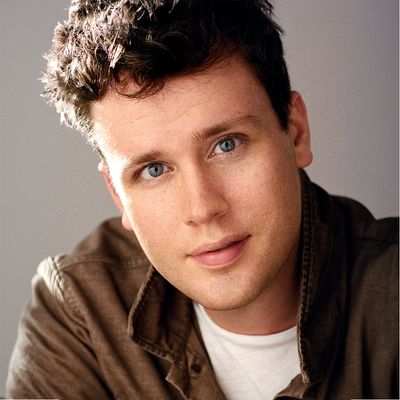
Featured Shows


About
Tony-nominated actor Grey Henson joins Alan for an engaging conversation about his journey through the world of Broadway comedy. Grey reflects on his rise from a Georgia-born performer with a background in ballet to a Tony-nominated role as Damian Hubbard in Mean Girls: The Musical. He opens up about the challenges of transitioning into comedic roles, including his current portrayal of Buddy the Elf in Elf: The Musical on Broadway. Grey shares the importance of embracing your unique qualities and how his comedic style evolved through his experiences in high school theater, college at Carnegie Mellon, and professional work.
Throughout the episode, Grey discusses the impact of comedy on his career and the importance of balancing preparation with spontaneity. He talks about his time in Shucked, a show that required him to be constantly aware of the audience's reactions and how that shaped his performance. The conversation also touches on his thoughts on comedy in general—how it should feel effortless and truthful rather than forced—and how he brings that mentality into every role, from Mean Girls to Elf. Grey also dives into the reality of performing eight shows a week, the pressures of portraying iconic characters, and how the key to a long career in theater is remaining grounded and generous to your scene partners.
Grey Henson is a Tony-nominated actor best known for his comedic roles on Broadway. A graduate of Carnegie Mellon’s prestigious School of Drama, Grey first made a name for himself as Elder McKinley in the Book of Mormon first national tour before joining the Broadway company. He later earned a Tony Award nomination for his standout performance as Damian Hubbard in Mean Girls: The Musical. Grey has also appeared in Shucked, playing Storyteller Two, and most recently, he’s been bringing holiday cheer as Buddy the Elf in Elf: The Musical on Broadway.
Connect with Grey
- Instagram: @greyhenson
Connect with The Theatre Podcast:
- YouTube: YouTube.com/TheTheatrePodcast
- Threads, Twitter & Instagram: @theatre_podcast
- TikTok: @thetheatrepodcast
- Facebook.com/OfficialTheatrePodcast
- TheTheatrePodcast.com
- My personal Instagram: @alanseales
Transcript
This transcript was automatically generated and might contain errors.
[0:00] Grey Henson: Hi, I'm Grey Henson, and welcome to The Theatre Podcast with Alan Seales.
[0:11] Alan Seales: Hey, everyone. Welcome to an all-new episode of The Theatre Podcast. I am your host, Alan Seales, and I'm thrilled to welcome Grey Henson to the podcast.
[0:19] Grey Henson: Grey is a Tony-nominated actor known for his brilliant comedic timing and has been lighting up the Broadway stage in multiple iconic roles ever since he began his little childhood in Macon, Georgia, and his career has been a masterclass in blending heart, humor, and high energy. And in this episode, we dive into his journey as a young performer into one of Broadway's brightest comedic stars. He shares stories about these roles, the challenges and joys of doing eight shows a week and bringing this high, high energy, and how he navigates the fine line between his unique take on a beloved character and honoring what the audience expects. And we also talk about the importance of being true to yourself in comedy, how to connect with an audience through authenticity.
It's just a great time and another example of the fact that you have to be very, very serious to be good at comedy. So don't miss out on this fun and insightful conversation with Grey Henson, and make sure to follow me on social media. Watch the video version on Spotify or on Patreon. And now, everybody, please enjoy this episode with Grey Henson.
[1:25] Alan Seales: Today's guest is a Tony-nominated actor known for his impeccable comedic timing and vibrant stage presence with a degree from Carnegie Mellon's prestigious School of Drama. I like saying prestigious. He quickly made a name for himself, originating the role of Elder McKinley in the Book of Mormon's first national tour, then stepping into the same role on Broadway. His standout performance as Damian Hubbard in Mean Girls the Musical earned him a coveted Tony Award nomination and was most recently seen as Storyteller 2 in the Broadway production of Shucked and Tate in the TV series Girls 5 Eva. He is now bringing holiday cheer eight times a week to the Broadway stage as Buddy the Elf in Elf the Musical on Broadway. Grey Henson, welcome to The Theatre Podcast.
[2:11] Grey Henson: Wow, thank you so much for having me.
[2:15] Alan Seales: You are very welcome. How are you? You were feeling, we were talking right before we started recording that you're exhausted.
[2:21] Grey Henson: Elf is a workout. Elf is the hardest thing I will ever do, but it's also the most fun, but it's not easy. It's two and a half hours of basically screaming. It's screaming and you're bringing Will Ferrell energy to the stage for two and a half hours, eight times a week, so whatever that math is, 2.5 times, so 20 hours a week.
[2:48] Alan Seales: A lot of Will Ferrell energy.
[2:49] Grey Henson: Yeah, and he got to just like stop in between takes. I have this, once you start the show, there's no break really. I think I leave, I definitely don't leave the deck at all in act one and then I'm off stage for like brief moments and then in act two I've got a few more breaks, but basically it's like a straight run through for me. It's crazy.
[3:09] Alan Seales: Your style of comedy, something I really like about watching you perform comedic roles is you kind of have this irreverent IDGAF kind of like, whatever guys, you're here, cool, I'll acknowledge you, but I don't care, but it plays so fun to draw us in and to bring that energy to Elf too because on the one hand you're like, yeah, I don't give a fuck, but on the other hand you're like, look at me, look at me, I'm Buddy the Elf.
[3:35] Grey Henson: Yeah, yeah, I mean you have to. You have to deliver that energy with Buddy the Elf, but I think, yeah, it's funny. I can't really define my sense of comedy because it just happens. It's just like the way that I see the world and the way I deliver lines. So even hearing you talk about it right now for me is sort of surreal because I don't think I do it like that. I think I definitely, what I do appreciate about comedy and probably what I try to emulate is just throwing things away. I think when you bang something over the head too hard, it's like, we get it, you think you're funny, but when you find a really amazing nugget and you just toss it aside and the audience barely catches it, that to me is what's good about comedy. So that's what I try to do at least.
[4:26] Alan Seales: Well, that's, I think, what made it so damn good, made you so good in Shucked because that whole script is throwaway one-liners.
[4:32] Grey Henson: Totally. And it was so much fun. I saw it multiple times and to see you and the rest of the cast out there just like slaying every night, it was so good. And it played to your sense of comedy, I think, really well. Or maybe you came into it to accentuate the comedy. I don't know. That's actually, I'm going to ask about that. So then how did you get connected with Shucked? Because I know Robert Horn was working on the script for a while.
[4:54] Grey Henson: Yeah, they were all working on that show for a decade, I think. And the show was really, it went through so many different versions and a lot of people had been involved the whole time. I think Kevin Cahoon, who played Peanut, was involved for the entire run. I mean, for the decade it took to create it.
[5:14] Alan Seales: Workshops and everything.
[5:15] Grey Henson: Exactly. Yes. Yeah. And so Randy Clark and Shane McAnally, who wrote the music, it used to be called Moonshine. It used to be really directly related to Hee Haw, that TV show from the 70s. And then they cut ties with them. And then it just ended up becoming Shucked, but the core of the story was always the same. But I popped in at the very, very end and joined the company right before it made it to Broadway. And so I fast-tracked my way into Shucked when people had been really working with it for a long time and I just popped in at the end. Taylor Trench played my role out of town and then he left the production to go do Camelot. And so the track opened up and Taylor's a good friend of mine.
We have the same representation, actually. And so I got the audition. And honestly, when I first got it, I was like, what is this? It's a Korn musical. The role's name is Storyteller Two. And my joke with that was always like, is this like Barista Three in Gilmore Girls? What day player sad role is this? And it wasn't until I went in with the material and auditioned for Jack O'Brien, the director, and Robert Horn, who wrote the book, and I was like, oh, this is good. And I think I know how to do this. And specifically, our roles in that show are really, they depend on the actor playing them because I think those parts more than lots are not as much characters as they are just like extensions of those actors that are cast in those parts.
And so we were ultimately bringing a lot of ourselves to those roles and that's sort of how they were created and that's how it was all manifested. But yeah, that was to me, that was the biggest surprise that I've had in my career so far is doing Shucked. And then also the people that talk about it still, like it's unreal. Like I was doing this concert at Carnegie Hall. As you do. It was the first time I'd ever done it. It was this massive concert with all these people. And Jennifer Holliday was in it. You know, we weren't like singing a duet or anything, but we were backstage at one point together and she walked by and she stopped me. She goes, I loved you in Shucked. And so the power of Shucked, I think, you know, it's great. And yeah, but I really didn't know what to expect. And it turned out to be like such a gift, that show.
[7:28] Alan Seales: Well, okay, let's go in reverse. I don't normally go this route, but we'll keep going backwards. So then for roles that people know you from, I guess, you know, probably Mean Girls is still mentioned to you all the time. And I feel like that show kind of got really just sort of shit on during the pandemic. And it didn't, well, like it didn't come back. It closed unexpectedly. And it's one of those things that everybody was looking forward to having coming back. And then all of a sudden, like the rug just got pulled out from everyone. So like, from your perspective, though, like being sort of involved with the production, I mean, you weren't in it at the time anymore, right? But knowing the team and knowing what was going on, like, how did you sort of view that from your perspective?
[8:16] Grey Henson: Well, I don't know what all conversations went into making that decision, you know, and obviously, like it was a global pandemic that nobody had ever experienced before. So I don't think anyone really knew what to do. I think that the show they knew would do really well on the road. And so I think since the tour had just opened, I think they were sort of throwing all of their eggs in that basket. And that's why the Broadway production sort of I think fell apart. It was a bummer for sure. But what was so strange about all of that is that I had just finished my run two days before the pandemic hit. My replacement Chad Burris did three performances as Damien before I shut down. And so I had this really unique experience where I finished this massive part of my life because Mean Girls was like a huge moment in my career and the Tony nomination and everything.
And so that crash from that, I like needed this massive break. And then boy was I given it with this pandemic. But it was unfortunate that it didn't get to continue because that show did so well. I mean, I think we all expected it to because Mean Girls itself. I mean, everyone knows and loves that movie, especially like our generation. And so it was so highly anticipated. And for Tina to be so involved with her husband, Jeff, who wrote the music, it was just like, it was something we knew would be great. But we didn't, I think, understand the impact it would have. And then obviously, like now it's being done everywhere in high schools, and like middle schools and community theaters. And so the Mean Girls thing, well, I think live on for a long time.
I'm really grateful for that. And I still at the stage door at now and I'm doing all five people saying I'm playing Damien or I played Damien. And so yeah, that's really cool. It's cool that it gets to live on. But I agree it did. It definitely had more life on Broadway had the pandemic not happened.
[10:05] Alan Seales: Yeah. The people who come up to you at the stage door, do they do they ask your advice on like how to play it sometimes or because comedy is so hard to emulate?
[10:16] Grey Henson: Oh, totally. I know. That's why I can't even talk about it.
[10:20] Alan Seales: No, no, it really is hard to discuss comedy, I think. But in my eyes, the best comedy is not planned or rehearsed. And it's something that is musical that is instinctual. It is felt like comedy is something that sort of should breeze by if it is overly thought out, if it is too cerebral, I think it deflates. And so it's funny, I do, since I've played so many comedic roles, and I love comedy. Also, what's so funny to me is that comedy is so easily written off as being easy, because it looks easy, when the right person does it. But then, like, for instance, I just last year, after Shucked Close, I went and did Tick Tick Boom at the Kennedy Center. I'm directed by Neil Patrick Harris, starring Brandon Uranowitz, it was me, Brandon, Danae, and Danae Benton.
And it was like the first dramatic role I've had professionally. And people after the show were like, always telling me like, great, so good to see you finally act. And I was like, you think this is acting? I mean, obviously, it's challenging in some ways, but like, nothing is harder than hopping on stage and making thousands of people laugh. And so I've been lucky to play these roles like Shucked, like Buddy, like Damien that seem like extensions of myself. And I do bring so much of myself to these parts. But I think that's actually the hardest thing you can do. And I'm not like, I'm not like looking for a Medal of Honor or anything. But I do believe that like, a successful career is about bringing yourself to these parts and whatever you do.
And that's why people start remembering you. But with comedy, specifically, like, it should look easy. But boy, is it hard. So yeah, it's funny. I've like, I've been lucky to play all these like, really fun, lighthearted character roles. But like, that's where the work happens. Standing on stage trying to look sad and cry and, you know, in mode is easier. I don't know how I got on that tangent. What was the question?
[12:19] Alan Seales: I was talking about emulating comedy at the stage door.
[12:25] Grey Henson: So yes, some kids, no one really asked my advice. I don't know.
[12:28] Alan Seales: How are you funny?
[12:30] Grey Henson: Yeah. I mean, it's a hard question. I mean, how do you answer that question? I think my comedy comes from observations. And so I've always been like, hyper, like aware, and I can read a room really quickly, which I think is the thing I dislike most about myself, because sometimes I just want to like, check out. But like, I'm super hyper aware. And I think people watching and observing how interactions happen, so much comedy is mined in those moments, I think. And also like, just watching really funny people on TV. Like, I was a huge, I still am a huge 30 Rock fan. And her comedy and that writing and everything about that show, I think really taught me how to be funny in many ways, which is why when Mean Girls was happening, I was like,
[13:47] Grey Henson: When you get the role, that's one thing, because you can play, you come in, hopefully you come in off book, and everyone's there to play and have fun and experiment, and it's this trusting environment where you can try things and see what works and what doesn't. But when you're coming in and you have 90 seconds or 120 seconds, just a few minutes in an audition, what do you do for that? You just go out and prepare mega bold choices and hope it swings in the wrong direction correctly? No, no. I think over-preparation is kind of death when it comes to comedy. I don't know. For me, with Elf, for instance, there was a lot of material for the audition. And I had to learn two songs and maybe six or seven scenes.
And since the movie is so iconic, and his performance is so ingrained in everyone's brains, I think more than anything, I was like, just go in with honesty and truthfulness. And I think a lot of really great comedy comes from just absolute, genuine, honest, truthful line delivery. Because if what you're saying is funny, but you're saying it with conviction, that's even funnier. It's like when you're commenting on I'm being funny right now, that's when you sort of lose the magic of it. And so with Buddy the Elf, who just sees the world through these childlike, Christmas-loving eyes, it's hard not to be funny, I think. So for me, what I tried to do with that was just not plan anything. And so Bob Martin, who co-wrote the book, was there for the audition.
And people who are musical theatre, comedy fans probably know Bob. He was the man in chair in Drowsy Chaperone and also wrote Drowsy Chaperone. He's done so many amazing things. But I so admire him. And so in that audition, there's like a scene where Buddy is talking to Santa in the beginning when he learns that he's a human. And he's like, what's my dad like? And I think maybe briefly, I had the idea that I would do this. But in the moment, it just happened. And I was just kind of following my instincts. And I was trying to be present and just living in the now. And I just sat on the floor and crossed my legs like I was in kindergarten listening to my teacher. And they lost their minds at that really simple moment.
But of course, that's what Buddy would do. And then there was another moment in the song World's Greatest Dad where I sing, when I fall and scrape my knee, he'll kiss that knee for me. And in the moment, without planning it, I just ran up to the wall and pretended to slam my knee on the wall like I hit it. And then I was holding my knee like I just hurt myself. Stuff like that, if you're present and in the moment and living honestly and truthfully, stuff will come out. It's weird. It's like trying to talk about magic. You cannot talk about it. It's like casting a spell. Nothing about it is planned. Granted, there's certain things that can kill a joke. If you're moving when someone's trying to tell a joke, that kills it.
There's a joke Sean Astin has in the show as Santa. And I was noticing that I was taking two steps while he was saying it. And I caught myself because I remember someone telling me once, do not move on a punchline. And I stopped doing it. And he's been getting a bigger laugh, not only because of me. He's an amazing, talented actor. But I was like, yeah, you've got to give it stillness. So then we're focusing on this person, tell this joke. So there is a science to it in so many ways. But the energy of a comedic performance has to just live in the ether, I think.
[17:24] Alan Seales: Right. So what I heard was anytime Sean Astin is funny, it's because of you. So I'm taking that. That's my takeaway.
[17:32] Grey Henson: I would tell him that too.
[17:36] Alan Seales: So then going back even further there, we'll go timeline in reverse then. You went to Carnegie Mellon. And well, okay, let's go through the childhood now at this point. Because what as a child to grow up, I think I was reading in Alabama, right? Or Georgia?
[17:49] Grey Henson: Georgia.
[17:50] Alan Seales: Okay. So you're in Georgia. What part of Georgia were you in? And then where did you get into the theater space, the performing space in general?
[18:00] Grey Henson: From Macon, Georgia, which is right in the center of the state, like an hour and a half below Atlanta. And I started performing. I mean, it's kind of all I've ever done. I started actually in ballet classes.
[18:13] Alan Seales: Really?
[18:13] Grey Henson: I started taking ballet when I was three years old, which was like unheard of for a boy in Macon, Georgia to take ballet, right? But my mom was always involved in theater. And she's a very theatrical person. And she said I was dancing all over the house. And she's like, I'm gonna put him in dance class. And she said I wanted to and she wanted me to. And I started and I really thought I was going to be a male dancer for a long time. Like it truly was, I thought that's what I wanted to be because I was good at it. And then I hit puberty and I became like a linebacker in size. And I was just like, wait, ballet is so strict and amazing in so many ways. But I just was doing more theater. And my first play though, was when I was four, I was a lost boy in Peter Pan.
And so performing in general had always been a part of my life, be it dance or theater. And then I was telling someone this recently, it sort of just naturally happened that like, oh, it's what I was good at. So then I auditioned for colleges and got into the right school, which then led me to my career, which then each show has led into the next show. So it's been this natural progression just because it's the thing I always did. And it's what I did well. So there's never a question that I would then pursue it because it was just, it was just my currency. Does that make sense? Ever since I was three or four years old.
[19:26] Alan Seales: Don't go anywhere. We'll be right back after this break. Welcome back to the episode.
[19:32] Grey Henson: Performing is your currency.
[19:33] Alan Seales: Yeah. I mean, acting, acting. Yeah. No, I'm just trying, I'm trying to let that process for a second. Cause I think it's, it's a beautiful way to put it, right? It's how you express yourself and how you spend your personality.
[19:44] Grey Henson: Yeah. And so in a weird way, there was not really ever a singular conscious effort for me to do it. It wasn't like I'm like one day I was like, you know what I want to do? I'm going to be an actor. It was like, no, like I was just a performer my whole life. I wasn't doing it professionally. I was doing community theater. I was performing in the dance recitals. I was in high school performing, but I knew it was the thing that gave me attention. It was the thing that drew people to me. And so it was just what I kept doing. It was just my thing. You know what I mean? And I'm so lucky that like, I now get to do that professionally and get paid to do what I've always ever done. But in the same vein, sometimes it feels like a pass.
I'm a passive member on this path because like it chose me in some sense, but you know, I've obviously put effort into it and I've worked hard and I audition and I prepare and I care. And you know, it's like, I'm just sitting on my couch and someone calls me and asks me to be buddy, the elf, like that doesn't happen. But the act of performing has just always been, I think a part of my life.
[20:49] Alan Seales: You said that it gives you the attention you need. That is a, I think a pretty heavy thing to know about yourself and talk about because as someone also who thrives on attention and maybe started a podcast for a little bit of that, I can relate. So like, have you done this work to dive into your psyche, your personality of, you know, and more importantly, I think is being able to separate yourself from your work because a lot of actors in this situation, I think take it so personally when they can't find their job, when they're in between work or whatever, because you value yourself, mistakenly may value yourself by what your next job is.
[21:31] Grey Henson: Yeah. Yeah. I mean, yeah, I'm in therapy every week to talk about all this stuff. It is hard. It is a hard thing to be an actor. I mean, there are harder things to do for sure. When you are the product you are selling, it's so easy to get lost in that and to take things super personally. But then the best performers are open nerves. And so I think it takes a lot of openness while also trying to keep yourself guarded and protected when you can, and then knowing who to trust and how to just take care of yourself. I think I'm not like the most confident person in the world. I'm also not like the most outgoing. I think people see me as like a Damien buddy type more than I actually am. And in my real life, I'm actually fairly introverted, but I know how to be extroverted. I think that's called an ambivert maybe.
[22:36] Alan Seales: That's someone who eats meat and fish.
[22:38] Grey Henson: Yeah. Yeah, I definitely like, I think, I don't know. I mean, we all want purpose in life, right? And so I think at the end of the day, when I was young, I realized that people responded to me when I was on stage. And so that gave me a sense of purpose at a young age that then I just kept following. Because at the end of the day, performing is an act of service, right? And so I've always known that I have affected change in some way by performing. And so that's why I keep doing it. I do see myself as like, in many ways, as a caretaker. And so I think this is how I do it or have always done it. It is the challenge of being an actor, I think, is not getting lost in the selfishness of it. Because it is.
I mean, you have to be selfish. You have to be a salesman. And it can so easily feel gross and like, just smarmy, you know what I mean? And I try to stay away from all of that while still engaging in it. You have to know your worth without like, shoving it down people's throats, I think.
[23:45] Grey Henson: Also, I think of the actors I respect and respond to. And those people aren't like banging down the door being like, I'm the most talented person here. Like that's not, that's also not what makes a career. Like the people that I admire are very talented, but also like are just good people. And that's what makes a long career. That's the longevity. That's the secret of longevity is being good and easy to work with. And then obviously, like backing it up with some massive talent. But I could care less about a performance if I know that person is maybe not a great person. Do you know what I mean?
[24:18] Alan Seales: Yeah, actually, I do. And I think it translates to because if someone's a good person, then they have better chemistry on stage. And then like the whole performance, the whole production is just raised, you know,
[24:35] Grey Henson: Exactly. You can spot a generous performance from a mile away. And a generous actor is one that makes their scene partner look better. That's what we were taught in school. You know, it's not about you if you are at the center of like, I'm playing Buddy the Elf now. And I try so hard to not make it about me in the show. And I'm not like a martyr. And I'm not sitting over here being like Joan of Arc of musical theater. But like, the scenes where I get to breathe and listen to my scene partner and give them moments to like, have a moment and sing a song are like, gold, because I'm so tired. But like, also, that is what makes that is what makes a production work is when everyone is like, giving other their scene partner their moment and their space to do the good work. Does that make sense?
[25:24] Alan Seales: Yeah, yeah. Because the whole scene, the scene literally, like when you're looking at everything includes the people in the background, you don't want to upstage whoever's downstage, you know, doing a park and bark, or if you're taking two steps during Sean Astin's line, you're stepping over his laughter, you know?
[25:38] Grey Henson: Yeah, yeah. No, it's, it's all about that. I completely get that. And I think after seeing you in the production, I saw it recently that yeah, very much so. It's just, I was actually watching you when you're not delivering lines, because I wanted to see how you were listening, the active listening part of all of this. And yeah, like, still completely in character. You're taking your gray rest, you're resting as you but buddy is actually listening because buddy is truly interested in what these people have to say. Because he's just a naive little child in an adult man's body.
[26:09] Grey Henson: Yeah, he's a sponge. So yeah, he takes his moment to soak it all up for sure.
[29:34] Grey Henson: I think that'd be cool. No, but so then going back to Georgia, Macon, Georgia, you said your mom was involved with the arts, was always involved with theater and the arts, right? But like generally as a society, as a culture, like I grew up in the South too, and being involved with chorus singing at all was just not cool. It wasn't very fun. It wasn't, it was always kind of like, you know, look at that guy. Like, so was that sort of something that you had to deal with in that area that you had to push aside because it just, or you didn't care?
[30:05] Alan Seales: You mean like bullying and stuff?
[30:11] Grey Henson: Yeah, I got bullied for being in chorus for sure. Yeah, yeah. I think I was lucky and I found like my group of people really young. And so I found a lot of like-minded actors and dancers and stuff. So I remember when I first started ballet, it was strange for some of the girls because, right, this is like the 90s in Georgia. And so it's not something people were comfortable with, I think. And I remember my first day of class, my mom didn't even know what to do. This is like before the internet, right? So she didn't like she couldn't Google what like a little boy should wear to a ballet class. So I showed up in like pink leotard, pink tights, pink shoes, because that's what they sold at the dance store.
And some of the little girls thought I was a girl, you know, that with just short hair or something. And the teacher was like, you can put them in like bike shorts and like a white t-shirt and whatnot, blah, blah, blah. But I remember there was like a brief period where people just had to get used to the fact that I was doing something that classically girls did. And then after a while, I just became like such a, such a, like a fixture of this dance studio that it was just like, it was not a big deal, I guess, you know. And so without like trying to be a pioneer and making Georgia, I think I sort of was in this dance community. And then when it came to acting and stuff, I did a lot of community theater, which was what people elect to do.
So it wasn't like I was doing it. And I ended up doing it in high school, but it wasn't like I wasn't surrounded by a bunch of jocks that were making fun of me. I was going to this theater and like hanging out with my friends and like doing these amazing productions. And then, yeah, when I was in high school, I was definitely like, I don't know that I was ever bullied really to my face. People were always really nice to me in general, because I don't know why.
[32:09] But I, I was obviously gay, I wasn't out of the closet, I was doing dance, I did theater, I wasn't into the what everybody else was into. And yet, I ended up being prom king and a homecoming king. So I think the big lesson there was, I was just I just made a really conscious effort to be nice to everybody. And while I was definitely like on my own path, and like, not best friends with all these jocks and whatnot, I like, you know, I sort of met them at their level and just talked to them about like, whatever. And, and it also, like I said, there was this idea that this is what I would pursue and do, you know, and so I'm glad that like, at the end of the day, I've like succeeded in it so that I could like actually say, I was right.
But there was always this sense of everybody was like, Oh, great, it's gonna go off and do this great, it's gonna go be on Broadway. And so there was almost like a little bit of like, excitement, I think surrounding it. It wasn't like a joke to people, because I took it so seriously. I'm sort of putting that together right now in real time that maybe because I wasn't just like joking around, like, this is what I did, like behind closed doors. It's like I was proudly doing it. And I was good at it. As a kid, people took me seriously. I don't know.
[33:26] Alan Seales: Were you always doing comedy as a kid? Or the like, the harder acting of drama?
[33:33] Grey Henson: No, I know. Um, was I always doing comedy? No, not really. I mean, I didn't really think I was I was like, super shy when I was little. So I don't think I was really funny up until maybe high school, I developed my sense of humor from God knows where. I really don't know where it came from. Everybody always, you know, asked that question, because so many people develop their senses of humor from like, deep trauma, or, you know, bullying, or whatever. And I definitely was othered. I, you know, I was gay, I was in the closet, I was in Macon, Georgia, I like different things. And so I was othered. And maybe that's where I got that sort of sardonic sense of humor that I've had. But I don't really know where it was developed.
But then I sort of towards the end of my high school career, I was doing more comedic roles. And that's when I realized making people laugh on stage, like that specific high is so exciting. Like, I played Sudalist, and that funny thing happened on the way to the forum, when I was a junior in high school. And that was just like, that was one of those moments where it's like, the part sort of met me. And I was like, Oh, this is, it's like, the way I feel playing Buddy. It's like, it was just like, meant like the stars aligned. And I was like, Oh, I can lead the show and be funny and different. And, you know, not like just a strapping leading man, like, those were always the parts that were also the most fun too.
So and then when I went into college, I went to Carnegie Mellon in Pittsburgh for musical theater, I was also othered, like all of the guys in my class were like straight leading men types. And you know, I was accepted as sort of this, like, almost like this court jester, it felt like, and in a way that was like, how did I get in here? You know, and I'm in a similar way, I think in acting school, things are taken so seriously as they should be, you know, because you go from like doing it for fun to then taking it like seriously as a profession, and you're like learning about the tools and the skills and the history of theater and acting. And so often I was told in school, like, to embrace what I was hiding from or afraid of, which was my size and like my depth, because I existed in this very easygoing, lovable, you know, like, lighthearted world.
And that made people like me, I'm a people pleaser, I'm a cancer, I'm emotional, I'm sweet, I'm kind, I was like a big lovable teddy bear. So all of my teachers were like, forcing me to be like, you know, you know, like these really dark characters and like, and like, I played Sam Bick in Assassin's my senior, my junior year, which is, you know, the, if you don't know Assassin's the musical Sam Bick is like this guy dressed up in a Santa suit who like has these really gruff, aggressive monologues. And I always remember getting the part and like, oh, gosh, why did I get cast in this one role that doesn't sing? And it was like the best thing I still have ever got to this day. Because it was like, this like really exciting, like transformational role that like I no one ever would have seen me do.
And then I surprised people that I was able to do that. And so in so many ways, I think that like, and it also it was funny in a way that I don't think I expected it to be, you know, but this is such a long answer to I forget what even the question was. But I think comedy has sort of always followed me, and then always sort of come up when I didn't expect it to.
[36:52] Grey Henson: And I stand by the statement that I do think it's harder to do than drama. And so I think the reason that like, I have had a career is because of comedy, because like, not everybody knows how to take a script and really turn it on its head and make it their own. And so I'm happy that I keep get to keep on doing that, you know, I agree. And I think, and I've talked about this with some others. And actually, the first time I got into the conversation, ironically, or maybe unironically, about how serious comedy is, is with Kate Rockwell.
[37:30] Alan Seales: Yeah.
[37:31] Grey Henson: And she's, she was one of my early, early episodes. And I remember Kate coming in. And because Kate's character in Mean Girls with you, right, is just so ditzy, and airhead, and seems so seamless, all of you, all of you in those roles, were just effortless in the comedy delivery. But to take to make it land night after night, took so much work, and so much effort. And you have to deliver every line seriously, whether you're trying to be funny or not, because the comedy is in the writing.
[38:06] Alan Seales: Yeah, no, you're so right. Kate was a genius in that part. And so good as a comedian, in that way. Like, it's funny, it can, it's a balance of both of those things. And I think both can be true, right? Like, it needs to be rehearsed and specific and precise, while also having so much freedom. And so the biggest takeaway that I learned in school, one of my teachers would talk about preparation for anything as being a freedom within a framework. And if you have this framework built of like, the lines, understanding the blocking the ins and outs of what you're doing, and then you have to let it go. And so within that, you just play like, that's what it is, really. And so it's about rehearsing and then not caring about it, freedom within the framework.
And so I think that's what that's what you're talking about with Kate, too, and her performance in that it was very precise. It's like the same with like watching Jen Simard, like Jen Simard really knows what she's doing and really, really rehearses it. But at the end of the day, you have to let it go and just like, sail on the wave of the joke, you know. And so it's a delicate thing. It's like comedy is so, it's so hard to talk about. And it is so, so delicate. And it's so difficult to, I think, pull off. And I think class clowns don't, don't, most times will not make good onstage comedians.
[39:20] Grey Henson: Agreed, agreed. They're really not the same thing. That's why some people like Anna Gasser, after she saw Shucked asked me, she was like, did you stand up? Like, do you ever want to do stand up? And I was like, it's the last thing I ever want to do. That would literally be the last thing I would ever want to do is go on stage as myself and try to be funny. Like, obviously, like I could rehearse a set whatnot. But like, I don't see that as my currency. Like, I think I can take a script and make it my own.
[40:52] Grey Henson: Yeah, you played the straight truth of just whatever the scene was of, you know, my dad doesn't believe in Santa, that's the worst thing that I could possibly think of.
[40:59] Antonisa Dylan: Yeah, yeah. But in that in itself is funny.
[41:02] Jay Guy: Don't go anywhere. We'll be right back after this break.
[41:07] Antonisa Dylan: Welcome back to the episode. I think a lot of trust has to go into comedic performances. Because if you like can let go in a good script and just trust that the script will carry you there, like it's funny innately. Like the whole concept is funny. I run on stage and I've got like, you know, blush on my cheeks. I'm wearing like a wool green suit and I've got leggings and like this hat on my head. Like I look insane, just like go on and have a conversation. That's funny in itself. And so yeah, I mean, I'm sure it's easy to think like, oh, I'm going to go play Buddy the Elf in Elf, I'm going to go be a clown. But like, it's honestly like, it's one of the more truthful roles I've ever played.
[41:49] Jay Guy: Oh, no, absolutely. And I think, you know, to that strength too, that's what like the good, the really good comedians and, you know, bring up Will Ferrell again, because that's who originated this role in the movie. Like everything he does, and good comedians, especially that I see on stage, they take the level of absurdity to, I guess, an absurd level of truth. It always comes back to truth, that they 110% believe everything they're saying, no matter what, and everything is real.
[42:17] Grey Henson: Yeah, yeah, yeah, yeah. You have to, and the moment you check out, I think people recognize that. Audiences are smart, you know, and so the moment that they see you being like, making fun of the thing I'm doing, it's like, which is honestly why Shucked was so funny for me, because you had to comment, like that character's commenting constantly on what he's doing.
[42:37] Jay Guy: So my character was telling jokes with the awareness of knowing he was telling a joke. And so that's why that was funny, versus like, you know, Buddy the Elf has no idea what he's doing is being ridiculous, but it was funny to watch Storyteller 2 try to be funny in this funny show. Was that a different approach, or is it just like, trust in the writing, and say it truthfully?
[42:58] Grey Henson: Yeah, that was an approach that was honestly a struggle. Going through Shucked rehearsal process was really hard for me, because not only had I not done the show out of town, and everyone else had, so I was like learning it, but also our roles so deeply depended on an audience's reaction. And so we were rehearsing for this in front of the same four people every day, and I was like, I can't do this. I'm not funny. I don't get it. I don't think it's going to be great. And I was really miserable in rehearsals. And then the moment we like, well, actually they invited people into the rehearsal room to do like a read through, and it was like an audience of maybe 20 people. And it was the first time I like felt the reaction, and I found my groove.
And then we had our invited dress rehearsal with a thousand people at the Nederlander. I was like, oh, okay, these roles cannot be figured out until you have butts in seats. And so the process was hard, but it's the same approach. I mean, the comedy in that show is so specific because they're all dad jokes, like Shucked is a bunch of like puns. I love it so much. It's so funny. But like, I think in the wrong hands, it can be really, really like cringe maybe. And so I think the thing about Storyteller 2 that was so much fun is that he was having fun trying to be funny. And so like the commenting and the awareness of that was like really fun to play with, but different, yeah.
[44:19] Jay Guy: Did you figure that out that he's having fun trying to be funny? Was that something that clicked in rehearsal or did you need the audience to feel that come back, like reflected back at you?
[44:29] Grey Henson: Interesting. It sort of was the way it was written, I think, because to me, it wasn't funny until there was that ounce of like awareness. Because like Peanut, for example, in Shucked is the Buddy the Elf of Cobb County, right? He wholeheartedly believes what he's saying and he says it like that and they just happen to be these terrible puns. But like when you have us opening the show talking about these people, but we're outsiders, they can't believe it in the same way. And so I think that that's sort of, from my first audition was how I read it. And that's kind of what stuck. But it was a conversation Jack O'Brien and I had constantly throughout the run even. He would come in and give me a note that he was like, maybe one of the jokes he doesn't know is a joke.
And so it was kind of an evolving, an ever evolving thing that really never sort of landed because so much of what we did in that show is just not on the page at all. Like our characters names, we sort of developed on our own. We had this whole backstory of like, we opened the show, right? The storytellers opened the show of Shucked. We had this whole backstory that we were thrown on last minute. So we were the tellers of this story, but we had cast other people in our parts. And so we had to go on last minute. So we know the show, but we aren't performers. And so that's why when we run out at the top of the show, we were in the barn, we see the crowd and I immediately get stage fright. And then like, we'd go into the show and as they start laughing, he's like, oh, I can be funny right now.
And I'm like telling this joke. And if I say it like this, they'll laugh like that. And so it was something that needed an audience for sure. But it was like a conversation that had started throughout the rehearsal process, but definitely was difficult to get to, but ultimately was like so rewarding, because it was a lot that we had to just kind of manifest on our own.
[46:17] Antonisa Dylan: Oh, that's interesting. Like thinking back on the performance now, I 100% can see what you were just saying of, these two people were just thrown in. They probably wrote it. They're probably telling it to people, but they weren't expected to perform it. Now all of a sudden they got to go out there and wing it and they're doing the best they can.
[46:37] Grey Henson: Yeah, yeah, yeah. And that's why it was fun for us. But that's sort of something we just sort of developed on our own, because narrators, it's a hard thing to be a narrator of a show because you're in it, but you're not, right? And so what is our purpose for being there beyond just informing the audience? And so it made it more fun for us, that's for sure.
[46:57] Antonisa Dylan: Well, you did a good job. And well deserved. I loved that show so much.
[47:01] Grey Henson: Me too, me too.
[47:03] Antonisa Dylan: All right, so let's play plot in 60 seconds. It's time to start winding down. I'm gonna put 60 seconds up on your screen here. And I have a number of six, a list of 16 popular musicals. You give me a number, correspond to a show on my list. And then you give me the plot to that show in 60 seconds or less.
[47:25] Grey Henson: Oh gosh, okay. So one through 16.
[47:28] Antonisa Dylan: Oh, I just give you a number?
[47:30] Grey Henson: Yep.
[47:30] Antonisa Dylan: Oh, oh, okay, okay, okay. Let's do six.
[47:34] Antonisa Dylan: All right, the number six corresponds to the show, Aladdin. Go.
[47:40] Grey Henson: 60 seconds remaining. Okay, Aladdin is about a boy, a street rat who finds this magic lamp and rubs it and a genie comes out. And then he wants, I forget the plot of Aladdin. He wants to become a prince. Does he want money? I forget, but there's a princess who he falls in love with. She thinks he's a prince, but he's not really. And then there's like an evil guy, Jafar? No. Yes, Jafar. Yes. Who wants to take over as the king. Anyway, something happens where Aladdin ultimately saves the day and falls in love with Jasmine. And there's also a tiger at some point. And then, wait, what happens with the genie? Something really dramatic happens with the genie. That's true. What is it? What is it? I forget. He like, I forget.
[48:36] Antonisa Dylan: Five, four, three.
[48:40] Grey Henson: All right. Well, the genie gets his freedom at the end. That's what it is. That's Aladdin's final wish. Of course. Spoiler.
[48:44] Antonisa Dylan: Spoiler. If you haven't watched Aladdin at any point in any form in your life.
[48:53] Antonisa Dylan: Okay. All right. So, yes. And in the movie, there's a monkey and some bread that gets...
[49:00] Grey Henson: Okay.
[49:01] Antonisa Dylan: All right. So, then the three standard closing questions I ask everyone to wrap up. The first one simply is just what motivates you?
[49:07] Grey Henson: Oh, wow. Oh, my God. Wow. This is a really hard question. What does motivate me? Let me really sit with that for a second. What motivates me? I think I'm like, I'm motivated. I want it to just be like a self sort of motivated thing, but I'm like very motivated by my mom. My mom has been such a big part of my life. And I know that I've already made her very proud, but so much of what I've done in my career, she's sort of lived vicariously through me. And I know that so much of what I'm getting to do and have done is something that maybe she would have wanted to do in her lifetime. And so, in a big way, I do a lot with her in mind.
[49:56] Antonisa Dylan: I like that.
[49:57] Grey Henson: Yeah.
[49:58] Antonisa Dylan: What advice would you give to your younger self and younger people listening now starting out down a similar path?
[50:04] Grey Henson: Definitely just like start owning what makes you weird and unique and special. I think that like I was doing that, but I've always been like very aware that I was different. And I tried to, I think, diminish a lot of that light. And so I think I wonder actually, if I had sort of started owning all of my uniqueness at an earlier age, what I would have done with it. But definitely like what makes you really, really special is what makes you uniquely you, for sure. And just stop trying to be like everybody else, for sure.
[50:39] Antonisa Dylan: All right. And you're 6'2". You're not a, right?
[50:41] Grey Henson: 6'3".
[50:42] Antonisa Dylan: 6'3". Yeah. You're not a tiny guy.
[50:44] Grey Henson: Yeah.
[50:45] Antonisa Dylan: Yeah. That's interesting. I wonder who you'd be if you embraced the height.
[50:50] Grey Henson: I know, I know, I know. That's what, what's it, Talia Susskauer said too. She's super tall. And she had a teacher once that said, she showed up at flats to audition and the teacher's like, why don't you wear heels? And she goes, well, I'm trying to appear smaller. And she's like, never, never do that again. Always be yourself.
[51:07] Grey Henson: Yeah. I'm always trying to meet people at their level. But I mean, I wouldn't be playing like Buddy the Elf if I weren't tall. You know, like there's a lot that is great about why nobody else looks like you. Like, that's a good thing. I think so often in schools, we're like made to believe like, you know, there's a type fit into this box and do that thing. And it's like, no, because like, that's not where stars are made. You know, that people want to see a unique person and then see parts of themselves in that. And then also feel like, wow, I've never seen that before.
[51:37] Antonisa Dylan: Yeah.
[51:38] Antonisa Dylan: All right. Last question. Hardest one. If you could only see one show for the rest of your life, but you could see it as many times as you want, what would you see?
[51:45] Grey Henson: Sweeney Todd, for sure.
[51:47] Antonisa Dylan: Ooh, which production anyone would love.
[51:50] Grey Henson: I mean, I mean, I would love to go back in time and see the original production for sure. But I just, I think that show is so special and I love how dark it is and there's so many layers. And it's just genius. I played the Beatle band in college, but I wanted to play Toby. And I still stand by the fact that I think it'd be so fun to see like this oversized, like Lenny in a Mice and Men style, Toby, who just doesn't know his own strength. But it's just like this simple boy that ends up killing Sweeney in the end, spoiler, because of his size. But like, I think that show is so, so good.
[52:23] Antonisa Dylan: Oh yeah, I agree.
[52:24] Grey Henson: All right. So where can we connect with you online on social media?
[52:28] Grey Henson: Gray Henson, at Gray Henson.
[52:30] Antonisa Dylan: On all the platforms? Are you everywhere?
[52:31] Grey Henson: Not really everywhere now. Mostly just Instagram.
[52:34] Antonisa Dylan: Yeah, that's about all I can handle too.
[52:36] Grey Henson: But I have presence on threads, Instagram, TikTok, and Facebook. Don't really post anywhere except Instagram, so my bad.
[52:46] Antonisa Dylan: Leave a rating and a review wherever you're listening. This is music by Jukebox the Ghost and conversation by Gray Henson. Gray, thank you so much. This has been a long time coming. We keep running into each other and out in the world and saying, we've got to do this, and now we're doing it. I appreciate you.
[53:00] Grey Henson: I'm so glad. I'm so glad it finally happened. I appreciate you having me.
© Broadway Podcast Network, All Rights Reserved