

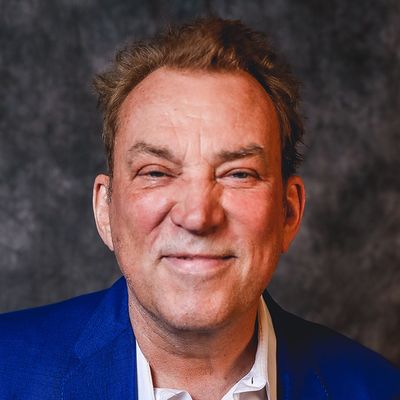
Two Time Tony Winning Director Des McAnuff has been directing on Broadway for over 30 years. His latest Broadway hit, Ain’t Too Proud – The Life And Times of The Temptations has landed him another Tony nomination for best direction of a musical... Read More
From the show: The Theatre Podcast with Alan Seales
Guests
Featured Shows
About
Two Time Tony Winning Director Des McAnuff has been directing on Broadway for over 30 years. His latest Broadway hit, Ain’t Too Proud – The Life And Times of The Temptations has landed him another Tony nomination for best direction of a musical.
He his career includes 48 Broadway credits across a career spanning more than 37 years, he has directed and/or produced so many of the most popular Broadway shows of our lifetimes. As a duel American/Canadian citizen, Des was born in Illinois but grew up in Ontario. As a young adult, he moved to New York to pursue a career in the arts.
He made his directorial debut with Big River, for which he won a Tony Award. He went on to becoming the artistic director of La Jolla playhouse for several years. Some of his other credits include, The Grapes of Wrath, The Secret Garden, Guys and Dolls, How to Succeed in Business Without Really Trying, Forum, 1776, Footloose, Urinetown, Thoroughly Modern Millie, Into the Woods, Matilda The Musical, A Bronx Tale The Musical, Groundhog Day, Summer: The Donna Summer Musical, and of course Big River & Jersey Boys for which he won his two Tonys.
Check out Ain’t Too Proud – The Life and Times of The Temptations online at ainttooproudmusical.com.
Connect with The Theatre Podcast:
- Support us on Patreon: Patreon.com/TheTheatrePodcast
- TikTok: @thetheatrepodcast
- Twitter & Instagram: @theatre_podcast
- Facebook.com/OfficialTheatrePodcast
- TheTheatrePodcast.com
- Alan's personal Instagram: @alanseales
- Jillian's personal Instagram: @jillianhochman
- Email me at feedback@thetheatrepodcast.com. I want to know what you think.
Thank you to our friends Jukebox The Ghost for our intro and outro music. You can find them on Instagram, Twitter, and Facebook @jukeboxtheghost or via the web via jukeboxtheghost.com.
A very special thanks to our patrons who help make this podcast possible!
If you would like to see your name in this show notes or get a shout out on the pod itself, visit ttp.fm/patreon to become a member and show your support!
Transcript
This transcript was automatically generated and might contain errors.
[0:00] Alan Seales: Welcome to another episode of The Theatre Podcast. Intimate, personal conversations with theatre's biggest names.
[0:10] Jillian Hochman: I am black-tipped microphone.
[0:13] Alan Seales: I'm blue-tipped microphone. That's right. We swap out the tips of our microphones. Keep it, keep it fancy. Spoiler alert, you're usually blue, but I decided I was going to be blue today. We also have red and yellow.
[0:26] Jillian Hochman: Yeah, windscreens are fun. I don't think we have green, though.
[0:29] Alan Seales: No, we don't have green. We need to get a green one.
[0:30] Jillian Hochman: Okay, we'll get a green one. Anyway, hello, listeners. Welcome to this episode with Des McAnuff, who is a multi-decade veteran of the Broadway scene, the theatre scene.
[0:43] Alan Seales: And after talking with him, like, Jillian, you were saying your factoid mind just exploded.
[0:49] Jillian Hochman: Yeah, I love theatre history, and I've loved Des' shows forever. I was such a Jersey Boys nerd back in the day. I love the trivia and the history, and some of these little things he was saying while we were recording, I was just like, you did what? You were where? Oh my god, that's so cool. So I really like hearing the stories from the people who were actually there who made all of these amazing theatre moments happen, and Des is one of those people that without him, we would not have a lot of the shows and the different styles and things that we have today.
[1:20] Alan Seales: Yeah, he's done so much to help change the industry and push things forward, and he revived the La Jolla Playhouse, which is basically just dying on the vine out on California, and we all know.
[1:38] Jillian Hochman: And that was thriving under the leadership of Chris Ashley, but that does help to make that.
[1:45] Alan Seales: Yeah, yeah. I mean, I was so impressed with how he talks a lot, and he tells good stories, but he always stops, and he interrupted me a lot to make sure that when I was saying, you did great stuff, you did this, he was like, well, actually, it wasn't just me, it was this person or this person helped. He's so great about giving credit where credit is due, and I think that says a lot about who he is and his character and why he's been so successful over the years.
[2:14] Jillian Hochman: Yeah, that longevity. You can't run the world by yourself. It's really great to know that the people who are creating these brilliant things know they need the whole team, it takes a village to make a show.
[2:25] Alan Seales: Yeah. One of the last things I'll say here before we get into it is, I'm not gonna give it away, but make sure that you listen all the way to the end to hear one of his answers to the standard questions. It blew my mind how he phrased how actors are trapped inside their own instrument, and that's all I wanna say, because it's so fascinating to me how he put it, and if I try to repeat it here, it's just gonna butcher it, but yeah, listen to the end.
[2:51] Jillian Hochman: So, before we get into it, please take a moment, go to thetheaterpodcast.com slash Patreon, and make sure you show your support any way you can. We wanna do more episodes for you. We wanna make sure that we can bring you more content and more behind-the-scenes and more ensemble-focused episodes and everything, and that all, unfortunately, requires a little bit of financial support so that we can pay the crew to continue to do this.
[3:14] Alan Seales: Yeah.
[3:14] Jillian Hochman: So, everyone, please enjoy this episode with Des McAnuff.
[3:26] Alan Seales: A two-time Tony Award-winning director with 48 Broadway credits across a career spanning more than 37 years, he's directed and or produced so many of the most popular Broadway shows of our lifetimes, some of which include The Grapes of Wrath, The Secret Garden, Guys and Dolls, How to Succeed in Business Without Really Trying, Funny Thing Happened on the Way to the Forum, 1776, Footloose, You're in Town, Thoroughly Modern Millie, Into the Woods, Matilda the Musical, A Bronx Tale, Groundhog Day, Summer, The Donna Summer Musical, and, of course, Big River and Jersey Boys, for which he won his two Tonys, and he is now nominated for a 2019 Tony Award for directing Ain't Too Proud, which is also up for Best Musical. Des McAnuff, welcome to the Theatre Podcast.
[4:07] Des McAnuff: Thank you so much. Thank you.
[4:10] Alan Seales: That is quite a bio.
[4:12] Des McAnuff: You know, I have to just, though, you know, qualify that in that I'm a Dodger. We started, it was originally called Dodger Theatre in 1978, and with my friends and Michael David, the producer, is one of them. And because of that, my name appears on all Dodger productions. And I just want to say that a lot of the productions you named, you know, where I've been theoretically involved as a producer, I've had almost nothing to do with them at all.
[4:56] Alan Seales: Oh, really?
[4:58] Des McAnuff: I've shown up opening night. So, shows like, you know, How to Succeed and Tommy and Big River and Jersey Boys, you know, these are shows that I directed. So, I'm very, very involved in those shows and do take some credit and some blame for each and every one of them. But the other shows, you know, really, they're produced by my partners. And in some cases, I may have come in to help. And I've always been supportive. But they're kind of productions that I've been involved with that sort of arm's length. So, that makes me sound as old as Methuselah. I have run a couple of theatres, La Jolla Playhouse and the Stratford Festival of Canada, and I've literally directed dozens of productions at both of those theatres. But in terms of Broadway, I think I've actually directed, maybe it's 15 shows now, which sounds a lot more human than the number you mentioned.
[6:08] Alan Seales: 48, 48 credits.
[6:10] Des McAnuff: Oh, my God, you know, then I think I would have been dead by 1930.
[6:15] Alan Seales: Well, how do you decide what you, I guess, how you're involved versus directing versus producing actively or producing from afar? How do you decide all that?
[6:24] Des McAnuff: Sure. I mean, the Dodgers, I've done a lot of work with my colleagues as a director. And, you know, often it's something that I initiate. As a director, I've had the kind of privilege of being involved in most of the shows that I've directed pretty much from the get-go, even when they're clean sheet, you know, musicals or, you know, plays. Generally, I'm involved at an early stage. So with the productions, there may be another director that's involved and that's had the same sort of pathway. And again, I'm always supportive of my colleagues' work. But there are times when I'm just, I would be redundant. I would be adjunct, which I think the definition of adjunct or one of them is useless appendage. So when I really have a creative role to play, then I like to, you know, step up to the plate. But if not, then I prefer to cheer from the sidelines.
[7:40] Alan Seales: And you find an equal position or do you have one that you prefer over the other?
[7:45] Des McAnuff: You know, I'm a director and I also write. And I, in fact, even believe it or not, I compose music. So those are my disciplines. You know, as a producer, I've mainly been involved as an artistic director. So I was the artistic director of both La Jolla and Stratford. And, you know, you're working then with your colleagues, with other directors, and you like to, you know, support them as a kind of provider. You know, you're helping to provide resources. But when it comes to, you know, actual Broadway production, you know, I'm not really, you know, I'm not a numbers guy. And I don't get heavily involved in the marketing campaign and that sort of thing. So I'm definitely the guy that, I mean, a friend of mine actually described this really perfectly well.
I think a director is responsible for everything that happens, you know, on the stage and a producer is responsible for everything else. And I think that's a pretty good description. So I'm definitely the director type.
[8:45] Alan Seales: Right. Yeah. You like to, you like to be working with the cast.
[8:50] Des McAnuff: Yeah. And, you know, writers and composers and orchestrators and discipliners and all of those disciplines, you know, they're all my partners.
[9:04] Alan Seales: Well, I want to back up to your childhood and where you started. And I've got that you were born in Princeton, Illinois.
[9:09] Des McAnuff: Yeah.
[9:09] Alan Seales: So you were born in Princeton, but then you consider yourself Canadian because you live there outside of Ontario for a while.
[9:14] Des McAnuff: I'm both. Yeah, I grew up in Ontario. I'm both. My father was actually a pilot and managed to survive the war and then, you know, was educated, in fact, in Canada, even though he was Irish. And he they my family moved to Princeton and he was actually killed in a car crash about six months before I was born. So I came to that's the American side of me. So I'm half American. And then my mother took me back to Canada about six weeks after I was born with an older brother. And so I was raised there and I'm she registered me as a birth abroad. So I have both citizenships and can that means I can pay taxes in both countries. So and yeah, so I'm very much both. You know, I moved to New York when I was in my early 20s. And so most of my life I've spent in the United States. But but there's a you know, if I'm if I'm watching a hockey game and it's the U.S. against Canada, I'm always a torn.
[10:44] Alan Seales: When did you when did you first start getting into performing? Were your family or your mother or anything? Were they all involved at all? Or did you kind of fall into this yourself?
[10:54] Des McAnuff: You know, both my my mom remarried when when I was, I guess, about four or five, four I was. And so my stepfather was a French horn player. I guess I think my mother had a thing for Air Force guys because he'd also been in the RAF. And he was a French horn player. But he did he didn't start playing horn until he was about 20. And for anyone who plays a brass instrument, that's remarkably late. So he had a very difficult time. He struggled with with, you know, with control. He did have quite nice tone, but he loved music. And my mother, when I was quite young, was involved in amateur theater, but they were both amateurs. And they I think they had an appetite for the arts, but they had no, you know, professional, you know, associations, let alone experience.
And so I, you know, when I was in, in, I started playing music first, when I was quite young, and then, like almost everybody in those days, I started playing, you know, guitar and playing in bands in my teens. And so I kind of backed into the theater through through music. And that that's how I got started. And I did go to acting school at Ryerson University in Toronto. But I wasn't, I don't think I was frankly, a very good actor. I was I was not a good actor. And I think you can argue that that's that can be an advantage as a director because if you're a mediocre actor, you do have to learn craft and technique, you can't survive on talent. So when it comes time to help others, hopefully you have some craft to pass on, where some of the people I work with are so, you know, ingenious as actors, they don't really.
[13:02] Des McAnuff: That's interesting that you said that. Yeah, I guess it makes a difference when, if you are good at something and it comes naturally and you're just telling somebody, oh yeah, just do it like this, like I do it, other people aren't like that. They don't have that natural talent. That's absolutely true, and I think, as somebody once pointed this out to me about the old New York Yankees, the Yankees of the 70s, they had all those championship teams, and one of their managers, Billy Martin, had been on the team in the 50s, and he was probably not the best player on that team. He was at the other end, but he became a very good manager because he had to understand tactics and strategy as a player in order to compete with the great Mickey Mantle and the other people that he was playing with.
That's true, I think, to some extent with directing, that you definitely have to work intimately with actors, and you want to be able to help them by passing on perhaps some craft, and at the same time, you want to work with the most brilliant actors you can be in the same room with because that's obviously you're hitching your wagon to their star, and you ascend only when they do. I think, while I wouldn't be looking for mediocre actors like me to work with, I think the fact that I was one probably comes in handy.
[14:50] Des McAnuff: In high school, you wrote your own rock musical, is it called Urbania?
[14:58] Des McAnuff: Urbania, right. Yeah, and that was performed by the High School Drama Club. Was that hard, A, to write, and then B, to get the school to say, oh yeah, we'll just throw some money at it? I went to a really large high school. There were 2,300 students, and while I was not a theater arts student, I had gotten to know the teacher that headed the program quite well, and I'd been in bands, and the bands had played at the school, so I was definitely connected with the musicians in the school. I was lucky enough to have classmates who were, in some cases, virtuosic, and so I'd been playing and writing songs for some time before that came along. The way I ended up writing that show is Hair came to town, and if you were a singer in a band, it was just understood that you were going to audition for Hair like everyone did over the city, and I made it to the last cut, which I think was 50, and there were 30-something in the cast, and I didn't make it into the company, and I think that gave me incentive, and I was writing electric music and so on, and I thought I think I could have a whack at this, so I went to my friend, really, who's a teacher, and said, I'm going to write this musical over the summer, and if I do it, I think they were going to do Mame as the school musical.
I said, if I write a musical, will you have a look at it, and maybe you'll do my musical instead of Mame, and he said, yeah, sure, not believing that I would do it, and of course, I showed up at the beginning of September with 25 songs and a script, and I got to say, that faculty, they literally, I think, changed my life, because they were courageous enough to get behind the show, which was somewhat controversial, had some controversial themes, and they backed me. I think it had a cast of 50, and it was actually supported by the student council. They actually put up the money for this musical, and I definitely didn't know what I was doing, of course, but I had some moxie, and I had passion, and I had support, so that's how I got rolling, and after I did that, by the way, it was just sort of understood that that's what I was going to do. I never made a decision that, oh, I'm going to be a playwright or a director. Once I'd done that show, I think everybody expected me to do that, so I just kind of kept stumbling forward.
[18:04] Des McAnuff: Would you ever consider bringing it back now? Absolutely not, under any circumstance. We did record an album, and recently on Ain't Too Proud, the Temptations musical, we performed in Toronto, and I keep in touch with a lot of the people that I went to school with, and that's one of the great advantages, of course, of the internet, and so they all came to the show, and I threw a party for them, and so I've stayed in touch all of those years, and we recorded this album, so some of them brought the album along, and my cast of Ain't Too Proud, that they were sweetened up to come and pop knob with my high school classmates, and I think they were greatly amused by this album with a photograph of yours, truly, when I was like 18, looking very different than I look today.
Of course, I think my hair was halfway down my back, so that was pretty funny, so I would not, under any circumstance, produce it, but I'm not embarrassed by it. I think it was precocious, as I say, it was a spectacular band, in fact, a couple of guys from that group, I think three of them went on, I think it was a band of eight, I think three of them went on to make their living as musicians, so it was not completely embarrassing, but obviously, it was naive. We were young and didn't have more instinct than craft.
[20:01] Des McAnuff: That's funny how it progresses like that. I think if you had known how hard it was, you probably would not have done it, but you did it, just thinking, oh yeah, I can do it, no one's told me that it's gonna be hard, or it's gonna take up a whole summer, or it's gonna change my life. Yeah, and you know, I think that writing and composing, which I continue to do, I think what happens is you spend a great deal of time on your own when you're a writer and a composer, and I think one of the reasons I got seduced by directing is that it's more social, and the thing that's actually gratifying, and in fact, really satisfying about directing, is that you spend a lot of time with other people, creating in groups, forging partnerships, and that's both a wonderful thing, and it's also a sad thing.
I think I have great admiration for writers, because I think at the end of the day, it can be a very lonely profession, and so I had a mentor who was a playwright when I was in my early twenties, and it was before I was really directing, and he said to me, beware of directing, and I said, why? He said, because it's more fun, and if you start directing, it's going to take you away from the desk, and you know what? He was right.
[21:35] Alan Seales: That's fun. Yeah, I'm a social person, too. I don't know how I could be alone. I mean, it's fun at the end of the day. Sometimes I want some alone time, but that's part of why I do this podcast, is the human connection, and it's getting on stage, and hearing the music, and building this project all around you. I totally get that. I get the idea, but I want to shift over to La Jolla, which you took over in 1983?
[21:59] Des McAnuff: Right.
[22:00] Des McAnuff: Yeah? So, you became artistic director in 1983 of the La Jolla Playhouse, and what I was reading said you revived it. What state was it in when you took over? You know, there really was no theater, and it's a long, circuitous story, so I will, you know, clip me off. I'm not always great at soundbites, and so it's a sort of a long story, but Gregory Peck had started the theater back in the late 40s, and it functioned up until 1964. Coincidentally, an old friend of mine who's gone now named Michael Langham had been brought in from Stratford, Canada, from the Stratford Festival, to transform it, and Gregory Peck, and Dorothy McGuire, and Mel Ferrer, who had founded the original Playhouse, had become dissatisfied with the fact that it was kind of a summer stock playhouse, and, you know, it was a high-level summer stock playhouse, but, you know, the resident theater scene in America had been born by that point, and they wanted to do something more ambitious, and so Michael, my dear friend, ended up leaving Stratford and shut down the Playhouse in 64, when I was, by the way, a child, I want to point out, and so they stayed together trying to build this theater, and Michael ended up leaving and went to the Guthrie Theater in Minneapolis to take that over, and the theater remained, the organization remained dormant for 20 years, but they had some assets, and they had a relationship with the University of California at San Diego, and they built a facility and went on a search for an artistic director, and I was working with my colleagues, the Dodgers, here in New York.
[24:00] Des McAnuff: Dodgers are the production, your production company, not the baseball team. And we were a not-for-profit theater, right, we were, I think we would have all loved to have played baseball, but yeah, we were a theater organization, and, you know, so I ended up being offered this job, and it was supposed to be only a summer operation, and I was, of course, completely naive and thought, oh, that's great, I'll do a few plays in the summer there, and, of course, it completely took over my life, so the first season of the new theater was 1983, and that's, you know, that's how the Playhouse was reborn, and I think that my role in developing that theater, that's, and many other people had roles too, I want to point out, including people in the community, you know, that's, I consider my most significant, you know, creative accomplishment, because it is a really wonderful theater, and Christopher Ashley is now the artistic director, and Michael Greif was artistic director there as well, so, and the three of us now have this little cluster of shows in Midtown in New York, we all have Broadway shows there, all of these Playhouse guys.
[25:26] Alan Seales: Yeah, yeah, it's phenomenal, it's phenomenal how, I guess, the reputation that comes with having started at the La Jolla Playhouse, and we, I interviewed Chris Ashley on this podcast, episode 20, and yeah, he was, I interviewed him, he was in the middle of rehearsing Diana, but so many things started there, and have come here, and are still running here, one of your big claims is Jersey Boys, and that started when, so that won Best Musical in 2006, right?
[25:53] Des McAnuff: Right, I think that's right. Yeah, and so when did it start in La Jolla, and like, I guess, in addition to that,
[26:04] Des McAnuff: At what point are you like, this is good enough to try to bring it across the country? You know, there's no recipe for doing any theatre piece. They're all different. They're all, you know, they find unique pathways. And I think the second you try to apply what you think you know from the past one to the next one, you get yourself in trouble. So they're all profoundly different. Jersey Boys, we started in, I believe, 2004, and ended up going to Broadway in 2005, just, you know, whatever it was, the following season, and then ended up winning the Tony that season in June of 2006. Um, I think we had probably an inkling that Jersey Boys might have, you know, some, you know, some possibilities. I know that at the very first preview, we had people trying to buy tickets at intermission.
So that was a pretty good sign. And the box office was absolutely overwhelmed the following day. There are other times like I did the Who's Tommy, which was some years before that. And when we developed that in La Jolla, I don't remember anybody ever mentioning the B word. We were up and running, extending it, you know, before finally that subject came up. And so there was no thought when we did Tommy whatsoever, initially of doing it on Broadway. So they're all different. And the thing I want to emphasize about La Jolla, though, is that while when you do a musical, and it's successful, it does grab an awful lot of spotlight. But La Jolla was well known in I think in the original decade, I think we have the top 10 awards from the village voice, I think the top 10 productions, I think three of them were for La Jolla plays, and none of them were for musicals.
So, you know, musicals definitely are the flashiest productions that we do, but they're not always the most important. And La Jolla has a very, I think represents the great kind of eclecticism of the American theater. And so the first production at La Jolla was the Visions of Simone Machard by Bertolt Brecht, directed by the great American director Peter Sellers. So that's about as far away from, you know, I think, you know, frankly, perhaps a Jersey Boys as you can get. So, you know, there was a really a broad spectrum of productions at La Jolla. And I'm very, very proud of the musicals. Chris Ashley told me recently that I think 32 productions, Broadway productions have started in La Jolla. And given that we only started in an 83, and most of the time, we only did three plays a year, that's three or four plays a year, that's a pretty high, you know, that's a high batting average.
[29:39] Alan Seales: Yeah, that's huge. And so you were at the helm for 24 years before Chris Ashley took over.
[29:45] Des McAnuff: Well, Michael Greif had a term in there too. So there have been basically an artistic director named Anne Hamburger was there for a spell too, she was there for a season. But so there's been three of us. And I think I was artistic director over 18 seasons, but I was there in two different stints. So I had two separate tenures. When Anne left, I came back for six or seven more years and then passed the baton to Chris Ashley. And you know, the great thing about we're actually all friends, which is a kind of a remarkable thing. Often when you leave a theater as artistic director, you are banished, you know, and you are not kind of welcome. Maybe they'll invite you to some dinner, you know, 10 years later.
But a lot of times I find with theaters that there's this wall that goes up when the artistic director kind of moves on. And that has not been the case at La Jolla. I've got to say that there is a real camaraderie. And I think that makes it a very welcoming sandbox to other playwrights and directors. I think people really love going there because it's a very safe environment. And it's a safe environment where one can take risks.
[31:17] Alan Seales: Yeah, it seems like it's really, I guess, forgive me for using the term Broadway light, there's so much talent and so much creativity, but without the baggage and the spotlight that comes with being on Broadway, you can really kind of sink your teeth into what makes something good or not good and decide where it wants to go.
[31:35] Des McAnuff: But no, I think that's true. I think generally the commercial, the halls of commerce, that's where you want to go after you've vetted your piece. While, you know, there has been experimentation on Broadway over the years, most of the time, it's the end of the experimental process. So you want to go to, in a sense, you know, you want to take something to Broadway to open the gift. You don't necessarily want to, you know, create the gift. You know, there are an awful lot of eyes on you when you're doing a show on Broadway. So it tends to be, you know, it's the beginning of something else, but it's the end of a certain part of the creative process. I think a real, and you can ask any director this, and I'm sure you have and will, you know, that there is nothing more nightmarish than being in production on Broadway, throwing numbers out and putting new numbers in.
It is really, you know, it's a great challenge to be performing at all on New York, but if you're actually continuing to develop a show in a rigorous fashion, there are a lot of sleepless nights. And so, yeah, you want to try to kind of come here feeling pretty secure about what you have, and then you can still get blown out of the sky like a, you know, a dirigible with a cruise missile aimed at you.
[33:05] Alan Seales: Why did you decide then to leave and to move on? I mean, okay, so 24 years beginning to end from first stint to end of second stint. Why leave?
[33:20] Des McAnuff: You know, I left a couple of times. So, you know, first of all, I think Chris has been at Lloyd more than a decade now, and it's still going strong. But I think there is a sort of, this is probably an unfortunate term, but there's maybe a little bit of a shelf life. And you want to be kind of fresh, and you want to maintain your spirit of adventure when you run a theater. And there's probably a time when it is kind of healthy to move on. I think my dear colleague, and I admire him greatly, Michael Greif, he stayed five years, I think, and or five or six years. And, you know, that was right for him. You know, that's how long he had to give. And that was, he then moved on, and he's done extraordinary things.
I think he's been, his name has been attached to Pulitzer Prize winning musical since then. So I think you have to, you know, you have to follow your spirit. And while I loved running La Jolla, and it's very important to me, it's not the only thing in my life. So after La Jolla, when I left in 07, I went to Stratford, Canada, which was close to where I'd grown up. And that was a chance to run what I guess is, I think it is, in fact, the largest theatrical institution in the world. I believe it's somewhat larger than the Royal Shakespeare Company. So that was a different kind of opportunity where I could do the plays of William Shakespeare and other great classics and work on, you know, I think there were 120 actors in the acting company one year when I was there. It's a repertory theater. So that was a very different kind of experience from La Jolla. And I'm very glad I got the opportunity to do that. That was really a great privilege.
[35:23] Alan Seales: Yeah. Shifting gears a little bit, you made your Broadway debut in 1982 with Pump Boys and Dinettes.
[35:31] Des McAnuff: No, I'm sorry. And this is the problem with this day and age that we live in and electronic information. So Pump Boys and Dinettes was a Dodger production. It was actually, I believe, the first commercial Dodger production. Before that, Dodgers had been a not-for-profit company. We started at the Brooklyn Academy. We were in residence for Joseph Papp at the Public Theater. And I did several plays there for Dodgers. But I did not direct Pump Boys. And while, again, I was a friend of the court and I might have given notes on Pump Boys, but I was not the director. And my name appears on the Dodger biography because it lists the founding members. And so anytime a Dodger production happens, I'm credited for something that generally I have not done, which is to produce the show. So I was around for Pump Boys. But by that point, I was already pretty much in La Jolla getting ready for the 83 season.
[36:44] Alan Seales: Well, I guess that kind of sets it was a setup for my question, which actually makes my question a little bit more poignant now because the second Broadway credit then was Big River. And that's where you made your directorial debut. And that got you a Tony win. So your actual first production, where you actually directed, got you a Tony award. Ridiculous, right? And so my question then was going to be, because you got the Tony so early in your career, did you form any sort of conception of the industry of like, well, everything I do now is going to turn into gold. I'll have the Midas touch.
[37:23] Des McAnuff: Absolutely not. I did not. No, actually, Big River had a lot of, there were a lot of us that where it was our first Broadway show. So Heidi Ettinger, who won the Tony for Best Scenic Design, and Bill Hauptman, the writer, there were a number of people that where it was a Broadway debut. And there were fewer Broadway shows in those days. And I want to point out too, for what little it's worth, I had been directing in New York for a long time by the time I did Big River. My first production in New York was almost 10 years before that. And I had directed, for example, Henry IV in the park for Joseph Papp. I directed a number of productions at the Public Theater, productions at the Brooklyn Academy of Music.
You know, so I was sort of an active player in New York. And at that time, I think there were only probably six new, we could check this, but new Broadway musicals that season. So while there was an awful lot of theatrical activity in New York, Broadway was not nearly as robust as it is today. And I certainly didn't take it for granted. The fact that we got that kind of recognition and that show ran for, I think we ran into our third season.
[39:06] Des McAnuff: You know, we realized that we were blessed. And so I've never, I've never, you know, you learn very quickly to take nothing for granted when you work in the theatre. And you're in love with all of your work. The fact that perhaps those that write about the theatre may have different opinions about, you know, different productions, it doesn't necessarily mean they're less important to you. You know, you have to have love and passion and belief in the work you do. Or, you know, you're, you're, I think you're, you know, that kind of insincerity, you know, you can't be a mercenary, I think, as an artist, you have to work from your heart. And so I certainly was thrilled. You know, Big River was, you know, a great success.
But I didn't for one second think, oh, well, you know, I'll just do this, you know, every season. I knew was going to be climbing Everest each time. Prepare my next speech as soon as I'm done with this. Right. That's right. No, no, I absolutely, absolutely not. And, you know, you're, it's, it's, you know, and you don't determine, of course, necessarily what's a success. There are a lot of voices that go into figuring out what, you know, what's, what's going to catch on. And it's always a mystery. You know, you're never, you know, people say, well, how come, how come that shows success on you? If you're being honest with yourself, you have to say, well, I really have no idea. And if I did, I would just do it again, exactly that way and have it repeat.
So it's always a little bit of a mystery. You know, you get a bunch of people in a room and they decide they love something and who knows why. It's, it's this same sort of strange kind of mystical experience. Yeah. It's interesting to me. These stories, there's kind of a through line that I've, that I've pulled out of talking to many creatives now on this podcast is, is that I would have assumed that there's a formula. And one of it, what I've learned is it, it just, it's not there. It's just, you're a talented person connected with other talented people that maybe have a good idea that then resonates with an audience at a particular time. And so that's kind of the box office side of it, a side of it, but the, the creative side, especially Tom Kitt said this to me recently that he next to normal got written because they had a bunch of songs and they're like, oh, well, this is put a story in the middle of all the songs.
And then all of a sudden, like they spit out this great play, this great musical. And then there's other things he's done where he's been given a script and like have to write music on top of it. And so it's, it's really interesting to me. It's fascinating, you know, from your side, from your point of view, just how many different ways there are to be successful and what the common through line there is a common through line is there for you is that you are the common through line. You're, you're helping shepherd the decisions and the people and make it all successful. Yeah. And you're part of a creative family and you're only as strong as your collaborators. I mean, the theater which can be anarchic and very unpredictable.
The one thing that virtually all shows have in common is they are collaborations. And I think the line in Merrily, the Sondheim line is, the line is, you know, the book is, I collaborate you and you collaborate me. And I think that's, that's probably right on point, you know, that the collaborations are not always easy. They can be, you know, they can be acrobatic. But, you know, you do need a group of people. And I think when you, if you fool yourself into thinking that you, you know, you've got a sort of a set of, you know, techniques or principles that's going to apply to the next show, then you're, you're, you're, you're probably on a disastrous course. I think craft is very important and, and developing skill really is important, but it's often most applicable when you're not inventing craft, when you're not discovering something.
And so maybe you have something you can fall back on in those long silences where nobody knows what to say in rehearsal. So maybe you can draw on some experience or something that somebody's told you, but most of the time you want to be kind of inventing and, and, and you want to be in touch with your heart. I think, I think it's not, I think, I think what you said is absolutely true. There is no formula and, you know, you want to obviously embrace principles and, and knowledge is obviously something that you need to, you know, to, to build on, but it, it doesn't necessarily give you a, it's not going to give you a blueprint for the show. That's something you have to invent with, with your partners. On the other hand, to just completely contradict with musicals, it is interesting that sometimes it does require somebody to kind of see it. You know, somebody has to see it and then...
[45:00] Des McAnuff: In other words, it could be a book writer. It can be a composer. I think it's very rarely a producer. I think there was a time when maybe, you know, in the days of David Merrick and so on, maybe that was more common. I think, I think most of the time it's a writer, a director, you know, but somebody for a theater piece, I think often has to have a glimpse, like some sort of mirage or, you know, kind of vision. And then, and then, you know, everybody kind of gets together and figures out how to make those seeds grow into something, you know, remarkable. But it definitely, you know, has to do with partnerships. And that's what makes it, you know, sometimes turbulent and, and, and always unpredictable.
[45:50] Alan Seales: Well, I want to talk about Ain't Too Proud. There's so many other questions that we have to skip over because I want to get to Ain't Too Proud, one of my favorite shows of the season.
[45:59] Des McAnuff: Oh, thank you so much.
[46:01] Alan Seales: Tell me, tell me how you got involved. How did you decide to, to bring this, to bring this particular story to Broadway?
[46:08] Des McAnuff: You know, Ira Pittleman and Tom Hulse, our producers on Ain't Too Proud, asked to meet with me and told me they had, you know, they'd acquired some, some rights and had, I guess, some sort of understanding with the rights holders of, of this, you know, of the songs of The Temptations and Motown and Mr. Gordy and all the people that were involved. And, and I, I told them that I didn't know very much about The Temptations. And, you know, they knew that I'd had a success with an earlier show. I've actually done three so-called jukebox shows. And, and, and Ain't Too Proud is the third of them.
[47:05] Des McAnuff: So I've got a summer was the most recent.
[47:07] Alan Seales: Yeah.
[47:08] Des McAnuff: And so I've done three, including summer, three altogether. But even so, because, you know, I, I, I, it's not necessarily, again, going back to, there was no formula. I, I was not necessarily, oh, you know, yay, here comes another show where I've got all these great songs. You know, it's, it's really intimidating to do any piece of theater. And I wasn't, you know, it's a, it's a steep mountain every time you start to climb one. And so it wasn't, you know, something that I immediately jumped at. I, I didn't know very much about the story. So we, we had, I did some research and read this wonderful book by, by Otis Williams and read other articles and, and got to know something about the temps and then, um, met with Otis Williams.
[48:05] Alan Seales: Really?
[48:05] Des McAnuff: And Shelley Berger. And we had lunch and, uh, uh, it was just, uh, exhilarating to meet him. First of all, he's, he's a wonderful man with a huge heart, uh, as you would expect. And I knew enough about him by that point and enough about the temptations that I could ask some questions and became obvious that he was intent on telling a truthful version of the story of the temptations. And that was very enticing to me. Uh, first of all, I love the music. I know this sounds really unlikely, but I actually was in an R and B band once upon a time called the sound explosion. And I still, you know, play guitar. So, uh, uh, I could, I think croak out a version of, uh, of my girl now, and I, I could still play the guitar part.
[49:12] Des McAnuff: So I knew the music, uh, pretty well having performed it as a, as a teenager and loved the temptations of course, as, as, uh, well, everyone I knew loved the temptations, but, um, it was his, I think, determination to tell this story, to have his story told that, that I really, uh, uh, kind of went for. And, and he, he, he asked me to do that, to do the show at that meeting. He said, I want you to do this. And, um, when Otis Williams of the temptations asks you to, you know, to, to do a show, uh, you know, it's hard to say no. And, and he's also six foot five.
[49:59] Des McAnuff: So I wasn't going to argue. He's a lot, he's a lot, he's a lot taller than I am.
[50:05] Alan Seales: When, what year was that? When was that?
[50:06] Des McAnuff: That would have been two, that would have been 2014. And, uh, the only writer that we ever talked about or considered for, uh, Ain't Too Proud was, uh, uh, Dominique Morisseau. She was just absolutely the obvious person. And again, I grew up in Toronto, uh, which is, you know, quite close to New York or to Detroit. And we, you know, went back and forth, uh, you know, between those two cities. And we loved the, obviously the music scene in Detroit. And, um, so the fact that Dominique hails from Detroit, Michigan was, uh, uh, you know, an obvious calling card for her. And she's very knowledgeable about not only the city, but the whole Motown culture. So we started, we met in March, um, 15 and started working together that summer.
[51:13] Des McAnuff: And, uh, we spent, uh, a lot of time together. Uh, I, I said to her at one point, I maybe we should spend a little time together, you know, uh, just talking about an outline. And I think she thought we were going to spend a few hours in an afternoon doing this. And I think it was something like 10 full days, you know, listening to music and so on. And, you know, when you're working on a new musical, somebody once said musicals are, are, are not written. They're, they're talked into existence. And I think there's some real truth to that, that it is a, and it's very, uh, seductive because it is social. You know, you spend a lot of time together kind of dreaming and bouncing ideas around. And so, uh, after we, we did that work.
[52:09] Alan Seales: Welcome to the Des McAnuff Podcast. I'm your host, Alan Seales.
[52:13] Des McAnuff: Thank you for having me.
[53:05] Des McAnuff: Thank you for having me.
[53:35] Des McAnuff: Thank you for having me.
[54:05] Des McAnuff: Thank you for having me.
[54:35] Des McAnuff: Thank you for having me.
[55:05] Des McAnuff: Thank you for having me.
[55:35] Des McAnuff: Thank you for having me.
[56:05] Des McAnuff: You know, it's your head in the guillotine, so ultimately you have to make the final call and with this musical it's been joyous. You know, we've had so many great choices. You know, Sergio Trujillo, our choreographer, tells the story of being in the final dance call and we had 30 actors and we have basically, you know, half that number of opportunities and we just were sat there together looking at these extraordinary talents thinking, "Oh my god, we could cast this show twice." So we're very lucky and I think the show would not exist without the performances. That's for certain, knowing in 100%.
[57:02] Des McAnuff: Yeah, I hope Ephraim came in and did his jump split during the audition. That's what I picture in my head. We saw that. We saw Ephraim in Los Angeles, so we'd finished the auditions here and we all went west and he absolutely hit a grand-slam home run at the play. He was just brilliant and he does that every performance. He channels David Ruffin. Yeah, and Ephraim is a very articulate, kind of an almost a musical historian, very, very smart guy. He's an amazing dancer, so he's terrific. He's a thoroughbred as a dancer. You know, he grew up dancing and he is a brilliant craft. But the thing that's—and he actually has a very warm personality. He's very low-key, extremely modest, yet somehow when he plays that part, he channels David Ruffin and I swear David Ruffin's spirit embodies Ephraim Sykes. It's really something to behold.
[58:16] Des McAnuff: And I'll tell you a little secret about Ephraim: Ephraim is David Ruffin. And there is a moment, though, sometimes that I can see at the end of a number just a moment where there's this little smile that flashes across Ephraim's face and I just catch a glimpse of Ephraim. Other than that, he has disappeared into the performance. So he is really—and I tell you, he gets a lot of credit for what he does on stage. He gets the lion's share of the credit. Sergio's help, Dominique's play obviously is paramount, Kenny Seymour, a music director, and the great Harold Wheeler who did the orchestrations—he owes them something, but most of it's Ephraim. That's incredible.
[59:10] Des McAnuff: So we are at time here. I want to wrap this up with the three standard questions that I ask every guest on the podcast. Oh, first question very simply: what motivates you?
[59:22] Des McAnuff: What motivates me? I love what I do and it is really an honor to get to work with great talent, and that gets me up in the morning. Particularly the actors. I love all of the talented people I get to work with, but I think an actor is someone who is trapped inside their instrument. So it's not like if you have a child that's—or a friend that's a violinist, you can say, "Stop playing that passage, put the violin down. I've made this fabulous dinner, come and enjoy dinner." That actor can never put down that instrument; they're inside it. It's them, and that's a really fascinating artist to get to spend time with. So I think that is what motivates me to do theater more than anything else.
[1:00:29] Alan Seales: I've never heard that analogy before at all, and I think it is dead accurate. That is—yeah, I love that.
[1:00:35] Des McAnuff: Okay, so next question. What advice would you give to your younger self and younger people listening now starting out down a similar path?
[1:00:41] Des McAnuff: You know, that's a really easy question to answer because I have very, very little advice to give. You have to find your own journey. You have to go on your own journey. But I think I can be of marginal help by saying one thing: if you're going to go into the theater and you know it's important, if you go to a drama school to have professors, to have people that can impart wisdom to you and that can teach you about the history of theater and take you through acting class and so on, teaching music and so on, all that's important. Maybe people that can inspire you—important. But the most important thing is that you have to find your peers. You have to find—if you're an actor, you have to find a director or a playwright or a designer.
You have to find—we do this together. This is a collaboration. You have to find your peers. So my advice would be find your people, the people that you start working with now. Maybe you'll still be working with them in 40 years. That's certainly been true for me.
[1:01:58] Des McAnuff: But so you need to find your people.
[1:02:03] Alan Seales: Great. Okay, last question. This is the hardest one: if you can only see one show for the rest of your life, but you can see it as many times as you want, what show would you say?
[1:02:12] Des McAnuff: You know, I would—if I would hate that, that would be torture for me to deny myself the wonders of, you know, the sort of great history of dramatic literature. I would really hate that. I suppose I would not—I would refuse to answer that with one play, but I would be able to answer it with one playwright, and that would be William Shakespeare. And I feel very strongly that William Shakespeare belongs to all of us, to everyone, to everyone on the planet. If you were talking about trying to name the, you know, the ten greatest compositions, you probably have ten different composers. Ten greatest paintings, you know, you couldn't leave off Picasso, you know, or Titian, and so on. But with plays, if—and a friend of mine pointed this out to me—if you were naming the ten greatest plays, I would think at least five of them would be by William Shakespeare and maybe even more.
So I would hate to choose Hamlet over As You Like It, over King Lear, over Richard III, over The Tempest. But if you said you could only have one kind of experience over and over again in the theater, it would be to get to experience the plays of William Shakespeare.
[1:03:50] Alan Seales: That is a beautiful answer.
[1:03:56] Des McAnuff: All right, so of course everyone should visit ainttooproudmusical.com to get more information on Ain't Too Proud and get your tickets. And then are you on social media? Do you do social at all?
[1:04:05] Des McAnuff: Do I? Yeah, absolutely not. You can find me. I'm generally wandering around somewhere between 46th and 43rd Street these days, and I'm the sort of haggard-looking guy that's wandering around those blocks. But no, I don't do social media at all. I love the social part of what I do, but I also like my privacy.
[1:04:31] Alan Seales: Wonderful. Okay, you can get more of me in The Theatre Podcast at thetheatrepodcast.com. You can support us on Patreon and get more of me on Instagram and Twitter @theatre_podcast, on Facebook slash officialtheatrepodcast. Rate, review, share with your friends, leave a review. We read all of those. It's wonderful. This is produced by Jillian Hockman, edited by Matthew Hendershot. And of course, thank you to Jukebox the Ghost for intro and outro music. Des, thank you so much for this conversation. This has been a lot of fun.
[1:05:06] Des McAnuff: Thank you. It's been an absolute delight.
© Broadway Podcast Network, All Rights Reserved