

Originally aired as episode 198 on March 22, 2022. Trigger warning: This episode contains discussion of eating disorders. At the age of 25, Eva Noblezada is a two time Tony Award nominee, a Grammy Award winner, and a WhatsOnStage Award winning actress and singer... Read More
From the show: The Theatre Podcast with Alan Seales
Guests
Featured Shows

About
Originally aired as episode 198 on March 22, 2022.
Trigger warning: This episode contains discussion of eating disorders.
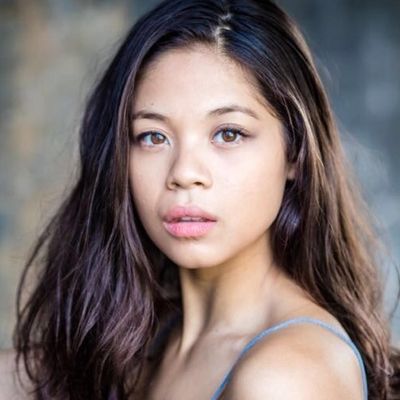
At the age of 25, Eva Noblezada is a two time Tony Award nominee, a Grammy Award winner, and a WhatsOnStage Award winning actress and singer. She starred as Kim in Cameron Mackintosh’s London revival of Miss Saigon when she was 17 years old, and shortly after played Eponine in the West End revival of Les Misérables. Eva later reprised her performance as Kim in the first Broadway revival of Miss Saigon (also her Broadway debut). In 2019, she made her film debut in Yellow Rose starring alongside Lea Salonga, who originated the role of Kim in Miss Saigon. Eva originated the role of Eurydice in Hadestown on Broadway, and it's in Hadestown where she continues to lead, and take audiences “way down under the ground”.
Eva speaks candidly about her past toxic relationship with the word “perfect”, how it affected her life as a 17 year old all on her own abroad, leading Cameron Mackintosh’s London revival of Miss Saigon, and why she felt like she was “falling for years”. She opens up about living with anxiety, panic attacks, and body dysmorphia, and how she’s learned to come back to herself at those times, and ask the important questions - “Are we in danger? - We're okay”. Talking about Hadestown, Eva shares her thoughts on Eurydice (and playing Eurydice), and her love for the “extra layer of consciousness” that can be seen throughout the whole show.
In this episode, we talk about:
- Growing up Filipino Mexican, and discovering musical theater
- A strong work ethic, instilled by her father
- The mental and physical toll of an 8 show schedule
- Meeting Tara Rubin at the Jimmy Awards
- Pole dancing as fitness, and how society sexualizes women
- Her “all or nothing” way of life
Connect with Eva:
- IG: @livevamaria
- Twitter: @EvaNoblezada
Connect with The Theatre Podcast:
- Support us on Patreon: Patreon.com/TheTheatrePodcast
- Twitter & Instagram: @theatre_podcast
- Facebook.com/OfficialTheatrePodcast
- TheTheatrePodcast.com
- Alan's personal Instagram: @alanseales
- Email me at feedback@thetheatrepodcast.com. I want to know what you think.
Transcript
This transcript was automatically generated and might contain errors.
[0:00] Alan Seales: Hey, everyone. Welcome back to The Theatre Podcast, intimate personal conversations with the industry's biggest names. I'm Alan Seales, bringing you a special episode from the vault with Eva Noblezada. I originally released this episode as number 198 back on March 22nd, 2022, while she was deep into her starring role as Eurydice in Hadestown, a role she then left on August 13th, 2023, and she popped back out of the Broadway stage starring as Daisy Buchanan in last season's production of The Great Gatsby, which is still going by the way. You have a few more weeks to catch her, actually a few more months as I'm recording this, and her performance in Great Gatsby is just phenomenal. It's so good.
You got to go see it. But then it was recently announced that she's going to be our next Sally Bowles in the current production of Cabaret. So since she's making headlines again, I figured it was okay to bring this episode back for those of you who may have missed it the first time. Listening back to this episode myself, I'm still impressed with her candor and her honesty and just her self-reflection and the journey she's put herself on. And I'm really excited to see her in Cabaret when she starts on March 31st. But before we dive into this episode, make sure to follow me on socials, even on TikTok if that's still a thing, whenever it is up or down or up or down, I don't know. Visit my Patreon account for video versions of past interviews. And now everyone, please enjoy this episode from the vault with Eva Noblezada. Here you go. One, two, three.
[1:33] Alan Seales: Today's guest is a two-time Tony Award nominee, Grammy Award winner, What's On Stage Award winner and Jimmy Award winner, and she's only 25. After winning the Jimmy Awards in 2013, she began her professional theatrical career first in London in Les Mis before starring as the friggin' lead at age 17, by the way, in the first ever revival of Miss Saigon. Among many notable performances, she's also starred in the film Yellow Rose and can now be seen way underground in Hadestown as Eurydice on Broadway. Eva Noblezada, welcome to The Theatre Podcast.
[2:04] Eva Noblezada: Thank you for having me, Theatre Podcast and Alan.
[2:09] Alan Seales: Well, I actually said you're 25 in the intro there, but by the time this airs, you're going to be 26.
[2:14] Eva Noblezada: I'll be 26. And also, fun fact, I didn't actually win the Jimmy Awards.
[2:20] Alan Seales: What, you didn't?
[2:21] Eva Noblezada: No, Sarah Lynn Marion won the Jimmy Awards.
[2:25] Alan Seales: Then what's on, then Wikipedia, uh, just—
[2:27] Eva Noblezada: Oh, you can't trust Wikipedia. People go on there and say stuff all the time. Did you see what they put for Julia Fox's Wikipedia page?
[2:34] Alan Seales: No.
[2:35] Eva Noblezada: They put that she is, what, Josh Safdie is new for uncut jams. Have you seen, have you seen that going around? Yeah. People, yeah. Wikipedia isn't always right. But yeah.
[2:47] Alan Seales: All right. All right. Well, thank you. Thank you for the correction. I'll go back and update Wikipedia here once it's all done.
[2:54] Eva Noblezada: That's great.
[2:55] Alan Seales: Cool, cool, cool. So yeah. Um, God, you have done so much in such a short amount of time and it kind of just shot you out of a cannon. I think that's, that's probably, I mean, we'll get to all this stuff, but like, let's start back at the very beginning. And tell me about like, when you were growing up, were you always into performing? Were you into singing as a child?
[3:18] Eva Noblezada: Yeah, I always tell, make the joke that I came out of my mom singing, um, which is really gross if you think about it. But, uh, yeah, I think I always just had a desire to not perf, I guess perform, but just like be in something. Uh, maybe that's why I have such FOMO as an adult, but I just like being a part of like grand stories or just like the vibe of like people coming over to a house for dinner, like, you know, as growing up Filipino Mexican, like always there's people that are family coming over for dinner or friends coming over for dinner. So that, that vibe of like people and like wanting to like entertain and like storytelling and fun. Like I was like, that was like crack for me as a child. And so really honed my, um, addiction to like entertaining, I guess. But yeah, I was always singing for sure.
[4:13] Alan Seales: So then, uh, I guess Filipino Mexican, that was the heritage and you grew up in California? Did I get that?
[4:20] Eva Noblezada: Yes, born and raised in the 619.
[4:23] Alan Seales: I can trust that fact. Okay.
[4:25] Eva Noblezada: Yeah.
[4:27] Alan Seales: So then California and, and then you came to, what was it? Northwest School of the Arts in Charlotte?
[4:34] Eva Noblezada: Yeah.
[4:35] Alan Seales: North Carolina.
[4:37] Eva Noblezada: Yeah. Charlotte, North Carolina. I love Bojangles. I love the mountains and I love Northwest School of the Arts. That's what I'm talking about.
[4:47] Alan Seales: I'm from, uh, North Wilkesboro originally, which I don't know if you know that.
[4:51] Eva Noblezada: Oh, well, I know that I, I never went off that exit, but I know that's like on the way to Greensboro, right?
[4:56] Alan Seales: Yeah. Like if you're going North, uh, uh, uh, I-77.
[5:00] Eva Noblezada: Yeah, I-77. That's what it is. Yes.
[5:06] Alan Seales: So yeah. Um, you could either go, you could go West to Wilkesboro or East to Winston and Greensboro.
[5:12] Eva Noblezada: Oh my God. I see the freaking freeway sign in my head. I know exactly where that is.
[5:16] Alan Seales: So great.
[5:17] Eva Noblezada: Yep. Bojangles, you are speaking to my soul right now, which side note, I just read an article yesterday saying that they're going to do this big expansion up here and they're going to have locations in Jersey, Jersey.
[5:27] Alan Seales: Oh, it's still too far away for me.
[5:29] Eva Noblezada: I'm going to go get you. We're going to go because like every weekend I want this four person dinner.
[5:35] Alan Seales: Dang it. Yeah. I'm, you know what I miss is the Bowberry biscuits. I haven't had those in years. I used to get like two at a time and just like, yeah, that was the best life.
[5:45] Eva Noblezada: Sweet, sweet tea. I, in college, I went to NC State in college, my roommates, my suite mates and I, we would go to Bojangles probably eight times a week to eat.
[5:55] Alan Seales: Well, you know, you got to do what you got to do, right? To survive. And it makes you happy. So live your life.
[6:01] Eva Noblezada: Oh God, speaking, it's fucking happy, dude. I, that place, I am, I am so obsessed with that place and we can spend the next hour talking about Bojangles.
[6:09] Alan Seales: Talking just about Bojangles, yeah.
[6:12] Eva Noblezada: But we won't. So then going back to you, Miss Four Piece Supreme Dinner. So then at what point did you realize that, that you wanted to make performing a career? Because a lot of people, you know, like attention and they like to, to, there's a validation in being on stage and, and telling stories or whatever the case is. But then at what point were you like, you know what, I'm going to audition for, for this school and go all the way across the country in high school, which by the way, seems kind of insane.
[6:42] Eva Noblezada: Yeah. Ridiculous. We moved when I was like eight or nine to Charlotte and we moved to Morrisville first. And I hadn't actually, I wanted to be an opera singer first because it was the first sort of theater that involved singing that I was like introduced to. I didn't even cross my mind to like have a career in just singing because I just loved entertaining and I loved, I tried to build a fricking stage when I was like five years old in my papa's backyard, had like a hammer and nails and I was like, in like, you know, very unsupervised as a kid, which kind of was awesome. But anyway, but yeah, I, it wasn't until I met, I was reconnected with my auntie Annette, who was actually in Sesame Street.
She was in one of the casts of Miss Saigon on Broadway. She really was first person, truly introduced me musical theater. And then once that snowball started rolling down the hill, I realized my dad had a fricking bachelor's degree as a music teacher. He plays saxophone. So he started to like, even when we were in San Diego, he would like sit me by the piano and we would do our arpeggios and do like all of our warmups and stuff. And so musical theater wasn't introduced to me until I was like 10. And then the Northwest School of the Arts is actually a middle school high school, which is even better. So it's a way bigger group of ages. And so I auditioned and got in and I started going there when I was in sixth grade.
[8:08] Alan Seales: The sixth, seventh, eighth grade years, I mean, being a teenager alone is bad enough. But then you throw in all of the competitiveness and the uncertainty and anxiety around the performing arts as well. So my God, right? How, I guess you're going to middle school and most people's normal does not involve the anxiety of where am I going to get my next job? Where am I going to get my next performing attribution from, right? So then all of a sudden you're thrust into this world. Did your normal shift at that point or did you know it was sort of out of the ordinary?
[8:52] Eva Noblezada: I did only because my parents were so young. They really wanted me to go for a career that was financially set. It's always a joke in the Filipino world, like you have to become a doctor or a nurse or a lawyer or a real estate agent. It's the joke because that is a job that is known for getting you a very fixed and great income. But I just was really fucking bored. I was like, why the fuck would I want to be a doctor if I have no desire to go to medical school?
[9:26] Alan Seales: And I did think about these things at a young age because people were always talking about it and what sucks about the education system is that it's so set for you and it doesn't actually ask you questions of like, what would you like to do? What would you like to pursue? You can make money off that and this is how you can do that. It's very much like you have to go to college, you have to do this and then you get a job. Because you graduate college and you have a degree, that gets you a job.
[9:50] Eva Noblezada: I started seeing it from early age. I was like, oh, but it doesn't. You get a BFA in musical theater that doesn't actually prompt you. You're not promised a job once you graduate college, even though you went through all those years of school. I don't know. I always knew that I was going to do it. So I guess I was extremely naive, but also really passionate and I'm a really hard fucking worker.
[10:16] Alan Seales: So that kind of crazy concoction just gave me a lot of confidence going in to be like, if I get rejection, that's fine. It doesn't take away from my talent. I just keep working and keep trying to get to where I want to be.
[10:30] Alan Seales: Really at that young age, you still had the wherewithal to be like, rejection is cool?
[10:35] Eva Noblezada: If you had met my dad, if you met my dad, you'd be like, oh yeah, no wonder. Because I did a lot of sports actually before I got into musical theater. It took years to truly convince my parents like, let me fully do theater. Let me fully sing. Because I did basketball. I did paintball. I did BMX. I did volleyball. I did all the sports you can imagine. My dad was like, we wanted a boy. We wanted an athlete. And you came first, goddammit. But yeah, I did all the sports. And in those sports too, I was like, I was a beast at those sports. Even basketball, even though I'm like five foot. Well, I'll lie. I'm five foot four. But yeah, my dad always gave me the really just implanted that just disgustingly awesome work ethic. My brain was constantly like a Nike ad campaign. And then I brought that mindset into musical theater at a young age, which I thought I think gave me a really good head start.
[11:37] Alan Seales: Yeah. Wow. I feel like there's a lot of kids, we call them kids, right? Middle school and high school that just take everything so personally. And gosh, not even kids, adults, right?
[11:49] Eva Noblezada: Yeah, right.
[11:50] Alan Seales: They're like, oh man. And that's one of the things that I guess I've learned through almost 200 full episodes of this podcast now. It's taken me this long to realize it, right? That you have to embrace what makes you different and rejection doesn't mean you weren't good enough. You're like the job was never yours. I think yeah, nothing's promised to you. Nothing like Michael Urie, I think that said it to me. It was like, I'm not getting the job. The job was never yours.
[12:18] Eva Noblezada: I love Michael Urie. Yeah. Yeah. It's kind of stupid that I had such confidence then and now I'm just like, oh, it's a fucking crybaby now about everything.
[12:32] Alan Seales: Yeah, it's funny.
[12:34] Eva Noblezada: Well, oh god, we're gonna get to that. Life is mid 20s and Broadway life combined again, another concoction that is just going to send people to therapy.
[12:43] Alan Seales: I'm not a concoction. That's a full on absinthe cocktail. That's just like XO, you're done.
[12:52] Eva Noblezada: Dude, while you've got your job, you're still looking for your next job and more work because you just never know the anxiety around this lifestyle.
[13:01] Alan Seales: Never know, especially after the pandemic. And what really pisses me off is when people are like, so what are you doing next? I'm like, what the fuck? What do you mean what I'm doing next? Like, I'm doing eight shows a week. Is that enough for you? That really makes me laugh. I spend too much time thinking about what other people think. And it makes sense because it's kind of a part of our industry. This is one of the few businesses where you have to be discriminated against based on gender looks. So dumb. It's so stupid. And it's one of these things that combine the physical appearance along with the overwhelming draining aspect of eight shows a week. And I know you're pretty vocal about the eight show schedule.
[13:47] Eva Noblezada: I'm so vocal about the eight show schedule. You put a bottle of wine in any actor and they'll tell you the exact same fucking thing that I've been saying. It's sustainable if you want to be tired all the time. For me, I can't do any other projects that I want to because I'm very much all or nothing. I give my all to my job. And there are other projects I want to do that I can't really half-ass them because I want to have my time and my whole body to just put myself for those projects. I would say the hardest thing is to continue a sense of gratitude that I do have a job. Because once you get into the grind of eight shows, it starts to kind of erode the fact that you do have a job and a fixed income.
And it's incredible. And I have to pinch myself and slap myself in the face and go, remember how lucky you are to have this job. Not to say that it's easy. It's extremely difficult. And my voice is always tired. And my body's always tired. Still manage to go to work and slay. But I'm always tired. In a good way.
[14:56] Alan Seales: Yeah. I mean, it's emotionally exhausting when you are giving yourself. I mean, that's something I think that a lot of people don't realize when they're like, oh, yeah, you just go and you do a show and then you go home and you're fine. But actually, a muggle friend of mine the other day went to see—
[15:03] Eva Noblezada: I love that. No one's ever said that before. I love that you just said that.
[15:08] Alan Seales: Oh, I'm going to borrow that from you.
[15:14] Eva Noblezada: Yeah. Yeah. A muggle, a muggle friend, non musical theater person. We were talking the other day and he was like, he's like, Yeah, I went to go see Hamilton the other day for the second time. Really cool. Awesome. I mean, to ask you so like it, I went to see a matinee, but there's another show that there's another cast that does the night show, right? Another cast as if another cast is two shows a week. Yeah, yeah. I was like, No, dude. No. And that's not the only day they do two shows a day. So you've got your Wednesday, usually your Wednesday to show day and your Saturday to show day. And then if you're a Disney show, sometimes you got a Friday to show Friday to show day. So and this blew his mind, because he was he was like, Wait, that's like almost a three hour show.
They just get done and turned around and do it again. I said, Well, yeah, well, literally, Broadway, literally, literally, that's what they're doing. And they have a 30 minute nap. And they're back at it. So seems like a really nice, nicely timed nap. Sometimes it's like set the alarm for seven minutes. That's your nap.
[16:11] Eva Noblezada: Well, okay, so going back, God, I cannot wait to talk about this. Okay, so but going back to high school, 1516 17. So 17 is Jimmy awards, right? And so then it was Cameron McIntosh that saw that performance. It was Tara Rubin, who's Tara Rubin. That's what it was. And I always say Tara for some reason, it's Tara Rubin, who saw the performance, and it was, you know, the Jimmy's chooses six finalists to sing their solo song they've been working on the whole week during the National High School Music Theater Awards. And it just so happened that she was friends with my theater teacher from Northwest School of the Arts. And so after the performance, she came up to me and my teacher said, Excuse me, do you have an agent?
And I was like, I don't even know what that is. And so because you have to audition for Miss Saigon. And I was like, Great, okay. Like, okay. And so we set up the auditions. And I worked with my auntie, it was Monday alternate Kim's and the Broadway cast. And then they called and said, Okay, this is your time. And my dad drove me up. We had two auditions. And then I'm sitting here with my job dropped, because you're, you're at a school for performing arts. And you don't know what an agent I didn't really know. I thought I didn't know that it was like, I could get one, I thought that I didn't understand, like, what the process was like getting a job. So we were really, we were taught, like, how to get a job. And like, I guess that was it. And how to want a job. We were taught like, anything else?
[18:00] Alan Seales: That's something that I would have been fixed when I I'm, I'm a few years older than you. And when I got a computer science degree, and then was performing with that.
[18:06] Eva Noblezada: Wow. So, so there you go. Don't go anywhere. We'll be right back after this break.
[18:11] Alan Seales: Welcome back to the episode. I had so many kids that I was performing with when I was a kid, like fresh out of high school and college and whatnot. And I, they didn't know how to print a headshot or how to market them. They didn't realize that they were a product. They are their own product.
[18:31] Eva Noblezada: Yeah, and they need to market themselves. It's so dangerous to not know. To give your power away at such a young age. Excuse me, this is why I don't drink coffee. But you see I'm going for a second sip. But um, it's it's really dangerous. And I definitely think that it's, I hope that theater education is different. Because social media like all anyone gives a shit about is branding yourself. And so I hope what they're focusing on now is substance. As a product, you want a quality product, not someone who, you know, anyway. But yeah, I don't remember ever getting taught what the steps were. So thankfully, right? I was like, yeah, we'll get you will just get I'll help you with this because she's a casting director, massive casting director.
And I'm just glad that it all was aligned. And actually, this picture was taken a week of the Jimmy Awards. I don't even look like myself. Doesn't look like you at all. There's nothing at all. I catfishing myself. No, no one can see this picture except you. So I wanted to share.
[19:44] Alan Seales: Do you think that just like you're not supposed to get drafted until you're 18 or have a drink in the US until you're 21 that you shouldn't be given the lead in a Broadway show at 17 or West End? So because again, again, going to you get you get the lead, you go out to London, make your West End debut, which is also only your second show. I think Cameron McIntosh like to tell you so you could learn what the terms were. Put you in Les Mis for a few months, right? Just yeah, which is awesome. Right. But you're 17, freshly 18, which is in Europe, you can do anything when you're 18. Awesome. So dangerous for me. Right? Awesome. First time out of the country. Yeah. Out of the country, away from your parents. In a professional troupe of debaucherous individuals. Yep. And welcome to the beginning of a great book. Also the name of my band debaucherous individuals.
[20:44] Eva Noblezada: I love that. That's great. Yeah. Yeah. Which is also named my memoir, which is—
[20:49] Alan Seales: Yeah, I digress. So you're out there. And I guess did you have time at any point to stop and say, holy shit, what? Where am I right now?
[21:03] Eva Noblezada: The answer is, you're shaking your head profusely. I'm if I could take my hat off and shake it with my hands, I would. No, I didn't. I think the only time that I was like, Whoa, this is so cool. Is when we opened in Miss Saigon. And back to your original question. I don't recommend anyone being doing anything if they don't. How do I say this? I think it depends on the person. I did not know who I was. And I didn't care about taking care of myself. And if that's your mindset, good luck. I learned that the hard way. I only cared about my performance, being absolutely perfect, and looking the way that they expected me to look. And with all of that surface shit, I completely lost sight of who I was and what I actually why I was actually doing this in the first place.
And so at that age, when you're going through all of these changes, and you have so much responsibility, and you're creating a new life for yourself, that was the last thing I needed to fall under my feet. It felt like the ground just completely left and I was falling for years. But the only stability I had was the show. So that began a really toxic relationship I had with doing the show and being perfect, whatever the fuck that word means.
[22:31] Alan Seales: What did it mean to you then? And what does it mean to you now? What's the difference of performing of being perfect?
[22:36] Eva Noblezada: I think being perfect is stupid. I think the only time I say perfect is when I make fun of people's accents. Perfect. But yeah, I think back then, because I thought that that was a thing. I just, I had I lived in the world of the very dreamy, romantic view, but some 18 year old young woman living in her own world. So like, I and as a quintuple Pisces, I romanticize everything. I'll be like, Oh my god, this moment and in my head, I'll be like, so like, I don't know. I'm so stupid like that in the best way. So when I have no boundaries or structure in my life, I just like it went. It was too much. But yeah, that was crazy. And I think back then the word perfect meant something and it was like a goal.
And now it's just like, I know it's total bullshit. And I, it's, I guess if you want to say that anything could be perfect in life, it would be having knowing who you are and being able to hold yourself when you need to coming back to coming back to the basics coming back to back to the ground so that you can go and open your mind and expand your mind and expand who you are and let go of things. I just didn't understand that relationship you could have with self and how essential it was at a young age, because I was so needed in so many ways by people who really didn't give a shit about my well being. I thought, Oh, that's great. I need it. I'm validated. But actually, I realized like, oh, it's just it's just, that's not exactly what it turned out to be.
[24:23] Alan Seales: Well, there's therapy that has gotten at my age now has gotten me to to see that same, I guess, understand that same sort of mindset. But like when I was, when I was 17, 18, I, I was nowhere near any of that. And I think too, that yeah, I would have probably imploded and self imploded and self destructed. Because you think you're invincible. Yeah, yeah. And, and so at what point then did it did it start to go sort of internal with for you? Because, you know, I was reading that you've been vocal about used to have panic attacks on stage and battled with bulimia for a while.
[24:59] Eva Noblezada: Yeah, you really you still have panic attacks, panic attacks on stage, not it's not constant. But, you know, mind, mind, very, my anxiety, very sometimes, sometimes I feel like it's in control. And sometimes I'm like, I can't breathe. Okay, don't worry, I'm fine. I'm having panic attacks. But I've learned how to hold them in and I've learned how to be with my come back to myself and go ask the important questions. Are we in danger? We're okay. You know, it's, it's experience. It's just knowing yourself and knowing what works best for you. But um, yeah, I've always I'm always internal. I've always been internal my whole life. I feel very deeply. And sometimes it's hard for me to get out of that preface.
You know, but I think that I have learned how to use that to my advantage, which means I don't have to look at that heavy feeling this as a downside or a negative thing. But I've always been extremely vocal about the things that have not worked out for me. And that I've been against me in this industry, because it's important for people to one not feel alone. And to, to remember that it's still a job, just because you love it so much. It doesn't mean it's not going to hurt you, or that there are things in it that can't hurt you. Because we're not invincible. We're extremely durable. I'm extremely durable. But I'm not invincible. And I think understanding that I can look at my weaknesses, and I can look at my strengths. And I could start to really build up who I am. And the more that I know who I am, the more confident I can be, no matter what the circumstance is, even if it's really fucking shitty.
[26:39] Alan Seales: Is is it the panic attacks on stage? I, I've heard this from a couple of people that I've talked to and like Desi Oakley's talked about it in Patty Murin's talked about it. I love Yeah, love them both. And especially I'm thinking about Patty's conversation specifically is she was saying that literally a Disney queen living the dream on stage in front of thousands of people. And all of a sudden, she's just like, holy shit, they're all looking at me. And that just all of a sudden starts to freeze up while like, goes on autopilot, and the show doesn't stop. But then inside the mind and the brain is going 1000 miles a minute.
[27:15] Eva Noblezada: Oh, God. Yeah, that's a that's a perfect way of describing how it feels.
[27:19] Alan Seales: So does that and that happens with you on Hadestown still to—
[27:23] Eva Noblezada: Absolutely my people's panic, people's panic and anxiety attacks are, are rooted in different anxieties and triggers that are that have happened in the past different traumas that happened in the past. Mine specifically has to do with body dysphoria, and with bulimia. And related to being on stage, I was I was forced to lose weight at a young age. And I was forced to look at myself in the mirror and and really encourage you say you're ugly, you're you need to lose weight, and your skin's horrible. But we love your performance. Your performance is great. Everything else is bullshit. And there were actions that were taken to change all those things. So of course, still, as a woman, women's bodies change all the time, there'll be times where I'm on stage, and I'll go, Oh, my God, I feel like my arms are like expanding, I feel like my stomach's real.
And then I can't breathe. And then I have a panic attack, because those traumas that are so synced for body and stage are so vivid to me still sometimes, absolutely happens all the time, even in my in my normal life happens all the time.
[28:33] Alan Seales: Well, that's it. That's really, that's really an interesting dichotomy, I think, because I guess where I'm going with this is through the pandemic. And we're going to get to the whole like performing pandemic stuff, probably, but I've been posting lots online about pole dancing. Like it's a side note, it's an amazing workout, right? Like full body, very cardiovascular, it's just really, really hard. And it's one of those things. It's a profession where, in general, I guess, maybe not in general, maybe I'm stereotyping, but you do it like the pole dancing is so that men can sexualize you. And as someone who has body dysmorphia, right? Is there like, is that in constant conflict? Like there's the need sort of to be viewed because you don't have to record and post either, but you're inspiring.
[29:25] Eva Noblezada: No, the need is to not be viewed. And there is a huge stereotype with and obviously, that's that was the that was the first time we saw poles and strippers and sexual work and sex workers was so that they could be sexualized because it was a business. I'm not a sex worker. I completely support sex workers. I completely support strippers. And I am not a stripper. I pull solely because it's fitness space for me. And because that kind of movement is freeing for me. The lack of clothing is is not to be sexualized. It's because we need their skin to grip the pole. That's just very, very plain and simple. You go to any strip club, and of course, they're going to be wearing very little clout to nothing because that's their job is that they want the goals to be sexualized.
But also, so they could stick to the pole to do the dance and to do tricks. There are different types of pole. But I think it's just important for me to say that as a pole dancer, I completely support sex workers and strippers. And that I'm in I am, yeah, very in support of that. But no, I don't want to be viewed. The goal is to as a as a and as a man to you also, I'm sure I have come across a lot of, you know, imagery in the media that puts pressure on you, possibly to change your body and that this is the way that an attractive man looks and it's all bullshit. And it makes you feel like shit all the time. It's it's and it's not just women. It's men as well. But but women, it's it's, it sucks because anything we do is sexualized fucking breastfeeding is sexualized.
It's disgusting. It's like, that's the disgusting society we live in. So me posting a video of me with a sports bra on and little tiny shorts. Sure, people can look at it and say, oh, she's sexualizing herself. That's your point of view. And it makes sense why that's your point of view, because that's the society we live in. It's hyper sexualized. But that's not my intention for putting it up there. Do I enjoy doing the workout? And do I like posting it to go like, yes, women can do this. I didn't know how to pole dance until about a year and a half ago. Look at the fucking tricks that I'm doing. It's amazing. It's amazing what the body can do. Absolutely. It's hard. Do I also, however, use pole dancing to have a deeper relationship with my body so that I can value it more and find it more beautiful apps a fucking movie.
Those things are so many categories of enjoying your body and realizing how sexy you are that doesn't have to be sexualized. It's just so easy to sexualize anything. I mean, there's a frickin cactus magnet on my bridge. And if I wanted to sexualize that, I can like it's just so dumb. Like, that's just what our society.
[32:04] Alan Seales: Oh, I'm going to go out on a date with that cactus magnet.
[32:17] Eva Noblezada: We're going to take a short break. Stay tuned for more of the episode.
[32:34] Alan Seales: I love how this all kind of plays back to your literacy a little bit. And I feel like this sort of this role is really perfect for you in that it's, it's a strong, feminine character that you're you're playing it and possibly and most likely, you know, with the with the help and the direction of Rachel Chavkin and the rest of the creative team. And yes, everybody is just amazing. That you're going to see is is not some damsel in distress. Yet, you're going to see loves love. So there's the scent, there's the soft side, but there's the take no shit side.
[33:06] Eva Noblezada: Yeah. So how much how much of that is Eva? And how much of that is what, you know, the creative team, you and the creative team put together for your literacy?
[33:11] Alan Seales: That's a great question. I am. I feel like your literacy has taught me so much that and as somebody who loves the character so much, it's hard for me to not say, Oh, we're just like, we're just like each other. And then it takes away from an actor's ability to like, my goal is to go on stage and snap. You do not see any either. That's, that's besides the point. I'm not on stage to be either playing your literacy. I'm on stage and I'm your literacy, period. Like, and we're very, very different beings. But of course, like, if you wanted me to go play frickin Mufasa, there are things that I can see myself in that character to do what I'm saying, like, beauty of humanity. But um, yeah, I would say that I love that she's not she doesn't put on the damsel in distress.
It just it really does has you look at it in a very real perspective. And actually, we said this in an interview, and I thought that's I always think about that now is that any audience member, no matter who they're essentially rooting for, when they come into the theater can really see themselves in every single character. It's there. And you know, maybe there's one that you like kind of go feel most familiar with, but I see myself in all of the characters.
[34:31] Eva Noblezada: As Eva, you really see plays an integral part, though, to show you the I guess how difficult it is to not be vulnerable. God, we're watching bats right now. And if I, if I put a drinking game for every time someone says I'm really glad they're being vulnerable, I'd be drunk five minutes and for sure. It's so annoying. But um, it's not it's not it's not the beauty of her vulnerability. It's her. It's her. The beauty of what is the authenticity? I was just gonna say being authentic to herself because she she makes a decision. She doesn't is not forced to go down to hell. She and that's why people like hey, he's a villain. He's not really. He gives her a choice. Yeah. And she makes a fucking choice. So and the fact that—
[35:22] Alan Seales: Yeah, and I love that she I love that she does it because a lot of the roles that I played, my characters did not have a choice. Or like they didn't feel like they did. But you're ready. He knows that she has a choice. There's, there's a there's an extra layer of consciousness that I love that you're ready. He has and in throughout throughout the whole show, like there are things that she does because she wants to or she can things that the way that she dresses the what she says how she fucks with Orpheus when they first meet and there she's like, who, who are you? Okay, I'm gonna test you to see if you're really like the man you're saying you can be. And it's not because she's being flirty or she's like, this is the guy for me.
She's genuinely saying like, Okay, what can you provide for me? And I love that she has that sense of self. I really do. It's really she's got a she's got a wherewithal that I don't know if if this was intentional, or if this comes across because you are bringing a little bit of yourself into the character, but but she's be wise beyond her years. And she's got this intention and this need to like, you said she prove you know, Orpheus proved to me what can you give me? Can you be the person you're saying that that you can? Can you provide for me? Can you do this? Yeah, like, I'm going to support you. I'm going to choose. But can you can I'm going to support you? Can you choose to support me? And you're like, you're actually having an Orpheus test a little bit. And I feel like that that's very much sort of echoes in a way how you were sort of shoved into into center stage, right at such a young age.
[37:20] Eva Noblezada: Sure. I mean, one of Hermes lines is Eurydice was young girl, but she saw how the world was. Yeah. And it's not that I put myself in Eurydice. It's just that a lot of people have those experiences where you probably know about certain parts of life that I don't and I probably know about certain parts of life because I've experienced and you haven't yet or you or you won't, you know, people are so different. And that's the I love that beauty. But um, I know what that's like, because I started so young. And Eurydice knows that's like, because she had to live very survivalist life for so from such a young age. And it's almost it's not me putting myself into character. It's like, Oh, yeah, I do know what that's like. Awesome. Yeah, so cool. I do know what that's like.
[37:36] Alan Seales: Yeah, yeah, I love that. I mean, it comes across it's it's very much just like there's a there's a worldly wise to Eurydice and an acceptance of like, I'm making this choice and I'm okay with the outcome. And, and, yeah, I feel like that's very much what I see from you. And what I know about you from a distance is, I feel like that's sort of how you are as well. You're just like, well, I'm gonna, I'm gonna evaluate it. I'm gonna get all my options. I'm gonna make a choice. And then I'm gonna stick with it. And actually, you said this in the beginning, you're like, you're all or nothing. You can't do two things at once.
[38:06] Eva Noblezada: I am very all or nothing. But I appreciate that. Thank you so much for saying that about the show. But yeah, I, I will say though, I have my brain in my way, which so fast, I see all the options and I go based off what I know is right for me. And what I feel is right for me. And I will say 99% of the time is what I feel is right for me. Because I don't know what's gonna happen in the future. I mean, I wish I may know maybe I don't wish I was like, that'd be actually really fucked up. But um, yeah, I go, I really go based on a feeling. A lot of the time, that's like kind of how I like, maneuver my way through life. It's just based on feeling.
[38:53] Alan Seales: Well, it's a good way to go. It's it's sort of, it's the energy, you're following the positive energy pulling you forward, which I have another podcast called was it chance where we talk about people following that creative energy and manifest love that opportunity. Yeah, so it's so great. It's totally sort of the same thing. But then also, going back to like, sort of the the emotional uncertainty of the time. Coming out of Miss Saigon and before Hadestown whatnot, like you got married and divorced at such a young age, as well.
[39:24] Eva Noblezada: I did. Yeah. So I mean, I don't really know what to what to ask to start talking about that. But I want to acknowledge—
[39:29] Alan Seales: Oh, it's a very simple explanation. I had a boyfriend. I was very young. He proposed, I got scared. I was 21 years old. And I said yes, because that's a lot of pressure. And I didn't know what else to say. And it happened. And it was I go back in time, I wish I could have said, you know that you can say no. Like that's an option. You can say no. But it made sense why I said yes, because there was never a time in my life where I could say no to all the fucked up shit that people were making me do lose weight, we're gonna send you free meals to your door. Go on contraception. Okay, okay. Okay. I always said yes, because I there was a level of performance that I thought I had to achieve off stage. So I completely understand why I said yes.
[40:20] Alan Seales: Oh, you said you were scared? What were you scared of?
[40:23] Eva Noblezada: Well, it's a big decision is saying no to a person who you've been in a relationship with. That's huge. I still didn't know who I was. And I at the time. I mean, that wasn't a it wasn't a toxic relationship, but it wasn't. It was comfortable. So of course, what I say no to being not comfortable. And those were the questions I was asking, because I didn't know. I didn't know the complexities of a relationship and how I brought myself into them and how I was changing. I didn't realize that because I was in a I was in a routine. I was in a groove. I like I said before, I hadn't yet developed truly my sense of self, and my ability to set boundaries and my ability to say no, and not care about what disturbances that caused that was a big thing.
I can see the outcome if I had said no, which I originally wanted. I did. Essentially. I thought, Oh God, this would happen. These people would be upset. I would lose these friends. This person would not like I thought about all those things. Of course I did. So I made the decision based off fear, fear of causing a disruption and fear of not taking up space in a way that really benefited me and just me because I thought that was selfish. Big lesson, everyone.
[41:46] Alan Seales: Big lesson, you got to put yourself first. Otherwise, you're gonna always just now I fucking know that but you you'd be 21 years old on a on a beach in Tulum when you're paying for the whole vacation and someone proposes to you and you've never even talked about marriage before.
[41:59] Eva Noblezada: And you're comfortable. You'd be like, like, that's exactly how I felt. Yeah, I don't say I have any regrets because I wouldn't obviously be who I am now the lessons I've learned. But I will say that it happens. And it just so happens that you know about it because fucking press.
[42:19] Alan Seales: Yeah. Social media, you wouldn't know it any other way.
[42:24] Eva Noblezada: Press and social media. God, they talk about everything. There's an obsession. I think there's an unhealthy obsession in this country with—
[42:34] Alan Seales: Of course, it's unhealthy. Because people have our society doesn't encourage people to know who the fuck they are. Because if they really cared about who they are, and what's good for them, then they wouldn't give a shit. But who's getting divorced and who's dating who now and relationship drop like they wouldn't they wouldn't care because it doesn't mean anything. I think it's like, because half half the world is on half the world have to, I guess, be his country. I'll generalize our country half the country's on Prozac probably more. I don't know. I don't actually know this. I don't even know what that is.
[43:00] Eva Noblezada: Isn't that I don't even know what that is, man. Prozac antidepressant. Okay, very, very generic antidepressant. It's been around for years. And I feel like there is so much internalization. Like you said, what we're talking about a second ago is that you walk down the street and there's guys with with 10 pack abs and girls with perfect boobs and this thin body and always we're trying to get sold something by by being told what who we are is not good enough.
[43:27] Eva Noblezada: Yeah, cuz we're living we live in a very dumbass capitalist system that tells everyone a certain group of people. You're perfect. You're the elite. Everyone follow you we get money you get money. Everyone else fucking losers fix yourselves. You can't get you can't have this opportunity because you're from here. It's so the way that it's set up is actually—
[43:49] Alan Seales: Yeah, yeah, we're not gonna get to that. We don't have time.
[43:53] Eva Noblezada: Yeah, I wish I could talk to you forever. You're so—
[44:04] Alan Seales: But I guess this is a good place to stop. Oh, actually, no, before we stop, I want to go full circle and take it back to your parents. They originally wanted you, of course, to be the the financially stable individual, but—
[44:10] Eva Noblezada: Sports sports, which I don't understand because there would still be such a small percentage that I would make a good living off doing fucking BMX. But my dad, my dad, he was like, he just really wanted to see me succeed in something. And yeah,
[44:25] Alan Seales: So when have they have they come around now? And they've been like, you know, Eva, we're proud of you. We're great. This is—
[44:30] Eva Noblezada: Are you kidding me? Of course they have because they're I'm like, we want professional TV done. No, I'm joking. I'm joking. No, they they knew deep down that it was about trust. And of course, it took them a long time because I was their first baby. And they want their baby to end up they were saying my mom had me when she was 1718. So they they still of course, you're like, we wouldn't want you to do what we wouldn't do. And I'm like, well, you haven't had a chance to know what you would not do. So let me let me be me. That was kind of how I felt. But of course, they the second that they saw me in that environment of performing, and in singing, they were like, okay, she's happy. And that's all we could ever ask for.
[45:23] Alan Seales: Wow. Yeah, I love that. And I'm happy for you.
[45:28] Eva Noblezada: Thank you there. It's very, I'm very grateful to have very, very supportive family. That's for sure.
[45:30] Alan Seales: Yep. All right. So we'll wrap up with three standard closing questions. I ask everybody. The first one is very simply is what motivates you?
[45:32] Eva Noblezada: What motivates me? I'm now a mother to a beautiful little dog is asleep on the couch with literally 50 toys. So that at the moment motivates me because getting a dog really distracted me from getting caught in the cycle of depression, anxiety. Not permanently on all the time, but a lot of the time. So I'm it motivates me to remind myself that there is more to my life than how I feel. Sometimes it's shit. And I think everything shit. It's like, no, no, let's not do that. So that that motivates me. And also, the people in my life, the people that I love that love me, motivate me. And also, my young self motivates me. I look at that picture I showed you a lot, actually, recently, lately, and I go, she would be so proud of where we are and who we are today. So that motivates me.
[46:29] Alan Seales: Well, that leads to my next question is what advice would you give to your younger self and younger people listening now starting out down a similar path?
[46:35] Eva Noblezada: Oh, see, I love this question, because I wouldn't give my younger self any advice, because really, no, because I, I think it's cheating. I think it's like, let your younger self have at least for me, this is my personal experience. She needed to do those things because innately younger me knew what the right thing for her was she was just scared to take up space and, and do what was right for her solely. But we learned a lesson in a really great way. And hey, it's a fucking punchline. Now I'm divorced. Hello, that's hilarious. And I'm two times when I'm a two time loser. Like it's funny. We're writing our memoir. That's what I want to say to younger me. Do you it's gonna make a great book one day.
I do have a I do have a thing where if I could go back in time, I would dress as like really older me. And like scare the shit out of my younger self. That's probably what I would do. And be like, something like, I don't know, like, make it seem like really witchy. Like, don't, you know, no, I'd fuck with myself, younger self more than I would.
[47:31] Alan Seales: Okay, so last question, then if you can only see one show for the rest of your life, but you can see as many times as you want, what would you say?
[47:44] Eva Noblezada: MJ the musical? Oh my God. So good, right? So good. That's all I have to say. Objectively, one of the best shows I have seen. Hands down.
[47:56] Alan Seales: Yeah, I have to say phenomenal. All right, where can we find you on social media?
[48:03] Eva Noblezada: Oh, God, um, you can find me on Instagram at Liv even Maria. And also on Twitter at even aizada. But no pressure. I don't care if you follow me or not. It's your choice.
[48:18] Alan Seales: I think you should I think the world still revolves. Yeah, you got you got you post some good stuff. All right. You can find more of me at the theater podcast.com I'm on Instagram and Twitter theater underscore podcast on Facebook who uses that facebook.com slash official theater podcast leave a rating and a review wherever you're listening. Now this has been edited by well rounded hoodlum productions jukebox the ghost gave you the music you're listening to right now and even noble exotic Thank you so much for joining us today. Take a deep breath make the world a little colorful.
© Broadway Podcast Network, All Rights Reserved