

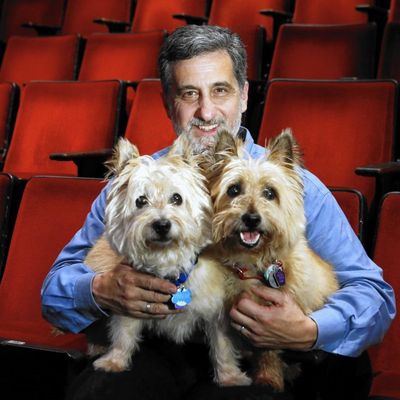
Bill Berloni has dedicated nearly five decades to bringing animals to life on stage and screen, all while championing rescue work and humane training practices... Read More
From the show: The Theatre Podcast with Alan Seales
Guests
Featured Shows


About
Bill Berloni has dedicated nearly five decades to bringing animals to life on stage and screen, all while championing rescue work and humane training practices. From his semi-accidental start training Sandy for the original production of Annie to working with a menagerie of animals for Broadway, film, and TV, Bill’s journey is as heartwarming as it is inspiring. In this episode, Bill shares stories of training everything from dogs and cats to butterflies and snakes, and how he has created unforgettable moments in productions like Gypsy, The Greatest Showman, and Legally Blonde. He also discusses his groundbreaking work with Naomi Watts in The Friend and how this movie is redefining animal performance in film.
Bill’s commitment to treating animals with respect and compassion shines through as he recounts the joys and challenges of working in theater and entertainment. Whether it’s training an actor to command a dog or preparing a cat to handle audience applause, Bill’s creative solutions and passion for storytelling offer invaluable lessons for anyone working in the arts—or with animals. With humor, honesty, and insight, this episode is a tribute to the deep connections we share with our animal companions and the magic they bring to the stage.
Bill Berloni is a Tony Honoree for Excellence in Theatre and the founder of William Berloni Theatrical Animals, a company that provides trained animals for theater, film, and television. His career began in 1977 with the original Broadway production of Annie, where he trained Sandy, a rescued dog. Since then, he has worked on countless productions, including Legally Blonde, The Ferryman, Gypsy, and The Leftovers. Bill is an advocate for animal rescue and humane training practices, and his work has been featured in books, television, and film.
This episode is powered by Welcome to Times Square, the billboard experience that lets YOU be a star for a day. Learn more: https://welcometotimessquare.com/
Connect with Bill:
- Instagram: @berlonitheatricalanimals
- Website: berlonianimals.com
- Learn more about The Friend: https://www.rottentomatoes.com/m/the_friend_2024
Connect with The Theatre Podcast:
- Support us on Patreon: Patreon.com/TheTheatrePodcast
- Twitter & Instagram: @theatre_podcast
- Facebook.com/OfficialTheatrePodcast
- TheTheatrePodcast.com
- Alan's personal Instagram: @alanseales
- Email me at feedback@thetheatrepodcast.com. I want to know what you think.
Transcript
This transcript was automatically generated and might contain errors.
[0:00] Bill Berloni: Hi, I'm Bill Berloni, and welcome to The Theatre Podcast with Alan Seales.
[0:11] Alan Seales: Hey everyone, welcome to an all-new episode of The Theatre Podcast with Alan Seales. I am your host, Alan Seales. That's me. And this episode features an extraordinary guest whose unique talent has made tails wag and audiences cheer for nearly 50 years. Our guest, Bill Berloni, is the legendary animal trainer responsible for creating some of Broadway's most memorable furry stars. Yes, he trained the original dog for Annie to the animals currently stealing scenes in Left on Tenth and Gypsy on Broadway right now. But what's even more remarkable is Bill's unwavering commitment to rescuing and rehabilitating these animals before turning them into stage icons. And something I thought was pretty cool too is if the animal doesn't want to go on, he doesn't make them go on.
They always have coverage. So in this conversation, we dive into Bill's fascinating journey from a 19-year-old apprentice to a Tony Honoree for Excellence in Theatre. And we hear about his humane training practices, the challenges of working with everything from dogs to butterflies, and his unexpected adventures, including collaborations with, you know, little people like Mike Nichols, Tom Hanks, Naomi Watts. Uh, the you know, the list goes on. If you're watching this episode on Patreon or Spotify, you'll see I'm in a studio again for the first time in years. I've partnered with an amazing team over at Welcome to Times Square, the premier billboard experience that lets you be a star for a day.
So check the show notes for more information about that, or visit Welcome to Times Square.com. And don't forget to follow me on social media and support the podcast on Patreon. Now, everybody, please enjoy this episode with Bill Berloni.
[1:41] Alan Seales: One, two, three. We're gonna get this intro going while I have a dog trying to lick my face. Today's guest is someone who has spent decades creating some of the most unforgettable stars of the stage and screen, many of them with four legs and oh, there goes one. Four legs and a wagging tail. This gentleman is a legendary animal trainer whose incredible journey began at the age of 20 when he trained Sandy for the original production of Annie. That experience not only launched his career, but also sparked a lifelong commitment to rescuing and training animals for the stage and screen. And now with a 48-year career and dozens of Broadway show credits to his name, spanning from Annie, of course, in 1977 to the current productions of Left on Tenth and Gypsy here in 2025.
I can't believe that's the year now. He has brought a menagerie of animals to life in iconic productions. He currently has four dogs starring on Broadway, including in Left on Tenth and Gypsy, and his company, William Berloni Theatrical Animals, provides a wide variety of trained animals for theater, film, television, all while championing rescue work and humane training practices. Something that three words I've not heard together that I'm excited to get into. And from The Greatest Showman to Disenchanted, Bill's influence extends far beyond Broadway, proving that talent truly comes in all shapes, sizes, and levels of hair, right? So Bill Berloni, holy cow, man, welcome to The Theatre Podcast.
[3:08] Bill Berloni: Thank you. I'm so happy to be here. And if anyone is watching on camera right now, we are actually coming live from the Welcome to Times Square Studio here in the Paramount Building. It's beautiful. And who do we have in your lap right now?
[3:20] Bill Berloni: Oh, on my left, we have Nessa Rose. Um, she's playing um Honey in Left on Tenth, but she's actually uh our number one Toto. She plays Toto all over the country. Oh, she's an old pro.
[3:32] Alan Seales: So do people come to you for dogs to do specific parts? Like I need a Dorothy dog.
[3:38] Bill Berloni: Um, now it seems that our canon of hits are Annie, The Wizard of Oz, and Legally Blonde. So regional theaters all over the world call us for animals for those productions.
[3:48] Alan Seales: That's crazy. And then Charlie is Charlie standby for Left on Tenth?
[3:53] Bill Berloni: No, Charlie actually has a role in the show as well. He plays the role of Charlie because there's two dog characters in them. So they understudy each other but um they play two different roles.
[4:03] Alan Seales: Well, that's what I was going to ask is what happens when an animal gets sick during a production? Are there standbys and understudies for the animals too?
[4:10] Bill Berloni: Well when the producer says the budget's too small and we can't afford backup dogs for the dogs they'll have to understudy each other.
[4:18] Alan Seales: Oh, what can I say? Charlie's at my feet now. I love you, Charlie. I'm gonna take you home with me.
[4:24] Bill Berloni: You can't go to Left on Tenth.
[4:25] Alan Seales: Uh, so how many, let's see, how many animals do you have currently on Broadway? You have these two in Left on Tenth and then there's one in Gypsy?
[4:25] Bill Berloni: Uh, two in Gypsy. There's one role and an understudy dog for that so there is an understudy there.
[4:39] Alan Seales: Okay. So walk me through training an animal for the stage and for something because I assume you're not gonna have a set in wherever you're training them and I want to get into that too but like when you start to train them at what phase do they go towards uh do they get on stage and then when they start working with the leads and then what about the understudies and the standbys and how does everybody get to work with all of these individual animals?
[5:02] Bill Berloni: Well it's a it it's it's kind of a crazy thing. It's sort of a hybrid of dog training and theater rehearsal. First, um producers and writers will call me with a script, "Bill, we have dogs in a play. What do they have to do?" And usually I'll sit down with the director and the writer and actually figure out things that dogs can do eight times a week in front of a live audience. Because often what they're dreaming of is things that, you know, they've seen on TV, things they've seen on YouTube, but you may not be able to do that on a live theatrical stage. So once we agree what the behaviors will be, we start a casting call. And basically, my wife and I start going to shelters all around the country looking for the dogs for that particular show that they're casting for.
Um, we'll find some candidates. I'll go out and temperament test them. And if I feel that they'll be good for the show, we'll adopt them. So once we have the dogs, I mean it's usually six months to a year out to train these dogs to be ready for the city. It takes that long.
[5:57] Alan Seales: It takes that long.
[5:58] Bill Berloni: I mean, first we have to heal them emotionally and physically, and then we just start training them. And you know, a highly trained dog will work on stage in Broadway, um Times Square, you know, they'll work anywhere. So we just really start working them in our training room at home. Once they get used to that, we take them out, we take them walking through towns, we take them to Home Depot, we take them to all these places where we have them do their behaviors. So it becomes normal for them to go to Home Depot and do their show. They don't know. Um, ultimately when we do get to rehearsal, that's where it gets sort of tricky because, you know, I realized as a young actor with Sandy, Sandy couldn't look off into the wing and get the command and do the behavior.
It had to come from the actor who was there. So we had to train little girls how to be animal trainers. And little girls love being animal trainers. And that sort of created the model where whoever's acting on stage with the animal, we train them to be animal trainers, and they're controlling the animal's behaviors.
[6:57] Alan Seales: Right. So they have to have an affinity for animals, they have to love animals, that we have to build a bond, and they have to be able to do the commands right. And for the majority of my career, that has been a successful thing. And so ultimately what the audience sees on stage is a real relationship. Um, and I'm in the wings just sort of supervising.
[7:15] Alan Seales: That's nuts. And okay, so let's take the specific case of uh Audra McDonald. Okay, so we have Left on Tenth dogs here. Let's talk Juliana Margulies, right? Uh for these for these amazingly cute animals that I want to take home. And so when do you start working with Juliana? When do you start working with her understudy? And then if somebody has to like weird COVID, you know, knock on wood, like the casting goes insane. How do you start like slotting people in who know how to work with the dogs on stage?
[7:42] Bill Berloni: Normally, uh, well, uh, in the case of Left on Tenth, both uh Juliana Margulies and Peter Gallagher are huge dog lovers. Huge. So it was no big deal to walk into the rehearsal room first day and go, "Hey, we have to work together." They fell on the floor and started playing with the dogs like you did. So that was a good sign. And we started working with them every day. Now the understudies watch those rehearsals until we actually get the show up and set the pattern on stage. We don't have anything to teach in understudy. So the understudy people watch us. Once the show is up, then we begin understudy rehearsals with the understudy actors and the animals and to get them up to speed as you would any other part of the show.
[8:21] Alan Seales: Huh. That's so interesting that you have to think about the, you know, the put-ins, because you when you bring in a new cast to bring in new cast members, you're always doing put-ins and whatnot, but you always like with animals, you have to actually I guess um the schedule extra time and have all this extra thought process that goes behind it. And you know, like someone's was is it the prop department who's gonna make sure that there's always like the treats in the pockets of the costumes for the leads, or you know, how how does how do you make sure? Because I'm always I always see like little upstage they sneak the treats or something, you know, to get to give them the reward.
[8:53] Bill Berloni: Um, that's usually something we do. Um, sometimes they're set on stage, sometimes they're in their costumes. Yeah, it's it and that's the fun of it. It's like creating it new every time, and it's like magic trying to make it happen so the audience can't figure out how it's done.
[9:07] Alan Seales: All right. So let's rewind to 20-year-old Bill. And that was when you first, of course, trained Sandy for the original production of Annie. And how did you even get that gig? What were you doing beforehand and what made you start training?
[9:23] Bill Berloni: I am born and raised in Connecticut. I wanted to be an actor. I knew that in high school. And um, when I enrolled in university there, I didn't want to spend my summers fooling around. So I applied as an apprentice, a technical apprentice at the Goodspeed Opera House, the theater in Connecticut that's dedicated to the American musical. Um, and so they brought me in as a technical apprentice where we worked 70 hours a week and we lived in the tech house and we built sets, but there were New York actors there and New York directors. They just wanted to be around and learn the professional aspect of it. And they must have liked me so much my first season, they invited me back another season to work for free for 70 hours a week as killer.
Yeah. Um, and that season and they used to do two revivals and a new show every season. And that season, the summer of 1976 was the year that they were going to Annie as the last show of the summer. So we got the first show up and they looked at the list of props and it was a dog in it. So the producer at that time, Michael Price, um, needed someone to train the dog. Well, they called New York trainers, they were way too expensive. And so they went to the paid staff, the prop people, the carpenters, and they all threatened to quit if they had to train the dog. I mean, that's not their job, really. So he needed somebody he could persuade into taking the job on of training the dog. One day I got called into his office.
Now I'd never been called into his office. Everybody was afraid of Michael, so he sat me down in his chair, prayed, you know, praised the way I'd been working, and he looked at me and smiled and said, "How would you like a part in one of the shows and your equity card?" Now I'm all of 19 years old, and I'm thinking, my God, he recognizes my acting ability. By the way, he's been backstage. He's brilliant. I was like, "Yes, Mr. Price, I would love that. All you have to do is find and train the dog for the new show." Okay. I mean, it was that quick. It was one of those, uh, it was my foot in the door, and I just agreed to it. And it took me like a week or so to realize what I had agreed to. And he gave me $35. This is summer of 1976 to buy the dog and feed it all summer. So um, somebody told me they had cheap animals at the animal shelter.
[11:27] Bill Berloni: So the equivalent of 194 today.
[11:30] Bill Berloni: Okay, okay, good, good.
[11:31] Bill Berloni: So um Thomas Meehan, uh, God love him, had written in the script, Sandy was a dog of um mixed breed and sandy color and indistinguishable breed.
[11:43] Bill Berloni: So mud.
[11:44] Bill Berloni: So I one day I started to go into all the shelters in Connecticut, and uh I I grew up on a farm, I was an only child.
[11:49] Bill Berloni: I had animals as my my friends, not as my pets.
[11:52] Bill Berloni: And as I started going to the shelters, I was profoundly moved.
[11:55] Bill Berloni: I saw dogs in these horrible conditions in their own feces, and just sad.
[12:01] Bill Berloni: And and every town I went to, I just got more and more depressed, and I ended up at the Connecticut Humane Society, which was the largest shelter in Connecticut.
[12:08] Bill Berloni: 100 runs, dogs barking, the smell was terrible.
[12:12] Bill Berloni: And there was one little dog who wasn't barking, who's sort of beige colored.
[12:15] Bill Berloni: And I went over and I I knelt down and he sort of came over and sniffed my hand.
[12:20] Bill Berloni: And the attendant came and he ran to the back of the cage.
[12:23] Bill Berloni: So we go to the office.
[12:25] Bill Berloni: Now, imagine me 19 years old.
[12:28] Bill Berloni: Hi, my name is Billy Baloney.
[12:29] Bill Berloni: I'm working for the Good Speed Opera House.
[12:31] Bill Berloni: I need to audition a dog for a show.
[12:32] Bill Berloni: I need to take a picture. And I'm rambling on. He goes, Do you want the dog? I said, Well, I have to get him approved before I could take him. Said, Well, he's gonna be put to sleep tomorrow. And I was and I didn't know what that meant. Because then we I never had a dog put to sleep. They died naturally. Yeah. And when he explained to me, I was like, uh uh, well, can I put a deposit down on it? And I reached in my pocket, I had three dollars because I'd eaten lunch, the adoption fee was seven, and he kicked me out. So I ran back to the opera house. Michael Price was out of town, the producer Martin Charnon was out of town. There was nobody there to okay this dog. And so I left thinking this dog was gonna die because I couldn't do anything to save him.
And so as I bemoaned that all night long at the show, my roommate at the time said, Idiot, here's the four bucks. Go back tomorrow morning and get the dog before they open, which is what I did. And that's how we got the original Sandy. And he was pretty severely abused. Um, so I I got back to the to the shop, and I'm dragging this scared dog into the into the shop, going, Hey guys, I found Sandy. And they thought I was out of my mind. They're like, How are you gonna get that dog on stage? And being Italian, I'm like, well, we'll feed him a little bit, maybe he'll come around. And and that's sort of what we did. He lived with us, he worked with us, he went to the theater with us, he became the theater became his home, the people became his family, there were treats everywhere.
So he really started to come around. And then, of course, the first day of rehearsal, he met a little girl and kids and dogs, that wonderful thing happened. So I didn't even, I just watched what happened. And ultimately, the very first show when I let Sandy go, he was going to the actress Kristen Weigard. Not because I told him to, because he wanted to. And he stayed with her because he wanted to. And then he came off to me when I called him. So it was just sort of a positive reinforcement. Hey, let's put on a show. Hey, let's get a dog, you know, and and move forward. And um, that's how it started. And that summer, I was moving to New York. I'd enrolled at NYU and I was studying with Stella Adler when she was alive.
So Sandy and I moved to New York, five foot five-story Hartman and Grange village that didn't allow dogs and snuck him up one night and used to walk him on the roof so the super wouldn't know we had a dog. And uh after my first semester there, Mike Nichols' office called and he said, Martin Charn is insisting that we use you and your dog for the Broadway production. Are you interested? And I thought, any way to work with Mike Nichols and Broadway. Yeah, I'll be a dog trainer. And so, you know, that's how it all started. And and in April of 1977, Annie opened on Broadway with Sandy and Andrew McCardell, and I became a world famous animal trainer at the age of 20. And Sandy never missed a show in seven years of the production, correct?
He never missed not because of illness. Um when Andrea left the show. This is a crazy story. She was hired by Liberace. He used to unlike you do. Yeah, I mean, he had this big Vegas show, and he had these up-and-coming stars. So he asked Andrea to be in his Vegas show. And of course, he was so nice and he said, I'll give you anything you want. You know, what do you want? And she said, I'd like to do tomorrow with Sandy. I mean, she was joking. Somehow, Mike Nichols' office called me and said, You're going to Las Vegas for three weeks to do, you know, Andrea's act. You've got to put the understudy dog on. With Liberace. With Liberace. And so, yes. So Sandy and I were flown. I lived in one of his guest houses.
He was a wonderful sweet man. And Andrea and I got to do, you know, another three weeks being together. She would just sing tomorrow as the finale. And the understudy dog went on. So he so Sandy never missed because he was ill, but because he was bought out by Liberace for three weeks. True story.
[16:21] Alan Seales: That's well, I think that's fair and a good reason to call out. Um, but then at some point you said, All right, I'm gonna lean into the dog training, because you originally said you wanted to be an actor. So, like at what point and how old were you in this journey of your life, right? Was it the Liberace moment where you're like, I think I could do this? When was dog number two or animal number two?
[16:40] Bill Berloni: Um, animal number two actually came right away uh because for the Broadway production, they said, you know, you've got to work with the understudy. And I said, Well, I'll work with the understudy kid. And they said, No, understudy dog. And I was like, Oh, yeah, I think we have to have another one. And so I went to the shelter and I adopted uh a dog named Arth, who became the second one. Well, ultimately, there were numerous touring companies of Annie. So had two touring companies touring with two other sets of Sandys. I was asked at that point uh to do the revival of Camelot with Richard Burton. Now, for the first three years of Annie, I was still taking tap dancing lessons, I was taking singing lessons, I was still thought I wanted to be a performer, and then got the chance to sit in the room with Richard Burton, you know, and Alan J. Lerner was directing it.
I thought, this is great. And I went to that show, and I after three and a half years, I looked around at all the men around me, realized I wasn't as tall, wasn't as good looking, couldn't dance or sing as well. And so I probably was not gonna work a lot as an actor. And I realized I probably was good at this and and decided I would be an animal trainer.
[17:46] Alan Seales: Well, I'm glad you did. I think Broadway as an industry is glad you did. I wanna okay, I want to read the list of animals you have trained, because some of these are a big old WTF and I guess W H Y Dogs and Cats, of course, and then horses, donkeys, cows, pigs, sheep, goats, llamas, ducks, chickens, rabbits, hamsters, guinea pigs. These are things that I've seen trained before: rats, mice, macaws, parrots, cockatoos, parakeets, finches, canaries, pigeons, doves, owls, hawks, falcons, yes, crows. Now we get into the reptiles, snakes, lizards, frogs, turtles, iguanas, and spiders and butterflies and cockroaches. How the hell do you train a spider or a butterfly?
[18:29] Bill Berloni: You you hire an expert. One of the things I learned very early on in my career, because once Annie opened, I started getting calls for other animals, and I really didn't know anything about horses or whatever. And I one of the biggest forms of cruelty is ignorance. You know, people adopt a dog and not don't really investigate what they need to do with it or buy for it, and then they end up. So uh I I thought it would be cruel for me to get an animal and try and learn everything about it for a job. So I started hiring uh experts. Don't go anywhere, we'll be right back after this break.
[19:04] Alan Seales: Welcome back to the episode.
[19:06] Bill Berloni: The expert comes in, and again, I'm the conduit between the animals and the design team. It's like, what do you need the animal to do? What's the shot? And then I go to the expert, just like with the dogs. What can these animals do? How do we get them to move or stay or whatever? And then put that together. You know, a lot of reptiles are cold-blooded. So if you put them in a situation where it's cooler, they slow down. And so you could place them places and they'll stay. Um, and if you wait 30 seconds, they'll start to warm up and start to move. And if you have a food source for whatever that is, the snake, the rich, whatever, it'll go in the direction that you need it to. So there are a lot of little tricks to that sort of stuff.
[19:45] Alan Seales: Um okay. So that answers the reptile question, I guess. And I spiders, I I always wonder about the big tarantulas that you see crawling on people's faces in movies and and so I mean those those animals are hard to work with the actors. I mean, a lot of people have fears with of those animals. I've got a crazy story um about a snake. The first my first snake job. Annie opened, Vogue wanted to shoot Dorothy Loudon and all the orphans and Sandy. So Richard Avedon was going to shoot the show. And he had just shot the um Brooke Shields, um, Calvin Klein ad genes. I mean, that he was hot then. So we go in, Sandy's there, he sees this guy and his dog. About two weeks later, he called me, he goes, I I have a job where I need a snake to just be draped on an on a model.
Can you do that? And I was like, Oh yeah, I can do that. Take it till you make it. So I I called the exotic animal consultant at the ASPCA. They turned me to a snake handler who lived in Brooklyn. He said, Oh yeah, I'll do that. He had a big boa. So the day of shoot, and and I charged Richard 250. Now, 250 in 1977 was a lot. And I gave the snake handler 100. And I'm just gonna be the agent standing there. So we go, and uh comes in with a cooler, and he's this, you know, sort of hippie dude, long hair. So Richard brings the model out, and it's Natasha Kinski in a bathrobe with this teenage girl, and talks to her, and she's sitting on a table, and he turns to me, goes, She's gonna be naked, and you have to put the snake on her body.
Okay, I turn to the guy, and Richard comes back and goes, you know, Natasha doesn't feel comfortable with that gentleman. Can you do it? And I had never touched a snake, and it was one of those moments where do I run out screaming or do I suck it up? And I was like, okay. And I turned and opened the cooler and I picked up this large, heavy, cold snake, and I'm trying to relax. And I turned to put it on her, and I'd never seen a naked woman in like full light. And I'm and it had to be draped over her breast and between her legs. And I didn't know what I was more afraid of touching her body or the snake. And so I'm like, I put it on, just sort of push it there. Um, and he starts shooting, and then it warms up and we put it back on ice.
Well, after an hour, it's like, oh yeah, lift up your arm, and I just like would slap it on her, lift up her leg. I mean, it was like one of those crazy things where it became this huge famous print of the woman who's lying on her side in the yeah, and that was you.
[20:06] Bill Berloni: That was my first snake job.
[22:31] Alan Seales: Holy cow. Look at her producer Sarah right now. Wow, that's incredible. What what has been the hardest thing to train? Like to do a specific movement on stage or on either, either.
[22:48] Bill Berloni: It's like on on stage, stage is less much less forgiving, which makes live theater incredible, right? Right. Um, well, theater in and of itself is always more difficult because you train for it to happen every time in front of live audience. So there's many more variables where on film you get many takes. I did a commercial with butterflies, I could tell the butterfly story. Huffman Coos, which is a furniture store in New Jersey, had this idea for a butterfly to fly in and land on a couch in a penthouse overlooking uh Central Park and then fly out the window. They called me, you know, you know, you take the call and you go, okay, sure. And I called the entomologist at the Museum of Natural History.
So yeah, yeah, I get yeah, I get that. No, I'd never been in a penthouse in Central Park West. That's that I walked into that room. So I go there, and this and he says he was a bug guy. He's like the speckled, very nice man who sits in categories, butterflies there. And I told him the thing, he said, Oh, that's no problem. I said, Really? He goes, Yeah, that's very easy to do. I'm like, You sure? Okay. So again, I put my whole career on the line. We show up and he shows up with his little briefcase, it up, and the director shows him where it is. So he uh goes over, he takes an eyedropper and he puts a drop on the couch, comes back, pulls out a monitor butterfly, and he goes, I'm ready. He lets the butterfly go.
It lands on the couch, and it flies out the window. The set erupts. It's like they're screaming, and and they got it. And he says, Do you want to do it again? Like, yeah. The driver just fly out the window. Well, he had another one. So, and this is where again, experts are so important. Um, he had hatched the butterflies that the day before, so he knew they were ready to fly. They were day old butterflies. He created a sex potion that they would go over and lick, and it and the more he put there, the longer they would stay. And then he knew they'd go to the air and fly out. I mean, it was it was magic. And and monarchs are indigenous to Central Park. So we weren't releasing species that you know die there.
So I mean and it's that sort of thought that needs to go into animal training for entertainment. And it's not always that way. Don't always look at it with with real um science and keeping the animal's welfare in mind.
[25:09] Alan Seales: Well, that's a good transition then to let's dive into the humane training practices and what that means. Because I think you said a couple things already that, you know, people shouldn't get a dog if they don't research what the dog needs and how to take care of it, or even, you know, you don't want to release a butterfly into Central Park that's just gonna fly away and die, because that's not cool either. So when and do you get all your animals in general from rescues? And then like, um, when you're training them, what is what makes a humane training practice versus, I mean, I guess like you can be a mean, mean as a trainer, and I've seen people like do some nasty things to not nasty, but like some not so nice things to dogs like when they poop indoors or whatever, right?
[25:47] Bill Berloni: Yeah, I mean, people ask me, you know, how did I learn to do this? And I go back to being an only child on a farm, and my playmates until I went to kindergarten were my dog, my cat, and my rabbit. And there are pictures of me in the front yard with these animals untethered, hanging out. And so I must have realized that if you pull a dog's tail, they're not gonna play with you. So I had to learn how to play the rabbit games and the dog games and the cat games for them to hang out with me. And so you, I grow up and have this challenge. How do I get a dog on stage? Well, you can't force anybody to go on stage. I can't force you to go on stage. So how do I create a situation where they're happy and they're secure and they want to do it?
So that's the thinking between all my training. We get dogs who want to be around people, are good with stress, are food motivated, and then we start training them. But not all of them make it. I mean, I'm gonna, uh, left on 10th. We had a little Havanese, started out in rehearsal great, she got through tech rehearsals, and then she got into three or four audiences and she didn't like the loud crowd noise. And she was frightened. And I went, that's it. I'm like, she's not having a good time. She can't go on. And so that's why we brought in Nessa. Nessa came in that first week of previews and took it over in a day because she was an old pro. Because again, in front of a live audience, they have to be happy.
[27:10] Alan Seales: Oh, this was during previews that you swapped.
[27:12] Bill Berloni: Yeah.
[27:13] Alan Seales: Wow, yeah. So, um, how do you create that situation all the time?
[27:16] Bill Berloni: It's just always looking at each individual animal and how they think, their personalities, and being fully aware when they're becoming frightened or stressed and then changing the situation.
[27:27] Alan Seales: Well, what does it say about, I guess you, your personality? You said you grew up at a farm, which I think is very cool and something that a lot of kids just don't get anymore when they're glued to their phones, right? Um, get off my lawn. Sound so old now. And but when you walked into that shelter when you were looking for Sandy originally, there were all these other dogs that were loud and demanded your attention and were barking, and then you went to the one who was really scared of everybody. Like, why did you go after that?
[27:55] Bill Berloni: At that point, it because it was the only one that was not moving, so it caught my eye. Um, and it happened to be beige, and it was the only beige dog I had seen that day. So, out of desperation, um, I thought this would be a good candidate. Now, you know, when I sort of look for dogs, if a dog has been severely abused, it wouldn't be fair to take it and put it in a stressful situation like being on stage. And so, you know, we do look for dogs who are a little less damaged and, uh, or cats who are a little less damaged for this work.
[28:28] Alan Seales: Yeah. But the love that surrounded the original Sandy was just amazing. And he blossomed and did the show for seven years.
[28:35] Bill Berloni: That's crazy. What's an animal that you have trained where you didn't think it was gonna work because the ask was like, I this is outrageous. I don't know if this is gonna happen. He's gonna jump from the rafters and land in a specific seat or, you know, something crazy that you're afterwards, you're like, oh, if I can do that, I can do anything.
[28:54] Bill Berloni: Cats.
[28:55] Alan Seales: The musical or actual the animal?
[28:58] Bill Berloni: The actual animal. Um, my dad was a dog person, my mom was a cat person. I respect cats, they're independent thinkers. Well, they're always transmitting back to the mothership. They are, they are, and my third Broadway show was a production of Alice in Wonderland directed by Eva Legallion with Kate Burton playing Alice, and there was a cat part in it and a pig, but the cat was the harder one. Um, it had to ride on a piece of scenery and sit there, and Kate would pick it up and then walk off with it. And so at that point, again, how do I find a cat who would not move? You go to the shelter and you find the biggest fattest cat you can, you know, and you put a little tuna fish on the chair and it just sits there sort of licking.
And that sort of stuck in people's mind because then they asked me to do the Lieutenant Dominischmore Martin McDonough play, in which there was a cat that played a very pivotal role at the end, and they had done it in London, and I found a very outgoing black cat to do it. And I really thought he was going to jump in the audience. I just didn't know how they were going to react.
[30:02] Bill Berloni: Um, and in fact, we did it down the Atlantic, and the first preview, the cat comes out in this play, and it gets a huge audience response. Release of energy. And at the end, that scared the pants off the cat.
[30:17] Alan Seales: Oh, sure.
[30:17] Bill Berloni: Yeah, catching it. Not just not just like polite applause or laughter, crazy screaming. And at the production meeting, I said, Do they always do that there? And Martin was like, Yeah, it's, I said, Why didn't you tell me that ahead of time? You know, so I had to get a loop. We made a loop of audience applause and laughter and played it in the cat's dressing room 24-7 until it got accustomed to that noise, and then it went back on. And so that cat to the Atlantic. There's a point to the story. And then we moved uptown and we did it on Broadway. And the original one of the actors in the scene was from London, and his visa was up five months into the run. So they're gonna put his understudy on. No problem. We had rehearsed the understudy cat with the understudy guy, and they didn't touch the cat. They just like looked at it. My cat, Mr. Ed comes out and he looks at the new actor.
[31:06] Bill Berloni: Mr. Ed was the name of the cat.
[31:07] Alan Seales: Yeah, okay.
[31:08] Bill Berloni: He looks at the new actor, and I see him looking at the actor, like, why is he looking at the actor? I don't know. What is he doing? Next night, he wouldn't go out. The cat decided he didn't like that actor in his scene, so he decided he wasn't gonna go out. He wasn't gonna do what he was supposed to do. This is on a Broadway show. And I'm like, come on, Mr. Ed, go! And I, his head popped out, and he turned around and went, No, I'm going in. Damn, cat is like making casting decisions on Broadway for his partners.
[31:34] Alan Seales: We had to put the understudy cat on for the last two months of the show because the original cat didn't agree with one of the cast changes.
[31:41] Bill Berloni: Interesting. That's, yeah, that's why I have a white beard. The gray hairs come from the cat jobs.
[31:47] Alan Seales: Well, I was gonna, one of the questions I was gonna ask was like, what are the contingency plans with the actors? Because, you know, I figured like an animal is ultimately still, you know, just like any actor has a mind of their own, but you they're not gonna communicate when they don't want to go on, when they're stressed, when they're, uh, you know, when they have to use the bathroom, I guess. But like what happens when the cat doesn't go on, when, uh, Audrey McDonald's dog doesn't want to be held for that show? Are there contingency plans?
[32:14] Bill Berloni: There are again. When I was young studying to be an actor, I recognized and having been on stage and gone up on lines and having to cover people. I always knew like, what do you do if something happens? So I call it the what ifs. So every behavior has a what-if contingency. What if behavior doesn't happen? What are you gonna do? And we plan that out because we don't want the animal confused or stressed, and so we want to keep it moving forward. Interestingly enough, in theater, it's a repetitive behavior, right? Animals love that. Animals love going from A to B, getting a treat B to they love that. Most of the time they screw up because an actor forgets them to give them the cue. Or they give them the wrong cue. Yeah, the actor, the human messes it up. And the dog can't go, Oh, I'll cover for you. You didn't say the line right. And they ultimately look off at me in the wings and go, what do I do now? The animals or walk off one of the two.
[33:06] Alan Seales: Yeah.
[33:07] Bill Berloni: So again, the actors have to be on top of their game. And it's when you see them with my animals, they're, it's beautiful because they're really in the moment. That's the other exciting thing about animals on in shows. You know, you sit back and watch animal actors, and you know they're not really dying, you know, they're not really, but an animal comes out and you sort of like lean forward, like, what is that animal gonna do? And then you watch it tell a story with a human that's really invested in it. And it's an exciting relationship to watch. Um, but they have to be prepared.
[33:38] Bill Berloni: Legally Blonde opened at the Palace Theater here on Times Square. We had run a couple months, and in the summer, it was a street fair on 7th Avenue. It was a matinee. Annalie Ashard did the first cue with the little Bruiser. He had done it perfectly for six months. He runs out for his first cue to her, and I see him look at the conductor and start walking to the edge of the stage. And Annalie scoops him up, does the contingency plan and comes off. And I'm on stage left. I go, what happened? She goes, There were people eating fried chicken in the front row. They had come from the street fair to the Palace Theater with their lunch and were eating it in the front row. And he smelled it and it was like, but that's what we have to prepare the actors for because the animals are just the innocence in those scenes.
[34:25] Alan Seales: That's great. Well, what year was this?
[34:28] Bill Berloni: Uh, what, 2000 something?
[34:30] Alan Seales: 2000. Yeah, I guess, yeah. Bad theater etiquette started long, long time ago.
[34:36] Bill Berloni: That show actually had another contingency. They were checking bags for Legally Blonde long before they were checking bags for weapons. Because we discovered when we got to New York that people wanted to emulate, um, Elle Woods, you know, having a little dog in a bag. And so we, these young women would come in with their dogs and the first cue in the show is my dog barking. And the dogs in the audience start barking back. And after the third time that happened, and they had to start checking bags to make sure no people weren't bringing dogs into the theater.
[35:12] Alan Seales: Wow.
[35:13] Bill Berloni: Wow. Imagine like putting a dog in a yonder pouch to seal it up. That's crazy.
[35:20] Alan Seales: Oh, I cannot believe that. But I guess, well, I can thinking of some of the things that people have been doing lately with shows at anyway. But all right. So like the big animals, you know, the horses and donkeys and cows and stuff like it. I don't think of a cow particularly as being trainable, but I guess it is. And I always wonder how a horse, for example, and like you see, horses get, uh, they pretend to get shot, they fall over, they play dead. How do you even start with an animal that big that can seriously hurt you if you mess up or they mess up around you? Like how do you even start doing something like this to get them to throw themselves around like this when it's so unnatural?
[36:01] Bill Berloni: Again, you work with experts. When I married my wife, um, I said to her, we could have, she wanted a white Arabian horse. And I said, You could have a wedding or you could have a horse. She said, I want a horse. So we had our horse trainer who worked with us. I like her a lot. Get us a white Arabian horse and a horse for me. And um, we built a barn with the money we got for our wedding. And so I was, we're sort of horse people and recognize that they could kill you. You know, so we represent some of the best horse trainers in the business. And they're the ones who train these horses to do tricks, but also take them to fairs, take them to parades. And you know, if there are horses that have to be used to gunshots, they have to be trained to do that.
There's horses that have to be used to traffic. So whatever that job is, the only time I put a horse on stage was for Mike Nichols. He was directing a production of the Seagull, uh, Shakespeare in the Park of the Del Court. And he called and he said, Bill, I want Natalie Portman to ride on stage, side saddle, you know, on a horse. And I said, Mike, you, you does she like horses?
[37:08] Bill Berloni: No, she knows. Oh, she told me she loves horses. Great. Because you have the rider has to really know how to ride horses. So they rehearse the show. We get to tech rehearsal very first day. We're out there, Natalie comes and Natalie. So, um, do you ride a lot? Oh, I've never ridden. But um, but but you said you told Mike Nichols that you love horses. Oh, I love them. Look at how beautiful they are. And I was like, Mike, she's never ridden a horse before. You use and he looked at me, he said, Well, what are you gonna do?
[37:38] Bill Berloni: I went back, you know, crying to my horse trainer. He went, Don't worry about it. And he took his belt off and he put it around the horse's neck. He put Natalie on the horse and he had some treats and he led the horse. And he said, Ask Mike if you and I can be on stage in costume, because we'll train it to come to us for some can. And that's what we did. But every night I was fearful that this horse was gonna rear and throw Natalie Portman in the lake and my career was gonna be over. But yeah, um, for that production, uh, we were I was on stage calling the horse.
[38:11] Alan Seales: So is that the only production you've got to be on stage for? Are you and then and then I guess for all the rest, you're normally in the wing or someone from your organization is in the wings?
[38:19] Bill Berloni: Yeah. On Broadway, yeah, I've never been on stage on Broadway, but in regional theaters, yeah. And a lot of movies, I play a lot of extras. It's just easier to put me in the scene than you know. So yeah, uh, but that one was my first like New York theatrical. It is. It was my first New York acting gig ever. Isn't that funny? How you got on stage in a way completely circumventing how you originally thought you would get there? Scared out of my wits every night.
[38:44] Alan Seales: That's nuts. That is so cool though. And then I let's see, The Greatest Showman and Charlie Wilson's War, Disenchanted. You've got such great film credits under your belt, too. Do you have a preference between working on stage, you know, and doing the repetitive behavior or like the big budget, the big starry kind of film production sort of thing?
[39:05] Bill Berloni: I started out in theater, and theater is a collaborative art form. You know, we all work together to make the show happen. So educating people about humane treatment of animals is easier when everybody's in the room. Um, and I started doing films early in my career, and animals on TV sets and movies are treated as props, and there are no laws protecting animals. And I found that the things they were asking me to do or the way they were treating us was just inhumane. So I sort of backed off many years. And about 10 years ago, the uh, I did an interview with the New York Times, and this LA producer called me. She goes, Bill, I read this article in the New York Times about the way you work. And I'm doing a new series for HBO.
Would you be interested in doing any? No. Thank you. And she it was a pause. She said, Well, do you mind telling me why? I said, Do you really want to know why? And I told her about how unfair it was. And she said, Well, if I supported you and made sure that you could get what you need, would you do it? And I said, Okay. And it was the uh, a HBO show called The Leftovers.
[40:07] The very first shot that show in the opening, very first thing was he um I forget the actor's name, uh Justin Thoreau. Justin Thoreau. Justin Thoreau is uh standing in the middle of a street, and this pack of wild dogs come by him and attack a deer. So they wanted wild dog, well, dogs from all big ones, little ones, like house dogs have become wild. And so we go to the location set and keep the director of photography is there, the director, everybody. Producer comes up and goes, This is Bill Berloni, he's the animal trainer, he's gonna tell us how to do the shot. And they all looked at her and said, No way. And he she said, Yes, you need to listen to him. And so I sort of told them how I was gonna do the shot.
And they all were very upset that I had a voice in it. And next night we showed up with 10 dogs, set it up, first take. They all hit the mark. The set erupted. And uh again, uh, I said to the director, you want to do that again? He said, You could do that again. And I'm thinking to myself, in theater, we train to get it on the first one. We don't train so we did it a number of times, and then so I so I guess that sort of got out that there was this old Italian guy who's really good with animals on films. So now I'm doing shows like Only Murders in the Building, and Just Like That. Be but I'll take them because my reputation is you have to bring me as a collaborator on a film set, and that's a little harder than theater. And I'm just getting tired of having to re-educate a whole new sort of genre.
[41:35] Alan Seales: Yeah. Don't go anywhere, we'll be right back after this break.
[41:40] Alan Seales: Welcome back to the episode. Do you have uh uh directors or producers or even actors that you've worked with repetitively now who will come in and back you up in these situations of like, listen, you've got to listen to Bill, he knows what he's doing, like the take will not work unless you uh
[41:42] Bill Berloni: Yes. There are now uh assistant directors and directors and and even prop people who hire us who say this is the guy you have to work with. And uh and every once in a while, you know, there are some hiccups. But if we all do our pre-production work, and that's the other thing, it's like I would walk in and they would spend hours, hair, makeup, getting everything ready, hours, every human aspect of it. And they go, Bring in this, bring in the animals, let's go. And oh, can we rehearse it? No, we gotta shoot. And I'd think all the humans had all this time to prepare, and the animals have no cognitive thought process. How do they learn it on the first take?
[42:30] Bill Berloni: Yeah. Um, so now that uh I do have this reputation, it does make it easier to get those shots and uh do some really incredible things. And I I am gonna promote something that I'm very, very proud of. Um, I always wanted to do a movie, the theater way, where it was the human-animal bond story. And five years ago, I was approached to do a film called The Friend. It was a novel by um Singrid Nunez, came out in 2018 about a woman who's in her 50s, who's mourning is a writer, she's single, sort of a matron, and her ex-lover commits suicide, and she inherits his Great Dane, this Harlequin Great Dane. And she can't have a dog, she's never had a dog. The dog is grieving, she's grieving, she tries to find it at home, and throughout the way they heal each other.
Um, and so it got off its feet. We shot it last last year. Naomi Watts plays the woman, and we searched the country for a Great Dane. It took us a year and a half to find a woman in Iowa who had this beautiful Harlequin Great Dane. And uh, she agreed to come to New York with us, and we shot it last year. And Naomi Watts is this amazing actress, dog lover, and she researches everything. And when I said, I'd like to work with you prior to shooting, and she said, Well, come to my house, I'll do it. And so for four weeks before we started shooting, three times a week, I'd go to her house and we train with this 170-pound Great Dane. So she became comfortable with it, so she became, they started to fall in love.
So when we started shooting, you're not going to see a lot of cutaways of the dog looking at the trainer. You're gonna really see this dog following Naomi around. And it premiered at Teleri in Toronto and New York Film Festivals, won the awards. It's gonna go nationwide March 21st of 2025. And I think it's gonna change the way that animals are trained because it really is about a human and a dog character, and you believe that because it's so emotional.
[44:27] Alan Seales: That seems really strange to me that it the you said you shot it last year. So 2024 is the first time that uh something has been shot where you were the the star got to work with the animal ahead of time and actually be the trainer on a film. That why did it take so long to get there?
[44:44] Bill Berloni: Um, unions, money, um, egos. What star is gonna want to waste time, you know, working with a dog prior to it? I mean, and there's some actors like Tom Hanks. If he does a film with an animal, we'll spend some time in pre-production. In fact, I did did a film, uh, Charlie Wilson's War with Tom. But for the most part, there's no rehearsal. I mean, we don't have a union. We have no laws, we have no, there's no standards. And it was only because this was an indie film, and I trained them down originally. I told them they couldn't do it. And they said, Why? I said because the way I work is not the way film works, and they made it work, and I'm really, really proud of it. Uh, it's the one movie uh I always wanted to make.
[45:25] Alan Seales: Well, we'll we'll do we'll put the the link to wherever we can find it, send it to me. We'll put it in the show notes so everyone can find it. I think that's beautiful. I can't wait to see it.
[45:33] Bill Berloni: Yeah. Because it sounds sounds really amazing.
[45:36] Alan Seales: So the uh standard closing questions I use to wrap up every episode. The first one just very simply is what motivates you.
[45:42] Bill Berloni: I mean I I always wanted to be an artist. My dad's family came from Italy, and my uncle was wanted to be a sculptor. And they my dad was a horticulturist, he designed gardens. And I just wanted to be an artist of some way. Um and I thought acting was my way to do it. But I was able to create a a new sort of way to move audiences and get them involved in storytelling that I think is profound. And and and as a side note, I'm I've become an advocate for rescue animals, helping to bring light to a cause that is very dear to my heart. You know, if we treat our animals well and the earth well, then we'll all be better.
[46:20] Alan Seales: I feel I appreciate that. Okay, so next question. What advice would you give to your younger self and younger people listening now starting out down a similar path, which I guess would be animal training or getting animals on on stage and film?
[46:33] Bill Berloni: Oh my goodness. Um I remember for 30 years, I was always afraid I was going to be found out as a fake. That I really was making this up, and I always sort of lived in fear that I didn't trust my instincts. And I had the instincts. I really did because my heart was in it. And so I would I would say to my younger self and to anybody who's looking to get into this business, follow your heart, especially if you're working with animals, because if you're if you're working with an animal, you're connected with it, he's feeling what you're feeling. And if you're feeling happy, they're gonna feel happy. If they're stressed, you're gonna feel it. And if you keep that animal happy and yourself happy, things will work out for you.
[47:12] Alan Seales: I love that. All right. So last question. If you can only see one show for the rest of your life, you can see it as many times as you want. What would you see?
[47:19] Bill Berloni: I think I would see The Wizard of Oz.
[47:21] Alan Seales: Because of Toto or just the story?
[47:23] Bill Berloni: Just this just the story. I mean, I growing up, uh, I watched that every year, you know, at Christmas time. And it was the story of a young girl from a farm who dreamed of a life that was bigger than hers. And I identified with that.
[47:36] Alan Seales: Yeah.
[47:37] Bill Berloni: And the trials and tribulations to get there. Only to get to the end of my life and realize there's just no place like home with your dog.
[47:45] Alan Seales: Oh, I love that. All right. So you're also an author. You've got a couple books. So, like, plug your books. Where can we connect with you on social media?
[47:54] Bill Berloni: On social media, we're at Berloni Theatrical Animals. And um, my book is called Broadway Tales. It's in its third edition. It's a rescue book. Every chapter is a Broadway show. And the rescue story behind it, starting from Annie to The Ferryman. And you know, I I wrote it 30 years ago, and then I did five more shows, and we did another version, and we did it, then we did a third version. And and again, if you're into theater, if you're into rescue stories, it's the behind the scenes of all the shenanigans that go on with the animals and and also heartwarming stories of how they survive. Um, I did a book called Doga, uh, which is dogs doing yoga. Um train the dogs to do the bows. Um, and uh the original Sandy had an autobiography called Um Sandy the Autobiography of a Star, and uh was published by Simon and Schuster. So those are I mean, those are my three books.
[48:45] Bill Berloni: Um had a reality show that was called From Wags to Riches with Bill Berloni. If you want to see how we live, the cameras came to our house for six months and followed us around. Uh, because when you say you have 25 animals, people are like, Are you a hoarder? And no, actually, we have a specially designed farm.
[49:02] Alan Seales: I imagine like a Dr. Doolittle type of setup where everything everybody's just talking to each other and you can understand everything the animals are saying.
[49:08] Bill Berloni: Yeah, except when dog number one on one side of the house barks, and then the other 25 answer, and then it goes back and forth, and then in the middle of the night the coyote coyotes howl, and then the dogs howl back, and then the cats.
[49:20] Alan Seales: Yeah, there's a lot of talking going on.
[49:24] Bill Berloni: Well, of course, if you are watching this or seeing any clips, you can see we are in a studio. The show, this episode is powered by the Welcome to Times Square organization, the premier billboard experience that lets you be a star for a day. And you can get your own image or video up on one of two billboards or both in Times Square at welcome to Timesquare.com.
[49:44] Alan Seales: And let's see. You can find me online. I'm on Theater Underscore Podcast Threads, Instagram, TikTok, I'm on Facebook. Uh leave a rating and review wherever you are listening. And Bill, thank you so so much.
[49:55] Bill Berloni: This has been such a pleasure to get to meet you, and especially where Charlie and Nessa Rose, where'd they go?
[49:59] Alan Seales: They're over with our engineer.
[50:02] Bill Berloni: Thank you so much. This has been great.
[50:04] Alan Seales: My pleasure.
[50:05] Bill Berloni: Thank you.
[50:06] Alan Seales: The deep breath make the world a little colorful.
© Broadway Podcast Network, All Rights Reserved