

Prepare to question what’s real and what’s just your imagination with renowned mentalist and illusionist Vinny DePonto. Known for his groundbreaking Broadway show Mindplay, Vinny doesn’t just perform tricks—he crafts immersive experiences that blend psychology, memory, and storytelling, making every audience member part of the magic... Read More
From the show: The Theatre Podcast with Alan Seales
Guests
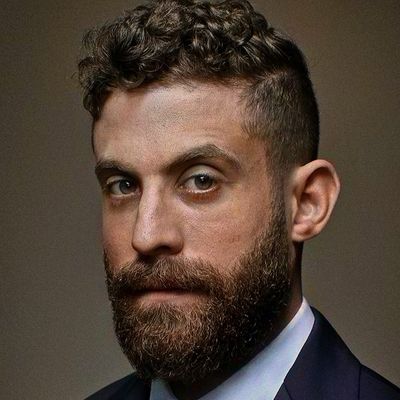
About
Prepare to question what’s real and what’s just your imagination with renowned mentalist and illusionist Vinny DePonto. Known for his groundbreaking Broadway show Mindplay, Vinny doesn’t just perform tricks—he crafts immersive experiences that blend psychology, memory, and storytelling, making every audience member part of the magic. In this episode, Vinny opens up about the journey from a childhood fascination with a shoebox of vintage magic tricks to becoming a master of mind-bending performances that challenge perception and invite wonder.
We dive into the delicate art of mentalism, discussing how memories shape us, the ethics of mind-reading, and the emotional vulnerability that can surface during performances. Vinny shares the creative evolution behind Mindplay—a show that’s never the same twice—and reflects on how audience interaction breathes life into every performance. You’ll also hear about his deep appreciation for theater, design, and storytelling, as well as the unexpected ways his work connects people through shared experiences. This episode is a must-listen for anyone fascinated by the intersection of art, psychology, and the mysterious power of the human mind.
Vinny DePonto is a New York-based mentalist, illusionist, and theater maker whose work fuses psychological tricks with immersive storytelling. His critically acclaimed show Mindplay brings audience participation to the forefront, blurring the lines between memory and illusion. A former performer at the Geffen Playhouse, DePonto has collaborated with renowned directors and writers, continually pushing the boundaries of what mentalism can be. His work is driven by a deep passion for human connection, exploring how memory, perception, and theater intersect to create unforgettable experiences.
Connect with Vinny:
- Instagram: @vinnydeponto
- Website: vinnydeponto.com
Connect with The Theatre Podcast:
- Support us on Patreon: Patreon.com/TheTheatrePodcast
- Twitter & Instagram: @theatre_podcast
- Facebook.com/OfficialTheatrePodcast
- TheTheatrePodcast.com
- Alan's personal Instagram: @alanseales
- Email me at feedback@thetheatrepodcast.com. I want to know what you think.
Transcript
This transcript was automatically generated and might contain errors.
[0:00] Vinny DePonto: Hi, I'm Vinny DePonto. Welcome to The Theatre Podcast with Alan Seales.
[0:10] Alan Seales: Hey, everyone. Welcome back to an all-new episode of The Theatre Podcast. I'm your host, Alan Seales, and our guest today invites us into a world where reality blurs and the mind plays tricks, except the real trick is just how real it feels. I'm joined by Vinny DePonto, an extraordinary mentalist, illusionist, and storyteller whose work is as much about human connection as it is about wonder. And you might know him from his current show running downtown called Mind Play, where every performance becomes a living, breathing experience shaped by the audience's own thoughts and memories. So in this conversation, Vinny pulls back the curtain just a little on how memory, psychology, and theatre converge in his art.
And we dive into the evolution of Mind Play, the ethical boundaries of mind reading, and even the deeply human stories that unfold on stage. And Vinny shares a story about how a childhood fascination with magic, sparked by a shoebox of tricks from his grandfather, transformed into a lifelong exploration of memory, connection, and just the beauty of not always having to have all the answers. So get ready for a conversation that will leave you questioning just how much of your mind is truly your own. So, as always, find me on social media. Give me a shout out. You can watch video versions of episodes on Spotify and Patreon. And now, everybody, please enjoy this episode with Vinny DePonto.
[1:26] Alan Seales: Here you go. One, two, three. Ladies and gentlemen, get ready to step into the world of the mysterious, the mind-bending, and the unexplainable. Today, I am thrilled to be joined by a master of the unseen, someone who doesn't just perform tricks, but he taps into the very fabric of our thoughts. He's a mentalist, an illusionist, and a storyteller who has captivated audiences with his unique blend of psychology, theater, and magic. You may have seen some of his work on Broadway in Mind Play, or maybe you've experienced one of his immersive performances that leave people questioning reality itself. His shows just don't entertain. They make you think, feel, and wonder. So how does he do it? What's the secret? What secrets lie behind the art of mentalism? And can he really get inside my head today? Please welcome the incredibly talented and endlessly fascinating Vinny DePonto. Welcome to The Theatre Podcast.
[2:19] Vinny DePonto: Thank you so much for having me.
[2:21] Alan Seales: So the most annoying question ever, what am I thinking?
[2:29] Vinny DePonto: No, don't answer that. You're thinking, what are we doing here on this snowy morning? No, explain to me in your words what you are as a profession. What word would you use? Because I used a bunch of words.
[2:45] Vinny DePonto: You did. Yeah, you summed it up really nicely. I like to think of myself, I mean, when I'm asked, I like to just kind of think of myself as a person who makes theater, a theater maker. One of the tools I use is mentalism and magic, illusion and psychology, that sort of thing. I am a mentalist by craft. That is what I do. What that means is it's a sort of genre of magic. As I've been saying, it's anything in magic that has to do with reading people's – I should say, anything in magic that has to do with people's thoughts specifically. So in my show, I use it as a tool to move the story forward, to get certain things out of my own story from the audiences. So the audience is a sort of scene partner in the experience of Mind Play.
[3:38] Alan Seales: Well, it's very much an interactive sort of thing. Someone said to me recently too, even for one-man shows, one-person shows, you don't have the completed show until you have your scene partner, which is the audience.
[3:52] Vinny DePonto: 100%.
[3:53] Alan Seales: Like when you're developing something like this, where do you even start? Because Mind Play is autobiographical, I assume, a mostly true story. You're telling the story of your childhood and things that are coming back to you and how we're accessing different parts of our memory and creating – what do you call it? A memory mansion?
[4:11] Vinny DePonto: Memory palace, yeah.
[4:11] Alan Seales: Memory palace. You can use memory mansion if you want. It's alliterative. But yeah, memory palace, right, to remember certain things. And I have no idea if that's a real thing or not. I think it is. But when you're starting to craft a story, a show, and it is a show with whatever you want to call it. Tricks makes it sound cheap, but I don't want to ever – correct me if I'm saying anything that's a wrong word.
[4:36] Vinny DePonto: No, it's okay. It's so funny. There's this kind of hesitation towards, I think, in the sort of public zeitgeist of like, do I call it tricks? I mean, I embrace that. They are tricks. In the same way, theater is a trick, right? But we think of theater as an art form. But I think because magic is fairly nascent as an art form, it's typically thought of as a variety experience or along with circus or juggling or something like that. I think it's starting to become more of a fully formed experience as an art form rather than just tricks. But yes, I do use tricks. And what I like to say is I use tricks as a way to sort of facilitate magic. And hopefully that was your experience. You don't just focus on how things are done, but maybe just the washing of magic that you get after and wonder after the show.
[5:35] Alan Seales: There are so many things you did during Mind Play that I can't even fathom how to explain this stuff. And I mean, how much of it is – I mean, is it literally just you're reading micro expressions that we don't even know we're giving off or is it influence and power of suggestion? And if so, I know some people are more apt to be – are more suggestible than others, right? So, how do you know you're getting a good audience member and how much is just straight up like psychology of reading the room? That was a lot of questions in there.
[6:05] Vinny DePonto: That was. I ask long questions and you should have known that. Let's focus on one of those, which is I can't exactly say the secrets that I – the methods that I use and the techniques that I use. But I will say I can't hear the voice in someone's head. I'd be a billionaire if I could do that. But I can sort of use these techniques as a way to extract people's thoughts. And that extraction comes from several reading techniques, whether it's cold reading, body language, several conjuring tricks, several psychological tricks, several theatrical tricks that sort of give off the illusion that somebody's thought is being read essentially.
[6:49] Alan Seales: Right. Well, what's – there's a segment in the show and if this doesn't come across in an audio form, talking virtually, totally fine. We can cut it. But there's a segment in the show where –
[7:00] Vinny DePonto: Yeah, no major spoilers though. No major spoilers.
[7:03] Alan Seales: No spoilers. Okay, okay, okay. Well, I was going to – can we talk about the segment where the person puts their hand on your shoulder?
[7:07] Vinny DePonto: Sure, sure.
[7:08] Alan Seales: Yeah, yeah. So, there's this moment where you're trying to read someone's mind and you have them put their hand on your shoulder and you're walking through a scenario and all they're doing, all they do is have their hand on your shoulder and you can guess what they're thinking. So, is that a physical thing that you're literally waiting for twitches or something? I mean, like you're sitting there talking to people sometimes too and you're looking at them and you listen and you're looking at me in a way that's really intense and I love it. But is it literally just training and training and getting really good at reading things, reading a language that we don't know we're speaking?
[7:50] Vinny DePonto: There's a lot of training. Yeah, there's a lot of training that goes into it. I mean, what you were saying before about the show not being complete until an audience is in there, that's 100% true. This show has evolved over the course of many years. Performing it, we started off at the Geffen in LA in 2022 and we learned a lot from that run. We learned a lot from being in DC and Boston and subsequently, we're learning a lot from being in New York. So, the show is always evolving and I'm sort of always noticing new things and refining things. There is, of course, a margin of error. The nice thing about curating a show about where the punchline is surprise is that you don't really know where it's going unless you've seen the show multiple times.
In this case, the show is different every time. So, there's ways I have a little bit of agency and where I can kind of take certain things. But yeah, my team and I have been really thinking about this show for the better part of, I would say, eight years now. We came off of my first off-Broadway show called Charlatan and I really loved my team, my director, Andrew Neisler, and my co-writer, Josh Koenigsberg. The three of us have really formed a language together and we wanted to make something again. So, from that moment, we stopped that show. We kind of just kept making work together.
[9:22] Alan Seales: Well, where do you start though? You're like, okay, Charlatan's done. We want to keep working together. What are we going to do next? Is the first step always the story that you want to tell, the theatrical component? You said it's okay to use tricks. Do you have tricks that you're like, I'm going to work on this and use this? So, how do we make a story around that?
[9:42] Vinny DePonto: Yeah, sometimes it's the tricks. Sometimes I really want to explore what this is and what this means. Mentalists did this back 100 years ago and I haven't seen it in a long time and this would be a really cool way to redo it and see it. Sometimes it's thematic stuff. The first show is about deception and what we discovered really early on in the creation of that show is most of deception happens inside yourself, right? There's a lot of self-deception that happens. We curate our worlds from within our own head and how does lying to yourself both benefit you and what are the consequences of that? And so, that show kind of really grew out of there. And then the next show, Mind Play, we started talking about memories in a big way. Andrew and I had been tasked to do a new 10 minutes for a theater gala and Josh actually also participated as well. We sort of came up with this scene where I was memorizing Shakespeare, which eventually made it into Mind Play.
[10:57] Alan Seales: That's incredible, by the way.
[10:57] Vinny DePonto: Thank you. Thanks. So, that's kind of how that started and we started to look closer at what memories do and how they interact with our thoughts and how they shape us and here we are.
[11:09] Alan Seales: So, are you really creating a memory palace to memorize Shakespeare? Is that real? Is that like 100% real? I mean, if you say no, it's a trick, we can cut this, but it's got to be real, I guess.
[11:22] Vinny DePonto: Well, what I will say is the concept of a memory palace is real. It was sort of coined by a Greek poet named Simonides. There's a story in the program about it, but basically, the story of memory spaces goes back way further than that. There's an anthropologist that has come up with this theory that indigenous
[11:46] Vinny DePonto: People have used landscapes and art as a way to preserve memories and language and taxonomy of plants and animals of their region before there was the written word. So, we have used memory spaces for thousands and thousands of years, so I think that is very fascinating to me. As far as it being real, it depends on what your definition of real is. I have memorized a 90-minute show, so to memorize something like Shakespeare is not exactly difficult, but it's certainly been a lot of years of practice.
[14:03] Vinny DePonto: I'm not walking around the world using people's thoughts against them or in interactions or anything like that. What it does, it does make me a lot more curious and a lot more hyper aware of certain things that I notice and I observe because I am a people watcher. I like just sitting in the park and noticing behaviors. That I love, but as far as using it day to day, no. I think a lot of it, if I come up with something, a lot of it will just go into the show. Oh, that would be really cool if we could do that in a show. So, I don't know about using it day to day. Are there any ethics? I mean, there are ethics, but what are the ethical implications for the lack of better term mind reading? If you're able to know things about people that they don't know you know about them, ethically, where do you stand on that?
Part of it's consent, right? I mean, part of it is, you'll notice in the show, I check in with people and make sure that it's okay that they come up on stage. It's okay that I keep saying certain more details about what they're doing or what they're thinking. That's very important to me. Yeah, there's a lot of ethics that go into it. I also consult with a psychologist for the show to make sure that if anyone gets to a point where they are in a particular state of distress or they're very emotional about something that has come up, maybe that doesn't even have to do with their own thought, but just maybe is emotional about what I'm sharing on stage, that I can have different techniques and tactics under my belt to make sure to support that.
I am not a psychologist, but I have consulted with a few to make sure that I can support audience members that may be going through that on stage. It doesn't always happen, of course, but occasionally when it does come up, I make sure that they're taken care of.
[16:08] Vinny DePonto: You said the shows are different every night, and that's because I assume you're pulling personal stories out of various audience members, and that is different every night, different audience members. The stories are real. I actually ended up riding the subway home with one of the guests who pulled up on stage, so I was able to talk to her during my subway ride and realize, you're not a plant. You have to remember I'm reaching into a bowl of names and picking out people. Typically how it works for most performers who do this type of thing is that they go into the audience and are looking people in the eyes and can select from there, but I can't rely on that. I have to rely on literal randomness pulling a name out of a bowl.
When I do that, occasionally I'll have some folks sit down and maybe not get back to them, or I will get back to them if I think it's maybe appropriate for something later. This show is a living, breathing thing, and those are my secrets. That's what makes a show special.
[17:15] Vinny DePonto: For the most part, I just enjoy talking to you, and I love this kind of mentalist stuff, because there's a lot of truth to learning this for plenty of jobs, plenty of occupations, not just theater. You get into a little bit of this backstory in the show, but I want to dive into it now. Let's rewind to Little Vinny when you were growing up. What got you into wanting to perform, wanting to be on stage? What inspired you to be a performer?
[17:47] Vinny DePonto: We talk a little bit about it in the show, but I was given a shoebox full of magic tricks. This is kind of like the classic eye-rolling grandfather story of magic, but in my case, it is true. I was given this shoebox full of these tricks from the 30s and 40s, and they were from my grandfather who I never got to meet from my dad's dad, my father's side. He was a hobbyist magician during the war, and he was able to share magic to his comrades and buddies. My dad showed me a few things from there, and I kind of just kept doing it and kept performing and kept doing the show every Thanksgiving for my family, which my other grandfather would encourage me to do that. My grandparents and my family were paramount in creating and crafting and supporting my career.
So yeah, that's kind of the genesis of it. I was just doing it for every school project. I was doing talent shows. I was so incredibly obsessed with magic. Because I was the only one in school who was doing it, it was a very unique thing, which is why I'm sure a lot of little boys get into it, right? I mean, they want to feel super unique and they want to have some sort of power over people as well.
[19:22] Vinny DePonto: Welcome back to the episode. But very quickly, it turned from that into an academic pursuit. I was really interested in college and pursuing neuroscience and psychology and neuroaesthetics and cognitive behavior. That world fascinated me, as well as the theater world. So I ended up sort of double majoring in theater and psychology. As it turns out, that was the perfect thing to do. Yeah, that's kind of the abridged version.
[19:57] Alan Seales: How old were you when you started doing the straight magic with that box of tools?
[20:03] Vinny DePonto: I was probably like, yeah, yeah. I would say six years old is when my dad found it, dusted it off. We kind of worked on some things together. He wouldn't tell me certain things. There were no instructions, so it was all his memory. And then he would tell me stories about what his dad used to do. He used to make a cigarette disappear in someone's hand. He kind of pushed this burning cigarette into someone's hand or into his hand and it would disappear. And so all these things, all these really great, fascinating stories, my dad would also withhold telling me how to do most of them for a while until I got good at the other ones. So yeah.
[20:44] Alan Seales: I thought you were going to say that you wanted to do academic pursuit. I thought you were going to say like, I went to clown college, which is real. You can learn how to do clowning, circus performing. A friend of mine practices slack rope all the time. This is really hard stuff to do.
[21:00] Vinny DePonto: Yeah. That was a part of my curriculum. I studied-
[21:02] Alan Seales: Oh, really?
[21:03] Vinny DePonto: Yeah. Commedia d'arte, physical theater, circus. Yeah. I mean, those were all a part of my experience. Even after college, I would do intensives, physical theater intensives and things like that to learn more about the world. Puppetry was a big one. I'm obsessed with puppets and puppetry and dance, of course, is another one. A part of the physical theater world was also in some dance pieces and I dated a choreographer for many years. And so it was one of those things where sort of all things theater, dance and theater, I was obsessed with.
[21:40] Alan Seales: And is the mentalism focus though, that's very interesting to me because I got a psychology minor and I love abnormal psych. Who doesn't love abnormal psych? Neuroscience and all these things like what makes people tick, right? I told you that I'm a fan of the DVD behind the scenes era. I love to know how things are made and what's CG, what's real, what's wires, what's not. Especially when it comes to performing movies, theater, things like this.
[22:08] Vinny DePonto: And so at what point when you're young, do you realize like, okay, I can make a cigarette disappear in my hand. Great. I can make a coin pop out from someone's ear. That's cool. But now I want to read minds. How do you focus on that? And where do you even go to start training on this sort of thing?
[22:27] Vinny DePonto: I think in college, I became really interested in theater in a big way, right? These absurdist plays and physical theater. And like I said, a lot of scenic design, I really became fascinated with Shakespeare as well. So that opened me up to a whole new world of what magic could be. And this fairly young sect of magic, which is mentalism, which is really only about 100 years old, people have been doing mind reading tricks for many years. But the fact of calling it mentalism as a sort of subset of magic is fairly new. And as you collect more and more magic books, as a part of the obsession as well, you start to kind of get into the world of mentalism a little bit more. And that specific genre of magic fascinated me because it involved the audience in a big way. And I was in a improv theater group in college called Playback Theater, which was run by one of my theater professors, Hannah Fox, who's...
[23:32] Vinny DePonto: Dad actually founded Playback as an art form. It's improv theatre, but it's sort of long-form theatre, and it's not necessarily funny. So, we basically get long-form stories from the audience and play it back. We play back that story as players in a show, and sometimes they were incredibly emotional. Sometimes a story came up of a woman who lost her son, right? And we had to kind of act that out. But there was something incredibly cathartic about seeing that on stage, seeing your story on stage. And so, that form of theatre, that form of participatory theatre, really, really impressed me because you were making it in tandem with the audience, and there was something really thrilling and, of course, really scary about it as well.
[24:26] Alan Seales: Well, okay. So, you're taking stories from audience members, you're reenacting them, and I love seeing something improvised that's not funny, as long as it's good, obviously. We want it to be entertaining, not cringey. But then there's still that moment where you're like, I want to incorporate mind reading into my performances. I want to develop a story where I am improvising based on incorporating tricks with illusions, with mind reading. Where did you start? I guess, how did you start even trying to incorporate this? And yeah, we'll start with that because I have a multi-part question again, but I'll stop with that one. So, where did I start incorporating this?
[25:13] Vinny DePonto: Yeah, I mean, how and why? I mean, you were saying you like the long form, the performance aspect, but why do this as a one man magician sort of act instead of improv? Yeah. Well, because it felt like a way to combine a lot of my passions. In this show, I was able to really touch upon my design skills, as well as my physical theater skills, as well as my storytelling skills, improv skills. So, there's just a style and a voice that you start to form over the years that you want to keep pushing and understanding and uncovering about your own art. I think in college was the first time I tried mentalism, my solo mentalism show. And I found it really fascinating because so much of mentalism is cerebral.
It's always like you're thinking of something and then the performer writes it down and then shows you what you're thinking and then they confirm that thought and it's like, yes, that is so much of what mentalism is. And that worked for me for a while, but because of my design brain, I really wanted to make it visual. And so, I started to explore worlds, like how could I drop an audience into a world where thoughts were tangible in a way? And so, yeah, I would say in college is where that started to unravel for me and then it's a constant evolution.
[26:51] Alan Seales: And you've never done something like that?
[26:53] Vinny DePonto: No, no, not at all. Yeah, no. I mean, I've been performing the show for three years and it is kind of static in a way, right? I mean, there is improv involved, but there are things that I want to say in the show that I can't say now because the show is technically, quote unquote, frozen, right? But even my thoughts have changed since putting these thoughts on stage. And so, there are other shows and themes that I want to explore moving forward.
[27:22] Alan Seales: But even if you want to update some lines or something, it's your show, you can't change it. I mean, I'm sure there's specific cues and things you have to stick to.
[27:26] Vinny DePonto: Sure. There's some flexibility and I do, but conceptually, you can't really stray from the theme of the show. It has to follow structure and script and cue lines and stuff. But yeah, of course, of course, there's improv built in.
[27:47] Alan Seales: I mean, are you able to, I won't use the word malicious, but when I check into an airport, I'm always projecting my mentalist abilities. I'm like, upgrade me to first class, upgrade me to first class, upgrade me, and it never works. How many times have you flown first class when you didn't pay for the ticket? Do you use it like that? Like little things in life, little white lies of mentalism.
[28:15] Vinny DePonto: I mean, I'm certainly interested in life hacks like that. How can you kind of build rapport with certain people? There are certain people who are just doing their job, right? Who don't want to be there as much as you want to be there, right? So like, how can you use kindness and how can you state a question in such a way that it might elicit a better response? I'm, of course, interested in that stuff. I wouldn't say I'm using mind control. I would just say I'm just checking in with myself and making sure I'm being respectful and talking to people in the way I'd like to be talked to. But no, it's never using mind control for nefarious things.
[29:55] Alan Seales: What about like debate team? Have you ever used this in debates and arguments with friends, partners? That's where I feel like, especially with right now, my parents, right? Everyone's got disagreements with their parents. I'm like, I don't want to reach inside your mind and squeeze your brain.
[30:10] Alan Seales: I think that just speaks to how well the show is written, put together, structured, because everything, as I was watching this, I was like, what happens if he gets it wrong? What happens if this doesn't work? What happens? What happens? And, and I mean, even you were saying like, the show is frozen, you have to follow a format, you have to follow a structure. And there, there have to be, you know, like you said, even somebody who you admit, you elicit an emotional response that takes someone to a place that even you didn't expect, right? So I mean, has that happened? Do you rehearse that? And you talked, you consulted a psychologist, right? So you are trained-ish to be able to bring people back. But like, has anything kind of gone off the rails?
[30:15] Vinny DePonto: Yeah. I mean, certainly. Yeah. There's certain relationships I tend to like overanalyze. So I walk away from certain interactions ruminating on what I could have done differently. And they do affect me in big ways because I want to make sure that I'm the best version of myself. I think we all do in some respect. We all don't want to be unliked, right? So I think this is a human thing. But yeah, I mean, there's certain things I analyze and maybe come up with tactics for some family members, if you will. But you have to understand at the end of the day, it's really, you know, there is no real, you know, solid 100% trick for anything. It's all dependent on all the contextual atmospheric stuff that's always happening around that conversation, too. So yeah.
[31:53] Vinny DePonto: I have, I have, yeah, like I said, I have tools, I have ways to shape an interaction to kind of get back to a certain and I'm also just a human, right? I'm also just trying to be a listener and try to read the room, you know, and try not to be so married to my script, you know, like, I think a lot of the times, well, sometimes you might see magicians who are not aware, right? And they just perform at you constantly. And it's sort of like, okay, read the room, you know, we, I think, you know, we wanted this to go a slightly different way, or the vibe is a little bit different. So yeah, I mean, there, the show is structured in a way that there are branches that can kind of come off. I don't want to say it's a choose your own ending situation.
But it is definitely a, there are definitely branches that the show can kind of follow in different ways, which, which we have all kind of rehearsed and, and, you know, and have gotten to practice and some we haven't, some, some they're sort of, I have to kind of go with the flow. You know, there was a particular experience opening night that was, a woman was on stage, and it was an older woman. And, you know, you could feel the room sort of loved her immediately. And she was just she had such a charm about her. And she came up on stage and kind of gave her the, we were talking about objects and things and, and she started to say something a little cringey. That was, you know, you could feel the air get sucked out of the room.
You know, we were we were all kind of like with her. And then there was this cringey thing that she said, and I, I kind of had to reel it back and be like, Okay, I'm gonna stop you right there. Let's, let's kind of, let's kind of get back to where, you know, where we should be. And we were talking through it. And I was, you know, trying to feel what the audience was feeling as well as what she was feeling and try to come up with a middle ground there. So yeah, there have been moments that have been difficult moments to navigate.
[32:57] Alan Seales: There are so many versions of you in the multiverse that have different professions. You like debate team lead, psychologist, politician.
[33:08] Vinny DePonto: Oh, wow.
[33:09] Alan Seales: Like, how many? Yeah, how many different professions could you use all these skills and probably anything you would be you would be great in? Yeah, you'd be straight magician with Bengal tigers, who knows? So, but where do you see the art of mentalism kind of going in the future? Where, what are new technologies you want to explore things you're excited to start getting into or anything you want to develop?
[33:33] Vinny DePonto: It's a great question. I don't really have a sense about where mentalism is going. You know, mentalism is pretty much one thing. It's granted, there are multiple tricks of mentalism, telepathy, clairvoyance, mind reading, those kinds of things. But mentalism at the core is essentially just, you're thinking of something, and you're transferring that thought to me. And so I don't know that there's a lot more to explore there. But when we're talking about it in the context of a theatrical experience, I think there's plenty more to explore. And like I said, I'm sort of already putting together some ideas for future experiences. And I'm really excited about that. I'm really excited about the ways in which we can use mentalism as a tool to another trick to elicit magic in the confines of a theater. I continue to be excited about that.
[34:34] Alan Seales: Executive coach, that's another alternative version of you.
[34:38] Vinny DePonto: Yes.
[34:39] Alan Seales: I want to meet that person. I've talked to a couple people that are in your field, and over the years, and I feel like, you know, there's probably, I hope there's a group chat with like, you and Darren Brown and Ozzy Wind and, you know, others that are all just like talking shit about Criss Angel, right?
[34:56] Vinny DePonto: I don't know. No, I mean, like, we're all trying to, you know, do our thing. And I'm, you know, I'm good friends with Darren, and I know Ozzy well. But no, I think a lot of it's just like, we're all just trying to find our own voice and make really powerful experiences together.
[35:19] Vinny DePonto: Are you able to be fooled? Do you go to see each other's shows and you're like, do you go backstage? You're like, you've got to tell me how you did that, or is it still crazy?
[35:26] Alan Seales: I used to, yeah. I go to Ossie's show. I'm a big fan of Ossie. I think he's making some really beautiful art. And Darren too. I met Darren a long time ago now, maybe 15 years ago, something like that. And I actually toured with him for a bit. I saw a couple cities. I didn't work on the show, but he was nice enough to kind of bring me along. And I was kind of like a mentalism groupie and I got to see the show and that was a masterclass too. So he's become a dear friend. And yeah, that was such a formative experience for me. When I saw Darren Brown's Broadway show years ago, I was one of the ones who got called up on stage. I caught the thing he was throwing out in the audience. The Frisbee. And yeah, I don't know how he got me to do it, but I did what he wanted me to do.
And I hate myself for it, because I don't want to be fooled that I consider myself such an anti-suggestible person. But maybe in my stubbornness, I became a stereotype that he could easily just twist a little knob and pull a lever on me that I didn't even know I had. And all of a sudden, here we go.
[36:41] Vinny DePonto: Yeah, yeah, yeah. Sometimes there's this frustration with people when they experience what we do. And I totally understand that. I totally understand it in the way that like, well, why can't I know? You have to remember though, that we live in a society that demands answers all the time for everything. So I hope to encourage people to, this sounds very lofty, but I hope to encourage people to live in the mystery a little bit, to incorporate more good mysteries in their life. Mysteries where they don't have to have the answers, but they can continue to live in awe and wonder. And because that concept, that ability to be able to appreciate all that is something that I think will heal us as a species.
[37:32] Alan Seales: So I'll clarify and say that I wasn't frustrated in a negative way. I was-
[37:37] Vinny DePonto: Oh, good. Oh, good.
[37:41] Alan Seales: I was very pleasantly surprised to find out that I was able to be manipulated in this way that I didn't know I had, because I'm always striving to be a better person and striving to learn and improve and want everybody to be that way, hopefully. So that's one of those things that happened to me. And I was like, oh, wow. I'm pretty self-aware. I'm pretty okay and evaluate all the facts and I'm looking around and I'm being observant myself. And the fact that that happened to me firsthand, it just kind of put things in a different perspective where I walked away and I was like, I really liked that. I don't know how that happened. Exactly to your point. Exactly to your point. I walked away saying, that's incredible. And I want to be a better person and figure that out for myself. But I was happy about it. I was happy. I wasn't angry by any sense.
[38:30] Vinny DePonto: And you got to participate in it. So you know that we don't use plants. I think I say it like two or three times throughout the course of the show and yet people come up to me afterwards and go, those were plants. And I'm like, I promise you, we spent the money on too many other things to have actors there for hundreds of shows through a run. It just doesn't make sense. It would never be sustainable. It would never work. We would never make money. So it's one of those things where it also takes the joy out of my job. Seeing people's genuine expressions on their face on stage, it would kill me to know that an actor was there every night or something that was helping me. It just doesn't make sense. It's not why I do what I do.
[39:10] Alan Seales: Don't go anywhere. We'll be right back after this break. Welcome back to the episode. Is there a story or a person, a guest that you brought up on stage or that you've interacted with your show that has something so, like you've discovered something so incredible about them that you didn't expect? Is there anything that stands out in that regard?
[39:34] Vinny DePonto: Yeah, I think we were in DC and this giant man came up on stage, very kind of burly man. And part of my job is to try to stop my assumptions, which is that this person's going to offer me nothing. He's just going to be a macho guy. And that was, of course, not the case. He was sharing something deeply personal to the point where I think we had to add five to eight minutes to the length of the showtime because there was just a moment where he completely broke down. And the audience came together and really gave him this thunderous applause and supported him. He felt so good afterwards. And yeah, it's one of those things where you don't know the invisible battles that people are going through in their heads. And we do so much of judging people from their outside thoughts, right? They're judgeable by a cover. And we take so little time to really kind of sit down with somebody and genuinely ask, what's on your mind?
[40:47] Alan Seales: All right, so we'll wrap up here. And how well do you know popular musicals?
[40:54] Vinny DePonto: Not very well, but I'll give it a go.
[40:58] Alan Seales: This will be fun. We'll put your improv training to the test again. So I have a list of popular musicals. We're going to play a little game I like to call plot in 60 seconds. So I have a list of 16 musicals. You give me a number. I tell you what show that corresponds to from my list, and then you give me the plot to that show in 60 seconds.
[41:18] Vinny DePonto: Oh my gosh, so embarrassing. Okay, let's go.
[41:21] Alan Seales: All right, so give me a number one through 16.
[41:24] Vinny DePonto: Lucky number seven.
[41:26] Alan Seales: Lucky number seven is The Sound of Music. Go.
[41:29] Vinny DePonto: Oh my gosh. Can I phone a friend? Can I ask my wife to come in here?
[41:35] Alan Seales: Sure, if you want to.
[41:38] Alan Seales: This is Alan. This is Elizabeth.
[41:40] Elizabeth: Hi.
[41:41] Alan Seales: Hey, Elizabeth. Hi. We have headphones in. Vinny, even though he claims to have lots of improv training and says he can do anything and read minds, has completely shit the bed for plot in 60 seconds. So now he's called you, phoning in a friend, to give the plot to The Sound of Music in 60 seconds. You ready to go, Elizabeth?
[42:01] Elizabeth: Yeah.
[42:01] Alan Seales: All right, here we go. 60 seconds remaining.
[42:04] Elizabeth: Fräulein Maria is supposed to become a nun, but she doesn't want to be a nun. She's like really full of life and really wants to find love, and she has this incredible singing voice. And then she meets the von Trapp dad. I'm forgetting his name.
[42:19] Alan Seales: 45 seconds remaining.
[42:20] Elizabeth: But he has a ton of kids, and he's very militant with them, and his heart is really hardened. He's a widow. He's very kind of like mean to his kids. And then Fräulein Maria comes in and becomes sort of like their main caretaker, and she teaches them all to sing, and she makes dresses out of curtains, and they start a whole singing group. And then through this beautiful singing group, they end up being able to escape Vienna during Nazi occupation.
[42:50] Alan Seales: 15 seconds remaining.
[42:50] Elizabeth: And Fräulein Maria and the dad fall in love, and they escape through the mountains and get away from the Nazis.
[42:59] Alan Seales: Yes! Yes! That was great. Wow.
[43:05] Vinny DePonto: See, now you know all my secrets. It's just my wife. My wife is an absolute genius.
[43:11] Alan Seales: She's just in the back of the house mouthing your entire script to you. The entire show.
[43:18] Vinny DePonto: I get it now.
[43:19] Alan Seales: But everyone knows that plot line, though.
[43:21] Vinny DePonto: Yeah, everyone does.
[43:23] Alan Seales: No, no. But when you add the anxiety of getting it all in 60 seconds, people...
[43:28] Vinny DePonto: That was so impressive.
[43:30] Alan Seales: I think you both need to watch it more.
[43:35] Vinny DePonto: Fair. Fair. All right. So then the three standard closing questions I wrap up with for everyone, we'll shift back to normal questions. The first one just simply is what motivates you.
[43:46] Vinny DePonto: What motivates me? I think, honestly, as impressed as we are by that experience just now, with her ability to do that, I was just like, wow, that all motivates me. However that manifests in a show, I only strive to be able to create that experience for people. And so when people come up to me after a show and they say, wow, I am thinking about my thoughts in a deeper way, closer way, that's often something that really gets me excited.
[44:21] Alan Seales: Wow. I love that. All right. What advice would you give to your younger self and younger people listening now starting out down a similar path?
[44:26] Vinny DePonto: Honestly, it's like, stop second guessing yourself. I could have shaved off years of creative strife if I just went with my initial gut experience, because you learn so much by failing quicker than you do by putting off something and failing later. So I think it would be don't doubt yourself, just go for it.
[44:54] Alan Seales: Final question, hardest one. If you could only see one show for the rest of your life, but you can see it as many times as you want, what would you see? And I bet it's The Sound of Music.
[45:03] Vinny DePonto: Oh, definitely. One show like a live show?
[45:08] Alan Seales: Anything you want. You can make it anything you want. You can watch this over and over again, but only this for the rest of your life.
[45:15] Vinny DePonto: Oh, that's such a hard question. I don't know. It would probably be like the Muppet movie or something. It would just be something having to do with the Muppets. I love the Muppets so much, and I probably already do watch Muppets Christmas Carol too much. So I don't know, something Muppet related. Let's say the Muppet movie.
[45:37] Alan Seales: Did you ever watch the reboot of Fraggle Rock that's on Apple TV?
[45:41] Vinny DePonto: We did. Yeah, we actually watched it. We didn't get through the whole thing, but we saw it was super good.
[45:45] Alan Seales: Oh, I love it. I love it. All right, where can we connect with you online? Where do you play the social media game?
[45:50] Vinny DePonto: Yeah, I do. So I do a lot of posts on Instagram, mostly at Vinny DiPonto, but I've sort of over the years have shifted to my newsletter, which is on my website, diponto.com. I do that as a way to kind of add ticket codes and secret shows and things to connect with people in a real way, not just whatever limitations the algorithm offers. So those are the two ways to connect with me.
[46:18] Alan Seales: And then obviously go see Mind Play at the Greenwich House Theater here in New York City. It's continued right now, scheduled through April 20th, 2025. So you got a little time, but don't wait because damn, I need to go back and see it like a bajillion more times just so I can see all the different things. You can find me on theater underscore podcast on threads, TikTok, Instagram, all the places. Leave a rating review wherever you are listening now. And thanks to Jukebox The Ghost for the intro and outro music and Vinny DePonto, thank you so much. I know you couldn't really spill the beans, but you spilled enough.
[46:47] Vinny DePonto: Yeah, there's enough beans for me to have to clean up now. So I'm happy.
[46:54] Alan Seales: Yeah. Live in the mystery. Live in the mystery.
[46:56] Vinny DePonto: Thanks, man. I really appreciate it.
[46:58] Alan Seales: Take care. Thank you so much.
© Broadway Podcast Network, All Rights Reserved