

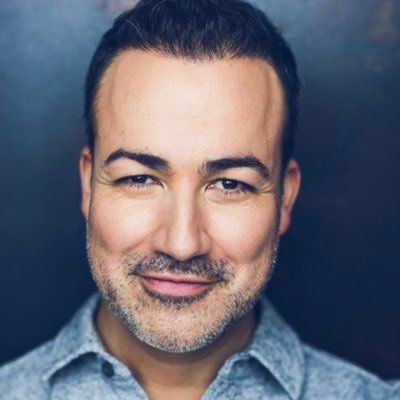
Whether he’s helping shape a brand-new show or breathing life into real people onstage, Caesar Samayoa brings authenticity and heart to every role. In this conversation, Caesar shares what it's like building Just in Time from the ground up—balancing daily rehearsals with nightly performances, and trusting in the collaborative energy of a veteran cast... Read More
From the show: The Theatre Podcast with Alan Seales
Guests
Featured Shows
About
Whether he’s helping shape a brand-new show or breathing life into real people onstage, Caesar Samayoa brings authenticity and heart to every role. In this conversation, Caesar shares what it's like building Just in Time from the ground up—balancing daily rehearsals with nightly performances, and trusting in the collaborative energy of a veteran cast. He opens up about the emotional weight of portraying real people, the lessons learned from immersive productions, and the beauty of audience connection—especially when someone’s first or last theatre experience is in his hands.
Caesar reflects on his early influences, growing up as a first-generation American, and how a performance of Peter Pan set him on a path toward the stage—despite starting college with plans to study Japanese and international relations. He dives into working with Alex Timbers across four productions, the power of vulnerability in rehearsal, and how How to Dance in Ohio and Come From Away expanded his understanding of representation, empathy, and creative freedom.
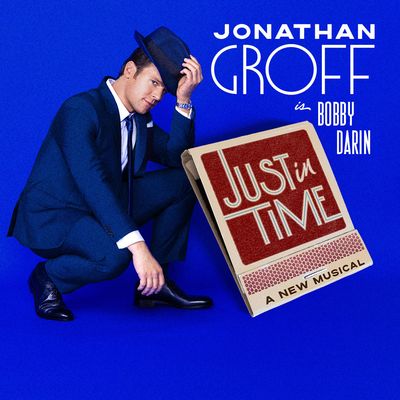
Caesar Samayoa’s Broadway credits include Just in Time, Come From Away, Sister Act, The Pee-wee Herman Show, and How to Dance in Ohio. His TV work includes appearances on Law & Order: SVU, Chicago P.D., and The Code. He is a longtime collaborator of director Alex Timbers and is known for bringing deep emotional range and truth to both fictional and real-life roles.
This episode is powered by WelcomeToTimesSquare.com, the billboard where you can be a star for a day.
Connect with Caesar:
- Instagram: @caesarsamayoa
- Website: caesarsamayoa.com
Connect with The Theatre Podcast:
- Support us on Patreon: Patreon.com/TheTheatrePodcast
- Twitter & Instagram: @theatre_podcast
- Facebook.com/OfficialTheatrePodcast
- TheTheatrePodcast.com
- Alan's personal Instagram: @alanseales
- Email me at feedback@thetheatrepodcast.com. I want to know what you think.
Transcript
This transcript was automatically generated and might contain errors.
[0:00] Caesar Samayoa: Hi, I'm Caesar Samayoa. Welcome to The Theatre Podcast with Alan Seales.
[0:11] Alan Seales: Hey, everyone. Welcome to another all-new episode of The Theatre Podcast. I'm Alan Seales, and you're about to hear from an actor whose heart and talent have left a mark on Broadway and beyond. In this episode, Caesar Samayoa opens up about the immersive world of Just In Time, the power of ensemble storytelling, and the collaborative magic of working with even director Alex Timbers. He shares what it's like to rehearse new material during the day while performing at night, something we've heard so much about that everybody has to do, apparently, on Broadway, how a single audience reaction can shift a scene, and the responsibility he feels to care for both his castmates and his audiences. We also dive into Caesar's early days, from a spark lit by Peter Pan to his unexpected detour through Japanese and international relations, all before committing to acting full-time.
And he talks candidly about finding the vulnerability in the rehearsal room, embracing imperfection, and just honoring the real people behind the roles he's had to play, like in Come From Away and How to Dance in Ohio. His insights are not just about craft, they're about humanity. And so whether you've seen Caesar on stage or on screen, or this is your first introduction to Caesar, you're in for something special. So make sure to watch the video of this interview on Patreon or on Spotify. And now, everybody, please enjoy this episode with Caesar Samayoa.
[1:30] Alan Seales: Today's guest has a career spanning Broadway, television, and film, bringing depth, authenticity, and versatility to every role he inhabits. Audiences may know him from his standout roles in Come From Away, Sister Act, The Pee-Wee Herman Show, and How to Dance in Ohio, among others. And he's no stranger to the screen, either with appearances in shows like Law & Order: SVU, Chicago P.D., and The Code. Now he's taking to the stage again in the new Broadway musical Just in Time, a show that transforms the theater into the swinging 1960s nightclub era. With direction by Alex Timbers, a cast that includes Jonathan Groff, the show celebrates the music and legacy of Bobby Darin while pushing the boundaries of immersive storytelling. Caesar Samayoa, welcome to The Theatre Podcast.
[2:27] Caesar Samayoa: Thank you so much. I'm so excited to be here.
[2:30] Alan Seales: Thank you for coming out here in this lovely studio here, powered by Welcome to Times Square, shameless plug. So you are coming to us right now from the midst of rehearsal.
[2:41] Caesar Samayoa: Yes, we are nearing the finish line. We have a couple more days until opening and freezing the show, but we are going strong.
[2:48] Alan Seales: Is it still changing a lot?
[2:50] Caesar Samayoa: Oh, yeah. Every single day. This is my fourth collaboration with Alex Timbers, and what I love is this point in the process of our rehearsals, because it's no joke. We try to every day just hone in on an awesome version of the show.
[3:06] Alan Seales: Well, what changes substantially? Or is it big moments that you're like, we're cutting whole numbers now? Because if you're just days away from locking, is it adding whole songs? Are you doing that thing where you're rehearsing new scenes during the day?
[3:18] Caesar Samayoa: I mean, we're definitely rehearsing new material. Yeah, we're definitely rehearsing new material. I wouldn't say huge changes, but we are refining the story and clarifying the story, cutting wherever we need to cut to give it a laser-like focus. It's awesome work right at this moment.
[3:38] Alan Seales: The process of this particular time, I feel like, would be so stressful because you are ultimately like, again, you're rehearsing new things during the day while performing at night, and then you have to keep – basically, you become your own swing. You have to know what track you're in at any given moment.
[3:53] Caesar Samayoa: It's so true. If you could see us backstage before we go on in these performances right now, kind of reviewing all our changes and stuff, it's very funny because sometimes you're dealing with two or three word changes in scenes. Those are the tricky ones.
[4:14] Alan Seales: Is it really – like, it's that finite?
[4:16] Caesar Samayoa: Oh, yes. Very much. Very much. It's kind of getting the perfect version of each line and each moment in the show. I mean, you're never going to find perfection, but it's striving for it. But – and then the audience. I say this before. The audience is the final character.
[4:31] Alan Seales: Yeah.
[4:32] Caesar Samayoa: And then now that you're starting to have these performances and real people are coming in, you have to add pauses for laughter or lines you thought would – like, they made the crew laugh during rehearsals. Don't make the audience laugh at all.
[4:46] Alan Seales: We call them rehearsal laughs, where you think they're the funniest thing in the world, and then you get to your first preview, and it's just crickets out there, and they are waiting for a laugh that will never come and does not exist.
[4:58] Caesar Samayoa: Yeah. Yeah. I've been there. That's hard, but it's fun.
[5:03] Alan Seales: Totally. Because you're like, wait a second. And then do you take it personally? You're like, oh, I thought I delivered that line really funny. And then all of a sudden you're like, I mean, your heart hurts a little bit the first time. But you know, you always want to find the best version of it, right? And when you have a team like we do at Just In Time, it's like, they're going to find it. And that's what we're doing right now. That's why this kind of part of the rehearsal is so exciting. And our audiences over there are just incredible. I mean, from the first moment that that theater erupts, so it's really exhilarating. And if you're not getting a laugh, there's a reason.
[6:06] Alan Seales: Yeah, he was like in his late 30s?
[6:10] Caesar Samayoa: 37 years old.
[6:11] Alan Seales: As a 44-year-old, that hurts.
[6:13] Caesar Samayoa: Yes, exactly. But you know, he was told as a young kid that he wasn't going to make it. And for me, what's so inspiring about this show is that you see an artist who kind of takes every ounce of their creativity and just gives it to the world with the time that he has. And I love being part of a story like that, where you are challenged to be the best version of yourself, you know, as you go through life. And you definitely see it through Bobby Darin.
[6:44] Alan Seales: Talk about who Bobby Darin was.
[6:44] Caesar Samayoa: Absolutely. Well, I mean, when you come to see the show, I think you'll understand how much he gave to the American Songbook. I mean, his music is everywhere. And I think what's so beautiful about this show is that we explore all these different parts of his life that people may not know that I didn't know. You know, I didn't necessarily know that this man passed away at such a young age.
[6:44] Alan Seales: And then, of course, Bobby played by Jonathan Groff, working with Jonathan, is its own treat. But I want to stick right now with something you just said was, you know, the show is making you focus on life, focusing on the being, you know, the best version of yourself or becoming a better version of yourself, right? And I feel like How to Dance in Ohio probably, you've got a big grin now going on. Yeah, probably like did this for you as well, because the level of inclusion and representation and just learning about the rehearsal process, not even the show itself, just how the whole cast was treated, was so unique and different.
[7:27] Caesar Samayoa: Yeah, from day one, it was one of the most, if not the most inclusive and open environments that I've ever worked for, and worked in a part of. And for me, I take a look at our rehearsal process, where our first day of rehearsal, every single person was asked, what may be your needs during this process? And everybody got to answer it. Everybody got to answer that question, honestly. And it was taken into account on a daily basis. And it makes me think, wow, all workplaces should be like this, they have to be like this, because our best work then shines through if we're not worried about hiding who we are, or what we may need that day.
[8:01] Alan Seales: Well, if you identify as neurotypical, then for you, speaking for yourself, obviously, what did you, when that question came to you, what do you need? Did you have something that was that you thought was different? Or that the experience itself was like, oh, yeah, I just need, I want my M&M's separated by color.
[8:15] Caesar Samayoa: Well, for me, it actually opened my heart up to show up in a much more vulnerable way, in a much more authentic and vulnerable way. If I'm having a bad day, it's all right to tell people. If I'm struggling with a scene, if I'm struggling with something, so many of us, especially when we get to Broadway, and when we get to these rehearsal rooms with people that you've been dying to work for forever, you think you have to be perfect. And the most creative work will never come from perfection. And that rehearsal room allowed us to be authentic and true to ourselves and to fail, to be totally honest. And that was incredible. And that's a lesson that I take with me. So yeah, for me, it taught me to be a truer representation of myself in the room, and that it's all right to have a hard day. And it's all right to struggle while you're creating work.
[9:24] Alan Seales: It's all right to struggle while you're creating work. I mean, I think that's kind of the crux of making good art.
[9:33] Caesar Samayoa: Absolutely. Because art is an expression. And if you're feeling frustrated, if you're feeling sad, or even overjoyous, right, you just have to put it somewhere. And true artists channel that into their medium, which is song, lyrics, painting, acting, whatever the case is.
[9:52] Alan Seales: I mean, it makes me think of, you know, Broadway, when people come to see commercial theater, it's such a huge kind of highly polished product, right? And you forget, it's so easy to forget that that amazing product came from thousands of failures, you know, before.
[10:10] Caesar Samayoa: Thousands of hours.
[10:11] Alan Seales: Yes. And thousands of hours where you were creating and exploring. And a lot of that was, yes, failing, you know. And there's a freedom that you get when you understand that in order to be the best version of myself, and in order to really create the kind of work that I want to create for, I need to fall on my face a little bit every once in a while.
[10:33] Alan Seales: But you've got so many Broadway credits, and it sounds like you just figured this out.
[10:39] Caesar Samayoa: I mean, it always goes back to basics, doesn't it?
[10:43] Alan Seales: It always goes back to basics. It goes back to basics when you're auditioning, when you're creating roles, when you're recording a podcast, you know. You have to go back to who you truly are and stop trying to kind of cover it up with a more perfect version of yourself. That may not be true.
[11:01] Caesar Samayoa: Yeah, something that's still hard for me from the beginning 20 years ago, and it's still hard for me 20 minutes ago, is that you can't control auditions. They're completely out of your control. And you may just walk in and be the most talented, best-looking, or not best, perfect looking person for this role. And because you just don't fit a costume, or they already cast somebody that you wouldn't be, you'd be too tall or too short next to, or like, it's all out of your control.
[11:31] Alan Seales: One thousand percent.
[11:33] Caesar Samayoa: And that anxiety is still so hard for me to let go of.
[11:36] Alan Seales: Of course. And you know, honestly, I could only speak for myself, but the moments before I walk into an audition room are some of the most nerve-wracking moments. And I think I have, a lot of the times, I think I have to be a certain way or portray a character a certain way. And it's just not true. It's you. They just need to see you in that kind of set of circumstances. And either you fit the role or you don't. There's nothing that you can do, especially when you get to auditions of this level for something like a Broadway show. You are there for a reason.
[12:13] Caesar Samayoa: Yeah.
[12:13] Alan Seales: You were not brought in because of luck. But we all go through it.
[12:18] Caesar Samayoa: Yeah. How familiar do you get with something like Just In Time, familiarizing yourself with who Bobby Darin was, his music, the story of Bobby Darin? Are you given the side, like for this audition specifically, were you given more of the script or did you ask for more of the script to get more of an idea of what your characters or what your sides needed to relate to?
[12:40] Caesar Samayoa: Yeah. Well, for Just In Time, I was given the massive gift of having Alex just ask me to work on it and work on the-
[12:46] Alan Seales: Offer only now.
[12:47] Caesar Samayoa: No, I wish. I wish it was offer only. But Alex and I have worked with each other entire careers, so we know how each other works and all of that. But for my auditions, when I go in, I immerse myself in as much information as I can. I also really go out of my way to learn the material.
[13:12] Caesar Samayoa: One of my characters, one of my Kevins, didn't really know that this was happening. And I, in the middle, like really late at night after rehearsal, we had just finished I believe our run in La Jolla, which was our first kind of out of town tryout. And I'm in my bedroom catching up on emails and an email pops up and says, my name is Kevin and I think you play me in a musical. And it was this long email that kind of gave us his perspective because we really didn't have his perspective in the show. And the show changed because of it.
[24:04] Alan Seales: Really?
[24:05] Caesar Samayoa: Yeah, the show changed because of it. And as we got to meet more and more of the real characters, the show changed because of their actual true stories.
[24:13] Alan Seales: That's surprising. I thought that it was written based on interviews and firsthand accounts and stuff.
[24:20] Caesar Samayoa: It definitely was. How much wasn't heard from the original people before the out of town tryout at La Jolla? Let's say the two Kevins in the show, my Kevin was never heard from. And so they only had one perspective of the show. So all of a sudden when you add the other voice in, it changes everything, right?
[24:40] Alan Seales: Sure.
[24:41] Caesar Samayoa: Or the more you got to know somebody, because these happened from maybe one time interviews, two time interviews. Yeah, yeah. You get to know the people and you start hearing more stories and they find that, you know, their stories into the show or refining the characters a little bit more. And it was magical, honestly.
[25:00] Alan Seales: That's cool.
[25:01] Caesar Samayoa: Yeah.
[25:02] Alan Seales: That's so cool. Playing somebody who is impactful and still alive today is different from playing a real character that's not here anymore, which is different from playing a fictional character altogether that never has existed. So do you kind of approach the three different types of characters the same way or do you, because you said you research a lot. Are you researching someone who is alive with like trying to get hold of them? Like obviously the Kevin, but like Dr. Amigo in How to Dance in Ohio.
[25:34] Caesar Samayoa: Yeah.
[25:35] Alan Seales: Like that's a real person too.
[25:36] Caesar Samayoa: Yes.
[25:37] Alan Seales: Yeah. You know, thankfully, none of the directors that I've worked with had ever wanted us to do an impersonation or to mimic anybody. But I do think we were all cast in these roles, both in Ohio and in Come From Away, because the essence of who we are is very similar to some aspect of their personalities. And sometimes that's enough, you know, because we would do the show and then someone say Kevin's friend would come to the show like, oh my gosh, that's exactly how he would say it. Or that's exactly what he would do. And meanwhile, I had never met the man at that moment, you know.
[26:17] Caesar Samayoa: So it's really wonderful. I always, I always have, I feel a very deep.
[26:24] Caesar Samayoa: I feel a very deep respect for what I'm doing because I'm portraying somebody's real life, but I also feel a freedom because I don't feel like I have to impersonate anybody and I can bring who I am into the role as well. I'm letting that sit for a second because playing someone, I guess there's going all in and being Cher, being Louis Armstrong, being someone that is so iconic that you have to be them. Otherwise, the audiences aren't going to like you as an actor. They want to come and see the Dolly Parton or whoever it is. But then there's the people like Dr. Amigo from How to Dance in Ohio. But I'm just thinking, I saw Jasmine Amy Rogers in Boop the other night. How would we classify that?
A real fictional character that did exist but never did because they're animated. So then that's creating a... Well, okay, hold on. How would you describe it? Because there are cartoons. There was a voice actor. But now to put it on stage like... How would you do that? How would you describe that? How would you do that? Well, I have not seen the production yet, but I hear that Jasmine is otherworldly in this.
[27:50] Alan Seales: Absolutely.
[27:52] Caesar Samayoa: So there was something about her and her personality and who she was and her talent that just kind of exuded what they wanted for that character. How would you approach an animated character if someone was like, all right, you're Popeye. Go out and be... You're originating Popeye in Popeye the Musical. I guess I would immerse myself in as much Popeye material as possible.
[28:15] Alan Seales: Eat a bunch of spinach.
[28:16] Caesar Samayoa: Yes. Get a tattoo on your forearm. Exactly. And I'd also have to trust that I was cast because something about me reminded this team about that character. And then go for it. Make really bold and strong choices. And this is another big lesson for me. Trust that the team will tell you when it's working and when it's not. And not take it personally if it may not be working. And understand that you're still there and you're still doing the role and they still think you're right for it. And keep exploring that way. Like we were talking about before, just the hundreds of failures that take place before you really find what the actual nugget, that gold nugget may be. And that's the beauty of a rehearsal room.
I have to trust that Jasmine went through that as well in trying to figure out how the hell am I going to play Betty Boop? How do I do this in a truthful human way and not just be a cartoon character on stage? And for me, and from what I hear about that performance, I'm sure she's taking some huge swings and she trusts her team.
[29:31] Alan Seales: Trust the team. Well, you too. It keeps coming back to that. You said that working with Alex Timbers, he keeps coming back to you because he sees something in you. Like I was going to say that the through line of all the characters you've played, they have heart. They truly care. They truly care about everything around them and they want to help. Like this seems like every time I see you, you are in a role on stage that is just exuding support and empathy and love.
[30:01] Caesar Samayoa: Thank you for that. And so I feel like that's who you are. I hope that's a bit of my personality. But I just absolutely love what we do. And I love my casts. I really hold on to the stories that we tell. And you mentioned how an audience is the other member of this company. And I take it very seriously. I very much want to care for our audiences and their experiences. So it's quite an honor for me to be doing something like this. Thank you for saying that.
[30:34] Alan Seales: Take care of the audiences and their experiences. Because no matter how bad you feel or how much of a slug, how hard it is to do your eighth show or ninth show of the week, depending on if you're on the holidays, there's always a handful of people in that audience who have never seen a show before, who you will probably inspire in one way or another, if not on stage, to become a director, to become a scenic designer, to become a projection designer, to figure out how to integrate tech. There are more and more shows now that are integrating so much cool tech. And I haven't seen Just in Time yet.
[31:13] Caesar Samayoa: Oh, I can't wait.
[31:14] Alan Seales: But the immersive aspect of this... Oh, yeah, yeah, yeah. I want to dive into that.
[31:19] Caesar Samayoa: Yes.
[31:19] Alan Seales: Because the immersive aspect... And maybe that's an Alex Timbers thing, too, because... But wait, can I just go back to one thing that you just said?
[31:27] Caesar Samayoa: Yes.
[31:28] Alan Seales: About you never know if it's somebody's first time seeing the show. Someone said this week that you never know... I'm doing this performance for somebody's first time, and also somebody in that theater, it's going to be their last time.
[31:42] Caesar Samayoa: Yes.
[31:42] Alan Seales: And it just absolutely kind of hit me to the core. And we happened to see this elderly gentleman who was watching the show. And at the end of the show, we have a production meeting, so the whole audience has to kind of leave pretty quickly. And it just took this gentleman a really long time to get up out of the audience. And we heard him say before he turned, I just want to look at this one last time, as he left the theater and whoever was helping him helped him out the theater. And that kind of sentiment that you never know if it's going to be somebody's first time watching or somebody's last time.
[32:21] Caesar Samayoa: Oh, wow. That's touching.
[32:22] Alan Seales: And also what you have to give in situations like that. It really hit me.
[32:32] Caesar Samayoa: Well, yeah, that's right. You never know what people are coming to the show for. Okay, so on the flip side of the people who it might be their last time, might be their first time, there's the people, there's your fans that are coming two, three, four, 10 plus times.
[32:47] Alan Seales: Already.
[32:48] Caesar Samayoa: Yes. And they've already been there before. And they're coming back because they either love you or they love the show or they love the song, whatever that is. They're getting some sort of catharsis out of all of this. And that's why I think, don't get me started on the politics. Art heals, theater heals. It teaches us how to be empathetic. It teaches us how to experience situations that we wouldn't normally experience.
[33:14] Alan Seales: 100%.
[33:15] Caesar Samayoa: And we get practice becoming better people. Exactly like what you were saying.
[33:19] Alan Seales: Yes. Yeah. We were just mentioning the shows that I've been able to be a part of, Come From Away, How to Dance in Ohio. It really opened people's hearts to the world and to possibilities and to human kindness and how I essentially believe that we are all good at our core. And just in time, what that's doing for us right now, I mean, our audiences are leaving in such joy. It is really overwhelming to feel that kind of reaction in a house and to see people's faces just lighting up with smiles and laughter. There were these two young boys in our matinee this past week and they could not believe what they were watching and hearing and witnessing. And you see that across all the age groups at just in time. And I think it's something we desperately need right now. We need to understand that we can sit in a room as a community together and experience joy rather than divisiveness. And I'm just proud to be a part of something that does that.
[34:29] Alan Seales: Yeah. No, I get that. What I was going to say earlier about Alex Timbers was everything that I've seen of him recently is so immersive. He loves to transform the whole theater. Like look at Moulin Rouge and Here Lies Love was what I was thinking of originally.
[34:46] Caesar Samayoa: Yes. Literally rebuilding the whole stage. And then now it sounds like that same thing happened.
[34:54] Alan Seales: Just wait until you walk into Circle in the Square. I mean, it is transformed into the Copacabana nightclub of your dreams, basically. From the moment you walk in, everything happens completely around you and in between you in very surprising ways. We have a live band on stage the entire time. A big band. A big band on stage. And it's just beautiful moments of really live entertainment happening all around.
[35:20] Alan Seales: Is that different for you? Is that harder or easier for you to be in the middle of the audience?
[35:24] Caesar Samayoa: I love it. I love it. I love it. I love feeling the audience around me. I love seeing people's reactions. I love when the moment is appropriate to be able to play to people come from away. For instance, we were told to directly look at people for half the lines that we were saying in the show. And this is very similar. The audience is absolutely a part of our world. There's no fourth wall, really.
[35:54] Alan Seales: Have you had anyone where you look down to have a moment with an audience member and they're on their phone and you're just like, you jerk.
[36:04] Caesar Samayoa: I mean, it's definitely happened before, but I'm not sure if it's happened at just in time because it's just everything's so quick. Like if you look at your phone, you're just going to miss something pretty awesome happening. So we haven't had it yet. I mean, we have tables that are literally in the middle of the stage. These cocktail tables that people can sit in. And we're like, one day, there's going to be somebody on their phone. It's just right in the middle of the show. And they are truly in the middle of the show. I'm excited to see how we all handle it or how especially Jonathan may handle it.
[36:36] Alan Seales: I feel like it would be okay because it is a nightclub setting. I've seen the show, granted, but I would feel like it would be okay to, in character, call somebody up.
[36:45] Caesar Samayoa: Oh, absolutely.
[36:45] Alan Seales: And be like, what is that fancy little light up device you got down there? I'm in 1930s, 40s. Yeah, I've seen stuff like that happen. But people don't use their cell phones.
[37:01] Caesar Samayoa: Put them away. Put them away. Don't go anywhere. We'll be right back after this break.
[37:06] Alan Seales: Welcome back to the episode. There's a trend, I feel, we talked about the tech a second ago of like, Sunset Boulevard uses tech like I've never seen. And I saw a Dorian Gray the other day, again, using tech, Sarah Snook.
[37:24] Caesar Samayoa: I'm so excited to see that.
[37:26] Alan Seales: Using tech like I've never seen. And there's this trend. And I sort of feel like it, I don't know, did it start, did I notice it with Beetlejuice? Speaking of Alex Timbers, I don't know, there's a lot more of the projection designs on top of sets that are stationary, but can be transformed either via like flipping panels, hanging panels, projection design, whatever the case is. But then now we're adding in audio video or visuals, like the visuals, the electronic screens. And at first it was kind of like, oh, it's just, you've got a screen instead of a backdrop. But now that it's being used in such creative ways, is that, I mean, do you like the direction you're seeing this heading into? Because it's not just stand at a proscenium and present anymore. Like you said, you're in the middle of the audience.
[38:17] Caesar Samayoa: Right. I mean, I, you know, we don't use any projections in our show, but what we do use is probably the most state of the art lighting and sound you could possibly imagine. I mean, if people understood what our lighting and sound design is for their show and scenic design, their minds would be blown because you don't see it, right? You don't understand just how technical it is. But in terms of the projections, you know, I'm a firm believer that when you come to Broadway, it should show everything, right? It should show the most state of the art versions of performance and probably the kind of most distilled versions of performances. So yeah, if our technology is taking scenic design in new and exciting ways with projections, like we should be exploring that in the biggest stages in the world, you know, and we should be exploring it as the top, you know, scenic artists and sound designers and lighting designers. So that I feel like we're really only seeing the first iterations of what that may actually be and how we could actually transform a space.
[39:21] Alan Seales: I'm thinking, this is my thinking face. Are you a Disney fan?
[39:28] Caesar Samayoa: Yeah.
[39:30] Alan Seales: Yes. A huge Disney fan. Right. So the Laugh Factory, that experience, not a ride, that experience...
[40:36] Caesar Samayoa: Is it a different? What we are experiencing in New York is that our huge entertainment experiences are going way beyond Broadway now. And they're going to be happening even more all around the city in venues built specifically for productions. And I think that's massively exciting. And why shouldn't we be exploring every single way to tell a story and find our way into that? Why shouldn't that be part of the equation? Will it work? You know who's going to tell us? The audience and ticket buyers. That's exactly who's going to tell us. The first version, I guess one of the primitive versions of this idea that we came up with, we'll split the royalties, is Jim Henson. You've got real people acting against not real things, but you forget that they're not real because of how they're portrayed, because of the expression you're able to put into a puppet and the movement.
Your brain all of a sudden just associates that with something real. So imagine if we had holograms. You're off to the side in a giant blue room or green room, right? Or a motion capture room. You're in a motion capture room and just acting. And then there's somebody else controlling the movements, the body and the animation and the effects that go into all of this. And it's all projected in a three-dimensional hologram that the physical people practically on stage can interact with that is also technically timed with special effects, practical special effects. We just went down a rabbit hole, right? I think we just invented the new Disney rights. I love it. Now, look, I will always go right back to all you need is an actor in a chair.
My heart is full seeing something like that. But do I think there's a place for everything that we just talked about and all the worlds that something like that would take us to? 100%. All the worlds, Steve. I love it.
[43:10] Caesar Samayoa: The big thing that made Avatar... I told you I'm a nerd. Part of the reason I think Avatar worked so well is because James Cameron invented a technology, the face capture, the motion capture of the face that would animate the expression of the eyes. Because if you look back at old cartoons, animations, it's always the eyes or lack of movement thereof that make it look like it's not real. Because the eyes are the window to the soul. If you can't see the eyes, you don't know who somebody is on the inside. And by being able to animate the way that he did for Avatar made these animated characters that much more real because the camera was right here. And now it's used for so much more. That tech has, of course, been built on.
But being able to get something like that, again, onto the stage where it's just... Imagine it like Jekyll and Hyde, where you just literally turn from real person into a monster on stage without a costume change. It's just animation change. I think we got something. You said we're going to split royalties. Everyone heard it. We'll call it the Caesar Seals... I don't know. We'll come up with a name.
[44:32] Alan Seales: Just real quick then, before we start winding down, talk about your parents a little bit and how they... Were they supportive of you coming into the arts or were they like, you need to get a real job? That's what my parents told me.
[44:44] Caesar Samayoa: My parents were so 1000% supportive of me in anything that I was doing performance-wise. It was that moment that I went to college and I was going to switch and go into acting. There was hesitation. I'm not going to lie. But then they understood that this was my calling and they let me go for it. And their support has been unbelievable my entire life. Honestly, I've been so fortunate that they fully embraced what their son wanted to do with his life. And they've done that for all their children. So it was quite wonderful to do that. And even during my struggles, even trying to figure out how to start my way into this industry and doing all the things that we all do and pounding the pavement and auditioning all the time. It's wonderful to always feel like I had support and I had a home and I had somebody to talk to.
[45:52] Alan Seales: Yeah. Again, that's theater. Theater gives you a home. It's your chosen family. And to have your real family support that too, that's huge. It's not as common as you'd think.
[46:01] Caesar Samayoa: I realized that very much.
[46:07] Alan Seales: And so coming from Guatemala, how old were you when... Were you born in the US?
[46:12] Caesar Samayoa: I was born in...
[46:13] Alan Seales: So you were born...
[46:13] Caesar Samayoa: Yeah, I was born in the US, but we went back and forth to Guatemala. And my younger sister was born in Guatemala. I'm one of six children. I'm fifth out of six. And my entire family is now there, including some of my siblings who've moved back. So it is a huge part of my life. And my mom is actually coming back from Guatemala to be here for opening on Tuesday. On Wednesday, actually. I'm so excited for her to be here. She wouldn't miss it for the world.
[46:44] Alan Seales: Does she bring her friends? Bring friends up?
[46:47] Caesar Samayoa: No, no. It's just mom coming up. And we're just going to have an incredible time. At this point, she knows she's the first invite for the openings. But it's quite amazing having her by my side during these huge moments of my life.
[47:05] Alan Seales: When did they realize that you had, we'll put in air quotes, made it?
[47:11] Caesar Samayoa: Gosh, I was just relentless in pursuing this. And I think maybe... As soon as I graduated college, I went into this production of R&J, called Shakespeare's R&J. It was a four-person production and we became the longest running Shakespeare in world history. And I think when I started actually just working as a professional actor, they were like, oh, maybe there's something behind this and we're not going to have to worry too much.
[47:38] Alan Seales: You can get paid for this.
[47:39] Caesar Samayoa: Exactly.
[47:40] Alan Seales: Look at that. That's funny. Well, good. Maybe one day my parents will catch up there too. All right. So now it's time for Plot in 60 Seconds.
[47:49] Caesar Samayoa: What's this?
[47:50] Alan Seales: There's 60 seconds in front of you here. I have a list of 16 popular musicals. And you give me a list. You give me a number 1 through 16, and then I'll tell you the show that corresponds to, and you give me the plot in 60 seconds or less.
[48:06] Caesar Samayoa: Okay.
[48:07] Alan Seales: No pressure. Just give me a number 1 through 16. And then I tell you what show that is. And then you give me the plot to that show in 60 seconds.
[48:15] Caesar Samayoa: Okay. Just to that one show?
[48:17] Alan Seales: Yes.
[48:17] Caesar Samayoa: Okay.
[48:18] Alan Seales: Okay. 1 through 16. Give me a number.
[48:20] Caesar Samayoa: 11.
[48:21] Alan Seales: 11 is Wicked. Go.
[48:23] Caesar Samayoa: Imagine a house falling on a green one, and the world changes when this happens. Not a green one. The green one pops up. Because the house fell on someone with red shoes, then all of a sudden—
[48:39] Alan Seales: 45 seconds remaining.
[48:40] Caesar Samayoa: This is so nerve wracking. All of a sudden, you understand that everything that you've been told was a lie, because you start seeing what really happens in people's lives. There's someone who's green. There's someone who dresses in pink. They're best friends. You see what their childhood is. And then you start seeing what the other person is saying about the other one, how the other one's portrayed with others. You see what the press does to somebody. You see what the news may do to somebody, what politics may actually do to somebody. This is getting deep. Now I feel like we're talking about what's happening right now. Wait, that's why Wicked's still going.
[49:17] Alan Seales: Yes. And then you understand that what you thought was bad may actually be something different. Very good.
[49:25] Caesar Samayoa: All right. All right. I'll take it. I'll take it. I have no idea what I just said. I have no idea what I just said.
[49:34] Alan Seales: But it's still good. Take a sip. Take a sip. That's stressful. Someone made me play my own game once, and it was one of the hardest things I've done.
[49:42] Caesar Samayoa: So what's the best answer you've had for that?
[49:44] Alan Seales: Oh, gosh. I think it was for Sound of Music, and it was like, Julie Andrews defeats a bunch of Nazis.
[49:49] Caesar Samayoa: It's like, yep, nailed it.
[49:55] Alan Seales: I love it. Yep. All right. So the three standard closing questions. These are a lot easier. The first one simply is just what motivates you.
[50:07] Caesar Samayoa: Oh, I think finding ways to, gosh, this is a good question. Finding new ways to express myself, to find different parts of how I may be able to use my life to tell the story and how that story may be able to impact people and people's lives going forward. And hopefully it's for better change.
[50:37] Alan Seales: I like it. All right. What advice would you give to your younger self and younger people listening now starting out down a similar path?
[50:43] Caesar Samayoa: Oh, you are enough. You are so enough. Don't try to be something else. Don't try to figure out what others want. Stand in your own power 100%.
[50:54] Alan Seales: All right. Last question. This is a little bit hard. If you could only see one show for the rest of your life, but you can see it as many times as you want, what would you see?
[51:02] Caesar Samayoa: Anna Deavere Smith and Twilight Los Angeles.
[51:04] Alan Seales: You didn't even flinch.
[51:05] Caesar Samayoa: That show is life-changing for me.
[51:07] Alan Seales: Tell me about it. I've never heard of it.
[51:09] Caesar Samayoa: Oh, my gosh. Well, it dealt with the LA riots and Anna Deavere Smith played everybody in the show. It was a one-woman show. And that's when I really made the decision to go into a conservatory acting program and pursue what I wanted to do. And it opened my eyes to multi-character acting, which has been a majority of my career, actually, including Just In Time. So, I loved watching that. I thought it was life-changing and I wish more people could see it.
[51:44] Alan Seales: Is there a recording somewhere, like some archive in a library?
[51:47] Caesar Samayoa: I'm sure there's a recording at Lincoln Center.
[51:52] Alan Seales: Oh, sure. Or a slime tutorial.
[51:54] Caesar Samayoa: Or a slime tutorial, maybe. Anyone has any slime tutorials? Hook me up. But, you know, I just have that memory. When I saw it, I came back to see it about six more times.
[52:03] Alan Seales: Wow. All right. So, where can we find you online on social media? Say hi.
[52:06] Caesar Samayoa: Yeah, please. On Instagram, it's just at CesarSamioa and cesarsamioa.com. And please say hi. Please do. And say hi to me as well. I'm on Threads, Instagram, TikTok, and Facebook. And leave a rating, review, wherever you're listening. You can actually comment on Spotify now where you can watch the video, but also on Patreon. So many things. Thanks again to the fine folks here at welcometotimesquare.com for providing the studio and Jukebox the Ghost for the intro and outro music. And Caesar, thank you so much. This is amazing. We've been crossing paths for so long. We finally made this happen.
[52:41] Caesar Samayoa: I know. Thank you.
© Broadway Podcast Network, All Rights Reserved