

Making his Broadway debut at just 16 years old in The Music Man, Chase Brock has grown into the role of choreographer on many projects on the stage and screen. He is perhaps most well known as the choreographer of Be More Chill, giving the show its distinct “finger tutting” style... Read More
From the show: The Theatre Podcast with Alan Seales
Guests

Featured Shows
About
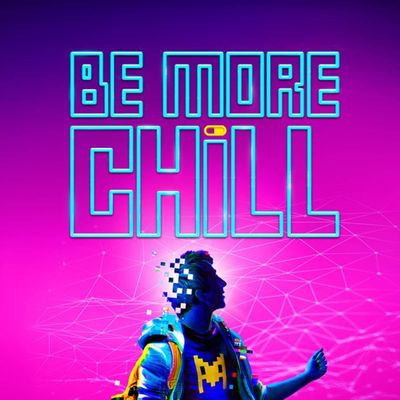
Making his Broadway debut at just 16 years old in The Music Man, Chase Brock has grown into the role of choreographer on many projects on the stage and screen. He is perhaps most well known as the choreographer of Be More Chill, giving the show its distinct “finger tutting” style.
After beginning his Broadway career as a performer, Chase ultimately decided to turn to the creative side of the table. He is credited for creating additional choreography for Spider-Man: Turn Off the Dark. Chase has choreographed various other stage productions in New York, regionally, and internationally. He also run his own dance company, The Chase Brock Experience.
Follow Chase online:
- Instagram: @instachasebrock
- Twitter: @chasebrock
- chasebrock.com
- chasebrockexperience.com
Connect with The Theatre Podcast:
- Support us on Patreon: Patreon.com/TheTheatrePodcast
- TikTok: @thetheatrepodcast
- Twitter & Instagram: @theatre_podcast
- Facebook.com/OfficialTheatrePodcast
- TheTheatrePodcast.com
- Alan's personal Instagram: @alanseales
- Jillian's personal Instagram: @jillianhochman
- Email me at feedback@thetheatrepodcast.com. I want to know what you think.
Thank you to our friends Jukebox The Ghost for our intro and outro music. You can find them on Instagram, Twitter, and Facebook @jukeboxtheghost or via the web via jukeboxtheghost.com.
A very special thanks to our patrons who help make this podcast possible!
If you would like to see your name in this show notes or get a shout out on the pod itself, visit ttp.fm/patreon to become a member and show your support!
Transcript
This transcript was automatically generated and might contain errors.
[0:00] Alan Seales: Welcome to The Theatre Podcast. Intimate personal conversations with theatre's biggest names. I'm player one.
[0:10] Jillian Hochman: I'm player two in this two-player game.
[0:17] Alan Seales: That's right. Yeah, here we are. I had to think about that. It's like, are you picking up what I'm putting down here? Hey, Jillian, how are you doing?
[0:22] Jillian Hochman: I'm so good. Happy rainy Saturday.
[0:27] Alan Seales: Thank you. It is a rainy Saturday and I'm wearing my rain boots today. So we all good, but we just spoke with Chase Brock, who is now on Broadway as the choreographer for Be More Chill, the viral sensation.
[0:34] Jillian Hochman: I was so incredibly impressed with him. I was asking what I thought were very simple questions and he just dove into this methodology and his thinking behind finger-tutting specifically.
[0:50] Alan Seales: Look it up.
[0:51] Jillian Hochman: Yes, look up. I mean, we talk about what finger-tutting is, but you look it up if you don't know what it is. But it's the language. He described this as the language that the squip in Be More Chill uses to communicate. And so all the squips start communicating with finger-tutting. And it didn't even occur to me that he was making a language.
[1:08] Alan Seales: Yeah, it's something that when you see the show, it looks like a cool thing that the characters are doing. And then it's so immersive and he creates such a world and a language through dance that you don't even realize. And you say this in the interview, you don't even realize that this was a language that was created because it is such a part of the world. It's really cool.
[1:28] Jillian Hochman: But you went to see the show, you said third preview?
[1:40] Alan Seales: I was the third or the fourth preview.
[1:42] Jillian Hochman: And when you walk in, everybody just freaks out during all the finger-tutting?
[1:49] Alan Seales: Everybody freaks out, period. But no, there were audience members who already knew some of the choreography. This is the third preview. This isn't even like, it's been running for a few years. People already knew choreography, people already knew some of the finger-tutting. It was fascinating to watch.
[2:08] Jillian Hochman: After we stopped recording, he was talking us off mic, telling us that people sent him videos online and asked for notes because they're trying to learn the choreography and trying to get better. And they're like, I learned this bit, now what?
[2:20] Alan Seales: Now what do I do?
[2:21] Jillian Hochman: Yeah, now what do I do? That's just incredible. The other really cool thing that he talked about, we do get into the story of how he came into Spider-Man Turn Off the Dark. And I mean, the show in terms of the press, the press makes it out to be the show that was just riddled with problems. But he kind of tells a different side of it that we don't often get to hear. And I was really impressed with, again, the amount of safety and the precautions and everything that they did behind the scenes to make the show what it was in a positive way.
[2:53] Alan Seales: Yeah, and I really like how supportive he is. He came into this production, he actually replaced the original choreographer, which you'll hear more of that story. But he's very supportive, and he wanted nothing but the absolute best for this work and to honor what had been done before and improve what could be improved upon. And he's really just a really great person, really nice person, and really supportive of the arts and what people do in this community.
[3:19] Jillian Hochman: Yeah, just a wonderful conversation. So everybody now, please enjoy this episode with Chase Brock.
[3:25] Alan Seales: Here you go. One, two, three.
[3:33] Chase Brock: I made my Broadway debut at 16 in Susan Stroman's The Music Man, assisted Anne Ranking in The Look of Love, and Kathleen Marshall on The Wonderful Town. I created additional choreography for Julie Taymor's Spider-Man, Turn Off the Dark, choreographed Sam Gold's Picnic, and have numerous credits internationally on TV, including Last Week Tonight with John Oliver and The Late Show with David Letterman, and even the Macy's Day Parade itself. And what I'm most impressed with is video games on your resume. I think that's pretty cool.
[4:05] Alan Seales: Chase Brock, welcome to The Theatre Podcast.
[4:09] Chase Brock: Thanks so much, Alan. Pleasure to be here.
[4:11] Alan Seales: I mean, I know what video games are, but how do you choreograph for video games?
[4:19] Chase Brock: Yeah, about 10 years ago, a video game studio, Longtail Studios, called my then-agent and said, we want to do a sequel to this video game that's coming out that is a dance video game, and we want it to be a Broadway video game. Do you have someone who might have the expertise to do that?
[4:28] Alan Seales: Broadway video game.
[4:29] Chase Brock: Yes, and at the time, the first game had not been released, but it was Just Dance for the Wii.
[4:34] Alan Seales: Yes.
[4:35] Chase Brock: Which was that crazy popular—
[4:37] Alan Seales: I had that. I had that, yeah.
[4:41] Chase Brock: There was a moment when everybody had that, so there was a follow-up game called Dance on Broadway, and I created that video game. We did a version, we actually did a version for the Wii. We did a version for PlayStation Move, which was sort of, yeah. The Wii version sold over a million copies. The PlayStation Move sold like 5,000 copies because nobody had the move.
[4:58] Alan Seales: Yeah, I think PS4 kind of missed the boat on all that. It's not augmented reality. It's not virtual reality. What is it? What do you call it?
[5:08] Chase Brock: Well, it's also not the same audience, right? People who play the Wii want to do dance-along to Broadway, and PS3 people did not want to do—
[5:16] Alan Seales: It was PS3 at the time, yeah.
[5:18] Chase Brock: It was PS3, actually, yeah. Did not want to do Broadway dancing.
[5:21] Alan Seales: Well, you've now returned to Broadway with Be More Chill, and you choreographed its world premiere and the off-Broadway, and also you're choreographing the upcoming production of Hercules as well. So, you're kind of writing this hyperbolic upward trend of success here.
[5:39] Chase Brock: Thank you so much.
[5:40] Alan Seales: And I guess let's kind of go with, well, we'll start back at the very beginning. Like, 16, made your debut, but before that, six months old, six years old. Take me to the beginning. When did you start leaping, and jumping, and kicking, and singing?
[5:54] Chase Brock: Actually, when I was five, I saw a cousin. The family attended her spring dance recital, and I inexplicably, and I think my parents thought I was going to be bored, and sort of, they would have to corral me. And I was wrapped, and I sort of demanded, I believe the quote was, I have to go on the stage. And at the end of the dance recital, they actually did walk down to the front edge of the stage and let me step onto it. And from that moment, I did not shut up about dance class. And luckily, the actually Flat Rock Playhouse, which is the State Theater of North Carolina, was about a mile from my house. And we had had subscriptions, and my grandparents always went to the theater. And so, it was sort of the perfect place to basically dump me into the children's theater program, which was new at the time there.
And I think part of it was that I learned about theater in a working theater. And that is totally unlike learning in a classroom, and it creates a real obsession. And so, it started at five, and it has not ended.
[7:01] Alan Seales: What part of North Carolina did you grow up in?
[7:03] Chase Brock: Flat Rock.
[7:04] Alan Seales: Flat Rock.
[7:05] Chase Brock: So, near Asheville, if you will.
[7:10] Alan Seales: Okay. Because I grew up in North Carolina, too, but I did not know anything west of the mountains. Like, I knew of Asheville. I still knew Asheville.
[7:12] Chase Brock: Yeah. But, yeah. And hilariously, so my dance company now has a relationship with an amazing performing arts center in Wilmington, the Wilson Center. But actually going down there on those tours has been the first time I have been to that edge of the state also. So, I stayed in the mountains, and you stayed out of the mountains, and that is why we are meeting in Manhattan.
[7:33] Alan Seales: Because that makes total sense.
[7:35] Chase Brock: That's right.
[7:36] Alan Seales: Yeah. I grew up in Wilkesboro and migrated east. Which way is the right? East is the right to Raleigh. And then, of course, to Wilmington, because the film studio is still there.
[7:50] Chase Brock: That's right.
[7:50] Alan Seales: Is it still Screen Gems? Do you have any idea?
[7:52] Chase Brock: That I do not know, but I do know I was just there, and there is a crazy amount of film.
[7:57] Alan Seales: Yeah. So, do you have any siblings? What is your family like?
[8:00] Chase Brock: Only child. And honestly, everybody was supportive, and everybody was trying to help me get all my dance classes in. Because once I was a teenager, I was doing summer programs. I studied at Anne Roentgen's Broadway Theater Project, did ballet summer programs. And then, essentially, I was dying to come to New York. My few high school years were a blur of begging my parents to let me move to New York. And they eventually did. So, when I was 16, I moved to New York.
[8:34] Alan Seales: So, this is my 20th year in New York. So, I feel like, in a funny way, I'm a New Yorker. I feel like I grew up there.
[8:39] Chase Brock: Did you move by yourself when you were 16?
[8:41] Chase Brock: I indeed did.
[8:42] Alan Seales: Whoa.
[8:42] Chase Brock: I know. It sounds weird. You know what? I was like a tortured gay kid who was not thriving down there. I also had been in pre-professional ballet programs, and I had been in summer stock, and I just couldn't get enough. There was not enough teachers and hours in the day. And so, I think the lure of saying to my parents, you know, but I can come and study in New York, I can audition, was enough for them to sort of say, well, let's sort of try this out. And essentially, I had a subscription to Backstage, which used to be an actual newspaper.
[9:14] Alan Seales: Oh, yeah.
[9:14] Chase Brock: And you could get it mailed to your home. So, it came to the mailbox in North Carolina. And there was an audition. This was when I was 15. There was an audition for Susan Stroman's revival of The Music Man. I had just done the show in community theater in Tryon, North Carolina. And so, I thought, well, I know the show. That's in the bag.
[9:30] Alan Seales: I know Tryon.
[9:31] Chase Brock: Yeah. Tryon Little Theater. I was totally jealous.
[9:33] Alan Seales: Wow.
[9:34] Chase Brock: That was my first really booked musical. And then, essentially, I convinced my parents to basically pay for a plane ticket. And I flew to New York for a weekend and stayed with friends who I had met in summer programs and went to a huge open call with like 600 kids. They ultimately hired three of us and I got that show. And so, I think, you know, it's possible it would have turned out differently. But the fact that I had a Broadway job suddenly, I think everybody just said, okay, go.
[10:00] Alan Seales: So, were you, I mean, did you move up by yourself? Or did parents come with you? Or how did that work?
[10:05] Chase Brock: No, I had turned 16 by the time the show went into rehearsal. I begged my parents to let me drop out of school. So, they did, in fact, let me withdraw from school. And I went to Blue Ridge Community College and I got a GED. And we also, in a very amicable way, I became an emancipated minor so that I could basically go to the Dodgers office and sign my contract.
[10:27] Alan Seales: Wow.
[10:27] Chase Brock: And sign a lease. And so, yeah. And for the first year, basically when I was 16 into 17, I lived on 47th Street in a building that was one door away from the stage door of the Palace Theater. We rehearsed at Radio City. So, I lived on 47th Street. We worked on 49th Street. The theater was the Neil Simon on 52nd Street. So, my radius was actually quite small and sort of Times Square based.
[10:52] Alan Seales: Right.
[10:53] Chase Brock: Yeah.
[10:53] Alan Seales: Wow, that's an incredible story. You're now the second person, the only other person I've talked to who was an emancipated teenager was Ani DiFranco.
[11:02] Chase Brock: Right.
[11:03] Alan Seales: So, you're in good company.
[11:04] Chase Brock: Well, listen. I mean, it was a stroke of luck and sort of faith and all of that that my parents really saw that I needed to be in New York. I needed to move to New York. And it was so clear that I was not thriving there and that I could have potentially a future in the Broadway community.
[11:22] Alan Seales: And I mean, looking back, it is miraculous that the 20 years I've been here have sort of worked out as they have. I mean, it could have gone totally differently. And so, I feel very blessed, but I'm happy that they were willing to sort of do a very alternative teenage format.
[11:38] Jillian Hochman: Yeah. Wow, that's incredible. I mean, I guess quick math tells me you're 36 now.
[11:42] Chase Brock: I'll be 36 in July.
[11:44] Alan Seales: Well, happy early birthday.
[11:45] Chase Brock: Thank you very much.
[11:47] Alan Seales: And yeah, the industry has changed a bit. But I keep going back to something you just glossed over a second ago of like, you know, being a young gay kid in North Carolina. And I identify straight. But I had gay friends in high school, friends that I knew were gay that weren't out.
[12:04] Chase Brock: Yeah.
[12:05] Alan Seales: Right? I mean, like everybody's got one of those or two of those, right? Especially in musical theater.
[12:08] Chase Brock: In North Carolina in the mid-90s, I had a lot of those.
[12:11] Alan Seales: Yes, yes. Was that part of your decision to, I mean, like that part, that side of you, did you know at this time that you were gay and like you hadn't come out or and you just wanted to get to New York to express this and explore yourself?
[12:23] Chase Brock: I definitely knew. And, you know, it's like I knew I was different from the time I was like five years old, you know, and it was it was really clear. And I think, you know, without like going too deeply back into the trauma of elementary school and middle school, I remember, I mean, kids before kids had the language to say things to me like, are you gay? Which, of course, that eventually started. But before that, it was like, are you a girl?
[12:47] Alan Seales: I thought that was such an interesting that that is how elementary school students reacted basically to a obvious gay boy. And it says something so interesting about like how they felt about women versus men and just all of that. So in a way, it actually goes back that far with me that I remember that in elementary school.
[13:03] Chase Brock: And so, you know, I did come out, there was a kind of coming out process and it went sort of in waves and, you know, sort of in wider and wider circles. And, you know, my family were not the first people who knew, but they knew relatively quickly. I guess I officially came out to my family when I was like 13, 12 or 13. But it was it was less like me having to declare it. It was more like everyone and everywhere around me was telling me that. So there was really no hiding.
[13:35] Alan Seales: Yeah. Yeah. I guess it's kind of like anything. And I've revealed some details about myself on these podcast episodes that I previously never talked about. And other people talk to me about things they haven't formally talked about before. And then like once you say it, just like, oh, sure. Oh, yeah. I guess I wasn't as big of a deal as I thought.
[13:51] Chase Brock: Yeah. Especially when like I think what's important and you're lucky enough to have your family support you and and be behind you. And I think that it goes a long way. And I've met people whose whose parents and whose family does not support them and it changes them. It changes everything.
[14:08] Chase Brock: Oh, absolutely. I feel.
[14:47] Alan Seales: Yeah, some nature, some nurture too. Because my parents specifically, they're not bigoted people. They're not closed-minded people. They're just, I guess, culturally inexperienced, if that makes sense, because they've been in this tiny town, North Carolina, for a long time. And my wife is Chinese. And when I first started dating her, my dad thought it was awesome to make oriental jokes.
[15:10] Chase Brock: Sure.
[15:10] Alan Seales: I was like, hmm. He thought he was being funny. He wasn't trying to be offensive. He had nothing against the Asian culture. He was like, oh, I was like, no, dad, you just can't do that. You cannot do that.
[15:20] Chase Brock: It was important that you had that conversation because he came from a different generation. He came from a certain part of the country. He can, you know, all that stuff. And you knew his heart. And it was a teachable moment. And you took, you know, you did that. So.
[15:31] Alan Seales: It's the same with gay people. There was an out gay man who lived down the street from us. And when I was in middle school, high school, you know, my dad made jokes about it in a not a mean way, just, you know, like the equivalent of like oriental kind of jokes, right? And I didn't think anything of it because I didn't know any different. And then when I finally got to college and met other people, and I was like, oh, wait, oh, yeah, that isn't that kind of isn't cool. So, you know, whenever I do find those teachable moments, I like to go back and teach my parents, because they're still in that same little tiny town, and they need all that help they can get.
[16:12] Chase Brock: Of course, of course, I think, I think it's, it's all context, right? Like, all of the conversations we're in right now do ultimately benefit from nuance and from context. And I think that if you truly understand where someone's coming from, there is a pathway there for you to help them help illuminate things that are generational differences, things that are regional differences that, you know, there is hope for everybody to kind of expand their conception of what is acceptable and what is right and what language we should be using about other people. So, speaking of expanding conceptions, Spider-Man Turn Off the Dark.
[16:51] Alan Seales: Oh, gosh, that expanded what we thought of theater could be. My gosh. Okay, so you were assistant or additional choreography on Spider-Man.
[16:59] Chase Brock: Yes, I replaced the original choreographer in something like the third month of previews.
[17:03] Alan Seales: So how was that a story? Is that a story that you can tell?
[17:09] Chase Brock: That's a story I can tell. Sure. I so I have been a Julie Taymor fan for as long as you know, I mean, I probably became aware of her when The Lion King opened when I was a teenager, but I quickly went back and looked at, you know, things like Wandarian and the movie, the Titus film came around came out shortly after that. And there were some DVDs of opera productions you had done. And I saw the Green Bird actually in its brief run on Broadway. So I've been a Julie Taymor fan for a long time. And I had asked my my agent, you know, to try and set up a meeting. You know, she was like at the top of my list of people I wanted to work with. And sort of in that way that I just admired her work, I bought a ticket for the first preview of Spider-Man Turn Off the Dark.
And I'm not somebody who enjoys seeing work that isn't finished. I don't I don't like gossiping about things, things that need more tech time. You know, I'm not a sort of first preview person. And I especially haven't been there myself so many times. And but my level of curiosity was high enough because of my interest in her work that I sort of like that date got closer. And of course, everybody was talking about Spider-Man Turn Off the Dark and I just had to go. So I bought a ticket to the first preview. And it's actually interesting how you phrased it because there were moments in that show. I mean, there were probably five or six moments that truly turned on its head what I thought could be done in a theater, what I thought could be accomplished in a commercial Broadway theater, you know, musical production.
There were a whole lot of other things about it that didn't work. But in my in my kind of championing of artists who were pushing boundaries, I was a real champion of that show. I really felt like they were trying to do something out of the box and they were trying to really push every boundary. And so, you know, on social media, I became kind of a champion of Julie's and that creative team cut to a couple months later. There'd been, you know, one really devastating accident and a number of, you know, all kinds of buzz about the show. And I was following along like everybody else. I was following the New York Times and it was sort of announced that Julie Taymor would be stepping down from her daily directing role and somebody else would be coming in.
And I mean, at the time, I was like, what plumber, you know, what what plumber is going to come in and try to put their craft on the work of this artist? Who's going to, you know, what sucker is going to do this? And then very shortly, there was an announcement that Phil McKinley was going to take over this, the sort of directing of the show. And I had never worked with Phil McKinley, but I had had two interactions with him. Cut going back, a mutual friend of ours had recommended me to him as the associate director of The Boy from Oz many, many years ago when I was really young and we had a great meeting. He did not hire me and that was that. Then he had called me about five years after that when he was doing a sort of Cirque style project in Shanghai, I believe.
And he had interviewed me on the phone and we talked about my dance company. That was sort of, I think, the attraction. He was thinking about the modern dance part of me for that project. And we had a great phone call. He didn't hire me. And so when I saw his name, I kind of thought, well, I wonder if I'm going to have my, you know, every five years, Phil McKinley phone interview. And I actually kind of laughed it off and I never thought about it again. And about 48 hours later, my phone rang and it was Phil McKinley. And I said, hi. I answered. I said, hello. And he said, hey, Chase. I said, how are you, Phil? He said, I'm okay. Can you come to the theater today at five o'clock? And I said, I sure can.
And he said, great. I'll meet you outside. And we literally did not say anything further. We didn't say what theater, we didn't say what show, but I knew and he knew. And he said, bring your reel. So I showed up with my resume and my reel and he pulled me into a diner on 43rd Street. And basically he said, here's what's going on. I'm taking over the show. We are going to bring a new choreographer on. Here's what changes are being made in the book. Roberto Aguirre-Zacasa has come on board. They've already got a working draft of act one that's in progress. The boys are headed into basically meetings to work on act two starting today. And he kind of laid out the plan of what was happening. And my reel was ostensibly playing on my laptop during this.
I don't think we looked at it one time. But we talked about, I had just done Lost in the Stars for the Encore series and we talked about that. And anyway, he asked if I could watch the show that night and, or sorry, it was the next night. He said, can you come back tomorrow night and we'll have a ticket for you and watch the show and then we'll talk after. And so I had this like crazy 24 hours where I couldn't really say anything to anyone, but I knew that I was sort of up for Spider-Man. And the next night I came and I watched the show and I was kind of a bundle of nerves. And then strangely, when I sat down in my seat, I took out my notepad and a real calm came over me. And I thought, I know how to do this.
This is what I do is make musicals. At that point, I'd worked on something like 15 new musicals that my entire life has been building toward this moment. I could be a valuable member of this team and I could help this show out of the woods and I could do it for my hero, Julie Taymor. I could sort of try and I thought really the only sort of stumbling block was if I take this, will Julie Taymor see this as a person sort of stabbing her in the back and would I never work with her again? And I thought, you know what, at that point, my agents had not successfully scheduled a meeting with her. I had never met her still. And I thought, on the other hand, perhaps this is my chance to work with Julie Taymor.
Maybe the universe is bringing this Julie Taymor project to me in this very strange way and I would be an idiot to pass it up. And so I took notes that evening during the show. And I remember that I took a lot of notes, just a million notes during act one. And at intermission, I started kind of looking over them and I realized that they were falling into categories. I identified something like five categories of things that I felt fundamentally needed work in terms of movement and staging and choreography. And during act two, I kind of tested that theory and sort of watched act two thinking of those categories and basically every note I was able to take did fit into these categories. So that was helpful in terms of having an organizing principle.
And after the show, I walked out into the lobby and Phil McKinley was standing there and he said, talk. He literally said one word to me. He said, talk. And I said, I think there's five areas that need addressing. And he said, okay, say more. What are they? I started to lay out these categories. And he said, walk. And we started walking to Westway. We ended up at Westway Diner and we sat down and I had kind of on the walk over introduced the idea of these sort of areas, these broader categories. And when we sat down, he said, okay, then I want to hear everything. And I literally went from beginning to end of that notebook and we talked through every single micro note. And around midnight, he said, you're the choice.
I'm going to call Michael Cole right now and I'm going to let Bono and Edge know, can you start in the morning? And I said, I can start in the morning. And we shook hands and I left that diner. And the next morning I started work on Spider-Man Turn Off the Dark. Bono and Edge and BD. And hashtag BD, you guys. I mean, it was so wild. The highs in that show were like on opening night, Bono's date to opening was President Clinton. It's like a truly extraordinary experience.
[24:48] Alan Seales: Yeah, that's incredible. I mean, were you worried about all the injuries that kept happening and were you adjusting for this?
[24:54] Chase Brock: I'll tell you that I think a common misperception from the outside was that everybody in the theater community seemed to feel they knew better about the injuries and to feel like they were the voice of reason about this. And, you know, when you set foot anywhere near that project, every single person from the top down, their first priority was safety. And it only took one moment with the stage management team to both see their incredible battle scars and the unbelievable trauma they had already experienced and kind of taken on in terms of injuries. And also to realize that this was the most kind of safety-proofed backstage. It was the only show on Broadway at the time that had an e-stop operator, a person whose job on the crew was literally to stand there with a button.
And if something happened, like press that button. Emergency stop. Yeah. And so it was, you know, we were the only show on Broadway that had two EMTs on the crew. Wow. So there, you know, again, there is, they were trying to do something extraordinary and there were some very, very, you know, tragic costs along the way. But the idea that, you know, it wasn't a safe atmosphere or that, you know, everybody inside the building was disregarding safety is just, it's truly not, was not the case. There were a lot of precautions. I mean, it was a gutsy show. Yeah. And, you know, a common misperception, too, is that the flying, you know, everyone sort of was like, they're dropping people out of the sky.
And the truth is that none of the injuries, none of the injuries were actually related to flying. There were no, none of the injuries happened during any aerial cue. They were all things that happen and could happen and do happen in any, you know, big budget production, like a trap door that is faulty and opens or a trap door that opens at the, that is not faulty, but opens at the wrong moment. Or an actor who has a, you know, momentary brain fart and steps into an open trap. I mean, you know, there were things that, that were sort of traditional theater injuries. So anyway, just a very interesting thing that from the outside, it was like, they're flying people around and, you know, smashing them to the ground.
And it's like, that actually was not ever what happened on that show. Moving on to Be More Chill now. Tell me how you got involved with that project and part of, part of the GIF as I call it, the Joe Iconis family.
[27:19] Chase Brock: That Joe Iconis is really something, huh?
[27:22] Alan Seales: Hashtag GIF. Hashtag GIF More Chill. Be More GIF.
[27:25] Chase Brock: I say that I've entered the Iconiverse, the Joe Iconiverse. Jillian's shaking her head at me, disapprovingly.
[27:32] Alan Seales: I love a pun. Don't, don't be afraid.
[27:40] Chase Brock: My long-time friend Anika Chapin, who is like one of the great young minds of, of theater today. One of the fabulous millennial minds who's going to take us forward. I'd known her for a long time. Her father is Ted Chapin, who's the president of the Rodgers and Hammerstein organization and the Hart File Foundation. And he's on Encore's board and now he runs Lyrics and Lyricists. You know, Ted Chapin is everywhere. Anika, we had met over the years. I had, I'd done a couple of Encore shows. And so in just various ways, we, she and I had come into each other's lives, but not worked together. She'd seen an enormous amount of my work and we had had a lot of great conversations about theater making. For a period, she was the literary manager of Two River Theater. Two River Theater commissioned Be More Chill. And one day I got an email from Anika that says, I can't remember what the title of it, the email was, the subject line, but it was...
[28:57] Chase Brock: I immediately put on the demos in the first four bars of "More Than Survive." I knew I had to do it. It vibrated through every cell of my body. It was that rare moment where you feel like a piece of material is matching who you are as an artist in the perfect way. I was also very touched because I had wanted to work with Anika for a long time, and we had wanted to do something together, and it had been like a decade. And so the fact that it was the first time she had really said, "You are required for this. I know what you do, and it is a match for this musical." I took that very seriously. And so that was my introduction to "Be More Chill." And then frankly, the six demos were extraordinary.
I loved them. I laughed. They were incredibly melodic. Joe Iconis is a master of perfect rhyme. There is no imperfect rhyme in the entire musical "Be More Chill." And I loved and appreciated that craft. And then when I did read the book, I was actually blown away because I've worked on many, many musicals where writing the book is the hardest thing on a new musical. And it's more often that there is a set of songs that are really, really terrific. And the book is usually written by a very talented person who has got a number of priorities and factors and people in their ear, and they're trying to synthesize all of that. And the book tends to just be the thing that takes the longest to really figure out.
And so often it never arrives at really that transcendent place of the best musical books. And I immediately thought the work Joe Trace had done on this was actually as good as the work Joe Iconis had done on this. And so that made me perk up with a particular level of just seriousness about that show.
[30:47] Alan Seales: And then how did you approach it? Because I think the subject matter, I don't know if it was written like this intentionally, but obviously with the viral sensation that the soundtrack became, which we'll get into in a second, but it resonates with a certain demographic beyond what a lot of other musicals do. And was that the original intent? Or was it just like, "We're just going to make something and see who it resonates with?" Or was it written and choreographed with the idea of "We're going to hit this particular demographic that's then going to make the soundtrack go viral and bring it to Broadway?"
[31:24] Chase Brock: If only one could concoct all of that and make that happen, I think we would be doing that on every show. No, all of that was just a once-in-a-lifetime kind of aftershock of making it. I think "Be More Chill" has resonated with teenagers, not because it is set in a high school in New Jersey, but I think because it tells the truth about high school. And I think that it is a show that does not talk down to teenagers and everybody. Most people can go back to their high school years and relate to what's going on in the show, especially the moment Michael in the bathroom in the second act, where a character is sort of as alone as someone can be while in the midst of an enormous crowd of people at a party.
I think that's very, very universal. And something that was wonderful about the making of this show is we always had artistic directors and supervision and a literary department. We never were just like artists running in the wild, but we had a lot of freedom. There was not a commercial producer attached to the show at the point that Two River commissioned it or throughout the entire run at Two River or for the two years following that. And when we did acquire a commercial producer, what a strange way of phrasing that. We did not acquire a commercial producer. A wonderful producer, Jerry Gearing, partnered with another wonderful producer, Jen Tepper, and they came forth to pick up this musical and bring it to New York, finally.
But even at that point, they always listened to the artists. And it was a very artist-driven creation process. And I think because of that, the thing that happens when you go through a lot of development and a lot of workshops and a lot of readings and a lot of opinions is just that you sort of end up making something that you try to make speak to as large a group of people as possible. And ultimately, it doesn't speak that loudly to anybody when it doesn't work. When it does work, that's wonderful. But because we were allowed to really just do this thing in the way that we wanted to do it, we made this weirdo, quirky, scrappy, bizarre thing. And nobody sort of ever said we were all waiting for the moment when someone would say, "But you can't do an eight-minute drag cheerleader, you know, cell phone texting number that's an homage to Bye Bye Birdie."
And you can't have, you know, a Japanese supercomputer represented by a, you know, actor, sort of pop idol kind of performer who is speaking in a physical digital language with his hands. You know, those moments just never came. And so the result is we made this thing that I think is very authentic and very, very weird. And it has spoken really loudly to the people it has spoken to. And there is something about that kind of cult response that I think actually has driven the success of many of the long-running musicals on Broadway. It's counterintuitive because you are usually thinking, "Well, how can we make a thing that'll appeal to everybody from age eight to 80?" But if you actually make something that's really, really true kind of from one angle, you may find that it actually is really hitting the sweet spot of a certain demographic. And I think that has happened here.
[34:49] Alan Seales: Did you have that in mind when you were doing your choreography?
[34:54] Chase Brock: When I was doing the choreography, I think I had in mind what I always have in mind, which is trying to get to the root of these characters' particular problems in their particular situation in a particular vernacular that they might plausibly be speaking in movement-wise. And so I think I got to imagine what would the movement vocabulary be for a group of teenagers at a high school in New Jersey today when they don't know they're dancing? What would it be when they're at a party and they do know they're dancing? How do we pass movement on? What is social dance today? Well, it's videos on the internet. So we looked at all kinds of rave and hip-hop dances from around the world and located them on YouTube.
And that is sort of how we got to the jump-style dance that happens in the Halloween party. But it's not just there because it was a cool dance teenagers might have found on the internet. It was there because the director and I felt like we wanted an absolutely living room, exploding, furniture-breaking dance for when, of course, Jake's parents are not home. And so it was really marrying the situation and the needs of those characters to the research. And then, of course, my own synthesis of taste and imagination.
[36:14] Chase Brock: Absolutely. My favorite piece of choreography in the show is actually a two-player game. And I love that it's two boys sitting on the edge of a bed playing video games together. And being able to introduce that friendship. Basically, that is the five minutes of the show where you get to experience their friendship right in the heart of what makes Jeremy and Michael this perfect duo. And that has to hold. Because for the entire show, you are then sort of hoping and rooting for Jeremy to do the right thing. And ultimately, you know, I won't give it all away. But that five minutes was crucial. And the idea that we could introduce that in movement. And, of course, in a great song by Joe Iconis was so thrilling. And I loved trying to figure out how we could basically choreographically play video games.
[37:02] Alan Seales: Yeah. I watched it to prepare for this interview. I was watching. Jillian sent me a bunch of videos to look at it. I was like, "Oh, that's really cool."
[37:09] Chase Brock: Yeah. It was very cool to get to do that number on Strahan and Sarah on ABC. Because suddenly, you know, the entire number of the two boys are basically like focused on this tiny box, television. And, you know, the audience, if you're in the orchestra, you're looking up at them. And if you're in the mezzanine or the balcony, you're looking down at them. But on TV, for the first time, you have really a one-to-one relationship with Jeremy and Michael in the way that they're looking right into the TV and you're looking into your TV watching them do it. I thought that was kind of a magical synthesis of what the piece is and what the medium we were doing it in was.
[38:00] Alan Seales: Oh, that's so fun. I really like how technology and the internet has made "Be More Chill" what it is. And kind of like the way that "Family Guy" is now here because it got cancelled and was so demanded by fans that they brought it back. This is like the "Family Guy" of Broadway.
[38:11] Chase Brock: I will take that.
[38:12] Alan Seales: Yeah, I really enjoy it. And like even 10 years ago, I think this wouldn't have happened.
[38:16] Chase Brock: I think that what is so charmed about "Be More Chill," I think that it was, I think you're absolutely right. I think it's like this particular moment in history and technology and all of that, and the particular way that fans felt about that musical, which again was not just because they discovered it on Tumblr or on Instagram. They discovered it, explored it, and found out that it spoke deeply to their heart. I think you're absolutely right. It couldn't have happened except at this exact moment.
[39:01] Chase Brock: Yes, it's this generation of fans of high schoolers that now have Spotify as one of their normal go-tos. Like I said, even five years ago, how old is Spotify? I don't know. Yeah, but it just amazes me that the opportunity comes and it's the exact choreography, with the exact songs, with the exact show, at the exact online streaming service that has made Broadway what it is right now. And that's kind of incredible to me.
[39:15] Chase Brock: It's totally incredible. I mean, and like if you actually like zoom way out from that, this is actually a very old-fashioned case of good word of mouth. You know, ultimately, like it is a word-of-mouth driven show, but it is in a totally 21st-century medium.
[39:30] Alan Seales: Totally. Finger-tutting, you were saying that's how the squip communicates.
[39:36] Chase Brock: Yes, I looked up, I was watching videos of finger-tutting last night, too, and I was like, "Oh."
[39:40] Alan Seales: Did you learn any?
[39:42] Chase Brock: I tried. I was like.
[39:44] Alan Seales: See, you can't watch it and not try to learn it. You're actually pretty great.
[39:48] Chase Brock: I wouldn't, okay. Well, if you have an opening in the ensemble, let me know.
[39:52] Alan Seales: Listen.
[39:53] Chase Brock: Yeah, where did you learn about that? And I guess where did you, what was the decision to be like, "Oh, that's our squip?"
[39:58] Chase Brock: It became part of my toolbox sort of a few years ago when I think the first time that I really looked at that was on a show by Matt Sachs and Eric Rosen and Curtis Moore at the Public Theater called "Venice." And in that show, that show took place in the future. And so I was looking, again, it was a similar impulse because in this we're basically using that as a jumping off point to represent technology, sort of invisible technology. And so in that show, I was trying to look at the future and imagine how this character who was a clown MC, a sort of magical character out of time in the future, in basically a hip-hop fairy tale, would communicate. And so that was the first time I kind of really looked deeply and got into the YouTube black hole of finger-tutting and digits, which finger-tutting is sort of a subset of the larger kind of liquid in digits.
Liquid movement is what you are used to seeing. You kind of know what that is. Digits is liquid movement, but with the digits or with the fingers. And then finger-tutting is a kind of more geometric set of images that feel kind of hieroglyphic and flat.
[41:02] Chase Brock: Yeah. But essentially I got interested in it then. And then I think, you know, when this, when "Be More Chill," and actually those shows were only like nine months apart or something in, you know, originally at Two Rivers. So I was in a moment of exploring that, but I think that what has made it the perfect fit in "Be More Chill" is that there is this exchange between the Squip and Jeremy in a new number for Broadway called "Sync Up," although this dialogue was always there, where essentially Jeremy, who has really been unable to connect with anybody at school, connects with Rich, who was the bully who, you know, first introduces the idea of the Squip to Jeremy. And they suddenly have a connection and the Squip says, "You and Rich have a bond. It's just digital." And so the idea of a digital language and finding a digital vocabulary to express that bond, that seed was really rooted in the text. It's like you're choreographing binary.
[42:02] Chase Brock: Yeah. Well, listen, what I'm dying to actually do at some point is, you know, and I've described some of the basically Squip sequences to different writers, because people are interested in this. And, you know, someone said, "Is it just cool stuff?" And I was like, "No, no, all of it means something." It absolutely all is. It's very specific actions that relate to what's happening. And what I would love to do at some point is do essentially a video of this, almost with like a pop-up video style animation over it, where you really see what is happening. Because the audience doesn't need to know all of that, right? But the actors certainly do. And it has been, you know, and I should also say in fairness, A, I'm not like a master finger-tutter. I'm decent, but there are...
[44:11] Alan Seales: I asked this question about finger tutting because I thought it would be a short answer and I love that we've been talking about this for entire minutes because it's, I didn't realize how much of a story you put into the thoughtfulness that you put into, okay, we're moving digits for blah, blah, blah, but it's actually a conversation. It's not just choreography. And it didn't even occur to me to like you were sitting here explaining this to me. I was like, that's just very, very impressive.
[44:39] Chase Brock: Oh, thank you. I mean, I think that's what the best choreography is in theater, right? Like I feel like, I feel like that the onus is on us to always come back to the situation, the characters in that particular story. That's, that's kind of the price of admission, I think.
[44:51] Alan Seales: Like you used it to invent a language and it didn't even, it didn't even occur to me, but it works. And I think that is kind of a testament to how well it works because it's just part, it's just part of the show that, that is the character.
[45:03] Chase Brock: Thank you so much.
[45:04] Alan Seales: Yeah, it's wonderful. There's a moment that was, I felt so proud of Will Rowland because there is a moment when Christine enters, it's toward the end of the show before we get into the midsummer sequence, and she cuts him off and Jeremy is about to essentially do a sales pitch for the squip. And suddenly at some point, I think between Off-Broadway and Broadway, in the moment before she cuts him off, Will starts, and I realized suddenly he's doing the beginning of the squip. He goes, it, and he's starting to say it's from Japan and to repeat essentially that commercial with the finger tutting. And it was such a smart choice on his part that he has gone from a cowering guy in a bathroom hearing this scary myth to being the salesman on TV for it, complete with the choreography. It's just one tiny, tiny example of how actors are collaborators in this work.
[46:00] Chase Brock: And when you give someone a language and then suddenly they are speaking in it, I can't think of anything sweeter for a choreographer.
[46:06] Alan Seales: That's nice. Tell me about the Chase Brock experience.
[46:09] Chase Brock: The Chase Brock experience is my now 12-year-old dance company, which is, I cannot believe that I have had a dance company for 12 years. It feels like a long time, and I feel like every moment of that, of running a dance company, nonprofit, arts organization in New York in the 21st century has been a labor of love is how we'll say it. And we've made 31 pieces, some of which are evening length. So it's a really enormous body of work. Something that's been important to me is commissioning new scores from terrific people who are usually writing in theater, Michael John Micusa, Josh Rosenblum, Eric Dietz. And also sort of going to artists who have made recordings that I think would be really exciting on stage like Nellie Mackay or Gabe Kahane or David Yazbeck. And so I've brought a lot of collaborators from the theater world kind of into the dance world in that way.
[47:06] Chase Brock: And really the work that we're doing sits on an edge between narrative dance, dance theater, and kind of poppy, fun, exuberant, modern dance. And we tried for a long time to really define it and to try to like squeeze it into some category. And at long last, we're not really doing that, and we're just letting it be what it is. And in a funny way, the original name, The Chase Brock Experience, was like a total joke. I started working with a group of people, a group of dancers, and when you rent studio space hourly, they have to have something to put on the board. Now it's digital, but it used to be just a whiteboard where you wrote it. So they would just usually put my name, and then one of my first, Jason Snow, one of the founding members of the company, would every day modify it to say Chase Brock Dance, Chase Brock Dancers, The Chase Brock Effect, Chase Brock Moves.
And one day he wrote The Chase Brock Experience, and it was so stupid and silly that it just stuck. And so it was like a parody name, but 12 years later, I actually think that the experience part of it was a very clever sort of subliminal stroke, which is that we're not just doing dance. It's not just sort of dance per se for dance people, but it really is intended to be a kind of full experience. And it's not interactive in the way that we're now doing so many things that are experiential in that way, but I think across the board in our entertainment, we're looking for experiences. And we were sort of already doing that in the dance world with design and with, in some cases, plot. And so that carries on today.
[48:44] Alan Seales: So where do you want it to go? What's the ultimate goal of the experience?
[48:49] Chase Brock: So for the first decade, we were really moving piece by piece, and I was able to look ahead one piece before that. And when we were coming on the verge of the 10th anniversary, which was in 2017, I suddenly thought, I now can look at the next decade of this. I'm either going to cap this off at 10 years, or we're going to 20. And if we're going to 20, I'm thinking about years 10 through 20. And so essentially, we decided to focus on evening-length narrative dance works for our New York seasons for that period. And we have formed an amazing partnership with Theatre Row on 42nd Street. We're a resident company there, which is really a thrill because we can have long runs in small theatres. And I love the idea of doing close-up dance theatre for longer runs.
Usually you run for like three performances in a very large theatre, and that's that. But we're changing that format. And essentially, basically, we commissioned three scores to premiere in years one, three, and five. And we are reviving two of our largest, most epic, most ambitious works from the first decade in the interim years. So the first of the five years was a piece called The Girl with the Alkaline Eyes, which was a sci-fi robot thriller. The composer was Eric Dietz, and he also wrote the scenario for that, which was crucial, I think, because that piece has a very detailed mythology behind it. This year, we will be reviving our 2008 work, The Four Seasons, which is a climate change take on Vivaldi's Concertos, The Four Seasons, with a text by the playwright David Zelnick.
In the third year, we'll be premiering a piece called Big Shot, which has a score by Paul Libman. And it deals with my own family history. My family operated a drive-in restaurant in Hendersonville, North Carolina from 1949 to 1972. This is inspired by that. In the fourth year, I can't tell you which piece we're reviving, but we are reviving another popular piece that we made. And then in the fifth year, I can't tell you the title yet, but we're making a work with the composer Marissa Michelson. And it will hopefully also bring in her ensemble Constellation Corps. It would be the first time that we have vocal music performed live as a part of our company's work.
[51:01] Alan Seales: Oh, wow. That's really cool.
[51:03] Chase Brock: Yeah. So that's a little bit about what we're up to.
[51:05] Alan Seales: That's wonderful. So the other project you're working on in the future now is Hercules. Can you tell us anything about that yet?
[51:10] Chase Brock: I can. Hercules is an amazing homecoming for me personally. It's my second musical for Disney theatrical productions, and I am the biggest Disney fan. And I'm particularly a fan of Disney theatrical and what Tom Schumacher has done with that division. So I am the choreographer of the stage version of The Hunchback of Notre Dame, which is running right now in Japan. And we have had a German company and then U.S. companies. And so it's my second show for Disney. It is my third show for Public Works, which is a visionary department, an initiative of the public theater led by my very dear friend, the brilliant Lear de Bessonnet. I did the first two Public Works shows, The Tempest and The Winter's Tale, and this is my return after five years.
So this feels so sweet in that way. And Public Works makes basically radical participatory theater that really opens up our idea of what community is and who theater is for and who theater can be made by. So it's almost a proposal to the world. And I am so honored to be part of that. And this is actually my 10th show at the public theater. The public theater has really been my nonprofit home in theater. And I'm so proud of just getting to be part of that legacy that includes hair and the chorus line and Hamilton and so many things, including the first Broadway show I ever saw, Bring in the Noise, Bring in the Funk. So for me, it's very special. And I think that if you've never seen a Public Works production, it's unlike anything else.
It is transcendent in a way that I can't even try to describe because you really just have to be there. But being under the night sky when a cast of 200 enacts a community pageant, which essentially is, you know, what we are pursuing is community theater with held to the highest ideal of what community theater can be and artistic excellence altogether. It's the best part of Shakespeare in the Park, wedded to our best vision of who we can be as a theater community and a people community, wedded to a Disney property that has been beloved ever since it was released and longed for on the stage, wedded to a Greek myth that is so part of our long, long DNA. I think it's going to be the event of the summer and it's for seven or eight performances only.
Of course, they are free. You have to stand in line like Shakespeare in the Park. There are probably people standing in line right now. Bless them. I hope they have a raincoat. And, you know, I can tell you that we've done a number of readings and I've been doing some dance pre-production and we are very, very bolstered by how things are coming along. And I won't spoil any surprises. But to say that you do not want to miss it, it's going to be a truly unique event at the Public Theater and for Disney Theatrical.
[54:04] Alan Seales: Wonderful. So, as always, we'll wrap up with three standard closing questions on the podcast here. Number one, very simply, what motivates you?
[54:10] Chase Brock: Curiosity. I'm deeply curious. I'm an avid consumer of everything. And I think, actually, in my life right now, I'm trying to find the right balance between work and sort of soaking up everything. You know, like I would be in the theater eight nights a week if I could. I would be reading novels all the time. I would be seeing every movie. I'd be going to late movies. Susan Sontag, in some ways, was a hero of mine because of her avidity. And I really, I like it high and low and experimental and commercial. I really, really like my art democratic. And I want to take in a lot of it. And I don't have enough time lately. So, that's the thing I'm working on.
[54:50] Alan Seales: Okay, next question. If you could give advice to your younger self or younger people listening now, what would you say?
[54:56] Chase Brock: I think that we put an artificial end point on our story when we think about ourselves. I think that we say, I never did this or I failed to do that or I haven't done that. And we put brackets around our lives. And today is the end bracket. But the actual end bracket is much farther out from today. And so, I think a lot of our struggle and strife is about actually envisioning an end point that we're at instead of seeing ourselves still on a continuum that ends far in the future. And so, I think ultimately, like in time, it will all kind of unfold the way it's going to. But I think trying in those moments of frustration to take a deep breath and say, hey, like in a year, where will I be? In five years, where will I be? In ten years, where will I be? It's useful.
[55:45] Alan Seales: And then last question. If you could only see one show for the rest of your life, but you can see it as many times as you want, what show would you see?
[55:52] Chase Brock: A chorus line, of course.
[55:56] Alan Seales: All right. So, we're going to find you online on Instagram at InstaChaseBrock. On Twitter at just plain old at ChaseBrock. Of course, ChaseBrock.com, ChaseBrockExperience.com. Did I miss anything or do you want to plug anything else?
[56:11] Chase Brock: I think those are the best ones.
[56:12] Alan Seales: Yeah. You can get more of me and the Theatre Podcast at Theatre underscore Podcast on Instagram and Twitter, Facebook.com slash Official Theatre Podcast. Of course, please subscribe if you're listening now and you're not already. Rate, review. The reviews are wonderful. That's how we get Chase Brock to the top of the charts. And you can email us, feedback at TheTheatrePodcast.com. This is produced by Jillian Hochman. And as always, thanks to Jukebox the Ghost for the intro and outro music. Chase Brock, thank you so much for being on the podcast.
[56:43] Chase Brock: Thank you. It was an absolute pleasure. I'm a fan.
© Broadway Podcast Network, All Rights Reserved