

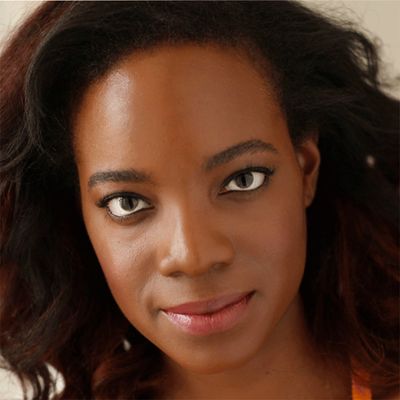
Rachel Christopher brings a poet’s heart and a scholar’s mind to the stage eight times a week as Hermione Granger in Harry Potter and the Cursed Child... Read More
From the show: The Theatre Podcast with Alan Seales
Guests
Miniseries Inclusions
Featured Shows
About
Rachel Christopher brings a poet’s heart and a scholar’s mind to the stage eight times a week as Hermione Granger in Harry Potter and the Cursed Child. In this conversation, she opens up about her lifelong love of language, her background in translating ancient Greek poetry, and the deeply personal connection she feels to storytelling—both on stage and off. Whether she’s talking about her time at Epcot or reflecting on how imagination shaped her childhood, Rachel reveals just how much joy and intention she pours into her work.
From cooking lamb meatballs and tending to her city garden to revisiting classic Greek texts, Rachel’s passions outside of theater are just as vibrant as the characters she portrays. She shares what it means to step into the legacy of Hermione, how theater expands what we imagine is possible, and why making space for community and curiosity is at the heart of her artistry.
Rachel Christopher is an actor and poet currently playing Hermione Granger in Harry Potter and the Cursed Child on Broadway. Her stage credits include For Colored Girls Who Have Considered Suicide / When the Rainbow Is Enuf and Jaja’s African Hair Braiding. Her screen credits include The Girl on the Train and The Upside. A graduate of Vassar College, she double-majored in drama and classics, and has collaborated on stage adaptations of The Aeneid and The Iliad.
This episode is powered by WelcomeToTimesSquare.com, the billboard where you can be a star for a day.
Connect with Rachel:
- Instagram: @rachel_e_christopher
Connect with The Theatre Podcast:
- Support the podcast on Patreon and watch video versions of the episodes: Patreon.com/TheTheatrePodcast
- Twitter & Instagram: @theatre_podcast
- Facebook.com/OfficialTheatrePodcast
- TheTheatrePodcast.com
- Alan's personal Instagram: @alanseales
- Email me at feedback@thetheatrepodcast.com. I want to know what you think.
Transcript
This transcript was automatically generated and might contain errors.
[0:00] Rachel Christopher: Hi, I'm Rachel Christopher, and welcome to The Theatre Podcast with Alan Seales.
[0:11] Alan Seales: Welcome to another episode of The Theatre Podcast. I'm Alan Seales, and this episode is with Rachel Christopher, who's currently seen on Broadway as Hermione Granger in Harry Potter and the Cursed Child. So, this episode continues our Harry Potter, Cursed Child takeover here on the podcast. This is episode two of seven in that series, and I can't wait for you to actually hear this with Rachel. She's a passionate poet, an ancient language geek, and a lover of plants and puzzles, and her appreciation for words runs deep. She used to translate ancient Greek poetry for fun, and it shows in the thoughtful way she speaks about language and storytelling and just the magic of imagination, which, of course, everybody has to have if they're a lover of Harry Potter.
So, normally in these interviews, when my guest sits down with me, I'll just hit record just to make sure all the gear is working, and then we start chatting, and I explain the rules of which there are none, anything goes, and I say things like, we'll talk about whatever makes your eyes light up, and other things to kind of get everybody comfortable. And our pre-interview banter was so interesting that I decided to leave it in. So, now you're going to get to pick up this interview right in the middle of a conversation we were having after she sat down. So, stick around. Don't forget to follow me on social media at theater underscore podcast. Head to Patreon or Spotify for the video version of this episode, which, by the way, if you're watching, you'll notice I have a black eye on my right eye because of a little bonk to the face while hanging a shelf previous to recording this episode. So, finally, this episode is powered by welcometotimesquare.com, the billboard where you can be a star for a day. And now, everybody, please enjoy this episode with Rachel Christopher.
[2:04] Rachel Christopher: Whatever makes your eyes light up.
[2:06] Alan Seales: Whatever is happening right now in the world.
[2:09] Rachel Christopher: Well, I don't want to talk about it.
[2:10] Alan Seales: No, no, no, no. I just mean, like, in the world of your universe imagination.
[2:15] Rachel Christopher: That's like Disney World. You remember Figment?
[2:17] Alan Seales: Yeah.
[2:18] Rachel Christopher: From Disney World.
[2:20] Alan Seales: Yeah.
[2:21] Rachel Christopher: Imagination.
[2:23] Alan Seales: I haven't thought about that in a hot ticket.
[2:26] Rachel Christopher: Used to be Michael Jackson changed to Eric Idle. Yeah, Eric Idle.
[2:30] Alan Seales: Odd.
[2:32] Rachel Christopher: Very odd switch. I went to Disney World two, no, yeah, wow time, a year and a half ago, a year and a half ago with my whole family. And it was sort of thrilling. Like I, well, also because we stayed at the Animal Kingdom. And it was the first time I'd ever stayed in a hotel at Disney World. And I was like, oh, you stay at the hotel that opens up onto the ride.
[2:52] Alan Seales: Yes, right. And it's like made up so that you feel like you're in a safari. It's not a safari.
[2:58] Rachel Christopher: We've been there. I stayed there.
[2:59] Alan Seales: Oh, yeah. So they're like giraffes walking around. And I was like, actually, this is sort of great. And so that sort of like made the trip. And then we went to, I think, three parks. We tried to keep it reasonable. And we were there for three days. So it was a park a day. And I was like, oh, this is how Disney's meant to be. You're not actually supposed to be running around. Like you're in Home Alone.
[3:26] Rachel Christopher: Literally, like trying to make it to every ride in every world that there is. But I, it was also the first time that I had actually properly as an adult been to Epcot. And I was like, it's different.
[3:37] Alan Seales: It's different.
[3:38] Rachel Christopher: It's so cool. It's so much better. Oh, I also had a really good avocado margarita drink around the world.
[3:45] Alan Seales: Right? Yes. Yes. Yes. And also, they had a like a food festival while I was there. Look, look, plan your Epcot trip for when they have these festivals because every little world will have some sort of like exorbitant small plate meal that you can buy for like $6. And it doesn't really make sense. It's so good. There's short rib in France. There's like amazing poached eggs with pea shoots and flowers. Like it's just, it's really polenta. And I was like, oh, I guess I guess Disney does know what they're doing. So anyway, I don't know why we're talking about Disney World. But oh, no figment. That's what it was.
[4:25] Alan Seales: Well, there is polenta of food at Epcot. Buzzing.
[4:29] Rachel Christopher: Buzzing. It's really I mean, I was like, oh, I guess I could come back here. It's not just for kids. We go a lot. Because my grandfather helped build Disney World.
[4:41] Alan Seales: Really?
[4:42] Rachel Christopher: Yeah, he was on the engineering team that was part of the project management-esque side. And so scheduling budgets, all that stuff. So he took it to his grave, a lot of the secrets of how the rides were done. He promised to tell me when I got older, and then it never happened. But when we would go visit him, they retired in Orlando. So when I was a little kid, we would go visit them. And because he was an employee, we get an ex-employee, we get in for free and would just go over multiple times a year over and over and over for free. And then we didn't have to stay in a hotel because he was right there in Orlando. That was the best. I mean, so a lot of my family where I'm from California originally from Southern California, but during the pandemic, my mother and my sister and her husband, so a big portion of my family moved to Florida, because they wanted more space.
California was feeling like dry and hot. And it's, I mean, it's the only place I've known as home. But we have a lot of family in Florida. And so everybody moved. And Florida is a totally different ecosystem and different community. But it's grown on me the times that I've been able to visit. And it's nice that they're like on this side of the coast, which is so when I go see it doesn't take my end, I don't have to reschedule my whole life to go and visit them. Because it feels like a two and a half, three hour flight. And they're in Tampa, which isn't terribly far from Orlando. And so it's an easy, it's an easy trip to go to Disney and Legoland and Buschgard. And like, you know, like all of these things that I have such fond memories of as a child.
And now that I'm an adult, it's sort of like surprising, I guess. Actually, maybe not. I'm really a 10 year old. But I'm somehow surprised that I enjoy myself so much. And then I sort of I'm like, Oh, I get why people come here.
[6:36] Alan Seales: Yeah. They try to make it easy. I think you need a PhD in Genie Plus and Genie Pass and all those.
[6:41] Rachel Christopher: Oh my god. Yes. That's a whole separate thing. But we figured it out. Yeah. So I have a friend who has an entire hobby. And his means of de-stressing is by helping other people plan their Disney World trips. Because he is like an expert at the Genie Pass and all this stuff. And so he's like, he's like a part of all of these Facebook groups. And he's like, I know how to help you navigate all of these parks. And it, it helps him de-stress. I think that's the most stressful thing I can imagine. But he, because I guess he has the knowledge base. And so it just like, it helps him. It helps him to like, ease other people's anxiety.
[7:15] Alan Seales: Well, I officially just changed this podcast name to the Disney podcast.
[7:19] Rachel Christopher: Right, exactly. But should we talk about theater?
[7:23] Alan Seales: Let's talk about theater.
[7:27] Rachel Christopher: Okay, well, I'm going to keep in like all of that. But here's the official start of the episode.
[7:35] Alan Seales: Oh, I forgot that we were doing this. I was just talking about Disney World.
[7:39] Rachel Christopher: Right? I mean, that's my point. Okay. Today, I have the pleasure of speaking with an incredibly talented actress who has granted, great granted, graced both stage and screen with her dynamic performances, including notable roles in The Girl on the Train and The Upside. On Broadway, she's captivated audiences in productions like For Colored Girls Who Have Considered Suicide When the Rainbow Is Enough, Jaja's African Hair Braiding, and she is now on stage as Hermione Granger in Harry Potter and the Cursed Child. Rachel Christopher, welcome officially to the theater podcast.
[8:04] Rachel Christopher: Thank you so much. That was such a generous introduction.
[8:08] Alan Seales: You've had a generous career. I love it. And actually, let's get into, let's get into Harry Potter of it real quick, because you were saying, like, we're talking about Disney, obviously, before we started, you said you're actually a kid and everything. So like being able to take that little kid energy, because I feel like we're similar in age, I might be a little older, or a lot older. And I will never tell. Because when I was a kid, like, I'm pretty much in the same age as Daniel Radcliffe, I'm saying, so I'm watching these kids grow up on screen in front of me. And now you get to be one of them and carry that lore forward for future generations. So like, talk to that a little bit.
[8:51] Rachel Christopher: I mean, I could weep about it if I think about it too much. It is, it's like, it's a series of concentric circles of like, having childhood memories of reading the book and like how I was introduced to the book in grade school at a time that was like, very sort of like tumultuous. And everybody was like, trying to figure out where they belong and how they belonged. And I seemed like behind everybody in that finding of belonging. And like, my one really good friend in school introduced me to these books. And it was like a total, I don't know, I feel like it was like not just a social, social sea change, but just an imaginative one. And I just, you know, I had heard about the books and thought that they were hooey.
I thought that they were not for me. And it turns out that they really, really were. And so I had this full fledged relationship to all of the characters in the books, Hermione in particular. Yes, very much so because we both like to read, we both were sometimes difficult to understand at first glance. I was very sort of and am still enamored by the fact that Harry and Ron didn't really know what to do with Hermione when they first met her. They weren't sure they liked her. And I just, I remember that sense of sort of kinship with her, of the difficulty of finding friends when you're a bit different, when you read a lot, when you're a bit smart, and realizing how to let people into that world that you so anxiously and desperately want to share.
So that Hermione was a really sort of like loud, vibrant piece for me. And then in the movies, watching that journey, it's somewhat at the same time of processing the books, like having a sort of a completely different visual world, a cinematic world that went in conjunction with the books, which was interesting because the cinematic world, it seems, because it's so detailed, it's also kind of defined. And there was something about the books that allowed my imagination to go all different places in the terms of like what the world looked like. And so I was happy to sort of have both at the same time. And now in this play, I just feel like I'm a part of a lineage of the way that so many adults my age, but even children now are sort of finding and naming their own imagination, their own definitions of magic, their own sort of curiosity about where they might fit in the world and where they can be goofy and playful and imaginative in the world.
And also, because of the role that Hermione is in this play, I also feel like I'm following in the lineage of some really incredible and exciting artists and actresses. And so I feel connected to each one of them in a variety of ways. And I remember the first time I saw the play, I was like, Oh, wow, that's Hermione. And the world that the magical world is something that is completely legible on stage. And what a extraordinary thing that was, because I say this often, I love doing film and TV, but the theater is really my medium. And when I can find that the theater can offer, I always find that the theater offers something that film and TV cannot. And in this play, in particular, I felt like that was such a challenge to take on because the films were so canonical in their ways.
And so for the theater to enter in and introduce a different vocabulary for something that we had all sort of had defined in many ways, and to do it in a language that is wholly the theater's was just sort of like affirming in a lot of ways and like artistically affirming. And those actors and everything about it, it was just really spectacular. I was gooped. It's been quite a journey to have seen the first iterations of this play and to now find myself in a room with some of the people who made it. And that is a joy that is hard to articulate, even though I've been talking for however long.
[13:11] Alan Seales: Well, you're expressing a feeling that, I mean, it's an energy. You said something about like being in person and doing these interviews is like an energy that we can exchange, like that you don't get remotely, you don't get over TV and film. And I think you can kind of apply that same idea to here, to theater, because the audience is always the final cast member. When you're rehearsing, when you're learning your lines, learning your script, developing your character, you never know how it's going to end up until you get in front of an audience.
[13:34] Rachel Christopher: That's right. That's right. I think one of the most, there are so many brilliant design choices in the show. But one of my favorites is there is a moment in the show where two characters finally get an outside view of Hogwarts. And I remember the first time we all sort of saw Hogwarts in the movies, we were like, that's it. It was such an extraordinary visual and also somehow the exact thing we all had imagined. And in the play, when you're in a theater, how do you
[14:22] Rachel Christopher: You create that experience again? And there is a cue, there is a design choice in the show, where one of the characters says, "Oh, look, it's Hogwarts." And it's the one moment in the show where it seems like the house lights come up, and the characters are looking out at us, they are looking out at the audience. And I mean, I'll cry about it if I keep talking about it, but it is such an extraordinary choice. Because what the world of this creative team is saying is that ultimately, J.K. Rowling and since Jack Thorne and John Tiffany, all of these amazing artists and writers have developed our understanding of what Hogwarts is. But the real holders of Hogwarts are you and the audience. It is your imagination.
And because we cannot build a castle in the theatre, although that theatre, I mean, it does exceptionally resemble a castle and many of the things that we all imagine Hogwarts has. But in that moment, our imagination, our envisioning, and really all of our collective energy in that moment of our memory and creation of Hogwarts is the theatrical event. And that can only happen in the theatre. In film, they have to give you a castle, otherwise you want your money back. But in the theatre, they can make you project one. And that's real magic. It's the most magical moment in the play for me.
[15:49] Alan Seales: Do you have kids who have never seen the movie come up and talk to you about it?
[15:55] Rachel Christopher: Yes, you're nodding yes. Yes, there is. Well, okay, I'll be honest. Like most of the kids who see it, they've either seen the movies or read one of the books. That's usually how they know that they really, really, really want to come and see the play. But I have been at the stage door and have met some young folks who are like, "I just was visiting New York City and I happened upon this and I know about Harry Potter and I wanted to see how it could be rendered in the theatre." So I came to see it and they are usually like, "It's amazing because they're like, not only did I fully understand the story, not only did I fall in love with all of the characters, but now I'm going to watch the movies and read all of the books because I just want more, I want more frame, I want more context, and I want to spend more of my time this way."
And that's really rewarding to know that the story that we've all made is still, it's like super rooted, it's super relatable. And it's also, it's a seedling. It's a seedling for people to like go and seek out more of what they want.
[16:56] Alan Seales: That's a great way of putting it. Yeah, it's very much a planting an interest into like the lore and opening up the world. And it's so strange. And I still have not figured this out, what it is specifically about the Harry Potter verse that attracts so many different types of people from all over the world. Because, I mean, I'm thinking like, there's your sci-fi, your straight sci-fi time travel-y, like your Back to the Future sort of thing. And then there's the Lord of the Rings, like straight up fantasy, Game of Thrones fantasy. And then this falls into sci-fi fantasy. It's not, I mean, so it's not sci-fi in that like Back to the Future time travel. There's no science. It's just, it just is. And I don't quite know how to articulate this. But you see what I'm saying? It's created this own little world that people just are sucked into in a way that I've never seen anybody else sucked into.
[18:00] Rachel Christopher: I think it's a few things. I think that the age of the characters is really important. Like they're at this sort of formative time of growing up, and trying to find out who they are, trying to make friends. And it is a point in life, I think, no matter who you are, you know what that feels like. You remember how maybe alienating it was, or how exuberant it was. Like whatever your positioning in that sort of like spectrum, you just, it's like your first Technicolor memories are that age bracket. So I think it's that, that the story is centered around the world of children. And they're coming into knowing and their discovery of their own agency and how they make mistakes and also how they change the world, which is something that all kids want to do, but don't know if they can or not sure how to.
But these books and these characters are about children using the tools that only adults can give them because the adults are the ones that hold keys. And yet the children are the ones who find a way to make the world possible. And that's like, I think it doesn't matter how old you get, how old you are. If you encounter people at that point in their life doing that, there is something really magnetic about it.
[19:12] Rachel Christopher: There's also, I think, something about the way that the magical world, the wizarding world is created, that it feels like a shadow memory, like all of the magical terms, many of the spells, they are all new words, but they come from words that we kind of recognize. And they feel like, they feel like things in our little monkey brains, like they feel like words that we would have made up had we thought about it enough. And that is, it's a brilliant thing that J.K. Rowling does, which is that it's not it like the magic isn't really this thing that's meant to like sort of show off her own linguistic intelligences and skills. It's actually to awaken up your own sort of like, you could have made this up.
And actually, maybe you did, because as she writes it, it's almost on the tip of your tongue. And you know the spell, the minute you read it, and you also know what it does without somebody defining it for you, because it's just like the word is so right. And so there's something about it that's like infinitely relatable, where it's like worlds like Lord of the Rings, right? Like there's a language to those worlds that almost has to be learned. The book has to teach you how to engage. Something about Harry Potter, there's no teaching how to engage, you belong already, you belong. And that makes everybody so enamored with it, and also feel like they own a piece of it. Belonging is a really, it's a really magnetic thing.
[20:33] Alan Seales: I loved the way you just went into the language of it. I think about that all the time, like like Lumosity. It's light, it's alohomora, it's like aloha.
[20:43] Rachel Christopher: Exactly, open, exactly.
[20:47] Alan Seales: All this stuff makes total sense. And you know, if I were writing, I put myself in the shoes of J.K. Rowling once, and I was like, okay, if I were writing this, would I have used such, I want to call them obvious spell names, right? But the way you described it, I'm like, that was genius. It was literally genius, because you already know exactly what it is without having to adjust your frequency.
[21:09] Rachel Christopher: Exactly. Where do owls live? An owlry. It all makes sense. And I think there's this quote, she's kind of a poet in this way. There's this quote that poets give everything a local habitation and a name. And that's what she did. She was like, oh, if we're going to make a magic world, it has to be local to you. And it has to be something that you can enter into and know how to operate. Because she's trying to make wizards out of us all, frankly.
[21:39] Alan Seales: Don't go anywhere. We're going to take a quick commercial break.
[21:42] Rachel Christopher: All right, everyone, now we're back. Okay, when you were a little kid, what got you into theater? When you were reading books, you were doing your nerdy thing that I absolutely love and adore. What got you into performing?
[21:57] Rachel Christopher: Oh, I don't know. I feel like I started performing. I didn't come from a theatrical family or performing family. I have a lot of singers, church singers in my family. And so we were performance adjacent. But I read a lot as a child. And I would always get my sister to play act with me and to put up plays from the things that we were reading. And I think my parents just realized that this was a facility or this was a medium that I was interested in. And so they would put me in camps, they would put me in dance classes and things like that. And I just sort of learned over the course of exposure that, oh, this is a thing that people can do. This is a thing that isn't just necessarily a hobby, but people make a career out of it.
And I approached it as a hobby probably until I got to college. And I was like, wow, there are resources and there are people who are trained in this. There's a way to get better and better and better at it. And so I started to not feel competitive, but feel like there was so much more to learn. I love school. I love school. And so if you give me an opportunity to train, I'll probably take you up on it. And so learning that the theater wasn't just something, or that acting wasn't just something that was just inspiration based, but was something that had a form and a structure was also really exciting to me. And so I just, I don't know, I just kept going. I never left the studio my parents put me in and I never left.
[23:33] Alan Seales: So it was, were you in college when you decided to do it seriously? Or did you go to college for something else and then switch? Or how did that work?
[23:41] Rachel Christopher: I went to college knowing that I wanted to study theater. I knew that that was like a thing. You know, I was doing plays in high school and I was like, oh, I think I could be good at this. And I wanted to go to conservatory. And my parent, my mother was like, absolutely not do that because she's like, I want you to study many other things. And so she didn't want me to be focused on one thing that early in life, which I'm thankful for now. At the time I was resentful, but I'm thankful for that now. And when I went to college, I was looking for schools that had strong theater programs. If they couldn't be BFA programs, they had to have a strong theater program. And I found one and I started taking a lot of the drama classes.
And I think when you get to college, because I didn't go to performing arts high school, college was the real moment where I was around people who I would deem as theater scholars and artist practitioners. And that's when I realized like, oh, there's a whole sort of economy and process to making what heretofore had felt sort of garage band slapstick in my high school. And I mean that with all of the love and praise, but it was not what Vassar College was doing. So it was just a different ecosystem. And that's when I really realized like, oh, this is a thing I could maybe spend more time in.
[25:10] Alan Seales: Maybe spend more time in. What would you have done if you had not gone this route?
[25:14] Rachel Christopher: Okay, it's funny you asked that. So I was a double major when I was in college. And the other thing I majored in was classics and ancient societies.
[25:24] Alan Seales: Classics?
[25:24] Rachel Christopher: There you go. Classics and ancient societies. Yes. And if I'm really going to clarify it, what I was was a Greek major. And so I spent an inordinate amount of time translating. I translated poetry. I translated history.
[25:38] Alan Seales: From Greek?
[25:39] Rachel Christopher: Yes, sir. And I have always been interested in ancient art and ancient society and Greek plays and Greek tragedy. It's a part of my DNA at this point. And if I did not pursue an MFA, I probably would have tried to find a program in museum studies or art history. I was so enamored with that level of library commitment.
[26:15] Rachel Christopher: And I love translating. I loved it. It felt like puzzle work. It also felt like writing and poetry work. It just it unlocked a part of my brain that is so in love with language. I love language. And so that was something that I could definitely see myself being committed to had I not gone to school for theater.
[26:39] Alan Seales: Can you still translate Greek?
[26:41] Rachel Christopher: I don't do it as much now. My vocabulary is really bad. My grammar is really bad now because I don't spend time doing it. But I have gotten to do plays. I've collaborated with Lisa Peterson and Dennis O'Hare. And so I've done plays that both of them working on a new piece called Song of Rome that is all about the composition of Virgil's Aeneid. And so I've got to spend time with that. And I've also done a production of an Iliad, which is a one person show about sort of the story of an Iliad and a lot of that play or portions of that play are in the original Greek. And so I've had opportunities to sort of be in a theatrical venue or an acting using a performance medium and speaking Greek to people, that's very exciting to me.
And I remember when I was a Greek and a drama major and my Greek professors would be like, "What are you going to do with that?" And my theater professors would be like, "Well, what are you going to do with Greek?" And I was like, "I'll find a way." And it turns out I did. It turns out that there's just opportunity and interest to find out how those texts can be brought to life, but also just how to make space for that language and hearing that really, really old text, which I find so exciting.
[28:00] Alan Seales: If you're translating something that's common today, like a Spanish to English or vice versa, or Italian or whatever, it's obvious what the translation basically should be. But for something like Latin, Greek, these old ancient languages that aren't spoken anymore, is there still interpretation, room for interpretation on what things mean?
[28:14] Rachel Christopher: I think so. There's some room for interpretation. Okay, it's so funny. So the words mean what they mean, right? Because it's a dead language. Sure, there can be nuance and context that might change how a word is received. But I think really the work of a translator is figuring out how to make the work resonant and how to find the right word in our
[28:43] Rachel Christopher: Depending on what language you're translating, how to make a dead language speak again, essentially. And if you're translating poetry, there's a whole other sort of hurdle, which is to say that a lot of the meter that this work was written in does not exist in the English language. So, Shakespeare was writing for the English language. Iambic pentameter is something that the English language naturally does. Dactylic hexameter is not something the English language does. Exactly. So, a lot of this poetry, not only are you, if you're a good translator, not only are you trying to find the right word, but in the composition of the poetry, you're also trying to find a rhythm that will help the sort of heartbeat of the poem move in a way that excites the reader, that lets them know that it's not just, that it's not a novel, that it is in fact a poem, and that there is a heartbeat under it. And that's as geeky as I'll get today.
[29:39] Alan Seales: I love it. I absolutely love it. Have you heard of Delos, right?
[29:44] Rachel Christopher: Yeah.
[29:45] Alan Seales: So, Delos, how it's pronounced in my family, is my middle name.
[29:48] Rachel Christopher: Oh, are you Greek?
[29:51] Alan Seales: I must be.
[29:51] Rachel Christopher: You must be.
[29:53] Alan Seales: I must be because, yeah, the island of Delos, where Apollo was born.
[29:58] Rachel Christopher: Yes, yes. I have to say, okay, so here's like the saddest, dorkiest thing about me, which is that I've never actually been to Greece. And I know, I know, I know, it's horrible.
[30:08] Alan Seales: Take a Disney cruise to Greece.
[30:11] Rachel Christopher: And now that's like a back to the original story. I'd never get back on the boat. I would just be hiking and doing, I'd be like, what archaeological dig can I go on? But I've never been, and the times that I could have gone in college, I was like, because I was a double major, I was like, I can't, I can't leave. I have a show to do, or I can't, it was just like, it was so many things. I've never actually gotten there. But I don't know, maybe this year or next, I'm gonna find, I know, it's so embarrassing.
[30:38] Alan Seales: Now knowing how much you would understand, like walking around the Pantheon, walking around all these temples, these places that were like, this is where Athena, this is Athena's temple. It's just going around. And I love how humanized the Greek gods are. They're not these infallible beings. I love Greek gods, because they all have their own problems. And they're always just like trying to make mistakes. They're always trying to fix their mistakes, just like humans do. That's part of why I love Greek mythology as well.
[31:10] Rachel Christopher: Yeah. They're very curious about human beings. They're very curious entities. And sometimes their mortality is their problem. So it's like, or their immortality is their problem.
[31:21] Alan Seales: Yeah, I get that. Okay, let's see. So you came into TV and film and theater, and you've got such a demanding schedule. The show is already long, it was longer. But what do you do, like personally, what do you do at the end of the day to relax, recharge, get back into your own skin?
[31:42] Rachel Christopher: Gosh, what do I do? My castmates are gonna laugh. I cook a lot.
[31:46] Alan Seales: Greek food?
[31:48] Rachel Christopher: When I'm home. No, well, actually, yeah, I made some really good pita and lamb meatballs last week, actually. They were really good. But I try to, I have a lot of plants in my house. I like to bring the outdoors indoor. And it's like, I mean, it's getting to be the season, spring's coming. So I need to figure out like how I'm gonna like what new plants I'm gonna get. I have a nice little fire escape that I plant out every year. So that happens. I try to find moments of quiet because the show, it's very demanding. It is very, I will say, there is no halfway. Everybody is always at 100% all the time, our focus and our sort of commitment and connectivity with each other. I mean, if you're not focused, you get hit by a fireball.
I mean, it's quite literally. And so I do try to find modes where I can sort of find some more internal space. I do a lot of yoga. I do a lot of reading. I try to see my friends when I can. The show is so, we're on stage eight times a week. And our evenings are really sort of dominated by that schedule. So on our days, on my days off, I really try to make time for folks that I don't get to see every day anymore. And sort of bring them into not just what my life is like, but like into understanding like what they're doing in the times I'm not there. So I do puzzles. It's tough. It's tough having sometimes a completely opposite schedule as your corporate friends, your day job friends.
[33:24] Alan Seales: It is. It's weird.
[33:30] Rachel Christopher: Muggles.
[33:31] Alan Seales: Yeah. An actually appropriate term here.
[33:33] Rachel Christopher: The folks who are not wizarding in the evening.
[33:36] Alan Seales: People who are not in theater are muggles.
[33:38] Rachel Christopher: Yeah. And it's funny when I meet new people trying to explain to them what I do. They hear Harry Potter and they have a certain understanding like, oh, okay, yes, we know that. We know that. And then they hear that I do it eight times a week. And they're like, explain. How does that work? How are you alive? What is your life? And so for folks who are not in the theater, it's a total, it's a sort of like awakening to them of a realization of how hard theater people work and how much they work. But I will say I'm very thankful for the time, the like shift in focus it's given me for my mornings and daylight. Like I think my apartment is very lucky. I get a lot of sunlight. So I usually wake up with the sun.
I don't have blackout rooms. And that's like a thing. That's like it's now this ritualized thing. I just, I'm making a lot of my days because my evenings are really dominated. And that's, I am appreciating that way of life, especially now that the weather's getting...
[34:36] Alan Seales: Ish.
[34:37] Rachel Christopher: Ish. I know today's kind of windy and brassy.
[34:39] Alan Seales: It's been so gross.
[34:41] Rachel Christopher: But...
[34:42] Alan Seales: And rainy.
[34:42] Rachel Christopher: Here's a little bit of summer or spring for you. Nope, nope, taking it all back.
[34:46] Alan Seales: I know, but I'm trying to be thankful because hopefully we have a lot of like beautiful blooms that are like coming up in the wings. I'm praying, I'm praying because we all deserve, we all...
[34:57] Rachel Christopher: Fair, very fair. Let's see. Yeah, so you've done some of the other Broadway shows that you have done. So For Colored Girls Who Consider Suicide, Josh Has Half a Good Hair braiding. And dealing with a specific representation culture, bringing underrepresented cultures onto stage, obviously, is something that we could talk about too. But now being a woman of color as Hermione, I think is... What does that mean to you? Because like we were talking about as a kid, that you're seeing all these people on TV and you're imagining people in your head of what they would look like. And now to see yourself as literally as yourself on stage, you know what I mean? Like, what does that mean?
[35:42] Rachel Christopher: So the first time I saw the play, and Noma, the amazing Noma Demaswini was Hermione. And I felt like I had finally been gifted the experience that perhaps a lot of other folks in this country had been given, which is, oh, she's just what I imagined. And I think that's really actually what the offering is, is that in this wide world of wizardry and possibility, that the folks who are on stage, depending on who you are in the audience, are just what you imagine. And you have an affinity and a relationship to them. And I think that because of the very visual element of cinema, the understanding of who Hermione was was pretty singular. And that's not a bad thing. Emma Watson's amazing. There's nothing bad about that.
But again, the theatre has an opportunity to sort of like, not just reframe, but widen a frame for what's possible in the wizarding world. And I feel like the sort of presence of a Black woman on stage, who is the Minister of Magic and has affinity with the muggle world because of who Hermione's parents are, and sort of reframing who is thought to be as English, actually, or just reminding people who is included in that. So many, so many cultures are included in that. And so, it's just, to me, it made total and complete sense. And I am deeply grateful to continue that sort of like train of imaginative thought and also realistic thought.
[37:28] Alan Seales: Oh, it's absolutely. I mean, there is nothing in the text that says, I mean, other than like, Ron and his family having to be redheads.
[37:36] Rachel Christopher: Right, exactly.
[37:37] Alan Seales: There's nothing else that requires anything.
[37:39] Rachel Christopher: Exactly.
[37:40] Alan Seales: And I think in this world, talking about this reality we were, you know, establishing, you can be in love with anybody of any color, of any gender, of any species.
[37:51] Rachel Christopher: Yeah, turns out.
[37:53] Alan Seales: I want to marry a cat. I want to marry a troll.
[37:56] Rachel Christopher: Or an animagus, then it's a different, like, yeah, right? Like, it just is. And that's something that I've really loved. I think, speaking to my original question of like what people, what attracts people to this world by default, I think it's just everybody exists in it, full stop.
[38:14] Alan Seales: Yeah, everyone's included. Everyone's included. And it's, I would say it's one of the, it's one of the stronger parts of what make up the wizarding world. And I, I don't know, I'm proud to carry on the tradition.
[38:27] Rachel Christopher: I love it.
[38:28] Alan Seales: So, very much so. We're going to take a quick break for a few commercials.
[38:33] Alan Seales: All right, everyone, welcome back to the episode. All right, now it's time for Plot in 60 Seconds.
[38:37] Rachel Christopher: Oh, what's that?
[38:39] Alan Seales: So, you have 60 seconds in front of you. And I have a list of 16 popular musicals.
[38:46] Rachel Christopher: Oh, no.
[38:47] Alan Seales: Uh-huh.
[38:48] Rachel Christopher: We're going to have to highly edit this.
[38:51] Alan Seales: Because I'm horrible.
[38:51] Rachel Christopher: Make it up. Make it up.
[38:53] Alan Seales: I'm horrible.
[38:55] Rachel Christopher: So, give me a number one through 16. It will correspond to a list, a show on my list. And then you have 60 seconds to give me the plot to that show.
[39:03] Alan Seales: No, I want a different game.
[39:08] Rachel Christopher: Okay, I choose four.
[39:10] Alan Seales: Four?
[39:11] Rachel Christopher: Yes, number four.
[39:14] Alan Seales: Book of Mormon, go.
[39:16] Rachel Christopher: Okay, Book of Mormon is about two amazing missionaries who belong to the Mormon faith, and they decide to go on a mission to a country that they'd never heard of, to people that they have never spoken to. And then over the course of meeting this culture, they discover, oh, are the things that I thought true? Are the things that I learned about this place true? And also, am I who I think I am? Maybe the person that I was told was not okay is actually okay. And maybe the Mormon religion, I can teach the Mormon religion something about itself. That's it. That's all I've got.
[39:55] Alan Seales: Okay, okay. I'll take it. I'll take it.
[39:58] Rachel Christopher: That's good. You might not invest in that production, but I'll take it.
[40:02] Alan Seales: No, I will not.
[40:03] Rachel Christopher: So, the three standard closing questions I ask everyone to wrap up the episodes. The first one simply is just what motivates you.
[40:09] Rachel Christopher: Community. Community motivates me. Community and belonging, creating spaces where people feel that they have skin in the game, feel that they have reflection and places to imagine much more than they see right in front of them.
[40:27] Alan Seales: I love that. All right. What advice would you give to your younger self and younger people listening now starting out down a similar path?
[40:33] Rachel Christopher: I read this last week, and I think I'm going to give a similar answer, which is don't let anyone else define for you why you're in the game. A lot of people will try to say or name what you can contribute, and the reality is that they don't know because you are still an active discovery, and the whole gag, the whole journey is beginning to name for yourself how and what you can contribute.
[40:58] Alan Seales: That's great. All right. Last question, hardest one. If you could only see one show for the rest of your life, but you can see it as many times as you want, what would you see?
[41:06] Rachel Christopher: What a terrible question.
[41:08] Alan Seales: Oh, what would it? Okay, I'm suffering. I'm going to name two, and they're totally weird. One of them might be the Oresteia. That's so weird. I've seen many productions of it, and each one is amazing and awful at the same time, and I'm trying to understand why. I am in a lifelong wrestle with the Oresteia, so the Oresteia is one, okay, and the other one is Equus. That's odd, but Equus is one of my favorite plays. I love it. I love it. I could see it any time. I could see it directed by nearly anybody because I want to know, how are you solving the problems of this play? That's for now.
[41:48] Alan Seales: I think you found a calling. You should direct your own production of Oresteia, and fix whatever's wrong with it.
[41:52] Rachel Christopher: And by fix it, you mean reaffirm again to the viewing public at large that they don't want to see this play. We all enter in thinking, this is going to be the one, and in so many ways, many of them are, and then you get to the middle, and you're like, oh boy, why did we do this? It's so crazy.
[42:14] Alan Seales: Fair.
[42:16] Alan Seales: Well, where can we connect with you online? Where can we all say hi?
[42:22] Rachel Christopher: You can say hi to me on Instagram at rachel__e__christopher. I'm also on Facebook, and I am on eight times a week at the Lyric Theater, and I'm always at the stage door, so come out and say hi.
[42:35] Alan Seales: Nice. Lovely, lovely. I am coming to you live here from the welcometotimesquare.com studio. Make sure to check them out. I'm also on theater__podcast on threads, Instagram, TikTok. I'm on Facebook. Leave a rating and review on Spotify if you're there. Thanks to Jukebox the Ghost for the intro and outro music, and Rachel Christopher, thank you so much. This has been amazing.
[42:57] Rachel Christopher: Thanks, Alan. Such a pleasure.
© Broadway Podcast Network, All Rights Reserved