

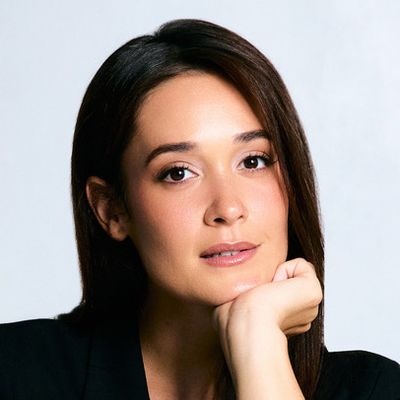
Gerianne Pérez joins us for a candid and hilarious conversation about her winding path from choir kid to Broadway scene-stealer... Read More
From the show: The Theatre Podcast with Alan Seales
Guests
Featured Shows

About
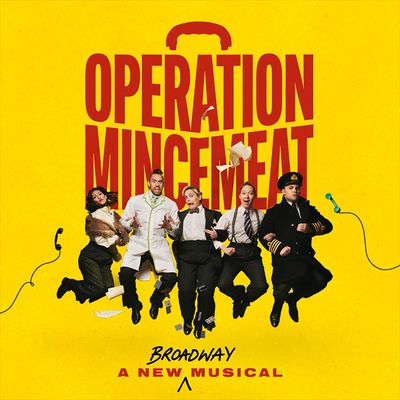
Gerianne Pérez joins us for a candid and hilarious conversation about her winding path from choir kid to Broadway scene-stealer. She shares how an early love of a cappella shaped her artistry, why walking away from a “safe” office job was the best decision she ever made, and what it’s like to audition for Six in front of a room full of other queens going for the same role. We get into her current adventure in Operation Mincemeat, where she covers multiple roles and leans into the joy—and chaos—of live theater, from botched hat tosses to full-on breaking on stage.
Gerianne also opens up about navigating performance anxiety, the nuanced realities of being a Latina performer in a typecasting-heavy industry, and the thrill of telling a story that honors forgotten heroes of history. Whether she’s singing backup for a fellow principal, leading the charge as Monty, or making the audience laugh through an unexpected mishap, Gerianne embodies resilience, humor, and heart at every turn.
Gerianne Pérez is an NYU Tisch-trained actor and singer whose career spans Broadway, national tours, and acclaimed off-Broadway productions. She made her Broadway debut in In Transit before joining Waitress and the national tour of Six: The Musical. She has also appeared in In the Heights, Grease, and Oratorio for Living Things, and is currently bringing her comedic chops to Operation Mincemeat on Broadway.
This episode is powered by WelcomeToTimesSquare.com, the billboard where you can be a star for a day.
Connect with Gerianne:
- Instagram: @gerianne.perez
- TikTok: @gerianne.perez
Connect with The Theatre Podcast:
- Support the podcast on Patreon and watch video versions of the episodes: Patreon.com/TheTheatrePodcast
- Twitter & Instagram: @theatre_podcast
- Facebook.com/OfficialTheatrePodcast
- TheTheatrePodcast.com
- Alan's personal Instagram: @alanseales
- Email me at feedback@thetheatrepodcast.com. I want to know what you think.
Transcript
This transcript was automatically generated and might contain errors.
[0:00] Gerianne Pérez: Hi, I'm Gerianne Pérez, and you're listening to The Theatre Podcast with Alan Seales.
[0:04] Alan Seales: Welcome back to another episode of The Theatre Podcast. I'm your host, Alan Seales, and our guest for this episode is Gerianne Pérez, who covers multiple roles in Operation Mincemeat here on Broadway. One of the funniest things we talk about, of course, is in a show like this, where everything is just fast-paced, moving, moving, moving, things are bound to go wrong all the time. Even all the actors who have been doing this for a long time forget their lines. What do you do with it? You embrace it. You acknowledge it. You move on. She's got some really funny anecdotes there. We're kind of kindred spirits in a way in that we were in a cappella groups in college, and she has a really interesting story about leaving her perfectly good, secure nine-to-five job to dive into the Broadway world, which obviously has paid off for her.
She's got a little bit of performance anxiety. We touch on that, what it's really like auditioning for shows like Six, and just, again, the whirlwind of covering multiple roles in Operation Mincemeat. She also shares a wonderful perspective on representation in the theater and carving out a space for yourself in an industry that loves to typecast, and why breaking the rules can sometimes lead to your best work. So make sure to find me online on social media. Tag me in your stories. Make sure to watch the video versions of these episodes on Spotify or Patreon. And now, everyone, please enjoy this episode with Gerianne Pérez.
[1:40] Alan Seales: Our guest today, whose range, charisma, and presence has taken her from NYU's Tisch School of the Arts to Broadway stages and national tours across the country. You might have seen her as Catherine of Aragon in the recent national tour of Six, or in her Broadway debut in In Transit before joining the Broadway company of Waitress. And she's also been part of In the Heights and Grease, and even has appeared on Lore & Hora, as they say down under, and was part of the a cappella group Vocalocity. She's now part of the incredibly funny cast of Operation Mincemeat on Broadway here, Gerianne Pérez. Welcome to The Theatre Podcast.
[2:18] Gerianne Pérez: Amazing. Thank you so much for having me. Oh, my gosh. There was a moment where I was like, damn, I did all that stuff. That's crazy.
[2:22] Alan Seales: You did all that stuff.
[2:23] Gerianne Pérez: Yeah, yeah, I did do that.
[2:26] Alan Seales: Thanks for that. Peanut Gallery slamming the door. I led an a cappella group in college. So I feel like you get me.
[2:36] Gerianne Pérez: I sure do.
[2:40] Alan Seales: I get you. It's a specific energy that is an a cappella energy, and I think we can spot it.
[2:46] Gerianne Pérez: My computer-only friends, a shout out to Matt, because I know you're not listening. He doesn't like podcasts. He always called us a cappella nerds.
[2:57] Alan Seales: For sure.
[2:58] Gerianne Pérez: But he was also jealous because we would kiss a lot, because that's what you do in a cappella groups.
[3:02] Alan Seales: For sure.
[3:03] Gerianne Pérez: Yeah, for sure. That's college, a cappella, and just performing in general.
[3:09] Alan Seales: But where did you get into the a cappella path, though? I want to start there.
[3:12] Gerianne Pérez: Oh, sure. This is interesting, because where did you find the a cappella path that led you to Vocalocity, which was on national TV and all these great places?
[3:20] Gerianne Pérez: Yeah, sure. My first entrance, I think, into doing theater or the arts in general was middle school. I joined choir, and I remember being like, oh, wow, I really like making sounds with my voice and making music with other people. That was my first entrance into being like, maybe this is a thing I could really love doing. Then in junior high, I joined this show choir. It was called the Main Event. As if I didn't want to be made fun of or any nerdier, I said, let me join show choir. That led me to doing a show choir called Music Company in high school. We actually went to competitions at Disneyland. We won awards. We used to wear these sparkly disco ball dresses. It's lore. You really could go on YouTube and find some videos of me in sparkly dresses.
Then I went and did the Enharmonics in college, and that brought me to being strong enough to do a cappella. My agents knew that, so they pitched me for Vocalocity in transit because they were like, she has a very specific and unique relationship to musicality and making music that blends with other people. It was so much fun. It was that pitch-perfect era. It was like, oh, wow, maybe a cappella can be a little bit cool. It can't, but you can still love it and still do it.
[4:49] Gerianne Pérez: Pentatonix is mainstream. They flipped the switch.
[4:52] Alan Seales: Absolutely. They did. There's still a bit of ick power to a cappella. I think there's some people who have a bit of an eye roll, but I will also say that the people who came to In Transit really loved a cappella. They also had a great respect for the fact that it was 12 voices being the only thing that made that sound on a Broadway stage. It was the first and only a cappella musical. We had these arrangements where we were using our voices to be the bass, to be the cello, to be the drums. Our beatboxers were so incredible. They'd be like, wait, that's not a drum kit. No, that's a human's mouth. There is something cool to it, but I think there are a lot of people who kind of judge it a bit too. There can be really bad a cappella.
[5:36] Alan Seales: For sure. I kind of put it in the same bucket as improv because there's really good improv, but then there's even more really bad improv.
[5:45] Gerianne Pérez: Exactly. I just let the cream rise to the top or the crop rise to the cream, whatever that is.
[5:49] Alan Seales: Hey, I knew what you meant. That's Vocalocity and your peers, Pentatonix. It was The Voice, right?
[5:58] Gerianne Pérez: I was not personally on The Voice, but a couple of our people in Vocalocity had been on The Voice, and they were incredible to work with.
[6:08] Alan Seales: That's really cool.
[6:10] Gerianne Pérez: Absolutely. That is very cool.
[6:10] Alan Seales: So Vocalocity, was that a professional gig where you were going to pay for it?
[6:13] Gerianne Pérez: Oh, absolutely. Yeah, yeah, yeah. It was a mix of people who were both non-ec and equity, but it was a national tour. It's the closest thing I've come to what people know as the bus and truck tour where you're changing cities pretty much every night or every two nights. I think over the course of about two and a half months, we literally took maybe two planes. Everything else was a bus. It wasn't even a sleeper bus. We would do the performance at night. We would then go to a hotel that night, and then we'd literally be on the bus the next morning moving to the second location. It moved a lot.
[6:46] Alan Seales: That's cool. Okay. Okay. Okay. Hold on. I'm just looking up. It occurred to me as I'm sitting here staring at your face that you look familiar. Did you come into Google with In Transit?
[6:56] Gerianne Pérez: I surely did.
[6:57] Alan Seales: Then that's how we know each other.
[6:59] Gerianne Pérez: I see. Okay.
[7:00] Alan Seales: Oh, there you are. There you are.
[7:02] Gerianne Pérez: That's my face. Yeah, that's my face. What was that? 2017, we did that?
[7:07] Alan Seales: This was...
[7:09] Gerianne Pérez: Yeah. Well, 2016 is when we opened, so that I think that we...
[7:12] Alan Seales: April 20th, 2017 is when we released this.
[7:15] Gerianne Pérez: And look, yes, there I am. I did moderate that one.
[7:18] Alan Seales: Yes. Oh, my gosh. Yeah, yeah, yeah.
[7:20] Gerianne Pérez: It's been a while. Well, it's nice to see you again.
[7:21] Alan Seales: Absolutely. Nice to see you again. Yeah. What is that? What? Eight years? Yeah.
[7:24] Gerianne Pérez: Eight years. It's been a long eight years.
[7:27] Alan Seales: For sure. For sure.
[7:27] Gerianne Pérez: A few more greys.
[7:29] Alan Seales: Oh, yes.
[7:29] Gerianne Pérez: A few more bags under the eye.
[7:30] Alan Seales: Absolutely. That dreaded pandemic that existed. I can't believe that happened.
[7:34] Gerianne Pérez: So wait, you had super curly hair in this video. Do you straighten it now?
[7:37] Gerianne Pérez: I straightened it just for fun.
[7:38] Alan Seales: Just today?
[7:39] Gerianne Pérez: Yeah, just today. I wanted to straighten, be thick back and cute. Yeah.
[7:44] Alan Seales: Well, I think it looks good either way.
[7:46] Gerianne Pérez: Thank you so much.
[7:46] Alan Seales: Or even with the little bun that you have playing all the characters in Mincemeat.
[7:51] Gerianne Pérez: Absolutely. Yes, playing a boy in Operation Mincemeat. For sure. Yeah.
[7:55] Alan Seales: Okay. We're going to get to Mincemeat because that is great. But now we can go back to Little Gerianne. So where did you grow up? How did you get into theater performing?
[8:05] Gerianne Pérez: Sure. So I moved around a ton. I come from a military family. I was born in Tampa, Florida, and then we moved to Massachusetts. And that's really kind of where I say I got bit by the bug. We had a really good just like arts community and arts program in my middle school. And that's where I started choir. That's where I did my first musical. I was Nancy in Oliver. And I will never forget doing that audition. And they did it the cool old fashioned way where you auditioned on the stage and the person casting you was out in the audience. And I said, wow, I really love what it feels like to be on this stage. I'm so scared. I deal with performance anxiety that I'm pretty open about. But it just felt so incredible. And I remember being like, I think I want to do this. I think I want to do this. But it's scary to say I want to do something at the age of 13 and think that you would commit to it for life. That's actually really impressive.
[8:58] Gerianne Pérez: Yes. I was like, I really like this. But yeah. And then I moved to Washington State. That's where I got more into like the choir world, show choir, went to lots of competitions. And then it was a toss up between whether I was going to be a neurologist or go into theater. I got into like this like Harvard program in my sophomore year of high school. And I said, I don't know what I want to commit to. And then by pretty much junior year, I was like, I think I want to go to NYU for theater. I only applied to three colleges and I got into NYU and then the rest was history. Wow. Yeah.
[9:31] Alan Seales: Wow. Okay. So you're going to NYU and then where were you performing the whole time? They're like auditioning here in the city at the same time.
[9:36] Gerianne Pérez: You know, it was a really strict program. They really did not want you auditioning or trying to leave. I know it's counterintuitive. I was just talking about to our head of hair about this because Donna Murphy also went to NYU and she went through the same thing where the professors were very much like, you will be the best artist you can be if you finish the program here. But pretty much not a moment before. I don't think they were correct, but that's really what was instilled in you as a very strict curriculum. So the shows that I did were through the school, like I did the Tisch Mainstage Musicals, which was an incredible experience. And then I would do this, like this mental health sketch comedy musical called The Reality Show during the summers with Liz Suedos.
And that was like the extent of my performing throughout college. And then right after college, I did, my goodness, what was it called? Nymph? Yeah. R.I.P. Yep. And, and then, yeah, I had to go be an office manager for a couple of years until I could make a living out of this thing. Crazy.
[10:46] Alan Seales: So you were an office manager back at NYU, right? You were saying?
[10:46] Gerianne Pérez: Yes. Yeah. And was it, was it any performing at all or was it just like total survival job, dredging, dredging in and out every day?
[10:50] Gerianne Pérez: It was a lot of survival job and there would be a rating here and there. There would be lots of auditions. I have wonderful agents, but a lot of things weren't really catching. And I think that it took me three years into that job to realize if I have this safety net, these, the, I had health insurance, I had a consistent job that could enable me to pay rent. But for me personally, I kept on thinking in the back of my head, if I have the safety net, I'm never taking the biggest risks that I can when I get into that audition room. And I actually ended up resigning from NYU and then getting the offer for In Transit, which was my Broadway debut. So one could think that the universe said, okay, you took your safety net away.
Now we will gift you what you had always been meant to be doing. But it was because you took a risk on yourself and you said, no, I'm choosing to step away from the office, from being this person who sits at a desk, manages payroll and schedules. And yeah, I haven't really needed much of a survival job since, except for a little bit of the pandemic, but that was pretty much most people's experience.
[12:03] Alan Seales: Yeah. Yeah. Everybody needed something during the pandemic. For sure. Do you think there's, I mean, I think there's a truth into, call it what you will, it's not recency bias, it's not confirmation bias. I don't know. I forget what, I think there's a term for this, but like when you give up the safety net, you're just looking, looking, looking, right? You're looking, you're focused on something. So you start to notice the cues or the things that you can hop onto to get farther and farther towards the goal you want to. Whereas if you're constantly tethered to something behind you, we'll say that you're not open enough or you don't have the time to see all those cues coming towards you.
[12:35] Gerianne Pérez: Absolutely. I completely agree. I think that when I was doing different auditions, it could even be some of the best like regional theaters and I would have been playing principals. I think that always in my head, I was like, well, I would have to leave my job and my supervisor would need to find a replacement. And then when I came back to the city, I wouldn't have my job again. So again, if I'm always holding myself back and in the back of my mind saying, I don't want to lose the job.
[13:07] Gerianne Pérez: You're never giving 100% when you go in that room. This industry is so saturated with incredible talent. You really need to be giving 110% in order for them to be like, okay, this is the girl we want to go with.
[13:18] Alan Seales: Did your parents always support this or were they like, you need to be the neurologist?
[13:24] Gerianne Pérez: No, I mean, when I booked Hysterical, when I was Nancy in Oliver, when I was 13, and when I got the lead in the school musical and I came home and I told my mom, she's been in the restaurant industry my whole life. She was like getting ready for work. I was like, Mom, I got the lead in the school musical. She was like putting on her shoes. She looked up at me and she was like, cool, great, I have to go. She loves the arts, but at first it was very much like, I don't fit. My parents are very much people who love consistency, who love something that is dependable. I think that they have always been able to see the talent that I had, but they would have always really preferred that I not struggle in between jobs the way that most actors do in between jobs or deal with the inconsistency of the income and paying your bills and all of the things that come with basically being independent contractors, which we are.
My mom would have loved if I had been a doctor or a lawyer, and I'm pretty sure my stepdad would too, but by pretty much my senior year of high school, they were like, okay, if this is what you want to do, then yeah, let's get you to the best college for it or one of the best, and you're going to do it and you're going to do it well. It was very much like 4.0 GPA kind of like strict upbringing, the best of the best, and I really busted my butt. I was extremely, extremely focused. I didn't date really much at all at NYU. I did as many school shows as I could, and like I said, it took a while, but we got there. At first, no, my parents were definitely like, this is crazy, and now they're like, my daughter's on Broadway. It paid off.
[15:09] Alan Seales: I was going to say, they've come and seen this now. They know what's up.
[15:12] Gerianne Pérez: Seeing In Transit, I'm going to dive into that because In Transit, I feel like it didn't get a fair shake.
[15:18] Alan Seales: It sure didn't.
[15:20] Gerianne Pérez: Because everybody came to it, not everybody, I think there were so many people who came to it wanting it to not be this great Broadway thing because of the stigma that comes with, like we were talking about originally, the stigma that comes with kind of like an a cappella or bad improv or whatever the case is, right? Did you feel that on the inside that you're always trying to have to prove something with the show?
[15:41] Gerianne Pérez: At In Transit, and I mean, I felt it in other shows, but definitely at In Transit, the thing that's interesting is that during our previews, the audiences were packed, excited, like we felt like rock stars, I feel. And again, I was 26, my debut, I was so enamored that maybe I was really looking at it through rose-colored glasses. I was working with incredible icons on that show, like Telly Leung, so people who were very seasoned and can probably look at it more as a business and, hey, is this going to do well or is it not? But I personally felt like we were really succeeding and kicking butt during our previews. And it felt as if the second we opened and we didn't get a rave in the Times, thank you, Ben Brantley, it just felt like everything just kind of went tick, tick, tick, boom.
And it was a slow, slow fade, but we were just not selling out those audiences. And, you know, a lot of people say that you paper a lot of your previews because you're trying to get butts in the seats, you're trying to get word of mouth to spread. So maybe that's just something that we weren't able to do once we opened.
[16:47] Gerianne Pérez: Absolutely. Again, I can look at it as a business thing now that I'm far enough away from it, but I definitely do think that it wasn't, it was the same season, what is it, Dear Evan Hansen? I just think that, and I still stand by this even today, I think that the community decides what it thinks are the cool shows, the cool musicals, the hits, and a lot of other things that don't get lumped into that group that they want to decide to loft up to success or the limelight, they kind of fall to the wayside a little bit. But I was proud of that show. It was a great show, it was a great piece, and we were busting our butts, like running our voices into the ground, singing for 90 minutes straight, because the interesting thing was, if you were a principal on that show, you were also singing backup for somebody else's song.
[17:36] Alan Seales: Oh, right, yeah, because you were the whole band.
[17:38] Gerianne Pérez: Your voice never got to rest during that show. So in a way, it was time for us to close, because we were maxed out vocally, we were tapped. But I definitely do think that, no, I don't necessarily think it got a fair shake, for sure.
[17:52] Alan Seales: Well, I agree with you. And I would like to see some sort of immersive, maybe not immersive, immersive is not the right word, interactive. Interactive, live, with the looping technology that we've seen being used now with just a small set of people who are adding on more and more voices to create their own backing track to then sing to it. I think there's a story that could be crafted there. And that way, you don't have a big cast who's always having their voices tired or whatnot. Or you do have, or they are on for 90 minutes, but they rotate through, get a rotating cast, so that you guys can have a day or two off.
[18:30] Gerianne Pérez: 100%.
[18:31] Alan Seales: That's mine.
[18:32] Gerianne Pérez: That's it. We'll write it. We'll make it.
[18:34] Alan Seales: It's called Still Transiting.
[18:37] Gerianne Pérez: Still in transit.
[18:40] Alan Seales: Vocalosity?
[18:41] Gerianne Pérez: Vocalosity transiting.
[18:43] Alan Seales: Yes, that's it.
[18:45] Gerianne Pérez: So the In Transit led to then what? Where did you get Six out of this? Because I feel like Six being a tour, a national tour. Was that your first national tour, Six, by the way?
[18:55] Gerianne Pérez: No, no. So my first national tour was actually Waitress. So Waitress came after In Transit. And so I did the whole first national tour. I was there from, what was it, September of 2017, through to August of 2019. It was a really long time to be on the road. But I was an ensemble cover. My bodily duress wasn't too much. I was young enough that I was really enjoying traveling for a living. And I got to cover Dawn, which was so much fun. And the team was great. So that was my first national tour. And then the pandemic hit. That was absolutely insane. And then when I came back, I needed to get a survival job in order to come back to the city and afford living in the city. So I started working at a mortgage company.
[19:41] Gerianne Pérez: I thought you were going to say mortician.
[19:43] Alan Seales: No, no. But truly, it was all so terrible, like getting yelled at on the phone. I was like a remote worker, and I was getting screamed at by people about not getting approved for a certain mortgage rate. And this was the summer of 2021. And I get a phone call from my agent. And I'm like, I haven't had an audition in a minute. And my agent says, hey, so the team from Waitress, they're about to start rehearsals in two days. And they are wondering if you would like to come on as a swing. Are you available? And I'm just sitting at my desk in absolute disbelief that I might have just gotten a straight Broadway offer.
[20:25] Gerianne Pérez: Just lock in that 3.0 rate.
[20:26] Alan Seales: Yeah, absolutely. Yes, for sure. And I was like, absolutely, I'm available. I didn't hear for about 24 hours. And then at 6pm, the night before rehearsals are going to start.
[20:38] Alan Seales: In the city or elsewhere?
[20:38] Gerianne Pérez: No, it's in the city. And I'm back in the city. I get the offer. Rehearsals will start tomorrow, show up at 8:45 to take your COVID test. And you are starting with the Broadway company, and you will be the first show to open on Broadway after the pandemic.
[20:52] Gerianne Pérez: So I got on Zoom with my little mortgage company boss. I said, hey, so this is really strange, but I can't give you two weeks notice because I'm starting a Broadway show tomorrow. And the caller left his face, but he was like, well, break a leg. And that was it. That was the last time we talked. And then I started Waitress on Broadway. I got to be a part of the live capture and see that incredible experience, work with Sara Bareilles, who is without flaw.
[21:23] Alan Seales: All right, everyone. Now we're back.
[21:25] Gerianne Pérez: That fall of 2021, I started auditioning in person for Six. And the audition process for that show was the craziest thing I've ever been through. It's very much like a boot camp. It's multiple rounds where they'll have you sing different packets for different queens. They want to see your take on.
[21:42] Alan Seales: Do they pair you with other people who are auditioning too, so you're never auditioning alone?
[21:47] Gerianne Pérez: Yes, absolutely. They'll put you like to do like a group scene together and read that together. But my final callback, I was there at maybe 9:45 in the morning. We did three different dances in the morning. And then after that, we had chunks of time where they were auditioning all of the queens. But the interesting thing that they did back when I was auditioning was they had us audition in front of all of the other girls who were going in for that same queen. So that day, I saw 11 other Catherine of Aragons. And then I had to do my own take on the monologue in front of all those other women and the team and the people watching on tape. And then I also had to do that. Well, we didn't do that for Catherine of Howard.
[22:32] Gerianne Pérez: Catherine Howard, hello.
[22:33] Alan Seales: Catherine of Howard.
[22:34] Gerianne Pérez: Catherine of Howard. But you did that for all of the different queens. I don't think they do that anymore. But I like to say that I really like earned my stripes because I had to see 11 other incredible women do that.
[22:46] Alan Seales: That would drive me. I mean, the anxiety I would have.
[22:50] Gerianne Pérez: It's interesting.
[22:51] Alan Seales: Would be off the charts.
[22:52] Gerianne Pérez: Yeah, it wasn't that it was hard for me to see other talented people who I was, I guess you could say, quote unquote, in competition for the job with. It mostly was, you make up your own endings to these songs. So if you're hearing 11 other renditions, I couldn't remember what the notes I had chosen were. I was like, oh, my gosh, how does my riff go at the end? Like that was the thing that for Arlie, for me, I was like struggling the most with that. But then the following spring, I booked the second national tour, the Berlin tour, and I did that for a year and a half. And my vocal cords and my body is made of steel after experiencing that on the road. And then I came back and I said, I want to manifest something so different from Six and I just want to stretch different muscles that I haven't done or haven't needed to use. And then Operation Mincemeat fell into my lap and it could not be more different.
[24:43] Alan Seales: Well, how did you get that? Because I want to tie in the performance anxiety because you're a cover and just the role itself is like how many different characters is.
[24:54] Gerianne Pérez: Oh, jumping to Operation Mincemeat.
[24:56] Alan Seales: Yeah, yeah, yeah.
[24:57] Gerianne Pérez: Oh, yes, yes, yes. I mean, the thing about that show, Operation Mincemeat, is the first time I went on, I was that might have been the most nervous I had ever been. And I was prepared like they had given me all of the tools of preparation. We were rehearsing literally from the top of the contract. They flew us to London. We rehearsed there for three and a half weeks with the original Broadway cast that's here now. And we were also staging the show in a separate room. We were rehearsing at the same time. So we were getting that in our bodies right from the jump. And then we did our first put in before the show even opened. They wanted to make sure that we were absolutely prepped and ready for those first roles that we covered because those were going to be the primary roles we went on for throughout the entirety of this contract.
And I did my put in and I was ready. And then it had been months before I touched the stage. That is the biggest window of time that's ever that I think I've ever had of here's my put in. And when do I actually get to go on? So a lot of the anxiety I was having that first day was, can I do this? Like I've rehearsed it. I've done the put in. It's all gone well. But can I trust that this will go well, that I can do this in front of 800 people? And the show starts, you're the only person, if you're playing Monty, you're the only person on stage. And you're just sitting at that desk with that coffee cup. And the curtain comes up and I just looked out at the audience and the lights ping up on you.
And I was like, this is going to be good. This is going to be crazy, but this is going to be good. But Six absolutely prepped me for being able to perform under pressure because there were so many circumstances that sometimes I would perform under that I didn't feel ready. I didn't feel okay. I was panicked or something might have circumstantially happened where like my mic went out in the middle of my solo. Like a lot of different things happened that you had to just plow through at Six. And I also performed for 4,000 seat houses. So if I can do that and I can do Catherine of Aragorn, I can start the show, come in like a wrecking ball and say, Hey, here's the show that you're about to see. And I'm going to start it.
[26:12] Gerianne Pérez: Absolutely. I can be Monty and start the show and say, Hey, you're going to trust me for the whole show. I will be pretty much like the train conductor of this piece and you will trust me and I can promise you that. Yeah. That's what I was going to say that Monty to me, he's, he, they, them, what is it? Monty is... He is a he within the world of the show. Within the world of the show, yes. Historically, yes. But always played by a woman. Yeah. Monty is, uh, yeah, drives the show, drives the story, drives the show and, and, uh, could not take my eyes off of, off of you because you commanded the stage. Thank you. Like you have to be, like you were saying, coming in like a wrecking ball, uh, as Catherine of Aragon, right?
Yeah. Yeah. That you have to come out and just be like, all right, audience, you're mine. Buckle in. And you're about to, uh, settle, settle in for a wild ride, right? Yes, absolutely. And like, is, is that, is that hard for you to pull out of yourself or is it just like part of who you are? If you're like, all right, now I'm here. Like the performance anxiety leading up to the moment, that's anxiety, anxiety. As soon as the curtain goes up, like you said, you're like, oh shit, this is mine. I think it's twofold. I think that my internal world thankfully doesn't always show on the outside. Like I have said first and foremost that, that, that first show is Monty. I was so scared. I was in survival mode.
I was definitely not really having much fun. I was just like, let's get the words out. Let's get the lyrics out. Let's get it all out and like throw it at the wall and make sure it happens and make sure we survive this show. I don't run into anybody. I don't break a desk as I'm pushing it off into a wing. But the thing is that people who know that I said that about that first show, they're like, I was at that show and I would have never been able to know that that was what you were feeling. So I think that yes, sometimes my performance anxiety shows, it definitely shows in auditions more than anywhere. But I also think that I have been told throughout a good portion of my life, especially back when I did choir, that there is an aspect to my performance.
And when I get on a stage that it's, it's relatively, this sounds so egotistical, but I promise I've been told it. It's just I have a captivating presence and that that kind of energy is well suited for a role like Monty, where the audience has to watch and trust you and, and know like, okay, I will let you spoon feed this very complex plot and story to me. And I will really try to digest everything you're saying because I'm looking at you and I, and I feel like I can trust you. You have a larger than life stage personality. Okay, I'll buckle in for the ride. Not knowing the story. I wasn't sure if Monty was like a kind of a con man, or, you know, like what kind of secrets Monty's carrying. And I think like that, that what arrogance, like that kind of an unfounded arrogance of just like, you know, like, I've been using this phrase lately, have the confidence of a white man crossing the street.
That's what Monty does. Absolutely. And that's, that's where the really cool gender bending comes in. Because if you had, I think, a cis man playing Monty, I don't think that audiences would love him as much because he has to lead with such arrogance and elitism. He is, he is the elite private school boy from like Harvard, like if you if we were to put it in like the American terms, like that is what he is that that kind of frat boy, just snooty, perfectly coiffed hair, like rules don't apply. He's always had regulations do not apply. When Bevan says like, this plan makes no sense. Like you, you have holes in this plot. And if you fail, we can lose lives. Monty's just like, is the kind of guy that says, it'll all work out.
That's fine. And it's nothing is like in history. And with this, with this mission, it actually did all work out. But that's, that's the kind of energy that he has. So it takes a very specific energy to be able to play that.
[30:14] Gerianne Pérez: And this is all true. It's all true. It's crazy. This is all true. That's kind of insane. Yeah. And okay, so for for those who don't know the story, what is it? It's MI5 or MI6? MI5. Yes, MI6 would be James Bond. Oh, right. Because wait, is there an actual MI6? I should know this. I actually remember, but I think... Because I know like, the author of James Bond was part of the story. Yes, MI5. Yeah, Ian Fleming. I should know that. MI5 concocted this cockamamie scheme to plant a crash landed pilot onto the shores of this of Sicily to get Hitler to move his troops so that London could reinforce it. Like, yes, the amount of chess moves that needed to happen here and for it all to happen. And this all happened.
It did. Yeah. And this is presented in a comedy in a brilliant way. But I think part of the message, what I took away from it is like giving recognition to the dead body. Yeah. Who was otherwise forgotten by history. Absolutely. That's like one of the, I think that's why Mincemeat, I feel is so successful is because it has the heart at the very end. Yeah. Because up until that point, maybe you would be like, wow, they really just kind of trusted that this crazy, crazy mission would work out. And there were a lot of things that kind of fell through and went awry that happened in act two that obviously we won't go into because there's surprises. But the great thing is, is that like, to give a little bit of context, we had to dress up or in the mission, they had to dress up this corpse and make him a fake pilot, a fake British pilot who crashed and plant a bunch of secret documents on his secret.
Exactly fake. They were all planted on his person to say, hey, Germans, Nazis go here because the Brits are going here. So they go there and that was the wrong place for them to go to because everybody was prepped and ready. But the thing is, is like, it's that that person, Glendore Michael, that was the corpse that they found that they dressed up to be this beloved pilot who never exists. They gave him a fake identity. They gave him a wedding ring for his fiance. They gave him receipts to where they had just gone to see movies. And like the specificity with which they detailed this was insane. And just to know that it all worked out, but nobody was going to know that actual man's name unless I think it was about 60 years ago.
They got a memorial made for him in Spain where he actually crashed and used his actual name. And he is now considered a hero. He didn't actually crash. No, no. They just say where they made him crash. Exactly. Where they let his body wash for you. Exactly. Like the plot is that he crashed. And so but that memorial actually exists. And it's about like, we have all of these people in history who are in the history books who are the lauded heroes. But there were so many people behind the scenes, like Hester Leggett, like Jean Leslie, who don't get named in the history books or like Glendore Michael. And it's like, well, let's give them a name. And let's honor them for their service, even though they don't get the medals.
Does that make sense? Yeah. Yeah. I mean, and Glendore didn't have any choice in the matter. No, he didn't. Yeah. Dude was already dead. Absolutely. Because he got poisoned in real life. He was poisoned. He was literally poisoned. Literally poisoned in real life. Accidentally ate rat poison is the lyric. That's crazy. Yeah. Do you have to, did you have to work on your British accent? Oh, I sure did. I sure did. It was, it's so funny because like my first audition for this show was in October of last year. And I love British stuff. Like I love Bridgerton. I loved watching all of the Harry Potter movies. So I have consumed a good amount of stuff where I would be hearing the British dialect. I think even my Siri was British at one point in time.
I changed mine to Australian once. It's a good time. It's a good time. But in the beginning, I remember being like, this is really tough. And I had to work on it a lot. I had to do the scenes for the audition and run them a lot just to get them in my mouth. And when we started the rehearsals in January, we worked with a dialect coach. And we have also multiple dialects that we do within the show. Like I covered the three women in the show. So I need to learn Welsh. I need to learn RP. I need to learn West Country. I need to learn Cockney. It's like Scouse, Northern, like it's, it's, it's at least six dialects that we need to learn. So it's crazy. My favorite moments in any show is where they acknowledge the absurdity.
And, and when the cast does the Cockney, and then I forget, I forget which is which. It's like you're going between the Cockney and the sailors and like, wait, why, why are we wearing the same thing? It's like, well, we didn't have any other hats. Exactly. Yeah, literally, like, it's like, welcome to London. We are Cockneys. And this is what Cockneys wear. And you're pointing at your Cockney hat. Because it's like, hey, audience, come on the ride with us. I just took my tie off and I put this hat on. So I'm no longer Monty. Now I'm a Cockney. And where it's set in London now, like it's literally it's so absurd. It's absolutely absurd. It's like, please just come on the ride. Just how do you how do you all keep straight faces together like this?
Because I mean, you were like in each other's inches away. Absolutely. Being as getting spit in our eyes. Absurd, absurd jokes and slapstick. Oh yeah, physical comedy. There are so many times when we actually break and actually the audience really loves when we do the we had a show on Saturday evening where I was Monty. Brandon, one of our covers was on for Charlie and Sam was on for Hester. So it was like three covers and two Brits. And there were moments when we would just look at each other and just break out laughing because it's funny. It's absolutely crazy. You can see somebody do the same gag they've done for the last 200 shows. And you'll be like, that's still funny. Like I'm still breaking.
But I think that the seriousness with which the mission and the importance that it had makes you like be able to recover and get back to what the actual lines are, because you're like, OK, OK, now let's get back to the story. But the audience loves when we break. And I don't think that we necessarily fight breaking in our show. We actually love when things go wrong. I had a moment where I have to toss a hat in the air and I don't do sports. I'm a bad shot. So I toss it up in the air. It literally goes all the way stage right. Charlie's not able to catch it. It falls on the ground. And I was like, well, that went terrible. And the audience laughed. And then I said, I do sports. And then Charlie said, well, clearly, I don't because he hadn't been able to catch it.
And then the audience just fully broke. And then we fully broke on stage, fully broke. I ran off the stage. It was a hysterical moment. It's like the audience knows like they're like, OK, these people are absolutely crazy and just goofing around up here. So, yeah, they they do love when we break. That's that's the best part. And I think that goes into good improv. Yeah. To bring it all together. Absolutely. You're doing good acapella, good improv when you're so settled into who you are and what you're doing that, you know, a prop in the wrong place, a slip, a break, whatever, doesn't derail you. It actually fuels the fire. Absolutely. And it's actually so much more funny if you acknowledge the mistake.
Oh, yeah. Like I have I have seen people on on at Operation Mincemeat go, what's the line? And it's people who have done it for seven years. Like it's like a truly like they'll look at somebody else and be like, you know what it is and exit the stage. Like it's it's it's honestly really funny when you acknowledge a mistake because odds are the audience knows the audience saw me drop that hat on the floor. Right. Far funnier for me to make a joke about it than try to cover it or make it seem like nothing went wrong. Yeah, I saw it. But especially when in an ensemble number, whatever, when somebody when something drops, a prop breaks, like you're just staring at it. It's called the dead baby on stage.
Right. So it's like you're just staring at this object. Like if somebody slip on it, it's going to have it. And then as soon as like you can acknowledge it, you go over, you pick it up, you play with it or you. Yeah. Like I said, just acknowledge something happened and it puts the audience at ease immediately and everyone moves on and they relax because it's actually stressful for me. Oh, yeah. To watch to know when something wasn't supposed to happen. For sure. I had a moment at I have a big freeze response when I go up on a line for something. At six, we had a moment where like the in-ears for or the something was going awry for our musicians and something at the top of the monologue for for no way went awry musically.
And I thought I was in a different part of the monologue. And I went to the white room, the whitest of white rooms. And I just looked out in the audience and I'm hearing the underscoring and I can't even find a place to pick up. And I just looked at my music director. I said, can we start again?
[39:19] Gerianne Pérez: She goes, from the top, yeah. And I looked out at the audience, I said, live theatre. And they loved it. Like, that's the thing is, it's like, you're not necessarily expecting to see a perfect anything. Or maybe you are, but you really shouldn't. Like, but it's just, it's live theatre. It's never going to be perfect. And one night you go might be a memory you will never forget.
[39:44] Mike McDonald: I heard this recently that real professionals, someone said this, and I agree with it, that like real professionals, it's not giving a consistent performance. It's how you consistently deal with the mistakes.
[39:56] Gerianne Pérez: Absolutely. Absolutely. That makes a pro.
[39:59] Mike McDonald: Yeah. It's how you deal with the mistakes, how you roll it, because it's always going to happen.
[40:04] Gerianne Pérez: And I look forward to that kind of stuff. Because it kept it, it keeps it unique, and it keeps it new.
[40:10] Gerianne Pérez: Absolutely.
[40:11] Mike McDonald: Yeah, I'm with you there. We're going to take a quick break for a few commercials.
[40:17] Mike McDonald: All right, everyone, welcome back to the episode. My name is Perez, Latin descent. And have you ever felt like you've had to be forced into a specific type when auditioning for something or a specific role that, you know, is not who you are?
[40:33] Gerianne Pérez: Sure, sure. I think that, yeah, there's definitely, hmm, that's a really nuanced question. Thank you for asking. I think that a lot of times, my specific race or being Latina has made me be, or audition for roles that tend to be over sexualized. And so access to roles that are just maybe an ingenue, or lead with their par, I don't know how to explain it. But it's just I do tend to oftentimes go in sometimes for roles that are a bit more fetishized than maybe other races. But I will also say that a large portion of the roles that I've gotten to go in for, say, Vanessa in In the Heights, who I actually got to play, or Evita, those are also great roles. So I can't say that I've ever had an experience where I've needed to play or go in for a role that really didn't align with me. That would have just been something I probably passed on in the past. But the ones that I have gone in for are also great roles. So yeah, it's definitely nuanced, for sure.
[41:40] Mike McDonald: How did you get the audition for Mincemeat? I want to go back to that, because you said the sixth audition is its own thing. That's its own world. But was Mincemeat that kind of energy? What do they ask you to sing or perform during that? Because this is just nonstop.
[41:55] Gerianne Pérez: Absolutely. They cast a wide net for this. This was over 2,000 people. They saw people, I think, from all around the country. There were some people who couldn't even get seen for it because it was that saturated or sought after of a show. Because the thing is, is that it has its own clout. It's an Olivia Award winning musical in London. So people knew when it came here, it's a good show. It's something you want to be aligned with, because it most likely won't be a show that closes in a few months, which is always a risk with a new musical. So the audition process was quite different from six. But we came in for the first audition. We came in with like a packet of the role we wanted to be seen for first, which mine was Monty.
And then we had to sing a song from our book that was comedic. So I sang, my goodness, Diva's Lament. Yes, Diva's Lament from Spamalot. And I went up on my lyric. And I just kept on singing. I said, I sang the wrong note. Can we take it back a bar? And then we just plowed on through. And I think that was a moment where they were like, okay, she can cover anything. That's fine. That's brilliant.
[43:06] Mike McDonald: I bet that is what made you stand out compared to other people. As opposed to being like, oh my god, I'm so sorry. I think a lot of times we apologize for something that goes awry in an audition. I said, nope, nope, nope. I'm not doing that in front of this team. I'm not doing that right now. I really want to book this show. And then right after that audition, we had a little movement call. Now the movement is very light in this show. So it was mostly just strutting around and making sure that you could do a box step and perform like a character, really give good physical comedy and character work. Because that is all this show is, is voice work and character work so that people say, okay, you were just one person in this scene. Okay, now I believe you're a completely different person in this scene. And you have to be super locked into all of those characters.
[43:50] Gerianne Pérez: So the second audition, we added a second packet for Jean Leslie. And then for the final callback, this was when I got to do it for the producers and the writers, Spitlip and some of the creative team. They had all flown in from London. And I was so nervous, but I was also so excited. I remember like sitting on the bench before I went in and like Ann Juliet was rehearsing next door. They were singing like Roar or Domino or something. I was like, okay, okay, awesome. Fuel me with good pop music. I went in. It was the bravest I've ever had to be in an audition, the most unabashedly goofy, crazy, not afraid to look ugly, not afraid to look crazy, make bold choices. There was a moment for this scene that I had to do right before I left where I put on a little fedora hat for Haselden.
And I was like, can I wear this silly little hat? And they all busted out laughing. I was like, okay, I think it's going okay. And I remember they were like, okay, great. Just take a seat outside. We'll let you know if we need to see anything else before we release you. So I sat outside and I just was crossing fingers. My brain was very much like, just let me do anything else, anything else, more, more, more, more. So I could show you that I'm the right person for this job. And the casting director went in there and said something. And I heard the room laugh. And she came back out. This is Keri Gardner. And she said, that's all we need to see from you. I just want to say you've done really beautiful work throughout these auditions, which was just wonderful.
And I went home and I cried because I wanted it so bad. And I got the offer a couple of days later. But I remember asking one of the writers, Tash, who I actually cover primarily. I said, what happened? You guys laughed. And she goes, because I think she came back in and asked if we needed to see anything. And we all said, no, please call her agent now so we don't lose her, which is wonderful. So it was really nice. It was a moment where I didn't trust, but they did. And they were like, no, no, no. Great. We found our girl. It's a done deal. So cool. That's very, very cool.
[45:56] Mike McDonald: And then, okay. So then you went to London and then you came back. Yeah. Okay. Wow. Wow. Well, I think you do a phenomenal job. Do you ever have to do any prep work to switch between roles that you cover? Or is it just like, once you're locked into a track, it just kind of happens?
[46:09] Gerianne Pérez: I think once you're locked in, it definitely happens. With Bevan, who is Bevan in half the show and then mostly Hazelden for another part of the show, that's a completely different world and prep work that I have to go into to get that physical comedy in my body. But for Monty, because he's a bit more of the straight man of the show and I'm locked into his character for a majority of that performance, it's not that crazy to then switch to a Cockney in Making a Man or Juan in the briefcase scene. Once I get to those bits, I'm just having good fun. And I'm just trying to make you laugh. And with Monty, the prep work that I do for him is just voice masculinization. It's really getting his pitch lowered and working on that and finding that, finding the way that his sound is. He has a very specific, you know, hello Johnny. He has a very specific inflection, but I'm able to find my way into him pretty quickly.
[47:11] Mike McDonald: That's fun. Yeah, I love that kind of stuff. It's like a lot of, what is it, Alexander Technique or whatever, like the physicalizations on it.
[47:17] Gerianne Pérez: Absolutely.
[47:18] Mike McDonald: All right. So as we start to wind down the episode, I'm pulling my cords here. Oh, there we go. Okay. As we start to wind down, we're going to switch over to plot in 60 seconds. I don't even know what this is. Oh, Jesus.
[47:29] Mike McDonald: Good. So you got, I have a list of 17 popular musicals right here in front of me.
[47:35] Gerianne Pérez: Okay.
[47:36] Mike McDonald: And you're going to give me a number one through 17. That means you're going to pick a musical off my list. Then you have to give me the plot to that musical in 60 seconds or less.
[47:43] Gerianne Pérez: Oh.
[47:44] Mike McDonald: One through 17.
[47:46] Gerianne Pérez: Okay.
[47:47] Gerianne Pérez: 14.
[47:49] Mike McDonald: 14 is Beauty and the Beast. Go.
[47:53] Gerianne Pérez: Oh my gosh. Okay. So we're in France and there's this wonderful woman named Belle and she loves to read and she goes, you really couldn't have picked a better one. I love Beauty and the Beast. Okay. So she goes through and she's in her little town and she's a bit of an outcast. Not 45 seconds. Jesus. And then her dad is an inventor. He goes off to sell an invention, I think. And Belle goes to find him because he's lost. And then she stumbles upon a castle with a beast and he locks her in a cage. And then all of a sudden, over time, oh, and the dad was there, but he got released. And so they end up, shockingly enough, falling in love. And there's a candle, Lumiere, and there's a clock. Can't remember his name. And then there's a cute little duster. And then all of a sudden they fall in love. Oh, and then Gaston, he tries to kill the beast who was, Gaston was in love with Belle. And then he turns into a man and they're in love forever.
[48:54] Gerianne Pérez: Cogsworth. Cogsworth was his name.
[48:57] Mike McDonald: I was like, what's the clock? I'm moving on. I'm moving on. Hysterical.
[49:02] Mike McDonald: That was really good.
[49:05] Gerianne Pérez: I got lucky with the fact that it was at least a plot I knew. You would have seen me even more crazed if you were like, SpongeBob. I don't know what that musical is about.
[49:14] Mike McDonald: Yeah. I'm going to add SpongeBob to my list. That's now 18. I have a list of 18.
[49:19] Mike McDonald: Whenever someone says something like that, I add it on. I added six in Avenue Q recently. SpongeBob in there. Okay. Okay. Cool. Cool. So we're going to add 18 lists. Okay.
[49:28] Mike McDonald: So three standard closing questions then that we use to wrap up the episode. The first one simply is just what motivates you?
[49:35] Gerianne Pérez: What motivates me? Oh my goodness. Two things. My family. I love them so much. My nieces are perfect and pretty much everything I live for. And then in terms of the arts, I think about the wonderful people I'm impacting in a good, beautiful way. I think that sometimes we think because we're not doing brain surgery, we're not really impacting on a large scale. And actually, this art that we do saves and changes lives. And I try to remind myself, whenever I get stuck in the nitty gritty, I'm impacting somebody positively. And every single show, there's probably at least one person who's never seen a musical before and is going to walk away obsessed with musicals, if not wanting to be in them.
[50:18] Mike McDonald: Absolutely. I love that. All right. Second question. What advice would you give to your younger self and younger people listening now starting out down a similar path?
[50:26] Gerianne Pérez: I would say that performance anxiety is not a thing that will keep you from succeeding in this thing. You kind of just got to make friends with it and reframe anxiety or nervousness with excitement. Yeah. But just know that you can do this and these nerves and these things that seem to get in your way, if you make friends with them and you make peace with them, they can actually help you give a really incredible diabolical performance.
[50:54] Mike McDonald: All right. Last question. Hardest one. If you can only see one show for the rest of your life, you can see it as many times as you want. What would you say?
[51:00] Gerianne Pérez: Oh, my goodness. I think I have to go with In the Heights. It was almost Hamilton, but it has to be In the Heights because it feels so good and so hopeful. And it's just like so steeped in a culture and a life that I can connect to as a Puerto Rican. And it's just good stuff. I stand by it. In the Heights, 100%.
[51:24] Mike McDonald: All right. So where can everyone connect with you, find you online and play that social media game?
[51:30] Gerianne Pérez: Ah, yes, yes, yes. Well, I'm on TikTok and I'm on Instagram. Instagram, I'm a bit more active on. That's at gerianne.perez. And I also have a website if you ever want to reach out for lessons and things like that. Coachings, I love. Coaching Kids, it's my favorite. But that's pretty much where you can find me for sure.
[51:48] Mike McDonald: Awesome. Well, you can get more of me at thetheaterpodcast.com. I'm on theater podcast, threads, Instagram, TikTok, Facebook. Oh, it's all out there. Blue Sky, maybe. I don't know. I forget if I'm on there. Lead a rating interview, review wherever you're listening, spread the word, tell your friends, go see Operation Mincemeat. Also check out welcometotimesquare.com because you could be a star for a day. And thank you to Jukebox the Ghost for the intro and outro music you are hearing right now. And then Gerianne Pérez, thank you so much for this lovely convo.
[52:15] Gerianne Pérez: Thank you. Thank you. Thank you for having me.
[52:22] Gerianne Pérez: Make the world a little colorful.
© Broadway Podcast Network, All Rights Reserved