

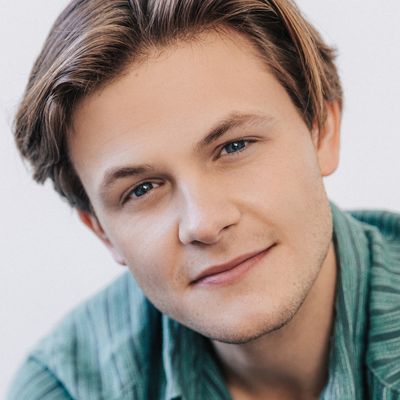
Burke Swanson brings the heart, humor, and metaphysical musings to this episode in a way that’s rare and deeply refreshing. From his early days as a third-grader doing stand-up at a summer camp to stepping into the Netflix universe as Hopper Jr... Read More
From the show: The Theatre Podcast with Alan Seales
Guests
Featured Shows
About
Burke Swanson brings the heart, humor, and metaphysical musings to this episode in a way that’s rare and deeply refreshing. From his early days as a third-grader doing stand-up at a summer camp to stepping into the Netflix universe as Hopper Jr. in Stranger Things: The First Shadow, Burke shares the moments that shaped him—and the ones that continue to ground him. We go well beyond credits to talk about the importance of ensemble energy, the spiritual nature of collaboration, and how 65% of his audience are seeing theater for the first time thanks to this production. That’s no small ripple effect.
We also talk about what it means to chase artistic expression when you’re not even sure what form it’ll take, and how acting might just be the day job that funds your actual art. Whether it’s football plays as choreography, crying backstage during a surprise Season 5 trailer drop, or reflecting on experimental poetry zines, this one is full of unexpected gems. Burke is equal parts philosopher, clown, and community-builder—and it shows in every minute of this conversation.
Burke Swanson is currently starring as James Hopper Jr. in Stranger Things: The First Shadow at Broadway’s Phoenix Theatre. His previous credits include George McFly in the Back to the Future tour and his Broadway debut in The Rose Tattoo. He is also a founding member of JMP Collective, where he produces experimental performance and multimedia work.
This episide is powered by WelcomeToTimesSquare.com, the billboard where you can be a star for a day.
Connect with Burke:
- Instagram: @burke_swanson
- Collective: @jmpcollective
Connect with The Theatre Podcast:
- Support the podcast on Patreon and watch video versions of the episodes: Patreon.com/TheTheatrePodcast
- Twitter & Instagram: @theatre_podcast
- Facebook.com/OfficialTheatrePodcast
- TheTheatrePodcast.com
- Alan's personal Instagram: @alanseales
- Email me at feedback@thetheatrepodcast.com. I want to know what you think.
Transcript
This transcript was automatically generated and might contain errors.
[0:00] Burke Swanson: Hi, I'm Burke Swanson, a.k.a. Little Burkiswan, and thanks for listening to Alan's fantastic podcast.
[0:13] Alan Seales: Hey, everyone. Welcome to another episode of the Theatre Podcast, intimate personal conversations with the industry's biggest names. I'm your host, Alan Seales, and our episode today is with Burke Swanson, who brings just an episode full of joy and honesty and just a little refreshing dose of gratitude for the art and chaos that is live theatre. He currently plays Hopper Jr. in Stranger Things: The First Shadow on Broadway, and he just brings this beautiful mix of curiosity and humility and even, I want to say, like, metaphysical insight into how and why we tell stories. This is not your typical credits and career chat. I mean, we talk about Governor's School. Who knows about Governor's School?
Raise your hand. And even how playing football helped train him for ensemble storytelling. He tells me about crying backstage while listening to Stranger Things, the season five trailer, during the show, by the way, why sports and theatre are closer than you'd think, and kind of the unexpected wisdom of his third grade summer roommate slash stand-up comedy director. Burke has this magical ability to blend poetic introspection with complete goofball energies. Kind of my type of guy. He'll talk about the wind as a metaphor for breath and spirit and then casually reference the Demogorgon as Mindy, you know, because that's their name. He's serious about ensemble work, changing the tides of Broadway, and the incredible weight of introducing a whole new audience to theatre for the first time.
We also get into what it means to express your art, even when you're not on stage, and how sometimes acting becomes the day job that fuels your real passion. Can't wait to share this with you, so take a deep breath, get ready to smile. Find me on social media. Tag me in your stories. You want to watch the video version of this episode, make sure to visit Spotify or Patreon. And now, everybody, please enjoy this very special episode with Burke Swanson. Today's guest made his Broadway debut in The Rose Tattoo alongside Marisa Tomei, then hit the road as George McFly in the North American tour of Back to the Future, the musical. Now, he's taking on the role of James Hopper Jr. Don't call him Jr. in Stranger Things: The First Shadow, bringing a brand new dimension to a beloved character from the Netflix universe.
It's like its own thing now. It's like Marvel Universe, the Netflix universe, with a background in experimental theatre, a passion for character work, and a growing resume across stage and screen. He's quickly becoming one to watch, wink wink. Burke Swanson, welcome to the theatre podcast.
[2:43] Burke Swanson: My goodness. I've never had an intro quite like that. That's amazing. Thank you so much for boosting me.
[2:46] Alan Seales: Was it the waka waka?
[2:49] Burke Swanson: No, I think it was the enthusiasm. Thank you so much. I'm excited to meet anybody new.
[2:51] Alan Seales: Rock on, rock on. That's why you're hosting this podcast.
[2:56] Burke Swanson: Right, right. No, that's what – I was just talking with somebody about this. It's like, literally, we get the energy, us actors, because it's – I'm not an actor professionally by paycheck, but in my head, you know.
[3:09] Alan Seales: Energy-wise.
[3:10] Burke Swanson: Energy-wise, yeah. I get energy from meeting new people, and being able to connect with them in person, and look them in the eye, and have that serotonin release. I think that's really the beautiful thing. We were at Google the other day, and we were doing this Google Talk thing, right, with a bunch of people who are way smarter than me, particularly. What was so interesting is the question that we got asked was, you know, why the arts, and why not the arts? And this sort of moment of like, you have a bunch of people in here who are doing really cool work, who have worked really hard to get there, and yet they also have passion, they also have breath, they also have a desire to express themselves, and maybe this job does not express all of it.
And I think what is so beautiful about the arts is that there really is so many ways in. You know, I think about all the different avenues in which people can support the arts and be a part of the theatre community, the film community, TV community.
[4:04] Alan Seales: Fun fact. So I worked at Google for 11 years here in New York City.
[4:10] Burke Swanson: Wow.
[4:11] Alan Seales: And was the global head of the Talks program for six of those 11 years.
[4:15] Burke Swanson: No way.
[4:16] Alan Seales: Yeah.
[4:17] Burke Swanson: I did not know this.
[4:19] Alan Seales: The Broadway pipeline of shows was because in 2013, when I started at Google, I was like, I need to freaking express myself and talk to some Broadway people for a show I brought in with Cinderella with Santino Fontana.
[4:35] Burke Swanson: Oh my gosh.
[4:35] Alan Seales: Said his last name incorrectly then too. And I think I introduced him as Santino Fontino or something. It's literally on the internet. It's on YouTube.
[4:46] Burke Swanson: It's right there.
[4:46] Alan Seales: So you can go look it up. I'll splice it in now if I can find it. But yeah, that's why you were at Google.
[4:54] Burke Swanson: Well, congratulations to you. And I mean, truly, it was probably one of the best press experiences we've had particularly as a group. I mean, it was like a really beautiful conversation-based, totally non-pretentious, just real conversation. And so clearly, the standard that you set is continuing on. So cheers to you, man.
[5:13] Alan Seales: Thank you. It was really all about just diving into these long form conversations. And that's why when I kind of moved away from that, around the same time started this podcast. And it was one of those things where I'm just like, I just have to keep talking. Conversations and the expression of the arts, I think, are just so important. And I was going to say underrated. Maybe that's not the right word, but like underappreciated. That's what I'm looking for.
[5:40] Burke Swanson: Yeah, I would go on underappreciated or sometimes forgotten about in a really twisted way. I mean, we're on the corner of, I don't know when this will be releasing, but on Tony season, an award season in general, right? And I think that there are so many missed opportunities that happen in that space that is such a, to quote George McFly, a myopia of sorts in which people are really focused on one specific moment in somebody's life. There's so many, so many moments that led to that, so many moments that could or could not happen after that moment. And that has nothing to do with whether or not they win a little golden statue of a hyperly fit individual. There's so much that people are giving every single day on Broadway. And I appreciate you trying to mine that.
[6:33] Alan Seales: I mean, even some of the, not Broadway specifically, just theater in general, like I've seen some of the best performances off of Broadway.
[6:40] Burke Swanson: Yes.
[6:41] Alan Seales: Yes. The talent travels with the person, not with the show, right?
[6:46] Burke Swanson: I literally, this is going to be an admission of deep diving and like Facebook stalking, because I'm still on Facebook. I was the class president and I'm planning a reunion and I'm very deep in it and I can't wait to delete Facebook. But until then, I have the ability to Facebook stalk somebody. And I woke up dreaming about one of the two best performances I've ever seen in my entire life. And it was, I was at KCACTF, which is alphabet soup for like the Kennedy Center Awards, something, something, something. College, you get nominated because you did great work in college. Either your production or you can get sent off and then competition, so on and so on. Anyway, in the region, I believe four, I was at the Savannah College of Art and Design.
I got a chance to see all of these shows. And one of them was, oh gosh, it's like Amelie. I'm trying to remember the playwright's name, but it's about this French woman who essentially translated Newton's laws into French so that they could be, and gave her own insights on it and completely overlooked in history, all this sorts of things, right? Anyway.
[7:50] Alan Seales: Hold on, hold on. I want to do this. Okay. So it's opening number is, what leg goes up, must leg come down.
[7:56] Burke Swanson: He is very, very much an inspiration. I think it's Lauren Gunderson, you know, who's the playwright. So I think she might have elaborated a little bit more, but for Burke translating it, yes. And this is the problem with translation. Yeah. Anyway. So the actress who was the lead in that, I remember my friend and I, we just like looked at each other and it was as if the muses came down and that is in a small, I think it was Georgia Southern University Theater, you know, at a random time. And I'm not even sure if that individual acts anymore. And that's, it's just, it gives me chills because it was such an impactful performance that happened in that moment, outside of the limelight of like, you know, so-and-so is here tonight and it had nothing to do with Broadway.
[8:41] Alan Seales: Oh, that's so cool. I mean, think about like these chance encounters though, that make what we have now. I mean, I think about like, I've talked with directors and producers and these people who, for example, some of the most famous things we can talk about are like In the Heights and Hamilton and the Lynn Projects, right? And the Lynn Projects, Freestyle Love Supreme, like literally they're just doing all these things for fun in a basement. And some friend of a friend invited Jill Furman in and then the rest is history. Like, you know, so you have all of a sudden somebody coming in, I mean, thinking of like my friend Marlon Mandel in Titanic and they were performing somewhere in LA and someone was like, oh, hey, if I'm getting the story right, it probably not.
But like, hey, Eva Price, lead producer of Titanic, now you need to come see like this really wacky bar performance of this thing. And then now it's turned into this international powerhouse. Like this stuff happens all the time. All it takes is the right person in the right place. And then you become Hopper Jr. on Stranger Things. That's like a C-minus transition.
[9:50] Burke Swanson: I mean, I'm right here with you, so we're right in the way.
[9:53] Alan Seales: Okay, so then Little Berk, Little Berky Swans. I'm going to call you that now.
[9:59] Burke Swanson: Sure, sure, sure. Berky Swans.
[10:00] Alan Seales: Berky Swans, Little B Swans. Is that what your friends or enemies?
[10:04] Burke Swanson: That was my like college username.
[10:06] Alan Seales: Did it really?
[10:06] Burke Swanson: Really?
[10:06] Alan Seales: B Swans.
[10:07] Burke Swanson: Really? Okay.
[10:08] Alan Seales: My sister calls me Bork, and I don't know what it is about that, like the B-O with the two dots over top of it, but like totally unconnected. She did go to the same college as me, but like people in college began to call me Bork completely separately. So something is very energetically based in that. So Berky Swans is a great refreshing change for me.
[10:29] Burke Swanson: All right. Okay, so Little Berky Swans then. When you're a little kid, like what got you into performing? What made you like be attracted to the arts?
[10:38] Burke Swanson: Yeah, I mean, my father, much to his dismay, wanted me to be, you know, sports, sports, sports.
[10:44] Alan Seales: Berky Swans Senior.
[10:45] Burke Swanson: Yeah, Berky Swans Senior was an incredible athlete in any different sport that you could think of. I mean, some of the first like photos that I ever saw of my dad as a child was like him playing with kids three to four years his senior in hockey, like he's a middle schooler checking people who are seniors in high school, you know? So like that was the kind of energy that I came into this world with. And yeah, my third grade teacher decided that I had, quote, leadership qualities and sent me off to the third grade. Yeah, National Young Scholarship Program. It was like some thing in DC where it was like a two-week overnight camp and you learn leadership skills and whatever subject you wanted. And I was there for literature, I think, you know, I was there learning about the Greek muses and everything else. And we had roommates, which is wild to say, you know, how old would you be in third grade?
[11:34] Alan Seales: Third grade, yeah.
[11:35] Burke Swanson: It's like seven or eight.
[11:36] Alan Seales: Third grade, you're eight, yeah.
[11:38] Burke Swanson: Yeah, eight years old. And he had the bug. He had the bug. His parents apparently were like South Korean film directors. And he was not only had the acting spirit, but he had the directing spirit, the producing spirit. And he somehow convinced all of us roommates to do this essential like 10 to 15 minutes stand up comedy routine with a musical review in the middle of it. And it probably was only for like maybe 100 kids at this camp.
[12:03] Alan Seales: And he grew up to be one of the duffers.
[12:05] Burke Swanson: Yeah, exactly. I wish. I cannot find this kid at all. So if you're hearing this, friend, please reach out. But yeah, I walked off saying, I have no idea what that is, but I must do this. And cheers to my mother being so driven to like express her love of her children through her activities. And she went all out and, you know, somehow led to this moment. Yeah, there's, of course, many, you know, waves of like, do I want to be a business major, you know, at like USC or something like that, while secretly auditioning for the BFA program. But just so happy that I found my way here.
[12:44] Alan Seales: It's funny you said USC, Allison Jay, your co-star went to USC.
[12:47] Burke Swanson: Yeah. I mean, talk about some real kismet energy going on. I mean, if I had decided to go to USC to fight on, I would have only been a year behind her.
[12:57] Alan Seales: Oh, that would have been interesting.
[12:58] Burke Swanson: We would have still met. So there's like this really beautiful way she did look at me and say,
[13:02] Burke Swanson: So glad I'm meeting you in this way. So I think it worked out. SCAD was what I needed to be at the collaboration and the sort of real belligerent encouragement to meet other people in other art forms and even try out those art forms was for me what I needed rather than the step-to-step, you know, here's how to successfully work in this business.
[13:34] Burke Swanson: I'm going to say this with so much love to my mom. I know that I made a choice, but I was not really conscious of what was happening. Suddenly it went from this summer camp to my mom being like where can I get him on stage and like found this production at a church of Jonah and the Whale in which point the kid who played Jonah was going to get to stick his head out of the side of like a big whale and I was like that's what I want to do. I've never sang before, but I'm going to do it to be this guy and so I did that, some children's theater, stage door productions, did some dinner theater and then all of a sudden I was like in Philadelphia getting a manager and then suddenly I was in New York getting like a commercial agent and then suddenly I was missing school two to three times a week to take a bus from Virginia up to New York for a five-minute audition to turn around and leave the city 30 minutes later to make up classwork and by the time I got to high school, I was just sort of like there's so many what I called the silent no's and I was just a kid.
I had no idea. I had no understanding or comprehension of this rejection of this. Why can't I just do the thing that makes me happy? Why do I have to go convince somebody that I'm allowed to do that? That's a very kid entitlement way of thinking about it.
[14:44] Burke Swanson: Yeah, and I mean there's some if you really search the web, you can find the famed Olive Garden commercial that came from that time, but I remember coming back to school and being like Olive Garden aside, I've had enough Alfredo. I need to experience high school and so I kind of quit. I kind of had this like weird JT chip on my shoulder post NSYNC. It was like very young to have a chip on my shoulder, but I was a very pretentious little kid and was like, I want to do high school and I want to try out for the football team and I want to do high school theater. I wanted to do those things and it just took some extra time to finally kick it off. I think finally it was, I think, I know there's still the background of my laptop.
There's a program in Virginia called the Residential Governor School Program and it's this really sick program, which like 40-ish people from each medium gets sent to a college for a month and you're a junior, senior in high school and that year was devised theater and experimental theater and it just opened me up.
[16:01] Alan Seales: This is in Virginia?
[16:02] Burke Swanson: This is in Virginia, so I was at Radford.
[16:03] Alan Seales: Oh, I went to Governor School, rising junior in North Carolina.
[16:08] Burke Swanson: Yes, I've heard about North Carolina. I believe Pennsylvania as well. I've met some folks who have the shirt of other groups and it really is this, I mean, it actually gives me nostalgia chills, if you've ever experienced that, where it is like the memory of walking in for the first time and there was this moment of, we had this activity and we were picking random lines from a book and then creating choreography around architectural pieces that were in the college grounds and in the middle of that, I went, oh, it's not just musicals. It's not just plays. There's actually an artistic expression happening here that doesn't actually need to make sense to anybody, not even myself. It's the fact that it's happening.
Pair that with like a life and death of Marina Abramovic with Willem Dafoe, why must you hurt yourself? You know, little video that just like struck me. And in that moment, even if I wasn't fully conscious of the consequences of it, I knew I would do this for the rest of my life. It was like very clear in that express. Maybe it wouldn't be acting, maybe it would be directing or producing, but as a quote, performing artist, that identification came right then and there. And then so the rest of the time, I've just been trying to convince myself to get out of the way and let that happen.
[17:31] Alan Seales: Yeah, it's really funny you say that. Governor's school for me, I was young. I was always young for my grade. And so I was 15, rising junior, the summer before, yeah, summer before junior. Summer before junior, don't call me junior.
[17:48] Burke Swanson: There you go. There you go. Let's not forget, we're here for Stranger Things.
[17:51] Alan Seales: That's right.
[17:51] Burke Swanson: First Shadow. This is your mid-break advertisement.
[17:53] Alan Seales: This episode is brought to you by Stranger Things, The First Shadow.
[17:55] Burke Swanson: Hawkins, Henderson Liquors.
[17:59] Alan Seales: All that, yeah.
[18:00] Burke Swanson: Now I'm thinking of other stupid puns.
[18:01] Alan Seales: So you're a 15-year-old junior in high school.
[18:01] Burke Swanson: I'm a 15-year-old junior mentality right now, yes.
[18:05] Alan Seales: As exemplified by the joke I just told, yes.
[18:07] Burke Swanson: Yeah, you did it really confidently too. I was really proud of you.
[18:10] Alan Seales: If I'm going to sell a bad joke, I sell a bad joke.
[18:12] Burke Swanson: Thank you so much. So then, yeah, rising junior. And what you said about it though, that was the moment when I realized that those are the people I want to be around. I'm pointing very enthusiastically to Alabama. Yes. Those are the people. All of a sudden, because I came from the small town, I'm all to say a lot of closed-minded, naive, not necessarily in a bad way, just their cultural upbringings way in this tiny town, North Carolina. And then I finally get to this bigger city. It was in Winston-Salem. It was the college I went to. I was at Salem College. And then all of a sudden, all these people, even from the maths, from the sciences, from all of the other genres, as you were saying, everyone's just like, I want to learn.
I want to go farther. And I know there's more than what I know. And that all of a sudden, you'd pair that with the artistic side of the theater people and then the chorus people that I was with. And it was a whole new world. I still look back at that time as one of my best, best ever times of my life, summer. And then that's where I met my best friend who I'm still best friends with today.
[19:54] Burke Swanson: Yeah. We called it Gov Loves. It was just like those people truly, I've collaborated with a couple of them since then. I make like experimental poetry visual albums instead of a bad produced SoundCloud. We just made it visually with my creative partner, Quentin, who's a great graphic designer. And we produced one of them as sort of a movement concert of sorts. And Ray, he was bringing his guitar to it. But that relationship is because for the rest of my life, if Ray ever calls me, I'm picking up the phone. And it's that sort of, I don't, it's really hard to express it. It is those summers that you will never get back, but it will always be with you. And I'm so glad that you understand that.
[20:00] Alan Seales: Don't go anywhere. We're going to take a quick commercial break.
[20:04] Burke Swanson: All right, everyone. Now we're back. I'm thinking about sports and like, why did I start in sports? And why was I like captain when my freshman football team, when I never played football? It was because I could memorize the plays as if they were choreography. And also because it was a group of people coming together with a clear objective and having each other's back no matter what resistances that were inevitably going to come. And that is insatiable. It's community. It's being willing to surrender to a collective goal rather than all the, you know, ego id that's like desperately trying to say that I'm more important.
[20:39] Alan Seales: Right, right, right. No, when you have a true team of people that are backing each other up, and I don't think I've never experienced anything more in a moment that's been more exemplified than talking with the Freestyle Love Supreme cast. How do you know about the FLS Academy and everything? Please educate me in this moment.
[20:56] Burke Swanson: The FLS, Freestyle Love Supreme Academy. So it started by Anthony Veneziale, who was one of the co-founders of Freestyle Love Supreme with Lynn and with James Monroe Iglehart and Chris Jackson and all the OGs. And literally before they go on stage, before they do a show, before anything they huddle up. They do a quick, you know, your basic improv games to like warm up, but they huddle up and they say like, I got your back. I got your back. And they mean it so sincerely. I got your back. And so like they all go out there with such a team mentality of like, if someone doesn't know what to say, don't worry. Like they got my back and I got their back. And it's the sweetest thing. They are a collection of some of the most genuine, caring, nicest people that just, again, want to learn and want to know everything about everything and make the world better and want to amplify everyone else.
And what's so beautiful about that too, is that that made it to quote unquote, the largest stage in arguably the world, you know what I'm saying? And that was celebrated, even if not consciously so, on a Broadway stage. I mean, that's just incredible.
[22:00] Alan Seales: And they got an honorary Tony.
[22:01] Burke Swanson: Absolutely.
[22:02] Alan Seales: Yeah.
[22:02] Burke Swanson: Well deserved.
[22:03] Alan Seales: They should. Well deserved.
[22:04] Burke Swanson: But yeah, speaking of big stages in big cities, the Marquee Theater.
[22:08] Alan Seales: The Marquee Theater, with a big ensemble, by the way,
[22:11] Burke Swanson: 34 people on stage, 20 making their Broadway debuts.
[22:14] Alan Seales: Ha ha! Allison called it.
[22:16] Burke Swanson: Yeah.
[22:16] Alan Seales: Allison.
[22:18] Burke Swanson: You're about to enter the period in which, if you've listened to Allison Jaye's segment, you're going to hear a lot of the same talking points. Get ready, folks.
[22:24] Alan Seales: She told me.
[22:25] Burke Swanson: Get your bingo card out.
[22:26] Alan Seales: I interviewed her before this, unrelated, because you have completely different press teams. I'd happen to schedule you both today. She said, when Burt comes in, I bet you he's going to talk about 20 Broadway debuts. He always mentions that. He's real proud of that.
[22:37] Burke Swanson: Real proud of that. What's really great, our missing third here is Juan Carlos, who plays Bob Newby. When we get together, it's really fantastic. Our director had described it at one point of, Juan's got the energy. He brings in just the blissful, unapologetic vibe of Bob. He's enthusiastic. He's gregarious. He's just happy to be there. Allison can really amp up to that place.
[23:03] Burke Swanson: Brings it back down into sort of like, remember what we're doing. And then it's like they sort of hand it over to me to bring it into some weird spiritual sort of like, we're so grateful. Gratitude, Maxim, in that moment. But I mean, in all seriousness, dead ass.
[23:19] Alan Seales: Dead ass.
[23:20] Burke Swanson: Dead ass.
[23:23] Alan Seales: No cap.
[23:24] Burke Swanson: No cap.
[23:24] Alan Seales: Skibbity.
[23:25] Burke Swanson: There it is.
[23:26] Alan Seales: Ohio. Bring the Riz.
[23:28] Burke Swanson: Oh, he's going to go.
[23:30] Alan Seales: I don't know. That's all I got.
[23:31] Burke Swanson: I don't know. That's all I got either.
[23:32] Alan Seales: I was a couple of generations back.
[23:35] Burke Swanson: Tell that to my kids who still think it's cool.
[23:38] Alan Seales: They've got it. They've got to figure it out.
[23:39] Burke Swanson: They're eight and 10, so it's new to them.
[23:41] Alan Seales: Yeah, exactly.
[23:44] Burke Swanson: 20 people are making their Broadway debut. And when you look at that, I'm thinking about the next generation of theater makers. I'm looking at like Buena Vista, Social Club, and all the Broadway debuts happening there. I'm looking at John Proctor, who maybe don't have as many, quote unquote, debuts. But one would have curves. You have all of this really enthusiastic spirit that is like tsunami crashing into an industry that is sometimes a little slow to change.
[24:13] Alan Seales: Sometimes?
[24:14] Burke Swanson: Yeah.
[24:14] Alan Seales: Every time.
[24:15] Burke Swanson: Every single time. Very slow to change. And I mean, let's remember how many actual companies are deciding what's on Broadway at any given time. And I think the only antithesis to that is new voices coming into the space and saying, what if? What if? What if? And it's saying, I have your back. Changing the culture. Changing the culture that it is not like you versus me. It's not, did I get nominated or did you get nominated? It's purely about we are working together to make this happen. And this show, Stranger Things, is a beast. It is a literal mind flare coming to life on stage eight times a week, three turntables, moving any which direction.
[24:51] Alan Seales: Mindy. I've learned it's called Mindy.
[24:53] Burke Swanson: Mindy. And Mindy's not going to come to work if we don't show up to work, right? And so, that's us. That's our front of house staff. That's our backstage crew. It's a lot of people making this magic happen. And I say that very, very, I'm getting the smile from Alan right now, but I mean it quite sincerely. It is something to me that makes all of this worthwhile because it's not easy. And there's days in which it's hard and it's not fun. I'm rubbing right now the stress point that I have in my back shoulder from wearing the same backpack over 50 times now. There's like little things that begin to build up. And the thing that makes it worthwhile is those people wanting to come together and tell a story.
[25:36] Alan Seales: You have such a metaphysical approach to what you're doing, I feel like.
[25:43] Burke Swanson: I'm just memorizing lines and going on stage and trying to not have acne. That's really what this all comes down to.
[25:49] Alan Seales: No, I mean, you're talking about the crew and the environment and the energy and the purpose. And some people, I think, probably that's part of the mentality that sets the great performers.
[26:04] Burke Swanson: Sets you guys above the good ones because you're doing it not because you want attention or even that you need attention. It's not attention. It's not validation. It's just expression. I go back to that word expression that you were talking about. You're having fun. You're being kind of this goofy guy as Hopper, but it feels like it's bringing a way for you to express Burke in a way that you previously didn't know how to, and it's catharsis in a way.
[26:39] Alan Seales: Absolutely. I mean, I just got done like 10 days before this project started. I was playing George McFly, a very seemingly different character than James Hopper Jr. Don't call me Jr. And when I think about the differences between them, I actually find that they're actually quite similar. It's two people trying to find community while also learning to be their authentic self and let that be okay. And super strange, in my existential moments, I too am wondering what can I do to be myself and also find community. Super weird here, Alan. This is revolutionary work here, but that is what I experienced. I wonder if anyone else in the audience is experiencing that too. Very strange. I don't know. Please comment, like below, let us know. But subscribe below.
[27:36] Robert Leonard: On the air. To me, that's that moment where whether they've got a gruff persona or whether they have a really loosey-goosey persona, everybody's really striving to find that in the audience, outside of the audience.
[27:49] Burke Swanson: What I love about, one of the things I love about Stranger Things is I saw it for the second time yesterday, yesterday afternoon, saw the matinee yesterday. And I went again to watch you and Allison knowing that I was going to interview you today, but I would, when you weren't on stage, I would specifically pick somebody in the ensemble. And especially in the classroom scenes and everything, like their mics are not on and everyone just continues to talk. Everyone is going, right? And that's what I really love about that the direction was given, the okay was given, everybody just to just be there and be like you're in a classroom and talk to your fellow classmates. And sometimes you can hear what they're saying. And it's, you know, they're not like saying, oh, let's go get some dinner after the show. You know, they're saying things that a high school kid would say.
[28:36] Steven Daldry: Yeah, I mean, Steven Daldry and Justin Martin are masters of the craft for a reason. And they knew pretty quickly that if they wanted to do Hawkins right, if they wanted to do Stranger Things right, you were going to have to get the community element of it there. And whether that's in Hawkins Lab or whether that's in Hawkins High, you know, you've got to have people ready to go full on. And what that means is sometimes letting the creative spirit of the individual just fly free. And, you know, we're doing eight shows a week and the bits are going to get bitten and, you know, it's going to be its own vibe. But also what it is, is the specificity of this is why you're here. This is why we're doing this in every single scene.
And, you know, all of our, you know, all of our time as quote unquote principles was spent with the directors and we got that great specificity. But all of that time with the ensemble as well was given that same level of specificity, which is just kind of a name to think about. You really can't, I mean, we've had people show up 16, 20 times at this point, which is surreal.
[29:35] Burke Swanson: That's like most of the run. Yeah, cheers to you. Honestly, we need to like do some deep insight onto that. But, you know, somebody coming 20 times, you can truly pick a different member of the ensemble and you will see the full five act, you know, drama that's taking place. Yeah. With no loss of story.
[29:54] Alan Seales: Oh, absolutely. Absolutely. And then for you, though, coming into this, what we would call the beginning, the Netflix universe, right? Coming into this, did you know, were you a fan of Stranger Things before you got the call? And when did you get connected with this production?
[30:08] Burke Swanson: Yeah, absolutely. I mean, I knew I've been watching the show since 2016 with my sister. We would like watch it one episode a night, really come up with the theories. You know, Hopper was one of my favorite characters. You know, the Steve Dustin relationship was one of my favorites, which is very much Hopper and Bob in this origin story of sorts. So I felt like there was a lot baking underneath the surface already. But I remember when I got it, I was like, are we really doing like a musical retelling of season one? Like, is that really what's happening right now? I don't know if I can get behind that. And I remember my agent being like, Burke, you're going to do it. It's a play. It's some of the best theater makers that we have.
And you're going to do it. And it's got that Netflix money. And it's got that Netflix money. And also what's so surreal about it is that Netflix is doing something that's never been done before. So even if I couldn't get behind the story, which I'm very assuredly behind the story now, you have people who are willing to kind of put themselves out there who don't need to put themselves out there. Netflix did not need to do this. Netflix was doing their thing very well. They've still to this day are still beating out everybody in terms of streaming. Like, you know, they've got a lock on that. They do not need to go and succeed, fail, do anything in between, you know, on a completely different medium.
But they're doing what Marvel did for film and then TV. They're taking a story that is simultaneously still being told in a completely different medium and bringing added layers to that thing. I mean, I truly don't think you can see season five without seeing the show. They were being written at the same exact time. And things that won't fully get talked about in season five are in our show and things that will be a hint to season five are in our show.
[32:03] Alan Seales: That's what I was wondering. This has been in the works. The script for First Shadow for your play has been in the works since probably, you know, like you said, after season one or when season two is being written. And so given that this is a prequel, this is an origin story to everything we see on Netflix. Whoever was writing everything that everybody had to be all connected. So that it doesn't diverge.
[32:21] Burke Swanson: Well, and talk about a wild experience as an actor. I mean, we'd be in rehearsals and you've got the true intrepid trio in real life. You got Steven, Justin, and our writer, Kay Trefry, who's been a writer on the show since season two, producer on the show. And there would be moments where they'd be watching these really big sort of potentially spoiler moments. And you would see them watch it. And then it would go silent in the room for like five minutes as they conferred with each other. And then all of a sudden, somebody would get a call. And they come back and be like, we have to change it.
[32:50] Alan Seales: Because they don't want to spoil it?
[32:51] Burke Swanson: No, because, oh, that's such a great idea. We just put it into season five. Or, wow, that's referenced in season five, but we don't understand it fully. Can you make it clear? So let's add more. Let's add less. The script that I got to audition with particularly, but then also week one, we're throwing our own little Tony Awards called the Louis Awards here, started by some of our ensemble members. And one of those things is in memoriam, all the things that we lost. And the joke about that is like, the pages that we had day one are no longer there anymore. Because like by week two, Kate essentially was like, I'm tired of trying to write you as other people. I'm going to write for you. What that meant was not only are the words changing, but then it meant like, what are you all bringing into the room?
Like you as Burke, you as Allison, you as Louis. Every single person in this ensemble, they said, that's funny. That's not funny. That works. That doesn't work. What are you doing in the background there? Okay, that's now a new bit that's going to have a running through line of the show. And that spirit means that when we're in the room, you kind of forget that there's going to be a Demogorgon stretching pre-show. You kind of forget that the Sonya Freedman is sitting in the room. You forget that Netflix is going to come and vibe check this real quick, that the Duffer brothers are going to want to give notes on that throughout this process. And then all of a sudden, you get to the point where you come in and do press and they're like, well, let's show a little trailer. And you show the trailer and you're like, that looks kind of cool. What is that? Oh, that's what I'm doing. Yeah. Holy shit.
[35:04] Alan Seales: Speaking of trailers, this week, they just, as we're recording this, the week before Tony's, they just started showing the trailer for season five. After your show, the curtain goes down, bows, and then they play the trailer. And then the trailer happens. And we have been standing backstage listening to the reactions and listening to the music. Because look, I mean, your laptop's a great place to go watch it. Go check it out on YouTube. And also, if you really want to check out the trailer and you want to check out that visceral yell that happens at the end of that, you're going to want to hear that in like 360 best sound design nomination for a Tony.
[35:42] Burke Swanson: Oh, yeah. Sitting in the theater with however many speakers exist in the theater and hearing that trailer being played when it was, especially when it was unexpected. Because I've seen the show before and it didn't play until this week. So then I was like, oh, okay, that's it. Curtain down. And I'm like, what's going on? There's something else. And it was the most, I'm getting goosebumps. It was the most surprising and energetic thing that I have experienced just to all of a sudden be part of that with that whole group. That's one of the largest theaters in Broadway. And to go through that with a theater full of people like that was just so incredible.
[36:42] Burke Swanson: I was backstage with one of our swings, Malcolm, and he and I were looking at each other. And it was that moment where I think in some weird way, I haven't had a chance to meet David Harbour yet. So in some way, it hasn't fully really set in who I'm helping create right now. And when I watched that trailer, it was like I got the call for the first time again. It was instant fear, excitement, tears to my eyes, where I just remembered quite viscerally, this is what we're doing. This is what we're a part of. And yeah, the shows this week have been pretty apt. We have been reignited in a way that shouldn't have been surprising, but was really unexpected. We really do feel the weight from the true, true hardcore fans that we get to meet at the stage door and everything else.
They bring that energy every single time. But I think that there's a real respect that this group has been reminded of that we are telling a story that has been 10 years in the making. That cast literally grew up doing that. And whether they had a choice in who was playing these characters or not, there is some respect that needs to be given. There's some honor that has to be had in order to help complete this story. And that is something that just doesn't happen in theater very often.
[37:03] Alan Seales: No, no. And you're part of a legacy. It's a legacy now. Because hopefully, the show is going to run for years and years and will have a life long after this Bane season is over because there's spinoffs planned and these other things. And honestly, it's like the consequences of an expression, right? You have the child, you have to let them fly free at some point, right? From a creative perspective, if you're creating a piece of art, let's say you're doing a little watercolor and you're like, I don't know if it's done. I don't know if it's done. And finally, you just send it out. How people relate to that piece is going to change over many, many times because context always is changing. You're never going to remember the expression and what it is for you will never be what it is for somebody else, right?
And so, whether or not the show runs for a decade or does the Harry Potter thing and just keeps going and hits the road and all these different things, whatever it manifests from a professional standpoint, the impact of this happening is going to affect people, tiny term. I'm sure Allison said this, but 65% of our audience is first time theater goers. And if you don't think that that is helping redefine what is expected on Broadway, what can be done on Broadway, that this show can happen alongside another unbelievable show, English, that this can happen alongside John Proctor, this is going to happen alongside Real Women Have Curves. I'm sorry, but the times they are a changing and it's really exciting. It's really exciting. What is going to come from this moment? We're going to take a quick break for a few commercials.
[38:30] Alan Seales: All right, everyone, welcome back to the episode. This season, I think is, well, not think, I think it really is the first season post-COVID where, like, I wouldn't want to say, post-COVID, everything was put on pause and was all reset to the same point in time, development-wise or getting to stage-wise, right? There was stuff that was already there, stuff that didn't come back, but everything else basically, like, when Broadway reopened, we'll put in air quotes, everyone just started racing for the same theaters. And so now, the churn of opening and closing has gone on for a
[39:07] Burke Swanson: What Universal did was purposely they didn't target the theatre fans in their advertising and their marketing because that's a built-in audience. They don't have to. And one of the things they did, they dropped the first trailer for the first movie during the Super Bowl when people who don't get into theatre, who would never see it otherwise, are watching for the commercials, right? And so this all of a sudden hooked people like, what's that? I want to know. I want to know more. And the Broadway show has experienced such a surge because of now these new people who are being reintroduced or introduced for the first time because they're coming from a different medium. And I equate this to Stranger Things too because now you've got the TV fan base that is coming.
Sixty-five percent of every ticket sold is your whole house, every show are people who have never seen a show before. So are they coming for Broadway? No, they're coming for Stranger Things. And they're going to love Broadway because of it. So now we're like starting this theme of growing the industry again. Is this what we need to like slowly stop the dying Broadway industry? Well, and I think the art form itself is never going to die. Theatre will always be had, even if it's in somebody's basement, apartment in North Carolina, maybe. Theatre will always exist. The expression will always exist. So there's no fear on that. But the industry itself has been going through many, many necessary and unexpected tumultuous turns over the last couple of years.
And I think that there's a lot that needs to be shed and a lot that needs to be changed and people far more educated than I can talk hours on that end. But we'll just simply say that. The reality of the situation is though, this is a moment where people are desperate for fresh expression of storytelling, fresh expression of storytelling. And so even if it's in Wicked into the film, what made Wicked so beautiful to watch, for me at least, was that it was as if it was expressed on stage. And they captured that energy and that enthusiasm and that electricity all on film. And it's the same thing happening with Stranger Things. Stranger Things has captured what you thought was something that could always be replayed and is expressing it in a new way every single night on Broadway.
And people are coming in droves and they're seeing it 20 times. And you've got kids who have somehow convinced their parents to take the time, money, and logistics to travel potentially across the country. I saw somebody who I saw on the road in Eugene, Oregon. She came with her family. It's her first show. She came out here. Somebody I met in Lincoln came out to see the show and she had the hat on and she had the Demogorgon plushie and she had the cat toy, which if you haven't gone to the booth at intermission, you should. Prancer's there. And she just kept looking at me and she just kept saying over and over again, I cannot wait to come back. I cannot wait to come back. And in that moment, she did not mean Stranger Things.
She just meant theater. And the waves of that are not just Broadway. That is domestic and international theater. A lot of these people are starting to go way overseas to start telling these stories because those communities are wanting that same feeling. We've been overwhelmed in the streaming community with content, content, content. We're overwhelmed with TikTok every day of here's the new video to watch. And it is satisfying in that moment, but it is not sustaining. What is sustaining is the feeling of breathing together and helping tell the story. I had another epiphany. That's why TikTok, these reels, it's viral, boom, up and down, forgotten. But then a good movie, a good song, a good show, and then a musical combines all of it. You can watch the same thing over and over and over and over and over and keep coming back to it. And you're always going to feel that feeling.
[45:39] Alan Seales: You're right. You're right. You nailed that.
[45:41] Burke Swanson: No, I appreciate you bringing this up. If there was any doubt of what I was doing in my life, you've reaffirmed it. So thanks so much, Alan.
[45:48] Alan Seales: You're welcome. You're welcome. All right. So as we wind down the episode, we're going to shift over and play plot in 60 seconds.
[45:54] Burke Swanson: Oh, boy.
[45:55] Alan Seales: Sixty seconds on the screen here. And I have a list of 17 musicals, popular musicals. And so you give me a number one through 17 that will correspond to a show. And then give me the plot to that show in 60 seconds. This is going to be awesome. My friends on Back to the Future are going to start laughing when they hear this because they realize that I am so bad at this. Here we go. Here we go. Actually, I'm going to add Back to the Future.
[46:18] Burke Swanson: Okay. So I have a list of 18 popular musicals. Here we go. Here we go. I'm going to add this.
[46:21] Alan Seales: Okay. So one through 18 now. Give me a number. Let's do my lucky number 14.
[46:31] Burke Swanson: Oh, no. That's what I just did. It's Back to the Future. Go.
[46:34] Alan Seales: Sixty seconds remaining. Okay. Back to the Future. Marty, the coolest kid you ever know, with Doc, the zaniest doctor you ever know, they jump into a time machine and actually travel back to the 50s when his mom and his dad have not met. Oh, no. Is mom into son? Oh, golly. We got to change that. So now, dad's got to hang out with his kid who he doesn't know is his kid, and dad is super, super awkward. So how do you get someone who's super awkward to express his love authentically? Well, you let him be himself, and you put him against the big bad, and you'll see what happens, and luckily it all turns out well, and 30 seconds later, you have two more movies that have been one of the biggest IPs in the last 100 years.
[47:15] Burke Swanson: There's a little time travel in there.
[47:16] Alan Seales: There's a little time travel. Look, I mean, 19 seconds. We're right at 14 seconds. That's my lucky number. Cheers, though. All right. We'll stop there. Listen, I did not make that up. You legitimately chose number 14, Back to the Future.
[47:30] Burke Swanson: Lucky number. Lucky number. Thank you so much.
[47:32] Alan Seales: That's right. Okay. Shift over to the standard closing questions. Very simply, first one is what motivates you?
[47:38] Burke Swanson: What motivates me? I feel like we just spent our entire time together, Alan, talking about what motivates me. The last 50 minutes. The last 50 minutes would be the thing, but I do think that at the end of the day, the thing that continues to bring me there, here we go, metaphysical, is the wind to me. I think that there's something in the wind that is emblematic of our breath, which is emblematic of the spirit that brings everybody to where they are in that moment, and the willingness to receive and give one's breath and one's wind, I think, has the power to bring us all together in a very tumultuous time.
[48:21] Alan Seales: I love that. All right. So then what advice would you give to your younger self and younger people listening now starting out down a similar path?
[48:29] Burke Swanson: Mm, it's going to be okay. Wherever you find yourself, it's going to be okay, and it's maybe not as serious as you think it is. Maybe it's a little silly. Maybe it's a little, little silly. You're allowed to have fun in this space, and I do strongly believe that everybody has their own art, and maybe that is doing Broadway. Maybe that's performing. Maybe that's acting, or maybe it's fishing on the weekends and you have to perform on Broadway in order to go fish on the weekends. Whatever your art is, I just urge you to allow yourself and others to figure out the way in which you've got to make that happen. We live in a society where you've got to make money, and however you make your money, go do it.
Try to take care of people, but at the end of the day, try to give some love to yourself and what you bring to the world. How lucky would someone be if Broadway was their day job that sustained their outside hobby somewhere else? Alan, I'm so sorry, but I think that's kind of me. What do you really want to do? When I say I identify as a performing artist, I had to come to terms. You've got to realize Rose Tattoo happened. That's a five-year gap between that and Back to the Future. There was a lot of bar backing. There was a lot of substitute teaching that I was doing in between that time. There was a lot of unemployment in that time, and so what sustains you in that moment? It's that weird experimental poetry visual albums that I'm creating.
It's that moment of collaboration with friends. It's that producing of other work, right? In those moments, that was when I realized that sometimes acting is the day job that doesn't pay. I'm very lucky because it is a day job, but what is my art is the way in which I go about it. That collaboration and that ensemble and everything we talked about for the last 50 minutes, that to me is the art. The fact that I signed a contract and I make money, that is a really great benefit that I get to do my art while also doing my day job at the same time.
[50:15] Alan Seales: Getting paid, what a great benefit.
[50:19] Burke Swanson: Yeah, it really works out. It works out.
[50:19] Alan Seales: And then last question, if you could only see one show for the rest of your life, you can see it as many times as you want, what would you see?
[50:26] Burke Swanson: Oh my gosh. One show for the rest of my life. I do think I would say Buena Vista Social Club actually because the music in that. I saw it during a previews, and I was told that it was like one of the most tumultuous previews that they had had. I wouldn't have known. There was two points in which the entire audience gave standing ovations in the most pure standing ovation fashion. There was no like, okay, that's the big number. There's not the 11 o'clock hour. Here we go. No, it was, oh my gosh, the band. I could listen to that band play all the time.
[50:59] Alan Seales: Oh, incredible.
[50:59] Burke Swanson: All the time. I'll take it every day.
[51:01] Alan Seales: Absolutely incredible. I love it. All right, so where can we connect with you online? Where are you on social media?
[51:05] Burke Swanson: Yeah, not Little Berkey Swan, unfortunately.
[51:07] Alan Seales: Not Little Berkey Swans?
[51:08] Burke Swanson: That one was taken. That one was taken.
[51:10] Alan Seales: Oh, okay, okay.
[51:10] Burke Swanson: So yeah, at Berk underscore Swanson on Instagram. I'm pretty bad at it, but occasionally you'll see a story, occasionally you'll see a post.
[51:17] Alan Seales: What about the JMP Collective?
[51:19] Burke Swanson: The JMP Collective. If you want to check out that zany little art, that's where we're at there. You can do at JMP, all spelled out, Collective, Jump Collective. Yeah, we've got some cool folks over there, and we're cooking up our second book right now, and we got a little zine on the way.
[51:36] Alan Seales: Nice. I love it. You can get me on threads, Instagram, TikTok, Facebook. I'm in the places and doing the things. Leave a rating, review, wherever you're listening now. Special shout out to welcometotimesquare.com. We are in this beautiful studio. And thanks to Jukebox the Ghost for the intro and outro music. Thanks to Burke Swanson, aka Little Berkey Swans, for this lovely conversation.
[51:56] Burke Swanson: And thank you, Alan, because this is one of the best conversations I've had. Thanks so much.
[52:02] Alan Seales: Hats off.
[52:03] Burke Swanson: Thank you.
[52:03] Alan Seales: You're welcome. Take a deep breath, make the world a little colorful.
© Broadway Podcast Network, All Rights Reserved