

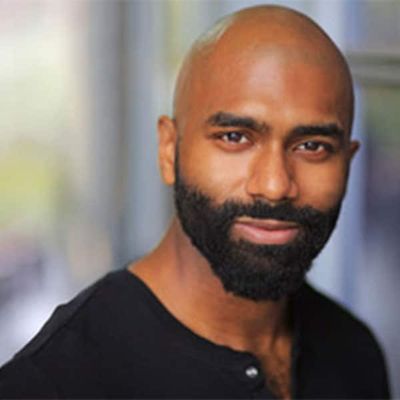
Originally aired as episode 120 on December 9, 2020. Nik Walker is an artist, educator, and activist who made his Broadway debut in Motown The Musical. He spent 3 years with the Broadway and touring companies of Hamilton, adding both Aaron Burr and George Washington to his resume... Read More
From the show: The Theatre Podcast with Alan Seales
Guests
Featured Shows
About
Originally aired as episode 120 on December 9, 2020.
Nik Walker is an artist, educator, and activist who made his Broadway debut in Motown The Musical. He spent 3 years with the Broadway and touring companies of Hamilton, adding both Aaron Burr and George Washington to his resume. Other stage credits include Peter and the Starcatcher (off-Broadway), and regional productions at La Jolla Playhouse, The Old Globe and The Denver Center, to name a few. He can also be seen on TV in Law & Order: SVU. Nik is a self-proclaimed cinefile and theme park nerd, and co-hosts his own movie analysis podcast called Little Justice The Podcast. He also co-hosts a video series on Broadwayworld.com called The Chaos Twins. Nik currently leads the Broadway cast of Ain’t Too Proud playing Otis Williams, and is an adjunct professor at his alma mater, New York University.
Nik shares that his mother worked a job as a news anchor when he was growing up, so she wasn’t really home a lot. So it was movies that played babysitter and kept his imagination going. But movies and stories played an even bigger and more important role in focusing him as a child after he was diagnosed with ADHD, eventually leading to his early involvement in theater. And later, a BFA in Theater from NYU.
During our conversation, Nik speaks candidly about coming to Broadway with very little dance background, sharing that Motown was his first brush with dancing professionally and getting paid for it. He shares memories of intense dance training for Ain’t Too Proud while still on tour with Hamilton - 5 hours of dance a day, and a performance of Hamilton in the evening - and the sense of pride he gained as a result of “being comfortable with letting go of your comfort zone”. Nik also opens up about the journey he has taken during the COVID pandemic which brought him back to NYU, this time as a professor. And while he acknowledges performing in Ain’t Too Proud and teaching at the same time will be a lot of work, he not only feels rewarded by his new job, but knows he is contributing to the education and growth of the next generation of theater artists.
Connect with Nik:
- Listen to Little Justice, the Podcast
- Instagram: @nikkywalks
- Twitter: @nikkywalks
Connect with The Theatre Podcast:
- Support us on Patreon: Patreon.com/TheTheatrePodcast
- Twitter & Instagram: @theatre_podcast
- Facebook.com/OfficialTheatrePodcast
- TheTheatrePodcast.com
- Alan's personal Instagram: @alanseales
- Email me at feedback@thetheatrepodcast.com. I want to know what you think.
Transcript
This transcript was automatically generated and might contain errors.
[0:00] Alan Seales: Hey, everyone. Welcome back to The Theatre Podcast with Alan Seales. I am bringing you an episode from the vault with actor, director, writer, and just all around great guy, Nik Walker, originally released as episode 120 back in December 19th, 2020. This was released after Broadway shut down right as the industry was starting to come back. And I'm bringing it back now not just as an archival artifact, but because the themes we explored back then, they felt newly alive back then, like purpose, identity, the push and pull between commercial success and his artistic integrity, and kind of like what it means to stay true to yourself in a world that constantly wants you to be something else. I mean, when we recorded this, Nik was already making waves on Broadway and navigating this complex career.
But listening again to it today, you'll hear echoes of the challenges that many artists still face, and how to build a sustainable career, how to show up as a fully Black artist, and how to evolve while holding on to your core values. I mean, there's just so much going on in the real world right now that parallels this that I felt it kind of apropos to bring back. But since that conversation, Nik Walker's path has only grown more, both onstage and off. So before we jump back in, just a quick update on what he's been doing since then. Gosh, he's been in theater and Broadway as Sir Galahad in Spamalot. He played Count Carl Magnus Malcolm in A Little Night Music at Algonquin Playhouse. He was in the cast of The Instigators on Apple TV.
He reprised his role as Aaron Burr in Hamilton. Offstage, he's still doing professoring at NYU. He continues to speak about Black theater representation, gratitude, and the craft of comedy. Part of why I want to re-air this conversation is that it just kind of reinforces how the pressures we discussed are, you know, they're not abstract. They're ongoing, and they're always still relevant. And there's the way he continues to move between everything he's doing underscores just how much theater artists often have to juggle multiple identities and multiple revenue streams. But he remains a powerful voice for equity representation and just bringing community into theater and using visibility not just for himself, but for those coming after.
Whatever. I'm going to stop talking. Nik Walker, always a great guy. It is true to, you know, just making art, something we always got to keep doing and pushing hard for. So with everything else going on in the world, I hope this podcast is a nice respite for you to kind of reconnect and refocus. Thanks for listening. Gosh, 400 and some, some episodes later, but now everybody, please enjoy this episode from The Vault with Nik Walker.
[2:50] Nik Walker: Here you go. One, two, three.
[2:58] Alan Seales: Today's guest is an artist, educator, and activist who made his Broadway debut in Motown the Musical before moving on to this little show called Hamilton, ultimately playing both the roles of Aaron Burr and George Washington, but not at the same time. A self-proclaimed cinephile and theme park nerd, he co-hosts not only his own movie-centric podcast called Little Justice the Podcast, but also co-hosts a video series on BroadwayWorld.com called The Chaos Twins. In addition to his slightly unhealthy obsession with Jeff Goldblum, he's also a British cricket player born in 1984. Oh, wait. Nope. Nope. Wrong. Wrong. Okay. A British graffiti artist born in 1960. Nope. Nope. Not that one either. Okay.
He's an English former snooker player born in 1973. Hold on. That's not the right. Okay. Okay. Nope. I got the right bio now. Currently leading Ain't Too Proud as Otis Williams once Broadway returns and actually having a birthday just a few days ago. Nik Walker, welcome to the podcast.
[4:14] Nik Walker: You did your research on not just me, but on everyone everywhere at the same time, and I commend you for that, sir. I commend you. Well done. Well, there's also a high wire tightrope walker named Nik Walenda from the Flying Walendas.
[4:27] Alan Seales: Really?
[4:28] Nik Walker: Yeah. And so when people Google me, that name comes up as well. I'm not Nik Walenda. I am Nik Walker and pleased to share the first six letters of my name with that gentleman. So, you know, it's crazy out there. There's also an American writer and bank robber born in 1985, but I didn't mention that one.
[4:41] Alan Seales: I love that.
[4:42] Nik Walker: Yeah, man. So you actually did. You're actually speaking to all these birthdays. You actually did just have a birthday, right? Happy belated birthday. You are 33 now, I think, if social media doesn't lie.
[5:04] Nik Walker: Social. So social media never lies. Come on. No, I'm 30. I'm 33. 33 years old. That is correct. What what what a scary, scary year. But what a great year to be to be coming into.
[5:16] Alan Seales: Absolutely.
[5:17] Nik Walker: Oh, my goodness. I totally agree. But on social media, too, that's where I pulled up your unhealthy obsession with Jeff Goldblum, because it's like every third post on your Instagram account is all it's all about Jeff Goldblum. And I want to take that into, you know, of course, self-proclaimed cinephile and theme park nerd. Where did this love for a Jeff Goldblum come from? But not be movies in general.
[5:39] Nik Walker: So let me let me I'm so glad you brought this up, Alan, because this is a point of contention that I've had with, I think, the general populace for quite some time. So right now, you know, I think I think with the advent of Disney Plus and and, you know, just kind of being back at work on various TV programs, movies, movies, all this stuff, there is like a renaissance. Jeff is having a renaissance right now, especially among like younger viewers who maybe are not familiar with his earlier work. A Jefferson, as we might call it. I would agree with that. A Jefferson. And I think I think of Goldblum with on, I mean, like there's so many ways you can go. You know, I just want to be clear that I have been on the Jeff Goldblum train since I was a child and it has nothing.
You know, I think there's like this right. What's happening right now feels very like like very hipster chic and like, you know, trendy. That's not about that. I was Jeff Goldblum. I was the fly. I was Ichabod Crane. Do you mean like way, way back? Like, let's go back into the deep cuts. But most importantly, and this ties in with my love of theme parks, was a movie called Jurassic Park. And Jurassic Park is I recently rewatched it on my birthday. I make a point on my birthdays of watching the movies that have like, you know, defined my life. And really, they often come down to two movies, Jurassic Park and the Dark Knight. And I rewatched Jurassic Park for my birthday, this past birthday, and I was just struck with just a how good of a movie it is.
I mean, it just is so good from top to bottom, writing, obviously, the special effects, the acting like and Jeff Goldblum is perfect in that movie. He just he just serves his purpose. It's not too much. It's not too little. He's right there. And I just I just love I just think I find him hysterical. I find and you know, it also I think is a testament to his craft, because the other thing I will say that I find wonderful about Jeff Goldblum, that I think that we in the theater sometimes take for granted. Because right theater, what we perform in is an auditory medium, right? So we're not, you know, the camera's not right up close to our faces, we are able to, it's mostly about our voices and our stage presence and these other things.
But on camera, you know, so many actors are able to find success just by their just by being interesting. And I think that we can all agree that Jeff Goldblum is, if not the king, one of the kings of holding your attention on camera. And he holds it, he holds it through a myriad of idiosyncrasies, right, that that are just out of control and crazy, but he still holds it. And and I love his delivery. I also realized that like now in my 33rd year, I also have adopted many of his mannerisms. And I'm fine with that. Like, yeah, it's just it's just what happens. But but it does go back to, you know, Jurassic Park is also my favorite land in Universal Studios, Orlando, right? They kind of Universal jumped on the train early of, of designating park parts of the park to different movies.
I mean, though their whole theme park was built around movies. So you had the ET forest and you know, you have the men in black, kind of, you know, Queens County Fair representation. Right. And then you have like literally Jurassic Park, you have like four or five rides within the park. And so I love that part of the park seconded only maybe to Harry Potter World Diagon Alley and and Hogsmeade. And so, yeah, Jeff Goldblum, you know, his presence, while he is not anywhere in the park, his presence is certainly felt in the park. And I try to wear my black leather jacket and pants and shirt whenever I ride the ride. So, yeah.
[9:49] Alan Seales: Well, where where I guess the theme parks and and was there a moment as a child that all of a sudden you were just like, I you realized you were obsessed with this or you were like, I got to go to Disney World every other day or I got to go to Universal every other day because there's people who know movies and then there's people who know theme parks.
[10:04] Nik Walker: Yes. And accurate. Right. Right. So, I mean, I love the way you phrase it. First of all, you just genius genius. I have been there's you. I you know what it is for me, dude. I will say this. I movies. You know, my mother works a job where she was a news anchor. So she wasn't she was not home a lot. And my movies, I mean, my wife shared this movies were our babysitters. Movies were the things that, you know, kept my imagination going. And the years later, I you know, I come to find out speaking quite quite bluntly, you know, I have ADHD on on on not undiagnosed because the guy got diagnosed early, but I haven't been on the proper medication for it until now. And movies and stories were very much what focused me.
And that's actually the reason to be, you know, being really blunt. That's why she put me in theater in the first place because she didn't want, you know, she had tried me with with drugs at first and it wasn't it. You know, those were back in the days when everyone was getting Ritalin and and it wasn't really being regulated like it should be. So I think I had an adverse effect the first time I tried it. And so she didn't want to put me back on medication. So somebody said, well, Peter could help him. And so I I became hyper focused on storytelling and and that's remained true to this day. I mean, I really do. You know, my wife always gives me crap. Like if you put you know, if you tell me to wash the dishes, I'll wash them.
But I cannot guarantee that they'll be like fully, thoroughly washed. If you tell me to write a script, I will zero in on that thing. And it's like I'm like an arrow on that. And I think I think that's what goes back to theme parks, because what I love about theme parks are these movies and stories that I love so much. I get to be in them. Right. That's that's the beauty of a really good theme park. It's why, you know, people ask me if I like Six Flags, if I like, you know, and I do. I enjoy the rides, but it's so much more about the theming for me. It's so much more about stepping into these stories. Before the shutdown, I got the chance, me and my my Hamilton conductor, we went to L.A. when I was I'd left Hamilton.
I was in Ain't Too Proud, but I actually had my agent put in my contract that Nik will not be here for the opening of the Rise of Resistance at Galaxy's Edge in Disneyland. And I literally left rehearsal to go do this and also for the West Wing podcast. And it was like one of the greatest trips of my life. But you you step into Galaxy's Edge, right? You step into Star Wars land or what have you. And and it's these I mean, truly, I can't explain it other than to say, like, just to be able to breathe in this air of like this, these worlds that you have dreamt about, and especially when you're talking about the Disney Imagineers and the Universal workers, because they are they are truly storytelling miracle workers. I mean, not just the sights, but the smells and the feel. Some of these rides, they just push the limit. And this newest ride, Rise of Resistance, which is the new Star Wars ride, was no exception.
[13:59] Nik Walker: I do this acting stuff, this art stuff. It's all for the Disney dollars. That's the whole point. No, it's not. But I love my parks, man. That's my happy place. 100%.
[15:00] Alan Seales: That's amazing. I want to describe, I mean, this is an audio podcast and I'm grinning from ear to ear this entire time as you're telling the story. You are so excited talking about this experience. It's all your senses. And I agree with you. I grew up going to Disney World over and over and over again. I know what the Pirate's Ride smells like. It smells like the Pirate's Ride. You just know. It's that musty smell that they pipe in there of the cannon. It's supposed to be gunpowder. Can I tell you something crazy? There's a company called the Magic Candle Company. And they have taken the smells from all these Disney rides and made them into candles. I kid you not. And you can get them. I have smelled them.
I have not bought them yet, but I'm going to buy them because it is so therapeutic. You're like, I know that smell. And it's absolutely that musty smell. It's so good. It's so good, man. And especially when you get... Here's the other thing I'll say. I've gotten very bougie with my park experience. I'm very fortunate to have had a good career and I saved my money and I'm responsible for my money. I don't splurge on anything but the theme parks. And so when I go, I really do... We try to make it an event. So we're staying at my favorite resorts there. And you're just... You see this... Everything about it is just crafted for your joy. That's all I'll say. It's just crafted for your joy. And it's so cool. It's so cool. And I really do love it. So yeah. Yeah. Theme parks, man.
[17:01] Nik Walker: You know what, though? I don't know what your plans are to have children, but I've got two small kids and watching them go through now... They're four and about to be six. And watching them go through now, what I remember feeling when I was that age is so much better than reliving it myself. Like being able to pass that on. It's the best. And to give that gift, which I know is going to translate into such great nostalgia for these children. Oh, my God. Yeah. I could talk about Disney forever.
[17:36] Alan Seales: There we go. That's the point. And that's what they want. That's what they want. So they're doing their jobs, man. But no, it's absolutely right. And I think that's true of anything, right? Anytime that you have something that you love and you're able to pass it... Obviously, you have the amazing gift of children and that is... Who better than to pass it on to? But I think it's so true. I got to tell you, I enjoy... My favorite memories at the parks are going with people who've never been to the parks before. I love watching them. I love riding a ride, but I love watching them ride the ride. That's the joy. It's like, yeah, you see? You can't turn it off. It really is powerful. So I can't imagine how that is with kids, man, because that's just a whole other level of amazingness.
[18:23] Nik Walker: I mean, you want to talk about immersion, right? Kids, their imagination just goes nuts anyway. As adults, you realize like, oh, this is fake. This is a ride. This is an illusion. But to see that immersion wash over children is otherworldly. It's beautiful.
[18:41] Alan Seales: Don't go anywhere. We're going to take a quick commercial break.
[18:44] Nik Walker: All right, everyone. Now we're back.
[18:46] Alan Seales: Anyway. Yeah. Back to you. Back to you. Okay. So in the opening little bio, if I have the correct bio, it was you. You're an artist, educator, activist, right?
[18:54] Nik Walker: Yes. That's what they tell me. And obviously, we know you very much as we know you very much as an actor. Talk to me about the educator part.
[19:04] Nik Walker: So, you know, it's funny because the educator has become official recently in a way that I never thought it would. So when you're an actor, you are you do, you know, I think, especially on Broadway, especially, you know, when you when you do when you do a certain level, quote unquote, of your craft, people want to call you in. So you'll do little masterclasses here and there. I love a good masterclass. I love, you know, whenever there was a sign up or whenever it was, you know, talk back. I love doing that. And I also would make a point of coming back to past educational institutions and like, just like stopping in and seeing what's going on. My first like actual stint as an educator where I was like getting paid to do it was so random.
I feel like I had shouted. So, you know, I went to NYU and NYU has the studio system. Right. So if you know anything about NYU, yeah, right. It's that that thing where you don't like actually take some studios are based in NYU, but they have a lot of existing deals with studios, acting studios in New York City. So you kind of get farmed out. You kind of get the best of both worlds because you get an NYU education, but you also get to experience all these different studios, Strasburg, Stella Adler, Meisner, you know, all these places that are in New York and functioning on their own. And I my foundational studio was Adler. And I feel like I shouted them out on Instagram at some point my first year in Hamilton.
And I got a message from the head of the studio, Tom Oppenheim, being like, hey, like we you know, Nick, it's so good to hear from you. We're so happy that you're doing so well. Do you want to come and like teach one of our scene study classes? And like, again, I was I was doing my show. So I was like, I don't know if I have time, but then I was like, well, wait, but it's it's it's I think one, two classes a week. The classes were on Tuesday and Thursday, if I remember correctly. So I was like, you know what, I can I can I can swing that. And especially because at that point, I hadn't taken over for Aaron Burr yet. Right. I was I was I was ensemble covering Burr, Washington, Mulligan, Madison.
And not that that job is any less hard because it's not. But I was like, no, not at all, not at all, at all. But I was like, you know what, I think I can swing this. So I started actually Tuesday. It was certainly Thursdays. I think there was a couple of Tuesdays in there, started teaching scene study. And it was really rewarding and I loved it. And then in the, you know, fast forward to now with this pandemic, you know, the pandemic hits in March and we're all, you know, again, I've done masterclasses, I've done all sorts of things for all sorts of institutions at this point. But the pandemic hits and we, you know, we all thought it was going to be a couple like a couple of weeks at first and it ended up being months.
And then it's now we're at nine months and all this thing. But back in I think it was back in like July, I was like, OK, you know, like Broadway's not coming back. I'm you know, hitting the audition circuit, film, TV, you know, we're seeing what happens with that, getting some things, not getting some things. But, you know, I'm going to at some point, I would love to find like some consistent income to tide me over till this thing comes back. I hadn't I hadn't put out any feelers or done anything. I literally well, like I maybe I think I've mentioned it to like one person like, you know, I think I would love to like teach like see what that you know, what's up with that. But I got a text from one of the heads of the department at NYU just randomly like, do you want to come be a professor?
And I was like, like, yeah, like, yeah, I'll totally do that. And it was one of those things that I was like very excited about at first and then was completely terrified about when I realized what I actually had signed up for, because this wasn't I was going to ask if if imposter syndrome started to to rear in because you're like, all of a sudden, I'm going to be at NYU professor tomorrow. And the second that I said, yes, I all of a sudden realized, oh, shit, I actually have to do this. And it's not just right when you're teaching these one off classes, you come in, you speak about your experience and, you know, you can kind of relay your story. And that's your method of teaching. And even when you're teaching like a scene study class, that's, you know, at a studio, like, it really is this kind of just looking at the work and helping pulling pulling the best work out of the student in the moment.
But this is now now we're talking about kids who are paying seventy five thousand dollars a year in the midst of a pandemic. Right. They're coming to the school. They want the best education they could ever have. And and now these classes are virtual. So, you know, the things like I was I was automatically and you're talking about grading, you're talking about, you know, conferences, you're talking about like faculty meetings, like all these things. And I was terrified. So I literally I went on Google. I was like, how to write a syllabus. I'm like, I put it together. But it was, you know, it was really fun for me was to break down, especially when it comes to acting. Right. When it comes to acting and that craft, you get to all of a sudden go back and break down what what your process is.
Right. Because you do this a certain number of times and your process is something you don't think about anymore because it's just what you do. And I the first thing I did was I went back and I took I actually went back to class. There's this amazing acting coach named Ted Slabersky, who is a film and television guy. And he he, you know, is just a wonderful, wonderful coach. And we did some one on one classes all through the summer just to just to prepare. And then I also went back to like the studios that I love. So I went back to Adler, sat in on a class and went back to Classical, which is another studio in NYU. My buddy, Ryan Garcia, is an amazing actor and voice actor and teacher here in Cali where I am now.
And I sat in on one of his classes. So I just tried to absorb everything I could about how how teachers teach this really. And and what my class became, I think, was a, you know, I think the thing that I knew I wanted to combat speaking candidly and not trying to piss off any any any acting schools. But but what I will say, I think that what we have to get rid of an acting school is the is the idea of performance because you're not in performance. You are absolutely 100 percent in a safe rehearsal space. And I I don't care how talented you are. You know what I mean? Like that's not why I'm here to teach you. I'm here to I'm here to help you find tools that help that bring your talent out of you.
So, you know, the the biggest thing I said on my syllabus was like, we're not we're actually not going to be doing full scenes. I don't want you in costume. I want you in clothes that your character that you would wear if you were auditioning for this. And we're going to take this beat by beat by beat. So I think especially at the beginning there, my classes got very frustrated with me because I was like, yeah, we're actually not going to do the full scenes. Like if I don't if I don't believe the truth of what you're saying, we're going to stop and we're going to look at that line and we're going to look at what you're trying to do with that line. And and like breaking it down to the word, like specifically, like really like because I think that's the other thing.
[26:58] Nik Walker: What my background as a writer helps with is understanding that like every word that that writer put on the page is a word they intended to put on the page. So none of this is just throwaway. Everything is a choice. Every single point of this is a choice. And how can I help you best? It's not even about the right choice. What is the choice that you want to make? And that's something that I got from Ted, was talking about, particularly with TV and film, but I think with theater too, I think that we get stuck in this trap as theater actors, because we so often have so long to rehearse, right? We have six weeks to put up a show, you know, maybe even more than that. So we have all this time to use the character.
But when you have this audition, and it's 20 pages worth of sides, and you're coming in with two days prep, and you want to walk in as ready as possible, what are the questions you need to be asking yourself? So that it can look like you've had six weeks with this. And so much of it is about what do you want to do? Stop worrying about getting it right. Just worry about there's words on a page and there's a character on a page. What do you want to do with this character? And that also helps because there's 20,000 people who are going to be auditioning for this role. So the only thing you have that separates you from them is you. That's it. So helping them find the individual choices, helping them get specific about those choices, really treating it like training wheels.
And actually, the better metaphor is ankle weights, right? I put the ankle weights on them. It's like if they're like a basketball player, right? I'm holding them back, right? I'm literally, I'm saying, nope, try it again. Nope, go back. Nope, go back. So that when I do release them, they're just like, they're like a rocket, right? That's the idea. And I think it's working. I mean, I don't want to give my students tea, but I'm proud of their work. I really am proud of their work. The other half of my class is a speaker series. So I bring in everybody. I brought in casting directors, actors, directors, writers, choreographers, specifically people who are in the business currently so that these kids can really get a sense of what this is like and also to demystify it.
That's the other thing that I really want to do. I think that the sooner that these students and students everywhere, for any students who might be listening, the sooner you can understand that these people behind the table are just people. They're just people. They want to see you do well. They want to. And not only do they want to see you do well, but I think but remembering that, it's beyond do well. They want to see you. They want to do well because you make them look good by bringing you in. That's the idea. Yeah, they are this kid. Yeah, I know this kid. It's my kid. I brought him in and it's been this wonderful thing because I've brought these people in and I've been able to, this pandemic, I've been able to reflect on my career this far.
I'd say I owe my career to Tara Rubin. I'd say I owe my career to Des McEnough, Brian Harlan Brooks, Warren Adams and the Motown team, people who took a chance on me. It wasn't that I was perfect for the role. It was that they were like, we know. I mean, at a certain point, it was we know this kid and we know this kid can do it. And I think back to that now. I'm like, yeah, man, that's all it takes is just people knowing who you are and staying in there long enough for them to take a chance on you. So I really tried to demystify it for them. And we've had some good freaking cats come in the classroom. Rob McClure, Mandy came by, like all these good people coming through and just to talk to them. And so they could have that experience. So it really has been a fun time for me to see.
[31:16] Alan Seales: Yeah, that is so, so cool. And I'm glad that in this time when a lot of people are kind of struggling to find themselves, that you've found a new door to walk through, at least temporarily.
[31:28] Nik Walker: And it's not to start to cut you off. I mean, this is the thing too. I told, I mean, like, straight up, I love teaching. I'm down to teach for as long as they'll have me. And I've said that like I because because the thing that I realized doing it like, yeah, doing this and Ain't You Proud will be a lot of work. But it is so I I'm rewarded by it, number one. And also, this is how we protect this thing, you know, because it's not going to be anybody who's kidding themselves about, oh, we're coming back to the exact same thing. It's that's not true. What we need are people who are passionate enough about what we do, that they can reinvent it to the times they can figure out how to make it work. So that's that's the investment for me is like, yeah, I'm trying to give you everything I got, because you're the people who are going to make sure that this keeps going. Do you know what I mean? And that's what we want.
[32:24] Alan Seales: Oh, yeah. You're teaching the future casting directors and the future one of directors and choreographers.
[32:28] Nik Walker: Yeah, everybody is going to want to work with you. I love that you said a second ago about, you know, being in the room long enough to know you can do it. People taking a chance on you because I read something that you had posted about being Otis Williams, specifically that you have no like very little dance background. Right. And so what's going into being one of the temps? It's a whole thing was that's a whole thing. Yeah. It's being Aaron Burr was a whole thing like I and I was very fortunate in that, you know, they didn't dance me for my Hamilton audition. You know, I'm not going to audition for Hamilton for, you know, back in the mixtape days. And I joined them right after the Tonys. But even so, like they were still I think I squeezed in because I was still I came in at a part of the process where they weren't dancing my track.
And thank God, because that wouldn't have worked like at all. And it was so funny because I actually. So I had Brian Harlan Brooks, who, like I said, you know, is one of the people who started my career. He when I did Motown, that was kind of my first brush with this kind of concept of dance and of like I mean, I had, you know, I'd done like, you know, like when I did the musical in high school, we danced and, you know, my dance teacher there is a wonderful man. But like having to like dance professionally, be paid for it. And Brian, when I joined Motown, had to really kick my ass and help me find my soul. And he said something today that that really hit me because we were talking about how stiff I was when I came into Motown and his whole thing.
He was like, I realized very early on that you had never been allowed to feel like you could fit in. It wasn't that you couldn't dance. You you didn't feel like you could be a part of something. You weren't letting yourself fall into the groove of something. And that went to his job became to help me be unafraid of that. And I look at, you know, look, I need the idea of me doing any sort of holiday special is hysterical, like for those for people who know me, like when I when they saw when they saw the, you know, Ain't Too Proud on Macy's Day and on all these things, they like text me like, this is hysterical. And I was like, yeah, that's not in a million years. But what I will say, you know, because I'm now on the back end of this, you have to understand when I first joined Ain't Too Proud, and I've told the story several, you know, so many, so many times.
So forgive me at this point. But what the thing that happened was, you know, Dez, who's been in my corner for a long, long time. You know, they were definitely on the casting, but they knew that I couldn't, that it was Sergio and Sergio is incredible. And I was going to need some more time. So they actually sent Edgar, the associate, to the Hamilton tour, the last five weeks. So I was doing the five hours of dance during the day and then Hamilton at night for those last five weeks to learn how to dance like this. And I will say, looking back and like looking at those first rehearsal videos and now looking at these these holiday specials we just did, the sense of pride that I have, that I that I fit and like and and fit in and like with these guys who are like some of the coolest physical performers I think that we've ever had.
I look at the things these guys are able to do, and it's it's unreal. It's truly James, you know, James Harkness, my brother James, he that man. I mean, he's a he's a friggin legend and he's been doing it forever. You mean like and and has been doing it that level forever. And and it's I love I love that I'm able to make people believe that I somehow did it fit into that squad of people, especially also because I think that's kind of the other thing about these about these specials that has really made it like a journey for me is like if you've seen the show, my role in the show. Yes, I dance with the temps, but like I'm I'm just I'm a three hour monologue. I mean, I'm really there to act. That's what I'm hired to do.
But you also have to dance. So this is the part of my job that I'm actually the least comfortable with is that's happening the most right now. So it's been a very, like very grounding journey for me to be like, yeah, I can I can hit this step and I can and I and I have fun. And it's it's like I will say, you know, not to ramble about Ain't Too Proud, but I think my favorite discovery about Ain't Too Proud. Right. You know, because when I when I first booked it, I was texting Ephraim. I was texting Joanne like, guys, how the hell am I going to make this work? I don't you guys know me like this does not it's not going to work. The thing that you very quickly discover, right, is that you're rehearsing this in the room by yourself and you're doing these moves and it's terrifying because you're trying to hit them right and trying to get them right.
And then when you get on stage, even for the month that I was up there before the before the shutdown, you quickly realize that like it has nothing to do with hitting the moves right. It has all to do with enjoying being with these people to the left and right of you. That's what makes that show special. That's, I think, what makes that show different than Jersey Boys, right? Because some people are like, oh, it's the black Jersey Boys. It's not because Jersey Boys, I mean, both are brilliant scripts, right? You have Rick Ellis on Jersey Boys, who's arguably one of the best book writers of our time. You have Dominique Morisseau on Ain't Too Proud, who is arguably one of the best playwrights of our time.
And both of these stories are well crafted. But I think the difference with this show is at the heart of it is black joy. Like, that's what you're watching. It's just these young black men in the midst of a crazy, burning down world, love each other and have each other's backs and call each other out when they're wrong and and be with each other. And that's what the dancing, you know, because the temps didn't even dance like we dance in the show. You know, they didn't like they couldn't, you know, like, so it's not about that. The dance is about showing our connection and how in sync we are. And it really I love it. I love like, I'll be walking down the street now and just be doing moves and like and it's fun, man. I'm really, really proud that I could I could be a part of this.
[38:46] Alan Seales: What's funny, it's funny, because I've heard similar stories interviewing so many people, like big, big, big names are all just saying, I don't I don't know why I'm up there. But, you know, I'm in the middle of the show leading, leading the whole thing, carrying it on my back, and I have a panic attack. You know, people just everybody goes through this. Everyone. I just I really enjoy talking about it. And, you know, no matter what level you're at, everyone second guesses themselves. It's it's it's never that kind of insane.
[39:16] Nik Walker: Yeah, no, I was gonna say that part's never going to end. You know, the second guessing yourself, the especially now, right when when so many just because of necessity, right, so many of us are are trying to dabble in the TV film world, they're trying to get into that that sphere. And so now it's a whole new set of rules right now that we knew what we did. And now we got to, you know, now we got to learn what they were doing. And and even they have to learn a new set of rules because, you know, the way that they did it is not the way they can do it anymore. So I think I think just, you know, being comfortable with letting go of of your comfort zone. I think it's as contradictory as that sounds. I think I think that's just constant, constant reminder of like, yeah, don't don't ever stop trying to have it figured out. Just just experience it, experience it and go.
[40:26] Alan Seales: Absolutely. Right. Yeah, absolutely. There's, you know, some of the biggest business success stories, too, are like, I got let go from my job or I got fired from my job or whatever the case is downsizing. And then they start the next like hundred multimillion dollar company, right? Like out of necessity. We are so adaptable. Yeah. And out of necessity.
[40:27] Nik Walker: The humans change and we grow, and I love seeing people who previously, like yourself, didn't realize you have this passion for educating and for teaching. And now literally you add NYU professor to your resume. That's kind of nuts.
[40:45] Alan Seales: We're going to take a quick break for a few commercials.
[40:48] Alan Seales: All right, everyone, welcome back to the episode. You said something a minute ago, too, that brings me back to the last of the three things: artist, educator, activist. Because up on stage in Ain't Too Proud, you were like, it's all about the love for what? How do you call it? The black love on stage?
[41:06] Nik Walker: Black joy.
[41:06] Alan Seales: Yeah. And I want to touch on that because I've known you for a while, and you were part of the panel that I had for episode 100 of this podcast, which was you and many others that were talking about Black Lives Matter. This was right after George Floyd was murdered. And something that you had said during that panel, I wanted to circle back on now, if you're okay talking about it. You said that something else you said in this interview, too, was that when we come back to the theater, it's the people who want to make it better, who want to improve it. And something you had said back then in episode 100 was talking about trauma, dealing with the trauma that you had gone through. And unfortunately, at the time, we didn't have the opportunity for you to dive into that because it was a panel and we moved on to other things.
But if you're okay, I'd love to start to talk about that and dig into that because I want to know, like when you call yourself an activist or what other people call you an activist, right? What are you doing? What is your trauma? What's important to you? Because I have found that in talking to many, many of my friends of color, everyone feels different for completely different reasons.
[42:23] Nik Walker: Yeah. So here's a little like this, especially with trauma work, because I think, quite honestly, that trauma work is at the basis of every fight for every human right that's out there right now. I think everybody is trying to get everyone else to recognize the validity of their trauma. You're born into the world. The world is the world, and you're going to get bumps and bruises. Okay, it's going to happen. It doesn't matter who you are. It's going to happen. You have them. Your children will have some of them. You, as the great father that you are, will protect your children and guide your children and teach children as much as you can. And we'll inevitably save them from many of the bumps and bruises that you had to go through.
And they will, hopefully, you know, I'm sure not too many, but they'll find their own bumps and bruises. That's how it works. That's always how it's worked. And I think that, you know, what ends up happening, though, is for some of us, some of us have bumps and bruises that aren't just life being life. Right? Some of us have bumps and bruises that really didn't have to be. And I'll put it, you know, I'll make it macro. The trauma of this pandemic, you know, I think that if you're just looking at it factually, looking at what we knew and when we knew it and what we could have done and what we didn't do, the trauma of this pandemic was a preventable trauma. Largely, I'm not great. I'm not. And I'm not saying, right, that the pandemic, you know, we could have killed the bat or whatever happened.
You mean like I'm not saying that I'm saying that this we didn't have to lose this man. And we know we didn't. And we know we didn't because other communities haven't. And so there are people right now who are dealing with the loss of a loved one who shouldn't have had to do that. And we are now putting things, hopefully, putting things in place in the system to ensure that this never has to happen again because this was the cost of this lesson was unfathomable. And that is a truth that where I, you know, depending on who you talk to, they'll have their people. But for me as a black man, that is a truth that I have lived with my entire life is that things that have happened to me were entirely preventable, certain things, and made my life a little harder than maybe it needed to be.
[45:00] Nik Walker: And I would go so far as to say, you know, I've run into so many people who view me and my colleagues as kind of the answer to our own conundrum. Right? Because they're like, well, but you made it. So what's the, what do you talk? You know, obviously, it's not that bad because you made it. Well, here's what I'll say to you. Um, I absolutely have had some success in this life. One hundred percent. I'm very proud of the success I've had. I do not live as a selfless or selfish person. I try to live as selflessly as I can. And I think that so much of the problem that we face right now is that there seems to be a choice between I benefit or we benefit as though those two are completely different.
I happen to agree with President Obama on his thoughts on defund the police. I think that we do get bogged down in catchy slogans. I absolutely do. Because at some point, and Heidi Schreck, you know, in I got to watch What's the Constitution Means to Me recently. I was blown away by her work. I mean, it's so powerful. Right? And one of the things she touches on is, yeah, this thing wasn't built for us. Like it just it wasn't built to encompass. It was built so that we could change it and help it to grow with the country. But we have not done that. We haven't done that. So much of what the conversation is in terms of things like defund the police is we if you are if you're a rebel, then burn it down.
If you're an activist, part of your job is you have to sell it. And that's what I believe. That's what I believe. But like, it's the question between are we going to just abandon our post and do our own thing? Or are we going to keep trying to exist within the American experiment? Because the American experiment is several different factions. So we have to figure out how to coexist and we have to figure out how to reconcile our history. And those two things are very hard, but they can be done.
[47:14] Nik Walker: So in answer to your question, how I activate or why people, I think, call me an activist, I think that I don't mince my words. I think that on social media, especially, I'm very clear about who I am and what I support and what I'm fighting for. I donate. I organize. If this, you know, I have to be a little more careful in these pandemic times because, excuse me, quite frankly, because I have asthma. So I'm not trying to get out in the streets. You know what I mean? Like I have to be careful. But previous times, you know, if you needed a good demonstration, I was your guy. I mean, I love to engage people in thought. And even now, what I will say is I've tried to use social media as a platform, you know, when I find somebody, you know, because I will, like I said, I'm not trying to provoke, but I will have no problem posting what I believe on my Twitter.
And if somebody who sees that tweet or that Instagram post or whatever has a problem with it, right, and they want to troll it, I am not the person who's going to have like a fisticuffs fight with them on these platforms. Right? That's not what the platform is best used for. Now, what I do do is I say, hey, person, I find what you're saying very interesting. I would love to invite you on Instagram Live. I would love to invite you to come talk with me. I have two talk shows. I mean, we have the podcast and we have the video show, you know, Chaos Twins. Chaos Twins is probably better suited for it because, you know, little justice versus assholes. But I would love to talk to you. My thing is I'm coming from facts. I'm coming from numbers. So often the people who want to troll me on this thing, you can't you're not going to come at me with numbers because your numbers aren't serving your argument.
[49:07] Nik Walker: Governor Cuomo said something today about the idea of, you know, flip flopping, contradicting yourself in the pandemic, the idea that what he was doing now, you know, is contradictory to what he might have done, you know, five, six months ago. And he made the point of, like, I'm not here to stand, you know, bullishly strong on a platform. I'm here to follow the science and the facts. And here's the thing. I don't agree with Cuomo on several of his policies. There's like a lot of his policies that I don't agree with how often he kind of allows the police to run roughshod over certain communities in this state. Like there's several things that he does that I don't agree with. But what I can't disagree with is how he's handled the pandemic.
He's handled it from facts. That's what I do. I look at the numbers. I look at the facts. Somebody came to me and they talked about, you know, they want to have a conversation about Donald Trump. And they were saying that, you know, Donald Trump had done more. You know, it's the classic thing that was circulating around, at least in my circles, died the rumor that Donald Trump had done more for the black community than anyone since President Lincoln. And their biggest signpost to this was the First Step Act, right, which Donald Trump cut down on prison time for black men in prisons and was giving them help to get out of prison faster through the classes they could take and jobs they could find outside of prison.
Now, this is great. That's a great thing. You got, I think, got like some 30,000 or 300,000 men out of prison early, which is amazing until you consider the fact that it's a half measure because, Donald, you're getting them out faster, but you're not looking at what got them in there in the first place. So they're still going in. You're just getting them out faster. And you're doing it to service your kind of, being quite bluntly, capitalist machine, right? You're putting them to the workforce. It's not about their mental health. It's not about their physical health. And on top of that, you are still not giving the prisons funding. So the classes that they need to be taking to qualify for getting out of prison, they're not able to take those classes because the prisons are still underfunded and understaffed.
So to me, activism is simply a matter of knowing the facts and speaking on those facts. I think what makes it dangerous right now is that people seem to be able to choose their facts, which that is another thing that I'm trying to fight. And if you want to call me an activist for it, call me an activist. But there are facts. There are absolute truths. There are things that are quantifiable. Now, I'm a religious person. I'm a spiritual person. I believe in God. I believe that I have faith in things I cannot see, right? I don't impose my faith on other people, but that's my faith. That said, I still believe in science and facts. There are the things that we are able to say we know. And in terms of leading a community of people, I don't know what else you want. That's what you have to do. It really is this kind of crazy time.
[52:24] Nik Walker: So I think that in short, what I've tried to do is make my... I hate the freaking word brand. I think it is so disgusting. But make my space, any space that I inhabit, be virtual or in person or career-wise, my voice. Thank you. Thank you. See, this is why you're the host of this thing, because you have those. But use my voice to just be a place of truth. I'm not going to not say what I believe, and I'm not going to not apologize when I'm wrong. I think that's another form of activism, too, is just admitting when you said something off or when you weren't right. You mean, there's right now we are in such a radicalized place that so much the most radical thing you can do is be an honest person. Like, I think that's what's crazy. Right? I mean, like, so, yeah, I just try to be honest.
[53:27] Alan Seales: I well respect that, especially in this stage of, you know, alternative facts and fake news and all these other things that terms that are thrown around everywhere. And it's interesting. You are actually you're very good friends with James Navarro. I go hard. You guys rag on each other all the time on social media and whatnot. But he was also part of the panel episode 100 that we did. And something he said during that, that it sounds like you're in agreement with is making it to the micro example.
[53:56] Nik Walker: You know, here in our community in New York, he said that, you know, he agrees that, you know, we need to deal with issues and we need to deal with microaggressions and deal with the systemic racism inside whatever industry we're in, but that he doesn't want to tear it down. He doesn't want to tear down the system, because if you tear down the system, then you've got nowhere to work. You've got nothing to do. So you need to re-educate and rebuild without tearing down.
[54:25] Alan Seales: So what do you do then?
[54:26] Nik Walker: No, no, no, because I do, you know, and it's so tough. So I think that we, it's not about tearing down the system. I think it's about, I think there's two things. I think there's absolutely 100% tangible work that needs to be done in the Broadway community. There are the fact that we don't have an across-the-board HR is insane, is insane.
[54:50] Alan Seales: I didn't even think about that. You're right. You're so right.
[54:52] Nik Walker: Oh my God. Yeah. The fact that we, you know, it's yes, we have company management, but like they aren't, you know, company management, right? It's the same idea of defund the police. Company management right now fits so many umbrellas, right? Because when, because again, I'll bring it back to defund the police. When we say defund the police, what is actually meant is diversify the amount of work they have to do so that the police can just police and that social workers can do social work and that this person can do X, right? Be specific about what you're asking the police to do. That's what it means. It doesn't mean get rid of the police. It means be specific about what you need the police to do and bring back community policing.
That's why, again, slogans are dangerous. That said back to the original point with, with company management, they're not social workers. They're not, you know what I mean? Like they, they are, they are there to help the, the, you know, the policing and not the policing, but the organization of the show. But, but, but they already have so many things to do. They are the buffer between the producers and the actors and the, and the crew and the everybody. Do you mean like you're going to add HR on top of that? No, no, you actually need an HR department. So there are, there are absolutely tangible things that we need to do on Broadway.
[56:15] Nik Walker: Also the other part of this and this is why I do agree with James, I don't think you tear Broadway down. I think that we need to start valuing other artistic forms or other artistic venues. Understand that Broadway is commercial theater. That's what Broadway is. I don't, here's the thing I've done some of the most or at least three of three very commercially successful shows. One of which is arguably the most commercially successful show of all time on Broadway. Now I think the beauty of beauty of Hamilton is that it was able to do something that was both artistically fulfilling and commercially viable. That is not often the case. That is a rarity and that's okay. I don't, my favorite writers are Susan Laurie Parks, Spike Lee, Quentin Tarantino.
I would never expect to see their stuff on Broadway ever. Do you mean, because that's not what Broadway was built to do. Broadway was built for delights and it came from vaudeville. That's what, I mean, do you mean, so I'm not saying it can't, it can't be there, but like, let's not be surprised at that.
[57:29] Nik Walker: What we need to do is say, hey, classical theater of Harlem, here is a million dollars because the work you're doing is incredible. Hey, the public, hey, you know, the flea, get new freaking management, get those people out of there who are, you know, I'm sorry to swear, fucking us up, but you know, get your shit together and then let's give you some money. Do you mean let's, let's, let's really lift up all boats float on the tide, right? Let's lift up everybody. So if there's options, so there's places to go to see the types of theaters you want to see the types of theater you want to see, right? I, I, I, we do need to see now here's what I will say. What needs to change on Broadway is who is telling the stories, right?
We need room for everybody to tell the stories because you are lying. If you think that, that, uh, that a young Persian family from the Midwest doesn't want to see themselves reflected on Broadway, you're lying. Like they actually do. So let's do that. Let's get people behind the table. Let's get casting directors. Let's get all the things that we want to get, but let's also not put all our eggs in the Broadway basket. I know that that sounds crazy as somebody who's made their career off of Broadway, but I, I also know what Broadway is. Broadway is Broadway and that's, and it's always going to do what it does.
[58:44] Nik Walker: I sure if, you know, I want everyone to have the ability to make great art and I want everybody to have the ability to make great money. And I think, I think that's, that's, that's what I'm saying. Like I, I truly, you know, me and Sasha talk about this all the time, um, on chaos twins. It's like Broadway, it's this weird thing because I will never, Broadway will never not be special to me ever, but it's like, it's like the do one for you, do one for them thing. Like to me, Broadway is that place where you come and you, if you are, if you are one of the lucky few, and it is a lucky few, you are able to build a life for yourself with those shows, right? But the, but the, but in terms of it being the bastion of representation for everyone, that's going to take a lot of time.
And I think, I think there are companies who are already doing that work who could perhaps use our support more than just tear down Broadway. Um, I think you, I think spread the love as opposed to, you know, tear it down. And again, that's, but, and I, I will say that knowing that that's just me, you talk, you talk to, you talk to Karen Oliva, you talk to anyone that, you know, people have different opinions and they should.
[59:57] Nik Walker: Do you mean, I think, I think the biggest thing that's going to need to happen, quite frankly, as we, you know, as this, there's, there's such a sense of optimism right now, you know, cause the vaccine is coming and New York is keeping its numbers down and it's amazing. And, you know, Biden is, is going to be the president. And, uh, there's a lot of, there's a lot of optimism. So now we're, we are, you know, you talk to producers like, yeah, when we come back before in, in September, you know, it was like, Ooh, you know, I, I just, I, I'm just waiting for that day. You know, I don't know when it's going to, but now it's like, no, when we come back and that's an amazing thing to hear. I love that.
I love that we're thinking about that because we are coming back. There was no way we weren't, there was no way we weren't ever not coming back. But I think that, yeah, now is the time when we start to think about, okay, so we're coming back, but what do we want to come back to? And that's a conversation that absolutely needs to start and doesn't end when we reopen continues through.
[1:00:50] Nik Walker: Cause these, it shouldn't, it shouldn't cause these aren't aesthetic changes. These are, and, and I'll, and I'll do one harder. You're not just fighting Broadway. You're fighting a system. That's the other reason I say burn it. Don't burn it down because if you want to burn it down, you got to burn the country down. And that just, that's going to take a lot more willpower than I think people have and, and time than people are willing to give. I, I, I'm just, I'm willing to do it, but I'm also a realist. I don't, I don't know if you get the kind of groundswell that's needed to actually burn Broadway down.
[1:01:28] Nik Walker: So funny. Cause when I was, you know, I'll be the first to admit, if you go back through my, um, my teenage years, when I first discovered what Broadway was, I absolutely had a very Aaron Burr relationship with Broadway and that I wanted to burn it down. I was like, yeah, screw Broadway. I don't give a, you know, whatever. It's stupid. Do you mean like, I hated everyone that was able to get there. I was very envious of it. And I want, I absolutely have like a poem, a spoken word poem in my journal somewhere about how I want to burn Broadway down and start my own thing. So like, do not think that I did not dabble in that side of it because I absolutely 100% did. But I just think that it's, it's, there's, there's things about it that do work.
There are things about it that do work. It's not, it's not everything. There's a lot that we need to learn how to do as an industry, but there are, there's a lot that works. There's a lot of magic that, that, you know, I'll bring it, I'll bring, I'll bring it for a circle.
[1:02:21] Nik Walker: So, uh, you know, Disney right now is looking to get rid of Splash Mountain. Okay. They're looking to turn Splash Mountain into a Prince and the Frog because Splash Mountain has, you know, it, it, if you are a ridden Splash Mountain, it's one, it's easily one of my favorite rides in the park, but it does, I will say as a person of color, it is a very uncomfortable feeling because you, these characters are all from the movie Songs of the South. And while Songs of the South is in no way referenced in this ride, it is intrinsically linked and you can't look at Br'er Rabbit or Br'er Fox without, you know, thinking of, you know, guys singing Zippity-Doo-Dah and then all the kind of uncomfortable, weird places that, that movie went.
And it's just strange. It just, it doesn't, it, it, it's always like me, you know, me and my buddies, we, you know, we talk because we laugh it off. You're just like, oh, it's a racist ass ride. But like, then you're like, eh, yeah, but it is, it is kind of, it is kind of wrong.
[1:03:23] Alan Seales: Yeah. It's almost 2021 and they haven't gotten rid of it.
[1:03:26] Nik Walker: Yeah. They got to do something about that. They got to do something. And that's, that's what the, you know, but that ride though, don't get rid of the ride. Retheme the ride, right?
[1:03:32] Alan Seales: Yeah.
[1:03:33] Nik Walker: The drop is the drop. That Splash Mountain drop, bugger. It's beautiful. I don't need you to get rid of the drop. I don't need you to get rid of the flume. I don't need you to get rid of like going down into like the darker and darker levels, figure that out with the princess and the frog, but you don't got to get rid of the ride, the ride functions. And that's my argument about Broadway is Broadway. There's something about Broadway that is unlike for all of our craziness. And we are crazy on Broadway. We are also, um, there is something about the fact that like, you know, we truly, and this is not to crush anyone's Broadway dreams. So many of the shows that you love were built on duct tape and a dream y'all duct tape and a dream.
And that's, you just realized like, Oh, this did not have to happen. This, this came, this pro this show that I love probably came close to not happening. Like we are just, we're just so, cause we're, we're, we're artists and we're emotions and, and we're not, that's why we need HR. We need administration. Like we do need regulation in Broadway.
[1:04:37] Nik Walker: Um, but there is something wonderful about that. I would never want to just get rid of that. And that's not what anybody's talking about to begin with. Um, but I, I just, I just think don't throw the baby out with the bath water, you know, like really, really look about what we want to keep and what needs to change. And then if an incremental systemic change happens, then you won't have to burn it down because then it will be just the things that no longer served you. Every couple of years you say, no, we get rid of it. And that's, I, and that's what should have been happening with the country, but it wasn't. So now, so yes, now you have to do something more drastic. Um, Broadway is not that old yet. Do you mean Broadway? I think you can, I think you can find ways to, to work with what you got. Cause Broadway is truly a relatively in the, in the span of even the country and the world is a truly new phenomenon, you know?
[1:05:32] Alan Seales: Well, there there's bringing it back to something I said earlier. Um, there, there's a lot of innovation and a lot of adaptation humans of course have to do right now. And I think coming out of this, of course, there's going to be some producers or some owners or some, whoever it is in on the higher echelons of the business side of show business that of course make it hard for the rest of us. But I, I truly think that coming, coming out of this, it's going to really highlight the people who want to make, make good trouble, right?
[1:06:07] Nik Walker: Yeah.
[1:06:07] Alan Seales: Just, you know, as John Lewis is saying, you want to get, you want to side with the people, the producers, with the productions that really want to start caring about something as small. I mean, it's not a small thing, but something previously as thought of as insignificant as like an intimacy director, right? Like that should become standard in all your productions.
[1:06:28] Nik Walker: Standard. Yeah.
[1:06:31] Alan Seales: So you've got those things that are added. I think, gosh, I, it didn't even occur to me until you said it like equity. Yeah. Equity I'm sure has an HR department for equity, but they don't serve the actors that are a member of equity.
[1:06:44] Nik Walker: You know, things really simple, like, like simple things. Like, you know, I, again, I think it's, I think we do have a chance to really just look at our habits and look at the things that service and look at the things that don't. And I, and I, and I, I'm, this goes back to your question about what makes me an activist. I'm not going to rest until we take that. I, my goal is to make sure that we use this as reflection and not just as, Oh, we're back. Cause here's the thing. It, it actually can't survive the way we did it before. Not now we're going to, we're going to have to figure out a way to, because you're, you know, and I'm not even talking about, I don't like any sort of, you know, projections or anything, but, but one thing I will say.
[1:07:25] Nik Walker: It will take a second before tourists come back, international tourists. So, we have to cater to the country and we have to cater to New York. So, how do we do that? How do we do that? How do we get... And I really love that because to me, what that means is you go back to the Joe Papp days, the days of, oh, that orchestra seat's empty. Give me the money you got in your pocket and take it. And that's what we should be doing because that's what got all of us there in the first place. Do you mean like that? Again, that's the investment in the community that pays dividends. Well, that's the sort of the... I guess we've had sort of steps forward and surges over time. And previously, there wasn't a student rush.
And then it was the first, I think it was Rent, right? Rent was the first show that actually did a student rush. And it was the first two rows because previously there was like last minute sort of thing that was the back of the house. But this is the first time that allowed starving artists who literally couldn't pay Rent the ability to sit front row in a Broadway show. And you've got shows like Be More Chill and The Lightning Thief and all of these shows that have an audience that doesn't have disposable income to be able to afford to keep the show on Broadway. And hence, they have limited runs or they close earlier than expected or whatever the case is. So yeah, I agree with you. Systemically, on so many levels, we have to change.
And you've got wave makers, whatever the term is, you've got your Lin-Manuels who are out there just like, well, I'm not going to get cast. All right, screw it. I'm going to write my own stuff. And look what he's been doing, right? And every now and then, the stuff comes along. And I think the pandemic has been a forcing function on so many levels. And it's not like all of a sudden Trump got elected and there's racism. There was racism, which elected Trump. And I mean, gosh, we could go down that rabbit hole for another three hours. But to me, I grew up in a little town in North Carolina. I saw racism. I didn't experience it as a white man. I didn't experience the prejudice that some of my friends I didn't experience that I didn't even know they experienced until like, even sometimes recently, you know, this was 30 years ago.
And I'm talking with them about memories and experiences. We had shared experiences totally different because I was white and they're not. And God, I, this is part of why I personally was always drawn to theater and not Broadway in particular, but just performing. And like you said, again, bringing it back to theme parks, you're transported to these worlds where oftentimes color of your skin doesn't matter. Gender doesn't matter. Height doesn't matter. Whether you have pimples or not doesn't matter. I had horrible skin in high school, which caused me my own emotional issues. And, you know, nothing like other people have experienced for and other things. But I totally am with you in that theater where you can transport yourself and put yourself in a world where you don't have to be yourself for a while is, you know, there's there's good and bad reasons behind this, but it speaks to bigger problems that that we have to address because we can't live in a fantasy world 24 seven.
[1:10:52] Nik Walker: No. And I will. I'll even I'll even push it one further. I think that the thing, the major thing that needs to change if we're talking about Broadway and we're talking about those, you know, those those fantasy worlds is the idea that a story with black people or with people of color or with, you know, people with disabilities or with with any sort of people other than who we normally see in these stories can't tell those universal truths. That is what needs to change that you can't that we this is the biggest thing. The biggest thing we there there's a Walt Whitman quote. We can or I contain multitudes. Do you know what I mean? I contain multitudes. We have been in this space where for some reason we don't believe that we can be this and that Black Panther as a movie was both a celebration of black African culture and an amazing Marvel movie that people of all races creeds loved.
It the the personal can in fact be universal, but we have to take the step and we have to put the people behind and in front of the thing to acknowledge that. And that's that's that's what I mean. That's what my that's what my writing's about. That's what my work is about. That's what I want to do. I don't ever want anybody to have to grow up like I did and not see the options in front of them. I don't want that. That's why Lynn did what Lynn did. Do you mean like it's so that you I I'm convinced that everyone is trying to heal that, you know, you talk about trauma everyone in some ways trying to go back and heal their trauma and I want the Nick coming up now to know that Nick belongs. That's what I want.
I want I want him to look at it and be like, you know, yeah, you you you belong you're you're okay. You're you're you're here and there's somebody who not only acknowledges your story but but tell you know, but it's willing to tell it. I also I also have to say one, you know, I turned off my notifications for this but funny thing that just happened. Apparently, I got I just got verified on Twitter. I just want to say this because this is how I want to point this out while I'm on this while I have this platform. This is how random it is guys. I'm I swear to God. It's not like some it's it's not like I've done nothing. I've done nothing. It doesn't like people are always asking about like the check marks and shit.
The check marks are out of your control. Stop worrying about these check marks. I literally have done nothing. So the fact that that's well, I'm glad I can contribute here. Listen to you getting your your Twitter verification. They were like, yo, he's going on Alan's podcast. It's time. It's time. Now it's time. Come on. What the hell? I don't know. What does that mean? Is there there's too many Nick Walkers is what that means. That's what then too many of them like you got verified. You got verified as the football or the British football guy. Now it's me. Now.
[1:14:05] Alan Seales: Well, I think this is actually a wonderful time to pivot over to the three standard closing questions. And I ask everyone to end the podcast episodes. The first one very simply is what motivates you?
[1:14:15] Nik Walker: My mom. Oh, yeah, mom. She's she's she's my work ethic. Nobody works harder than that woman. And I actually had to to work to reverse it in a way I had to work to find a work life balance because I saw how hard she worked and I was like, I'm going to do that. I'm going to do that to make her proud and do double that. And I went so far off in one direction that I was like, now I have to find out how to be a human being. But yeah, my mom. Absolutely.
[1:14:47] Alan Seales: Oh, OK. So the next advice is what or sorry. Next question is, what advice would you give to your younger self and younger people listening now starting out down a similar path?
[1:14:55] Nik Walker: Slow down. Slow down. Enjoy. Please enjoy your life. There are so many things. And I think I truly do think my my ADHD contributed to this, but there were so many things that I did not allow myself to partake in because I had a mission. I was I was like, I was like, you know, the Blues Mission from God. And I was there to do one thing, which is tell my stories. And so I there's so much experience that I didn't have that I wish I had and so much fun, you know, stupid stuff that I wish I'd got. I wish I could get back. So please enjoy this ride. Please don't let the pressure of making it take you out of your wonderful youth and life. It is so valuable. It is so valuable. Enjoy every second of it.
[1:15:51] Alan Seales: I love that. That's beautiful. OK, last question is you can only see one show for the rest of your life. You can see it as many times as you want. What do you see?
[1:15:56] Nik Walker: This is a really tough one. There's one show. I'm going to give it a build up because it deserves it. So I love I love Sweeney Todd. I love I am. I'm a secret song. You know, I rarely talk about Sondheim, but I will say I like everyone else. I'm obsessed with with Steven Sondheim. But there is, you know, and I saw Sweeney Todd and I was like, oh, my God, that is I like dark. I mean, I'm a dark. I love dark stuff. I love stuff that just gets into the psychology of human existence. And that is show is so many, so many layers of wonderful, wickedly, deliciously funny, dark stuff. But then I saw Assassins and it's not I wouldn't even say it's my favorite show. I just find assassins that assassins if I if I am ever lucky enough to put a musical on stage, I wanted to hit like assassins.
I wanted to have that visceral punch of like assassins is my perfect type of theater because it's the theater that I was raised on. I was in Boston, grew up on these fringe theater companies that love to do edgy, provocative work. And my aesthetic very much became putting people who should not be in a room together in a room together and shaking the room up. And that's assassins. Right. It's literally just these people who truly just want to be part of this country, but are just have been pushed so far down that they only have one option available to them. And I just find it so haunting and beautiful and funny and weird. And I just love it. And I also love it. Like, it's not you can always tell a show that I love because you can't it be very hard to do fan art about it.
If you can do fan art about a show, it's generally not a show that I like that I love, but like I kind of like you're not going to do fan art about. So, I mean, maybe you would do fan art about Sweetie Top. Like, go for it, please. But like assassins, it's just these are just it's a play. It's a play that just happens to have some songs. And I love that. I, I just that's awesome. The Wonderland. Yeah. Assassins.
[1:18:06] Alan Seales: OK. So, so there's one more question that I thought of because it's you now you can only see one movie the rest of your life.
[1:18:11] Nik Walker: Don't do that to me. You son of a bitch.
[1:18:19] Nik Walker: Oh, you know what? I'll say, I'll say, you know, because I've seen at this point, I've seen Jurassic, I've seen Jurassic Park so many times, I'm gonna let that go. I've seen the Dark Knight so many times and let that go. Pulp Fiction. It's gotta be Pulp Fiction. I, I, I just, I just love, I love genre and I love those performances are killer. And it's just one of those movies. It's, it's like a Hamilton where everything just came together perfectly. It just fits every, and it shouldn't work, but it works. And it, and by it working, it is a commentary on every other movie that was being made at that time. It literally is like a laugh in the face of like, I figured out how to do something that none of y'all could figure out how to do. And I love that. I, I just, I could watch that movie over and over and over Pulp Fiction. Yeah. Now I think I know what I'm watching tonight. I haven't seen that in years, years.
[1:19:20] Alan Seales: All right. Yeah. All right. Well, where can we find you on social media now that you've been verified verified on Twitter?
[1:19:26] Nik Walker: Oh my God. Send the, send the papes, send the papers. No. So yeah, I'm on both Twitter and Instagram. I'm at Nikki walks, N I K K Y W A L K S. Chaos twins is on Broadway world. And that is usually every when every other Wednesday at 4 PM this week, it's actually gonna be on Tuesday tomorrow. We're actually doing, I'm sure it will be, you know, after this, this podcast has come out, but we will have interviewed Norm Lewis. That will be a fun one. And then, yeah, it's going to be, it's gonna be blessed. And then, the little justice is currently on the Broadway podcast network and you can listen to episodes one through 25 or we're stacking them up folks. We're going, so, so fun. You can get more of me at the theater podcast.com. Please show your support for the podcast at the theater podcast.com slash Patreon.
That's P A T R E O N. You can get me on Instagram and Twitter at theater underscore podcast. Please leave a rating and a review wherever you are listening. This has been edited by Matthew Hendershot. The intro and outro music is by jukebox. The ghost. Thank you. This has been so much fun. I'm so, uh, honored to have been on this, this wonderful podcast. Alan, you are, you are a gem, sir. I really appreciate everything and your honesty. And you are such a, a genuine human being. We need so many more of you in this world.
[1:20:47] Alan Seales: Oh, thanks pal. Thank you. Appreciate you.
© Broadway Podcast Network, All Rights Reserved