

Kate Baldwin has a way of looking at the industry that is both deeply grounded and incredibly refreshing. She opens up about her approach to playing Roxie Hart in Chicago, describing her version of the character as a "Bad Nellie Forbush" who is just trying to survive... Read More
From the show: The Theatre Podcast with Alan Seales
Guests
Featured Shows
About
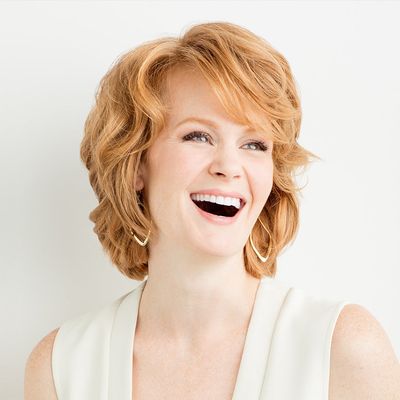
Kate Baldwin has a way of looking at the industry that is both deeply grounded and incredibly refreshing. She opens up about her approach to playing Roxie Hart in Chicago, describing her version of the character as a "Bad Nellie Forbush" who is just trying to survive. She also shares the fantastic story of how wearing the "wrong" dress to her Hello, Dolly! audition ended up being the perfect choice for Jerry Zaks and helped her find the spine of Irene Molloy.
We also dig into the shifts in her personal life and career philosophy since 2020. Kate speaks candidly about letting go of the pressure to be a crossover star in TV and film and instead embracing her true love for musical theater, which she affectionately calls the "Island of Misfit Toys." From the lessons she learned growing up in Wisconsin to the joy of throwing big parties just because she can, this conversation is a celebration of finding out what actually matters to you.
Kate Baldwin is a two-time Tony Award nominee for her performances in Finian’s Rainbow and Hello, Dolly!, roles that also earned her Drama Desk and Outer Critics Circle Award nominations. Her extensive Broadway career includes starring roles in Big Fish, The Full Monty, Wonderful Town, and Thoroughly Modern Millie. Off-Broadway, she received Drama Desk nominations for her work in Giant at The Public Theater and John & Jen with the Keen Company, as well as a Lucille Lortel nomination for Superhero at Second Stage. She most recently starred as Roxie Hart in Chicago.
Connect with Kate:
- Instagram: @realkatebaldwin
- Web: kate-baldwin.com
Connect with The Theatre Podcast:
- Support the podcast on Patreon and watch video versions of the episodes: Patreon.com/TheTheatrePodcast
- Instagram: @theatre_podcast
- Facebook.com/OfficialTheatrePodcast
- TheTheatrePodcast.com
- Alan's personal Instagram: @alanseales
- Email me at feedback@thetheatrepodcast.com. I want to know what you think.
Transcript
This transcript was automatically generated and might contain errors.
[0:00] Kate Baldwin: Hello, this is Kate Baldwin, and welcome to The Theatre Podcast with Alan Seales.
[0:11] Alan Seales: Hey, everyone. Welcome to a new episode of The Theatre Podcast. This is going to be the last full episode of 2025. I can't believe it. The year has flown by. Happy New Year to everybody, and happy holidays. I hope everything is going well. This episode is with Kate Baldwin, who just went into Chicago as Roxy Hart. Something Kate does really well is looking at the industry of theatre as both deeply grounded and incredibly refreshing, and she opens up about her approach to playing Roxy Hart in Chicago, describing her version of the character as kind of a bad Nellie Forbush who's just trying to survive. And she shares the fantastic story of how wearing the wrong dress to her Hello, Dolly! audition ended up being the perfect choice for Jerry Zaks and helped her find the spine of Irene Molloy.
Of course, we get into the shifts in her personal life and career philosophy, especially since COVID in 2020, things changed a lot for her, kind of her mindset. And she was very candid about how she's now letting go of the pressure to be a crossover star in TV and film, and instead embracing her true love, which is musical theatre, which she affectionately calls an island of misfit toys. From the lessons she learned growing up in Wisconsin to the joy of throwing big parties just because she can, this conversation is a celebration of finding out what exactly matters to you and to her. So everyone, find me online, Instagram, Twitter, Facebook, TikTok, you know the places. Tag me in your stories. Let me and Kate know that you are out there listening, and you can watch the video version of this on Spotify or Patreon. And now, everyone, please enjoy this episode with Kate Baldwin.
[2:00] Alan Seales: Today's guest is a two-time Tony Award nominee for her performances in Finian's Rainbow and Hello, Dolly!, roles that also earned her Drama Desk and Outer Critics Circle nominations. Her extensive Broadway career includes starring roles in Big Fish, The Full Monty, Wonderful Town, and Thoroughly Modern Millie. Off-Broadway, she's received Drama Desk nominations for her work in Giant at the Public Theatre, in John and Jen with Keen Company, as well as a Lucille Lortel nomination for Superhero at Second Stage. But wait, there's more. Her work extends to the concert stage and regional theatre, including King and I at the Lyric Opera of Chicago, City Center Encores production of Fiorello, and Love Life on screen. She's appeared in Law and Order, Gilded Age. I'm just skipping ahead because we'll be here forever. Just recently, she returned to Broadway as Roxy Hart in Chicago. Woo, Kate Baldwin, welcome to The Theatre Podcast. I can't even say my own podcast name right.
[3:00] Kate Baldwin: Well, I'm so happy to be here. Wow, that's a trip. Every time I hear all those credits listed, that's a real trip.
[3:07] Alan Seales: And you're only like five years into your career.
[3:10] Kate Baldwin: Yeah, I know.
[3:10] Alan Seales: 22, 23 years old.
[3:12] Kate Baldwin: Yeah, I just got here. It's my first time.
[3:14] Alan Seales: You just got here. Where did you start from?
[3:18] Kate Baldwin: I started in Chicago, actually. I graduated from Northwestern.
[3:21] Alan Seales: The city or the show?
[3:23] Kate Baldwin: Oh, God, right. We have to make that distinction now, right?
[3:26] Alan Seales: Yes.
[3:27] Kate Baldwin: The city, the city, yeah. I graduated from college, Northwestern, and I was too scared to move to New York City right away. So I stuck around in the city of Chicago for two years and worked there and got my equity card and kind of learned the ropes and made some mistakes and learned a lot. And then finally moved to New York City to do an Encores show called Babes in Arms in 1999, which starred one of my dearest friends in the world, Erin Dilley, another dear friend, Jessica Stone, and her future husband, Chris Fitzgerald, on that show.
[4:04] Alan Seales: Oh, wow. Wow.
[4:04] Kate Baldwin: I mean, legends only on this particular production. And I was hired to basically sing high notes in the back. And I was like, wide-eyed and like, oh, this is New York. Oh, maybe I could make it here. I'm not sure, but let me give it a shot. So I moved to New York and I sublet three different friends' apartments throughout one calendar year.
[4:27] Alan Seales: All at the same time.
[4:28] Kate Baldwin: Well, you know, one was off on a cruise ship and one was off on another job. And so I would just sort of like take my two duffel bags with me wherever I went. I never signed a lease. I never, you know, I just paid rent and I temped and I auditioned. And in the Christmas card that year, my dad said, we're so proud of Kate. She's moved to New York City and is pursuing her dream. She's both jobless and homeless.
[4:53] Alan Seales: So your dad has a great sense of humor.
[4:54] Kate Baldwin: Great sense of humor.
[4:57] Alan Seales: That's amazing.
[4:58] Kate Baldwin: Yeah. And then in the year 2000, I got cast in the out-of-town tryout of Thoroughly Modern Millie, and we went off to La Jolla Playhouse in the fall of that year and we did Millie. And then that sort of like kickstarted me or that was my first, you know, real foray into originating a musical. And I saw Millie through, I was in the original Broadway company. And yeah, that's sort of how it all began.
[5:27] Alan Seales: That's nuts. I mean, but you skipped the child part.
[5:32] Kate Baldwin: Oh, I did.
[5:33] Alan Seales: What made you go to Chicago and go to Northwestern in the first place? Are you from Chicago?
[5:38] Kate Baldwin: I was born in Evanston, which is where Northwestern is, but I was raised about 90 miles north in a suburb of Milwaukee, Wisconsin called Shorewood. I had an amazing upbringing there filled with arts education. I was part of a chorus that met at the Wisconsin Conservatory of Music. The big event for us when I was 13 years old is we came to New York City and our chorus did. And we sang at Avery Fisher Hall. And I saw Starlight Express on Broadway. And I was like, whoa, this is New York. Whoa, I think I want to do this someday. Oh, my God. Oh, my God. But at that point, I was kind of like into classical singing and thought maybe opera was an avenue for me. So I wasn't sure. But when I applied to Northwestern, I applied as a theater major.
And because I had done a lot of musicals and plays in high school, I had this amazing high school drama teacher named Barbara Gensler. She passed away in 2017 when we were in rehearsals for Hello, Dolly!. But she was formative and had an incredible impact on so many of her students. Because she was ambitious. And she inspired us to be ambitious as well. And by ambitious, I mean, like, just go for it. She didn't dumb things down or she didn't make a kid version of things. We did the adult version of things. We did into all of Into the Woods. You know, my senior year, we did all of Evita. And I played Evita. You know, like it was she was she was like a little like a terrier. You know, she sort of like was a tiny person who bit off, you know, like wrestled things to the ground and said, you're going to do this, and you're going to do that.
And she set the bar really high. And she told us we could do it. And we believed her. And that was an incredible foundation for a life in theater. Having somebody say, you can do this, go. That's sometimes that's all it takes is just to say, like, here's something that you wouldn't have found on your own. Just go do it. Like, it feels simple, doesn't it? It's not easy. Don't confuse it with easy. It's not easy, but it is simple. It's like, if you're going to do it, try go. I mean, yeah, it's definitely not easy, because I think, depending on what you're doing, it probably makes it a lot harder, because you're not doing a child version, you're not doing something, you know, Aladdin Junior, you're doing the full production, right?
[8:08] Kate Baldwin: So it's one of those things where you have to as a kid, sort of put yourself into these life experiences that you haven't had yet, or that you think might be like.
[8:20] Alan Seales: Yeah, what did I know about playing like a dictator's wife at 17 years old in Shorewood, Wisconsin? What? I didn't know a thing about it. You know, I looked at pictures, I, you know, did some cursory, you know, I knew the facts. But what did I know? I just, I improvised and had a great time. I learned a lot.
[8:41] Kate Baldwin: Right. Well, I mean, you learn by doing and you experience emotional. Yeah, you get experience having empathy for different types of people and different characters of people by being them or by seeing them. Like, that's just sort of how the human brain works.
[8:58] Alan Seales: Right. It's the questions are, who am I? What do I want? And what do I do to get what I want? Those are the three questions. And I've been answering those for 30 years.
[9:09] Kate Baldwin: But do you know, have you answered those for Kate Baldwin yet?
[9:13] Alan Seales: Oh, that's interesting. Well, those keep changing for me in each season of life. I am a big believer in, you know, checking in for where you are now, what is happening now, which is why I just hate the question. What's your dream role? Because to me, it changes all the time, like your circumstances in your life change, what you learn about yourself and about the world changes. And why can't you, you know, you should what you want and how you evolve change too. So it's very, you know, keep it open, keep it fluid.
[9:47] Alan Seales: Right. Keep it flexible. Change is the only constant. And taxes.
[9:52] Kate Baldwin: Right. Death, taxes and change.
[9:54] Alan Seales: And change.
[9:56] Kate Baldwin: That's a musical right there. Death and taxes now change. Okay. Was it I love you, you're perfect now change? Yeah, that's what it is.
[10:04] Alan Seales: Yes, yes, yes, yes, yes.
[10:06] Kate Baldwin: Okay. So, well, putting yourself into these roles, I love that you said like the chapters of your life or stages of your life, right? Because I feel like every 10-ish years, you know, people are just through life experiences, you reflect back, you have new things happen to you, you get out of college and you think you own the world and then you realize you don't and then you start to have a family and then you have to take care of your family. And then if you're fortunate to still have your parents at this point, you have young children and old parents you got to take care of and you're in the sandwich generation. So like, for you as a person running through these phases of life, do you, has it affected how you've worked meaning like what roles you've taken or what projects you seek out or accept?
[10:50] Kate Baldwin: Oh, that's a good question. I didn't think we're going to go in this direction, but I'm glad we're here. Okay. Of course it does. I think a lot of my most recent decisions were informed or have been informed by the pandemic because during the pandemic, you know, we were home and we got to sort of sit still and think about what we want and who we are. And I would say that before the pandemic, I had an idea about what success in this business was or what I wanted. And then I think after the pandemic, I amended that. And so after the pandemic or throughout it, when I actually tiptoed back into work, doing projects like Bridges of Madison County at the Axelrod Performing Arts Center and also at Bucks County Playhouse, doing The Prom at Sharon Playhouse, doing Little Women at a tiny new upcoming theater company in Connecticut, if I were going to have a thesis statement, it is go where you are loved.
Go where they want you and where you will be celebrated and your voice will be heard and you can put a big bear hug around everybody who's there. So that is kind of where I have evolved to. That is much more a part of my thinking going into projects now than it was before the pandemic. And I think that's because I'm in this particular season of midlife. I think it's because I saw our industry bottom out and also reform itself. It's that I think it's still forming itself, including voices that have historically been underrepresented. I want to be a part of that and I want to draw people in. I want to advocate for the causes that I think are very important. Representation is high among them. It's also coincides with raising a kid.
My son is now 14, so he's much more aware of what his parents do in the public eye than he was, say, when I started Hello, Dolly! when he was five. So it's a big thing, right? I'm really proud of the choices that I've made and really glad to be here right now. I wouldn't have it any other way. Kind of a shorthand is since the pandemic, I've thrown a lot more parties.
[13:24] Kate Baldwin: A lot more like, come over to my house, sit down, have a drink. I celebrated a big birthday this year. Let's have a giant party. Let's get people together because we can, because we're here, and because I love you, and I want to celebrate with you. That is paramount, and that's something I will carry with me. I don't think I'm going to let go of that part in the next season of my life. That's interesting. You said that it was COVID that made you realize this. That was five years ago now, coming up on six years ago now as we're recording this. That was 21 years from 99 when you first really got your equity card, I think, in 99?
[14:12] Kate Baldwin: Uh, 97. I got my equity card in 97. So you had 21, 22, 23 years of professional work at some of the highest caliber, and then it was really only the absence of that that put everything into this recent perspective for you. That's really cool. Yeah, I think it's weird. I wonder if the first part, the first 20 years, was really about fitting myself into an idea of what I thought people wanted from me. I'm not sure that that really worked so well or served me so well, but I learned a lot by trying to be that chameleon, trying to use what I knew to infuse the roles that I had with some version of truth. It feels like an admission. It feels like I had to admit to myself, and it was the pandemic that did it, that I really do love doing musicals on stage.
There's this weird thing that happens when you have a modicum of success. People are like, Oh, well, when are you going to do television, or when are you going to do movies, or when are you going to do a play? I always felt like, Oh, I'm not doing enough, or I haven't expanded enough, or I'm not interesting enough. It was the pandemic that made me sit down and go, You know what? I'm just fine doing musicals because that's what I set out to do. That's what I love to do. If that makes me nerdy or unambitious, so be it. I love it, and I'm going to go where I'm loved. I don't care if it's out of town or not something that a person would consider shiny or new. I'm going to do it because I want to. I love it. I love the people who are doing it with me. Does that answer the question there?
[16:02] Alan Seales: It totally does. Don't go anywhere. We're going to take a quick commercial break. All right, everyone. Now we're back. A lot of people have come out. Very similarly, myself included, because COVID was a shift for me, too, in where I'm working, how I'm working, what I choose to work on. My kids now are nine and 11. Six years ago, they were three and four and a half, five. Just knowing what is important now for me to hold back of myself to give to them versus what I'm giving out to professional colleagues or even in podcasting here. I actually get very recharged having conversations exactly like this. I don't know how many years I've been doing this now. Seven-ish years I've been podcasting. I get energy learning that we're not alone, that we all have similar struggles, that we all have the same sort of like, what's my purpose?
We're all faking it until we're making it. As kids, you always think your parents know everything. Now, as a parent, I'm like, oh, my parents didn't know shit, because I don't know shit. I don't know shit. They were just doing their best, making it up as they went along.
[17:27] Kate Baldwin: That's exactly right. To be able to like, I think, I don't know how far I'm going with this. I'm on a tangent. Going back, you love what you love, which is musical theater. I think there is a special place, especially just for musical theater, because you can do straight plays, you can do performance art, there's dancing, and there's nothing wrong with any of these. Musical theater, for me, speaking for myself, and it sounds like you feel the same way, is that it has this special place that clicks so many of the buckets, fills so many of the buckets, checks so many of the boxes, because it's performing, it's singing, it's being with friends, it's giving back to other people and feeling their feelings back. Am I off the mark?
[18:11] Kate Baldwin: No, I think I can sort of distill it in a way to say nothing is casual. That's a Jerry Zaksism, too. In a musical, nothing's casual. It's life or death. It's stakes. The importance of what you want is at 100%. I love that about doing musical theater. It's a full body experience, full body, from the tips of your hair follicles down to your toenails. Everything has to be engaged. If you're not, the audience will know it. That's why it feels vital. It feels like you are living to the top of your ability for two and a half hours each night. In a way, that can feel a little bit like a drug. There's a high that comes along with that. It can be tricky, too, because sometimes the high doesn't come the way it used to come.
That's when you see performances start to grow and start to push because people want the same feeling that came from the first time that they did that. I've been a victim of that. I've seen that happen, too. It's good to know that about yourself and calibrate that, too. Musical theater, I often say it's like the island of misfit toys. It's like, well, I wasn't an opera singer and I'm not a ballet dancer. Where do I fit? I'm not a classical theater composer or conductor. Where do I fit? Oh, musical theater. You know, it cobbles together all of those skills. That's what I love about it. I love the misfits.
[19:55] Alan Seales: That's cool. Your version of Hello Dolly, your Dolly was working with Jerry Zaks and you brought up the Jerry Zaksism. The way you presented her was like she had a spine. She had so much, like I think more agency. Was that something that is you that you're bringing to that or did you work with Jerry on that? You're smiling and nodding.
[20:19] Kate Baldwin: Yeah, all of the above. I got the audition for Hello Dolly and I played the role twice before Irene Molloy. I had done it at Paper Mill Playhouse with my friend Mark Hobie directing and then I'd done it for, you know, Somersack at the Muni with Leroy Reams directing. So Leroy has a long storied history with Hello Dolly. When they were casting it in the fall of 2016, is that right? No, it was spring of 2016. Holy moly.
[20:52] Alan Seales: Holy moly.
[20:54] Kate Baldwin: Holy moly. Holy cabooses is what I should say. I got the appointment and I was like, oh, they're not going to pick me for this. That was my first reaction. I was like, I love this part, but, you know, I'm too old. They're not going to pick me. This is crazy. And then I learned that Gavin was playing Cornelius. I was like, oh, well, we're the same age and he's nice and tall. Okay, well, maybe, maybe. And I went in or I went into Telsey's office and I remember sitting there with a bunch of other ladies who were also auditioning for it. I was like, oh, well, she'd be good at this. I was doing that thing of like where I cast everyone else instead of myself. And I really sort of let it go because I decided that I'd already done the part and I mean, I knew it in my bones.
I also grabbed the wrong dress. It was one of those mornings of like running out the door and I thought I grabbed one dress and I grabbed the other. And so I was wearing this blue dress with a slit up the side and some like gold buttons on it and all this kind of stuff. I was like, well, this doesn't resemble the period of Hello Dolly one bit. This is a sexy dress. So I walked in and Jerry Sachs goes, whoa, look at you. I was like, yeah, wrong dress. He's like, I don't think so. I think it's the right dress. I was like, okay, great. And so I had sort of no expectations of the audition other than saying, hi, everybody. I'm Kate. Nice to see you. How are you? And I really just did the role the way I knew it with a spine, with some agency and with a little bit of an edge underneath it.
Like, I dare you to cast me. You're not going to cast me. I'm too old. Yeah. Now have a nice day. And that read and Jerry thought that was hilarious. And he asked me to wait outside. I came back in. I sang the song. They asked me to wait around a little bit more and then they said, okay, that's great. Thanks. Go home. And then I went home to my apartment in Brooklyn and they called and said, would you like to play Irene Maloy? And I was like, wait, what? No callback. Like, just would you? Yeah. I also think that Jerry and Warren Carlyle, who I know very well, Jerry had seen me do a bunch of things over the years, and he was always very kind to me backstage afterwards saying, I liked your performance and here's what I liked about it.
So I think all of that work leading up to that audition also helped in that regard because he had some context for what I was like. And so when we got to staging it, you know, he says this is a woman who hates her job, hates her hat shop and wants to get out and she'll do anything, anything to get out of it. And, you know, even marry the wrong guy. I'll marry Horace Vandergelder, not because I love him, but because I want to get the hell out of this place because this is not working for me. It's all there in the script. And I was like, great, let's go. And so we had a great time. It was so much fun. And he kept saying with ribbons down my back, faster, faster, faster, faster. It's not a sad song.
It's hard because that song is in a minor key. And traditionally, it's sort of this lovely lilting like, but it can get a little, it can feel melancholy. And I don't think she's melancholy. I think she's planning her scheme and she's planning to flirt with Cornelius and, you know, kind of live up to her wicked reputation because she already has it. So why not, you know, give over to it anyway? So that's why we did it that way.
[24:36] Alan Seales: Very cool. And I love that the wrong dress choice helped in a way that, you know, is immeasurable at this point, right? Have you ever asked Jerry, like, was it the dress? Or was it the attitude I brought because of the dress?
[24:49] Kate Baldwin: It's just I think it was a combo of both. Yeah.
[24:55] Alan Seales: Oh, that's so funny. And then let's see, you stepped into the massive scale of like the lyric opera of Chicago for the King and I, like, do you adjust anything for such a massive stage versus the more intimate stuff? Or is it all just, you know?
[25:10] Kate Baldwin: Yeah. Oh, for sure. Because I want to include, what I think about is including the audience and performing at a place like the Muni too. It's 10,000 seats, right? I've done five shows at the Muni. Like you have to keep in mind that if you go profile, you are cutting off half your audience. So when you have a reaction, it has to, you have to share it. I just think about sharing it, not showing, but sharing and including. So yes, that's yeah. And to be clear, at the opera house, we were doing a musical and so they miked us. It was a full orchestra. So when they do operas at the lyric, obviously, they don't use amplified sound. But for us, poor musical theater types, they did that for us, which was really kind of them.
[25:54] Alan Seales: Do you have a preference?
[25:56] Kate Baldwin: Also, interestingly, for that show, I had a meeting with our director, Lee Blakely, here in New York. He was meeting with a couple of people who could potentially play Mrs. Anna. And I invited him to come see the show that I was doing at the time. At the time, I was doing a musical called Songbird that was written by my friend Lauren Pritchard and Michael Kimmel, which was an adaptation of The Seagull, the Anton Chekhov play The Seagull, set in modern day Nashville around the country music scene. So I was playing, you know, the Arcadona character, who is a celebrated yet fading crossover country music star in leather pants with a twang. And I invited him to come see me be, you know, a bitch on wheels. And he was like, I'd like you to play.
[26:49] Kate Baldwin: You never know how far you can go with something like that. I had him come see that part, and then he put me in a hoop skirt with an English accent and a very legit interpretation of Mrs. Anna. So once again, not the wrong, but a completely opposite example of work beget the next job. That's really cool.
[27:15] David Allen: Yeah. That's really cool that that happened because oftentimes you'll hear that you're only as good as the last thing you've been seen for, and so you keep getting called back in for the same type. You have such a varied and wildly different career of playing wildly different sort of characters. It just speaks to, again, your huge talent and the ability for you to embody these different characters and go to these different places. It's really incredible. I mean, it's why you worked at a young age and probably why you continue to work now however many years later.
[27:54] Kate Baldwin: I'm curious about style. I like style. I want to understand the vocabulary that each director and each writer introduces. Jerry Zaks has a specific style. Walter Bobby with Chicago has a very specific style. We're getting the tone of the piece, the character of the piece as a whole. King and I is very different from Chicago, very different from Bridges of Madison County. What is the medium? What is the world we're creating? I'm interested in that and how my piece fits into the creation of a whole play world. What are the parameters? What are the limits of that? Because those limits will give you freedom within. You know what I'm saying?
[28:39] Dave Boyd: You know where you're going. Yeah, that's always right. A second ago, I asked, do you have a preference between the big stages or little stages? Do you like the Off-Broadway 499 seat or less or do you like the 10,000 munis? Does it matter?
[28:55] Kate Baldwin: No, it doesn't matter to me. It's fun. It's exhilarating no matter what.
[29:00] Dave Boyd: Oh, that's so cool. Don't go anywhere. We're going to take a quick commercial break. All right, everyone. Now we're back. All right. Well, okay. So you mentioned Chicago. Now you're in Chicago's Roxie Hart.
[29:11] Kate Baldwin: Yeah, that's right.
[29:12] Dave Boyd: And is this a fun challenge or a scary endeavor? Chicago is its own style. You were talking about style, right?
[29:24] Kate Baldwin: For sure. So I did a concert in 2021. We were just coming back from COVID. It was the summer of 2021. Carol Rothman, who ran second stage at the time where I did Superhero, called and said, we want to reopen our 43rd Street Tony Kaiser Theater, but we want to train our front of house staff in audience management, meaning people got to show their vaccination cards, they've got to wear masks, they've got to behave in an orderly way, social distancing, all those things. So we want to do like a soft opening before we do our play for the fall. Will you come and do five concerts, and they'll be free to our subscribers. And if there are tickets left over free to the public, and we'll pay you and Georgia Stitt, my longtime music director, to come and just do an evening so that our front of house staff can train in like herding the masses basically, and do whatever you want.
And I was like, okay, this is great. And so I put together a very eclectic, weird concert. In it, I wore a long sequined gown with a slit up the side. There's a theme here. A long faux ponytail because I had short hair at the time, but I got a big old ponytail. I crawled around on the floor during one of one of the songs, there was a spiral staircase left over from the play that had been in the middle of its run in 2020 that when everything went down. So they kept the set pieces there. So I went up this spiral staircase, I came down and it was kind of vampy. It was funny. It was also, you know, I wanted people to feel good. After COVID, I didn't want to do like a sad show of like, wasn't it hard?
You know, I wanted to be like, this funny thing happened. And so I did a lot of that. And one of the associate producers from Chicago came to see that show. And so later on that fall, I got a call from my agent saying, hey, Chicago called, do you want to play Roxy Hart? And I was like, what? Are you out of your mind? Me? No, that's crazy. Are you? This is a joke. Come on. And then it's all right. So what is it? The target lady?
[31:40] Kate Baldwin: Oh, no. Yeah. Well, yeah, I'm from Wisconsin. Okay. My best friend from elementary school came to see the show last night. And so we were talking Wisconsin. Anyway. So every year, then I would get a phone call. How about now? You want to do Roxy Hart now? And I'd be like, wait, what? No. What are you? Are you crazy? No. Every year. And so then this year, it finally happened. I was like, you know what? Let's let's fucking go. Let's do this. Okay, let's just let's just see. So I went in for an hour long, they call it a meeting or a you know, a go see it's an audition. Yeah. So a whole hour of learning hot honey rag, of singing Funny Honey and doing the Roxy monologue and singing the Roxy song, doing a couple of the scenes with Billy fights.
And I had a grand time. It was grand. It was so much fun. David Bushman, the dance captain, longtime dance captain taught me everything. Evan Ensign, who's the ad was there gave some feedback, some direction. The casting people were there. They laughed at everything I did. I was like, well, this is fun. And I was like, I left and I was like, well, that was really fun. I think I think I would like to be Roxy Hart. And then I sort of looked at all the different ladies who have done that part. Right. So there have been so many versions. Yeah, I think I'm the 40th or 41st Roxy on Broadway. Wow. So every stripe, every kind, every age, every set of unique abilities. And I was like, Well, who am I to say, No, that's not for me.
Let me just give it a shot. And so I have come up with a version of Roxy Hart that I like to call bad Nellie Forbush. Because I can't deny my sort of good girl. Innocent, you know, pie in the sky kind of spine that I have being but there is a version where that girl makes a mistake and has to scramble to cover up for it and then finds herself in the place that she's always wanted to be which is jail thus the start now, which is the star of her own story and with all the attention in the world on her, which is all she's ever ever wanted, be it for a good reason, or a bad reason, or who cares? It's publicity. So I've created this, this version of her. It is bad Nellie Forbush. I love that. But it works. And I think I'm having a ball and I think audiences are liking it too. I mean, so far, so good. I haven't heard anybody go, try again, right?
[34:25] David Allen: No, that's interesting. And I, I love that. I mean, Chicago's been a machine. It just keeps going. And I think in part to the fact that you've had what 40 something Roxy Hart's and probably as many other Velma's and they're just they're constantly bringing the show to new audiences because of the diverse people, real life people that they're bringing into that role. And it just continues to go. Like, do you do you get people who have been coming year after year show up to like Roxy after Velma after Roxy after Velma on there, you know, like giving you their feedback?
[35:01] Kate Baldwin: Yeah, well, it's, it's affordable. For one thing, like I'm comparing my time in Chicago with my time in Hello, Dolly. Hello, Dolly was such a premium ticket that I had a lot of friends who were like, Oh, gee, I'd really Oh, those are the ticket prices. Or I don't know if I can do that. But Chicago offers some more flexibility with that. And so people do return multiple times and have seen multiple versions of the show. And they really like seeing the differences in in portrayals from specific and or they say, Oh, so and so on tonight, I'm going to come see so and so in that part. Wow, you know what I mean? Yeah. So it's a there's a different feeling. It's a and I just love that, you know, that people sometimes it's a person's very first Broadway show, because they know the the musical because of the movie, or because of the advertising, or because their friend is doing it.
Now high schools are doing it. Now like summer camps are doing it. My high school in Wisconsin is going to do it this March. Wow. Yes. So like, so it's, it's been introduced to a generation, a generations that, that keep it going that feed it and get people so excited to come. I mean, there was, I met two young ladies the other day, they must have been the ages of your kids. But for Halloween, they dressed up as Roxy and Velma.
[36:28] David Allen: Really? So yeah, really? I think of it as such an adult material. Like, right. I'm literally an adulterer and a murderer. Yes. And a narcissist. But people are like, we love Roxy. I'm like, what is that? Why? There's nothing admirable here. Nothing. But people like it. I mean, it's a combination of writing and choreography and escapism. Escapism. Yeah. Like you get to be the bad guy, the bad lady without actually doing it. So you get to have fun. Well, I think the audiences live vicariously through. Oh, yeah. Through that, too. Absolutely. Absolutely. Okay. So as we start to run, wind down the episodes here, I'm going to bring up 60 seconds on the screen. It's game time, isn't it? It's game time.
As we wind down, we're going to play plot in 60 seconds. Okay. I have a list of 17 popular musicals in front of me. You will give me a number one through 17, choosing one of my musicals, and then I will tell you what you choose. And you give me the plot in 60 seconds or less. Okay, great. Make it up if you don't know it because it's fun. All right, I have to go with my lucky number two. Lucky number two is Frozen. Go.
[37:41] Kate Baldwin: There are two sisters. One of them wants to build a snowman. The other one doesn't. Their parents die. One of them, it feels misunderstood. And she goes to live in the woods. And she freezes everything. And they fight over a boy. And the evil one, evil one. No, she's misunderstood. She sings the song, Let It Go. Everything gets frozen. Somehow, things become unfrozen. I don't remember. Santino's a bad guy. Oh, Santino! Yeah, Santino. Santino Fontana can sing both parts of that duet by himself, and it's the best thing ever. I don't know what that duet's called. What the hell is that song called? Anyway, you know what we're talking about. We can cut that out.
[38:41] Kate Baldwin: Whatever, we're human. Okay, three standard closing questions as we wrap up. First one simply is just what motivates you?
[38:49] Kate Baldwin: Um, people.
[38:52] Alan Seales: What advice would you give to your younger self and younger people listening now starting out down a similar path?
[38:56] Kate Baldwin: Don't take it personally. It's not about you. As much as you want it to be. Sometimes you don't want it to be. It's not. And guess what? It's not about you.
[39:09] Alan Seales: Yeah. All right. Last question. Hardest one. If you can only see one show for the rest of your life, but you can see it as many times as you want, what would you say?
[39:12] Kate Baldwin: West Side Story.
[39:17] Alan Seales: Why?
[39:17] Kate Baldwin: Because it's so good. The score and the choreography and the Romeo and Juliet-ness of it all. I just love West Side Story. It's my favorite musical of all time. I love it so much.
[39:31] Alan Seales: Good choice. Good choice. Where can we find you online on social media and say hello?
[39:35] Kate Baldwin: Oh, I'm on Instagram at RealKateBaldwin. I also have a fabulous website that my friend Kayla made. It's kate-baldwin.com. You can go to the upcoming page and find out what I'm doing next.
[39:46] Alan Seales: Nice. I am on theater underscore podcast on threads, Instagram, and TikTok. Find me on Facebook. Leave a rating, leave a review, leave a comment. Share this with your friends. Thanks to Jukebox the Ghost for the intro and outro music. And a special thanks to Kate Baldwin, our lovely guest for today. It was so nice to talk to you.
[40:05] Kate Baldwin: Nice to talk with you too, Alan.
© Broadway Podcast Network, All Rights Reserved