

Wayne Brady opens up about the surprising reality that despite his career as an improvisational powerhouse, he considers himself a quiet recluse who never actually aspired to be funny... Read More
From the show: The Theatre Podcast with Alan Seales
Guests
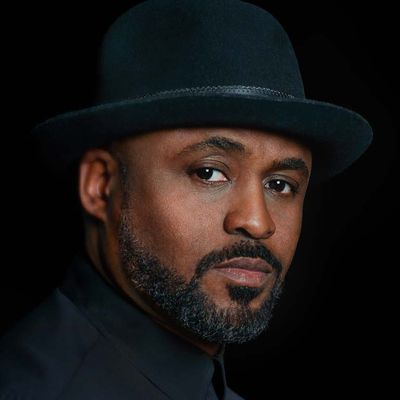
About
Wayne Brady opens up about the surprising reality that despite his career as an improvisational powerhouse, he considers himself a quiet recluse who never actually aspired to be funny. He breaks down how he approached comedy as a science rather than a natural personality trait and shares the deep work ethic instilled in him by his grandmother in Orlando. We also get a candid look at his "get in where you fit in" philosophy and learn how he thrived as part of an ensemble by scratching the itch to perform whatever role was required.
The conversation takes a vulnerable turn when he recounts the terrified moment he blanked during his audition for Hamilton in front of friends Lin-Manuel Miranda and Thomas Kail. He explains how he recovered from that stumble to land the role of Aaron Burr in Chicago and why he actually finds more comfort in the structure of a script than in the freedom of improv. We also discuss his current role as a talking horse in All In and why he loves playing grounded characters in absurd situations.
Wayne Brady is a multiple Emmy Award winner and Grammy nominee known for his work on Whose Line Is It Anyway? and as the host of Let's Make a Deal. His extensive television credits include How I Met Your Mother, The Masked Singer, Black Lightning, and Chappelle's Show. On Broadway, he has starred in Kinky Boots, Chicago, and The Wiz, and played Aaron Burr in the Chicago production of Hamilton. He is currently starring in All In on Broadway.
This episode is brought to you by WelcomeToTimesSquare.com, the billboard where you can be a star for a day.
Connect with Wayne:
- Instagram: @mrbradybaby
- Facebook: The Official Wayne Brady
- YouTube: Wayne Brady
Connect with The Theatre Podcast:
- Support the podcast on Patreon and watch video versions of the episodes: Patreon.com/TheTheatrePodcast
- Instagram: @theatre_podcast
- Facebook.com/OfficialTheatrePodcast
- TheTheatrePodcast.com
- Alan's personal Instagram: @alanseales
- Email me at feedback@thetheatrepodcast.com. I want to know what you think.
Transcript
This transcript was automatically generated and might contain errors.
[0:00] Wayne Brady: Hi, I'm Wayne Brady, and welcome to The Theatre Podcast with your host, Alan Seales.
[0:12] Alan Seales: Hey, everyone. Welcome back to The Theatre Podcast. I am your host, Alan Seales, and our guest for this episode is none other than the one and only Wayne Brady. This is a really special episode for me because he's just an absolute legend, and when I was younger, I remember just watching him doing improv and just wishing I had half the talent he's got. When you think of him, you probably think of the lightning-fast improv, the incredible vocals, the career defined by making people laugh. What really blew me away about this conversation actually is just how he views himself. He admits to being something of a recluse and explains why he never actually aspired to be funny growing up. We get into his very serious work ethic that drives his career and shares one of his most human stories I've ever heard about auditioning for Hamilton.
Imagine walking into a room to audition for your friends, freezing up and forgetting the lyrics. Yes, this guy who could make things up on the spot forgot the lyrics when he was auditioning for the Chicago Company of Hamilton. He takes us right into that moment and how he recovered from it just professional, end to end. We also talk about his love for structure, why he prefers a script over improv any day, and his current role playing a horse in All In. It's a fascinating look at the man behind this comedy entertainment legend. So make sure you follow me online, social media, all the places. Find me on Patreon. You can watch the video version on Spotify. And now everybody, please enjoy this episode with Wayne Brady.
[1:49] Alan Seales: Today's guest is a multiple Emmy Award winner and Grammy nominee. On television, he's known for his work on Whose Line Is It Anyway?, the host of Let's Make a Deal. He played Jane Stinson on How I Met Your Mother, won season two of The Masked Singer, and stars in a reality series, Wayne Brady, The Family Remix. His extensive resume includes Black Lightning, Chappelle's Show, and the improv series Make Some Noise on Dropout. On Broadway, he's been in The Wiz, Kinky Boots, Chicago, Freestyle Love Supreme, and most recently, Moulin Rouge. Now he's on Broadway for another week as we drop this episode, currently starring in All In at the Nederlander Theater. Holy shit, man. Wayne Brady, welcome to The Theatre Podcast. And I just have to say though, Anthony Veneziale is one of my absolute favorite humans in the world.
[2:46] Wayne Brady: He is. Shout out to Anthony.
[2:51] Alan Seales: Shout out to Anthony, one of the co-founders of FLS Academy. He's truly one of the best guys, and I don't really like to throw that around, but one of the best humans that I know. And he's such a good guy that at first you're like, you're not really like that. And he is. He absolutely is. And what a gifted improviser and musician, and he's one of the smartest cats I know.
[3:19] Wayne Brady: Well, I mean, that whole crowd, Lynn and James Van Orn, I go hard, and Anthony, Chris Jackson, C-Jack, and Anissa Folds.
[3:29] Alan Seales: Shockwave.
[3:30] Wayne Brady: Shockwave. I'm rolling you into all of this. Some of the genuinely nicest, caringest, if that's a word, caringest people. Because literally the whole motif of improv, if you're good at it, is like, I got your back. And that's literally what everyone says to each other on FLS before they go out. I got your back. I got your back.
[3:52] Alan Seales: Absolutely.
[3:53] Wayne Brady: You gotta have trust.
[3:54] Alan Seales: And yeah, it's one of those things I find that I don't always practice it, but I always tell people the rules that you learn from doing improvisation carry over to life so easily that if you follow them, it makes human interaction a little better. And sometimes I have to remind myself, especially if I'm in a bad mood or whatever, but just the yes, and of looking somebody in the eye and listening to the active listening and yes, anding what they say so that you can have a circular conversation and become engaged and being able to have someone's back and mean it.
[4:39] Wayne Brady: Yeah.
[4:39] Alan Seales: Now, I'm not saying just walk around to everybody and saying they got your back. Hey, MTA worker, I got your back.
[4:46] Wayne Brady: You got your back. But like the people that's caring that I take it more than, oh, I got your back on stage and you can count on me. It's when I said, hey, I got your back. It truly is an expression of I've got you in whatever this is, whatever is happening in life right now. And most importantly, I've got your back. I'm putting the trust in it that you've got mine. So that's just as a basic tenant, that it really is one of those things. Like you say, I think for the people that are good at it, because for me, it's not just about being funny on stage. There are a lot of people that can be funny. Cool. There are a lot of people that can master the art, but can you embody all of that so that when we're watching you on stage or when I'm playing with you on stage, what do I feel? What I feel is going to make me enjoy you even more. And I just think that that's a life lesson.
[5:40] Alan Seales: Well, that's active listening. Basically what you have to learn to be a good actor, because most of what you're doing when you're acting is listening and reacting.
[5:48] Wayne Brady: You would think. You would hope.
[5:49] Alan Seales: You would hope. Not everyone comes from that school.
[5:54] Wayne Brady: No. I mean, yeah, going out there and just being like, I'm selling funny lines. I'm doing my shtick. It's the person that gets the script and the first thing they do, I'm just seeing my lines. I'm just going to go through and get my... versus reading the thing and working out the tactics of how I'm going to talk to you. How do we talk to each other? That's that person.
[6:12] Alan Seales: Well, is that when you're doing improv, are you coming up with that on the spot of like, all right, this is the character I'm going to be. I'm going to come in. But you always have to have a reason to enter a scene. You're not going to show up and be like, funny line, because that's not going to go anywhere.
[6:24] Wayne Brady: Right. But that's even in my line of teaching, even funny line, or I'm going to cut, is wrong. You aren't supposed to come in with a funny line. We don't walk in with funny lines in life. And if you do, if somebody is the guy who I'm going to say something funny to come in, there's a reason why that person is coming in with something that they think is funny. So even then it's not really about the funny piece. I teach immediate character response and development. If I get an external suggestion from the audience, or if I get a suggestion like on Who's Lying When, we get a suggestion from Aisha, it's in that second when I hear such and such, or you're a this or that, or it takes place in something, it's up to me to immediately be able to come up with the bones of a character and I flesh it out as we go. And as I interact, because I've got to listen. So just coming in, I'm going to say something funny, you've already defeated yourself.
[7:32] Alan Seales: Interesting. Who's Lying was what got me into improv and wanting to perform. I mean, I'm in mid-40s. When it came out, that was at the height of everything I loved. And I felt like the four of you on Who's Lying, it was basically you, Colin, and Ryan Stiles. So Ryan Stiles, Colin Mockery, you, and then the fourth was kind of a rotating person, but everyone kind of had their own lanes, if that makes sense. I always saw you as the singer.
[8:08] Wayne Brady: Well, see, that's wrong, because I am an incredible improviser.
[8:11] Alan Seales: Well, I know.
[8:12] Wayne Brady: I do characters. I'm the singer because I was put into that lane because our producer and the creator of the show, Dan Patterson, that's how he sees things. So he's like, Ryan and Colin, you will always do helping hands because you're funny at that. Anybody on that stage could do that thing, but that was a part of the show's success, is he was like, I'm putting people with things that I know that they do well. That's great. But we all were good at characters. A lot of what I do on the show is I was known actually for the songs, but I could do all these characters at the drop of a dime. So to me, I wasn't the singer. I was the guy that did the characters and I sang. So even though we were sent into channels, which later when we did the second version with Aisha, once I became an EP, and we're just like, look, we're all going to have fun. We're going to mix things up because we do all these things.
[9:19] Alan Seales: I was going to ask about that. If you felt kind of pigeonholed at that time as saying you're only going to be the character guy or the singer guy and Colin and Ryan are going to be over there doing the one-liners or whatever, because to your point, yes, I agree with you that you're all amazing improvisers and it's just kind of turning up one dial or dialing down another to see whatever the character needs or whatever the scene needs.
[9:41] Wayne Brady: I mean, frustrated wouldn't be the word because keep in consideration as well, I was very blessed and lucky to have, I was lucky to get that gig and they were lucky to have me. It was a beautiful marriage. So I was not about complaining. I live by the belief of get in where you fit in. So even if I have a thought about, it took a lot of maturity for me, even when I talked to my buddy Will or I look at something like All Out or anything that you're part of an ensemble, even Freestyle Love Supreme, it takes a lot of skill to be able to carry a show. I've carried shows for decades now. I can walk on any stage and rock it and I am the centerpiece. I have no problem doing that. It takes a bigger skill to be able to go, you know what?
I'm part of four now. Let me play my part. So my whole thing is get in where you fit in because I'm so good, you're still going to like my shit and I'm still going to have fun. You're still going to enjoy it, but I'm going to play my role. So even in the earlier Whose Lines, of course I was frustrated because I was this young Bronco wanting to do, no, no, you got to let me do all these things because I do all these things. I do them in the other shows. But it also helped me, the fact that I knew that every singing challenge was going to be mine, I got really great at that skillset. I'd done it live before, but to the point where that was the thing that I was always called on, I needed to be ready.
So I was like, okay, what do I need to do to be ready? I need to know all these different genres and I need to start doing impressions. I need to learn these things. So it was actually a blessing. So it gave me a skillset. It made me work at that skillset. And then gradually as trust increased, I started doing things like World's Worst and all these other things. Once Dan and Mark saw that I wasn't a one-trick pony, they of course said, well, let's give Wayne more responsibility. And I was able to rise to the occasion. So I think it's a lesson in life. Maybe you're not doing everything that you can do, but wait, as long as you do the thing that you have been asked, you will get your shot. And do it well.
And you do, that's the thing. Don't, it's like being the closest that I could say is like an ensemble member, right? Or an understudy or a cover. Just you're scratching, you're itching, scratching to get in. You're like, I'm so good. Why am I back here? Why am I back here? Well, that's what you were hired for. Pretty much every lead has been a cover or a standby before they were a lead. Just be really great at that. And people notice. That's one of the things that I try to tell in my acting classes as well, is like, look, it's not all about what you can do on stage. It's also what you don't do. And it's also about what people see you do. So much of your journey on stage is affected by what happens backstage or off camera. Oh man, I should be doing, I hate when he does it. Somebody's watching. Somebody's watching that. Just know that. Someone in the crew, someone on the production team.
[12:53] Wayne Brady: Someone in the crew. Someone saying, oh man, yeah, that guy's talented, but you hear he's always bitching about. That gets around. People hire the people. And I wish, this is what I wish young Wayne would have all known all these lessons. These are things that I learned sometimes in the hard way. These are things that I learned. People want to be around the people that they like. Even if you're talking about a massive Broadway show, millions and millions, $20 million budget, blah, blah, blah, blah. At the heart of it, you think a director really wants to show up and deal with you if you're not a joy to be around with? And if someone else has already cast ahead of you and they don't like you.
[13:36] Alan Seales: Come on.
[13:37] Wayne Brady: Then you never even get the audition. Hey, do you know who I'm thinking of casting? Oh, such and such. Oh no, no, don't do that. No.
[13:45] Alan Seales: Don't do that. That's not.
[13:47] Wayne Brady: Well, you grew up, little Wayne. Lil Wayne? Yeah.
[13:51] Alan Seales: Lil Wayne.
[13:53] Wayne Brady: Grew up in Orlando with your grandmother, Valerie, and you've talked about her as your rock. Talk about that. And did she get you into performing? Did she set your moral compass going? Or where did all that come from?
[14:04] Wayne Brady: She didn't get me into performing. In fact, I like to tell the story that I'm so happy that I had so much time with her that she got to taste all the fruits of me getting somewhere from being able to come to my first Who's Line taping to she was at the first taping of the first variety show that I got, The Wayne Brady Show on TV. She was at my talk show. She was at the Emmys with me. When I first headlined in Vegas, the first time coming out here, she always wanted to introduce me to caviar. So we went to the Russian Tea Room when I was playing the Taj Mahal in Atlantic City. But I would make fun of her all the time. Because growing up, whenever she would see me singing or dancing in my room or doing all this stuff, she'd say, Wayne, stop all that nonsense, that jumping up and down, all that study.
Don't do that. So I'd say, Mom, so what about all that nonsense and that jumping up? And I said, you did okay. And she would tease me. Yeah, man, that was my chick. She definitely set my work ethic. She set the work ethic. She set my work ethic. My grandfather set my work ethic. My father set my work ethic. Being from the Virgin Islands, I think if you talk to anyone of Caribbean or island descent or any immigrant, I'm first generation here in mainland. We are taught the only way that you're going to make it in this place is you work. You put your head down and you work. So I just took what she taught me. And no, I didn't go to school to be a lawyer for it or a banker, but I put that towards my chosen goal of what can I do? I'm going to make this happen. Let's go. Literally what you were just saying, do what you're going to do, what you're given to do, do it well and be the person that everyone wants to work with again.
[16:14] Alan Seales: Absolutely.
[16:14] Wayne Brady: So it doesn't matter if you're a banker or a lawyer or an improviser.
[16:18] Alan Seales: Absolutely. But for me, because that's what they wanted. There was a lot of upset people in my household when I graduated high school. And A, I decided to turn down a few scholarships that I had and B, that I was just going to act.
[16:35] Alan Seales: When did you know that though? When did you know that was your path?
[16:38] Wayne Brady: I knew that. I've known that since I could put that thought in my head.
[16:43] Alan Seales: Really?
[16:43] Wayne Brady: Growing up watching Broadway on great performances on PBS, which, oh God, RIP PBS. Oh, Jesus, that just makes me so angry. So many of what I think so many of us have learned came from PBS and those shows. And I remember watching Ain't Misbehaving with the original cast and I watched Ben Vereen and Pippin. I would watch old movies of Sammy Davis Jr. I was a big Danny Kaye fan.
[17:15] Alan Seales: Don't go anywhere. We're going to take a quick commercial break.
[17:19] Wayne Brady: All right, everyone, now we're back.
[17:21] Wayne Brady: You put the vessel in the pestle.
[17:23] Alan Seales: Wait, what's the whole thing?
[17:24] Wayne Brady: The vessel in the pestle, the more...
[17:26] Alan Seales: Because it's something about the brood that is true.
[17:28] Wayne Brady: The vessel in the pestle... That is one of my dreams, is to be able to do a remake of Danny Kaye's... Well, I would love to do The Court Jester, which is where that's from, but I'd actually love to do Wonder Man. Wonder Man, we were trying, like my old manager, Bernie Brillstein, we were trying to get the rights years ago, but the film studio still had them. That's one of the things I grew up in. And I remember I was groomed on shows like reruns of Sid Caesar's show, Ernie Kovacs, Danny Kaye, Sammy Davis Jr., his variety shows, The Rat Pack, Nat King Cole, Harry Belafonte, plus all of the musical theater pieces. So once I saw that, I was like, I don't know how, I don't know when, but that's what I'm doing.
You can't stop me. And I never even wanted to go into comedy, but I didn't know that I was prepping myself. I grew up on British comedy. I grew up watching Benny Hill and the sketch group called The Goodies. I grew up on Monty Python and all of the British dramas like Upstairs Down, Downstairs and all those things. So I had that bubbling in the back of my head, so this particular sensibility. So I didn't know later how in life all that little melange would create the Wayne that would be on stage, but I knew I was going to do it. I knew I was going to do that.
[19:00] Alan Seales: Well, then in high school and whatnot, were you still performing like doing local theater or were you trying to improvise? Because in Orlando, there's tons you can do even when you're not 18.
[19:11] Wayne Brady: Well, at that point, all the stuff that you could do hadn't really developed yet. I was there when all that stuff was coming up. So it wasn't until I think I was 15 or 16 and then I was 15 and I auditioned, well, I was given a role in the school play because I replaced the guy that I was in ROTC with. And I had this moment of fame, the hot lunch scene where you walk in and folks are playing on the piano, running around. It's like, this is my tribe. And my drama teacher, Karen, who is still a close friend to me and I'm working with her right now on something, she saw something in me and said, you're really good. And she was Wesley Snipes' teacher beforehand. She taught him at Evans High School and she was responsible to getting Wesley on stage.
And he'd acted before he moved to Orlando. He's from New York, but she's the one that put him on this path, helped get him into SUNY Purchase. And so Wesley was like my North Star. She was like, hey, I can give you the skillset like Wesley. And that's all I knew in high school. I was like, I want that. And so I was like, what do I have to do? She's like, you have to do plays. Sure, I'll do plays. So I did the plays, I did the musicals. And I didn't know how the business of acting worked, but I auditioned for that play for her, Dark of the Moon, rousing success. My first role, I got applause. That's a mainlining. I think that's when people become really screwed up. That is mainlining a dopamine hit that is unparalleled.
So I would venture even better than sex, getting that, you liked what I did. I must be good at it. I'm an actor. I'm going to audition for something professionally. I didn't know that that wasn't the way it works. So I auditioned immediately for a local production of, oh my God, Raisin in the Sun. And I got it. I was like, this auditioning thing is easy. I just got a show and now I'm being paid for it. That's great. And I was very lucky. I was one of a few young black actors in Orlando at that time. So I would just audition. I got Richie and Chorus Line at the Mark II Dana Theater. I did I'm Not Rapaport, all these other things. And it just justified my belief in myself that this was going to be my thing.
[21:57] Alan Seales: So you were performing and auditioning and doing street plays and musicals, but where did Sack Comedy Lab come in?
[22:03] Wayne Brady: It came in after I graduated high school. I was doing an industrial film and I met Claire Sarah, who I credit as my improv teacher. She's the lady. She and her husband Will owned Sack and we were doing an industrial film and stupid young Wayne was trying to hit on her and she patted me on the head. I was like, aw, you're so cute. But A, I'm married and B, I'm married and you're a child, but you're funny. I was like, really? Being funny was never my thing. I never saw myself as funny, never wanted to be funny, never aspired to be funny. And this is just my personal belief. So any standup or any sketch performer that hears me, please take this with a grain of salt. Maybe it's because I am pompous and take myself very seriously. It's just a byproduct of my childhood because if I didn't take myself seriously, who was going to? Sketch and improvisers annoy the shit out of me. Standups annoy the shit out of me because by nature I'm a very quiet and reclusive person.
[23:18] Alan Seales: Are you really?
[23:19] Wayne Brady: Yes. So being in a room where everyone is like, hey, bongo bingo. No bingo bongo. Who's the clown? Who's juggling now? Juggle these nuts. I'm a nut for you. Okay. Zip, zap, zap. I'm like, oh my god. Oh my god. Oh my god. Stop.
[23:40] Alan Seales: I am not. Ask my daughter. She's like, dad is not fun.
[23:46] Wayne Brady: So it was a very odd thing for her to go, you're funny. I was like, I was just talking. It was, yeah, you're fun. But that character that you did, you're a good actor. I said, yeah, I'm an actor. Two things can be true, Wayne. Okay. So what do you want me to do? She goes, well, come down to our space and come to a workshop. I said, well, what's improv?
[24:09] Alan Seales: It's spontaneous.
[24:12] Wayne Brady: You were hitting on this lady outside of working with her first.
[24:16] Alan Seales: Oh no. I was working with her at the industrial film.
[24:19] Wayne Brady: Oh, okay. Okay. And she brought you down.
[24:21] Wayne Brady: Right. And that's when she pat me on the head, which is still one of my favorite moments. And then, so when she explained to me what improvisation was, I switched when I went, oh, you mean making stuff up? Because yeah, I said, oh, I do that all the time. So even though I'm a recluse and I was always, because I've got that story that everybody's got, but I was bullied because I had a very strong accent because I was raised by my grandparents had a very strong accent. And I was one of two black kids bust from my school in the gifted program. So I got shit in the neighborhood and blah, blah, blah. And I just never felt like I fit in anywhere. And I was told that I didn't fit in anywhere. Oh, you're too black.
You're too this. So I was like, you know what? I don't need to speak to you. I don't, it's best if I don't talk to anybody. I'll keep my own counsel. I learned that lesson very young, always doesn't serve, serve you in life. So I'd be, so I'd look, I got my books. I've got these TV shows. I've got music. I'll make stuff up by myself. I'll play by myself, which some folks go, oh, that's so sad. No, are you kidding me? That was the best thing that ever happened to me because I learned in an environment. Now, if let's say that you want, what wanted to do that, you would take a, you would take a sabbatical and go away to do a workshop. I'm going to workshop for six weeks to get in touch with my inner this, or I'm going to go to UCB to work with it.
It's like, I gave myself that as a kid said, I'm going to turn this box into a TV. And I'm going to imagine that I'm watching something. I'm going to put this hat on and I'm a pirate and I'm going to learn that voice and I'm going to learn to, if, oh, I'm an ape, but I'm not going to try and try to be a funny ape. I'm trying to watch how these guys move and really how they, they walk because like, I don't know what I'm ever going to use it, but that's really interesting. I'm going to learn to speak in this British accent like the guy in this movie is doing. I'm going to learn this. I did all that in a bubble. Didn't know that I was preparing for that. So I'm going to write my own stories because I don't like the story that's on TV.
So I'm going to write this and then I'm going to do all the voices. Didn't know I'd be a voiceover artist someday. I'm going to write these songs because I don't like that song. I'm going to write my own song. I didn't know any of those things. All I knew was at that second, this kid just wanted to make stuff up. So when she said, yeah, that's what it is. I went done, but never because I was in the bubble. Never did I think that making stuff up was funny. I knew it was creative, but when I saw the workshop, the first time I came in and just like that dopamine hit from, you get that first applause as annoying as you do find the zip, zap, zap crowd. The thing I do love about my improvisers and that fellowship, it's, we were talking about Anthony and Freestyle Love Supreme and other people.
When you're in a room full of like-minded people, you all share the same part of the zeitgeist. You all have this thing. So if I, so we all share the same shorthand. So if I start talking about superheroes and I do a thing and I stand there, I put my arms, you immediately go captain. We're on the same page. I'd never been around people like that before. It's like, oh, we all speak the same language. My mind blown. Then I was like, okay, teach me what this is because I'm going to be great at it. That's always been my thing in life. I'm like, well, what am I doing? Because I'm going to crush this shit. Let's go. So I learned attendance and I couldn't afford to pay for classes. So I became an unpaid intern.
I traded, I swept the floor. I came in, I tidied up. I sat in on classes, just watching, learning these games, learning the fundamentals, learning, just learning, taking it in. And then I became a junior member of the company. And then we formed a theater sports league, if any of you are familiar with theater sports. And it was definitely at that point, I credit SAC theater with being my comedy college that I didn't even know that I needed or wanted. That it really did become, and I was already prepping myself because I grew up on all these old comedies. I was already learning the rhythms of what makes something funny. And as you know, it is a science. So that's why sometimes when I say I never found myself funny, I don't think of it because I think that when people was just like, I'm funny.
No, you're just loud. There is a difference. There is a difference. No, you're just loud. Funny is if you're standup, why did this one word make this joke work? Why is K funny? Why do people laugh at dirty jokes that end in, and I don't want to offend anybody listening, but why is it different when someone says cock, you go, that's such a bad word. It's so stupid. Why? Why are fricatives funny? Plosives work. Why does this happen? If you say something like this, or if you don't say anything and then learning the art of, I'm not going to say anything right here. I'm just going to sit. The second wave of laughter. I'm going to sit back really quietly and then jump in. Why do I have to speed that thing up?
Those are things that I was learning. It's like, yes, this is, yes. And we did original plays there at the lab too. So I was learning character funny. Like, oh, last night that didn't get a reaction because I sped through it. Maybe tonight I'll say the line, but I will look at everybody else and ask if that's okay. And that worked. Gotcha. These are these things. And it was beautiful. I will forever be grateful to SAC theater, the SAC comedy lab as my family. And then later seven of us moved from Orlando to LA and we formed a group called the house full of honkies. So I even owe them like the group. Some of us don't talk anymore. You know, that's just life and show business, but I will forever love and embrace them.
They, and that teaching, that's the reason that I was able to get whose line that I was being prepped and didn't even know it. That's really, really cool. And like that whole infrastructure though, is it different for you doing a stage play than like just getting a one word thing and like letting your mind wander because there's a trust in yourself you have to have that you've developed through, through improv college, you know, your unofficial improv college, but then when you're given a script, does it bother you to have constraints or does it matter either way?
[31:06] Wayne Brady: Come on now, you know, that's a silly question.
[31:10] Alan Seales: Well, now some people...
[31:11] Wayne Brady: Yeah, that's true.
[31:11] Wayne Brady: No, no, it doesn't. But no, no, because a script is a script. And like I'd say, see addendum one in the back, I'm an actor. So nothing, actually nothing makes me more comfortable than a script because there's a boundary. There's your script. There's the character. It's on the page. Now, do I love improvising? Of course. And, and I'm joking with you about it being a silly question because you're not the first, you're not the 40th, you're not the hundredth person because reporters always go, do you, is it weird that you're actually reading? It's like, do not read good. Yes. I love scripts. I actually think it's a beautiful marriage is having the page, trusting the page, trusting yourself and having the muscle, right? If something goes wrong, my thing is give me the structure so that if anything goes off the rails, well now we're playing.
[32:17] Alan Seales: Yeah.
[32:17] Wayne Brady: Oh, I'm good. Now I'm in it. Just having that in the back, but I do love telling a good story. I love being a, that's one of my joys is I love being of service to someone's peace and to lose myself in the character, which is why little Wayne shout out to Weezy F baby. Why, why I think it's that thing that a lot of us as actors have is I would have been a, okay. If nobody ever knew my name, because if that means being a character actor, like there are a lot of brilliant character actors, you know, the people that you see on TV that you're like, that's that guy from the thing and from the other thing, but he's amazing. You don't need to know their name. Yeah. Yeah. As long as I get to be those characters enough that I can pay my bills and I'm well off in it.
Right. So being in a position where folks do know my name, that's a bonus, but I always just wanted to be a character. I just wanted to be able to slip into something and to do that, like to just get lost in it. Like that's the way that just always wanted to be in, in a thing.
[33:29] Alan Seales: Yeah. Don't go anywhere. We're going to take a quick commercial break.
[33:34] Wayne Brady: All right, everyone. Now we're back and you've done like you've done Lola in Kinky Boots and you've done Aaron Burr in the Chicago production of Hamilton. So, I mean, like two vastly different characters. Do you have a preference of the serious characters versus like a comedic, you know, can go kind of nuts when improvised moments happen?
[33:48] Wayne Brady: I don't think I've ever looked at it in terms, God, and I hope I'm not coming across as really pretentious. It's just that I've never looked at it that, that, that way, because just like people can be weird and big in real life that, that we all know someone who is so outlandish that if you wrote that person, a network exec would go, that's a little too big, buddy. You got to pull that back. So those stories are real. Like there are real people who are big, loud, crazy, funny, but even those people have twilight of the soul moments. And that's what I love that. Yes. I can be like in Lola. When I tell you that Lola changed my life, Lola slash Simon Lola changed my life. I love Lola so much. Thank you so much to, to Jerry, for that opportunity.
Thank you for Billy, for wanting to pass that on. Thank you to Harvey. You know, it is because what a rich, when else would I get a chance to play a British drag queen, former boxer. That's a very narrow, that sings and dances his ass off. That is a very narrow track. And I think that with my Lola, this, the script, he did an amazing job on the script. The script is funny and, and heartwarming and charming. The funny part was never a problem. I saw funny as when Lola is being this big, I mean, in the I'm six foot in the heels. I'm six, four, six, five. And some, this big ass person that stomps into the room like, darling, look at this. Just bring it. There's a pain behind that person that you meet later in when, when not my father's son and whatnot happened. So, so I worked like, I was like, these lines are going to be fine. I just need to make everything else really believable.
[35:53] Alan Seales: In between the lines.
[35:54] Wayne Brady: In between the lines so that it's not a one, one trick pony so that you really believe me when the makeup is off and as proud. And I love Lola so much because in the heels, I've never stood taller. My posture has never been better in the heels. And in the outfit, I felt so powerful so that when you come in as Simon into the, into the shop and I don't have any of that armor on, I can't use the self-deprecating whip anymore. And everything is foreign and scares me. That's, that was closer to Wayne. So I was really able to feel that and tap into that so that when I could be Lola and joyous and big and boisterous, that really popped. And that taught me a lot as an actor. And I loved that chance.
And then as Burr, oh man, I frigging love Burr. In fact, there's a lot of depth. I want to go back. I want to go back and do it again because I learned so much. Part of what I feel is my skillset that I developed and that I know about me because we all have tricks. This isn't necessarily a trick. I think it's a human observation. I never want to play anybody, even when I've played bad guys on TV series. I never want to be a mustache twirler because a bad guy, I've tied you to the train tracks because I think, right, the bad guy never sees himself as the bad guy, right? Because they've got their, their, their shit, their, their version of truth, their agenda. And, and the good guy, he's the good guy because he feels that that version of the truth is bad and will hurt people.
So to me, Burr, wasn't the bad guy. Burr shot Hamilton. I would argue, and I've talked to Lynn about this when I saw it, like Hamilton trod upon so many people in his desire to be great. And I can also connect with that. I've trod upon folks, not even meaning to when you're young, you're like, no, I'm going to be good. You know, I'm on my way. I'm going to be good. His goals were so, and he was at, you know, he, why do you write like you're running out of time? You want to be, I need to get to that place because I don't know if, like in my household and my daughter makes fun of this super religious family. Every time that I would say, mom, I love you. I'll talk to you later. Or I'll be back.
If God spares your life, God spares my life. So I grew up knowing at any time. So you mean mama, that I could walk outside and die? The good Lord will take you. Well, why would he want to take me right now? That's his way. Why is that his way? So I grew up with this thing of, oh shit. And then my dad died at 45. So I was really like, I need to get good and successful at this thing. Cause I'm going to die at 44, 45. I honestly thought that I was going to die at 45. Wow. So I saw that in Hamilton, but then in Burr, I was like, you know, because I saw Leslie's masterful original take on this. And I shout out to Leslie. He's turned into one of our greats. And I love watching that he's, he's one of our greats and that brother.
And he also is also never too busy to give love back. So I love you, Leslie. And in watching his, I was like, well, his way, he's so commanding and so forceful. I don't want to mimic his, his what's my, my truth. And mine was, I feel like Burr. I feel like he comes, the difference is he came from money. I certainly didn't, but he wants to do the right thing. And he wants to be seen as capable. And he goes out of his way to be nice to this kid who Bob bothers him at first, but he's like, sure, may I give you some words of advice? And, and kind of checks in on him is actually affable. He just, he's a victim of wanting to be good. And is that bad? He didn't want to be like Hamilton and at any cost, he just wanted to be good.
He just wanted to be seen and recognized. And I saw that. So I was like, you know what? My Burr is going to be likable. Whenever you see him interact with Hamilton, you're going to really see the difference. Like, Hey, and, and one of my favorite scenes for, for that is, is at right before, wait for it. The scene when they're making fun of Burr, ah Burr, he's like, okay, okay, thanks. And, and he has this really nice little conversation with Hamilton and you see for a second into his heart. And that's when he starts talking about why he's going to wait for it. And you get the, the gist of his thing of all these things that I want, it's worth it. And I'm going to make it happen. I'll wait for it.
I will put in this work. I will make this happen. I will achieve my heart's desire. And first time I sang it, I cried my eyes out because I'm like, that's me that I'm sometimes that misunderstood guy who just wants this love. And I found that in my Burr. He just, he was, he was sweet until he couldn't be because now you've shit on me one too many times. You're one of those people that take my kindness. You mistake my meekness for weakness, and now you're done. And I love that role so much. Thank you so much, Tommy and Lynn for aid the show, but thank you, Tommy, for that call.
[41:48] Alan Seales: Tommy Kail called you up.
[41:48] Wayne Brady: Yeah, man. After I auditioned. Oh, so don't think that was an offer only. I auditioned to awkward. I auditioned in front of my friends that I'd already worked with. I wanted that show. Oh my goodness.
[42:06] Alan Seales: So I had to prove, but, but that's okay. I think part of what we have to do as actors is, you know, what, no matter what your name is or, or, or where you get, sometimes you have to prove yourself. And, and I'm always down to prove because I, I believe in me. You may not know yet. Maybe you only think of me as a singer, not you. I'm not pointing at you. I'm saying that somebody because castor a casting agents and directors sometimes don't have true vision. You're like, this is what I want. He's not a thug. I don't believe that he could fight that person. Okay. I guess I got to come in the room and show you. That's the thing. Yeah. So when I get the call from my agent that, you know, casting wants to see you from like, like, Oh, let me just, Hey, Tommy, man. Um, so I would love to do, do the show. Great, man. So when, when are you auditioning?
[43:03] Alan Seales: Like, Oh, I'll go. Um, I guess my appointments next week and just read with the reader for, for, but I wanted it. I wanted it badly and I wanted it to do it to impress my daughter because my daughter, this, this is at the height of course, like when it first started. So anybody in Hamilton was a rock star and she, you know, to have my daughter look at me, she was 12. Then her look at me, it wasn't even a question. Daddy, when are you going to do Hamilton? I was like, Oh, of course I'll do it. She believes in you. Of course I'll do it. Yeah. I'm going to do it. I I've got to go to new New York for a meeting with them to just, you know, so just to just sing, you know, I probably was like not an audition, but, but, but like a meeting where I'm singing and trying to get the part and trying to get the part.
It's, um, I got it flew in, rapped, sang in front of the associates. And, uh, and I said, Hey, hey, hey to Bernie, who I've known my entire career. And then got back on the plane. Like surely TV's Wayne Brady, who just sang the shit out of those things and, and rapped. I'll get it. Right. Hey, your callback is for that.
[44:31] Alan Seales: Hey, dad, you, you've got another meeting in New York.
[44:37] Wayne Brady: Got another meeting to talk about. I'm just going to work out the details of like when I'm going to do the show, one of the funniest awkward for me, it's my side of the fence, not them awkward for me moments, which also helps regulate pride and ego to walking into the room with my boy, Lynn, who I've been on stage with, who I know who I've worked with on camera, a boy, Tommy, who I've hung out with Alex, who were off. We're all friends, but, and this is what I try to teach young actors. We can be friends, but this is business. Now this is Lynn and Tommy's and everyone involved. This is their multi multi-multi multi-multi. Some would say billion at this point dollar enterprise who the bar has been set here.
They are not about stunt casting or we aren't going to Billy Ray Cyrus is not going to be no shade to Billy Ray Cyrus. The only reason that name popped into my head is because back in the day, did you know that Billy Ray Cyrus did Billy Flynn? No, look up the video, no shade to Billy. So I'm just using that as an example because as, as we know, the, the, the show that is dear to my, I love Chicago. I've gotten many friends in it, but you know, they've, sorry, they've, they've cast the occasional, Hey, look at me. I'm a be on the stage ticket seller. I'm a ticket seller. That's cool. Hamilton's not doing that. They don't need to do that. Never will. They need to do that. They don't care to do that.
So Wayne, my friend, I've had you at my house. We've had drinks. We've, I love you, brother. You're going to audition for my show. Good on them. Good on them. Because what if I get put into the role of Burr and I tank it? What if I know I'm not going to, but then that is a dark spot on a pedigree that is already set at one of the world's best musical for you and them for me. Yes. And that's what sometimes people don't get. Well, why don't I get that? This should be an offer. Even well-known guys. I know that have names and been around is like, it's offer only all the time. That's cool. I'm glad that that works for you. I don't have that problem. I love getting offers only, and I do, but I also love going in that room and going here. And it doesn't always work out for me. It doesn't always work out for me. I auditioned for Tina, didn't get it. And that was my fault. I wasn't truly pre prepared. You don't have the legs for it.
[47:15] Wayne Brady: I don't have the... Actually I do. Case in point, see my photos as Lola. I was fine as hell. But I walked in the room, man, and there's Tommy and Lynn. And we start playing. How does a bastard orphan son of a whore... And I'm looking, I'm trying to not look at Lynn. I'm looking over his head, but then they're really playing it. So I'm getting into it. So I'm like, you know what? Fuck it. This is my audience. So then I get in Lynn's face and I'm, and I'm rapping the thing. I'm doing the whole thing. And I crushed it. I know I crushed it. Then we sang, wait for it. Crushed it. I know I crushed it. I was so nervous though. I do know that, was it, I was doing the, and the other song. Oh my God, my memory.
And what's, what's the passage that starts off? Oh, the room where it happens. I was so nervous that we were doing the, Mr. Hanna-Burton, Mr. Burr, sir, did you hear the one about you that? And so I got through all that. And then my mind's like, so close. Don't fuck it up. I want to be in the room. I, I, I, I missed a whole section and I went right to the chorus. And then I remember whoever's playing is like, but then I said, wait, stop, stop, stop y'all. I'm so sorry. I, you know what? I'm going to start over. They're like, oh yeah, start over. I was like, which is what I always teach, teach young students. It's your audition. Take control. I was so frigging nervous because at, at that point I, I didn't want to let, let my friends down because just like casting directors, which we also have to tell ourselves.
And like my buddy, Will, I give him the credit for giving me this piece of knowledge. I want to be the answer or the solution to their problem. We as actors should always go, oh, I'm the guy to fix your problem. You, you need that role cast. Well, I'm going to help you now because I'm going to walk in. Yeah. So I didn't want to let them down because how awkward that we are friends and God guys, Wayne, Wayne wasn't easy. Oh, but, but we're going to see him at the improv show next week. Oh, I'm going to hang out again. Oh shit. So, so what did we do? So I didn't want to put them in that place and I didn't want to put me. And most importantly, I didn't want to get on the plane and your daughter and have to play, play a harmonica and go, daddy didn't get the job.
That is a failure. Daddy holds a game show. Congratulations for college money. I didn't want to, I didn't want life to be that, but, but I knew when, when I was finished. Plus it's weird to folks, you know, like, you know, the audition, thank you. Oh, thank you so much. Thank you. Thank you. Thank you. It was more like, okay, I finished it. Like, oh man, great. Thanks brother. Good to see. Hey, so, all right, but a little while we're talking and then like, Oh, this is the part where I leave. So I get on the plane and I leave. Of course. Now I'm going to hear back immediately because guys, I'm your friend. I flown myself into New York twice. I went to, of course I'm getting the role. Let's just talk, talk about it.
Nothing. Crickets. That was in July. I did not hear about, and this is when, this is what I call you. It was in, it was in November, December, right? Well, I was doing Merrily We Roll Along for Michael Arden in, in Los Angeles. I, when I tell you it was two and a half to three months of, I no longer could listen to Hamilton. Like my daughter played it when we were driving to school, we sang everything together. I couldn't listen to it. The question of daddy, when are you going to, it was like, it would come from all daddy, daddy, what are you, what are you going to do, do, do the show, show, show, show daddy, dirty daddy. My dad's a failure, failure. My dad sucks. And I'd have these dreams. I'm like, I'm horrible until I get this call at six o'clock in the morning from Kevin Lynn, my theatrical agent here, Wayne, are you sitting down? No, I'm in bed.
[51:43] Wayne Brady: Well, then sit up. And at that second, I went, wait a minute, wait a minute. Is this, yes, it's, don't tell me, wait. I got up out of my bed. Miley, Miley, come here. She ran from her room. We jumped on my bed. I put Kevin on speakerphone. What is it, Kevin? Casting would love to offer you the role of Burr in the Chicago company, replacing Josh Henry. And we both, my daughter and I stood up on our bed, on my bed, jumping up and down, ring around the Rosie, screaming and yelling at the top of our lungs. And I love that memory because that is one of the times when I tell you I've truly fought for something and it was rewarded because I was prepared. I didn't rely on, oh, they'll give, give me slack.
I knew that score inside and out, except for when I have to start, start over because of nerves. But I was ready. I was so ready that when we started music rehearsals, I was, I already knew that I was like, let's go. Let's just go. I rehearsed for two weeks and I was in the show. Wow. I was, that's a long, yeah, that's good. Don't go anywhere. We're going to take a quick commercial break.
[52:56] Alan Seales: All right, everyone. Now we're back. I can talk to you forever. I want to talk about All Out, your current project. So when this drops, you're going to be in it for another week. For those who don't know, another Alex Timbers project. Love this dude.
[53:07] Wayne Brady: Alex Timbers, another one.
[53:12] Alan Seales: Tell us what this is for, yeah, just explain it. And, and what is your role in this thing?
[53:18] Wayne Brady: Very simple explanation that I see it. It's a four piece ensemble comedy, reading the works and the writings of Simon Rich, former SNL writer and, and academic and intelligence yet at large. The show, excuse me, the show is, is about ambition and people just trying to make it and the struggles of making it in business. The set reflects that. It's a seventies wooded walnut panel set starring the band Lawrence where Gracie, I am a Tony nominee, Grammy nominee, Lawrence as the female vocalist and her brother Clyde as band leader and co vocalist backed by the band Lawrence. They'll play then a scene or a monologue. And the scenes and monologues range from the absurd and funny to comedy with a little bit of pathos.
And it's a, it's a revolving cast of beloved American comedic actors and standups. And, and as of this listening, it's myself and, um, and SNL alum, uh, Cicely Strong and Beck Bennett and, uh, comedic tour de force himself, Jim Gaffigan. And the, you, you all inhabit, like you do different characters throughout, throughout the show. So is that something, so that's something again, it goes back to preference, right? Do you like being able to flip between the different characters that you're playing or do you prefer to have like one main character you sink into throughout the whole show?
[55:09] Wayne Brady: I think in something like this, I love being able to do, do different things because it's great to be able to, to, uh, to you're the narrator in one and then you're, you're a small character in another, and then you're the bigger character in this one. My centerpiece is a monologue called Oatsy, which is a horse telling his story of, um, of being Paul Revere's best friend and, and horse and seeing it through his eyes. And it is one of my favorite parts of the show. I, and not just saying it because I'm doing it, even when I saw it and I saw Eric Andre do it, it is my favorite part because I love those characters. I, part of what I love and what I think I excel at even doing improvisation is I love being something weird and making the weirdness grounded.
So being a talking horse, that's weird. That's weird. But then having the physicality of the horse and your tail is, is brushing away flies sometimes, but then you pull out a cigarette and you're holding it in your hoof, being able to make those little nuances. That's what I love doing. So Oatsy and his story is, it's like he gets betrayed by Paul and caught up in the show business of it all. It's so cool.
[56:32] Alan Seales: That's funny.
[56:33] Wayne Brady: And I'm such a fan that I'm a fan of other actors and creatives and I'm on stage watching three people that I think are ridiculously good. So it's a, and I get to listen to Lawrence. So this is a no brainer for me.
[56:49] Alan Seales: When you're with those types of people, you said they're the zip zaps up, the zip zap talk folks. Is that one of these things where like backstage or even on stage, you're trying to one up each other or are you all at a level? I feel like you're all professional enough.
[57:06] Wayne Brady: It's more like that. It's kind of the elevated thing of, plus you have to keep in mind that we're all, I'm not saying we're old because I'm not old, but we're older than younger comedians who maybe have that energy and that thing to prove to each other backstage. We, nobody on that stage needs to prove a resume. So instead it's genuine. So if I am saying something silly to make you laugh, it's because I respect you and because you've made me laugh and it's genuine. It's not, I think the zip zap zap energy sometimes comes out of proving yourself that I'm going to prove to everyone in this room. Nobody's proving themselves backstage. It's very much, it's grown, grown. Yeah. Yeah. Everybody's grown.
[57:53] Alan Seales: Yeah. Yeah. There, you know that, you know that you are liked and accepted. You don't have to like solicit that from peers.
[58:00] Wayne Brady: Hey, do you think I'm funny? Do you think I'm good? No. Well, and here's newsflash, therapy and mental health call. Even if you didn't think I was funny. Okay.
[58:11] Alan Seales: Not everyone's cup of tea.
[58:13] Wayne Brady: I'm in the same show as you and I'm on stage with you and I hear what the audience does when they say my name. So I'm good. I have nothing to prove right now. I'm here to have fun. But luckily everyone that I've met in this show, they're all sweet. They're all adults. I, I, I damn near teared up when Ben Schwartz left because I loved working with that dude and now Beck's here and now I get to make a new buddy. Yeah, man. It's great. Well, I feel like I could talk to you, listen to you tell stories forever, but we do have to end this at some point. So let's start winding down with plot in 60 seconds.
[58:51] Alan Seales: So I have 17 musicals on my screen. You give me a number one through 17. I will tell you what you chose. You give me the plot to that in 60 seconds or less. Even if I don't know it, even if you don't, especially if you don't know it. Okay. One through 17. Yep. 14.
[59:12] Wayne Brady: 14 is a beauty and the beast go 60. There's a girl named bell. She lives in a French village. She is the favorite child of her father who happens to be a merchant. She has two sisters. I believe the two sisters just greedy. Give me this daddy. Give me that daddy. Bell just says, daddy, all I want when you go out of seas is just give me a rose. The other girls are like, bitch, you crazy daddy goes out. He tries to bring back his ship is wrecked. He washes up on shore. He washes. Oh, beautiful garden. I'm picking this roar. Oh my God. It's a beast. The beast pup. He throws it in chains. He's like, you, you took my stuff. He's like, I'm so sorry. Oh, you got to give me something of equal value.
My daughter's weird, right? Goes back. No, you have to go. She goes, daddy, I'll sacrifice myself. The other daughters are like better you than me, bitch. She goes back. All of a sudden the China's singing and dancing. He's not so bad. He's like, well, I'm really a beast. This is the story. I was bad to this, which is the whole thing happened. La la la la la. We said, there's a real man inside. Oh, Gaston, I'm racist. And then they live happily ever after because you cannot tell me that Gaston was not racist. No, he's, he probably supports destroying PBS. He is a maggot, bro. He is a maggot, bro.
[1:00:25] Alan Seales: All right. Simply three standard closing questions. First one is just what motivates you.
[1:00:30] Wayne Brady: Now my family, my family motivates every decision that I make.
[1:00:36] Alan Seales: What advice would you give to your younger self and younger people listening now, starting out down a similar path?
[1:00:39] Wayne Brady: Trust your instincts. Sometimes when you know what you do and you feel like an odd bird, it's better to stick to what you do than changing it because that's the thing that makes you really unique. It sounds like some PBS advice, but trust me, when at once I leaned into, oh, this is my thing. I became successful. This is my thing. And, and know who you are and believe who you are because this business is designed. It's not personal. It's just the way that it is. It's a subjective art. A lot of people will tell you that you're bad. A lot of people will say no, and that's just what it is. It doesn't mean you are bad or it doesn't mean that you are not cut out for this.
[1:01:19] Alan Seales: All right. Last question. Hardest one. If you could only see one show for the rest of your life, you can see it as many times as you want. What would you say?
[1:01:28] Wayne Brady: Oh my God. You're talking to somebody with ADHD who hates sitting down. I don't know if I want to see a show that many times in a row. If I had to see one show, well, I want something that'll make me laugh because it'll make them laugh. Make them laugh. You know, I think I'd want to see something like the play that goes wrong.
[1:01:53] Alan Seales: Hmm. Yeah. I'll give you that. Yeah. That's a good one. All right. Where can we find you online? Get connected with you for your next projects? I'm sure there are many.
[1:02:05] Wayne Brady: You can catch me at mrbradybaby on Instagram. You can catch me on Facebook at either the official Wayne Brady or there's a Wayne Brady. That's me on YouTube. I have my channel where you can catch all the back episodes of my podcast. What if, and also episodes of whose line and other things like that. I no longer have an ex because it's the devil and my current project, season 18 of America's beloved game show. Let's make a deal. We start shooting that in two weeks. And then when I finished shooting that, you can catch me in the encore series, playing Georges in La Cage a Faux opposite the incredible Billy Porter. Wow. And then I'll be doing Tina Landau's new show at the Vineyard Theater off Broadway called Ms. Black for President.
Booked and blessed. Booked and blessed, baby. You got it going. Well, thank you so much. I am on a theater underscore podcast on threads, Instagram, TikTok, Facebook. Leave a rating and leave a review. Spread the word. Thanks to Jukebox the Ghost for the intro and outro music. Thanks to welcomethetimesquare.com for the lovely use of the studio. And thank you to Mr. Lil Wayne Brady.
[1:03:22] Wayne Brady: Thank you, sir. Lil Wayne, baby. Louisiana, baby.
© Broadway Podcast Network, All Rights Reserved