

Brandon Contreras is a New York City born and raised creative whose energy and versatility have made him a standout on stages ranging from the Golden Theatre to New World Stages... Read More
From the show: The Theatre Podcast with Alan Seales
Featured Shows

About
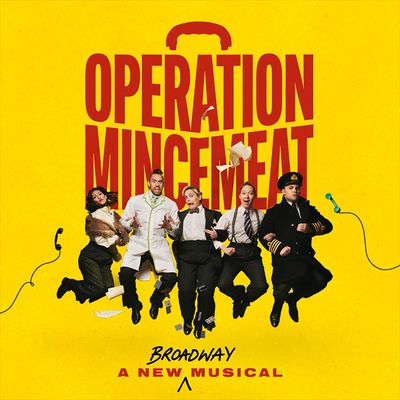
Brandon Contreras is a New York City born and raised creative whose energy and versatility have made him a standout on stages ranging from the Golden Theatre to New World Stages. A graduate of Pace University, Brandon made his Broadway debut in the original company of Almost Famous and appeared in the first national tour of In the Heights. His diverse credits include playing Cal in the hit musical Titanique and appearing in Jerry Springer: The Opera with The New Group, as well as Road Show and Titanic at New York City Center Encores!. Beyond the stage, he is an accomplished filmmaker and writer, co-creating the award winning sketch platform The Homo Sapien Experience. Currently, Brandon is starring as Charles Cholmondeley and others in the Broadway production of Operation Mincemeat.
In this episode, Brandon shares what it was like growing up in Chelsea, Hell’s Kitchen, and the Upper West Side, describing himself as a "city kid" who learned to rollerblade before he could ride a bike. He discusses the pivotal role his sister played in his introduction to theater and the unwavering support of his parents throughout his journey. Brandon opens up about the tenacity required to break into the industry, including auditioning for In the Heights 11 times and negotiating his first national tour contract from the back of a New Jersey Transit bus at age 20. He also speaks passionately about queer and Latin representation, the journey of embracing his curly hair, and the importance of showing a delicate, sensitive side of brown men on stage.
Brandon also takes us behind the scenes of Operation Mincemeat, a show he describes as "the final destination show" due to its incredible technical specificity and fast paced nature. He explains the "math" of comedy, the transition from understudy to principal performer, and the joy of sharing the stage with his real life best friend. Throughout the conversation, Brandon emphasizes the power of being unabashedly yourself and the motivation he finds in love for his craft and community.
This episode is powered by WelcomeToTimesSquare.com, the billboard where you can be a star for a day.
Connect with Brandon:
- @ohhey_brandon
- @thehomosapienexperience
Connect with The Theatre Podcast:
- Support the podcast on Patreon and watch video versions of the episodes: Patreon.com/TheTheatrePodcast
- Instagram: @theatre_podcast
- Facebook.com/OfficialTheatrePodcast
- TheTheatrePodcast.com
- Alan's personal Instagram: @alanseales
- Email me at feedback@thetheatrepodcast.com. I want to know what you think.
Transcript
This transcript was automatically generated and might contain errors.
[0:00] Brandon Contreras: Hi, my name is Brandon Contreras. Welcome to The Theatre Podcast with Alan Seales.
[0:07] Alan Seales: Hey there! Welcome to another episode of The Theatre Podcast with Alan Seales. That is me, Alan Seales, and I'm so glad you're joining us today because I had the absolute pleasure of sitting down with a true New Yorker, bringing so much heart and humor to the stage right now, Brandon Contreras. He is someone whose energy is kind of just infectious from the second you meet him, and we had a great time talking about what it was like growing up as a city kid, including the specific independence that comes with navigating the subway and learning to rollerblade long before ever touching a bicycle. We got into some really honest territory about his journey with identity and representation, and he shares a powerful story about his 11 auditions for In the Heights and what that was like to negotiate his first national tour contract while sitting in the back of a New Jersey Transit bus only at 20 years old.
He opens up about the importance of being unabashedly himself on stage, especially now in Operation Mincemeat, and when it comes to showing the delicate and sensitive sides of brown and queer individuals in the media. We also take a deep dive into the absolute madness, of course, that is Operation Mincemeat. He describes it as a final destination show where a single misplaced prop could lead to total chaos, and he walks us through the specific math required to make that comedy land every night. It's just a conversation about being bold and creative, and I just love it. It's great. Can't wait to share it with you. You can watch the video of this episode on Spotify or Patreon. Follow me on all the socials. You know what to do. Now, everybody, please enjoy this episode with Brandon Contreras.
[1:52] Alan Seales: My guest today is a New York City born and raised creative whose energy and versatility have made him a standout on stages ranging from the Golden Globe Theater to New World Stages. A graduate of Pace University, he made his Broadway debut in the original company of Almost Famous and has appeared in the first national tour of In the Heights, as well as Jerry Springer: The Opera with The New Group. And let's see, off Broadway, he was Cal in the hit musical Titanic. He was in Road Show and Titanic at New York City Theater Encores. Let's see, beyond the stage, he was a filmmaker, a writer, a co-creator, and created the award-winning sketch platform, The Homo Sapien Experience. Now you are appearing in Operation Mincemeat. Woo! Brandon Contreras.
[2:40] Alan Seales: Brandon, welcome to Theatre Podcast.
[2:42] Brandon Contreras: Thank you so much for having me, a long time listener, first time joiner.
[2:47] Alan Seales: No, that is so funny to have you—
[2:48] Brandon Contreras: If you're from Virginia, you'd be a VUH joiner.
[2:51] Alan Seales: Well done. It's one of those things where I was having that read back to me, having my bio or my resume read back. I'm like, oh, I did do that. I did do that. Oh, what a good time. It always just is astounding to me. I love it.
[3:03] Alan Seales: It's interesting to me because people pay attention to Broadway. They pay attention to what's right there in front of them on the big stage, right?
[3:09] Brandon Contreras: Sure. Yeah, we're all very... Whatever's in front of us.
[3:11] Alan Seales: Right. But then you were saying all of these things you did for years and years and years before making it to Broadway, making it to now starring in Mincemeat. You've got a journey. And that's why this podcast exists.
[3:27] Brandon Contreras: Yes. I love hearing about all the journeys that anytime someone is on here, it's like, it is, it's a huge journey. And it's like, how did we get here from A to B to C to D to E?
[3:36] Alan Seales: Well, let's start it at B for born. You were born here in—
[3:39] Brandon Contreras: Yeah, I was born in New York City.
[3:40] Alan Seales: In New York City. What part of New York did you live in?
[3:42] Brandon Contreras: So I lived in three different kinds of places. I lived in Chelsea, Hell's Kitchen, and the Upper West Side. And I like to say that my Upper West Side life was very much like J-Lo's kid in Made in Manhattan, where we lived in this luxury building. We were a lottery family in this luxury building. And then I would go hang out with my doorman. I was a block away from my Catholic school. And then my grandmother that I was always babysat with every day was in Chelsea on 17th. And then my other grandmother was on 51st, on 9th. So I kind of was everywhere. I'm just a city kid.
[4:15] Alan Seales: That's cool. And were you able to go out on your own at a young age?
[4:22] Brandon Contreras: Yeah, I mean, not too far. We would take ourselves to school sometimes. Or if we were in Chelsea, we would go walk around the West Village. But I have an older sister, and I have older cousins who were very much in charge of that. I was at the helm of them. So if they wanted to do something, we could do something. Or if I wanted to go to the park across the street, they had to go to the park and want to go to the park across the street.
[4:43] Alan Seales: Right. I mean, I grew up when I was little, little in Florida, and then in North Carolina for my formative years and whatnot. And so I always... Stranger Things brought back a lot of nostalgia to the show, right? Because it's centered around the 80s and all this time when kids could just literally ride your bike. You just go out, and you're just like, all right, be back by sundown. And so now as a dad myself, having a fourth grader and a fifth grader, our fifth grader is now taking the subway by himself to and from school. That's it. That's it. Because it's two easy stops.
[5:13] Brandon Contreras: Yes.
[5:14] Alan Seales: And so it took some convincing for my wife to let me let him do that.
[5:20] Brandon Contreras: Of course.
[5:21] Alan Seales: So it's one of those things where, I don't know. It's also just a different place. It's a different animal. Kids raised in New York City are built different. They're just built different.
[5:31] Brandon Contreras: Yeah.
[5:32] Alan Seales: It's a wild thing. The self-independence and stamina and vigor is incredible. So the fact that your kid is taking the subway, even two stops, it's two more stops than anyone in the middle of Florida would ever take.
[5:47] Brandon Contreras: That is fair.
[5:48] Alan Seales: That's great. But on the other side of that coin, he doesn't know how to ride a bike.
[5:51] Brandon Contreras: Sure. Let's give and take. Funny enough, when we moved to Jersey, we ended up moving to Jersey, I didn't know how to ride a bike until Jersey as well. But random enough, I did learn how to rollerblade here in the city. That was a very big thing in the 90s.
[6:05] Brandon Contreras: Yes, yes.
[6:05] Alan Seales: Rollerblading. My dad is an incredible rollerblader. He also ice skates. He does a lot of cool things. But I learned how to rollerblade before I learned how to bike ride here in the city. That was just the thing.
[6:16] Brandon Contreras: I love rollerblading. I played street hockey when I was a kid.
[6:18] Alan Seales: I'm so bad at it.
[6:19] Brandon Contreras: Little streaky.
[6:22] Alan Seales: Little streaky.
[6:22] Brandon Contreras: I played little streaky when I was a kid.
[6:25] Alan Seales: There comes little streaky. Don't wear any clothes again.
[6:30] Alan Seales: Okay. So then you moved to New Jersey. Were you always around the performing arts though? Or when did you get into it?
[6:34] Brandon Contreras: I got into it because of my sister, actually. My sister is the big reason why I got into theater. We didn't have theater and things like that here in the city. So when we moved to New Jersey, we were able to have a little bit more access to a lot of things. She started doing musicals, and I wanted to be just like her. She's iconic. She still is iconic to this day. She started doing it, and then I fell in love with it. I just loved watching her on stage and watching stories. I was always a Disney kid too, so I learned how to sing with Disney movies. I was always singing. I was always dancing. I was always moving. But I didn't really have a place to put it until later in life. So middle school and high school were the years where I was like, oh, this is what I'm going to do. I'm only going to do this. There is no other option. It was very wild. So I've always been gravitating towards it, but it really didn't flock until I got into New Jersey.
[7:23] Alan Seales: What was it? Was it a show? Was it a group of people? When did you know this is it?
[7:28] Brandon Contreras: I remember watching my sister in rehearsals for her high school musical. The musical, the series, the musical, the series? Yeah, the high school musical, the series, the series, the musical. She was doing King and I then. It was in the 90s, and they were doing King and I in the middle of New Jersey. And she was just singing. She was just rehearsing a song. She was singing. She was in understudy. And I just remember watching her in rehearsal. And I was not allowed to be there because I was not in her high school yet. So I was babysat. She brought me to the high school. I sat in the back, and I watched her rehearse. And I was like, that's incredible. This is wonderful. I want to do this. And she was just magical. She was beautiful. She had the most stunning voice. That's the thing that I remember that triggered the love I have for it.
[8:15] Alan Seales: So your parents, I guess, were okay with your sister doing it, and then you want to come. Were they encouraging of all this?
[8:21] Brandon Contreras: I have the best parents in the world. I'm the luckiest girl in the world. I mean it. They were the best. They were so supportive always, and they always knew. And my sister had so many things. I mean, if my sister wanted to learn the violin, she could pick it up and learn it tomorrow. And they would be like, sure, whatever you want to do. She was just so good at that. And I tried that. I wasn't good at sports too much. I wasn't really good at painting or art. I tried so many things, but I just knew what I wanted to do, and I just focused all my time and energy on that. And they were like, yeah, sure, if this is what you want to do, then this is what you want to do. Let's do it. And they believed in me, and they thought I was good.
And that is also the most impressive thing to me, is my parents, who are filled with arts and culture, being New Yorkers, being Latin, they know. They're not going to lie to me. They liked me. They thought I was good, and that fueled my fire. If they think that I'm good, and they support me in my dreams, then oh, great, then I'm unstoppable. It was the best.
[9:16] Alan Seales: And you were always singing or dancing or acting?
[9:18] Brandon Contreras: I was always singing. I was mostly singing always, and then I was always dramatic, I guess. So I was always acting in some way. And then, yeah, I started dancing. I was a much heavier kid. Growing up, I was always afraid of dancing. I always had this fear of dancing that I wasn't good enough or I was too big enough. Also, the shame that comes around body dysmorphia when you're a kid or when you're in these dance studios. It's horrible.
[9:45] Alan Seales: You're surrounded by mirrors.
[9:45] Brandon Contreras: Yeah. And it's also what people expect you to look like if you were a dancer. And so, I kind of strayed away from that as much as I loved it. And now it's a huge passion of mine, and now I still focus on it. It's a big part of my other art that I create. But yeah, I've mostly focused on singing. I always had a song in my heart. I always had a song in my heart. It was great.
[10:07] Alan Seales: Do you have entrance music that you walk into in your head? I feel like everyone should have their own entrance music.
[10:11] Brandon Contreras: It's definitely different. It's always different, but it's usually something JLo. It's usually something JLo. That's my girl. I will always stand by my girl, Jennifer Lopez, Jenny from The Block. But yeah, it always depends. I always mix it up. Sometimes it's just a little silly musical. It's always great.
[10:32] Alan Seales: And then, okay, so you're starting performing. Your parents are supporting you. Ended up at Pace.
[10:36] Brandon Contreras: Yeah. That was a long time ago. Yeah. I knew that we wanted to come back to the city. I wanted to come back to the city. This was the only place for me. I wasn't going to go to the middle of nowhere. And I auditioned. I only auditioned for three schools. I auditioned for Pace, UArts, and Montclair. And I got into all three. And that was great. But I was like, I want to go to Pace. And it was the most expensive. It was so great. But I worked on so many scholarships. And financially, I did it all just to make it. I was like, I needed to go to New York City. So I made it there. And that's where I laid. I met some of the best people of my life there. My friends are still my closest friends to this day from college.
The connections I made, yeah, it was a hard experience for sure. It definitely taught me a lot about myself and the self-determination. And I met a lot of really wonderful people and teachers there. But there was a lot of harm there at Pace University. But I took from it what I could. I learned. I worked hard. And while I was still in school, I booked my first national tour.
[11:46] Alan Seales: You were still in school when you got that?
[11:47] Brandon Contreras: Yeah. I was going into my junior year of college when I auditioned for In the Heights.
[11:52] Alan Seales: So when you got that, what's the school understanding? I've talked to people who were like, no, school comes first and then you audition.
[12:00] Brandon Contreras: No, they were very open. I mean, you had to ask for permission a lot of the time. And funny enough, that time that I wanted to go to the audition, first of all, I auditioned for In the Heights 11 times. I was determined to be in that show and I was going to do anything to be a part of it. I'm a very self-determined human, very independent. Some might call me delusional, but I just call it just a different way of looking at things. But I auditioned for In the Heights 11 times. And by the 11th time, I got my first callback. And I remember asking permission to leave a class to go to this audition. My director at the time, she said, no. She was like, I don't think that you're ready for this. I don't think that you're up to par with the standards of being in a show like this.
And I was like, yeah, okay. And so then I went anyway. And I skipped class and I got my first callback. And I danced and I stayed. And then we didn't hear anything. I guess they weren't looking for people then. But then during the summer happened, so two, two and a half months later, I got a call on a Monday to come in on a Wednesday to dance. And it was only five of us. It was only five of us. And I don't know how I did it, but I went in that room. I booked it right on Old Telsey and 43rd Street. This building?
[13:17] Alan Seales: Yeah, this building. Oh my god.
[13:19] Brandon Contreras: This building? Yeah, this is wild, yeah. I went there. And I remember I was staying at my parents' in Jersey in the summer. So I took the bus in. And as I was sitting there, waiting in Port Authority, I get the call 20 minutes after I leave the audition that I booked it. And so I'm running around all of the lobby of Port Authority, screaming that I booked the first national tour in the Heights. And I was 20 years old? I was 20 years old. And so I'm running around. And then cut to, I didn't have an agent. I didn't know what I was doing. So here I am in the back of the bus, of a New Jersey transit bus, right in the middle of the aisle, squished in between people. I'm negotiating my contract, my own contract, because I started in three weeks.
And so I'm negotiating my own contract on the bus at 20 years old, not knowing. And this is more money than I've ever seen in my life. But here I was. And that was my start while I was in school. I had to take a leave of absence. I had to ask permission. I had to transfer so many things. I lost a few scholarships, the math that I had to do to try to make it work.
[14:24] Alan Seales: Wow.
[14:24] Brandon Contreras: So I ended up taking the first semester off. I took a halt on my first semester. I ended up taking winter intercession while I was on the road, winter classes at Rutgers. So I paid credits out of pocket at Rutgers University so that they can transfer, because they were too expensive at Pace. I couldn't afford classes at Pace. One credit was like $7,000. So I couldn't afford that. So I took transferable classes. I took eight credits during winter intercession while I was still on the road. And then I was back in 18 credits online my spring semester for Pace University.
[15:07] Alan Seales: Wow.
[15:08] Brandon Contreras: So it was a swing then. So I'd be offstage writing an essay, and I was like, oop. Or I'd be in math class. I remember I took a nighttime math class. I'm like, oop. Got to run. And then I'd watch the club, black out the club. And then I'd come back and be like, sorry, guys. Had to work. It did not make sense. But I was fully in school at 20 years old with my first job.
[15:25] Alan Seales: That's crazy cool.
[15:26] Brandon Contreras: It was the most incredible life. These people that I met are family. They're the most wonderful humans that I'll ever meet. My Latin family started my career.
[15:37] Alan Seales: That show, in and of itself, opened up so many doors for so many people.
[15:41] Brandon Contreras: Oh, yeah. Absolutely.
[15:42] Alan Seales: Yeah. I was hearing Mandy Gonzalez the other day talking about exactly this.
[15:47] Brandon Contreras: The beast.
[15:48] Alan Seales: The beast.
[15:49] Brandon Contreras: The people's princess. Yeah. Mandy Gonzalez. Yeah. And I met her a few years ago. We were singing for this random gig luncheon. And I remember meeting her and being like, hi, you changed my life? And I remember she was singing Breathe at this gig luncheon. And she's like, I almost made you sing backup for me. And I just remember laughing at her because it was just like, I'm talking. And now I love her. I see her. I love her. She's one of the best human beings in the entire world.
[16:19] Alan Seales: Don't you love that when people that you have looked up to for so long end up being just as good or better than you hoped they would be?
[16:26] Brandon Contreras: Oh, gosh. It's the best. I have so many people in my life like that. So, so many people. I remember meeting people like Raul Esparza, who I love, who's a friend, who's the best guy in the world. Nathan Lee Graham is another one who was on your podcast, who I just remember seeing in movies being a gay icon. And then now we're making sex jokes on stage in Titanic with each other. We're playing lovers. We're playing lovers on stage in Titanic. And I'm like, how did I get here? You meet the people that you're like, oh, please, please be the best person that I know you can be. And then there are more. I don't get it. It brings me so much joy.
[17:03] Alan Seales: I love that. So you talked about the lack of Latin representation as well, but then you're very vocal now about queer representation as well. So being a Latin queer individual, speak on that.
[17:18] Brandon Contreras: Sorry, I just perked up because it brings me so much joy. It's so important. The tale is old as time. We can't be what we can't see. I didn't see people like me. I didn't see brown boys with curly hair. I didn't see queer boys on TV, on stage. The lack of Latin leading men now on stage is astounding. I talk about this a lot about my hair, about my journey with my curly hair. When I was in college, I was told that I couldn't be a leading man if I had hair like this.
[17:53] Alan Seales: Really?
[17:54] Brandon Contreras: Yeah. You also were told that you were too fat. You were too this. You were too tall. You were too short. It still happens. I remember I would shave my head. I would gel my head. I would cut my hair into submission so that I would hide these curls. It sounds silly now, and there's so much misrepresentation in hair of color, especially particularly the black woman in this business. Things like that, like representation, I never really got to see myself in things like that on stage. Now I'm playing a role. My hair supervisor and designer, Ben Stones, and then my hair supervisor, Maddie Wilson, they knew it was important to me to have my hair curly and out and very important so that someone can look up and see someone like me.
And with the queerness of it all too, it's just we are such a determined people. I mean, look at the country today. We are constantly under attack. Our rights are under attack. It is not a laughing matter. It is happening right now. Queer people from around the world are being told not to come to the United States. So it is so important to me that I present myself proudly. And I'm queer. I'm very fluid, both in binary and in sexuality. So it is very important to me to exist as that. And then if people decide to enter my world or follow me or anything like that, that's the least that I can do is just be myself. I just hope that someone could look up on stage and see that and say, I can do that.
Because for me, it was my sister. For me, it was someone who was a part of me. And I was very lucky and fortunate that it was someone that I was related to. And I hope that I can just be a small part in someone's life. Because even bringing it back to In the Heights, I remember I was at a family party and I was holding my baby cousin. I was babysitting my babysit cousin and I was watching the Tonys. It was the first time I'd ever seen the opening into the 96,000 mixtape part of it. And I was just like, what? People? That's me. I listen to that. That's music that I love. I look like them. And so I remember sitting there like, oh, I'm going to be in that show, but I need to do this. It is the foundation of who I am and what I want to do and what I make.
And the things outside of theater that I make do are so important. And my platform, The Homo Sapien Experience, with my best friend Matt Curiano, who is right now currently in Masquerade, the hottest ticket in town. It's so important for us to be ourselves. Because even now, queer people aren't played by queer people. And it's astounding to me. It still is astounding to me that I can be shamed for my femininity or my masculinity about this and then not be able to play myself or all the parts of me in media. Wild. Bananas. Don't go anywhere. We'll be right back after this break.
[21:13] Alan Seales: Welcome back to the episode. Now you're in a show where you get to do everything.
[21:18] Brandon Contreras: I get to do everything. Mincemeat is the most fluid show in the world. The binary, the non-binary. My character, I say he's asexual. He doesn't really have a sexuality. He's just all about science. And he just wants a friend. But it's not about that. But everything about it is fluid. The storytelling, the in and outs, the characters. I get to play so many people, genders, types. It's just the best. So I get to live my dream and what I so boldly stand for in the show that I'm currently in. Dreams. Do you have a favorite character?
[21:52] Brandon Contreras: I do. Oh my gosh. Let me tell you. I joke about this, but it is one of my favorite characters. It is on stage for 10 seconds. I cross from stage right to stage left in act two in a song called Act As If. And I make her her. She's a German waiter. Her name is Hilda. She grabs some glasses as she gets out of there. But she has a dark past.
[22:12] Alan Seales: She has a whole backstory.
[22:13] Brandon Contreras: She has a whole backstory. And I just cross for 10 seconds. I've been told, hey, don't pull. And I'm like, yes, got it. Got it on it. But she's been through a lot. But that's my favorite character, Hilda. And this is not Spitlip certified. This is me. I made her. This is who I made. Okay? Spitlip, I love you so much. But this is the character that I made in this 10 second cross. That's my favorite character.
[22:34] Alan Seales: That's funny. So you started out when it opened on Broadway as a swing.
[22:39] Brandon Contreras: Yeah. As one of the understudies. Yep.
[22:41] Alan Seales: As an understudy. Right. So just massive shout out again to Swings Understudies.
[22:46] Brandon Contreras: I need to absolutely. Right now at the building we have my dear siblings, Sam Hartley and Jerry Ann Perez, the one and only. We have Alison Quinn, the Broadway legend, comedian, clown, Robert Arisa, who is just my Colombian little brother, just the best. And then finally, we have my best friend, my real life best friend, who I've known for 14 years of my life, Lexi Ribati. I don't know how I got to be in a show with my best friend, my actual best friend, and do a show with her once a week. That's got to be so cool.
[23:18] Brandon Contreras: It's the biggest, wonderful dream of my life. And so they are also there too. And now I'm on stage with my other fellow understudies, Amanda Jo Robinson and Jesse Kirtley. So this is a show that is so fast paced. And even the principal characters, the main characters, not the understudies and Swings, are constantly on and off, constantly going all over the place, constantly switching characters. So as an understudy, did you ever cover multiple tracks?
[23:48] Brandon Contreras: Yeah. So the two male identifying people in the show, it doesn't really matter what the gender of it all, but we have a primary cover and then a secondary. So my primary was Charlie and my secondary was Hester. I went on for Hester like nine times in November around then, but since then, I've never been on again. I never went on again, but I got to do Hester nine times, which is the biggest dream of my life.
[24:11] Alan Seales: Well, my question was, keeping all of that straight in your head as one character, as one person, but then you have to do more than one track. It's astounding. It's bananas. It's dangerous. I call this show the final destination show. I say this often. I say this in every interview. I want to be very clear. I'm going to use your can. If your can's supposed to be there and it's there, 12 people are going to die backstage. 12 people are going to die backstage. If it's two inches. It really is. They created a monster, but that's why it's so successful. And that's why it's so incredible. But it is one of the most specific, craziest shows that I've ever done in my life. It's one of the hardest things I've ever done in my life. And understanding that show is crazy. Crazy.
[24:57] Alan Seales: The anxiety I would have had.
[25:00] Brandon Contreras: Even as me right now as Charlie, I don't really breathe until the final 30 seconds of the show, because towards the end of the show, everything's calmed down. We're learning about the man who we used. Even that, that's still lyric heavy, and I cannot mess that up. That's the most important thesis of the show. So I don't even get a break until then, because I'm so focused on the words. I'm so nervous about it. And it's only until the final, you know, Sail On, boys, that I'm like, ah, what a time. Two hours and 40 minutes later, look at me. Yeah, we don't get to relax.
[25:36] Alan Seales: Do you feel less stress now knowing you're going to go in every night, but with the fatigue of eight shows a week?
[25:40] Brandon Contreras: Yes. I feel good about going in every night. But now it's the, every day. It's the fatigue of it all.
[25:43] Alan Seales: Is it still there?
[25:53] Brandon Contreras: Yeah. You wake up and you're like, oh, great, cool. Even coming here, I was like, great, I'll never sing again. I'll do this podcast and then I'll never sing again. And then, you know, it doesn't stop, people. It does not stop. But it is really a different kind of anxiety. We all know it. Everyone has it. But now it's building the stamina. And so luckily, I'm getting these licks in, which is great. It's been, I mean, almost two months, a month and a half since the new cast took over. And so now we're just, we're building our, I'm building the stepping stones, the building blocks for the longevity of the run, which is really nice.
[26:31] Alan Seales: Yes. I think, yeah, it takes a while to get into a rhythm, especially like if something like this that is so fast-paced. And it's interesting, did you have to adjust anything about what you thought the track of Charlie would be when going into Charlie? Because you were understudying Charlie, and being an understudy is different, right? And you can...
[26:49] Brandon Contreras: Yeah.
[26:49] Alan Seales: But when you are the one going in every night and you're there eight shows a week, did you have to adjust for your own mindset of like, oh, I gotta do this differently?
[26:59] Brandon Contreras: Absolutely. I mean, this show is so specific. You're also doing this show with the writers and creators of this show, the originators. So comedy is math. It is math. It's this, this, laugh. So you have geniuses who have been doing this for seven years. So if I'm saying a line wrong, I should probably maybe trust someone who thought about this line. And also, you're doing with different people, even as the in and outs of the understudy. So everyone is so different. So you kind of have to learn 25 different shows. And so it is a mind-blowing thing to go on, because I know that like Zoe Roberts, there's a big briefcase scene. Zoe Roberts does the briefcase differently than Amanda Jo Robinson does.
And then also, Gerri Ann Perez, second cover, does the briefcase differently. So it is, and then she says this joke differently. He says that joke differently. So I say this joke, I have to set up my joke for Monty. I have to do this. And then now we have a new cast. So it all changes all over again now. I have to get used to new blood, but they also have to get used to me, because I've been doing this for a year. I just celebrated my 115th performance or something. 120th? Anyway. Yeah, so it's all a math. And we like to say, especially with comedy, they would say, take it to the lab, which is the audience. And we would take it to the lab, and we'd say, ah, didn't work this time. What are the mice going to eat tomorrow? And that's what we do. So for me, that's me now, is taking it to the lab every night, because I'm getting used to this version of Charlie now.
[28:45] Alan Seales: Well, yeah, when you're in a comedy, the final character is always the audience, because you don't have a comedy without people laughing at it. So you've got to play off that and see what works, and get the timing, and do you go too big? Do you wait? I mean, I love when actors, they've perfected the art of saying nothing. So the laugh comes, and it dies down, and then it just builds back up again, because people can think about what they just laughed at.
[29:09] Brandon Contreras: And this show invites that. This show invites that. There are a few moments where you break the fourth wall. Monty breaks the fourth wall a lot, but there are moments in the show that things have gone astray. But that's the kind of energy of the show. It's like five people getting together to tell the story. So we're very unserious about it until we are serious about it. So it invites that pause, that invitation for the audience, which the only other show I've been a part of like that kind of is Titanic. So luckily, I've had two hilarious shows that invite this audience in in a very, very specific way. I feel like Titanic 2, it's very, very queer culture-focused. I mean, obviously, because it's written by Marla and Tony and Ty.
[29:49] Brandon Contreras: Yeah, Marla and Ty, yeah. And Nicholas Connell, yeah, for sure.
[29:53] Alan Seales: Yeah, so they very much are just like, they were writing for each other.
[29:56] Brandon Contreras: Yeah, they were queer people writing for each other to make each other laugh. That's how they—
[30:00] Alan Seales: To make fun of musical theater.
[30:03] Brandon Contreras: And that, specifically the queerness of it all too, that was the first time in my career where I had found a role so close to myself, and so fully in who I am. And the hyper-masculine, which I love, and the hyper-feminine that I love, and the fluidity of that, and the queerness, that was mind-blowing. And I do have to plug this just because it is important for self-reflection, and I want other people who are listening to this might be self-reflective, but that was the first time in my career where I had played the guy, the hot guy, the attractive guy that's gonna get the girl. Other than that, I had never felt really attractive, or desired, or handsome, or in any role. That was one of the most affirming things of my life.
That helped me so much outside of my career that I will never be able to thank them enough for that, and just to see myself in that way. And that was about the queerness of it all, and the logistics of it all. That just changed my life. It changed the trajectory of my career.
[31:18] Alan Seales: Right, right. Yeah, I feel like you have to bring yourself to the role, and if you bring enough of yourself to the role, the role sticks with you. The role that you create, or the character that you create, whether you're originating it or not, is gonna stick with you if you put yourself that much into it.
[31:33] Brandon Contreras: Absolutely, yeah. And I go to these auditions, and I'm like, if I wasn't being seen as the guy, the hot guy, the attractive guy, at the end of the show, whatever person is gonna kiss you at the end of the show. If I wasn't playing those roles often, how could I see that? And if I wasn't seeing brown people on stage doing that too, brown boys on stage with curly hair doing that too, how was I gonna see that? And also, I've been so many different weights to my life, so when was it my turn? And then finally, it was my turn, and I was like, it's happening. Everyone, calm down. It's happening. I get to play this role. So, it was the most affirming thing, one of the most affirming things in my career, and this as well, but these two shows in particular were the most affirming.
[32:20] Alan Seales: And when did you get into producing and filmmaking and that side?
[32:24] Brandon Contreras: Oh, that.
[32:25] Alan Seales: Oh, that little thing?
[32:27] Brandon Contreras: That little tiny thing. So, that started around eight years ago, seven years, the Homo Sapien experience with my best friend Matt Cariano. Honestly, what happened is, and he kind of definitely started this, and we'd always wanted to make things together, make funny content. And he bought a camera, and at that point, I was traveling a lot for regional work. There was seven years in my career where I was not here in New York City. I was bippin' around all over the country in these wonderful regional theaters.
[33:03] Alan Seales: Bippin'.
[33:04] Brandon Contreras: Bippin' and boppin'. And so, I would come back, do a few things and then leave. And then finally, I was back for a while. We made it a thing. We were like, let's do it. And the Homo Sapien experience has definitely shifted into what it's become now. It had come as this sketch platform, almost like this online SNL. We played different characters, everything, current events. But now, it's shifted into so much. We're writers. We are commissioned to write. We want to write scripted shows and movies and things like that. We're doing short-form videos. We've become the internet's best friends. It's so many things, and that's another big passion of ours.
[33:47] Brandon Contreras: So we started that because we wanted to be what we couldn't see. We wanted to see queer representation, queer people playing queer people, and also to not take our community so seriously. We just want us to laugh at each other. There's this how we view ourselves, how we're perceived a lot of the time because we're constantly harmed, right? And so, it's self-protection. But we wanted to allow people to feel safe enough to be ridiculous, be silly, be problematic in our own ways like how I am or Maddie is. And so, it allows us to give permission to other people to be themselves and to be outwardly queer and stupid.
[34:34] Alan Seales: That is very cool. That's really neat. And I like that, again, you were saying so many times that you're a self-determined person that you created this whole medium just to have more of a way of expression to give your friends and give everybody else a way to see themselves and a way to just get out there and create things.
[34:48] Brandon Contreras: Oh, absolutely. And also our friends too, giving our friends access to things they don't have access to. Oftentimes, let's say people want to collaborate with us or want to write something with us. We're like, great, what do you want to do? It's most like, what is there a character that you'd like to play? And we're giving you the option to do what you want to do and be what you want to be. So, we'll just use that. We'll use our platform for good. So, show us. And then we write something out. We collaborate. And so, we have so many friends like that. And, oh my gosh, we call them our series regulars. We have our series regulars. We have our reoccurrings that come in on our lives. But we have a group of 12 best friends, our family.
And I mean, we can text and be like, hey, I need to borrow your dog for this sketch. Great, I'll have 12 to 2. Hey, one of my friends is a makeup artist. I'm like, hey, can you do our special effects makeup? They are also our producers. We've created this community of people that it's so much more than the homo sapien experience. That's what the homo sapien experience is. We like to tell stories about the human experience with the emphasis on homo.
[36:04] Alan Seales: What is your end goal for that? Do you want to sell it to a network? Do you want to keep going?
[36:08] Brandon Contreras: Well, I mean, the concept of the homo sapien experience lives as it is. But we have dreams of writing our own shows, like scripted shows or movies. That's a big dream of ours is to continue to collaborate, make sketches. And there's so much online content now. But we would love, I mean, so many content creators now have their own shows on Hulu, Netflix, and their scripted series. We would love a series. That's our dream. We would love to write a movie. We would love to be in this. It's so magical. We just want access to get it out there to people. And that's our dream. Yeah, we would love that.
[36:52] Alan Seales: Well, put it out there. Say it's already happening.
[36:54] Brandon Contreras: It's already in the works.
[36:55] Alan Seales: It's already happening. It's already in the works.
[36:58] Brandon Contreras: We're working so hard. And here's the thing about content creation. There is no rhyme or reason. There is nothing. There are some videos that we're like, this is gonna nail it, everyone. We're gonna make it. And then nothing happens. And then something that we just post on a Tuesday at 9am. It's like, this is the best thing I've ever seen in my life. There's no rhyme or reason. And there's no rhyme or reason how other people get picked up as well. We are graciously patient and waiting for our moment in the sun too. But we're also having a lot of fun while we're doing it. So we're great. We're having a...
[37:33] Alan Seales: Don't go anywhere. We'll be right back after this break.
[37:38] Alan Seales: Welcome back to the episode. I enjoyed... If you can make yourself laugh, if you can make each other laugh, I mean, go back to the Titanic example. If you're having fun, other people are gonna have fun with you. That's our dream.
[37:47] Brandon Contreras: Because you can see it. You're capturing that. And you're gonna be able to put that into the characters, put that into the sketches and just have fun with the friends who you love.
[37:55] Alan Seales: Yeah.
[37:55] Brandon Contreras: And it's gonna come.
[37:56] Alan Seales: And we've met so many people doing it too. We've met so many other content creators, so many other writers, so many other actors, producers. I mean, even organization presidents, even outside of just theatrical and entertainment. We've met so many different kinds of philanthropists. We've met so many different kinds of queer people who just want to support other queer people, the queer community. And it's not just queer people as well. We are the human experience. We are everybody. We are everything, everywhere, all at once. And so that is actually the biggest gift that we've gotten from this, are the people that we've collected and the friends that we've made. And a big reason Maddie and I talk about it is that we just wanted people to feel included. We didn't feel included, and we didn't feel we were very lonely in our high school. And that's why we wanted to create something so that people didn't feel less lonely.
[38:55] Alan Seales: I love that.
[38:56] Brandon Contreras: Thank you so much. That really means a lot to me that you wanted to talk about this. Do you get a lot of positive feedback? Or I guess, what's the different types of feedback between Homo Sapien Experience and Titanic versus Mincemeat? It seems like it's three relatively different crowds.
[39:10] Brandon Contreras: Yeah, but it's so funny. There's so many people from Titanic that have went over to Operation Mincemeat for people like me who have joined the ranks, and that's really special. But it's all very different kinds of people. No, here's the kicker. To me, they are all kind of connected. Titanic and the Homo Sapien Experience are very connected in a way that's queer joy, queer elaborate joy, and also friends getting together to create something. And then also what people like Spitlip created, too, these writers who had a dream, wanted to make each other laugh, same as people like Titanic, wanted to make each other laugh, wrote this thing, and then now they're doing it. And so I think they're all in some sort of way, in this cosmic way, how I've been blessed to be a part of these things, where the foundation of it started from something beautiful.
It started from creative people wanting to be creative, wanting to laugh. And I don't know how I got so lucky being in two of the most wonderful projects of my life, but they all connect in some sort of way, and all parts of me as well. The queer part, the masculine, the feminine, the writer part of me, the comedic side of me. And then specifically in Operation Mincemeat, which is really important to me, is the delicate side of me, the fragile side of me, the little boy in me, the nerd in me. Something that I also want to see, too, is brown people, brown men or boys, or however I'm perceived on stage. Be delicate, be fragile, be sensitive. That's a big passion of mine. I play a lot of dark, twisted characters, but I always love to put in this delicate side of them for a certain reason. It's a big dream of mine in all my projects.
[41:49] Alan Seales: That's really interesting, because usually a brown person in a TV or film or whatever, they're the thug, they're the bad guy. They don't have feelings.
[41:53] Brandon Contreras: But early in my career, getting out of college, that was part of it. And there's also nothing wrong with different kinds of people and brown people playing different kinds of people in this industry. It's not about me having a Spanish accent on TV and film. That's bad. No, that's not bad. It's embarrassing to speak two different languages? Ha ha ha, joke's on you. Of course I can have an accent on camera, but it's in the way that it's being perceived or how it's being used. That's the most important part of that. So for me, I would love to show another side in the media that we don't really technically see all the time.
[42:12] Alan Seales: That's beautiful.
[42:12] Alan Seales: It will. It will. It's going to.
[42:13] Brandon Contreras: Or romantic parts of me. It's a big foundation of what I want to do in my career.
[42:14] Brandon Contreras: Of course, yeah. The good can only amount more good. This is all good.
[42:16] Alan Seales: And now you've got the platform to create that.
[42:20] Brandon Contreras: I do, and I want to, and I want to keep going. And Operation Mincemeat definitely is the biggest stepping stone of my career in that way. And I hope I can use these powers for good. I hope this can lead to beautiful things and beautiful collaborations.
[42:20] Alan Seales: Good mean more good.
[42:21] Brandon Contreras: More good. Yeah, of course. It's all good.
[42:23] Alan Seales: Good mean more good.
[42:24] Brandon Contreras: Good mean more good. Okay. So let's wrap up here and we'll start playing plot in 60 seconds.
[42:31] Brandon Contreras: Oh, gosh. Okay.
[42:32] Alan Seales: So I've got one through 17 listed in front of me. 17 musicals.
[42:36] Brandon Contreras: Okay.
[42:36] Alan Seales: Pick from my list, one through 17. I'll tell you what you chose, and then you give me the plot in 60 seconds or less.
[42:41] Brandon Contreras: Okay. All right.
[42:42] Alan Seales: One through 17.
[42:42] Brandon Contreras: Okay. One through 17.
[42:47] Brandon Contreras: Seven.
[42:48] Alan Seales: Seven is Hamilton. Go.
[42:50] Brandon Contreras: Oh, my gosh. This guy, this man, Lin-Manuel Miranda wants to write a musical and he's like, yeah, you know what? Let me do this. And he invites all his iconic friends to tell the story about plot points. And then he invites, this is very important. And then he creates this about Alexander Hamilton, who was an immigrant who helped create the government that we know now. And he also has an affair and it's crazy. And he is the right hand man to George Washington. And he helped establish the treasury.
[43:21] Brandon Contreras: 30 seconds remaining.
[43:22] Oh my God. This countdown in my ear is crazy. And also, war. Crazy. American war happens. And he meets a lot of people. And wow. It's funny enough I did the mixtape of this and I still don't know. It's crazy.
[43:36] Alan Seales: 15 seconds remaining.
[43:38] Brandon Contreras: And then he changes American government. Boom.
[43:47] Brandon Contreras: I did it. I think I did it.
[43:50] Alan Seales: Yeah.
[43:50] Brandon Contreras: I think I did it really well.
[43:52] Alan Seales: I like how the plot starts out with Lin-Manuel Miranda.
[43:56] Brandon Contreras: It does. Listen, that for my boy, Lin-Manuel Miranda. Yeah, that's it.
[44:02] Alan Seales: Someone's going to write the Lin-Manuel memoir musical.
[44:05] Brandon Contreras: I think that absolutely should happen. That man has a fascinating life. Wonderful. Good man.
[44:10] Alan Seales: Good man. All right. So three standard closing questions. First one, simply is what motivates you?
[44:16] Brandon Contreras: Oh, gosh. This is going to be so woo. Love. Love motivates me. My love for people, for this business, my love for the things around me, for my art, and how I want people to succeed. It's my love for people and for things, for nouns, people, places, and things. I want them all to succeed and grow. And that's what motivates me. It's the love that I have for either this thing that I'm doing, this person that I love, this art that I'm creating. I think that, to me, is the first thing that came to my mind.
[44:52] Alan Seales: Love for nouns of the world.
[44:53] Brandon Contreras: Love for nouns of the world. But yeah, I think love.
[44:56] Alan Seales: What advice would you give to your younger self and younger people listening now starting out down a similar path?
[45:01] Brandon Contreras: You're going to be fine. Everything's going to be fine. That's what I would say to myself. I would say to myself is, everything's going to be fine. I would say, you are loved. You will always be loved. You have friends. You will always have friends. You will never be alone. What I would say to younger people is, I would say, always be yourself. And I would say, my favorite quote that I've been living by is, be bold and mighty forces will come to your aid. And that's a quote that I live by. And I just think that's true. And I just have been in my year of being a brave little toaster. That's what I call it. It's been my year of being a brave little toaster. I have to. I must be brave for myself, for the people that I love.
And I think that people, the younger generation, they're already doing it now. I think that they're the future. I think they're going to help us move us forward. So I think that they have many things to tell me, to be honest with you. But if anything, I'd say, be unabashedly yourself and be bold, because mighty forces will come to your aid.
[46:00] Alan Seales: I like that. What's the same question I just asked you? Okay. If you could only see one show for the rest of your life, but you can see it as many times as you want, what would you see?
[46:10] Brandon Contreras: That's wild. That's wild that you asked that question. I can't pick one. Can I pick three?
[46:16] Alan Seales: Okay.
[46:17] Brandon Contreras: Thanks. Appreciate it, Alan. Thanks, Alan. I appreciate it. It has to be In the Heights, one. That's always been one. I'm going to pick four. I'm going to pick four. Life's hard.
[46:29] Alan Seales: Okay. This is your episode.
[46:31] Brandon Contreras: I'm sorry. This is just how it goes. It has to be Latin Piazza, Sunday in the Park with George, and Kiss of the Spider Woman.
[46:40] Alan Seales: Those are four good ones.
[46:41] Brandon Contreras: Yeah. I mean, Kiss of the Spider Woman is everything that I dream of being and doing and being. So it is Sunday in the Park, too. They're all so different, but they all mean so much to the canon of musical theater. I can't not say them.
[46:58] Alan Seales: Yeah, I agree. All right. Where can we find you online, connect with you, see you?
[47:02] Brandon Contreras: In Mincemeat. You can find me online at ohay underscore Brandon, or at the Homo Sapien Experience. And you can find me at the Golden Theater in Operation Mincemeat.
[47:10] Alan Seales: Hells yeah. You can get me on threads, Instagram, TikTok, Facebook. I'm around. Leave a rating. Leave a review. Leave a review. Help spread the word. Thanks to welcome to timesquare.com for the use of this studio. Thanks to Jukebox the Ghost for the intro and outro music that our listeners are hearing now. And Brandon, thank you so much.
[47:29] Brandon Contreras: Thank you for having me on. It's the best. Thank you. Thank you. Thank you.
© Broadway Podcast Network, All Rights Reserved