

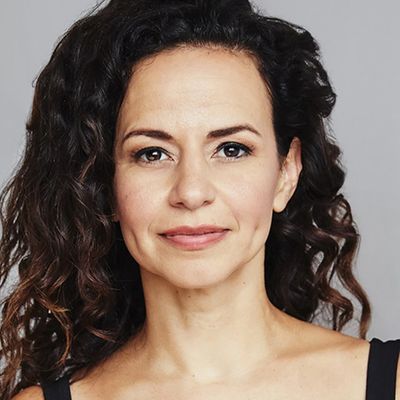
Mandy Gonzalez joins the podcast for a warm, candid, and inspiring conversation tracing her extraordinary journey from a passionate kid in Southern California to one of Broadway's most celebrated performers... Read More
From the show: The Theatre Podcast with Alan Seales
Guests
Featured Shows
About
Mandy Gonzalez joins the podcast for a warm, candid, and inspiring conversation tracing her extraordinary journey from a passionate kid in Southern California to one of Broadway's most celebrated performers. She reflects on her grandmother's pivotal role in nurturing her voice, from family living room jam sessions to getting her first theatrical role at seven years old alongside all-you-can-eat pickles at a local dinner theater. Mandy shares memories from her formative summer at the Broadway Theater Project learning under legends like Gregory Hines and Ann Reiking, as well as the wild, thrown-into-the-fire experience of going on tour as a backup singer for Bette Midler at just nineteen years old. She also recounts her memorable first meeting with Lin-Manuel Miranda in the basement of the Drama Book Shop, where she heard the score for In the Heights for the very first time.
The discussion delves deeply into the power of community, advocacy, and stepping through life's biggest fears. Mandy opens up about creating the #FearlessSquad social media platform, which blossomed into a movement of belonging and inspired her young adult novel series, Fearless. She shares the poignant story of navigating her breast cancer diagnosis and chemotherapy treatment while continuing to perform in Hamilton on Broadway, explaining how the theater community provided a safe space during dark times. From taking on iconic roles in shows like Wicked, Sunset Boulevard, and Aida to creating her symphonic concert Everything I Know celebrating the songbook of Lin-Manuel Miranda, Mandy illustrates what it truly means to live a life driven by connection, resilience, and gratitude.
Mandy Gonzalez is an accomplished Broadway actor, singer, and author. Best known for creating the role of Nina Rosario in In the Heights and starring as Angelica Schuyler in Hamilton, her extensive Broadway credits also include Elphaba in Wicked, Amneris in Aida, and Norma Desmond in Sunset Boulevard. Her screen credits include Madam Secretary, Only Murders in the Building, Bull, Quantico, The Good Wife, and Across the Universe. She is the author of the Fearless novel series and tours internationally with her solo concerts across the country.
Connect with Mandy:
- Website: mandygonzalez.com
- Instagram: @mandygonzalez
- TikTok: @mandygonzalez
Connect with The Theatre Podcast:
- Support the podcast on Patreon and watch video versions of the episodes: Patreon.com/TheTheatrePodcast
- Instagram: @theatre_podcast
- Facebook.com/OfficialTheatrePodcast
- TheTheatrePodcast.com
- Alan's personal Instagram: @alanseales
- Email me at feedback@thetheatrepodcast.com. I want to know what you think.
Transcript
This transcript was automatically generated and might contain errors.
[0:00] Mandy Gonzalez: Hi, I'm Mandy Gonzalez. Welcome to The Theatre Podcast with Alan Seales.
[0:12] Alan Seales: Hey, everyone. Welcome to an all-new episode of The Theatre Podcast. I apologize if you are a regular weekly listener. I've decided to take a few weeks off just to kind of recoup, get some energy back. I was kind of burnt out a little bit on everything that was going on over the summer and just needed a little bit of recharge and family time. So thanks for sticking with me. Here we are. I am back. And today, our guest is Mandy Gonzalez, who I have just admired from afar for so long and now feel so fortunate that I got to sit down with for a little bit and, you know, of course, unpack her story. We talk about the kind of theater upbringing where life-changing vocal lessons get arranged over all-you-can-eat pickles at a local dinner theater.
What it was really like as a teenager touring with Bette Midler. Did you know she did that? And watching Bette perform every single night through a tiny crack in a stage curtain. Plus, you get to hear the story of her first meeting with Lin-Manuel Miranda in a hidden basement in the drama bookshop, which she said felt a little bit like looking for the basement at the Alamo in Pee-Wee's Big Adventure. Oh, and believe it or not, she might just be one of the last people on earth, along with my mother, still holding on to her original AOL email account. But beyond the laughs, she opens up with incredible heart about the resilience navigating chemo while performing on Broadway and what it truly means to live fearlessly every single day.
You're going to love this chat. I know I did. Find me online. Share this podcast with a friend. Make sure that you leave a rating, leave a review, all the other things that you need to do. And now, everybody, please enjoy this conversation with Mandy Gonzalez. My guest today has starred on Broadway in productions that include In the Heights, Wicked, Hamilton, and Sunset Boulevard. Her film and television credits include Madam Secretary, Only Murders in the Building, Bull, Quantico, The Good Wife, Across the Universe, Better Late Than Never. God, I can go on. She created a social media platform about advocacy and belonging. I'll say that again. Advocacy and belonging that catapulted into a novel series called Fearless, these adventure novels.
She has just finished starring in the world premiere of Basura at the Alliance Theater, and it's bringing her own show, Everything I Know. Mandy Gonzalez sings Lin-Manuel Miranda to audiences across the country after its sold-out debut at Carnegie Hall. Obviously, we have Mandy Gonzalez today. Welcome to The Theatre Podcast.
[2:51] Mandy Gonzalez: Obviously. Thank you so much. Thank you for that introduction. That was fabulous.
[2:56] Alan Seales: You're welcome. Before we started recording, I said, how should we talk about Fearless? And you said it was the advocacy and belonging platform that catapulted into Fearless, catapulted into things that catapulted into Fearless, and it's how you live your life.
[3:12] Mandy Gonzalez: Well, I try to live my life. I think like all of us, we have a lot of fear, but it's about not getting rid of the fear and moving through it. So I look at fearless as two words, to fear less. And I think that if you just keep going and you go through the fear, you do fear a little bit less. And so that's my goal for my own life and my goal to bring other people so that they can really live their best life. And because fear is just a part of it. It's not all of it. A lot of people. Yes. In general, I think everybody kind of lives in sort of a state of wanting to fit in, of being afraid of something, of not belonging, of not being good enough, of not... It's either like you are too much of something or not enough of something.
[4:05] Alan Seales: Absolutely. And it doesn't matter what you're into. But for me, I had a lot of people reaching out to me, especially when I was in Hamilton. And now people can reach out to you immediately on DMs and things like that. I keep everything open. And I had people reaching out to me about feelings of loneliness and that they didn't belong. And I think that I really took the fact that I was in Hamilton and on this huge platform. I really had a sense of responsibility that comes with that. So when somebody writes you those kind of feelings, I never wanted anybody to feel alone. And so I started this platform called hashtag Fearless Squad. I put it out there and I said, if you don't have a squad, you can be part of mine.
And I had no idea that thousands of people would want to be part of the squad. And so immediately it kind of catapulted me into this leadership position, which I had no idea. But I said, OK, I'm the squad leader, I guess. And I have to kind of come up with what this is about. And so my slogan is I held your hand in mine and together we change the world. We help each other when we fall. We embrace differences. We look for the good and we dream big. And together we're fearless. And it's not about, you know, it was never about something, you know, that is to sell or anything like that. It's really about taking those beliefs and bringing it into your own community. And I think a lot of theater kids, I know I was one of them, do have those feelings of loneliness.
And when we hear those songs that kind of make us feel like, oh, my gosh, I belong. And then you meet somebody else that loves theater and you're like, oh, my gosh, you too. So Fearless Squad just kind of beads on that.
[5:52] Alan Seales: What do you think that is about? Theater is a merry band of misfits.
[5:57] Mandy Gonzalez: Absolutely.
[5:58] Alan Seales: When you don't fit anywhere else, you fit in theater.
[6:01] Mandy Gonzalez: It makes me think of like the misfit toys in like, you know, Rudolph. But yeah, I don't know. I think that, you know, I think that there is a need to express yourself and need to create. And I think when you have those kind of feelings, there is a place of vulnerability that I think so many people that love theater are drawn to. And it's like the human experience and the human connection. You're just on a deeper level. And I think if you get it at a young age and you have a program or you have, you know, like something in your community where you feel like, oh, my gosh, I'm not alone. You know, for me, I sing all the time and I'm from like Southern California. So there's a lot of things happening in Hollywood.
But it's not at that time. It wasn't a big like theater community. And my parents were just like, what is happening with this kid? And why is she, you know, wanting to sing all the time and sing Annie and do this and that? And it wasn't until my grandma kind of put me in the lessons with other kids that I felt like, oh, I'm not like a total weirdo. Like, I'm actually I mean, I am, but I am a weirdo, but they're weirdos too. And it's all like, oh, my gosh, I belong. And then all of a sudden, somebody's like, yeah, you heard Miss Saigon. Have you heard this? Have you heard that? What? And so I think it draws those it draws all of us that that need that sense of connection, you know?
[7:34] Alan Seales: Well, did you feel that as a kid, though, like an overwhelming need for connection? I know I did. I don't know what it was like. Nothing. My parents didn't do anything wrong. My friends didn't do anything wrong. It was just inherent in me that I always had that devil on my shoulder that was like, you're kind of not good enough. Like, try a little bit harder.
[8:02] Mandy Gonzalez: Absolutely. Yeah. Absolutely. I think that I've always had that you always have that voice, you know, when you're feeling like super secure. I don't know about you, but, you know, even when I'm warming up and I'm warming up in the shower, I'm like, oh, my God, I'm always on the same status. It's going to be great. And then now you have to do self tapes and all that kind of stuff. And I get in front of the camera or I get to the room and all of a sudden that voice comes and it's like, what are you doing? You shouldn't be here. And it's those things of like, wait, should I listen to this voice? Is this voice correct? Like, absolutely not. You got to, you know, tap the voice and be like, I remember you. Anxiety likes time to go. I absolutely loved that movie. You know, the Pixar movie Inside Out.
[8:43] Alan Seales: Yes. Yeah. But I loved Inside Out too with anxiety because I just felt like that was so right on. And yeah. So you grew up, you grew up in, you said you grew up in SoCal. Yeah. And you were always singing. And then you said it was your grandma that put you into performing. Is that what you said?
[8:59] Mandy Gonzalez: Yes. Because she said to my mom, like, Robin, I think we have to get Mandy into lessons because she's so loud. I think she's going to hurt herself. And my grandmother loved musicals and she played music all the time. And I, you know, she babysat us a lot. And so I would sing back with her and I was the only grandchild that, you know, would remember the lyrics and would want to sing back. She had a player piano. For those of you that don't know what that is, ask somebody over 40. But it's that's definitely where my love of music is rooted. It's on in those, you know, living room jam sessions with my grandmother, you know. But she saw something in me and she went and she started to ask questions like, what do I do with her?
Like, where can I, you know, where can she express herself and what can we find? And, you know, at that time, there's no Internet or things like that. So she would just look in the paper and find things for me that were in my age group and people that were performing because she just wanted to put me in everything that would give me every opportunity to learn.
[10:09] Alan Seales: So when did you really start? I guess not professionally, but I mean, like maybe it was professionally or community theater or whatnot. Like what was the what age were you when you did your first organized production?
[10:25] Mandy Gonzalez: Oh, my gosh. I think it was about eight years old when I did Fiddler on the Roof, which was down the street from my grandmother's house at the Showboat Dinner Theater and the Showboat Dinner Theater. I loved that had a lot of places for me in my life, too. It was down the street from my grandmother's and you can go and have a meal like a buffet meal and then you could see a show. And my brother would have to come to everything because we're a year apart. And like I said, my grandmother babysat all of us. So if you would come and they had all you could eat pickles, which was awesome. So we both love pickles. So we would get pickles and we'd watch the show. And it was the woman that played Aldonza in Man of La Mancha that my grandmother went up to and said, I have a granddaughter and she needs lesson vocal lessons.
And would you would do you teach? Would you be interested in teaching her? And that became my first vocal teacher. And I think I was about seven years old when I met her. And then at the Showboat Dinner Theater, they were auditioning for Fiddler on the Roof. And I got the role of Bielka, the youngest daughter. And my grandmother was one of the ghosts. She would just walk. They had these crosses for them in the back and she would just go. And so, yeah, I loved it. I loved it. And I was just this is like, oh, I belong. This is where I belong. And I did a lot of things over at that show at dinner theater, like they had children's classes and things like that.
[12:02] Alan Seales: That's very cool. Your parents the whole time, were they for it, against it, irrelevant? Because I mean, some parents are like, oh, yeah, you can do that, but make sure you have a backup.
[12:06] Mandy Gonzalez: Oh, yeah. My parents were like, yeah, this is great. They loved it. Yeah, they loved it. She's loud. She's loud and she won't hurt herself. Exactly loud. And they, you know, they were so supportive because I think it was whatever my grandmother really said. And then they just kind of followed suit. So like at every family function, I would sing. My dad would kind of work when I hit because it also was like I was at family function with a microphone, which is like, who does that? But my grandma said she needs to know how to use the mic. Let's, you know, and I'm going to sing for all my aunts and uncles. You know, they were probably sick of me, but I she just she ruled the roost and she was like, no, now Mandy sings.
Now she does this. And I love she she is a singer. Yeah. But my sister played the piano and she was really wonderful. But she had really bad stage fright. And so my grandmother would also have her play the piano. But so nobody would watch her. She would have me sing in front of my sister. And I would do that at all my sister's recitals. Like my sister would be in just like a regular dress. I would come out in sparkles and like a top hat. And there was no animosity, at least not for me, but for my sister, you know, because she was just like, oh, this is good. Like nobody cares what I'm doing because Mandy's up there. But then she dropped me because she said I was too demanding as a vocalist. She just wanted to play her thing and do her thing. She did not want to be an accompanist. So it was not long lived. But anyway, I had a very supportive family.
[13:47] Alan Seales: Did you know, like you said early on, that's where you wanted to be. But where what was the moment when you decided, like, did you go to school for it? Did you when did you know it was going to be a career?
[13:59] Mandy Gonzalez: When I went to a summer program, when I was about 15 years old, I got a full scholarship to this program called Broadway Theater Project. And it was in Tampa, Florida. And Anne Reinking ran the program with Deb McWaters. And I had teachers like Treat Williams, Gregory Hines, Jeff Calhoun. I had to audition to be in Gregory Hines tap class with like some of the best tappers in New York City. And I got into the class like by the skin of my teeth.
[14:28] Alan Seales: And the tip of your toes.
[14:29] Mandy Gonzalez: Exactly. The tip of my toes, tip of my taps. And everybody was better than me. And I loved it. And I was like, they were all talking already about, you know, going to New York. And this is the school I'm going to go to. And this is what I'm going to do. And I was like, I want to do that too. You know, and that's when I really decided that, oh, this is what I want to do for my life, because I was just so like obsessed with these teachers, with Anne and with Gregory. I watched every movie when I got home. I watched every possible movie I could that they were in, just to kind of like stay with them, you know.
[15:11] Alan Seales: That's crazy that you got to train at such a young age with that level of talent.
[15:16] Mandy Gonzalez: Yeah, it was one of those things. Again, my grandmother, I was in this, I was taking with a vocal coach and he actually taught at the camp and he suggested to my grandmother because my grandmother would sit in on every lesson. She wouldn't say anything. She wanted to be there. And he said to her, you know, Marie, there's this camp and she's got to go. But how are we going to do it? You know, how are we going to afford it? And I had to send in my VHS. I remember, you know, tap dancing in the backyard. I just felt like I wanted to be there. All these students that were there wanted it, too. And it was like, oh, that's the first time I realized like, oh, this is really exciting. And I learned what it was going to take to get to where I needed to go.
[16:03] Alan Seales: Yeah, it's like if you can see it, you can be it. And I guess, yeah, your grandmother, gosh, she completely made you who you are.
[16:11] Mandy Gonzalez: Totally.
[16:11] Alan Seales: Today.
[16:12] Mandy Gonzalez: Yeah. And she was not like a stage mom in any anywhere, like any sense of the word. You know, my own mom had a hard time sometimes like sitting during like dance classes and things because the other moms would talk. It's kind of like dance moms. I was never that kind of dancer, but it was the same for any, you know, program I was in. Like certain parents would be like, oh, my daughter and my mom could not take it. She was like, I can't take this. And so my grandmother's like, I'll sit there. So she just she just kind of came and she did it. She didn't care. She'd be like, oh, yeah, like my granddaughter, like she does this and this. And then we would go. And, you know, but my grandma always just said, like, you can do it. You got it. You got it. And I just felt like I hear her all the time.
[17:07] Alan Seales: 15, 15, 16. That was such an I think an important age for you to be at that camp, I think, because it's before you decide where you want to go to college. It's before you decide, like, I mean, when you it's starting to lay the foundation for what you're going to do at 17, 18 and beyond.
[17:20] Mandy Gonzalez: Yeah, absolutely. And so you can see this stuff. And you said that everybody was better with you, better than you, which probably wasn't true. That's just how you felt.
[17:25] Alan Seales: Well, that's how I felt. Yeah.
[17:26] Mandy Gonzalez: Yeah. Right. Obviously, you deserve to be there.
[17:28] Alan Seales: That voice. It's like, you're terrible.
[17:30] Mandy Gonzalez: Right. So you're there and you're with incredible people, some of the best people you've been with. And I think it probably like pushed you to a level of realization, a level of awareness of like, yeah, these even though it's young, we're young, we can still we know what we want.
[17:45] Mandy Gonzalez: Yeah. And then we put on a show. Yes. And we put on a show at the end of the camp. And, you know, if you were lucky, you got a little bit of a solo and one of the numbers. And but it was like a show and it felt like life or death. Like we have to make this great. And it wasn't about we got to make this great because I'm better than you. And I just want to be in the front. It was like we're doing this together. And it was all about like community. And I wanted to be a part of that. I didn't want to I didn't want to just be that person that did it by themselves. Like I wanted to be part of this, whatever it was that they were. I wanted to be in it.
[18:24] Alan Seales: Yeah. Yeah. And when you're around that people, like when you find your people, that that's what you want to continue, continue with. And then so then did you go after high school? Did you go straight to New York?
[18:34] Mandy Gonzalez: No, I went to CalArts for a year. And that was a school that was very close to my hometown. And then I heard about an open call from I was doing a lot of stuff when I was younger. Like I put together my own cabaret at the Roosevelt Hotel. They had this place called the Cine Girl. They still have a place called the Cine Girl. And I put together my own cabaret, you know, with the musical director that I met. And he told me that there was going to be an open call that Midler was looking for a new backup vocalist. And would I want to go? And I said, yeah. I got all dressed up and all dolled up and I waited in line and I went and I kept getting they kept asking me to stay, you know, called back, you know, can you come back tomorrow and dance?
Can you come back and do this? And I ended up getting that job. And Bette Midler came in for the last audition and she had on this gray suit was so fabulous. She's so fabulous. And her glasses and and I, I just I nailed it. And I got the job and I went on the road and I I was like, oh, this is I get to watch one of my idols every night. Nineteen, eighteen, nineteen. Yeah. Yeah. And I was on a bus, you know, traveling and trying to sleep. It was full of so many things. So that was really my like I don't know what you would call that. But my jump into the business, you know, and then from that I saved my money from that job. And then I moved to I moved to Brooklyn and I was like, I'm going to do it. And I had nothing. I had no agent. No, I just had like so much gumption.
[20:17] Alan Seales: That's all you need. Yeah, that's not true. You need talent, too. So you're on this tour bus with Bette Midler. Is she on the bus, too? Are you just like now?
[20:28] Mandy Gonzalez: That's in a plane like. Oh, OK. OK. Yeah. But I was with the other harlots. I was with the people that were older than me and had done this a long time. And it was a very like throw into the fire kind of experience because I was away from home for the first time because I didn't go to college like and leave. You know, so this was my first time being away from my family and having those feelings of homesickness and but like having to to get up and to perform, you know, through all of that, you know, and having these exciting things happen to me like, you know, all of these different cities that we played. And she she's so beloved. And yeah, it was a total trip. Like I loved her so much. I had gone to see her in Vegas like a couple of years before that at one of her concerts.
And I just she's the ultimate performer. And I used to sing with her. I sing backup for her at the end. She would sing Stay With Me, Baby from The Rose, and she nailed it every night. And but at that moment, she didn't want anybody on the stage. So we would be singing in the back, you know, with microphones. But the curtain would be open just like a little bit. And I would be watching her as she was singing so that we would be breathing together. And that's a thing because we didn't have like television monitors and that. But I would watch her and I'd be like, that's where I want to be. I want to be. I'm going to be in the front.
[22:06] Alan Seales: I was about to say that that Bette and others like Bernadette and like they can make giant careers performing off stage, off Broadway. I mean, yeah, like you don't need to be on a Broadway stage to be a massive performer and a massive star and a massive person doing concerts. And I was going to say, is that like part of why you had that ingrained at such a young age that now like you're going out and doing your own concert?
[22:31] Mandy Gonzalez: Yes, because I love it. I absolutely love it. I love the creative process because it does feel like you're putting a show because you are putting a show together. You know, when you come to one of my shows, it has been worked on. It has been rehearsed because that's what I saw. You know, when I rehearsed with Bette, it was like a Broadway show. We had four weeks. And, you know, the last two weeks, I think we were on a soundstage and she, you know, then they tear down the stage at the end and then, you know, the crew goes before you and then you go. But I was like when I was putting together my shows, I'm like I it has to be it has to be story driven. It has there has to be a reason that I'm doing it, not just to get up and do, you know, beautiful songs, which is lovely. And I love to do that. But it's about creating a story for the audience. And it's something that I think is something that I'll do for the rest of my life.
[23:33] Alan Seales: Don't go anywhere. We'll be right back after this break. Welcome back to the episode. Do you do you remember when you got the call to be on your debut?
[23:41] Mandy Gonzalez: Yes, I do. I remember because I was in the show Eli's Coming off Broadway at the Vineyard Theatre and it was my first show in New York. I did. That's why I got my Equity card and we won an Obie Award. And I remember I believe Stuart Okun from Disney Theatrics came to see the show and they called my agent and they asked if I would come in to be the standby for Idina Menzel if I come and audition. And I remember, you know, there were people that were that had said to me, I'm a standby like you shouldn't do that, you know, because then that means that that's, you know, what you are and and this and that. And I remember I was in the dressing room with Judy Kuhn and she said, well, I was a standby.
Like when I started when I started, but I didn't know anything, you know, I just listened. I was listening to everybody. And when she said that, you know, I was I admired her so much and I still do. And I went in for that audition and my journey continued because of it. And then I remember getting the call and just being so excited and terrified and and all of those feelings and then starting rehearsal this the week of September 11th, like literally it was like my third rehearsal. I was up early to get ready. Well, I wasn't actually up early because I was about to get onto the train and I think it was like my third day of rehearsal or something like that. And then that all started to happen and and then nobody wanted to come to the theater and I got to watch that.
Like what was that like? And and how the cast, you know, conducted themselves and how, you know, everybody just kind of came together. You know, it really it was so inspiring, you know, and then to see like nobody coming to the theater and then all of a sudden people started coming to the theater. And it was a beautiful thing because everybody felt like, well, why are we doing this when there's so much happening? You know, should we even be here? Exactly why you should be there. I know. But when you're in it, it takes a minute to kind of realize like, oh, this feels good. And we're giving of ourselves to something, a bigger picture, you know? And yeah, it was it was a crazy time. And I remember Adina couldn't do they were doing some commercial to bring people back to New York.
Were they singing? I believe they were singing New York, New York. And it was in the middle of Times Square at Duffy Square. Is it still called that? Yeah. By TKTS. And and she couldn't be there. So I went and I'm in that picture and I'm in that video and Bernadette and Joel Grey are in the front. Come on, come through and I'm in the back like, you know, I was like, this is awesome because I felt I was so alone. You know, I felt like I was away from my family. I was New York. The world was going through such a change. But I felt like I had my community, my community with me.
[27:05] Alan Seales: Yeah. And I want to not gloss over the fact that standbys, alternates and swings, understudies are some of the most important people in the industry and some of our biggest divas, of which in a positive way, like powerhouses, of which I do include you, have started by understudying or being a standby. I think everybody should, honestly, because I think if you're able to, I think it's a great way to start because you really learn how you want to be as a lead, how you treat people, how you don't treat people. You really learn a lot. You know, whether you are a standby or an understudy or a swing, you learn to be ready at a moment's notice and that nobody cares if you just got called 15 minutes before the show must go on. Then you know that you always have to be ready. And so I wear it with a badge of honor. And yeah, I hope that I don't know. I hope that I left and I leave a little bit of my I guess my pride in that, like having had that in my life.
[28:24] Alan Seales: That's a good way of putting it. Yeah. I think it is kind of a badge of honor to say you've done that because it's hard and it's really hard. The anxiety in the I mean, that was something I was a swing for Forever Plaid once for all four.
[28:42] Mandy Gonzalez: Oh, wow. Yeah. The anxiety I had of keeping just the harmony line separate. Yeah. Like from a show like that. It was it was nuts. And then and there's one of those things where like after I got through it and it was done, I was like, oh, yeah, like that's that's a badge of honor to be able to learn all of that and do all of that at like a moment's notice. And then mid show swing ons. And incredible the way that that stuff. Oh, please. So with sometimes not even stopping the show. Right. But it also it taught me, you know, what a stage manager does, what an assistant director does and how they keep the show going. And they are your a dance captain does like they are your lifeline. Yeah. You know, throughout your run and they're looking out for you. And so I think that for anybody, I highly recommend it. I think that it's but yeah, I started in this business and I just learned as I went in a lot of ways, you know, and I continue to.
[29:34] Alan Seales: Are you one generally to say yes to new opportunities? Because we it's it's kind of a conflict, I think, because I'm the same way. I love trying new things. I love to to to experiment and to like say, oh, that didn't work like failure in the moment sucks. And then the next minute I'm like, OK, now I know what not to do. That's great. But then it's also a complete conflict with the I'm not good enough. But I think there's a driving factor that makes me want to continue because of the I'm not good enough.
[30:02] Mandy Gonzalez: Oh, totally. It completely drives you. I think I'm I'm a very driven person for I don't know what for challenge for, you know, to overcome. I think to feel those feelings of fear and just go. Yes. So I am. I'm very much a yes person. If something really scares me and I think like I don't know if I can do that, I automatically say yes, because I don't know why. It's just something in me. I have I have this need to to challenge myself and express myself and be creative and push myself to so many different boundaries. And for me, you know, some things work out and some things don't. But that's life, you know, your your career. I mean, when you list off your resume, it's like the staples of modern Broadway.
Yeah. You've been in all of them like Aida, In the Heights, Wicked, Hamilton and Sunset Boulevard, like all of this stuff. All of these have changed Broadway permanently in one way or another. And like, how did you find yourself jumping from from one to the other like that?
[31:30] Mandy Gonzalez: Oh, my gosh. I think I had a really strong foundation. You know, I think for me, that was very important. You know, family is a very important thing for me. And I was lucky to have met my boyfriend now husband at Cal Arts for that year. I met him on the last day of school.
[31:49] Alan Seales: You've been together a long time, a long time.
[31:49] Mandy Gonzalez: Only a year. No, for a long time. And he is and has been the love of my life. And he encourages me and has written this ride with me. But that was always something that I was fortunate to have and to know was important because the shows open, the shows close. Some people love them. Some people hate them. And it's hard. It's really it's beautiful to be an artist in that life. But it's also really hard and to have a home to, you know, to have somebody to come home to that loves you regardless and that sees you for you and all the things that you can do. I think that allows me to keep going, you know, and the fact that I come from and I say this a lot, but I come from warriors, man, like I'm Mexican, I'm Jewish.
My lineage, I come from people that did everything to make it in this life, in whatever that meant. You know, my grandparents worked on a farm and worked in the orange coves, you know, in the orange groves. And I grew up running through the orange groves and watching them pick fruit. And, you know, my other grandparents came from a hard life, you know, they worked hard and they made something of themselves. So I think that I have that inside of me, that people that survive and keep going, they never gave up. And so I think that having that foundation has really been central in my life and in my career.
[33:40] Alan Seales: That's crazy. I mean, and then you're saying the shows come and go, but then like Hamilton and Wicked are not gone. When do you decide? Well, I mean, I go.
[33:52] Mandy Gonzalez: Right, right, right. But is that hard for you to leave that steady paycheck?
[33:57] Alan Seales: Yeah, of course. It's hard to leave that steady paycheck. It's hard when you, you know, but it's important to go. It's important to go and to, you know, put yourself out there again and to see what's next. And it's important to go and give somebody else their turn. You know, that's been also very important for me is not just, you know, achieving, but leaving some sort of legacy of community, I guess, and that I'm looking out for that person that's coming next, you know, because I did have doors that people fought for to be open for me. And I want to make sure that those doors are open for that next generation. And, you know, people that couldn't open those doors definitely found a window for me to go through, you know, and I'm not.
That's a big part of who I am. And I think that that's why, you know, that's why you go. That's why, you know, you stay for the time it feels really good. And then you go and you're it still feels really good, you know, so that you can leave and you can look back and go, gosh, that was a great experience in my life because we've only got one.
[35:18] Alan Seales: Yeah. When you were when you were saying earlier that it was about family, I thought you were going to talk about the family you built through the theater community, but you were talking about your literal, your literal family, your husband, which is beautiful. Beautiful. Yes. Yeah. Not to discount that. But I'm trying to do a very poor segue now into your concert, which is, you know, singing songs of Lin-Manuel and you've done so much with Lin.
[35:42] Mandy Gonzalez: Well, I think there is. No, but there is foundation. And it was like when I did Aida, because I didn't have my family here, I started to build my chosen family, you know, and that happened in the swing room. I met my best friend, my fieta, Gerald Grand Moultrie, who is now a choreographer. He choreographs ballets. He's choreographing theater. He was nominated for Lucille Lortel this past year and an Outer Critics for two of the plays that he worked on. My dear friend, Nikki Renee Daniels, my dear friend, George, and that we are still really good friends. That's like part of my heart. And so all of a sudden, you know, I didn't go to college. I didn't have those kind of friendships that you come into the city with.
And so I started to go, oh, OK, like I can I can have my own like chosen family. And that just continued in all of the shows I did. But I felt it so strongly when I did In the Heights, because it was the first show that I did where it was an all Latino cast. Lin-Manuel was at the helm with Chiara Alegria-Judez, and it was Alex Lacamoire, Tommy Kail, and we were all just scrappy and, you know, and hungry and figuring like, oh, my gosh, we have we have this this beautiful piece of theater and we want everybody to love it as much as as we do. But there, you know, I just saw my dear friend, Janet, to call these past three days. And any time I see anybody from that show, it's a gift. It's a gift because they really are my family.
And when I first met Lin-Manuel, I was in this show on Broadway that didn't do very well. Another one. And it was called Lennon. And it didn't last very long. And, you know, I was at the Broadhurst in my dressing room and you're kind of thinking like, oh, what am I going to do now? Like what happens? And somebody called and said, oh, there's this new writer and he wants to meet with you in the basement of the drama bookshop. Would you want to go? And for some reason, you know, I knew where the people get murdered. Exactly. Of course, you know, I'm you know, I'm from L.A., but it was like for some reason I said yes. And I knew the drama bookshop every actor knows the drama bookshop. And and so I went I didn't know there was a basement.
It was like the Alamo and Pee Wee's like big adventure. And and I went to the basement and there was Lin-Manuel and he played some songs on a on this piano, which is still there at the at the new at the new drama bookshop, that same piano. And Alex Lackmore played songs and they talked to me about Nina Rosario. And would I be interested in doing the reading? And I said yes. And then we got to the first day of the reading and I was sitting next to Andrea Burns and we I didn't know her. We, you know, didn't know each other before that. I was sitting in this room with all these like young artists. And Lin-Manuel said, I know none of you know the song, so I'm going to sing everything. And he just started.
And it was like it was like he looked at Alex and was like, hit it. And it was like, what's up? From Washington Heights up at the break. And I was like, whoa, like, who is this guy? And how can I be a part of this forever? Like he just had this magnetism, this light. And I wanted to I want to be a part of it. And I felt so lucky that I was able to then I have been a part of his life and his journey, but also to watch the entire world just fall in love with him and his music. And because he is exactly who you see, you know, or who you listen to and in those in those songs. And that's why I wanted to create this show, because I felt like, you know, so many people don't realize how much a part of their life he's been, you know, whether it's his songs, you know, from Hamilton or Moana or in the heights.
But it's his songs from Sesame Street. And the kids love Vivo. Yes, Vivo, like all of these, these beautiful works that he has created that, you know, really touch your soul. And so I wanted to create an evening and an evening with it. You know, I sing with a lot of symphonies and the Boston Pops were the first symphony to ask me to sing a couple of Lin Manuel songs for their July 4th Boston celebration. And I mean, Boston Pops is like, yeah, that's shit. Yeah. Keith Lockhart. I was like, yes, I'll sing that. That sounds great. And I sang Fearless and I sang Everything I Know. And I had so many people coming up to me telling me like how much they love Lin Manuel's music and how much it means to them and how much it meant to them for me to sing that song.
And I thought, there's a place for him, just like there's a place for Andrew Lloyd Webber, Stephen Sondheim, Evenings, things like that. There is a place for Lin Manuel in this world, in these spaces. And I want to be the one to bring that to to encourage people to know that there's a place for them at these symphony spaces. He's a part of the American Songbook. I mean, it's what it is. And and he belongs there. I was going to say, and literally, as you were explaining it to me, I was like, why have I never really put two and two together before? Because I like he is he is one of the great composers of our generation. And because I guess it was the Sondheim and Webber, in my mind, preexisted my love of theater.
They were already established when I discovered theater. And then and then Lin came up and I feel like Lin's more contemporary in my I mean, he is more contemporary, but yeah, I feel my kids are going to hopefully look at him the way that I look at Webber and Sondheim, right. And he and Sondheim were actually pretty close. Very close. Yeah. Which I think is very cool. And Sondheim gave a lot of a lot of advice. But did you have to did you have to get permission from Lin to do anything or just like, hey, dude, I'm going to I'm going to put your name on some shit.
[42:22] Mandy Gonzalez: No, I know. I I wrote him an email and I just said, look, I I'm interested in putting this together and I have this idea. What do you think? And I said to him, you know, we've been emailing a long time, he and I, you know, from AOL to Junell and he was on my AOL chat, whatever that was, you know, there. Yes. Yeah. Even when I go into AOL, he's still there. Would you still have AOL? I do. Like, oh, my God. You and my mom are the only two.
[42:58] Mandy Gonzalez: But I do use Gmail now. But, you know, it's I had to go about it and do it the right way because I respect him as an artist and I wanted to give him that. And that, you know, I wanted him to be a part of it and to really give his blessing for this for this piece. And he said, yeah, it's OK. Let's. And then it was like the same thing with the squad. OK, let's put it together. And I started to meet with directors and I met with Dick Scanlon and I felt like, you know, I admired his work so much, but I felt like he he understood what I wanted to do. And he asked me to create a playlist of all the songs that I was interested in singing. The playlist is really long, but he never said, like, we're taking this out.
He just kind of said, OK, I just want to start listening. I want to start listening to the songs. And then we started to create the story. And and then it was like, OK, it's time for music. And then I brought on Dan Lipton to do the music. But Lynn was a part of this. Lynn was a part of this, this whole thing. And the wonderful thing that I that I see with this and with my wanting to open the door for others and things like that is that I see so many people coming to the symphony that maybe have never been before. And that brings me a lot of joy for them to see themselves in in different spaces, too. And sometimes they'll bring the whole family for, you know, the holidays. And it's it's that kind of show.
It's a show about friendship. It's a show about music. It's a show about struggle and survival because I weave my stories in as well and how our stories connect throughout this journey of life, you know.
[44:52] Alan Seales: So so it's really beautiful on so many levels. Don't go anywhere. We'll be right back after this break. Welcome back to the episode. Why why did you decide to be so vocal about your breast cancer journey?
[45:05] Mandy Gonzalez: You know, I felt like, well, I mean, this is a long story, but I had my tia passed away from cancer when I was in the Heights and she was my closest aunt on my dad's side. She was the youngest in the family, his youngest sibling. And nobody really talked about it. People, you know, they talked about the fact that, you know, she passed away and it was very, very sad. But nobody talked about, well, what kind was it? What how long did she feel discomfort? Did she go in for mammograms? Did those kind of things happen? And when I went into Memorial Sloan Kettering to start the process, I had to get a lot of genetic work done. And they ask you a lot of questions about your family. And I remember filling out the side of my mom, which I knew a lot of information.
I knew some information, like who had what and this and that. But on my father's side, it was like no information because of so many different reasons that I learned that there is a lack of trust within the Latino community with doctors because of how they've been treated, because of language barriers, because of lack of health care, lack of health insurance. And so I wanted to know, I wanted to make sure that whoever comes after me, like my daughter and people in my family, that they know if this is something that is in there, where it lies in our family. And it also made me feel like if I don't know this, I'm sure there's so many people out there that will look at me and say, oh, my gosh, like that happened to Mandy Gonzalez.
I should go get a mammogram. You know, I haven't had one yet. I'm a Latina. Has my mother had one? Has my grandma, my abuelita? It's kind of like doing your own genetic testing, you know, for your family, because a lot of times as well, like as Latinas, we're such matriarchs, as mothers, we take care of everybody. We take care of you. Exactly. And you have to kind of realize that taking care of yourself is also taking care of everybody else. And I wanted to be fearless with that diagnosis. And so I was. And I stepped through my fear. And I said, hey, this is what's happening with me. And I just put it out there. And then I started to become a part of so many different communities within the cancer community where I could help people.
And that I had no idea how much that would be part of my healing and part of my journey as a person, because I realized that that, you know, my voice is used for so many things, you know, and part of that is advocating for others that maybe don't have a voice or, you know, are dealing with this and they can't talk about it, you know, and that's okay too. Let me be the one to talk about it. Let me be the one to say like, oh, there is a mammogram truck that's coming to your house and this is the hospital that does it. And I started to learn about ways that you can help your community and if you don't have health insurance. And so it makes me very proud that now I am a part of that community. And I'm proud to say that I am seven years cancer-free. But everything happens for a reason and it just propels you into who you're supposed to be.
[49:06] Alan Seales: Were you, did I remember this right? You were in Hamilton when you're going through chemo?
[49:11] Mandy Gonzalez: Yes, I was. Yes. But it was that thing of, for some reason, and I'm sure a lot of people will feel this when they're going through trauma, staying in the thing that feels safe, that you know the show must go on is something that I've known for a long, long time. It's a very like safe space for me. And I was with people that I could talk to. I could talk to Tommy Kail and say, hey, this is what's happening with me. And because of chemo, you have certain days where right afterwards where you feel like you feel good. You have your boost of everything that's going on, but then you have those days where you really struggle. And for me, that was like day five, day four, day five. And so I would say, I can't do the show today.
I can't do the matinee, but I'll be there in the evening. And there was just something about that that helped me get through it. And then when the pandemic happened, I started chemo in January of 2020. And the pandemic shut us down in March, March 11th. And at that time, I was still in chemo and still had to go into the city when everybody's like, don't leave your house. It was like, well, it was the same thing. Like Broadway performers, there's a hurricane. Don't leave your house. But Broadway's open. It was like, no, but you have to go. And I, I like, I didn't know how much I needed to stop and just take care of myself and take care of my family. And it's that thing that the universe, God, whatever it is that you believe in, will find a way to, to, to make your journey happen where you don't expect it, you know, and, and so, but it was that same thing of seeing everything shut down and nobody wanted to come to the theater.
The same thing that I saw during 9-11. And when it, it started again, it was that same thing. Like, okay, we have, well, actually, no, it wasn't the same because everybody wanted to come. You know, you had to get tested and you had to wear masks and it was Hamilton. So, but it was, it was really beautiful to see how resilient people can be.
[51:30] Alan Seales: I remember hearing that costumes had to be let out because people hadn't been performing in months.
[51:35] Mandy Gonzalez: No, when I got the call, when I got the call that, um, that we were going back to the theater, I was like, um, I think I got a month, a month ahead of time. I was running, you know, cause you can't go to a gym, but I was running around this neighborhood, like where I live, I was getting into shape. And when that, when that dress zipped, I was like, I did it now, but also building up your stamina after not just going through pandemic, but going through cancer treatment and things like that. I was like, I, I have to do this. And I did it, you know,
[52:13] Alan Seales: I feel like that's going to give you such a, such a boost too, that like now you can be fearless and like what comes at you, you're like, well, I already did those two things. Like what this next thing is going to be easy. And then like your Norman Desmond nailed it. I saw you in Sunset Boulevard chef's kiss.
[52:29] Mandy Gonzalez: Thank you. Just incredible. That's another iconic role too, that, that you got to step into in one of the best revivals I've ever seen.
[52:36] Alan Seales: Oh, thank you. Yeah, I, when I was offered that I said yes. And I, I'm so glad that I did because it really was it's a role of a lifetime. And it's a role that I saw when I was in middle school, I started playing close. Our middle school had, it was like our middle school saw, we saw Sunset Boulevard one year, the next year we saw Phantom of the Opera. It was like the best middle school ever. Like post-school like was working, you know, but to be able to, you know, and then I fell in love with Andrew Lloyd Webber's music. And then to be able to sing that on a Broadway stage and in that production was just incredible. And, you know, the show that I just finished the run Basura to work with Gloria and Emily and Stefan and Michael Greif, who, you know, in 1996, when Rent won the Tony Award, that was the first time I saw, you know, people that look like me on the stage.
I saw Daphne Rubin Vega and I saw Idina and I was like, oh, my gosh, that's what I want to do. I want to be in Rent, you know, and then to be able to work with him on it on a show it and then to work with Alex Lafamore as well. And Patty, it was just a beautiful, beautiful experience. And and I'm just so proud of the work we just did. I just finished last week. So, yeah, it's like you just keep going. It's like Cheetah Rivera says, you just keep going in this business and and whatever it is that you want. Eventually, you're going to get you're going to get there. And I truly believe that.
[54:20] Alan Seales: Yeah. Her book is amazing. The audio book is even better. Let's see. So I am going to put 60 seconds up on the clock for our as we start to wind down. Let's see. Second countdown. And we're going to play plot in 60 seconds. Oh, my gosh. And so I have 16, 17 musicals listed on my little document here. Give me a number one through 17. You will select from my list by what number you give me and then give me the plot in 60 seconds or less.
[54:52] Mandy Gonzalez: I have to say the plot of the musical. Yes. So give me a number one through 17.
[55:01] Mandy Gonzalez: Five.
[55:06] Alan Seales: Okay. Five. These are popular. You should get this. All right. So give me the plot in 60 seconds or less to Mary Poppins. Go.
[55:14] Mandy Gonzalez: 60 seconds. So Mary Poppins, these young kids, they're kind of ignored by their parents and they they're so rude to like all of their nannies. And to me, this nanny flies in from who knows where to not only teach them about life, but to also provide them with love. And in turn, she kind of brings the whole family together because the parents realize that they've kind of been ignoring the kids.
[55:38] Alan Seales: Thirty seconds.
[55:43] Mandy Gonzalez: Thirty seconds. I love it. And a spoonful of sugar makes the medicine go down. Go down. Yeah. All right. Okay. Three standard closing questions. First one simply is just what motivates you.
[55:54] Mandy Gonzalez: What motivates me is my family. I think that to my motivation is to make sure that I can give my family the best life that they can have and be safe and happy. And that's my biggest motivation.
[56:14] Alan Seales: What advice would you give to your younger self and younger people listening now, starting out down a similar path?
[56:18] Mandy Gonzalez: I would say what my grandmother said to me. You got this, babe. You got this, baby. And I hear her all the time. And sometimes you can go and you can have so many people that say no. But as long as you have that voice in the back of your head of somebody that loves you telling you, no, you are. You are special. You can do it. Never forget that voice is a lot stronger than that one. Should be. Yeah.
[56:44] Alan Seales: All right. Last question. Hardest one. If you can only see one show for the rest of your life, but you can see it as many times as you want, what would you say?
[56:53] Mandy Gonzalez: It's so hard. If I could see one show for the rest of my life, that's so hard. I guess it would be Gypsy.
[57:06] Alan Seales: Have you ever done Gypsy?
[57:13] Mandy Gonzalez: I've never done Gypsy, but I will one day. Yeah. Yeah, you go. I was going to say you would be a great Rose.
[57:17] Mandy Gonzalez: Thank you. One day it's coming. But that was my grandmother's, one of her favorite shows. And I used to listen to it all the time with her with Ethel Merman. And I got to see, I didn't see Patti, but I got to see Bernadette. I didn't get to see Audra, but I've heard amazing things. And I got to see her on the Tony Awards, which was like, blew my mind. Yeah. All right. Where can we connect with you online and get the tour schedule for your concert?
[57:39] Mandy Gonzalez: Sure. So you can go to mandygonzalez.com or you can check me out on Instagram at mandygonzalez. You can also follow me on TikTok. I'm getting a little bit better at that because of my 14 year old daughter. She's helping me. But that's at mandygonzalez.
[58:02] Alan Seales: Sweet. I'm on threads, Instagram, TikTok, Facebook, theater underscore podcast. I can't speak. It's been a long day. I'm out there. Leave a rating, leave a review. Thanks to Jukebox The Ghost for the music you're hearing now. Mandy, thank you so much. This has been amazing.
[58:13] Mandy Gonzalez: Thank you so much. It was so wonderful. Thank you so much for making this happen. And yeah, I just adore you. So thank you.
[58:22] Alan Seales: Mutual. Very mutual. Have a great time with your family.
© Broadway Podcast Network, All Rights Reserved