

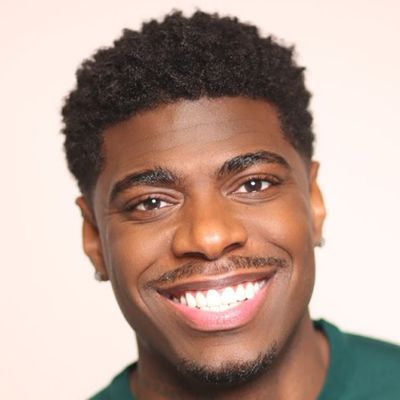
This Detroit native had no idea that one day he would get to play one of the most influential people of his lifetime not once, but twice! Currently starring as Melvin Franklin, one of the original Temptations, his incredibly sexy and powerful bass voice tingles everyone's eardrums 8 times a week in Broadway's Ain't Too Proud... Read More
From the show: The Theatre Podcast with Alan Seales
Guests
Featured Shows

About
This Detroit native had no idea that one day he would get to play one of the most influential people of his lifetime not once, but twice! Currently starring as Melvin Franklin, one of the original Temptations, his incredibly sexy and powerful bass voice tingles everyone's eardrums 8 times a week in Broadway's Ain't Too Proud.
Originally thinking he would be a dolphin trainer, he quickly changed his mind after being given the chance to swim with sharks in open water. His professional career began as a tenacious radio personality on Detroit's HOT 107.5, before following a friend's advice, taking his first headshot as a selfie in front of his bathtub's curtain, and then landing his Broadway debut in Motown the Musical.
Connect with Jawan online:
- Twitter: jawanjackson4
- IG: jawanjackson
Connect with The Theatre Podcast:
- Support us on Patreon: Patreon.com/TheTheatrePodcast
- TikTok: @thetheatrepodcast
- Twitter & Instagram: @theatre_podcast
- Facebook.com/OfficialTheatrePodcast
- TheTheatrePodcast.com
- Alan's personal Instagram: @alanseales
- Jillian's personal Instagram: @jillianhochman
- Email me at feedback@thetheatrepodcast.com. I want to know what you think.
Thank you to our friends Jukebox The Ghost for our intro and outro music. You can find them on Instagram, Twitter, and Facebook @jukeboxtheghost or via the web via jukeboxtheghost.com.
A very special thanks to our patrons who help make this podcast possible!
If you would like to see your name in this show notes or get a shout out on the pod itself, visit ttp.fm/patreon to become a member and show your support!
Transcript
This transcript was automatically generated and might contain errors.
[0:00] Alan Seales: Welcome to The Theatre Podcast, intimate personal conversations with theatre's biggest names.
[0:10] Unknown speaker: I'm your host, Otis Williams. And I'm Diana Ross. And today we spoke with Jawan Jackson.
[0:17] Unknown speaker: Oh my goodness, this dude, his voice. I love it so much. It is down there. He is one of the few bass basses that is in Broadway. Incredible. We talk about in the episode that there's very few like true basses on Broadway so that they all find each other and like will flock to each other and talk about where do you get your voice lessons? Why do you do this and all that? And it's so cool. I love it. I thought it was fascinating when he says it when he was auditioning for Motown. He was in Detroit, still living in Detroit when he was auditioning for Motown, got offered the part and was like, when do we start touring? Did not know he was auditioning for a Broadway show. And then made his Broadway debut. That's fantastic, though. That's, that's just cool. Like, you're just doing your thing. But that also shows his character of he puts his effort into everything no matter what. Like he's gonna try his best and I definitely appreciate that.
[1:16] Unknown speaker: Yeah, yeah. He was saying, too, that, you know, he went from Detroit straight to New York to start the production of Motown and then was in it the entire run for two and a half years and then got out. And again, he's one of these other actors we've talked to that's like, all right, New York, here I am and had a huge reality check because all of a sudden he has no job and he's never filed for unemployment before. And so what does he do? He gets a call center. He gets a job in a call center for Broadway.com of all places. In which people only want to talk to him because of his voice. He's someone who he just keeps going. He talks about he creates new dreams and he just keeps going. But you've seen the show, right?
[2:03] Unknown speaker: Yeah. He's so infectious and so wonderful. I've seen it three times now and every time I'm just like, I just can't look away. That smile, you can see it from all the way in the back.
[2:08] Unknown speaker: Oh, yeah. It's he is one of a kind and I really, really enjoyed this one.
[2:13] Unknown speaker: Yeah, me too. So before we get into this episode, please go to ttp.fm slash Patreon to show your support. And for those of you on the five dollar tier or higher, you got to know that we were going to interview you on today and got to ask some questions that we included in the episode. So please help us keep the lights on. It is all much appreciated. Find us on social theater underscore podcast. And now, everyone, please enjoy this episode with Jawan Jackson.
[2:51] Alan Seales: My guest today is an actor, singer, radio personality and voiceover artist. He made his Broadway debut in 2013's Motown the Musical and is now starring as Melvin Franklin in Ain't Too Proud. Jawan Jackson, welcome to The Theatre Podcast.
[3:02] Jawan Jackson: Thank you so much. It's such a pleasure.
[3:09] Alan Seales: No, that's not your normal voice. That's your radio voice.
[3:12] Jawan Jackson: That's my radio voice. You know, I actually pitch my speaking voice higher so people can understand me because I normally want to just talk here. So this is your normal voice. This is just normal, Jawan, when I'm chilling like at home and don't feel like talking. But here is, you know, more friendly, welcoming, Jawan, you know, it draws you in more and it makes it more interesting. But I literally love to live down here. I love to live down there. But like at a loud party and stuff, that's a frequency that doesn't carry very well. You know, and I actually get a kick out of like whispering in people's ears in parties because I'm just like, you're going to hear me because I'm not going to yell over it and I'm not going to throw my voice out.
So I'm always in somebody's ear at a party, especially loud parties. So you're like, hey, like, you know, I talk just like this. I'm because deeper tones you can hear, you know, versus like someone screaming at you. You're like, wait, wait, wait, wait. But, well, that's doing a little something for me.
[4:07] Alan Seales: OK, so let's get back to our standard stuff here. Normally we goof around and we do like ASMR on this. We're like, I always want to do one of those.
[4:13] Jawan Jackson: Yes. The ASMR always gets cut. Like the listeners don't normally hear it, but oh, let's drink some water.
[4:19] Alan Seales: Yeah, OK, we'll keep this one. Chick-fil-A ice. So good. All right. So tell me, you grew up in Detroit.
[4:26] Jawan Jackson: Yes. Born and raised.
[4:33] Jawan Jackson: Born and raised in Detroit. So your Broadway career has been all around Motown.
[4:39] Jawan Jackson: Just through and through Motown. I feel like Detroit has blessed me with a gift of, you know, spreading the art to the world about my city. And so I've just been blessed, you know, to be able to represent in such a way in both the shows I've done now, being the only Detroiter in the cast, you know, in both instances that, you know, I was representing Detroit.
[5:00] Alan Seales: And you played Melvin Franklin in both shows.
[5:05] Jawan Jackson: Both times.
[5:09] Alan Seales: You're the go to Melvin Franklin.
[5:09] Jawan Jackson: Listen, you know, that's what I wanted to, you know, I set out to be I said I wanted to be the Broadway's bass, you know, so whatever that means, if it's Melvin, you know, if it's whatever, like I want to be the go to, period.
[5:15] Alan Seales: Are there a lot of other like bass bass people like this? Because I mean, you hear it like Patrick from from Hadestown. He lives down there, too. But like other than you and him, I couldn't name anybody else.
[5:23] Jawan Jackson: There's a couple. Dwayne Cooper is another one. Right now he sings with the Doo-Wop Project. And there's a couple others. I mean, because there are not many basses, like when I do meet another bass, we like, you know, flock to each other. Oh, who you go to? Who's your voice teacher? Where you been at? Like, how long you in the city for? And then, you know, a lot of them are in, you know, opera. And there's another guy named Brandon, who's a monster bass. He's a monster. And he's just like, and he's so big and fit. He looks like a supermodel and a bodybuilder all at the same time. But his voice is like really, really beautiful. I mean, you get all the basses in a room and just like, all you gotta do is hum and the walls start rattling.
I would love to do that one day. I just want it. We need to have a cabaret just like all the basses, you know. I think it'd be interesting. I oh, oh, I'm I'm I need to be a songwriter. All right. You hear that songwriters write, write an a cappella, a couple of a cappella arrangements for all basses. Come on. You can do it. You can do it.
[6:34] Alan Seales: All right. All right. So Detroit, you, you got it. How did you get into music? How did you get into singing and performing? Like, tell me about that whole history.
[6:43] Jawan Jackson: Yeah. So singing has been a part of my, my life all my life. I'm a pastor's kid. My grandfather's a pastor. I was a preacher. My cousin's a preacher. And so I've always grew up in a church. Gospel is, you know, in my bones. And, you know, from there I kind of, you know, branched out to, you know, the, the R&Bs and the jazz and my grandmother, she loves blues. And so, you know, I grew up on that. And so I remember the first time I was watching the 1986 Soul Train Awards in that year. And I'm, I was born in a 87. And so she had it recorded on VHS. And I was just like, you know, I guess she had put it in. I forget at the time how old I was, but I found these tapes and I watched it and, you know, Whitney Houston was on it and Dionne Warwick and Luther Vandross and Stevie Wonder and, you know, all these like great singers that we now know today, you know, and that was Whitney Houston's actual like first appearance of her singing her single, You Give Good Love.
[7:50] Alan Seales: Really?
[7:51] Jawan Jackson: Uh-huh. And I, and I watched it and I memorized that tape over and over again, the commercials included. And, you know, that I just fell in love with like just their voices, you know, and them singing, you know, That's What Friends Are For with Luther Vandross, Whitney Houston, Dionne Warwick and Stevie Wonder, just them powerhouse singers just singing that song. And then at the end, it was this gospel tribute with all of the major gospel artists, you know, and you had Shirley Caesar and Vanessa Bell Armstrong, my two favorite female gospel singers. And so I would play that over and over and over and over and over again. And then eventually I started singing back and then I started singing into my, my parents like creep around the room. It was like, oh, this boy is singing, let's do something with him. And so, you know, they put me in a choir.
[8:39] Alan Seales: How old were you right now?
[8:40] Jawan Jackson: Right now?
[8:41] Alan Seales: In the story.
[8:42] Jawan Jackson: At that time, I was like eight, eight or nine. And then from there, I just started, they started putting me like talent shows. And then my very first talent show song was, and I shouldn't be, I shouldn't have been singing at that age, but it was Sleeping In My Bed by Drew Hill. I got this feeling and I just can't turn it loose. I'm like, oh my goodness. I shouldn't have to have been singing that song.
[9:09] Alan Seales: That is not age appropriate.
[9:10] Jawan Jackson: But I was in day camp and I sang that song at the talent show for the first time. And then, you know, from there on, it was just like, we on and popping. And like, the girls is like crazy. And everybody, the adults was like, oh boy, they throwing money at me. And so it was a, it was a whole thing. And so, you know, needless to say, growing up in grade school, I became like the guy who was singing. And that was like my node too. So I used to try to have this persona where, and I'm embarrassed to say it now, and I hope the picture never like circulates and find itself. But there's, I used to, I gel, like I perm my hair. Cause I used to love waves. I had waves short hair. I perm my hair and then I put gel to slick it down. So the, so when the sun hit, my hair is shine. It looked crazy. It looked crazy, but, you know, that was the style. And I just, you know, I wanted to, I thought I wanted to be an R&B singer.
[10:01] Alan Seales: It's like mid nineties.
[10:01] Jawan Jackson: Yeah. You know, the nineties, you know, the Tevin Campbells and all those groups. And Can We Talk was another song that I would sing too. It's like singing all those high songs. And then my voice dropped.
[10:12] Alan Seales: Oh, oh yeah. Yeah.
[10:13] Jawan Jackson: Cause then there's that part.
[10:14] Alan Seales: Cause there was a, oh yeah, and then you down there.
[10:17] Jawan Jackson: Exactly. Exactly.
[10:19] Alan Seales: And where you, so you were singing all that, all the Motown. So not coming from Detroit, I came from Florida and then North Carolina, like kind of literally as far away you get from Detroit in the US. Well, I guess I could have been on the West coast, but who counts that? Just getting West coast. I'm trying to dig myself out of a hole and I'm making it worse.
[10:35] Jawan Jackson: It's okay. I got your back. He's a good person.
[10:44] Alan Seales: Thank you. Um, yeah, so I, I grew up like in the Bible belt and we didn't have a lot of music. Like it's still very, uh, you know, I gotta say like a Republican kind of state and, and gospel, soul music was not well accepted because there was a lot of Confederate flags still flying there today, which is not, you know, I'm not proud of. Um, so like growing up your childhood, uh, was, was the Motown music. Was that, that was just normal. That was just what was on the radio. Like, you know, the roots, the roots of, of the city.
[11:26] Jawan Jackson: Absolutely. We had, I literally grew up with every genre, um, in my household, um, and listened to it on the radio. And because I went to a school that wasn't, um, predominantly black, I went to, I had every, it was like a melting pot of, of races and nationalities. And so because of that, I was exposed to so many different, you know, genres of music through my friends, you know, I had Arabic friends, I had Chinese friends, I had Japanese friends, I had, you know, everything. And so they, you know, we would bounce off each other and like, you know, and then on the radio, you know, Motown was just a thing. It was, you know, a thing. And like the Motown artists would be coming to our schools, like Anita Baker, you know, her son was, you know, playing in, uh, we was rivaling high schools and she would come and she'd be sitting in the audience just like, and so we, I grew up with all these like legends, you know, Martha Reason, the Vandellas, like of the Vandellas, um, she was my dancing partner.
Like we would dance ballroom dance and, you know, we'd see each other at parties and just like cut a rug, you know, with each other. And so I, it, it kind of was normal, you know, because my family also knew and grew up with these people because they were, you know, they all went to school together and they were hometown heroes, our hometown heroes. And so, you know, that's just through and through what my life was. And so I never had, I couldn't think of anything else outside of not having the music I grew up in or not listening to this music.
[12:53] Alan Seales: So music, music was a part of you. I mean, your childhood, it was just part of your every day, which I think, you know, kids should have in some form or another, but then, you know, high school comes, did you know?
[13:06] Jawan Jackson: When did you know you wanted to get into theater? And did you ever think you'd be performing or were you just like, I want to go in? You know, I gave it a shot in the eighth grade, which was my first production, like theater production. And that was Joseph and the Amazing Technicolor Dreamcoat. And that was right as I was making the transition from, I say, tenor to bass baritone. And so, you know, I got a part in the ensemble and I got my first solo line. I got to sing my first solo line in that production. And then, you know, that was kind of like the bug, because my cousin at the time who was in high school, she was in like an eleventh, twelfth grade. My very first production watching was Hello, Dolly.
And she was, you know, the girlfriend. And so, you know, that was kind of I was kind of like, wow, like they're out there singing and dancing. So just to see, I was like, I want to do something like that. And so that's why I got into, you know, Joseph. And then the next one, I think the next year was like Music Man, the next show I did. And then I did another, A Filler on the Roof. So I did those three productions throughout my high school career. And, you know, but I was also singing in a gospel choir and singing in the school choir. And I was also a marching band. And I was also like doing so many other things. Like I was I wanted to do everything. I didn't know what I wanted to do exactly. But I knew music was always been my through line.
[14:36] Alan Seales: So then you went to Eastern Michigan University. And what'd you get your degree in?
[14:38] Jawan Jackson: I got my degree in communication, theater arts with a minor in biology. That's a little that's different. I went to school for biology, biochemistry.
[14:45] Alan Seales: Really? Because I wanted to be a dolphin trainer.
[14:49] Jawan Jackson: I wanted to train dolphins and work at SeaWorld because I thought I had to go to college in order to do that. And so I set out and marked my career to become a dolphin trainer because I love the animal. I love to watch the animal planet. I love, you know, just I was that kid. And I, you know, went to school and then I end up getting an internship working for Disney. And so that took me to Florida. And I worked there for a year as a manager, housekeeping manager for Port Orleans Resort. And then while I was there, I would like volunteer. And then I got in the water with sharks, you know, thinking that like, OK, this is what I want to do. And like helping out wildlife and doing that. And I got in the water.
I was like, yeah, I don't belong here. Get me out of here. And I promise it was like I said a prayer in the water. I was like, Lord, if you get me out of here, I'll never come back to it again. And like it was like a movie, like a rock appeared and I swam over to the rock. And I was like, yeah, y'all come get me. I'm not getting back in the water, you know, and it wasn't in a cage. You were just no water swimming all around me. Like like it was nobody's business. I was like, I don't care how docile they are, like that. They're wild, you know. And then like what's his name? Crocodile Hunter had just gotten killed probably like two years prior. Yeah. Yeah. Well, by the stingray. I was like, that's not about to be my story. I have a lot, you know, in between my dad's still to live. Like, you know.
[16:18] Alan Seales: Well, so then your career began as a radio personality. You came back, I guess, in Florida.
[16:22] Jawan Jackson: Yeah. So I came back and then not know what I really want to do. I was like, but this was that wasn't it. And so I took I started taking electives. And then one of the electives was an improv class. And so from that improv class, I sparked up a relationship with my now, you know, still mentor friend, Professor Dekki Alexander. And, you know, she just like, you know, we took the class and she made me fall in love with acting. And she was like, you have a great voice. You have a great speaking voice. You have a great presence. She was like, there's an audition coming up, a show coming up, and I think you'll be perfect for it. And, you know, part of it is for the narrator. You should audition. And I went in, I was like, OK, whatever.
And I went on, auditioned and got the part. And then that was my first production in college was called Bud Not Buddy. The book that was written by Christopher Paul Curtis. And I played the narrator and I played this character called Steady Eddie. And so he was one of the band members. And he was like the jokester. I feel like I've been playing the jokester. It's been like, I don't know where these comedic chops came from. I promise you, I do not know. Maybe it came from my cousins, because me and my cousins are always like, you know, capping on each other and like playing the dozens. And so maybe that. But so he was a comedic role. And then the narrator was, you know, very cool and subdued, like, you know, just draws in the audience.
Listen to my voice. And then this happened. And now we're going back to Steady Eddie. You know, it's just like one of those things. It's like, so I did that. And then I got the bug. That's when I got the bug. And then I started like doing that. She, I mean, Decky would take me over to like, she's like, OK, well, these theater troops, you know, are doing something you should join this or we're doing something for the teachers, you know, for a presentation for the whole university, you know, come write pieces with us and like help us set up this formula and then show it to the faculty to train them. And so then I started doing that and then working for University of Michigan. And so what we would do is it was all improv course.
And so we have like six, seven actors in a room for a week. And then we're like putting together like simulation things of what would happen in the classroom for like these medical professors. And then we'll have the teachers will come in and then they'll ask us questions and we'll in character answer them, you know, based on the information and the stuff that we're given. And so that's what kind of got me like building up my improvisational skills and everything, because those teachers would they would ask like real questions like we were like, you know, you know, conflicting for real. Just like, well, why would you, you know, take his paper and then go, you know, it was just like crazy stuff. I was just like, wow, like, OK, cool. Let's roll with the punches.
[19:15] Alan Seales: Did you just go in with your backstory? You made up a whole story.
[19:17] Jawan Jackson: I had, you know, like characters and like family members. I got everything. I came prepared. And OK, so how did you get on to Detroit's Hot 107.5?
[19:30] Jawan Jackson: That was top radio station back then. That was a top radio station. And now that's an interesting story, too. I was coming home from church and I just graduated from college and I was looking for a job. I was like, Lord, I need a job. And I was riding on the freeway. And the guy says, hey, I'm looking for interns, you know, to be a part of my show, if you're interested, send me your resume, you know, call me at this number, blah, blah, blah, you know. And I'm like, OK, perfect. This is I always want to be on the radio. Get into that. And then sent it in, met with him. And the meeting went really, really well. Like and he gave it to me right on the spot. And he was like, you know what? I normally don't hire men.
I just don't work with men because they're lazy. They don't do well. He was like, but it's something about you that I feel like I'm going to be OK. And so I started working with this show called The Car Man Show. And that was an automotive talk show. And then so I was on I start bumping around different stations in Detroit. So we were on Hot 107.5. We were on 102.7. We were on all these stations like all over. And it basically was like I was like I became the social media guy. The current events, when when Twitter started jumping off, really, you know, was popular. Instagram wasn't a thing then, you know, it's just like starting. And then from there, we turned that into a TV show. So it went from Car Man, the radio show, the Car Man, the TV show. And my job duties became bigger and bigger and bigger and bigger. And then from that opportunity, I just learned so many things.
[21:07] Alan Seales: And so much stuff from them. Were you on air or were you like producing and doing stuff?
[21:11] Jawan Jackson: I was doing I was doing everything I was producing. I was on air. I was like running errands. I was getting coffees. I was like, he had me doing everything, you know, he was just throwing stuff at me to see how much I can handle. And at every feed, I was like, I'm determined because this is what I wanted to do. You know, and I just think that especially in the industry. And I and I learned this earlier on is that part of where I am today is because I have sold into myself and sold to other people. And so I knew that if I poured into him is just into his business, into his dream, that my my my return will come, you know, and end up working out that way. And so that's why I always tell anybody who's looking to get in the industry.
I'm like, you have to serve and you have to, you know, you're going to be you're going to be doing it for free because I wasn't getting paid, by the way. I was not getting paid for that job. And he would give me like incentives and stuff, but it wasn't like an hourly, weekly check, you know. And so I had to really just like make it work. But I tell everybody, serve first, because once you get where you need to be, you're going to appreciate it more, you know, and you'll know what it feels like to work hard and to have it.
[22:23] Alan Seales: You got perspective.
[22:24] Jawan Jackson: Oh, absolutely. Yeah, you get perspective because you like once you get it, you don't take it for granted. Absolutely. And it helps you learn from other folks mistakes. Yes. You know, so you think, you know, you're doing something that's meaningless, but it's actually preparing you and teaching you. And so, you know, that was the biggest, the biggest thing that I learned, you know, from helping others.
[22:43] Alan Seales: Do you have a DJ name or an on-air name?
[22:44] Jawan Jackson: No, I couldn't find a name at the time. And I was I was searching. I was looking for one, looking, looking, looking. And I was like, I'm going to change my name. I'm going to do something. And I was like, and it just, Juwan just stuck. I was like, just be yourself, you know, just be yourself.
[23:00] Alan Seales: Well, it seemed it seemed to work. Give me one of the give me one of your deep commercial break.
[23:04] Jawan Jackson: Good heading into commercial break. Goodness. So you're listening to Hot 107.5 here in Detroit's hot radio station. That's one of my, you know, commercial ones. Jen and Riley back here look at us like, what? But you're publicist. You've got to hear this with the headphones on. This makes a difference. After we're done, we'll have them speak into the mic for the two of you. Because it like reverberates in the headphones here.
[23:30] Jawan Jackson: Oh, so nice. Gives me the shivers. That's good. OK, so, yeah, graduation, you were saying is, yeah, you you were doing the program to help develop high school students.
[23:38] Alan Seales: Yeah. Who also had a passion for pursuing a career in acting arts. And is that so is that the improv thing you're telling me about? Or is that something different?
[23:49] Jawan Jackson: That was something completely different. So after I I was I was doing like a million and one things because I want I was just gold driven and I was like, I don't want to be here in Detroit any longer. I want to be famous. And so whatever I got to do to become a hometown like celebrity or whatever I need to do, I need to do it. And so I was teaching during the day, during the week. And I was teaching theater to high school as a middle schooler. So we would do was we would go into these high schools, you know, in the Ypsilanti, Ann Arbor area who didn't have kind of like a theater program, a strong theater program, go in there, teach them, you know, theater and go. I'll leave and go to the next school and do the same thing.
And then it became an after after school program. And so they would be getting incentives, you know, from area high schoolers to work with college students, partner with college students in order to. And then they end up getting like a college credit at the end. You know, so it's incentive, you know, to further educate and to help the school systems out. And so I was doing that and I was loving it. And and then I was doing the radio TV stuff on the on the on the weekends. Also going to church and doing church events. I was doing midnight musicals. I was doing hosting the concerts. I was hosting like everything. And I was like starting to make a name for myself. And then I end up joining. I left the Car Man show and I joined this show called On the Go with Tiffany Patton, which was kind of like a more on like in your face, like remote.
We were in a we were interviewing celebrities who go to a concert series. So I got to interview Music's old child. And who else? Maya Angelou was one of them. And really, it was so many, so many people that, you know, I got to like a chance to talk to and speak to it. That became a thing. And I was one I was one of three co-hosts there. And that actually, you know, was a journey and a hard lesson, you know, to take down, because also I was doing that for free, too. And that was another thing like trying to sacrifice what you want to do for somebody else's dream. And, you know, I love her to death. And, you know, but the story is like really, really real. What ended up making me like
[26:11] Jawan Jackson: Trying to work on my own stuff, because with radio shows and co-hosting and things happened, like fliers would come out, and we started the show as three. And so before the show had even gave birth to its first episode, we had meetings collectively. And we was like, okay, you're going to be a co-host, you're going to be a co-host, you're going to be, I'm going to be a co-host, and this is how we're going to run it. And so the flyers ended up coming out, and she had pictures of herself and another guy on there. And so I was like, I looked at the flyers and said, hey, I'm not on the flyer. I thought I was a co-host with y'all. She's like, you are. She was like, but don't nobody know who you are.
So we have the bigger name. And so I was like, oh, okay, cool. And so that was the heart, that was like a wake-up call for me. So I felt it was my sound, like, okay, get your stuff together. And so from there I was like, I'm going to serve in this position and give my best, but I am like now checked out and done because now I'm working on myself and all my stuff. And so from there, Sparkle came to the city, Whitney Houston's last movie. And then I sent in for background work for that, got that, and then started doing stuff on that set and was working on that, was in that movie. And that was kind of like my first professional TV movie gig. And that led to—
[27:44] Alan Seales: You met Whitney, yeah?
[27:45] Jawan Jackson: Yes, I met Whitney. Not only did I meet her, I got to sit in on a singing lesson with her and Jordan Sparks. Between takes, Whitney was teaching Jordan Sparks how to sing "I Will Always Love You." It's crazy.
[28:02] Alan Seales: Oh, man. I wish you had cell phones—
[28:04] Jawan Jackson: Listen, I was trying to be like, just stickler to the rules, everybody else snapping pictures and I'm like, shoot, I ain't bring my phone. And it was crazy. That whole set just in general was just so great and so peaceful. All the interviews that people are saying and going around about people saying Whitney was a joy to be around, she really truly was. She came on set, they told us specifically, do not look the actors in the eye, do not say nothing to them, do not ask to take pictures, don't ask for autographs, don't have a conversation. This is what the people who are running the extras and everything was doing. And as soon as Whitney got on set, she walked up to me, was like, good morning.
And I was like, who, me? She was like, yes, you. Good morning. I was like, good morning. And so it was just like, how you doing? I was like, I'm well, Ms. Houston. And then I just met her. I was like, I love you so much. And I was like, turned into a fanboy. But then I was like, get it together, Jawan, get it together. And I can see the ADs and everybody cutting his eyes. So it was like, she spoke to me, I ain't speak to her. What you going to tell me to tell Whitney Houston, no, don't say nothing to her? No, I'm not. But it was great. And Jordan was so great. She was really, really sweet. Derek Luke, just working with that whole cast. Who else was on there? Tika Sumpter, who is beautiful in person. She was like my first crush. I was like, I've never seen a girl so pretty in my life. And then I got here to entertain them. I'm like, oh, everybody's pretty. Got it. Everybody's pretty.
[29:39] Alan Seales: You never forget your first.
[29:40] Jawan Jackson: You never forget your first. She was a good first.
[29:43] Alan Seales: Okay. So then how did you get to New York then?
[29:46] Jawan Jackson: So I got to New York, every day I would search for auditions. Still in Detroit.
[29:49] Alan Seales: Yes, still in Detroit.
[29:51] Jawan Jackson: Yes, still working, still teaching, still do radio, gigging. But every day, religiously, before I went out to work, I would get up in the morning and I would search for auditions that were either local or out of town that I could do that flow with my job schedule. And at the time I was doing a show called The Wiz of Motown. And I don't know why or how, but my uncle had the newspaper and I just was like, well, let me just read the newspaper. Bored. And in the classifieds, random place, there's an audition saying, hey, audition for Motown the musical, come in. And if you're interested, email this, whatever. And so found it. It was like little. And I sent the email, got a response back and auditioned in Detroit at a school at the Marvin Winans Academy.
And at the time I was also doing a reunion concert for my college choir. So The Wiz of Motown, college choir reunion. I was like, oh, how I'm going to do it? That was a Saturday morning. I'll never forget it. It was a Saturday morning. I went in early. I was like the 10th person there. Went in, auditioned. I sang "Papa Was a Rolling Stone." That was the first time I had to bring sheet music and do all that because I didn't know. I didn't have a headshot. So what I did was I went in my bathroom in my curtain and I took a selfie in my suit. I had a black suit on, white shirt, black tie, and just took a selfie and then printed it out and then submitted it. A week later, they sent me emails like, okay, we want you to record you singing this.
And so I was in rehearsals at the time. And so after rehearsal, my friends said we set up the camera. We did the sides. And then I had to sing the line in "Ball of Confusion" and the band played on. And they wanted me to hit a low C because they were looking for the bass or whatever. And so I did that and I was like, I feel funky about it. I probably won't get it, whatever. A week later, they emailed me again and said, hey, it's another audition. We want you to audition at the Motown Museum. And so I'm like, okay, cool. And at that time, I was at another audition trying to become a part of this touring company with the gospel singer, Jackie Clark Chisholm, who's in the infamous Clark Singers, Clark Sisters.
And so she was starting a choir and a theater thing or whatever. And so went there. And right after there, I went to the Motown audition and I auditioned and it was in the room, Charles Randolph Wright, which is our director, Brandon Victor Dixon and Valicia Leque, who is our Barry and Diana. And it was raining and they looked like they were tired, like they had just gotten in. And I remember Brandon and Valicia's huddled in the corner, sleep, just uninterested in being there. And then I walk in the room and I was like, hey, how you doing? And Detroit style baggy clothes. And then it was like, what are you going to sing? I was like, "Papa Was a Rolling Stone." And so it's like, all right, let's go.
And so started singing. And then as soon as I started singing, Brandon and Valicia sat up and their eyes got big. It was like, wait a minute. We need, you're like, that's him, that's him, that's him. And so I didn't think nothing of it. So I'm like, okay, I'm not going anywhere. So then they sent me back, had me come back in and read the sides. So they were like, do you know how to dance? I was like, no, I can club dance though. That was my thing. I was like, I can club dance. I can do whatever you want, but I don't have choreography. I've never done it. So they was like, okay, watch the Temptations, watch their styles. Try to familiarize yourself. I said, okay, cool. Week later, they flew me out to New York.
By the way, not knowing this was a Broadway show at the time. And so flew me out to New York. I auditioned and I sang the same song again. And then I didn't know the proper protocol for auditions. And so again, I'm in Timberlands, I'm in some baggy jeans, I'm in a big oversized, like long sleeve button-up. And they're like, you're about to have a dance call. So I'm like, what's a dance call? And so we're in this room, I'm with 20 other people and they're dancing us. And I'm like, I am not prepared for this. I'm sweating, drenched in sweat, big clothes, can't move. And I'm looking like a chicken with his head cut off. And so then they tell everybody to leave and then they cut us down to like five.
And so they bring me back in the room and they had me sing again and I sing again. Then that five went down to three, me and two other people. And then Patti Wilcox, our second choreographer, she takes me in the back room and she works with me on choreography for about an hour. She's like patient, she's like going step by step. And so she was like, okay, he's teachable. He can pick it up, he knows. And so I go back in, sing and I'm dancing and I'm still feeling defeated because I was like, I feel stupid. Leave, go home, fly back to Detroit. Next day, my friend calls like, how did the audition go? I was like, I don't think I got it. It's not about to be good. I'm like, whatever, I got other things going on.
It's still a good time. And so phone rings and it's somebody from Motown. It was like, hi, it's such and such from Motown, just call and talk to Juwan. I said, well, what's it about? He was like, you got the part of blah, blah, blah, blah. And I'm like, stop playing on my phone. I hung up on him.
[35:55] Jawan Jackson: What? Hung up. I hung up on the man and I clicked back over to my friend. I say, yo, why are you playing on my phone? I just told you I didn't think I got any. You got somebody calling, playing on my phone. Like who is that playing? He was like, what are you talking about? I was like, you just had somebody call and tell me I got the job and I just told you that I didn't think I did good. He's like, that wasn't me. Call them back. And so I'm like, oh, all right. I hang up, call him back and he goes again. He's chipper. I can't remember his name. He's like, hi, it's such and such. I just wanted to call and say that you got the part in Motown playing Melvin Franklin. So I'm like, are you serious?
He's like, yeah. So I'm like, okay, cool. So he's like, yeah, so you have to move to New York. And I said, okay, move to New York. That's fine. I'm thinking that's just where rehearsals were. We're going to tour. And so he was like, so you'll be making this amount. So I'm like, he's telling me the number and I was like, every two weeks. Okay, whatever. Calculate. Because I'm like, my rent is this much. New York's expensive. How I'm going to get around? It's weekly. I didn't know that. I did not know that. And so he was like, after it was all said and done, so I repeated it back to him. I was like, so, okay, I'm making this every two weeks. He's like, no, no, no, no. That's every week. And then I lost it.
And I was like, wait, what? Okay, cool. I can deal with that. That's good. So I was like, okay, so when do we start going on tour? He's like, no, it's Broadway. I said, Broadway, Broadway? He's like, yeah. And so that's when I ran around my apartment. I was screaming. And I remember my roommate, he had just gotten off work. He worked the night shift and he slept during the day. And I ran in his room. I was like, I made it. I made it. I was like, I made it. He's like, what the hell are you talking about? I was like, I'm going to Broadway. I'm making this much money a week. I remember calling. I called my friend. She was in South Korea at the time. And just bawling on Skype, crying. I can't believe I did it.
I'm moving to New York. I'm on Broadway. It's about to be a thing. And that was the best moment of my life at that time. That's where I felt like I got my validation that I was good enough, that all my hard work was paying off because I was trying so hard and it wasn't nothing hitting the way I wanted to hit. I had a good life. I was making consistent money. I was doing the things I wanted to do, but it wasn't fulfilling enough. And that's been a dream of mine since I was 12 years old, to be on Broadway. And so it was just like, everything was just coming together. And the way I moved out here was the smoothest transition. I auditioned 12, 12, 12. And then I got the actual job, the 13th. And then I moved out here January 6th.
And I found an apartment. I had my jobs, everything transitioned well. I was teaching people how to move that, so that was self-sufficient. The radio show was done because I had left them. And so everything just flowed. And I moved out here and it was like, here you are on Broadway and ensemble.
[39:17] Jawan Jackson: At the time, they were deciding if they were going to make Temptations a principal. And so at first, that's what they were talking about. So I was like, oh, I'm about to be a principal on Broadway. But then they went into going somewhere else. But we were still heavily marketed because anytime we needed to go and do press events, they sent the Temptations out. So I got to do Kelly and Michael. I got to do Good Morning America. I got to do all these different things and events, you know, because of the group. And so I was like, wow, like I made it, you know, thinking that this was it until it closed. And so it ran, how long did it run? It ran for two and a half years.
[39:58] Alan Seales: You did it the whole time?
[40:00] Jawan Jackson: Yeah. So I was out for six weeks of that run because I got, I injured my shoulder and I had shoulder surgery. And so the whole, but the whole time I was there.
[40:08] Alan Seales: Okay. So you were, yeah, you were there two and a half years. And then when did Ain't Too Proud start coming into your life?
[40:18] Jawan Jackson: Ain't Too Proud didn't come into my life till last year, last January is when I auditioned for Ain't Too Proud.
[40:23] Alan Seales: Really?
[40:24] Jawan Jackson: Yeah. But I had heard about Ain't Too Proud probably like a year prior. And my friend, Felicia Boswell, who was doing a workshop, a reading at the time with them, you know, she had told me about it. I didn't think too much of it. She was like, she did the reading and she called me immediately after. She was like, Jawan, she was like, I'm doing this reading about The Temptations and you need to be in this room. And I'm like, oh, okay, Felicia. Like, cool. She's like, no, no, no, no, no, no. She was like, I went up to the playwright and told her, the guy that you got playing Melvin, that ain't it. It's my friend, Jawan. Give me your email. And so she took Dominique's email and then she was like, I'm going to send you her information so you can email her.
And so I'm like, okay, whatever. And so I emailed Dominique because of my friend. I'm like, hey, my friend Felicia said, blah, blah, blah. I just want to introduce myself. How you doing? Blah, blah, blah. Sent it. I never heard anything back from it. So I didn't think anything of it. And so the process went on and I had been still hearing. So I was like, well, let me try to get something. Couldn't get an audition for nothing.
[41:32] Alan Seales: Because you didn't have an agent, right?
[41:34] Jawan Jackson: I didn't have an agent. I had a manager, but he wasn't heavily in the theater. And so it was no way to get in there. And I didn't know who was cast because everything was under wraps. They wouldn't tell anything. And so it was Ephraim and Derek who, once they were going on and were on board with the project, it was like a memorial day or a labor day. It was one of the holidays. We were all at a friend's house. And so Derek was like, hey, are you coming in for Ain't Too Proud? I'm like, no, I couldn't get an audition. You're like, you couldn't get an audition? Man, don't worry about it. You're like, we got you. And so probably six months later after Berklee, once they found out that the guy wasn't going on forward, they called and was like, get ready.
Your audition's coming. And he sent me the script and Ephraim was like, read the script, listen to the music in succession and tell us what you think about it. And I read the script. I was like, I need to be a part of this. I need to be a part of this. And auditioned. And at the time I auditioned for Jesus Christ Superstar in Chicago. And so they were sending me back and forth and I booked the part as Caiaphas in Jesus Christ Superstar. And my audition for Ain't Too Proud was like two days later. And so I was like, I'm going to go in this and if they don't give it to me, like whatever, I'm already booked. I'm about to be Caiaphas and I'm about to be making some bank. So it's cool. So went in and Mary Sugarman, she came and after our audition, she was like, you're in a great position.
So what are you going to do? She was like, are you going to take Caiaphas or are you going to take Melvin? She's like, what are you going to do? Because you can't do both. And I'm like, you sure? I'm like, I'm going to try to make it work. Me being greedy. So I did that on my lunch break while working for broadway.com.
[43:32] Alan Seales: Right, right. Because you were in the call center.
[43:34] Jawan Jackson: Yeah, I was on call center answering phone calls, getting in trouble by people who would call and they get attached to my voice or fall in love and then only specifically ask for me or just like, you just sound so good. Just continue to talk to me. You just make me feel happy. I was like, ma'am, there is a cue. I would love to sit here and talk to you, but you are now done. Have a great day. But that was fun. That taught me a lot during that process because that was my in-between time of a working artist in every way. Survival job. Trying to just pay bills and learning to still be able to maneuver in New York and still be having a life that was close, like Broadway adjacent. That allowed me to still partake and do things and not be too far away from my dream. And so that was a great job for me.
[44:32] Alan Seales: Did you think that, I mean, you sort of just fell into Memphis, it sounds like, not even knowing what you were auditioning for, you thought it was a tour, it's not a Broadway.
[44:42] Jawan Jackson: Yeah, I thought it was a tour.
[44:44] Alan Seales: Yes, you come to Broadway, two and a half years on Broadway and then you're done. Did you kind of have to go through a reality check or were you just like, where's my next thing?
[44:52] Jawan Jackson: The biggest one.
[44:53] Alan Seales: Yeah?
[44:54] Jawan Jackson: The biggest one. And it was good and bad for me because going into that to Motown, I checked off every dream goal that I ever had imagined for myself. And so that never comes around, not like that. And so I was faced with what's next, what do I do? I did everything I've ever wanted to do in my life. I met everybody I wanted to meet on my list, I've seen the places I wanted to be, so there's nothing else for me to do. I should go back home. And then I went to LA for a while and I was doing a workshop and one of the guys, and I was telling my testimony and saying, and the guy was like, make another dream, dream bigger than the one you had, like continue to dream. I was like, you're right, I am.
And that's what I'm going to do. But that was my crossroads. And so then from there, I got to travel internationally. I went to South Africa for three weeks and taught there. And then went to London and got to be on Virgin America's first flight from London to Detroit and do a flash mob there, that was great. And so I saw these opportunities when I allowed myself to dream bigger and think outside of just smaller things. And then now this is another dream that's being checked off, because now I have a litany of dreams that it's going to be every, after one check, okay, next, okay, keep going, continue to do it. But I also hit that drought of, I don't know, no one ever taught me once a Broadway show closes, what are you supposed to do?
So I had that moment of, I don't know, I never applied for unemployment because I've always worked. And then I never ate, not ate, because I always had family. So I would go to grandma's house, I would go to cousin's house, I would go to auntie's house, but now it's just me. And my rent back home was $300. So if I didn't have a job at the time, I'm okay. But not having a job out here and have to pay New York rent, oh, uh-uh, forget about it. And so it was a struggle, it was a reality check for me. It was like, okay, you're grown, one. And then two, just hustle. And so from there, I was going to audition, those open calls, audition without an agent, going to the Equity building every morning, waking up, going to the Equity agent audition calls, and signing up online, and doing all those, and just trying to get my face in front of different casting directors, and meeting people, and networking, and really, really grinding and busting my button.
So that was a lot. And then that's when I came to broadway.com. I was like, okay, Jawan, you need to have some consistent money flowing so that you can supply the dream that you're trying to create for yourself. And that's when that came. Well, what was it? Andre De Shields said, the top of one mountain is the bottom of the next. Listen.
[48:09] Alan Seales: Yeah.
[48:10] Jawan Jackson: That's no truer words have been spoken. That is a wise man right there. Did you meet Otis Williams when you were doing Memphis? Or did you meet him for the first time in doing Ain't Too Proud?
[48:19] Alan Seales: Motown.
[48:20] Jawan Jackson: Motown, yeah. I met Otis during Motown, but it was so fast because Otis, he came with the Temptations, and he didn't get to see me perform. So Otis had never saw, he didn't get to see me perform at Motown because right before I sprained my calf, and that's random and weird. And the PT guy was working with me between shows, and it was hurting so bad, he was like, you should not do the show. And so I was like, okay, I'm not going to do the show. And so I went downstairs, I called out when the office was like, I'm not doing the show tonight. And when I went downstairs, this hurts my heart every time I tell the story, because I went downstairs and I was sitting down, and half hour goes, and it was like, at this performance, Juwan's out, such and such is on.
Hey, after the show, Otis Williams and the Temptations are here in the audience, come backstage. And also Brandi Norwood is in the audience, she wants to say hello. I was mad, I was big mad, because Brandi is one of my favorite singers of all time, has been since I was so young. And then to know that the Temptations were there on the night, and I had just called out. And so I was like, oh, I can do the show, I can do it. It was like, no, it's too late, we already made the switch, just sit down. I was like, okay, well, can I stay at least there and watch the show? So they're like, you can stay and watch the show. So I watched the show, and then afterwards, I met him, but it was so brief and so fast, he don't even remember, it was just so much stuff going on.
And so that was the first and only time I had met him prior to that. But then Dennis Edwards had came to the Family and Friends run at Motown, and he was the one, and he's also one of my favorite Temptations, he was my all-time favorite Temptations. And he and I talked, and he cornered us the whole night, and he just gave us a litany of just stories on stories on stories on how this record became to be, and what was going on when they were singing this record, and what Barry Gordy and Norma Whitfield was going through, and Smokey, and then them touring, and how he felt, and then him leaving the group, and then coming back to the group, and how he feels now. It was just so much, and I was just soaking it in, like, oh my God, this is Dennis Edwards.
The Dennis Edwards, the singinest man in the world, Dennis Edwards, singinest. He was just a joy, and just so much love and pouring out, he was like, I want to help you out. He was like, we got to come back, y'all got to go, me and my wife going to take you out for the dinner, and his daughter would come, and his daughter still keeps in touch on Instagram, and it's been great, but then his passing was unfortunate, but I definitely, I take that conversation, and I'll never forget it.
[51:29] Alan Seales: Ain't Too Proud is such an absolute fun show to watch. I mean, the history of The Temps in general is fascinating, and stuff that I didn't know, but the show, the energy level and whatnot, it's incredible. Does the audience sing along with you? Do you hear the audience singing every night?
[51:46] Jawan Jackson: Absolutely. Some more than others. Last night was a prime example. We couldn't get through My Girl. Ephraim comes out, a little reveal, and then as soon as, once the audience goes up, and then they just go for it. It's like, it turns into a karaoke, and then I was like, oh, wait, let me, focus, Jawan, remember what you're singing, because they will take you out, they're singing, they're so excited just to be there, and just the joy that this music sparks in so many people of all colors.
[53:51] Jawan Jackson: I think it was Anna Gunn from Breaking Bad, Walter White's, Ryan Cranston's wife, actor wife. People would be mean to her on the street when they'd see her. I remember reading, yeah, it was her, I was reading an article about this, that people would treat her like her character. She got mean at the end of the show.
[54:15] Alan Seales: Oh, she sure did. Oh, she sure did. But she was scored.
[54:19] Jawan Jackson: Yeah. Ryan Cranston had scored her by the end of the show. He hit her dirty.
[54:23] Alan Seales: I think I just triggered. Did I trigger you?
[54:26] Jawan Jackson: Well, you know, I love that. I love Breaking Bad, first of all. Love Breaking Bad. Love Ryan Cranston too, but he did her dirty.
[54:34] Alan Seales: Yeah, yeah, yeah. I love that show. That was one of the shows that I watch religiously, but I'm a nerd too. So, Battlestar Galactica, another one that I love.
[54:46] Alan Seales: Working with Derek, Ephraim, Jeremy, James, I know Jeremy just left the show, but backstage, on stage, you guys go through so much together. What's it like backstage with all of you?
[54:59] Jawan Jackson: It's the same. We're just goofy. We go through so much with each other. It's definitely a brotherhood. It's one that I definitely appreciate and I love because I don't have brothers of my own, and so to be able to look to them for support and to love and understanding and listening ears and to be a part of each other's lives in every turn now, I wouldn't see myself not being their friend ever outside. I mean, once the show ends or as Jeremy's gone, we have talked every day. It's just a great brotherhood. We definitely love each other, and that's no lie. I just love them. I love every single one of them individually and collectively as a group.
[55:49] Alan Seales: Yeah. You guys gel so well together, and it's such a joy to see you on stage. And then I want to talk real quick about the choreography too, because you said that you're not a dancer.
[56:03] Jawan Jackson: Oh, he's not.
[56:03] Alan Seales: So, was it tough for you to learn the choreography? And I heard that you did a split in the audition, but you don't do it on stage.
[56:10] Jawan Jackson: I don't do it on stage, and I actually called Derek after I did that split and cussed him out on his voicemail. I think he said he still has it because he laughed so hard at it. Because I called him because I went into the dance call, and they did a little combination of Superstar, I Can't Get Next to You, and The Ball of Confusion, and they merged into this one dance number. And because David Ruffin does the splits, they wanted us to do a half split. And Edgar Godina, who is our associate choreographer, he did the splits, and I said, okay, who's going to do that? He was like, you are. I said, no, I'm not. I don't do the splits. I've never done a split. He was like, well, try it. I was like, well, all right.
And I did it, and I got it each time. And then the next day when I went to the final callbacks, I was like, I have to hit this split hard because I want this job. And I hit it. I was sore for weeks. I was sore for weeks. And I remember calling Derek. I was on the train platform. I was like, you didn't tell me that I had to do splits in the audition. I was like, when have you ever seen The Temptation do a split? Melvin Franklin ain't never did no split. So I was like, uh-uh, uh-uh. We ain't doing that. I was like, call me back. So he called me back laughing so hard. He was like, oh, man, no, they just, you know, they make everybody do splits. I was like, you should have warned me before, you know?
But it was an interesting thing. But then I had six-week intensive right after because I couldn't, you know, they had already did the show prior to me joining. So it was kind of like catch-up. And so I worked nine to five, like a day job, learning the choreography. And Esther Antoine was our dance captain. And Edgar, they came in and worked with me every day. And now like looking back at the videos versus, I said I was going to do like a throwback Thursday from where I started to where I am on stage, because I think it's going to be really, really interesting. People are going to laugh and going to love it. So I want to watch out for that one.
[58:27] Alan Seales: Oh, yeah. All right. So you were in the Get Down too, which I'm so upset they canceled that.
[58:36] Jawan Jackson: Oh, it was so good. It was. It was so good. So you were Easy Mike in the Get Down.
[58:41] Jawan Jackson: Yes.
[58:41] Alan Seales: So your manager, did your manager get you that role?
[58:44] Jawan Jackson: My manager got me that one. Yeah.
[58:45] Alan Seales: You said he wasn't in the theater or is he?
[58:46] Jawan Jackson: No, he was, they're mostly a television film. And so that's an interesting, everything always, I got that by chance. I didn't audition for that character. I auditioned for another character, one of the main three or four. And so I went in for that audition. And at the time, they had wrote a new character. Easy Mike is actually Grandmaster Flash's best friend. And so he said, I want to have my best friend in the show. So we need to be able to, we need to put him in the show. And so I was, so then they went through pictures and—
[59:22] Alan Seales: I mean, the real Grandmaster Flash said that.
[59:24] Jawan Jackson: Yeah. The real Grandmaster Flash said that. And so the picture of Easy Mike and I resemble. And so that's how I ended up getting chosen to play Easy Mike. Because I remember when I went to casting, it was like, we're looking for somebody who looks like him. And so we started going through, it was like, Juwan looks just like him. We want him. And so I was set to fly out to Detroit because my grandfather was getting married that weekend. And so I was trying to go out there two days because I was my grandfather's best man. And my manager calls like, Juwan, where are you going? I was like, you know where I'm going. I'm going to Detroit for my grandfather's wedding. Why are you calling me at 12 o'clock at night?
He's like, so you might be on the get down. I say, I might be, or I am. He's like, you might be. They're talking about it now. Casting, he just emailed me to see if you're available. I was like, well, I'm getting on the flight at six o'clock in the morning. Call me back. And so he's like, okay. So it went through. And so they pushed it through, the network approved me, and then they sent me the size that night. And—
[1:00:30] Alan Seales: But that morning, before 6 AM.
[1:00:33] Jawan Jackson: Yes. So I got the size probably like two, three in the morning. And I was like, what am I about to do? Like, okay, cool. Because I was filming that next day too. And so came in, filmed the scene. And that was the first time I met Mamadou, who played Grandmaster Flash. And he had just got, that was a brand new scene. And so he had got pages and pages of just like a monologue just talking. And so I'm just coming in saying my little four lines, five lines or whatever. And then, but he's like doing work and they have to go to the next shot. And like, so we spent all night filming that scene and then we didn't get finished. And so then the director comes like, so I'll see you on Monday too, right?
I'm like, yeah. So I flew home the next day, married my grandfather that morning, that night flew back to Detroit and had to be on set. And I was like, okay, this filming can't go past Tuesday because Tuesday I was set to go to Cancun to marry my best friend. And I was his best man too. So it was two ways back to back. And so I was like, it just can't go over. It just can't. Because I'm going to have to say no. I've been planning this for a while. My grandfather's fine. And so it ended up working out. And so filmed the scene, finished it. And then that was December. April comes and they're like, well, the get down once you back again. I said, oh, I'm back for another scene. It was like, no, they're reshooting the same scene.
So I got paid twice to shoot the same scene that they still did not finish in the TV show. And so the scene that they actually ended up cutting down to was nothing that we had went back and filmed. It cut off so much. It was like six cameras, shots. And I had all this stuff and it just got cut down to nothing. I was like, TV is brutal. It was a fun time. I met so many great people. Yaya, who's now doing everything from Aquaman to just everything. I just met so many great people from that set.
[1:03:01] Alan Seales: Well, we're going to wrap up the podcast here. So I want to ask you the three standard closing questions that we ask everybody. So number one, what motivates you?
[1:03:11] Jawan Jackson: What motivates me is my family, making them proud and always knowing that anytime I go outside that I'm representing them.
[1:03:21] Alan Seales: All right. Number two, what advice would you give to your younger self and younger people now starting out down a similar path?
[1:03:24] Jawan Jackson: Just don't be so silly. Make sure your eye is open and don't trust people, but always just be very careful on the people that you link to your life and the things that you get into because it can lead you down a potentially dark path.
[1:03:48] Alan Seales: That sounds like you speak from experience.
[1:03:49] Jawan Jackson: Yes, but you can get out of it.
[1:03:53] Alan Seales: Okay. So if you can only see one show for the rest of your life, but you can see it as many times as you want, what would you see?
[1:03:59] Jawan Jackson: Martin.
[1:04:01] Alan Seales: The TV show?
[1:04:01] Jawan Jackson: The TV show.
[1:04:02] Alan Seales: Martin Lawrence.
[1:04:03] Jawan Jackson: Oh, you want the TV show or a Broadway show or like a show show?
[1:04:05] Alan Seales: We'll go with Martin.
[1:04:07] Jawan Jackson: Okay. Yeah, Martin. I love Martin. I would laugh all day at Martin. Martin and the Fresh Prince.
[1:04:11] Alan Seales: All right. We can find you on Twitter, Juwan Jackson 4.
[1:04:14] Jawan Jackson: I guess there were three other Juwan Jacksons on Twitter.
[1:04:16] Alan Seales: You know what? Now I got Juwan Jackson.
[1:04:19] Jawan Jackson: Oh, really?
[1:04:19] Alan Seales: Yes. It's now just Juwan Jackson because one of the people from Instagram came and saw the show. And then after the show, she hit me up. She was like, you want to just be Juwan Jackson? I was like, yeah, but it wasn't available when I got it. She was like, don't worry about it. I'll get to you. So now I'm just Juwan Jackson because I guess she bumped out whoever Juwan Jackson is.
[1:04:37] Alan Seales: Sweet. All right. So Twitter.
[1:04:39] Jawan Jackson: So that's favorite.
[1:04:40] Alan Seales: All right. Add Juwan Jackson on Twitter and Juwan Jackson on Instagram.
[1:04:44] Jawan Jackson: Yes.
[1:04:45] Alan Seales: Yeah. So visit the theaterpodcast.com to get more episodes and theaterpodcast.com slash Patreon to show your support. We are on Instagram and Twitter at theater underscore podcast. Of course, please rate, leave a review. This is produced by Jillian Hockman, edited by Matthew Hendershot. Thank you to Jukebox the Ghost for the intro and outro music. And Juwan, thank you for being here.
[1:05:07] Jawan Jackson: Oh, thanks for having me, man.
[1:05:09] Alan Seales: Give me a deep voice outro here. Lead us out.
[1:05:12] Jawan Jackson: Hey, y'all listening to the theater podcast with your boy Juwan and Allen. Tune in next time.
[1:05:17] Jawan Jackson: See ya.
[1:05:23] Jawan Jackson: Let's make the world a little colorful.
© Broadway Podcast Network, All Rights Reserved