

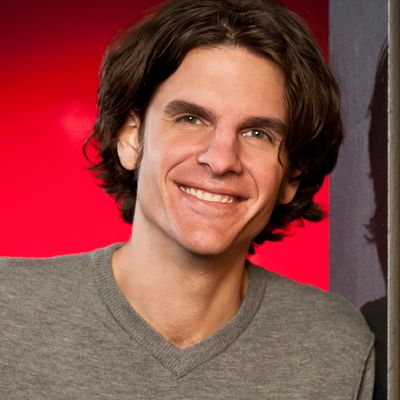
Part 1: This two-time Tony nominated writer and director is a recipient of Golden Globe, Drama Desk, Outer Critics Circle, and London Evening Standard Awards, as well as two OBIE and Lucile Lortel Awards. His Broadway directing credits alone include Moulin Rouge!.. Read More
From the show: The Theatre Podcast with Alan Seales
Guests
Miniseries Inclusions
Featured Shows
About
Part 1: This two-time Tony nominated writer and director is a recipient of Golden Globe, Drama Desk, Outer Critics Circle, and London Evening Standard Awards, as well as two OBIE and Lucile Lortel Awards.
His Broadway directing credits alone include Moulin Rouge! The Musical, Oh Hello! On Broadway, Rocky, Peter and the Starcatcher, and of course Beetlejuice which was recently nominated for 8 Tony Awards this past 2019 season. He is even a co-creator of the Amazon series Mozart in the Jungle which won the 2016 Golden Globe Award for Best Television Series.
Growing up in New York City, he created his own public access sketch comedy show at age 12, he moved on to sell a video short to PBS by age 15 and directed his first show at age 19. He graduated manda cum laude from Yale (with a focus in Polish cinema!). This conversation covers his two currently running shows on Broadway, Beetlejuice and Moulin Rouge, the development process for both, how Baz Lurman approached HIM to do Moulin Rouge, how Beetlejuice was retooled after some mixed reviews in the DC out of town tryout, and oh so much more.
Connect with Alex online: @alextimbers
Connect with The Theatre Podcast:
- Support us on Patreon: Patreon.com/TheTheatrePodcast
- TikTok: @thetheatrepodcast
- Twitter & Instagram: @theatre_podcast
- Facebook.com/OfficialTheatrePodcast
- TheTheatrePodcast.com
- Alan's personal Instagram: @alanseales
- Jillian's personal Instagram: @jillianhochman
- Email me at feedback@thetheatrepodcast.com. I want to know what you think.
Thank you to our friends Jukebox The Ghost for our intro and outro music. You can find them on Instagram, Twitter, and Facebook @jukeboxtheghost or via the web via jukeboxtheghost.com.
A very special thanks to our patrons who help make this podcast possible!
If you would like to see your name in this show notes or get a shout out on the pod itself, visit ttp.fm/patreon to become a member and show your support!
Transcript
This transcript was automatically generated and might contain errors.
[0:00] Alan Seales: Welcome to The Theatre Podcast. Intimate, personal conversations with theatre's biggest names. This episode is with director and writer Alex Timbers, who currently has two shows on Broadway, Moulin Rouge! and, of course, Beetlejuice. And being September, this continues the Beetlejuice takeover here on The Theatre Podcast. So, we are very excited to bring you this two-part episode with Alex Timbers. I was really fascinated when I learned that Moulin Rouge! and Beetlejuice opened within months of each other. I always think it's so cool when multiple shows open simultaneously that have multiple creatives that work on the same thing. Like, William Ivey Long opened Beetlejuice and Tootsie within a day of each other.
And he did costumes for both of those. And, of course, Alex here directed both Moulin Rouge! and Beetlejuice. And Beetlejuice, he's been working on for almost 10 years. And Moulin Rouge! not as long, but still, you just never know when it's going to hit. So, sometimes it just happens. You have multiple things. So, he balances his life very well. We talked about that a little bit. Something he said, too, that really, really impressed me and resonated with me as someone who has started their own podcast because I'm trying to make more opportunities for myself. He said that, as a young director, there was this stigma that until you had gray hair, until you were in your 40s or 50s, that you weren't allowed to direct anything big.
And so, he just went off and created his own stuff. He wrote Bloody Bloody Andrew Jackson, which was his directorial Broadway debut. And basically, his whole life, he was creating things from scratch. And he created his own cable access show here in New York City at age 12. So, just an incredible guy. This was a great conversation. Of course, this is part one. Part two will come out in a few days. So, please stay tuned and visit thetheaterpodcast.com to show your support. If you are at the $5 tier or higher, you get advance notice of these interviews so you can actually submit your questions as well. Everybody, please enjoy this episode with director and writer extraordinaire, Alex Timbers.
[2:29] Alan Seales: My guest today is a two-time Tony-nominated writer and director and the recipient of Golden Globe, Drama Desk, Outer Critics Circle, and London Evening Standard Awards, as well as two Obie and Lucille Lortel Awards. His Broadway directing credits alone include Moulin Rouge! The Musical, Oh, Hello! on Broadway, Rocky, Peter and the Starcatcher, and of course, Beetlejuice, which was recently nominated for eight Tony Awards this past 2019 season. He's even a co-writer of the Amazon series Mozart in the Jungle, which won the 2016 Golden Globe Award for Best Television Series. Alex Timbers, welcome to The Theatre Podcast.
[3:06] Alex Timbers: Hey, how are you? Did I cover everything?
[3:11] Alan Seales: Oh my gosh, that was so thorough. I learned some stuff. People are like, yeah, I need you to write my bio all the time. In researching you, I knew you from the theater scene, but I didn't know you from the television side until I was researching for this episode, and I'm really impressed with, hey, we're basically the same age. You're two years older than me, which makes me feel like I didn't accomplish anything in my life. But let's start out, I guess, at the start of the beginning. Like, where did you grow up, and what kind of kid were you?
[3:39] Alex Timbers: Yeah, I grew up in New York City, went to school here, saw a little theater, acted always in my, like, school play. I went to an all-boys school, so sometimes I was playing guys, sometimes I was playing Madame Jardin in Le Bourgeois Gentilhomme, and yeah, went to school here, and then sort of the big thing I did as a kid was founded a public access TV show in New York.
[4:04] Alan Seales: Really?
[4:10] Alex Timbers: Yeah, yeah, when I was 12, and it was like a sketch comedy show, and it served me and two fellow students, and we were on a Manhattan Neighborhood Network, Channel 69, on right after Dyke TV. It was fantastic. All our friends watched, and the parents too, yeah.
[4:23] Alan Seales: Wow, so you were involved with comedy, like, young, young.
[4:29] Alex Timbers: Yeah, I love, yeah, that's, I feel like that was more the starting ground for my interest in theater than in theater itself, actually.
[4:35] Alan Seales: Do you watch your old videos of when you were 12 or 13, 14, and you're just like, how did I make it through this point in my life?
[4:41] Alex Timbers: No, I would be mortified, but my parents do remind me of them frequently.
[4:46] Alan Seales: Do they have copies?
[4:50] Alex Timbers: I think their copies probably do exist.
[4:54] Alan Seales: Oh, you got to, like, take them off of the Betamax, whatever they are, VHS.
[5:01] Alex Timbers: In my will, I will say they will be burned.
[5:05] Alan Seales: So that was, okay, so you got, and the cable access, that was your, I guess, intro foray into performing. Did your parents encourage this, or were they like, it's a side project, he'll just, you know?
[5:10] Alex Timbers: You know, they've been encouraging through my life, but, you know, I don't think it was sort of, you know, I think they would be the first to say it wasn't sort of their world, and so when I went to high school, I went to school in Illinois, and the school was amazing because it had a whole sort of video component to it, a telecom. So they had a three-camera studio, like some of the first non-linear editors, you know, that you could get for, you know, educational use, and so it had another little TV show there, and started selling shorts, and things like that, and I sold one to PBS when I was 15. It was kind of cool.
[5:46] Alan Seales: Wow.
[5:46] Alex Timbers: Yeah, that was great, and then going to college, you know, I did improv and sketch, and got really interested in the mechanics of comedy, and got interested in the idea of directing a farce, and thinking that was a, you know, that would be an interesting way to explore comedy further, and directed another farce, and then was like, I really like directing theater, and that, so it was really the comedy that was the entree into theater.
[6:14] Alan Seales: Wow, and when, so when was the first time that you directed, like, an actual theater production?
[6:18] Alex Timbers: It was probably when I was, like, 19. I directed Black Comedy by Peter Schaffer, and then I directed Lend Me a Tenor, which was on Broadway a couple years ago, actually, yeah, and a great revival.
[6:27] Alan Seales: That's crazy. Okay, so you were in New York, and that's when you realized you wanted to direct, I guess, around, you know, late teens. Did you ever perform, or did you always know you wanted to be, like, kind of behind the scenes?
[6:32] Alex Timbers: I did perform a little bit. I remember my freshman year acting in a production of The Marriage of Bette and Boo, so this is freshman year of college, and I played Boo, and I remember just the whole time just being sort of outside of my own performance. I'm sure people have had this experience all the time as actors, and just watching it, and adjudicating it, and just thinking, you know, not, wasn't in the moment, wasn't very good. I knew that, too, and just thought, you know, maybe I should be the person on, you know, someone on the other side of the floodlights.
[7:08] Alan Seales: Yeah, yeah, wow, yeah, I've been there, and watch myself, and I'm like, maybe I should do this. Yeah, that is, I think it's a sign that you need to be behind the scenes, and then you mentioned college, and you went to Yale.
[7:22] Alex Timbers: Yeah.
[7:22] Alan Seales: Graduated magna cum laude.
[7:28] Alex Timbers: Thank you. You're a smarty. What did you major in there?
[7:28] Alan Seales: Film and TV as a double major. My focus in film was Polish, Eastern European cinema, particularly Polish cinema, very specific.
[7:35] Alex Timbers: Why that?
[7:44] Alan Seales: I just love, it felt to me like Ibsen, it felt like this sort of, you know, world that was exotic to me, but had these kind of really sort of present contemporary moral questions that felt like that was the work that like, you know, people like Wajda was grappling with, and Kieślowski, and I just felt very emotionally resonant to me.
[8:07] Alan Seales: So now, I mentioned earlier, you're 41, and now running on Broadway simultaneously, you've got Moulin Rouge and Beetlejuice that you directed. How do you approach these projects? I guess the first question, did they both come to you at the same time, or were you, do you work on them in parallel? Obviously, to put them up, you do, but do you know they're going to be released or open at the same time?
[8:27] Alex Timbers: No, it's a total coincidence. I started work on Beetlejuice 10 years ago, started work on Moulin Rouge six years ago, and it's just, you know, fate that they're happening at the exact same time.
[8:36] Alan Seales: Is that something you try to avoid, or you're just like, it is what it is?
[8:50] Alex Timbers: Yeah, it is what it is. I mean, you feel lucky when anything gets to production. That's how I generally feel, but I will say this last 15 months have been fairly punishing.
[9:01] Alan Seales: Your gray hair has slightly increased.
[9:09] Alex Timbers: And yeah, so in 2010, you also had Bloody Bloody Andrew Jackson and the Pee Wee Herman Show, both in development at the same time.
[9:14] Alan Seales: Did they open at the same time?
[9:17] Alex Timbers: Oh, yeah, they were basically in, I think we were in previews of Andrew Jackson while Pee Wee was happening. I'd never done a show on Broadway before, and it definitely felt crazy. I felt very lucky, but also very crazy.
[9:26] Alan Seales: Was that, I guess, the process of bringing something to the Broadway stage? I mean, obviously, I know the answer is yes, but how complicated, how much more complicated is it for Bloody Bloody Andrew Jackson, your first Broadway directorial debut? How different was that versus other projects?
[9:35] Alex Timbers: Well, you know, Andrew Jackson was interesting in that I had done it like three or four times at this point. We had done a production at Williamstown that was very different from the Broadway production. We did a production in LA that was very different from the Broadway production. But then we did it twice at the Public at the Shiva, and then a year later in the Newman, and then moved it to Broadway. So in a way, it felt like even though we made adjustments for Broadway and the scale was different, it felt a little bit like you were remounting something. Also, I had been very lucky in that I had gotten to assist on Jersey Boys years before. So there was a slight kind of demystification of the Broadway teching process that was, I thought, really useful in the end.
[10:28] Alan Seales: That's fun. So then you take that, obviously, and you can scale up now. And Beetlejuice and Moulin Rouge both are no small feats. They are massive productions. And Moulin Rouge, I don't know the production budget, but the licensing fees alone have to be astronomical.
[10:45] Alex Timbers: I mean, the trick of licensing all those songs is an incredible feat that the producers pulled off. It's really amazing.
[10:50] Alan Seales: Yeah. So did you have any say into, I'll talk about Moulin Rouge real quick, but did you have any say into what songs got included or what didn't?
[10:55] Alex Timbers: Oh, yeah. So I got approached by Baz Luhrmann about six years ago. I think it was summer 2013. And he's been wonderful because his background, he and Catherine Martin, his creative partner, their background is in theater before film. And so they understand adaptation. I mean, a lot of their films are adaptations. So they were wonderful in giving some key pieces of guidance and then saying, go forth and make something. And so as we began the adaptation process, John Logan, the book writer, Justin Levine, the music supervisor, and I got in a hotel room at, I think it was AKA. And I hauled my girlfriend's synthesizer across Times Square and we got in there and we just started plotting out the musical with note cards, just like you do any new story.
And as we got to, once we plotted out the plot, we went to the song, where would song spots make sense? And some lined up with songs from the film, some were brand new, and then went through that process of figuring out what song should go where. It was very collaborative, very creative, really fun, really free.
[12:16] Alan Seales: Yeah. So Baz approached you about that?
[12:21] Alex Timbers: Yeah, he was very generous. He had seen Andrew Jackson and he had seen Here Lies Love and I think he felt there was a kindred spirit there. And I think also he had worked on a lot of stage shows himself and just knew the process was so long and I think didn't want to feel like his life was spent remaking past masterpieces.
[12:44] Alan Seales: Yeah, I totally sympathize with that. I was very the lucky recipient of that line of thinking. Well, there was that one and then Beetlejuice, also an adaptation. I guess it's not a remake, it's an adaptation obviously from a movie. How did that get started? Did Tim Burton approach you or did you have to approach Tim Burton?
[13:04] Alex Timbers: There's a wonderful producer at Warner Brothers who's been there for a long time and was very important in a lot of Tim Burton's movies as the president of production at Warner's, a guy named Kevin McCormick. And Kevin had seen, this was back in 2010, had seen Andrew Jackson and the Pee Wee Herman Show and we had a meeting about collaborating on something and he brought up the idea of Beetlejuice. He was like, what about Beetlejuice? And for me, and I'm sure most directors would say this too, you don't just say, oh, I love the movie Beetlejuice. Yeah, let's make a musical of that. I said, huh, well, let me think about it. So I went away for a little bit and I came back and I said, okay, if these three things were true of an adaptation process and we were allowed to explore in these directions, then this could be something very interesting. And he was like, oh yeah, I'm on board with all that. Let's do it. And so that was the start of that process.
[14:04] Alex Timbers: That's crazy. I wouldn't even know where to begin with that. And it's something that's got supernatural elements is, I think, so hard to pull off on stage. Yeah. So actually to go into those three things, if it's interesting, you know, one of the things it felt really important is that any stage adaptation was as emotional as possible. And so it felt like Lydia was...
[14:55] Alex Timbers: So we said, okay, can we make the house a character as well? And can it transform? Can it be the Maitland's home and then the Dietz's home and then it can Beetlejuice enchant it? So it becomes a sort of magic box. And can all the effects in that way be practical? You see the walls in front of you. It's not like armatures coming out of the ground or anything like that, or giant things flying in. It's like the walls are, you know, puppets burst and fire spurts out of someone's hand. It's all sort of practical effects and practical magic before your very eyes. And I think that's key to the Burton aesthetic, especially with that movie. You read these interviews with him and he talks about Beetlejuice, which was his second movie after Pee Wee Herman, believe it or not.
But the first one where you really see his aesthetic and he talks about the kind of DIY charm of that. So it really felt important to, you know, that's why we called up Michael Curry and said, can you make us a giant sandworm and another sandworm and another sandworm and not rely on video and projections for that kind of thing? The third element that was really important was the idea of leaning into Beetlejuice as a kind of figure that can break the fourth wall. He's a trickster character, so he can pop up next to you, he can lie to you, he can kick over the footlights and, you know, sit in your lap. And so that idea of Beetlejuice, who doesn't really appear until 40 minutes into the movie, sort of like Jaws, we wanted him to start it.
And we also felt like what was kind of cool about Lydia and Beetlejuice, and if you watch the animated show, I don't know if you grew up with that, I grew up with it. Oh yeah. They're sort of, you know, the best bodies in that, you know, frenemies, so you'd call it now, right? And so the idea of these two kind of conmen figures, you know, two very clever people outsmarting each other, outwitting each other, that felt very, you know, musical theory, you look at the line of great conmen, you know, Bialystock and Bloom, Harold Hill, it felt like, oh, if these folks could be in that lineage, there's good history there, right?
[17:08] Alan Seales: Yeah, the casting is, I mean, it's what we're used to, it seems perfect though, and you're talking about Lydia, but Sophia, she is now 18. So you're working on it 10 years ago, obviously you didn't find her when she was eight.
[17:29] Alex Timbers: No, but I think we started working with her when she was like 15 or something like that. Yeah, yeah. She's incredible, I mean, she's the most amazing actress, and I had seen her in a play at MCC called The Nether, and she was in Lazarus, the David Bowie musical, and then Blackbird, and I just was always, I was like, she's like, sort of preternaturally wise, you know? And this amazing singer, which I don't know that a lot of New York knows, or at least a lot of the theater community knows, and so we started developing this with her. She did, I think, everything but the first reading, so she did like two readings, two workshops, she did the out of town, which took place over like two and a half years, and she's wonderfully committed to it, and I think has brought so much of herself to the role, and I know the writers sort of glommed on to all her ideas, and we're just so excited and inspired by her and the collaboration.
[18:29] Alan Seales: Well, what about Alex Brightman?
[18:36] Alex Timbers: Yeah, Alex Brightman. So, Alex is fantastic, I mean, he's so smart, he's so funny, so much of the Beetlejuice character is him. I mean, he really starts so early in the collaborative process as well that I feel like the character met him halfway, and he met the character halfway, and the writers really wrote into his improvisation and his ideas, and I think that's why that role fits him so like a glove, because he's had such a hand in developing it, and he's just, you know, his background also, he's done a lot of improv, done a lot of sketch, he's very quick on his feet, he's very, like, he loves that frisson with the live audience, and when something happens in the room, you know, he'll acknowledge it and embrace it. He's just, he's, and he's also, you know, like Sophia, just wildly collaborative, and so it was a very fun process. I mean, you can imagine how much laughter was in that rehearsal room.
[19:29] Alan Seales: Yeah, I was researching him a little bit, too, and his Broadway credits as like a leading man are very limited, and this is a big role to hand someone with. I mean, I guess, what did you see in him that you were like, yeah, he's gonna carry this show, there's no brainer?
[19:45] Alex Timbers: Well, I think he has, he has, he's very, very funny, he's very quick on his feet, and he has this kind of edge and darkness, you know, but there's a sort of empathy to everything you see. I mean, when you saw him play Dewey in School of Rock, the character's, you know, a total loser, might be hard to relate to in certain ways, but you love him, and you immediately sympathize with him, and I think that's, you know, Beetlejuice, the character, is a sociopath, you know, you need that, you need that quality.
[20:20] Alan Seales: Right, right, and working with William Ivey Long, too.
[20:26] Alex Timbers: Yeah, oh my gosh. Costumes, costumes are incredible, too. They, was that sort of a, what was that process like, the collaborative process? Was it like an extension of what you were talking about with the house transforming? Because the costumes seem to be part of the living, breathing entity of the show, too.
[20:41] Alex Timbers: Yeah, we knew we wanted the costumes to be magical, and to be cool, and to have transformation, and immediately, you know, when you think of transformation on stage, you think of William Ivey Long, you think of Cinderella, or the 74 other Broadway shows he's designed, literally. Literally 75 shows, yeah. And so, the process began with him. We were supposed to do a production of If Anything Happened on the Way to the Forum about four years ago, and so I was really excited to work with him, and that didn't end up happening. And so, when this opportunity came around, and David Korins had worked with him on Grease, on the Grease Live show on TV, and was like, oh, you guys are going to get a lot, he's the perfect guy for this.
And the collaboration was fantastic, and William, you know, you wouldn't know that he had designed so many Broadway shows, and had so much experience, so many, you know, great achievements and awards in his past, because he treated it like it was his first show out of college. I mean, he surrounded his studio in these, like, stripe studies, how much black, how much white, 60% black, 40% white, what is stripes on stripes, every kind of thing. And so, I think the first four months was just looking at, like, black and white graphic prints, and then, yeah, and then it evolved. So, I'd say that design process was probably about two years on the costumes. On the set, it was five years. I've never worked on a show, the design process for as long as it was on this one.
[22:06] Alan Seales: Really? Yeah. Really. How long does it normally take?
[22:12] Alex Timbers: It depends, you know, it depends on the show, but these were very long, yeah. I guess it sort of has to be, though. I mean, and you've got sort of the financial backing, too, because Warner Brothers has some deep pockets, I would assume. So, you're not constricted by time, you know, or, like, pressure to get to the stage at all?
[22:30] Alex Timbers: Well, it was interesting because, you know, just because we wanted the set to be a part of the, kind of, it was part of the initial idea of, like, how are we going to do this? Yeah. We brought in Korins much earlier, Korins the set designer, much earlier than you would on pretty much any show. So, he was there for the writing process. He was maybe the third higher on the show. Oh, no kidding. I think he even preceded the composer, possibly. I have to look back at that. And so, we went through a real iterative process. There were a bunch of different sets for this show, even though we said it's going to take place in a house. But, you know, we went through, even though the set has a lot of scale and there's a lot of spectacle within it, it's actually much simpler than our initial designs.
And I find that, sort of, the budgeting process and the, kind of, the practicalities of that, I love that part of the process because it really forces you in a very creative way, or in a surprisingly creative way, to just refine your ideas and hone them to what are the most important ones. And for Beetlejuice, I thought it was, you know, it was really successful. So, I love the collaboration with producers and general managers and production managers as you work with the design team and figuring out what are the essential things you need, you know?
[23:52] Alan Seales: Right, right. Yeah, that seems like you come, I guess you come, the show gets put into previews or out of town as, like, a steak with a bunch of fat on it. And then, as you cook the steak, you, of course, or go to eat the steak, you're taking all the fat off the sides and then you present this perfectly, hopefully perfect, perfect piece of meat to your audience. But, I guess, talking about the out-of-town, though, you did your out-of-town in D.C. Uh-huh. And what did, what happened in the process between D.C. and New York? Did you, what was learned in D.C. that was, kind of, unexpected?
[24:18] Alex Timbers: As we opened the show in D.C., we were really proud of it and excited about it. And we had a lot of audiences who really loved it and it sold really well, but not all the reviews were great. Two of them, in fact, two of the really important ones were, uh, had a really tough time with the show. So, we went back to the drawing board in a really significant way and, uh, and just, sort of, looked at a bunch of things. We looked at, uh, the emotional on-ramps for the show. You know, how quickly are you connecting with Beetlejuice? Uh, that, those sort of things, those, those, kind of, empathetic qualities of Beetlejuice. Uh, looking at, uh, creating more emotional on-ramps to, uh, Lydia, relatability, uh, in the Maitlands.
Uh, looking at the father-daughter relationship between Lydia and Charles. Um, looking at, uh, what happens in the Netherworld, um, and how it can work better for us. Um, looking at tone, there was just a lot of stuff that felt, uh, maybe a little, like, uh, overstuffed, I think was a word that was used, and, kind of, just, uh, maybe pushed, uh, pushed the show sometimes into an edgier place for, uh, a lot of audiences. Um, and so, or, or, these were, this was the feedback we were, sort of, gathering. So, we said, okay, let's try, you know, let's try all these things. Um, and so, it was, it's a really amazing thing happened amongst the producers, the designers, the actors, and the writers, and chiefly among the writers, and they just said, oh, okay, so, we started creating lists, and we were like, okay, here's 10 things we can do to address this question.
Here's 12 things, and we had this, this massive thing we marched forward with. A lot of it affected the design, you know, whether it was the end of Act One, or the beginning of Act Two, or the beginning of, you know, every scene had substantial changes in terms of the writing, the tone, and the design. Um, and, uh, I was, I have to say, I've never been a part of a team effort like that, that, you know, because you're working on the show for nine years, and then, suddenly, it's like, change it, change almost everything. Um, and, uh, the actors, you know, were super on board, and were excited, and, you know, fired up about it, and were just so wonderful, and what could be a very, you know, tricky circumstance, and, uh, uh, and, and so, everyone just was, had this kind of, felt like a communal kind of effort.
Everyone knew exactly what we were trying to do, uh, in terms of our stated artistic goals, and, um, yeah, and, and, and we worked hard, and even, even during tech, where, like, the cardinal rule is you don't change the show during tech, right, because it's, especially on a show like that, that's so complicated. We tossed a song, and put in a new song. We rehearsed it in the upper lobby while we were rehearsing a, a dance number on set. It was, I, the actors were heroic, and so were the writers. It was really amazing.
[27:22] Alan Seales: I mean, during tech for the Broadway run?
[27:26] Alex Timbers: Yeah. Wow. Yeah. Yeah, that is, that's one of my favorite songs in the show.
[27:32] Alan Seales: Yes, that's, that's great. Yeah. Oh, the new one, or the one that was cut?
[27:36] Alex Timbers: The new one. Oh, wow. Yeah. Yeah, that's crazy. So, uh, in, in D.C., like, was it a darker story, or is, I mean, like, for, I guess, general tonality, it was a darker in D.C. and more comedic here, or sort of vice versa?
[27:44] Alex Timbers: Well, it was comedic in both places. I just think it was a, it was naughtier in D.C., um, and, uh, it was a little more, uh, uh, sort of envelope pushing in the humor. Uh, I think there's, it's still there. I don't think that's been cut out. I think it's just been the amount of it has been sort of, uh, uh, tempered. Uh, it was sort of getting away a little bit, I think, in terms of the, uh, emotional experience, and I think, uh, for certain audience members, it's creating a kind of a wall to, that prevented you from entering and enjoying the show. So, uh, yeah. So, it was, it was a, it was a good evolution.
[28:22] Alan Seales: Thanks for listening to part one of this episode with Alex Timbers. Please visit us online at ttp.fm and show your support by visiting ttp.fm slash Patreon. If you're a $5 supporter or more, you get advanced notice of these interviews, so you can actually submit your questions to be asked as well. Stay tuned in a few days for part two. Take a deep breath, make the world a little colorful.
© Broadway Podcast Network, All Rights Reserved