

Part 2: "This two-time Tony nominated writer and director is a recipient of Golden Globe, Drama Desk, Outer Critics Circle, and London Evening Standard Awards, as well as two OBIE and Lucile Lortel Awards. His Broadway directing credits alone include Moulin Rouge!.. Read More
From the show: The Theatre Podcast with Alan Seales
Guests
Miniseries Inclusions
Featured Shows
About
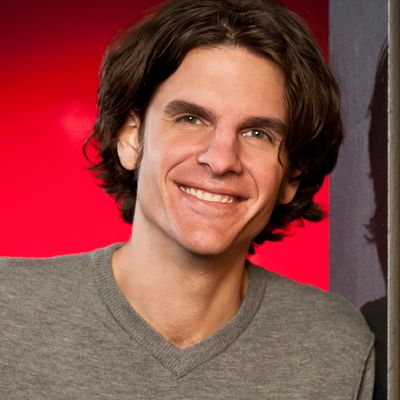
Part 2: "This two-time Tony nominated writer and director is a recipient of Golden Globe, Drama Desk, Outer Critics Circle, and London Evening Standard Awards, as well as two OBIE and Lucile Lortel Awards.
His Broadway directing credits alone include Moulin Rouge! The Musical, Oh Hello! On Broadway, Rocky, Peter and the Starcatcher, and of course Beetlejuice which was recently nominated for 8 Tony Awards this past 2019 season. He is even a co-creator of the Amazon series Mozart in the Jungle which won the 2016 Golden Globe Award for Best Television Series.
Growing up in New York City, he created his own public access sketch comedy show at age 12, he moved on to sell a video short to PBS by age 15 and directed his first show at age 19. He graduated manda cum laude from Yale (with a focus in Polish cinema!). This conversation covers his two currently running shows on Broadway, Beetlejuice and Moulin Rouge, the development process for both, how Baz Lurman approached HIM to do Moulin Rouge, how Beetlejuice was retooled after some mixed reviews in the DC out of town tryout, and oh so much more.
Connect with Alex online: @alextimbers
Connect with The Theatre Podcast:
- Support us on Patreon: Patreon.com/TheTheatrePodcast
- TikTok: @thetheatrepodcast
- Twitter & Instagram: @theatre_podcast
- Facebook.com/OfficialTheatrePodcast
- TheTheatrePodcast.com
- Alan's personal Instagram: @alanseales
- Jillian's personal Instagram: @jillianhochman
- Email me at feedback@thetheatrepodcast.com. I want to know what you think.
Thank you to our friends Jukebox The Ghost for our intro and outro music. You can find them on Instagram, Twitter, and Facebook @jukeboxtheghost or via the web via jukeboxtheghost.com.
A very special thanks to our patrons who help make this podcast possible!
If you would like to see your name in this show notes or get a shout out on the pod itself, visit ttp.fm/patreon to become a member and show your support!
Transcript
This transcript was automatically generated and might contain errors.
[0:00] Alan Seales: Welcome back to The Theatre Podcast, intimate personal conversations with theatre's biggest names. This episode is part two of our amazing interview with Alex Timbers. It continues from part one, obviously, that just dropped a few days ago. So if you haven't listened to that, I encourage you to stop, back it up and listen to the previous episode. But before you do, please visit us online at ttp.fm. Show your support via ttp.fm slash Patreon to get advanced notice of these interviews. So you can submit your questions and many, many other opportunities to help us out and get our episodes transcribed and lots of things that we're trying to do with the contributions that we get. So with that said, please enjoy part two of this episode with Alex Timbers.
[0:59] Alex Timbers: You used a term earlier called the emotional on-ramp. I've never heard of that.
[1:05] Alan Seales: Yeah, that's brilliant. Because I was, as you were describing the issues, I was thinking like, yeah, you know, how early can you relate to the characters? And I guess how much do you sympathize with them? And calling it an emotional on-ramp, is that something you use a lot?
[1:18] Alex Timbers: No, I think, no, I think it's a term I, first time used in us on the show.
[1:25] Alan Seales: Heard it here first, emotional on-ramp exclusive.
[1:33] Alex Timbers: Yeah, I really, I really like that because you come on stage, you want someone, I guess, yeah, there's intention. The characters have the intention. You want the audience to relate a certain way at certain times. And so how do you convey that? It's costumes, it's lighting, it's the acting itself, it's a song. Yeah, there's so much that you have to play with.
[1:47] Alan Seales: Yeah. So I don't envy the need to go back and like address negative reviews, I guess.
[1:54] Alex Timbers: Yeah. Even if they were all positive, would you still go and tweak it?
[1:59] Alan Seales: Oh yeah, absolutely. But I think, you know, you listen to the, the thing about previews that's so wonderful is, you know, every audience is seeing a performance that's only happening once, right? Because the day before you changed a bunch of stuff, the next day, based on their reactions, you're going to change a bunch of stuff. So they're seeing like version, you know, 300 of this show, and that will never be repeated again. And so, you know, I love that time, you know, Here Lies Love, we did, you know, we, we did three workshops, then we went to Mass MoCA in Massachusetts to do a lab of that. Then we came to New York and did, you know, and did a production, then we did another production. That era of process of getting to go back and layer new things and strip away things and understand what the audience is responding to and how you can make their emotional response greater, I think is, it's really, it's thrilling. And that's, that's the most fun part, I think, about being a, being a director and a storyteller in theater.
[3:03] Alan Seales: Have you found that, that, that there's our generation and it's like, you know, I'll call myself 40 now, the 40 and up that have seen the movie and, and love the movie that come in and have a different reaction to, to the younger kids now, the, the, the 20s and late teens or whatnot who are coming for the first time and don't know the story until they see it on Broadway. Is there a different reaction, like stage door reaction or social media reaction between the two? Or is it all kind of just like, this is a great story?
[3:34] Alex Timbers: You know, it's interesting because the audience, particularly this summer, I think as they've gotten to, like teenagers and stuff have really gotten into the, the show. And I don't know if they knew the movie that well, but I think what, one of the things that makes that movie in evergreen is that, is beyond the sort of Burtonian kind of visual style, which is so, so unique. It's, it's the story of outsiders, you know? And I think people see themselves in those characters. People see themselves in, in Lydia and Beetlejuice and the Maitlands. And so that's been really fun. And you see it more and more like at the theater where you have like people dressing up as the characters.
[4:16] Alan Seales: Oh, really?
[4:17] Alex Timbers: Yeah. And originally it's, you know, maybe this is, this is interesting that, you know, originally it was people, you know, our age that was, were dressing up like Beetlejuice, come to the theater, dressing up like a teen goth. But now it's actual teenagers doing that. And so, you know, I, I think that's, you know, I think that's really cool and great.
[4:38] Alan Seales: That's so much fun. Yeah. The props, the sandworms, the costumes, do you have a favorite prop or a favorite costume?
[4:45] Alex Timbers: I love the shrunken head guy.
[4:48] Alan Seales: Oh yeah.
[4:48] Alex Timbers: In the Netherworld.
[4:49] Alan Seales: Yeah, totally.
[4:50] Alex Timbers: Totally cool. If, if you were going to take one thing home with you, what would you want to take out of the show?
[4:55] Alex Timbers: Oh, that's amazing. I, you know, I, I love the sandworm, I have to say. It's just, it's, it's cool to see a puppet of that scale and that has that kind of life to it. Because it's, you know, it's jaws open and it birds another sandworm inside and smoke comes out and it's bloodshot eyes light up. It's just, I think Michael Curry really sort of did such an amazing job with that one. And, and there's, you know, and that, that sandworm comes in two parts. There's the head and then there's the tail from the other side of the stage.
[5:29] Alan Seales: Yeah.
[5:29] Alex Timbers: Which is an inflatable. And yeah, it's really cool. I love, I love all the props in there. Do you go back to see the show a lot? And how often do you get back to go, how often, how often do you get to go back and see it?
[5:37] Alex Timbers: I see the show probably every two or three weeks.
[5:47] Alan Seales: Oh, really?
[5:48] Alex Timbers: Yeah. I, I, you know, I'll go back if a, if an understudy is on sometimes and, you know, because I'm excited to cheer them on and, you know, and then just generally go back for show maintenance. You know, at that point, you know, the show really is the stage manager show and the actor's show. And so I also just try, I don't want to be too much in anyone's hair and, you know, overstay my welcome.
[6:13] Alan Seales: Yeah. Yeah. I, I don't know. I feel like if it was like my baby that I've been working on for nine years, I would go back and be like, this little thing is just not quite right. Can we go back? Do you give notes when you go back?
[6:25] Alex Timbers: So, yeah, I'll give notes, but I try not to, yeah, but just sort of more general notes. The, when I did Blah Blah Andrew Jackson, it was my first experience on Broadway and I wrote that show with Michael Friedman. And so it felt very much like, you know, my baby and the way you're talking about that kind of idea. And I went back too frequently and I learned my lesson. I think I drove the actors probably crazy, you know, they were very generous and kind and, you know, but so I just learned on that show, you know, you got to give space. It's, you know, the performances are growing. The show evolves and, you know, that's, that's an exciting part of the process of doing theater. And so that's the balance, you know, that I hope I've found in a little more maturity.
[7:18] Alan Seales: Okay. So you're also, I want to move on TV and film a little bit, co-creator of the Amazon series, Mozart in the Jungle. It sounds like when you list bios like this and I'm talking to you and you're sitting here and just a real person, like you've directed these multimillion dollar productions and these great things and like, you're just co-creating the show that now the world can go watch. How does, how does this happen? I mean, how easy is it to just go co-create a show and get it on Amazon?
[7:49] Alex Timbers: Yeah, well, you know, I got approached by Jason Schwartzman and Roman Coppola, who are just wonderful guys, and they had the rights to this book and they were, you know, interested, I think, in having someone kind of who was in that kind of performing arts community collaborate with them. In the pilot stage, an amazing filmmaker named Paul Weitz came on, who's like one of the kindest human beings, in addition to being one of the most talented and they sort of, you know, and then the show was off and running. I think one of the things that was really exciting about that was just seeing how a whole new world works and I loved, I'm sure you do too, as a sort of fan of shows that shoot in New York, like seeing all these sort of theater titans.
You know, I love watching Succession, that's one of my favorite shows, and watching just, you know, like all these amazing. Mrs. Maisel. Yeah, theater actors popping up left and right. It's just, it's so sort of gratifying and exciting and feels a little like, where's Waldo in a fun way, you know? Because you hang out with a lot of them personally, yeah.
[9:00] Alex Timbers: Oh, hello. One of my favorite shows. One of my favorite shows ever to have worked on.
[9:06] Alan Seales: Yeah, John Mulaney and Nick Kroll. You're friends with John through the comedy scene, I guess, right?
[9:12] Alex Timbers: I actually, the way I got involved with that show was, it all comes back to Blame and Andrew Jackson, all these things we're talking about. After that show, and I think after the Pee Wee Herman show, I got a call about having a coffee with Nick Kroll. And so, this was maybe 2010, 2011, and we had this coffee. He was wonderful. He's a wonderful guy. And it was so fun. And that was sort of it, because we existed in a different world. And then in 2015, I remember this because I was putting up a production of Rocky the Musical in Stuttgart, Germany, and I had the flu. And I got this email from Nick saying, hey, do you remember me? I have this show. Do you remember me? I'm working with this guy, John Mulaney, and we're doing this thing down at Cherry Lane.
It happens in three weeks. It doesn't exist quite yet. Could we collaborate on it? And of course, in those moments, you just say, oh my god, I don't even really know what, I wasn't so familiar with Gil and George, the characters, but I was like, working with these guys, absolutely. And it was this sort of heavenly experience. They were, this is sort of extraordinary. I think theater makers will really think this is as amazing as I do. They were teching the show at Cherry Lane during the day and night, and then at midnight, going to the UCB and performing the show, which was at that point two hours long, and performing it for a live audience, and trying out jokes and cutting jokes the next day, coming into tech and saying, hey, we're going to do this again. So that's one thing that's extraordinary about them.
[11:00] Alex Timbers: We were like, there's an entrance up right, there's an entrance down left, and we started tech. We never worked together before and we were like, hey, top of show. Do you want to enter up left or down right? And they sort of looked and they were like, let's do up left. And that's really how we blocked the show. And we went through it once and I was so nervous. I was like, oh my god, are they going to remember any of this blocking? They've only done it once during tech. And they remembered it all. I mean, they are like, not only such brilliant comedians, but they are, you know, they know exactly where they want to be. And it was incredible. And the lighting designer was also like, I've never experienced something like this before. All my light cues, I don't need to adjust anything.
[11:43] Alex Timbers: The whole set there, it's like they pulled in props from old shows. Is that real? Is there actually a warehouse somewhere that has all these iconic props from big shows? Yeah, well, so it was kind of a riff on this, because the Colin Quinn set, we were like on someone else's set. So the Broadway set, which is done by Scott Pass, which is so beautiful, which was like these different sets from different other shows cobbled together, was sort of a riff on a riff in that way. He, no, none of the sets from like the August Wilson play or Steel Magnolias were real sets. But I do think that there was this rack of gramophones from I Am My Own Wife, and we had the same props designer as I Am My Own Wife, and we were in the same building as I Am My Own Wife. So I think some of those gramophones might have been the gramophones. There you go.
[12:35] Alan Seales: Really? Fun fact.
[12:37] Alex Timbers: And they got filmed and put on HBO, as did P.B. Herman's show, right?
[12:42] Alan Seales: P.B. Herman got filmed. Yeah, I think O'Hara was on Netflix.
[12:45] Alex Timbers: Oh, yeah.
[12:47] Alan Seales: Yeah, absolutely. It's so amazing when you make something, it's ephemeral, and then someone captures it. It's really awesome to have that. Is that where you like theater to head? After it's done on Broadway, it gets captured and released wider? Or do you prefer it to kind of be more localized and live?
[13:06] Alex Timbers: Here's what I love about theater. The first show that got me really excited about theater was Tommy. It felt like the first show I'd ever seen where the boundaries between pop music, popular culture, music, video, visuals, all that felt bridged with the theater world. And I think that a lot of the stuff that I love sort of exists in the area where two worlds meet. And one of those is the comedy world and theater world. And I think you look at Pee Wee or you look at Oh, Hello, and there's something really sort of exciting and unique when you have the live comedy event meets a play. And so something like that, it feels like just naturally there'd be, particularly with those performers, Paul Rubens, John Mulaney, Nick Kroll, there's an appetite beyond the number of people that can fit into a limited run, to see something like that. I think it's really exciting to have people be able to access that.
[14:11] Alan Seales: Is there something lost, do you think? When I watch a comedy on TV that I've seen live, I always feel like it's never as good. I don't connect because I can pause it. I can go to the kitchen. Someone can come and distract me.
[14:28] Alex Timbers: It's definitely different. The communal experience of being in a space with, seeing Oh, Hello with 900 other people, it's thrilling. But I guess, next to not having anything, totally, it's great. It was really a fun experience, was working on the John Mulaney's Radio City show. Because in that instance, we got to, we're simultaneously building a show for that live audience at Radio City, but also filming it for Netflix. You're thinking about it for the camera and for the audience in the theater at the same time. And that was really exciting because there you're trying to make it, from the birthing of it, equally great for both audiences.
[15:15] Alan Seales: Oh, yeah. So, ahead of time, you're planning for it specifically. Do you still work with John a lot now?
[15:21] Alex Timbers: He's a friend. I'd love to work with him again. He's amazing.
[15:24] Alan Seales: Yeah, such a fun guy. Everything he does, I love. I actually, I watched the Netflix special. So, yeah, it was very funny. Okay, cool. So, it seems like you've always got a lot of stuff happening simultaneously. How do you actually decide what to wake up and work on in a given day?
[15:40] Alex Timbers: It's a great question. I mean, because musicals, which are the thing I primarily work on, take so long to come to production. And some never see the light of day. You don't really get to plan your life as much as one might think. You don't get to say, okay, this year I'm doing Brigadoon, next year I'm doing a new musical by so-and-so. And so, a lot of it's governed by everyone else's schedules. When is everyone available to do the workshop for X, Y, Z? And so, then you're sort of gearing up for that. I think the thing that's, the plate-spinning aspect of it is really those shows that are in deeper development, where you're sort of trying to kind of always push them along a little bit. Like, every week, how can I help that show go to the next level?
Is that by doing a piece of development? Is it doing a writer meeting? Is it talking to a designer and going through sort of looking at renderings? And those that don't have a sort of deadline that's looming are the ones, I think, that are the ones that are always the bigger sort of challenge. And then those shows, then when Beetlejuice happens, when suddenly, at a certain point, a show gains a kind of critical mass momentum, and then suddenly it's happening, you feel a real sense of pride and victory when that thing that for four or five years was sort of felt like, is this happening? Is it not happening? It's suddenly like, you're in rehearsal for it. It's a thrilling feeling.
[17:15] Alan Seales: And well, you said you feel a victory, of course, when it makes it. Do you take it personally if something doesn't? If something doesn't reach production?
[17:25] Alex Timbers: Yeah. They're like your children. You root for all of them, and you want them all to succeed. And you definitely, particularly for the writers, you want people's work to get their due chance to be seen and received, and hopefully for the writers to be celebrated in the way that they do. I love the writers I get to work with. I feel very lucky, and I love the collaborative process. There's so many other mediums where you don't collaborate. Theater, particularly musical theater, is very, very, very collaborative, and that's one of the things that I just adore about it.
[18:05] Alan Seales: Yeah. I was going to say, I don't know if I could take the rejection, and then I was thinking, well, is it rejection? Is it not rejection? But I guess it is sort of the production side of rejection. Actors deal with rejection every day with auditions and whatnot. But I guess the production side, I guess you could have an idea that doesn't get picked up, or you have a workshop that you're like, oh, that's just not working. Let's cut that. So you have your own rejection to deal with. Does that hurt at all? I mean, like I said, is it actually a personal thing, or are you just like, eh, it's just part of the business, shrug it off?
[18:41] Alex Timbers: Oh, no, everything's personal. I mean, it's creative, it's artistic, so everything is. But I don't know. I think as I'm getting older, I do understand that sometimes shows that I'm excited about that no one else is excited about that. Maybe that's a good indication. Maybe they're misguided. I don't know that I have a great articulate answer for that. I apologize.
[19:20] Alan Seales: All right. Well, that's a good place to wrap up here. So to end the podcast, I ask everyone three standard questions. The first one is, what motivates you?
[19:30] Alex Timbers: Motivates me? I think it's the artists I get to work with. Just thinking about that actor I get to collaborate with today. Oh, that designer, I get to see what they're working on. That's the stuff that inspires me and gets me excited about every project.
[19:47] Alan Seales: Okay. So the second question is, what advice would you give to your younger self and younger people listening now starting out down a similar path?
[19:51] Alex Timbers: I think the thing that was really profound for me was the not waiting for opportunities, like creating your own opportunities. I remember hearing this. I was an intern at a theater company right out of college, and I remember hearing this adage that you have to have gray hair to direct. And I kept reading about, I read Time Out, and I was reading about all these productions. And I was like, oh, gosh, everyone's like my age now or in their 50s or 60s that's directing these shows. And so I realized that no one was going to hire me to direct Tennessee Williams or Thornton Wilder or something like that. And I had to go make my own theater. So I created my own theater company really as a vehicle to get hired to direct things. And so I think that's important is to, whatever part of the theater industry you're in, to take as much agency as you can to not rely on others to pursue your art as much as you can. Create your own art.
[20:59] Alan Seales: Yep. And then final question, if you could only see one show for the rest of your life, but you can see it as many times as you want, what would you see?
[21:04] Alex Timbers: Oh, gosh. I love Spring Awakening. I love to see Spring Awakening over and over again. I think that shows great.
[21:12] Alan Seales: Oh, that's wonderful. Good answer. Okay. So, of course, visit Beetlejuice online, beetlejuicebroadway.com. And you can connect with Alex on Instagram at Alex Timbers. You can get more of me at thetheaterpodcast.com or thetheaterpodcast.com slash Patreon to show your support. Theater underscore podcast on Instagram and Twitter. Facebook.com slash official theater podcast. Please rate, leave a review. Produced by Jillian Hockman, edited by Matthew Hendershot. And thank you to Jukebox the Ghost for the intro and outro music. And then Alex Timbers, thank you for this wonderful conversation.
© Broadway Podcast Network, All Rights Reserved